Australia’s Federal Minister for Communications and the Arts and Senator Mitch Fifield recently inaugurated a new IoT network intended to help the local community explore the potential of the technology.
Jointly developed by the IoT Alliance Australia (IoTAA) and KPMG, the Barangaroo Community Network will allow up to 1,000 IoT devices within a three- to five-kilometer range to connect to the internet for free for prototyping, testing, solution development and learning.
The gateway, operating in the Industrial and Scientific Spectrum at 915-MHz, will support up to 1000 IoT devices.
Research undertaken for IoTAA projects shows that the IoT if harnessed, has the potential to add up to A$120 billion ($90.5 billion) to the Australian economy by 2025.
“This represents an uplift of up to 2% in Australia’s GDP across a range of environments including factories, retail outlets smart cities and homes, motor vehicles, other transport modes and even human health and fitness – IoT is a pervasive disruptor,” said Communications Alliance CEO and Chair of the IoTAA Executive Council, John Stanton.
The inaugural IoT “State-of-the-Nation” workshop and networking event held in Sydney was attended by more than 200 stakeholders from industry, government, the start-up community, academia and the consumer sector.
It showcased the diverse range of initiatives underway within the IoTAA, the peak body representing a diverse group of more than 125 organizations, dedicated to empowering industry to grow Australia’s competitive advantage through IoT.
IoTAA is hosted and supported by the University of Technology, Sydney (UTS) at its Broadway Campus in Sydney.
“IoTAA’s mission is not only about grabbing opportunities – it is also about managing the risks to network integrity and personal privacy that could occur if we are not vigilant and well prepared,” Stanton said.
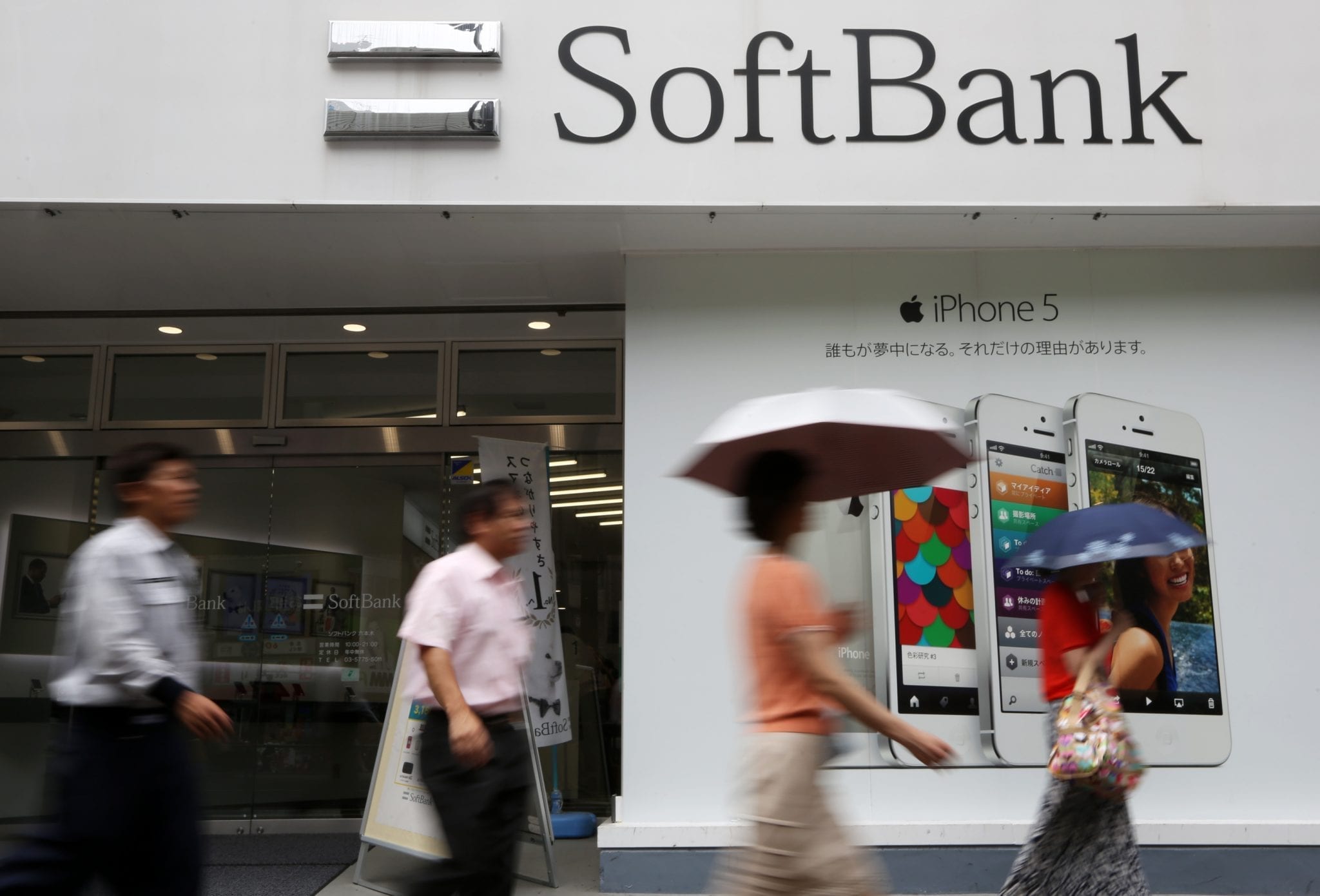
Softbank and its affiliate company, Wireless City Planning, have officially launched the ‘5G Project’.
As the first phase of the project, which was announced in Tokyo last week, Softbank plans to roll out commercial services based on Massive MIMO technology from September 16, a move which Softbank says will make it the world’s first cellco to provide such services.
Under the plan, SoftBank will be deploying the technology across 100 base stations in 43 cities across Japan, of which 30-40% will be deployed in downtown areas of the Tokyo capital.
At the media conference for the launch last week, Shubun Kitahara, director of the network planning department of SoftBank’s mobile technology division, tested at four locations in downtown Tokyo, which showed that massive MIMO increased communications speed by 6.7 times on average.
According to Softbank, corresponding terminals only need to support SoftBank 4G (compatible with TD-LTE). The service is also available on the SoftBank 4G terminals customized for Y!mobile.
Aiming for 5G commercialization in 2020, Softbank last year signed separate research collaboration agreements with Huawei and ZTE covering the development of stopgap technologies on the road towards 5G.
SoftBank has teamed with ZTE to help develop networking equipment based on ZTE’s Pre5G technology, such as the vendor’s Massive MIMO base stations.
Massive MIMO base stations have the capacity to support more than 100 antenna elements, allowing up to eight users to transfer data simultaneously.
SoftBank already has cooperation agreements covering Massive MIMO as well as ultra-dense networks and multi-user shared access technology.
The National Broadcasting and Telecommunications Commission hosted a meeting with representatives from the Bank of Thailand, the Thai Bankers Association and the Telecommunications Association of Thailand.
The participants have agreed on a five-step plan to tighten KYC rules to increase confidence in eBanking and mobile banking in the run up to the launch of Thailand’s Promptpay national mobile payments system.
The NBTC, BOT, TCT and mobile operators will create a set of KYC rules. The NBTC will order telcos to follow them strictly and will evaluate compliance with the new rules.
Banks and mobile operators will launch an awareness campaign for people to tell their banks when their mobile phone or SIM is lost.
If it can be proven that the customer has told their bank that their SIM has been lost, they will not be held responsible for monetary losses.
A system will be set up for banks to be notified automatically when new SIMs are issued. Until such a system is in place, banks will give telcos a watchlist of telephone numbers that are linked to Internet banking, mobile banking or Promptpay accounts for their special attention.
Issuing new SIM cards for accounts linked to bank accounts can only be done in person by the account holder and not via proxy.
Meanwhile, NBTC Secretary General Takorn Tantasit has banned the import of all Galaxy Note 7 phones due to their exploding batteries. Phones from affected batches are immediately banned from being imported and the import of new note 7 batches can only resume once Samsung provides the NBTC with satisfactory electrical and safety test results.
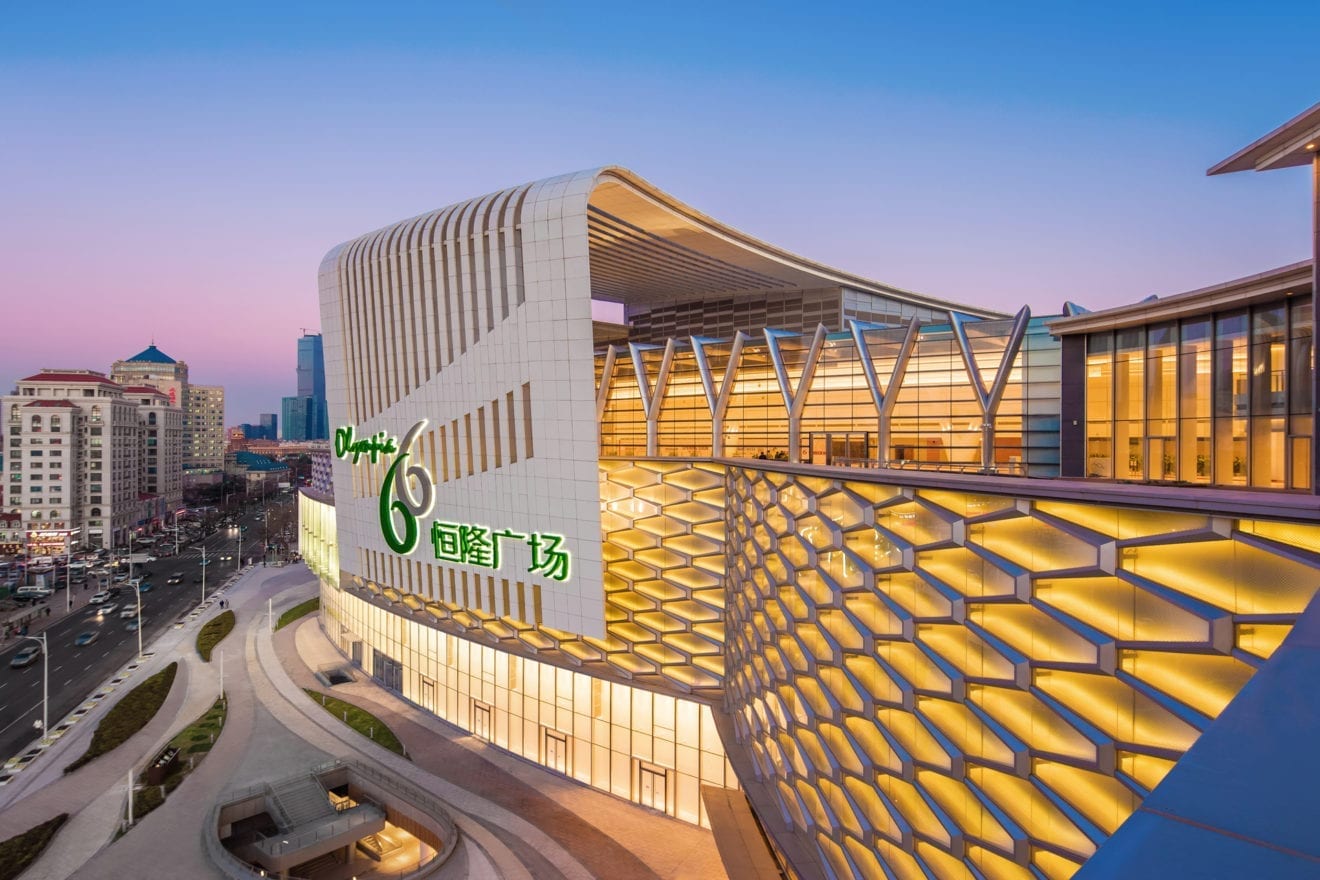
Hang Lung Properties has staged a grand opening for Olympia 66 in Dalian, the Hong Kong-based developer’s eighth commercial complex in China.
Located in the Xigang business and financial district of Dalian, the megamall joins Hang Lung’s other world-class projects in the northeast, namely Palace 66 and Forum 66 in Shenyang, and Riverside 66in Tianjin.
Chairman Ronnie Chan and MD Philip Chen officiated at the event with senior management and guests.
“Although China’s economy remains weak, Olympia 66 has performed on par with expectations since its soft opening in December,” says Chan.
With more than 220,000 sqm of retail space, plus parking for 1200 cars, the mall’s design is based on the design concept of Tai Chi twin dancing carps. It has a 300m-long façade decorated with about 3000 glass ornaments shaped like fish scales, and 9900m of LED lights that can display images and text.
More than 40 brands have made their debut at Olympia 66, including Apple, Cos, Coterie, Nannini and Under Armour. F&B outlets account for 30 per cent of the trade mix, and the mall has an ice-skating rink as well as Dalian’s first Palace cinema with 1600 seats in 10 theatres.
Olympia 66 is the second Hang Lung mall in China to implement the company’s EST (experience, service and technology) program. This enables customers to combine online services with offline shopping, and a WeChat app offers mall news and promotions. There is also a location service to find particular stores, a digital queuing service for F&B outlets, a car-parking tracker and, to be introduced soon, mobile payment at the car park.
Honda Motor Co on Thursday said it was recalling about 668,000 vehicles in Japan to replace air bag inflators supplied by Takata, as part of an expanded nationwide recall announced earlier this year.
Japan’s second-largest automaker said it had recalled models including its Fit subcompact hatchback model, and the Civic and Accord sedan models over passenger-side air bags. Vehicles produced between 2009 and 2011 were affected, it added.
The latest announcement takes Honda’s global tally of recalled air bags to about 51 million, around half of the roughly 100 million slated for recall worldwide over inflators which are at risk of exploding with excessive force.
Defective air bags have been linked to at least 14 deaths and 150 injuries worldwide, and are at the center of the auto industry’s biggest ever product recall.
Thursday’s recall comes after Japan’s transport ministry in May ordered automakers to recall an additional 7 million vehicles in Japan equipped with Takata air bag inflators which do not contain a drying agent, in phases by 2019, following an expanded recall by U.S. transport authorities.
Without a drying agent, the ammonium nitrate-based propellant used in Takata inflators has a tendency to explode violently following prolonged exposure to hot, humid conditions, spraying metal shrapnel into vehicle compartments.
Honda, once Takata’s largest customer, has said that it would stop using Takata-made inflators in its new models, and has stopped procuring replacement inflators from the company.
Battered by the recalls, Takata is looking for a financial backer to help overhaul its business and carry ballooning costs as its stock price has crumbled almost 90 percent since early 2014 and it faces potentially billions of dollars of liabilities.
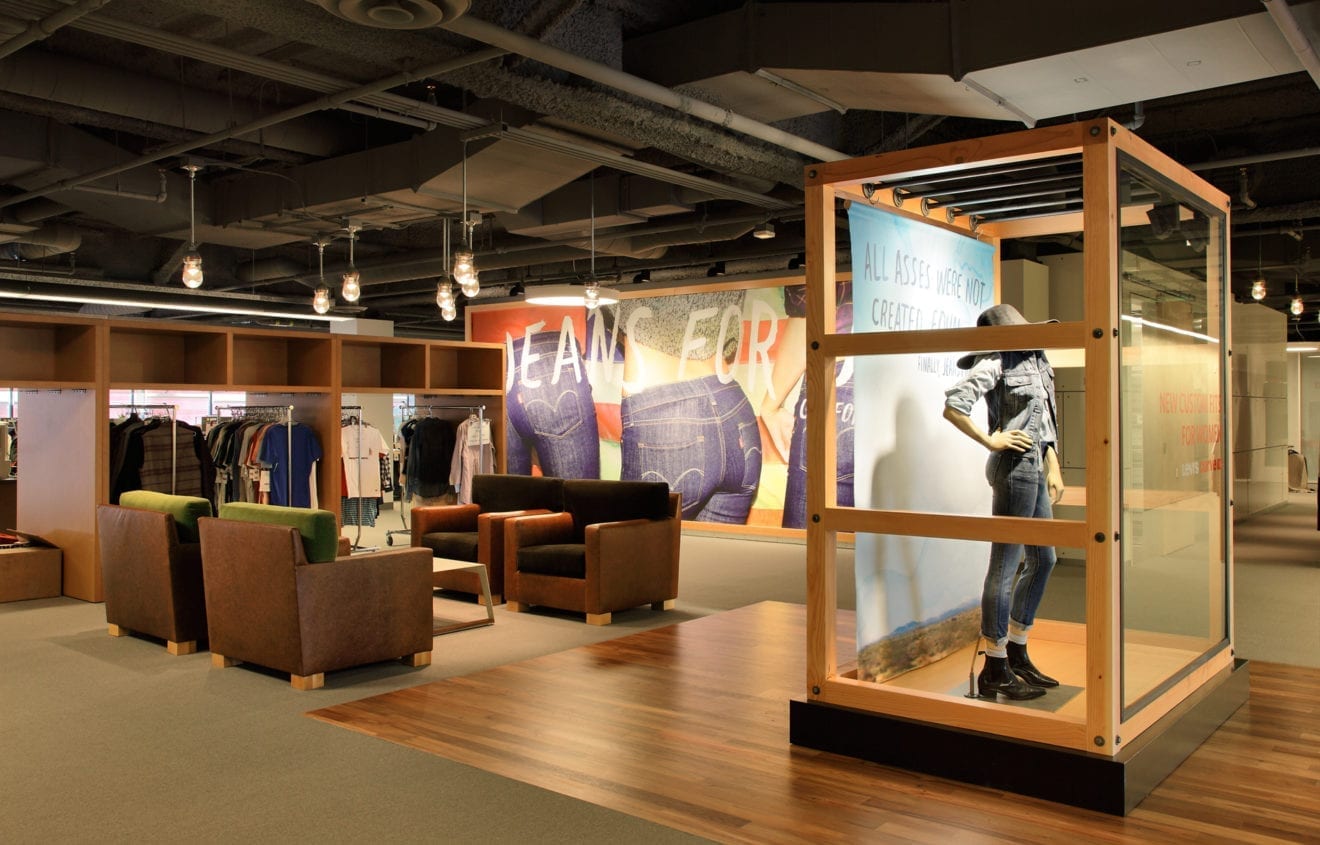
Jeans manufacturer Levi Strauss & Co has made two senior appointments from in house.
Executive VP (global supply chain) and chief transformation officer David Love becomes executive VP and president of Levi Strauss Asia, Middle East and Africa, while senior VP (product development and sourcing) Liz O’Neill is now chief supply-chain officer.
Liz O’Neill, chief supply chain officer
Love remains a member the company’s worldwide leadership team, which O’Neill will be joining. Both will report directly to president/CEO Chip Bergh.
David Love, executive vice president and president of Levi Strauss Asia, Middle East and Africa.
Love is an LS&Co veteran with more than 30 years of product development and sourcing experience. In his new post he will be responsible for leading the company’s commercial operations, spanning all brands and channels, across Asia, the Middle East and Africa (AMA).
He joined the company 1982 as a manager of technical services at Levis’ UK factory, and has since held global positions.
O’Neill joined LS&Co in 2013 to lead global supply-chain sourcing and strategy, a role involving shipping to more than 100 countries. Previously she was at Gap for 13 years and has also worked for The Disney Store in Los Angeles and Abercrombie & Fitch in Ohio.
German retail and trading giant Metro China has launched its first global green store in the Pearl River delta city of Dongguan.
It aims to upgrade its sustainable development in the Chinese market, where it had double-digit growth in its latest fiscal year.
Metro China president Jeroen de Groot says the green renovation of its Dongguan Wanjiang store is estimated to help it cut its annual energy consumption by as much as 50 per cent. It makes full use of clean energy, namely solar and wind power.
The renovation cost more than 5 million yuan (US$75,700), and Metro plans to convert all its mainland stores to become green.
“Innovation and change have always been the driving forces for sustainable growth at Metro, and the green renovation of the Dongguan Wanjiang store is our new endeavour in the field of energy conservation and environment protection, aiming to promote long-term social sustainability,” says de Groot.
Metro opened its first mainland store in Shanghai in 1996 and now has 84 stores employing more than 11,000 people in 58 Chinese cities. Its annual sales volume reached €2.66 billion (US$3 billion) during the fiscal year to September 30 last year, up 17.4 per cent.
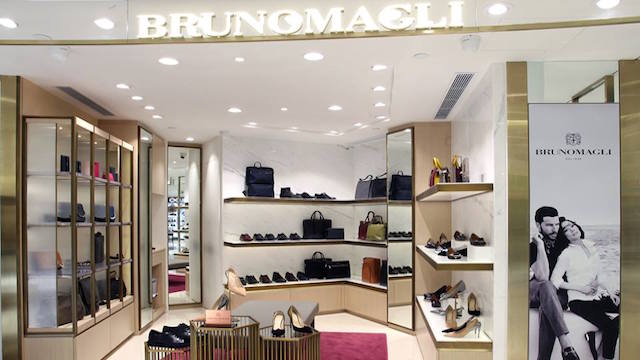
Luxury Italian fashion house Bruno Magli Hong Kong has established its first foothold in Asia with a shop-in-shop retail boutique.
Marking its 80th anniversary, the heritage brand earlier announced expansion plans for Asia.
Its debut outlet is on the new Shoes Town floor at the Sogo department store in Causeway Bay. It is the first of 16 mono-branded stores Bruno Magli plans to roll out in China next year and beyond.
Covering 226 sqft, the boutique showcases men’s and women’s footwear collections, women’s handbags, men’s bags and small leather goods, all crafted in Italy from nappa leather and suede. A new retail concept for the store was created by New York’s Kramer Design Group, featuring Carrara marble punctuated with accents of the brand’s signature colour palette, and highlights of burgundy combined with brass.
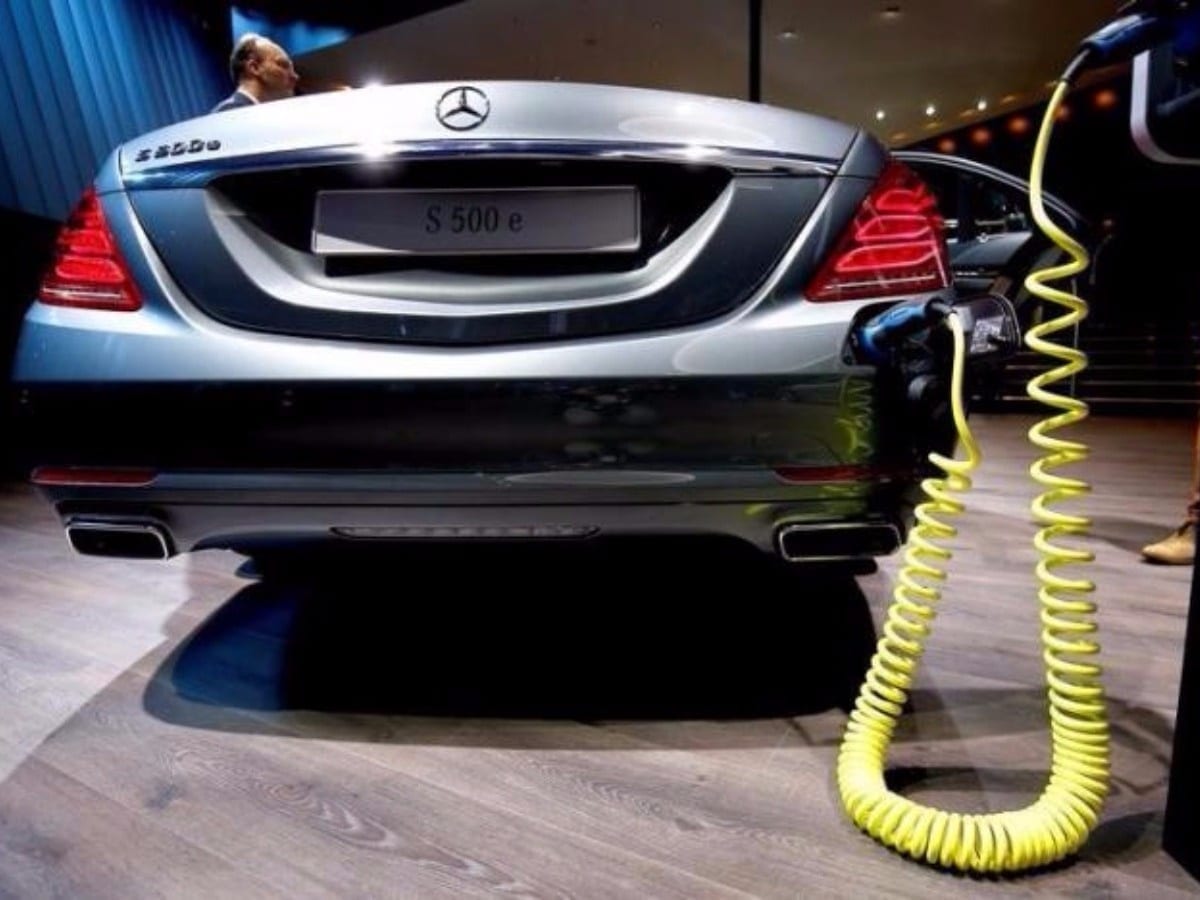
German carmaker Daimler plans to roll out at least six, and possibly as many as nine, electric car models as part of its push to compete with Tesla and Volkswagen’s Audi, a person familiar with Daimler’s plans told Reuters.
The maker of Mercedes-Benz cars remains on track to unveil a new electric car at the Paris motor show next month. In July, the German carmaker said it had accelerated development of premium electric cars, a segment currently dominated by United States-based rival Tesla.
German trade magazine Automobilwoche earlier cited company sources as saying Daimler would bring to market more than six electric car models between 2018 and 2024.
German firms are investing heavily in electric cars, a segment once neglected by the industry as customers shunned their limited operating range and high cost.
But a growing political backlash against diesel fumes and recent advances in battery technology to increase the reach of an electric car by up to 50 percent have spurred major investments by Volkswagen, Daimler and suppliers such as Bosch and Continental.
Reuters’ source said Mercedes would also make an SUV model with a plug-in hybrid engine powered by fuel cells, which would have a range of up to 50 km (30 miles) on battery power and would then run on electricity generated by hydrogen.
The Alibaba Group which operates Tmall is the biggest e-commerce platform in China with more than 400 million users and 120 million clicks per day. Tmall is Alibaba’s B2C online retail platform that has recently listed other big brand wine accounts, such as Wine Australia, Mondavi andASC Fine Wines.
Earlier this year, Jack Ma, founder and executive chairman of Alibaba Group announced the launch of the first ever ‘Wine Day’. Hoping to emulate the success of ‘11.11 Singles Day’ which recorded a massive US$14.32 billion in sales in just 24 hours, this event, called the “9.9 Wine & Spirits Festival”, took place today at 9am CST.
The Santa Rita online flagship store will offer key wines from their portfolio along with specific offers and promotions targeted China’s 688 million internet users – most of whom connect to Tmall via their smartphones.
Terry Pennington, Santa Rita’s east region export director, said the listing was a “significant milestone” in the estate’s route-to-market in China.
“This opportunity provides an excellent platform not only for retail but one from which we can communicate to and with the many millions of Chinese e-consumers our brand heritage, values and story,” he said.
Established in 1880, Santa Rita is one of Chile’s oldest and most renowned wineries and owns over 2,500 hectares in the wine valleys of Limarí, Casablanca, Leyda, Maipo, Colchagua, Apalta, Maule, Rapel and Curico.
Brands in the Santa Rita portfolio include 120, Secret Reserve, Reserva, Medalla Real, Floresta, Pehuen, Triple C and Bougainville with the top wine being Casa Real.
Santa Rita is part of the Santa Rita Estates (SRE) stable comprising three key wine brands: Santa Rita and Carmen from Chile and Doña Paula from Argentina.
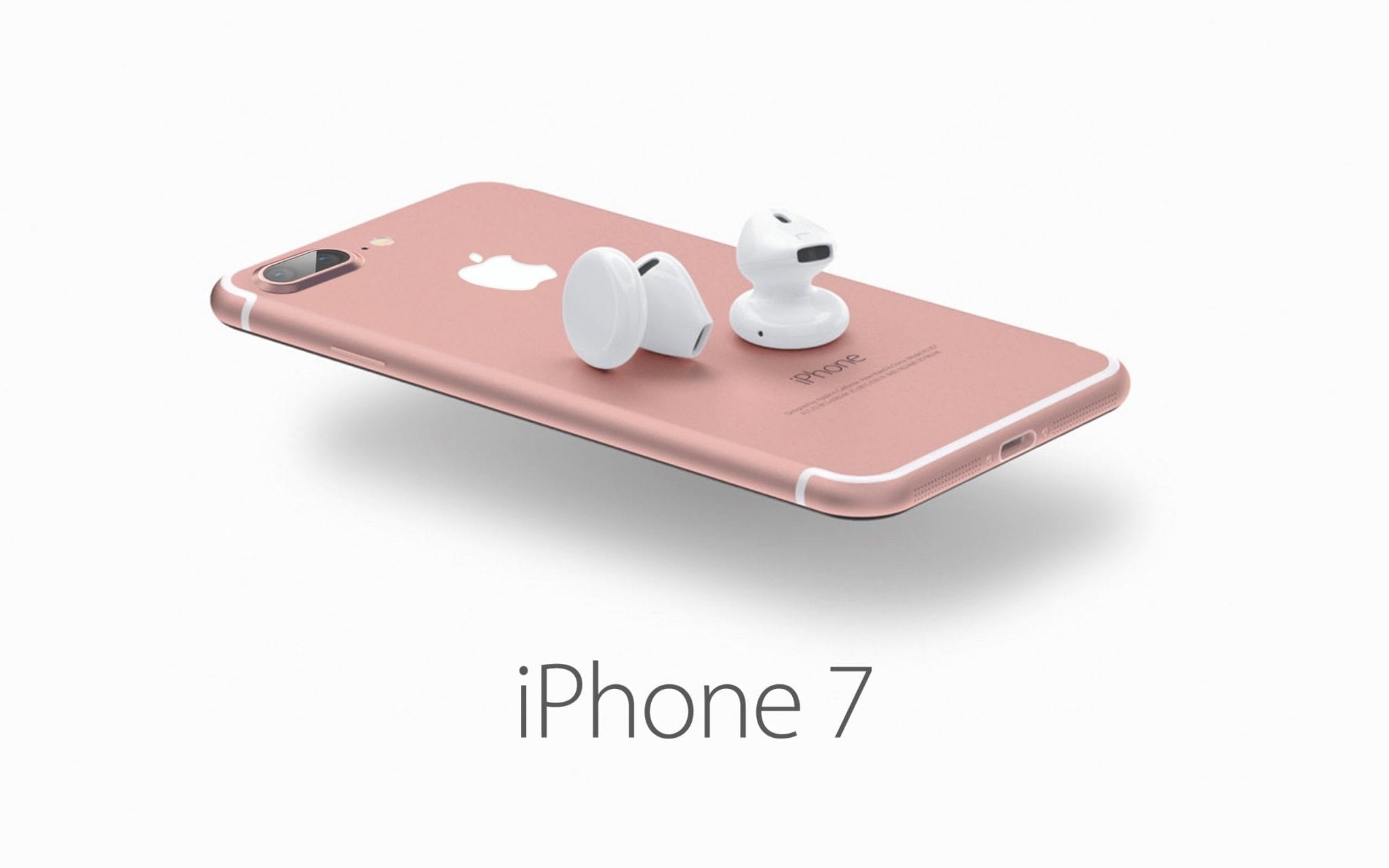
This is clearly a big change in the industry, and as big changes oftentimes go, people aren’t immediately excited about it. People also seem frustrated with Apple’s new wireless headphone option, the “AirPods”, which will retail for around $160. That’s even more impressive when you consider Apple Watch was only on sale for 8 months of the year. It means for all those who sit at their desks,charge the phone and plug in their headphones to listen to music, Apple’s latest smartphone isn’t going to cut the mustard -you simply can’t do both. Apart from having aLightning input at the rear of the dock, there is a 3.5mm output jack as well.
We expect more third-party solutions to arrive in the next few weeks to make this less of a pain in the rear. This is only slightly more useful than the one port on the phone. AirPods auto-pair with all your iCloud-connected devices except Apple TV.
Schiller mentioned that the Lightning adapter Apple includes with every iPhone 7 is a way the company is helping ease the transition from the 3.5 mm jack. Apple killed the 3.5mm audio port with the iPhone 7 and iPhone 7 Plus.
Apple initially quoted shipping dates of two to three weeks after September 16, but the company quickly pushed ship dates back to four to six weeks for some versions of the black iPhone 7s. And, these standalone left/right AirPods only play music when they detect that they’re in your ear.
They’re just standard Bluetooth, with a little bit of “secret sauce” for easy pairing with Appledevices. When Apple unveiled the iPhone 7, people took issue with its lack of a headphone jack.
“Apple has a very long history of removing features we all thought were necessary, and then convincing us that we didn’t need them”, said Ask, noting that Apple paved the way in phasing out the use of floppy discs and optical drives in computers.
The Bluetooth or Lightning allow for the transfer of audio signals to the headphones digitally.
Mr. Praphan Rangsiyopas (middle), Vice President Marketing and Mrs. Waraporn Nilpanich (right), Vice President Credit Card of AEON Thana Sinsap (Thailand) Public Company Limited together with Ms. Nopchanok Tantiwechwuttikul (left), Payment and Loyalty Manager of The Shell Company of Thailand Limited offer special promotion for AEON credit cardholders, Accumulate spending amount of 3,000 Baht and up at Shell Service Station via AEON Gold and AEON Classic credit card, cardholders will get cash back up to 500 Baht per month.
AEON credit cardholders can enjoy this promotional campaign by registering through SMS by typing SH follow by 16 Digits of AEON credit card number without space, and send to 4589123 or register free at www.aeon.co.th. This campaign starts now until March 31st, 2017.
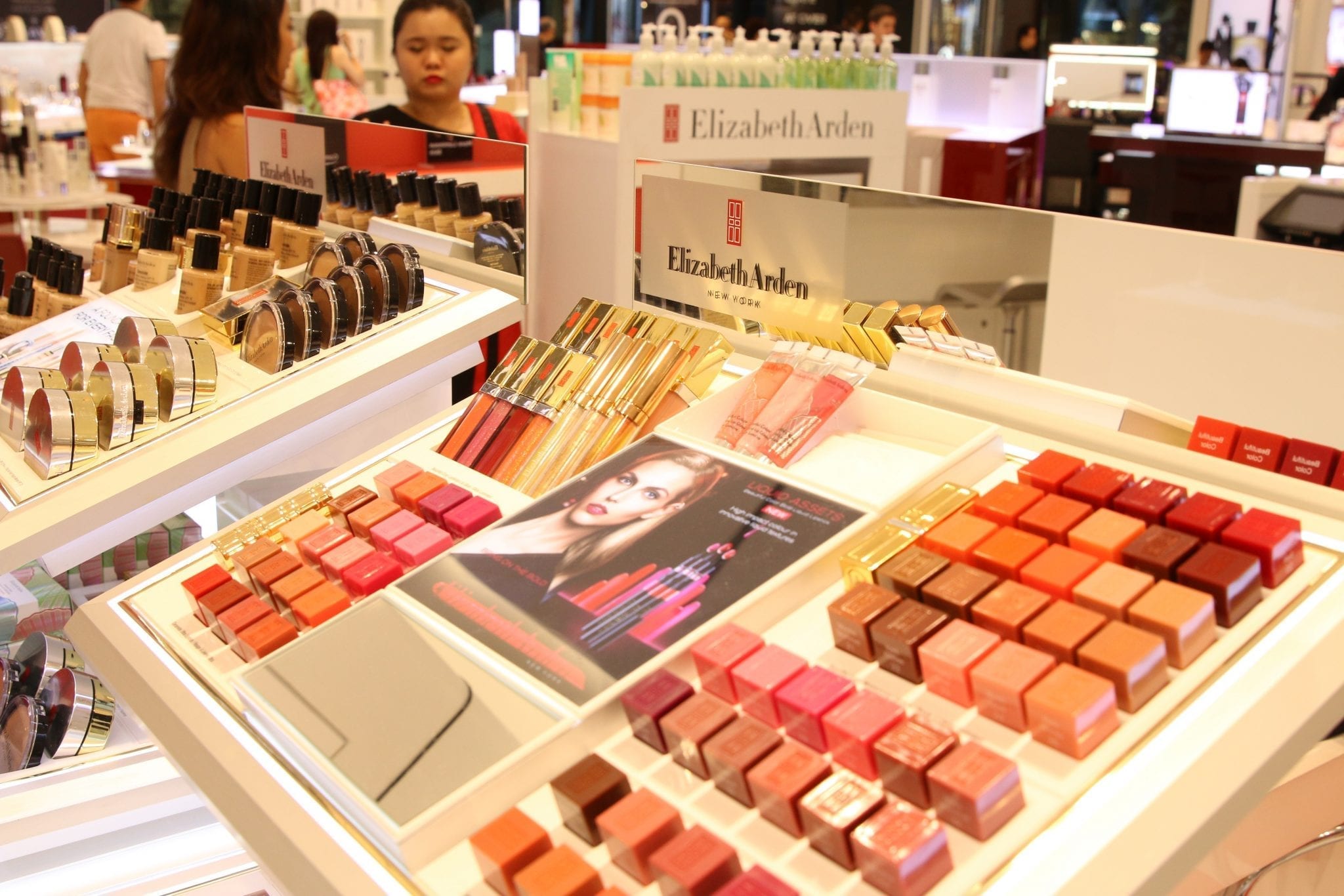
American brand Elizabeth Arden, one of the oldest names in the beauty industry, is embarking on an ambitious repositioning plan and its president is counting on her Singapore roots to steer the beauty behemoth ahead of the competition.
“Being a Singaporean, what you learn since young is to always stay ahead of the game,” said Ms JuE Wong, who took the helm at the more than century-old brand slightly more than a year ago, becoming the highest-ranked Singaporean in a multinational beauty company.
“When I was growing up, there was only one university. If you (didn’t) make it to the National University of Singapore (NUS), you basically (had) to think of somewhere else to go,” said the 49-year-old, who eventually opted to pursue her undergraduate studies in Australia after missing out on her first choice to read law at NUS.
“That’s why I think I’ve always been conditioned and trained to be an outside-the-box thinker,” she added.
This sense of fast-thinking adaptability is what Ms Wong wants to inject into Elizabeth Arden, as the iconic brand seeks to win over consumers from the younger generation amid the constant emergence of newer brands and a changing retail world in a digital age.
While the brand’s 106 years of heritage underscores “trust and credibility that can only be earned over time”, Ms Wong admitted that it can also, at times, work as an obstacle when it comes to attracting younger consumers, especially those between the ages of 28 and 40. Hence, the company is turning its target to even-younger millennials who have shown a greater willingness to give the brand a try.
“When we did our consumer insights, we found that people from the age group of 28 to 40 know who we are and know enough to often think ‘This is my mother’s brand’. On the other hand, those younger than 25 have not heard that much about us. They do not have any perceived baggage and so (are) willing to give us a chance.”
To appeal to this group of digital-savvy millennials, Elizabeth Arden stepped up its digital strategy with a social media campaign called “From the desk of #LizArden” and partnered beauty app YouCam Makeup. According to Ms Wong, both initiatives have been a success, especially the latter, which delivered a sizeable boost to its e-commerce sales.
Available in the US and China, the app is equipped with facial recognition technology that allows users to virtually try on various makeup products and provides direct links for shoppers to make purchases on Elizabeth Arden’s online platform.
“We met the developers in September, had a soft launch in October and by the time we rolled out officially in December, we already had 58 million downloads and 22.9 per cent of these reposted a selfie marked with our name. I had almost a million dollar in sales (within) 30 days,” Ms Wong told Channel NewsAsia.
In Singapore, the company launched a pop-up store, featuring a smart mirror and an interactive wall that tells the history of Elizabeth Arden, outside Robinsons at The Heeren to mark the roll-out of its latest product earlier this week.
“By making ourselves more cutting-edge and more engaging for the younger audiences, I think we make ourselves relevant,” said Ms Wong.
Even in a downbeat brick-and-mortar retail market, Ms Wong remains confident that the beauty giant can turn around the situation by identifying pockets of growth in areas such as the colour cosmetics and spa categories.
For instance, the company started introducing services from its Red Door Spa brand at selected retail counters in the US. Sales at these counters have since posted “double-digit growth”, according to Ms Wong. “We are offering a point of differentiation … and I think that’s how you cultivate a new generation to experience what the brand is all about.”
Nonetheless, the businesswoman acknowledged that the brand’s digital ventures are no walk in the park. Coupled with the fact that it would be the first time she is taking on a leadership position at a giant such as Elizabeth Arden, Ms Wong admitted that it has been “a bit of a leap” but she was not daunted.
Elizabeth Arden Pop-op Store at Orchard Road
Prior to becoming president of the Elizabeth Arden brand, the Singaporean was the chief executive of venture-backed cosmeceutical company StriVectin as well as Astral Health and Beauty, and held senior positions at then-emerging brands including Murad and N.V Perricone MD.
“Compared to the smaller brands, there’s enough resources at Elizabeth Arden and I was able to push a lot of my ideas. Of course, if I made a mistake, it would be amplified but does that make me less of a risk taker? No … and the Singaporean in me, ‘kiasu’ as we call it, means that I’m not going to lose,” she added with a chuckle.
“Even though I’ve been away longer than I lived in Singapore, but once a Singaporean, always a Singaporean.”
DARING TO GO: SWITCHING FROM COMMODITY TRADING TO SKINCARE
This huge appetite for risks is also observable from Ms Wong’s resume. After graduating from the Australian National University with a degree in political science, she decided to take a plunge into the trading world and later spent seven years on the trading floor at Cargill Commodities.
“I wanted something out of my comfort zone and it was very challenging,” Ms Wong recalled. “We had a daily scorecard of the books that were closed … it was like playing chess and at the end of every day, you either checkmate or you get checkmated.”
A “self-driven reason of wanting to know better ways of skincare” led Ms Wong into the beauty industry in the US during the 2000s, and for the Singaporean, there was no mountain that was too high to conquer.
“After leaving Murad to join private equity-owned Perricone, it was since that time (that) I never had to look for a job because every time I take a brand and turn it around, another private equity firm would come to me or the same private equity firm would offer me another brand,” said Ms Wong, who was nominated as the Top 50 women to watch by Wall Street Journal in 2004.
“It was very validating because I realised that at the end of the day, you can get so much recognition if you had a real scorecard. And in that regard, I think my days in commodity trading really prepared me for today.”
While her fast-talking persona and dare-to-go attitude has resulted in “some hindrances” at the start of her career, Ms Wong does not regret the career switches that she has made, and hailing from the little red dot on the world map definitely has not stopped her from climbing up the corporate ladder in the Big Apple.
Ms Wong said: “My mother would tell you this story … when I was 12, I told her that one day I was going to work in the Big Apple and she replied to me saying, ‘Don’t be silly’. I don’t remember this … but if I did, a part of me perhaps realised that Singapore may be a small country but it had a very good reputation.
“Literally everybody has heard of us and we never really had to explain where we come from. And because I came from a country that’s so well respected, it gave me the courage to dare to dream.”
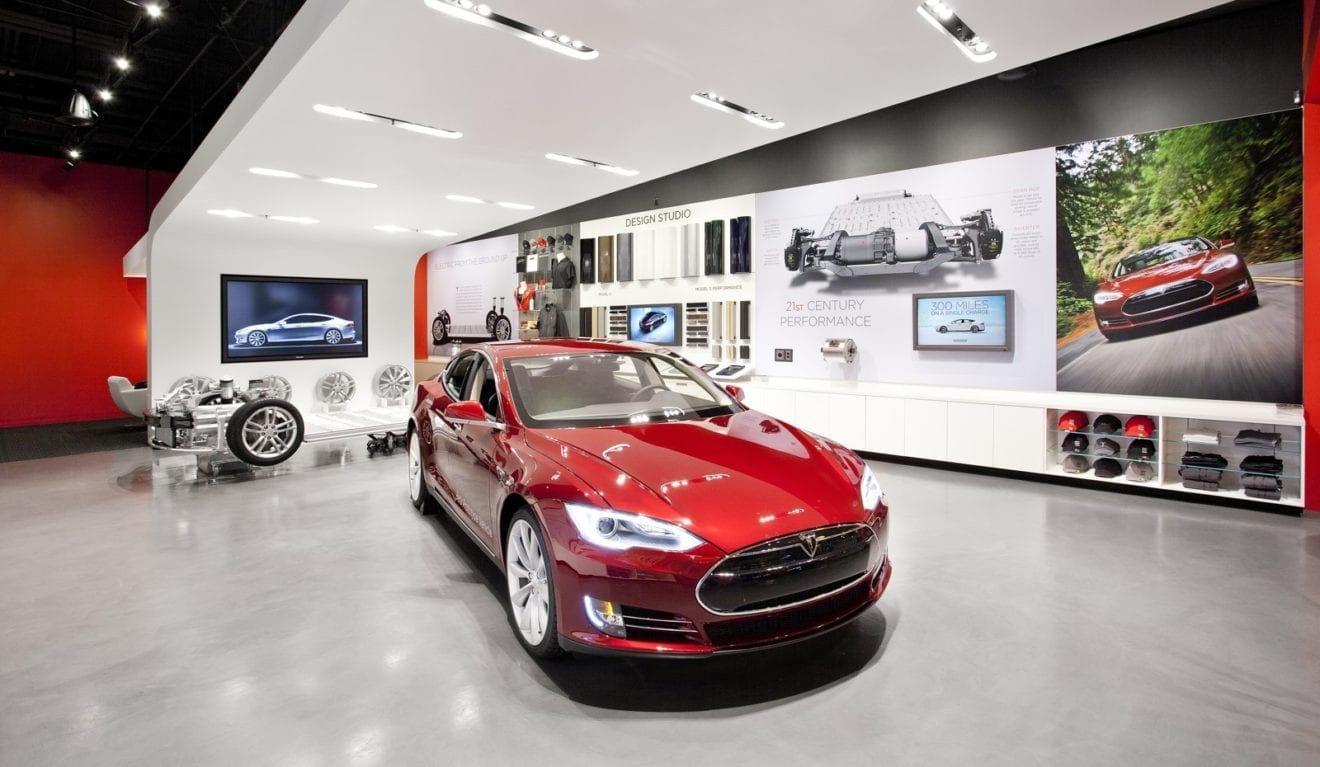
Tesla Motors Co Chief Executive Elon Musk said on Sunday the automaker was updating its semi-autonomous driving system Autopilot with new limits on hands-off driving and other improvements that likely would have prevented a fatality in May.
Musk said the update, which will be available within a week or two through an “over-the-air” software update, would rely foremost on radar to give Tesla’s electric luxury cars a better sense of what is around them and when to brake.
New restrictions of Autopilot 8.0 are a nod to widespread concerns that the system lulled users into a false sense of security through its “hands-off” driving capability. The updated system now will temporarily prevent drivers from using the system if they do not respond to audible warnings to take back control of the car.
“We’re making much more effective use of radar,” Musk told journalists on a phone call. “It will be a dramatic improvement in the safety of the system done entirely through software.”
Tesla’s Autopilot, introduced in October, has been the focus of intense scrutiny since it was revealed in July that a Tesla Model S driver, Joshua Brown, was killed while using the technology in a May 7 collision with a truck in Florida.
The National Highway Traffic Safety Administration (NHTSA) has been investigating Tesla’s Autopilot system since June because of the fatal accident. The agency had been briefed on the changes by Tesla and would review them, spokesman Bryan Thomas said. He declined to offer an update on the Tesla investigation.
Musk said it was “very likely” the improved Autopilot would have prevented the death of Brown, whose car sped into the trailer of a truck crossing a highway, but he cautioned that the update “doesn’t mean perfect safety.”
“PROBABILITY OF SAFETY”
“Perfect safety is really an impossible goal,” Musk said. “It’s about improving the probability of safety. There won’t ever be zero fatalities, there won’t ever be zero injuries.”
One of the main challenges of using cameras and radars for a braking system is how to prevent so-called false positives, in which a car might think an overhead highway sign, for example, was an obstacle to be avoided.
Using radar and fleet learning, rather than relying primarily on cameras, would solve that problem, Musk said.
“Anything metallic or dense, the radar system we’re confident will be able to detect that and initiate a braking event,” he said.
Silicon Valley-based Tesla is known for its innovation in luxury electric vehicles but some critics, including rival carmakers, have said it was hasty in rolling out Autopilot. Tesla stood by Autopilot after the fatality.
The revised system will sound warnings if drivers take their hands off the wheel for more than a minute at speeds above 45 miles per hour (72 kph) when there is no vehicle ahead, Musk said.
The warning will sound after the driver’s hands are off the wheel for more than three minutes when the Tesla is following another car at speeds above 45 mph. The dashboard also will flash a pulsing light.
If the driver ignores three audible warnings in an hour, the system will temporarily shut off until it is parked, Musk said.
Advanced Autopilot users, rather than new users, were most likely to ignore warnings to put their hands back on the wheel, Musk said.
Besides the fallout from the fatality, Musk has had to prepare for the Model 3 mass-market vehicle due late next year and completion of its Nevada battery factory, while trying to sell skeptical investors on the merits of a proposed acquisition of SolarCity.
On Sept. 1, SpaceX, where Musk serves as CEO, sustained what he later called “the most difficult and complex failure” in the commercial space company’s history when a Falcon 9 rocket exploded on its launch pad in Cape Canaveral, Florida.
“One of the worst weeks ever, really,” he told reporters.
Musk said he had wanted to improve Autopilot’s capabilities last year but was told it was impossible to do so without incurring more “false positives,” such as a car braking suddenly for a harmless tin can.
In July tweeted publicly that he was encouraged by talks with supplier Bosch about improvements to radar.
“I wish we could have done it earlier,” he said on Sunday. “The perfect is the enemy of the good.”
Pomo House International, the leading brand of a child loss prevention smart watch and other innovative gadgets for modern family has successfully made a hit in SEA and is now expanding its brand to Europe, USA and LTA. “I believe the most important thing enabling me to become successful is to do what I love. There are always obstacles and a chance of going bankrupt in every businesses. However, if we do the business we love, we will have strength to move on”, says Mr. Chatchai Tangchittrong, Director of Pomo House International Co.,Ltd.
“POMO Kids Watch is our first product that corresponds to our concept “Family Love is All Around”. Besides generating business, we have planned to lift up social awareness regarding family’s care and mutual happiness between parents and their kids.” The ideas of inventing the product to support family’s love and preventing missing children have been combined and conveyed through the development of what becomes child loss prevention smart watch to connect family members anywhere they are and allow children to explore the world with safety.
With great success of the first two series of child loss prevention smart watch “Pomo Rainbow” and “Pomo Moji”, Pomo House has continued to develop the latest series called “Pomo R2”. This exclusive child loss prevention smart watch is equipped with unique functions that parents and their kids can enjoy together. Triple-Mode Smart Locator (Wi-Fi/GPS/LBS), splash proof and color touch screen are outstanding features of this model.
This year Pomo House is launching a new product called “POMO Bebe,” another high technology of gadget for newborn baby. Coming with the concept of “God Fairy”, your baby will always be safe and protected. This device is designed to solve parents’ concern on their baby’s health. This latest innovation comes with unique features such as temperature scan mode, sleep quality, movement tracking and child loss prevention. “We realize how meaningful it is for parents to experience the moment when their baby opens the eyes to see the world. The first concern for baby is fever as it can affect baby’s immune system. Therefore, this device can be a little gift performing as a guardian for your little angel”, says Mr.Chatchai.
Pomo House is also secretly working on product development process for another new innovation to answer every parents and their kids’ lifestyle. This product is expected to be released into the market by the end of this year.