Author: Mei Ling Tan

  • Lolalola closes online store

    Lolalola closes online store

    Indonesian online lingerie store Lolalola closed yesterday, but customers can still shop on its social-media platform.

    Lolalola says incoming orders will be processed “normally”.

    There has been no word yet from the startup on why it decided to close down the service, but it could be related to the increasingly tight competition among fashion eCommerce startups in Indonesia, says DailySocial. Berrybenka and SaleStock last year laid off employees in order to save their businesses, while Pink Emma temporarily shut down its service before resuming in September.

    Under CEO Donna Lesmana, Lolalola officially launched in March 2015 after being active for six months.

    Claiming to have been inspired by global lingerie brands such as Agent Provocateur and Victoria’s Secret, the startup aimed to “change the way Indonesian customers shop for lingerie” by providing products from local and international brands.

    Lolalola is backed by Ardent Capital and received logistics support from aCommerce. When the startup tested its service for Thai market, it claimed to have sold out within two weeks.

  • Sino Grandness to sell through WeChat Food

    Sino Grandness to sell through WeChat Food

    Sino Grandness Food Industry Group’s full range of own-branded products will be sold online through Wechat Food.

    A mobile platform has been developed by Wechat Food, and under the agreement products such as Garden Fresh beverages, Grandness canned food and Hao Tian Yuan snack food will be available.

    Sino Grandness chairman/CEO Huang Yupeng says the collaboration with Wechat Food is in line with government initiatives to promote the new economy with online and offline business models working together “to achieve synergies in cost savings and to generate greater turnover.”

    He says that although Sino Grandness still generates its revenue predominantly through offline transactions, he is aware of the rapid growth of retail eCommerce sales in China.

    “We are positioning for this new trend through working with partners with established platforms such as Wechat Food to connect the supply chain from the farms to the retail points.”

  • Philippines stands to gain in new export markets

    Philippines stands to gain in new export markets

    Philippines stands to gain in new export markets

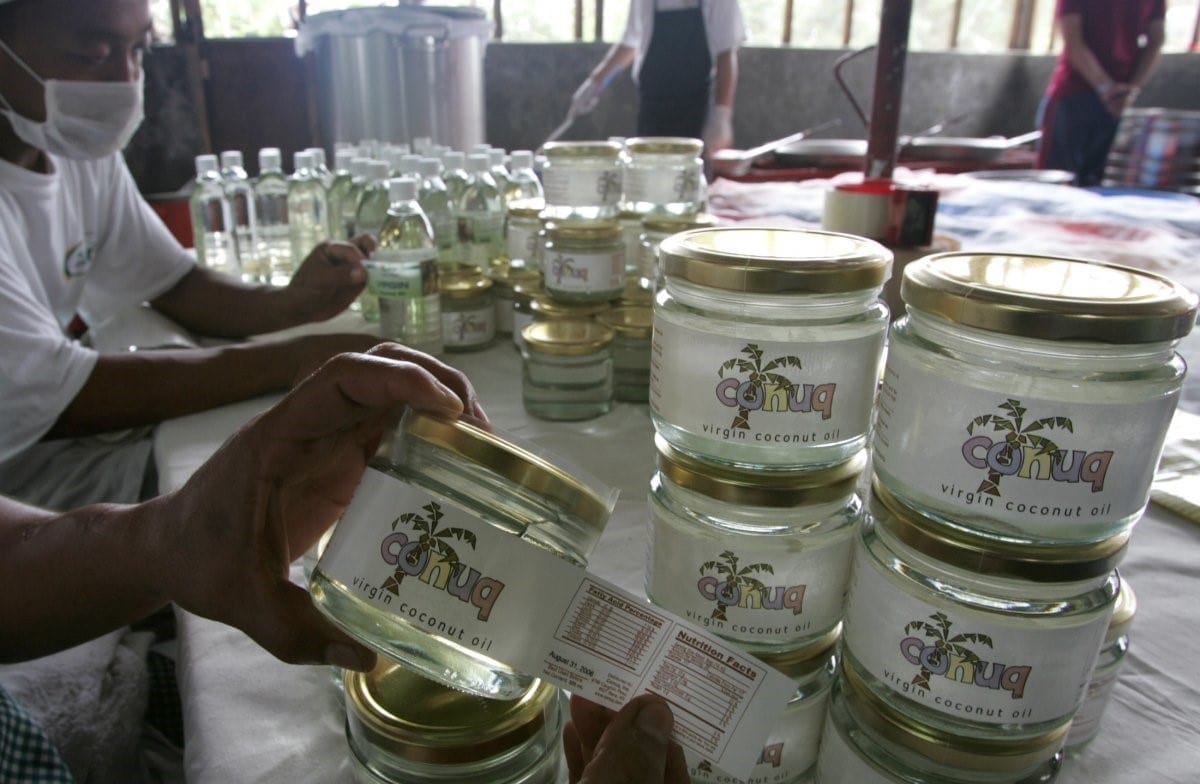
    The Philippines stands to profit from agriculture products with its entry into new export markets in an attempt to diversify their economy.

    In particular, virgin coconut oil is in demand in South Africa, where the coconut is not a native tree, its embassy in Manila said in a statement.

    “If someone sees you in a retail store with coconut oil, they classify you as someone from a high-end society. It is very expensive. So it has a good market in South Africa,” Deputy Head of Mission Tshire Kau said.

    Even though high volumes of Philippine bananas are shipped to the Persian Gulf, the demand for the fruit, as well as other agriculture products from the Philippines, continues to exceed supply in Iran.

    Consumers want products not easily available in local stores but which are widely produced or grown in the Philippines.

    “So many Iranian companies are still requesting for more bananas from the Philippines,” Iranian Ambassador to the Philippines Mohammad Tanhaei said.

    He explains the growth of exports and the growing variety of foods consumed by the people of India, another potential export market, stating:

    “India is one of the world’s fastest growing economies, enabling its population to acquire large disposable incomes, a big portion of which is spent on food. Indians now like to experiment with what they eat and have developed a huge appetite for non-traditional Indian cuisine, Ramakrishnan noted”


  • MDS ups stake in MatahariMall.com parent

    MDS ups stake in MatahariMall.com parent

    Matahari Department Stores (MDS) has increased its ownership in Global eCommerce Indonesia (GEI), the parent company of Indonesian eCommerce startup MatahariMall.com.

    MDS has paid Rp164.9 billion (US$12.2 million) for 7.3 billion shares, or 3.62 per cent of paid-up capital, in GEI. This gives it a 12 per cent share in total.

    MDS last ramped up its stake in GEI in January last year to 10.33 per cent, but its ownership was diluted to 8.38 per cent over the 12 months because of investments by other shareholders. In October, Mitsui & Co announced plans to inject $100 million in GEI over the next 12 months, and MDS has decided to expand its control gradually.

    “The company sees large potential in the eCommerce sector. With increased stakes in the platform, Matahari secures opportunities for huge returns in the future. We will also be able to synergise MatahariStore.com into MatahariMall’s platform, which will in turn widen reach across the country as well as boost Matahari’s net profit,” the company says in a statement.

    MDS has 148 stores in 68 cities across Indonesia.

    Proceeds from the new funding round will be used to improve market share, and to strengthen its position as Indonesia’s “leading eCommerce player”.

    MatahariMall warehouses and ships products from about 5000 affiliated sellers, and also procures goods directly to sell independently.

  • A selfie to verify your MasterCard? Why Not

    A selfie to verify your MasterCard? Why Not

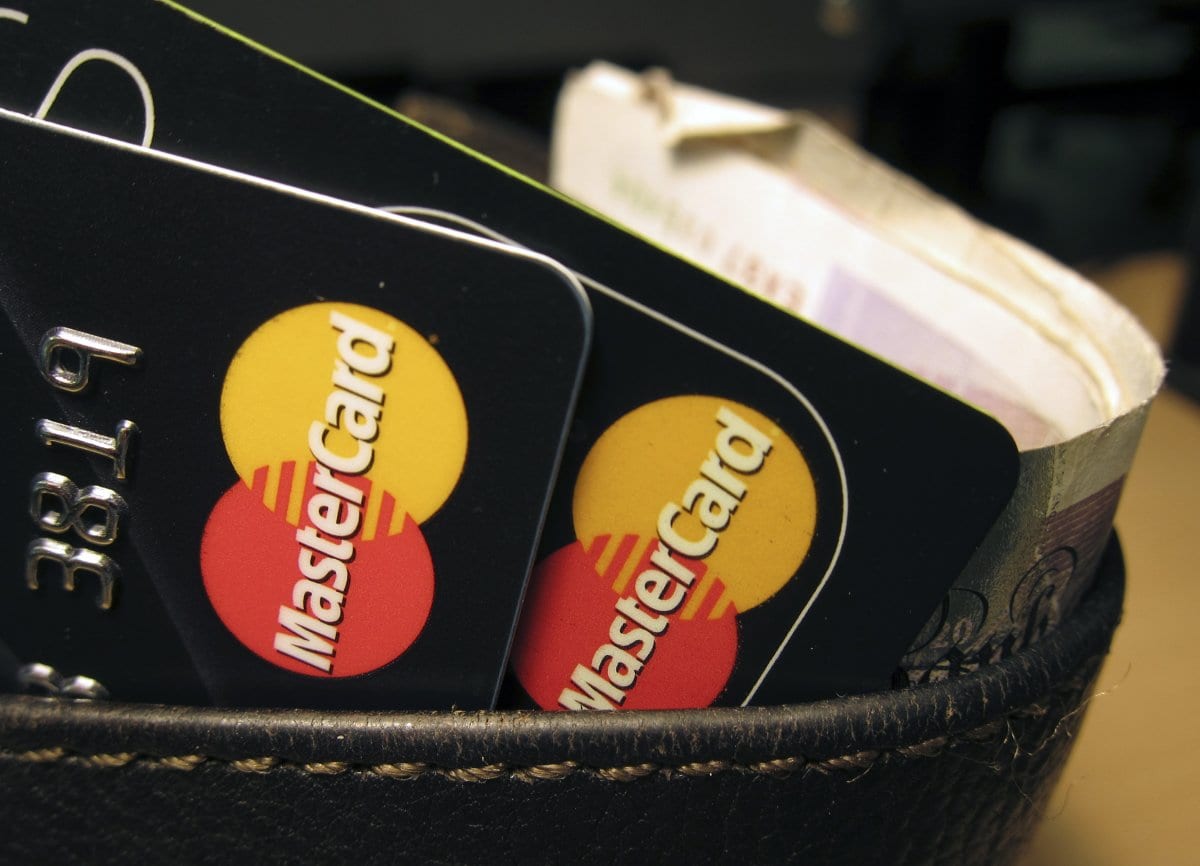
    Moving from social media to commerce, the “selfie” is about to become verification for online transactions for Mastercard users.

    An executive of the credit-card company says the “selfie verification” technology will be introduced in Singapore and other parts of Asia this year.

    Known as Mastercard’s Identity Check, the system will let card holders use facial-recognition technology to match selfies against their photograph on file to ensure the veracity of online transactions.

    “There could be an issue with twins, but  I would need to have a bad twin,” says Mastercard executive VP for identity solutions Bob Reany. “They would have to break into my house, steal my phone and be at my location.”

    With its prototype, Mastercard will convert head shots into encrypted code to be stored on a mobile device. The “selfie” would not need to be a perfect match, and banks would set the threshold for the accuracy of the matching.

    “We’ll advise the bank and say ‘You don’t want to be too open and have only 20 per cent of the things match’. Then, everybody and their dog could use it,” says Reany.

    The technology can either be as a standalone app or be integrated into an existing bank app. It can also work with other payment brands.

    No specific date has been set for the launch in Singapore, where some banks provide not just tokenisation but also use two-factor authentication for transactions.

    Already the technology has been rolled out in 12 markets in Europe.

    More sophistication

    Mastercard data shows that the rate of online payment fraud is more than three times higher than for physical transactions. Against this, banks are approving just 83 per cent of online transactions, compared to the 96 per cent for physical transactions.

    Reany says cybercrime is also gaining in sophistication, with new forms of malware being evolved. He says the fraudsters are smart. “They are getting PhDs and are finding ways to commit fraud. What we have to do is ruin their business model.”

    He says this runs along the enormous potential for growth in the online payment space, with the number of online and mobile transactions expected to double to 40 billion by 2020.

    Tokenisation already cuts the risk of credit-card numbers being stolen from single individuals and the details being sold in larger batches on the dark web. With tokenisation, a card number is replaced by a unique set of numbers not tied to actual account details. Mastercard is now working to fill another gap by tokenising the card details merchants already have on file.

    Reany says banks and payment companies need to combine various tools to create more secure authentication. This should so significantly raise the costs for criminals to exact fraud that the returns are no longer worth it. “If it’s not a scalable attack, we’re winning.”

  • Lina’s Paris seeking partners in SE Asia

    Lina’s Paris seeking partners in SE Asia

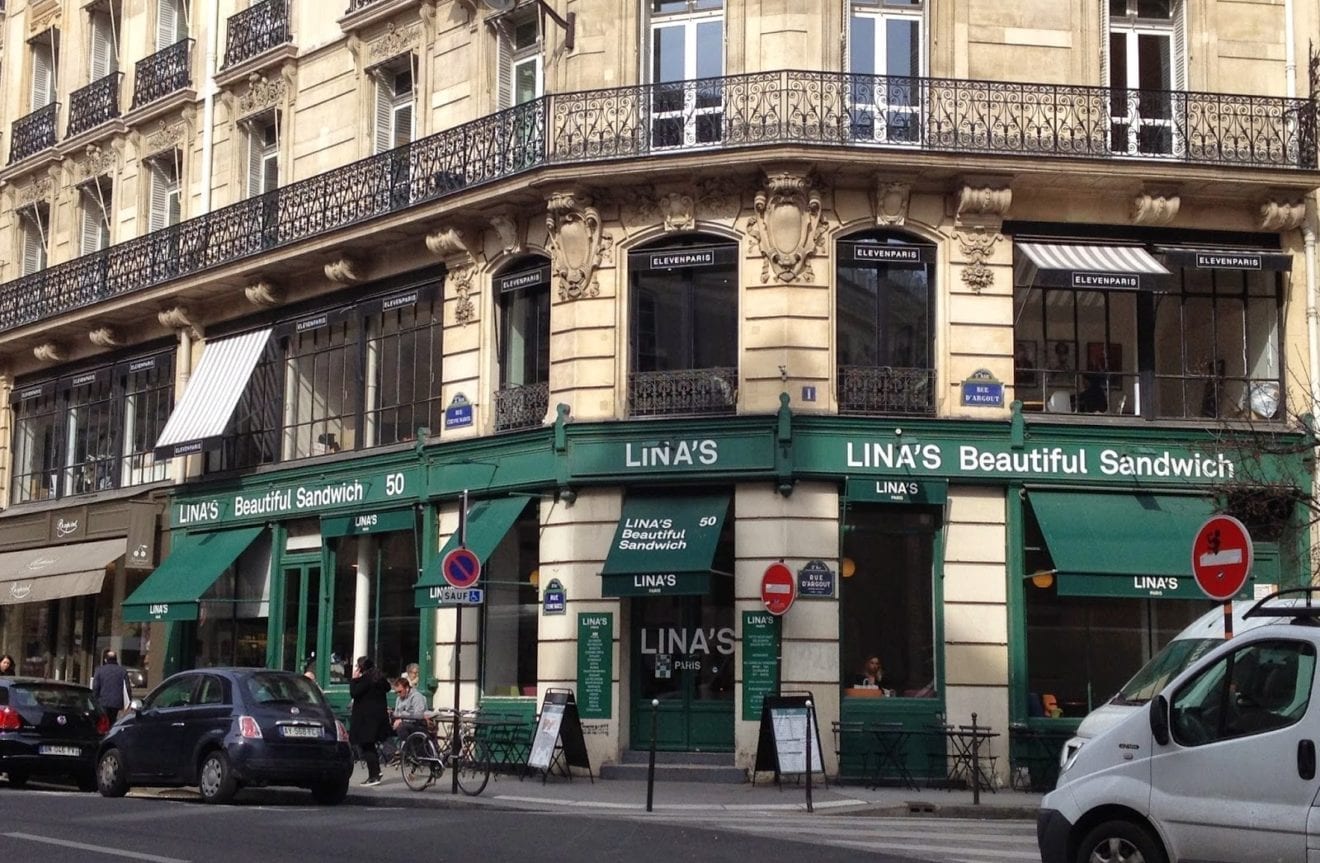
    After launching in Korea, French fast-casual restaurant chain Lina’s Paris is planning to roll out across Southeast Asia.

    Working with a franchisee, it already has 10 restaurants in Korea and has just opened a kiosk in Seoul Art Center with 100 seats.

    linas_sac

    Founded in 1989, Lina’s Paris offers French-style breakfasts, sandwiches, salads, hot dishes, soups, fresh juice, sorbet and pastries. The outlets are designed as comfortable lounges with free WiFi and Parisian decor. In some countries the offer includes organic and gluten-free food.

    Lina’s Paris has nearly 50 restaurants in six countries, and says it is now actively seeking partners in Southeast Asia.

  • Kura Sushi going suburban in Taiwan

    Kura Sushi going suburban in Taiwan

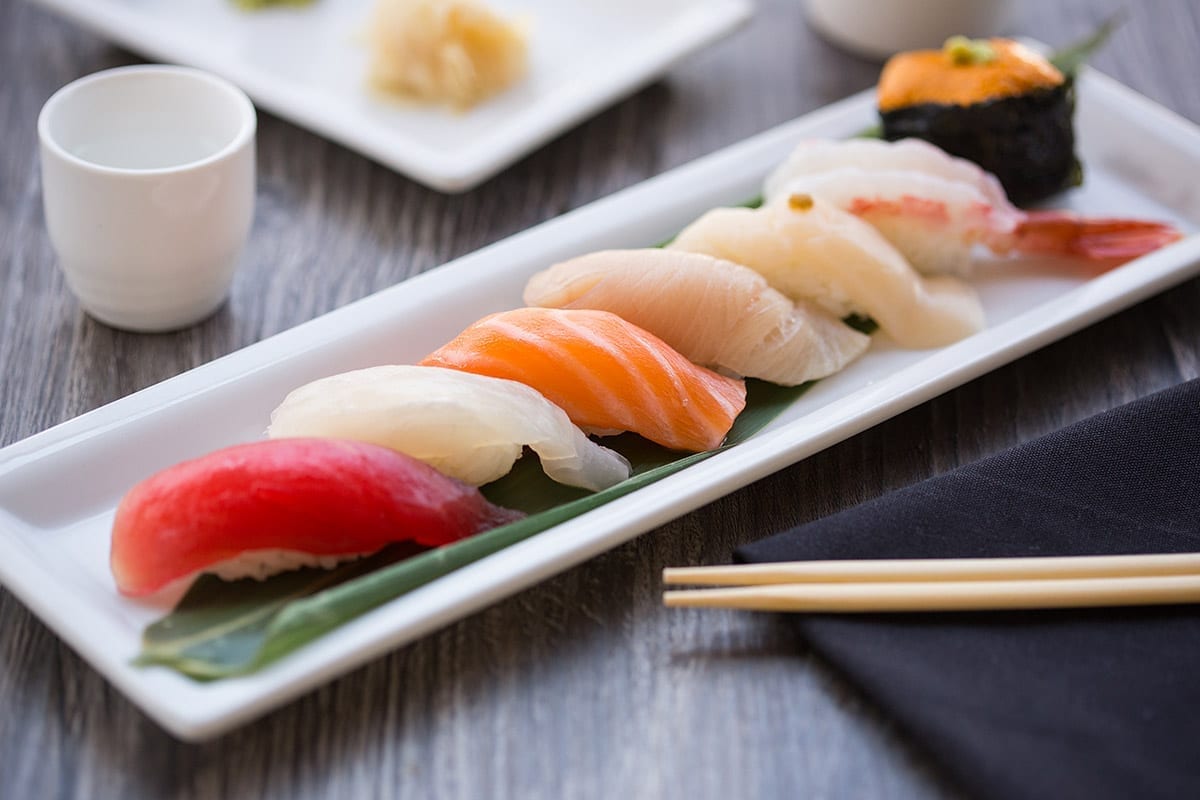
    Japan’s Kura Corporation plans to octuple the number of its Kura Sushi conveyor-belt restaurants in Taiwan to 40 by 2024.

    Its present five sushi-train restaurants are mainly in urban areas, but it plans to move to the suburbs with outlets along busy streets. It plans to open five restaurants this year.

    Kura opened its first restaurant outside Japan in Taiwan in 2014. The five outlets in Taiwan are smaller than their Japanese counterparts, with up to 30 per cent fewer seats. Kura shops in Japan can seat an average of 200 diners. However, on a per-restaurant basis, the group’s Taiwan revenue almost matches that of the outlets in Japan.

    kura-sushi-taiwan

    Reservations can be made online up to two weeks in advance, with the Taiwan restaurants usually fully booked for lunch and dinner.

    With rents rising almost every year in Taiwan as land prices surge, Kura has decided to switch its expansion focus to the suburbs where long-term contracts are still possible. Kura Taiwan president Kentaro Nishikawa also says there are “many more benefits out there”.

    While the Taiwan division only broke even in its last fiscal year, it expects to turn a profit this year.

    Nishikawa says it is hard to manage restaurants that sell alcoholic beverages in Taiwan because Taiwanese usually spend little on dining out and do not drink much. He says many customers come in groups and stay for conversation long after finishing their meals.

    He says Kura will add curry rice using vinegared rice, plus other dishes to its menus in Taiwan. It will also differentiate the Taiwan restaurants from the Japan chain by offering fresh fish bought from local markets and cut in front of the customer.

    Kura also has restaurants in the US and is looking to spread to other countries.

  • Finance minister urges to improve the nation’s securities market

    Finance minister urges to improve the nation’s securities market

    Minister of Finance Đinh Tiến Dũng yesterday struck the gong to open the first trading session of 2017 on the Hà Nội Stock Exchange.

    Dũng urged Government agencies and market members to improve the current conditions of the securities market to promote it as a channel to raise funds for socio-economic development and increase the competitiveness of the economy.

    “The securities regulators need to improve the policies to meet the country’s economic conditions and match international standards,” Dũng said.

    “We should keep restructuring the securities market and regulatory agencies, including the merger of the two local exchanges, increase the scale and quality of the market, diversify the products and make sure the market runs efficiently and sustainably.”

    “We have to be well-prepared to launch the derivatives market in the second quarter of 2017, study and develop derivative products to meet the demand of investors and improve risk management for the derivatives market,” Dũng said, urging Government agencies to complete the legal and technical system so that corporate bond market can operate in 2018.

    “Market regulators and relevant agencies need to improve the quality of Government bond issuance to raise more capital for the country’s development, seek for more investors to buy Government bonds and diversify bond products, tighten the policies to monitor local authorities in using the money raised from bond issuance and encourage them to actively call for the participation of private investors in the local areas.”

    “We also need to push State-owned enterprises (SOEs) to sell the State’s capital and get listings on the securities market, work with large-cap corporations and Government agencies to implement more effectively the policies on equitisation and restructuring of the SOEs.”

  • DFS opens Whiskey House at Hong Kong airport

    DFS opens Whiskey House at Hong Kong airport

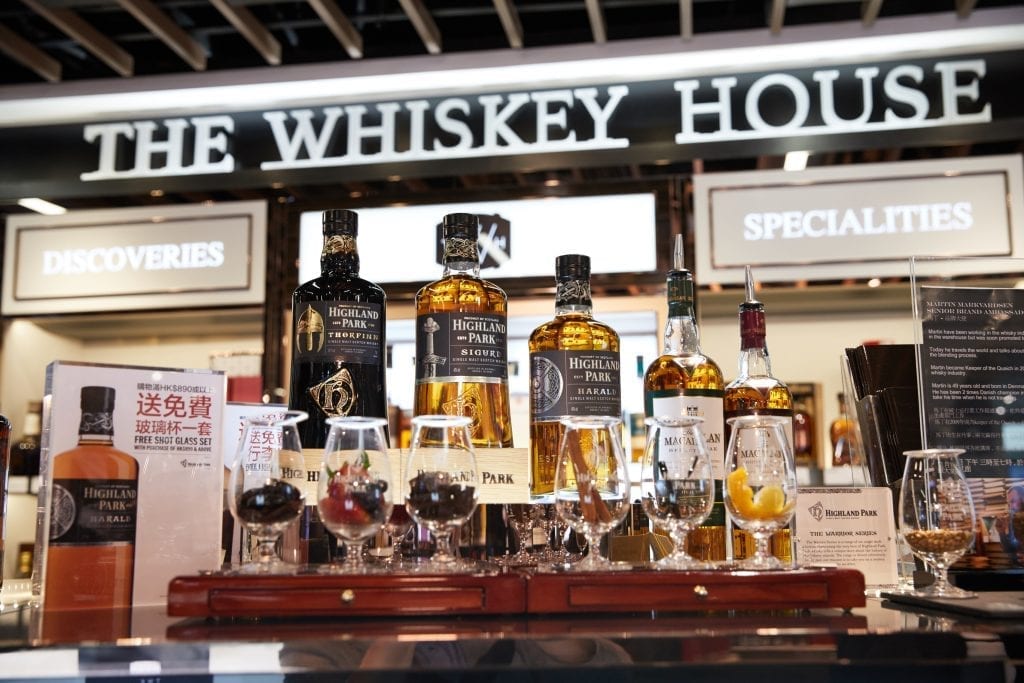
    Over 250 expressions from 50 international brands will be on offer for passengers travelling through Hong Kong’s airport, including the opportunity to sample more than 40 different whiskies every day.

    The Whiskey House has been created by DFS in partnership with William Grant & Sons, whose whisky brands include Balvenie, Tullamore Dew, Grant’s Glenfiddich and Monkey Shoulder as well as rum brand, Sailor Jerry and Hendrick’s gin.

    For whisky enthusiasts there’ll be blind tasting and tasting sessions every weekend from 4-7pm, as well as the chance to have 10% off every purchase when spirits are bought at departure and then collected at arrivals on the return leg of the trip.

    DFS already has its T Galleria retail stores across Hong Kong in Causeway Bay and Tsim Sha Tsui as well as its DFS store at Hong Kong airport.

    Brooke Supernaw, DFS group’s senior vice president of spirits, wine, tobacco, food and gifts, said, “DFS’ The Whiskey House is inspired by our customers and their love of discovery. At The Whiskey House, the discerning traveler can explore and indulge themselves in a world of whiskies from across the globe, enjoy tailored tastings and embark upon a unique travel experience from the moment they enter the airport.”

    Hong Kong has witnessed a boom in interest in whisky over recent years as more consumers explore different expressions and more brands have become available. MHD, LVMH, Edrington and William Grant remain as some of the biggest whisky distributors in Hong Kong, but a number of smaller, specialist ventures have appeared, such as single malt retailers, Caskells in Tsim Sha Tsui.

    Speaking to dbHK at the time of Caskells’ opening last year, owner John Rhodes said:

    “Although Hong Kong has a growing curiosity towards single malts – there is still a lot that can be done to inform people of the very wide scope of whisky there is not only in Scotch but worldwide.

    “Hong Kong – as with any market – is dominated by some big players with some excellent products but there are also a lot of smaller companies that have similar high quality products, and it is these that we want to bring to the general market.”

    The advent of the consumer-focused Whisky Festival and Malt Masters events in Hong Kong has also helped introduce the diversity of the whisky category to Hong Kong’s spirits lovers.

  • Hong Kong retail sales decline widens

    Hong Kong retail sales decline widens

    The decline in Hong Kong retail sales widened in November, although the market is still performing better than in the previous quarter.

    Official government data shows the value of sales in November 2016, provisionally estimated at HK$36 billion, decreased by 5.5 per cent compared with the same month in 2015.

    However, a government spokesman said that while Hong Kong retail sales saw a somewhat widened year-on-year decrease in November, the decline in sales in October and November combined was still smaller than during the third quarter.

    He attributed the trend to the impact of reduced tourist spending on some big-ticket items during the month.

    The revised estimate of the value of total retail sales in October 2016 decreased by 2.9 per cent year-on-year. For the first 11 months of 2016, it is provisionally estimated total retail sales decreased by 8.6 per cent year-on-year.

    After netting out the effect of price changes over the same period, November sales fell by 5.6 per cent. For the first 11 months of 2016, total retail sales decreased by 7.6 per cent in volume.

    As usual, watches and jewellery drove the value decline, falling 14.4 per cent year-on-year. Sales of electrical goods and cameras fell by 27.3 per cent (but account for a smaller share of the total retail market).

    Supermarket sales fell 1.1 per cent in value, medicines and cosmetics by 3 per cent, books, newspapers, stationery and gifts by 5.8 per cent and eyewear by 1.3 per cent.

    On the other hand, sales in department stores rose by 1.7 per cent, and apparel by 4.1 per cent. Food, alcoholic drinks and tobacco sales rose by 0.9 per cent, footwear and accessories by 1.5 per cent, furniture by 1.9 per cent and Chinese drugs and herbs by 2.7 per cent.

    Based on the seasonally adjusted series, the provisional estimates of the value and volume of total retail sales both increased by 4.7 per cent in the three months ending November 2016 over the preceding three-month period.

    The government spokesman said the future performance of Hong Kong retail sales will depend on whether inbound tourism improves “and whether the various external uncertainties would affect local consumer sentiment”.

  • Bake Kyoto outlet features Lego counter

    Bake Kyoto outlet features Lego counter

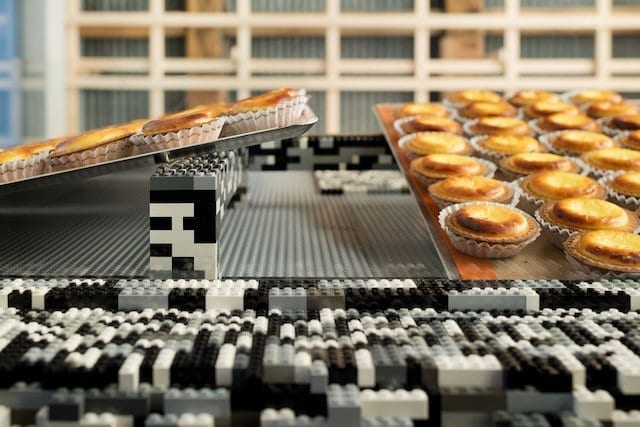
    A counter made from monotone Lego toy building bricks is a feature of Japanese cheese-tart shop Bake  Kyoto’s new outlet.

    Tokyo-based designer Yusuke Seki uses the counter as a centrepiece of the new store to display its products. It joins other new Bake stores that feature a sunset-hued acrylic counter and bespoke aluminium tiles.

    bake-kyoto-outlet-features-lego-counter-1

    Seki says he chose to use Lego pieces as his main material “because it connects to visitors”.

    “This architectural fabric serves as the shared language of communication between those whose spoken language may differ,” he says. “Its appeal is universal, intuitive, and its attraction felt by nearly every generation. It evokes a sense of intimacy, creating a moment that connects people to this space.”

    bake-kyoto-outlet-features-lego-counter-3

    A second, complementary feature of the store is a lattice framework lining the walls on either side of the counter, reports DeZeen.com. The latticework uses a bamboo technique known as shitajimado, which is traditionally used on the windows of Japanese teahouses. Seki has put a contemporary spin on the classic technique, using a pale wood overlaid on partially exposed walls.

    bake-kyoto-outlet-features-lego-counter-8

    bake-kyoto-outlet-features-lego-counter-6

    bake-kyoto-outlet-features-lego-counter-7

    “Left partially exposed, these walls allow customers to interact with a new iteration of tradition, while simultaneously encouraging an interaction with the older exterior wall cladding,” says the designer. “The store is thereby given a firm sense of place, reverberating with a reverence for the region.”

    bake-kyoto-outlet-features-lego-counter-4

    An open kitchen in the back, where the cheese tarts are baked, is another feature. A shelf on one side of the room holds stacks of Bake’s bright yellow takeaway boxes.

    Seki founded his studio in 2008, and his shop interiors are minimalist, often featuring cement and pale wood. His shops include a hand-forged knife specialist and a kimono store.

    Photos: Takumi Ota.

  • Kate Spade & Co trying to find buyer

    Kate Spade & Co trying to find buyer

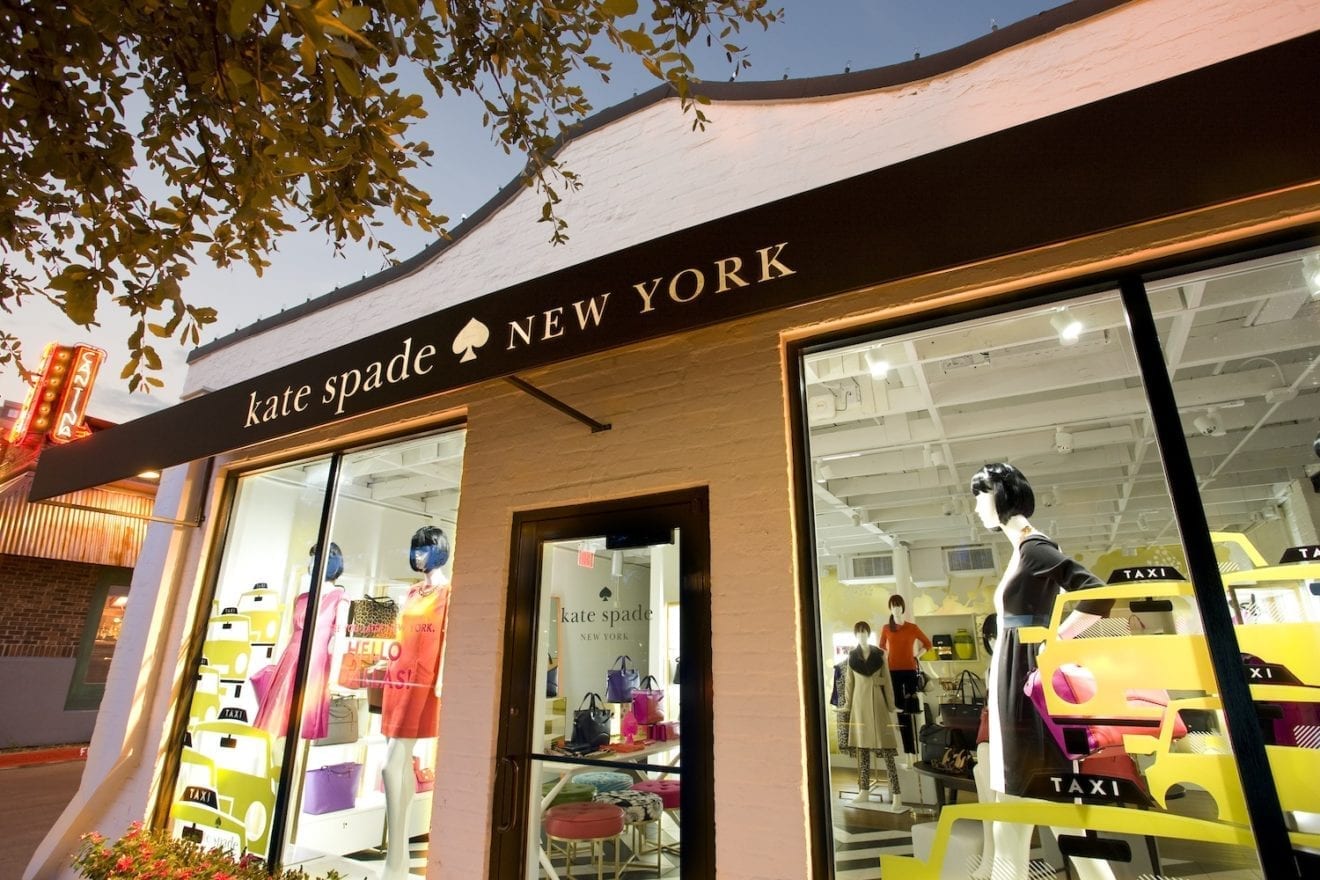
    Handbag and accessories maker and retailer Kate Spade & Co, under pressure from activist investor Barry Rosenstein, is working with a bank to sound out possible buyers.

    Quoting insiders, the Wall Street Journal says potential buyers contacted include retailers, with the process at an early stage.

    Rosenstein’s Jana Partners already has a minor stake in the company.

    Kate Spade has a market value of about $1.86 billion, but sales have dropped as the demand for handbags has weakened over the past year in the US, with people shopping less often at department stores and tourists spending less because of a strong dollar.

    Known for its quirky and colourful satchels and totes, Kate Spade was expecting dampened earnings over the holiday shopping quarter because of pricing competition.

  • Vietnam among the world’s most optimistic countries on economic prosperity

    Vietnam among the world’s most optimistic countries on economic prosperity

    Việt Nam is ranked fifth in the list of the world’s most optimistic countries on economic prosperity in 2017, according to a survey by WIN/Gallup, the world’s leading association in market research and polling.

    WIN/Gallup International published its 40th End of Year Survey exploring outlook, expectations, views and beliefs of 66,541 people from 66 countries across the globe in 2016.

    The 2016 edition includes Việt Nam data representing the views of 700 respondents from Hà Nội and HCM City interviewed face-to-face by market research company Indochina Research (Việt Nam) Ltd, a member of WIN/Gallup.

    The survey revealed that about 59 per cent of the respondents are optimistic about the economic outlook for 2017, 12 per cent are pessimistic and 26 per cent believe the economy would remain the same.

    When it comes to global economic outlook, despite much of the world largely remaining out of recession, economic optimism declined from twelve months ago. The study showed that 42 per cent of the world is optimistic for the economic outlook in 2017, almost double (22 per cent) of those who are pessimistic.

    Net optimism (the percentage of those saying next year will be one of economic prosperity minus the percentage who say next year will be one of economic difficulty) has fallen from +23 per cent to +20 per cent.

    Việt Nam is also ranked the fourth happiest country in the world, following Fiji, China and the Philippines, the survey said, adding that 79 per cent of the respondents answering they were happy and only 1 per cent said they were unhappy.

  • Improved quality boosts export of fruits, vegetables

    Improved quality boosts export of fruits, vegetables

    Việt Nam’s fruit and vegetable export in 2016 hit US$2.4 billion, a 30 per cent increase over 2015, and exceeding the Ministry of Industry and Trade’s yearly target of $2.2 billion.

    According to the Vietnam Fruit and Vegetables Association, the result was attributed to efforts to seek new markets and keep traditional markets.

    In 2016, five types of fruits gained entry to four new markets — mangoes to Australia, dragon fruits to Taiwan (China), longans and lychees to Thailand and cashew to Peru — thus expanding the market for Việt Nam’s fruit and vegetable to more than 60 countries and territories.

    China continues to be the largest market for Việt Nam’s fruits and vegetables, accounting for some 70 per cent, followed by the Republic of Korea, the United States and Japan.

    Bùi Sỹ Doanh, from the Department of Plant Protection under the Ministry of Agriculture and Rural Development, said the department would continue negotiations on technical barriers to help more Vietnamese fruits and vegetables enter selective markets like the United States, Japan and Australia.

    In 2017, Việt Nam hopes to win import approval from Australia for its dragon fruits, approval from Japan for red-flesh dragon fruits and from the United States for star apples.

    Nguyễn Hữu Đạt from the Vietnam Fruit and Vegetables Association emphasised the need to further improve post-harvest preservation and processing technologies to meet demands for quality and diverse products in foreign markets.

  • Baidu joins OpenDaylight Project

    Baidu joins OpenDaylight Project

    The OpenDaylight Project, the open source platform for programmable, software-defined networks (SDN), said Chinese search engine Baidu has joined the project at the Silver level.

    This follows a recent announcement by Baidu to open source one of its key machine learning tools, PaddlePaddle, and demonstrates the company’s continued commitment to open source.

    Growing mobile markets in China over the past several years have connected more people to the internet and opened up tremendous opportunities and venues for new business platforms and channel strategies in the region.

    Baidu is advancing artificial intelligence as the next stage of the internet and is using deep learning to enable new technologies for autonomous driving and e-health services.

    The OpenDaylight platform will enable Baidu to optimize and automate their network.

    Liu Ning, system department deputy director at Baidu said SDN platform will enable the company to be a more nimble organization and rapidly deliver new services that meet the changing needs and diverse interests of our users and customers.

    Liu also joins the OpenDaylight advisory group to provide technical and strategic guidance to the OpenDaylight technical steering committee and OpenDaylight developer community based on the challenges of running a real-world network.

    In addition to Baidu, Chinese two major internet players – Alibaba and Tecent- have also joined the OpenDaylight project.