Author: Mei Ling Tan

  • Korea to Develop Quick-time Consumption Index

    Korea to Develop Quick-time Consumption Index

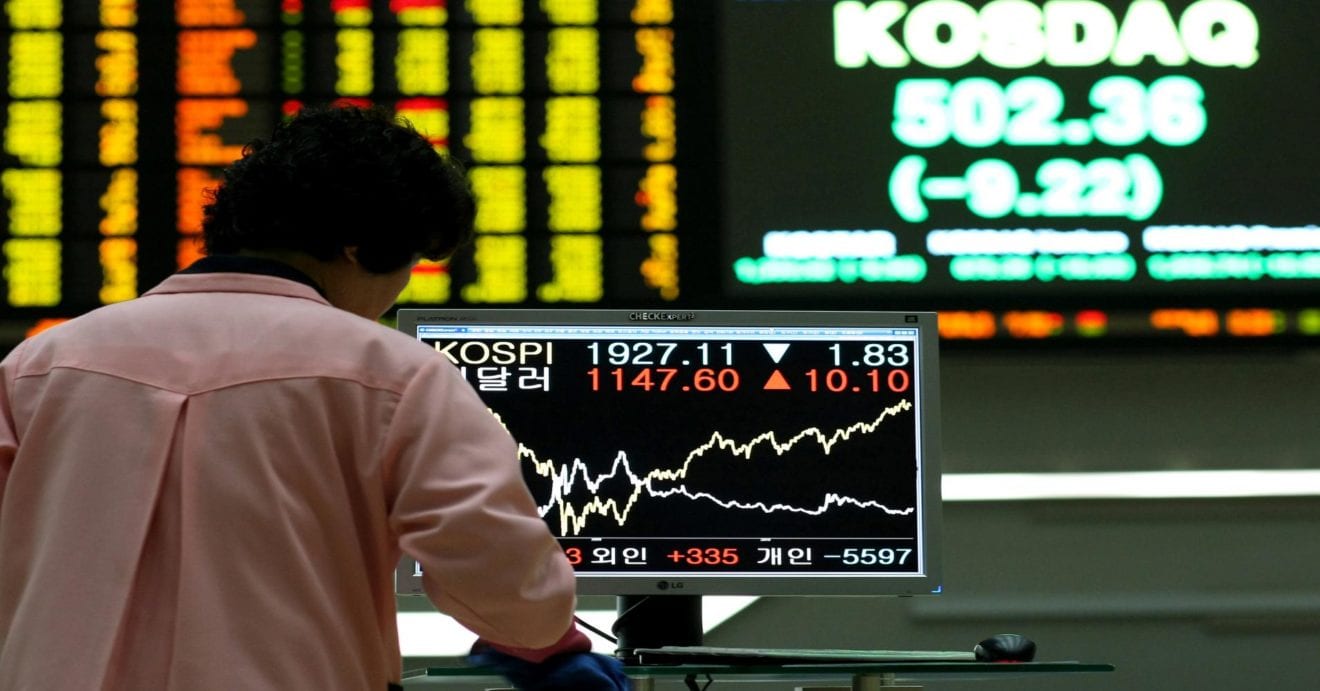
    Statistics Korea revealed Tuesday that it’s developing what it calls a ‘quick-time consumption index’ based on civilian credit card approval information provided by the Credit Finance Association (CFA).

    The new index will use big data related to credit card approval information from eight domestic credit card companies, and is expected to launch in October.

    The CFA-provided information consists of approved credit card transactions categorized by date, 17 cities and provinces, and 178 business categories. To further broaden the index, Statistics Korea will also use additional credit card approval information from more specific types of businesses such as department stores and supermarkets.

    Statistics Korea expects the new index to allow for quicker observation of the ‘production index for the service industry’ and ‘retail sales index’, with an improvement of approximately three weeks, which in turn will permit quicker responses to economic changes.

    “The total approved credit card transactions take up 76 percent of all consumption and sales, which will make this new index quite reliable,” said an official from Statistics Korea.

  • FairPrice cuts prices on health grounds

    FairPrice cuts prices on health grounds

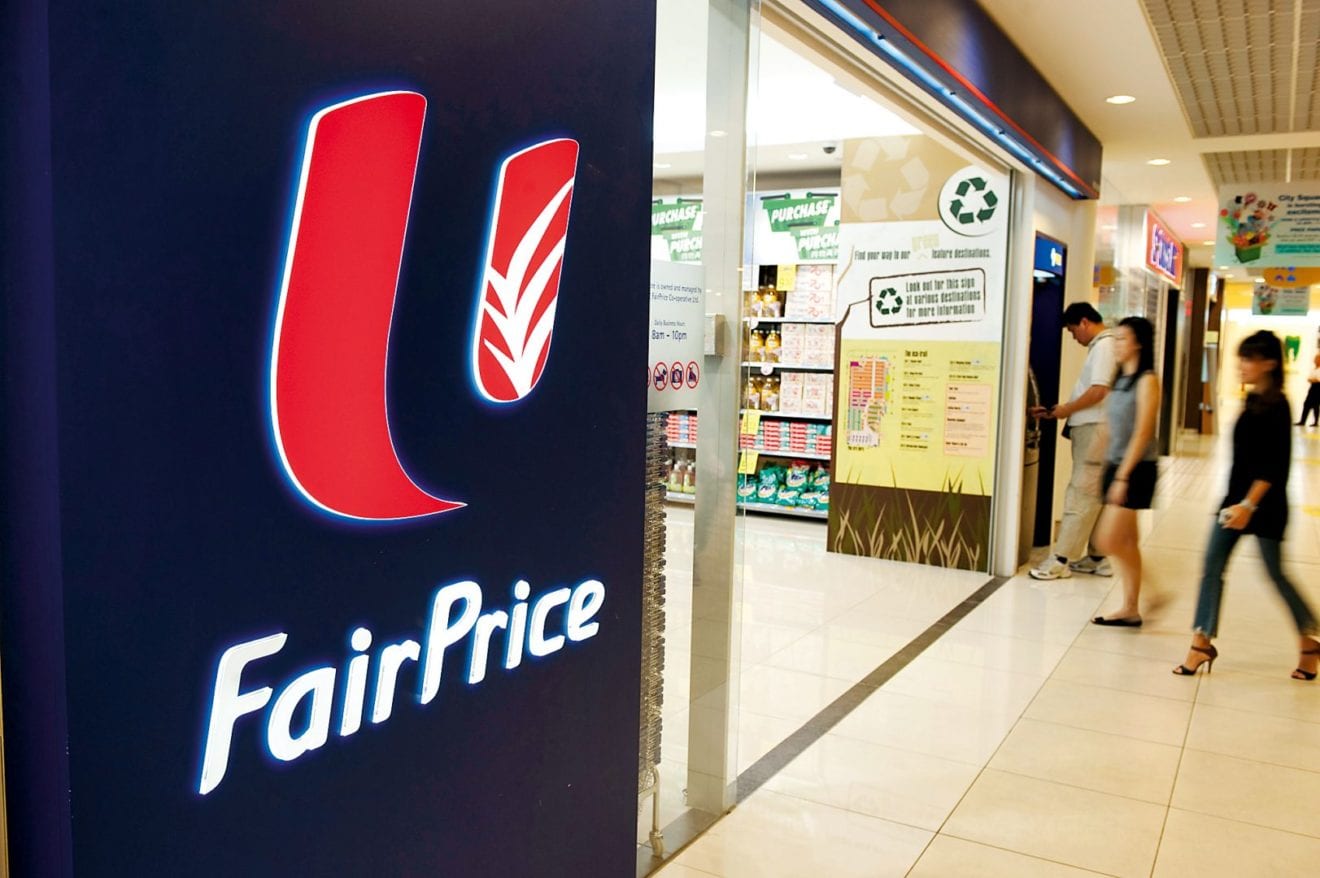
    Citing social concerns, Singapore grocer NTUC FairPrice cuts prices on wholegrain rice in a public commitment to aiding the fight against diabetes.

    The supermarket says a 5 per cent discount on all FairPrice housebrand wholegrain rice for the next three months will be matched by a similar reduction in the prices of all of its 1000+ Healthier Choice Symbol (HCS) certified items for a fortnight, across its 133 supermarkets islandwide.

    The measure is part of FairPrice’s healthy eating campaign, the start of a series of initiatives by the organisation this year to promote healthy eating and drive awareness on diabetes. Total savings from these discounts are expected to amount to more than S$500,000 for customers.

    NTUC FairPrice chairman Bobby Chin says the trade union owned grocer “serves to make lives better by offering greater value on healthier daily essentials”.

    “Rice is a commonly consumed staple in Singapore and by promoting wholegrain rice as a healthier alternative,we are taking a proactive approach in the prevention and management of chronic diseases like diabetes. Beyond rice, we also support the government’s call in advocating a holistic approach towards healthy eating by also providing quality and value for all our Healthier Choice Symbol products.”

    Diabetes is fast becoming a major focus of health initiatives globally with the 422 million diabetic adult population in the world expected to double in the next 20 years. Singapore has been found to have the second-highest diabetes prevalence among developed nations, after the US, with one out of nine Singaporeans affected by diabetes and one in three having a chance of getting diabetes in their lifetime.

    As an alternative to white rice, wholegrain rice has been shown to lower the risk of developing diabetes while containing more fibre, vitamins and minerals.

    “The 5 per cent discount for all FairPrice housebrand wholegrain rice serves to encourage customers to consume these healthier alternatives. The discount is applicable namely to FairPrice Thai Brown Unpolished Rice, FairPrice Thai Red Unpolished Rice and FairPrice Thai Rice Blend, which is a mix of white and brown rice,” the company said in a statement.

    Back in 2014, FairPrice began advocating consumption of brown rice through its annual Walk for Rice event by donating brown rice to low-income families. FairPrice has also seen the sale of housebrand brown rice increase by 25 per cent in the first quarter of this year compared to the year before.

    Zee Yoong Kang, CEO of the Singapore Health Promotion Board said it was pleasing to see the retailer taking active steps to raise the awareness of healthier choice options amongst consumers.

    “The market share of Healthier Choice Symbol products has been gaining market share with sales of Healthier Choice Symbol products growing at 9 per cent annually. This is a very encouraging sign that more and more Singaporeans are taking steps to select healthier options when grocery shopping. We encourage more F&B retailers to join in this effort so that together we can increase the pervasiveness of healthier options for Singaporeans.”

  • Malaysia’s Axiata Digital invests $16 mn in e-commerce enabler StoreKing

    Malaysia’s Axiata Digital invests $16 mn in e-commerce enabler StoreKing

    Malaysian telecom operator Axiata Group Berhad has invested $16 million in Bangalore-based StoreKing, an e-commerce startup that helps retailers to sell products in small towns, through wholly owned unit Axiata Digital.

    This is Axiata Digital’s first investment in India, StoreKing said in a statement.

    Axiata Group, however, is not new to India; it owns about 20% of Indian telecom operator Idea Cellular Ltd.

    StoreKing, run by LocalCube Commerce Pvt. Ltd, ties up with retail store owners in small towns to provide self-service shopping experience to rural shoppers via its digital kiosks.

    The company had earlier raised $6 million from Luxembourg-headquartered venture capital firm Mangrove Capital Partners. Mangrove Capital is an early-stage investor in internet and software startups, and counts voice chat app Skype and instant messaging aggregator Nimbuzz among its past portfolio companies.

    StoreKing has roughly 16,000 mobile kiosks across south India, and delivers about 150,000 orders every month. The startup plans to reach 100,000 retailers by 2017 and up to 250,000 by 2019. It also plans to expand to Axiata’s markets in the near future.

    “StoreKing has created a platform that solves the fundamental constraints in our markets with last-mile logistics and payments, while building trust amongst mass-market consumers. It is pivotal in bringing the rest of our consumers into the digital sphere,” said Mohd Khairil Abdullah, CEO, Axiata Digital.

    The Bangalore-based startup was founded in 2012 by Sridhar Gundaiah, a computer science engineer who previously worked with online travel agency Via.com, and Govardhan Krishnappa, who previously worked with Via Adz and MACS Infosolution. Gundaiah had also founded a location-based startup Yulop and in the past worked at Yellow Tag and EDS.

  • Sour note for Lancome-sponsored concert

    Sour note for Lancome-sponsored concert

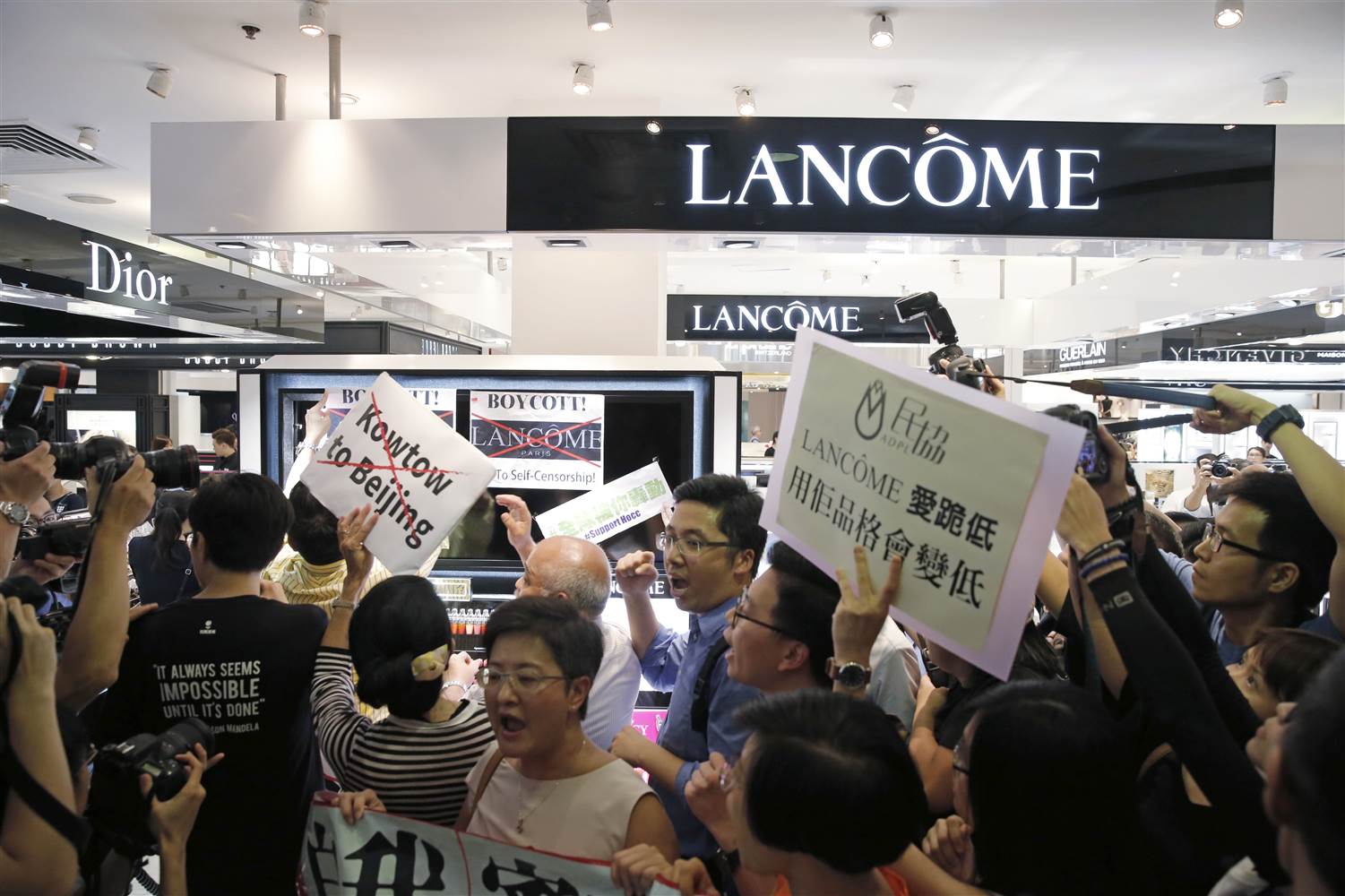
    Make-up brand Lancome, along with other stores owned by French cosmetics giant L’Oreal, closed in Hong Kong yesterday in the face of protests over the cancelling of a Lancome-sponsored concert featuring a pro-democracy singer.

    As well as Lancome’s booth at Lane Crawford, Times Square, Yves Saint Laurent Beaute and Helena Rubinstein’s booths, as well as Shu Uemura’s store, were all closed. Lancome’s office at Times Square was also shuttered. In Causeway Bay, Lancome counters in Sogo and Hysan Place were both closed, while those for other brands under L’Oreal, such as Shu Uemura, were open.

    Dozens of protesters earlier crowded the Lane Crawford store in Times Square accusing Lancome of bowing to China by cancelling the concert, starring cantopop singer Denise Ho Wan-sze.

    Carrying yellow umbrellas – a symbol of Hong Kong’s democracy movement, which is supported by Ho – and banners in Chinese, English and French, the protesters were shouting: “L’Oreal! No self-censorship.”

    Hong Kong internet users and political activists have also vowed to boycott all brands under the L’Oreal banner, including Lancome, Kiehl’s, Shu Uemura and The Body Shopimes, a tabloid published by the Chinese Communist Party’s People’s Daily newspaper, criticised Lancome for working with Ho. This sparked calls online in China to shun Lancome’s business on the mainland.

    “Tough times”

    Ho says she was saddened by the cancellation of her concert.

    “I am quite shocked that a global brand such as Lancome … would succumb to the pressure from Chinese tabloid news or the Chinese market,” says the 39-year-old singer.

    “In Hong Kong we have been going through really rough times,” she says. “Most of we celebrities wouldn’t dare to speak out for ourselves because we know that self-censorship is really serious right now in Hong Kong. But I wouldn’t think that worldwide brands such as Lancome or L’Oreal would succumb to this kind of pressure.”

    L’Oreal, which counts China as its second strongest market for sales behind the US, says it cancelled the concert because of safety concerns.

    Booked to perform on June 19, Ho wrote on her Facebook page that Lancome’s decision was self-censorship. “When a brand like Lancome has to kneel down to a bullying hegemony… the world’s values have been seriously twisted.”

    Meanwhile, the controversy has escalated on the mainland, with internet users threatening to boycott a host of Hong Kong companies tied to billionaire Richard Li Tzar-kai, whose company PCCW owns the Moov fitness app, which suggested on Monday that it would “employ Denise Ho permanently”.

    Li’s family is also involved with such companies as Johnson and Johnson, Listerine and Watsons. Ho is a spokesperson for Listerine.

    PCCW says that while Richard Li and Moov respect freedom of expression and staunchly oppose Hong Kong independence, Moov has no intention to engage in political matters, and the expression “permanent employment” was used before online comments linked the message to political discussions.

    Meanwhile, Ho says Lancome should stand firm on its core values and moral standards. The singer was  among more than 200 people arrested as the pro-democracy protests ended in December 2014. She was blacklisted by mainland media along with singer Anthony Wong Yiu-ming.
  • Chow Tai Fook’s Profit Dives 46% in Fiscal 2016

    Chow Tai Fook’s Profit Dives 46% in Fiscal 2016

    Chow Tai Fook reported profit tumbled 46 percent in the past fiscal year as fewer tourists visited Hong Kong and a downturn in Greater China reduced consumer spending.

    Profit slumped to $383.6 million (HKD 2.98 billion) in the 12 months that ended March 31, the Hong Kong-based jewelry retailer said. Revenue slid 12 percent to $7.3 billion (HKD 56.59 billion). Jewelry sales in mainland China dropped 11 percent and in Hong Kong and Macau declined 15 percent.

    Tourist arrivals from the mainland retreated 8.6 percent in Hong Kong and 3.7 percent in Macau during the fiscal year, the jeweler pointed out. Mainland China contributed more than 50 percent of group revenue during the year, a figure that has increased over the past three years. The jeweler said it is still “confident” about the long-term growth potential in the region.

    The “persistently weak retail sentiment” and a “decline” in the number of tourists, particularly from the mainland due to a “strengthening” of the U.S. dollar, continued to affect operations, Chow Tai Fook said.

    “The increasingly affluent and sophisticated Chinese consumers continue to look for more personalized products and shopping experience,” the company added.

    The company, however, pointed out its core operating profit – a non-IFRS measure that Chow Tai Fook believes is a useful measure of its operational performance – fell 24.5 percent, a better outcome compared with net income.

  • Inflation erodes Vietnam retail sales rise

    Inflation erodes Vietnam retail sales rise

    Purchasing power is declining despite Vietnam retail sales and services revenue rising 9.1 per cent to VND1430 trillion (US$63.4 billion) in the first five months of this year.

    If inflation is excluded, the amount marks an increase of 7.8 per cent, according to the General Statistics Office (GSO). However, GSO expert Vu Manh Ha says the growth, with inflation excluded, was lower than the 8.2 per cent growth in the same period last year, showing weaker purchasing power.

    Growth was impacted by incidents affecting accommodation, catering and tourism services, as well as the mass fish deaths along Vietnam’s central coast. With the cancellation of beach tours, the spending power of tourism companies in the coastal provinces fell strongly.

    Meanwhile, there was a strong 9.5 per cent growth in the purchasing power of goods retailers in the first five months, amounting to VND1920 trillion and accounting for two-thirds of total retail sales and services revenue.

    Retailers of rice and foodstuffs saw growth of 13.6 per cent; garment retailers, 10.9 per cent; and home appliance retailers, 9.6 per cent.

    Ha says the total retail sales and services revenue next month will increase further because of a high demand for house construction and repairs, and recovering demand for beach tours.

    GSO director Nguyen Bich Lam says purchasing power this year is expected to have a lower growth rate than last year because of stability in prices, high supply and stable demand for most essential goods.

    Because of consumer fears about environmental pollution and food safety, spending is expected to erode for such services as accommodation, catering, tourism and entertainment, says Lam.

  • Ralph Lauren closing stores as sales see slump

    Ralph Lauren closing stores as sales see slump

    Ralph Lauren is closing stores, cutting jobs and focusing more on its most popular brands to try to reverse its declining fortunes.

    Shares of the fashion company tumbled 4 percent Tuesday.

    The changes are the first big moves from CEO Stefan Larsson, who replaced company founder Ralph Lauren in the role late last year. Lauren is still executive chairman and chief creative officer of the fashion and home decor business he created.

    The New York company, known for its polo shirts and pony logo, plans to close more than 50 stores, or about 10 percent of its total retail stores. It will let go approximately 1,000 of its 15,000 full-time employees, or almost 7 percent.

    It will focus more on its three best-selling brands — Ralph Lauren, Polo and Lauren — and devote fewer resources to its smaller ones, such as Chaps and RLX. The company also hopes to produce its clothing faster, cutting six months from the production process to make it nine months.

    Ralph Lauren expects the restructuring to save it between $180 million and $220 million a year. That’s on top of $125 million in cost cuts from last year. It expects to incur restructuring charges of up to $400 million for the year and inventory-related charges of up to $150 million.

    For the current quarter, it expects revenue to fall in the mid-single digits and fall in the low double digits for the year.

    Shares of Ralph Lauren Corp. fell $4.12, or 4.3 percent, to $92.21 in morning trading Tuesday. Its shares are down about 30 percent in the last year.

  • Shake Shack Korea is coming closer

    Shake Shack Korea is coming closer

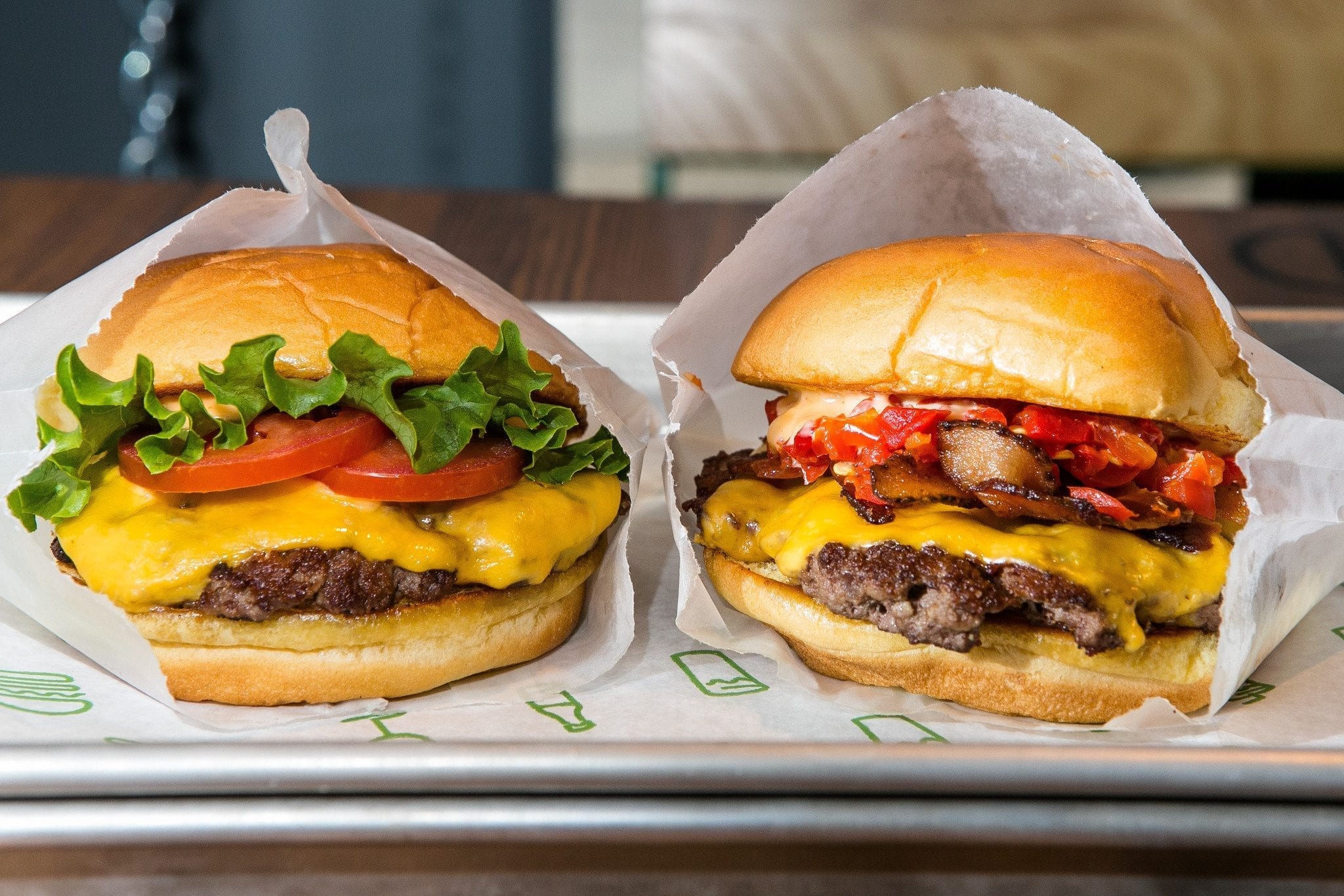
    New York burger chain Shake Shack is set to make its Korean debut as early as July.

    The Shake Shack Korea licence was secured by Korean food and confectionary giant SPC Group last year and the first outlet is currently under construction in the Gangnam district of Seoul.Shake Shack meal

    The company says the grand opening of the debut store is planned for some time in July or August.


    Shake Shack, an American fast casual restaurant. is best known for its burger and milkshake combo.

    SPC says construction of the first store is well under way. “Gangnam is one of the most vibrant and energetic areas of Seoul,” said a spokesman. “It’s the perfect place to reenact the dynamic atmosphere of Shake Shack’s flagship restaurant in Madison Square Park.”

    CH7_9911b-540x360.0.0

    Last year Shake Shack signed a licensing agreement with Japanese company Sazaby League, local operator of Starbucks. The two companies plan to open 10 Shake Shacks in Japan by 2020, with the first, in Tokyo, scheduled to open in 2016.

  • Is There a Tech Bubble in China?

    Is There a Tech Bubble in China?

    Wealthy Chinese investors are in a bind. All the usual, typically safe investment vehicles—commodities, stocks, even stable real estate—have been anything but usual or safe over the last couple months. The Chinese economy has slowed and inflation has picked up, the yuan has been under pressure, oil has tanked, and gold markets have been rattled. Real-estate markets in previously inviolable zip codes like Manhattan, a longtime sure bet for foreign investors looking to park their money in the stability of multi-million-dollar apartments, have started to sway.

    With the new reality of so much risk and little hope for returns in these markets, Chinese investors are pushing their money toward technology start-ups, according to Reuters. Investments in these companies more than doubled last year, according to CB Insights research, leaping to $32.2 billion. So far this year, venture-capital investments have already climbed to $4.7 billion. That stands in stark contrast to the Shanghai Composite Index, which is down nearly 20 percent in 2016. Established-enough Chinese start-ups like the ride-hailing Uber competitor Didi Kuaidi have benefited the most. The company saw its valuation jump 25 percent to about $20 billion—dwarfing its American competitors.

    We’ve watched this movie before in the U.S. As investors got tired of waiting to wade back into the muck of traditional markets in the wake of the financial crisis, they looked for new places to strike gold. They set their sights out West, to Silicon Valley, pouring their money into small start-ups with huge funding rounds, hoping for a payday. The result was the birth of dozens of new billion-dollar companies. On a hope, a prayer, and the blood, sweat, and tears of many a millennial, these unicorns hung on and continued to raise money. But now, the chickens are coming home to roost.

    Last month, Fidelity marked down investments in 19 start-ups, including onetime Silicon Valley standouts Dropbox and Zenefits (the markdown, however, seems like the least of Zenefits’s worries). Millennial darling Snapchat got similar treatment from Fidelity last fall. Others, like Jawbone, and again, Zenefits, have laid off workers. Funding has started to dry up, yet even those able to raise capital are struggling. Oscar, the health-care app pegged to Obamacare exchanges, closed a round last month that boosted its valuation to $2.7 billion. But on Tuesday, the company reported that it was bleeding money, losing more than $100 million in 2015.

    American investors thought they were trading risky investments for the kinds of returns they could only dream of, but it appears the risk in their their start-up bets were just as great. Now, as Chinese investors make similar calculations, they may face a similar fate.

  • Under Armour app gets personal with fitness freaks

    Under Armour app gets personal with fitness freaks

    Under Armour has launched UA Shop, a mobile app dedicated to elevating the consumer shopping experience built on the Under Armour Connected Fitness platform.

    Under Armour appIntegrating data from the world’s largest digital fitness community allows the Under Armour app provides “a deeply personalised experience” based on athlete inspiration, workout history and previous purchase history. UA Shop is available for download on the App Store and will be available soon on Google Play.

    “UA Shop is the next step in our connected fitness evolution as Under Armour becomes a true Math House,” said Jason LaRose, senior VP, revenue, at Under Armour. “This app was created to maximise our digital platform and complement our existing in-store experiences by bringing consumers a way to find the products they want, when they want it. We are now able to provide custom experiences across our various categories specific to our diverse customer base.”

    The UA Shop app will bridge the brand’s digital communities with Under Armour’s core business – performance apparel, footwear and equipment. UA Shop will connect consumers to the right gear driven by data through in-app recommendations. For example, a consumer living in a warmer climate who has logged several runs through MapMyRun might be exposed to UA CoolSwitch apparel and running footwear, a technology that pulls heat away from the skin and allows the user to feel cooler, longer. Meanwhile a customer in the Northeast who prefers hiking might see the latest Armour baselayer and outerwear. The Under Armour app is the only retail app on the market powered by the health and fitness information of more than 170 million members worldwide.

    UA Shop is also the first app in the Under Armour Connected Fitness suite that will launch with the new Under Armour Account – the creation of a single profile for all Under Armour apps. Members of UA Record and MapMyFitness can sync their existing account information to UA Shop, with MyFitnessPal and Endomondo integration being added soon. Additional features of UA Shop include one-touch purchasing with Apple Pay, expanded product content and customer reviews, and apparel tag scanners for enhanced in-store experiences.

  • Malaysia’s Ebizu raises $3m from Singaporean investors

    Malaysia’s Ebizu raises $3m from Singaporean investors

    Malaysia-based retail advertising and intelligence technology provider, Ebizu Sdn Bhd, has secured a round of Series A investment amounting to $3 million from undisclosed Singapore investors to fuel its regional expansion plans.

    Ebizu’s operations has grown to a team of 130 people spread across offices in Malaysia, Singapore and Indonesia.

    Established in 2013, Ebizu, an O2O (Online to Offline) solutions provider which specializes in retail advertising and location intelligence, has expanded within the Southeast Asia region. Co-founder Rohit Maheswaran said, the company has been aggressively enhancing its solution as well as expanding its beacon and retailer network in the past five months. “Behind all these, negotiations for investments were being conducted and we were glad to see so many interested parties. This round of  funding will help us maintain the intensity of our growth,” he said.

    “We emphasise on helping physical retailers and brands reach out and engage with their consumers, our product is evolving to become more data driven, so that merchants and brands can acquire and retain customers with more precision,” Maheswaran said.

    He added that Ebizu’s brand new geo-behavioural intelligence and insights platform will help advertisers target online and offline ads better. Seeing the accelerated growth in digital ad spend and mobile advertising, Ebizu was formed to bridge the gap between brick and mortar retailers and mobile technology utilization.

    The company’s integrated retail solutions empower the offline retailers with knowledge of the customer’s journey, enabling retailers to reach and engage shoppers’ on-the- go with promotions, vouchers and loyalty campaigns, engaging them at the right time and optimizing sale conversions.

    Currently, Ebizu’s merchant network consists of 1,900 retail outlets with the target of 5,000 to be reached by the end of 2016. It also has around 5,000 geofenced points of interest and 10,000 BLE beacons installed across Malaysia and Indonesia, at the moment, with hopes to grow that network to 25,000 by year end.

    At the end of last year, it was named the 2015 Asia Pacific BLE (Bluetooth Low Energy) in Connected Retail Company of the year by Frost & Sullivan.

  • Los Angeles hotdog chain opens Pink’s Manila

    Los Angeles hotdog chain opens Pink’s Manila

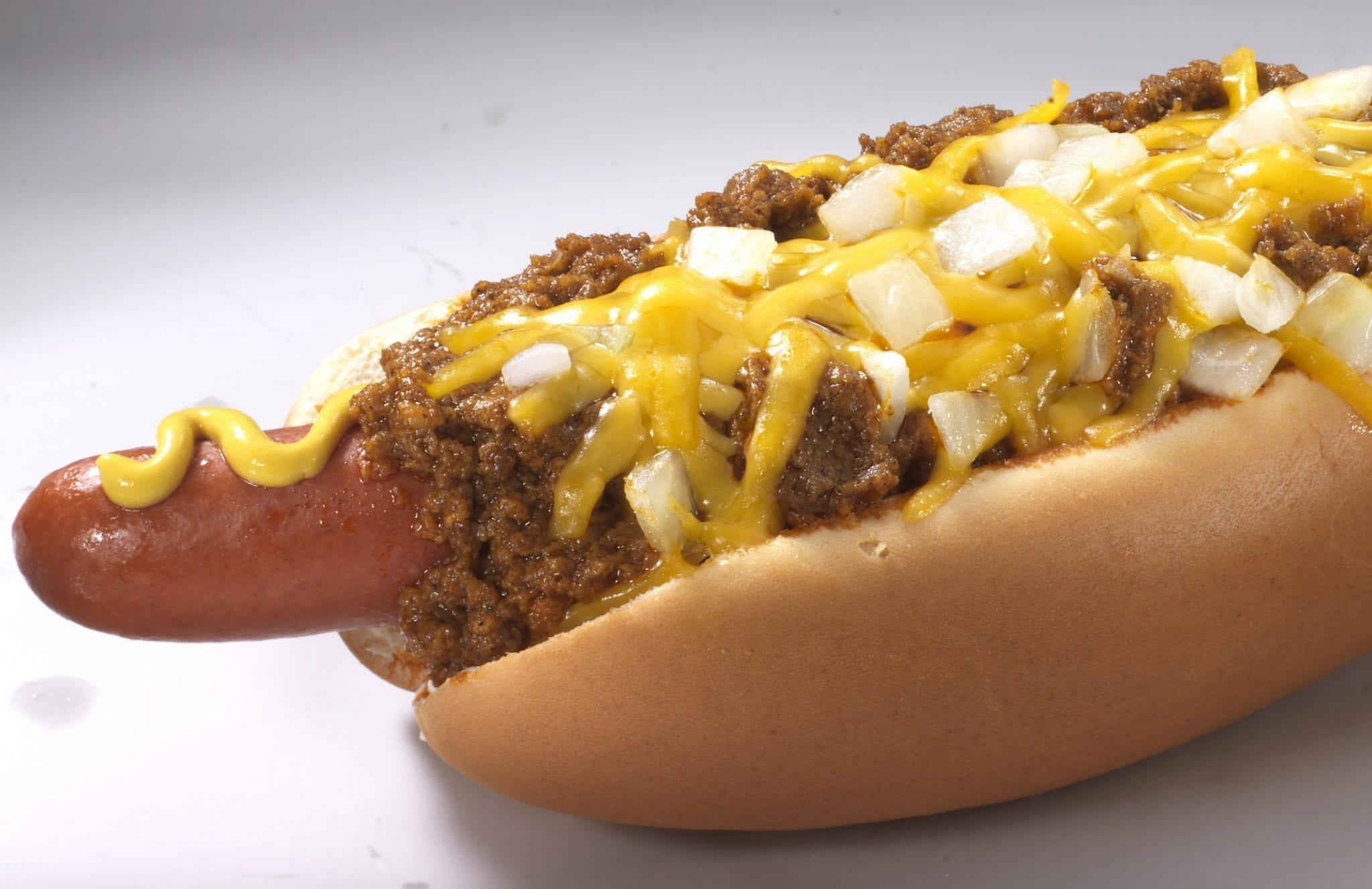
    Los Angeles’ Pink’s Hotdog chain opens in the Philippines today at the Shangri-la Fort in Bonifacio Global City.

    Pink’s Manila is the chain’s first international branch.The Hollywood legend established in 1939 has partnered with Pink’s family and Wildflour & Farmacy Manila to enter the Philippine market.

    Owners Richard and Gloria Pink are in Manila to attend the grand opening of Pink’s Manila at the ground floor of the newly opened hotel.

    Architect Lara Fernandez Barrios designed the “L.A. style biergarten” interiors based on Chef Walter Manzke’s concept for the Manila  branch.

    The new store features a converted Volkswagen Combi housing Farmacy’s ice cream shop and soda fountain stand, and soon, a bar that will be serving cocktails and mostly craft beers on draft.

    Tentative opening store hours will be from 11am to 2am, but are subject to change.

  • Perfumer’s Workshop finds its niche in Asian travel retail

    Perfumer’s Workshop finds its niche in Asian travel retail

    Niche fragrance specialist Perfumer’s Workshop International (PWI) is looking to make a move into travel retail locations in Malaysia, Sri Lanka and India following feedback from buyers at this year’s TFWA Asia Pacific Exhibition in Singapore.

    PWI Founder Donald Bauchner said his company’s success at the show was due to the “dramatic increase in awareness and attention to niche in general, and for oud concepts specifically”.

    Tea Rose w Petals High Res

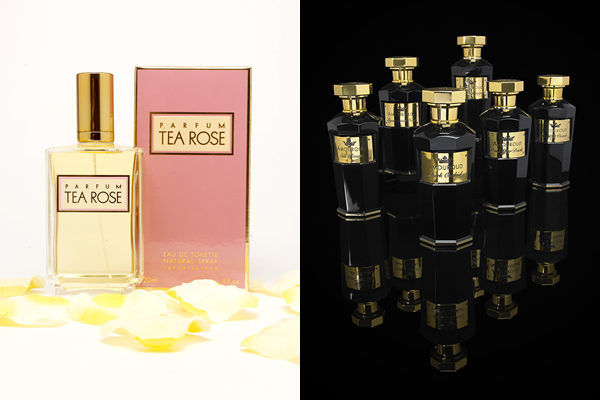
    Tea Rose and Amouroud: two of Perfumer’s Workshop International’s signature lines

    Bauchner said PWI was considering domestic market openings for its Amouroud line in Singapore, South Korea, China, Indonesia, Malaysia, Bangladesh and Pakistan and is negotiating travel retail opportunities in Malaysia, India, Sri Lanka, Abu Dhabi and Russia.

    PWI’s oud-based Amouroud line will make its debut at London’s Harrods department store on 15 July. “We are very excited about our launch at Harrods,” said Bauchner. “Of course it will impact our travel retail opportunities within the UK. However we are not certain whether we would prefer to start travel retail and duty free in the UK at airports or inflight. Consumer profile will likely decide the issue but only once the timing itself is right,” he added.

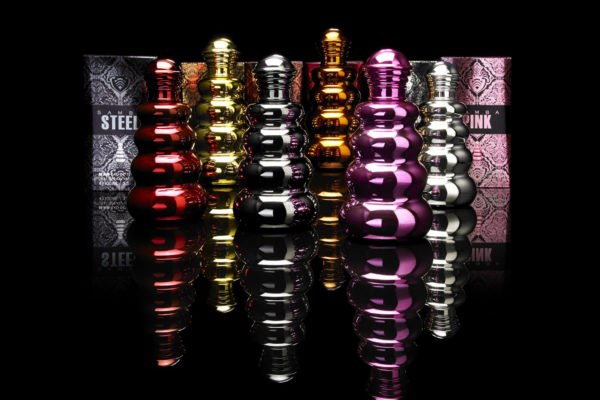
    PWI added two new fragrances, Midnight Rose and Miel Sauvage, to its Amouroud range which was presented in Singapore and extended its Samba Metallics line.

    Samba Metallic Range.HR

    Samba Metallics is based on a colour preference influencing fragrance preference concept

    “The Samba Metallics concept actually does work,” Bauchner said. “The interest at the show was very good. However we targeted our presentations to only those distributors who are actual ‘trend-setters’ in their regions.”

    PWI’s Zipped Man, targeting “fashion-conscious young ‘trendies’”, and Parfum Tea Rose were also highlighted in Singapore.

    Speaking at the TFWA Asia Pacific Exhibition, Bauchner said he predicts further growth for niche brands in Asia. “Generally niche customers do not want something that other people are wearing. They are not looking for a new signature scent. They are hunters, looking for a scent that they are not going to find everyone else wearing,” he said.

    “What will be interesting to see will be the eventual relationship between niche and prestige fragrance in Asia. There is a possibility that niche in Asia will eventually occupy as large, or a larger, section of the fine fragrance local market than in Europe  because what we refer to as ‘Western fine fragrance’ came late to Asia and therefore remains a far smaller market than elsewhere.

    “We believe that our Amouroud collection will perform very well in Asia because we are attuned to many Asian fragrance sensibilities: refinement, beauty, unique fragrance character, long lasting and qualitative packaging.

    “Asia was late coming to niche products and even later developing an interest in oud. But, hey, we are here. We have a wonderful concept that is proving to be well liked,” Bauchner concluded.

  • Tesla Motors introduces two less costly Model S versions

    Tesla Motors introduces two less costly Model S versions

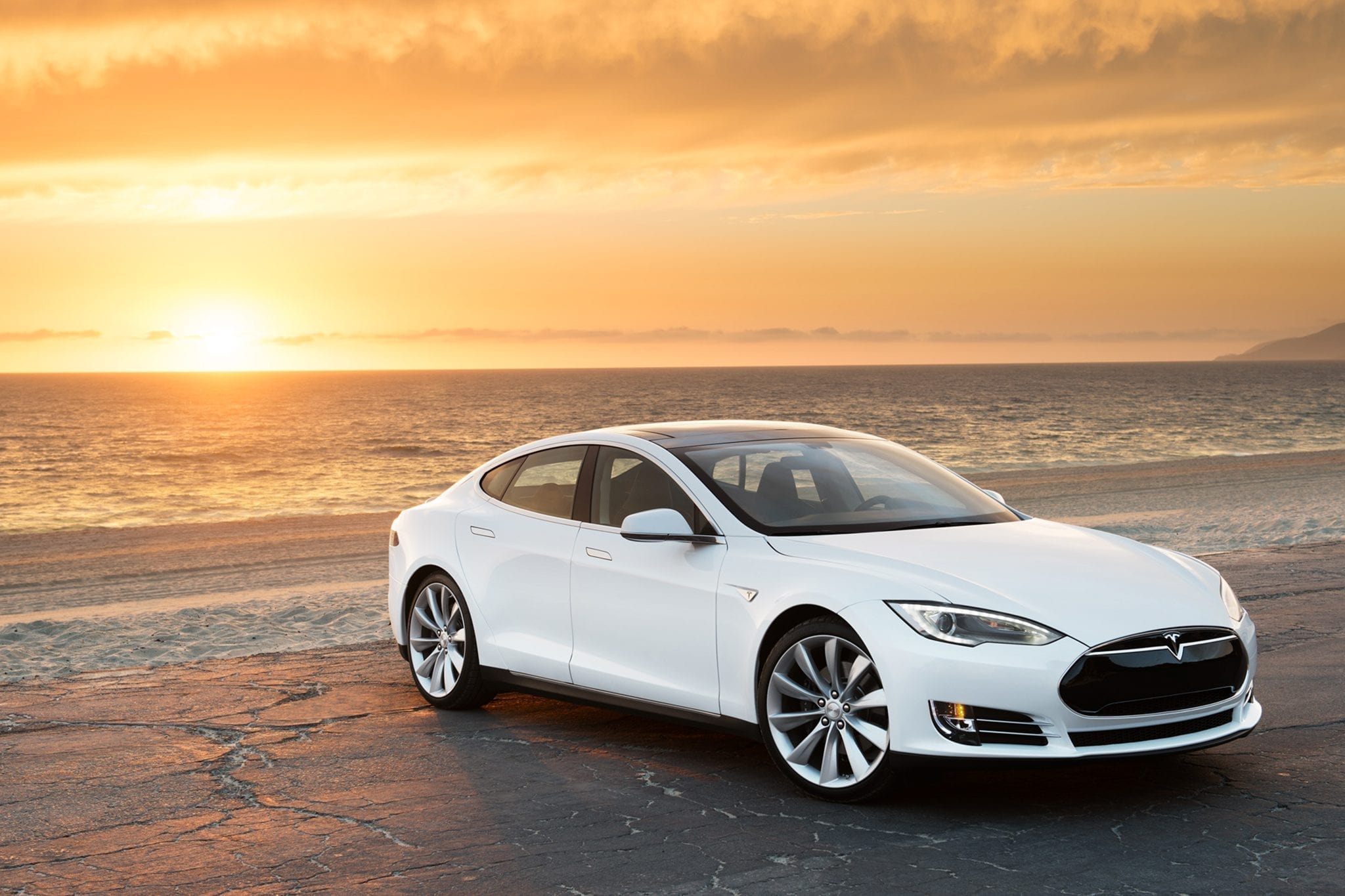
    Electric carmaker Tesla Motors Inc said on Thursday it would offer two slightly lower-priced versions of its electric Model S sedan, starting at $66,000 in the U.S. market.

    The current Model S starts around $76,000 and is often delivered to customers at a price of about $100,000.

    Prices are before tax incentives are applied.

    The new versions, the rear-wheel drive Model S 60 and the all-wheel drive Model S 60D, will have slightly less range than the Model S already sold. The Model S 60D starts at $71,000 in the U.S. market.

    The newer models will have a range of more than 200 miles, Tesla said in a statement.

    The Model S 60 and Model S 60D will be sold with a battery pack with a capacity of 75 kilowatt-hours, but will be limited to a capacity of 60 kWh. Tesla said owners will have the option to get a software upgrade to allow the car to have a capacity of 75 kWh and the longer range it provides.

    Analyst Joseph Spak of RBC Capital said the upgrade option will cost $8,500 at purchase or $9,000 after purchase.

    A 60 kWh battery has an estimated range of 218 miles for the rear-wheel drive Model S 60 and 210 miles for the Model S 60D, Tesla’a website shows.

    The upgrade to the 75 kWh battery pack will add about 40 miles of range to each model.

    Tesla in 2012 offered a 60 kWh Model S version priced starting about $70,000 but it was discontinued last year. Tesla says the two newer Model S versions offer more capabilities than the discontinued one.

    Tesla has said it will produce between 80,000 and 90,000 electric cars in 2016 and that it can make 500,000 by 2018. Most of those are expected to be Model S cars. In the first quarter, Tesla produced 14,820 vehicles, of which 12,851 were Model S and 2,659 were Model X sports utility vehicle.

    Tesla plans a new car, the Model 3, which is to be a more affordable sedan, starting around $35,000, to go to market in late 2017.

  • Daimler to unveil long-distance electric car in October

    Daimler to unveil long-distance electric car in October

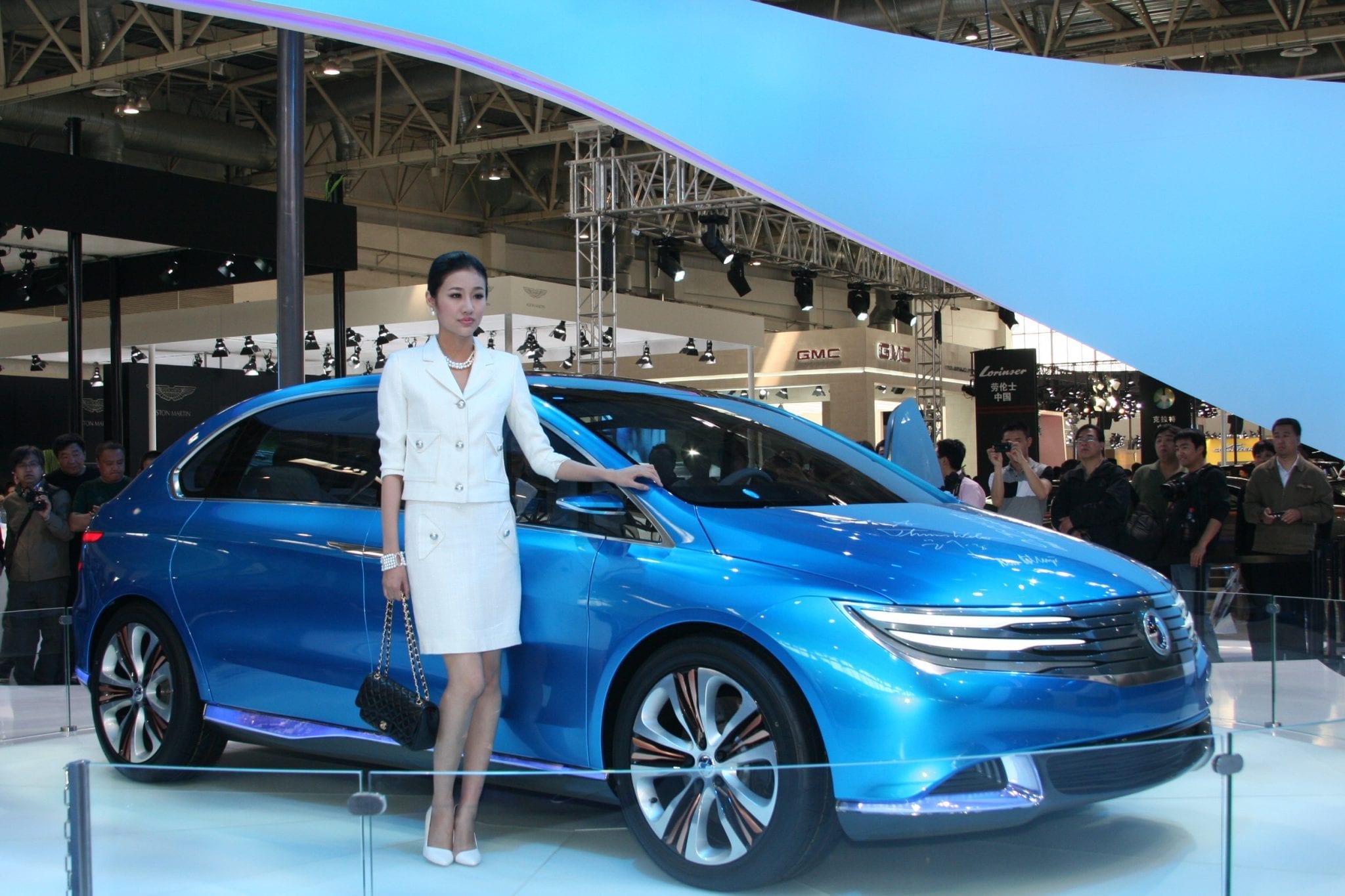
    Germany’s Daimler will lift the curtain on its much-anticipated long-distance electric car at the Paris Motor Show in October, as the automaker gears up to compete with Tesla Motors Inc’s Model X sport-utility vehicle (SUV).

    The company will display a prototype of an electric-powered Mercedes car with a 500-kilometre (310 miles) range, Chief Development Officer Thomas Weber said this week in Stuttgart at an event for journalists.

    “The structure is ready, the teams are working and the initial results from road tests are coming in quick succession,” he said.

    Weber did not specify how soon the car would hit the road but said it would be sometime this decade.

    Daimler and European rivals are stepping up investments in electric vehicles in order to meet new EU pollution targets and catch up with U.S. battery-car specialist Tesla. The German government has also announced subsidies for buyers of electric and other less polluting cars.

    German competitor Volkswagen’s subsidiaries Audi and Porsche have already unveiled long-distance electric prototypes, while BMW is working on one.

    Weber also said Daimler would launch its fourth-generation electric Smart car at the end of the year in both two and four-seater variants.

    Daimler currently offers two fully electric cars under its Smart and B-class models and a host of plug-in hybrids, powered by a combined battery and combustion engine. Further hybrid models are in the pipeline.

    The company is aiming to sell more than 100,000 electric cars a year by the end of the decade, Weber said. He declined to provide the sales figure for 2015.

    Daimler has also been working on fuel cell powered cars, which run on electricity generated by hydrogen. It initially planned to launch such a vehicle in 2014 but had to postpone, blaming pricing issues.

    The fuel cell operated SUV GLC, likely to compete with Toyota’s Mirai, is now expected to enter production next year.