Author: Mei Ling Tan

  • South Korea cuts natural gas rates by 6% on lower LNG import costs

    South Korea cuts natural gas rates by 6% on lower LNG import costs

    South Korea will cut retail natural gas prices for households and industry by an average of 5.6% from May 1 to reflect reduced LNG import costs, the Ministry of Trade, Industry and Energy said Thursday.

    It marks the third cut this year after rates fell 9% in January and 9.5% in March. South Korea cut city gas rates by more than 20% last year — 10.3% in May, 10% reduction in March, and 5.9% in January.

    “City gas rates have dropped by more than 38% since the end of 2014,” the ministry said in a statement.

    Despite the price cuts, the country’s LNG demand has been declining. LNG sales by state-owned Korea Gas Corp., which has a monopoly on domestic natural gas sales, fell 4.4% year on year to 3.14 million mt in March.

    For the first three months, Kogas’ LNG sales are estimated at 10.79 million mt, up 1% from 10.68 million mt a year earlier as its sales over January-February increased 3.4% year on year on a cold snap.

    Kogas sold a total of 31.46 million mt of LNG last year, down 10.6% from 35.17 million mt in 2014, which marks the second consecutive year of decline.


  • Mixed fortunes for Dairy Farm Indonesia

    Mixed fortunes for Dairy Farm Indonesia

    Dairy Farm International’s Indonesia operation continues to struggle in food – but Ikea trades above expectations.

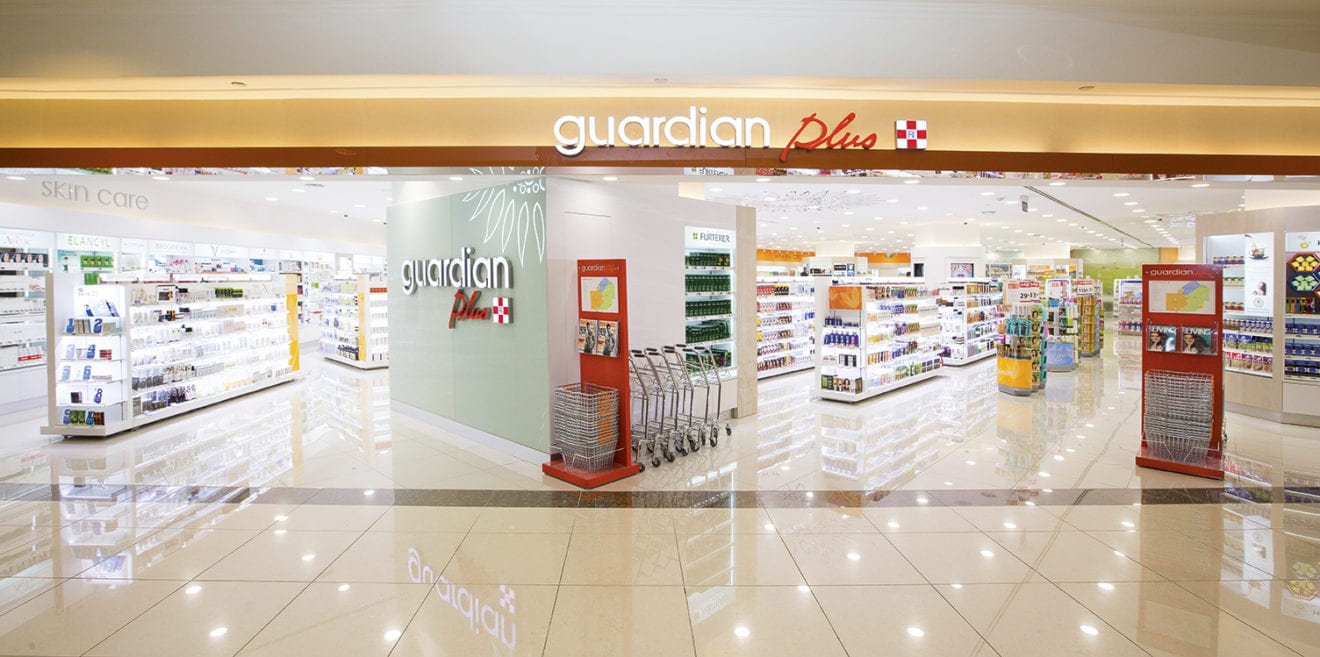
    The Hong Kong-listed company holds a controlling 83.9 per cent share in PT Hero Supermarket Tbk, which operates Giant hypermarkets and grocery stores, Guardian pharmacies and has the nation’s Ikea franchise, among others.

    Hero has reported a first quarter sales decline of 3 per cent to IDR3,409 billion (US$258 million), a 2 per cent improvement in gross profit, but a net loss of IDR 35 billion ($2.65 million).

    “While there are initial signs of margin improvement, the trading conditions for food are expected to remain challenging,” said president director Stephane Deutsch.  “Various initiatives are underway to improve the profitability of the Food business, and continuing progress is expected in both health and beauty and Ikea.”

    Although still relatively new, Ikea was the star of the quarter with sales up by double digits, exceeding both sales and profitability expectations.

    A total 28 net stores were closed in the first quarter, including one Giant Ekspres, 24 Guardian and five Starmart convenience stores. This was offset by the opening of one Guardian and 1 Giant Ekstra.

    In health and beauty, Guardian’s store rationalisation program is “progressing well”, said Deutsch. Together with the introduction of refreshed branding and increasing private label development, the restructure is leading to improvements in both sales and profitability.

    But profitability in the food operations was reduced due to the lower sales, higher stock provisions and increasing costs resulting from last year’s wage increases.

    “Significant attention continues to be given to driving sales growth, and several initiatives are underway to mitigate the effects of rising costs through energy savings and improved productivity,” said Deutsch.

    In food, the strategic decision to increase the focus on fresh produce is showing promising results with strong like-for-like sales growth.

    “Disappointing grocery and general merchandise sales, however, impacted negatively the overall food [division] performance during the quarter, especially in Giant. Action is also being taken to improve the efficiency of the supply chain, with increased centralisation through the group’s distribution centres,” he said..

    Both Giant Ekstra and Ekspres are taking action to improve their trading and their profitability.

    Dairy Farm Indonesia’s upscale format, Hero Supermarket, had stable like-for-like sales and continues to focus on enhancing its offer across the fresh, imported and exclusive ranges to provide a more distinctive choice for customers.

    At the end of the quarter (March 31), Hero operated 582 stores: 54 Giant Ekstra, 153 Giant Ekspres and Hero Supermarket, 295 Guardian Health and Beauty stores, one Ikea and 79 Starmart convenience stores.

  • Applecrumby & Fish wins $300k funding boost

    Applecrumby & Fish wins $300k funding boost

    An online boutique that offers all-natural and organic baby products, Applecrumby & Fish has obtained a fresh round of seed funding worth $300,000 from Silicon Valley’s VC 500 Startups.

    The Malaysian company aims to use the money to establish itself as the top-of-mind site for safe baby essentials, reports Tech in Asia. Founded by husband and wife Sean and Jesmine Tan in Kuala Lumpur in late 2012, Applecrumby & Fish started out with 900 products. These have increased tenfold, and free same-day delivery is offered in its home market.

    Like other parents, the Tans resorted to importing their preferred baby products. After having their first child in 2011 they fell in love with organic brands not easily available in Malaysia.

    “We are very sensitive to the needs of parents who are looking for the best they can afford for their baby, at fair prices,” says Sean.

    Applecrumby & Fish sells skincare products, toiletries, food, supplements, gear and toys. Its brands include Bellamy’s, Drypers, Enfa, Gerber, MamyPoko, Putto, Spectra, Stephen Joseph and Quinny, and there are plans to add other brands not unavailable online.

    Its new funding will help it develop an in-house brand for baby products, starting with wipes and nappies. The company also wants to boost its content marketing and gear up for its launch in Indonesia as well as Brunei.

    As well as those markets, it ships to Singapore, Thailand and the Philippines.

    Applecrumby & Fish was among startups in the annual 10-week Distro Dojo program in Malaysia. Led by 500 Startups, the program focuses on customer acquisition, growth and distribution.

    Applecrumby & Fish graduated at the top of the program last month, increasing its site traffic by more than 200 per cent and tripling its revenue in less than four weeks.

    Meanwhile, the Tans aim to disrupt the diaper and wipes industry of South-East Asia with their inhouse brand, says Digital News Asia.

    “We have done our research and there is nothing quite like our brand in the market, not at our kind of non-premium pricing but with premium quality,” says Jesmine, who is also COO.

    She says the company has had 300 per cent year-on-year growth in terms of revenue, and aims to hit RM6 million (US$1.5 million) by the end of this year.

    Before launching Applecrumby & Fish, the Tans were property investors who also freelanced as interior designers. Despite Applecrumby & Fish sounding similar to US retail giant Abercrombie & Fitch, the name stems from their daughter’s first word at the age of six month, “apple”.

    “She would walk and crawl, dropping crumbs of food everywhere she went, hence crumby, while her favourite food was steamed fish,” says Jesmine.

  • China blamed for Apple sales slump

    China blamed for Apple sales slump

    Apple sales slumped 26 per cent in Greater China in the latest quarter, driving the tech giant to its worst result in 13 years.

    CEO Tim Cook said the Hong Kong market was largely to blame, due to its currency value being pegged to the US dollar. Sales in the mainland fell by a more modest (but still alarming) 11 per cent. Greater China sales totalled US$12.49 billion, equivalent to about 24.5 per cent of its global revenues.

    Cook added that a year ago Apple sales in China soared a remarkable 81 per cent year-on-year, suggesting that made for a tough benchmark for this quarter’s results.

    But Apple cannot blame all the company’s current woes on China: sales in its US home market fell 10 per cent as well.

    Globally, Apple sales totalled US$50.6 billion, down from the $58 billion of the previous corresponding period. Its quarterly net income fell from $13.6 billion to $10.5 billion and gross margin fell from 40.8 per cent to 39.4 per cent. International sales accounted for 67 per cent of the quarterly revenue.

    Despite the sales decline, Apple is showing no sign of slowing its aggressive expansion program in Greater China which it predicts will soon become its largest single market, overtaking the US.

    During the quarter the company opened seven more stores, with five more planned in the current quarter, taking the network of large format stores to about 40.

    The company will also take a hit from the Chinese Government’s decision last week to ban Apple’s iTunes music store and its Apple Bookstore – both selling digital content to Chinese customers who have invested in iPhones, iPads or Apple computers.

    The biggest drain on sales is the iPhone, which is now struggling to keep pace with a myriad of less expensive models offering similar technology at often vastly lesser prices. Apple sold more than 51.2 million iPhones in the first three months of 2016 – nearly 10 million fewer than during the same quarter of 2015.

  • Yen strength bites 759 Store profits

    Yen strength bites 759 Store profits

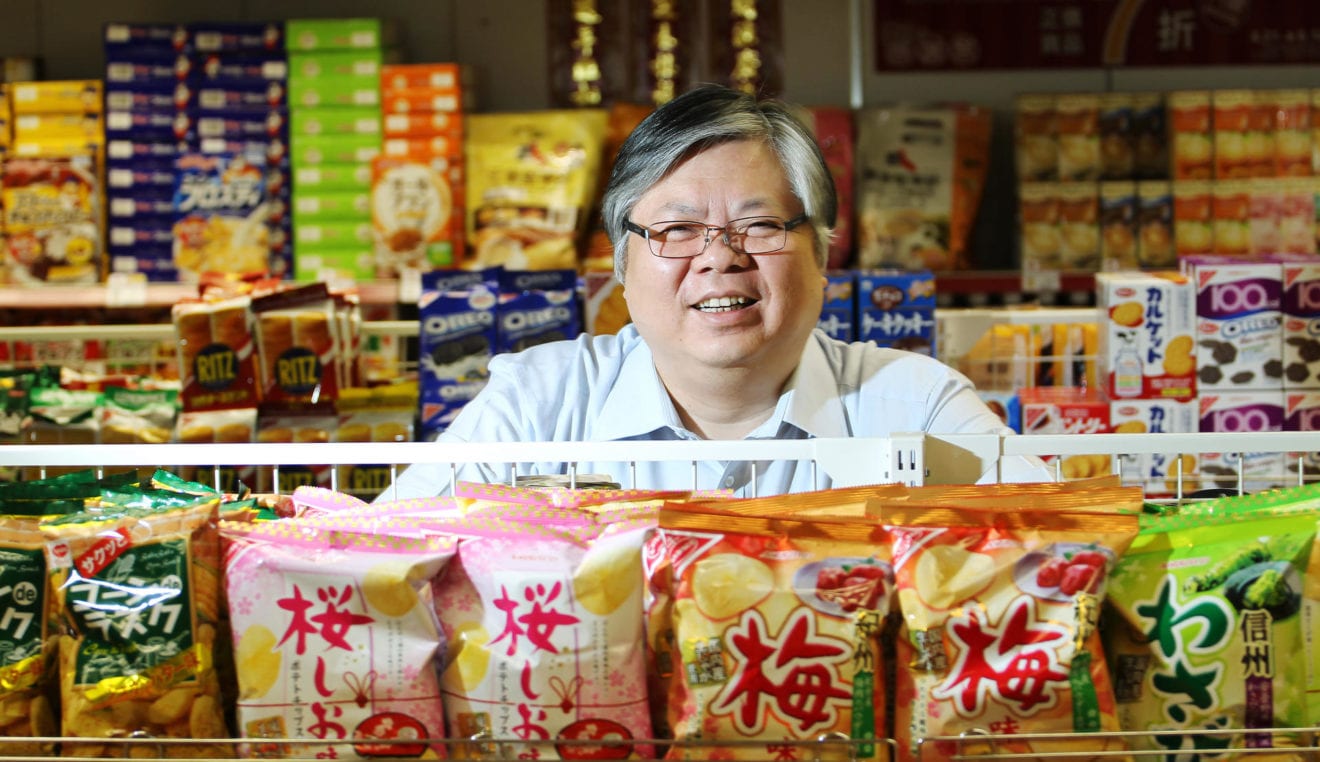
    Feeling the bite from a stronger yen, Hong Kong snack chain 759 Store will shut down at least 15 outlets this year and slash its discounts from next month.

    The company has reported its first loss since its 2010 launch, with founder Colis Lam Wai-chun blaming the currency appreciation for raising the cost of its products from Japan, which accounts for about 30 per cent of its range.

    There has also been a drop in sponsorship fees from payment-service companies this year, further squeezing profits.
    Lam says the change in pricing strategy would result in a 10 to 20 per cent rise in prices for the chain’s members and customers using such payment methods as credit cards and electronic wallets.

    He says dealer prices for Japanese products have risen around 7 to 8 per cent, while payment-service partners have cut sponsorship fees paid to the chain by 70 per cent from a year ago.
    Instead of discounts of 30 to 40 per cent, members and customers using designated payment methods will find the rebate cut back to 10 to 20 per cent from next month.

    However, Lam says ordinary consumers who pay cash or use non-designated methods might enjoy cheaper prices.

    He plans to adopt a “fixed price” for each item, with a profit of around 35 per cent on the dealer price. Previously the chain offered three price levels for different products, with profits ranging from 32 to 40 per cent.

    However, Lam does not expect to lose customers as he says his products will still be cheaper than those in supermarket chains like ParknShop and Wellcome.

  • H&M India opens Swedish brand’s 4000th store

    H&M India opens Swedish brand’s 4000th store

    Bollywood actress Parineeti Chopra hosted the grand opening of Swedish fashion brand H&M India’s newest – at the Mall of India in Noida, near Delhi.

    The shop is the 4000th globally to bear the famous red H&M logo.

    Covering 37,000 sqft (3437 sqm), the store has four floors, each devoted to apparel and accessories for women, men, teenagers and children respectively.

    parineeti chopra h&m india 1

    H&M country manager Janne Einola, area manager Mikko Alatalo and store manager Varun Pratap Singh cut the red ribbon to officially open the store.
    A queue formed ahead of the opening, with the first 10 customers receiving a gift card worth Rs 4000 (US$60), while the next 200 in the queue each received a goodie bag and gift card worth Rs 500.

    parineeti chopra h&m india

    DJ spin-offs were a feature of the launch, as well as dance and fashion contests for the customers.

    Parineeti Chopra was clearly impressed: “I’ve always liked H&M’s exciting and affordable fashion- there is plenty of inspiration in store to create your personal style. The opening was incredibly fun!”

  • China fires, Hong Kong fizzles for Coach Asia

    China fires, Hong Kong fizzles for Coach Asia

    Coach Asia has reported a strong rise in Mainland China sales in the last quarter – which was eroded by a decline in Hong Kong and Macau.

    The rebounding US fashion retailer says international sales rose 5 per cent in the three months to March 27 to US$448 million and by 7 per cent on a constant currency basis.

    “Total China sales rose 2 per cent in constant currency and declined 2 per cent in dollars with double-digit growth and positive comparable store sales on the Mainland offset in part by continued weakness in Hong Kong and Macau,” the company said in its earnings statement overnight.

    Hong Kong’s subdued luxury market and high currency value significantly ate into the Greater China figures.

    In Japan, sales rose 7 per cent in constant currency, despite a decrease in square footage, while dollar sales rose 8 per cent, reflecting the stronger yen.

    “Sales for the remaining directly operated businesses in Asia posted solid growth in constant currency but rose slightly in dollars,” the company reported.

    Coach’s total sales were $1.03 billion for the third quarter, compared with $929 million in the same period of last year, an increase of 11 per cent. On a constant currency basis, total sales increased 13 per cent. Gross profit totaled $713 million versus $665 million a year ago, up 7 per cent, while gross margin was 69 per cent versus 71.6 per cent.

    Neil Saunders, said while Coach’s sales uplifts were modest when compared to prior year declines of 24 per cent in North America and 3 per cent in international markets, they added to the sense that a long promised recovery of the brand is starting to materialise.

    He said the Stuart Weitzman acquisition continues to add value to Coach’s top line, despite fairly weak margins. “To an extent this, along with the strong dollar, has under minded progress made in rebuilding margins for the core Coach brand.

    “While Coach has done much to rebuild its brand there is still further to go within North America before it sheds its image of being a ubiquitous product focused on discounting. The recent heritage campaign and the reduced promotional stance are helping to shift perceptions, and as such the direction of travel is correct,” observed Saunders.

    “With greater emphasis on product design, marketing, and store environment Coach should be able to rebuild traction within its core North American market over the course of the next quarter.”

    Coach CEO Victor Luis  said the company’s performance was in line with expectations and reflected “the consistent execution of the transformation initiatives put into place nearly two years ago, in spite of volatile tourist spending flows, as well as macroeconomic and promotional headwinds”.

    “We are delighted with how our plan for the Coach brand continues to unfold and is driving improvement across our financial metrics. We are on track to return to positive comps in North America in the fourth quarter and to achieve an inflection in our profitability.”

  • Korea to allow four new duty-free shops in Seoul

    Korea to allow four new duty-free shops in Seoul

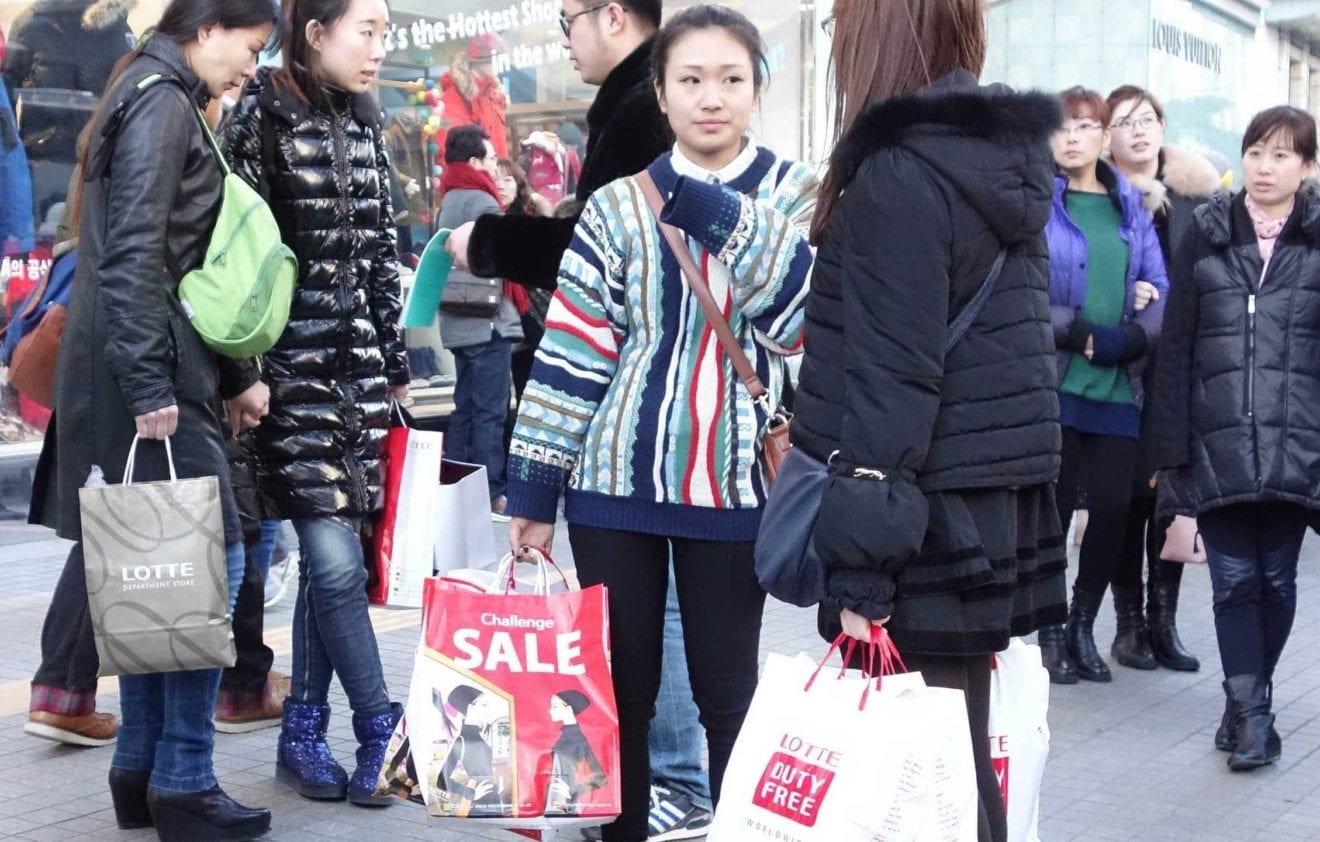
    Korea will allow four more duty-free shops to open in Seoul to meet growing demand from Chinese tourists, the government announced Friday.

    “Four new licenses will be issued for operation in Seoul, while the city of Busan and Gangwon Province will also get one each,” Lee Myung-gu, director of the Korea Customs Service, said at a press briefing in Sejong.

    The licensees will be selected by the end of this year through an open competition, the official explained, with one ticket reserved for midsized companies.

    Seoul currently has nine tax-exempt retail outlets. Friday’s decision will raise the total to 13.

    Duty-free stores are a rare bright spot in Korea’s lackluster retail sector, growing by an average 20 per cent over the past five years. Last year, they posted a combined 9.2 trillion won ($8 billion) in sales.

    Major retail giants Lotte Duty Free, part of Lotte Group, SK Networks of SK Group and Hyundai Department Store hailed the decision, vowing an all-out effort to win a license.

    For Lotte and SK, in particular, this represents a second chance after they failed to renew the license for shops that they have been running for years.

    “We will make utmost efforts to win the license back,” SK Networks said in a press statement after the announcement.

    SK’s only duty-free outlet inside the Walkerhill Hotel in eastern Seoul faces closure in May with the expiry of its license.

    Lotte, which runs the top duty-free store by sales in Seoul, has to shut its Lotte World Tower outlet in southern Seoul by the end of June. The Lotte World Tower shop ranked third by sales in 2014.

    Hyundai Department Store said it wants to open a tax-free retail outlet at Coex in the southern shopping district of Gangnam.

    The government last year changed its policy on duty-free shops, holding an open competition for operational licenses for the first time. HDC Shilla Duty Free, Hanwha Galleria and SM Duty Free grabbed new licenses to open outlets in Seoul, while Doosan and Shinsegae beat Lotte and SK to win theirs.

    The government, however, has changed its stance again this year, extending the operational licenses of local duty-free stores to 10 years from the current five. Also, the licenses will be automatically renewed to help the companies run their businesses in a more sustainable way.

    The decision to open the field wider for competition is a move in line with the government’s efforts to grow tourism and revive the sluggish domestic economy and create jobs, the KCS explained in a press statement. It expects the new licenses to spur domestic investment of 1 trillion won and 5,000 new jobs.

    Korea is the world’s largest duty-free market, accounting for more than 10 per cent of global revenues from duty-free shops.

    In 2014, it saw foreign tourist arrivals rising to a record 14.2 million, greatly helped by a surge in visitors from neighbouring China.


  • Apple is losing its charm

    Apple is losing its charm

    In a sure sign that Apple is losing its mojo, the company’s second quarter results are unrelentingly gloomy with total revenue down strongly on an overall basis and across most regions.

    This, combined with a weaker gross margin outcome, has dinted net income which fell by almost a quarter over the prior year.

    While sales were blown off course by the strong dollar, which dampened the final results in regions like China and Europe, this was only part of the reason for the decline. The fact that revenue in Apple’s home market dropped by over 10 per cent, and that the volume of devices sold slipped by double digits, testifies to a larger truth: Apple is not innovating enough on the product front to drive sales.

    Apple’s last product unveilings were lacklustre and characterised a company that – while still on the cutting edge of technology – seems to have run out of radical new ideas. This was underlined by the fact that Apple has elected to chase lower-priced parts of the market with its smaller, cheaper iPhone.

    Although there is nothing wrong with this strategy, it is a tacit admission that the company is no longer churning out the kind of leading edge devices that command a hefty premium.

    All of this leads to a problem, especially in saturated markets like North America where device penetration is already high: new product is seen by many consumers as being good, but not quite good enough to justify upgrading. This applies to the iPhone, but especially to iPads where the new line up is rather confusing with little to differentiate the various versions now on offer.

    Admittedly Apple’s task is very challenging. It has for years been the market leader, not just in terms of share, but also in terms of innovation and thinking – and this is inevitably a very difficult pace to keep up. However, Apple needs to come up with a radical new innovation or product rather than just the current incremental improvements to existing products. This is the only way in which it will reinvigorate sales growth.

    None of this is to suggest that Apple is a failing company. Despite the decline, its revenue and profit numbers are still extremely healthy and its brand remains both popular and relevant. However, without pulling something new out of its hat it is likely that revenue will continue to decline as the company moves into its third and fourth quarters.

    One of the ‘party tricks’ of the late Steve Jobs was to always have a surprise up his sleeve – that “one last thing” that made audiences gasp and consumers ache with desire for the latest Apple innovation. As competent and passionate as current management is, it is this spirit which Apple is now lacking and desperately needs to get back.

  • North Korean beer sale in China

    North Korean beer sale in China


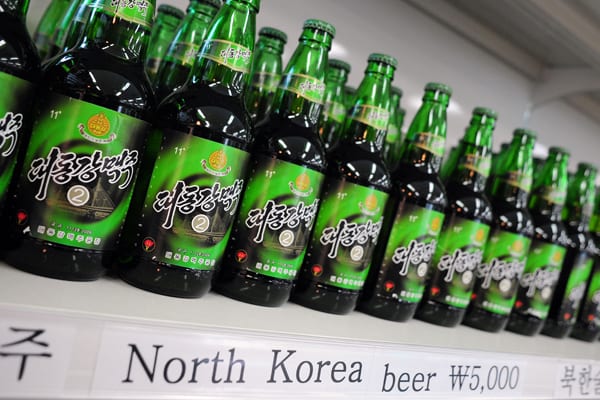
    A North Korean beer brand rarely available in China up to now has been spotted on grocery store shelves in cities close to the North Korean border, although the brew is too highly priced for Chinese consumers, sources said.

    “There is a billboard advertising Taedonggang beer on the roadside in front of the Dandong train station,” said a Chinese resident of the border city in northeastern China’s Liaoning province, who declined to be named.

    “Even the daily newspaper has revealed the state-owned, North Korean beer company’s address and phone number of the brewery’s offices in China,” he told RFA’s Korean Service. “It seems that China has officially imported Taedonggang beer.”

    Taedonggang beer, named after the river that runs through North Korea’s capital Pyongyang, sells for 20 yuan (U.S. $3.09) per 640-milliliter (22-fluid ounce) bottle in stores in Dandong and Shenyang in northeastern China’s Liaoning province, four times more than the price of domestic Chinese beer brands which typically cost 5 yuan (U.S. $0.77) per bottle, sources said.

    North Korea, which was hit with tough new international sanctions in March for conducting another nuclear test and long-range rocket launch, has had to step up efforts to participate in markets abroad to generate foreign currency to finance the regime of national leader Kim Jong Un.

    So far, the beer’s distribution has been limited in China—North Korea’s largest trading partner—and is only available in stores that offer Korean and other foreign products and ones in areas with growing Korean communities, sources in Shenyang and Dandong said.

    “Some grocery stories have been selling Taedonggang beer most recently, but there is only a small quantity, which is why other people still don’t know about it,” a Chinese resident of Shenyang said.

    Good quality, high price

    Even though the taste and quality of the full-bodied lager, which has a five-percent alcohol content, are appealing, Chinese consumers will not buy the beer at such a high price, sources said.

    “Although the alcohol content of the beer is slightly higher than that of Chinese beer, the North Korean beer has a dark color and a smooth taste,” said a Chinese source who has tried the beer at a restaurant in Dandong.

    “The quality of the North Korean beer is fairly good, but I think it will be difficult for Chinese consumers to drink it often because it is too expensive,” he said.

    China imposes a 17 percent value-added tax and 250 yuan (U.S. $39) per ton on foreign beers, said a North Korean who lives in China.

    “Taedonggang beer’s price of 20 yuan is very high considering the market margin and importers’ profit,” he said.

    In North Korea, foreigners can buy the beer at hotels, but they pay an inflated price for it as a means of bringing in foreign currency.

    North Koreans can buy bottles of Taedonggang for the equivalent of about 1 yuan (U.S. $0.15) each on the black market, sources said.

    “It seems that the fixed beer price is due to the import price, meaning the retail price in North Korea itself is high,” the North Korean source said.

    Showpiece brewery

    Taedonggaang got its start in the early 2000s when former North Korean leader Kim Jong Il acquired a defunct British brewery. A team of North Koreans traveled to the plant site in Trowbridge, a county town of Wiltshire, England, where they dismantled the brewery and reassembled it in Pyongyang. The plant began operating as the Taedonggang Beer Factory in 2002.

    The regime ensured that the showpiece brewery had abundant supplies of fresh water and quality ingredients to manufacture the brew, while millions of its largely impoverished people were undernourished from a lack of food.

    North Korea began exporting Taedonggang to South Korea a few years later, but the South Koreans stopped importing it in mid-2007 after the regime suddenly hiked its price, according to a Reuters report in March 2008.

    In 2012, Britain’s The Economist magazine ruffled feathers in South Korea with an article that contrasted Taedonggang with what it called the South’s “boring beer” and said “brewing remains just about the only useful activity at which North Korea beats the South.”
  • BookMeds invited to move into Malaysia

    BookMeds invited to move into Malaysia

    Hyderabad-based startup BookMeds, which allows customers across India to order medicines online and have them delivered from their nearest pharmacy, may move into Malaysia.

    Launched in December 2013, BookMeds is now the third-largest online pharmacy chain after Apollo and Medplus. With a presence across 18 cities, it serves more than 15,000 customers and 400-plus pharmacies.

    Now BookMeds has been chosen by the Malaysian government’s Magic Accelerator program to explore entry into Malaysia.

    “The pharma-retail model in Malaysia is similar to that of India, offering BookMeds a great opportunity,” says BookMeds founder/CEO Mohammed Abubakr.

    Apart from finding workspace and accommodation, Magic provides advice on setting up a working model for Malaysia. “Initially, we will be targeting the urban population of Kuala Lumpur, then expand across Malaysia,” says Abubakr.

    Meanwhile, BookMeds is in discussions with venture firms to raise $2 million for its continuing expansion across India, with more than 50 cities as targets. Previously, the company raised seed funding from Flipkart VP Ravi Krishnaswamy and Xtream IT CEO Javed Sikander, along with angel funding from Back Office Associates CEO Krish Datta.

  • Hong Kong consumers favour saving over fun

    Hong Kong consumers favour saving over fun

    Hong Kong consumers lead the world for their saving and investment mindset, while savers outnumber fun-lovers overall in Asia Pacific.

    Market research company GFK has found that 54 per cent of online consumers in Hong Kong “disagree completely” or “disagree somewhat” with the notion of enjoying life today and worrying about savings and investments later.

    At the other end of the scale, China has the highest proportion of consumers of the APAC countries surveyed (38 per cent) who favour having fun now, followed by Australians at 32 per cent.

    GFK polled more than 27,000 internet users across 22 countries, including Australia, China, Hong Kong, Korea and Japan, to find how strongly they agree or disagree with the statement “I want to enjoy life today and will worry about savings and investments later”.

    Internationally, people in favour of saving slightly outnumber the “have fun now” respondents – but the numbers are very close. Hong Kong stands out as the only state where more than half of the online population puts up its hand for saving.

    Though 33 per cent of women internationally are happy to worry about financial security later, 40 per cent disagree. Men, however, are more evenly split with 36 per cent agreeing and 35 per cent disagreeing.

    Respondents in their 20s are the highest percentage of fun-lovers of any age group, with 41 per cent happy to worry about saving later. Teenagers (15 to 19 years old) and those in their 30s come next, almost equal at 37 and 36 per cent respectively. Of respondents in their 50s and older, 26 per cent also agree with living for today.

    Meanwhile, the numbers with a “save now” attitude increase fairly steadily with each age group, starting at 34 per cent for both teenagers and those in their 20s, and peaks at 43 per cent of those in their 50s, and 42 per cent of those older.

    “These findings give financial service brands a useful, top-level picture of the differences in attitude toward the concept of savings and investments across countries, age groups and genders,” says GFK APAC chief commercial officer Frans Janssen.

  • Is Growth For Luxury Brands in China Over?

    Is Growth For Luxury Brands in China Over?

    China and the Chinese played a primary role in the growth of the luxury sector in the past decade. But what was once a boon for luxury goods brands is now turning around.

    Chinese consumers account for the largest portion (31 percent) of global luxury spending, up from only 1 percent in 2000, according to a study by consulting firm Bain & Company. And in the past decade, thanks to China and Chinese shoppers abroad, the luxury goods market worldwide grew by 72 percent in size.

    luxury goods

    (Statista)

    “The relentless expansion of the domestic economy that fueled China’s voracious appetite for the finer things in life has slowed,” Exane BNP Paribas analyst Luca Solca.

    “This only compounds the chilling effect that the government’s anti-corruption campaign has had on demand for luxury fashion and fine jewelry.”

    Many luxury goods brands opened up store after store to tap the Chinese market. The experts are now debating whether they are too exposed to China.

    In his analysis, Solca looked at whether each brand is over- or underexposed to the Chinese market based on the number of stores they have. Accordingly, Versace is the most over-exposed brand with 22 percent of its stores based in China. Moncler, Tod’s, and Dolce&Gabbana are among the overexposed brands as well.

    The only large brands underexposed to China are Hermes, Tiffany, and Michael Kors. And these brands still have some retail expansion opportunity in China, according to Solca.

    (Source: Exane BNP Paribas analysis, RE-Analystics, Business of Fashion)

    (Exane BNP Paribas analysis, RE-Analytics, Business of Fashion)

    Sales of luxury products in the mainland have started to slow down after Chinese regime leader Xi Jinping launched his political anti-corruption campaign in 2013. Many of the Chinese officials and their numerous cronies and associates notorious for using luxury items for bribes stopped shopping for those items.

    A slowdown in the Chinese economy since mid-2015 was the second blow for luxury brands. Some brands have already started closing stores in China.

    “A corollary to the drop in domestic sales is a reduction of the store footprint by most brands, with a greater focus on fewer, larger, and better-located stores” Bain & Company stated in its report on China’s luxury market in 2015.

    Louis Vuitton, which is the most valuable luxury brand in the world, closed six stores and opened two new stores in China in 2015. And the company recently announced the closure of two additional stores located in Shanghai and Shanxi.

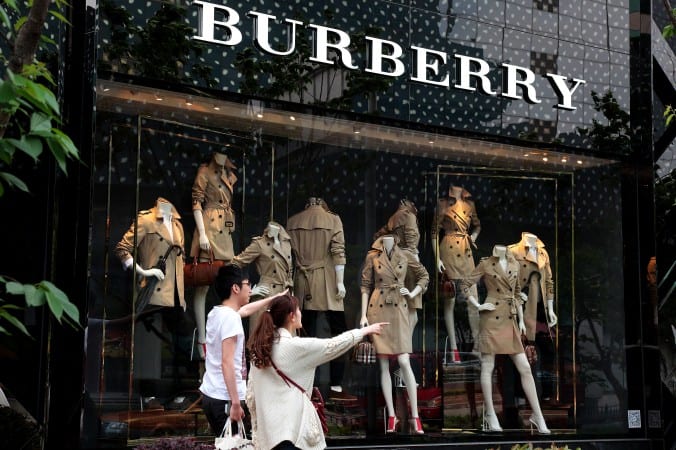
    Meanwhile, Gucci closed five stores in China, Burberry closed two stores, and Prada closed four stores in 2015, according to the Bain report. Due to collapsing demand in China, brands are expected to shut more stores across the country in coming months.

    Adding to the industry’s woes, publicly traded luxury goods companies announced weaker than expected results in April 2016, caused by slowing Chinese tourism in Europe. Burberry Group Plc, Prada SpA,Kering SA, and LVMH Moet Hennessy Louis Vuitton SE all reported disappointing results following terror attacks in Europe.

    According to Bruno Lannes, a Bain partner based in Shanghai, luxury brands should place greater emphasis on exclusive and fashionable collections, digital platform engagement and digital content, as well as pricing, in order to remain competitive in rough times.

  • Tesla Opens 17th Experience Store In China

    Tesla Opens 17th Experience Store In China

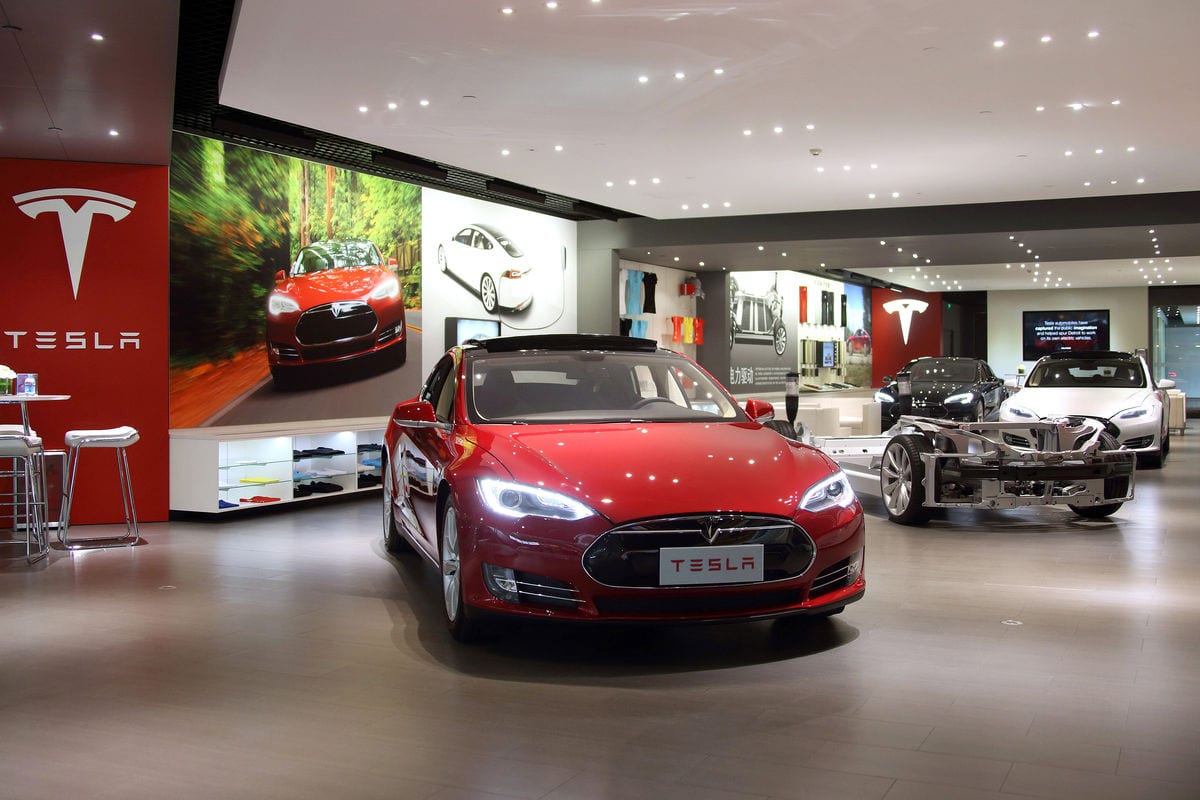
    U.S.-based electric car maker Tesla has opened a new experience center, which is the company’s largest experience center in North China and its fifth owned sales site in Beijing.

    Tesla will reportedly build ten new stores in China in 2016. At the same time, the company will stick to a direct sales model, which is the core model of Tesla. At present, Tesla’s new cars need to be booked via its official website and the cars will be delivered to physical stores.

    So far, Tesla has opened 17 experience centers in China, covering North China, East China, and South China. Those experience centers are mainly located in first-tier cities, including Beijing, Shanghai, Guangzhou, and Shenzhen, and some are in Hangzhou, Chengdu, and Xi’an.

    Zhu Xiaotong, head of Tesla China, said that the company will continue to develop within the market of first-tier cities in the future. On one hand, the potential of those super cities has not been fully explored and they can still digest Tesla’s capacity; on the other hand, it is complicated to expand into a new city. Therefore, Tesla will seek stable development based on existing sites.

    During the opening ceremony of this new store, Tesla’s new Model S also made its debut in China.

  • Awakening giant: E-commerce in China

    Awakening giant: E-commerce in China

    With the largest population and the most Internet users of any country in the world and the rise of its middle class, it is not surprising that China is also the world’s largest and fastest-growing e-commerce market. However, capitalizing on this huge market is becoming increasingly difficult for a variety of reasons.

    Recently, McKinsey, the consulting giant, released a new report on this burgeoning market that holds “enormous potential”.

    A growing market

    Two years ago, China’s online retail market overtook the United States’ online retail market. In 2015, China’s online retail market was approximately USD $630 billion of sales, the world’s largest and nearly 80 percent bigger than the US’.

    E-commerce in China accounts for 13.5 percent of all of its retail spending.  Although in the near term Chinese e-commerce is forecast to increase significantly, McKinsey’s survey shows that companies need to prepare for major changes in the Chinese market.

    Major changes coming

    From new customer segments to new product categories and sales channels, China’s online market is set for huge future growth. Representing 30 percent of total retail sales, the categories of consumer electronics and small appliances are well-established online categories, as is apparel.

    On the other hand, Food (including packaged and fresh food), is a category that faces more challenges and opportunities. Though 50 percent of respondents have purchased some food online, online spending represents only five percent of the total food spending.

    The category of food holds promise for companies that can attract consumers to do their regular grocery shopping online stand to capture a lot of business.

    Online-to-Offline (O2O)

    Consumers in China are accustomed to buying through O2O services companies—they are attracted to the website or app, then buy offline. The top sectors for O2O seem to be travel, dining, and mobility, where respondents who use O2O vendors report spending much more than they did before.

    Huge Opportunities

    McKinsey’s survey of China’s digital consumers tells us that growth in e-commerce and O2O is shifting to new areas. “Succeeding in this market is a matter of keeping pace with changes that are playing out across geographies, product categories, and channels.”

    The opportunities are huge for companies willing to look closely into these aspects of the market to find them, then move quickly to take advantage of them before their competitors can.