Author: Mei Ling Tan

  • Lacoste Singapore scores airport outlet

    Lacoste Singapore scores airport outlet

    French clothing company Lacoste Singapore has tendered successfully for an outlet at Changi Airport.

    RSH Singapore, which represents Lacoste, has been awarded a 78 sqm concession in the west departure/transit lounge on level two.

    Calling for mid-priced fashion tenders in Terminal 1, Changi Airport Group awarded two other concessions to Dufry (The Nuance Group Singapore), which will use its 70 sqm and 83 sqm concessions for the Kipling and Trunk & Co brands.

    All concessions are in the same area with three-year contracts, with no option to renew. The tenders attracted 13 participants.

    Meanwhile, Dufry, in partnership with MCM, has also won an extra 104 sqm speciality tender in the same location, also for three years.

  • Tourism slump hits Burberry Hong Kong sales

    Tourism slump hits Burberry Hong Kong sales

    British luxury brand Burberry Hong Kong has seen its sales slide by more than 20 per cent for the third quarter in a row.

    The result reflects the continuing fall-off in tourist numbers to Hong Kong from China, including a 26 per cent drop in February.

    Burberry’s second-half sales results, just released, show a “challenging” environment for luxury, says CEO Christopher Bailey. Global comparable sales declined by 2 per cent, dragged down by Hong Kong and Macau. Global comparable sales excluding these regions actually edged up 1 per cent for the half.

    Burberry’s bright spots were Mainland China, Japan and Korea, which all saw positive growth. Japan, which has become a luxury shopping hotspot for Chinese tourists, had double-digit growth in total retail revenue.

    Sales also slowed down in Europe, as luxury shoppers from China avoided the region following the Paris terror attacks in November. Demand for Burberry goods fell in France, Germany, Italy and Spain amid a general sense of unease about security and fears of further terrorist attacks in Europe.

    However, it is not all doom and gloom for Burberry, says Verdict Retail analyst Andrew Hall, citing growth in online sales and the launch of the Mr Burberry fragrance. The success of Burberry’s fragrances has seen the brand’s beauty division achieve underlying growth of 10 per cent in the second half.

    “Furthermore, Burberry continues to be at the forefront of luxury fashion retail, making headlines with high-profile collaborations – for example, Steve McQueen – and sending waves across the industry as it shakes up the traditional fashion show timetable,” says Hall.

    “Burberry can certainly be proud of the hard-won successes, but long-term strategic leadership is needed to overcome the blows dealt by performance in some Asian markets. Until this is achieved, the good work will continue to be overshadowed by falling demand in Hong Kong and Macau.”

  • PCCW Global to build international carrier exchange in Hong Kong

    PCCW Global to build international carrier exchange in Hong Kong

    PCCW Global has entered into a long-term collaboration agreement with Keppel Data Centres Holding to co-develop and market an international carrier exchange in Hong Kong.

    PCCW Global is the international division of major operator HKT, and Keppel Data Centres is a joint venture between Keppel Telecommunications & Transportation (Keppel T&T) and Keppel Land. These companies are themselves subsidiaries of Singapore-listed Keppel Corporation.

    The exchange will be fitted to Tier III specifications to ensure uptime of up to 99.982%. Construction is expected to be complete in the fourth quarter.

    The new facility will offer connectivity-related managed services to facilitate interconnects. It will be located in the same building as the Hong Kong point of presence for the 100Gbps Asia-Africa-Europe 1 subsea cable, which is also expected to be ready for service in Q4.

    The building will also be connected to PCCW Global’s backhaul network to link the international carrier exchange to numerous subsea cable landing stations. This will allow the exchange to be used as a gateway to mainland China.

    “We are happy to partner with PCCW Global for our first investment into the Hong Kong colocation market, which benefits from the city’s status as a key telecommunications and financial hub, as well as its connectivity to other hubs in Singapore, Amsterdam, London, and Sydney,” Keppel T&T CEO Thomas Pang said.

    “The expansion of Keppel’s data center footprint to Hong Kong is another step towards creating a data center value ecosystem that goes beyond colocation to providing value-added services and connectivity for our valued clients.”

  • Issey Miyake China launches in open-air complex

    Issey Miyake China launches in open-air complex

    An Issey Miyake China boutique has opened in Chengdu, at the open-air shopping complex Sino-ocean Taikoo Li.

    Covering two floors, the Japanese fashion store has a white interior with modular displays and sleek metal racks that makes the products stand out. Its range includes women’s items from the Issey Miyake main collection, as well as Pleats Please, Bao Bao and Me Lines items.

    Issey-Miyake-store-Chengdu-China

    Sino-ocean Taikoo Li is centered around the historic Buddhist Daci Temple. It is a low-rise project that includes shopping, dining, drinking, entertainment, offices and hotels with the setting of lanes, squares, streets, alleys and courtyards.

    Issey-Miyake-store-Chengdu-China-02

    Its retail planning concept is “Fast Lane” and “Slow Lane” (play fast, live slow). “Fast Lane” incorporates luxury brands and high-end contemporary fashion, while “Slow Lane” comprises outdoor dining and lifestyle stores.

    Master planner for the project and lead architect was the Oval Partnership.

    Issey-Miyake-store-Chengdu-China-03

  • Starbucks China convinces suppliers on ethics

    Starbucks China convinces suppliers on ethics

    Ten years ago when Starbucks China hosted its first suppliers summit there were just 10 people present.

    This year, more than 350 supplier representatives were in Shenzhen to hear the coffee giant’s pitch to join its commitment for a sustainable, ethical supply chain.

    “We studied the leadership position we were taking to get high-quality coffee,” said Kelly Goodejohn, director, Starbucks ethical sourcing. “We wanted to build something similar for other products that we source.”

    Similar to coffee, Starbucks wanted to understand where manufactured goods were sourced, how farmers and workers were being treated and the impact the suppliers were having in local communities. The summit served as a starting point to gain more of this knowledge, no matter what the products being sourced are.

    “It was an awareness opportunity,” said Goodejohn. “What we found was that many of our suppliers shared our values, wanted to do more for their employees and communities, but didn’t know how to do it.”

    The 10th Annual Supplier Summit this week featured Starbucks leaders, representatives of nonprofits and industry experts. During the event, Starbucks shared key company initiatives, discussed global responsibility goals and provided tools and resources to help suppliers improve business practices.

    Starbucks China


    Building trust

    Back in 2006, at that first summit, one of Starbucks goals was to cultivate a stronger rapport with suppliers.

    “Building authentic relationships with our suppliers was important as well as working with them to make improvements,” said Goodejohn. “Over time, we have worked with our suppliers in China to improve labor and environmental performance to enable higher overall performance, so they are positioned to grow with Starbucks as our business grows.”

    At first, not all suppliers were willing to take Starbucks at face value.

    “It was difficult to build trust, but we got there,” said Goodejohn. “While some suppliers moved on, the majority were willing to work with us and are still our suppliers today.”

    Starbucks has worked with suppliers to improve worker health and safety, ensure employees get paid a fair wage, provide better living conditions at factory dormitories and confirm that products are made without emitting dangerous chemicals to protect water and air.

    Three years ago, Starbucks incorporated community service into the supplier summit to highlight an important aspect of the company’s mission.

    On Wednesday, suppliers, Starbucks partners (employees) and customers convened for a beautification and career development service project at the Shiao Community and the Young Dream Center in Shenzhen. The project is one of many that the company will engage in during its Global Month of Service that takes place throughout the month.

    Sharing knowledge

    As a way to support suppliers on the ground year-round, Starbucks hired two field managers in China to help implement best practices related to social and environmental performance. They teach factory managers and work on continuous improvement with suppliers.

    “I’m immensely proud of what we’ve done and the partners who are elevating ethical sourcing with suppliers on a regular basis,” said Goodejohn.

    “We have many countries that manufacture goods for us and we can bring the learnings from China to other regions. We have the right momentum and we will keep moving.”

  • Waitrose China launches via Alibaba

    Waitrose China launches via Alibaba

    Upmarket British grocery chain Waitrose has broken new ground in a deal with online marketplace Alibaba, opening the doors for it to export to China.

    Waitrose China will offer products and ranges to buyers across the mainland exclusively through theRoyal Mail Store on Tmall Global, Alibaba Group’s online marketplace. Waitrose arranged the deal through Avenue51, which runs Royal Mail’s store on the platform.

    Royal Mail promotes British companies, and Waitrose will be one of its highest-profile brands with a dedicated page on its online store. There will be 30 products initially, including biscuits, cereals, coffee, nuts and tea, plus beauty, baby and organic ranges.

    “The potential for Waitrose in China is huge, and though this is a relatively modest start it’s our ambition to see it become our biggest international business in the next three to five years,” says Waitrose commercial director Mark Williamson.

  • NZ govt teams up with Alibaba to boost Chinese trade

    NZ govt teams up with Alibaba to boost Chinese trade

    New Zealand has joined the likes of other Southern Hemisphere agricultural nations like Australia, Chile and Peru by forming a strategic alliance with the world’s leading online retailer, Alibaba.

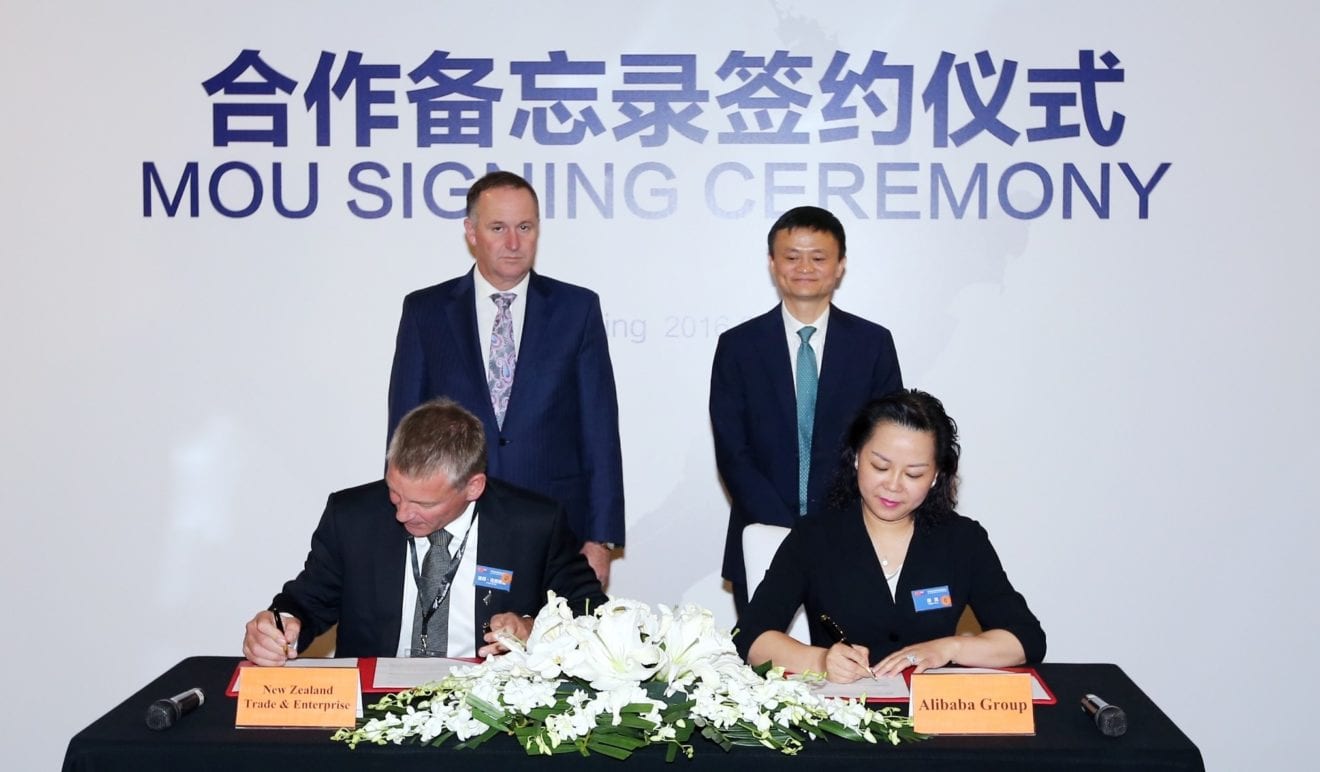
    The Memorandum of Understanding (MOU) between the group and government business development agency New Zealand Trade and Enterprise (NZTE) was signed yesterday to formalize discussions for strengthening trade between the two countries and to support New Zealand brands in China.

    Under the MOU, the parties will explore different collaboration opportunities, including Alibaba providing support for New Zealand companies to enter the Chinese consumer market through its various e-commerce channels, while NZTE will assist local companies to understand and optimize the opportunities Alibaba’s system offers in terms of business growth in China.

    “We are excited to extend our cooperation with the New Zealand Government by collaborating with NZTE to support local businesses to enter China through Alibaba’s platforms,” said Maggie Zhou, Alibaba’s newly appointed managing director for Australia and New Zealand.

    “With our strong networks in China and expertise in e-commerce, we will enable Chinese consumers to benefit from the premium products and fresh foods that New Zealand businesses can offer.

    NZTE chief executive Peter Chrisp said the new arrangement offered significant opportunities for New Zealand businesses to reach more consumers as well as advocating the country’s reputation as a place of “open spaces, open hearts and open minds”.

    “New Zealand businesses are already using Alibaba’s channels to sell a wide range of products including dairy, meat, seafood, fruit, wine, beverage, cereal, skincare and health supplements,” he said.

  • Introducing First View: The fastest way to be seen on Twitter

    Introducing First View: The fastest way to be seen on Twitter

    Twitter introduces First View in Asia Pacific today, an engaging and highly visible way to share your brand story with compelling video creative across Twitter’s massive audience. First View is now available in 29 countries including Asia Pacific markets Australia, India, Indonesia, Japan, Malaysia, Philippines and Singapore.

    Asia Pacific is the largest and fastest-growing region for Twitter worldwide, and First View will empower Asian businesses of any size to take their marketing campaigns to the next level using Twitter’s platform for real-time, public conversations. Nike Philippines, Samsung Australia and Tata Motors India are among the first advertisers in the region to leverage the feature.

    “Audiences today demand video content. With First View, marketers have the ability to connect with their audience through richer forms of communication and creative content, while ensuring that they are constantly top-of-mind on their feeds,” said Maya Hari, Senior Director for Product Strategy & Sales, Asia Pacific, Latin America and Emerging Markets. “First View provides advertisers with the opportunity to own the most valuable ad space on our platform on any given day, expanding their reach within a 24-hour period.”

    Premium placement, maximum reach

    First View helps marketers achieve significant audience reach with exclusive ownership of Twitter’s most valuable advertising real estate for a 24-hour period. When users first visit the Twitter app or log in to twitter.com, the top ad slot in the timelines will be a Promoted Video from that brand. Now, marketers can tell a powerful visual story across the Twitter audience.

    “Word of mouth is more important than ever. Twitter’s First View gives Samsung the opportunity to reach a wide audience to generate buzz and conversation about our new #GalaxyS7 and #GalaxyS7edge smartphones. We are able to hit a broad audience with great video content to help drive social momentum,” said Philip Newton, Corporate Vice President & CMO Samsung Electronics Australia.

    “Video is one of the hottest topics for all marketers at the moment. We are delighted to see exciting products being launched by Twitter, giving us more opportunities to build great experience for our audience. The ability of using video to generate global conversations and dominate moments of interest with First View opens up a great playing field, and ties in strongly with Mindshare’s vision of Adaptive Marketing,” said Quentin Perrot, Senior Account Director APAC, MindShare (managing Nike’s media strategy in Southeast Asia).

  • Foxconn reportedly to return to China retail channel

    Foxconn reportedly to return to China retail channel

    Foxconn Electronics (Hon Hai Precision Industry) reportedly is planning to return to China’s retail channel, but instead of creating a specific department, Foxconn is separating the country into 8-10 areas for each of its sub-business groups to handle one segment, according to industry sources.

    The establishment of physical channel has been an important part of its long-term development, and related investment projects have been implemented accordingly, Foxconn said, but declined to elaborate on details.

    Foxconn’s latest development echoed company chairman Terry Gou’s recent remarks made after signing an investment pact with Sharp, saying that Foxconn will integrate and optimize its manufacturing strength to enable consumers globally to buy Sharp’s household appliances at affordable prices.

    Previously, Foxconn had tried several times to establish its own retail channels in China, but most of them had failed to achieve significant results, said the sources.

    Even so, Foxconn has continued its efforts to build its retail channel through the establishment of an online shopping platform, flnet.com, in 2015. The online shopping platform has built a number of experimental shops in China and Taiwan.

    One of the group’s subsidiaries has obtained the license from Apple to establish shops to sell Apple’s products in China, the sources noted.

    Meanwhile, under the new strategy, each sub-business group will be responsible for implementing its own plans to build up retail channel in the assigned region, as well as for profits and losses, said the sources.

  • Alibaba entry stirs up Thai e-commerce

    The recent acquisition of Lazada Group by Chinese e-commerce giant Alibaba Group poses a challenge to local online product manufacturers and retailers who anticipate a potential flood of Chinese-made products.

    The move by Alibaba is expected to shake up Thailand’s e-commerce market. It’s also putting more pressure on other e-commerce companies.

    “The number of business-to-consumer e-commerce companies is likely to fall to only two to three over the next three years, down from five, because of fierce competition,” said Punnamas Vichitkulwongsa, chief executive of Ascend Group, a subsidiary of CP Group that operates the iTruemart and weloveshopping websites.

    “But the entry of Alibaba will spur competition in the local e-commerce market, which is likely to benefit Thai consumers and the industry,” he said.

    There are usually two dominant e-commerce players in a country, said Ms Punnamas.

    Pawoot Pongvitayapanu, president of the Thai E-Commerce Association and founder of Tarad.com, said if Alibaba continued using Lazada’s subsidised promotion strategy, the Chinese firm could become a dominant player in Thailand’s e-commerce ecosystem as it has its own payment and logistics systems for websites.

    However, local online product manufacturers, especially those that make IT accessories, consumer electronics and fashion items, will face a greater challenge from cheap Chinese products.

    Paul Srivorakul, group chief executive of aCommerce, believes Alibaba’s entry will create an innovative e-commerce market in Thailand, attracting more foreign investors.

    He expects more mergers and acquisitions in the local e-commerce industry next year as a result.

    Santit Jirawongkraisorn, co-founder of Lalamove Thailand, a Hong Kong-based on-demand delivery app provider, said existing e-commerce companies in Thailand would face intense competition from Alibaba’s presence. But the increased competition can drive consumer gains and promote the overall e-commerce market, he said.

    Alessandro Piscini, chief executive of Lazada Thailand, said Alibaba’s investment reflected the huge potential it saw in e-commerce for the region and the role it expected Lazada to play in the local markets.

    The partnership will bring significant synergies that enhance the online experience for both buyers and sellers in Thailand, he said.

    In a related development, PwC Thailand released its latest report on Global Total Retail 2016: They say they want a revolution which polled some 23,000 online shoppers in 25 countries to track retail consumer trends, including mobile shopping and social media influence.

    The report revealed that 51% of online shoppers in Thailand said they purchase goods directly via a social media channel, outpacing India (32%), Malaysia (31%), and China (27%).

    Fifty-three percent of Thai online shoppers said that customer reviews influenced their buying behaviour.

    The survey also showed that social media influenced 78% of shoppers globally, up from 68% in a similar study last year, with 92% of emerging market shoppers buying products based on social media recommendations.

  • Why Gautier brought French furniture to PH

    Why Gautier brought French furniture to PH

    French furniture maker Gautier has recently opened its first store in the Philippines, the second in Asia after South Korea, bringing in modern pieces for the upscale Filipino market.

    Blims Lifestyle Group, a leading furniture distributor in the country, tapped the French company to provide the local market modern and contemporary trends in the furniture industry.

    Gautier Philippines general manager Katrina Samantha Lim says it took BLG a year to get the French furniture maker to decide on Philippine expansion.

    “This is our first time to venture into the high-end market. BLG has a defined customer base and we are very confident that this new concept will have its own following soon,” she says.

    Gautier Philippines opens its first store at Shangri-La Hotel in Bonifacio Global City.  Shown during the store opening are (from left) Gautier France chief executive David Soulard, Gautier Philippines general manager Katrina Lim, Blims Lifestyle Group president Sam Frederick Lim and Gautier France export manager Hervé Soulard.

    The youngest in a brood of six and the only female, Lim was entrusted the responsibility to look after the high-end venture of BLG.  She is a daughter of BLG chairman Samie Lim.

    The talented young entrepreneur, who exudes feminine flair and artistic sensibility, felt that Gautier’s fine pieces would fit well into the lifestyle of Filipinos.

    She noticed that more Filipino families now start to move up to the upper segment of the market, given their rising income and better opportunities in an economy that is constantly expanding.

    Housed inside the newly-opened Shangri-La Hotel at Bonifacio Global City in Taguig, the Gautier showroom boasts of a wide selection of finely-crafted furniture suited for modern Filipino homes.

    From very stylish yet utilitarian living room ensemble to sophisticated dining sets and even down to office staples, Gautier has the perfect piece for every corner in every room, she says.

    What is remarkable, Lim says, is that Gautier comes up with the perfect combination of simplicity and elegance.

    All Gautier furniture are guaranteed for 10 years except sofas, soft materials and bedding.  All products also comply with European standards.

    Gautier started as a manufacturer of children’s furniture—a sector where safety and quality are paramount and compromise is unthinkable.

    It was the first French furniture manufacturer to have obtained triple QSE (quality safety and environment) certification. The company limits the future products environmental impact with eco-design approach wherein 98 percent of waste is recycled.

    Gautier is the fifth of Blims’ concept store. Other concepts are the ready-to-use and ready-to-deliver furniture, now industry standards in convenience and practicality.

    Gautier export manager Herve Soulard says the Philippines is a rising market—one with the promise of people moving up and families affording the finest products.

    “The Philippines is also the first country in Southeast Asia where we have presence. We believe that the Philippines will be a big market for us soon,” he says.

    After the Philippines, Gautier is set to expand to Singapore and Indonesia, according to Soulard. Guatier France chief executive David Soulard also attended the opening of the Fort Bonifacio branch.

    In 2015, the French firm spent 10 million euros to acquire new machineries for wood processing. It uses 100 percent Pine wood harvested from Pine tree forest for all its furniture.

    Gautier manufactures its furniture in three production sites in France— La Boupere, Chantonnay and Saint Prouant- all  using cutting edge machineries and equipment.

    With support from local small and medium enterprises, Gautier has become the European leader in contemporary furniture. It employs more than 950 employees across all manufacturing sites.

    It trains its own in-house designers and constantly joins trade shows to keep updated. It has also teamed up with trend watchers in 30 countries.

    With the partnership, Blims is looking at P60 million in annual sales from the Gautier concept in the first year of operations in the Philippines.

    The company is currently looking for more sites in the country, especially upscale retail places and hotels.

    Over 95 percent of the furniture sold in Gautier stores are manufactured in their French factories while the rest are produced in neighboring European countries.

    Lim says the partnership with Gautier is a part of Blims’ raison d’etre or goal to upgrade the living standards of Filipinos.

    Lim says Gautier is not just for chic and classy shoppers.  “It is for today’s socially minded consumers who value the intangibles,” she says.


  • More Thai Men Shopping for Women’s Underwear Online

    More Thai Men Shopping for Women’s Underwear Online

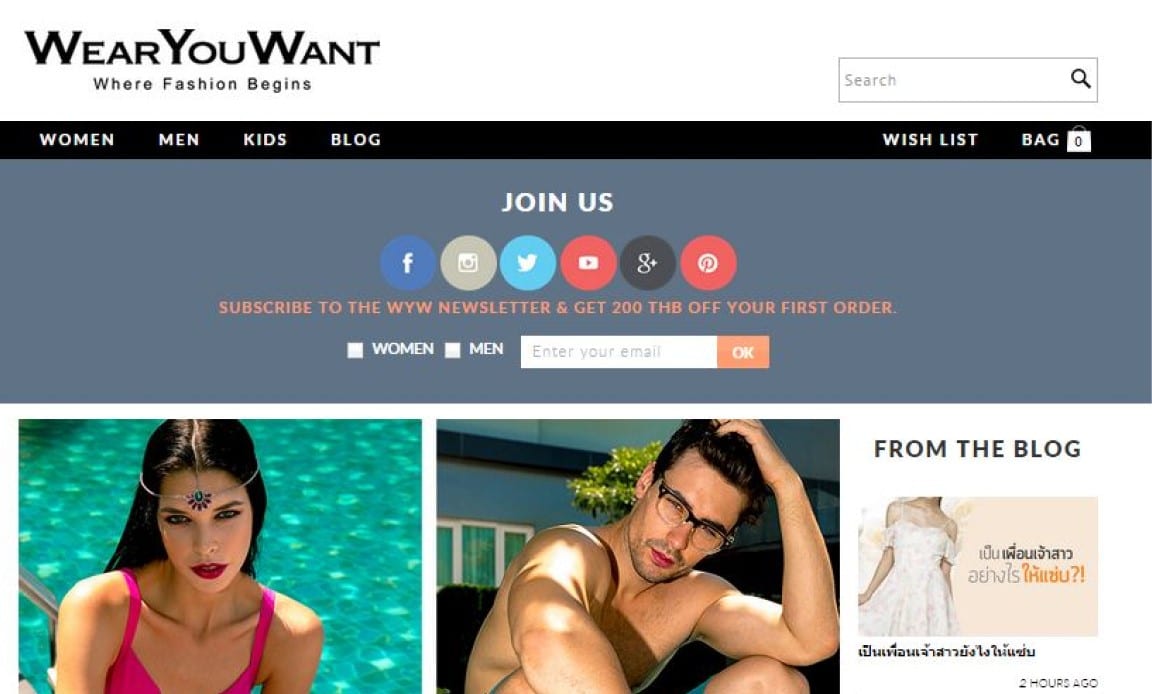
    WearYouWant, Thailand’s leading online fashion and beauty marketplace, is praising the romantic generosity of its male customers in Thailand. Since the start of 2016, there has been a steady rise in men buying underwear online at WearYouWant for that special woman in their life.

    According to WearYouWant, in the last six months, underwear purchases by men on their online shopping platform have increased by 22%, with the first half of April seeing record highs. Approximately 56% of underwear sales are to men in Bangkok who seem to know exactly what women in Thailand want!

    It could be the summer sun turning up the heat on underwear purchases by men or perhaps the Thai New Year Songkran festival spirit has meant more men showering women with gifts. With a few clicks, shy men can easily shop for lingerie online for their loved one.

    Of course, WearYouWant stocks much more than lingerie, retailing over 17,000 different fashion and beauty items, including shoes, dresses and men’s clothing too.

    Julien Chalté, Co-Founder & Co-CEO of WearYouWant.com welcomes the sales, even if they are a little unexpected. “On WearYouWant, it’s always been women who have bought their own underwear traditionally, so it is surprising to see that in 2016, that trend is shifting. Perhaps it is that more men are in touch with their feminine side and keen on using women’s underwear,” he adds with a smile, “or maybe it is just more men are shopping online for underwear as presents for women.”

    It is not just men who like their loved ones to be well-dressed when they are undressed either. Women in Thailand also enjoy shopping for boxer shorts and briefs for their male partners too. Some 19% of all men’s underwear bought online at WearYouWant in February 2016 was purchased by female customers.

  • In Asia, Netflix trips on regulation, content, and competition

    In Asia, Netflix trips on regulation, content, and competition

    Months after its global rollout, Netflix is facing problems in several major Asian markets as it struggles to provide enough strong content to attract consumers amid tough local competition, and also faces many regulatory hurdles, underlining concerns about disappointing subscriber numbers reported this week.

    From complaints that programming libraries offered in many countries are far smaller than in the United States to delays in offering its signature “House of Cards” series in some markets due to rights issues, the U.S. video streaming giant’s January launch into 130 new markets worldwide, including a slew in Asia, has been bumpy.

    When it launched in Indonesia in January, for example, Netflix ran afoul of the film censorship board for carrying content deemed inappropriately violent or sexual. The communications ministry also demanded that Netflix set up a local office and pay Indonesian taxes.

    State telecoms company PT Telekomunikasi Indonesia Tbk (Telkom) will continue blocking Netflix until it adheres to regulations, Arif Prabowo, vice president for corporate communications at the carrier, told Reuters, declining to give details.

    Netflix is still available in Indonesia via wifi connections and other carriers.

    “Services delivered over the Internet present new questions for everyone, including policymakers, and our intention is to comply with applicable laws and regulations,” said Jessica Lee, Netflix’s head of communications for Asia.

    “It is all part of the journey as we roll out in different countries,” she said.

    The cost of dealing with these kinds of issues are reflected in its results, which show that Netflix suffered a first-quarter operating loss of $104.2 million for streaming video outside the U.S., partly because of higher marketing costs, and also showed that it is earning less per subscriber overseas than at home.

    Netflix had 34.5 million international subscribers against 47 million in the U.S. at the end of the quarter. It is unclear how many of its customers are in Asia.

    LICENSING RESTRICTIONS

    In South Korea, where local content is popular and consumers have numerous streaming options, the Netflix site offers fewer than 20 local TV shows or movies.

    “Korean Netflix’s library in terms of content is pretty thin,” said Jung Dong-yoon, a 29-year-old Seoul office worker and subscriber since January.

    Netflix viewers in the country also this week discovered that well-known shows including “How to Get Away with Murder” and season two of “Better Call Saul” were missing – temporarily, Netflix says – as the shows are submitted for age appropriate ratings by the country’s ratings board.

    Programming rights are an issue globally.

    As of January, Netflix Australia, which launched service more than a year ago, offered just 443 TV shows, compared with 1,157 in the United States, and had 1,585 movies, compared with 4,593, according to Finder.com – fewer than those available in Iraq, Haiti, Cuba and many other countries.

    “With the traditional way in which rights to movies and TV titles are structured, there will be licensing restrictions and the goal is to get to a global library that is the same everywhere but that takes time,” Lee said.

    Vivek Couto, executive director of consultants Media Partners Asia, said it is still early in Asia for Netflix. He expects the company will ramp up local content and eventually get “reasonable penetration” in markets such as India, South Korea, Singapore, Hong Kong, the Philippines, Thailand, and Vietnam.

    “Markets like Singapore and India, over time, they can do reasonably well, but I think they’re going to find more challenging markets like Japan, Korea, China,” he said.

    Netflix has yet to win permission to enter the coveted but highly restricted China market.

    SLOWER GROWTH

    Netflix this week said it expected to add about 2 million non-U.S. subscribers in the second quarter, below analysts’ average expectations for about 3.5 million.

    Chief Executive Reed Hastings on Monday cited a lack of local language content and local payment options for limiting initial sign-ups in some countries.

    “Over the next couple years as we further localize, we’ll be able to see more opportunity,” he told analysts on a conference call. Netflix can take heart from its performance in Latin America, where it launched in 2011 and is by far the dominant video streaming service.

    However, it has seen its share of the key Mexican market eroded slightly by competition from Clarovideo, a streaming service offered by billionaire Carlos Slim’s America Movil.

    One of Netflix’s biggest obstacles to growth in Mexico has been the low-level of broadband subscribers, according to one industry source. Broadband availability also looms as a potential concern in Brazil, where the telecoms regulator announced earlier this week that broadband providers would soon be allowed to set Internet usage limits.

    In Asia, Competition is intensifying from local streaming sites as well as global providers such as Amazon, Hulu, HBO and BBC iPlayer.

    Around the time Netflix debuted in South Korea, local company Frograms Inc launched its own Watcha Play service. Two months later, SK Telecom made its video streaming service available to customers who do not subscribe to its phone service.

    Around the time Netflix debuted in Australia, publisher Fairfax Media and broadcaster Nine Entertainment Co Holdings launched a joint venture streaming service, while News Corp and Seven West Media teamed up to do the same. All offered heavy discounts, including free trials.

    Netflix had an explosive start in Australia, counting nearly 3 million Australians as viewers, OUT OF A population of 24 million, within nine months of its March 2015 launch. But growth has slowed just as dramatically, from a 55 percent leap between April and May to a rise of 4 percent between September and October, according to Roy Morgan research.


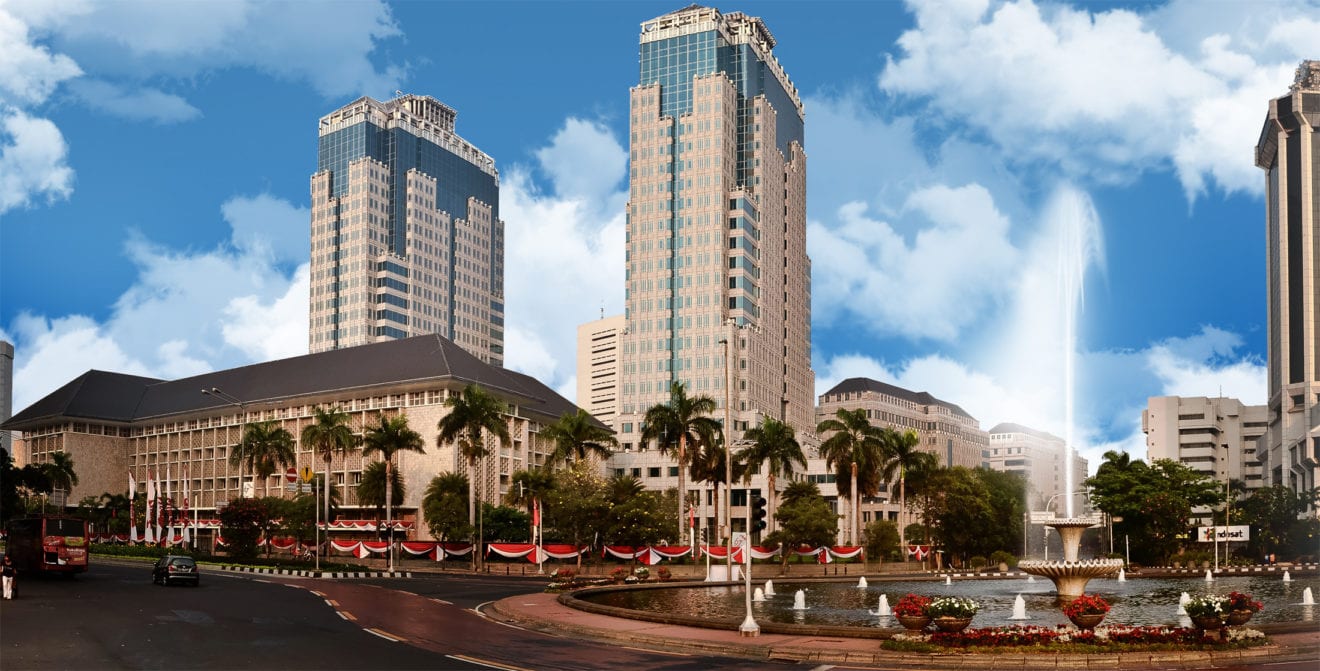
  • Bank Indonesia Wins 3 CSR Awards

    Bank Indonesia Wins 3 CSR Awards

    Bank Indonesia (BI) has received three awards in the The 8th Annual Global Corporate Social Responsibility (CSR) Summit and Awards. Two gold awards are for Excellence in Provision of Literacy and Educational Award with market capitalization above US$1 billion and Empowerment of Women Award. While bronze award was achieved for Product Excellence Award.

    BI’s Communication Department Director Abronas Hutabarat attended the event to receive the awards. He originally intended to attend the international forum to introduce BI’s CSR programs. “We didn’t expect to receive the awards. These are the result of synergy and hard work put in by my colleagues in BI’s Communication Department,” Abornas said after receiveing the awards in Nusa Dua, Bali, Thursday evening.

    Abornas said that BI always made CSR programs on a yearly basis which focus on community empowerment. According to him, BI’s CSR programs are comparable to those of its international counterparts.

    There are seven categories in The 8th Annual Global CSR Summit and Awards, namely Best Environmental Excellence Award, Best Community Programme Award, Excellence in Provision of Literacy and Education Award, Empowerment of Women Award, Best Workplace Practice, CSR Leadership Award, and Product Excellence Award.

    Of the categories, BI got nominated in 4 categories. Arbonas said the four categories are Best Community Programme Award, Excellence in Provision of Literacy and Education Award, Empowerment of Women Award, and Product Excellence Award.

    Arbonas said one of the gold awards were given for BI Corners CSR program, in which BI provides libraries in all universities in Indonesia. Last year BI built 106 BI Corners. This year BI is targeting to build 150 BI Corners. He hoped that in the next five years BI could build 1,000 BI Corners in the all educational levels to support financial literacy. In addition, BI helps female entrepreneurs in managing business units and bookkeeping to make the businesses bankable.

    The Annual Global CSR Summit and Awards is the most prestigious recognition awards program for Corporate Social Responsibility of various agencies in Asia. The awards are given to agencies who are able to make contributions to environmental sustainability, product innovation, community empowerment and CSR management and transparency.

  • Honda eyes efficiency with new assembly line format in Thailand

    Honda eyes efficiency with new assembly line format in Thailand

    Honda Motor has installed a new type of production line that is about 10% more efficient at an automobile plant in Thailand, the company said Thursday.

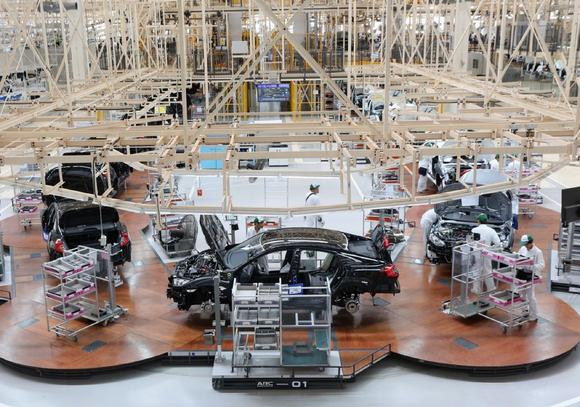
    Until now, each worker was typically responsible for adding one type of part to a vehicle, and had to walk between the conveyor and the parts shelf whenever work on one vehicle was completed. With the new system, four workers ride a unit that moves on a conveyor, with boxes of parts at the ready, allowing them to continuously install multiple parts. This reduces walking to get parts.

    Known as an ARC line, the new format was introduced at a plant in the eastern Thai province of Prachinburi that began turning out finished autos in March and makes some 60,000 Civic sedans annually. It is being applied to about 20% of total assembly procedures, including the attaching of wiring and interior parts after the body has been painted.
    Layout changes for conventional production lines required considerable time and investment, whereas with the new method the conveyor that moves the line can be flexibly lengthened or shortened as needed. Production is easily raised or lowered by adjusting the number of units, and a smaller investment is required when adding vehicle models or changing production volumes.
    After monitoring performance under the new approach, Honda will consider expanding its use.