Author: Mei Ling Tan

  • McKinsey report shines light on online-to-offline services

    McKinsey report shines light on online-to-offline services

    As world’s largest and fast-growing e-commerce market, China is expecting the potentialgrowth of the online-to-offline services, which are cutting into incumbents’ margins, accordingto the latest McKinsey’s survey of China’s Internet users.

    “Online-to-offline services can win consumers and even convince them to spend more thanthey might want to,” said Gong Fang, a partner at McKinsey’s Shanghai office.

    China’s online retail market is the world’s largest after 2015 sales grew to approximately $630billion, nearly 80 percent bigger than that of the US. E-commerce in China accounts for 13.5percent of all retail spending.

    “In an e-commerce market as large and fast as China’s, retailers and consumers will have noshortage of opportunities, especially in low-tier cities where online and e-commercepenetration remains relatively low,” said Alau Lau, senior partner and head of McKinseyDigital in Asia.

  • Singapore GIC Makes First Investment in Indonesia’s Logistics Sector

    Singapore GIC Makes First Investment in Indonesia’s Logistics Sector

    Singapore sovereign wealth fund GIC has teamed up with Indonesia’s PT Mega Manunggal Property (MMP) to develop a portfolio of quality logistics warehouses over the next three years.

    The warehouses will boast nearly 500,000 sq m of net leasable area in both Greater Jakarta and Greater Surabaya in Indonesia, the two firms said in a joint press release issued yesterday.

    The partnership aims to meet increasing demand by companies for sophisticated inventory systems which cannot be fulfilled by traditional warehouses, they added.

    This is GIC’s maiden investment in Indonesia’s logistics sector.

    “We are attracted by the long- term growth of this sector, which is underpinned by the strong consumption of Indonesia’s rapidly rising middle class,” GIC Real Estate’s managing director and co-head of its Asia operations, Mr Loh Wai Keong, said. “We believe GIC’s knowledge and experience investing in logistics, both in Asia as well as other global markets, will add value to this partnership.”

    MMP, a publicly listed company in Indonesia, develops, owns and operates logistics properties, with a focus on international quality warehousing. “The partnership will also focus on increasing productivity,” MMP president director and chief executive Fernandus Chamsi said, adding that having good operations and quality human resources, as well as good corporate governance, helps.

    Indonesia was ranked 54th in the World Bank’s Logistics Performance Index of 2014. Restrictions on foreign investment in its logistics sector were recently loosened under President Joko Widodo as his administration aims for economic expansion and higher growth by 2019.

    GIC has over US$100 billion (S$135.9 billion) in assets under management in the property, private equity, fixed income and equity sectors in over 40 countries. It has been investing in emerging markets for over two decades.

    It has invested in Indonesia’s retail sector, putting in about 5.2 trillion rupiah (S$537 million) in PT Trans Retail, which operates hypermarkets, supermarkets and cash- and-carry stores under the Carrefour and TranSmart brands.

  • A British textile designer’s eclectic Hong Kong home

    A British textile designer’s eclectic Hong Kong home

    “I basically live textiles,” says British designer Sarah Coates, who moved to Hong Kong four years ago with her husband, Peter, a journalist with Reuters, and daughter, Stella, now 11 years old. The family home, a light-filled 2,000 sq ft apartment in Mid-Levels, is evidence of her passion for all things woven, crocheted or otherwise crafted.

    “I looked at loads of apartments when we were searching for our new home in Hong Kong, many of which had lots of shiny gold taps, so when our estate agent warned us that this one was ‘a bit basic’ I just thought, ‘Yessss!’” says Coates.

    The location, near Bowen Road, with panoramic views over the city towards Kowloon, was another plus.

    “I like the idea of being slightly removed from the city but still part of it,” Coates says.

    The apartment has an open-plan living and dining room, with a balcony spacious enough to accommodate a large dining table and outdoor sofa.

    “I also enjoy the convenience of living on one level, which is very different to our London home,” she says.

    The couple lived in New York, Beijing and, more recently, the British capital before moving to Hong Kong.

    “I learned my lesson after three international moves,” Coates says. “I ship absolutely everything. It is really important to commit to where you are and to make it your real home.”

    Among the couple’s belongings are a bright pink corduroy three-seater that was Coates’ first ever furniture purchase and a vintage oak church pew they bought while living in New York.

    “The pink sofa is propped up on one side with books but it is so comfortable and reminds me of my first home, so why not?” Coates says.

    Once settled, Coates started designing a range of cushions for Hong Kong design store Deem (recently closed) and developed a retail brand of hand-knitting wool, called KPC Yarns, for Novetex Textiles. “That is the beauty of being a textile designer – it is the ultimate transferable skill,” Coates says.

    More recently, she happened upon a family-owned warehouse with a stock of fabrics from the 1960s that she and her business partner, Tarlan Amigh, have since transformed into the Smith & Coates range of distinctive cushions, lampshades and clothing.

    “The fabric is quite special with a modern sensibility. I know what I like to live with and how a beautifully woven textile, like a bold geometric print or a vibrant motif, can transform a space,” Coates says, pointing to her daughter’s bedroom, a cornucopia of crocheted cushions, bright prints by local artist and family friend Tania Willis and intricately embroidered fabrics.

    “I especially like the Hong Kong-ness of this apartment,” Coates says. “It is also very light, the windows open properly and the parquet floor isn’t shiny, which is often the case in homes here. It was built in 1966 so it has that lovely old Hong Kong feel.

    All I had to do was install fabric Roman window blinds and we were set.”

    One of the four spacious bedrooms has been transformed, magpie-like, into a studio packed with inspiration. Everything from Delft tiles to Lunar New Year decorations is displayed alongside a rail of Smith & Coates coats featuring a crafted aesthetic, and an exotic assortment of prototype lampshades covered in rich silk brocades with metallic threads.

    As an expatriate living what some see as a temporary life in Hong Kong, it is especially important to make an effort to create this sort of sensory “real world” or sense of home with things that are part of your life, says Coates.

    “It’s very easy to think your real life is happening somewhere else but … you have to be present wherever you are living and invest in it.”

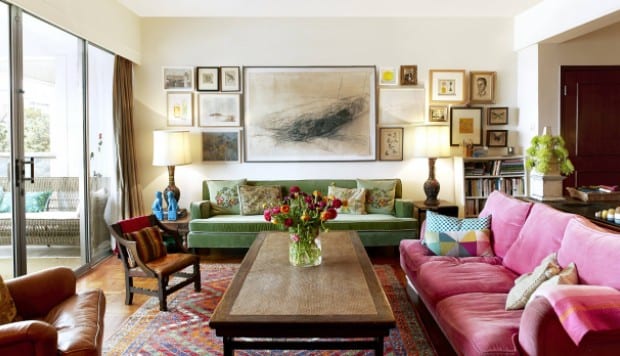
    Living Room Sarah Coates sourced the green Edward Wormley velvet 1960s sofa from local boutique Deem (now closed) while the salmon pink sofa was bought years ago in Britain. The embroidered cushions were handmade by Peter’s Dutch grandmother; Coates crocheted the colourful cushion. The green spotted silk cushion (HK$1,300) was from Smith & Coates (tel: 6245 3500;www.smithandcoates.net). The Scholten & Baijings pink cashmere throw (HK$3,000) was from Droog (www.droog.com), in Amsterdam, in the Netherlands. The opium-bed coffee table was bought years ago in Beijing and the side tables were gifts. The rug was sourced from a shop in Ap Lei Chau that has since closed and the lamps cost about HK$1,000 each from a New York flea market. The pair of aqua Foo dogs cost HK$200 each from the Cat Street market, in Sheung Wan. The small leather and wood chair and the leather armchair were gifts from Peter’s grandmother. The artworks on the wall were collected over the years; the main piece is by British artist Karn Holly (www.mallgalleries.org.uk). The Danish outdoor sofa (HK$9,000), with Smith & Coates cushions, came from Manks (14/F, Cheung Tak Building, 30 Wong Chuk Hang Road, Wong Chuk Hang, tel: 2522 2115).

    Dining room The dining table (HK$1,000) was from Ikea and the chairs (about HK$2,000 each) were sourced from Deem. The tablecloth (HK$200) came from Anokhi (www.anokhi.com), in India. Coates made the ceramic tulipiere based on a Delft piece as a gift for her husband. The orange stool (HK$2,600) was from Smith & Coates. The rug (HK$1,200) was found at Mister Zimi (www.misterzimi.com), in Australia. The Tom Dixon lamp (HK$2,000) was from Homeless (various locations;www.homeless.hk). The pair of artworks on the wall are by Sophie Smallhorn (www.sophiesmallhorn.co.uk) and were bought directly from the British artist. Beneath the artworks are a lamp (from Wah Tung China, 7/F, Lee Roy Commercial Building, 57 Hollywood Road, Central, tel: 2543 2823), candlesticks and fabric that were all bought years ago. The window blind (HK$500) was made by New Bedford Interiors (67 Queen’s Road East, Wan Chai, tel: 2520 0330). The Chinese medicine cabinet and umbrella stand were bought in Beijing. The lacquer lantern (HK$30) was found in a local street market. The artwork above the chest is by British artist and journalist John Piper.

    Entrance The sofa was bought years ago from The Conran Shop (www.conranshop.co.uk), in Britain. Coates crocheted the pair of cushions while the lamp came from Peter’s grandmother. The pen drawing is by artist David Teather ([email protected]). On the left is a Chinese embroidered silk sleeve band, one of a pair brought back from Shanghai in the 60s by Peter’s grandmother.

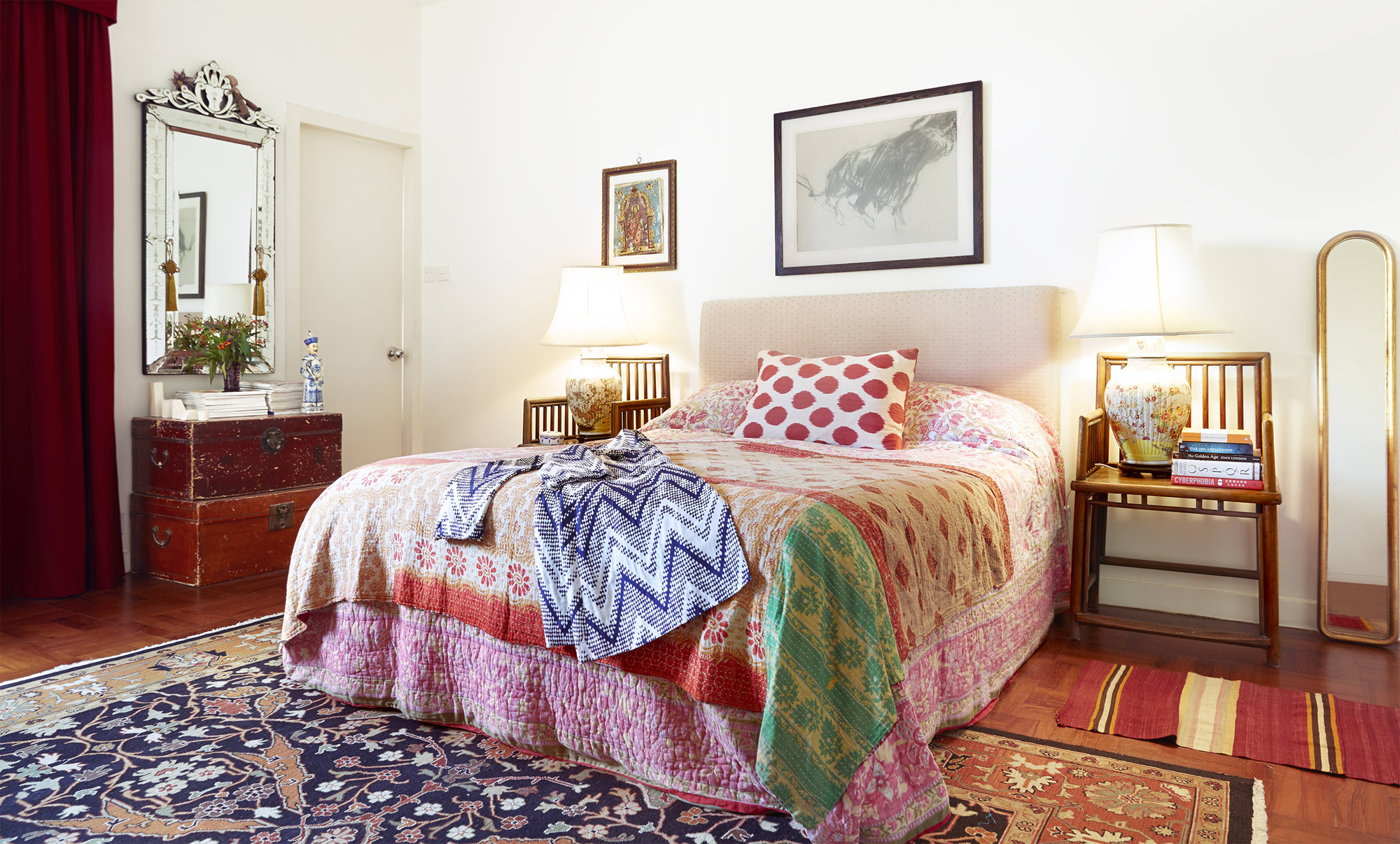
    Master bedroom The bed and headboard came from a previous home. The Venetian ornate mirror was a wedding present. The vintage leather trunks and small figurine were found in a Beijing market. The large floor rug was bought in New York; the smaller striped rug came from Afghanistan. The tall mirror came from Peter’s grandmother. The artwork above the bed is by British artist Jo Taylor (represented by The School House Gallery, in Wighton, Wells-next-the-Sea, Norfolk, tel: 44 1328 820 457) and was bought years ago directly from the artist. On the bed are a Smith & Coates woven silk coat and spotted cushion (HK$1,300). The curtains were made by New Bedford Interiors and cost about HK$1,500.

    Studio An oak dining table, bought years ago in New York, provides ample work space. The chair, from Deem, is part of the dining room set. The brightly coloured work hanging on the chair is a crocheted striped scarf (HK$2,500), which was handmade by Sarah for Smith & Coates. On the clothes rail is a collection of Smith & Coates coats made using vintage silk brocade that comes from a Kowloon silk mill that closed in the 60s. The woven palm mat came from the Philippines and was a present.

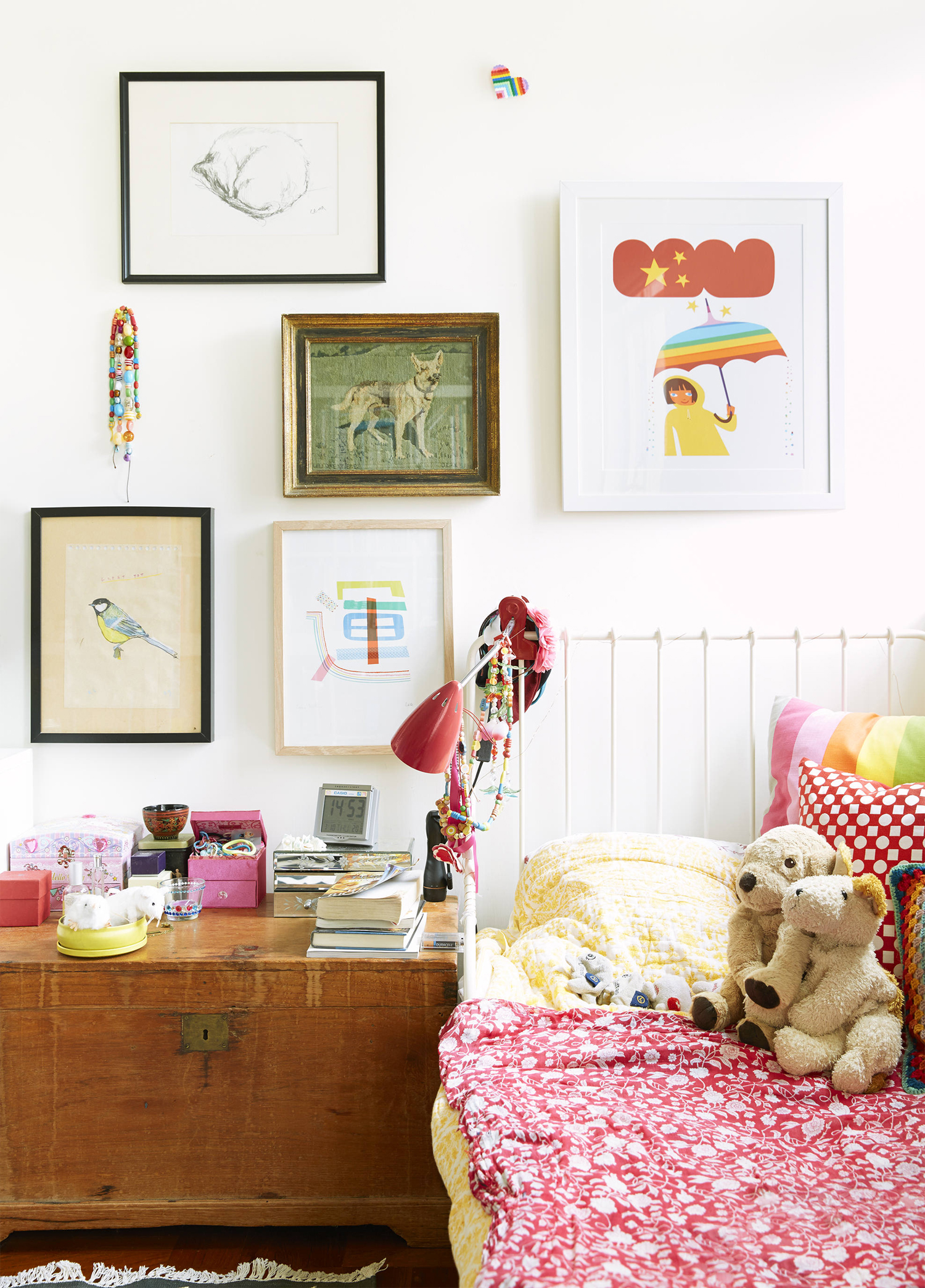
    Child’s bedroom Beside the Ikea iron bed (about HK$800) and Ikea lamp (HK$200) is an Indian storage chest bought years ago from a shop that has since closed. The bed covers came from Anokhi. The striped cushion was also from Ikea. The remaining cushions (about HK$1,300 each) were from Smith & Coates. The colourful prints, above and to the left of the bed, are by local artist Tania Willis (www.taniawillis.com). The rest of the artworks are junk-shop finds and gifts.

    Corridor detail A Smith & Coates hand-crocheted bag rests on an oak church pew bought years ago in New York. It doubles as extra book storage. On the wall are artworks by Willis (left) and Georgia Manifold (www.gmc-art.com).


    TRIED + TESTED

    Double duty A classic Chinese chair bought on Hollywood Road in the 1990s does double duty as a quirky bedside table. The lamp is a vase that was sourced from Wah Tung China and cost HK$2,000. The small box also came from Wah Tung China. Above the lamp is a picture of an Indian deity bought while on holiday in Cochin. The vintage throws on the bed cost HK$1,800 each from Inside (various locations;www.inside.com.hk).


  • Major gains made in commercial meat export agreements with China

    Major gains made in commercial meat export agreements with China

    A multimillion dollar deal with a farming corporation in China will see New Zealand’s  Alliance Group become one of the largest exporters of meat in that market.

    The “grand alliance” between Alliance Group and Beijing Businesman Chen Xibin, who owns Grand Farms, will help to boost large volumes of valued-added sheep meat and venison products into the Chinese market

    The deal was signed at an event in Beijing, where Prime Minister John Key is leading a 40-strong trade delegation.

    Alliance chief executive David Surveyor said it shifted the relationship from a transactional one, to a value-added one, which included services and expertise training.

    But the deal is around the export of frozen meat only. Restrictions on chilled meats meant New Zealand could not export chilled meat to China, although Australia delivered its first shipment of chilled meat this year, under their FTA.

    Surveyor said he believed chilled meat exports were inevitable, but could be some time away.

    “These are matters for Government obviously to work through, but there’s a great usefulness to New Zealand and to Chinese consumers to see chilled happen.”

    Alliance Group is a co-operative owned by 5,000 farmer shareholders, headquartered in Invercargill, with eight plants across the country.

    It’s New Zealand’s largest sheepmeat processor, and it’s second largest meat exporter.

    Its in-market partner in China is Grand Farms, China’s single largest importer of sheepmeat. The company processes 70 per cent of the lamb supplied by Alliance Group into lamb rolls, kebabs and finished retail ready products.

    Volumes of exports to China have already increased by 35 per cent over the past five years.

    Alliance general manager marketing Murray Brown said the agreement was built on a 17-year relationship already established with Grand Farms.

    “We’re looking at more value in terms of retail packs of lamb and retail packs eventually of venison and beef under the Pure South brand to go to retail.

    “But basically [Chen] wants to be the largest importer of sheep meat, to support his investment in processing facilities in the market.

    “Largely through us, and it will reach a level at some stage where we won’t be able to service it so then the next stage after that, which is a discussion we’re yet to have, is do we source it on their behalf,” said Brown.

    Surveyor said Alliance used to be a much larger company than Grand Farm, but the rapid growth of Grand Farm was a testament to the scale of the Chinese market.

    “There is some prospect that at some moment in time, we won’t be able to meet all of their needs, and so I think that creates that opportunity for us to perhaps be able to work with some of the other players in the New Zealand industry.”

    Grand Farm owns 96 meat shops, operates 260 branded meat counters in selected hypermarkets and supplies to over 1000 hypermarkets in China.

    Surveyor would not comment on the value of the deal, but said Alliance put about 20 per cent of its total volume into China.

    “We’re about $1.5 billion in turnover, and by far the majority of that is through Grand Farm.”

  • Bursa Malaysia likely to trade higher next week

    Bursa Malaysia likely to trade higher next week

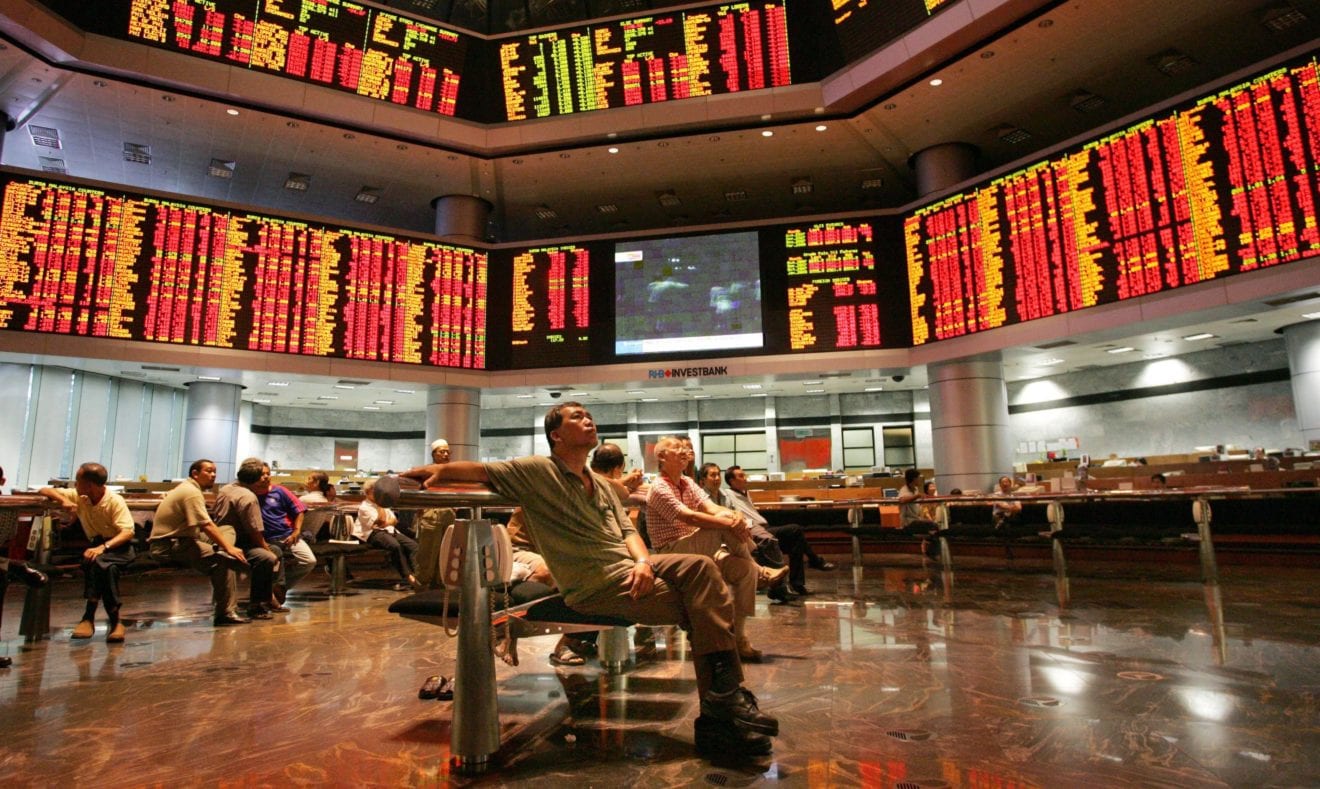
    Shares on Bursa Malaysia are expected to trade higher next week, supported by positive domestic and regional sentiments.

    Affin Hwang Investment Bank vice-president/head of retail research Datuk Dr Nazri Khan Adam Khan said market has been on an upward trend for the past two months with the benchmark FTSE Bursa Malaysia KLCI (FBM KLCI) forming a solid psychology level at the 1,7000 level.

    “We have similar upward momentum from our crude palm oil (CPO) and rubber that support the sentiment for next week. “The crude oil price also has stabilised and its recovery to US$43 per barrel, orchestrated well for Bursa Malaysia’s stocks,” he told Bernama.

    Nazri said with China’s trade data remaining positive and solid, it indicated that the country is stabilising.

    The upcoming Sarawak election and the Ecoworld International initial public offering (IPO) will be a domestic catalyst in supporting the local bourse’s sentiment, he added.

    Nazri called on investors to accumulate the “Sarawak election-theme play” counters, namely Naim Holdings and Ta Ann Holdings.

    For the week just ended, the market has been on consolidation mode as expected after the previous week’s rally.

    The FBM KLCI confined in tight range as sentiment turned cautious ahead of a weekend meeting of oil producers.

    Oil producers led by top exporters, Saudi Arabia and Russia are expected to meet in Qatar on Sunday to discuss freezing output to rein in ballooning global over-production.

    On a weekly basis, the benchmark FTSE Bursa Malaysia KLCI (FBM KLCI) finished 9.59 points higher at 1,727.99.

    The FBM Emas Index rose 44.53 points to 11,997.07, the FBMT100 Index added 46.74 points to 11,693.21 while the FBM Emas Syariah Index shed 2.27 points to 12,539.76.

    On a sectoral basis, the Finance Index soared 162.16 points to 15,034.70, the Plantation Index trimmed 36.27 points to 7,785.25, while the Industrial Index gained 25.04 points to 3,290.97.

    Weekly turnover leaped to 8.17 billion units valued at RM8.65 billion from 7.78 billion units valued at RM9.60 billion last week.

    Main market volume gained to 5.61 billion shares valued at RM8.21 billion from 5.13 billion shares valued at RM9.16 billion previously.

    Warrant turnover jumped to 997.74 million units valued at RM130.26 million from last week’s 928.94 million units valued at RM130.12 million. The ACE market rose 1.56 billion shares worth RM305.06 million from 1.52 billion shares worth RM307.35 million, transacted previously.

    Gold futures contracts on Bursa Malaysia Derivatives are likely to trade slightly lower next week with the ringgit expected to continue its upward momentum.

    A dealer said the strengthening of the ringgit due to a rally in global oil prices had added pressure on gold.

    “With the equities market set to remain strong and oil prices continuing to edge higher, gold is likely to face continuing pressure,” he said.

    He said the Bursa Malaysia’s gold futures market would also track the performance of the New York Commodity Exchange’s (COMEX) gold market, the price setter for the precious metal.

    On a Friday-to-Friday basis, April 2016 loss 10 ticks to RM154.50 a gramme and July 2016 slipped 17 ticks to RM155 a gramme, while May 2016 increased three ticks to RM155.30 a gramme and June 2016 added seven ticks to RM155.65 a gramme.

    Weekly turnover rose to 151 lots worth RM2.28 million from 99 lots valued at RM1.46 million last week.

    Open interest on Friday widened to 566 contracts from 553 contracts previously.

  • Singapore retail sales defy predictions, fall 3.2% in February

    Singapore retail sales defy predictions, fall 3.2% in February

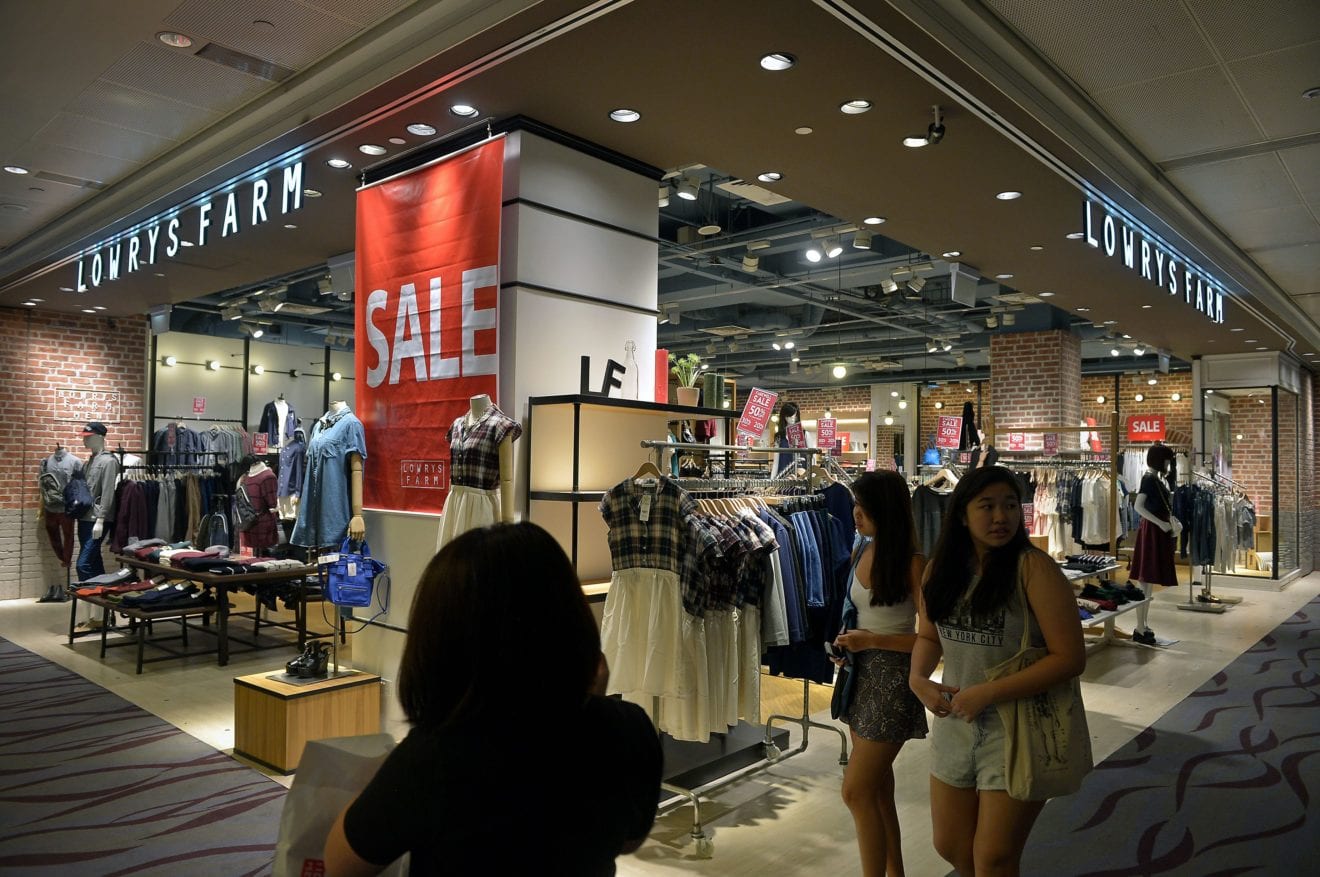
    Retail sales in Singapore dropped 3.2 per cent in February from the same month a year ago, defying economists’ predictions for an expansion in consumer spending and providing more evidence of a slowing economy.

    The retail sales contraction followed the revised 7.6 per cent growth in January, said the Department of Statistics yesterday, and was in contrast to the 3.4 per cent increase forecast by 12 economists in a Bloomberg poll. Excluding motor vehicles, retail sales slumped by 9.6 per cent as all but three out of 13 segments that make up the index fell.

    Apart from motor vehicles, higher sales were seen only at mini-marts and convenience stores, as well as for medical goods and toiletries. The total retail sales value in February was estimated at S$3.4 billion. The data came a day after the Monetary Authority of Singapore unexpectedly eased its policy, guiding the local currency to a zero appreciation stance against the currencies of its major trading partners, as the economy registered no growth in the first quarter.

    From the previous month, retail sales rose 1.7 per cent in February; excluding motor vehicles, they fell 1.1 per cent, showed the Department of Statistics data.

  • Boston Combo concept unveiled by MPPA

    Boston Combo concept unveiled by MPPA

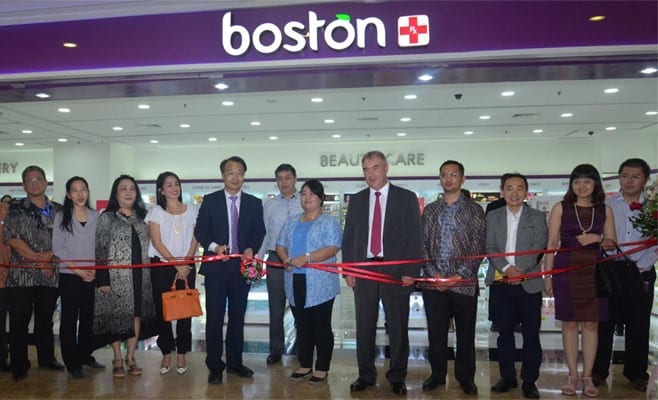
    Multi-format retailer Matahari Putra Prima (MPPA) has launched a new concept, Boston Combo, inPluit Village mall, Jakarta.

    MPPA, which runs FMX, Foodmart, Hypermart and SmartClub, this year expanded its Boston Health & Beauty formats across Indonesia. As well as the latest concept, there is the original Boston Health and the new Boston Regular.

    Boston Combo, with a gross selling area of about 730 sqm, provides cosmetics, perfumes, diapers, dairy products for adults and babies, basic softlines, stationery and organic foods. There is also a pharmacy and optical counter.

    Boston has been refreshing its displays and aisles, making stores easier to navigate, with better lighting and stocked with items that are more targeted and locally relevant.

    Boston operations director Kyu Tae Park says the Boston Combo at Pluit Village provides a range of general merchandise that competitors do not stock.

    MPPA is one of Indonesia’s largest retailers, employing more than 30,000 associates in 112 Hypermarkets, 23 supermarkets (Foodmart Primo/Fresh), 49 minimarket/convenience stores (FMX), 108 health-and-beauty stores (Boston) and one wholesale outlet (SmartClub). At December 31, its store count was 293 in 68 cities throughout Indonesia.

  • 7-Eleven awards Wolf Blass wine

    7-Eleven awards Wolf Blass wine

    The convenience market channel in Hong Kong has traditionally been the most significant retail sales channel for beer. The rise in wine sales through this channel with brand recognition evidences evolution of Hong Kong as a wine market.

    The brand winning criteria were based on combined scores tallied from consumer votes as well as by 7-Eleven staff during the January 2016 voting period.

    Along with Wolf Blass, other beverage companies that picked up awards at 7-Eleven’s ceremony included global brands such as Red Bull and Heineken.

    TWE-Barry-Galloway-receiving-the-award-on-behalf-of-Wolf-Blass-350x350

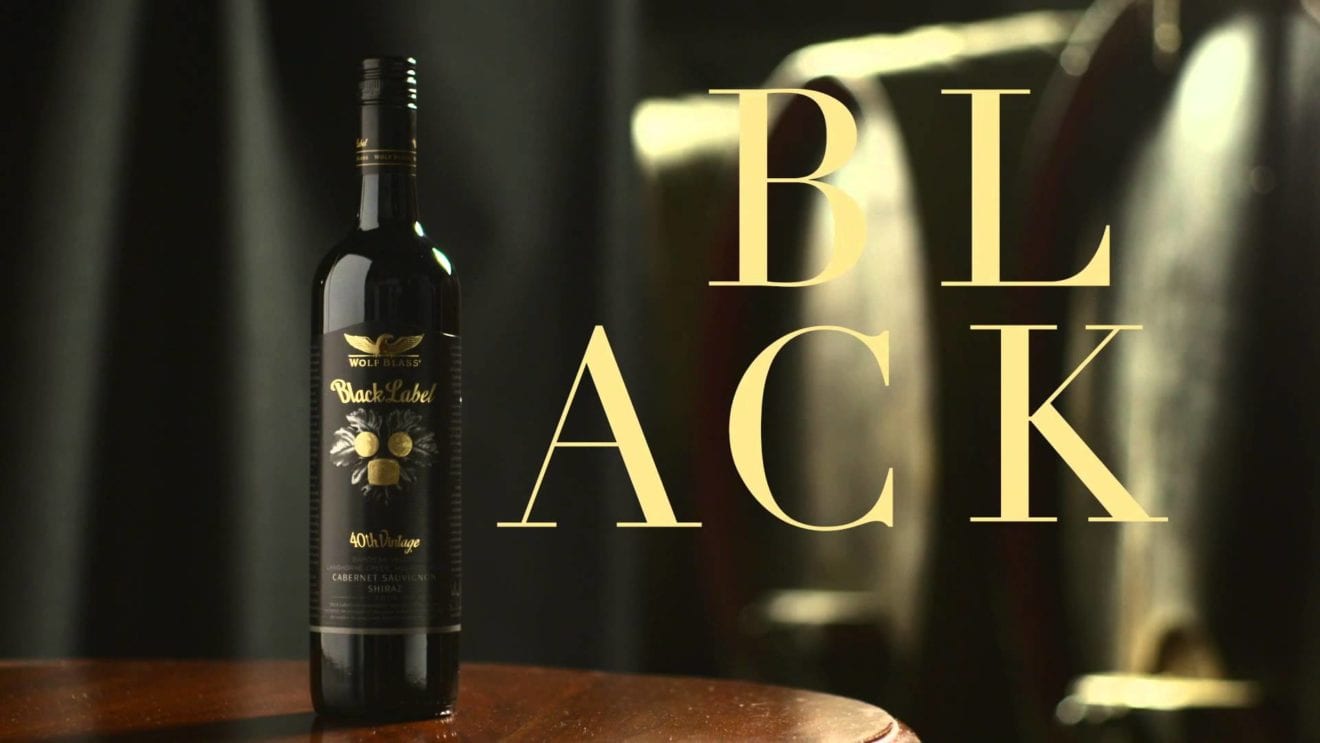
    “This award is a credit to our sales and merchandising team in recognition for their great work through this important Hong Kong convenience channel,” said Barry Galloway, Country Manager of Hong Kong, Macau and South China, Treasury Wine Estates.

    “I would also like to extend my congratulations to the Wolf Blass team as this accolade is testament to the outstanding efforts of our winemakers for producing exceptional quality wines enjoyed by consumers in Hong Kong and the world over.”

    Speaking to dbHK, Galloway admitted that although sales through the convenience market channel didn’t compare with sales through supermarkets and specialist wine stores, it was an important step for TWE’s market penetration in Hong Kong.

    According to Galloway, the popularity of the brand has posed a small challenge: that they have temporarily run out of stock of the smaller formats, as they proved so popular at the convenience stores.

    Established in the Barossa Valley in 1966, Wolf Blass has grown from a humble tin shed to become one of the world’s most successful and awarded wine brands.

    Already a recipient of more than 8,000 medals and trophies at national and international wine shows, this award is probably one of its more eclectic ones.

  • GIC inks US$197m deal with top Korean retailer to develop mall in Incheon

    GIC inks US$197m deal with top Korean retailer to develop mall in Incheon

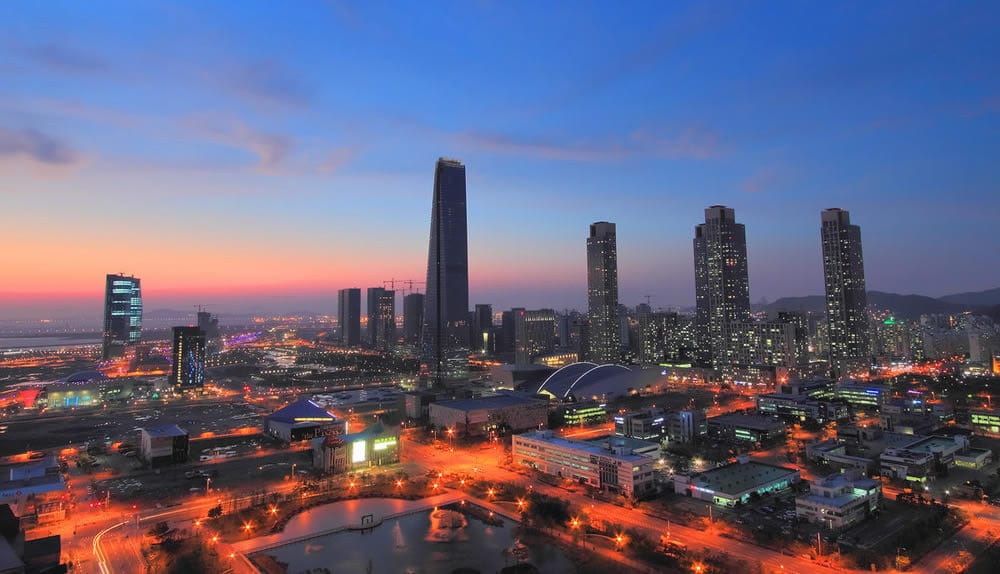
    Singapore’s sovereign wealth fund GIC and Korean department store Shinsegae are partnering to develop a prime retail mall in the Incheon Free Economic Zone (IFEZ).

    Working through affiliates, the companies have signed a US$197 million sale-and-purchase agreement for 59,730 sqm of land for the Incheon mall in the international business district of Songdo, close to a subway station, bus terminal and expressways. Scheduled for completion by 2020, the mall will include entertainment as well as leisure attractions.

    Songdo is a new city part of IFEZ, 65km southwest of Seoul, where Shinsegae has its headquarters. The name of Shinsegae literally means “New World”.

    Set up in 1981 to preserve and enhance Singapore’s foreign reserves, GIC is one of the world’s largest global investors with more than US$100 billion of assets in more than 40 countries.

    GIC and Shinsegae are already working together on developing a prime retail mall in Dongdaegu Station, scheduled for completion in the second half of this year.

    GIC last year partnered with the Canada Pension Plan Investment Board (CPPIB) to acquire the Seoul-based D-cube retail mall, rebranding it as the Hyundai Department Store.

  • Burberry posts disappointing second-half sales

    Burberry posts disappointing second-half sales

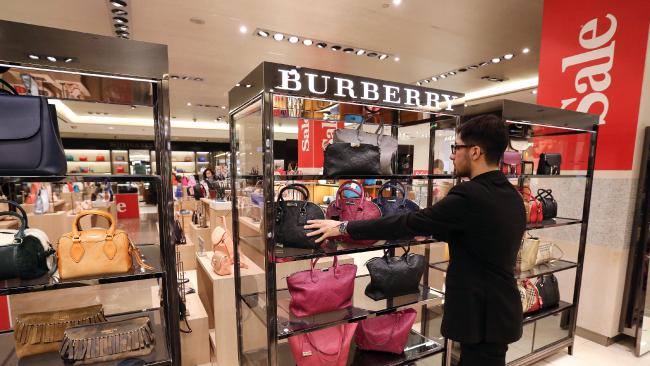
    Burberry posted disappointing fiscal second-half sales and warned on profit for the current fiscal year, sending its shares lower and highlighting the pressure on chief executive Christopher Bailey to turn around the British luxury retailer’s performance.

    Burberry reported a 2 per cent decline in comparable sales, a closely watched figure that excludes store closings and new store openings, that missed analyst estimates. Results were hurt by a 5 per cent decline in its fourth quarter ended March 31 amid a poor performance in Hong Kong, the US, Europe and Britain.

    Shares fell as much as 7 per cent before retracing some of the loss to close nearly 70 pence lower at 1275 pence in London.

    “Sales look to have been under pressure in all areas,” said Liberum retail analyst Tom Gadsby.

    Burberry isn’t alone in struggling against headwinds in global luxury. LVMH Moet Hennessy Louis Vuitton earlier this week reported first-quarter sales rose 4 per cent, below what analysts were expecting, as the company grappled with sluggishness in France following the Paris terror attacks.

    Mr Bailey took Burberry’s helm in May 2014, shortly before currency gyrations and political unrest hammered sales in greater China, a typically high-margin region for the company.

    Mainland China is now bouncing back, but sales have stayed weak in Hong Kong — where Burberry has 14 full-scale stores and a number of concessions — in the wake of tighter visa policies for residents in nearby Shenzhen, previously frequent visitors to Hong Kong.

    Mr Bailey has moved to renegotiate rents and reduce store space in Hong Kong, along with tweaking marketing and product assortments to better appeal to local shoppers. Sales in Hong Kong nevertheless fell more than 20 per cent in the fourth quarter.

    Beyond Asia, Thursday’s results showed broad-based weakness, indicating that Mr Bailey is struggling on a number of fronts.

    The US, the world’s largest luxury market, has been particularly difficult for Burberry. The company’s long-term push to burnish its brand there hasn’t yet gained enough traction.

    “We are focused on elevating our brand in the US longer-term,” said chief financial officer Carol Fairweather, describing choppy demand from US shoppers as “perplexing”.

    As with LVMH, the terror attacks in Europe took their toll on Burberry. Comparable sales in Europe weakened in the fourth quarter as tourism declined in recent months. “Clearly, events in Paris and Brussels do have an impact on sentiment,” Ms. Fairweather said.

  • China first quarter GDP growth slowest since 2009

    China first quarter GDP growth slowest since 2009

    The pace of China’s economic growth decreased to its lowest since the global financial crisis in the January to March period, official figures show. Gross domestic product expanded 6.7% from the same period a year ago, in line with market expectations but the slowest pace of growth recorded since the first quarter of 2009.

    The world’s second largest economy grew 6.9% last year – its weakest expansion in a quarter century – falling short of Beijing’s target of 7%. But the first quarter number falls within the range of Beijing’s growth target of 6.5% to 7% for 2016.

    Other data for March released by the National Bureau of Statistics suggested that the Chinese economy was stabilising, with industrial output, retail sales and urban fixed-asset investment all beating analyst forecasts.

    Industrial production rose 6.8% from a year earlier following a 5.4% increase in January-February, while retail sales jumped 10.5%. Fixed-asset investment expanded 10.7% in the three months to March period compared to the same period a year ago, beating expectations for a 10.5% rise.

    ‘Robust growth’

    The GDP data comes two days after China’s customs agency said exports increased 11.5% from a year earlier in March, the first positive growth in overseas shipments in nine months. Imports were down a less-than-expected 7.6% following a 13.8% drop in the previous month, while the trade surplus came in at $29.9bn (£21bn; €26.3bn).

    Yuan Banknotes
    China’s central bank says it will target stability in the yuan exchange rateReuters

    Meanwhile, a Chinese deputy central bank governor said the economy had performed robustly in the first quarter but admitted that it faced several headwinds.

    “I’m pretty confident that we are going to have between 6.5% to 7% growth this year,” Yi Gang said. He reiterated that the central bank would target stability in the yuan and not allow the currency to “overshoot” its exchange rate by too much.

  • Garuda Indonesia Holds Travel Fair on April 29

    Garuda Indonesia Holds Travel Fair on April 29

    Flag carrier Garuda Indonesia will hold the Garuda Indonesia Travel Fair (GATF) event starting from April 29 until May 1, 2016 at the Jakarta Convention Center. The event will be held in cooperation with Bank Nasional Indonesia (BNI).

    “Garuda wants to help passengers prepare their trips with an affordable price,” said A. Toni Soetirto, Garuda Indonesia Commerce Director at Plaza Arcadia Senayan on Tuesday, April 19, 2016.

    Toni said that the GATF will also be held to support the government’s effort in promoting Indonesia’s tourism sector by providing flights to newly developed tourism destination.

    Selfie Dewiyanti, Garuda Indonesia’s Marketing Vice President said that all flight routes will be made available throughout the event. “We guarantee that ticket prices sold in the exhibition will have the best price throughout the year,” Selfie said.

    In addition to Jakarta, the GATF event will be held simultaneously in 14 other cities, including Bandung, Medan, Pekanbaru, Jambi, Semarang, Solo, Yogyakarta, Surabaya, Denpasar, Makassar, Manado, Timika and Jayapura.

  • Unilever Indonesia set to enjoy stronger performance

    Unilever Indonesia set to enjoy stronger performance

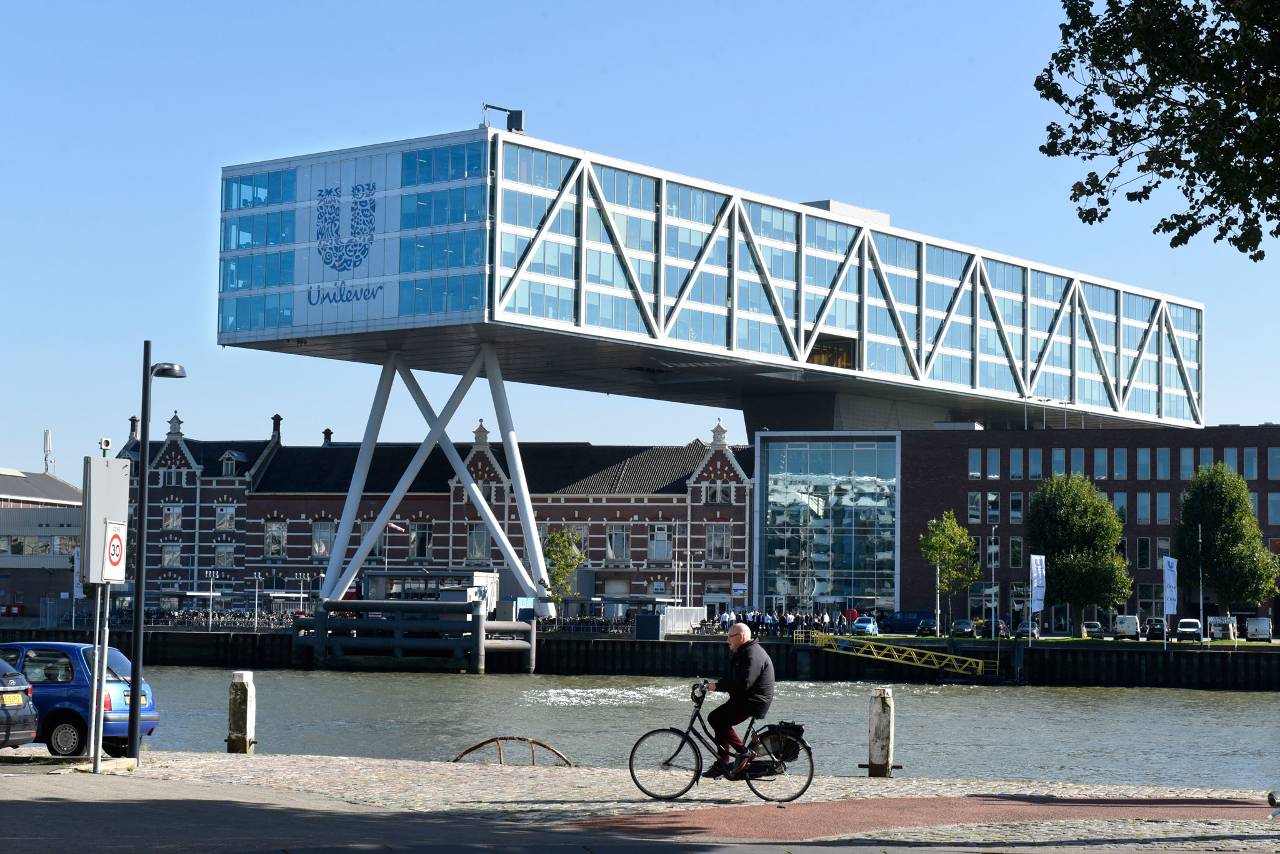
    Unilever Indonesia’s net profit fell 1.2%; however, the media outlet predicts that as the economy now picks up, so too will the multinational’s performance in the country.

    Unilever is the “undisputed leader in bath and shower” in Indonesia, according to market research firm Euromonitor International, and it looks set to maintain and strengthen this position.

    “In addition to heavy investment in new variant launches and promotions, Unilever benefits from its brands also having a good reputation in the marketplace, and the company has an extensive distribution network to also reach consumers in rural areas,” Euromonitor observed in its most recent report on the country.

    Seeking opportunities

    According to Euromonitor, the bath and shower category in Indonesia is currently saturated, so innovation will be key to driving future growth for Unilever.

    “New and creative approaches by manufacturers are crucial to retain customers and develop the consumer base, especially in products with more potential to grow such as body wash/shower gel,” the firm asserts.

    It singles out additional formulation benefits and novel packaging formats as key areas for development in the category up ahead.

    Tackling deforestation

    Indonesia is also one of Unilever’s key regions for its focus on reducing its environmental footprint, which forms a central part of its ongoing Sustainable Living Plan.

    Last year, the company announced that along with Brazil, Indonesia would form the key focus of an ongoing, year-long partnership with WWF International to tackle deforestation.

    These two countries have historically had the highest rates of deforestation in the world and have some of the largest areas of intact forest globally.

    “Stopping deforestation is an urgent priority in tackling climate change. Forests are second only to the oceans as the largest global store of carbon and support 80 percent of terrestrial biodiversity across the globe,” says Paul Polman, CEO of Unilever.

  • Virgin Mobile Australia launches unused data ‘auction’

    Virgin Mobile Australia launches unused data ‘auction’

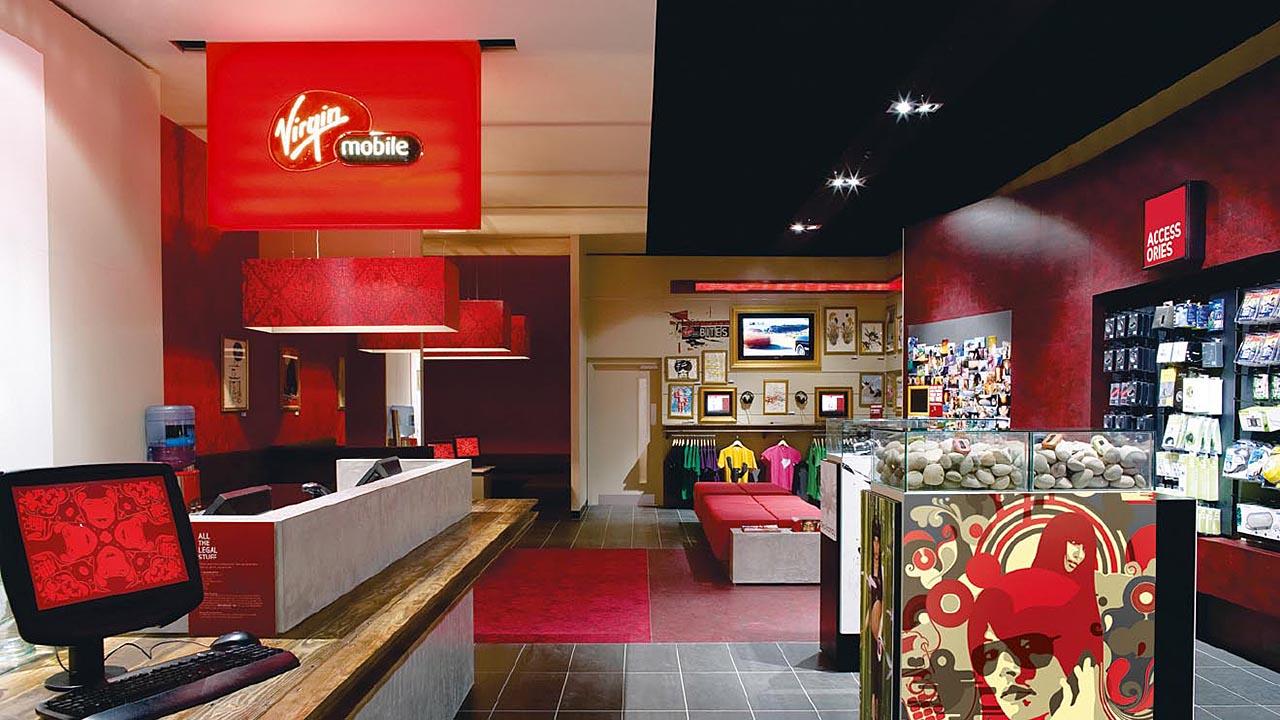
    Australian MVNO Virgin Mobile has launched a publicity stunt to promote its new data rollover postpaid plans by hosting an auction allowing local consumers to ‘bid’ for items using unused data allocations.

    The company will auction off 30 items over 30 days, with the top prize being an A$43,000 ($33,000) vacation package to the private Wadigi Island in Fiji.

    Consumers can place ‘bids’ on Virgin Mobile’s Facebook page by posting their most recent mobile bill showing how much unused data was left over. The person with the highest amount of unused data wins the prize for that day, or in the event of a tie whoever placed a bid first will win.

    Virgin Mobile Australia head of brand and consumer marketing Philippa Duant commented that the stunt aims to raise awareness of the company’s data rollover plans, that are designed to give subscribers a second chance at using their allocation.

    “Terabytes upon terabytes of unused mobile data are being taken back from consumers every month by other telcos,” she said.

    “At Virgin Mobile we don’t think it’s fair that something they’ve paid for is snatched away – they should get a second chance to use it and what better way than through a unique auction that offers the opportunity to live like [Virgin Group co-founder] Sir Richard Branson on your own private island.”

  • M1, IDA launch trial Wi-Fi service for public buses

    M1, IDA launch trial Wi-Fi service for public buses

    The Infocomm Development Authority of Singapore (IDA) and M1 have launched a trial Wi-Fi service for public buses.

    Commuters on selected SMRT Service 176 buses can now use Singapore’s first WiFi-On-The-Go service, as part of the heterogeneous network (HetNet) trials.

    The HetNet Trials are meant to validate advanced telecommunication technologies, and a network’s capabilities in providing pervasive and seamless connectivity in a real-life setting.

    Each connected bus is linked to M1’s 4G+ network through an intelligent in-vehicle unit that boosts the bandwidth available to the on-board wireless network.

    Commuters on the buses, a trunk route service linking Bukit Merah Interchange and Bukit Panjang Temporary Bus Park can go online by connecting to the “Wireless@SG” network on their smart devices. Commuters will be able to identify the two WiFi-enabled buses through on-board signages highlighting the service.

    M1’s carrier WiFi service will also be available on the buses by end-April. The M1WiFi service, with download speeds more than ten times faster than available through Wireless@SG, will seamlessly handover customers between M1’s mobile network and the WiFi-On-The-Go service before, during and after their journey, to enable them to able to enjoy activities such as streaming HD video content without interruption.

    In addition to passenger benefits, WiFi-On-The-Go can help business by enabling new applications. For instance, inbound tour operators can now provide tourists with WiFi on board their tour buses. Vehicle fleet operators can also use the enhanced connectivity to stream live video and collect other relevant information from the vehicle, as well as provide transactional services.

    “HetNet technological innovation is expected to bring about immediate and long term benefits for citizens. With the enhanced infrastructure, as a start, users in trial areas such as MRT stations and selected buses powered by M1, can now experience better coverage with seamless connectivity, IDA assistant CEO Khoong Hock Yun said.

    “Beyond the trials, we look forward to working closer with companies in the tech, engineering and R&D space to develop solutions that can meet pressing connectivity challenges.”