Author: Mei Ling Tan

  • Huawei launches 4K ultra HD video offering

    Huawei launches 4K ultra HD video offering

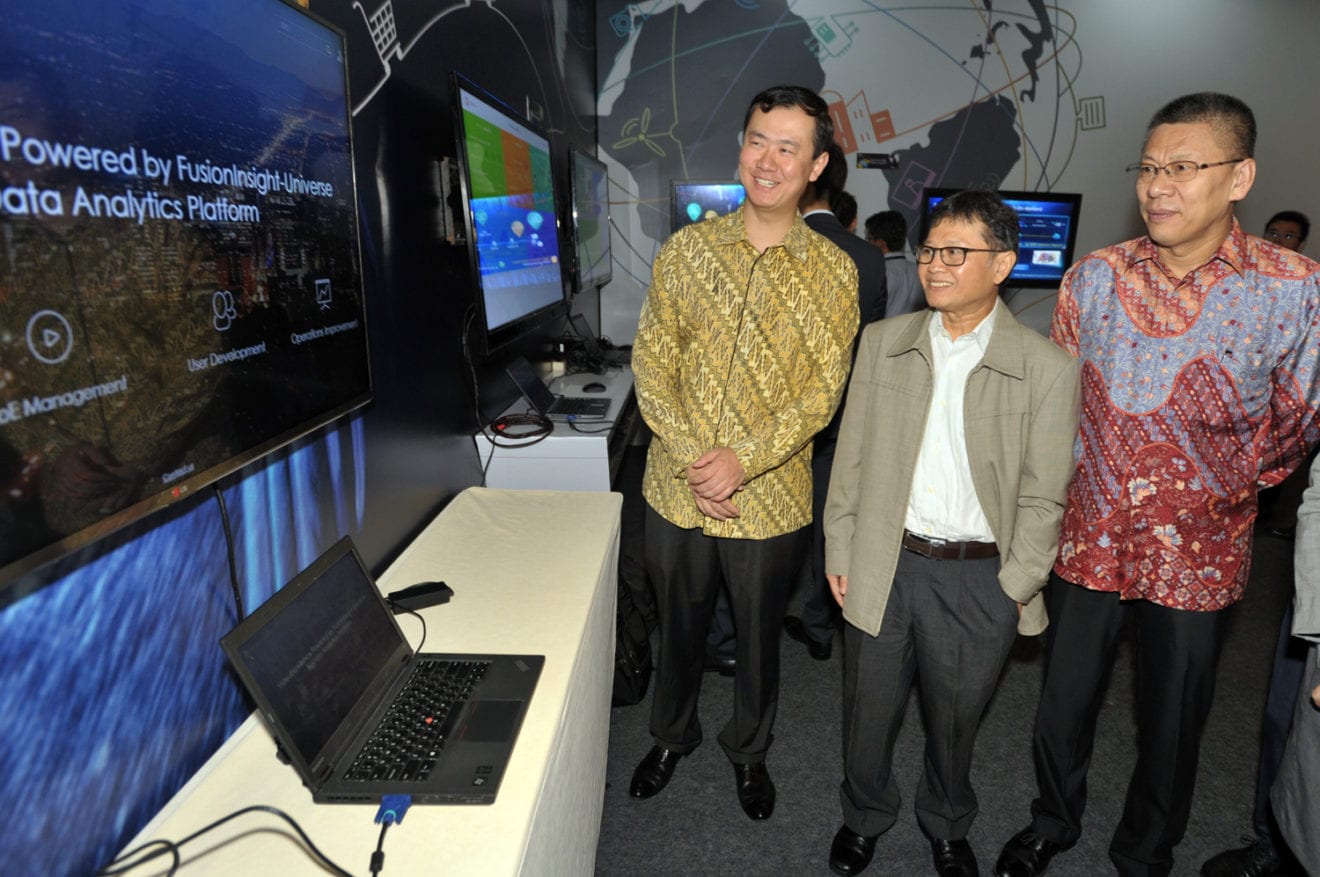
    Huawei has launched a new 4K ultra HD streaming video offering during its Big Video Summit in Indonesia.

    The vendor recently successfully trialed the technology in collaboration with Telkom Indonesia.

    Huawei’s 4K technology combines fiber broadband and 4K ultra HD video services to help operators develop innovative new broadband and video services.

    At the summit, held in Jakarta last week, more than 250 industry executives from governments, mobile operators, service and content providers and consulting companies met to discuss the future of Big Video in APAC.

    During a keynote presentation, Telkom VP ISG Pramasaleh Hario Utomo laid out the operator’s video-centric network strategy.

    Grey Juice Lab VP of business development for APAC Chairil Anwar also pointed out that the 4K industry chain is maturing, and predicted that 2016 will be the inflection point for 4K ultra high definition video.

    The event was inaugurated by Huawei Indonesia CEO Sheng Kai, Huawei South Pacidic CMO Lim Chee Siong, Indonesian Ministry of Communication and Information Technology acting director general of ICT resources Basuki Yusuf Iskanda and PRC economic and commercial counselor for Indonesia Wang Liping.

  • Massive data breach exposes all Philippines voters

    Massive data breach exposes all Philippines voters

    The Philippines’ 55 million voters are now susceptible to fraud and other risks after a massive data breach leaked the entire database of the Commission on Elections (Comelec), security firm Trend Micro has warned.

    The defacement of the Comelec website by a hacker group called Anonymous Philippines happened at near midnight on March 27. In a message to the government, the group said they want the poll body to implement tighter security measures on the precinct count optical scan (PCOS) machines to be used in the May 9 polls.

    “But what happens when the electoral process is mired with questions and controversies? Can the government still guarantee that the sovereignty of the people is upheld?” the hackers posted in the defaced Comelec website.

    A report said a second hacker group called LulzSec Pilipinas posted within day an online link to the Comelec’s whole database. The following day, the group also reportedly updated the post to add three mirror links to an index of files that could be downloaded.

    Trend Micro said the leak may turn out as the biggest government-related data breach in history, surpassing the Office of Personnel Management (OPM) hack in 2015 that leaked personally identifiable information (PII), including fingerprints and social security numbers (SSN) of 20 million US citizens.

    While the Comelec has given assurances to the public the day after the hacks that the no sensitive information was compromised and the country’s second automated polls will be secure, the securty firm believes otherwise.

    “Based on our investigation, the data dumps include 1.3 million records of overseas Filipino voters, which included passport numbers and expiry dates. What is alarming is that this crucial data is just in plain text and accessible to everyone,” the security firm said in a blog post.

    “Interestingly, we also found a whopping 15.8 million record of fingerprints and a list of people running for office since the 2010 elections,’” it added.

    “Among the data leaked were files on all candidates running on the election with the filename VOTESOBTAINED. Based on the filename, it reflects the number of votes obtained by the candidate. Currently, all VOTESOBTAINED file are set to have NULL as figure.”

    Regardless whether the hacking could affect the elections, the security firm said there is still the issue of all voter information that was leaked.

  • Cathay Capital Invests In Chinese Furnishing Retailer ABS

    Cathay Capital Invests In Chinese Furnishing Retailer ABS

    Sino-Europe private equity firm Cathay Capital has made an undisclosed investment in Chinese home furnishing product retailer ABS through its Sino French SME Fund, says a company announcement.

    “ABS stands out among the numerous other domestic home furnishing companies in China because it has established an innovative data-based development model and an omni-channel retail system,” says Cai Mingpo, president of Cathay Capital.

    The private equity firm says it plans to leverage its home furnishing industry resources in China and France to assist ABS’ cross-border development.

    Founded in 2009, ABS has developed from a tele and catalogue selling model to an omni-channel and direct sale model with the integration of an online retailing mall, offline brand stores and mobile apps.

  • Tata Comms to provide MPLS WAN for Air France-KLM

    Tata Comms to provide MPLS WAN for Air France-KLM

    Europe’s second largest airline Air France-KLM has handed Tata Communications a multi-million dollar deal to provide next-generation network connectivity to 170 sites.

    Tata Communications will provide Air France-KLM with an MPLS WAN in the Middle East, Africa and Asia Pacific, supported by the operator’s global subsea cable network.

    The multi-year contract will see Tata Communications roll out a fast, intelligent network which will power Air France-KLM’s mission-critical systems, including passenger check-in, flight operations and departure control applications, as well as corporate programs in the Middle East, Africa and Asia Pacific.

    Air France-KLM, which carried 87.4 million passengers in 2014, is the first major European airline group to move away from the legacy networks widely used in the airline industry.

    Tata Communications’ global network – which today connects more than 300 locations for leading airlines worldwide – will enable Air France-KLM to offer a range of digital services in regions that have been identified by the International Air Transport Association (IATA) as the future growth drivers of the industry.

    Currently eight of the ten fastest growing airline markets are located in Africa. By 2034, IATA expects 1.3 billion passengers to touch China – up from 850 million at present – and India is set to see an additional 260 million passengers. Europe will act as key transfer hub to these emerging markets, with 1.4 billion passenger journeys in 2034 – nearly 600 million more than today.

    “Investing in emerging markets and cutting-edge digital technologies is at the heart of our growth strategy. We’re introducing a range of innovative services, such as travel apps for smartwatches, to provide a seamless, personalized travel experience for our tech-savvy passengers,” Air France-KLM CIO Jean-Christophe Lalanne said.

    “Tata Communications’ global next-generation network will act as the foundation for these services in the Middle East, Africa and Asia Pacific, empowering us take customer service to the next level and capitalize on the huge growth opportunities that these markets offer.”

  • Alibaba Cloud AI aims to predict singing contest winner

    Alibaba Cloud AI aims to predict singing contest winner

    Alibaba Cloud’s “Ai,” an artificial intelligence program was put on the spot to predict the winner at the grand finale of “I’m a Singer,” the popular Chinese reality television produced by Hunan TV.

    The competition is major annual event and attracts significant public participation in China. Ai predicted the winner by using neurological networks, social computing and emotional perception.

    Min Wanli, chief scientist for AI at Alibaba Cloud said the result was jointly created by TV audience, public judges, as well as the seven contestants.

    “It is very random and almost impossible to predict using human intelligence, and we aim to achieve real-time prediction by Ai,” said Min.

    “In a previous round, Ai predicted two of the top three winners on April 1,” said Min. “We believe that it will achieve a better performance after learning and evolving over the past week.”

    The program has the potential to understand human emotions, gather insights in real-time, and evolve through strong computing and machine-learning capacity.

    With this capability, Ai identified and assessed factors that may affect the result, including popularity of the songs, the singers’ voice pitch and energy, audience response and online discussions, to name a few.

    The program created and used a dynamic computer model to predict the result by computing both fact-based logical data and subjective emotion-based data.

    Ai’s prediction and the judges’ voting were processed independently and did not affect each other.

    In the future, Ai will be applied to areas such as personal assistance, weather analysis, smart cities and social trend predictions.

  • CB2 to close outlet in Singapore

    CB2 to close outlet in Singapore

    Three years after its Singapore debut, CB2 – the sister store of American furniture and homeware brand Crate & Barrel – is closing shop for now.

    Its management is looking for a new shop space in a mall, which is likely to be in Orchard Road, says Mr Yung Ong, 36, executive director for the Singapore branches of Crate & Barrel and CB2.

    He says it is time to move as the current store is “not in the right location”.

    CB2 is housed in a 557 sq m space on the second level of Peranakan Place, a row of shophouses next to The Centrepoint mall in Somerset.

    Its entrance on the first level is sandwiched between bak kwa shop Bee Cheng Hiang and coffee joint TCC. Around the corner, there are bars such as Alley Bar, Acid Bar and Odd One Out.

    Crate & Barrel has two outlets here – a five-storey flagship store in Orchard Gateway and a smaller store in Ion Orchard. There are no plans to open new Crate & Barrel outlets here.

    Mr Ong, whose family owns Peranakan Place, says CB2’s owners had picked the building because they loved its architecture and the space’s expansive, loft-like feel also matched the style of furniture the brand carries.

    CB2 targets young adults and its furniture is designed for small spaces and those on a limited budget. Prices range from $1.95 for a beaker glass to $2,999 for a dining table.

    When CB2 opened here in 2013, it was its first store outside North America and the vibe at Peranakan Place is similar to the neighbourhoods in which the American stores are located.

    Mr Ong says: “CB2 stores have always been in different, hipster- type neighbourhoods and not traditional retail locations.

    “However, we aren’t getting the right (customers) at Peranakan Place. The mindset of people who walk by here is a little different – they are not stopping to look at furniture.

    “It’s strange because Crate & Barrel is just a few doors down at Orchard Gateway and you would think that we would attract buyers from there, but we don’t. But that’s just the market – the consumer behaviour is different.”

    While the other businesses in Peranakan Place are doing well, he says CB2 is not making money. Sales figures grew from the first to second year – although it was not making money yet – but declined in the third year.

    CB2’s hiatus – it will shut next month after holding its closing-down sale – comes after home-grown furniture and home accessories retailer iwannagohome announced in February that it was closing its two stores in Tanglin Mall and Great World City, amid a retail slowdown.

    Other homefurnishing stores have pulled out of Singapore in recent years – Japanese brand Francfranc left in 2014 after two years, while Goods of Desire, a cult Hong Kong lifestyle retailer, exited last year after three years.

    But Mr Ong is optimistic about CB2’s future in Singapore.

    A new store will likely be ready by next year.

    He says: “We’re just in the wrong spot, but that’s part of business. While this type of location might have worked for CB2 in the past, we’re now changing our impression of what’s the right real estate for the brand.”

    CB2 will conduct a sale from April 15 to May 14, with discounts of up to 75 per cent.

  • New Look and Celio to exit Singapore market

    New Look and Celio to exit Singapore market

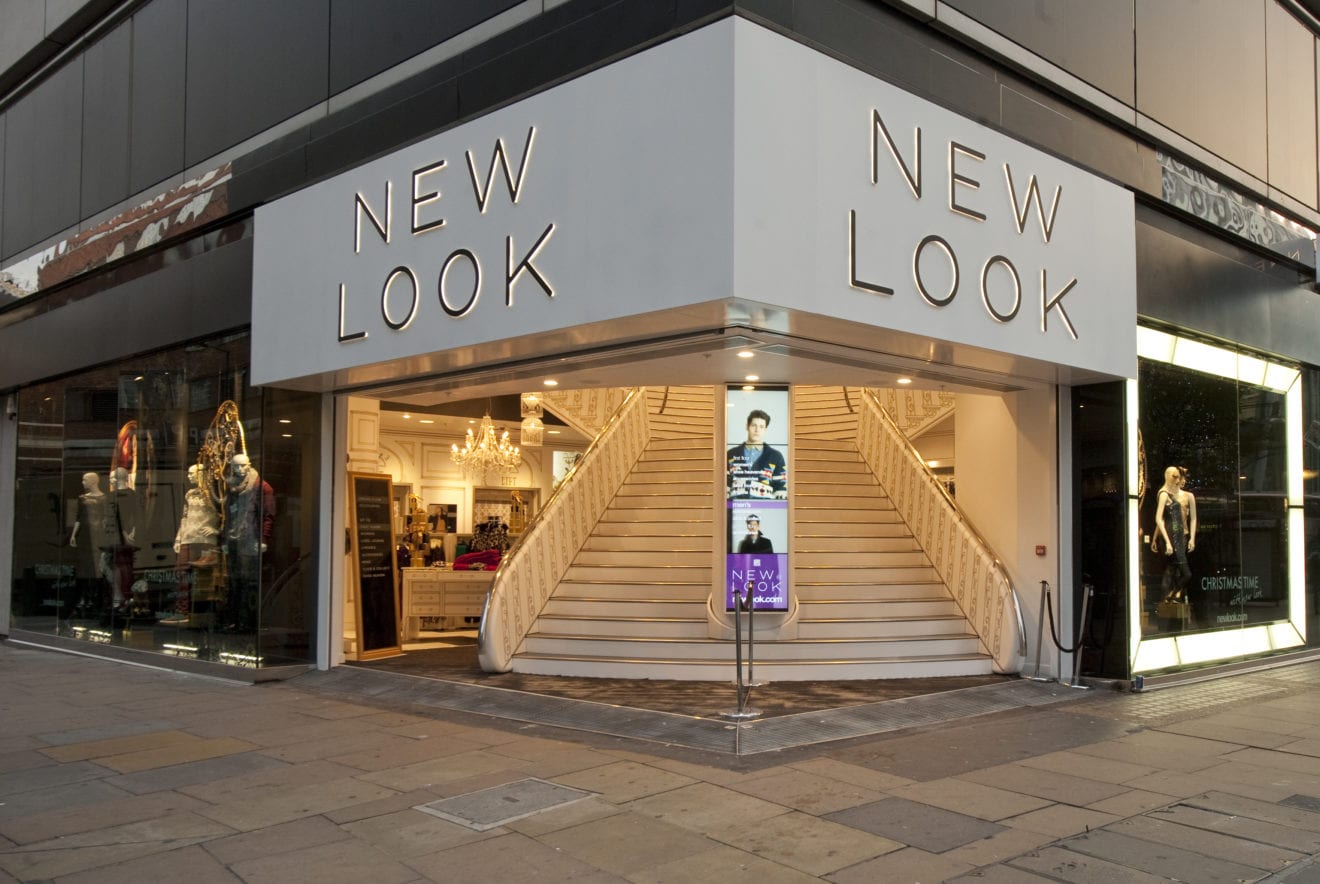
    Two fashion brands will bow out of the challenging retail scene here before the year is out.

    Eight stores in various malls showcasing the British brand New Look and French menswear chain Celio will close in the second half of the year, said distributor Jay Gee Melwani Group.

    “The sales are not there and the costs are too high. We are consolidating and re-strategising which ones can work, which ones can’t,” Jay Gee Melwani Group managing director R Dhinakaran said.

    The other brands Jay Gee distributes include Aldo, Levi’s, Dockers, Aeropostale, Converse and health supplement chain Holland & Barrett. Affected staff will have the option of being redeployed to other stores in the group.

    Last week, conglomerate Al-Futtaim Group announced that it will shut 10 loss-making outlets here under its distribution and retailing arm RSH later this year.

    Competition from e-commerce, weak consumer sentiment and rising business costs have dogged retailers in recent years, with no sign of a let-up.

    Colliers International’s senior associate director of research and advisory, Ms Anthea To, said: “With both the domestic and international economies experiencing some headwind, consumers are likely to stay cautious and prudent in their discretionary spending.”

    Property consultancy JLL said vacancy rates in malls in Orchard, Marina and the suburban areas are still rising. Said Ms Lee Siew Ling, director of retail at JLL: “Retailers are now focusing on key locations with proven footfall and are more risk-averse and tend to refrain from investing in new locations.”

    The Marina retail submarket – which includes malls such as Marina Square and Suntec City – has the highest vacancy at 6.1 per cent, according to JLL data, followed by Orchard with 3.1 per cent and the suburban submarket with under 2 per cent.

    Ms Lee said the net take-up of retail space islandwide last year came in at minus 86,379 sq ft.

    This means more space was given up compared with retail premises being occupied by replacement retailers and new entrants.

    Shaw Centre, at the junction of Scotts Road and Orchard Road, appears to have trouble filling its units. About 25 units were still behind hoardings at the five-storey mall, including two on the ground floor facing Scotts Road, when The Straits Times visited last week.

    About nine units were vacant on level four, where Seasons Nail Bar is located. The shop’s general manager, Mr Roy Fong, said: “Sometimes I have one walk-in customer a week.

    “There is no shopper traffic. I have to spend $2,000 to $3,000 every month to do marketing. The management gave us a rental rebate, but that won’t help to improve sales.”

    Mr Jeremy Low said his Fox Studio hair salon is “still surviving” as it relies mostly on regular customers.

    “They should fill up the mall quickly, perhaps with an education centre or health spa or yoga studio, to get people to visit,” he added.

    “Maybe they can have a different theme on each floor.”

    Shaw Centre declined to comment on the occupancy rate.

    Marina Square Shopping Mall, which also has many unoccupied units, said it is working with tenants on advertising and promotions and holding events to drive shopper traffic. Its operator, Marina Centre Holdings, said the overall leasing outlook in Singapore will remain “difficult over the next 12 months as existing chain stores are expected to continue consolidating”. It expects to see more “pop-up” stores and new retail concepts.

    Pop-up shop Excluniqueeee leased 1,000 sq ft at the mall at a “very low rate” recently to showcase its apparel and street art.

    Store director Jason Wang said: “In good times, when the malls are doing well, there is no way for us to get retail space.”

    Knight Frank Singapore retail head Wendy Low said pop-up stores are becoming more common as they “help landlords in filling up vacancy and also act as a test bed” for new retail concepts. Analysts said landlords could also offer more flexible tenancy periods and rental structures, review the tenant mix and step up marketing efforts.

  • The Queen of Siam: Chadatip Chutrakul Aims To Energize A District In Bangkok

    The Queen of Siam: Chadatip Chutrakul Aims To Energize A District In Bangkok

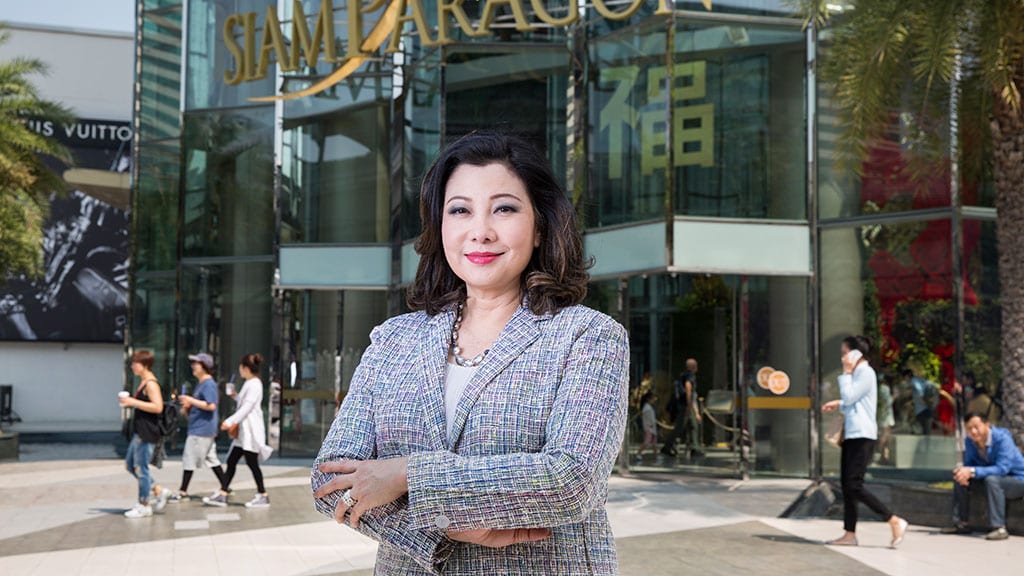
    A lot of people thought we dreamed the impossible dream,” chuckles Chadatip Chutrakul, recalling initial reaction to her newest–and biggest–project, Icon Siam. The 55-year-old CEO of Siam Piwat is best known as first lady of Siam Paragon, her signature mall. Much more than a Bangkok institution, it’s a global sensation, one of the world’s most posted sites on Instagram, alongside Disneyland and the Eiffel Tower.

    Siam Piwat has evolved over nearly six decades from a hotel and shopping center built by Chadatip’s father into a complex of flashy malls in a central Bangkok district so dominated by this family-run firm it’s also called Siam. As rivals in Thailand’s hypercompetitive retail industry have expanded to the suburbs, around the country, even overseas, Siam Piwat has stayed put, remodeling regularly, staking its fame and bottom line on Paragon and its adjacent shopping plazas, Siam Discovery and Siam Center.

    So Icon is a quantum leap, from the comfort zone of Siam across the Chao Phraya River, to the no-man’s-land of Thonburi. Centuries ago Thonburi predated Bangkok as Thailand’s capital, but development long ago flowed across the river to the Bangkok side, then uptown to Sathorn and Sukhumvit. A run-down area of concrete shop houses, it hardly seems a likely launching pad for an upscale shopping mecca.

    Yet this Bangkok native has grand plans to revive the River of Kings, as Chao Phraya translates into English. At $1.57 billion, Chadatip says Icon is the largest privately funded project in Thai history. Besides 5.5 million square feet of retail space, the site will include two high-rise residential towers, a museum, a half-kilometer-long river walk, extensive art, theater and conference facilities, plus docks for river cruisers and private yachts.

    Bangkok plans several new bridges and subway lines across the river, and Icon will link to them by a new monorail, dubbed the Gold line. Siam Piwat will bankroll the $62 million cost, the first time a company has paid for a subway line and donated it to Bangkok.

    Siam Piwat lacks experience in residential development, so has teamed with high-end property specialist Magnolia Quality Development, securing the blue-chip backing of Charoen Pokphand Group. CP is Thailand’s biggest company, run by Dhanin Chearavanont, who tops the FORBES ASIA Thai rich list. His daughter Tipaporn Chearavanont runs Magnolia. CP and Magnolia each have a 25% stake in Icon, leaving Siam Piwat with 50%.

    While it was still only a dirt lot in 2014, Icon sold all 379 units in one residential tower at prices equal to those of top-tier downtown properties, according to local real estate firms. “The launch of the condos did very well and helped put the project on the map,” notes Simon Landy, Thailand chairman of Colliers International.

    Chadatip says of the scheme: “This is not only about Icon, it’s about the future of the river. It’s about how we elevate the importance of the river in every aspect, meaning the historical places, culture, the art, the festivals–all the values on the river have to be integrated.”

    Since Siam Piwat announced its plan for the 20-acre site in 2014, there have been signs of a Thonburi revival. Nearby, at the Jam Factory, hip architect Duangrit Bunnag has converted old warehouses into chic restaurants, shops and an art gallery. “The river is happening,” he says.

    Still, it’s a high-stakes gamble, even for a risky investor–something Siam Piwat has never been–in an especially precarious time for Thailand. The past decade has been marked by political strife and a series of coups. Pitched street battles in 2010 claimed an estimated 100 lives; Central World, a shopping center near Siam, was razed. When massive street protests crippled Bangkok in 2014, the military mounted another coup, promising a quick return to democracy. Two years on, the junta remains entrenched. The economy trails regional growth, and some say it’s teetering on recession.

    “We’ve gone through lots of cycles,” Chadatip concedes, but she notes that revenue has recovered since the protests and coup of 2014. Even after a devastating bombing in the capital last August, Siam Piwat’s sales for 2015 were up 10% from 2014 and grew 18% from 2013. And Chadatip says there are waiting lists of years for space in malls, a figure confirmed by retailers and local analysts.

    “This is exactly the kind of project Thailand needs now,” says Chadatip, noting that Siam Piwat isn’t a stranger to making tough investments in critical times. She recalls that soon after Siam Discovery was launched, the country plunged into the 1997 Asian Financial Crisis. That was under the watch of her father, Chalermchai Charuvastr, a former military general who served in the 1950s on the staff of Field Marshal Sarit Thanarat, who led a coup and became prime minister in 1957.

    Chalermchai was governor of the Tourism Authority of Thailand and pioneered aviation agreements that helped usher in the era of international travel in Southeast Asia. Tourism remains a major bright light for Thailand, with 29 million visitors last year, providing 10% of gross domestic product, according to official statistics.

    In 1959, when tourists numbered under 100,000 a year and airlines were pushing for proper lodging for crews and passengers, Chalermchai brokered a lease for 29 acres of royal parkland around the Sra Pathum Palace, then founded Bangkok Inter-Continental Hotels, which built Siam Intercontinental Hotel.

    According to Chadatip, the government put up 20% of Bangkok Inter-Continental Hotels, InterContinental Hotels Group added 30%, and the rest came from local banks and about 500 private shareholders. The company was renamed Siam Piwat in 2003 but remains unlisted and doesn’t release earnings numbers. However, one local businessman calls Siam Piwat “a mint. They are printing money there.” How much flows to the family, Chadatip won’t say. “My family has some shares,” she says, “but a very, very small amount.”

    Chadatip says her father had a vision “to build a city of the future, not just one project. What he saw was that he would build the hotel and the first shopping mall and office building, the first high-rise in Thailand–30 stories–in 1965,” all on the same site where Paragon and other Siam Piwat malls now stand. Where once “this was nothing. It was orchards,” Chadatip says, now there are fountains, a towering LED screen and 250,000 visitors a day.

    Chalermchai ran the company until his death in 2009. Although Chadatip is the youngest of three children, he groomed her to take over, and she has spent virtually her entire career as first lady of Siam. Two older brothers, Charnchai and Charlie Charuvastr, have held posts with the company but largely made their marks outside. Charnchai served as CEO of telecom company Samart and prior to that was general manager of IBM Thailand. He was also chairman of Siam Paragon until he died in 2011. Charlie is a corporate relations advisor for Siam Piwat, having previously worked for PTT Exploration & Production, one of Thailand’s biggest energy companies.

    Born in 1961, Chadatip attended prestigious Chulalongkorn University in Bangkok, graduating in 1982 with a B.A. in banking and finance. She spent the next few years with a pair of British insurance firms, Sedgwick Offshore Resources and Willis Faber & Dumas, before coming back to Thailand, managing energy insurance services for domestic firm Dhipaya Insurance.

    She has been with Siam Piwat since 1986, starting in accounting, then sales and promotion. An admitted workaholic, she is often the last to leave the office, arriving home long after dark to more e-mails and work calls. Her husband, Apichart Chutrakul, understands the pace; he is founder and CEO of luxury property developer Sansiri. They have one grown daughter.

    Colleagues describe Chadatip as a human dynamo with boundless energy. “She’s really a superwoman. She works 24/7,” says one of her closest co-workers, who, like others at Siam Piwat, requested anonymity. “We get e-mails from her at all hours,” she says, adding, “She’s intensely involved in everything. Siam is her life, and it’s her passion.”

    Thailand’s other major shopping firms are also run by women. “I think it’s the nature of the business,” Chadatip says, noting that women have a keen eye for detail (Siam Piwat jointly owns Siam Paragon 51%-49% with Thailand’s Mall Group, also run by a woman, Supaluck Umpujh (see profile, p. 58).

    Chadatip doesn’t believe gender plays a big role in Thailand. “In this country we have the freedom to go as high as we want,” she says. “We’ve had a lady prime minister, we’ve had many lady ministers.” In Thai culture women have equality, she says. “There is no ceiling.”

  • iPhone SE hits stores in Taiwan, received mixed reaction

    iPhone SE hits stores in Taiwan, received mixed reaction

    Sales of Apple Inc.’s latest smartphone offering, the iPhone SE, began in Taiwan Thursday, last April 7, with retailers and telecom companies reporting mixed consumer reactions.

    Data Express, a chain selling Apple products and accessories, said all iPhone SE devices available across its 51 outlets were sold out on the first day, and the 64G model was the best seller.

    The 64G model, priced at NT$19,500 (US$601.32), was also the most popular at electronics chain Tsann Kuen, since the model had sold out at all 300 stores during the first hour after sales began.

    Tsann Kuen also pointed out that over 80 percent of iPhone SE smartphones sold by the chain were either the gold or rose gold versions.

    Neither chain gave their exact sales figures.

    Telecom companies, which began accepting pre-orders March 29, did not see the same enthusiastic consumer response as the retail chains.

    Taiwan Mobile Co. said initial sales of the iPhone SE were weaker than the iPhone 6S that hit the Taiwanese market last October.

    Taiwan Star Telecom Corp., a smaller player in the mobile service market, also saw weaker sales of the iPhone SE than the iPhone 6S, citing local consumers’ preference for phones with a larger screen.

    The iPhone SE features a 4-inch screen, while the iPhone 6S comes in two sizes — the standard model with a 4.7-inch screen and the Plus model with a 5.5-inch screen.

    Taiwan Star said over half of the pre-orders for the iPhone SE it received were made by people aged between 25 and 34, and this showed the new phone’s lower pricing appealed to younger consumers.

    Far Eastone Telecommunications Co. said there were consumers asking about the iPhone SE at its outlets, but buying momentum is not expected to pick up until people learn more about the new model through word of mouth.

  • POMO HOUSE continues to the second year send the watch to prevent missing children

    POMO HOUSE continues to the second year send the watch to prevent missing children

    POMO HOUSE founder and the Distributor Pomo Kids Watch the ultimate intelligent watch  that can help you keep track of the behavior of the children. To launch the new model  for children. The latest version comes with new functions to improve performance and accuracy of the technology in the following ,call a close friend, turn off the phone time to study, easy to install just enter your micro SIM card and connect to your smart phone through the Parental Controls application “POMO moji” include other functions that meet the safety of the child and create a good relationship between the children with friends and family.

    Ms. Supreeya Kanikananta, Chief Executive Officer of POMOHOUSE Co.,Ltd. revealed that “after our company has officially launched on May 2015. The product is  success  for target because we are  pioneer of the market  in Thailand as well as to support the needs of parents. The current case of children have lost  which we feel proud to come  to help the family and the Thai society at this point.

    After product launch to market. We have more storage to  development of our products to meet the needs of the target groups to be more so we have developed the second which is the name “Moji” for the new model has additional development up from the first models in several items. Such as the talk with close friend with program  “the best friend forever”, location with the 3 Best Technology is the triple mode tracking (Wi-fi and GPS) to adjust to the clock mode to the classroom, Performance Guides,  the capacity of the battery, 600MAH standby mode to up to two days, and including the journey history that can view history data.

    store_yellow

    From the our details, Pomo Moji. This is another great innovation of Thai people who develop to the maximum of the technology at the present and solve the problem to the parents in the things that are concerned.

    For this year POMO HOUSE ready to step up to be a leader in the market the watch prevent missing children.  We have the confidence in the title of the team that developed the Software Warranty after the sale and that the center after-sales service that the customer can also take the appliance to a service. For the marketing Pomo Kids Watch model “Moji”. We put the marketing budget  for marketing activity is about 5 millions baht in the investment that will be the production of the activities to promote sales and marketing, public relations on both online and offline. We are confident that it will be able to grow up to more than 3 times from the previous year.

    And now we expand the market to the AEC and Europe. Whether  is the Russian, Finland, Netherlands, Indonesia ,Malaysia and Singapore. Especially at Singapore we have registered a new company that was in the name “Pomo International” with the Singapore partner in order to help the market to  the AEC quickly. And in the future we will open the market in Japan, Australia and North America, overall, expects that it will make the market value to the company is not less than 200 million baht.

  • Asos gives up on the Chinese market

    Asos gives up on the Chinese market

    Asos has made the decision to remove its Chinese operations as the retailer found expansion of the business too costly.

    Instead of holding stock in China, Asos will serve it Chinese customers through its global platform and ship clothes from Europe. Asos will also be discontinuing its Mandarin website. Chief Executive Nick Beighton noted that the closure of the Chinese website would “remove the drag on earnings and a £60m to £70m operating loss”.

    Due to complex restrictions on clothing commerce in China, the fashion etailer has found it is easier to ship to China from the UK. Certain difficulties Asos has encountered within China are regulations on clothing labels and cultural issues such as selling one seasonal range in a country with diverse climates throughout.

    As well as these, Asos struggled to attract Chinese consumers away from etail behemoth Alibaba which dominates 75% of the ecommerce market.

    The CEO stated that the company’s decision to pull the plug on Asos.cn was part of its strategy to concentrate on less regions.

    “Getting eyeballs on our product has proven more difficult than we thought. There are always challenges as a start-up in a country, but there are additional challenges to being a start-up in China,” Beighton said.

    “We are simply serving our growing customer base there in a more efficient, less costly manner”.

  • Samsonite profits up in 2015 but outlook ‘uncertain’

    Samsonite profits up in 2015 but outlook ‘uncertain’

    Luggage giant Samsonite on Thursday warned its outlook for this year was “uncertain” owing to the growth slowdown in key market China and a stronger US dollar.

    The firm said in a filing with the Hong Kong Stock Exchange that despite a tough trading year, it saw net profit rise 6.1 percent to $197.6 million last year thanks to record revenues of $2.43 billion.

    “Our business has emerged stronger from 2015… despite various headwinds around the globe,” chairman Timothy Charles Parker said in the statement.

    However, chief executive Ramesh Dungarmal Tainwala said the outlook for 2016 “remains uncertain, with challenging trading conditions expected in a number of our key markets including China, and the negative currency translation impacts from the strong US dollar expected to continue affecting our business”.

    The world’s second-largest economy expanded 6.9 percent in 2015, the worst performance in a quarter century and a far cry from the years of double-digit increases. The country’s luxury market also took a hit from a years-long corruption crackdown.

    “It is undoubtedly the case that the days of 20-30 percent growth in China are over,” Parker said.

    Shares in the company ended the morning session 1.54 percent up at HK$26.30 Thursday.

    The warning comes after Samsonite earlier this month said it would buy US luxury bag maker Tumi in a deal worth $1.8 billion, which analysts said would provide a foothold in the still-lucrative high-end market in China.

    The move follows the purchase last year of airport retailer Rolling Luggage and Italian accessories seller Chic Accent.

    Parker said the Tumi deal is expected to close in the second half of the year subject to shareholder and regulatory approval.

    “Tumi is a perfect complement for our business… We believe we are buying a strong, profitable and well-run business, with considerable flair and success behind it in the American market,” he said.

    Samsonite raised $1.25 billion in an initial public offering in Hong Kong in June 2011, one of several Western brands — including Prada and Esprit — seeking to use the city to boost their presence in fast-growing Asian markets, particularly China.

  • Philippines office rates among cheapest in Asia

    Philippines office rates among cheapest in Asia

    The average office rental rate in the Philippines is much cheaper than anywhere else in Asia-Pacific but this segment is very lucrative because brisk demand from business process outsourcing (BPO) is driving growth at a “healthy” pace, experts from global property consulting firm Jones Lang LaSalle said on Wednesday.

    Apart from office property, JLL sees bright investment prospects for upper mid-end residential assets or those worth between P15 and P18 million particularly in Bonifacio Global City and Makati, JLL country head David Leechiu said in a briefing.

    JLL is also upbeat on investment prospects in budget hotels—referring to two- and three-star accommodations—across the country outside of Makati, Bonifacio Global City and the Manila Bay area as it expects tourism to be the next big thing in terms of Philippine real estate growth.

    In the office segment, local rental rates have risen but they are still 33 percent below the peak levels seen in 2007 or before the US-induced global financial crisis erupted. As of the second quarter, average rental rates for Grade A office in Manila amounted to $209 a square meter a year compared to $1,758 in Hong Kong, $683 in Beijing, $504 in New Delhi and $441 in Sydney, based on estimates by JLL.

    “Manila is much cheaper than anywhere else,” said Alastair Hughes, Jones Lang LaSalle chief executive officer for Asia Pacific. But such low rental prices should also allow the Philippines to be more competitive in attracting more BPO firms, Hughes said.

    This year, Hughes said rental rates in Manila could rise an average 10 percent, which he described as “a good level of sustainable rental growth.”

    Average office rental rates in Makati are estimated at between P600 and P900 a square meter a month; in Bonifacio Global City, P600-P800/sq.m.; in Pasig City, P500-P700/sq.m., Quezon City, P400-P600/sq.m., and in Manila Bay area, P500-P550/sq.m.

    Leechiu said the most lucrative areas for office investments were still in Bonifacio Global City, Makati and Quezon City. JLL estimated that average annual demand for office property would reach at least 300,000 sq.m. in gross leasable area a year up to 2015. Based on the number of buildings under construction, it projected an office supply deficit of about 200,000 sq.m. by 2015 if demand would go up to 360,000 sq.m.

    But outside Metro Manila, he said the opportunities were limited because demand for office space was mostly driven by BPOs that mostly thrive in Metro Manila, which produces the biggest bulk of skilled manpower required by this industry.

    Within the metropolis, he said there was very little office space left for rent. “BPOs have wiped them out,” he said. For the first time in three years, he noted there were BPO companies now signing lease contracts ahead of building completion.

    “The Philippines has become a part of the anti-crisis solutions of many companies. They’re thinking of cost and to address that cost, [offshoring to the Philippines] is part of the answer,” Leechiu said.

    On residential property, Leechiu said upper mid-end residential assets in Bonifacio Global City and Makati would be most promising. On the other hand, he said it was “very dangerous” now to invest in residential mid-market property, noting that there were 15 big property developers out there competing for this market.

  • Carl Cruz assumes duties as Chairman of Unilever Sri Lanka

    Carl Cruz assumes duties as Chairman of Unilever Sri Lanka

    With effect from March 1, 2016, Carl Cruz assumed duties as Chairman of Unilever Sri Lanka, taking the helm from his predecessor, Shazia Syed who has returned to Pakistan to assume her duties as the Chief Executive Officer of Unilever Pakistan.

    Carl arrived in Sri Lanka from the Philippines, where he last served as the Vice President of Customer Development for Unilever Philippines. Under his leadership, the function was transformed into an execution and talent powerhouse for the business, while simultaneously achieving sustainable double digit growth.

    Joining Unilever immediately after graduating from university in 1992, Carl began his career in General Trade before eventually becoming the company’s first General Trade Development Manager. In 1999 as the Sales Development and Trade Marketing Manager, he setup Unilever’s Category Management and Retail Solutions capability which was critical in attaining thought leadership in the Philippines Retail Trade Industry. In his 24 years with the organization Carl has gained an extensive breadth and depth of experience in Customer Development and Marketing in the Philippines, Thailand and India.

    Speaking about the business he has inherited, Cruz said, “Sri Lanka is an important market for us and these are exciting times for the country. Over the last two years, the Unilever Sri Lanka teamhas worked diligently to ensure the growth of the business and delivered exceptional results. We have the right mindset and ambition to capitalize on the current situation. I look forward to energizing our team, building on the gains we have made and bringing to life our vision of improving the lives of Sri Lankan consumers.”

  • Smiggle’s global expansion accelerates

    Smiggle’s global expansion accelerates

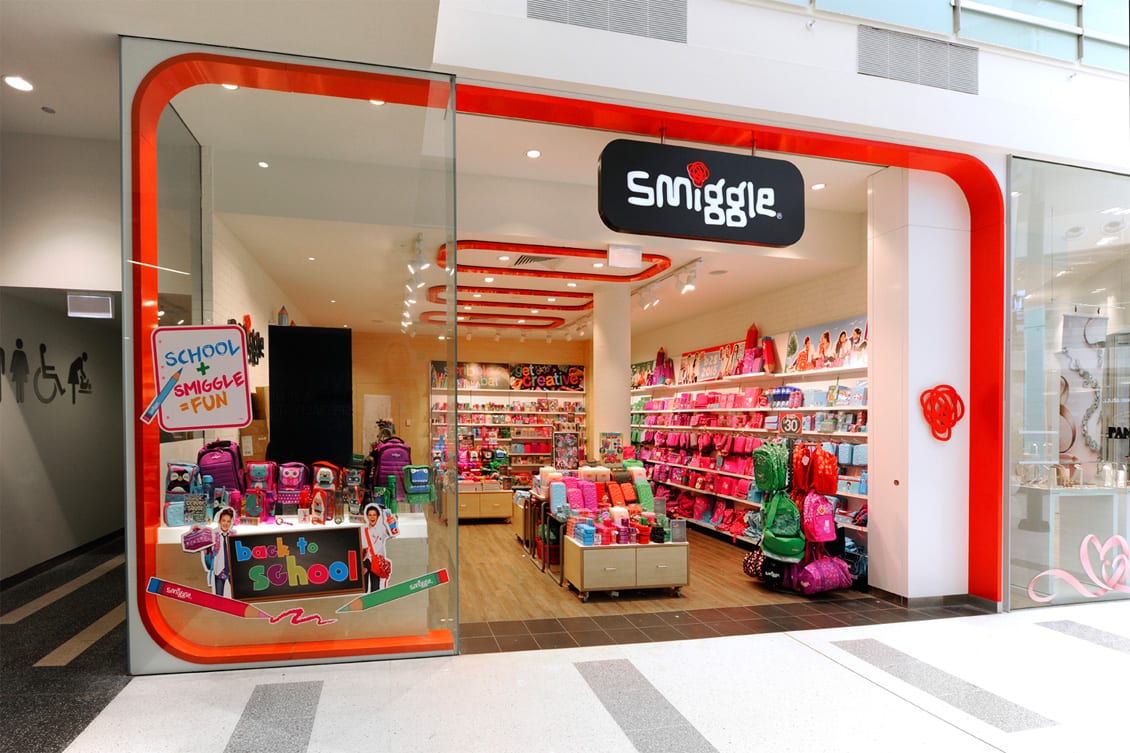
    Billionaire businessman Solomon Lew has unveiled a new target of 100 new Smiggle UK stores by Christmas.

    A further 40 to 60 of the popular stationery stores are planned to open in the UK each calendar year from 2017 to 2019.

    Smiggle is the highlight of Mr Lew’s retail investment arm Premier Investments which owns seven brands, including its other core brand, designer sleepwear Peter Alexander.

    Mr Lew, the chairman of Premier Investments, said he was confident Smiggle would conquer the world.

    “This brand will be successful in every country in the world where there are children,” he said.

    “This market is going to grow and grow and become a world brand.”

    Smiggle’s global sales rose 46.5 per cent in the six months to January 30 with strong like-for-like sales in all four countries it trades in, including Australia, New Zealand and Singapore.

    Mr Lew said the standout was Smiggle UK which continued to trade ahead of expectations.

    The UK business had 42 stores by the end of the half and is on track to achieve 200 stores and $200 million in sales within five years.

    Smiggle’s rollout in Asia is also on track with its first Malaysian store to open in April and its first Hong Kong store set to open in May.

    Malaysia and Hong Kong is expected to have a total of 50 stores in five years.

    All of Premier Investments’ brands, including Just Jeans, Dotti, Portmans, Jacqui-E and Jay-Jays, recorded like-for-like sales growth in the first half.

    Peter Alexander’s sales grew 22.5 per cent, with eight new store openings in Australia and New Zealand during the half.

    Total group sales rose 15.1 per cent to $565 million and net profit climbed 26 per cent to $71.5 million in the half.

    Mr Lew said the company’s balance sheet was strong and the group remained open to potential future acquisitions.

    Premier’s shares closed 60 cents, or 4.1 per cent, higher at $15.31.

    PREMIER’S PROFIT JUMPS ON STRONG SALES:

    * Net profit up 26pct to $71.5m

    * Revenue up 15.1pct to $565m

    * Fully franked interim dividend up two cents to 23 cents

    SMIGGLE STORE COUNT IN FIRST HALF:

    * 126 in Australia

    * 23 in NZ

    * 18 in Singapore

    * 42 in the UK