Author: Mei Ling Tan

  • Central Market signs up to 11street Malaysia

    Central Market signs up to 11street Malaysia

    One of Kuala Lumpur’s oldest and most famous markets for cultural items and handcrafts is about to have an online sales outlet, through 11street Malaysia.

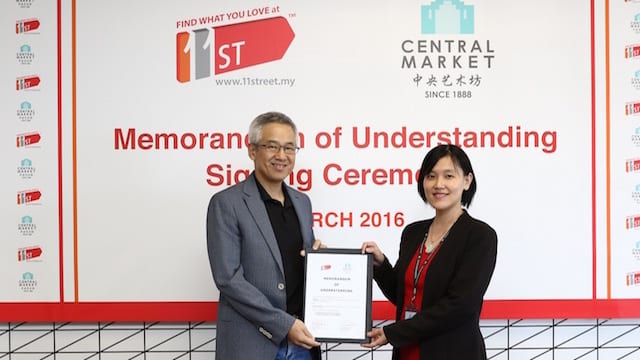
    Central Market has signed a memorandum of understanding with the online marketplace to make its retailers’ offerings available. This will enable customers anywhere to browse and buy products from Central Market’s diverse mix of retailers, including home and living, fashion, sports and leisure, electronics and even groceries.

    11street - Central Market 2

    “This strategic collaboration will enable a business that started in the 19th century to make its products available across the country through a 21st-century medium,” says 11street CEO Hoseok Kim. Dating back to 1888, the market has 300 tenants and has become a landmark for souvenir shopping.

    “Collaborating with 11street has been a fantastic development for us,” says Central Market complex manager Cheong Wai Mun. “One of the secrets of Central Market’s unbroken track record of success has been its location within the heart of Kuala Lumpur. Being close to a public transportation hub has also helped make it a major attraction for both tourists and Malaysians. Now, with the brand new presence on 11street, Central Market has broken its reliance on geography.”

    Market tenants have welcomed the move.

    “All of Central Market’s tenants will benefit from the solid marketing support 11street offers its clients,” says Kim. “That includes education and training programs that cover effective product listing, digital content strategy, integrated online marketing, and photography.”

    To mark the launch, a series of promotional offers and discounts of nearly 40 per cent will be offered by Central Market tenants on 11street until next February.

    New ambassadors

    Meanwhile, 11street has announced that actor/entertainer Zizan Razak and YouTube singer Elizabeth Tan will be its brand ambassadors this year.


    11street ad

    They will make their first appearance at 11street’s first anniversary celebrations, at Nu Sentral Shopping Centre in Kuala Lumpur on April 11. Also attending will be celebrity influencers Intan Ladyana and Atikah Suhaime. will present to the jubilant birthday celebration.

    During the event, 11street will be announcing its collaboration with Xpax, a prepaid brand for youth under Celcom Axiata.

    Leading up to the event, 11street is running on-site promotions from April 1, with discount coupons for customers. There is also a contest with a helicopter ride followed by a dinner with Razak and Tan as a prize.

    Established in Korea in 2008, 11street has 400,000 sellers serving more than 30 million consumers worldwide.


  • Funding boost for FashionValet

    Funding boost for FashionValet

    Malaysia-based eCommerce fashion company FashionValet has received a “multi-million-dollar” funding from Start Today, which runs Japanese online fashion mall ZozoTown.

    FashionValet co-founder/CEO Fadzarudin Anuar says the move is “clearly more than a financial investment”, and that Start Today’s experience in building ZozoTown will prove invaluable as FashionValet charts its next stage of growth around the region.

    “FashionValet has done an amazing job of developing high-demand brands and products from local designers,” says Start Today CDO Koji Yanagisawa. “We feel there is a lot we can share with them with respect to back-end operations.”

    Founded in 2010 by Fadzarudin and his blogger wife Vivy Yusof, FashionValet sells fashion apparel, shoes and accessories, and in 2014 alone had total revenue of more than $1.2 billion. Over the past 12 months it claims to have doubled its revenue, and set up a presence in Indonesia and Singapore. The company has more than 500 Southeast Asian brands, with half from Malaysia and 180 from Indonesia, and 40 per cent of its online sales come from international customers.

    It first physical store was in Kuala Lumpur, with a second scheduled to open along Singapore’s Orchard Rd this year.

    Start Today’s investment in FashionValet comes exactly a year after the startup’s Series A round, led by Silicon Valley-based Elixir Capital. Internet company MYEG also invested in the company in 2012.

    Founded in 1998, Start Today is based in Chiba, Japan.

  • China ripe for AmorePacific

    China ripe for AmorePacific

    AmorePacific, South Korea’s largest cosmetic company, has reaffirmed its commitment to China, seeing further room for growth in the rising middle-class consumers there, the firm said Thursday.

    AmorePacific has shown stellar performance in China with a range of luxury and low-end brands, thanks to the rising popularity of Korean drama and pop. It logged 5.66 trillion won (US$4.93 billion) in sales last year, up 20.1 per cent year-on-year.

    The Korean multinational owns the cosmetics and retail brands Etude House, Laneige, innisfree, and sulwhasoo, among others.

    “By 2020, the middle class population is expected to reach 500 million, and its size and influence will greatly expand in the next decade,” AmorePacific CEO Suh Kyung-bae said during a monthly meeting with senior officials earlier this month.

    While Beijing has applied non-tariff barriers, such as those on ingredients and the approval of foreign brands, Suh expects the focus of regulations will move to distribution to curb counterfeit items and the grey market.

    “However, the tightened retail regulations will have a limited impact on companies that have already established distribution channels in the Chinese market,” Suh said.

    While fledgling cosmetics producers have bloomed over the past years, Suh expects it will take time for them to match the level of its technology and brand power.

    “We will have to keep an eye on the growth of emerging local companies, but brand power is not something they can get in a short period of time,” he said.

  • Seoul insect restaurant opens

    Seoul insect restaurant opens

    Papillon’s Kitchen, a new Seoul insect restaurant has been packed since its opening – and is fully booked for the next few months.

    Although insects are known to be a great source of protein, and often mentioned as the ‘food of the future’, many consumers avoid them due to their appearance. However, the number of individuals who enjoy edible insects as a meal is continuously increasing as awareness builds of their health value.

    ‘Papillon’s Kitchen’, the first insect restaurant in Korea, serves food made from insects such as grasshoppers and crickets.

    During a recent mealtime watched by Korea Bizwire staff, guests sat around a large table and enjoyed pasta, soup, and croquettes made from insects. They seemed to be enjoying their meal, as everyone appeared to be content.

    “There’s no problem with food cooked with insects when I can’t see them,” said one female customer, raising her thumb in approval.

    With food scarcity becoming an increasing concern due to the rapid growth of the global population, insects could be a great substitute for traditional sources of protein. The academic world and food industry predict that in the not-so-distant future, insects will rise as one of the main sources of nourishment for humans.

    Insect resturant 1

    While 100 grams of beef contains 21 grams of protein, the same mass of dried grasshoppers contains 70 grams of protein. Insects are also less fattening, as they contain half the calories of rice and beans.

    Insects are also considered to be an eco-friendly food source. According to the Food and Agriculture Organization (FAO), the food resources used to breed cows for beef could contribute to the production of 12 times as many crickets. Even more significant, the amount of greenhouse gas produced when raising crickets is one hundredth the amount produced when raising cows.

    Insect resturant

    Due to new perspectives on insects as food, the Korean government and related industries are taking fast action. Currently, the government has certified mealworms and crickets as ‘general food ingredients’. Food industry giant CJ also started research on edible insects in collaboration with the Korean Edible Insect Laboratory Knowledge Coop (KEIL).

    Experts comment that people hold prejudice on insects simply because of their unattractive appearance. They expect  edible insects will soon be commercialised due to their many benefits.

  • US buyer for Korea’s Kim’s Club

    US buyer for Korea’s Kim’s Club

    A US private equity giant is the successful bidder for South Korean hypermarket chain Kim’s Club, part of the fashion and retail conglomerate E-Land Group.

    Named the preferred bidder for Kim’s Club, Kohlberg Kravis Roberts (KKR) will now discuss with E-Land the acquisition of the right to run the 37 hypermarkets as well as the group’s logistics centres, according to Business Korea.

    KKR focuses on online-to-offline (O2O) retail business investment, and with its bid for Kim’s Club seeks to create synergy with its previous investment in the retail industry, both online and offline, says an E-Land spokesman.

    As Kim’s Club is located in E-Land Retail’s department stores and outlets as a food market, the two companies are expected to maintain the partnership. Moreover, KKR is continuing talks for a possible sale of the Gangnam branch of the New Core Department Store.

    E-Land and KKR plan to conduct due diligence and set the selling price before signing a final contract in early May. The sell-off of Kim’s Club is expected to be complete within the first half of the year.

    E-Land is seeking between 700 billion to one trillion won (US$598-$854 million) for the rights to the hypermarket chain, according to wire service Yonhap.

  • Vodafone said to start preparations for Indian IPO

    Vodafone said to start preparations for Indian IPO

    The company has asked interested investment banks to sign NDAs so it can provide more detailed information about the unit, citing people familiar with the matter.

    Vodafone may be ready to pick advisers by next month, the sources said. Around 10% of the Indian unit could be sold as part of the IPO. Vodafone India has a potential valuation of around $20 billion, which would make the IPO the largest in India to date.

    Vodafone has been planning to conduct an IPO for Vodafone India for some time, but macroeconomic, regulatory and market conditions have stood in the way.

    On the record, Vodafone spokesperson Matt Morgan commented that “[w]e have previously stated that we have started preparations for a potential IPO, which includes private conversations with banks, but this is a lengthy process and no decision will be made until we are at the end of it.”

  • Telenor may exit the Indian market

    Telenor may exit the Indian market

    Telenor India is gearing up to launch LTE services across its footprint, but according to reports Telenor’s days in India’s telecom sector may be numbered.

    CEO Sharad Mehrotra told that the operator has already upgraded 7,000 mobile sites to LTE.

    Telenor India plans to have its entire network upgraded by the end of the current financial year, which in India ends on March 31.

    The operator has awarded Huawei with a 12.4 billion rupee ($186.3 million) contract to modernize all 25,000 of its base stations across the six circles.

    But according to a separate report, Telenor is also considering exiting the Indian telecom market due to its negative experiences to date.

    Besides only holding spectrum in seven circles, Telenor India also has limited data spectrum and no 3G services. The company has only around a 5% share of India’s mobile market with its 2G-only operations.

    Despite investing over $3 billion since 2008 trying to build its Indian business, the loss of its Indian telecom licenses during the 2012 spectrum scandal was a setback the operator has been unable to come back from.

    According to the report, Telenor is seeking a valuation of $1.6 billion to $1.8 billion for its Indian business, but experts believe the company could find it difficult to find a buyer at this price.

  • Robinsons Philippines income jumps 21.9 per cent

    Robinsons Philippines income jumps 21.9 per cent

    Robinsons Philippines has reported a 21.9 per cent increase in net income in 2015 to P4.3 billion ($90 million) on the back of same-store sales growth and sales from newly opened stores.

    Same-store sales growth for Robinsons Retail Holdings grew 4.1 per cent in 2015, exceeding the 2-3 per cent consolidated same-stores sales target for the year.

    The company’s consolidated net sales reached P90.9 billion last year, up 13 per cent from P80.4 billion in 2014.

    The retail holding firm of the Gokongwei group reported opening 2015 with 179 new stores and ended the year with a total of 1506 stores.

    “I am heartened by the strong same-store sales growth performance of all our retail formats in 2015, despite the intensifying competition,” Robinsons Retail President and CEO Robina Gokongwei-Pe said.

    “We have also gotten into a good start this 2016 with solid same-store sales growth for the first two months of the year as we benefited from increased consumer spending from a still robust domestic economy. We will continue with our footprint expansion, with focus on areas outside Metro Manila,” Gokongwei-Pe said.

    The opening of new stores expanded the company’s gross floor area by 9.7 per cent year-on-year, the company said.

  • Tencent Holdings rakes in $15 billion

    Tencent Holdings rakes in $15 billion

    Chinese eCommerce giant Tencent Holdings increased its revenues last year by 30 per to RMB101.9 billion ($US15.7 billion).

    Excluding its eCommerce business, the revenue increase was 38 per cent, to RMB102.2 billion.

    Tencent’s subsidiaries provide media, entertainment, internet and mobile-phone value-added services, and provide online advertising services in China.

    Chairman and founder Ma Huateng says its online game business had healthy revenue growth, mainly driven by smartphones, key PC titles and new client games launched during the year. The company’s social network revenues also grew, from increased digital content subscription services, QQ membership subscription services and virtual item sales.

    Revenues from online advertising shot up 110 per cent to RMB17.5 billion.

    Hong Kong- and Singapore-listed Tencent continued its traffic leadership in multiple online media categories such as video, sports, music, news and literature through partnering with premium content providers including the NBA, HBO, Paramount, Sony Music and Warner Music, and investing in original content.

    “During the year, we further executed our ‘connection’ strategy, bringing our own and our partners’ products and services to our consumers through cultivating an ecosystem around our core communication and social platforms,” says Ma in his chairman’s statement.

    Key initiatives for the group’s “internet-plus” ecosystem included:

    * Enriching products and services available within its platforms, such as introducing personal micro-loan products and municipal services like visa applications

    * Promoting online payment services

    * Growing mobile utility services, including security, a browser, an application store and strengthened infrastructural supports

    * Investing in equity stakes in leading companies in related internet verticals, such as Internet Plus Holdings.

    Industry trends

    Ma also noted a range of industry trends…

    “Messaging and social networking continued to rank as the highest time spent and widest penetration activities on smartphones, and evolved into increasingly relevant content-discovery media. Search queries moved primarily to mobile, and search remained an important content-discovery tool, along with application stores.

    “Online shopping became increasingly widespread, especially in lower-tier cities, and eCommerce transaction volumes sustained healthy growth rates.

    “Online advertising activity shifted decisively from PC to mobile, with particular growth in areas such as performance advertising on social networks, pre-roll advertising in video services, and in-feed advertising in news services.

    “Users proved increasingly willing to pay for digital content such as movies, TV series and music.

    “Mid/hard-core smartphone games, including PC game franchises moving to smartphones, boosted game-industry revenue.”

    Ma says China’s internet companies in sectors such as ride-hailing, classified listings, group buying, and online travel services competed with heightened intensity last year, leading to rapid user growth but reduced or negative profitability. “Consequently, several leading companies in these sectors consolidated with competitors, creating a wave of merger and acquisition activities.”

    There were more offline-to-online transactions last year which, together with the emergence of person-to-person payment transactions, contributed to substantial growth in online payments.

    Key platforms

    On Tencent’s key platforms, the QQ Wallet payment service gained popularity, with about 6 billion red envelopes exchanged within six days during the Lunar New Year holidays early this year.

    Qzone user activity benefited from enhanced features in areas such as sticker sharing and photo-album editing.

    There was year-on-year growth of 39 per cent for Weixin and WeChat together, with official accounts becoming a leading platform to connect users to content creators, merchants and advertisers.

    Weixin Pay also increased in popularity, with more than 32 billion red envelopes being exchanged within the six-day Lunar New Year holidays – growing by nine times year-on-year.

    Ma says the group’s social networks experienced 30 per cent revenue growth last year as digital content subscription services, QQ membership subscription services and virtual item sales were improved.

    “Our cloud service achieved more than 100 per cent year-on-year revenue growth as we promoted our services to key enterprise customers from a range of verticals such as eCommerce, O2O services, online games, online video and internet finance.”

  • The 23rd Hong Kong Fashion Week for Spring/Summer Curtains Up in July with Debut Women’s Wear and Knitwear Zones

    The 23rd Hong Kong Fashion Week for Spring/Summer Curtains Up in July with Debut Women’s Wear and Knitwear Zones

    The 23rd HKTDC Hong Kong Fashion Week for Spring/Summer (FWSS) will be staged from 4-7 July 2016 at the Hong Kong Convention and Exhibition Centre with Women’s wear and Knitwear as debut zones to optimize buyers’ sourcing selection. The premium fair in the region is expecting around 1,200 worldwide exhibitors. Previous edition attracted 16,000 buyers from 65 countries and regions.

    Popular thematic zones return

    Private or house labels have become increasingly effective marketing tools among fashion industry players to differentiate and upgrade the image of products. Emporium de Mode in FWSS is a dedicated premium section dedicated to promote elegant fashion brands. Fashion Gallery is an ideal platform to display brand labels and high fashion while the International Fashion Designers’ Showcase showcases unique designer brands for potential clients. Under the four major categories of Apparel, Upstream Supplies, Fashion Accessories and Technology and Business Matching, zoning will be fine-tuned to Footwear, Leggings & Socks, Eyewear, Hair Accessories & Headwear, Belts and Ties and Embroidery & Sewing Supplies to offer one stop platform to best catering buyers’ demand. Other popular zones will return with splendour, including Activewear & Sportswear, Intimate & Swim Wear, Children’s Wear, Men in Style, Denim Arcade and Fabrics & Yarn. Qualified exhibitors are awarded a “Green Solution Suppliers” insignia on their booth fascia to address the growing demand on eco-friendly apparel.

    China market remains resilient

    Chinese mainland market continues to be a driving force for Hong Kong Fashion industry. As of 29 Feb 2016, Hong Kong’s total exports of clothing & clothing accessories to mainland and Macau rose 2.2% and 8.8% respectively to $1.42 billion and $504 million. According to HKTDC’s research, mainland consumers generally find Hong Kong clothing brands trendsetting, fashionable and tasteful. They are willing to pay an average premium of 36% to purchase Hong Kong branded garments. Hong Kong Fashion Week for Spring/Summer serves an effective springboard for traders to expand their business in mainland and Asian market.

    “This fair is the right place for us to gain exposure to meet buyers. Buyers from the mainland and Australia are especially keen to source from us,” said Martens Yiu, Managing Director of Deut St. Limited which is expanding Chinese market. Stationed in Hong Kong, the company has been an exhibitor of Hong Kong Fashion Week for Spring/Summer for consecutive 3 years, reflecting its confidence on HKTDC’s marketing platform for business promotion.

    Neon Garden as fair theme

    With the theme of Neon Garden, a series of fashion house shows and runway parades will go alongside the Fashion Week to reinforce Hong Kong’s position as Asian fashion trendsetter. HKTDC offers business matching services, networking receptions, seminars and buyer forums during fair to provide a perfect platform for industry players to exchange market intelligence and explore new business opportunities. WGSN and Fashion Snoops are invited to talk about market trend. The Small-Order Zone is available for buyers sourcing from 5 to 1,000 pieces.

  • Lotte Duty Free Ginza store opens

    Lotte Duty Free Ginza store opens

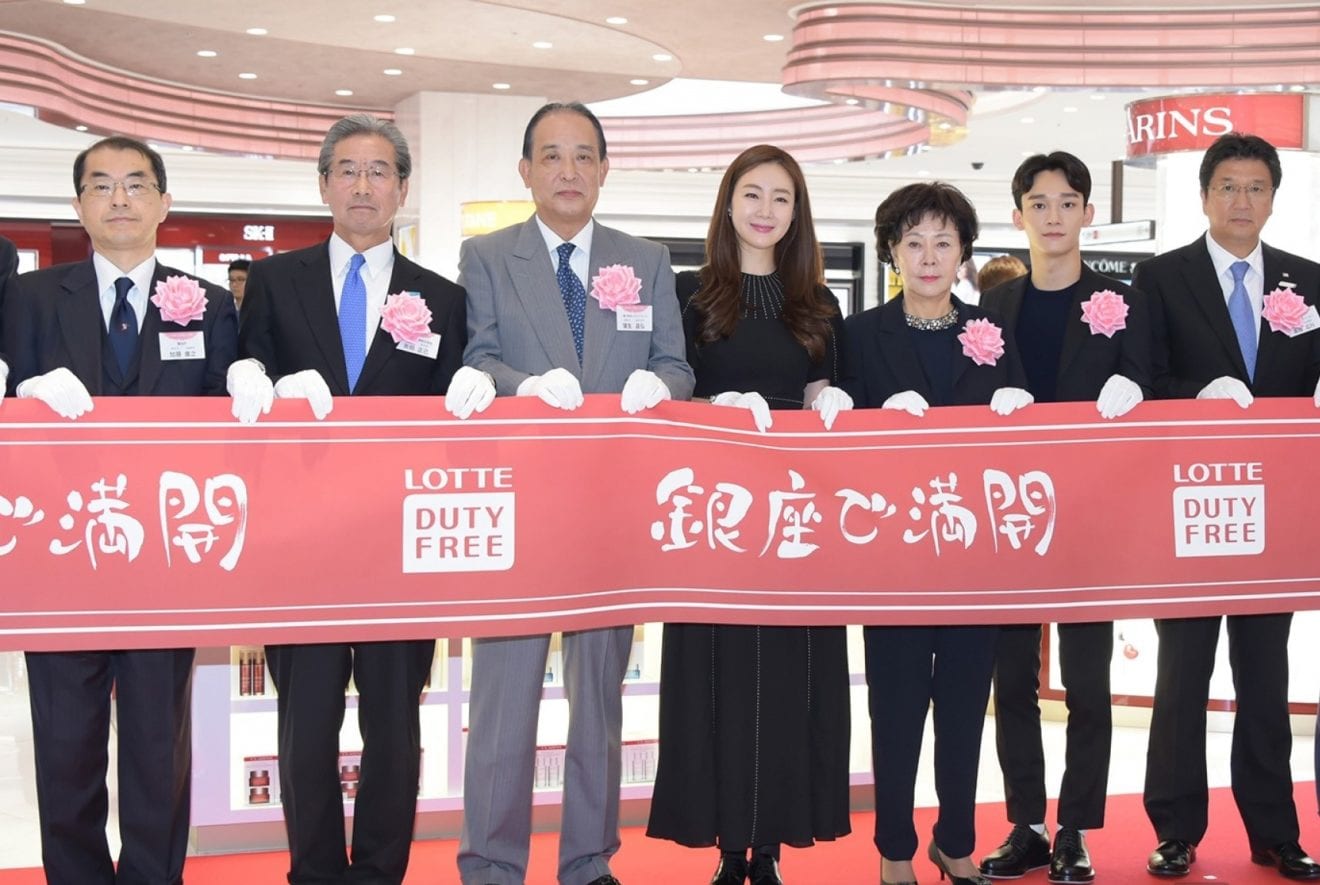
    Tokyo’s new Lotte Duty Free Ginza is the largest duty-free store in the Japanese capital.

    Covering 4400 sqm, it occupies the entire eighth and ninth floors of the new Tokyu Plaza Ginza, at Sukiyabashi intersection, connecting the historic and cultural Hibiya district to Ginza, Japan’s most famous shopping street.

    With about 150 international brands, the store has luxury boutiques on the eighth floor, and international cosmetics on the other floor. Cosmetics include Estee Lauder, Lancome and Shiseido, fashion brands include Alexander McQueen, Coach, Gucci, Hugo Boss, Ralph Lauren, Zegna and South Korea’s MCM, while there will be watches from such brands as Blancpain and Omega.

    There is also a Japanese souvenirs section.

    Tokyu Plaza Ginza is an 11-storey retail, commercial and entertainment complex developed by theTokyu Land Corporation.

    Meanwhile, a two-level Lotte Duty Free store is also planned for Osaka, to open early next year.

  • Lululemon figures shroud ‘weakness’

    Lululemon figures shroud ‘weakness’

    Lululemon’s final quarter numbers look fairly solid on the surface, especially when compared to the rather lacklustre performance during the prior quarter.

    However, while there has been a pickup in sales momentum, the underlying figures continue to show signs of weakness.

    At headline level, net revenue from the Canadian athleisure wear retailer rose by an impressive 17 per cent. Most of this was propelled by the 62 new store openings across the fiscal year. There is nothing inherently wrong with this and, indeed, we would argue that it underlines the latent opportunity Lululemon has to increase its fleet across many geographies. However, the slight issue is that such expansion has come at the expense of profit growth, which at net income level rose by a subdued 6 per cent during the quarter.

    Margin was also eroded by another contributor to growth – direct sales. On a year-on-year basis direct sales grew by 28 per cent during the period to stand at just over a fifth of all company sales. Such a rise comes off the back of the continued traction of online and, as such, is aligned with consumer demand. However, we also believe the direct sales model to be marginally less profitable than sales made via stores – a fact reflected in the margin position which has fallen slightly compared to last year.

    As much as new stores and online have made positive contributions, the growth from physical stores is less impressive. Revenue from this channel grew by a paltry 1 per cent, certainly an uplift on the flat position of last quarter but still worryingly slow considering that many stores in the fleet are still relatively new. The meagre rise is made all the worse by the fact that prior year comparatives, when sales rose by 2 per cent, are relatively soft.

    Part of the reason for slower store sales growth is down to the stronger dollar. On a constant currency basis store sales rose by a more pleasing 5 per cent, but even so this remains a long way below the growth of other channels and somewhat below the growth rate for athleisure as a whole across the fourth quarter.

    While Lululemon should be applauded for its efforts around direct sales, its stores should be working much harder. There is still plenty of growth left in the athleisure segment and stores remain, for many consumers, become an important touchpoint for advice, inspiration and information. On these fronts Lululemon has more work to do on the in-store experience. This is especially so in light of a much more competitive marketplace in which players like Under Armour are rolling out more experiential stores.

    Looking ahead, the Lululemon brand remains strong, especially among its target market. However, while loyalty is relatively solid among its core constituency it also needs to look outside of this group if it is to drive growth. One area of opportunity is the push into more embryonic areas like men’s and teens. However, while Lululemon has made some good progress, the brand still has a somewhat limited appeal to many of these groups, and there is much more work to be done in making the brand connect with new segments.

    In the year ahead, Lululemon will continue to make progress on the sales front, however underlying sales will be fairly weak. The market for athleisure is unlikely to slow down any time soon, but it is now much more difficult to grow simply because there are so many players vying for share. Against this backdrop Lululemon needs to focus on refreshing its brand, both to draw existing shoppers back to its stores and attract new and lucrative consumers.

  • “11street’s Shocking Deals Come to Life”

    “11street’s Shocking Deals Come to Life”

    With intentions to localise and grow the business, 11street (www.11street.my), one of the largest online marketplaces in Malaysia, will be forming strategic alliances with Celcom as part of the company’s business expansion plans this 2016 with key focus on its revamped shocking deals section and enhanced online shopping mobile app .

    As 11street marks its first full year of business operation this April, the e-commerce giant would like to announce its latest synergy with Celcom at the media conference, tackling the following topics:

    • What is Celcom’s prepaid expansion strategy? How would 11street fit into the plan and vice versa?
    • How could Celcom grow its prepaid subscriber base through an e-commerce strategy?
    • How could the collaboration with Celcom benefit and impact 11street’s business?
    • What are the other 11street’s business expansion plans to Malaysianise the brand?

    Present at the conference is Mr Hoseok Kim, CEO of 11street who will be accompanied by the Chief Marketing & Sales Officer of Celcom Axiata, Zalman Aefendy Zainal Abidin. With this, we would like to cordially invite you to 11street’s Shocking Deals Come to life media conference as the leader in Malaysia’s e-commerce and telco industry discloses their strategies to localise and grow its business in 2016.

    Apart from that, 11street will be officially unveiling their new brand ambassador Zizan Razak, prominent actor-cum-entertainer and Elizabeth Tan, Youtube sweetheart-turned-singer, with irresistible deals through 11street’s 11 Days of Shocking Giveaway.


  • TransferWise partners with Pay Gate to bring money transfer services to Korea

    TransferWise partners with Pay Gate to bring money transfer services to Korea

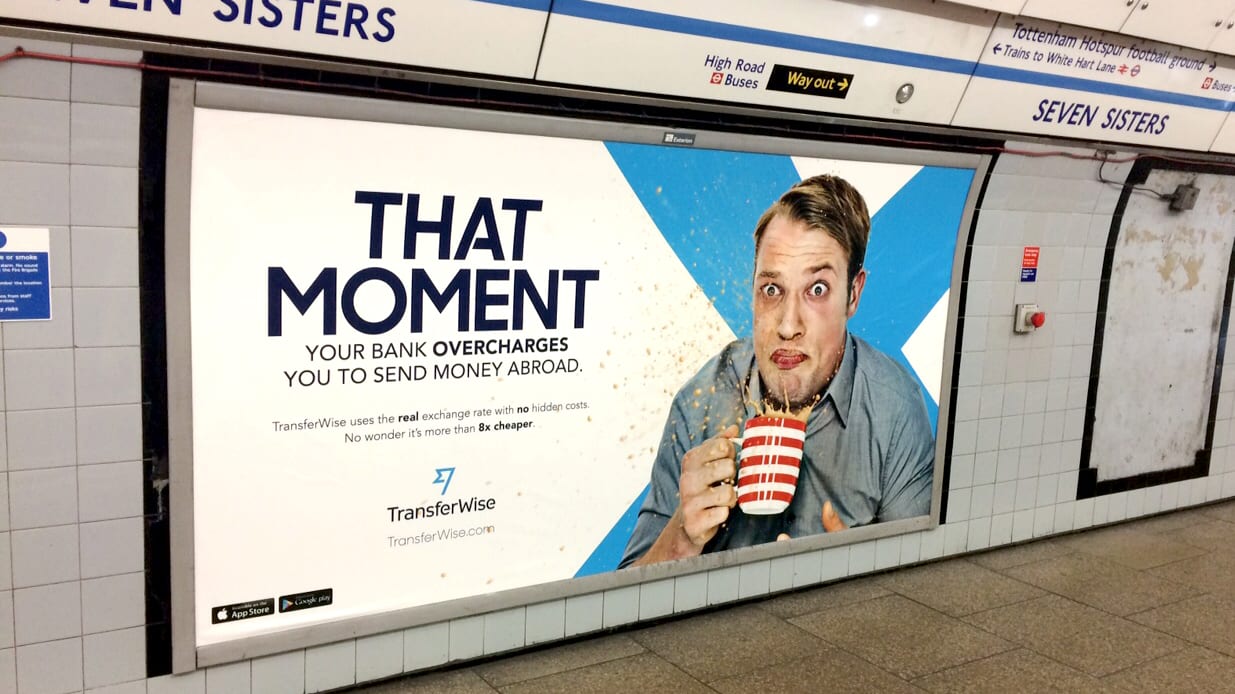
    TransferWise, the P2P international money transfer platform, has opened up transfers to South Korea.

    Until recently, banks and brokers were the only option for consumers needing to send money to the country. But now, thanks to recent changes in regulation, TransferWise has partnered with local firm, PayGate, to bring better, fairer international money transfer to South Korea.Instead of sending the money in Korean Won, banks and brokers send customers’ money in GBP or USD for example, and the receiving bank makes the conversion. This leaves consumers paying two rounds of fees and maybe even two rounds of conversion – and usually they haven’t even been told they’re being charged in this way. But TransferWise sends the money in Korean Won, which means no receiving bank mark-up. The process is also completely transparent. TransferWise charges 1.5% for transfers with a delivery time of the same or next day.

    Taavet Hinrikus, CEO and co-founder of TransferWise, said:
    “Until recently, there was no alternative to banks and brokers when people wanted to send money to South Korea. We’ve heard from consumers that the process was slow and outrageously expensive so we’re hugely excited to launch the route on TransferWise. It’s going to make a huge difference to the seven million Koreans living, working and studying overseas.

    “The steps that the government in South Korea is taking to open up the financial services sector is good news for consumers. There will be more choice and better, fairer services to choose from.”

    So Yeong Park, CEO and co-founder of PayGate, said:
    “It is so glad that we now can serve customers with our 18 years of diverse experience as a Payment Service Provider, for them to make much cheaper, faster, and safer international money transfers to Korea.

    “For the last few years PayGate has been working hard to grow the Korean Fintech Industry and our recent partnership with TransferWise is the result of these efforts. Customers in Korea will see how this alternative finance can positively affect their daily lives.”

    People use TransferWise to transfer more than £500 million globally every month, saving themselves more than £22 million a month in unfair fees and charges.

  • Bacardi shuffles Asia Pacific Travel Retail pack

    Bacardi shuffles Asia Pacific Travel Retail pack

    Bacardi has made several personnel changes to its Asia Pacific Global Travel Retail (GTR) division.

    The company said late last week that Irving Holmes Wong, formerly regional director of Asia Pacific for Bacardi GTR, would take on the newly-created role of managing director for Bacardi Greater China (domestic), from a base in Shanghai. He will be replaced by Vinay Golikeri, who will be based in Hong Kong and report to Mike Birch, Bacardi’s GTR MD.

    Golikeri moves up from the position of customer marketing director of GTR. He will be replaced by former GTR finance director Leila Stansfield.

    The team will assume their new roles on 14 April.

    Birch said: “Bacardi prides itself on developing its internal talent pool and I am especially pleased to have the expertise of Vinay and Leila in their new roles. Global Travel Retail is a strategic shop window for the Bacardi group with strong support from our CEO Mike Dolan and I am delighted that we have his personal support and continued investment in helping us deliver our ambitions in the sector.”

    In September last year, Bacardi set its sights on the spirits market in China with the creation of the non-executive chairman for Greater China position.