Author: Mei Ling Tan

  • ‘Only 15% of directors in Philippines biggest firms are women’

    ‘Only 15% of directors in Philippines biggest firms are women’

    Only 15 percent of members of the board of the country’s top 100 companies by revenue are women, according to the March 2016 issue of Forbes Philippines magazine.

    Focusing on women in business in line with International Women’s Month this March, Forbes Philippines examined the top executives of the country’s biggest companies. It found that women made up only eight percent of chairpersons and 11 percent of presidents.

    However, the magazine also revealed that women are running some of the country’s biggest companies, including its largest bank, its biggest pharmaceutical manufacturer, biggest drug retail chain and biggest life insurance company.

    The magazine came up with a list of a dozen women running some of the country’s biggest companies. It also ranked 30 or so companies where women accounted for a fifth or more of the corporate directors.

    The list included Convergys Philippines Services, a leading business process outsourcing company, where all of the directors are women in 2015.

    Forbes Philippines is the premier business magazine of choice of affluent business leaders, decision makers, investors, executives and entrepreneurs.

    The March issue is now available on newsstands and in bookstores, convenience stores, and supermarkets nationwide.

  • Soap maker Pental hopes to clean up in China

    Soap maker Pental hopes to clean up in China

    Household products manufacturer Pental is hoping to clean up in China by following in the footsteps of Bellamy’s and Blackmores and selling bar soaps designed for the Asian market.

    Pental, which makes laundry staples White King bleach and Softly wool wash, has developed a new range of Country Life bar soaps aimed directly at Chinese consumers, including goat’s milk soap with Australian tea tree oil, lavender and green tea.

    Pental has also reached into the back of its cupboard and reformulated and repackaged soaps that have been in its portfolio for 20 years and are mainly sold in airport stores and souvenir shops. The rejigged Country Life range includes lanolin, tea tree oil and eucalyptus oil and features images of sheep, koalas and kangaroos.

    Pental has secured distribution in leading Chinese supermarkets, pharmacies, airport stores and online outlets, including FTZmall.com, and plans to start manufacturing the new range at its plant in Shepparton next week.

    “This is one of the most exciting projects for a long time,” said chief executive Charlie McLeish, who believes new product development and new markets are the key to drive top-line sales and margins in an increasingly competitive domestic market.

    Aim to change track record

    Mr McLeish is reluctant to issue forecasts, but expects to sell about 6 million bars of soap, worth $4 million, to Asian consumers in the first year, compared with current bar soap sales in Australia and New Zealand of about $10 million a year.

    “We have a track record of over-promising and under-delivering – my goal is to ensure that we over-deliver on our targets,” Mr McLeish told Fairfax Media during an investor roadshow in Sydney this week.

    “We’re riding on the confidence the Chinese retailers and Chinese consumers have in Australian-owned and Australian-made products.

    “We have to make sure we live up to the reputation the dairy industry has created for other manufacturers in the Chinese market,” he said.

    Pental also sees scope to sell other products such as White King bleach and White King stain remover into Asia and has had tentative discussions with distributors.

    However, Mr McLeish has no plans to establish manufacturing operations in China to reduce costs and better compete with multinationals such as Colgate, Unilever and Cussons.

    Point of difference

    “Our point of difference is being Australian-owned and Australian-made and is around quality and culture – if we changed that state we would be no different to the other guys who manufacture in China,” he said.

    Pental has invested about $400,000 on new soap packaging equipment to support its push into Asia. If sales take off, Pental is considering a larger capital expenditure program, which would enable it to make bar soap in new shapes, sizes and formats for the Asian and domestic markets.

    Pental, which also makes Sunlight, Pears and Velvet soaps, and supplies private-label soap to Aldi and Woolworths, accounts for about 20 per cent of the Australian soap market.

    After a near-death experience in 2012, when Pental (formerly known as Symex) was forced to sell assets to repay bank debt, the shares are now trading at their highest levels since 2007.

    While sales slipped 0.7 per cent to $54 million in the six months ending December, underlying earnings before interest and tax rose 5.7 per cent to $3.1 million and net profit rose 12 per cent to $1.98 million, underpinned by cost savings.

  • Ever Rich sales resilient despite China slowdown

    Ever Rich sales resilient despite China slowdown

    Ever Rich D.F.S. Corporation tells David Hayes that the company achieved single digit revenue growth in 2015 at its major downtown and airport duty free locations with the rise in sales reflecting a similar increase in international passenger traffic through the republic’s main airports, during the past 12 months.

    Ever Rich says that the company’s overall rise in duty free sales is less than previously expected and is due a slowdown in per capita spending by mainland Chinese visitors, who still make up the majority of sales at many of Ever Rich’s duty free outlets.

    “We have seen growth in 2015, but not as large as in 2014. Mainland tourist numbers are still growing gradually but the duty free sales growth is slowing,” commented an Ever Rich source.

    “China’s economy is still quite strong, but their currency is weaker; China’s economy is not growing as fast as before.”

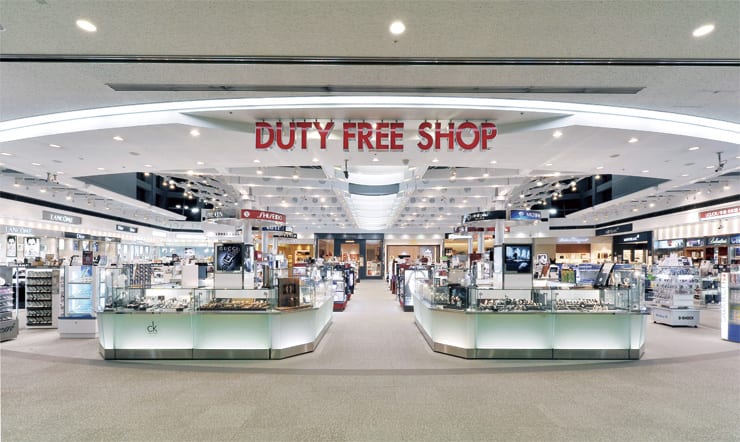
    Ever-Rich-Taoyuan-Airport-T1-departure-shop

    Ever Rich P&C at Taoyuan Airport T1 Departures.

    While duty free sales are rising as more mainland tourists visit Taiwan, Ever Rich – Taiwan’s leading duty free operator – had been looking for overall double-digit sales growth last year after opening its new Kinmen Islands’ hotel and downtown duty free shopping complex in 2014.

    Kinmen Ever Rich Golden Lake Plaza duty free shopping mall and hotel complex is located in Kinhu town on Big Kinmen. In addition to duty free shopping and other retail facilities, the Ever Rich hotel shopping and entertainment resort is planned to include a multiplex cinema and has space for a casino in future, though no casino licenses for Kinmen have been approved so far.

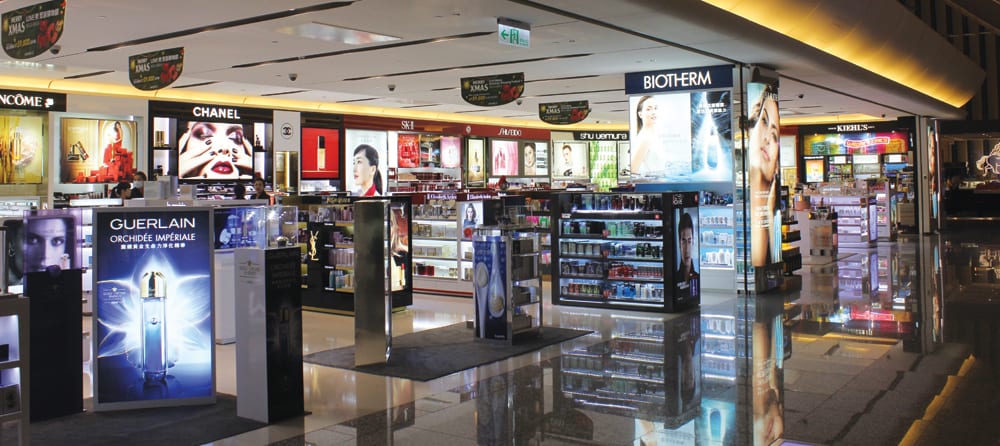
    Ever-Rich's-Taoyuan-Airport-T1-arrival-shop

    Ever Rich’s Taoyuan Airport T1 arrival shop.

    Duty free shopping facilities occupy about 27,000sq m of retail space over five floors, divided into separate areas serving visitors departing overseas to China and elsewhere from Kinmen. It also includes a domestic duty free allowance area for Taiwanese and other travellers returning to mainland Taiwan.

    “Our sales are still growing, but it’s slow growth,” says the source. “After the effort we put into our shops we expected to grow more. Although mainland tourist numbers are growing it’s not as much as many people here expected – all department stores in Taiwan are feeling that mainland customers’ purchasing growth is slowing down.

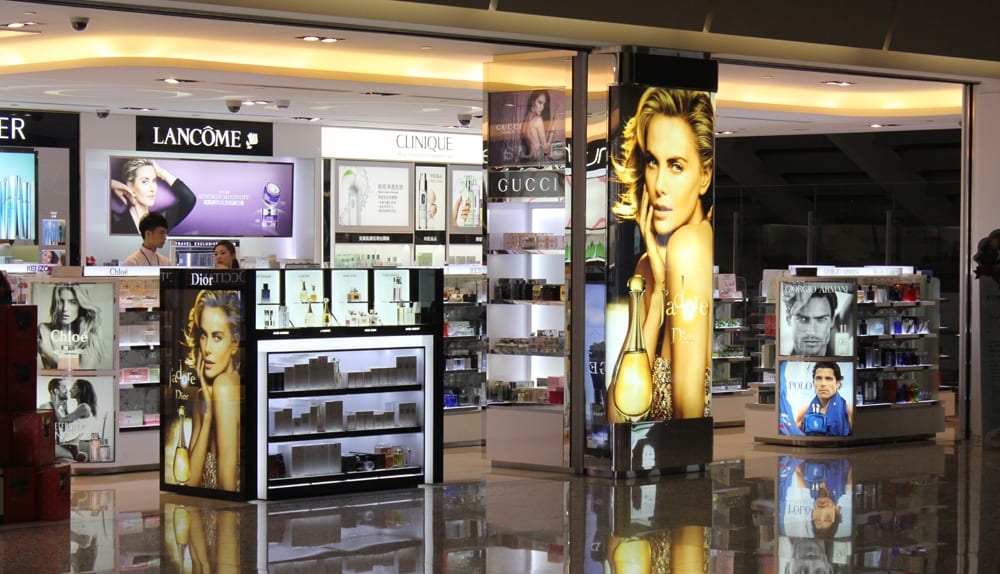
    Ever-Ric-Cosmetics,-handbags,-liquor-and-tobacco

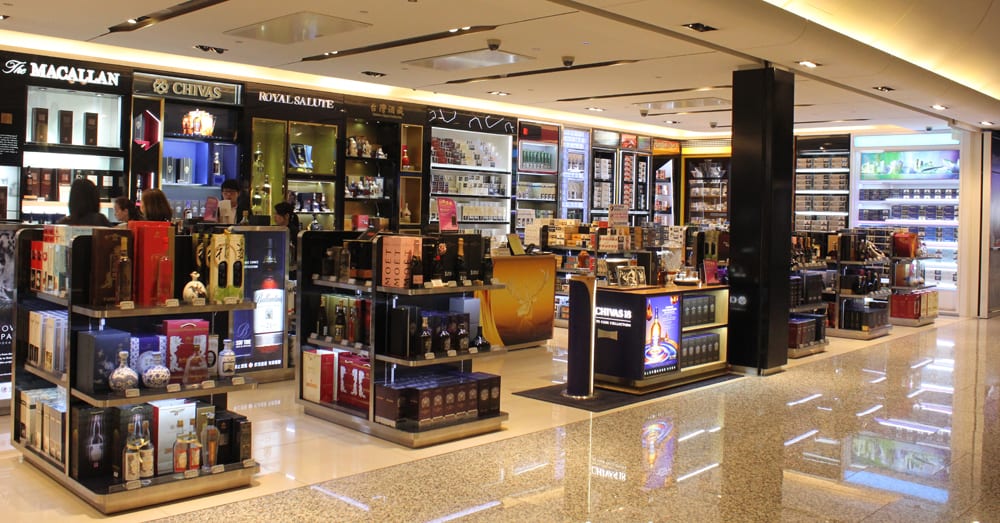
    Cosmetics, handbags, liquor and tobacco are the best-selling items in Ever Rich’s duty free outlets at present.

    “In Kinmen our international duty free sales are better than domestic duty free. Our main target is Chinese visitors, they buy cosmetics and fashion.”

    In addition to its Kinmen Islands’ shops, Ever Rich operates departure and arrival duty free shops in Taiwan’s main airports – Taoyuan International Airport, Taipei Songshan International Airport, Kaohsiung International Airport and Taichung International Airport – plus two downtown pre-order duty free shops in Taipei.


  • China’s cross-border online retail shows strong progress

    China’s cross-border online retail shows strong progress

    China’s cross-border e-commerce market has shown a strong growth during the six-month period ending November 2015, according to research firm Mintel.

    Boosted by favourable government policies and an increasing Chinese propensity for foreign goods, many Chinese consumers are now interested in buying foreign products online. Mintel’s new report ‘Haitao Retailing’ reveals that almost 58 per cent consumers bought foreign products online from domestic shopping websites, with quality of products (63 per cent) and pricing (38 per cent) as the prime concerns when shopping for imported products online.

    The cross-border online shopping market value grew at a compound annual growth rate (CAGR) of 63.3 per cent in 2015, while the total online retail market during the same period saw 48.8 per cent CAGR growth.

    “The continued growth of online retail, backed by increased consumer interest in spending time online, especially in rural areas, combined with the government’s support of online sales and an uptake of m-commerce and online payment systems, indicate that online retail will continue strong growth in the near future. Indeed, the future outlook for ‘haitao’ shopping looks good. However, it is an increasingly competitive market. Brands need to stand out by offering something different. Chinese consumers want top quality, and they need to have that quality proven through good information and good service,” said Matthew Crabbe, APAC research director at Mintel.

    Comparing Chinese domestic and overseas online shopping websites, foreign sites are perceived by shoppers to do better in terms of product quality, while domestic websites do better in most other areas, such as good value for money spent and fast delivery.

    “Not all Chinese consumers feel the need to have foreign products or services. However, fashion, furniture, food and drinks are much more significant online shopping categories, representing opportunity for online retail market growth. And we are seeing there is another great opportunity for niche brands, with specialist products having the potential to make an initial market entry into China via overseas online retail channels,” added Crabbe.

    “Consumer attitudes to cross-border online shopping can be summarised with reputation, reviews and recommendations. Helpful advice and information about products, a good return policy and a variety of delivery options are important in building reputation. Good service and good products are the key areas where online retailers must learn to compete in the future,” Crabbe concluded. (NA)

  • Maybank widens presence in Laos with second Vientiane branch

    Maybank widens presence in Laos with second Vientiane branch

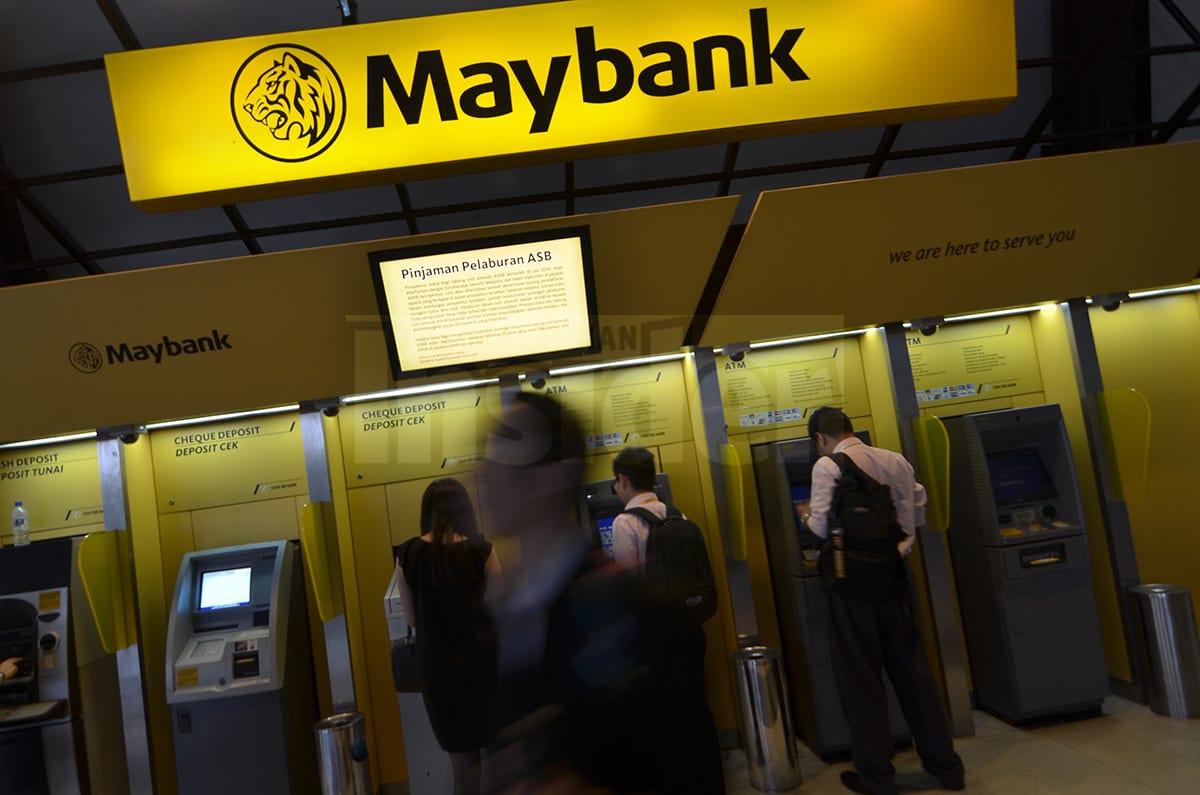
    Malayan Banking Bhd (Maybank) has expanded its network in Laos with a second branch in the capital Vientiane, thus establishing a greater presence in one of the fastest expanding economies in Asean.

    The branch, located in the commercial district of Nongduang, offers a full spectrum of banking services, and aims to serve the needs of the local community as well as customers from across the region having trade and investment links in the country.

    The new branch was officially launched by Bank of the Lao PDR (central bank) deputy governor Vathana Dalaloy at an event hosted by Maybank chairman Tan Sri Megat Zaharuddin Megat Mohd Nor.

    Maybank international CEO Pollie Sim said the opening of the Nongduang branch will strengthen Maybank’s presence in Indochina and enhance its ability to meet the banking needs of customers, particularly the growing investor base into the country.

    “Laos is among the strongest performing economies in the region, with steady economic growth of around 8.5% for the past four years and is anticipated to achieve 7.5% real gross domestic product growth on average from 2016 to 2020, according to the government’s eighth development plan.”

    Sim said the first Maybank branch in Vientiane, which was opened in 2012, has experienced encouraging growth with loans and deposits rising at an annual average of 46% and 78% respectively over the last two years.

    “We anticipate that the opening of this second branch will further boost our franchise in the country and lift our loans and deposits growth to over 70% and 100% respectively by end of 2016,” she added.

    Services offered by the two Maybank branches in Laos include retail and business banking, foreign exchange, remittances, treasury as well as ATMs. The retail offerings include mortgages and personal loans while business banking services include term financing and trade financing.

    The two branches have a paid-up capital of LAK200 billion (about RM100 million) a staff strength of 30 in total.

  • Firms switching strategies in slower market

    Mr Chow Khai Cheng remembers when customers used to splurge over $1,000 on a kilogram or two of sea cucumbers at his dried goods store in Chinatown a few years ago.

    Now, such high-spending customers are a rare breed.

    “Times are bad. Customers tell me they were retrenched, changed to a lower-salary job or had lower bonuses,” said Mr Chow, 59, the second-generation owner of the 49-year-old Teck Yin Soon Chinese Medical Hall in Temple Street.

    “Now, even when they buy dried mushrooms, they opt for the China ones instead of the pricier Japanese ones.”

    Takings in the month before the recent Chinese New Year – the busiest period of the year for his shop – fell 10 per cent year-on-year, as consumers trimmed their reunion dinner budgets in anticipation of a tougher year ahead.

    Across the retail sector, from independent neighbourhood shops and department stores to luxury brands, companies are bracing themselves for a quiet year as consumer sentiment dips.

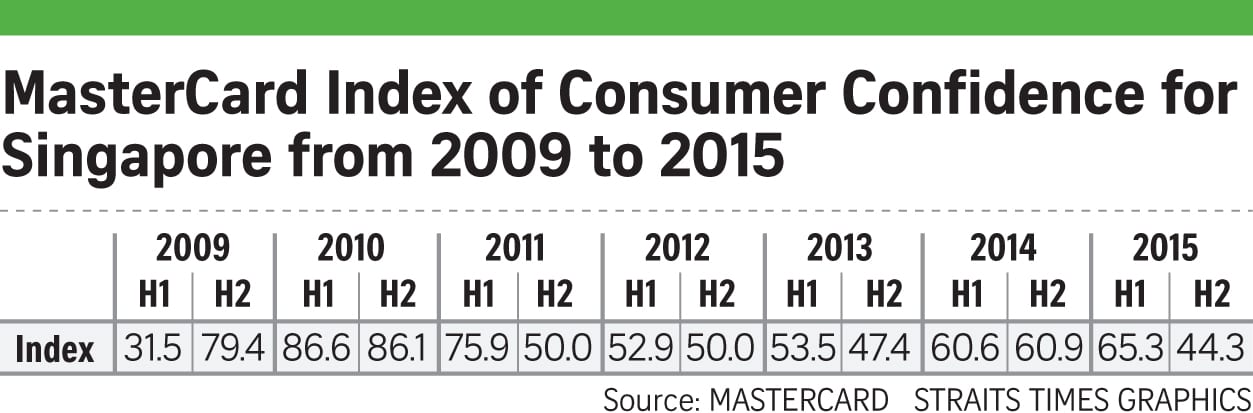
    A MasterCard survey of 447 people here found that Singaporeans went from being optimistic about the near future to being merely neutral about it in the second half of last year.

    Separately, consumer research firm Nielsen surveyed 500 people and found that consumer confidence in Singapore fell below the global average in the three months of last year. The pessimistic outlook came on the back of rising concerns about job security and a lacklustre economy.

    Financial analyst Adeline Toi, 27, has seen her friends in the banking sector get retrenched and now fears for her own job.

    With consumers tightening their belts, there are emptier malls and lower bottom lines for retailers.

    “Customers will come in, look one round, then leave without buying anything,” said Ms Irene Tan, 43, a sales assistant at clothing store VRG at the Wisma Atria shopping mall.

    Sales were down during the recent year-end festivities. Excluding motor vehicle sales, retail sales fell 2.1 per cent and 3.6 per cent last November and December respectively, compared with the same period a year ago, according to the Department of Statistics.

    Despite the gloomy outlook and the less than favourable sales during the Christmas season, retailers remain “cautiously optimistic” as they expect a boost in tourist arrivals from China this year, said Mr Anthony Gan, executive director of the Singapore Retailers Association.

    Despite the fall in visitor arrivals to Singapore last year, the number of Chinese visitors grew 22 per cent year-on-year. They were also the biggest spenders, and nearly half of their expenditure was on shopping.

    He added: ” The government forecast may have revised growth downward but, even at 1 per cent, it is still growth which many developed countries aspire to.”

    But retailers continue to be plagued by the perennial problems of high operating costs and a shortage of manpower. This could lead to further attrition and more shops closing down.

    The increasingly difficult business environment has already claimed several high-profile casualties.

    Last year, Czech shoe company Bata closed eight shops here that were either underperforming or whose leases had expired, and redeployed those employees affected. It is opening three stores this year.

    Bata managing director Pierluigi Pontecorvo said the company is not expecting to grow much this year, but does not intend to cut staff or bonuses.

    Instead, it is offering higher cash incentives and bonuses – about 10 per cent to 15 per cent more compared with last year – for staff who meet key performance indicators.

    Employees of the Bata store with the best customer service will also win a free vacation at the end of the year.

    Just last month, furniture and home accessories retailer iwannagohome said it was shutting its two stores here at the end of May.

    The victims of the slowdown also include online players such as Japan’s Rakuten – its website went offline earlier this month.

    Other companies are switching strategies in a bid to continue driving sales.

    One industry veteran, electronics retailer Challenger, is putting more resources into its online space. The company is launching its revamped online store, Hachi.sg, next month.

    The website, which will offer over 50,000 products, will be optimised for browsing on mobile phones and tablets, and customers can choose to have their purchases delivered to their homes or pick them up at six store locations, instead of the current one.

    The slower market has pushed Challenger to change the way it sells products, said its chief marketing officer, Ms Loo Pei Fen. The company’s retail revenue in Singapore last year fell marginally – 1.6 per cent – over 2014 due to weaker consumer buying power.

    “Despite tightened purse strings, customers still have the desire to buy, but in a way that’s relevant to them and allowing them to stretch their dollar,” Ms Loo added.

    Over at the Robinsons Group of stores, sales have slowed compared with last year. But it remains positive, said Mr Christophe Cann, its group chief executive for Asia.

    Instead of giving up the fight, it is doubling down and pushing ahead with plans to renovate its Robinsons department store at Raffles City, upgrade its Marks & Spencer stores here and introduce new brands to Singapore, he added.

    The good news for retailers, especially those looking to set up a brick-and-mortar shop here, is that rents are on a downward trend.

    Property consultancy R’ST Research estimates that rents in Orchard Road fell 5 per cent last year and is expected to fall by another 5 per cent this year.

    “It’s a good opportunity for retailers to bargain for lower rentals, or ask for a better location if there are vacant spaces within the same mall,” said its director, Mr Ong Kah Seng.

    The cheaper spaces, however, are not in the key malls in the Orchard Road belt, said Mr R. Dhinakaran, managing director of Jay Gee Melwani Group, which manages brands including Levi’s, Aldo and Converse.

    He added: “Rentals are going down only in the malls that are further away and are not doing as well.”


     

  • Adidas to open 3000 stores in China by 2020

    Adidas to open 3000 stores in China by 2020

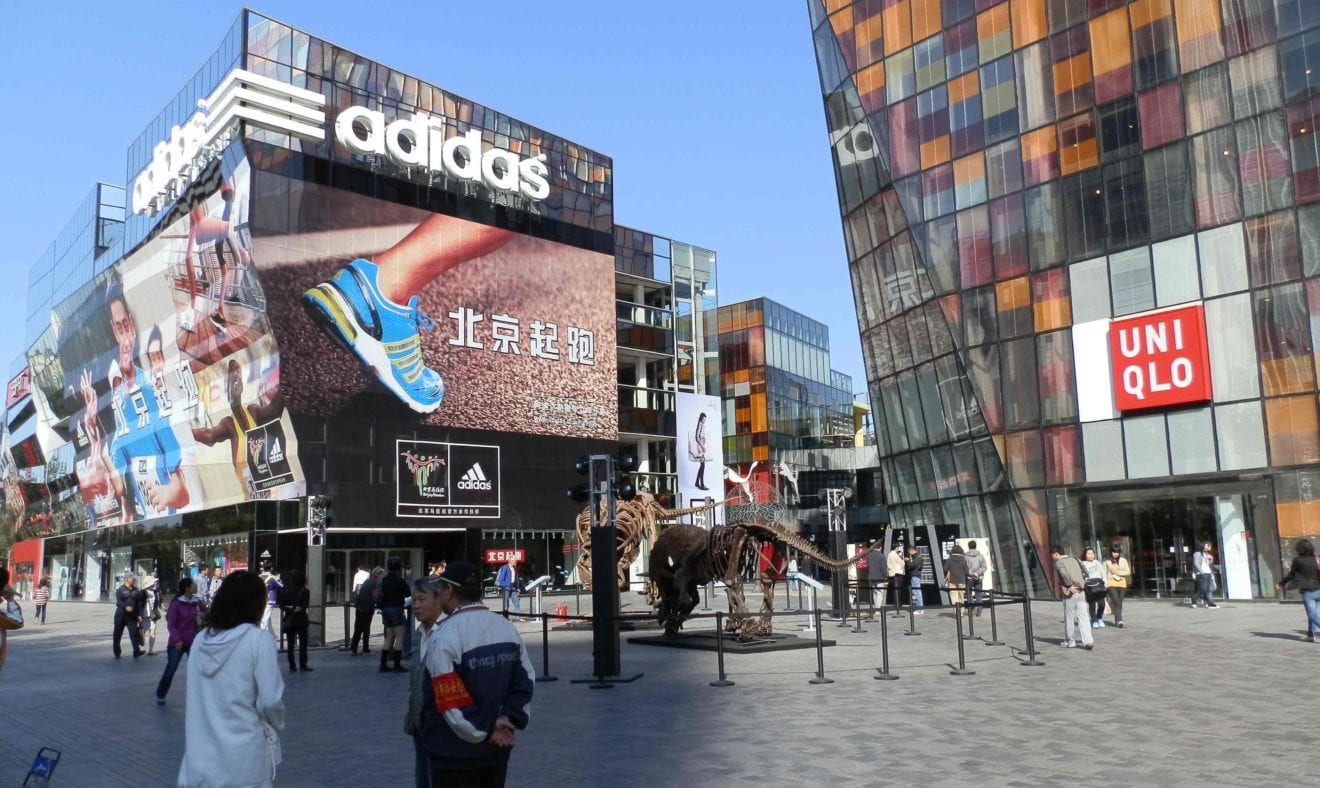
    German sporting goods giant Adidas Group has revealed plans to open 3,000 new stores in China by 2020 as it looks to become the ‘best sports brand’ in the region.

    The company, which has around 9,000 stores in its second largest market, the vast majority of them being franchise stores, announced the plans on Friday (4 March) in Shanghai.

    In a statement sent to just-style, the group said: “China is Adidas Group’s second largest market globally and we still see a lot of potential in this market.”

    The news comes less than two months after Adidas said its Greater China subsidiary achieved sales of EUR2.5bn (US$2.74bn) in 2015 – the company’s highest ever annual sales in the region.

    Adidas has strengthened its position across all key sports categories in the region over the last few years, and launched new segmented retail stores such as women’s, sportswear collective and basketball.

    The group’s new strategy themed ‘Creating the New’ aims to propel Adidas to become the ‘best sports brand’ in Greater China by 2020. The company’s new five-year game plan will serve as a blueprint to seize further growth opportunities.

    Adidas has said the plan will chart the path of the company’s continued growth as it seeks to meet the demands of China’s burgeoning middle class who are placing a higher emphasis on quality of life experiences, and the needs of a nation with an ignited interest in sports.

    The company added: “With ‘Creating the New’, our new strategic business plan, we’ll continue to focus on strengthening our position in key categories and expanding our retail footprint in both lower tier and upper tier markets.”

    Last month, Adidas raised its earnings and sales forecasts for this year, after it exceeded its targets in 2015, thanks to increased marketing investments.

  • For domestic consumption, China’s women are in the driving seat

    For domestic consumption, China’s women are in the driving seat

    It was a quick decision for Wu Qiaoyun, 35, from Yunnan province, when she splashed out nearly 90,000 yuan (HK$107,000) on a new Peugeot 301 just before the Lunar New Year.

    As a new mother of a four-month-old baby girl she believed a car would be more convenient for her family.

    Wu, an accountant at a state-owned company, mentioned the idea to her husband, who did not oppose the purchase, so she went ahead and paid for it, largely with the earnings from her 3,500-yuan-a-month salary, as her husband’s finances were tied up in the stock market.

    Wu’s is not an exceptional case in China, where women are playing a far bigger role in purchases for the family instead of being subservient to their husbands.

    According to a report by Economist Intelligence Unit, which surveyed 5,500 women across major cities in Greater China, India, Japan, Singapore and South Korea, 62 per cent of mainland women described themselves as joint breadwinners, compared with the average rate of 41 per cent.

    When it comes to e-commerce, women’s roles appear to be bigger on the mainland, with nearly 70 per cent of mainland interviewees saying they preferred the experience of shopping online to doing so in stores and are much more active than peers in South Korea (50 per cent), Hong Kong (30 per cent) and Japan (18 per cent).

    It is estimated that China has 480 million female consumers, and among them, 290 million are aged between 25 and 45.

    Women, who are making nearly 75 per cent of household buying decisions, are likely to be an important driver of domestic consumption in a market valued at more than 4.5 trillion yuan by 2019, especially in industries related to beauty, garment and leisure tourism, according to a memo by Guotai Junan Securities.

    The growing number of well-educated and financially independent women, especially those living in the cities, has also prompted traditional manufacturers and service providers in China to engage more in marketing to attract female clients, a trend that research firm Mintel named as one of the most influential in the retail market this year.

    China’s recent move to allow all families to have a second child, meant women would take on more financial responsibilities in the household, said Philix Liu, a trend analyst at Mintel.

    But women’s role in the economy remained weak compared with their male counterparts, said women’s rights activist Feng Yuan.

    Feng referred to a widening income gap between men and women in China. urban women in China earned only 65 per cent of what their male counterparts did in 2009, putting them five percentage points behind where they were in 1999.

  • Malaysia among first in world with Retail Workbench iPad app, said Standard Chartered

    Malaysia among first in world with Retail Workbench iPad app, said Standard Chartered

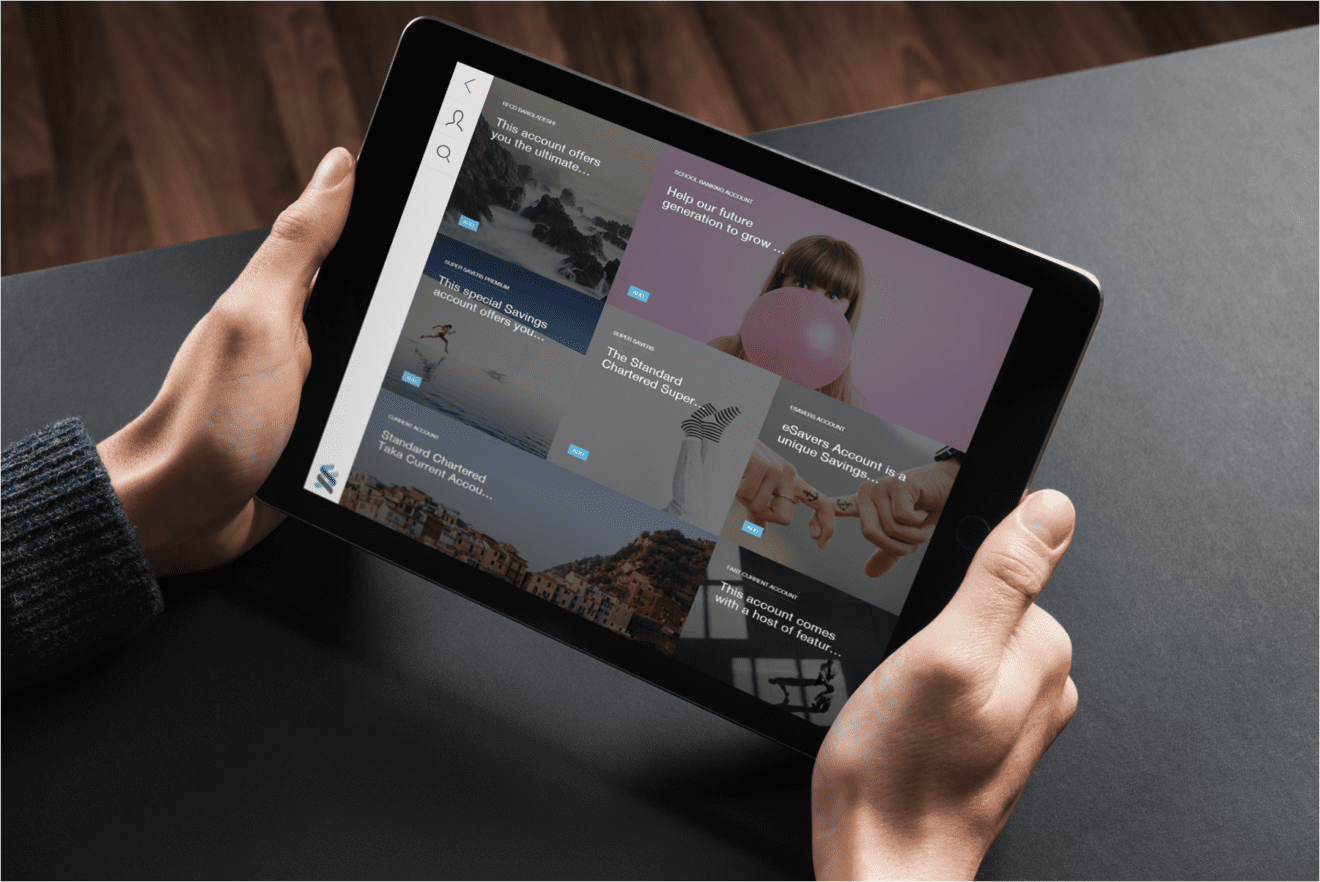
    Malaysia is one of the first six markets to go live with Retail Workbench, a digital tablet-based sales-and-service tool, according to Standard Chartered Bank, which globally launch of its Retail Workbench,

    The iPad tool is also live in India, the UAE, Bangladesh, Nigeria and Kenya, said Aaron Loo, country head, Retail Banking, Standard Chartered Bank Malaysia.

    “Banking should be easy and convenient – that’s what the Retail Workbench is all about,” said Loo, adding that the application is integrated with the Bank’s back-end infrastructure, which will allow sales staff to open an account for a client in any location. Banking services such as loan approvals and credit card issuance will be fast, simple and completely paperless.

    “We are harnessing technology to make banking a seamless experience for both clients and staff. Going paperless fits into the increasingly mobile lifestyle of our clients while improving cost efficiency and productivity by freeing up staff’s time to focus on what really matters, which is serving the client,” he said.

    In addition, Loo said the ‘the bank on an iPad: Retail Workbench’ also puts a set of current and savings account, credit card and personal loan products on one mobile platform – along with product information and marketing brochures – so sales staff can answer questions and respond to client needs in person, at any location.

    He said that with this fully digital device, we can process client requests from anywhere, with the data moving straight through to the Bank’s back-end operations in near real-time. Previously, sales staff could visit clients in person but the paperwork had to be manually entered into the Bank’s systems back at the branch or Bank’s premises.
     

    Aaron Loo - Standard Chartered Malaysia 

    Photo – Aaron Loo, Country Head, Retail Banking, Standard Chartered Bank Malaysia

    This means that clients only need to give their personal data to the bank once to create a profile that can be used for future purchases. Sales staff use the iPad’s built-in camera to securely snap a picture of identity documents so there is no need to fill out multiple forms and no missing data.

    Loo said Retail Workbench has already revolutionised the banking industry in Korea when it was launched in 2014, cutting account opening time in the digitally advanced country to five minutes and credit card issuance to less than half an hour. It has since won numerous industry awards for innovation and outstanding client service.

    Due to differences in local infrastructure, turnaround times and other features of Retail Workbench will vary across the seven markets following the global launch, he added.

    A statement added that Standard Chartered will successively add capabilities and enhance performance in each market over the coming months and equip more sales teams with the device. By the end of 2017, Retail Workbench will be in the hands of staff in 18 markets across Asia, Africa and the Middle East.

     Digitising banking

    The statement added that this global launch marked “a milestone in Standard Chartered’s strategy of using digital technology to deliver a better banking experience to clients. The Bank last year announced it will invest US$1.5bn in technology over three years. Standard Chartered was named the World’s Best Consumer Digital Bank in 2015 by Global Finance magazine and also won Best Consumer Digital Bank in Malaysia in 2010, 2014 and 2015.”

    Standard Chartered Bank, a member of the Standard Chartered Group was established in Malaysia in 1875 and incorporated as Standard Chartered Bank Malaysia Berhad in 1984. Standard Chartered employs close to 7,000 employees in all its Malaysian operations.


  • Nation’s consumers, companies finding themselves on thin ice in South Korea

    Nation’s consumers, companies finding themselves on thin ice in South Korea

    Every floor of the NC Department Store in Jamsil-dong, southern Seoul, was packed with customers frantically digging through piles of clothes and shoes on March 1.

    The moment an employee set out pairs of Nike sneakers at 50 percent off the retail price, men and women alike snatched them off the shelves. There was even a scuffle when several buyers grabbed the same item simultaneously.

    “We ran out of boxed tissues by 3 p.m.,” a saleswoman said. “As they were crazy cheap, people took several boxes at once.”

    On the Internet communities for Jamsil residents, members warned the neighborhood had turned into a mad house and said it would take at least an hour just to find parking.

    The chaotic scene has been happening every Independence Movement Day since the retailer started its event several years ago, offering everything from food to fashion at discounts of up to 80 percent.

    While the rest of the country took the day off to remember the independence movement during the Japanese colonial period, NC Department Store was packed with shoppers elbowing each other out of the way to snag the best bargain.

    But this year, shoppers seemed a little more desperate to save money.

    “I’m not really a person who is attracted to sales, but recently, I’ve been changing the way I’ve been spending because the economic situation is becoming more uncertain,” said Song, 42, who was digging through a steeply discounted pile of Nautica outdoors pants. “My wife and I both work so we’re better off than some other households. But even with our income, after paying the interest on our loans, living expenses and for our kids’ education, there’s hardly any left for saving.”

    The average household today is jittery and increasingly less confident about the path of the Korean economy, particularly as various indicators including exports, industrial output, unemployment and household loans have been alarming.

    The frozen stock and real estate markets are causing household income to shrink just as ever-growing household loans, which reached more than 1,200 trillion won ($996 billion) by the end of last year, are applying more pressure on Korean families.

    With less income and more uncertainty about the nation’s economy, many consumers are shopping online rather than at discount stores like E-Mart or Lotte Mart.

    According to Statistics Korea, while overall retail sales grew 4.1 percent in January compared to the same period last year, online sales grew 21 percent.

    Online shopping is currently a 5 trillion won market, accounting for 17.2 percent of overall retail sales, at 30 trillion won. That’s 2.4 percent larger than a year ago.

    Why is online shopping growing so fast? One reason is because it offers products at lower prices while being more convenient.

    More shoppers are buying their groceries online, with sales of agricultural and marine products surging 57.6 percent in just a year. Online sales of processed food and beverages have seen exceptional growth of 43.2 percent.

    But consumers are also heading online because living conditions for the average household have worsened over the last few years.

    According to a recent study by Statistics Korea, the gap between the monthly paychecks of people working for small and midsize companies and those working at conglomerates is wider than it has ever been.

    The average paycheck received by employees at companies with more than 300 employees, categorized as a conglomerate, reached 5.01 million won last year, an increase of 3.9 percent year on year.

    Over the same period, the average paycheck taken home by people at small and medium-size companies (between five and 299 employees) grew 3.4 percent to 3.11 million won. That’s just 62.3 percent of the salary received by their conglomerate counterparts.

    “This year, it is difficult to expect the domestic market to recover from policy implementation,” said Lee Geun-tae, senior analyst at LG Economic Research Institute.

    “Since the second half of last year, household spending has been falling to all-time lows as uncertainties over the economic future have gone up.”

    Lee added that the frozen property market, in which many older people have invested to sustain their life after retirement, as well as low interest returns on financial assets have dampened spending confidence. Growing unemployment faced by young people is also contributing to further cutbacks on spending.

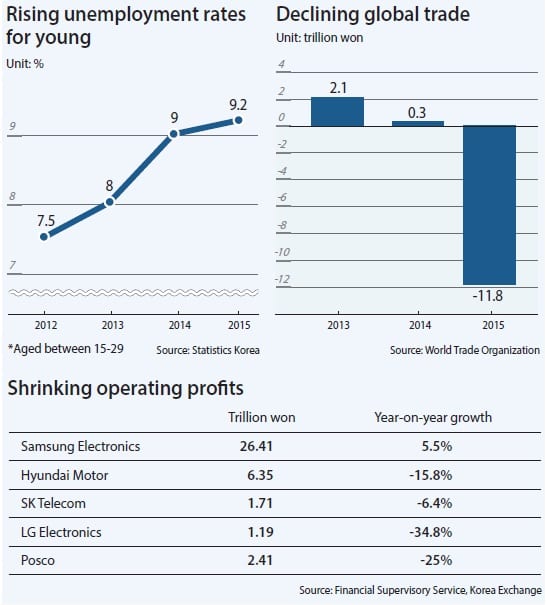
    Even the nation’s top companies are feeling a squeeze. Last year, Hyundai Motor recorded its highest-ever annual revenue at nearly 92 trillion won. But the company was only able to earn 6.35 trillion won in operating profit, which is the smallest since 2010 and 15.8 percent less than the previous year. It was the third consecutive year that operating profit has shrunk.

    The situation at other companies is similar. Samsung Electronics enjoyed an annual operating profit increase of 5.5 percent to 26.4 trillion won. But when looking solely at the fourth quarter, operating profit actually declined compared to the third quarter.

    Market experts are particularly worried by the fact that leading manufacturers, which should be leading the country out of the gloom, are themselves struggling.

    Furthermore, Korea’s leading companies are also major exporters, and the continuing decline in outbound shipments since January 2015 will likely lead to disappointing performances, in turn worsening consumer confidence and finally impacting the domestic market.

    The current situation is unlikely to improve anytime soon as China, which accounts for one quarter of Korea’s economy, has already seen its growth fall below 7 percent.

    “New government stimulus efforts are likely to take effect starting in the second quarter, but their impact is not expected to be strong enough to offset the slowdown in exports,” said Suh Dae-il, an analyst at Daewoo Securities. “In particular, tighter control on bank lending is anticipated to erode the impact of any stimulus. February readings of the consumer sentiment index and the business sentiment index suggest that consumers’ expectations for housing price growth are sliding sharply, and that corporate financial conditions have deteriorated from the levels seen in the second half of 2015.

    “As the Korean economy is expected to continue to slow down in first half of this year, we believe that additional stimulus measures, including a base rate cut, will be needed going forward.”

    Finance Minister Yoo Il-ho, who celebrated his 50th day in office last week, brushed off the growing concerns.

    “There are concerns that the uncertainties [shrinking exports, consumption and even investment] regarding the local economy could result in contraction,” Yoo said during a meeting of economic ministers held at the government complex in central Seoul on Thursday. “[However] when you exclude automobile sales, overall sales are increasing, and as the lowering of the individual consumption tax was back in February, the situation will gradually improve.

    “Exports also fell less in February than in January and actually rose by volume.”

    The minister said that although he is aware of the growing concerns, he does not see the need yet to consider measures like a supplementary budget.


  • Malaysia brings tropical touch to Scandinavia

    Malaysia brings tropical touch to Scandinavia

    Malaysian-grown tropical fruits are taking centre stage at retail stores across Scandinavia for the second straight year. The Asian nation’s Agriculture Representative Office in The Hague (PPP The Hague), Netherlands, has extended it marketing activity in the Northern European region, which will see products such as mangoes, durian and jackfruit promoted across stores owned by Swedish retail group ICA AB.

    The campaign kicked off last week, following on from the success of similar promotional activity last year, which helped propel the value of Malaysian agricultural exports to Sweden to RM9,899,050 (US$2.4m), up from RM7,067,625 (US$1.7m) in 2014.

    “This proves that the Swedes have become more inclined towards Malaysian agriculture products, which has a certain uniqueness and quality to it when compared to similar offerings from neighbouring countries,” Mohammad Wafiuddin Esa, Malaysia’s second secretary of Agriculture.

    The promotion is being coordinated by PPP The Hague, ICA AB, DRS Trading and EMA’S International AS.

  • HSBC Gets Approval for Credit Card Operations in China

    HSBC Gets Approval for Credit Card Operations in China

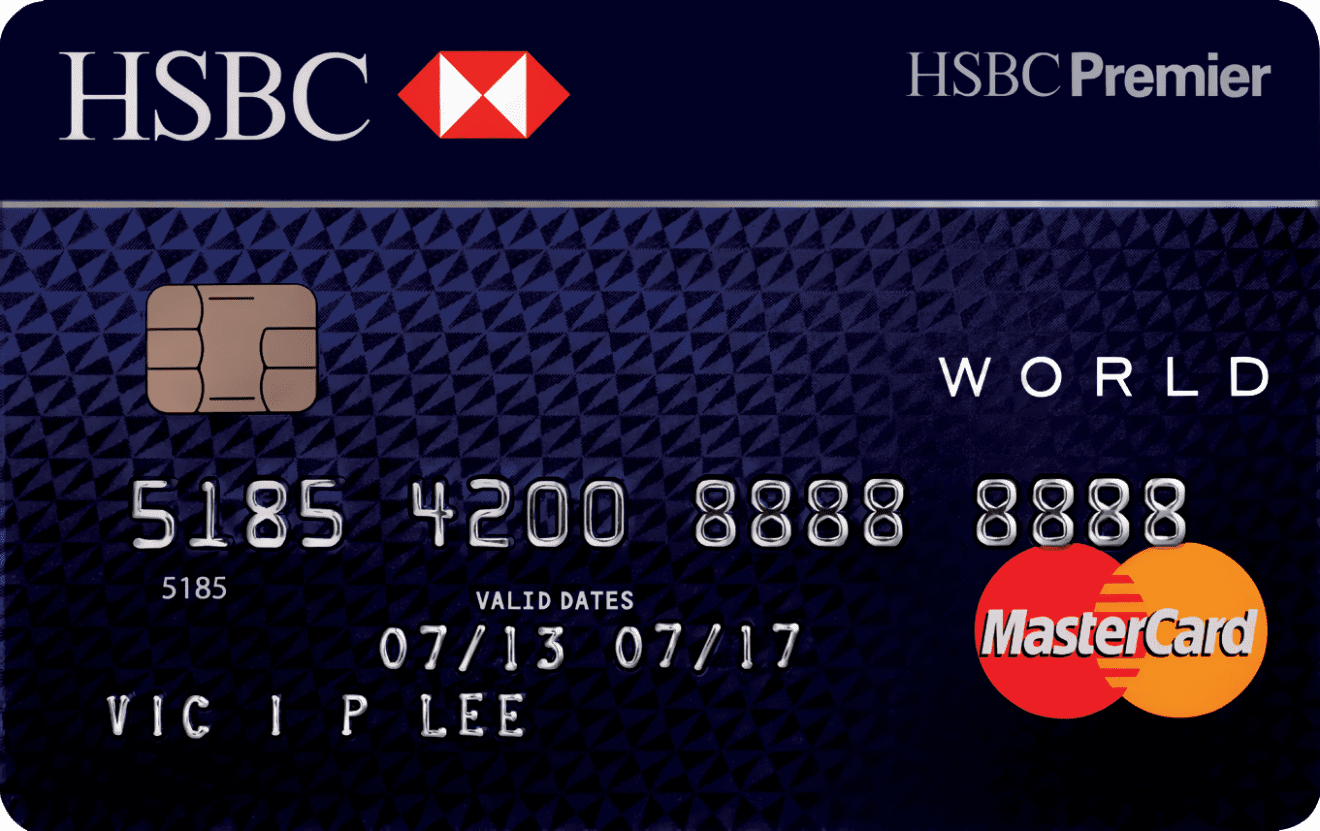
    HSBC Holdings efforts to scale up its retail and wealth management business in China got a major boost with the U.K.-based company receiving permission to start a credit card business in China’s $1 trillion market.

    The approval from the Chinese authorities came after Peter Wong, Asia-Pacific Chief Executive Officer at HSBC, announced in a weekend interview that HSBC ended its joint venture with Bank of Communications Co. However, Wong believes that there are several other avenues of collaboration with Bank of Communications and that the two companies share healthy business terms.

    HSBC intends to maintain its stake of around 19% in the Chinese lender, Wong said on Saturday in an interview on the sidelines of China’s annual congress of lawmakers in Beijing.

    However, Wong did not specify when HSBC won regulators’ approval or provide details on how the business will be moved forward.

    The move makes HSBC the third foreign credit-card issuing company after Citigroup Inc. (C – Analyst Report) and The Bank of East Asia, Limited (BKEAY – Snapshot Report) to get approval to operate solo on the mainland. The permission to start credit card operations in the country would facilitate HSBC’s plan to expand China footprint.

    At its June 2015 Investor Day conference, HSBC unveiled plans to make increased investments in the under-penetrated Asian markets, with particular focus on China. Notably, the company continues to perceive China as an “engine of growth” and hence, intends to capitalize on Hong Kong’s high-quality customer base, where the market has grown over 13% in the past two years. Also, an ageing Chinese population is undeniably driving the demand for retirement and protection products in the country.

    More importantly, HSBC believes that building operations in its most-profitable Asian business will help it offset the negative impact from soaring expenses. Moreover, aided by such investments, the company estimates growth in pre-tax profits to outpace that in risk-weighted assets or RWAs, thereby enhancing its return on RWAs.

    Though Chief Executive Officer Stuart Gulliver’s plan seemed to suffer due to falling commodity prices, a slowing Chinese economy and a pretax loss in the fourth quarter, an independent credit card division in China would help HSBC expand the client base for its retail bank and enhance HSBC’s access to a rapidly growing market.

    According to a Bloomberg report, getting approved for its own operation in China “is a meaningful step for HSBC as it gives the bank the autonomy to run the business,” said Chen Xingyu, a Shanghai-based analyst at Phillip Securities Research. “Since the Pearl River Delta is HSBC’s focus, having its own credit-card business can help the bank expand in the region.”

    “There’s still strong demand for credit cards in China’s first-tier cities, but the business is getting saturated in some areas,” said Chen at Phillip Securities. “That’s why the potential in smaller cities is even bigger.”

    Though the Chinese economy is currently showing signs of weakness, we believe the country will resume its strength, given a sturdy performance history as well as efforts by its government to boost growth. This, in turn, will support HSBC’s prospects in the country.

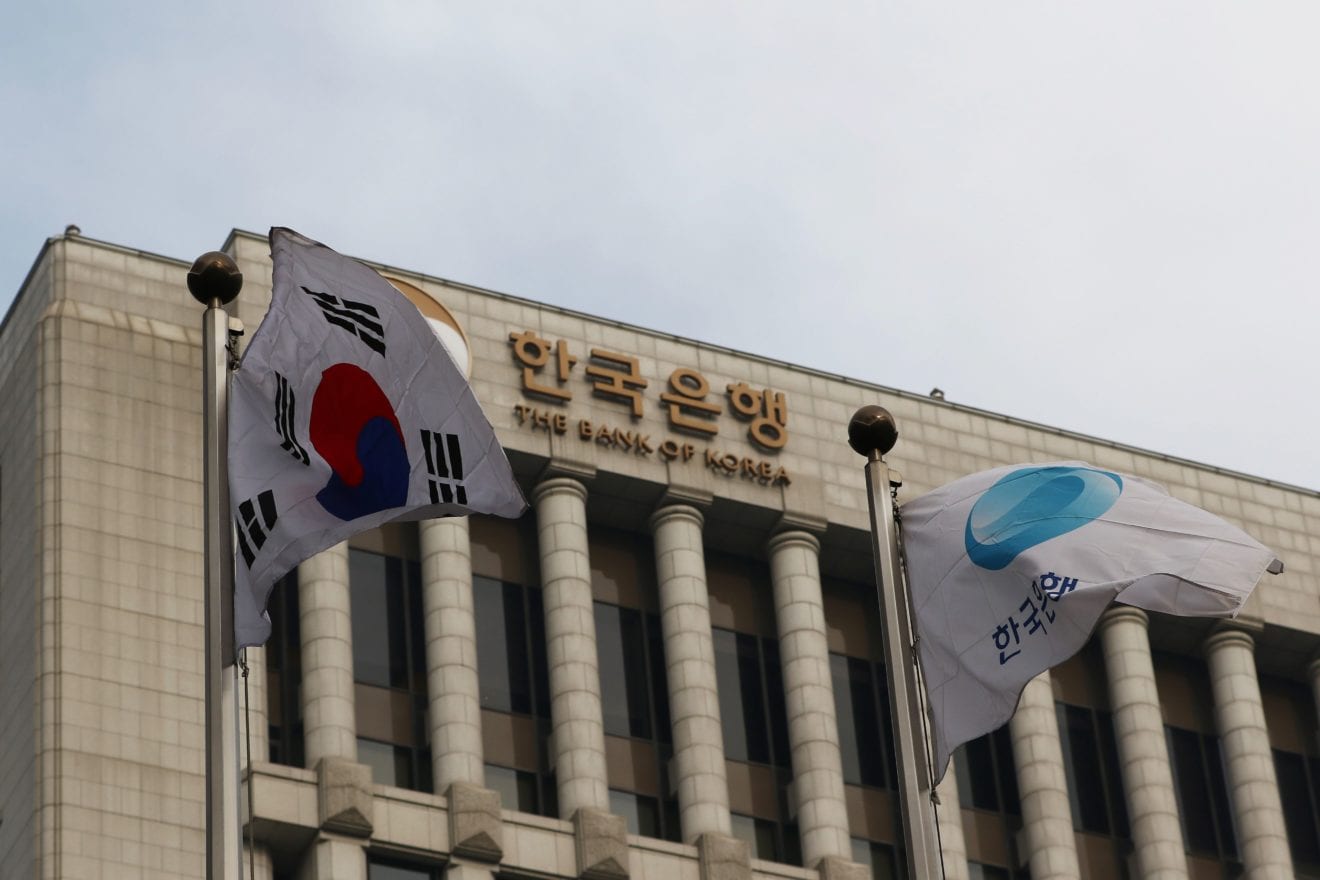
  • Bank of Korea likely to keep policy rate on hold tomorrow

    Bank of Korea likely to keep policy rate on hold tomorrow

    The Bank of Korea is likely to keep its policy rate unchanged at 1.5% during its upcoming meeting. The meeting will mainly focus on the weakness in January’s activity data. Also, there is a higher probability for another cut in GDP forecasts during the April meeting. But, t he rebounding sentiments in global financial markets and February’s macroeconomic data will help the cautious stance of a majority of the MPC members.

    The February’s monetary policy meeting’s minutes showed central bank policymakers’ reluctance regarding further rate cuts, in spite of further decline in the outlook of growth. All members had agreed that there were growing threats on the downside for growth, but only one member had voted for a rate cut.  The other members didn’t support a cut in interest rate because of the usual worries regarding financial stability, the requirement to secure the room for policy actions, the lack of further downside threats for inflation and the expected diminishing marginal impacts of additional easing actions.

    January’s activity data indicated broad weakening of growth momentum. The drop in manufacturing production was expected given the considerable decline in January exports. However, the contraction of retail sales and services production was a major concern because consumption was the main over GDP growth driver in H2 2015.

    As facility investment did not strengthen in December, it was only construction activity that kept its strength amongst the different activity indices. However, strength in February’s exports alleviated worries regarding growth. The renewed tax cut on autos will stimulate consumption as the retail sales contraction in January was mainly due to auto sales after the termination of tax cut in December. A considerable rise in February’s headline inflation to 1.3% supports most of the MPC members’ views that the central bank’s current inflation forecast is appropriate.

    The Bank of Korea is unlikely to change its policy rate throughout 2016. The unwillingness of MPC members regarding additional easing implies that the central bank is expected to keep rate unchanged even if the GDP forecast is revised downwardly from the current estimate of 3%.

    Also, BoK’s projection of potential growth in 2017 might be as low as 2.8%. Considerable surprises on the downside in growth, which can lead to a sizable reduction in the GDP growth forecast to a level of about 2% or below is expected to be a precondition for a further cut in interest rate.

    © EconoTimes 2015. All rights reserved. The EconoTimes content received through this service is the intellectual property of EconoTimes or its third party suppliers. Republication or redistribution of content provided by EconoTimes is expressly prohibited without the prior written consent of EconoTimes, except for personal and non-commercial use. Neither EconoTimes nor its third party suppliers shall be liable for any errors, omissions or delays in content, or for any actions taken in reliance thereon.

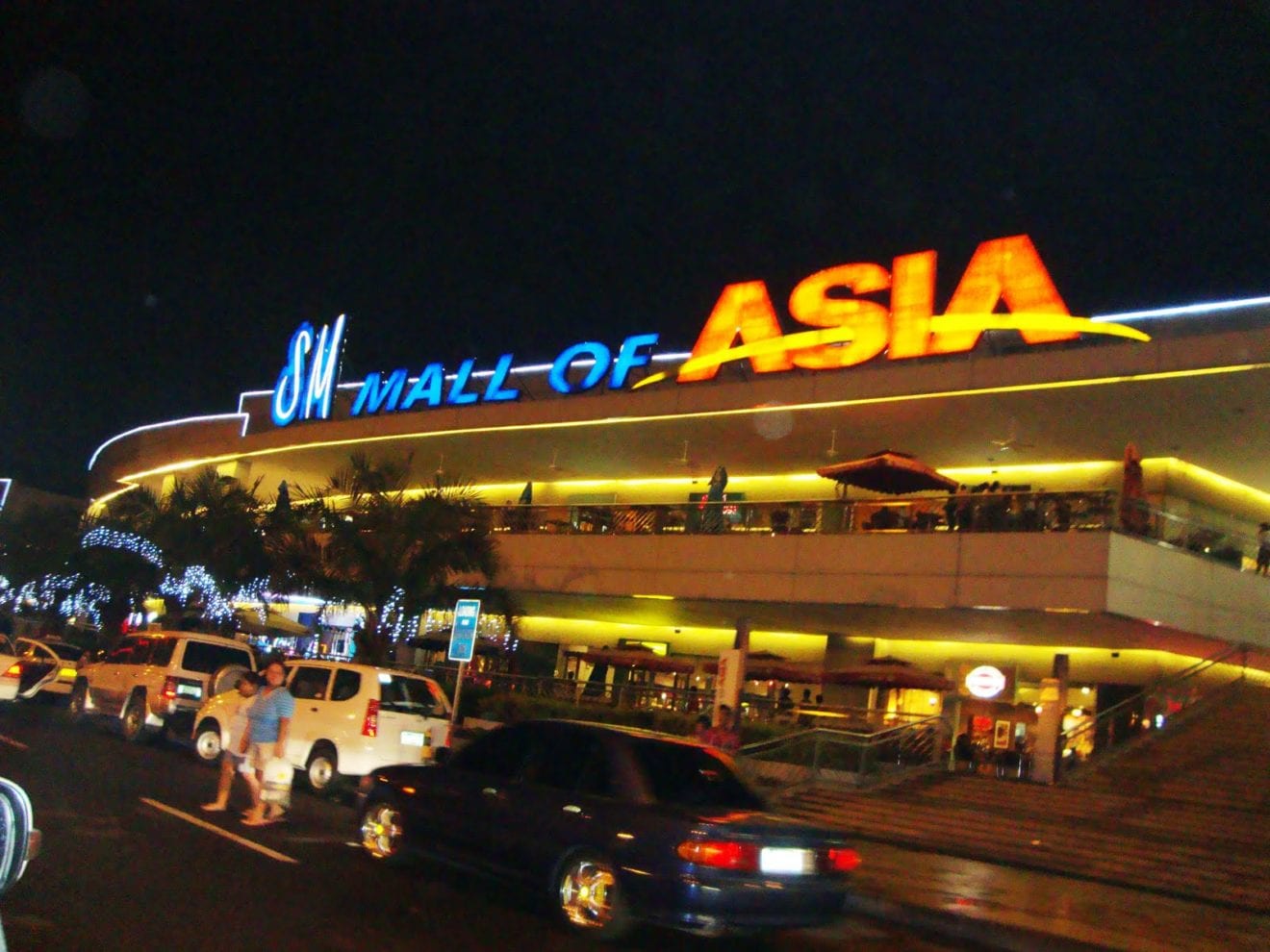
  • SM founder Henry Sy still on top

    SM founder Henry Sy still on top

    Retail king Henry Sy, Sr. remains the Philippines’ richest person, according to the Forbes 2016 Global Billionaires’ list.

    Henry Sy SMSy, 91, has an estimated net worth of $12.9 billion – roughly P562.3 billion – as of  this month, making him the world’s 71st richest person.

    His net worth dropped from $14.2 billion in 2015 due to the volatile global market, weak oil prices and strong US dollar.

    Born in Xiamen, China in 1924, Sy migrated to the Philippines and conquered the retail scene becoming the SM founder. His eldest daughter, Teresita Sy-Coson, has become one of Asia’s most powerful businesswomen.

    Sy’s family business empire, SM Investments Corporation (SMIC), includes  retailing, real-estate, hospitality, banking, mining, education and healthcare services.

    In 2015, SMIC reported a 13 per cent growth in recurring income, with consolidated net income of P28.4 billion and consolidated revenues of nearly P300 billion. The increase came on the back of 17 per cent growth in retail earnings, 14 per cent growth in property net income and 10 per cent growth in bank income.

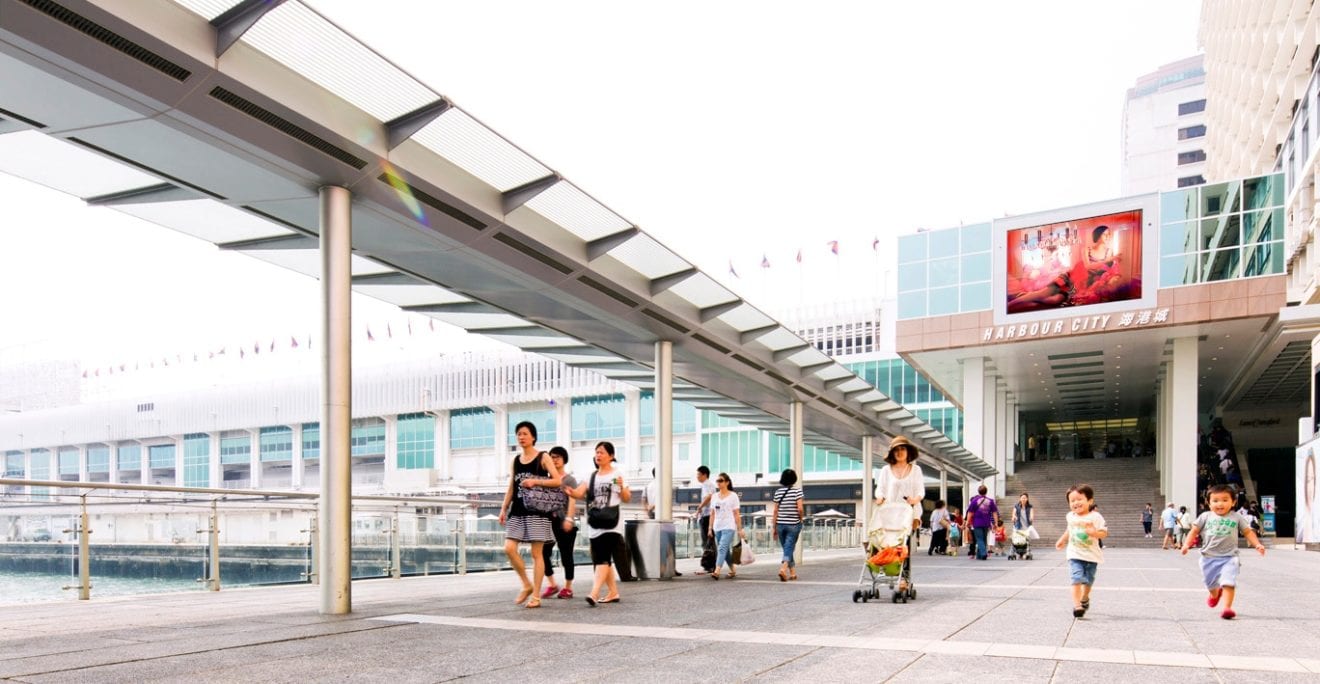
  • Harbour City books HK$5.94b retail revenue

    Harbour City books HK$5.94b retail revenue

    Revenue at Tsim Sha Tsui’s popular luxury shopping mall, Harbour City, (excluding hotels) increased by 6 percent to HK$8.56 billion, Wharf Holdings (0004) reported today.

    Operating profit grew by 6 percent to HK$7.48 billion. Retail revenue increased by 5 percent to HK$5.94 billion.
    The occupancy rate was nearly 100 percent, the company reported today.

    New openings or commitments including Miu Miu (Canton Road), Philipp Plein, J. Crew, Pandora, Sulwhasoo and Rado further improved the tenant mix, the company said. The introduction of various Hong Kong and Kowloon debuts across distinct categories including Maison Margiela, Issey Miyake, Christian Louboutin Men and Tea WG Boutique continued to raise the retail and culinary experience, Wharf said.