Author: Mei Ling Tan

  • Did The Hong Kong Property Market Just Burst? 2 Stocks That May Be Affected

    Did The Hong Kong Property Market Just Burst? 2 Stocks That May Be Affected

    Hong Kong property prices have been surging over the past few years. A report from Swiss bank UBS indicated that Hong Kong property prices have appreciated around 340% from 2003 to 2015.

    But, 2016 might not be such a good year for Hong Kong real estate.

    Based on January 2016 data, monthly home sales in the city had reached its lowest levels since such data was first tracked in 1991. More alarming is that a recent government-released land parcel in Hong Kong’s New Territories area was sold at a price (on a per square foot basis) nearly 70% lower than a similar transaction that took place in September 2015.

    Piling on the pressure is the government of Hong Kong – it is planning to increase the amount of housing supply to the market over the next five years due to high property prices which has made housing unaffordable for the city’s residents.

    Will these developments be the trigger to mark the start of a prolonged slump in Hong Kong’s property market? Will any potential troubles that may arise in the residential real estate market hit other real estate sectors such as commercial and retail?

    In Singapore’s stock market, there are a few companies and trusts that are exposed to the Hong Kong real estate market. Two of the bigger entities in that category would be Hongkong Land Holdings Limited (SGX: H78) and Fortune Real Estate Investment Trust (SGX: F25U).

    Stock Market capitalisation (15 February 2016)
    Hongkong Land Holdings US$13.6 billion
    Fortune REIT HK$14.7 billion

    Source: S&P Global Market Intelligence

    Hongkong Land is one of the largest property owners in Hong Kong’s Central district, owning many premium commercial office towers there. Meanwhile, Fortune REIT is a real estate investment trust that invests mainly in retail malls located in Hong Kong. At the moment, the REIT has 17 properties in its portfolio.

    With the possibility of a slump in property prices in Hong Kong – at least for the residential real estate sector – what does the near term future hold for both Hongkong Land and Fortune REIT?

    Hongkong Land might have an advantage over Fortune REIT when it comes to withstanding any downturn in real estate.

    With Hongkong Land’s strong balance sheet (it has a net debt to equity ratio of only around 9%), it has flexibility and is facing lower financial risks even if its properties are revalued to a much lower level.

    That said, if there’s a prolonged slump in Hong Kong, the rental rates for Hongkong Land’s properties might still take a hit in the future, hurting its earnings going forward. Before that becomes a reality, it seems that the market is already punishing the company. Hongkong Land is currently valued at just 0.48 times its tangible book value; that’s a valuation last seen back in 2011.

    Fortune REIT is also facing a similar situation. But, given that a REIT tends to have much tighter restrictions on its debt level (whereas companies are given free rein), a huge drop in the value of its properties might have a big impact on the trust.

    Moreover, as Fortune REIT has a weaker balance sheet as compared to Hongkong Land – the REIT has a gearing ratio (total debt over total assets) of 30.1% – a sharp drop in the value of its properties might increase the REIT’s leverage to onerous heights, thereby raising the possible need for the REIT to raise equity capital and thus cause its investors to face dilution risks.

    How the Hong Kong property market will play out is still unclear. Although demand seems to be slowing, the eventual impact on property prices is yet to be seen. Moreover, the current slump is mainly in the residential sector, so it is also unclear how it might affect the commercial and the retail sector of Hong Kong’s property market.

    But, it is still wise and prudent for investors here in Singapore to be aware of possible dangers ahead for some Singapore-listed companies as a result of their exposure to the real estate market in Hong Kong.



  • Pernod Ricard Asia troubles parent

    Pernod Ricard Asia troubles parent

    Despite difficulties in Asian travel retail, particularly in Korea, liquor supplier Pernod Ricard reports solid first-half 2015/2016 results totalling €5b ($5.7b) and organic growth of 3 per cent.

    It says the results represent a continued gradual improvement apart from difficulties for the Chivasbrand in the pernod Ricard Asia portfolio.

    There was a negative mix driven by geography – growth in India vs. a decline in China. Overall in Asia, the company had 5 per cent growth (or 4 per cent, taking into account the changing dates of the Chinese New Year) with double-digit growth in India. However, China declined by 2 per cent (down 8 per cent adjusting for Chinese New Year).

    “Our half-year results are solid, delivering a continued improvement in sales,” says chairman and CEO Alexandre Ricard. “Our strategy has remained consistent and is driving results, in particular in terms of innovation.”

    He says the company plans to continue improving its performance and will continue to support priority markets, brands and innovations.

    Pernod Ricard includes Cambodia, China, India, Indonesia, Malaysia, Sri Lanka, Thailand, The Philippines and Vietnam in its emerging markets, and lists its top 14 brands for organic growth as Absolut, Ballantine’s, Beefeater, Chivas Regal, Havana Club, Jameson, Kahlua, Malibu, Martell, Mumm, Perrier-Jouët, Ricard, Royal Salute and The Glenlivet.

    Formed in 1975 by the merger of Ricard and Pernod, the company has a workforce of about 18,000 people. Its decentralised organisation has six brand companies and 80 market companies in each key market.

  • Rakuten Singapore axes eCommerce site

    Rakuten Singapore axes eCommerce site

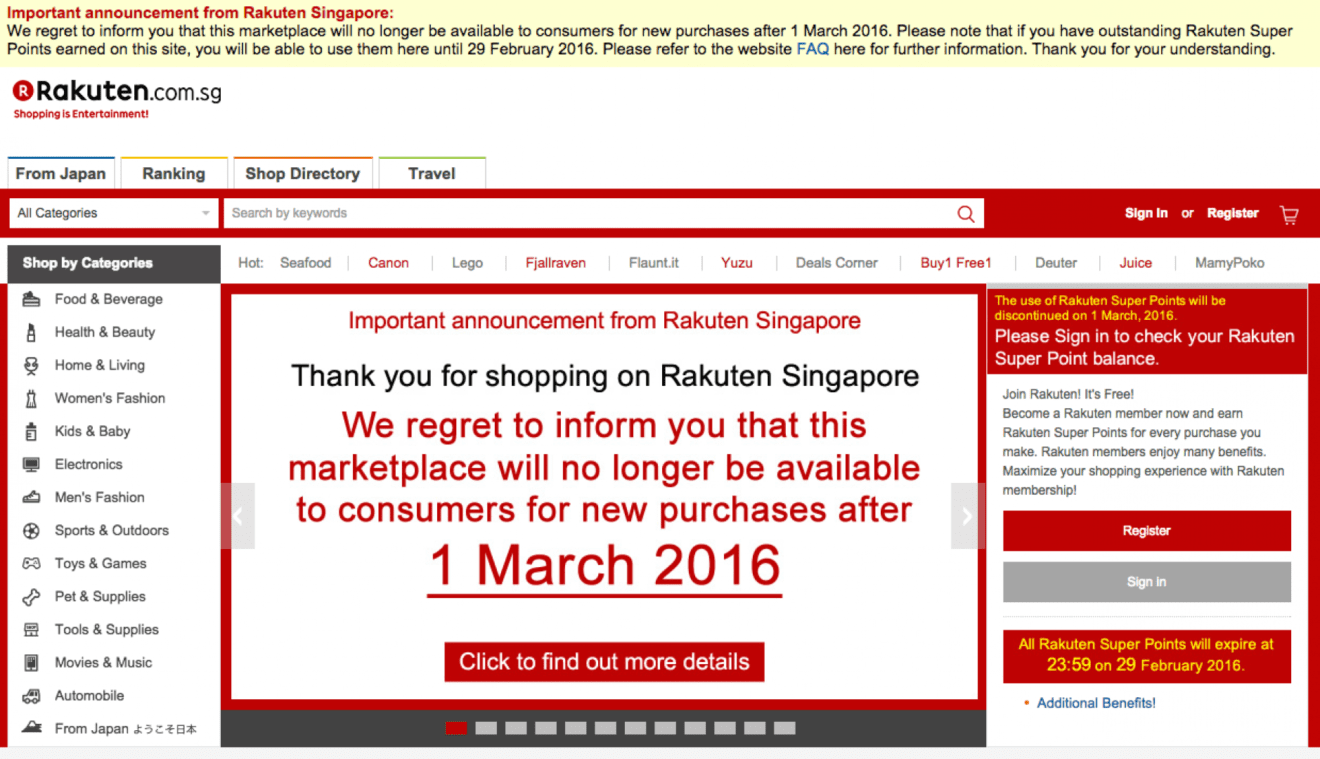
    Japan’s online retailing giant Rakuten is to close its eCommerce websites in Singapore, Indonesia andMalaysia on March 1.

    And it is reportedly seeking a buyer for its Thailand business Tarad.com which it bought in 2010.

    The decisions follow a disappointing trading result which has prompted the business to refocus on its domestic operations and scale back unprofitable overseas activities. The company reported net profit for the year fell 38 per cent year-on-year to 44.3 billion JPY (US$393 million) on revenue of 714 billion JPY ($6.3 billion) – up 19 per cent, largely due to writedowns of its Kobo, Southeast Asian and other struggling divisions.

    Some 30 staff in Singapore had their employment terminated on Friday, just five days into the Lunar New Year. By the time the sites are wound down, about 150 staff will have been axed in the three markets, but the company will retain a regional headquarters in the city state.

    Rakuten’s apparently profitable Taiwan business will continue to operate.

    Tech website Techcrunch reported the three eCommerce sites to be shuttered will be replaced by a new product in Southeast Asia, “a consumer-to-consumer app called Rakuma” which, Rakuten said, has grown 20 per cent month-on-month in Japan.

    “That concept sounds a lot like (indeed, the same as) Carousell, the app that Rakuten Ventures is an investor in. Singapore-based Carousell is currently in three countries in Southeast Asia but, as we reported late last year, it is trying to raise a $50 million round to expand its service significantly across Asia.”

    No further details of the Rakuma concept, which is mobile-based, have been released, with the project still under development.

    In a statement to Reuters, Rakuten said the new concept was a consumer-to-consumer business model, rather than the aggregation-based business-to-business-to-consumer format of the closing Rakuten sites.

    “In Southeast Asia, as the market itself changes and adapts, we are looking toward C2C (customer to customer) and mobile business models for eCommerce and other businesses,” Rakuten said.

  • Asian retail outlook: “more cautious”

    Asian retail outlook: “more cautious”

    High operating costs – particularly rents and labor in Asia – will ensure retailers are more cautious this year, concludes real estate specialist CBRE.

    In its annual Asian retail outlook, the company’s research department predicts many retailers will shift their strategic focus from expanding their store networks to rationalisation, improving in-store profitability and upgrading to better locations.

    That trend is expected across the broad Asia-pacific market, including Hong Kong.

    “Leasing activity will diverge across markets, with Australia, Japan and New Zealand the most upbeat, whereas Hong Kong and Singapore will continue to struggle,” CBRE concluded.

    “Driven by ongoing urbanisation and wage increases, Southeast Asia will also see solid leasing activity. Demand across the region will be led by food and beverage retailers, while affordable and niche luxury brands will also be active.”

    CBRE also warns the rise of online shopping will continue to force shopping malls to embrace ‘retail-tainment’ and adjust their trade mix to include more experience-oriented retailers to retain foot traffic. Around 63.8 million sqft of new shopping center supply is scheduled to be completed in 2016. Against the sluggish leasing demand and ample new supply, overall retail rents are forecast to experience a mild correction of below 1 per cent in 2016.

    In a broader property outlook, CBRE forecasts that due to Asia Pacific’s steady economic growth – which will continue to outpace the rest of the world in 2016 – investment activity in the region will remain solid, although activity will be limited by asset pricing and availability.

    “The region’s investment market will continue to see strong demand from real estate funds and institutional investors. Institutional investors will continue to invest in Asia Pacific to increase their exposure to real estate for strategic diversification,” said Dr Henry Chin, head of research, CBRE Asia Pacific.

    “That said, Asia Pacific will enter a period of slower growth in the commercial real estate market with activity likely to moderate over the course of the year as it becomes more challenging to source investable stock able to meet investors’ target returns. Interest rates will remain low in 2016 so yields are largely to remain stable across Asia Pacific. However, we are expecting to see a mild yield expansion in 2017 together with the rise in interest rates.”

    The economic slowdown in China – as well as higher-than-expected US interest hike rates, and currency volatility – will also remain a key concern for investors, given the scale of its impact across the whole region.

    “However, macro trends of urbanisation and the rise of the middle class remain largely unchanged and will continue to drive growth across Asia.

    “There are structural investment-themed opportunities for investors to focus on in 2016, such as the growth of e-commerce, regional tourism and demographic changes. Demographic changes will create opportunities in niche sectors such as self-storage facilities, senior and student housing, and data centers,” said Chin.

    “Regionally, active markets will continue to be led by Australia and Japan, whilst India expects to see a positive year following the relaxation of FDI norms at the end of last year.

    “China will also remain on the radar for most international investors although demand will be largely confined to tier I cities. Overall, the long-term outlook remains positive for the region,” he concluded.

    CBRE’s 2016 APAC Real Estate Market Outlook report can be downloaded here.

  • Chinese medicine group expanding

    Chinese medicine group expanding

    Traditional Chinese medicine brand Tong Ren Tang has accelerated its overseas expansion, opening nine stores abroad last year.

    It has developed 31 branches in 25 countries and regions, has 115 retail sites, clinics and health centers, and served more than 30 million patients.

    Beijing Tong Ren Tang Group chairman Mei Qun says there have been three steps in its international development: in 1993, it started its overseas development in Hong Kong; in 2003, it established Beijing Tong Ren Tang International in Hong Kong; and in 2013, Beijing Tong Ren Tang Chinese Medicine was listed in Hong Kong and started developing in major European markets.

    Group deputy-GM Ding Yongling says the group opened nine new stores last year in six countries and regions, including Hong Kong. Apart from Chinese medicine stores, the group also developed Chinese medicine clinics and health centres overseas.

  • Courts Asia continues to defy downtown

    Courts Asia continues to defy downtown

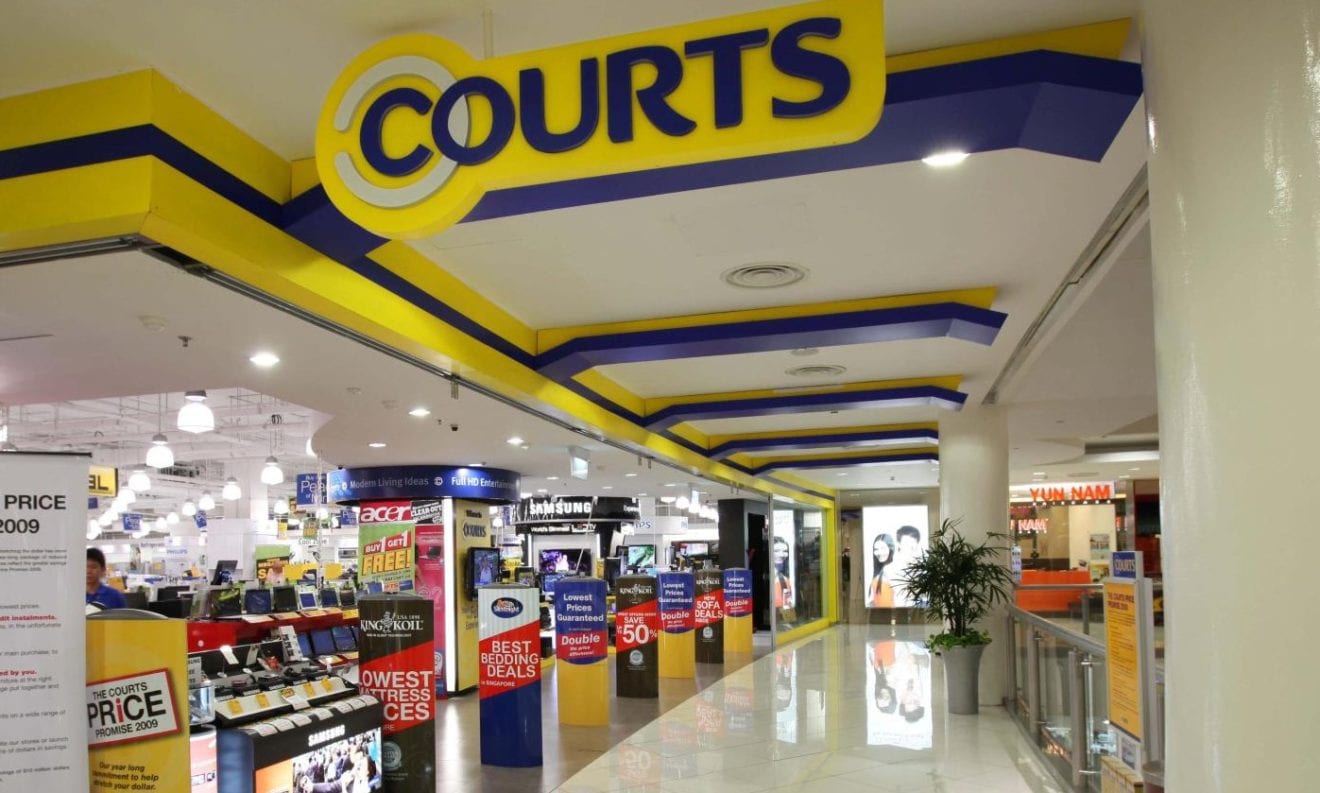
    Electronics and furnishings retailer Courts Asia has reported a modest 0.3 per cent increase in profits for the third quarter – against a background of a stagnant domestic market.

    The company’s sales grew a healthy 6.1 per cent – mostly due to increased sales of high value electronics such as iPads and smartphones. Total revenue was S$204.7 million; net profit $4 million.

    “In Singapore, the macro environment is very much against the consumer market at the moment,” CEO and executive director Dr Terry O’Connor said during a conference call briefing on the result.

    “The [Singapore] economy is going through some restructuring in terms of the residential property market, the total debt servicing ratio, the labour market and restrictions,” he said.

    However, O’Connor remains upbeat about the domestic market, predicting the “sluggish” current trading environment would eventually pass.

    Singapore, which accounts for nearly 70 per cent of Courts Asia’s sales, saw sales grow 7.9 per cent and in Malaysia sales rose 20 per cent. Indonesia, which now accounts for 1.7 per cent of Courts Asia’s sales, reported an increase of 6.1 per cent.

    The company’s gross margin fell by 2.4 percentage points to 29.7 per cent which O’Connor said was due to a shift in the sales mix towards electrical goods and a higher ratio of bulk sales which return smaller margins.

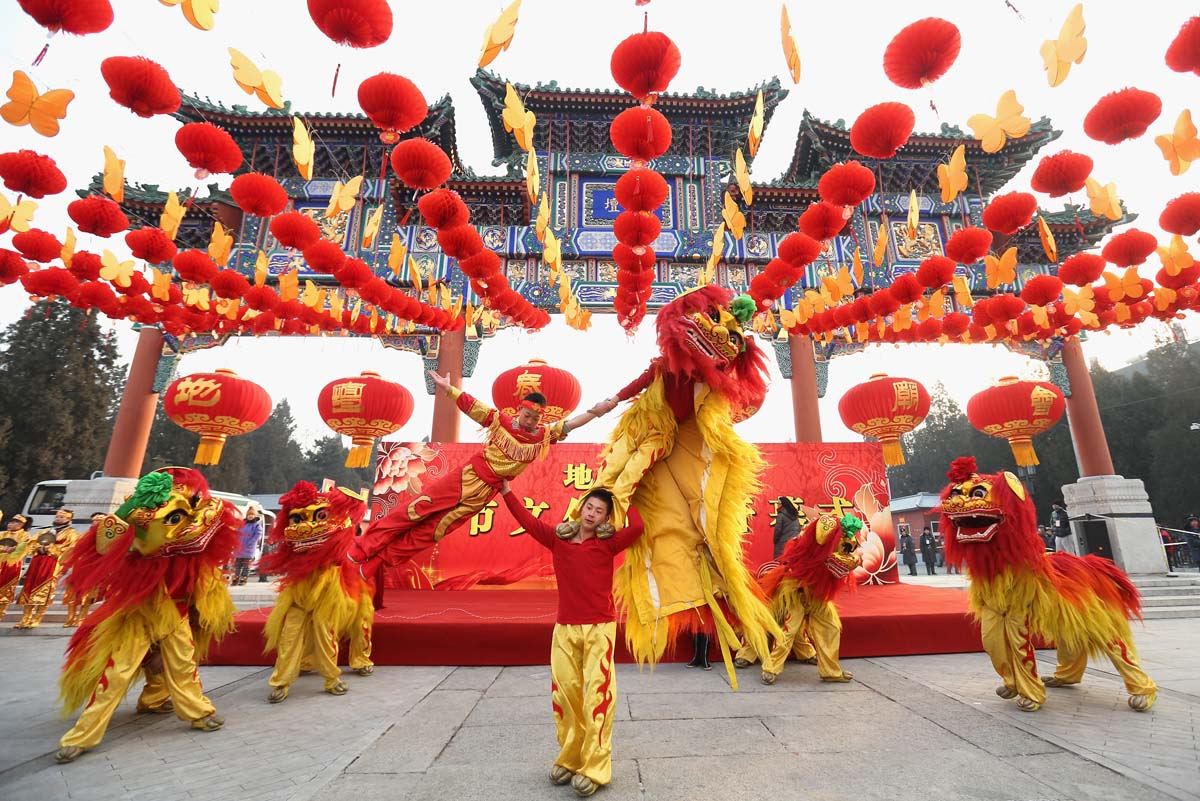
  • Spring Festival retail gloom

    Spring Festival retail gloom

    Fortune seems to have favoured Macau over Hong Kong during last week’s Spring Festival.

    But both territories suffered from the ongoing change in Mainland Chinese travel habits.

    Data from the Macau Government Tourism Office showed 548,536 tourists arrived in Macau between February 7 and 10 – which equates to a 5.2 per cent increase over last year’s holiday season. Some 70 per cent of them came from Mainland China.

    However, anecdotal reports from Macau shopkeepers say the increased visitor numbers during the Spring Festival retail break did not translate into higher spending in stores.

    According to the Macau Daily Times “a majority” of retailers it spoke to reported “a drastic drop in business” from mainland visitors.

    One – a fireworks vendor – reported a 50 per cent decline in sales, and other retailers selling apparel and beauty products also reported a decline.

    One cosmetics retailer said sales rose 10 per cent, and snack food stores reported trading was on a par with last year.

    In Hong Kong, where retail sales estimates have yet to be reported, the number of Mainland Chinese visitors fell by about 10 per cent – and the number of groups by an alarming 70 per cent, to about 120 groups per day. So clearly, there will have been a negative impact on retail sales for the week.

    Shopkeepers in Mong Kok, where a violent riot erupted on Monday, reported far fewer tourists in the area.

    “From Monday till now, no one would like to come to this area,” one retailer told local news media.

    “There are more police than tourists. My business is not even half as good as last year, what can I do? What should I do after the holiday?”

    But on the mainland, Ministry of Commerce data shows retail sales rose 11.2 per cent during the Lunar New Year ‘Golden Week’ from February 7 to 13. According to the data, sales by retailers and catering firms grew to about 754 billion yuan, or US$114.879 billion.

  • Brioni Cambodia opens in Phnom Penh

    Brioni Cambodia opens in Phnom Penh

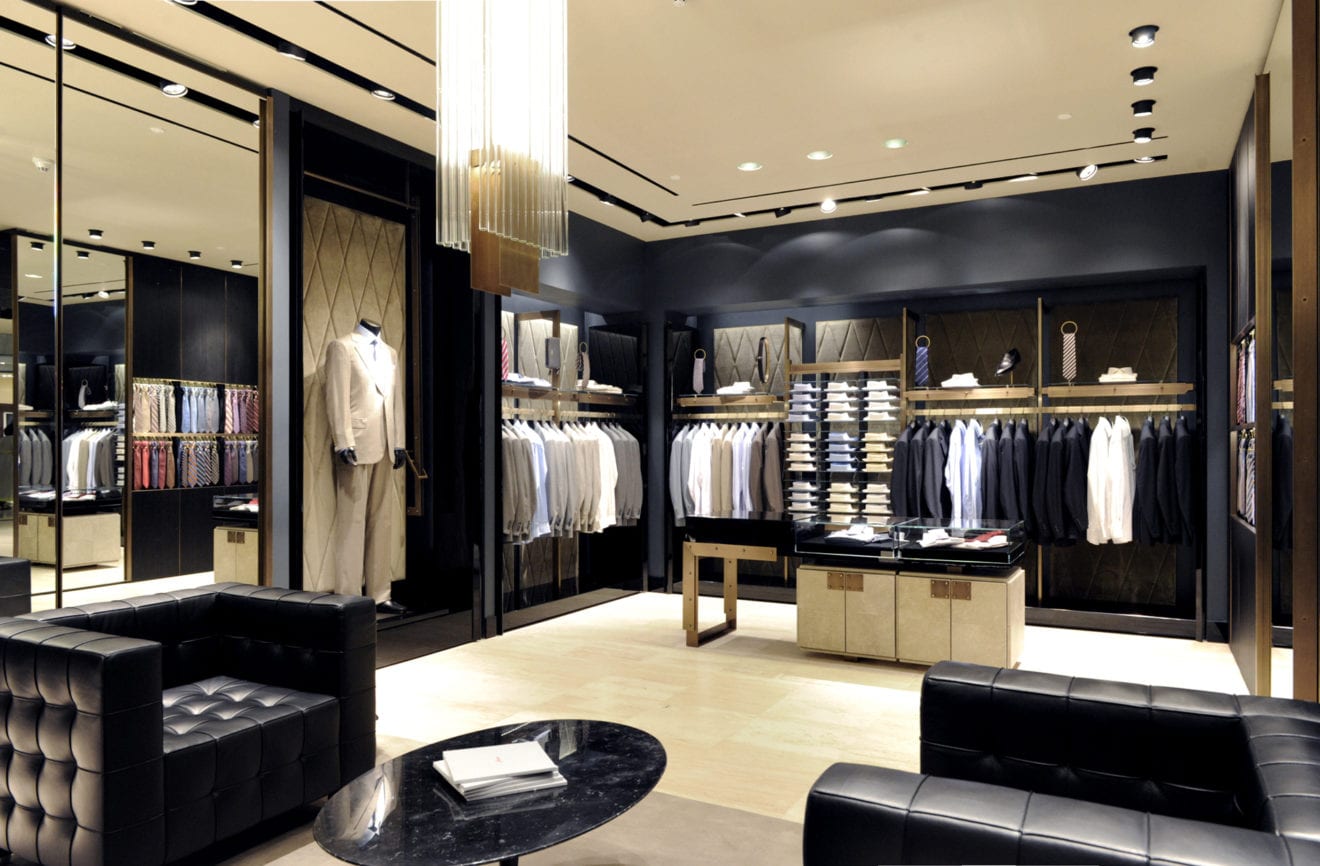
    Italian luxury menswear brand Brioni has opened its first boutique in Cambodia, at the luxury Vattanac Capital Mall in the heart of Phnom Penh’s emerging business and financial district.

    It was launched with a private cocktail event featuring evening jackets from the Brioni archive and representing seven decades of the brand’s history.

    Covering 100 sqm, the inaugural Brioni Cambodia boutique offers formalwear, leisurewear and accessories in an atmosphere that is described as melding the masculinity of a gentleman’s club with the elegance of a private “dressing room”. Both traditional and contemporary in approach, it features glass surfaces and bronzed brass, Eramosa marble, bahia wood with brass inserts, Navona travertine floors, and ceilings enriched with a sophisticated lighting system.

    “The economy in this market is seeing robust growth and we believe in its potential,” says Brioni CEO Gianluca Flore.

    Founded in Rome in 1945, Brioni designs, develops and manufactures exclusive Su Misura garments and ready-to-wear collections as well as leather goods (handbags, small leather goods and luggage), shoes, eyewear and fragrance. The house of Brioni is part of global luxury and sport and lifestyle group Kering.

  • Profits plunge for Eu Yan Sang

    Profits plunge for Eu Yan Sang

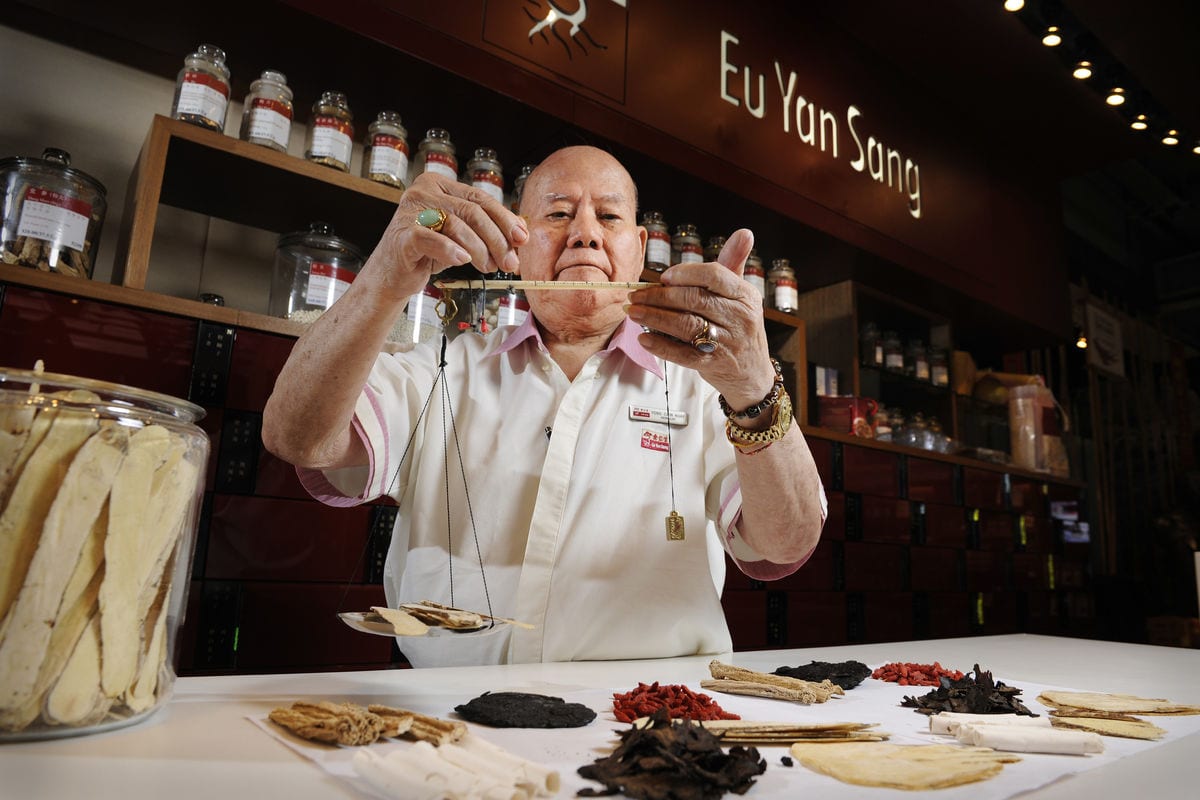
    A 75 per cent plunge in net profit has been reported by Singapore health and wellness company Eu Yan Sang International for its second quarter.

    However, higher sales in Singapore and Australia helped it post marginal improvements in revenue. This edged up 1 per cent over the three months ended December 31 to reach S$85.61 million ($61.14 million) compared to the same period a year earlier.

    Lower foreign exchange gain couples with higher distribution and selling expenses dragged its net profit down to S$498,000 from S$1.98 million, the company says.

    For the half-year, revenue dipped by 4 per cent year-on-year because of lower revenue from its wholesale segment in Hong Kong and the overall weakening of the Malaysian ringgit.

    Net profit for the period fell 87 per cent to S$348,000.

    “We are glad that Hong Kong’s rate of decline is showing signs of moderation and that there is an improvement in Malaysia,” says chief executive Richard Eu.

    Lower spending by mainland tourists a continuing challenging retail environment were blamed for the lower Hong Kong sales.

    “We are looking to expand the retail network within Australia and Malaysia, as well as the wholesale network in Singapore, to continue on this revenue rejuvenation journey for the group,” says Eu, who notes an “encouraging” outlook in China through strategic joint ventures.

  • China Jo-Jo finds gold online

    China Jo-Jo finds gold online

    While its physical stores and wholesale revenues slipped, pharmacy retailer China Jo-Jo Drugstores recorded an increase of about 96.7 per cent in its online revenues during the third quarter ended December 31.

    Through its own retail stores (59 in Zhejiang Province), wholesale distribution and online pharmacy, the New York-listed company is a leading provider of pharmaceutical and healthcare products in China.

    Overall, its revenues of about $24.7 million for the period were up 15.9 per cent. Its retail drugstores brought in $12.9 million, down 2.7 per cent, while its wholesale businesses netted about $3.1 million, a decrease of of 13.8 per cent. However, its online pharmacy revenue rose 96.7 per cent to total about $8.6 million.

    This gave the company a gross profit of about $4.8 million for the quarter, up 52.3 per cent on the previous year. The online profit soared 194.1 per cent to about $1.8 million, while its stores had a 20.3 per cent increase to about $2.8 million.

    Over the nine months of the financial year, revenue totalled $68.6 million, up 22 per cent, with gross profit up 56.1 per cent to about $13.2 million.

    Sales and marketing expenses grew by $1.1 million, or 50.5 per cent, mainly because of higher labour costs and service fees for its eCommerce platforms.

    “We are seeing improvements in gross margin from increased volume in our online business as our revenue mix continues to shift to our fast-growing online business,” says chairman/CEO Lei Liu, who predicts a strong quarter to end the fiscal year.

    “Investments and efforts in building critical mass to service China’s consumer needs in the pharmacy space is taking shape, creating new opportunities to diversify our revenue base.”

    Closer collaborations with large local pharmaceutical vendors are also providing cost advantages. Co-operation with business-to-consumer online vendors have expanded, with the company’s products listed on such platforms as Taobao, JD and www.yhd.com and customers being directed back to China Jo-Jo’s website.

    Meanwhile, the company continues to benefit from working with large insurance companies such as The People’s Insurance Company of China. Commercial health insurance in China continues to expand to supplement the nation’s social health insurance.

    Lei Liu says there is a “relentless call” for healthcare reform in China, including an end to hospitals dominating prescription sales. Meanwhile, China Jo-Jo has also seen its loyalty program expand to embrace more than 2 million customers.

  • Heavy Rain To Release On March 1st For PS4, Retail Version Confirmed In EU And Asia

    Heavy Rain To Release On March 1st For PS4, Retail Version Confirmed In EU And Asia

    Quantic Dreams has announced the release date of Heavy Rain for the PlayStation 4. According to a press release, the game will launch on March 1st for the PlayStation 4 in North America and March 2nd for Europe and Asia.

    Heavy Rain was originally released for the PlayStation 3 and it was confirmed for the PlayStation 4 along with Beyond Two Souls last year. These games will be released in a bundle for retail in Asia and Europe but will be sold digitally in North Ameirca.

    If you were interested in picking up a copy of Heavy Rain in North America, you can get it on March 1st, although it is digital only release there. For Asia, Quantic Dream is releasing the game with Beyond Two Souls in a bundle on March 2nd. Europe and UK will also get similar bundle on March 2nd and 4th respectively.

    Heavy Rain is a mystery thriller that was released to critical acclaim exclusively for the PlayStation 3 back in 2010. The game was developed by Quantic Dream, who followed it with their next game: Beyond Two Souls. Both of these are finally getting released for the PS4.

    If you already own Beyond Two Souls digitally, you can get Heavy Rain for a discounted price once it launches on March 1st.

    Quantic Dream are currently working on a brand new project for PS4 called Detroit: Become Human. It was revealed at Gamescom 2015 and will be released exclusively for the PS4 sometime in future.

  • China’s Ambassador to Qatar takes HIA tour

    China’s Ambassador to Qatar takes HIA tour

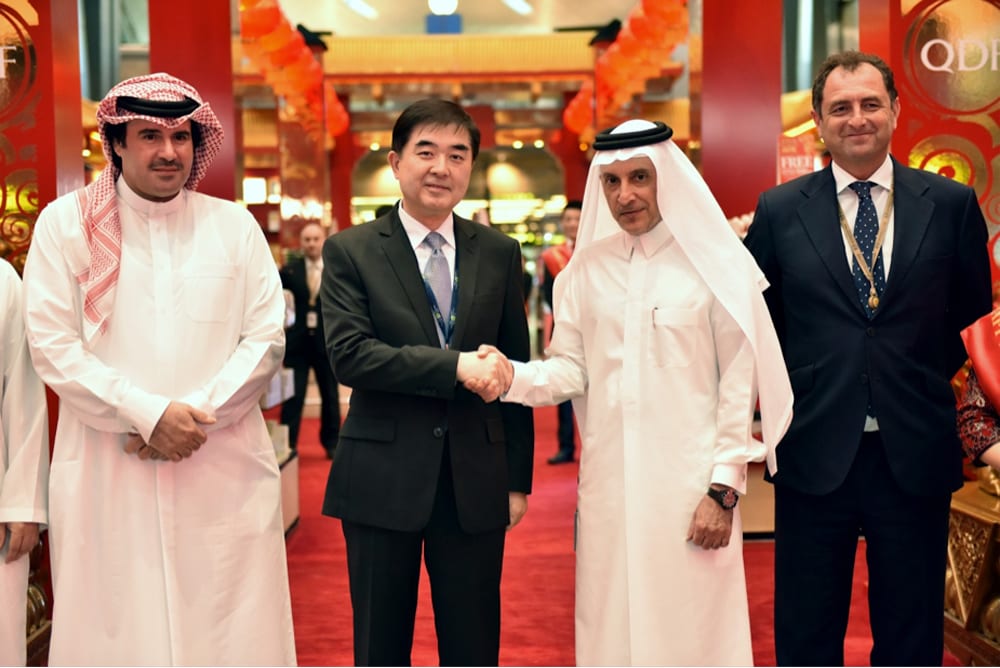
    China’s Ambassador to Qatar, His Excellency Li Chen, and Qatar Airways Group Chief Executive, His Excellency Akbar Al Baker, commemorated  Chinese New Year, with a visit to Qatar Duty Free’s traditional Chinese pavilion on 10 February 2016.

    Hany Al Deeb, UnionPay Regional Country Manager, joined H.E. Mr. Li Chen and H.E. Mr. Al Baker on a tour of a Chinese pagoda located in Hamad International Airport (HIA).

    As reported, the pavilion is offering passengers discounts of up to 20%, spending rewards and an array of enticing promotions to mark China’s Year of the Monkey.

    UnionPay and Qatar Duty Free have also collaborated to offer passengers traditional red envelope retail vouchers worth QR100 for customers who purchase items valued at QR1000 (US $274) and above using a UnionPay payment card.

    H.E. Mr. Al Baker, said: “I am honoured to visit Qatar Duty Free’s Chinese Pavilion with His Excellency Mr. Li Chen. Chinese New Year is an important time for families to gather together and enjoy each other’s company.

    “For many families, this means travelling to see their loved ones, to enjoy the traditional New Year’s feasts and special holiday markets. For those travelling, we wanted to bring a taste of this tradition to their actual travel experience, by again building our version of the holiday market, with special products and promotions.”

    The traditional red and gold pavilion is positioned directly behind the famed Lamp Bear at HIA, serving as a ‘festive attraction’ as well as a ‘starting point for bespoke shopping tours’ designed specifically for Chinese passengers. Chinese language-dedicated Qatar Duty Free staff, fluent in Mandarin, Cantonese and other Chinese dialects, are available upon request to lead passengers around HIA showcasing their favourite brands and products, says QDF>

    Passengers will discover an array of specially curated products inside the elaborate Chinese pagoda, which will remain in HIA until mid-March in recognition of the Qatar-China 2016 Year of Culture.

    Savings of up to 20% are being offered on Qatar Duty Free fragrances, cosmetics, skincare, confectionery, luxury watches, fine jewellery, and other gift items in the Chinese pavilion.

    Additional Chinese New Year discounts of up to 10% are also available on brands in selected boutiques in HIA. Passengers can choose from a wide variety of duty free products at amazing prices, including promotions from Tiffany, TAG Heuer, Chopard, and Bulgari. Popular products available within the Chinese pavilion include Godiva chocolates, Prada perfume, La Prairie skin care, Swarovski jewellery, Harrods bags and Marmalade Market gift items.

  • Ratan Tata backs retail tech startup SnapBizz

    Ratan Tata backs retail tech startup SnapBizz

    Tata Sons’ chairman emeritus Ratan Tata has invested an undisclosed amount of funding in retail technology startup SnapBizz Cloudtech Pvt Ltd.

    Earlier last month, the startup, which provides an Android-based connectivity platform to local offline grocers, raised $7.2 million (around Rs 48.7 crore) from Jungle Ventures, Taurus Value Creation and other VC firms, to expand across key cities in India.

    Before that, the Singapore-headquartered firm, which has an office in Bangalore, received a seed funding of $1.7 million from Qualcomm, Jungle Ventures, National Research Foundation of Singapore, Taurus Value creation and Blume Ventures.

    This is the eighth investment in 2016 for Tata, one of India’s most active angel investors last year. This year, Tata has also invested in tea etailer Tea Box, coupons site CashKaro, baby products e-commerce site FirstCry, startup analytics firm Tracxn, animal lovers’ portal DogSpot, Invictus Oncology and Moglix. He has backed 29 startups since retiring as Tata Group’s chief.

    “A visionary of Tata’s stature showing confidence in SnapBizz is certainly a big boost for our business idea and will continue to accelerate the digital revolution in India’s kirana stores,” said Prem Kumar, CEO and founder, SnapBizz, in a statement.

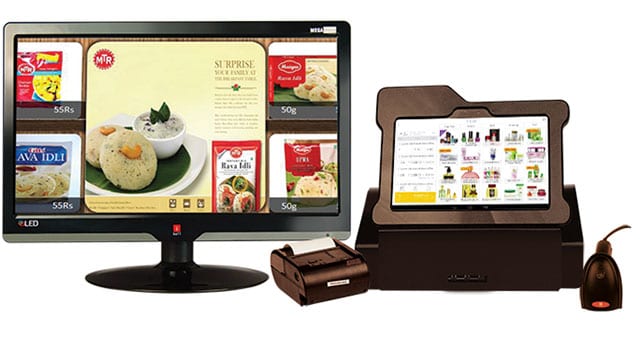
    Founded in 2013 by Prem Kumar and Yashwant Prakash, SnapBizz aims to develop a mobile technology platform to connect the various stakeholders of a fragmented retail market ecosystem. SnapBizz’s Android-based, cloud-connected solution in the form of a tablet, barcode scanner, printer and a consumer-facing LED display enables merchants to manage their billing inventory and customer engagement.

    SnapBizz currently works with over a thousand kirana stores across Mumbai, Pune, Delhi, Hyderabad, Chennai and Bangalore and aims to expand its footprint across tier 1 and 2 cities.

  • Why there is no need to wait for a stable market before launching Shenzhen-Hong Kong stock

    Why there is no need to wait for a stable market before launching Shenzhen-Hong Kong stock

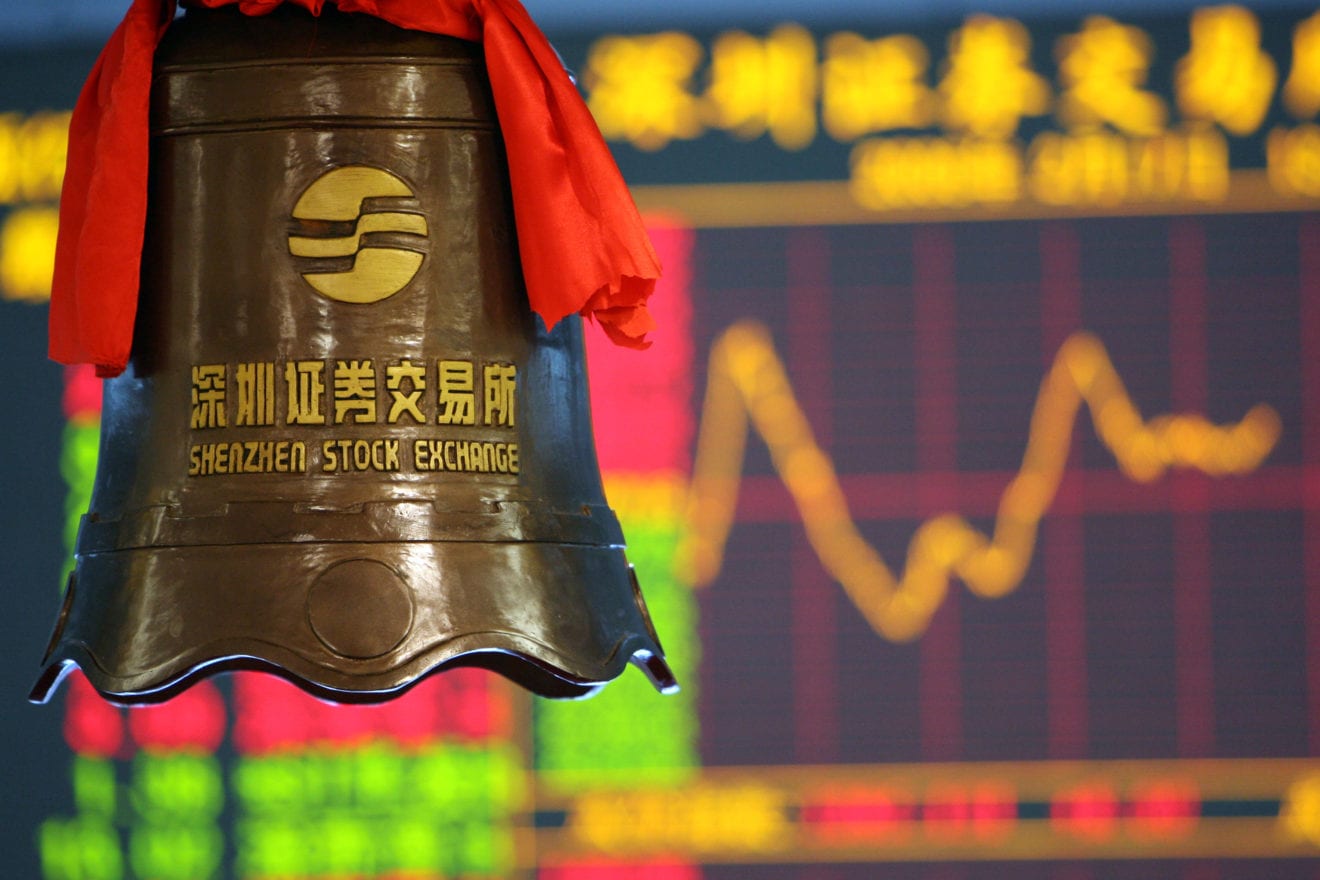
    Beijing should not wait for the market to stabilise to launch the Shenzhen-Hong Kong stock connect scheme and should introduce it as soon as possible to help attract more capital inflow to the mainland China.

    Hong Kong Exchanges and Clearing chairman Chow Chung-kong said last Thursday, on the first trading day of the Year of the Monkey, that the long-awaited stock connect scheme between the Hong Kong and Shenzhen stock markets would definitely be launched but it would need to wait for the stock market to stabilise.

    After the Hang Seng Index lost more than 700 points on Thursday in the biggest fall on the first trading day of a Lunar New Year since 1994, brokers interpreted his remarks as meaning the scheme would be launched in the second half of this year at the earliest.

    But that would not be appropriate because any broker will tell you investors like to trade when the markets have big movements instead of in quiet markets. Even in a falling market, people like to buy when the share prices drop to more reasonable levels.

    It should be left to investors and not the regulators to decide when it is appropriate to enter the market

    As such, the mainland regulator should launch the new scheme whenever the platform and regulatory measures are ready and not when the market is stable. It should be left to investors and not the regulators to decide when it is appropriate to enter the market.

    Then there’s the capital flow issue. The depreciation of the yuan, which dropped more than 5 per cent against the US dollar last year and is expected to fall further this year, has led to many mainlanders rushing to buy US dollar or Hong Kong dollar investment products and life insurance policies to hedge their risks.

    The launch of the Shenzhen-Hong Kong stock connect would not worsen the situation because most mainland investors have accounts in both the Shanghai and Shenzhen stock markets. Investors who want to trade Hong Kong stocks could already have done so by trading via the Shanghai-Hong Kong stock connect.

    The launch of the Shenzhen-Hong Kong stock connect would, however, open a new leg and new market for northbound trading – with international investors able to trade Shenzhen-listed companies in addition to Shanghai A shares.

    A recent survey by the Hong Kong Investment Funds Association found international investors were interested in the Shenzhen stock markets because it is home to many potential high growth companies. Retail brokers in Hong Kong would also like to see Hong Kong investors allowed to trade Shenzhen stocks because it would boost their commission income.

    That means the launch of the Shenzhen-Hong Kong stock connect is likely to result in new capital inflow to mainland China from both international fund houses and Hong Kong retail investors.

    More importantly, many fund managers believe that a precondition for A shares to be added to MSCI’s benchmark emerging markets index is giving them the ability to trade in the Shenzhen stock market.

    MSCI said in June last year that its decision to defer the inclusion of A shares in its global emerging market benchmarks for a second year reflected lingering investor concerns over market accessibility.

    If Beijing allows the Shenzhen-Hong Kong stock connect to be launched soon, it would boost the chances of A shares being included in MSCI indices. And that would lead to more exchange traded funds buying A shares, further boosting capital inflow.

    There is really no need to wait for the market to stabilize before launching the Shenzhen-Hong Kong stock connect.

  • Chinese New Year Holiday Retail Sales Spike 11.2%

    Chinese New Year Holiday Retail Sales Spike 11.2%

    China’s retail sales over the Spring Festival holiday rose 11.2 percent from the same vacation period a year earlier, with cinemas posting sharp increases in box-office sales, the country’s Ministry of Commerce said in a statement Saturday.

    Retail sales and restaurant receipts in the world’s second-largest economy totaled about 754 billion yuan ($115 billion) in the week-long holiday period that started Feb. 7, the eve of the Lunar New Year, according to the statement. This year’s growth was similar to the 11 percent increase posted in last year’s holiday period.

    Services for the first time generated more than half of China’s gross domestic product last year, at 50.5 percent. Higher household incomes allow families to embrace a middle-class life as the country’s leaders continue to engineer a shift toward services and consumption, and away from manufacturing and investment. Services generate more jobs per yuan of output than China’s factories, which is crucial as the country adjusts to a slower economic growth rate.

    Box-office sales at China’s cinemas over the first three days of the Lunar New Year surged about 80 percent from a year earlier, to nearly 1.7 billion yuan, the statement said. Total ticket sales over the first three days of this year’s Lunar New Year almost equaled the total for the whole week-long holiday last year, according to the statement.