Author: Mei Ling Tan

  • Indonesia warns messaging apps to drop same-sex emoticons

    Indonesia warns messaging apps to drop same-sex emoticons

    Indonesia’s government has demanded that instant messaging apps remove stickers featuring same-sex couples, in the latest high-profile attempt to discourage visible homosexuality in the socially conservative country.

    The government move comes after a social media backlash against the popular smartphone messaging app Line for having stickers, which are an elaborate type of emoticon, with gay themes in its online store.

    Information and Communication Ministry spokesman Ismail Cawidu said Thursday that social media and messaging platforms should drop stickers expressing support for the LGBT community, a common abbreviation for lesbian, gay, bisexual and transgender.

    “Social media must respect the culture and local wisdom of the country where they have large numbers of users,” he said.

    Homosexuality is not illegal in Indonesia, but is a sensitive issue in the Muslim-majority nation of more than 250 million people. At the same time, most of Indonesian society, which follows a moderate form of Islam, is tolerant, with gay and transsexual entertainers often appearing on television shows.

    Line on Tuesday said it had removed all LGBT-related stickers from its local store after receiving complaints from Indonesian users. Twitter and Facebook had exploded with criticism of Line and its competitor WhatsApp for containing gay content.

    Ismail said the government would tell WhatsApp to do the same as Line.

    Last month, Research, Technology and Higher Education Minister Muhammad Nasir said openly gay students should be banned from the University of Indonesia’s campuses. His statements followed controversy over news a sexuality research center planned to offer counselling services for students.

    Nasir’s statement sparked public controversy in Indonesia for weeks, with objections from human rights groups but support from the Indonesian Ulema Council, an influential board of Muslims clerics.

    Gay rights advocate King Oey urged the government to respect international treaties signed by Indonesia protecting the rights of minorities and women.

    “Gays and lesbians are not illegal in Indonesia,” Oey said. “We urge people who are concerned with human rights to not sit by silently.”

    In 2014, lawmakers in Aceh, a conservative Indonesian province, passed a law that punishes gay sex by public caning and subjects non-Muslims to the region’s strict interpretation of Islamic sharia law.


  • Multi-channel shopping gives malls a shake-up

    Multi-channel shopping gives malls a shake-up

    With the rising trend of consumers buying lower-value goods online, shopping malls are likely to attract higher-priced fashion and beauty brands, while malls that integrate digital-savvy retailers are likely to gain market share, research from property consultancy JLL has shown.

    Ms Regina Lim, national director, Advisory & Research, Capital Markets at JLL, said: “We expect to see more Singapore residents using multiple channels to shop over the next three years. Online purchases of non-experiential goods such as groceries, household and electronic goods are likely to grow exponentially.

    “Suburban malls may cut back on space for these trades while increasing the allocation to clothing/footwear, health/beauty, F&B, and gifts and toys. Well-managed suburban malls could do well in 2016, gaining market share in a challenging market. By pro-actively managing the tenant mix and attracting more higher-priced brands, suburban retail mall rents could remain healthy and grow,” she added.

    As more consumers shopped online, and with more Singaporeans shopping overseas while tourist retail spending dropped, retail sales growth in Singapore has slowed over the last three years, leading to islandwide retail rents falling by 4 per cent in 2015, said JLL.

    About 1.44 million Singapore residents shopped online in 2014, 30 per cent higher than in 2012, the property consultancy cited Infocomm Development Authority data as showing. The sharp increase came from shoppers over 35, as those in this group who used portable devices to access the Internet rose 50 per cent over two years. Over 70 per cent of those under 35 had already shopped online in 2012, showed the data.

    More shoppers buying groceries, computer equipment online

    Other than airline and movie tickets, Singapore residents are increasingly buying clothing, footwear and groceries, as well as household and electronic goods, online, according to the study by JLL. The number of shoppers buying groceries and computer equipment rose about 70 per cent in the last two years, it said.

    Online sales of groceries and electronic goods are expected to grow exponentially in the next three years, said JLL. Over 60 per cent of shoppers already buy some clothing/footwear online, and this seems to have stagnated. Increasingly, shoppers buy lower-value goods online and higher-value goods priced above S$500 in a physical store, it added.

  • J. Cort’s cements Part&Ma tie-up at CDG

    J. Cort’s cements Part&Ma tie-up at CDG

    Cigar house J. Cortès is intensifying its cooperation with commercial animation company, Part&Ma, at Lagardère Travel Retail stores at Paris Charles de Gaulle airport following good growth in 2015.

    This year, the partnership will reach a higher level to support the brands, J.Cortès and Neos, “with monthly reports and immediate interaction assuring that travellers will always find their products on the right spot, labelled with the right price” says Thomas Gryson, J. Cortès Travel Retail Coordinator.

    J.Cortès has invested in product training for Part&Ma staff (pictured) in Belgium where they had intensive and interactive sessions on the brand’s products and sales programmes. Later the group was taken to the cigar factory, Neos in Handzame, to see all aspects of the production of cigars/cigarillos.

    “J.Cortès Cigars is supporting its travel retail business by investing in many areas,” says Gryson. “One of the important is training the staff of airport shops and their partners. J. Cortès strongly believes that knowledge is the start of everything.”

    Last year the house invested in customised product and sales workshop for the staff of WDFG Queen Alia Airport, Jordan and for DFS staff at Changi, Singapore.

  • Coach China leads transformation

    Coach China leads transformation

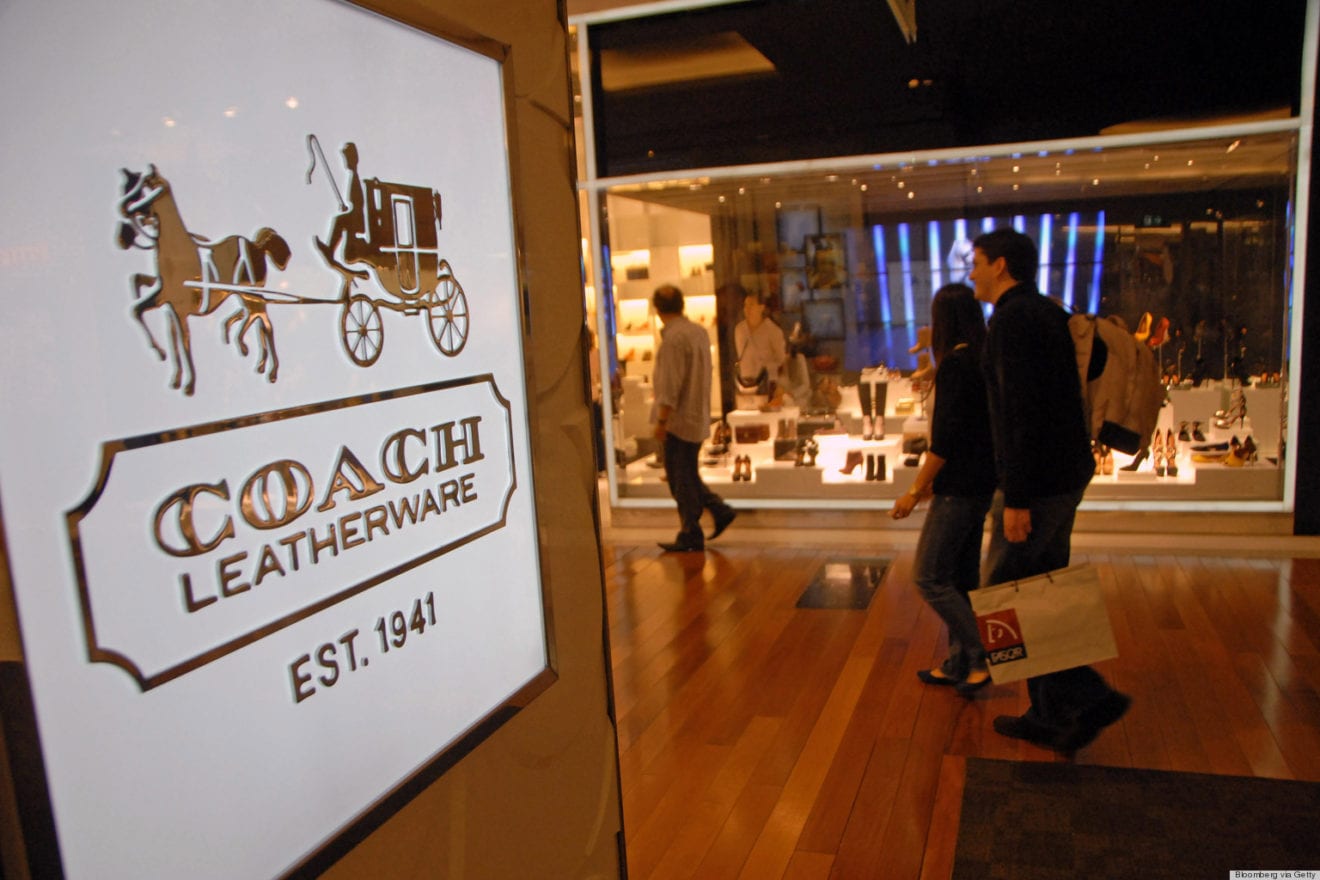
    Coach Inc says its net sales totalled US$1.27 billion for the second fiscal quarter – up 4 per cent year on year, and up 7 per cent on a constant currency basis.

    China was a primary driver of the increase in the three months to December 26, with sales up in the double digits and Japan also performed well for the New York based luxury accessories and lifestyle brands, which also owns Stuart Weitzman.

    Gross margin slipped from 68.9 per cent to 67.4 per cent, but gross profit rose $18 million to $859 million.

    Total Coach China sales rose 2 per cent in dollars and 5 per cent in constant currency with double-digit growth and positive comparable store sales on the Mainland offset in part by continued weakness in Hong Kong and Macau.

    In Japan, sales rose 2 per cent on a constant currency basis, despite a decrease in square footage and consistent with expectations, while dollar sales declined 3 per cent, reflecting the weaker yen.

    “Sales for the remaining directly operated businesses in Asia grew modestly in constant currency but declined in dollars, while Europe remained very strong, growing at a double digit pace in both total and comparable store sales,” the company said in its earnings statement.

    CEO Victor Luis said the result reflects “the most significant progress to date” on the company’s transformation plan despite the difficult retail environment globally.

    “We drove further sequential improvement in our North America bricks and mortar business – led, as expected, by our retail stores, while our outlet store channel also strengthened against a backdrop of lower tourist traffic and a highly promotional environment.

    “Our international businesses posted strong growth on a constant currency basis, highlighted by double-digit increases in Europe, and Mainland China, as well as sales gains in Japan. Overall, our results continue to give us confidence that the cumulative impact of our actions will result in a return to top line growth this fiscal year and positive North American comps by our fourth quarter.

    “We were also excited about Stuart Weitzman’s results during the quarter, which exceeded expectations. Importantly, we are effectively integrating Stuart Weitzman to Coach Inc while continuing to successfully execute the Coach brand transformation,” said Luis.

    “At points of sale, sales in international wholesale locations increased slightly, driven by strong domestic performance offset in large part by relatively weak tourist location results. Net sales into the channel grew significantly from prior year positively impacted by shipment timing to ensure appropriate inventory positions for Chinese New Year,” the company said.

  • Pernod Ricard reports 3% first half organic growth

    Pernod Ricard reports 3% first half organic growth

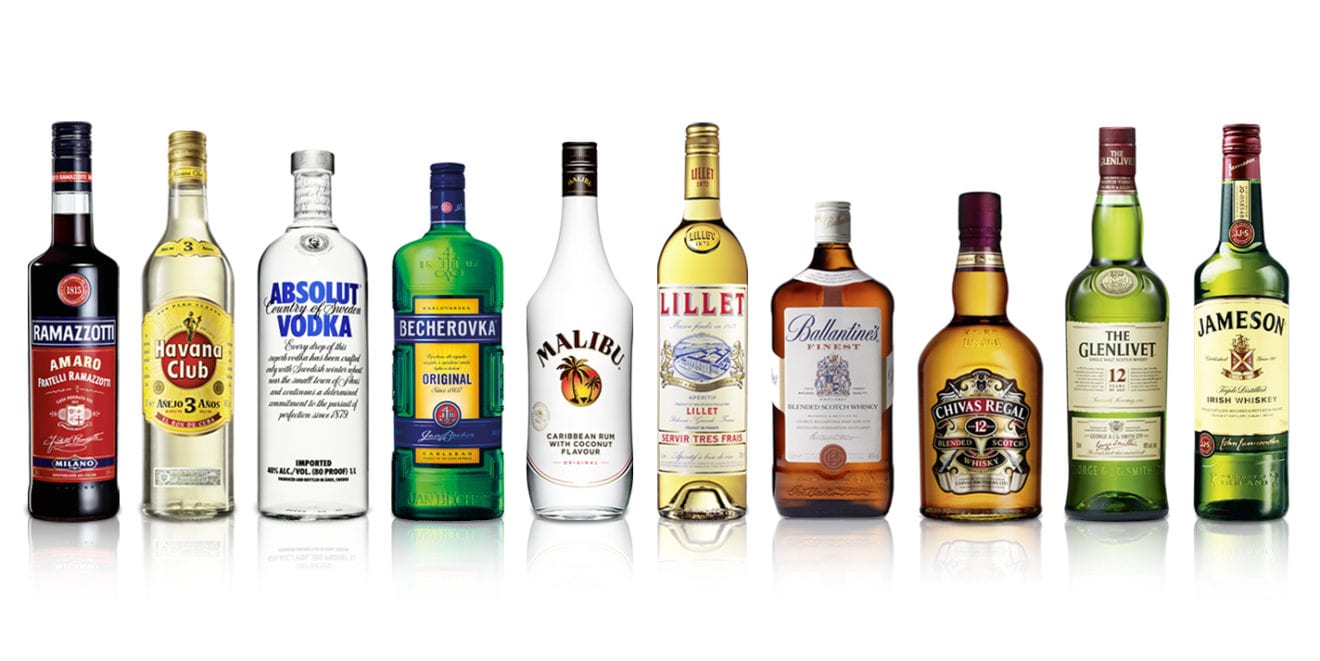
    Pernod Ricard has delivered “solid” first half results as the spirits maker saw 3% organic sales growth in the six months to 31 December 2015.

    Sales totalled €4.96bn during the period which represented “gradual improvement” against the same period in 2014.

    Reported sales growth was 7%, boosted by the weakness of the euro compared to dollar and sterling revenues.

    Sales growth in the Americas was 4% compared to 2% growth a year ago and was largely driven by the US (3% up against flat growth last year).

    Europe saw a 1% sales improvement against flat sales in 14/15, with the growth driven by Spain and the UK, though there was decline in France and Russia.

    Results of the world was 5% ahead of last year, with double-digit growth in India, Africa/Middle East and Australia, but China fell by 2% and by 8% if adjusted for the earlier Chinese New Year.

    Pernod Ricard said it saw strong performance from Jameson, Martell, The Glenlivet, Perrier-Jouët, Mumm and Indian whiskies.

    However, performance was weaker for Chivas (due to Asia and travel retail) and Absolut (albeit amid improving underlying trends in the US).

    Alexandre Ricard, chairman and CEO said: “Our half year results are solid, delivering a continued improvement in Sales. Our strategy has remained consistent and is driving results, in particular in terms of innovation.

    “For full year FY15/16, in a still contrasted macroeconomic environment, we plan to continue improving our business performance year-on-year. We will continue to support priority markets, brands and innovations while focusing on operational excellence.”

    The company expects to deliver organic profit growth from recurring operations of between 1%-3%.

    Pernod Ricard shares fell 6.7% today to €92.89 on the continued weakness in China.

    Pernod Ricard has also instigated a number of organisational changes and a raft of job changes in its senior team effective from 1 July 2016.

    Firstly it is to simplify its Americas region to concentrate on its core business: the United States and Canada. Secondly, it will create two new management teams based around the lead countries of Mexico and Brazil in South America, reporting to Pernod Ricard EMEA. Thirdly, it has created the role of CEO, Global Travel Retail, which will be taken by Mohit Lal, currently MD of travel retail Asia.

    Job moves include Paul Duffy, currently chairman & CEO of The Absolut Company who will become CEO of Pernod Ricard North America, and is replaced at Absolut by Anna Malmhake, currently CEO of Irish Distillers.

  • Eu Yan Sang reports 75% plunge in Q2 net profit

    Eu Yan Sang reports 75% plunge in Q2 net profit

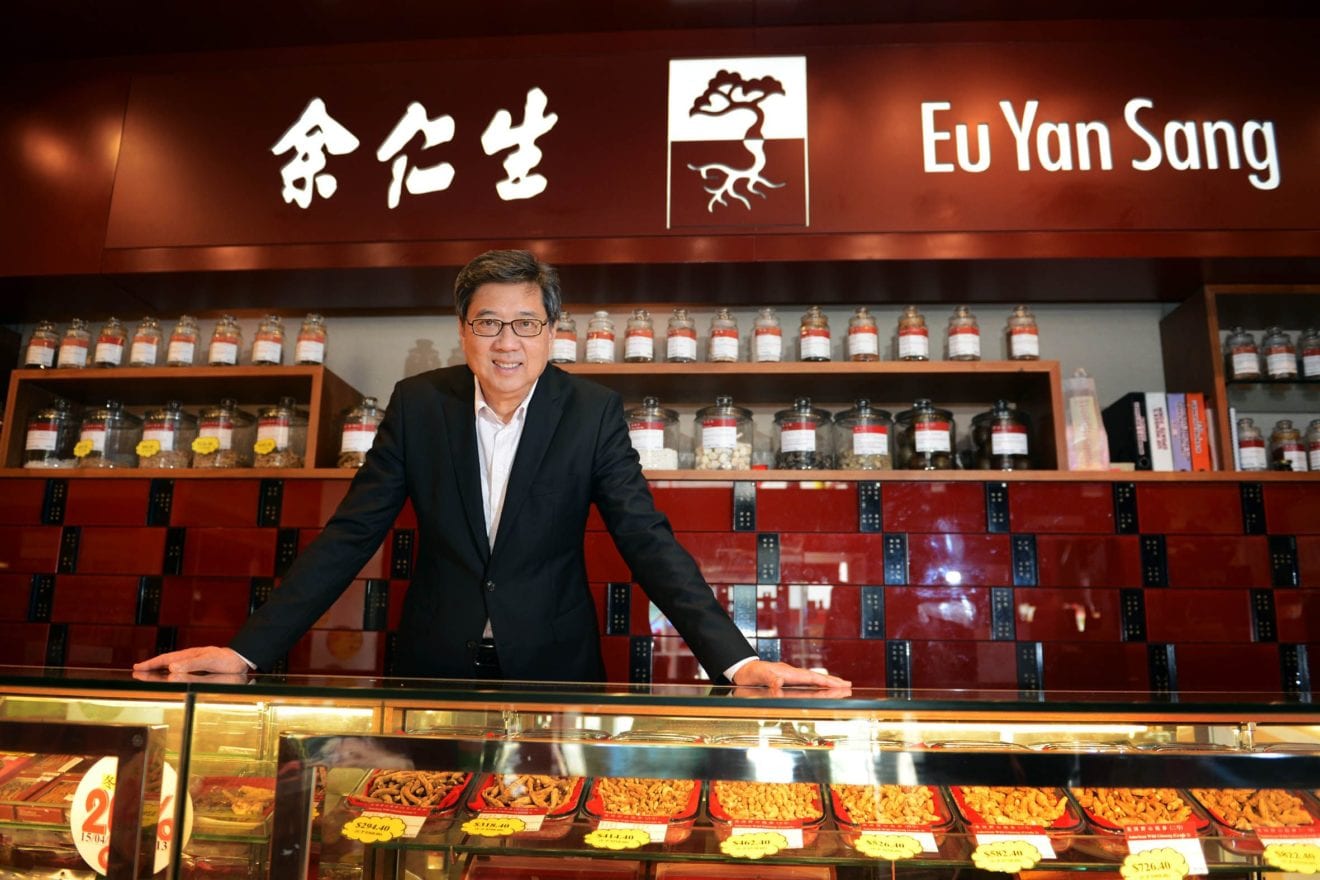
    Mainboard-listed Eu Yan Sang International said on Friday (Feb 12) its net profit for the second quarter plummeted 75 per cent, hurt by a weak Malaysian ringgit and lower revenue from the Hong Kong market.

    Net profit for the three months to Dec 31 was S$498,000, down from S$1.98 million in the same period a year ago.

    Revenue, however, was up 1 per cent at S$85.61 million, compared with S$84.69 million a year ago, mainly due to higher sales from Singapore and Australia.

    Revenue from Hong Kong declined 13 per cent in the quarter, due to a decline in spending by mainland Chinese tourists and the “ongoing challenging retail environment”, the company said. This was partially offset by the strong Hong Kong dollar, which helped to reduce the revenue decline to 5 per cent when translated to Singapore dollars.

    Revenue from Malaysia rose 14 per cent due to higher sales, but as a result of the weak ringgit, was down 8 per cent when translated into Singapore dollars.

    In Australia, revenue rose by 18 per cent due to an increase in the number of outlets and higher sales. However, the appreciation of the Singapore dollar against the Australian currency resulted in only an 8 per cent increment in revenue in Singapore dollars, Eu Yan Sang said.

    Revenue from Singapore improved by 13 per cent during the quarter, due to the launch of new products and promotional campaigns.

    “Despite the challenging business environments in key markets of Hong Kong and Malaysia, we are glad that Hong Kong’s rate of decline is showing signs of moderation and an improvement in Malaysia. Singapore and Australia have continued to show positive growth and added resilience to our Group’s results,” Group CEO Richard Eu said.

    The company plans to expand its retail network in Australia and Malaysia, and will also launch several joint ventures in China to boost its growth in the Chinese market, he added.

    Looking forward, Eu Yan Sang said it remains cautious on its business outlook. The company plans to reduce costs through the “rationalisation” of weak performing retail outlets, while continuing to improve its operational efficiency through technology, it said.

  • LVMH looks to innovation to boost struggling Asia travel retail

    LVMH looks to innovation to boost struggling Asia travel retail

    In its annual report, the luxury giant has said that it came up against a combination of unfavorable political and economic factors in the region, though it enjoyed a boost from Chinese tourist spending in Japan.

    “DFS continues to experience an uncertain environment in Asia as a result of currency and geopolitical changes,” the company stated, noting that its sales growth in the face of this has been due to innovation within its retail spaces.

    DFS drew on its unique expertise and its enormous capacity for innovation to develop its offering.”

    LVMH called out key examples from within its portfolio as evidence of this innovation, including its T Beauty concept: a standalone luxury beauty store which focuses on offering an interactive retail experience, and was launched last year in both Singapore and Hong Kong.

    Interactive luxury

    Through its T Beauty retail concept, the brand says it can offer consumers the “innovative, personalised approach to the beauty shopping experience” which is increasingly demanded by beauty consumers.

    Euromonitor International, a market research firm, recently suggested this demand is being especially fuelled by younger consumer groups, as millennials in particular seek out “a curated but interactive sales environment, whether retail or online.”

    Personalisation and interactivity is important in beauty care for millennials,” Euromonitor asserted, and LVMH’s T Beauty concept meets these consumer demands via two key services: the store’s Beauty Station, and its Beauty Concierge.

    Beauty Station allows customers to sample, mix and match products across a wide range of brands, and its Beauty Concierge service offers a complimentary, personalised retail experience that focuses on an individual customer’s specific preferences.

    DFS’s determination to continue innovating in the retail space will serve it well as it reportedly looks to begin expanding across Europe in the coming months, where retail interactivity is also highly sought-after in the consumer experience.

  • Ford pursues Philippines expansion after record January sales

    Ford pursues Philippines expansion after record January sales

    Automotive firm Ford Philippines is gearing for faster expansion this year to sustain its growth, which has gone to a record level during the month of January.

    A statement showed that the company was able to extend its positive performance up to month of January, recording an all-time high monthly performance after it sold 2,459 car units, a jump of 50 percent compared to the same period last year.

    As a result, Ford Philippines plans to continue the expansion of its nationwide dealer network to support its ongoing growth and fast-growing customer base.

    “Ford plans to continue enhancing its customer and ownership experience across the country this year. This includes the official inauguration of Ford Marilao in Bulacan later this month as it further expands its authorized dealer network to even more key locations across the Philippines,” the company said.

    Ford’s January performance in the Philippines was led by the all-new Everest, which delivered retail sales of 1,144 units, the second highest total ever for the nameplate.

    “It’s a fantastic start to 2016, and we’re extremely proud of how the Ford brand continues to connect with our fast-growing base of Filipino customers,” said Lance Mosley, managing director of Ford Philippines.

    The EcoSport compact SUV continued as one of Ford’s top-selling models in the Philippines with January sales of 551 units.  Built on Ford’s global B-segment platform, the EcoSport continues to delight customers with its combination of small-car practicality and agility of an SUV.

    Strong demand for the class-defining Ranger pickup, the second best-selling pickup truck in the Philippines last year, also helped the company achieve additional retail sales of 543 units.

    Ford Philippines’ lineup of North American SUVs available in the Philippines also contributed to the strong start to the year, including the premium Explorer which delivered sales of 95 units, while the sporty Ford Fiesta delivered sales of 71 units,

    The iconic Mustang, equipped with either a V8 5.0L or EcoBoost 2.3L variants engine, delivered January sales of 10 units.

    Ford Philippines is the local subsidiary of Ford Motor Company, a global automotive and mobility firm based in Dearborn, Michigan.

    With about 199,000 employees and 67 plants worldwide, the company’s core business includes designing, manufacturing, marketing, financing and servicing a full line of Ford cars, trucks, SUVs and electrified vehicles, as well as Lincoln luxury vehicles.

  • Amazon shores up logistics in China as its global delivery business

    Amazon shores up logistics in China as its global delivery business

    Amazon is expanding its logistics services into mainland China and other major shipping hubs to reduce logistics costs as it seeks to expand into the cross-border e-commerce market.

    This would see it take on domestic market leader Alibaba Group in the global cross-border e-commerce market, which is projected to reach US$1 trillion by 2020, according to data supplied by Accenture and AliResearch.

    However, its ambitions may be grander yet. One rumour doing the rounds this month maintains that Amazon has even begun leasing planes – under the radar, so to speak – to further its ambitions that may extend to taking on its current delivery partners like FedEx and the United Parcel Service.

    Seattle-based e-commerce juggernaut Amazon filed an application with the Shanghai Shipping Exchange last year that would allow its Chinese subsidiary, Beijing Century Joyo Courier Service, to serve as a shipping broker to countries in Europe, Japan and the United States.

    A broker takes care of cargo and customs issues on behalf of merchants so make sure goods reach their final destination.

    Amazon submitted a similar application to the US Federal Maritime Commission in November, allowing it to serve as a middleman for ocean freight services to other US-based companies that wish to export to other countries.

    These moves suggest the company is one step closer to becoming a transnational logistics and fulfilment hub, as outlined in a 2013 proposal to senior executives at the company, Bloomberg reported.

    Although Amazon deals with e-commerce, it does not hold its own inventory, similar to Chinese online retailer JD.com. Amazon largely taps merchants who wish to sell their products on its own platform.

    Merchants can choose to list their products and sell to customers directly from the site, or ship their goods to Amazon, which then fulfils orders on their behalf.

    By serving as a middleman in ocean freight, Amazon can tap the growing e-commerce cross-border market in China and the US by consolidating large volumes of cargo from merchants there.

    “The licenses that Amazon have received not only strengthens its own position as a fulfilment channel for its own cross border trade, but also allows it to act as a potential competitor to the likes of DHL, Fedex and UPS in delivery services,” said Michael Yeo, analyst at market research firm IDC.

    Amazon’s strategy in logistics is similar to that of its cloud computing business unit, Amazon Web Services. AWS was launched with the aim of fulfilling Amazon’s cloud computing needs but has since expanded into providing cloud services for other companies.

    “Much like how Amazon Web Services now provides cloud services to others, we can assume that Amazon has larger plans for its logistics services than simply for goods that are purchased directly on Amazon,” said Yeo.

    Amazon’s logistics strategy puts it head-to-head with Alibaba Group, which has also been aggressively expanding its logistics subsidiary Cainiao.

    Cainiao has struck partnerships with domestic and international logistics partners such as Singapore’s SingPost and the United States Postal Service for its cross-border logistics solutions.

    Meanwhile, Alibaba’s Tmall leads the retail e-commerce sector in China, wielding 58.6 per cent market share in the first quarter of 2015, according to data by iResearch.

    In contrast, Amazon China only held 1.1 per cent of the market, despite having its hand in the game since 2004, four years ahead of Alibaba’s Tmall launch.

    Doug Gurr, president of Amazon China, said the company was chasing areas where it has “unique competitive advantages” in satisfying local appetites for imported products.

    “We want to help Chinese customers gain easy access to high quality and authentic international products at fair prices around the world … and help sellers from China to grow their business globally,” he said.

  • Benoy expands in Philippines

    Benoy expands in Philippines

    Global design company Benoy is expanding its portfolio in The Philippines, confirming five new commissions while completing two schemes.

    A studio of architects, masterplanners, and interior and graphic designers, Benoy has been working in the region for more than a decade.

    “The Philippines is one of the strongest economies in Southeast Asia, and it has been an incredibly dynamic market for Benoy,” says director Stephen Chow. “We have seen opportunities increase as the country grows and competes on an international scale.”

    Benoy’s growing order book is mainly concentrated in the metro Manila area. Working with such developers as Ayala Land and Filinvest, the firm is involved in multiple sectors using the full complement of its services.

    In the City of Taguig, Benoy has been appointed as podium architect and interior designer for West Super Block, the latest edition to the Bonifacio Global City integrated urban plan. The development will comprise a four-storey retail podium, an all-suite residential tower and a Grade A office block that will house The Philippines Stock Exchange.

    Benoy is also doing the masterplan and architecture for a Makati mixed-use development in the heart of Manila’s commercial and financial centre. The scheme includes a commercial podium, 15-storey office tower and 39-storey residential tower – one of the tallest in the district.

    In Balintawak, a gateway from the north into Manila, Benoy is delivering an 11ha mixed-use masterplan. At the intersection of two highways, the Balintawak Masterplan includes retail, residential, commercial offices and a hospital. It will also be a regional transportation hub. Benoy is also architect for the regional mall on the site.

    A mixed-use development in Manila’s Chinatown has also been appointed to Benoy. One Binondo will feature a four-storey podium and include “micro retailing” (a trading form popular in the district), a Grade A office tower, three residential towers with landscaped gardens, a clubhouse, pool and recreational amenities.

    Also, Benoy is working on a visionary redevelopment plan for Alabang Town Centre, a retail destination in southern Manila. As part of this development, the firm will also complete the architecture plus interior and landscape design of a Lifestyle Centre at the heart of the scheme.

    “We are thrilled to have such a diverse portfolio in the Philippines,” says Chow. “It is very exciting to have the opportunity to help shape the future of the country.”

    Meanwhile, Benoy has completed two projects in Quezon City, the U.P. Town Center and Fairview Terraces, both developed by Ayala Land.

    U.P. Town Center, at the University of The Philippines campus, combines indoor and outdoor retail, dining and commercial uses within a landscaped setting. Forty per cent of the 88,000 sqm site has been designated as open space. As masterplanner and architect, Benoy is overseeing the three-phase project, with the final phase due for completing this year.

    In the city’s north, Fairview Terraces is a 135,000 sqm mixed-use development led by retail. Over five levels, the mall has about 420 retailers and a “boutique” supermarket. The focal point is a landscaped central promenade surrounded by pocket gardens and al fresco dining. Benoy completed the architecture as well as interior and graphic design.

    During construction for both schemes, trees on the site were protected. In the case of Fairview Terraces, a long-standing mango tree sits at the centre of the development.

    Previously, Benoy has overseen an extensive renovation of Ayala Alabang Town Centre.

  • Thai shopping An e-commerce boom in the making

    Thai shopping An e-commerce boom in the making

    Thailand could be in for an online shopping boom. The country’s telecommunications infrastructure, payment settlement systems and logistics have long been somewhat underdeveloped. For years, the situation has discouraged mall operators and shoppers from jumping into e-commerce.

    Toshiya Matsuo, chief executive of Ookbee Mall (Thailand), center, announces the launch of Ookbee Mall, an online shopping site, in Bangkok in October 2015.

    Now that market is finally starting to grow.  Tokyo-based transcosmos, an e-commerce solutions provider, in October collaborated with Ookbee, a Thai e-book store operator, to create the Ookbee Mall website. Toshiya Matsuo, chief executive of Ookbee Mall (Thailand), is excited about the company’s better-than-expected sales. “Japanese cosmetics and fruit that are difficult to get here are selling particularly well,” he said.

    Ookbee Mall sells some 90,000 items and hopes to have 1 million customers by 2018. Matsuo said the company aims to set itself apart with a unique lineup of Japanese items, thereby sidestepping fierce competition in the Thai e-commerce space.

    Slow to take off

    In 2009, Rakuten, Japan’s big e-tail platform, bought TARAD Dot com, one of Thailand’s oldest online marketplace operators. The acquisition encouraged Thai communications conglomerate True Corp. and other parties to also get into online retailing in Thailand.Lazada of Germany landed in the country in 2012, and China’s Alibaba Group Holding came in 2014.

    START TODAY, the Japan-based operator of apparel retail website Zozotown, is a new contestant for Thailand’s Web shoppers. It recently formed a capital tie-up with Thai online clothing specialist WearYouWant Holdings.

    The market, however, has been slow to take off. Blame that on Thailand’s creaky mobile infrastructure and lack of reliable settlement services.

    To get things moving, Lazada at the end of last year established its own distribution centers.

    Watch your e-wallets

    In January, Deutsche Post DHL Group created a division to deal with domestic deliveries of online purchases at its Thai unit. The carrier has also built a distribution center in Bangkok. It plans to double the number of its Thailand delivery depos to more than 40 by 2017. The network offers next-day deliveries in Bangkok and surrounding areas. Elsewhere, it shoots for completing deliveries within three days.

    Another spur to online shopping is faster wireless communications. Political turmoil had halted the bidding process for fourth-generation mobile spectrum, but at the end of last year several auctions were held. A Thai mobile operator began offering 4G service in January.

    As Thailand’s cyberspace catches up with the times, online retailers are pouring money into new services. With 4G, sellers will be able to pitch their products with high-resolution video. DHL cited 4G as a key factor behind its e-commerce business in Thailand.

    According to Euromonitor International, a British market researcher, Thailand’s online retail market is expected to reach $3.21 billion by 2020, a 123% increase over 2015.

    As the market grows, Thais will have to guard their e-wallets from a wealth of online options.

  • Hong Kong stocks fall in worst start to CNY since 1994

    Hong Kong stocks fall in worst start to CNY since 1994

    Hong Kong stocks fell in their worst start to a lunar new year since 1994 as a global equity rout deepened amid concern over the strength of the world economy.
    The Hang Seng Index slumped 3.9 percent at the close in Hong Kong as markets reopened following a three-day trading closure, during which the MSCI All-Country World Index dropped 2.1 percent. The last time the gauge fell so much on the first day of the lunar new year, investors were worried about the health of former Chinese leader Deng Xiaoping. Lenovo Group Ltd. led declines while energy companies dropped after crude slumped 11 percent during the holidays. Jeweler Chow Sang Sang Holdings International Ltd. slid after riots in the Mong Kok district.

    Hong Kong’s benchmark equity gauge tumbled 12 percent this year through Friday amid concern that capital outflows, a slumping property market and China’s economic slowdown will hurt earnings. Tuesday’s violence in the shopping district of Mong Kok threatens to deter mainland visitors and worsen a drop in retail sales, according to UOB Kay Hian (Hong Kong) Ltd.

    “You can’t avoid a drop because everywhere has come down so much during this time and the same concerns are still there – oil price, global recession,” said Steven Leung, an executive director for institutional sales at UOB Kay Hian. “The image of Hong Kong as a metropolitan city has been hurt quite seriously” by the rioting, he said.

    PetroChina Co. tumbled 5.1 percent, while Cnooc Ltd., China’s largest offshore oil company, dropped 5.3 percent. HSBC Holdings Plc slid 5.4 percent to a six-year low. The Hang Seng China Enterprises Index retreated 4.9 percent, its biggest loss since August. Mainland financial markets remain closed for holidays until Monday. Plunges in crude and concerns over the perceived creditworthiness of European banks has fueled uncertainty over the strength of the world economy this week. Oil fell below USD27 a barrel in New York, compared with $31.72 a barrel at the close on Feb. 4. Kyle Bass, the hedge fund manager who successfully bet against mortgages during the subprime crisis, said China’s banking system may see losses of more than four times those suffered by U.S. banks during the last crisis.

    “The general tone of other markets has been quite soft,” said Tony Hann, who helps oversee about $270 million as head of equities at Blackfriars Asset Management in London. “It’s difficult to be optimistic” about Hong Kong, he said. The Hang Seng Index’s price-to-book ratio fell below one last month for the first time since the Asian financial crisis roiled regional markets and popped a domestic property bubble in 1998. All but one stock on the 50-member gauge are down this year.
    Chow Sang Sang dropped 0.9 percent, while Luk Fook Holdings (International) Ltd., a jeweler that gets more than half its revenue in the city, declined 4.7 percent.

    Police fired warning shots in Mong Kok, the city’s most densely populated area, early Tuesday after an effort by officials to clear illegal food stalls morphed into a riot. The clashes were more violent than anything seen during the “Umbrella Movement” of 2014.

    “This time the situation was quite different from Occupy Central: there was no peace and a lot of people were injured,” UOB Kay Hian’s Leung said. “Overall it shouldn’t have a very big impact but, of course, it will weigh on related sectors like retail, tourism.” Still, weaker global growth may reduce the likelihood of future interest-rate increases in the U.S., which raise borrowing costs in Hong Kong due to a currency peg, Leung said.

  • Singapore stocks end down 1.57 pct

    Singapore stocks end down 1.57 pct

    Singapore shares closed 1.57 percent lower on Wednesday, as investors were catching up with the fall in the U.S. stock market earlier this week amid a global sell-off.

    Trading resumed on Wednesday after the Lunar New Year break. Investors looked to U.S. Federal Reserve Chair Janet Yellen’s congressional testimony later on Wednesday for fresh cues on the policy outlook, which may provide some relief for markets.

    While Yellen is expected to defend the Federal Reserve’s first rate hike in a decade last year and likely insist that further increases remain on track, any signs of a departure from such a stance in the wake of global growth concerns could provide risk assets such as equities with a breather.

    Singapore’s benchmark Straits Times Index fell 41.11 points to 2,582.10 points. Trading volume was 802 million shares worth 1.2 billion Singapore dollars. Decliners outnumbered advancers 288 to 85, while 550 stocks did not move.

    United Engineers Limited fell 1.5 percent to 1.94 Singapore dollars. The engineering and property group said it was looking to dispose its indirectly-owned unit MultiFineline Electronix.

    The buyer is Shenzhen-listed stamping and sheet metal manufacturer, Suzhou Dongshan Precision Manufacturing. United Engineers will expect to realize an attributable net disposal gain of about 115.2 million Singapore dollars, and receive net proceeds of about 505.3 million Singapore dollars.

    Zhongmin Baihui Retail Group dived 25.7 percent to 1.30 Singapore dollars. The Singapore Exchange said it was reviewing trading in the counter, noting that a “small group of individuals” was responsible for more than 90 percent of the buy volume of the Chinese department store operator’s shares in the year to February 4 and that these individuals appear to be connected to one another. The bourse operator last Friday urged investors to exercise caution on trading shares of Zhongmin Baihui.

    Among the top gainers, Jardine Matheson rose 0.6 percent to 54.02 U.S. dollars, whereas UOB became one of the top losers by falling 1.7 percent to 17.56 Singapore dollars. (1 U.S. dollar equals to 1.39 Singapore dollars)

  • First Shipment of Hemp Food Products for Korean Company Shipped from Naturally Splendid Facility

    First Shipment of Hemp Food Products for Korean Company Shipped from Naturally Splendid Facility

    Naturally Splendid Enterprises Ltd. is pleased to announce that the first shipment of 20 metric tonnes of hulled hemp seeds destined for the Port of Busan in South Korea, was shipped from the Naturally Splendid distribution centre in Burnaby, BC to the Port of Vancouver on schedule this morning.

    Naturally Splendid VP of Operations Bryan Carson states, “Having shipped the first container to Korea Beauty & Health Care in South Korea on schedule, we now look forward to fulfilling the balance of this $924,000 CDN purchase order”.

    Korea Beauty & Health Care Co., Ltd. (KBH) was established in 2003 and has a successful track record bringing a variety of products to the South Korean marketplace in the area of cosmetics, household items, functional foods, and medical equipment. KBH was certified as a food manufacturer and cosmetic manufacturer in 2015 and is also a product developer with its own R&D facility. The Company currently employs 62 people and generated revenue of approximately 12,000,000,000 Won ($14,000,000 CDN) in 2015 via online shopping, offline shopping, traditional retail and TV shopping channels. KBH will be marketing the NATERA(R)brand through online shopping, offline shopping, traditional retail and TV shopping channels.

    Naturally Splendid is a multifaceted biotechnology company that is developing, producing, commercializing, and licensing an entirely new generation of plant-derived, bioactive ingredients, nutrient-dense foods, and related products. Naturally Splendid is building an expanding portfolio of patents (issued and pending) and proprietary intellectual property focused on the commercial uses of industrial hemp and non-psychoactive cannabinoid compounds in a broad spectrum of applications.

  • Online grocery shopping taking off in Asia?

    Online grocery shopping taking off in Asia?

    Asian consumers are embracing technologies that enable them to buy groceries online and with one click rather than having to walk to bricks and mortar stores to get what they need.

    This was among the findings of HappyFresh’s proprietary survey of shoppers across five countries.

    Among the findings of the survey is that about 75 percent of online grocery shoppers are between 25 and 44 years old, and the majority are women. They place their orders weekly, and fresh produce accounts for 50 percent of every order.

    Not surprisingly, mothers  outnumber all other customers buying groceries online. The top five most ordered items are milk, eggs, onions, bananas and, naturally, baby diapers.  The second biggest group is young professionals and expatriates, whose top buys are tomatoes, spaghetti, coke and chicken breast.

    Interestingly, online purchase of groceries peaks at about 5 p.m. on weekdays and 10 a.m. during the weekends and on Monday.

    Happy Fresh said this means customers enjoy shopping at the end of working hours or like to get their shopping done during the weekend or early on Monday so they don’t need to worry about groceries for the rest of the week.

    “We are seeing an “uberization” of the retail industry in Asia. The outlook has never been more promising. Opportunities abound in this region with its sophisticated food-loving consumers, growing wealth and rapid urbanization. The continued increase in mobile adoption and broadband penetration has helped boost our online grocery sales,” said Markus Bihler, CEO of HappyFresh.

    Founded only in 2012, Happy Fresh is headquartered in Jakarta but operates across the region. Last year, the company completed a $12-million Series A funding led by Vertex Venture (Vertex), the venture arm of Temasek Holdings, and Sinar Mas Digital Ventures (SMDV), the venture arm of Sinar Mas Group of Indonesia.

    Riding on this new wave in the retail landscape, the online grocery platform forecasts a double-digit growth for the grocery markets in Asia and to be worth SGD$19 billion by 2020.

    It sees large supermarkets and hypermarkets as important players in the grocery retail landscape and they will continue to do well and dominate in this region. Many, however, are integrating online delivery service into their business model to make it even easier for tech-savvy, time-crunched consumers.

    Biller said  HappyFresh partners with supermarket retailers – particularly the SMEs (Small and medium-sized enterprises) who do not have the capacity or ability to invest in technology – to go digital and reach out to a new set of customers.

    Its partners include Ranch Market (Indonesia), LOTTE Mart (Indonesia) and Village Grocer, Sam’s Groceria and de Market (Malaysia), Big C, Gourmet Market and Tang Hua Seng (Thailand), Lafé Market and Simple Mart (Taiwan).

    “Currently, two out of five online shoppers want to receive real-time offers via their smartphones while they shop. Thus, we foresee a double-digit growth ahead for the online grocery business,” Bihler said.

    More consumers are also purchasing groceries via digital platforms such as mobile apps.

    HappyFresh sees the increased popularity of online grocery shopping in Asia being fueled by two factors – traffic congestion and long working hours in most Asian Cities.

    Three Southeast Asian cities (Jakarta, Bangkok, and Surabaya) are in the Top 10 cities with the worst traffic congestion globally, according to a traffic congestion survey conducted by Castrol and Tom Tom.

    Asian countries also tend to have the longest working hours; they have the highest proportion of people who spend more than 48 hours a week at work. This number is expected to rise as Asia becomes even more affluent.

    “Customers are also becoming very selective when it comes to quality foods. A Nielsen study shows that today’s shoppers are seeking fresh, natural and minimally processed foods with ingredients that help fight disease and promote good health,” Bihler said.

    “This presents a tremendous opportunity for niche consumer segments, especially in the healthy eating space, and other categories that may be more difficult to find on in-store shelves. As a result, a number of specialty retailers have emerged in the health and wellness space, from national online grocery delivery services with extensive fresh sections to local produce delivery services,” he added.