Author: Mei Ling Tan

  • Asics Bugis Junction and VivoCity in Singapore

    Asics Bugis Junction and VivoCity in Singapore

    ASICS, a true sport performance brand, has opened 2 new stores in Singapore, increasing the number of ASICS stores to 7 locally to strategically cater to an increasingly more distributed retail need.

    Located in Bugis Junction Shopping Mall, a vibrant and popular mall in the central business district, and in VivoCity, the largest retail and lifestyle destination in Singapore, these new ASICS stores will front cutting-edge ASICS footwear and apparels for running and popular sports in the region, including badminton, netball, tennis, soccer and gym training. Products are displayed with the latest ASICS visual merchandising concept congruent with innovative trends, to inspire a premium and positive shopping experience for each customer.

    ASICS’ aspirational “Mix Up Your Run” concept inspires runners to run stronger, faster and further. To activate and strengthen different muscle groups for better performance, runners train under varied regimes. Runners “run long” to build endurance and conquer the longest distances, “run natural” to give the muscles a completely different workout, “run fast” to break the speed limit and attain new PB (personal best) and “run tough” to stimulate agility and improve balance.

    In line with the ASICS visual merchandising concept, finding the best footwear has now been simplified with colour coding; “RUNLONG” (in blue), “RUNNATURAL” (in magenta), “RUNFAST” (in orange) and “RUNTOUGH” (in green). Customers can easily select the right footwear by looking for footwear displayed with the relevant colour codes.

    Running enthusiasts will be spoilt for choice with the comprehensive range of footwear available in the store, including the much awaited GEL-KINSEI 6, GT-2000 4, GEL-KAYANO 22, GEL-NIMBUS 17 LITE-SHOW, and GEL-QUANTUM 360.

    ASICS Bugis Junction Store, Singapore

    ASICS Bugis Junction Store, Singapore

  • Disney Resort expected to bring realty-and-retail boom to Shanghai

    Disney Resort expected to bring realty-and-retail boom to Shanghai

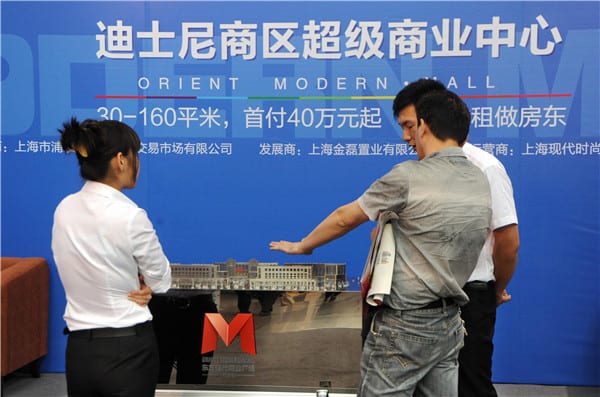
    Lu Jianxin, a real estate agent with Shanghai Huayu Property Ltd, has had some of his busiest business weeks in January since he joined the sector in 2002. Lu receives more than 50 phone calls every day asking him if he can find unoccupied retail properties near Shanghai Disney Resort, the long-anticipated multi-billion-dollar amusement project that is scheduled to open this summer (June).

    Typically, Lu tells his callers they should have acted earlier. “Supplies of retail properties are really limited now and prices have more than doubled in the past 12 months. Obviously, investors believe that even a 10 square meter space for a noodle stand will be really profitable if it is close enough to Disneyland,” said Lu.

    Disney Resort expected to bring realty-and-retail boom to Shanghai

    It’s not just business-minded people who are all excited about Shanghai Disney. Even 13-year-old Zhang Zihao in Hangzhou, Zhejiang province, can’t wait for Disney to open its gates. He has been saving his pocket money for a long time so he could visit Shanghai Disney Resort during the summer vacation.

    “The admission ticket price is expected to be announced this week. I have saved 500 yuan ($75.92) so far for the ticket alone, and another 1,000 yuan for dining and accommodation, and another 500 yuan for merchandise like stuffed animals, stationery, T-shirts and gifts for friends. That’s about 2,000 yuan in total.”

    The project has been under construction for more than six years now. Jun 16-that is, 6-16-2016-has been apparently chosen as the date of opening because the three 6s are believed to be auspicious, heralding success.

    Real estate professionals believe any success of Shanghai Disney Resort would entail all-round benefits for the area. For example, visitors in huge numbers would likely spark a retail boom in Shanghai.

    According to Centaline Property Agency, the average price of commercial properties within a 5 kilometer radius of Shanghai Disney Resort, including shops and restaurants, has grown more than 300 percent in the past five years.

    What used to cost some 20,000 yuan per square meter in 2011 would now command a price of more than 60,000 yuan per square meter. Some properties are even priced more than 72,000 yuan per square meter, about 50 percent higher than that of other suburban areas in Shanghai.

    The growth rate is among the highest for premier locations such as Nanjing Road, Huaihai Road and Lujiazui.

    In comparison, the average price of residential properties in the same area doubled from 20,000 yuan per square meter to 40,000 yuan per square meter in the same period, similar to that of the city’s average growth rate.

  • McDonald’s wins with all-day breakfast, China back on track

    McDonald’s wins with all-day breakfast, China back on track

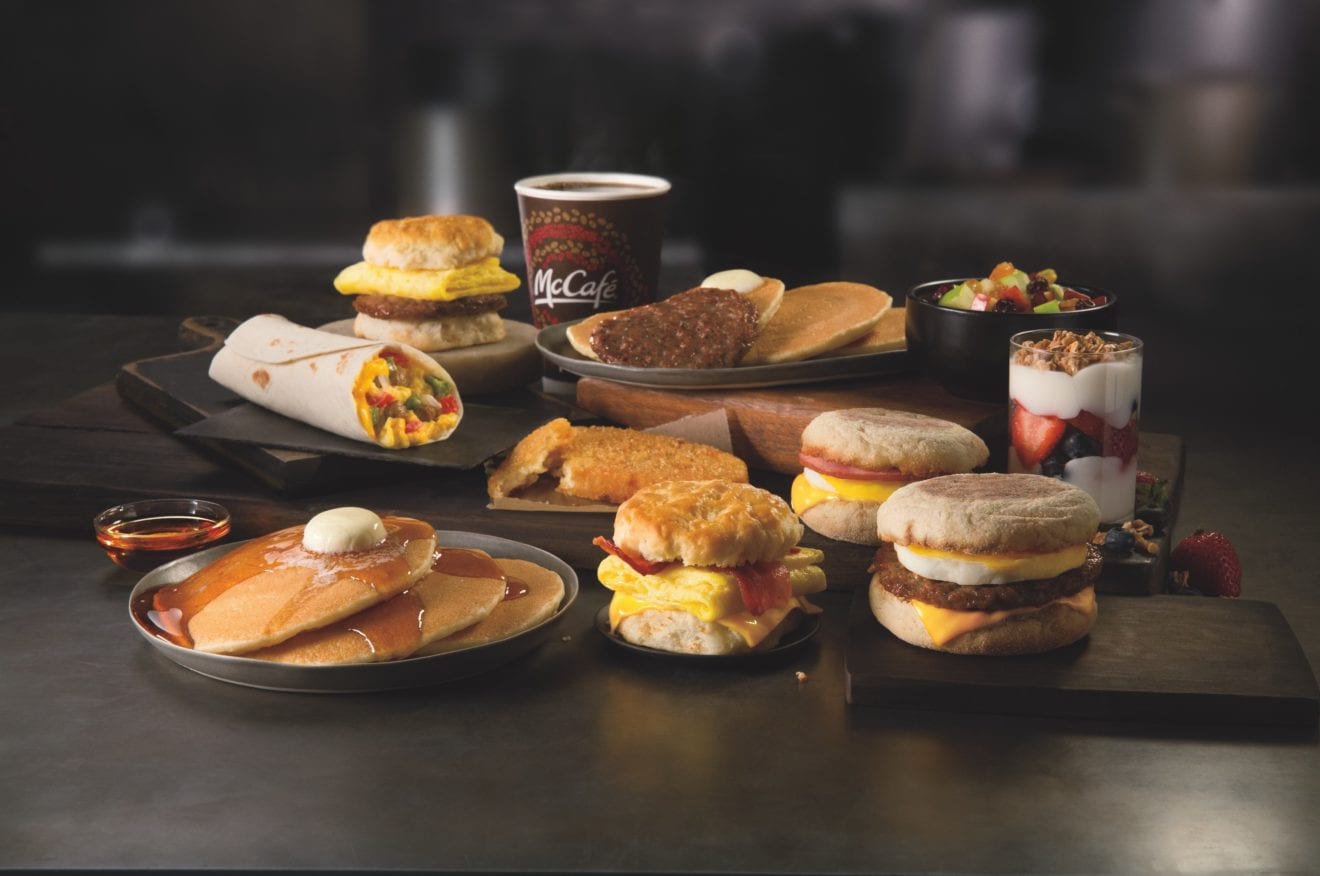
    McDonald’s Corp smashed analyst expectations for quarterly same-restaurant sales as the launch of all-day breakfasts proved a hit with diners in the United States and demand continued to recover in China.

    The performance adds fuel to McDonald’s revival, after the chain had seen its US sales fall for two years up to the third quarter of 2015 following a series of missteps under former chief executive Don Thompson, who left the world’s biggest restaurant chain last year.

    “Once upon a time, under previous leadership, it seemed like McDonald’s became a less nimble company where it took a really long time to roll out new products and innovations,” said Morningstar analyst RJ Hottovy.

    New Chief Executive Steve Easterbrook implemented a turnaround plan last year that involved making the menu simpler, improving service times and raising worker wages.

    McDonald’s also launched all-day breakfasts in October in the United States, a move aimed at countering increasing competition from chains such as Wendy’s Co, Starbucks Corp and Burger King.

    “All-day breakfast positions us to regain market share we had given up in recent years,” Easterbrook said on a post-earnings conference call, adding it would take at least six more months of positive sales to cement a more sustained turnaround.

    Sales at US outlets open at least 13 months rose 5.7 per cent in the quarter ended December 31 – the best quarterly growth in nearly four years and far ahead of forecasts of 2.7 per cent.

    Shares rose 3 per cent to a record of $121.90 on Monday.

    China back on track

    In China, where McDonald’s and rival Yum Brands Inc are still recovering from a July 2014 food safety scandal, same-store sales rose 4 per cent, the second straight quarter of growth after four quarters of falling sales.

    The growth, however, was slower than the 26.8 per cent jump in the July-September quarter, when sales ticked up sharply against a steep drop in the same period in 2014 immediately following the food scare at key supplier OSI Group.

    McDonald’s and Yum, the parent of KFC and Pizza Hut, are slowly turning things around in China, although same-restaurant sales for both firms remain below pre-scandal levels, according to a Reuters analysis of available data.

    “It’s back to par rather than getting ahead too much, but it’s good for them to see stable sales,” said Ben Cavender, Shanghai-based principal at China Market Research Group.

    He added it would be tough for the firm to re-ignite the kind of rapid growth it enjoyed before 2012, as Chinese diners now had far greater choice and often looked for more healthy options.

    What’s more, the recovery comes as the world’s second-biggest economy faces its weakest growth in 25 years, a slowdown that has roiled global markets in the past few months.

    Globally, McDonald’s same-restaurant sales rose 5 per cent, above the 3.2 per cent expected by analysts polled by research firm Consensus Metrix.

    Fourth-quarter net income rose 9.9 per cent to $1.21 billion, or $1.31 per share, on revenue of $6.34 billion, handily beating analysts’ estimates.

    The company also said it was exploring a sale of a portion of its Japan business, confirming earlier reports on the move.

  • Fake Apple Stores In China Are On The Decline

    Fake Apple Stores In China Are On The Decline

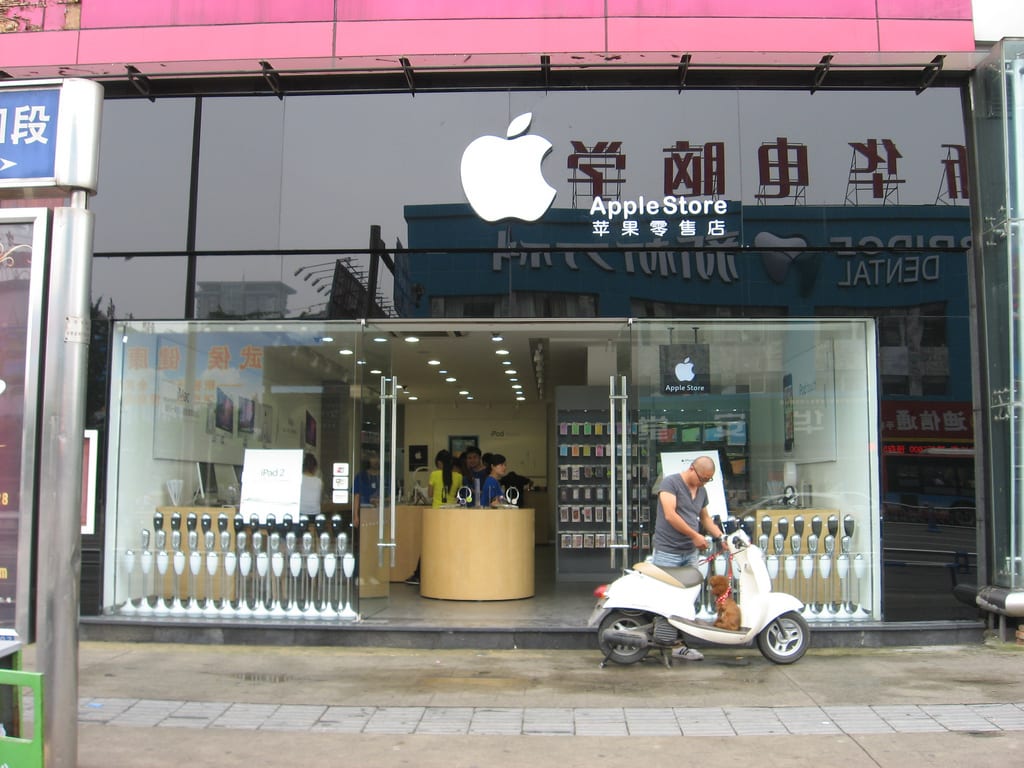
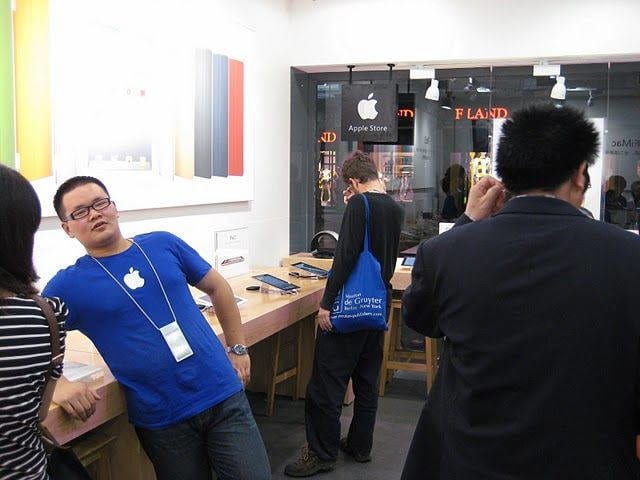
    Due to stricter copyright laws and laws to protect intellectual property in the US, finding a fake Apple retail store is next to impossible. However over in China, such stores used to run rampant several years ago where not only did the shops look like the official Apple Store, but employees were also given similar uniforms.

    In fact there was once this story about an employee who had no idea he was working in a fake Apple Store. That being said, a report from Reuters has recently noted that the number of fake Apple Stores in China are said to be on the decline. Some claim that this is because interest in Apple products in China are on the decline, while others speculate that Apple might be working with the government to clamp down on these stores harder.

    fake apple store

    A third possibility is that with Apple expanding their official retail presence in the country, residents of China are starting to wisen up to these fake stores, leading to their decline. The third option is probably the most likely, especially since Apple will be opening its 33rd store in the country this week, with plans to expand to 40 locations by the middle of the year.

    In the meantime some of these fake stores have since been replaced by regular smartphone stores which sells local brands such as Xiaomi, Huawei, Meizu, OPPO, and etc.

  • Korea’s Samsung and LG TV Prices Are 2~3 times Expensive than Those of USA’s

    Korea’s Samsung and LG TV Prices Are 2~3 times Expensive than Those of USA’s

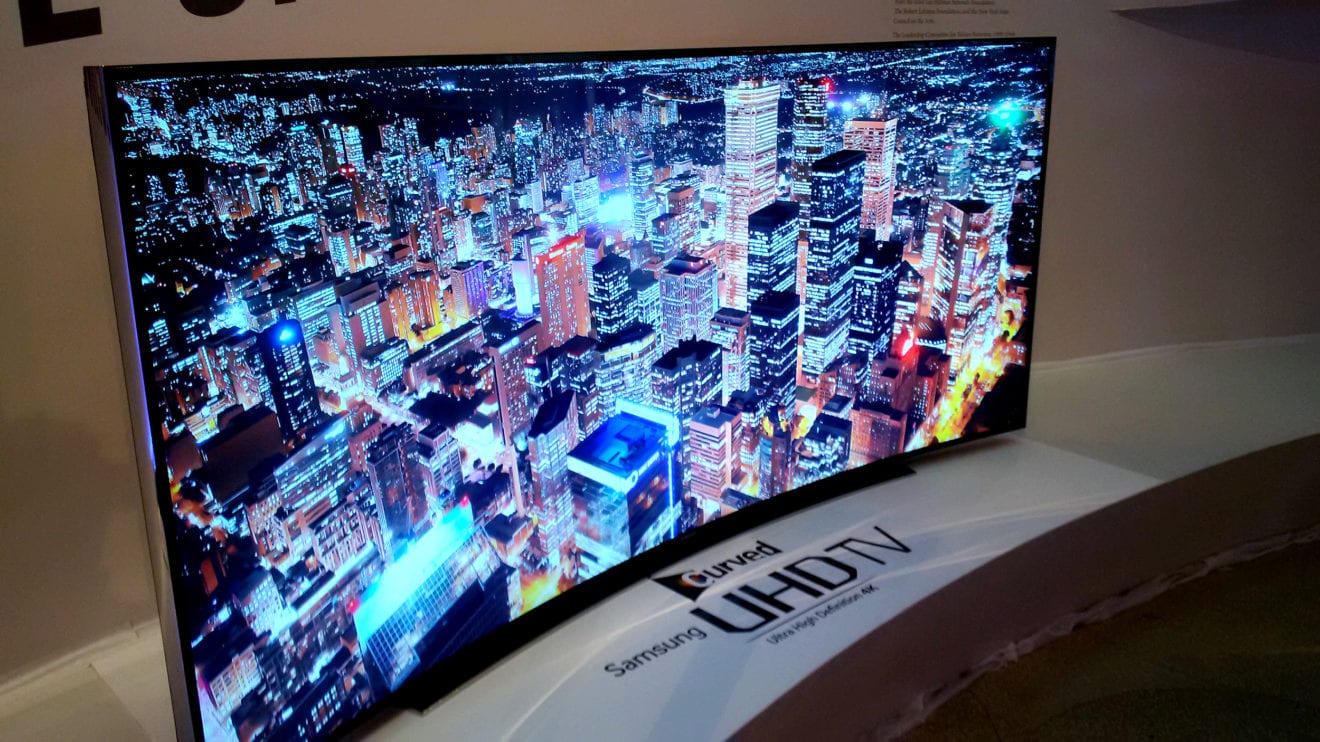
    During the Black Friday event in the United States in November 2015, Samsung Electronics’ 55-inch SUHD TV was sold at a price of 1.15 million won. This was when it was sold at a price of around 3 million won at retail stores in Korea.

    LG Electronics’ 65-inch UHD TV was sold at a price of around 5 million won in domestic consumer electronics stores, much higher than its U.S. price of 2.43 million won.

    Samsung SUHD_JS9500

    The prices of consumer electronics items are staying high in Korea. The average domestic sales prices of TVs, smartphones, laptop computers, tablet computers, vacuum cleaners, and coffee makers are higher than those of major industrialized countries, including the United States, Germany, and Japan. This is the background behind last year’s 20-percent increase in Koreans’ online purchase of foriegn products.

    Most of Korean home electronics items come equipped with “excessive features.” Unlike major foreign home electronics companies which focus on core functionalities, Korean counterparts are raising the prices of their products by adding a variety of high-end specs.

  • Major retailers prepare campaigns for Chinese New Year

    Major retailers prepare campaigns for Chinese New Year

    The Mall Group will celebrate Chinese New Year with a variety of activities and promotions to boost customer spending. The company projects the campaign to generate Bt2.5 billion in sales.

    Chamnarn Maytaprechakul, executive vice president of The Mall Group, said that towards the end of 2015, customer spending improved. During the final two months, the Consumer Confidence Index was the highest in eight months, fuel prices had declined, tourist numbers increased, and the government provided a year-end tax break.

    The Mall Group saw a 20-per-cent sales increase during the seven-day tax-break period, which helped the company reach its annual sales goal of Bt52 billion, 4-per-cent growth compared with 2014. “For 2016, we expect consumer spending momentum to continue, especially with Chinese New Year, an important celebration in Thailand that is just as popular as [January 1] New Year and Songkran. Spending during Chinese New Year is no less than Bt50 billion,” Chamnarn said.

    Robinson Department Store targets growth of 8 per cent year on year in the first quarter of this year as its “Robinson Chinese New Year” campaign welcomes the Year of Monkey. Shoppers will receive a red packet of discounts worth Bt1,200 for every Bt1,000 of spending. Prosperity-boosting and cultural activities in the Chinese tradition will also be in place.

    Sompong Rungnirattisai, chief commercial officer of Tesco Lotus, said Chinese New Year was an important occasion for a large number of people in Thailand. He said Tesco Lotus wanted to make the celebration affordable for customers as they were facing a challenging economic situation.

    “We have invested more than Bt250 million to bring down the prices of fresh food items by up to 46 per cent when compared with last year. We are also offering several cash coupons to help customers save during the season.

    “In addition, we have prepared special gifts for customers. Those spending Bt600 or more at Tesco Lotus will instantly receive a Chinese New Year red envelope containing special discounts on 50 items, worth a combined Bt4,400. Customers who spend Bt400 or more can redeem a lucky monkey doll at a special price of Bt159, down from the full price of Bt299,” he said.

    Siam Piwat Co, operator of Siam Paragon and Siam Center, together with Muang Thai Life Assurance, Kasikornbank and Advanced Info Service, has announced “Siam Prosperous Chinese New Year 2016”, a campaign to celebrate Chinese New Year and greet the Asean Economic Community. The campaign, to be held from February 3 to March 13 in Siam Paragon and Siam Center, will provide discounts of up to 80 per cent, lucky red envelopes and many other privileges, said Chanisa Kaewruen, Siam Piwat deputy managing director for marketing events and business relations.

    Central Pattana (CPN), Thailand’s largest retail developer and operator of CentralWorld, CentralPlaza and CentralFestival, along with their business partners, has invested Bt40 million in a campaign named “The Great Chinese New Year” to be held from February 5-29.

    Nattakit Tangpoonsinthana, executive vice president for marketing at CPN, said the company understood the needs of the new generation of Thai-Chinese customers and what they want during this festive season. They have more purchasing power than in the past and tend to be selective and require a certain standard of quality in the products and services they receive.

    At Big C Supercenter outlets, red packets of shopping discounts have been offered since mid-January. As well, shoppers get the chance of winning gold prizes every day until February 8, Chinese New Year’s Day.

    Future Park, the largest mall in Rangsit area, also launch an event called ‘Sweetest Moment of Chinese New Year’, between February 5 and 14, in which more than 1,000 shops within the complex will offer promotional sale of up to 80 per cent discount.

  • Royal Greenland to launch frozen range in Chinese retail

    Royal Greenland to launch frozen range in Chinese retail

    Royal Greenland is expanding its sales team in China, and preparing the launch of a frozen seafood range for retail.

    The company opened a sales office in Qingdao in its 2014/2015 financial year, in which it reported a record profit, with increasing frozen seafood sales in retail a target, CEO Mikael Thinghuus told.

    “We have had activities in China for a number of years, production and quality control, but also wholesale sales on a large scale. What we are talking about now is a sales office, directed to retail,” he said.

    The company is currently in Chinese retail with a few products based on the European assortment and packaging design, said Hanne Kvist, director of group market development and marketing.

    Royal Greenland has an expanded range in the works.

    “We are finalizing the assortment targeted at Chinese retail, but designs will not be revealed prior to launch. Key items will be based on coldwater shrimp and Greenland halibut,” she told.

    The timing is right for such a launch and focus, said Thinghuus.

    “My perception at least, is the Chinese retail market for frozen fish has changed quite a lot in the past four or five years. Some of our colleagues do a very good job on the frozen fish category on frozen fish. We think this is the right time to make this investment,” he told.

    The company’s 2014/2015 report states the sales office is focusing “exclusively on sales to retailers, and ultimately sales to consumers via e-commerce”.

    The 2014/2015 financial year has been used to prepare for the future retail sales by establishing the company, recruiting staff and developing the range, the report states.

    This is due to rising demand for Royal Greenland’s products in China and Taiwan, “which has resulted in increasing prices, to the benefit of both the company and the fishermen”, the report continues.

    The report notes that “Greenland halibut is a popular food in China”, and cuts of halibut can be found in most supermarkets in the northeastern part of the country.

    The increased sales to the retail segment have compensated for the slowdown in dining out.

    Royal Greenland’s ambition is “to establish itself as a strong brand in the awareness of Chinese consumers – and there seems to be considerable potential at the affluent end of the market, where there is a great demand for imported food”, the report states.

    In connection with this move, Zhifa Zhang, known as Tony, has been hired as sales manager responsible for retail sales, the report states.

    “We will make more hires, we already have made couple,” said Thinghuus.

    The sales team in China “work closely” with the company’s production and quality organization, sitting in the same offices in Qingdao, he said.

    Zhang will be working closely with Finn Laursen, sales director of Royal Greenland International, the report states.

    The company’s market development and marketing department in Svenstrup, Denmark “will draw up packaging and marketing plans for the Chinese market in cooperation with Chinese advertising agencies”, the report continues.

    In the 2014/2015 financial year, Royal Greenland for the first time achieved revenues of DKK 1 billion in Asia.

    Around half of this is attributable to the sales office in Japan, while the other half was achieved through sales by Royal Greenland International in China and other Asian countries, according to the report.

    The revenue growth of 18% was driven by price increases for the main species of Greenland halibut, shell-on coldwater shrimp and snow crab, the company said.

    The total growth in volume terms is only just below 1%. Asia now represents 23% of group revenue.

    In Japan, it remains difficult to increase sales in the wake of the many price increases, which were a necessary consequence of the devaluation of the Japanese Yen, but sales in local-currency have risen steadily, while earnings in the market are increasing.

  • The EcoChic Design Award 2015/16 winners announced

    The EcoChic Design Award 2015/16 winners announced

    Environmental NGO Redress concluded their week long programme of sustainable fashion activities in Hong Kong, the epicentre of Asia’s fashion industry, further cementing emerging designers’ power to drive positive change and pushing the global agenda to reduce waste in the fashion industry.

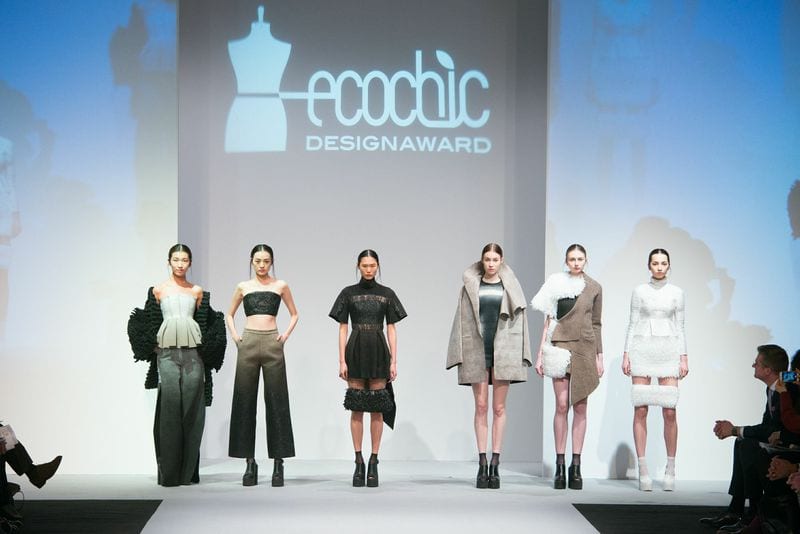
    The week included a design challenge, two workshops and an industry seminar before culminating at the grand final fashion show of the world’s largest sustainable design competition for emerging designers, The EcoChic Design Award 2015/16.

    Here ten finalists from Asia and Europe united to command Hong Kong Fashion Week’s runway, and the influential industry onlookers, with their textile-waste-reducing collections, having already out-designed an unprecedented level of competition entries from designers living in 40 countries across Asia and Europe. Two winners, from Poland and Spain, were crowned winners.

    Christina Dean, Founder of Redress said, “We must face the pressing reality that the fashion and textile industry, as the world’s second biggest global polluter, can’t carry on as-is without crippling our planet. Change is not happening fast enough. In contrast to the majority of the industry, emerging fashion designers are demonstrating that they, as tomorrow’s leaders, are more in tune with solutions and they are creatively cashing in on the environmental and economic opportunities within reducing and re-using textile waste. These designers are cementing a positive future for fashion”.

    Leading up to the grand final, the ten finalists collaborated with multi-stakeholders to the find collaborative solutions and to share their expertise in sustainable design techniques.

    The Redress Forum: Ford Design Challenge saw them up-cycle Ford’s sustainable materials into statement pieces for the runway; the reconstruction workshop set their creativity free in a huge discarded clothing warehouse; and their zero-waste workshop saw them travel to China to rub shoulders and share ideas with one of the region’s pioneering apparel manufacturers.

    Further influencing, Redress co-organised a widely-attended panel discussion on circular business models with HKTDC.

    Mr Jerry Liu Wing-leung, Head of Create Hong Kong, the competition’s major sponsor, said, “Sustainability is a global issue, and with a global perspective sustainable fashion design can transcend technicalities and become a way to the future. The EcoChic Design Award makes a significant impact on the way people view fashion.”

    Prizes to fuel the new force of design talent

    Three panels of judges, including influential personalities Susie Lau, Orsola de Castro, Johanna Ho and Nadya Hutagalung, were tasked to shortlist and identify the competition’s fifth cycle winners, which had neck-to-neck scores, the closest in the competition’s history.

    Patrycja Guzik won the 1st Prize: The EcoChic Design Award 2015/16 with Shanghai Tang and she will spend three months in Hong Kong designing an up-cycled collection for China’s leading luxury brand’s global retail using their surplus textiles. Her winning collection was created using the up-cycling and reconstruction design techniques and she made her fabrics by tufting damaged textiles and unraveled secondhand garments.

    “As the curators of modern China chic, it says a lot to the rest of the industry and our consumers that Shanghai Tang is translating Redress’ international search for emerging sustainable design talent into an up-cycled collection for our global customers. Our experience working with the last cycle’s winner inspired us about how business can do the right thing”, said Raphael le Manse de Charmont, Executive Chairman, Shanghai Tang.

    “This week has been life changing and a real eye-opener for me that us designers really can design the future we want! Winning amplifies everything I’ve dreamt of about using my passions to prove that a more sustainable fashion industry can be a reality,” said Patrycja.

    Cora Maria Bellotto won 2nd Prize: The EcoChic Design Award 2015/16 with Orsola de Castro and she will receive a tailored mentorship to propel his/her career in sustainable fashion design forwards.

    Judged solely by supermodel Janet Ma, Patrycja also won The EcoChic Design Award 2015/16 Special Prize and she will design a sustainable outfit for Janet to reveal at a high profile public event and in a fashion photoshoot to redress consumers’ attitudes towards sustainable fashion.

    In addition, a ‘Hong Kong’s Best’ recognition was given to Esther Lui to commend her achievements for leading Hong Kong’s pool of creative emerging designers.

    Competition legacy lives on

    With five cycles already behind them, Redress now celebrates over 100 talented alumni, who are previous semi-finalists and finalists, who are increasingly forging sustainable fashion careers, with some expanding their sustainable brands’ retail footprint.

    As part of the week’s activities, Redress exhibited five alumni’s sustainable brands in The EcoChic Design Award Alumni Booths at HKTDC Hong Kong Fashion Week, attracting some of the region’s top buyers and driving more orders and expansion of the alumni’s stockists.

    The booths form part of Redress’ over-arching The EcoChic Design Award Alumni Network, a platform to support this growing collective of sustainable designers with industry collaborations so as to magnify the designers’ momentum way beyond the runway. An additional retail and business development prize was awarded to Wan and Wong Fashion and Clémentine Sandner by Hong Kong’s retail store, kapok.

  • Hong Kong Indian entrepreneur out to build ‘the next Alibaba’ in Mumbai

    Hong Kong Indian entrepreneur out to build ‘the next Alibaba’ in Mumbai

    Akanksha Hazari’s parents were relieved when she announced in 2013 that she was moving to Mumbai on her own.

    “After Palestine, India was fine,” says her mother, Anjali. “Akanksha wanted to go to Africa originally, but her father and I managed to convince her that it was probably not a good idea.”

    Home for the 32-year-old former Middle East strategist turned star technology entrepreneur is Hong Kong, the city she moved to with her Indian parents when she was eight. She attended West Island School,and became so good at squash she was selected to play for Hong Kong in her teens.

    “For me, Hong Kong is very much home … I am an Indian-Hong Kong girl,” she says.

    Hazari is the founder of m.Paani, a phone-based customer loyalty platform that helps to bring together small retailers andconsumers in emerging markets.

    It may sound esoteric, but as she explains in her parents’ Mount Davis flat, this is just the first step in building a global business that can help the world’s underserved “offline” population access important services from which they have been excluded. In short, she wants m.Paani to be the next Alibaba.

    Her ambition is matched by an iron will that has seen her take on a large American charity co-founded by Hollywood star Matt Damon, and win.

    In 2010, Hazari was studying for an MBA at Cambridge University and formed a team to enter an annual competition for business students run by the Hult Prize Foundation. That year, participants were asked to submit business plans that could help address water scarcity issues, and Damon’s Water.org was brought in as an adviser. Hazari’s team came up with m.Paani (paani means water in Hindi), a mobile phone-based customer loyalty programme that encourages the supply of clean water to low-income families in India. When they won, Hazari – the only team member who wanted to launch the start-up for real – asked for the US$1 million prize money she believed they had been promised. Water.org, however, was under the impression that the US$1 million was going to its own projects.

    Our goal was to support Hult in its efforts to teach about the urgency of this issue among students and the need for innovation,” writes Rosemary Gudelj, the charity’s senior manager, global advocacy and office of the CEO, in an email. “However, we also knew that these students only had two months to develop ideas. While we were hopeful that the winning case or other cases would be actionable by Water.org, we clearly were not comfortable committing to implementing the winning idea.

    “When [Hazari’s] team won, we offered to have her and her team work with Water.org on looking into and developing the group’s idea to probe further, and see how this concept could be applied to local needs and circumstances. However, her request was to receive the full US$1 million grant to fund the organisation she launched.”

    In the end, Water.org kept the US$1 million and the Hult family gave Hazari a separate grant of US$300,000 that allowed her to widen m.Paani’s business.

    “At the time, Hult Prize thought it a better strategy to partner with a non-government organisation to help the winners manage and deploy the prize capital, rather than to directly give the money to a young student team. But once the US$1 million was transferred to Water.org, they kept it. That’s why I couldn’t start m.Paani straight away. It took me two years to get the money, which Philip Hult privately gave me,” says Hazari.

    That tenacity helped her secure most of the funding she needed to set up the business in Mumbai around 18 months ago. Today, the loyalty point network has around 200 merchants and 10,000 customers.

    “Think of it as something like air miles or credit card points. You earn points when you buy your groceries at your neighbourhood m.Paani corner shop. The shopkeeper taps in your mobile phone number – that’s your m.Paani account number – and your point balance is updated in real time,” says Hazari. The points can be used to pay for items or to redeem practical gifts from the m.Paani gift shop: water filters, English language textbooks or small appliances, for example.

    While m.Paani has a social agenda – to leverage the often-neglected purchasing power of lower-income households and to boost the competitiveness of small, independent retailers that make up about 70 per cent of India’s US$600 billion a year retail market – it is very much a for-profit business.

    It makes money by charging shop owners a commission for each transaction recorded. In return, previously offline mom-and-pop shops get a customised website, mobile app and digital transaction histories, and a consumer database.

    The latter is key to Hazari’s ultimate goal: for m.Paani to become a “big data” player. The idea of data collection may be anathema to many internet users concerned with privacy, but she says those who do not have any data to offer get left behind.

    “These shopkeepers tend to write everything down in a notebook. They can’t get insured, or apply for a bank loan, because there is no data about their business,” she says.

    The same goes for the customers. Without any credit history, they are not likely to get bank loans or access other financial services. From this year, m.Paani will start scoring individuals and businesses on their creditworthiness, a first step in utilising their shopping records.

    Hazari says small retailers with no online presence will struggle to compete against the growing presence of international chains such as Wal-Mart and Tesco as India gradually liberalises its retail sector. Online giants such as Amazon are also expanding aggressively in India. Issuing loyalty points helps rope in their customers.

    The next step for m.Paani is to go national, and eventually spread to Africa and Southeast Asia.

    “I want to build an Indian company that’s international,” she says. “For me there’s a lot of pride in that. Why can’t the next Google come out of India? That’s why Alibaba is such an exciting company. It’s the first company to do that out of our market.”

    After earning a degree in politics and Middle Eastern studies from Princeton, Hazari worked for the Aspen Institute, encouraging Israeli and Palestinian joint business ventures as a way to promote peace. It meant living in Jerusalem and crossing the border every day to manage operations such as a hospital and a power plant in Gaza.

    “Her time in the Middle East meant months of sleeplessness for me,” says her mother. “But I’m very proud of her.”

    After two years,Hazari decided that business had a lot of power to change people’s lives and immersed herself in the corporate world, becoming a consultant in clean energy at Booz & Co. in the US and Dubai. That was followed by a year of designing environmentally sustainable services and information technology applications to help rural Indian families, and then the MBA in Cambridge.

    Hazari’s parents had settled in Hong Kong so that their children could have access to better education, and a better quality of life (dad Ajay is a director in a shipping company, and mum Anjali teaches at an international school). But for her, the opportunities lie in India and beyond.

    I think we have a desire to be a part of that story, of building our country and taking it forward.

    Akanksha Hazari

    “For my parents, or people like them in India and mainland China, the dream was to get their kids to go out. That’s not the case for us any more. These countries are no longer the same. We see so much opportunity to do something bigger than just go the West and get a job. If we come home we can actually build something of our own. And also, I think we have a desire to be a part of that story, of building our country and taking it forward. We are shaping the future of that country, and that’s a huge opportunity,” says Hazari.

    The start-up in India has yet to make her a billionaire (“We’ve been surviving by bootstrapping, she says). But it has already earned her valuable international recognition. On March 9, she is receiving an award from the Vital Voices Global Partnership, the NGO set up by Hillary Clinton and former secretary of state Madeleine Albright, at a gala celebrating women leaders around the world.

    Investors are also beginning to see m.Paani’s potential. “We’ve just closed series A [funding]. Our user numbers are growing 20-40 per cent month-on-month and investors are starting to see this as a proper business,” Hazari says. Their backers include an Indian venture capital firm and a select group of Indian angel investors.

    She is not surprised that Hong Kong – once known as a breeding ground for entrepreneurship – has failed to produce many start-ups that grab the world’s attention.

    “There’s a lot of pushback here for those who want to set up their own business. You have to be a very strong personality to do it anyway. I didn’t take any money from my parents. I knew the decision I was making meant I would not have a great lifestyle but I was OK with that. You need to be ready to deal with the negative pushbacks… and work a lot harder to prove your point and make sacrifices,” she says.

    Besides, Hong Kong is fundamentally a very small economy and very focused on financial services, which means that young people who want to pursue big ideas tend to have to go abroad, or to China. And she expects more people will.

    “Our generation is more purpose-driven than it is pay-cheque driven. The time is right – we are very educated and have the luxury of thinking about what values we want in life and not just how much money we want to make. I think it’s a fundamental shift,” she says.

  • Platinum industry group to develop more investment products in Singapore

    Platinum industry group to develop more investment products in Singapore

    Singapore, which has seen a flurry of activity in its gold sector in recent years, could now see platinum take off in a similar way as the World Platinum Investment Council (WPIC) ramps up its promotional work here.

    The industry body has joined the Singapore Bullion Market Association (SBMA) here as it seeks to stimulate investor demand for physical platinum and increase the ways in which Asian investors can invest in the metal.

    As one of the most important wealth management markets globally with US$0.5 trillion in assets, Singapore offers “an abundance” of opportunities for both retail and institutional investment products, including coins and bars, and exchange-traded funds, said WPIC’s director of market development Marcus Grubb.

    SBMA chief executive Albert Cheng said WPIC is coming at “an interesting time” in the market’s development.

    “Since the removal of the Goods and Services Tax (GST) in 2012, there has been a real step-change in Singapore’s prominence as a major hub for precious metals trading and investment, a position we are working hard to consolidate,” said Mr Cheng. “The WPIC membership will undoubtedly contribute to our efforts by strengthening the region’s range and availability of investor products.”

    International Enterprise (IE) Singapore, the government agency responsible for developing the commodities sector in here, said the partnership will further strengthen the country’s position as Asia’s precious metal trading hub.

    “WPIC brings knowledge, experience and technical expertise in platinum as an investment, complementing SBMA’s role as a major association for precious metals for the region,” said IE Singapore assistant CEO Satvinder Singh.

  • USW Seeks Tariffs on Bus and Truck Tires From China

    USW Seeks Tariffs on Bus and Truck Tires From China

    The United Steelworkers (USW) union has filed yet another petition asking the U.S. Government to impose anti-dumping and countervailing duties on tires manufactured in China. This time, the union is targeting truck and bus tires.

    The petition was filed Jan. 29, 2016.

    In it, the USW cites import data from the International Trade Commission (ITC), which points to an increase of more than 650,000 tires imported in the first nine months of 2015 compared to the same period in 2014.

    Jan.-Sept. 2014 Jan.-Sept. 2015
    Customs value $787,313,598 $817,636,180
    Number of tires 6,048,859 6,701,201

    The USW has filed a petition seeking tariffs on truck and bus tires imported into the U.S. from China. It’s the second tariff request this month affecting the commercial tire business.

    The USW has filed a petition seeking tariffs on truck and bus tires imported into the U.S. from China. It's the second tariff request this month affecting the commercial tire business.

    As the petition notes, “the volume of subject imports from China is significant by any measure.

    “From 2012 to 2014, the U.S. imported from 6.3 million to 8.4 million truck and bus tires a year from China, valued at close to over a billion dollars each year. China exported more tires to the U.S. than all other countries combined throughout the period.”

    In the latest Modern Tire Dealer Facts Issue, published in January 2016, MTD estimated U.S. truck tire imports from China for 2015 at 9.4 million, up 14.6% from the previous year.

    The petition covers all truck and bus tires with a “TR,” “MH” or “HC” suffix, as well as all tires listed in the “Truck-Bus” section of the Tire and Rim Association Year Book. Like the petition seeking tariffs on OTR tires from China, Sri Lanka and India, the truck and bus petition includes tires whether or not they’re mounted on wheels. The only truck or bus tires excluded from the petition are recycled and retreaded tires, and non-pneumatic tires, such as solid rubber tires.

    The USW is asking the ITC to gather and compare prices on four sizes of tires:

    11R22.5 (14 or 16 plies, load range G or H, any speed rating)

    11R24.5 (14 or 16 plies, load range G or H, any speed rating)

    295/75R22.5 (14 plies, load range G, any speed rating)

    285/75R24.5 (14 plies, load range G, any speed rating)

    In its petition, the USW says it represents workers at truck and bus tire production facilities in the U.S. Those plants are operated by Bridgestone Americas Inc. and Goodyear Tire & Rubber Co. Additional truck and bus tires are produced by non-union workforces for Continental Tire the Americas in Mount Vernon, Ill., General/Yokohama in Mount Vernon, Ill., and Michelin North America Inc. in Spartanburg, S.C.

  • Myanmar Year in Review 2015

    Myanmar Year in Review 2015

    A decisive victory for the opposition in Myanmar’s general elections in late 2015 generated a fresh wave of investor optimism, raising hopes of increased economic stability in 2016 after a somewhat uncertain year.

    Victory at the polls in November for the National League for Democracy (NLD), under Daw Aung San Suu Kyi, will see greater civilian participation in government, although the military will retain control of the Ministries of Defence, Interior and Border Affairs in the new Cabinet, alongside a minimum of 25% of seats in parliament and substantial economic holdings.

    Growth leaders

    Growth was robust in 2015 despite cooling in the global economy, with Myanmar posting GDP growth of 8.5%, according to the IMF. This ranks ahead of average growth among the five original ASEAN member nations – Indonesia, Malaysia, the Philippines, Singapore and Thailand – which stood at 4.6%, and average global growth, which reached 3.1%. GDP growth is expected to remain relatively steady in 2016, easing somewhat to 8.3%, as per IMF forecasts.

    Strong consumer demand helped drive expansion in Myanmar’s retail sector, while also boosting the appeal of the industry to foreign brands. International brewers like Heineken and Carlsberg opened in-country production facilities through joint ventures with local partners during the year, and Japan’s Kirin acquired a 55% stake in market leader Myanmar Beer for a reported $560m in August.

    The year also saw strong growth in commercial property development, buoyed by rising demand for prime business space, particularly in Yangon, the country’s financial and business capital. Such demand should help sustain activity in Myanmar’s construction sector, which already has several infrastructure projects on its books.

    In a key development for the country’s financial services sector, nine foreign banks granted licences to operate in the market commenced operations, albeit on a limited scale, by early 2016.

    Trade and budget prospects

    However, the incoming NLD government, expected to be formally sworn in this March, will inherit an economy faced with ongoing structural challenges, including a widening fiscal deficit, projected to reach 5.5% of GDP, according to the IMF.

    Rising inflation also weighed on Myanmar’s economic performance somewhat in 2015, having gained momentum on the back of high levels of liquidity, rising demand and food shortages caused by mid-year nationwide flooding. In its latest Article IV consultation with Myanmar, the IMF projected inflation would rise to 13.3% by the end of FY 2015/16, up from 7.4% in FY 2014/15.

    Price increases have been exacerbated by depreciation of the kyat, which lost around 21% of its value against the US dollar over the year, driving up the cost of imports and affecting both consumers and firms that rely on overseas technology and equipment for expansion.

    To ease pressure on the kyat and rein in inflation, the Central Bank of Myanmar announced plans in late November to raise the reserve requirement ratio of banks and increase the value of its fortnightly deposit auction, with an interest rate hike also signalled as a possibility.

    A weaker kyat contributed to a widening of the trade deficit, with the gap between imports and exports reaching MMK3.1trn ($2.4bn) for the first six months of FY 2015/16, up 27% year-on-year.

    Major flooding weakened export trade further in mid-2015, after damage to farmlands led to lower production. To maintain food security and stabilise domestic food prices, the government imposed a six-week freeze on rice exports, one of the mainstays of Myanmar’s foreign trade.

    Investment forecast

    Foreign investment has also slowed somewhat, reaching $4.1bn as of December 2015, according to the Directorate of Investment and Company Administration. By the end of FY 2015/16, foreign investment was expected to reach $6bn, down from $8bn in FY 2014/15.

    The oil and gas sector has attracted the bulk of the investment to date, accounting for more than $2bn of the total as at December, while transportation and communications saw $736m worth of investments and manufacturing received $685m.

    Investment inflows are expected to ramp up again in 2016, with a smooth election in hand and the promised transition of government scheduled in the coming months.

    According to U Aung Naing Oo, secretary of the Myanmar Investment Commission, greater investment from EU countries in particular is forecast during the first six months of 2016.

  • Chinese retailing giant JD.com tests drone in rural areas

    Chinese retailing giant JD.com tests drone in rural areas

    China’s online retailing giant JD.com has started conducting trial deliveries using drones, and plan to roll it out for delivery in rural China, the state media reported today.

    The company said the unmanned aerial vehicles or drones will not deliver packages directly to shoppers but will instead help transport bundles of items from its distribution stations to 150,000 representatives mobilised across rural China who will then get them to shoppers.

    The distance between distribution stations to rural representatives, usually less than 10 km according to JD, are more fixed for engineers to design drone itineraries and landing points. Representatives will be notified in advance to wait for drones to land with packages, Xinhua news agency reported.

    JD.com’s CEO Richard Liu Qiangdong had said last year that the company is developing drone delivery to meet the rising retail demand in China’s rural areas, where complex terrain and underdeveloped infrastructure have compromised timely human courier delivery.

    Both JD.com and its arch rival Alibaba have been working to unleash consumption demand from China’s 618 million rural residents, whose income growth has been outpacing their urban peers in recent years despite a slowing economy, the report said.

  • Police, retailers in central Singapore partner to deter crime

    Police, retailers in central Singapore partner to deter crime

    The Marina Bay Neighbourhood Police Centre on Saturday (Jan 30) launched the Central Division Retail Watch Group, which aims to establish a partnership between the police and retailers to deter, detect and prevent crime.

    Rahayu Mahzam, Member of Parliament for Jurong GRC and a member of the Government Parliamentary Committee for Home Affairs and Law was the Guest of Honour for the event. In her speech, she referred to recent terrorist attacks in the region, and called on owners of retail and commercial establishments to be more vigilant and partner with the police to help ensure the safety and security of shoppers.

    In a media release, police said the Central Division Retail Watch Group consists of retailers from major shopping malls such as Bugis+, Bugis Junction, Raffles City, Marina Square and Suntec City. Membership is also open to all other retailers whose outlets fall within the jurisdiction of the Marina Bay Neighbourhood Police Centre.

    Police added that this Retail Watch Group serves as a platform for the police and retailers to exchange information and tips on how they can strengthen vigilance and measures against potential terrorist attacks.

    According to the release, the Central Division Retail Watch Group will implement two initiatives. Police will disseminate an e-newsletter to retailers with information on crime trends and statistics, as well as crime prevention and security practices. The second initiative is a “red teaming” exercise conducted by police and retail management.

    “These exercises aim to test the effectiveness of the stores’ security features and the vigilance of the duty staff,” said the police in their statement. “Following these exercises, the police will hold a review with the retail management to reinforce the learning points.”

  • Sales soar 32% at Alibaba Group in Q4

    Sales soar 32% at Alibaba Group in Q4

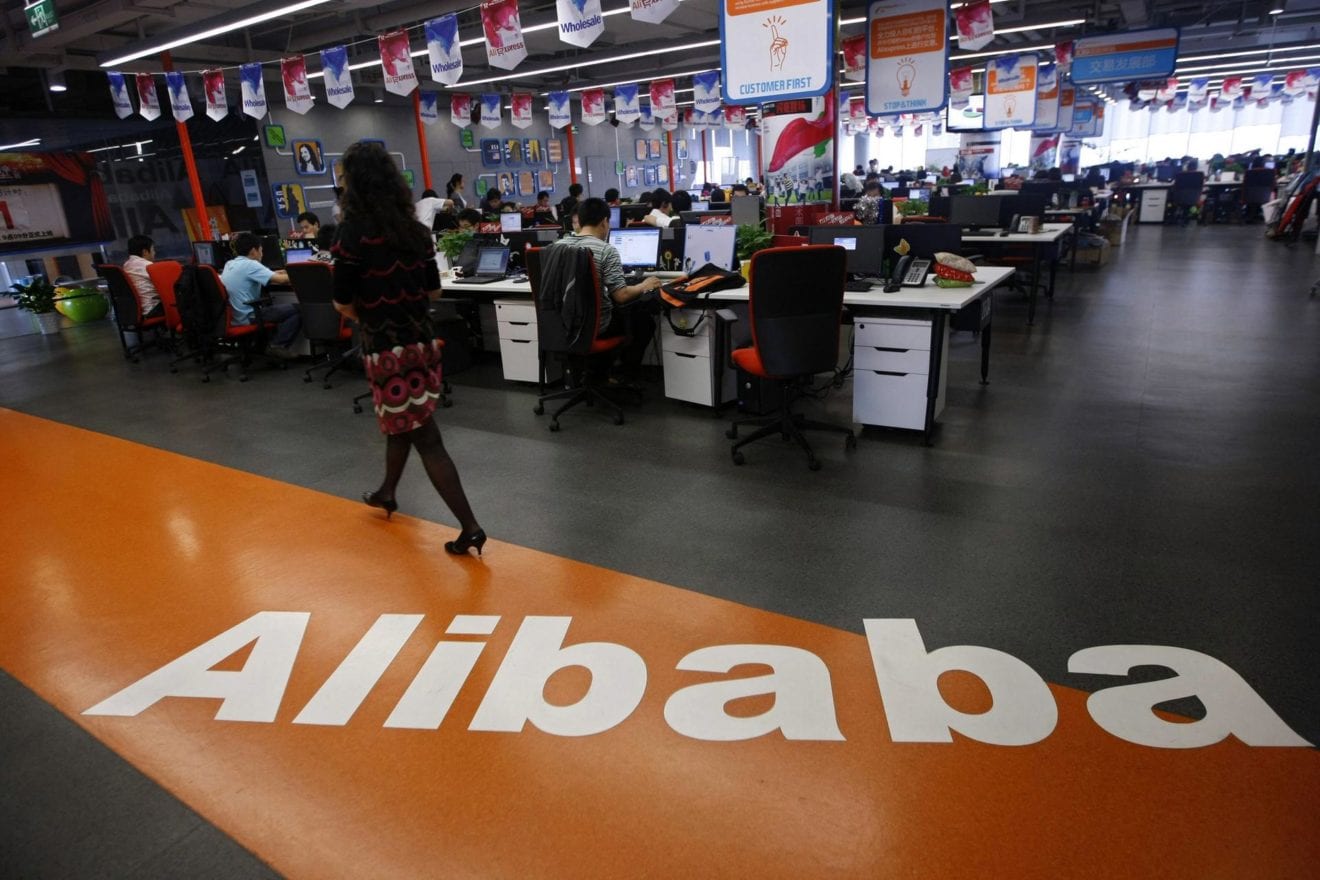
    For the three months to December 31, 2015, sales at Alibaba Group Holding Limited soared 32 per cent year over year to RMB 34,543 million or $5,333 million.

    Of this, in the fourth quarter of 2015, China retail marketplace revenue totaled RMB 28,714 million or $4,433 million, an increase of 35 per cent over the fiscal ago quarter.

    As per an Alibaba press release, in the same quarter, mobile revenue from China amounted to RMB 18,746 million or $2,894 million, up a massive 192 per cent year on year.

    “Annual active buyers on our China retail marketplaces increased to 407 million, a rise of 21 million from the prior quarter, while mobile MAUs in December reached 393 million, a growth of 47 million over the previous quarter,” it said.

    In the reporting quarter, GMV transacted on its China retail marketplaces was RMB 964 billion or $149 billion, up 23 per cent in the year ago quarter, with mobile GMV accounting for 68 per cent of total GMV.

    Alibaba further said that Koubei, the local services joint venture it recently established with Ant Financial, is gaining strong momentum and winning market share.

    The joint venture generated RMB15.8 billion or $2.4 billion in GMV transacted through Alipay during the quarter, with daily transactions averaging more than 5 million in December.

    Its cloud computing and internet infrastructure business continued its rapid expansion, with revenue surging 126 per cent over the fourth quarter to RMB 819 million or $126 million in the quarter under review.

    “In the fourth quarter of 2015, non-GAAP free cash flow totaled RMB 23,719 million or $3,662 million,” the online retail giant added in the press release.

    “Alibaba Group had an outstanding quarter, reaching a milestone of over 400 million annual active buyers and continuing our unrivaled leadership in mobile,” Daniel Zhang, CEO of Alibaba Group said.

    “Our proven ability to deliver an unparalleled consumer experience and to help merchants attract, engage and retain buyers will drive future growth in our core business,” he too added.

    “We remain focused on our top strategic priorities, including global imports, rural expansion, increasing our footprint in first-tier Chinese cities and building a world-class cloud computing business,” Zhang noted.

    “We achieved impressive revenue growth as we are increasingly monetising the user activity on our marketplaces, particularly on mobile devices,” CFO Maggie Wu also said.

    “In this quarter, revenue grew 32 per cent year over year and China retail marketplace revenue grew 35 per cent year on year,” Wu informed.

    “Meanwhile, we generated strong free cash flow of $3.7 billion this quarter and so the fundamental strength of our core business gives us the confidence to invest in our strategic priorities,” she observed.