Author: Mei Ling Tan

  • Thailand geared to increase foreign tourist spending

    Thailand geared to increase foreign tourist spending

    The other proposals are; instant VAT refund, exclusion of VAT from some items, reduction of import tariffs of some consumer product items, and the scheme to promote “Thailand Brands Sale”.

    The proposals are aimed at boosting foreign tourists’ spending in Thailand.

    Rawittha Pongnuchit, a tax-law expert and former deputy director-general of the Revenue Department as chairman of the duty-free association, said that all the proposals would boost the economy.

    “We are pleased that the government responded (to our proposals) and is ready to materialise the proposals within the specified timeframe,” he said.

    He added that pick-up counters at all international airports would facilitate foreign tourists’ shopping. This would lead to more jobs and higher income at airports.

    It is agreed that all the airports would have the counters within 60 days.

    The decision followed a meeting yesterday between Finance Minister Apisak Tantivorawong, Tourism Minister Kobkarn Wattanavrangkul, and representatives of the Thai Shopping Centre Association, Thai Retailers Association, and duty-free shop association.

    A working committee will be set up to study on the exclusion of VAT from some items. The Revenue Department is tasked to explore overseas experiences involving instant VAT refund.

  • Hotel Lotte set to submit IPO application next week

    Hotel Lotte set to submit IPO application next week

    Hotel Lotte plans to submit the application to the Korea Exchange (KRX) on Monday for a preliminary regulatory review of its initial public offering (IPO), after clearing uncertainties surrounding the conglomerate’s management and other issues.

    The listing of Hotel Lotte is one of the reform pledges that Lotte Group Chairman Shin Dong-bin has made to assuage public disgust over a bitter family feud for control of the retail-focused conglomerate, which has sprawling businesses both in South Korea and Japan.

    Earlier this month, Lotte said its Japanese shareholders support the current leadership despite the ongoing succession feud. Japan-based Lotte Holdings is the largest shareholder of Hotel Lotte with a 19.1 percent stake.

    The KRX earlier said it is considering simplifying the screening process to facilitate its listing, using a “fast-track” system that cuts the review period to about a month.

    To take advantage of the speedy process, applicants should have over 400 billion won in equity capital and 700 billion won of annual sales for three years, along with other requirements.

    “If Hotel Lotte submits the application, we would be able to confirm the result by January,” a KRX official said, asking for anonymity.

    Hotel Lotte is pushing for the IPO despite the group losing one of its two duty-free stores in Seoul last month.

    Lotte kept a location in Myeongdong, a popular shopping district in downtown, but lost the operational license for another at Lotte World Tower in southeastern Seoul.

    The conglomerate earlier said Hotel Lotte is expected to have a market capitalization of around 10 trillion won ($8.6 billion) when it is publicly traded, but market watchers say losing one of its duty-free stores in Seoul in the recent competition could lead to that re-evaluation of its market value.

  • Fashion trends in China renew interest in broad wool types

    Fashion trends in China renew interest in broad wool types

    Once a sideline part of the wool industry, cardings have now become the unsung hero of the wool market. Cardings are made up of the wool from the bellies and other parts of the sheep that don’t make the fleece lines. Demand for heavy jackets and coats in China has led to strong returns for Australian wool growers.

    Robert Herman, managing director of Mercado Market Insights, said the demand for cardings was underpinning the entire wool market. It’s not understated to say that the demand for cardings is underpinning the whole wool market at the moment.

    “In this case the most significant driver is this demand for double-faced woollen fabric, which has come and gone in the past, but it’s really started to find a home on the retail shelves in China,” he said.

    “First of all it started in the high end market and then started to show up in the cheaper lines and it’s just something that people seem to like. This fabric is not only made out of cardings but also crossbred wool, which has also had a terrific run [this year]. So it’s a direct connection between the price that’s being paid and the appetite that exporters have for that type of wool.”

    “While it’s a good market signal, I think with fashion though, fashion comes and goes, we don’t think this is changing in a hurry but it will change over time.” As northern hemisphere fashion houses make their decisions for 2016, the future appears bright for cardings according to Mr Hermann.

    “We thought this run was coming to an end but it’s resurrected back over 1,100 cents at a time when the new fashion decisions are being made in the northern hemisphere” he said.

    “So it looks to us like it’s got another season to run at least.”

    There is potential that the trend could have a broad impact of the way consumers feel about buying wool. “It can make people more aware about the intrinsic value of wool, more people wearing wool for whatever reason is good, if it’s just because they are following fashion, it doesn’t matter,” Mr Hermann said.

    In the past the cardings indicator has tagged along with the fleece lines but this year that trend has reversed. “What we’re seeing now is that this strong resilience of the cardings indicator is really putting a strong floor under the rest of the market,” Mr Hermann said. “Even though we like to see the rest of the market have the same types of rallies, it’s not understated to say that the demand for cardings is underpinning the whole wool market at the moment.”

  • Apple Pay to debut in smartphone mecca China next year

    Apple Pay to debut in smartphone mecca China next year

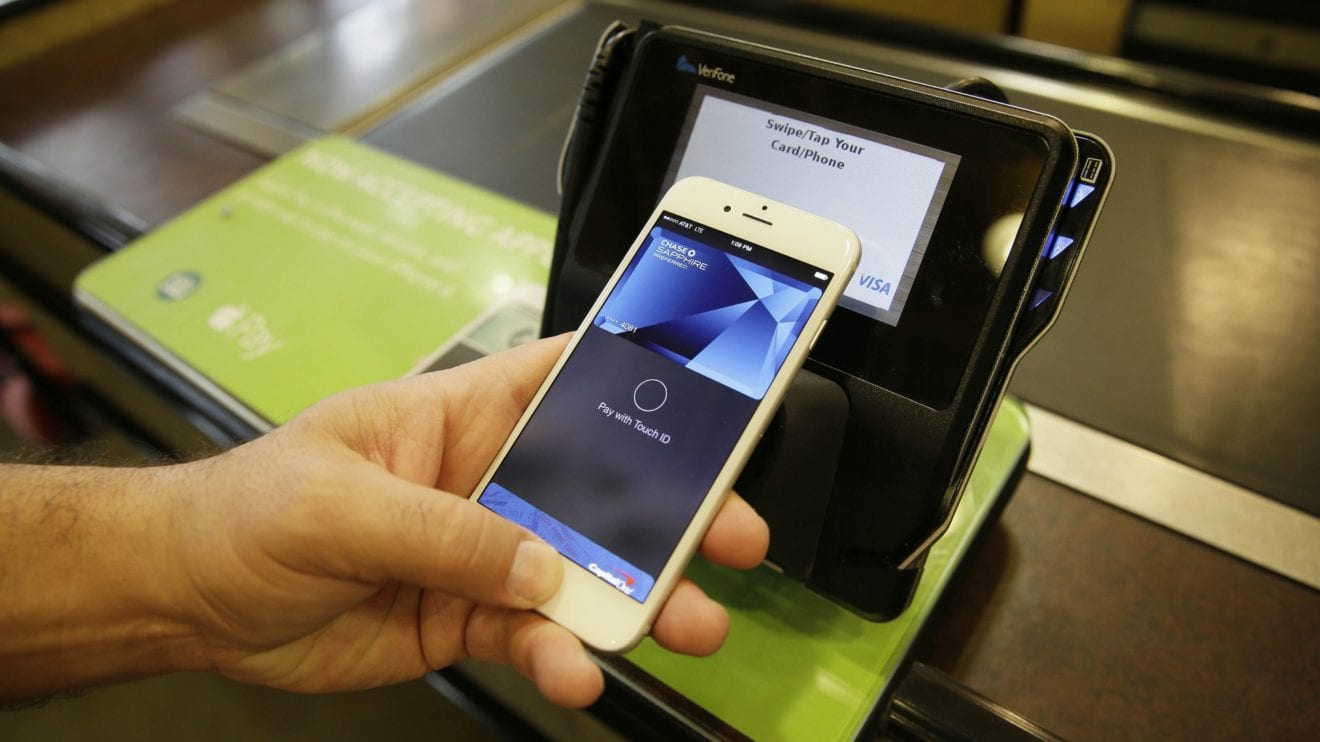
    Apple and Samsung said Thursday they had secured separate deals with China UnionPay that will let their users in China add credit or debit cards to the respective mobile-payments services. Both companies said their services would launch in China as soon as early 2016 after testing and certification required by regulators.

    “China is an extremely important market for Apple, and with China UnionPay and support from 15 of China’s leading banks, users will soon have a convenient, private and secure payment experience,” Eddy Cue, Apple’s head of Internet software and services, said in a statement.

    A few hours later, Samsung announced a similar partnership with China UnionPay.

    “The collaboration with China UnionPay, coupled with the support from major UnionPay partner banks in China, will bring this secure and easy-to-use mobile payment solution to more Samsung mobile users,” Injong Rhee, the global chief of Samsung Pay, said in a statement.

    Launched last year in the US and then in other countries, Apple Pay enables owners of the iPhone 6, iPhone 6S or Apple Watch to pay for items on the go via the wireless technology NFC (near-field communication). Meanwhile, Samsung Pay, which hit the US this past September, doesn’t require NFC technology needed by Apple Pay and can work with any magnetic-strip card reader.

    Companies are eager to push mobile payments in the belief that the additional service will build consumer loyalty. Users of electronic-payments services might be more likely to stick with their current smartphone if they could store their payment data and use the device to buy shampoo, beer, gum or whatever else.

    As the largest smartphone market in the world, China represents a significant business opportunity for mobile-payments systems. The country’s massive population of 1.35 billion and growing middle class have created a lucrative market for companies like Apple and Samsung. For Apple, China is a key market, accounting for $12.5 billion in revenue during its fourth quarter.

    Apple had been trying to reach an agreement with Chinese bank UnionPay, which is the only bank in China that conducts interbank payments, according to a report in MarketWatch. That monopoly on credit- and debit-card processing effectively locks out MasterCard and Visa.

    Since last year, Apple has also been chatting with at least eight major Chinese banks about adopting Apple Pay. But those talks hadn’t gone well either, a source close to them told MarketWatch. One bank expressed no interest in any deal.

  • Retail employees in Singapore set for 4.5% salary hike in 2016

    Retail employees in Singapore set for 4.5% salary hike in 2016

    If you’re presently working in the retail line in Singapore, you can expect a greater boost in your salary next year.

    According to new findings by global professional services firm Towers Watson, retail employees are on track for a 4.5 per cent pay increase in 2016, higher than the 4.1 per cent jump they got this year. This will also be the largest wage increment of any sector here in 2016.

    After retail, the next two sectors that will see healthy salary increases next year are the high-tech and professional services industries, which are expected to rise by 4.3 per cent and 3.9 per cent, respectively (up from 4 per cent and 3.7 per cent in 2015).

    These latest numbers come a week after Towers Watson released its latest Asia-Pacific salary budget planning report, a bi-annual survey conducted in July involving 2,000 responses from 22 countries in the region.

    Among the many sectors polled were automotive, chemical, financial services, energy and natural resources, media, pharmaceutical and health sciences.

    al Affairs powered in Calgary to support the development, installation and stewardship of our Aboriginal interactions beliefs and guidelines. Along with this, we formed an Aboriginal Relations Network of 24 people to encourage the sharing of best patterns in Aboriginal interactions across the company.

    Things You Might Not Like About Singapore

    Temperatures throughout the the day hover around 32 degrees Celsius while the humidity level at around 84%. To take care of this issue, most universal places while universal transport in Singapore are air-conditioned; as unless you are outdoors you hardly definitely feel the hot temperature.
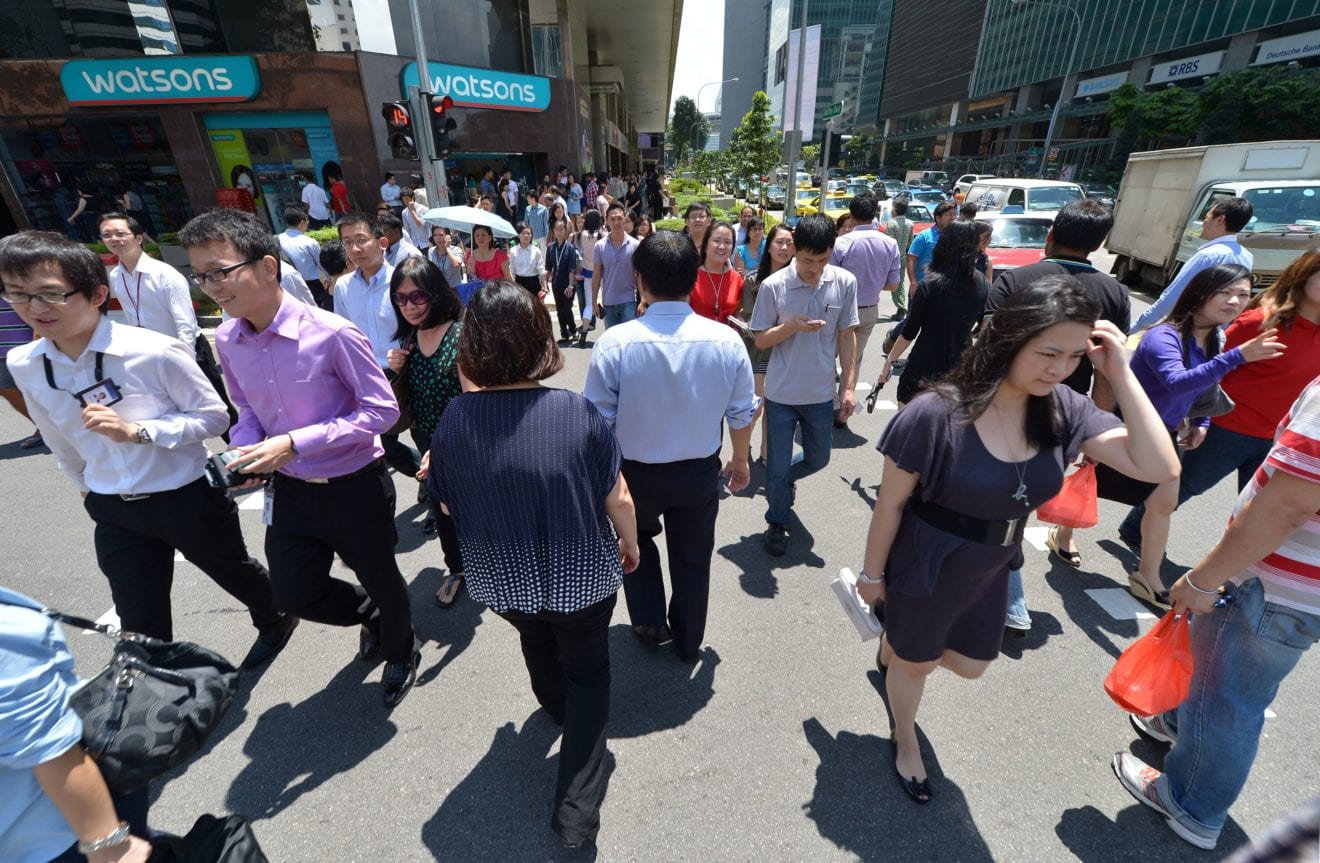
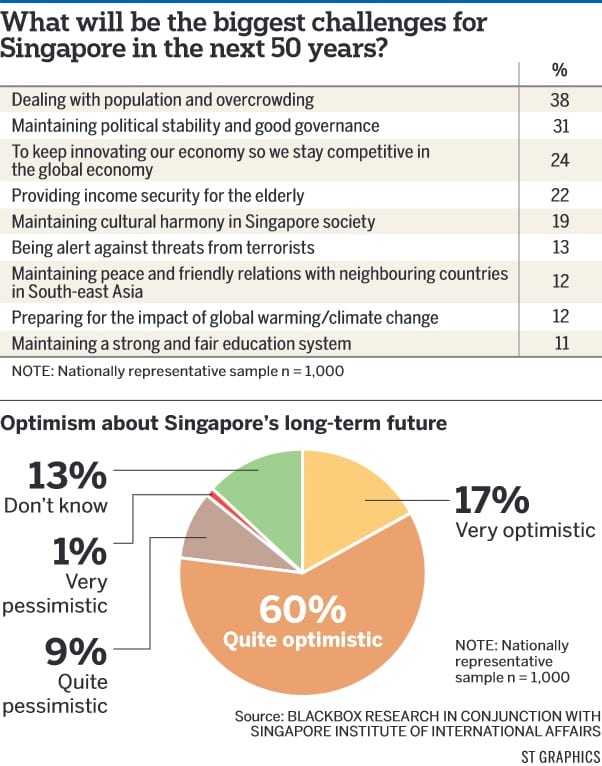
    Singaporeans high energy about country’s future

    Dr Khanna, any geopolitical strategist who co-wrote the SIIA submit with Mr Fang, said that for Singapore that will be resilient, the country should invest email diversifying its economy internally, once well once its economic and geopolitical relationships externally.


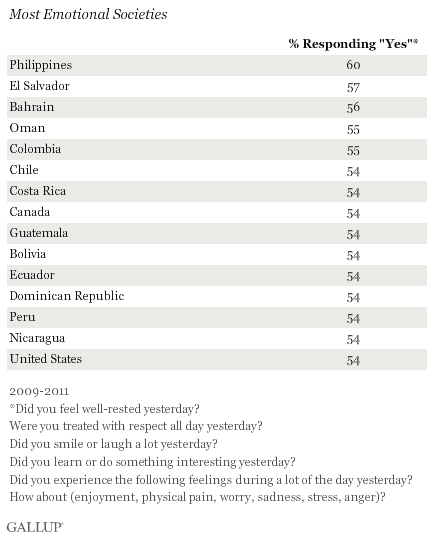
    Singapore Ranks as compared to Least Emotional Country in the World


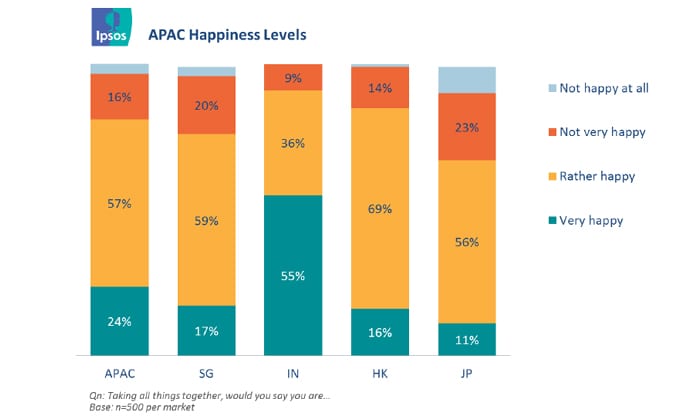
    Most Singaporeans ascribed their hopelessness on their personal financial rang (62%), health (38%) so spouse (35%). Finances so health were also the two factors which often came out on top as key hopelessness drivers across the region.


  • SM Prime Holdings mall business announces recent ISO 22301 certification

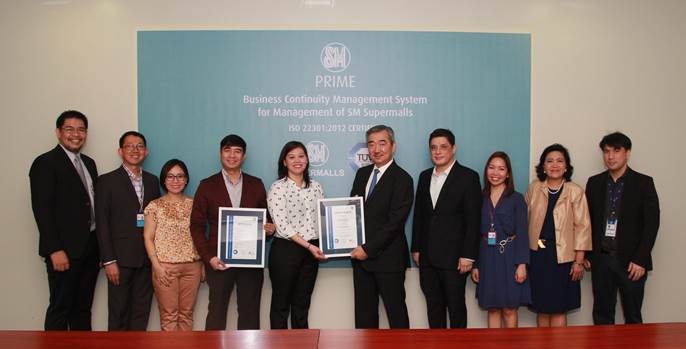
    ISO awarded the certificate to SM Prime for establishing and applying a Business Continuity Management program for its SM Supermalls. Likewise, the certification covers the Mall of Asia Arena Annex Building, the headquarters of SM Prime in Pasay as well as SM Megamall, one of SM Prime’s largest malls in the country.

    “This certification assures our stakeholders that the company will be able to respond to, recover from and continue its business after a disruptive event. For our customers, this means assuring their safety first and foremost, even as we provide access to basic necessities even at the onset of the calamity,” SM Prime President Hans T. Sy said.

    The ISO certification meant going through a series of detailed audits which included internal assessments to ensure readiness for certification and an external audit on the company’s Business Continuity Management System.

    “SM Prime is committed to make sure that business continuity is part of our operations especially after a calamity to provide continuous livelihood, not only to our employees, but to the employees also of our tenants, suppliers and all our stakeholders,” Sy added.

    The ISO is an independent, non-governmental international organization with a membership of 162 national standard bodies. It brings together experts to share knowledge and develop voluntary, concensus-based, market relevant international standards that support innovation and provide solutions to global challenges.

    The ISO 22301 certification covers the requirements for a robust business continuity management system, which will allow the company to minimise the risk associated with disruptions and to make certain that control is maintained at all times.

    In the last few decades, SM malls have integrated disaster risk reduction into their design and operations amid worsening effects of climate change. Aside from SM Megamall, good examples of these are SM City Cabanatuan in Nueva Ecija, SM City Marikina, SM City Masinag in Antipolo, Rizal, SM BF Paranaque, SM Angono and SM San Mateo in Rizal, SM Muntinlupa in Alabang, The SM Mall of Asia in Pasay and SM Seaside City in Cebu among others.


    Philippines: SM Prime Holdings mall business announces recent ISO 22301 certification

    Shown in the photo are (from left) Richard O. Regalado, Consultant, EIAN Management Consulting; John C. Ong, Chief Finance Officer, SM Prime; Myquel M. Regalado, Adviser, EIAN Management Consulting; Royston A. Cabunag, Assistant Vice President for Operations, Mall of Asia Annex Building; Femelyn Lati, General Manager, TŪV SŪD PSB Philippines; Hans T. Sy, President, SM Prime; Christian V. Mathay, AVP for Operations, SM Megamall; Eunice M. Sotto, AVP for Enterprise Risk Management, SM Prime; Anna Maria S. Garcia, President, Shopping Center Management Corp.; and Egbert T. Lim, Mall Manager, SM Megamall.

  • China’s JNBY fashion brand debuts store in Pacific Place

    China’s JNBY fashion brand debuts store in Pacific Place

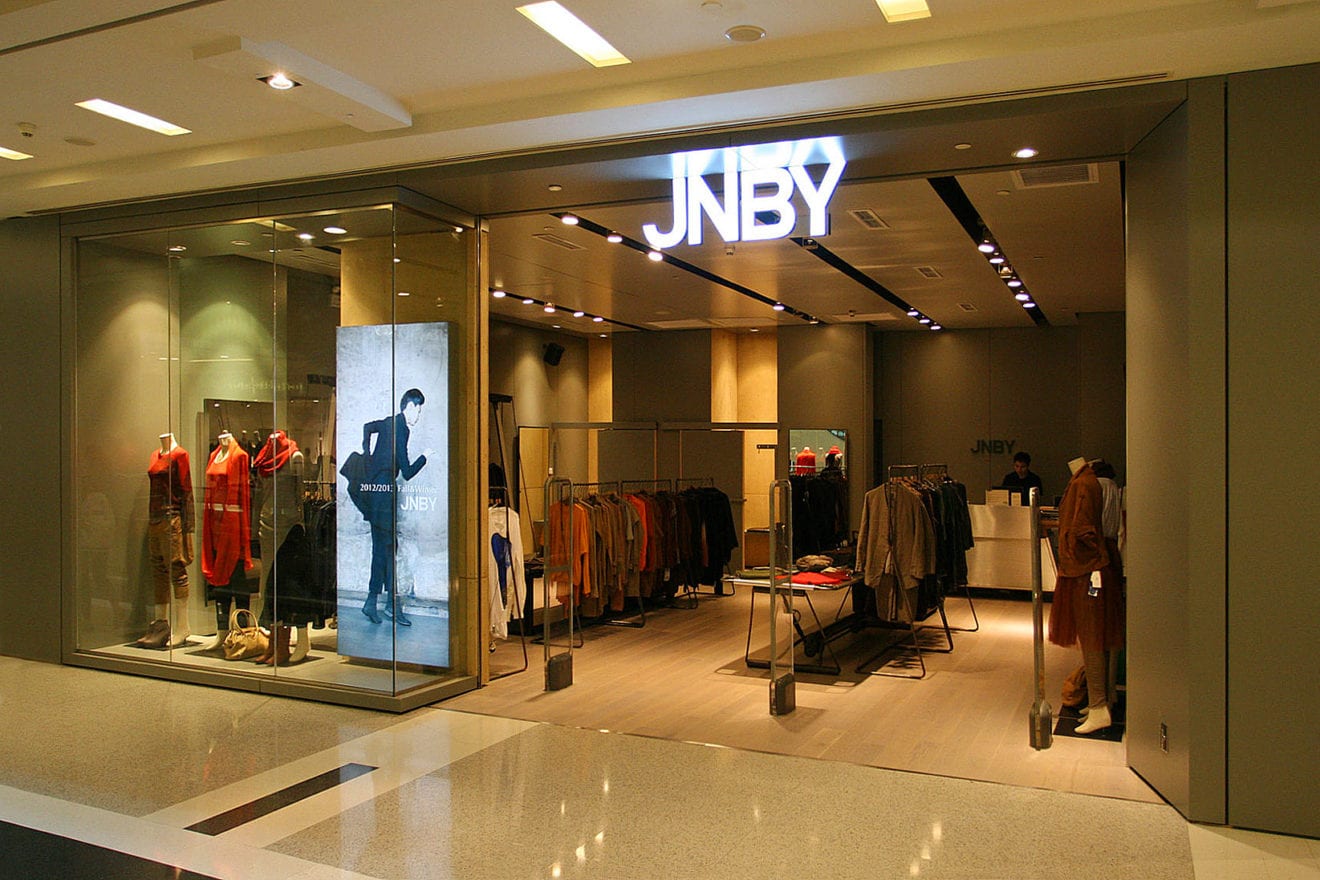
    JNBY, a big Chinese fashion retailer, now has its shingle hanging at Pacific Place mall.

    The brand has more than 700 stores, mostly in China, but some in Europe, Asia and Canada. Its store here is being heralded by SightClassic LLC, the Seattle retailing company that runs the location, as JNBY’s first in the U.S.

    But it’s more complicated than that: The brand had a pop-up store in New York’s SoHo in 2009, which according to media reports, a few months later turned into something more permanent. That experiment failed: It closed after two years, according to retail website Racked.

    Perhaps it’ll fare better in Seattle, where the recent visit of Chinese President Xi Jinping highlighted growing economic ties with the Asian superpower.

    SightClassic says it’s JNBY’s “fully authorized distributor” in the U.S., and that it operates an online JNBY store on Amazon. On Thursday, however, the website featured no products for sale.


  • Revamp, new tenants for two Dempsey blocks

    Revamp, new tenants for two Dempsey blocks

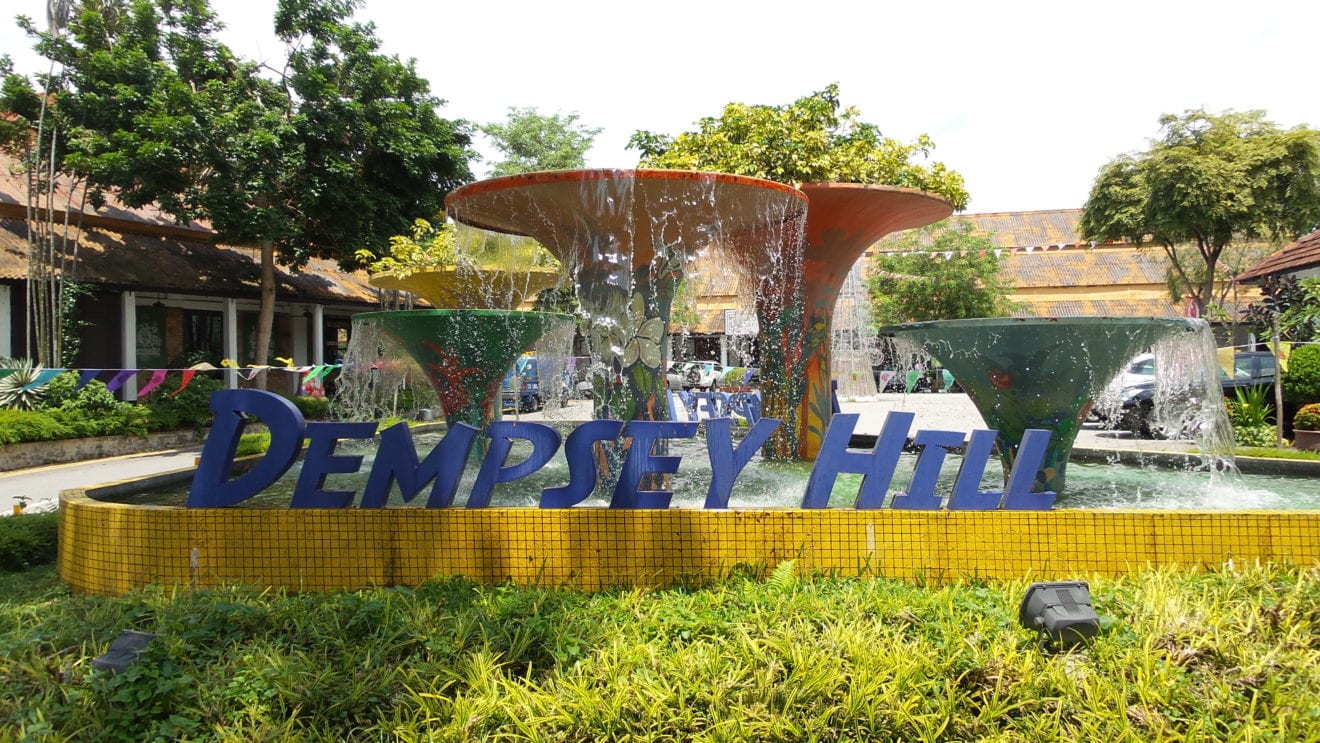
    Tanglin Village, already a hip dining enclave, is getting another lifestyle quarter – one boasting well-known multi-label fashion store Dover Street Market.

    To make way for it, two tenants – eatery Chang Korean BBQ Restaurant and antique store Shang Antique – will move out when their leases expire on Feb 29.

    In their place will come “Como Dempsey”, a complex housing Dover Street Market, an edgy concept store conceived by Comme des Garcons’ Rei Kawakubo, and a specially conceptualised restaurant and bar by renowned French restaurateur Jean-Georges Vongerichten.

    The 5,268 sq m site, comprising Blocks 17 and 18 Dempsey Road, will also have a new dining concept offering signature dishes from around the world.

    Popular local Peranakan restaurant Candlenut has also been included in the proposal, although it could not share more details.

    Internships will also be offered to nurture emerging local talents.

    The Singapore Land Authority (SLA) and the Singapore Tourism Board (STB) yesterday announced that the joint-tender for both blocks had been awarded to Como Lifestyle, a subsidiary of local fashion doyenne Christina Ong’s Club 21, whose ventures include the eponymous retailer as well as luxury hotel brand Como Hotels and Resorts. Mrs Ong is the wife of property tycoon Ong Beng Seng.

    The tender was called, said SLA’s director of land operations (private) division, Lee Seng Lai, to “rejuvenate and bring new and exciting concepts to Dempsey”.

    The new project is expected to “significantly contribute to creating and sustaining the vibrant Dempsey atmosphere and Singapore’s tourism scene”, said Ranita Sundramoorthy, STB’s director of attractions, dining and retail.

    Como Lifestyle offered to pay a monthly rent of $106,300 for an initial lease term of three years, renewable up till Dec 31, 2022.

    It won despite offering less than a third of the $350,000 per month its competitor, D Prime, did.

    The debut of Como Dempsey will mark the latest chapter in the area’s transformation.

    Tanglin Village started out in the 1860s as army barracks. In the 1990s, it became known for its furniture shops. After the turn of the century came upmarket restaurants such as PS. Cafe, as well as art galleries.

    In 2007, when Country City Investment (CCI) opened the Dempsey Hill dining cluster – now with more than 25 tenants including Jones the Grocer and The Prime Society – the buzz climbed.

    CCI’s general manager Nicholas Ng said there were initial concerns about who would win the bid.

    “We are happy with the outcome. Como’s concept complements our existing core of tenants,” he said.

    “There might be more competition, but in general it will create more buzz and attract more visitors,” said Mr Ng, adding that the reliability of the winner was important. “If the concept fails, it will be really bad. Blocks 17 and 18 front the main entrance off Holland Road and it is the first thing people see.”

    The situation is less rosy for Chang Korean BBQ Restaurant owner Moon Hichan, who heard the news from The Straits Times.

    “It’s bad. This is my main space with a customer base of more than 15,000,” said the 51-year-old. “I was one of the first to open a restaurant in Dempsey.”

    “And now they kick me out without offering me another space here. I am very disappointed.”

    But Tanglin Village regulars like Beth Demil, 58, are looking forward to the change.

    She said: “It’ll be nice to have more food options. I hope the retail development will offer something different from main street, like things you get in Orchard.”


  • IKEA Celebrates 1st Bumper Year in Korea

    IKEA Celebrates 1st Bumper Year in Korea

    Swedish furniture giant IKEA will open five more stores here by 2020, IKEA Korea retail manager Andre Schmidtgall told reporters Wednesday.

    Speaking on the first anniversary of the first IKEA store on the southern outskirts of Seoul, Schmidtgall said the decision was prompted by its better-than-expected performance.

    The store in Gwangmyeong, Gyeonggi Province is IKEA’s second largest in the world. Some 6.7 million customers visited over the past year and sales reached W308 billion (US$1=W1,179).

    “Korea is a great market with huge potential, with a growing customer interest in home furnishing,” Schmidtgall said.

    IKEA plans to invest W1.2 trillion by 2020 to open the five additional stores in Goyang north of Seoul, Gangdong in the eastern part of the capital, as well as Daejeon and Busan. The new stores are expected to create 3,500 jobs. The store in Gwangmyeong employs 913 Korean workers.

    The next store will open in Goyang in 2017 on an even bigger scale.

    Schmidtgall played down concerns that IKEA harms regional businesses. “The actual numbers do not show that,” he said.

    The Korea Distribution Association analyzed credit card transactions from December 2014 to August this year and found that revenues at stores within a 10 km radius of the IKEA Gwangmyeong store in fact rose between 7.5 and 27.4 percent.

    Schmidtgall pointed out that the Gwangmyeong store is the only IKEA outlet in the world to offer part of its underground floor space to small businesses.

  • China ranked first in the world for online retail trade

    China ranked first in the world for online retail trade

    The period from January to October, witnessed China clinching the world no 1 spot for online retail trade, according to the “Internet Development in China over the Last Two Decades” report, which was published on Tuesday.

    The report was published prior to the World Internet Conference to be held in Wuzhen, China, from 16-18 December, according to the people.cn website.

    The total number of netizens in China reached an estimated figure of 668 million — the world’s largest online population. “The four Chinese companies which made it to the list are Alibaba, Tencent, JD.Com and Baidu,” said head of Chinese Academy of Cyberspace, Yang Shuzhen.

    China’s online retail sales skyrocketed at 2.8 trillion yuan in 2014, as reported by the en.people website. But the figures have more than doubled in 2015, with total transaction reaching 2.95 trillion yuan.

    In the month of November, an online shopping sale was conducted by Alibaba which recorded a sale of 91.2 billion yuan, according to the report.

    Internet has been the biggest boon to the Chinese economy, contributing 7% to the GDP.

    According to statistics, the number of people who shop online now is 307 million.

    China’s cross-border retail transactions reached 449.2 billion yuan in 2014 alone, people.cn reported. China has 321 Internet-related companies (listed) whose market value was estimated at 7.85 trillion yuan—equivalent to 25.6% overall stock market value, according to the website.

    Since the last year, online sales in China have increased 44%.

    Mobile internet is also rapidly developing in China. According to statistics, there were 594 million phone users who accounted for 88.9% of all netizens, as reported by people.cn.

    The development of mobile internet services in China has also brought a boost to travel industry, as well as car rental and medical services.

  • Mövenpick Signs Hotel in Kota Bharuand and Cam Ranh Bay

    Mövenpick Signs Hotel in Kota Bharuand and Cam Ranh Bay

    Mövenpick Hotels & Resorts is consolidating its expansion campaign in South-East Asia with two new properties announced for Malaysia and Vietnam, both of which will open in 2018.
    Strengthening its development plans in Malaysia, the Swiss hospitality firm has signed a deal to manage the 30-storey Mövenpick Hotel Kota Bharu, a 453-key five-star resort in Kelantan, a state on the country’s east coast undergoing a rapid transformation. This takes the group’s portfolio in Malaysia to three properties strong, with an upcoming hotel in Kuala Lumpur and a beachfront resort in Terengganu.

    In the same year, Mövenpick Hotels & Resorts will open Mövenpick Resort Cam Ranh Bay, an integrated beachfront resort located in Khanh Hoa Province, Vietnam, spanning some 20 hectares and featuring 250 rooms, 100 residences and 100 villas. This will be the fourth Mövenpick hotel in Vietnam. The brand currently has a presence in Hanoi and new openings are scheduled for Phu Quoc and Quy Nhon in the next two years.

    The two new management deals come as Mövenpick Hotels & Resorts prepares to unveil its fifth property in Thailand, with Mövenpick Siam Hotel Pattaya’s opening next month (January).

    Debuts in the Philippines and Indonesia will follow hot off their heels, as Mövenpick Resort Boracay and Mövenpick Resort & Spa Jimbaran in the south of Bali are both on track for a 2016 opening.

    “We are rapidly cementing a solid presence in South-East Asia, where we have identified strong growth opportunities for the upscale hospitality concepts Mövenpick Hotels & Resorts delivers,” said Andrew Langdon, Senior Vice President Asia, Mövenpick Hotels & Resorts.

    “With the new properties signed for Vietnam and Malaysia, we see our cluster strategies for these exciting markets start to be realised, while our debuts in new countries mark another milestone in our strategy to be a major player in a region where we plan to open at least 15 new properties by 2020.”

    Mövenpick Hotel Kota Bharu in Malaysia is a certified ‘green building’, featuring the latest environment-friendly technology to save energy and reduce wastage. Highlights of the hotel will include the 815-sqm Emperor Suite, which will occupy the top three floors of the hotel, a helipad, an expansive banquet hall for 1,000 guests, a restaurant and café, stylish boutiques and retail outlets, male and female swimming pools, spa and gym, club lounge and business centre.

    Stand-out features of Mövenpick Resort Cam Ranh Bay, a mixed-use resort situated along the pristine white beaches of Vietnam’s Cam Ranh Bay, will include an amphitheatre, a cookery school, themed retail village, water park, spa, adventure zone for family activities and team-building retreats, and an exclusive kids’ zone featuring miniature landmarks from around the world.

  • How native apps complement China’s retail experience

    How native apps complement China’s retail experience

    When planning a retail mobile app strategy for China, there are many options available, including developing a mobile-friendly website, setting up a store on any one of the thousands of Chinese e-commerce platforms and developing a native app. So how do you choose which one is best for your brand?

    The big players

    There are a number of key platforms that retail brands in China can consider. The mighty WeChat, for example, has both reach and resonance with a vast audience (more than 600 million monthly users, to be more precise), as well as built-in, trusted payment facilities. Tmall and JD.com are just two examples of the thousands of e-commerce platforms in China. (Even Amazon has a store on Tmall). They offer easy-to-use, well-established e-commerce functionality that can include logistics, warehousing and payment facilities.

    For retailers wanting to take the quickest route to market, establishing a shop on one of these existing services is an easy solution. And of course, investing in a mobile website is also a good alternative.

    Both of these options have a place in the overall marketing mix and should be part of any robust business strategy. But retailers looking to compete in a complex and ever-changing marketplace like China need to consider the advantages of developing a native app and ‘owning’ a space on consumers’ devices.

    What’s so good about native apps?

    While it’s clear that people love to use the major consumer platforms, it’s important not to underestimate the power of an app specifically developed for a brand’s fans and followers.

    According to a report from The Internet Retailer, 42 percent of all mobile sales generated by the world’s leading 500 merchants in m-commerce last year came from mobile apps. Caixin, one of China’s leading business media groups, backs this up, saying that shopping via app in China grew by 168 percent in 2014, with shopping app users making up 39 percent of all mobile users.

    The numbers stack up, but what about the practicalities?

    Native app versus existing e-commerce platforms

    When working with an e-commerce platform, the brand doesn’t have full control over the user experience. Tencent and Alibaba set the rules for look, feel and layout, as well as e-commerce capabilities and payments. Overall functionality is limited to each platform’s abilities. It might not be possible to implement brand-specific features, innovative activities or marketing campaigns that lie outside of its framework.

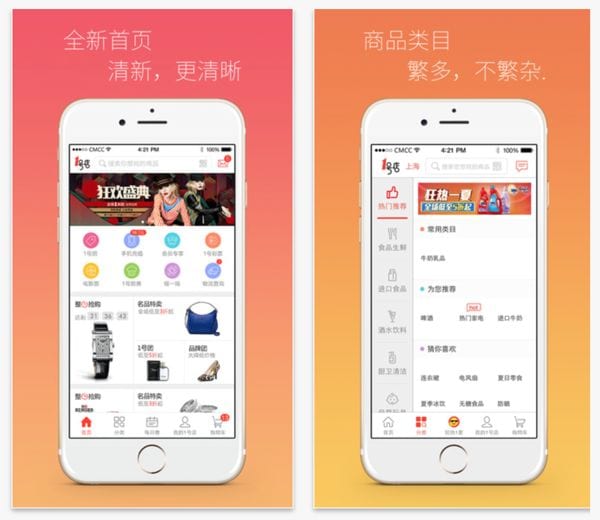
    This app from online supermarket retailer Yihaodian is a great example of how to fully exploit smartphone functionality for an engaging customer experience.

    China_Apps_Yihaodian_600

    While there’s usually a way to open basic storefronts for free, other marketing activities, such as advertising and special promotions, tend to come at a cost.

    China’s existing e-commerce platforms are an excellent way to begin market entry, as they offer an instant, fully functional digital storefront within trusted, well-established parameters. However, a native app which gives retailers the freedom to develop unique features and marketing opportunities will complement these advantages, leveraging multiple platforms for a true omnichannel experience.

    Native app versus mobile web app

    A web app has technical limitations based on the browser it was set up for. The app will not be able to fully access smartphone capabilities.

    For example, the phone’s built-in features cannot access the user’s address book, offer an unrestricted integrated camera experience, use location services and the accelerometer, or access in-store beacons.

    Web apps cannot offer a personalized experience. Whereas native apps can store and apply a wealth of user data to deliver targeted alerts, discounts, promotions and loyalty schemes based on store proximity and previous activity.

    Another issue with web apps is that if the Internet connection is lost, the user can no longer access it. Native apps on the other hand, allow for offline browsing.

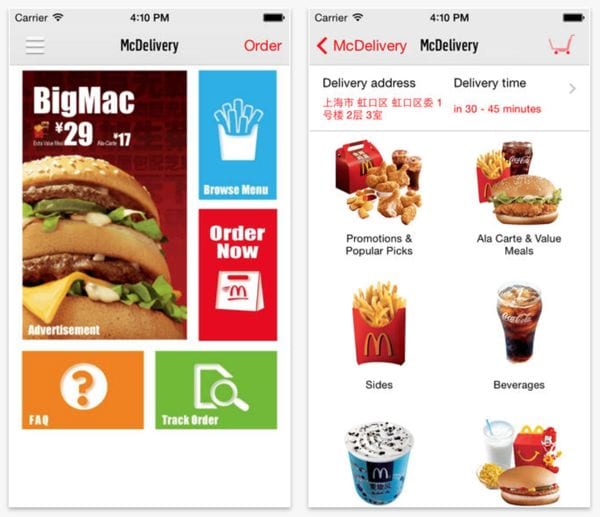
    McDonald’s McDelivery app is a good example of this. It makes a feature of the fact that people can look at the menu ‘any time, anywhere.’

    Apps_China_McDonald's_600

    Native apps allow retailers to send push notifications, an option not possible via a web app. This is an important consideration when it comes to marketing campaigns. Fashion retailer Milanoo makes full use of this in its app.

    Apps_China_Milanoo_600

    Well-made native apps get additional promotion through platform app stores; they may even be featured in top 10 charts and editor picks. This adds to the credibility and popularity of both the app and the retailer.

    Web apps are a viable, speedy way to get content onto users’ mobiles. But they’re not primarily designed for smartphones and while it is essential to make web content available in a mobile-friendly way, smartphone users expect a specific experience.

    Retailers can reap the benefits from this enthusiasm by developing apps for consumers using their phone capabilities to the full.

    The key to success in the world’s biggest mobile market is to have a well-rounded mobile strategy encompassing all trading platforms – and that includes native apps.

  • Singapore Food and Drink Report Q1 2016 Market Report

    Singapore Food and Drink Report Q1 2016 Market Report

    Food consumption will remain modest over our forecast period, registering a compound annual growth rate of 2.1% over 2014-2019.Technological innovations and cost-saving measures by mass grocery retailers will be realised in 2017, and a steady rise in food consumption will be observed. We forecast real GDP growth of 2.5% in 2016, with economic activity remaining tepid over our forecast period.

    A tight labour market will continue to put upward pressure on labour costs, reducing food manufacturing competitiveness. Rising incomes will bode well for the food and drink industry; however, low consumer confidence will partially offset growth in the short term.

    Headline Industry Data
    – Total food consumption growth in 2016: +1.8%; compound annual growth rate (CAGR) to 2019: +2.1%
    – Per capita food consumption growth in 2016: +0.1%; CAGR to 2019: +0.4%
    – Alcoholic drinks sales growth in 2016: +4.5%; CAGR to 2019: 5.1%
    – Soft drink sales growth in 2016: +2.7%; CAGR to 2019: +2.1%
    – Total mass grocery retail sales growth in 2016: +2.7%; CAGR to 2019: +3.0%

    The Singapore Food & Drink Report features Publisher Research’s market assessment and independent forecasts for food and drink expenditure, consumption, sales, and imports/exports and forecasts for the mass grocery retail sector. The report also includes analyses of major regulatory developments, the background macroeconomic outlook and competitive landscape comparing national and multinational companies by leading products and services, sales, investments, partners and expansion strategies.

    Publisher’s Singapore Food & Drink Report provides industry professionals and strategists, sector analysts, business investors, trade associations and regulatory bodies with independent forecasts and competitive intelligence on the food and drink industry and the mass grocery retail market in Singapore.

    Key Benefits
    – Benchmark Publisher’s independent food and drink industry forecasts for Singapore to test other views – a key input for successful budgeting and strategic business planning in the Singaporean food and drink market.
    – Target business opportunities and risks in Singapore through our reviews of latest industry trends, regulatory changes and major deals, projects and investments.
    – Exploit latest competitive intelligence on your competitors, partners and clients via our Company Profiles (inc. SWOTs, KPIs and latest activity) and Competitive Landscape Tables.

    Coverage
    Summary of Publisher’s key industry forecasts and views, covering food and drink manufacturing and consumption and the mass grocery retail market.

    Industry SWOT Analysis
    Analysis of the major strengths, weaknesses, opportunities and threats within the food, drink and mass grocery retail sectors and within the broader political, economic and business environment.

    Publisher’s Food and Drink Risk Reward Index
    Publisher’s Risk Reward Index provides investors (food and drink manufacturers and mass grocery retailers) looking for opportunities in the region with a clear country-comparative assessment of a market’s risks and potential rewards. Each of the country markets are scored using a sophisticated model that includes more than 40 industry, economic and demographic points. These provide indices of highest to lowest appeal to investors, with each position explained.

    Food Forecasts
    Publisher’s food chapter is divided into sections such as meat, fish, confectionary, dairy and canned foods, and provides insight into each market’s food industry, centred on a forecast to end-2019 for the sector.

    The chapter includes the following elements:
    – Industry Forecast Scenario: Historical data series and a forecast to end-2019 for growth of key indicators within a market’s food industry. Indicators include food consumption, food consumption as % of GDP, canned food sales, confectionery sales and food and drink imports and exports, among others.
    – Industry Developments: A summary of corporate developments, including news on M&As, FDI, expansions, closures and financial results, in addition to analysis and explanation of the latest industry events and how these could influence further investment.
    – Market Overview: An overview of the structure of the market, introducing the key players and discussing underlying trends.

    Drink Forecasts
    Segmented the same way as Publisher’s food chapter, the drink section provides insight into each market’s drink industry, centred on a forecast to end-2019 for the sector. Forecast indicators include alcoholic and soft drink sales by value, volume and sub-sector and tea and coffee sales, among others.

    Mass Grocery Retail Forecasts
    Segmented the same way as Publisher’s food and drink chapters, the mass grocery retail section provides insight into each market’s grocery retail industry, centred on a forecast to end-2019 for the sector. Forecast indicators include mass grocery retail sales by format (including supermarkets, hypermarkets, convenience and discount stores) and a breakdown of the organised retail sector versus the traditional sector, among others.

    Competitive Landscape
    Illustration of the mass grocery retail and food and drink industries via rankings tables comparing revenues, number of outlets and number of employees. This chapter also includes data-rich, in-depth regional analysis of the market position, business strategies and investment potential of the region’s leading mass grocery retail and food and drink operators.

    Company Profiles
    – Examines the competitive positioning and short- to medium-term business strategies of key industry players. Strategy is examined within the context of Publisher’s industry forecasts, our macroeconomic views and our understanding of the wider competitive landscape to generate company SWOT analyses.
    – The latest financial and operating statistics and key company developments are also incorporated within the company profiles, enabling a full evaluation of recent company performance and future growth prospects.

    Sources
    The Food & Drink reports draw on an extensive network primary sources, such as multilateral organisations, government departments, industry associations, chambers and company reports.
  • Olivia Burton launches first stand-alone retail presence in Hong Kong

    Olivia Burton launches first stand-alone retail presence in Hong Kong

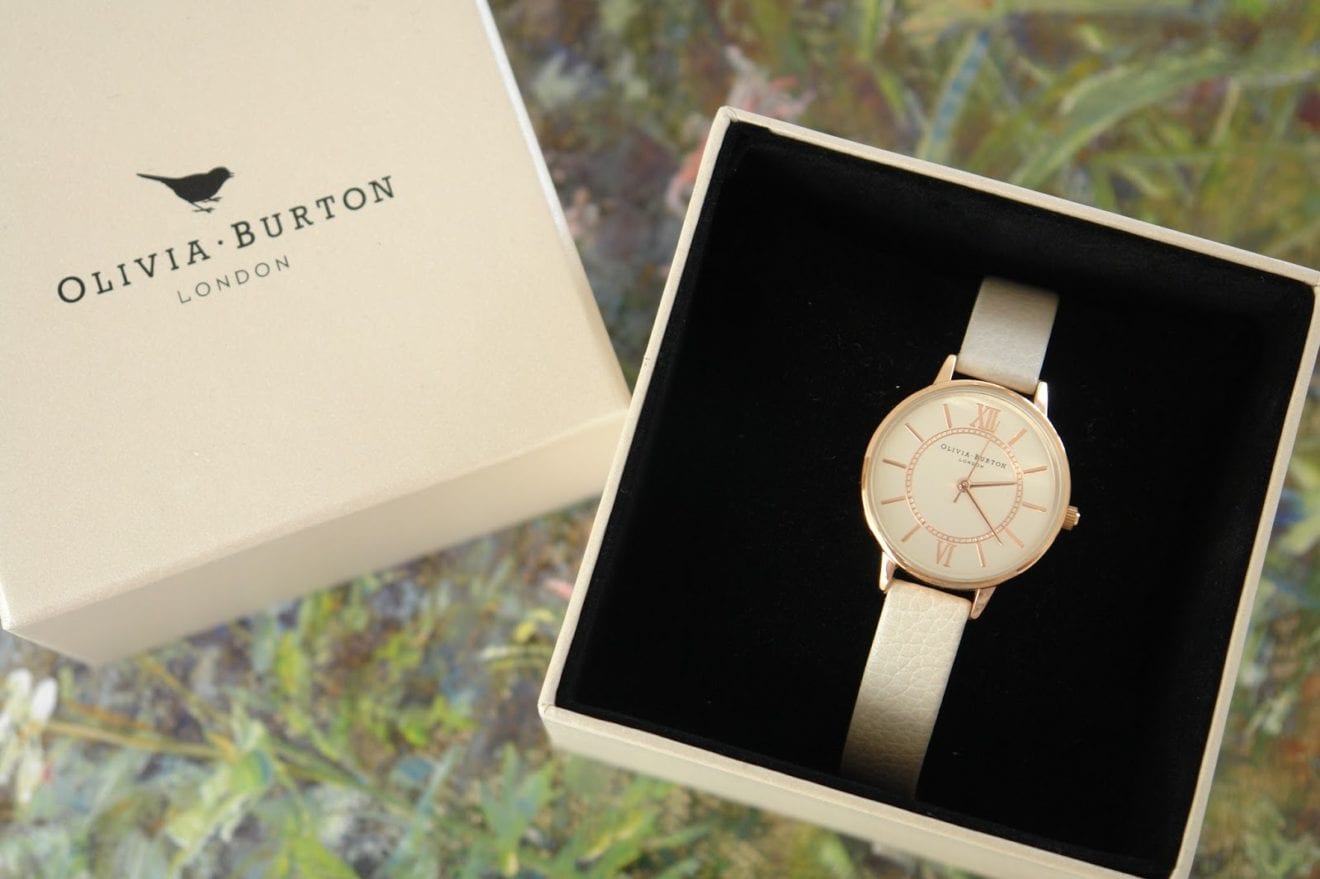
    British watch brand Olivia Burton has launched its first stand-alone retail presence in Hong Kong.

    The move comes as a partnership with the company’s Hong Kong distributor – Working Unit – and has seen three Olivia Burton-dedicated ‘watch corners’ open across the city in Kapok retail stores.

    The company said it launched the stores in December 2015 in an effort to capitalise on the Christmas shopping period.

    Located in prime locations that offer “high traffic and consumption”, the Olivia Burton watch corners are based in the LCX store in Tsim Sha Tsui, the apm mall in Kwun Tong and the New Town Plaza in Shatin.

    Jemma Fennings, brand founder and managing director of the brand, said the launch of the retail corners mark a “huge milestone” for the brand and its international presence.

    She said: “The label has proved extremely popular with the Asian market since we started trading internationally and to be able to offer a dedicated retail space that is designed and merchandised by our in-house team is really exciting.

    “We’re looking forward to increasing our brand awareness and product offering within the Asian market and hope to add additional retail spaces to the current portfolio in the coming year.”

    The stand-alone corners will stock a wide range of Olivia Burton styles and new collections will be added every two months.

  • Hanwha Galleria to open Seoul downtown duty-free store next week

    Hanwha Galleria to open Seoul downtown duty-free store next week

    Korean department retailer Hanwha Galleria is to partially open its first duty-free store at the 63 City Building in downtown Seoul next week, Hanwha Galleria Duty Free merchandising division representative Ji Su Kim told DFNIonline.

    Kim, was unable to reveal further details, but a YonHap News Agency report indicated Hanwha Galleria plans to open 60% of the proposed space in the gold-tinted skyscraper, one of Seoul’s best known landmarks in Yeouido on December 28. Hanwha Galleria and HDC Shilla Duty Free, a joint-venture between Hotel Shilla and Hyundai Development Co were awarded the main downtown duty-free licences in Seoul by the Korea Customs Service in July following a hotly contested tender.

    The report said the pre-opening would showcase 369 brands, including cosmetics, watches and jewellery with nearly half of them Korean brands. The new duty-free shopping space will be located in the first lower level floor of the main 63 building and floors one to three of the annex building. With a total floor area of 10,072sq m, shoppers will have a  one-stop experience in a modern and comfortable space, according to the company.

    Once the entire store is complete, it is hoped the luxury boutiques and cosmetics stores in the first lower level floor and the watches and jewellery section of the first floor will feature global luxury brands.  The second floor will be filled with Korean cosmetics brands showcasing the best of “K-beauty”. This floor will also feature sections for fashion, accessories, tobacco and liquor. The third floor will be home to “K-Special Hall”, an exclusive concept to Galleria Duty Free. This unites more than 100 of Korea’s top brands and small and medium-sized enterprises.

    Shoppers looking to take a break from shopping can enjoy views of the Han River at “Studio Rue”, a media complex café located on the fourth floor, and browse a selection of Hallyu content products and purchase refreshments.

    Meanwhile, Hanwha Galleria, whose Hanwha Timeworld subsidiary runs the duty-free concession at Jeju International airport, is believed to have made little progress in terms of attracting global luxury brands.

    Hanwha Galleria CEO Hwang Yong-deuk said during a briefing. “Although we want to have luxury brands in the stores they are not yet considering opening new shops, thinking they have enough shops in South Korea.”

    The company added it would continue negotiations to house global brands when the Lotte World Tower store closes this month after the Korean powerhouse lost its licence to travel-retail newcomer Doosan Group.

    It also vowed to continue expanding its duty-free business and revealed it is targeting sales of $429.6m million in the new store next year.

    Stay close to DFNIonline and future editions of DFNI for more on the Hanwha Galleria duty-free expansion project.