Author: Mei Ling Tan

  • Launched: 118i Sport by BMW Malaysia

    Launched: 118i Sport by BMW Malaysia

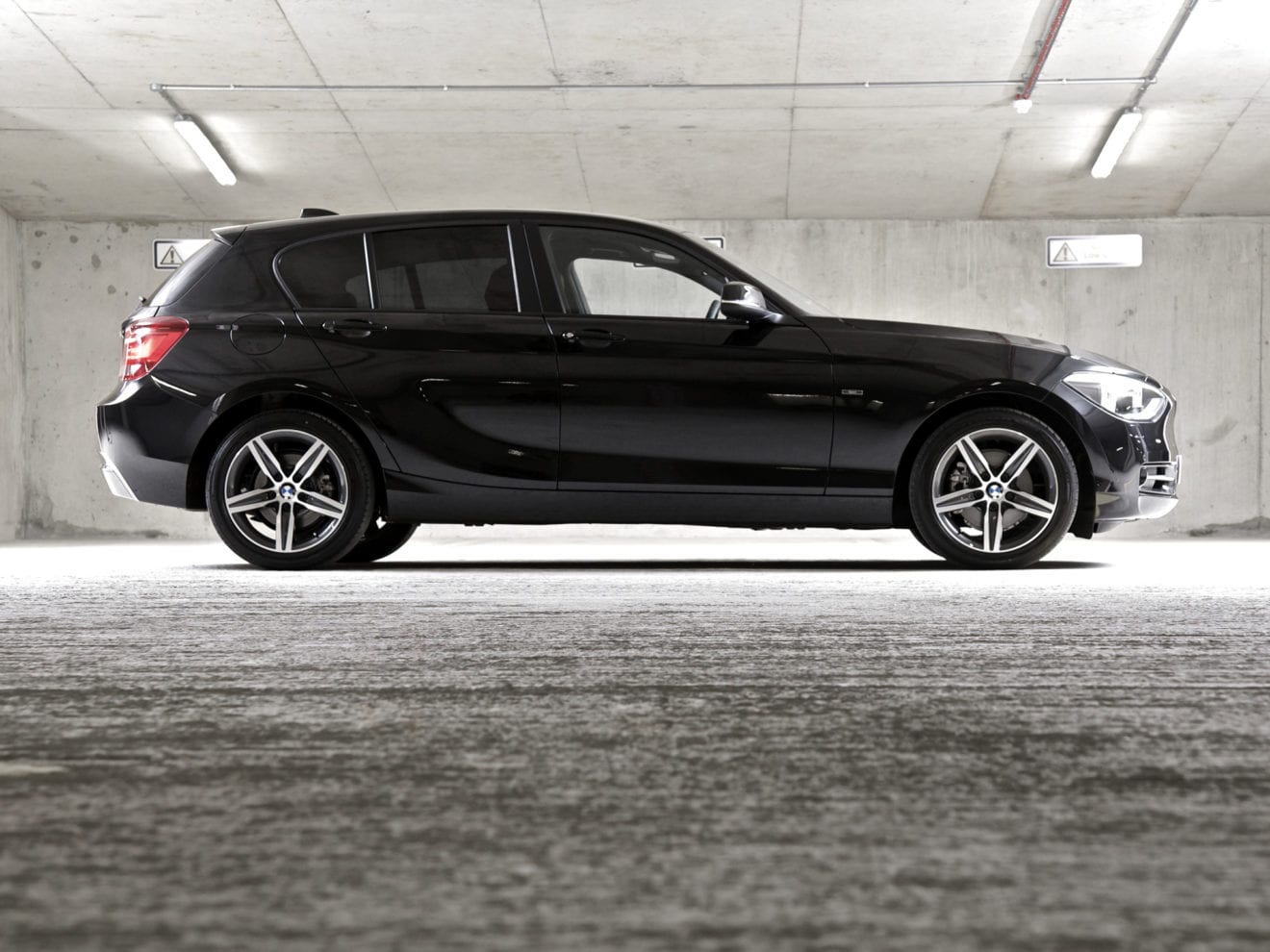
    BMW Group Malaysia has introduced the new BMW 118i Sport. Its estimated retail price (on the road, without insurance with BMW Malaysia’s latest 5-year Unlimited Mileage Warranty and Free Scheduled Service Program) is RM188,800.

    Introducing the latest product offering from BMW Group Malaysia, the group’s managing director and CEO, Alan Harris, said: “The new BMW 1 Series still remains the only rear-wheel drive car in its segment, making the car the most sportier and dynamic option in its class.”

    Harris added that the new 118i Sport now also introduces the segment to a new generation engine with the latest BMW EfficientDynamics technology, the latest driver assistance systems and mobility services courtesy of BMW ConnectedDrive as well as a host of safety features, making the premium segment hatchback also one of the safest in its class.

    Exterior Design

    The proportions, lines and surface design of the new 1 Series bear all the classical hallmarks of a BMW with its set-back passenger compartment, long bonnet and short overhangs, in particular, give the new premium hatchback a uniquely sporting presence. The new car features subtle but key differences to refine yet further the overall package.

    At the front, a new lower apron with larger air intakes and a horizontal bar combines with the reshaped BMW kidney grilles and front ornamental grille in chrome surround with its exclusively designed kidney bars in high gloss black to provide the sight that the new 118i Sport was designed with dynamism and sportiness in mind. Full LED headlamps with low and main beam have also been added to the new variant of the 1 Series.

    At the rear, new tail lamps with the now familiar BMW ‘L’ shape design adopt striking LED technology. Further to this, a single round exhaust tailpipe in chrome matt finish and the rear bumper with specific design elements in black-high further accentuates the sporty expression of the new 118i Sport.

    In terms of wheel options, the new 118i Sport offers 17’’ light alloy wheels Star Spoke 379 71/2 J with 17’’ tyres 225/ 45 R17.

    Interior Design

    The driver-focused cockpit of the new 1 Series is an even more welcoming, sporty, comfortable place to sit, thanks to enhancements to the design and the use of Sensatec Leather for its upholstery. The instrument cluster with red highlight and chrono scaling as well as interior trim finishers in Black High-Gloss with highlight trim finishers in Coral Red Matt further adds the sporty feel inside the car. Further driving this sporty expression inside the car are the sports leather multifunction steering wheel and the sports seats for both the driver and front passenger.

    The BMW Radio Professional and iDrive operating system continues to be standard across the entire range so the all new 1 Series model also features the segment leading freestanding, 6.5-inch Control Display, the controller wheel mounted on the centre console and the direct menu control and favourites buttons.

    The controls arranged below the Control Display have also benefited from detailed refinements. Both the air vents and the controls for the radio and the automatic air conditioning now feature high-quality chrome surrounds. The radio and automatic air conditioning keypads, meanwhile, are set against high-gloss black panelling.

    Engines: An Award Winning Member of the Family

    The new 118i Sport sees the introduction of the new Engine of the Year 2015 award winning 3-cylinder petrol engine to the premium compact segment. The innovative BMW TwinPower Turbo 1.5-litre 3-cylinder petrol engine, which is the same power plant in the all-new BMW i8, delivers a maximum output of 136 hp, torque of 220 Nm and accelerates from 0 to 100 km/h in 8.7 seconds. The combined fuel consumption of the new 118i stands at 5.1 litres per 100 km with C02 emissions of 119 g/km.

    Adding to the dynamism of the its engine capabilities, the new 118i Sport also features the segment leading 8-Speed Steptronic automatic transmission and Driving Experience Control modes with the efficient ECO PRO mode, another class leading feature which makes the 118i Sport stand out from the rest in the premium compact segment.

    As a car built with a sporty expression, the new BMW 118i Sport is also not short in terms of safety features. The compact premium sports hatchback offers complete air bags for front and rear passengers, side air bags for driver and front passengers which are integrated into the front seat backrest and head airbags at the front and rear with curtain head protection and splinter protection capabilities. Doubling up on the safety measures are child seat ISOFIX attachments for the rear seats and a central locking system with electronic immobiliser and crash sensor.

    BMW ConnectedDrive: Connecting the Driver to the Car to the Outside World

    A leading feature amongst its peers in the industry, the new 118i Sport offers Intelligent Emergency Call, Teleservices and Remote Services functionalities.

    A SIM card built into the vehicle enables customers to enjoy optimum connectivity and access to the unrivalled range of services from BMW ConnectedDrive without the need for a smartphone.

    Intelligent Emergency Call, a standard feature in the new 118i Sport, ensures maximum safety on the road. If the airbags are triggered in an accident, this system uses the built-in SIM card to automatically transmit the severity of the accident, the potential risk of injury to the occupants and the vehicle’s location to the BMW Call Centre.

    This information is then used to arrange the best possible emergency response while the Call Centre stays in contact with the occupants if desired. The manual emergency call function also allows rapid help to be summoned for other road users in emergency situations at a touch of an SOS Button.

    Remote Services, on the other hand, transforms the owner’s smartphone into an intelligent and convenient remote control for the vehicle – via the MY Remote app (BMW iRemote app) or the BMW Call Centre. Users can use their smartphone to lock and unlock their car or find it immediately by flashing the headlights or sounding the horn.

    The new 118i Sport is available in colour options of Black Sapphire, Mineral Grey, Crimson Red, Midnight Blue and Alpine White and the new compact premium sport hatchback will be available at all authorised BMW dealerships across the country from next Wednesday, Nov 25.

  • Online Shoppers Rose in China, Supported Alibaba’s Revenue Growth

    Online Shoppers Rose in China, Supported Alibaba’s Revenue Growth

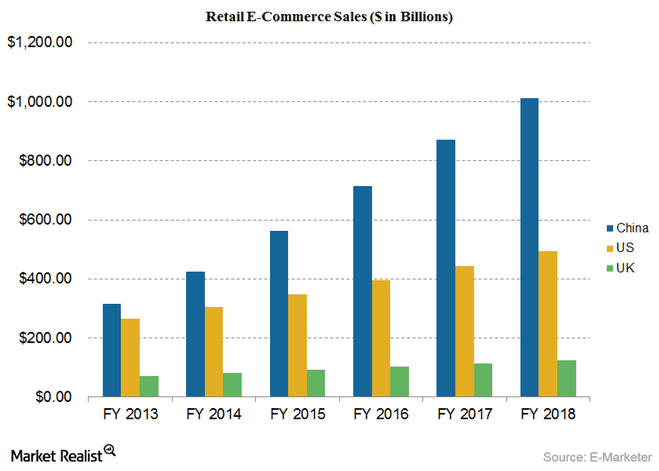
    According to eMarketer, China and the US accounted for ~55% of the global Internet retail sales in fiscal 2014. It also mentioned that China and the United Kingdom have a higher proportion of “online-to-total retail sales compared to the US.” It’s important to note that ~27.5% of China’s population bought goods and services online in fiscal 2014 while 10% of the total retail transactions were through the online mode.

    In comparison, 73% of the United Kingdom’s population made online transactions. E-Commerce accounted for 13% of the overall retail sales in fiscal 2014. While the United Kingdom is positioned eighth in total retail sales, it’s third in global online retail sales.

    part2

    Alibaba, Amazon, and eBay will look to capitalize on the huge potential of rising online sales. This could be positive for their revenue and bottom line.

    Online shoppers rose in China

    According to eMarketer, there were 148 million online shoppers in China in 2010. The shoppers accounted for 11% of the population and 32% of the total Internet users in the country. By the end of fiscal 2013, the number of online shoppers in China grew to 302 million. The shoppers accounted for 22% of the population and almost 49% of total Internet users in the country. By the end of fiscal 2020, the online shoppers will likely to grow to 700 million. Alibaba saw its revenue rise from $1.8 billion in 3Q13 to $3.5 billion in 3Q15.

    Amazon is part of the iShares U.S. Consumer Services ETF (IYC) and the First Trust Dow Jones Internet IndexSM Fund (FDN). It accounts for 6.80% and 11% of the ETFs, respectively.

  • China’s Retail Sales Rose in October

    China’s Retail Sales Rose in October

    China’s total retail sales of consumer goods rose 11.0% year-over-year (or YoY) to 2.8 trillion yuan in October. The data indicated better-than-expected growth in retail sales and a slight improvement from September’s rise of 10.9%.On a year-to-date (or YTD) basis from January to October, the total retail sales of consumer goods reached 24.4 trillion yuan, up by 10.6% YoY.

    The sale of mobile phones, building materials, and household products led to the strong growth in retail sales.

    Chinas Retail Sales Continue to Rise 2015-11-17Enlarge Graph

    A rise in retail sales is a step toward the transition of the Chinese economy from an export-oriented to a consumer-driven economy. This is highly recommended because export orders are falling due to weak global demand. This is the aim of Chinese authorities as well. However, with the slowdown in Chinese local and foreign sales, an increase in retail sales comes as a surprise and a bright spot in the Chinese economy.

    E-commerce played a major role in driving up retail sales. From January to September, the national online retail sales of goods and services grew 34.6% YoY to 3.0 billion yuan, according to the National Bureau of Statistics of China.

    Some of the leading players in China’s e-commerce segment are Alibaba Group Holding, Baidu, JD.com, NetEase, and 58.com.
    Urban retail sales of consumer goods rose 10.8% YoY to 2.4 trillion yuan in October. On a YTD basis, urban retail sales rose 10.4% YoY to 21.0 trillion yuan.
    Rural areas have become a major source of retail sales growth. Retailers are focusing on rural China to increase the penetration of e-commerce. In October, rural retail sales rose 12.2% YoY to 0.38 trillion yuan. On a YTD basis, they rose 11.8% to 3.4 trillion yuan.

    The Clough China Class A ETF (CHNAX), the Guinness Atkinson China & Hong Kong ETF, and the Eaton Vance Greater China Growth Class A ETF (EVCGX) have more than 10% exposure to the consumer discretionary sector. So a rise in retail sales would benefit them the most.

    However, the John Hancock Greater China Opportunities Class A ETF (JCOAX) had only 6.4% of its assets invested in the consumer discretionary sector. So a rise in retail sales will have a lesser impact on the performance of that fund.

  • Solar-powered Apple Store to debut in Singapore

    Apple is poised to become the first company to open a fully solar-powered store in Singapore as part of its ongoing efforts to go green with renewable energy source.

    The Cupertino-based tech giant has signed a partnership deal with solar energy developer Sunseap Group for acquiring 100% renewable electricity, once the project goes live.

    Reuters reports that Apple plans to create 200 megawatt solar energy projects in China and work with the local suppliers to obtain more renewable energy. In addition, the company is committed to purchase more power from a California solar farm for its new Silicon Valley campus, which will use rooftops to harness power from the sun.

    Apple’s new retail store and neighbouring public-owned buildings in Singapore will use rooftop solar panels on 800 buildings to generate 50 megawatts (MW) of total renewable energy that can power up to 9,000 homes. The company’s new facility will burn around 33MW of the project’s capacity.

    There is still no word on the actual location and the launch date for the upcoming retail Apple Store in Singapore. However, Sunseap managing director Frank Phuan has sounded positive about globalising sustainable energy practices as more and more companies start embracing the new technology.


  • Singapore’s retail sales rose 4.6% year-over-year

    Singapore’s retail sales rose 4.6% year-over-year

    The Oct results suggested a slowdown developing as far as consumer spending is concerned which may temper expectations of strong pickups in the economic growth of the 4th quarter. Core prices had been expected to inch up by 0.1%.

    The Commerce Department said retail sales edged up 0.1 per cent last month after being unchanged in both September and August.

    Economists watch the retail sales report closely because it provides the first indication each month of the willingness of Americans to spend. Nonstore retailers were up 7.1% from October 2014 and motor vehicle and parts dealers were up 6.2% from a year ago.

    Personal income, reflecting Americans’ pretax earnings from salaries and investments, climbed 0.1% in September.

    Substantial weakness was also visible among networking stocks, as reflected by the 2.2 percent loss posted by the NYSE Arca Networking Index.

    Holiday spending is projected to jump 3.7 percent this year to $630.5 billion, a gain that would be above the 10-year average in holiday sales growth of 2.5 percent, according to the National Retail Federation. Friday’s report showed gas station sales declined 20.1 per cent from a year earlier in October.

    But that is not necessarily a surprise, as consumers typically pare back other types of discretionary spending after a big-ticket purchase like an automobile, said Joshua Shapiro, chief USA economist for MFR Inc.

    Estimates for retail sales in the survey ranged from little change to a 0.8 per cent increase.

    Receipts at sporting goods and hobby stores gained 0.4 percent and sales at restaurants and bars rose 0.5 percent.

    Other measures have sent mixed signals about consumer spending.

    US businesses boosted their stockpiles in September by the largest amount in three months, while sales were flat.

    Sales at auto dealerships fell 0.5 percent last month after rising 1.4 percent in September.

    Federal Reserve is expected to increase interest rates next month as the jobs data has been strong and economy has shown strength. Friday’s report could be a key factor as the Fed scrutinizes economic data ahead of its decision at a December 15-16 meeting.

  • Uber Introduces Helicopter Service in Indonesia

    Uber Introduces Helicopter Service in Indonesia

    California-based ride-sharing app Uber, in collaboration with local aviation service PremiAir, is introducing helicopter service in Indonesia on Friday, offering a new way to travel amid Jakarta’s heavy congestion.

    The service, which called UberCHOPPER, is the first helicopter charter service in Indonesia that is accessible for anyone through car-hailing app Uber application.

    “PremiAir is excited for UberCHOPPER, a collaboration between PremiAir and Uber apps. We introduce an alternative transportation, catering our market needs on flexibility and comforts travel between or within the city,” Tony D. Hadi, PremiAir managing director, said in a statement.

    UberCHOPPER has previously been available in New York, Austin, Cannes and Hong Kong.

    “Uber is all about bringing amazing experiences to people on-demand using the power of new technology – whether it’ a safe, reliable ride around Jakarta, opportunities to pitch ideas to venture capitalists or an aerial tour of the city,” Karun Arya, Uber spokesperson, said.

    UberCHOPPER is free of charge for today. The app users can order the service through the app then wait for Uber’s premium car to pick them up to helicopter pick-up points in Jakarta–which available in Grand Indonesia in Central Jakarta or Halim Perdanakusuma Airport in East Jakarta.

    “With UberChopper we aim to give a number of lucky riders the ability to experience a unique helicopter ride, touring Jakarta skies and witness the breathtaking views of the city at the push of a button.”

    Uber also invited some people, who considered influential, to try out Uber Chopper service. Artist such as Tarra Budiman, RAN, Kunto Aji, Rene Suhartono, Ernanda Son, Olivia Blue and fashion blogger Rachel Theresia were among the first to try the premium service. Especially for the influencers, Uber provides flight from Halim Airport to Grand Indonesia.

  • Garuda, Lion Air to Add Bali-China Routes Next Year

    Garuda, Lion Air to Add Bali-China Routes Next Year

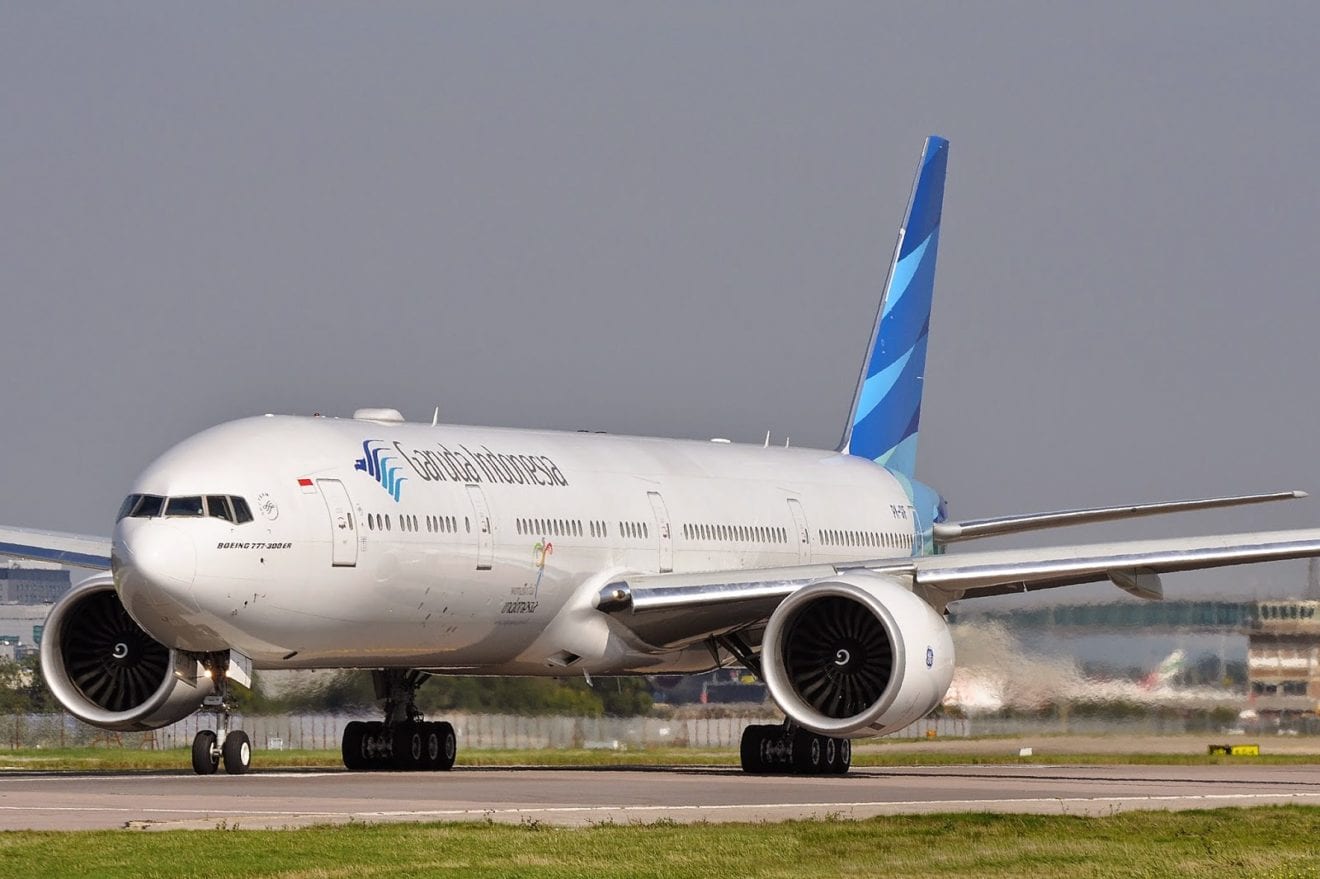
    Flagship airline Garuda Indonesia and Lion Mentari Airlines are adding direct flights to more Chinese cities from Bali next year in a move that would boost tourism for both countries.

    Garuda will launch the Guangzou-Denpasar and Shanghai-Denpasar routes in January, the company’s president director Arief Wibowo said in recent interview.

    “We will deploy our wide-body Airbus A330-300, which previously served hajj pilgrims,” Arief said, adding that the aforementioned flights will be available three times a week.

    Garuda now serves passengers traveling from Jakarta to Beijing, Shanghai and Guangzou.

    Lion is currently applying for a license from China authorities to fly into eight of its cities, including Shanghai, Guangzhou, and Nanning.

    “We are optimistic because the number of tourists coming from China is growing and the demand [for flights to Bali] is quite big,” said Lion Air director Edward Sirait.

    The number of Chinese tourists visiting the archipelago almost tripled to 926,000 last year, from 337,000 in 2008.

  • AirAsia launches all-new mobile app

    AirAsia launches all-new mobile app

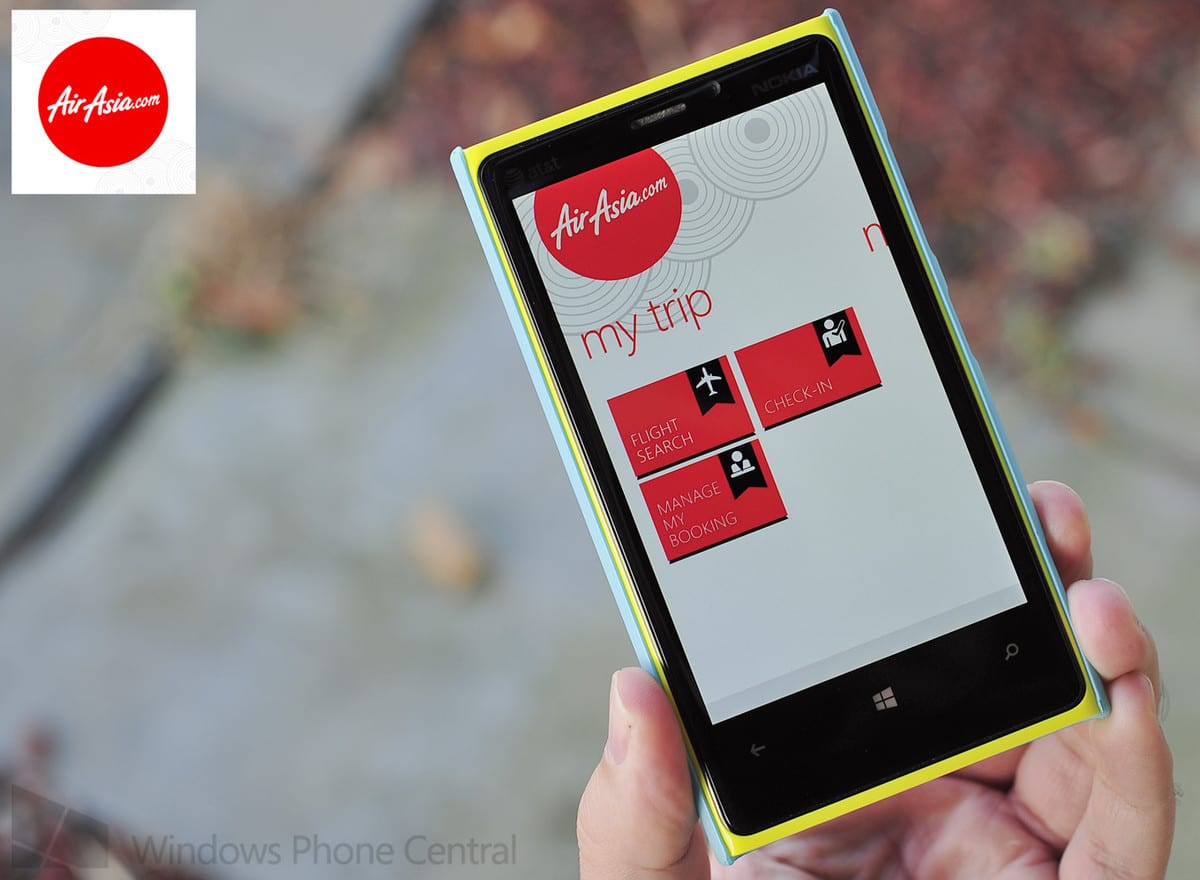
    AirAsia has launched its all-new mobile application offering innovative new features, smoother functionality and an improved interface to provide guests with an enhanced and seamless flying experience.

    In a statement today, AirAsia said its mobile app has been nominated as the “World’s Leading Low-Cost Airline App’ at the upcoming World Travel Awards.

    AirAsia Group Chief Commercial Officer Siegtraund Teh said the company constantly invests in technology and innovation to make flying easier and more enjoyable for guests.

    “There have been over nine million downloads of the AirAsia mobile app on both iOS and Android platforms, and we hope that more people will discover the convenience of our new and improved mobile app,” he said.

    The new app’s features include “Add to Calendar”, which automatically links upcoming flights to the calendar; faster and simpler flight booking process; and improved mobile check-in and Manage My Booking experience where guests can easily include various add-ons to their flight bookings.

  • Vista Land takes control of Starmalls

    Vista Land takes control of Starmalls

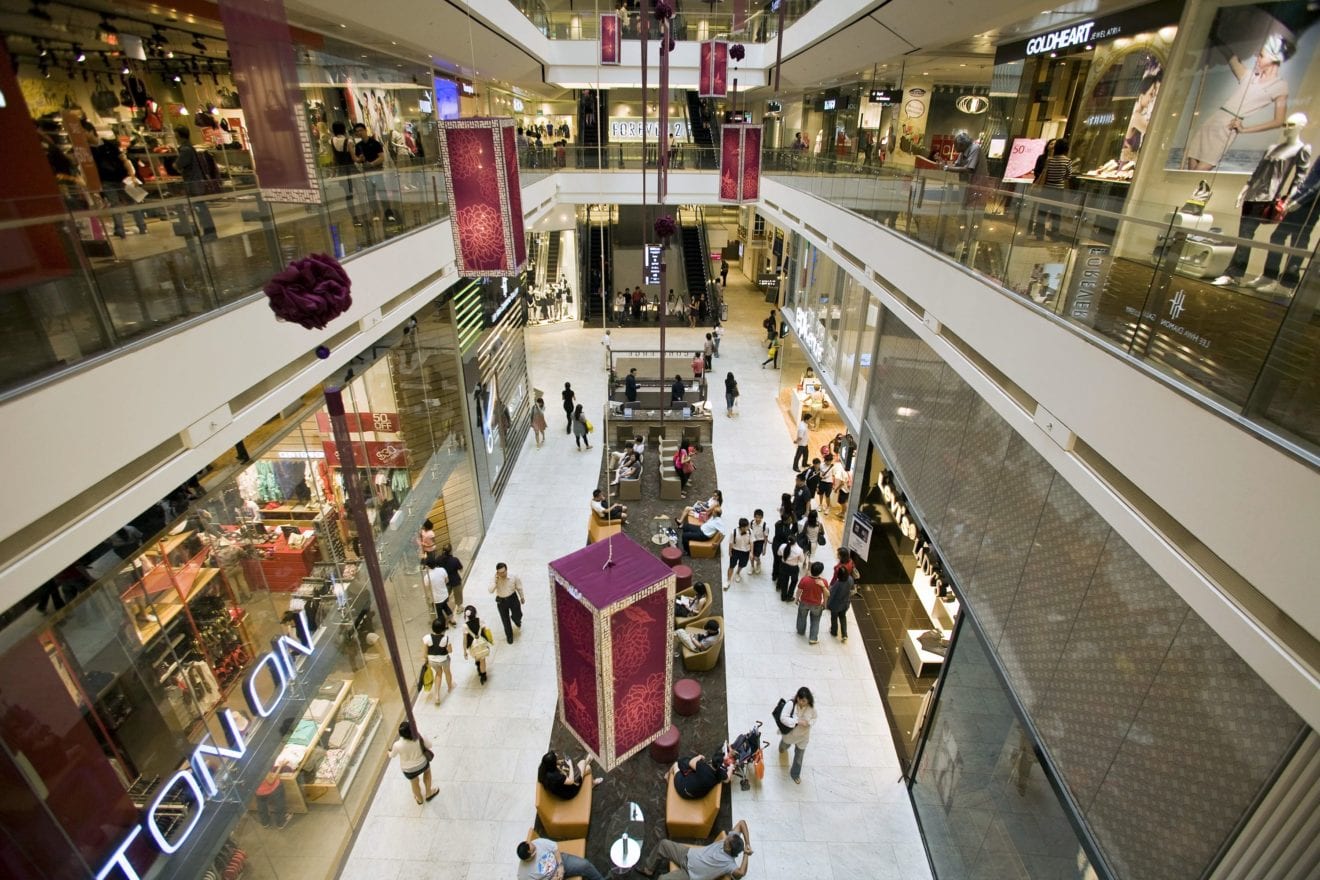
    Philippine company Vista Land & Lifescapes has paid US$691 million for a controlling 88 per cent stake in property developer Starmalls.

    While both companies are essentially controlled by the family of former Philippine senator Manuel Villar, Vista believes the acquisition will transform it into a fully integrated property developer with continued leadership in horizontal residential projects combined with a sizeable and growing mass market retail mall and BPO platform and the ability to replicate the integrated ‘Communicity’ model across the Philippines.

    “In addition, the company believes that the enhanced scale and stability provided by the acquisition and extensive synergies between the two businesses will strongly benefit the company and its shareholders going forward,” Vista said in a statement.

    Starmalls is a developer, owner and operator of retail malls targeting mass market retail consumers in the Philippines. It focuses on densely populated areas underserved by similar retail malls and within close proximity to transport hubs and key infrastructure.

    It owns and operates 10 retail malls in key cities and municipalities in the Philippines and two BPO commercial centers in Metro Manila, with a combined gross floor area (GFA) of 509,385 sqm. It has another four retail malls and one BPO commercial centre under construction, and plans to grow to over 1 million sqm in GFA via enhancements to existing assets and to over 1.3 million sqm in total GFA including new developments by the end of 2018.

  • Moncler Tokyo flagship opens

    Moncler Tokyo flagship opens

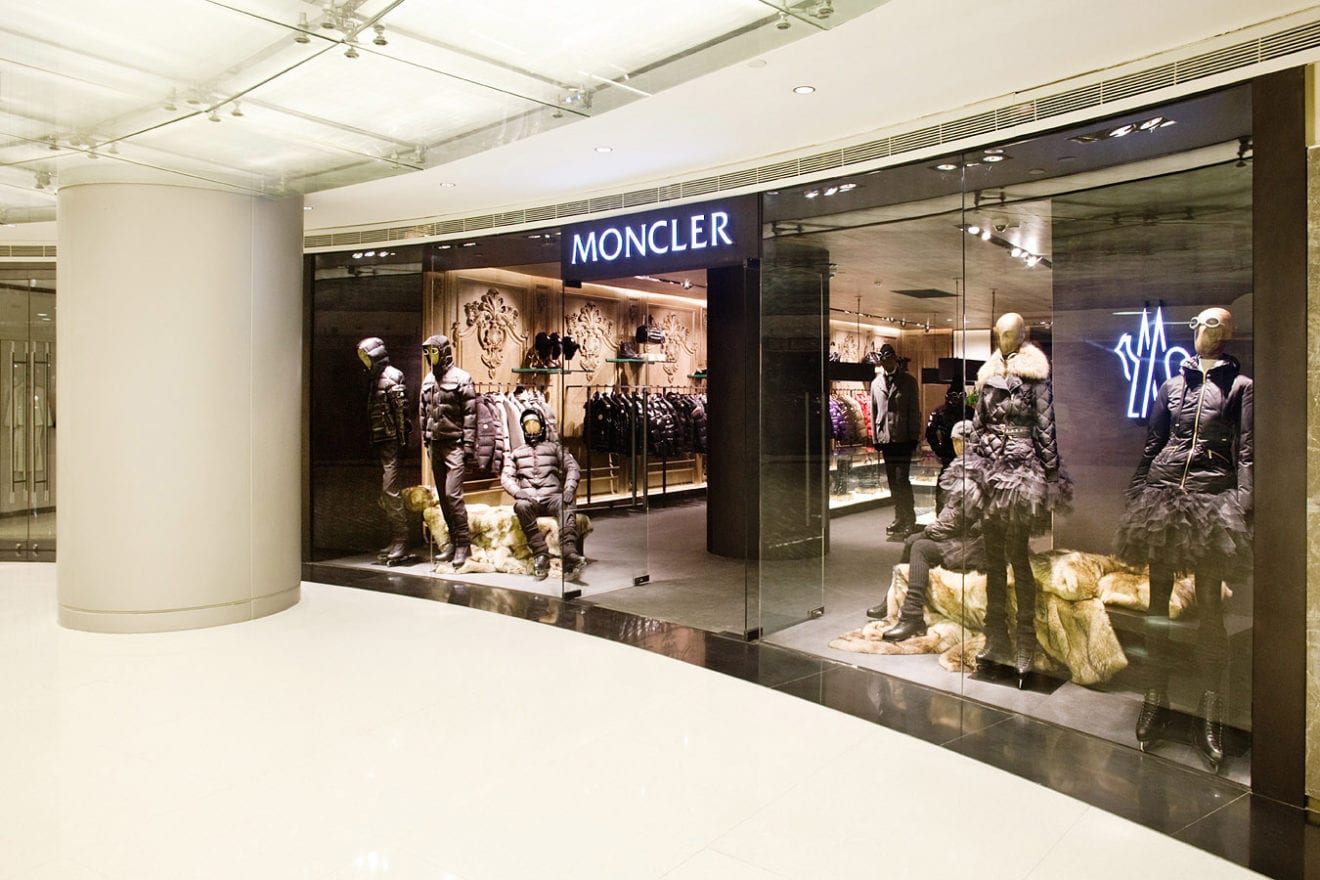
    Moncler has opened a new flagship store in Japan’s highest profile shopping strip.

    The Moncler Tokyo boutique in the Ginza comprises 560 sqm spread over two floors. It was designed by Parisian architects Gilles & Boissier.

    Moncler Ginza 1


    For years this studio’s ties with the fantastical world of Moncler have resulted in a lively partnership and the new Japan store is no exception.

    Coinciding with the opening was the launch of a new partnership with young Los Angeles artist duo,FriendsWithYou.

    Moncler Ginza 5


    “Once again the Italian-French brand is working directly with today’s young and creative generations, interpreting and assimilating its language, sources of inspiration and moods. The universe of comic signs of the FriendsWithYou duo, their references to pop icons such as Malfi, Snowy, Happy Virus, Look Who, or the fluorescent rainbow of Mr TTT, the visual repertoire of smiling graphic clouds, of penetrating, astonished eyes, of mouths and fun monsters, are the hallmarks of a collection of puffer jackets developed in different colors that range from black to light-blue, from red to yellow, which are completed by sweatshirts, t-shirts bags and sneakers,” explains Moncler.

    Moncler Ginza 3

    The Moncler FriendsWithYou collection will be sold in all Moncler single brand stores from the Fall-Winter 2016/17 season onwards.


    Moncler Ginza 2

  • Chow Tai Fook in profit plunge

    Chow Tai Fook in profit plunge

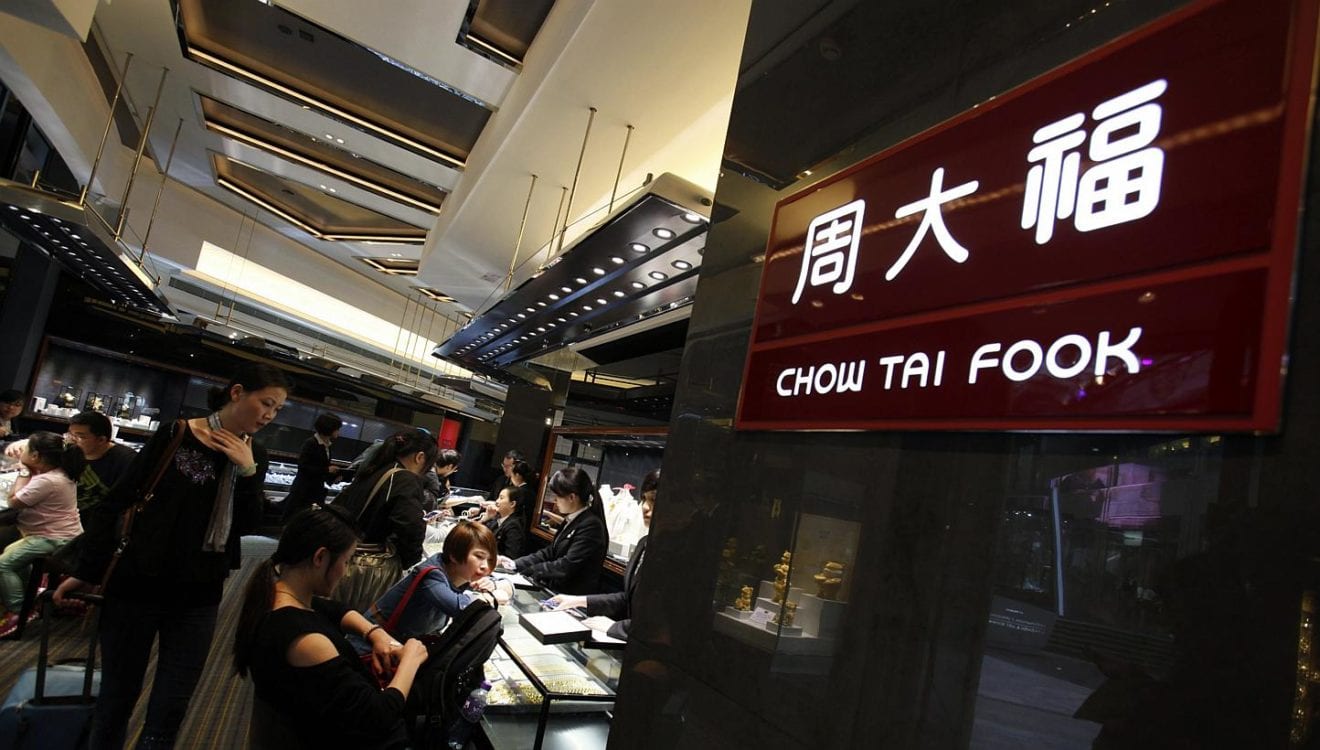
    Listed Hong Kong jeweller Chow Tai Fook has warned shareholders its first half profit is likely to be 50 per cent less than for the same period last year.

    In a statement filed with the stock exchange, the board said the decrease is mainly attributable to the year-on-year decline in revenue brought about by weak consumer sentiment in Hong Kong and Macau and a tighter gross profit margin.

    The margin was impacted by both a change in the product mix with increased sale of gold products and unrealised hedging losses on gold loans for the period contrasting with an unrealised hedging gain in the same period last year.

    “As the company is in the process of preparing the interim results of the group for the six months ended 30 September, the information contained in this announcement is only based on the preliminary review of the company’s management accounts which have not been reviewed or audited by auditors of the company.”

    The size of the decline comes as something of a surprise, given the company revealed a four per cent increase in sales in the quarter to September 30 just four weeks ago.

    Back then Chow Tai Fook described the Hong Kong and Macau retail market as “continuing lacklustre”.

  • Hello Curry plans 100 outlets in 2016

    Hello Curry plans 100 outlets in 2016

    Indian quick service restaurant chain Hello Curry says it plans to treble its network by the end of 2016.

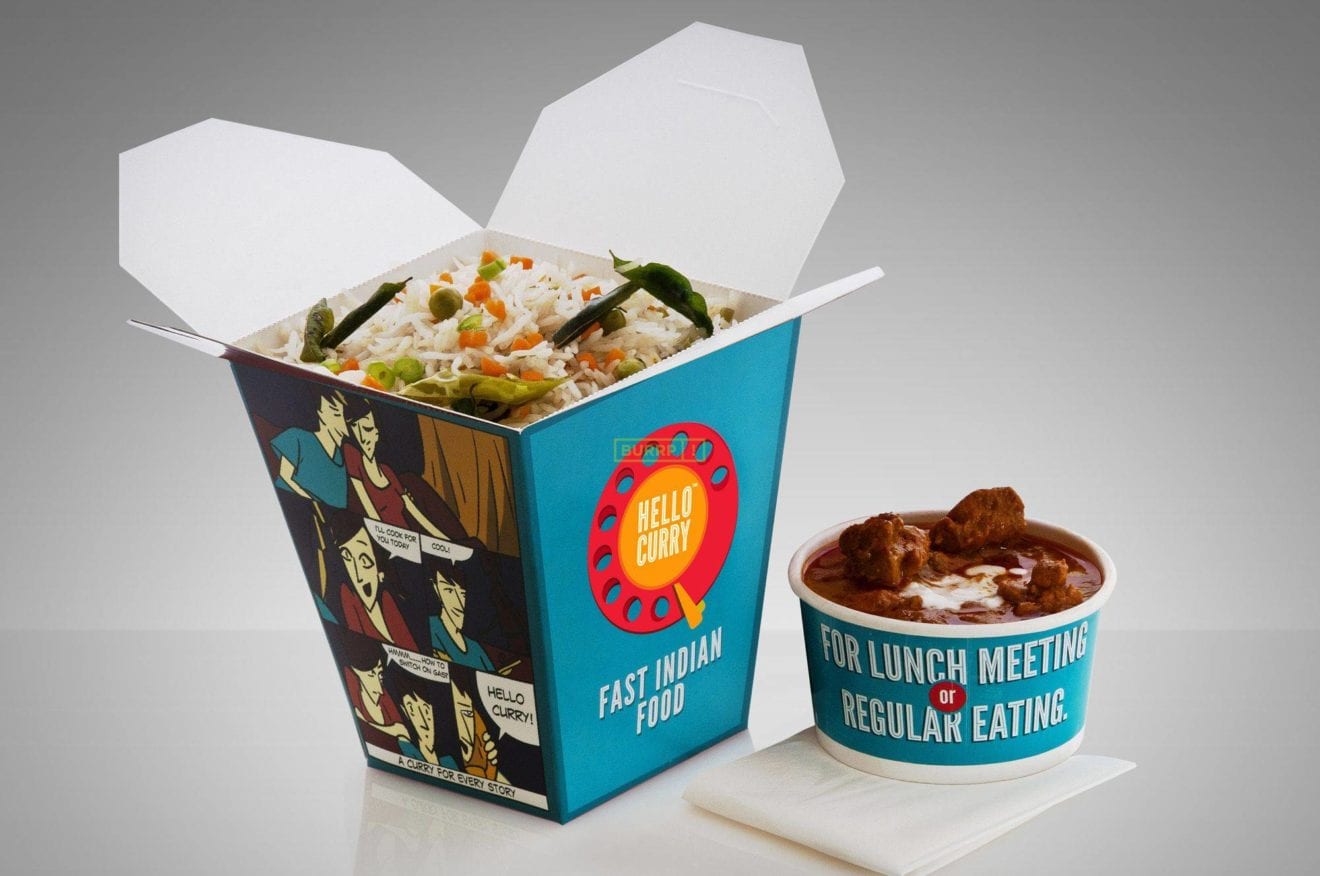
    Hello Curry serves curries and biryanis from 32 outlets opened since its launch 19 months ago. It is now moving to ramp up its rollout because it wants to take on international fast food operators like KFC and McDonald’s, and local rivals, with a unique Indian offer.

    Co-founder and CEO Raju Bhupati says the chain plans to have 100 restaurants operating by the end of next year.

    Hello Curry is looking to work with established restaurant chains in urban centres in a unique concept. The business model, called KICK (Kitchen in Commercial Kitchen), would see Hello Curry cover the costs of supplying the ingredients and packaging, with the partner kitchens cooking the food and delivering it, receiving a commission of 15-20 per cent on each sale in return.

    Meanwhile, the company has just sealed a deal to open kiosks within six multiplex cinemas operated by PVR Ltd in Bengaluru and one in Hyderabad. Biryanis and rolls will be served to moviegoers at their seats.

    Three more theatres will follow in Hyderabad by the end of this month with plans to extend the agreement into Delhi, Mumbai, Pune and Nagpur.

    Bhupati says partnering with PVR will help raise the brand’s profile and drive traffic to its restaurants after patrons experience the food and tell their friends.

    Hello Curry will deliver pre-cooked biryani to the kiosks for consumption in a three-hour time period, ensuring the food remains fresh and hot and minimising wastage.

    More than half the first 100 stores planned will be KICK concepts, the rest company operated stores. The PVR kiosks are not included in that figure.

  • Zilingo gains seed funding for mobile-first e-store

    Zilingo gains seed funding for mobile-first e-store

    Thai startup Zilingo gives market traders an international eCommerce gateway.

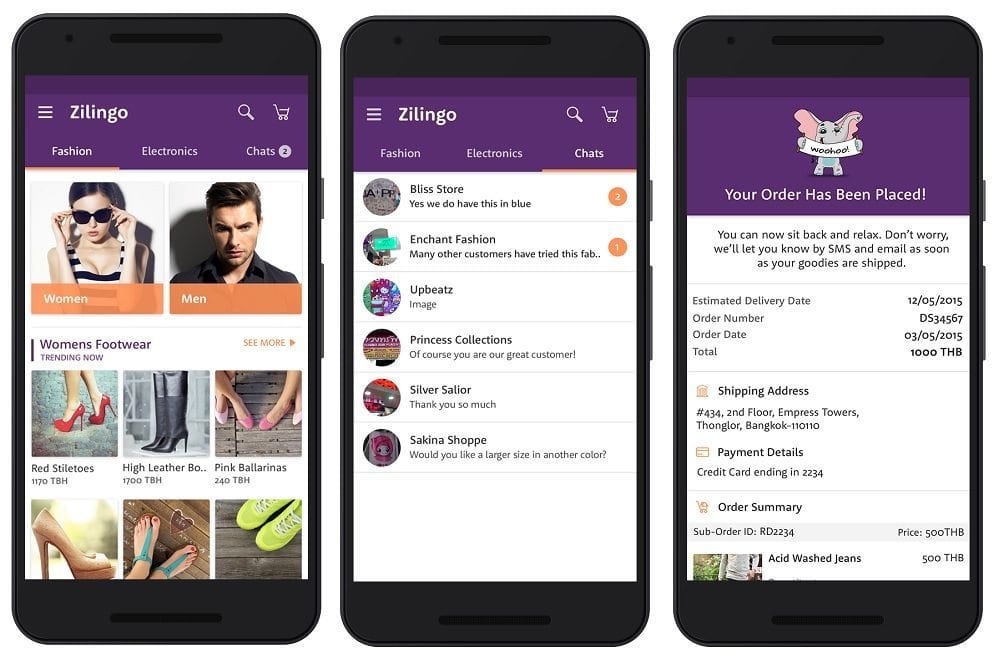
    Zilingo is a mobile-first online marketplace that allows merchants to list their inventory, set their prices, and fulfill online orders. Users can browse through available stores and products, then order and pay with their credit card, according to a report on TechInAsia.

    Zilingo’s services include shipping, packaging, payment options, an analytics dashboard for mobile, order tracking, refund and cancellation options, and consultation on pricing strategy. The app also provides chat, through which a customer can get directly in touch with a merchant.

    The concept was created by Ankiti Bose and Dhruv Kapoor, who saw an opportunity for themselves when they visited the country on vacation. Bose is an ex-McKinsey consultant from Mumbai, India, who later worked for global venture capital firm Sequoia. Together with IIT (Indian Institute of Technology) graduate Kapoor, they decided to create a way for these retailers to find new customers online.

    The startup doesn’t charge merchants for listing, or any other fees, providing most of its services for free. It only takes a cut out of successful sales, wanting to encourage adoption and to “only charge for things that actually add value to the [merchants’] business.”

    Zilingo has only recently gone live, and is available to buyers and merchants across Thailand. Within November 2015, buyers from Singapore, Indonesia, and Hong Kong will also have access to the platform’s Thai sellers. Other Southeast Asian countries will follow, according to the startup. Bose says there are currently more than 300 sellers on the site, Ankiti says.

    The company has already raised external funding, to the tune of US$1.88 million from Sequoia India, Teru Sato of Beenext, and Freecharge’s Kunal Shah and Sandeep Tandon.

    “We are delighted to back Ankiti and Dhruv, a highly talented and committed founding team, in their efforts to build a mobile-first marketplace for Thailand,” says Shailendra Singh, Sequoia India MD.

    “We liked the team and their mobile-first product so much, that we agreed to invest at the concept stage. It’s early days for the company, but we’re excited about the prospects for Zilingo.”

    Thailand’s retail sector is expected to be worth US$179.2 billion in 2016. Despite growing smartphone and credit card usage in the country, however, a lot of retailers haven’t jumped on the eCommerce bandwagon yet, leaving a lot of opportunity on the table.

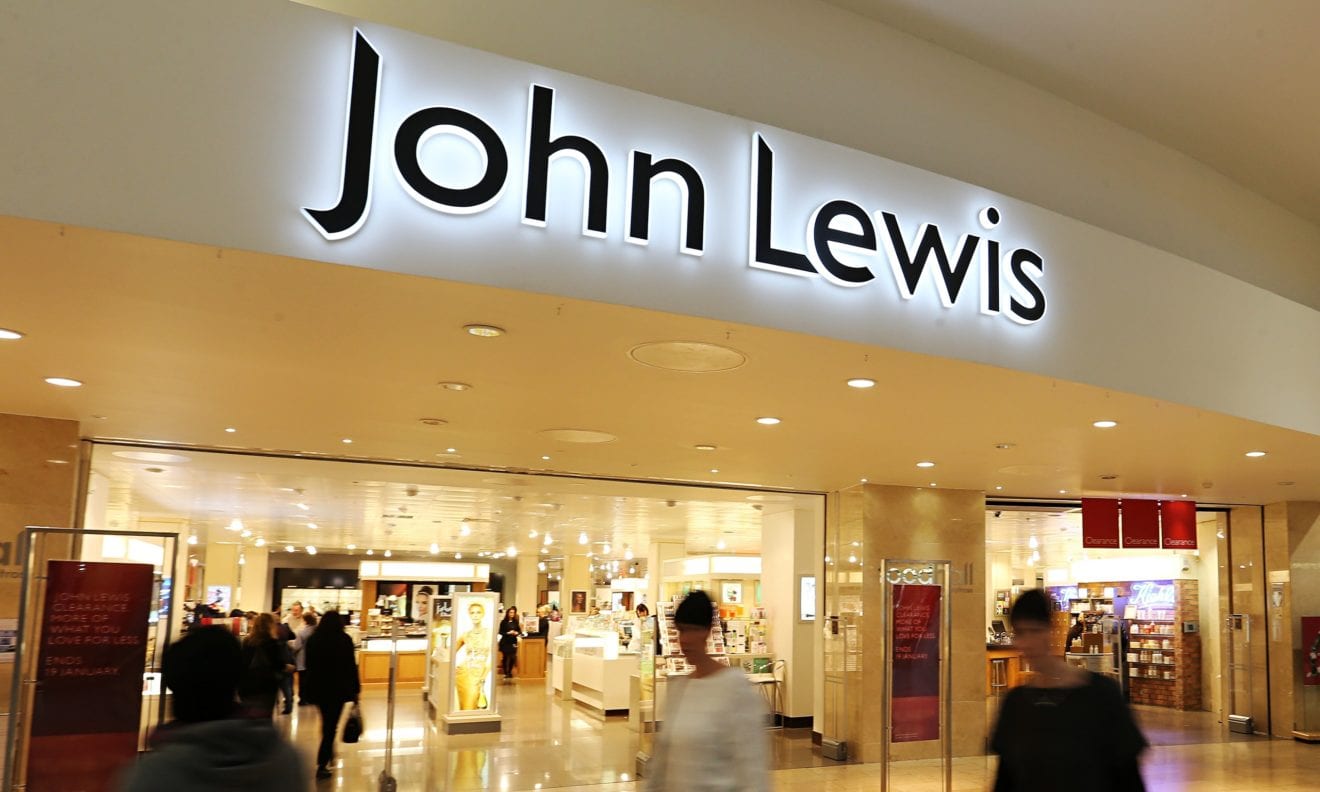
  • John Lewis Asian stores ‘trading well’

    John Lewis Asian stores ‘trading well’

    UK department store operator John Lewis has hinted at its trading performance in Asia as it announced another offshore expansion – into the Netherlands.

    John Lewis chose Singapore as the first of 15 new international markets it plans to expand into back in March this year.

    Two John Lewis Singapore concessions were opened inside Robinsons department stores, last July, primarily selling homewares.

    Andy Street, John Lewis MD, mentioned overnight: “Our existing shop-in-shops in Singapore, the Philippines and South Korea have been well received and are trading well.”

    John Lewis opened 14 shop-in-shops across Singapore and the Philippines this year, and seven shop-in-shops in South Korea last year.

    The first Dutch shops will open in spring 2016 at de Bijenkorf’s flagship stores in Amsterdam, Rotterdam and The Hague – its first stores in continental Europe.

    And more may follow, especially in Asia.

    ‘Whilst we remain committed to our UK physical expansion we hope to announce more international collaborations in 2016,” said Street.

    The UK retailer was founded in 1864, but until last year it had never traded outside England, Scotland and Wales. In 2012 it entered into a partnership with South Korea’s Shinsegae Department Store Co, selling linen and homewares in seven stores.

    Street said in March he expected to confirm deals to open in a further five foreign markets in 2015. That could mean four more markets to be announced over the next six weeks.

    “We have been very successful in Korea. We are really pleased and surprised that, in a market where the John Lewis brand isn’t really known, it has cut through.”

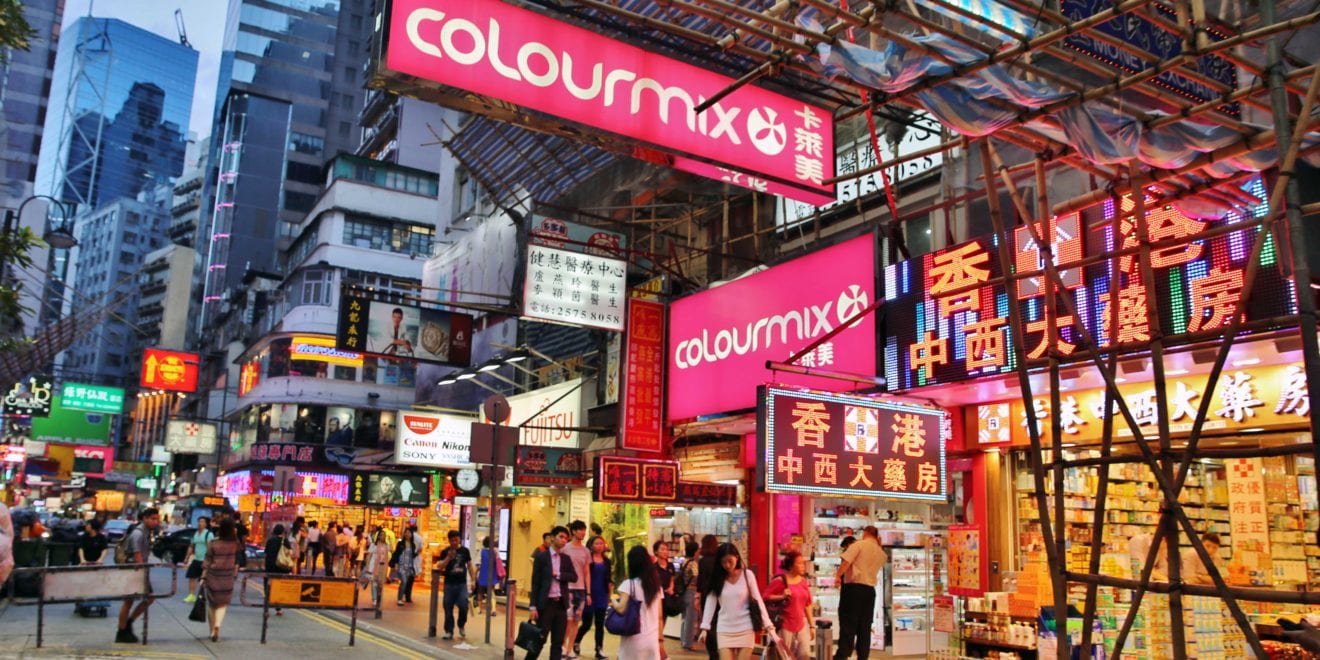
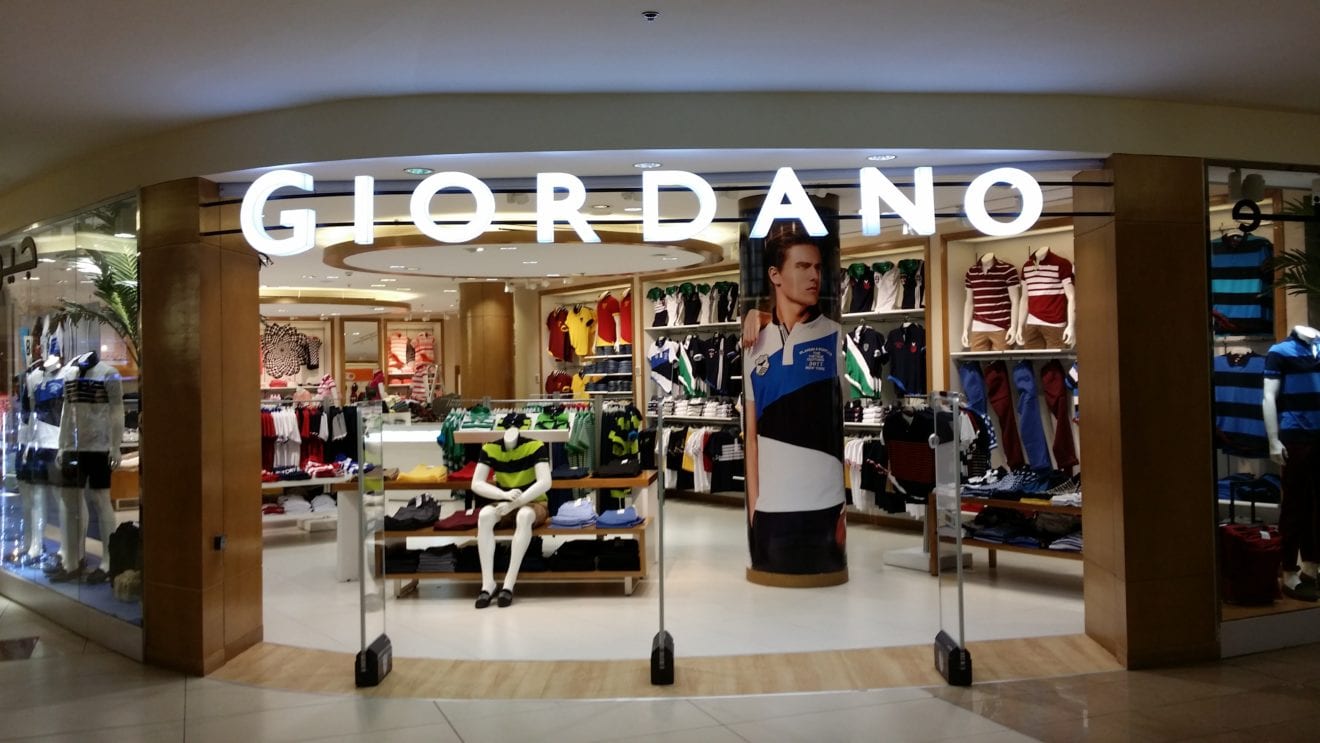
  • Giordano Hong Kong sales rise in soft market

    Giordano Hong Kong sales rise in soft market

    Giordano Hong Kong sales increased by four per cent in the last quarter, with same store sales up a staggering 12 per cent in a stagnant retail market.

    The company says with the decline in Mainland China visitors to Hong Kong and Macau, the company has repositioned its product range to focus on more basic essential products. “This resulted in strong volume growth compared to the same period last year.”

    Total sales for the quarter to September 30 were HK$1.240 billion, three per cent lower than the same period last year. On a constant currency basis, sales increased by two per cent.

    Despite encouraging results in its home market, Giordano reported the depreciation of local currencies against the US dollar in Southeast Asia, Taiwan and Australia is depressing reported sales growth at the group level, and pushing costs up in those markets.

    In the first half of 2015, the company completed the acquisition of its franchisees’ operations in Kuwait and Qatar. Excluding these transactions, sales would have decreased by four per cent and on a constant currency basis, sales would have increased by one per cent

    Brand sales for the quarter were flat compared to the same period last year. Comparable store sales for the quarter increased by four per cent, mainly due to improving performance in Mainland China, Hong Kong and Singapore.

    The total number of stores in the group declined by 19 to 2359 primarily due to the closure of unprofitable stores in Mainland China.

    Gross margin for the quarter grew by 0.1 percentage point to 58 per cent, despite higher purchase costs due to weak overseas currencies, which reduced gross margin by 1.4 percentage points.

    Gross profit for the quarter was HK$719 million, a decline of three per cent over the same period last year.

    Sales in Southeast Asia declined by seven per cent, reflecting the impact of weak local currencies which on average depreciated by 16 per cent against the Hong Kong dollar in the last 12 months. However, on a constant currency basis, sales grew by nine per cent. Comparative store sales grew by eight per cent in the quarter with strong recovery from last year in Singapore and Thailand in particular.

    Sales in the Middle East have climbed by 11 per cent with strong growth in the UAE.

    Giordano’s new budget brand “Beau Monde” is still under development.

    “At the end of the period we had 14 shops and we expect to increase this to 25 shops by the end of the year. As we improve the merchandise for this new brand, we expect to reach break even profitability in the fourth quarter of 2015 or the first quarter of 2016. This will enable us to develop this brand faster in 2016,” the company said in its stock exchange filing.

    “As we reposition our brands through the exit of non-performing shops and poor quality locations, we are also investing in store upgrades, and by December we expect to have upgraded two thirds of our store portfolio in the past two years. During the third quarter, we upgraded/opened 39 self-managed stores and 51 of our franchisees’ stores. By the end of 2015, we expect to have upgraded/opened 200 shops in the year. This compares with 397 shops renovated in 2014.”