Author: Mei Ling Tan

  • Ethnic e-tailer Craftsvilla raises Rs 220 crore

    Ethnic e-tailer Craftsvilla raises Rs 220 crore

    Etsy-like marketplace for ethnic products, Craftsvilla.com, has raised $34 million – or Rs 220 crore – led by existing investors Sequoia Capital India and Lightspeed Venture Partners. Russian internet billionaire Yuri Milner also participated in the latest financing round personally, through DST Global partners’ fund, by putting $5 million in the four-year-old firm. Craftsvilla’s other existing investors Nexus Venture Partners and Global Founders Capital, a VC fund founded by Rocket Internet’s Samwer brothers, were also part of the latest fund-raise, valuing the company at $200 million, post the investment.

    With its Series C round of funding in place, the Mumbai-based e-tailer is looking to go public in the next 12-18 months, Manoj Gupta, co-founder & CEO, Craftsvilla, told TOI. The plan comes at a time when most e-commerce majors have put their IPO plans on hold.

    Kribha Handicrafts, which runs Craftsvilla.com, is currently clocking $120 million in gross merchandise value, or GMV annual run rate. GMV is an industry jargon for sales made on an online retailer’s platform without factoring discounts and returns.

    “We are looking at a valuation of at least a billion dollars in the next 12-18 months before we go public. Our aim is to hit $500 million in GMV over the next one year,” Gupta said. The online retailer is in the process of appointing independent directors as it prepares to go public, he said.

    The ethnic e-tailer plans to use a significant chunk of the fresh capital for marketing and international expansion having entered Malaysia and with an Indonesia launch on the anvil. “Craftsvilla has risen to category leadership in the ethnic space with a lean marketplace model that has scaled in an unusually capital-efficient manner. We are excited to continue to back them as they grow to the next level,” said Shailendra Singh, MD, Sequoia Capital India. All told, the e-tailer had raised $20 million (excluding the fresh infusion) across two rounds of financing since it began operations.

    Founded in 2011 by Gupta and his wife Monica, Craftsvilla sells products across categories including clothing, handicrafts, jewellery and art, among others. It claims to have 25,000 sellers on its platform, selling close to 3.5 million products. The online ethnic wear market is pegged at around $300-500 million in size with the bigger horizontal e-commerce players like Flipkart, Snapdeal and Amazon aggressively pushing their presence in the segment.

    Margins in the ethnic category are higher compared to other segments, sometimes ranging as high as 60-80%. “We typically get a 20% commission on products sold,” Gupta of Craftsvilla said. The e-tailer is looking to launch private labels over the next few months, which offer better margins to e-commerce players.
  • Cosmoparis opens first Hong Kong store

    Cosmoparis opens first Hong Kong store

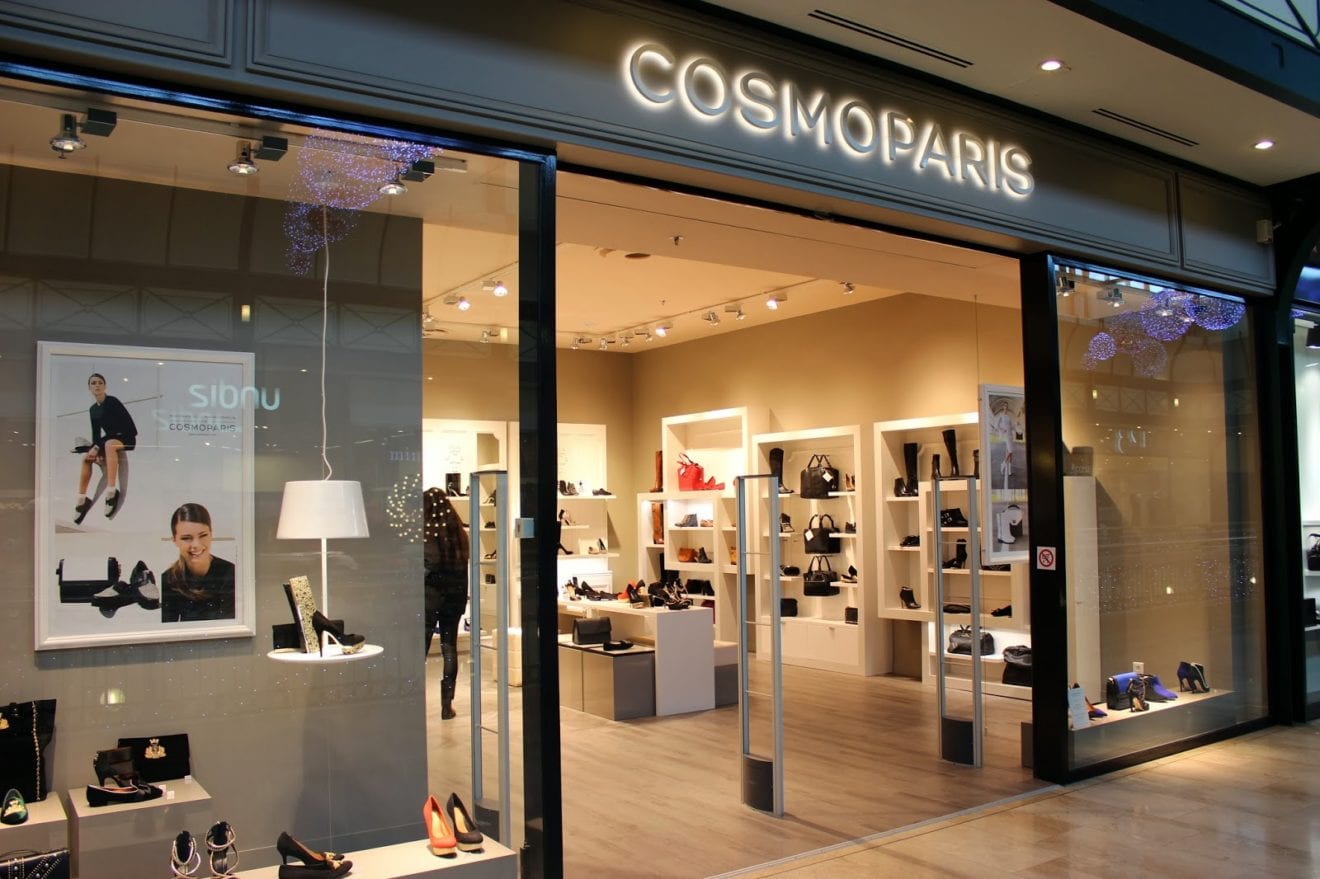
    French luxury footwear brand Cosmoparis has opened its first Hong Kong store at Pacific Place.

    Cosmoparis was founded in 2008 by Axelle Mathery and Hong Kong fashion blogButterboomdescribes the brand as making “stylish footwear designs that are always contemporary, glamorous and feminine for sophisticated ladies”.

    Cosmoparis Hong Kong Pacific Place

    The boutique, located on the first floor of Pacific Place, is a “bright cheerful place with gold table finishing with velvet-like beige coloured stools,” says Butterboom.

    “There are quite a few quirky designs including chic heels with fur, winter boots in different lengths and our favourite – the Angrycat heels that we would like to add to our shoe collection this winter.”

  • Courts Asia expansion drives huge profit rise

    Courts Asia expansion drives huge profit rise

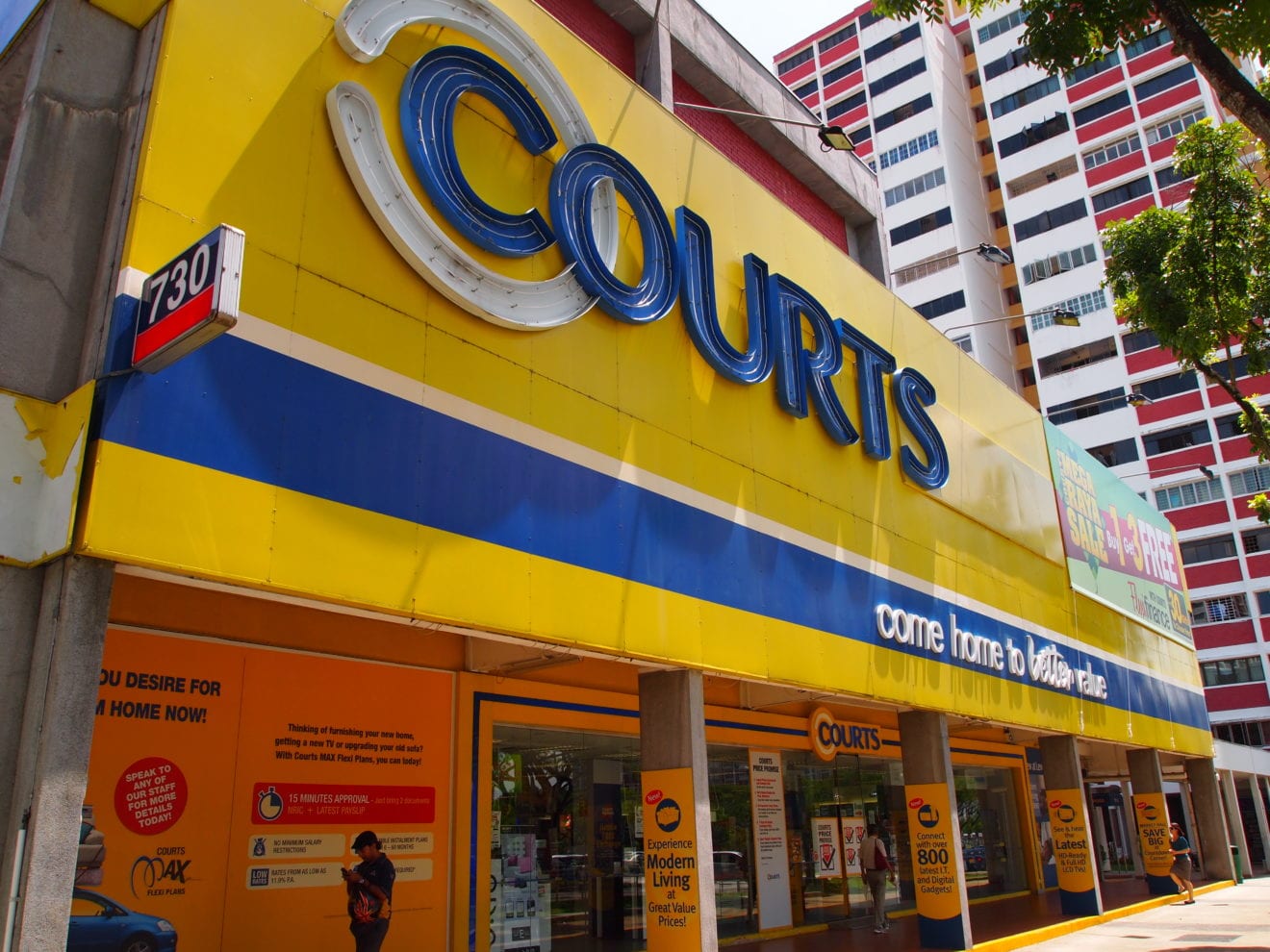
    Courts Asia’s strategy of spreading its interests into neighbouring countries is paying off already.

    The company has today announced a 253 per cent quarterly increase in profit to S$6 million and a 77.8 per cent rise to S$12.1 million for the first half year. Gross profit for the second quarter rose 12.4 per cent thanks to a focus on higher gross profit margin and higher sales.

    While Courts Asia’s second quarter last year was exceptionally challenging, the high growth from a low base should not cast a shadow over an exceptional retail strategy, especially given the almost stagnant nature of the Singapore retail market this year, Courts Asia’s main market, where sales actually slipped 2.6 per cent.

    Revenue in neighbouring Malaysia, its second biggest market accounting for 35 per cent of total sales, rose 13 per cent in Singaporean currency and 27 per cent in Malaysian Ringgit, mainly due to bulk sales for digital products. That in itself is an achievement as consumer spending in Malaysia tanked after the introduction of GST on April 1.

    “Malaysia has continued to post a good showing with active marketing of our refreshed Courts branding and credit campaign nationwide,” said group CEO Dr Terry O’Connor. “Likewise, we will focus on improving store productivity and cost-saving initiatives as we move forward.”

    In Indonesia, where the company is just getting started, sales rose 5.8 per cent with two new stores opening. A fourth new store is due to be trading by Christmas.

    “In Indonesia, we are progressing well and sales from our three stores, namely the Megastore in Bekasi and two smaller stores in Mega Bekasi Hypermall and Bogor, have kicked-in. Our second Megastore, located in BSD City, Southwest of Jakarta, begins operations by December this year. This new store also represents our fourth store in the country, and we expect economies of scale and operational efficiency coming into the next financial year,” said O’Connor.

    In Singapore, Courts is pinning its growth strategy on introducing new retail formats. The first JYSK Danish lifestyle store opened in Bukit Timah in September and US hardware brand ACE Hardware will follow by year’s end. O’Connor says exclusive partnerships with the two brands align with the company’s strategy of offering a comprehensive suite of solutions for the home.

    “We will be expanding both JYSK and Ace Hardware stores islandwide within the next five years.

    “Beyond cost-saving initiatives, we are focused on optimising the productivity and yield of each of our stores. In Singapore, we continue to rejuvenate our retail concepts to meet changing consumer trends and drive healthier margins.

    “Singapore’s retail environment remains subdued, but we expect a continued stream of demand for household appliances and furniture given the expected increase in supply of HDB flats in 2016. This is in line with recent policy changes such as the higher income ceiling and more Central Provident Fund (CPF) grants that have widened the pool of eligible buyers.”

    In both Malaysia and Indonesia, Courts Asia is targeting the burgeoning middle classes.

    “The recently announced Budget 2016 in Malaysia is slated to boost growth and home ownership with the planned construction of 351,000 housing units. We anticipate that this will drive further demand for affordable furniture and household appliances over the medium term.

    “In Indonesia, we plan to leverage on the country’s growing middle class and its strong standing as one of the region’s fastest growing nations by opening a total of six new stores in Indonesia over the next 12 months,” he concluded.

  • Mango stops partnership JC Penney

    Mango stops partnership JC Penney

    Spanish fast fashion retailer Mango is to close 450 points of sale in the US after deciding not to renew a partnership agreement with department store JC Penney.

    The two companies had a five year contract where Mango operated concessions in 450 of the department stores, but they collectively account for just 0.5 per cent of the label’s global sales.

    The stores will close in February, leaving Mango with just seven stand alone stores in the US.

    But a spokesman for the company said it would not be exiting the US market. Instead it will look to open more of its own stores over time, in selected key cities such as New York and Miami.

    Privately-owned Mango is struggling to hold its own against its larger rivals, fellow Spanish brand Zara and Swedish label H&M, internationally, despite a presence in 100 countries. Its profit fell 11 per cent last year.

  • JTB chases Chinese at home

    JTB chases Chinese at home

    Japanese Travel agency JTB has opened its first retail location in China’s capital Beijing. The agency will specialise in tours to Japan and will be run in a joint venture with a local travel company.

    The agency will be equipped with the same reservation system used in its Japanese retail travel stores, but it will not issue tickets. The 90 sqm stores is situated in an office building in a popular business district.

    The Japanese-themed interior is intended to serve as an advertisement in itself. The branch intends hosting exhibitions in cooperation with Japanese municipalities.

    JTB says the new venue is aimed at diversifying demand among Chinese travellers through face-to-face sales. It aims to sell 10,000 tour places annually.

    Japan is attracting a rapidly-rising number of Mainland Chinese tourists, attracted by the favourable exchange rate and close proximity, along with relaxed visa conditions.

    JTB gained official approval to open in China four years ago but the launch was delayed due to the earthquake of 2011 and simmering tensions between the two countries.

  • LeSportsac to expand China footprint

    LeSportsac to expand China footprint

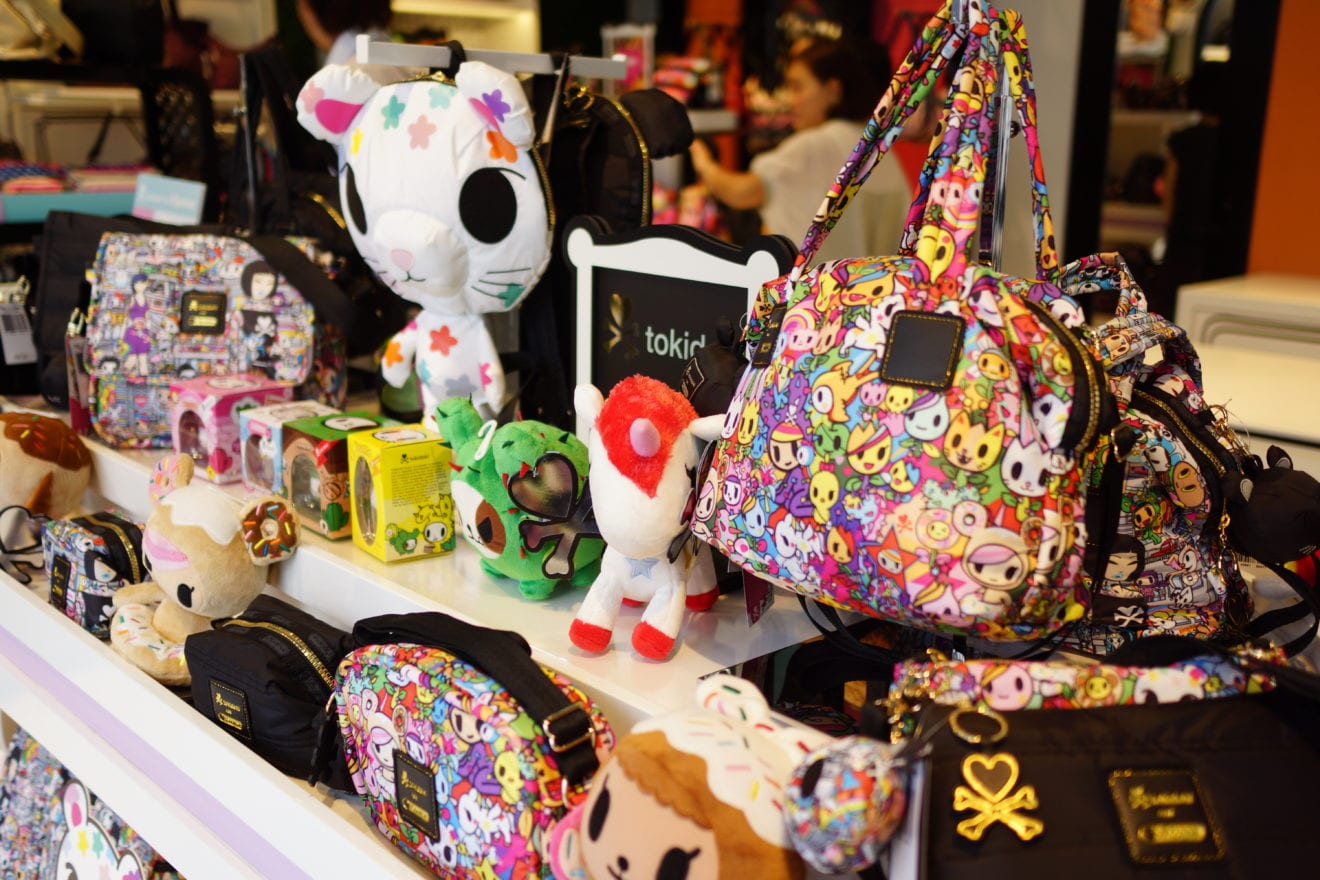
    Japanese trading house Itochu has formed a joint venture with Hong Kong based Novo Fashion Retail Group to ramp up the LeSportsac retail presence in Mainland China.

    Itochu signed an exclusive distribution agreement with Novo back in 2007 to supply LeSportsacs to outlets in major department stores and other retailers.

    This month, the two companies will launch a joint venture, its name not yet revealed,

    to focus on the LeSportsac range of casual nylon bags. Standalone stores are a possibility, given the brand’s strong appeal and name recognition in China.

    Itochu distributes the US-founded LeSportsac brand in 35 countries and Novo specialises in marketing western brands in Greater China.

    Initial plans are to double the network of stores selling LeSportsac to about 100 over the next three years, with a concentration on larger cities, and to broaden the bags’ online availability.

    The new venture is also likely to work on expanding the range to include products designed specifically for the China market, based on customer feedback.

  • Future Bright profit that is no longer “bright”

    Future Bright profit that is no longer “bright”

    The Macau slowdown and foodcourt closures are among factors behind a projected plunge into the red by Hong Kong listed corporate restaurateur Future Bright.

    In a statement to the stock exchange, Future Bright says it expects to report a loss in the order of HK$29.8 million this financial year to December 12. Last year, the group posted a $168.8 million profit.

    The downturn in gambling in Macau and a drop in Mainland Chinese tourists has impacted on sales of the group’s Yeng Kee Bakery food souvenir business and of its restaurants in the territory.

    In addition to that, its three restaurants and 19 foodcourt counters in Huafa Mall across the border in Zhuhai have been closed while the mall undergoes renovation, leading to a substantial drop in cashflow. The company has also written down the value of some of its investment properties.

    Future Bright’s gross operating profit margin this year has fallen from 18.2 per cent in the first quarter to 14.6 per cent in the second, recovering only slightly to 15.1 per cent in the third quarter, to the end of September.

    Most of the losses in the restaurant and foodcourt business occurred in the second quarter with a significant recovery noticeable in the third – especially for its Japanese restaurants which  achieved $80 million in sales (compared with just $65.2 million in the second quarter).

    “The group’s overall performance for the third quarter has been in line with the inflow of visitors to Macau and the slowdown in the Macau Gross Gaming Revenue during the Third Quarter,” the company said.

    That period saw 8.097 million visitors enter Macau, some 147,000 fewer than during the same quarter last year.

    Macau Gross Gaming Revenue dropped 34.3 per cent, impacting on Future Bright’s high end restaurants.

    The company says it is restructuring the Yeng Kee operation, by closing a high rental street shop, opening more kiosks and setting up more consignment arrangements at airports.

    Meanwhile, it opened its first Japanese ramen shop under the brand name of Bari Uma in Causeway Bay in Hong Kong in July 2015 and a new Shiki Hot Pot Restaurant at Studio City, Cotai in the end of October 2015.

  • Habstore Korea plans New York pop up

    Habstore Korea plans New York pop up

    Habstore Korea is to open a pop up in New York City to help build its reputation as the go-to point for fashion created by young Korean designers.

    Habstore already features more than 100 Korean fashion designers – whose reputation and popularity are expanding rapidly thanks to the Korean Wave which is now spreading beyond Asia into urban US as well.

    CEO Hong Seong-jo says the company’s mission is to introduce products from new designers known for their unique design in South Korea to fashion-sensitive customers. “Some customers rejoice at finding new view on life through brands that they had not known before,” said Hong, 34, who founded the mall three years ago.

    “We are concentrating on finding various designer’s brands in order to make them happy at all times.

    “We are focusing on introducing more South Korean designer’s brands globally as we better our business”, said Hong. “We will open a pop-up store in New York introducing a variety of brand name products to expand our sales channel.”

    Hong first saw the viability of an online mall after successfully introducing a fashion watch brand in Korea. He went on to expand items to clothing and fashion accessories.

    Habstore gives special priority on brands with definite character and competitive strength, yet without attention from the public. For example, when introducing a new brand to the rest of the world, CEO Hong chooses more Eastern style or K-Style designs that Korean Wave stars have used.

    Habstore is also engaged in the production of its own fashion items. Following the launch of the fashion watch brand, ‘Paul Vice’, it also launched the watch strap brand, ‘Straps’.

    The Habstore mall,which was developed by South Korea’s largest eCommerce solution brand, cafe24, features interfaces in both Korean and English.

  • Singles Day set to shatter records

    Singles Day set to shatter records

    Singles Day spending tomorrow will undoubtedly shatter last year’s record spend of US$9.3 billion, predicts KPMG.

    November 11 is known in China as Singles’ Day, an annual one day event which sees online retailers slash prices of products and China’s shoppers treat themselves to a wealth of discounted goods. Popularised by eCommerce giant Alibaba in 2009, Singles’ Day in China has now become the world’s biggest online retail sales day, eclipsing all other promotions days including Black Friday and Cyber Monday.

    Last year’s sales fell just short of $10 billion, but Jessie Qian, partner in charge, consumer markets with KPMG China, says that barrier will surely be broken tomorrow

    “We expect that China Singles’ Day spend this year will be bigger than ever, illustrating the buying power of the Chinese consumer and the increasing prominence of the date in the Chinese retail calendar.”

    KPMG recently survey 10,000 online Chinese luxury consumers – China’s Connected Consumers – also revealed that the maximum amount Chinese consumers felt comfortable paying online for a single item was RMB 4200 – more than double the RMB 1900 found in 2014.

    The study also found that Chinese luxury shoppers are increasingly open to buying luxury products online. For most categories, from jewellery to cosmetics, and wine to leather goods, respondents reported a willingness of 75-95 per cent to buy online.

    “Not only did we see a higher amount spent on average for popular categories such as bags, women’s apparel and cosmetics, but we also noted a significant increase in spending on watches and jewellery,” said Qian.

    “All these illustrate that online luxury shopping is set to grow as Chinese consumers are growing increasingly more comfortable with online purchasing.”

    Qian concluded: “With the speed of change around new channels in China, companies must develop the right strategies to survive and thrive in an increasingly disruptive environment. Formulating an effective online to offline (O2O) strategy will be essential for retailers to remain competitive in the digital age with the increasing smartphone technologies and the need to harness social media platform.

    “Meanwhile, using analytics to turn the transactional data into insights to improve products and user experience, as well as to unlock new opportunities, will be crucial for e-retailers to stand out in the increasingly competitive market.”

  • South Korea retail sales rise

    South Korea retail sales rise

    Preliminary data from leading department and discount stores in October reveals South Korean retail sales are recovering post-Mers.

    Combined sales last month at department stores run by Hyundai Department Store, Lotte Shopping and Shinsegae Co jumped 17.4 per cent year on year.

    That’s a huge improvement on the 2.8 per cent department stores achieved in September and the seven per cent rise in discount department stores.

    The preliminary data from the Finance Ministry shows clearly a bounce back following the Middle East Respiratory Syndrome (Mers) scare which caused tourists to travel elsewhere and locals to stay at home in fear of catching the viral epidemic.

    Figures released by Statistics Korea last week show South Korea retail sales rose to their highest level in four months in September, up 4.1 per cent on September 2014.

    Department store and discount store sales started to slide in June when the Mers crisis peaked.

  • Rel Cap arm to launch fund in South Korea

    Rel Cap arm to launch fund in South Korea

    Aiming to bring in more foreign funds into India, Reliance Capital Asset Management (RCAM), the funds management arm of Anil Ambani-controlled Reliance Capital, is launching a fund in South Korea for retail and institutional investors in the South Asian country that will invest in the Indian market.

    This is the seventh fund that RCAM is launching to attract foreign money into India, with a target to top $5 billion worth of assets in the next three years, a company source said.

    RCAM is launching the India focused fund in Korea along with its Korean partner Samsung Asset Management. The fund will directly invest in the stocks of Indian mid and small cap companies with long term potential. The fund will be managed by Samsung Asset Management while RCAM will be the advisor to its Korean partner. Samsung Asset Management is the fund management arm of Korean conglomerate Samsung Group, globally known more for its presence in the mobile and electronics space.

    At present RCAM has three India focused funds in Japan, in which the aggregate assets under management is about $1 billion. It also manages two India focused funds in Singapore and one more in Mauritius. Most of its assets are managed under the three Japanese funds. Nippon Life, one of the largest life insurers in the world, holds 49% stake in RCAM. The Korean fund management firm, however, does not hold any stake in RCAM but has signed a memorandum of understanding (MoU) with the Indian funds management major.

    Currently RCAM manages assets worth more than Rs 2 lakh crore spread across mutual funds, pension funds, managed accounts and offshore funds.

  • Walmart’s Asia CEO predicts great things in Chinese retail

    Walmart’s Asia CEO predicts great things in Chinese retail

    US retail giant Walmart upholds a firm belief in the potential of Chinese economic growth, according to its Asia CEO Scott Price. 

    Speaking at the Asia-Pacific Economic Cooperation (APEC) CEO Summit, Price said that he expects that China will drive more than half of the world’s retail growth over the next decade.

    This is largely due to the emergence of the Chinese middle class, as well as the shift from a primarily manufacturing based economy to one based on services. Events like Singles Day, China’s biggest online shopping date, have shown that there is a huge demand in the country for good retail.

    Retail sales figures in the country were up by 10.9% year on year in September and 11% in October, and on Singles’ Day the ecommerce giant Alibaba earned a record $14.3bn in sales in just 24 hours: an increase of 60% on 2014.

    Walmart itself owns Yihaodian, a Shangai based e-commerce business, which according to Price had “a great Singles’ Day”, though he did not reveal sales figures.

    Price also referred to a “gamut of opportunities” that can be found in supposed O2O, or ‘Online to Offline’ retail, which sees customers paying over the internet and picking items up in a store.

    “We think online-to-offline is critical,” he said, as “customers look for convenience, and convenience is not just one mode.”

    Despite this enthusiasm, O2O is currently unprofitable in China, as retailers are more interested in getting as much of a market share as they can. However, a recent report from HSBC predicted that “profits should emerge as the market matures.”

    According to HSBC, the online portion of O2O revenues increased by 80% on year in the first half of 2015, reaching $47bn. In tangent, China’s retail sector is becoming less fragmented and consumers are purchasing more frequently, indicating that there may well be great promise for O2O in the future.

    Price also referred to the future potential of brick and mortar stores, a required component of O2O. A number of online retailers have invested in a physical presence recently, such as the Amazon book store which opened earlier this month.

  • Coccinelle Asia Pacific travel retail expansion gathers pace

    Coccinelle Asia Pacific travel retail expansion gathers pace

    Published: 17/11/15

    Source: ©The Moodie Report

    By Helen Pawson, Brands Editor

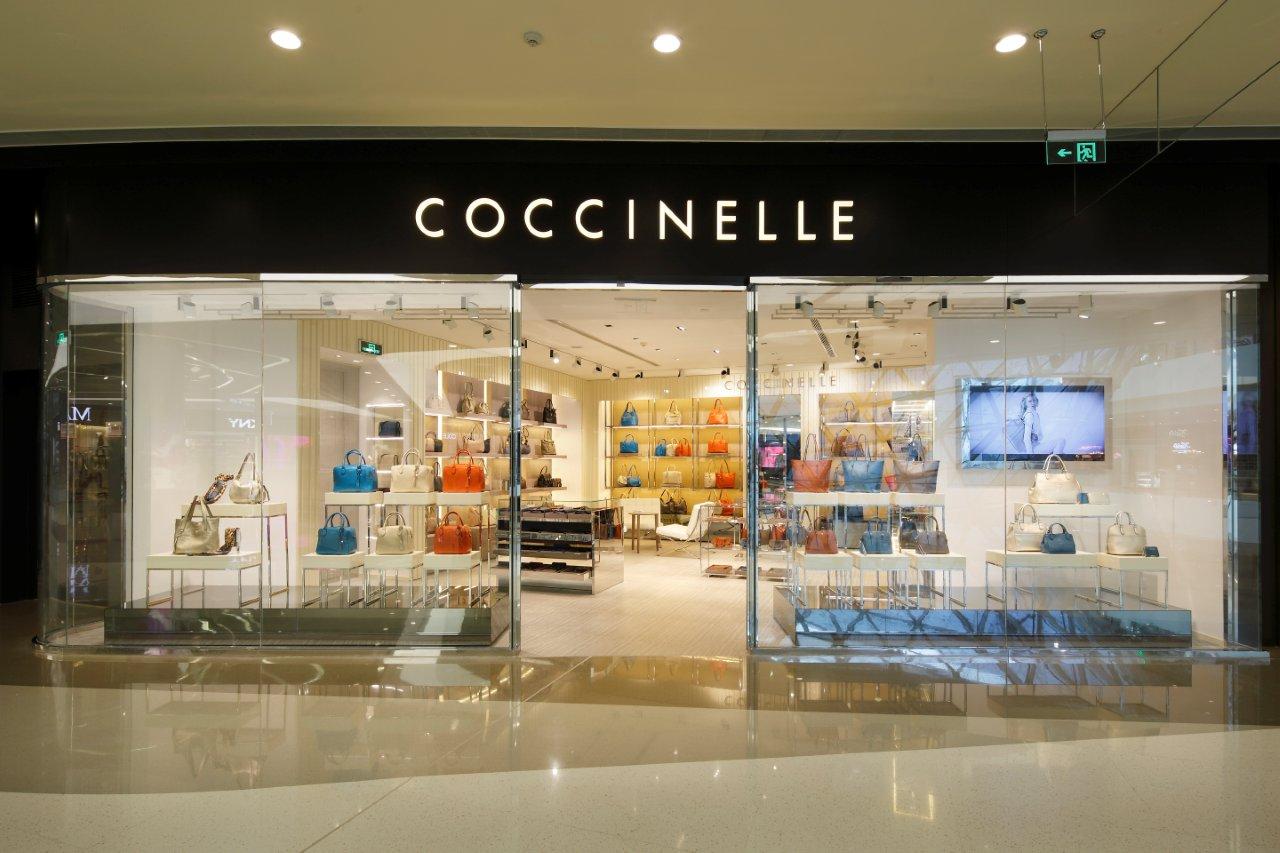
    Italian accessories brand Coccinelle has opened a pop-up store on Jeju Island in partnership with Bluebell Korea.

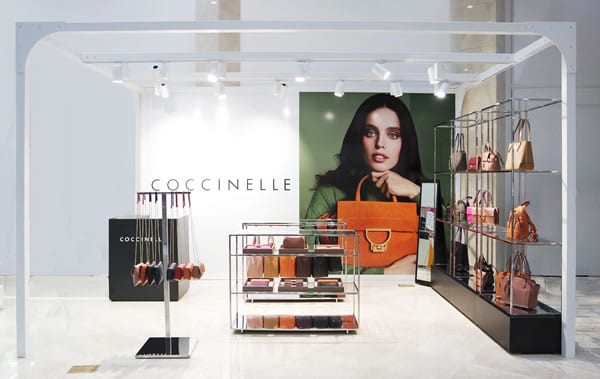
    Located in Jeju Tourism Organization’s duty free shop, the 20sq m space opened on 23 October and features the brand’s new store concept.

    Open displays and bright steel feature heavily in Coccinelle’s minimalist store

    The store features open displays to showcase bags and accessories as well as wall display modules and bag stands made from bright steel, said to give the interior a “timeless elegance”.

    The pop-up highlights Coccinelle’s Autumn/Winter 2015 collection which includes key piece the Arlettis bag.

    A big board with the Autumn/Winter 2015 campaign, which features American-Italian model Emily DiDonato as the face, dominates the back of the pop-up.

    Coccinelle Head of Travel Retail Emanuele Mazziotta commented: “We are honoured to be on Jeju Island at Jeju Tourism Organization Duty Free Shop with Bluebell and we thank them for their support with this opening. Jeju Island is a well known tourist destination in the Asia Pacific region and represents another key location in our expansion plan. Another important opening will happen soon in the region.”

  • New Yahoo Hong Kong-Taiwan cross-border eCommerce platform

    New Yahoo Hong Kong-Taiwan cross-border eCommerce platform

    Yahoo Hong Kong has launched its Yahoo Hong Kong-Taiwan cross-border eCommerce platform today.

    In the first stage, more than 100 Taiwanese brands accredited with the Made in Taiwan Smile Logo will enter the Hong Kong market – in categories ranging from food to fashion and to beauty and cosmetics.

    Stage two will see Yahoo adding Hong Kong products for sale into Taiwan.

    Yahoo says it wants to create the largest cross-border eCommerce network between the two markets.

    Jacky Wang, VP, eCommerce group, Yahoo Taiwan & Hong Kong said that with the launch of the new platform, geographical boundaries are eliminated.

    “We are delighted to bring Hong Kong consumers the best, original quality products of Taiwan through the 11.11 Online Shopping Festival. This allows e-merchants from both places to reach the huge online buying customer base, which is extremely beneficial to them in increasing sales and for online branding.

    “Yahoo Hong Kong’s B2B2C Flagship store will start operating this month, through which Hong Kong consumers can purchase a wide variety of Made In Taiwan products on the platform,” said Wang.

    “Soon, Taiwan consumers will also be able to purchase Hong Kong’s popular products, such as cookies and palmiers which are popular with Taiwanese.”

    All of the more than 100 Taiwanese e-merchants joining the Yahoo Hong Kong eCommerce platform are selling 100 per cent original, Made In Taiwan Smile logo-accredited quality brands.  These include Dr Morita facial masks, Taiwan’s famous pineapple cake brand SunnyHills and other brands, including meat jerky, tea leaves and noodles.

    The e-merchants crossing the border to Hong Kong with Yahoo will receive all-round cross-border one-stop merchant solutions from Yahoo Taiwan and Yahoo Hong Kong. These range from a special starter package to support for logistics, cash flow and store operations and management, offering detailed guidance to help their brand to take the initial step in cross-border eCommerce, and satisfying the expectations of the online shoppers in Hong Kong and Taiwan.

    SunnyHills has sold more than 10,000 boxes of cakes online into Hong Kong this year already.

    Damian Lee, GM, said Yahoo Hong Kong and Taiwan have the highest reach rates and Yahoo’s online shopping platform is the best one in Taiwan.

    “With the largest volume of traffic flow and the highest popularity, it offers us the best virtual support for our products and backing for our brand. It also provides one-stop logistics and cash flow solutions that lower our cross-border costs and management time, offering the best O2O eCommerce shopping experience to consumers in the most effective way.”

    What Hongkongers and Taiwanese want

    Francis Che, head of insights, strategy and research with Yahoo APAC shared the latest eCommerce promotion and analysis research.

    • Hong Kong has an online buying population of 2.9 million, representing 53 per cent of the total online population.
    • 74 per cent of Hongkongers have used overseas buying services, or overseas cargo or shipping services to buy products from all over the world.
    • Over 30 per cent of the online buying population hopes that online buying apps can proactively notify them of the offers and discounts of nearby stores and recommend some stores for purchases.
    • The older buying population (aged 40 plus) use mobile devices to browse online shopping sites is growing rapidly.
    • The most sought after items purchased online in both markets is the same: Apparel. For the full top 10 list, refer to the chart below:

    Yahoo

    Meanwhile, Yahoo Hong Kong will launch the 11.11 Online Shopping Festival offers on November 11, including the sale of an Oto Adelle One Massage Chair at just $999 (Value: $14,800), with the Oto Lite Footie (Value: $1680) bundled together as a gift.

  • Rip Curl Expands Their Reach Through Indonesia

    Rip Curl Expands Their Reach Through Indonesia

    The brand has just opened their newest store in the heart of the Sanur community

    Rip Curl has just announced the opening of their new Sunrise store in the heart of Sanur, a beach and surfing community in Indonesia. The freshly renovated redesigned 377 square foot store will stock 100 boards, apparel, accessories, watches, and more. Natural light enfaces the store through the 6-meter tall, all glass entrance, reinforcing the strong relationship with the outdoors that the brand holds. The store’s interior walls have been removed,a dan small lounger area near the dressing rooms provides a laid,-back, welcoming feel that Rip Curl hopes will keep customers coming back for more.

    “With this new, fresh and clean store design we were able to get the maximum capacity from the layout giving us the ability to fully showcase the brand and its products” – Dita Gempur, Head of Design and Projects at Rip Curl South East Asia

    ripcurlRip Curl’s goal with the Sanur location is not just to provide a surf supply store, but also a surfing experience, right when you walk in the door. The location is open now.