Author: Mei Ling Tan

  • New rules will ‘wipe out’ Chinese online payment agents

    New rules will ‘wipe out’ Chinese online payment agents

    New regulations proposed by the Chinese government will deliver an immediate boost to state-ownedChina UnionPay, potentially forcing its smaller Chinese online payment agents out of business.

    The ‘Method of Network Payment Service Management for Third-Party Payment Agents’, proposed in August 2015, is set to restrict consumers’ daily and annual spending on online purchases through private third-party payment agents such as Alipay and Tenpay. But the new law exempts China UnionPay, giving it a clear market advantage.

    According to Timetric, the new law will present serious challenges for small private third-party agents trying to get a foothold in the online retail market.

    Under the draft law, the transaction amount made through third-party payment agents will be determined on the level of security measures incorporated within the online platform. Furthermore, all private third-party payment agents will be forbidden from offering financial services such as deposits, loans, financing or currency exchange services to consumers.

    Chinese regulators say the law aims to protect consumer interest and privacy and clamp down on counterfeit products and poor customer service offered by online private third-party payment agents.

    But in practice it appears on the surface to be a tool to protect UnionPay’s market dominance in the short term and protect the government’s interests, rather than those of consumers.

    “If implemented, the new legislation is anticipated to wipe out smaller private third-party agents, due to the increased operational costs of implementing multiple security measures”, said Kartik Challa, an analyst at Timetric.

    In China, UnionPay (CUP) is the sole scheme provider of payment cards. According to central bank regulations, all banks and card issuers operating in the country are required to route their Yuan-based transactions through CUP’s electronic payment network. However, following a complaint filed by the US against China via the WTO with regards to discriminating against foreign companies in 2012, the WTO directed the Chinese government to open up its payment cards market to foreign operators. Consequently in October 2014, the Chinese government announced its decision to allow foreign companies to set up their own payment card clearing businesses, effective from June 1, 2015.

    Ultimately, says Challa, the move will open the way to stronger competition for CUP – but not in the short term.

    “This move by the Chinese government is anticipated to intensify competition in the Chinese payment cards market, and end CUP dominance as the country’s only authorised card clearing organisation. However, Visa and MasterCard have a long way to go before they can make a dent in CUP’s market share, as they need to build up infrastructure from scratch”, comments Challa.

    China is one of the largest and most mature eCommerce markets in the world, increasing at a CAGR of 56.99 per cent over the last four years, from US$68.7 billion in 2010 to $417.3 billion in 2014.

    Factors, such as the rapid adoption of smartphones, growing internet penetration as well as availability of secure online payment mechanisms and a growing preference for online shopping – especially among the rural population– contributed to this growth.

    Timetric is a provider of online data, analysis and advisory services on key financial and industry sectors. It provides integrated information services covering risk assessments, forecasts, industry analysis, market intelligence, news and commentary.a

  • Groupon woes continue

    Groupon woes continue

    Groupon – which has exited three Asian markets this year – continues to struggle globally with ts flawed discounting model.

    Operating on wafer thin margins in the first place, the company has taken a severe hit from currency exchange fluctuations in the third quarter.

    Globally, gross billings grew by six per cent when the exchange rate impact is excluded; similarly, global revenue increased by a more positive seven per cent on a constant currency basis.

    But after taking into effect the strengthened value of the US dollar against foreign currencies this year, Groupon saw its net losses grow by some $6.4 million to $27.6 million.

    As reported by Inside Retail Asia in September, the listed US eCommerce business has closed its doors in Thailand, the Philippines and Taiwan. Outside Asia it has already exited Greece and Turkey and will now close operations in Panama, Morocco, Puerto Rico and Uruguay.

    Neil Saunders, CEO of Conlumino, says the impact of currency fluctuations is worsened by the fact that the company operates off relatively low margins, especially outside of its North American heartland, and as such does not have much of a buffer against their deleterious effect.

    “The margin position is partly down to the multiple systems that Groupon operates across the globe which increase complexity and do not allow for economies of scale. While this is something the company has been remedying by moving to a common platform, we believe that the benefits have, so far, been fairly modest.”

    Saunders says margins are also held back by a further issue, arising from Groupon’s revenue mix.

    “At present, the company divides itself into three main segments: Local, Goods, and Travel. Local is concerned with deals from service providers like restaurants, events and activities. Goods is focused on consumer products like jewellery, electronics and apparel. And Travel is about holiday, flight and accommodation deals.

    “Recent growth in the more mature Local part of Groupon’s business has slowed considerably. Indeed, in Q3 growth was just under eight per cent. Comparatively, Travel and Goods have both seen strong growth, up 20 per cent and 18 per cent, respectively. This rebalancing of the revenue mix has diluted margins, mainly because Goods are far less profitable for the firm.”

    Saunders says gross profit as a percentage of gross billings for Goods is 13 per cent compared to 30 per cent in Local and 18 per cent in Travel.

    “To be fair, the margin performance of Goods has improved over the past year – but not by much. Over future quarters, we see the prospects for margin gains to be slight given that Groupon has to work harder on Goods deals in a market that remains very promotional.”

    Saunders believes there is little comfort ahead for Groupon in the fourth quarter.

    “Groupon is forecasting that revenues will come in at $865 million, at best. This is quite some way below the $883 million generated last year.

    “In our view, such anemic numbers do not paint a rosy picture for future profits. They also bode badly for the start of the new fiscal year – an issue the new CEO, Rich Williams, who is replacing Eric Lefkofsky who’s stepping into the role of chairman, will have to deal with,” Saunders concluded.

  • Indonesia through the eyes of local startups

    Indonesia through the eyes of local startups

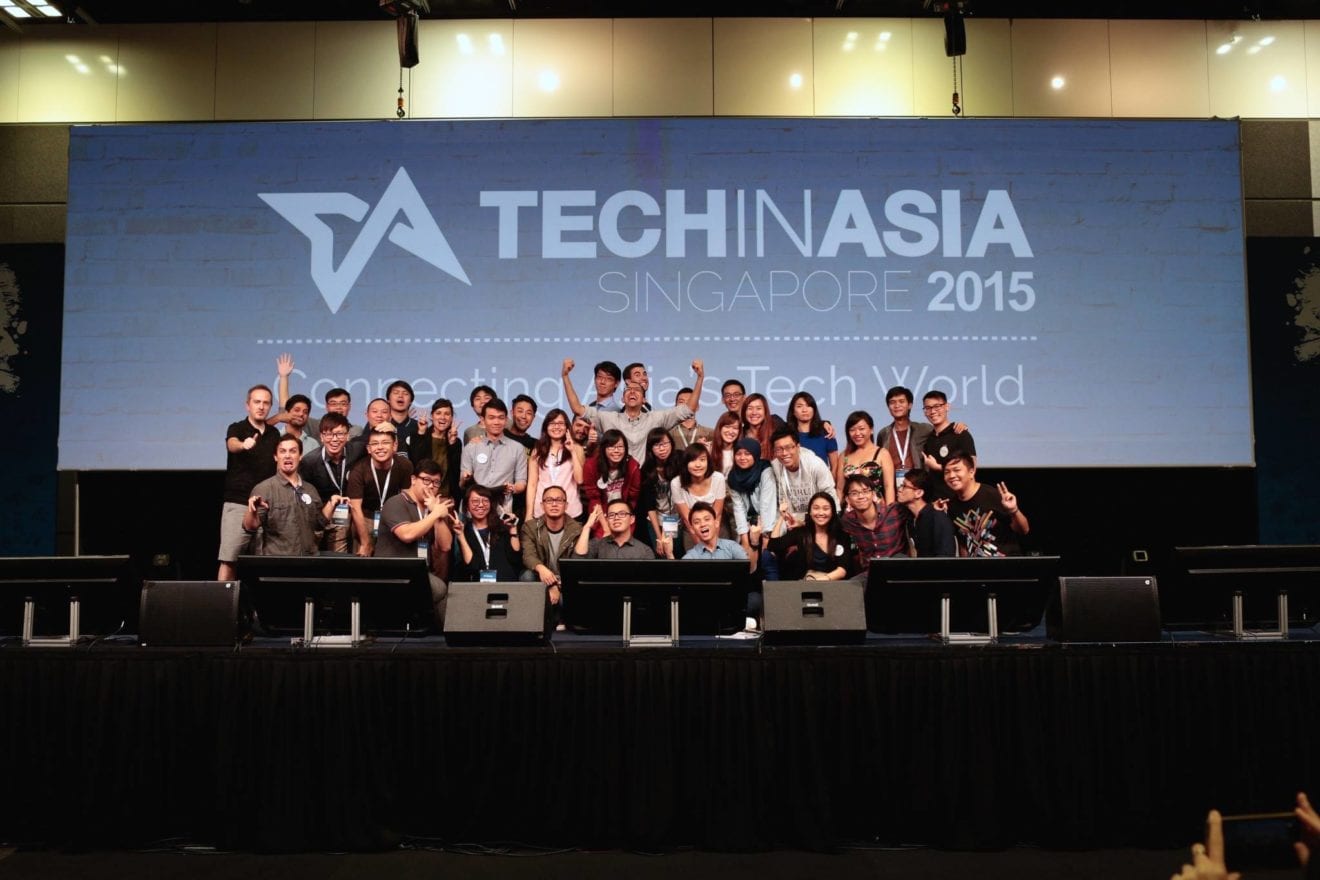
    11 and 12 November were two days of highly intensive activity at the Tech in Asia Jakarta 2015 held at Balai Kartini. From my sources at TIA, it was a whopping 4123 attendees, the largest turnout for a TIA event.

    The sheer crowd was a testament to Indonesia’s importance as a major South-East Asian consumer market. 142 of 184 startups hail from the host nation Indonesia at the Bootstrap Alley, the startup exhibition area.

    I have read many news sources about the Indonesian market, spoken to many people involved in Indonesian businesses, but my access to the local startup community has been limited, until now.

    tech in asia jakarta 2015 bootstrap alley featured image

    Intrigued to know Indonesia through the eyes of local startups, I told my investment team to spread out and take different alleys and speak to as many Indonesian startups as possible to learn more about the scene.

    At the end of the trip, we compared our notes and came up with some interesting observations. Due to the sensitivities of information being shared here, all names have been removed.

    New tech, same old way of business

    You would have expected a cultural shift of Indonesians adopting mobile technology as a new way of doing business, but the business scene is still dominated by very powerful and connected people who dictate the speed and direction of the technological adoption.

    “These powerful people have many companies under the guise of proxies and the company ownership structure is complex. Information is very scarce on who is the ultimate owner. Many of these companies own approved permits for various projects, which are awarded to them from their connections to the government. You have to work with these companies in order to gain access to a larger slice of the market,” says a startup founder working on an ecommerce platform selling a restricted good.

    For my business, I need to do four things to get it moving. Funding my operations is one. Next is to get access to a company which owns a permit to import these restricted goods. In this industry, there are only eight such companies holding permits. I have access to two.”

    “Supplies and funding,” I thought to myself. What else can there be? “Next, I have to be on very good terms with the police, to ensure they won’t cause trouble for me. There is no bribing, just ensure we are in communication and having good relations. Next is the mafia, to ensure they also won’t cause trouble for me,” he explains. What a balancing act he has to do. He didn’t mention about whether he needs to pay off the mafia though.

    He explains that Indonesia is a place where you have to identify first the right people in power and to connect with them to gain access to a certain market. He claims his market is niche, but I feel that he is hiding the real huge potential of the market. By having two of eight suppliers working with him, he is effectively addressing an estimated 25% market share of this vertical, assuming equal market share per supplier.

    Complimentary, not disruptive

    Another founder, who reads many articles on US entrepreneurs, says the US founders tend to claim their business model is disruptive and changes the way people work and live.

    “But here in Indonesia, remember that the economy is run by many powerful people. If you mention the word disruptive technologies, these people will regard you as a threat and go all out to block you. Rather, always say you are here to compliment their existing businesses and help them earn more money. Never go head-on with the incumbents. You might just get yourself ‘disrupted’,” he gives a shiver for dramatization.

    Mobile ecommerce is a huge size available for all

    Despite the dominant ecommerce players in Indonesia, the sheer market size makes it available to all, even the small-time businesses. An Indonesian investor who invests in hyper-local startups mentions:

    “Take Jakarta for example, there are many hyper-local ecommerce startups serving neighbourhoods. With the population density so high in the cities, many small-time startups are able to tap into these places and build their customer base and grow from there. It is not a nationwide expansion like the large players, but you can earn a decent living serving a small area. And don’t bother to build an ecommerce website. Everyone is on a smartphone. Going mobile is the easiest to start.”

    But for B2B businesses, it seems that web is still the way to go. I spoke with another startup that is an Alibaba me-too, focusing on very specific categories like fashion clothing. They connect wholesalers to distributors in Indonesia via their website.

    Despite being only in the market for a few months, they have already transacted a good number of B2B deals online. But given that the founder’s family is already in the trade, it might be their own existing orders going online that is creating the traction.

    Split-founder personalities

    Given space constraints, only 90 or so startups could exhibit on the first day, and the remainder presented on the second day. But it was an irony that the founders on day one came back on day two as founders of another startup!

    It is apparent in the Indonesian culture not to dabble in one startup but rather to try as many. “The opportunities are just so many that it would be stupid not to have multiple businesses,” quips a founder.

    He himself has four startups, working with various partners across the three cities of Jakarta, Bandung and Surabaya. “We have friends everywhere who have good connections for different businesses. We have our own connections and thus connecting all the dots from various cities to build a business together makes sense.”

    When I asked him how he manages his time, he smiles and says, “I wear different hats, just sometimes, I have to put on all hats. It is fun!”

    Ending thoughts

    As I took off from Soekarno-Hatta airport, I have been left with an impression that Indonesia’s tech startups are still basic in nature and not cutting edge. Founders have shared that the consumer market is still very much in its infancy stages and focused on bread and butter issues.

    However, there is no need for disruptive technologies yet as enabling technologies like transportation, ecommerce and communications need to be established first. Having strong existing cultural business norms of working with the bourgeoisie shows that running a big business requires a long-term plan.

    Further adding to the complication is the government’s many 87 regulations that prevent effective foreign investments and the creation of startups. But for those who are willing to slog it out, Indonesia’s huge population size is one attraction with its might and potential that entrepreneurs cannot ignore.

  • 11Street – RM11million giveaway for Year End, and new strategies for mobile and shocking deals

    11Street – RM11million giveaway for Year End, and new strategies for mobile and shocking deals

    11street (www.11street.my), one of the largest online marketplaces in Malaysia, revealed new strategic business plans for its mobile app and signature ‘Shocking Deals’ at ‘LOVE 11’ Day, its inaugural Korean – inspired celebration event at Lot 10 today.

    Among the key announcements Hoseok Kim, CEO of 11street, made at the press conference was:

    ·      Unveiling of their biggest giveaway of the year  – deals totalling to RM 11 million up for grabs for Malaysian shoppers. Starting from today until 31 December, shoppers can redeem daily offers of deals and coupons with up to 90% discounts.

    ·      Marking the 11th of each month as ‘LOVE 11’ Day for consumers to enjoy significant giveaways

    ·      One of their top business strategies include doubling its variety of product listings for its ‘Shocking Deals’ promotions to help consumers continue finding what they love at 11street

    ·      Another business focus would be on a stronger mobile app strategy for an enhanced shopping experience with more curated content with an improved user interface and user experience designs with additional personalized features. in line with this, 11street will be offering more mobile exclusive value deals and discounts.

    ·      Exclusive Premiere of Thematic TVC – will be available nationwide via free to air TV networks and 11street’s YouTube channel starting from November 16th.

  • Uber to triple number of drivers, launch ‘UberPool’

    Uber to triple number of drivers, launch ‘UberPool’

    Uber is set to expand its pool of drivers and will launch “UberPool”, a carpooling service, in Bangkok next year.

    The private car company will increase the number of its drivers from 30,000 to 100,000 by next year as currently it can only serve around 85 percent of customers with an estimated wait time of 5.5 minutes. 

    Uber also plans to launch “UberPool”, a carpooling service on the Uber app that matches customers with fellow riders heading in the same directions to split costs, The Nation reported.

    About 2 million Bangkokians have taken an Uber ride since its launch last year. The company wants to cut its pick-up time to three minutes, said Chan Park, general manager for Southeast Asia.

    The areas with the highest demand for Uber are Ratchaprasong Junction, Sathorn road, and Suhkumvit road. 

    For the cheaper UberX, the business has grown 12-fold since its launch six months ago. 

    “Thailand is a huge potential market. The firm’s business focus will be consumer-centric so that it will create business opportunities in Thailand. It also has plans to expand to big cities,” said Barry Levy, acting managing director of Uber Thailand. 

  • American bistro TR Fire Grill coming to Indonesia and Malaysia

    American bistro TR Fire Grill coming to Indonesia and Malaysia

    TR Fire Grill, a chef-inspired American bistro, is making its way to Malaysia and Indonesia with its artisanal culinary experiences, its first venture out of the United States.

    Its franchisee for Malaysia and Indonesia, Grand Companions Sdn Bhd’s CEO, George Ang said the company planned to invest about RM2.2 million in each of the TR Fire Grill outlets.

    “By June or July 2016, we will have the first restaurant in Kuala Lumpur and it will be followed another two in Jakarta, Indonesia,” he told Bernama in a recent interview.

    He said for both Malaysia and Indonesia, TR Fire Grill would have pork-free menu.

    TR Fire Grill was launched in March 2015 by Romacorp, which owns another American casual dining chain restaurant brand, Tony Roma’s. Grand Companions is also the franchise partner of Romacorp for Tony Roma restaurants in Malaysia.

    On the expansion for Tony Roma’s restaurants in Malaysia, Ang said the company currently operates nine Tony Roma restaurants in Malaysia and planned to add four more with investments of RM2 million each.

    “One new outlet will be opened in Vivacity Megamall in Sarawak and an additional three outlets in Peninsular Malaysia in the next two to three years,” he added.

    Grand Companions, he said was able sustain the volume of patrons for its Tony Roma’s restaurants in Malaysia and expected to lock in sales of RM250 million by end-2015.

    Meanwhile, Romacorp president and CEO, Stephen K. Judge, said Malaysia was one of the key markets for the US-based group.

    He said the group is currently developing new brands to continuously cater to the fast-moving food and beverages market.

  • Indian eCommerce growth fastest in Asia

    Indian eCommerce growth fastest in Asia

    The Indian eCommerce growth rate is now the highest in Asia – yet online still accounts for less than one per cent of total retail sales.

    Gene Alvarez, MD and VP at research house Gartner, told a symposium in Goa this week that India represents a US$7 billion market, growing at more than 40 per cent every year.

    “Currently B2C commerce leads the market in India, while B2B is limited to organisations that drive online sales while trying to cut costs in dealing with their partners and distributors.”

    More than 40 per cent of digital commerce transactions came from a mobile device in 2014, and that proportion is likely to exceed 50 per cent in 2015. Due to the low internet penetration in India, mobile has leapfrogged the PC, and consumers are using mobile as the primary channel for online shopping.

    “There is a lot of hype due to the high growth and high expectation of the market, and many companies are fast expanding to grab market share and increase visibility. However, the fierce competition is pushing up costs while the average order value remains low. Players need to execute on the basics to ensure the growth is sustainable,” said Alvarez.

    Gartner identified the top five things Indian digital commerce players should focus on to drive growth:

    • Customer Experience: This is the most important differentiator of a digital commerce service as price becomes transparent across sites. Providers that can design a compelling user interface, personalise landing pages, search results and product feeds based on the shopper’s behaviour, and effectively engage shoppers to make them loyalty customers, will win over those that cannot.
    • Product Range: Due to the nascent nature of India’s digital commerce market, product range and choices are still quite limited even on major marketplaces. Providers will need to expand the product ranges to make the service attractive to shoppers through organic growth and partnership. Focusing on a few categories, such as consumer electronics, fashion and grocery can also be the right strategy to deeply penetrate a product segment and become the go-to site for that category.
    • Delivery: This is a key challenge in India given the less developed logistic infrastructure and the lack of last-mile connectivity in remote areas. Providers will have to partner with multiple logistic providers to leverage their strengths in national, regional and local delivery, as well as with retail stores as pick-up stations to offer reasonable delivery speed and costs. They also need to consider putting in place reverse logistics for returns, which significantly impacts the customer experience.
    • Payment: Payment has a big impact on the conversion rate, and a frictionless payment process greatly helps increase digital commerce sales. India has relatively low credit card penetration, and most of digital commerce is done via cash on delivery. Despite regulatory challenges, digital commerce providers should work with payment providers to offer a frictionless payment experience.
    • Customer Service: Besides offering immediate help on site and via the contact center, and making processes and cost information transparent, digital commerce providers should think carefully about their return strategy. A generous return strategy encourages sales especially for categories such as fashion and consumer electronics.

    This week’s Gartner Symposium/ITxpo is a major gathering of CIOs and other senior IT executives. The event delivers independent and objective content with the authority of Gartner, a leading IT research and advisory organisation, and provides access to the latest solutions from key technology providers.

  • Ralph Lauren profits tumble

    Ralph Lauren profits tumble

    US fashion label Ralph Lauren’s operating profit has tumbled almost 39 per cent year to date as it continues to restructure its operations.

    The latest quarterly numbers just released show a solid sequential improvement on the prior quarter, with the strength of the US dollar responsible for most of the headline deterioration. When reported on a constant currency basis, net revenues look more respectable, rising four per cent over the prior year.

    “Despite the fall in profits, Ralph Lauren has taken steps to help ease up its bottom line over the medium term,” comments Håkon Helgesen, retail analyst at Conlumino.

    “These include the global reorganisation into a centralised structure run by six global brand groups which, by the end of 2017, should yield an annual $100 million in terms of efficiency savings. This measure has, however, come with short term costs attached – $38 million of which were recognised during this quarter, and more of which will filter through into subsequent quarters.

    “Despite the squeeze this exerts on profits, we believe that Ralph Lauren is to be applauded for taking the long term view.”

    The global launch of Polo Sport was completed during the quarter and initial indications suggest it has been well received.

    “In our view this activewear brand gives Ralph Lauren a much more significant presence in a lucrative – and rapidly growing – part of the apparel market and will be a solid contributor to future growth,” said Helgesen.

    Geographically, although international growth was deflated by the unfavorable exchange rate, it remains in double digits when expressed in local currency terms.

    “The same cannot be said of Ralph Lauren’s home market where the company struggled to generate sales momentum. Stores in big city locations – which make up about half of the total fleet – have the legitimate excuse of reduced tourist spend, again related to the relative strength of the dollar. This has inevitably acted as a drag on growth.”

    Helgesen says despite sluggish growth and a more promotional retail environment, Ralph Lauren continues to be conservative about discounting.

    “Although this has likely cost it some sales in the US, it has helped to protect margins and, ultimately, brand equity. Again, this is an example of Ralph Lauren being confident enough to take the long term view.”

    Responsibility for the day-to-day running of the company will now fall to Stefan Larsson, who takes over as CEO from its founder Ralph Lauren this month.

    “While some have questioned Larsson’s background – he previously worked at the distinctly mass-market retailers Old Navy and H&M – this is, in our view, to ignore the skills he brings to the table. While these may not have been honed in a luxury brand environment, the operating disciplines of both fashion businesses are points of learning for Ralph Lauren as it continues its quest for efficiency.

    “In any case, Ralph Lauren – and his design prowess – will still be on hand as he takes up his new role of chairman and chief creative officer,” concluded Helgesen.

  • Muji unveils the Muji Hut

    Muji unveils the Muji Hut

    Anti-brand department store Muji has opened a pop up store in Japan to unveil a prefabricated cottage it calls the Muji Hut.

    With a cult following throughout Asia for its simple, clean, brandless designs of homewares, its development of ‘Vertical Houses’ in Japan has drawn widespread attention for their innovative, quirky designs.

    This week the company unveiled the new Muji Hut concept at a pop-up design event in Tokyo.

    Muji Hut Japan 1

    The concept goes like this: In Japanese cities, people have learned to live in a compact home. But on the weekend, it’s time to get outside, enjoy nature, and cozy up inside a cabin.

    Muji Hut cork

    “We gather around the fireplace, enjoy each other’s company,” the exhibit’s welcome sign says. “Muji now invites you to slip away from the hustle and bustle of the city to a place where you can feel instantly at home and at ease.”

    Muiji Hut Japan 2

    Muji demonstrated three huts, ranging in size, complexity and materials. One has cork exterior, one wood and one aluminium.

    The largest, a cork hut, was designed by Jasper Morrison, who has long collaborated with Muji. The mini house includes a main room with fireplace, a bathroom with shower and a kitchen with a stove.

    Muji Hut

    Take a look at the concept on the website which features a full screen animated presentation. (Scroll down to see the Muji Huts).

  • Coupang plans $1.3 billion expansion

    Coupang plans $1.3 billion expansion

    South Korean eCommerce giant Coupang will invest 1.5 trillion won (US$1.3 billion) by 2017 to hire 40,000 delivery people called ‘Coupang Men’, and increase its number of logistics centers from 14 to 21.

    This is a significantly larger-scale investment than the $1billion infusion attracted from Softbank, a Japanese IT company, in June.

    To strengthen its ‘Rocket Delivery’ service, Coupang plans to increase the number of Coupang Men on staff from 3500 to 5000 by the end of the year, 10,000 during next year, and 15,000 by 2017.

    In addition, the number of staff members at its logistics centers and call centers will also be increased from the current 6000 to 18,000 by 2016, and 24,000 by 2017. Altogether, a total of 40,000 new employees will be hired Coupang, which hopes to provide same-day delivery service across the country, plans to expand its number of mega logistics centers from 14 to 16 by 2016, and 21 by 2017. Their overall size is the equivalent of 110 soccer fields.

    As the number of Coupang Men and logistics centers increases, the Rocket Delivery service, which is currently limited to major cities, will be offered in other areas, and a larger variety of products will be eligible for shipping through the service.

    Henry Ro, Coupang’s VP, said the Rocket Delivery service provides the greatest experience to the consumers.

    “The Rocket Delivery service is an integrated ‘end-to-end’ service that has never been tried in other countries.”

  • Soap Opera Productions opens its first Honeybunch Handmade store in Hong Kong

    Soap Opera Productions opens its first Honeybunch Handmade store in Hong Kong

    New Zealand manufacturer of soaps and body products, Soap Opera Productions Limited, announced today (November 16) that it has opened its first retail store in Hong Kong, Honeybunch Handmade, in response to strong demand for quality personal care products in the region.

    The new retail storeat Aberdeen Street in Central offers New Zealand handmade soaps, bodycare products as well as flower bouquets. According to the Managing Director, Mrs Lisa Jolly, Soap Opera Productions has been developing soap products for a Chinese retailer starting with only one store and now having over 20 stores in Mainland China.

    She said, “Through this business partnership, we gained the know-how and expertise in developing soap products that are suitable for the Chinese market, therefore we decided to launch our own brand in Hong Kong. Hong Kong is an international city famous for its breadth of retail choices.

    It gives new brands great exposure to residents, business traders and visitors. It is the best place from which to promote our New Zealand handmade gift and floral concepts to the world.”

    She added, “I am impressed with Hong Kong’s fabulous logistic services. It offers exciting opportunities for us to extend our customer reach beyond Hong Kong through e-commerce.

    Our online store supports delivery to worldwide customers.”

    The Associate Director-General of Investment Promotion, Dr Jimmy Chiang, said, “Being a free port and logistics hub, Hong Kong is able to efficiently support both online and offline business operations. It offers tremendous opportunities to companies that use Hong Kong as their sales and distribution centre in Asia. Soap Opera Productions has extended its business model from a manufacturer to a retailer and we are happy that the company has chosen Hong Kong as its first overseas location.

    We wish the company every success in Hong Kong.”

  • Dairy Farm struggles in SE Asia

    Dairy Farm struggles in SE Asia

    Dairy Farm International Holdings says softer sales growth and steep cost increases led to weakened margins in the third quarter.

    In an interim management statement, which does not include financial data, the Hong Kong-based pan-Asian retailer says the group faced more difficult economic conditions, and focused on building market share and investing for the long-term health of its businesses.

    Tighter margins and unfavourable exchange rate movements continued to affect the group’s US dollar reported results and led to lower underlying earnings for the period.

    “The group expects similar trading conditions to prevail for the remainder of the year.”

    Dairy Farm says profitability of its Singapore food business – where it owns the 7-Eleven franchise and Cold Storage supermarket chain – fell, principally due to weak performances from newly opened supermarkets and the impact on 7-Eleven of government restrictions on alcohol sales.

    In Malaysia, the introduction of GST and softer consumer confidence dampened spending at itsGiantstores.

    “In Indonesia, despite good sales momentum in July and August, higher labour costs and price investments to attract customers have reduced margins,” the company said.

    The Health and Beauty Division – led by the Guardian and Mannings brands – continued to perform well in Hong Kong, despite the slowdown in Mainland Chinese tourist arrivals, and has seen improvements in profitability in Singapore. The overall results were, however, held back by poorer performances in Malaysia and Indonesia.

    Both the Home Furnishings and Restaurants Divisions have increased sales and profits. Ikea performed well in both Hong Kong and Taiwan, and the new Ikea store in Indonesia continues to trade ahead of expectations.

    Restaurant group Maxim’s, which operates Starbucks amongst other brands,  maintained its consistent performance.

    The group is to invest a further US$210 million in Yonghui Superstores in early 2016 so as to maintain its 19.99 per cent stake following a placement by Yonghui of a 10 per cent shareholding to internet retailer, JD.com. The investment by JD.com will provide Yonghui with additional opportunities for expansion into eCommerce.

    “With respect to recent investments, there have been positive contributions from [supermarket chain] San Miu in Macau and from Yonghui in China, despite the challenging trading environment. Meanwhile, progress continues on the integration and repositioning of the Rose Pharmacy business in the Philippines,” the company said.

    “Notwithstanding the challenging conditions, Dairy Farm was able to maintain its cashflow from operating activities through better working capital management.

    Dairy Farm operates over 6400 outlets – including supermarkets, hypermarkets, convenience stores, health and beauty stores, home furnishings stores, cafes and restaurants – employing over 170,000 people, and had total annual sales in 2014 exceeding US$13 billion.

  • Michael Kors Japan sales soar

    Michael Kors Japan sales soar

    Michael Kors Japan sales continue to soar as rising US fashion player expands its global success.

    Revenue in Japan for the last quarter rose 60.7 per cent on a constant currency basis.

    While that figure was carved back to 36.1 per cent after the exchange rate was taken into account, it shows stellar growth in the Asian nation, which is now Michael Kors’ second largest market behind the US.

    Globally, although still in positive territory, sales growth at Michael Kors continues to slow. Total revenue was up by 6.9 per cent during the quarter, a sequential worsening of the 7.3 per cent growth posted during the first quarter, and a long way down on the double digit increases recorded across the prior fiscal year.

    But while some of this is due to currency fluctuations, according to Conlumino CEO Neil Saunders, this does not explain away all of the decline.

    “Of particular concern are the same store sales numbers which were down by a sharp 8.5 per cent over the same period last year. While this represents a slight improvement on the 9.5 per cent dip recorded last quarter, it is still a dismal outcome and one which has diminished productivity and profitability. At total level retail sales remained in positive territory, saved only by the addition of some 116 new stores over the past year,” he said.

    “All that said, while Michael Kors is now feeling some pressure on the bottom line, with net income falling by 6.8 per cent over last year, it remains in a much better financial position than a number of its luxury rivals. Indeed, its return on invested capital is over 10 percentage points higher than Coach and some 20 percentage points higher than Ralph Lauren,” noted Saunders.

    “Margins, while having weakened due to both exchange rates and discounting, remain comparatively robust. As such, Michael Kors’ capacity to weather the slowdown in demand for its products is, in our view, reasonable.”

    But demonstrating it is capable of dealing with slowing demand does not mean Michael Kors wants to be in such a position, said Saunders.

    “One of the current issues for the company is that its brand simply does not have the cachet that it once did and is, to some extent, suffering from over-exposure. Nowhere is this truer than in the North American market where the proliferation of the brand over recent years has diluted its value.

    “Steps have been taken to remedy this, including lessening the reliance on traditional products like handbags by introducing more contemporary accessories like oversized wallets and cross body satchels. However, while these are helpful additions which balance out the range, they do not necessarily address the problem of ubiquity that the brand faces.”

    While Michael Kors can look to overseas for growth, as it is successfully demonstrating in Japan, the problem is that with unfavorable exchange rates this translates into a less helpful boost than it once did.

    “Europe is a case in point: here sales on a local currency basis rose by a fairly good 20.6 per cent. However, when exchange rates are factored in this growth is reduced to a paltry 2.3 per cent.

    “Given these dynamics, it is difficult to see how Michael Kors can return to strong growth in the near future,” concluded Saunders.

  • Boxed limited edition of Life Is Strange is coming to retail

    Boxed limited edition of Life Is Strange is coming to retail

    The pack, which will launch in January 2016, includes the soundtrack, art book and directors commentary. Following the release of the final episode of Life Is Strange, the title will receive a boxed Limited Edition release on January 22, 2016 across Australia and New Zealand.

    Luc Baghadoust, producer at DONTNOD Entertainment said, “The response to Life is Strange really has blown us away”

    “To be able to share that experience with our fans in a traditional boxed format is something we’re really excited about and the decision to include the extra items for the Limited Edition is a direct response to fan requests.”

    The Limited Edition pack includes a directors’ commentary, a 32-page art book, and 14 licensed tracks from the game’s official soundtrack as well as 8 tracks from the game’s composer Jonathan Morali.

  • Lotte and WalkerHill lose duty free licenses

    Lotte and WalkerHill lose duty free licenses

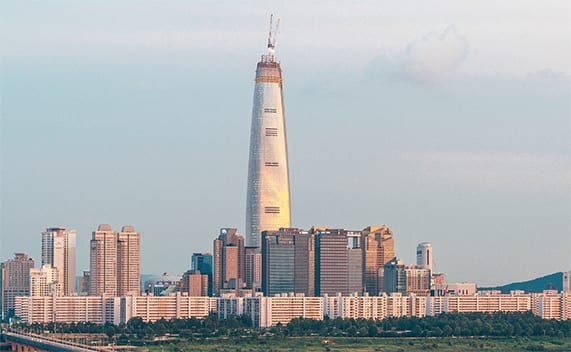
    Korea Customs has announced that the Lotte Group has lost its operating licence at its prestigious Seoul Lotte World Tower from next month, but retained its Seoul Myeongdong store, while the WalkerHill Duty Free store operation was also unsuccessful in retaining its long-held duty free licence at the Sheraton Grand Walkerhill Hotel.

    South Korea’s two principal Seoul-based newspapers – the Korea Times and the Korea Herald – both announced the winners today, after the results were initially held back by Korea Customs until halfway through the weekend (when the stock exchange is closed).

    TRBusiness reliably understands that this was intentional to guard against any chance of information leaks impacting on any company’s stock price due to insider trading.

    WalkerHill Duty Free

    WalkerHill Duty Free achieved a 46% sales growth in 2014 to $260m compared with $162m in 2013, with 80% of all sales made to Chinese customers. It also unveiled its new-look enlarged store in eastern Seoul last February. The duty free retailer is particularly well known for its high-end watches, carrying 70 brands in total and will be disappointed it has lost its licence. This year the retailer set itself a $350m sales target – some 35% ahead of its 2014 total.

    Meanwhile, Shinsegae has also won one of these duty free licences to convert part of its department store to duty free status, while it also successfully defended its Busan City duty free licence status. Last, but not least, Doosan has won its first duty free licence in Seoul.

    The loss of Lotte’s prestigious Seoul Lotte World Tower duty free licence will come as a big surprise to many and not least to Lotte, which regards this as the most prestigious purpose-built multi-million dollar duty free outlet within its portfolio.

    The WalkerHill Duty Free operation has also become an institution as one of the few retail operations that is an integrated part of both a hotel and a casino, attracting good customer levels.

    Lotte Tower in Seoul

    Lotte’s total duty free sales reached a record US$4.02bn in South Korea in 2014, representing a huge $750m hike in revenue, equivalent to a 22.8% increase. Even given its wide range of duty free outlets at both Incheon Airport and downtown, Lotte will be very disappointed it has lost its licence for this business, since it had planned to make the World Tower shop the largest duty free store in Asia – never mind South Korea.

    Whether internal in-fighting at the top of Lotte has played any role in it losing its Tower license, or merely a view that it is becoming too big (or both) is unknown at present, although TRBusiness hopes to canvass the views of individuals who are very close to this process for further in-depth analysis within the next 24 hours.

    For its part, WalkerHill Duty Free management will also doubtless be very disappointed that it has lost its licence after nearly three decades of trading, with this store particularly well known for its wide range of high quality watches.

    As reported yesterday, Korea Customs initially received 10 bids for the three downtown concessions on offer in Seoul, while the single Busan downtown tender attracted just two bids.