Author: Mei Ling Tan

  • Superdry teams with Idris Elba

    Superdry teams with Idris Elba

    SuperGroup, UK-based parent of the faux Japanese Superdry brand, has signed up Idris Elba to help it re-launch in the US market.

    Elba is the star of the popular US crime show The Wire and the British BBC crime drama Luther, starred in the movies Mandela and Marvel’s Thor, and is repeatedly rumoured as a future James Bond.

    SuperGroup says it has signed Elba to create an exclusive new autumn winter collection for 2015.

    The company has revealed few other details but CEO Euan Sutherland said Elba’s high profile will help relaunch the Superdry brand in the all important North American market.

    Sutherland said Superdry’s prime target market remained aged 18 to 24, but many early converts to the brand have “grown up with” it. At 42, Elba will appeal to that older generation of shopper as well.

    “He epitomises what we are: British, grounded and cool,” said Sutherland.

    SuperGroup recently bought back the exclusive marketing rights to Superdry in the US, Canada and Mexico, paying £22.3 million to prematurely end the 30 year deal. With just 15 stores it sold £20 million worth of apparel in those markets last year, but lost £5 million doing so.

    “Idris Elba is a big man in the US and he will automatically reposition Superdry in people’s minds,” said Sutherland.

  • Nova LifeStyle boosts China focus

    Nova LifeStyle boosts China focus

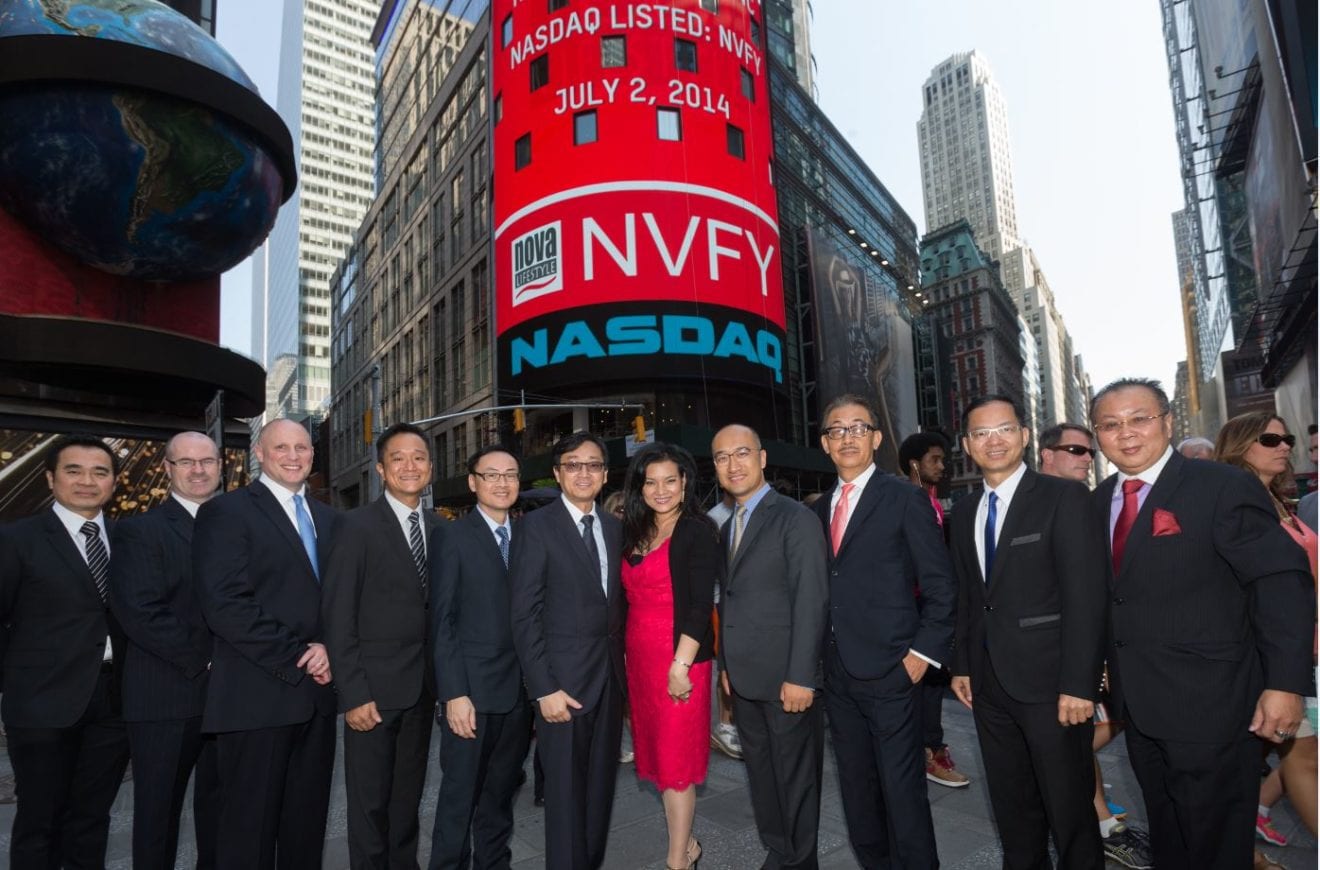
    US furniture designer, manufacturer and distributor Nova LifeStyle sees China as a key growth market as it feels a pinch in Europe.

    The company finished 2014 recording a 26 per cent year-on-year increase in net sales to US$98.7 million, with growth was primarily driven by a 46 per cent increase in sales in North America and 14 per cent in Asia Pacific, partially offset by a 20 per cent decline in Europe.

    Its gross profit was $19.4 million, also an increase of 26 per cent. Net income for the California-based, Nasdaq-listed company was $8.6 million.

    In China, overall sales increased by six per cent to $17 million, largely due to the opening of seven new franchised stores in the nation.

    “Throughout 2014, Nova LifeStyle implemented strategic initiatives to expand sales and distribution in China, a key growth market,” the company said in its earnings statement.

    Nova LifeStyle boosted sales on Alibaba’s B2C sites, TMall and JD.com and signed a franchise partnership with the Ablejoy Company of China, to provide Nova products to its 200-strong retail store network.

    Nova LifeStyle initiated shipping to Ablejoy in the third quarter of 2014 and will continue to supply current and future franchise stores. The company also successfully began manufacturing and shipping to Ikea China.

    Sales in other parts of Asia Pacific, including Hong Kong, Australia, and other countries, increased 46 per cent to $5.89 million in 2014.

    The company said it expects the China and US markets to contribute to top-line growth in the year ahead.

    “Sales in Asia increased significantly and we view the supply agreement with Ikea China as a testament to the quality of our products and manufacturing capabilities,” said CEO Jeffrey Wong.

    “We are witnessing the expansion of the retail furniture market in China as the growing middle class, increasing urbanisation and increased consumer spending fuel higher demand for household goods and furniture.

    “Due to our efforts in 2014, we believe that Nova LifeStyle is well positioned to take full advantage of any upturns in the global economy, both in Asia and in the domestic market,” concluded Wong.

    Nova’s products are made in the US, Europe, and Asia and include LifeStyle brands such as Diamond Sofa, Colorful World, Giorgio Mobili, Nova QwiK, and Bright Swallow International.

  • Fashion startup LimeRoad wins funding

    Fashion startup LimeRoad wins funding

    Suchi Mukherjee gave birth to both her second child and her start-up in 2012. In fact, she was on maternity leave when she started up LimeRoad, a fashion eCommerce site targeted at Indian women. Today, it is one of the biggest success stories by a woman entrepreneur in India.

    LimeRoad has just raised US$30 million from Tiger Global, Matrix Partners, and Lightspeed Venture Partners in series C funding. The same investors had pumped US$15 million into the fast-growing fashion portal less than a year ago. Earlier, at inception, Matrix and Lightspeed had invested US$5 million.

    LimeRoad combines fashion eCommerce with social discovery. The site features user-generated ‘looks’ which mix and match interesting combinations of apparel and accessories. It encourages users to experiment with ‘looks’, such as a fusion of Indian and Western styles in wearing a modern crop-top with a traditional saree or finding a dupatta [light Indian women’s scarf] to go with denims and T-shirt.

    A user can build collections of styles in scrapbooks on the site, which others can browse for ideas. LimeRoad’s algorithms rank the scrapbooks to make the most relevant and popular of them easier to find.

    Limeroad-scrapbook 315

    “Women from across the country are using scrapbooks as a medium for self-expression… As a result, over 80 per cent of our orders come from organic traffic,” says LimeRoad CEO and co-founder Suchi Mukherjee, in a statement on the funding.

    “The uniqueness of LimeRoad lies in the passionate user base and the mission of providing an engaging platform for smaller brands to thrive,” adds Lee Fixel, managing partner at Tiger Global.

    Suchi Mukherjee, who studied finance at the London School of Economics, worked for eBay in London before becoming an entrepreneur. Her co-founders in LimeRoad include Prashant Malik, who was earlier with Facebook, and Ankush Mehra, who headed the supply chain at Reliance Hypermarkets.

    Fashion discovery is a hot space in India. Just last week, another fashion portal Roposo raised US$5 million in series A investment. This too was led by Tiger Global, along with participation from Binny Bansal, co-founder of eCommerce biggie Flipkart.

    Started by three IIT Delhi alumni, Roposo is derived from ‘apropos’, alluding to its pitch on making the search for fashion products more relevant to user needs.

  • Ikea Korea boosts furniture sector

    Ikea Korea boosts furniture sector

    Before the opening of the first Ikea store in Korea last year, Korean furniture companies were worried about the threat posed by the Swedish behemoth.

    Many industry observers said the impact of Ikea in Korea would be felt across the industry.

    Without a doubt, Ikea has been big hit in Korea over its first 100 days trading According to Ikea Korea, it welcomed 2.2 million customers as of March 18, and local shoppers had signed up for 300,000 “Ikea Family” memberships. Visitors praised the reasonable price tags and practical designs, and most said that they planned to revisit the store.

    However, 100 days after Ikea Korea’s debut, the real winners are Korea’s major furniture makers, who are laughing all the way to the bank thanks to the “Ikea effect”, which has helped them attract more customers.

    Sales at Hanssem, the largest furniture maker in Korea, reached 1.32 trillion won last year, a 31.5 per cent increase over the previous year. Similarly, Hyundai Livart’s revenue increased 15.92 per cent to 643 billion won last year.

    Ironically, their shops near Ikea’s Gwangmyeong store saw increases in customer visits in January and February this year. During this period, the revenue of Livart’s Gwangmyeong branch increased 27 per cent, while Hanssem’s Gwangmyeong store saw a 10 per cent increase in sales over the same period of the previous year.

    An official at Hanssem said: “The sales increase at the store was thanks to Ikea. Seventy per cent of customers visiting our Gwangmyeong branch came from Ikea. Those who could not find what they wanted at Ikea visited our store looking for alternatives. It’s the ‘Ikea attraction.’”

    To cope with the Swedish giant’s low-prices and do-it-yourself marketing power, local furniture makers armed themselves with “high quality and service” as their core competitiveness. Hanssem tried to reduce its production costs through automation and standardisation of parts. In addition, it opened its sixth flagship store, and focused on improving its customer service.

    Livart, Korea’s second largest furniture company, implemented an aggressive marketing strategy aimed at younger generation buyers looking for mid- and low-priced products. It strengthened its online sales channel, broadening its offerings to include kitchen and office furniture.

    At the center of their efforts to increase revenue against the threat of Ikea are free delivery and assembly services.

    Ikea visitors calculate the price of the products, delivery charge and unseen cost of DIY together. For example, Ikea’s Brimnes triple dresser (78cm x 95cm) costs 99,000 won, but a similar sized Hanssem triple dresser (80cm x 73cm) sells for 109,000 won. One can save 10,000 won when buying the Ikea product. However, Ikea customers also need to pay 29,900 won for delivery and 40,000 won for assembly, if they require those services.

    Choi Yang-ha, CEO and vice chairman of Hanssem, said: “Ikea is famous for its reasonable pricing and wide variety of products. However, if customers use its delivery and assembly services, its price competitiveness falls behind Korean competitors. We have our own strategy, offering free delivery and assembly services, and providing products through various distribution channels.”

    However, smaller furniture makers have been left in the cold, as they do not produce products of interest to typical Ikea visitors. As a result, small furniture shop owners have seen their revenue fall 71.8 per cent since Ikea’s Gwangmyeong store opened.

    To support small sized furniture manufacturers, Gyeonggi Province plans to invest a total of 87.5 billion won to raise its competitiveness and to revitalize the furniture industry in the province.

  • JD.com crowdfunding concept launched

    JD.com crowdfunding concept launched

    Chinese eCommerce company JD.com, has unveiled a series of initiatives to help finance, develop and promote the creation of start-ups in China.

    The new JD Equity Crowdfunding platform, which builds upon JD.com’s success in internet finance, is expected to be China’s largest equity crowdfunding platform upon its launch this week.

    “JD Equity Crowdfunding, which expands the range of offerings from JD Crowdfunding, will leverage JD.com’s nationwide brand and reputation for authenticity in the eCommerce space to give China’s entrepreneurs access to a broad set of potential early-stage investors,” the company said in a release.

    “The new platform will provide a unique range of training and support options for companies throughout the entire start-up lifecycle, giving entrepreneurs a greater chance at success.”

    JD.com says the initiatives, anchored by JD Equity Crowdfunding, will help to create an ecosystem supporting start-ups from the funding through the online sales stages of development. In addition to capital through crowdfunding, companies will have access new training courses provided by JD.com and seasoned investors and entrepreneurs, as well as to the company’s broader Internet financing tools. I

    And they will be able to sell their products through the company’s eCommerce platform, leveraging JD.com’s last-mile delivery network and reputation for trust and reliability.

    The first 11 companies to raise funds on the JD Equity Crowdfunding platform include Thunderobot, Fastwheel and WeBuzz, which respectively focus on the areas of gaming laptops, personal transportation devices and social media.

    “I know from personal experience how important it is for entrepreneurs to have access to knowledge and early funding,” said Richard Liu, founder and CEO of JD.com. “As the leader in Chinese e-commerce, JD.com is ideally positioned to create a premium platform to give China’s early-stage companies access to resources and seed capital from a broad range of investors. We look forward to creating innovation and value for investors, consumers and start-ups.”

    Under the JD Equity Crowdfunding model, each investment project will be led by a professional investment manager, from either a venture capital (VC) firm or from a company with similar experience, who will be responsible for working directly with the investee companies and ensuring clear and transparent communications with investors. Participating VCs who will help develop JD.com’s ecosystem for start-up companies include Capital Today, ZhenFund and Sequoia Capital. As part of the program, JD.com will take a small equity stake in the projects that successfully raise funding through JD Equity Crowdfunding.

  • Miu Miu Japan opens new flagship

    Miu Miu Japan opens new flagship

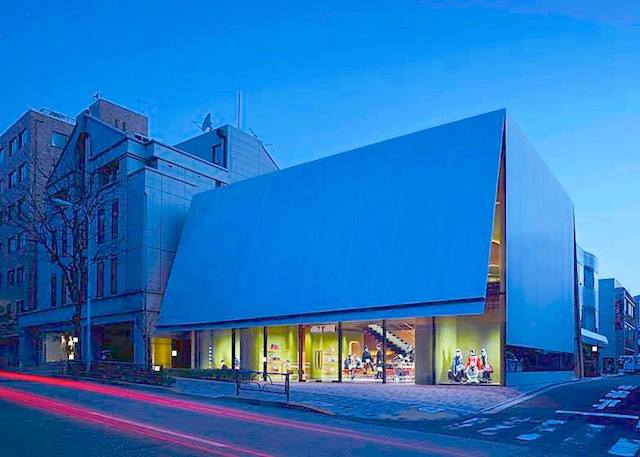
    Prada brand Miu Miu has unveiled a new project with Swiss architects Herzog & de Meuron, the centrepiece of its Japanese operations.

    The 720 sqm building on Miyuki St in the Aoyama District of Tokyo will be the cornerstone of the brand’s Japanese activities. Based in Paris, Miu Miu was established by Miuccia Prada in 1993 as a platform for design explorations beyond her legendary Prada line. Since opening its first boutique in Aoyama in 1999, Miu Miu has maintained a significant presence in Japan and now has 23 boutiques across the country including nine in Tokyo.

    Miu Miu Aoyama Tokyo 415

    Prada says the new building continues the company’s tradition of collaboration with world-class architects and re-emphasises Miu Miu Japan’s dedication to the Japanese market.

    The project for Miu Miu is sited diagonally across the street from the Prada Tokyo Epicenter – also designed by Herzog & de Meuron – in an elegant neighborhood that has, over the past two decades, become a showplace of architectural invention. In contrast to the transparency of the all-glass Prada building, however, the understated metallic surface of the Miu Miu façade is opaque, which lends a more intimate feel.

    Miu Miu in Aoyama Tokyo 415

    The architects say: “Contrary to expectations for a site that is home to so many luxury brands, Miyuki St in Aoyama Tokyo is not particularly beautiful or elegant. The architecture is heterogeneous – a hodgepodge of freestanding buildings of different heights and shapes, with neither historical tradition nor common standards.

    “Never meant to be a space of its own, the street is a purely technical and functional link between Omotesando and the Aoyama Reien cemetery farther down the road. Despite single trees here and there, the atmosphere is not inviting, like a boulevard or a plaza. Tokyo is pure, quintessential city, its territory exploited to the full with absolutely no leeway for the individuality that we take for granted in European cities.

    Miu Miu in Aoyama Tokyo.415

    “We already noticed this over 10 years ago when we were planning the glass building for Prada Aoyama,” they continued.

    “At that time, we were interested in counteracting the situation – on one hand, by placing a small plaza to the side of the building, and on the other, by making the structure completely see-through so that one can see into the interior from all sides and can also look out from inside at specifically targeted views of the city.

    “Over the past decade, the distinctive building has become a much-frequented location and it was therefore important to Prada, our client Prada Japan and also to us as architects to take this into account in planning the Miu Miu store located in the immediate vicinity on the opposite side of the street. We started out by trying several different architectural typologies. Since zoning regulations called for less height, we explored the potential of a smaller, more intimate building. We used the following thoughts to channel our ideas: more like a home than a department store, more hidden than open, more understated than extravagant, more opaque than transparent.

    Miu Miu in Aoyama, Tokyo 415

    “The typological model that best suited these considerations and specifications was a box placed directly at the level of the street, its cover slightly open to mark the entrance and allow pedestrians to look inside. Only then do they realise that the building is a shop.

    “Here, under the oversized canopy, the two-storey interior is visible at a single glance, as if the volume had been sliced open with a big knife, turning the inside out. The rounded, soft edges of the copper surfaces inside meet with the razor-sharp steel corners on the outside of the metal box, while the cave-like niches clad in brocade face the central space of the shop like loges in a theatre.

    “The shop on two tall storeys not only presents enticing goods on tables and in display cases; it is also like a spacious and comfortable home with inviting sofas and armchairs.”

    The façade has neither logo nor pomp; it is a polished, mirror-smooth surface, as if one single giant brushstroke had swept smooth the ordinarily matte surface of the steel panelled façade. This surface attracts the gaze and curiosity of passing pedestrians. But instead of affording a view inside, as in a shop window, the gaze is inverted; instead of the anticipated see-through window, viewers encounter self-reflection.

    Miu Miu in Aoyama Tokyo 415.

  • Lend Lease wins Singapore bid

    Lend Lease wins Singapore bid

    Lend Lease has won a joint venture bid to buy a strategically significant plot of land in suburban Singapore on which it will build a mixed use development.

    The Australian property developer, which already has extensive interests in Singapore and neighbouring Malaysia, was the highest bidder in the government auction of a site at Paya Lebar Central. It owns 30 per cent of the JV with the balance owned by an unidentified international investment partner.

    According to a statement, the joint venture will pay S$1.672 billion (US$1.222 billion) for the site which has capacity for a development of about 165,000 sqm, including office, retail and residential / serviced apartment use. The site has direct connections to the Paya Lebar Mass Rapid Transit (MRT) Interchange that serves both the Circle and East-West lines.

    The award of the site is subject to the issue of the tender acceptance letter by the Urban Redevelopment Authority, who manages the Government land sales process.

    Lend Lease says the development will be funded by a combination of non-recourse, project level debt and equity.

    Lend Lease Group CEO and MD Steve McCann said the site offered a great opportunity for the company to continue its success in the region, leveraging Lend Lease’s global capabilities to develop large scale urban regeneration projects in major cities around the world.

    “It further cements Lend Lease’s position in the Singapore market and leverages its leading integrated property capabilities encompassing development, construction, investment management and asset and property management platforms.”

  • Korean online sales overtake stores

    Korean online sales overtake stores

    The total trade volume of online retailers for 2014 surpassed that of large retail stores and department stores for the first time, said Statistics Korea.

    Although the overall trade volume through Korean online retailers stood at 45.24 trillion won (US$ 41.62 billion), which is slightly lower than the 46.63 trillion won (US$ 42.90 billion) trade volume for offline retailers, sales through foreign online retailers in 2014 reached 1.66 trillion (US$ 1.54 billion), which resulted in combined overall online sales 46.90 trillion won (US$ 43.14 billion).

    The figures are due to aggressive marketing strategies from local online retailers to boost Korean online sales – such as G-Market, Auction, 11st Street and Interpark, and large growth rates for social commerce companies such as Ticket Monster, Coupang and Wemap. 11st Street, one of the most successful online shopping portals, saw its trade volume surpass 5 trillion won (US$ 4.6 billion) in 2013, six years after its launch.

    The total trade volume through department stores decreased 1.9 per cent to 29.23 trillion won (US$ 26.88 billion) compared to last year.

    Although department stores and large retailers have been trying to attract customers by holding sales and the improving quality the merchandise on their shelves, their sales have continued to decrease. Lotte, Hyundai and Shinsegae Department Stores saw their March sales decrease 1 per cent, 0.8 per cent and 1.3 per cent year-on-year.

  • Uniqlo founder tops Japan’s rich list

    Uniqlo founder tops Japan’s rich list

    Retail mogul Tadashi Yanai has topped Forbes magazine’s list of the richest people in Japan.

    The Uniqlo founder is reported to have a net worth of US$21.1 billion.

    Last year, Yanai, 66, whose company Fast Retailing also owns a raft of other apparel brands including GU, was ranked second. But Forbes says soaring sales of his clothing empire have added $3.3 billion to his net worth.

    Last year’s list topper, internet pioneer Masayoshi Son, who owns Softbank, was displaced into second, his net worth now estimated at $13.9 billion.

    The nation’s richest family is that of Nobutada Saji, of beverage giant Suntory, with Saji himself ranking third and worth $10.9 billion.

    Hiroshi Mikitani, the founder of online retail powerhouse Rakuten, is ranked fourth at $10.5 billion. His fortune soared 36 per cent in the last year alone, partly due to acquisitions of US website Ebates and investment in Uber rival Lyft.

    The other retailer to make the top 10 is Masatoshi Ito, founder of the Ito-Yokado Group, parent of 7-Eleven, the Ito-Yokado supermarket chain, department stores, restaurants and speciality shops. His estimated worth is $3.8 billion.

  • John Lewis eyes 11 store openings in the Philippines this summer

    John Lewis eyes 11 store openings in the Philippines this summer

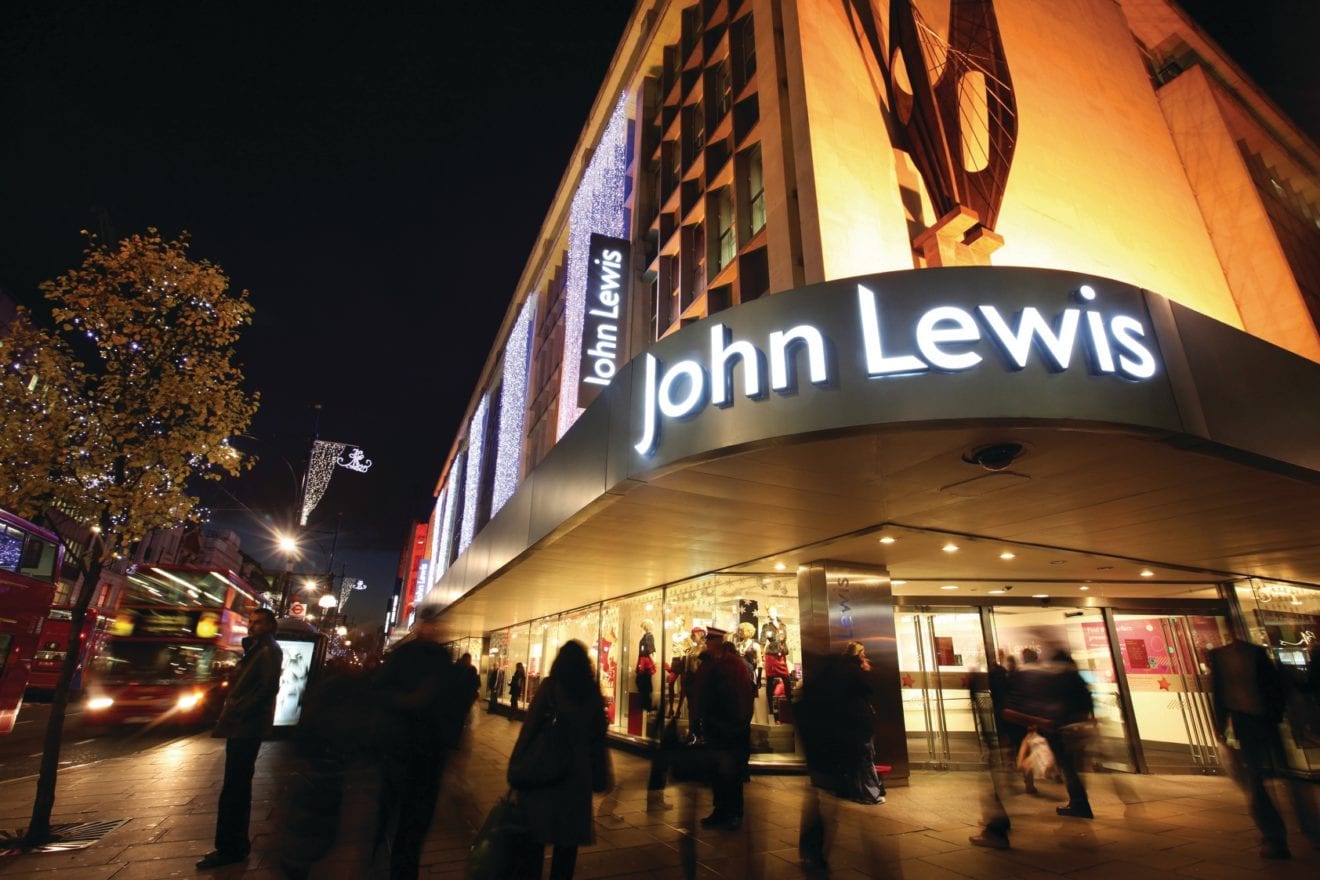
    Britain’s John Lewis Partnership said on Sunday it planned to expand internationally by opening outlets in 11 branches of department stores in the Philippines.

    The outlets, due to open this summer, follow its establishment of shops in seven branches of South Korean chain Shinsegae and an already announced plan to open outlets in three branches of Singapore department store Robinsons.

    The Philippines stores will be set up within branches of SM Retail and Our Home, John Lewis said in a statement, and will be between 300 and 1,000 square feet (30-93 square meters) in size.

    “The success of our partnership with Shinsegae has given us the confidence to continue our expansion in the international market,” said Andy Street, managing director at John Lewis.

    “We are actively looking for more international partnerships, and expect to make more announcements about our international plans in the next year.”

    Street said that while the move would give John Lewis, which already delivers to 33 countries, access to a new emerging market, its focus on physical expansion remained on Britain.

  • Taco Bell Japan makes comeback

    Taco Bell Japan makes comeback

    US fast food brand Taco Bell is to make a comeback in Japan.

    Restaurant chain operator Asrapport Dining Co has partnered with the Taco Bell brand’s parent Yum! Brands and will open the first store in Shibuya, Tokyo, on April 21.

    It will be the brand’s first outlet in Japan in more than 20 years.

    Taco Bell Japan will serve the staples of the US fast food menu – burritos, tacos and quesadillas, along with items unique to the Japanese market, to suit the local population: a shrimp and avocado burrito and something called ‘taco rice’.

    “Taco rice will be a plate of taco meat and vegetables served on top of rice,” a spokeswoman told Japanese media.

    An unspecified number of stores is planned, with a distinct layout including an open kitchen where customers can see food being prepared.

    A combination meal is likely to be priced at about ¥800 ($US6.70).

    Taco Bell originally entered Japan in the 1980s but its foray was short lived, its Mexican style cuisine failing to excite the Japanese palate.

    Some Taco Bell outlets operate in Japan within US military bases, inaccessible to the general public.

  • Robinsons expands loyalty card program

    Robinsons expands loyalty card program

    Filipino retailer Robinsons Retail Holdings expects to boost the ranks of its loyalty program membership beyond 1 million by the year’s end after forging a new partneship with Caltex.

    Robinsons, the Philippines second largest retail group, says its Robinsons Rewards Card membership has grown rapidly throughout the last year to about 850,000 now. At the current growth rate, it is on track to reach the new milestone within this year.

    RRHI president and COO Robina Gokongwei-Pe said a new  partnership with Chevron Philippines (Caltex), will help build critical mass. It is the first non-Robinson retail brand to join the program.

    Robinsons Rewards Card holders can now earn points through purchasing fuel and other products at Caltex stations and points can be redeemed and used as a discount card to 21 Robinsons Retail brands as well as in Caltex stations nationwide.

    The other Robinsons Retail brands are Robinsons Department Store, Robinsons Supermarket, Robinsons Selections, Robinsons Easymart, Robinsons Appliances, Toys “R” Us, Handyman, True Value, AM Builders Depot, Daiso Japan, Topshop, Topman, Dorothy Perkinsm Miss Selfridge, Warehouse, River Island, Shana, G2000, Shiseido, and Benefit.

  • Fitness First Thailand to expand

    Fitness First Thailand to expand

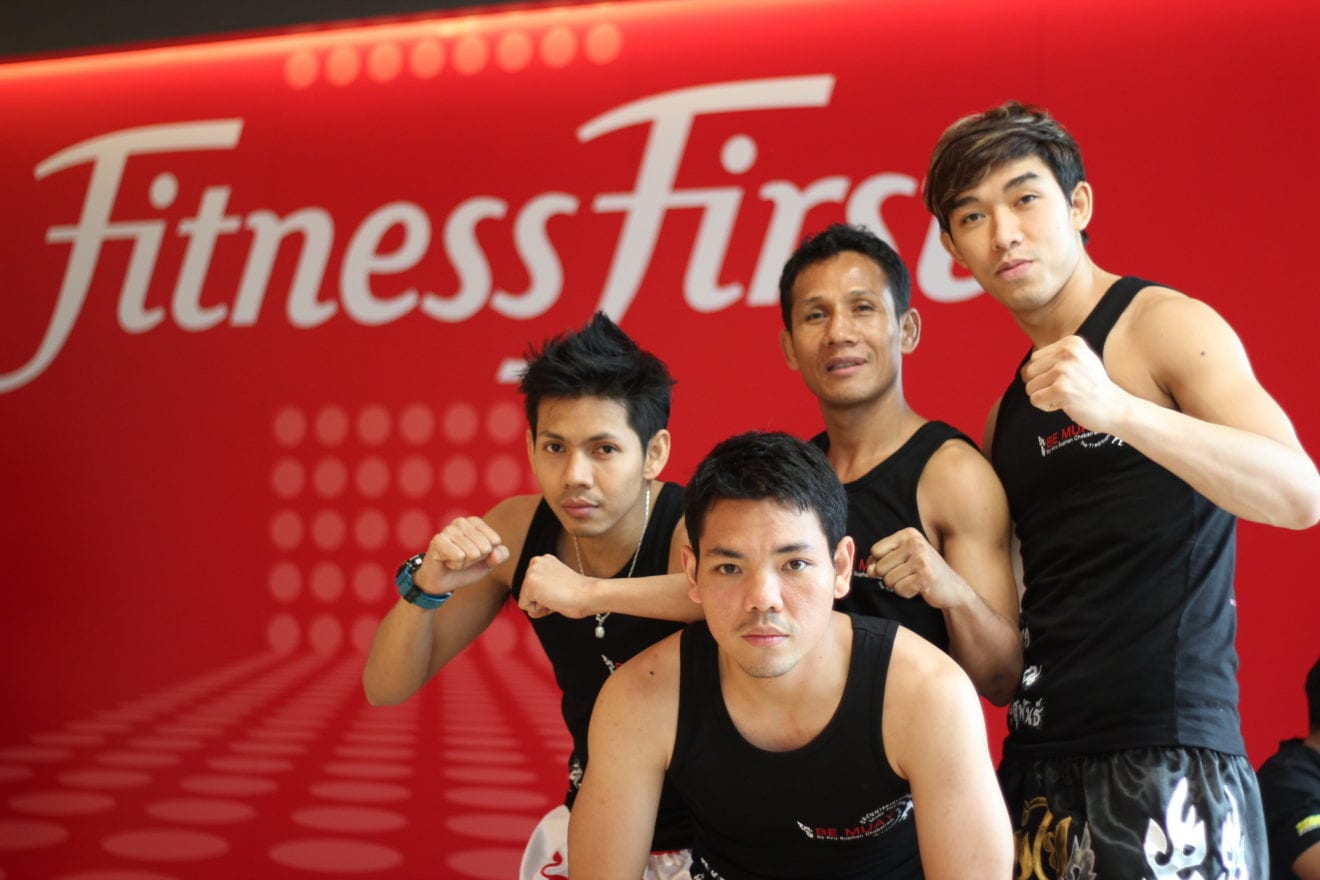
    The UK-based chain operates 27 gyms, or ‘fitness clubs’ in Thailand already, part of a broad international network.

    The new gyms will be opened in at Crystal SB mall on Ratchaphruek Rd, AIA Capital Center, CentralPlaza Rama 2 and Crystal Park.

    In an interview with the Bangkok Post newspaper, Fitness First Thailand MD Mark Buchanan said the company would invest 1 billion baht (US$30.8 million) in opening the new stores and in developing a new digital communication tool to improve engagement with its membership base.

    He said the fitness industry was showing positive signs of growth in a subdued Thai economy.

    “Health-related businesses still have huge room to grow, because Thais are more health-conscious,” he said.

    Fitness First Thailand’s turnover grew by about 10 per cent in 2014 and it now has 66,000 members across Thailand.

    The Bangkok Post reports the the Thai fitness industry is worth US$155 million annually, with 200,000 people belonging to 480 gym operators across the nation.

  • Gelatissimo seeks new Malaysian partner

    Gelatissimo seeks new Malaysian partner

    Australian gelato chain Gelatissimo is searching for a new franchise partner in Malaysia – but says its expansion strategy in Asia and beyond remains on track.

    Gelatissimo’s sole store in Malaysia, at The Gardens mall in Mid Valley, closed late last year after the partnership proved less than successful, but Carlos Antonius, the company’s international franchise development manager, says it remains committed to Malaysia.

    “We are currently in the market for a new franchise partner to capitalise on the brand equity already developed in Malaysia,” he told InsideRetail.Asia by email.

    Meanwhile, Gelatissimo operates successfully in international markets of Singapore, the Kingdom of Saudi Arabia, Kuwait and the Philippines.

    “We are working collaboratively with our existing franchise partners to further develop our presence in these markets and are continually reviewing all aspects of our operations to drive the business forward,” said Antonius.

    “At the same time we are investigating additional market entry options into South East Asia and the Americas.”

    Gelatissimo launched in Australia with a concept store in 2002 and after quickly finding favour with customers, commenced franchising two years later.

  • TWG success: like selling ice to Eskimos

    TWG success: like selling ice to Eskimos

    In just seven years, Singapore tea house chain TWG has expanded from a single cafe to a network of 44 spanning 15 countries. From three employees to 3000.

    In an interview with Channel NewsAsia for its Women at the Top series, TWG co-founder Maranda Barnes described her success as akin to selling ice to Eskimos: last year the company opened its first store in China, the world’s most populous nation of tea drinkers.

    Barnes had a background in luxury retailing prior to founding TWG, experience working with fragrances and high-end fashion brands preparing her well for marketing upmarket teas.

    “I knew about luxury packaging,” she told ChannelNews Asia. “I knew how you are supposed to talk about luxury products, how important the ceremony was and these small little details.”

    But she says it was still a challenge tackling Asian markets.

    “In the beginning, it was a bit of a scary challenge because it was like selling ice to the Eskimos. Here we are, coming from overseas to sell a product to Asia and the Asians are the connoisseurs of tea. But at the same time, I sometimes feel like it takes a foreigner to see the value and the beauty in a product that has become very mundane.”