Author: Mei Ling Tan

  • Revolut Business Aims to Double Swiss Client Base, Says Chief Executive

    Revolut Business Aims to Double Swiss Client Base, Says Chief Executive

    Currently boasting around 10,000 corporate customers in Switzerland, Revolut Business is making a significant impact across the landscape of local enterprises. They cater to a diverse clientele ranging from solo entrepreneurs to established international corporations. The sweet spot for their core clients typically falls within small to medium-sized businesses, housing between five to fifty employees and experiencing an annual turnover of one to ten million. These Swiss companies often have cross-border operations, whether importing from Europe or exporting to the UK, leveraging Revolut’s services to manage foreign currency transactions and global payments. About half of global users consider Revolut their primary business banking account, a figure that holds strong, albeit slightly lower, in Switzerland.

    Understanding Swiss Business Dynamics

    While approximately 40 percent of Swiss businesses utilize Revolut as their primary account, it is evident that the platform is more than just a tool for occasional international payments. With plans for accelerated growth, Revolut’s expansive offerings are set to become even more attractive, especially with an already impressive traction in the region.

    What Fuels Growth?

    The rise in popularity can be credited to several distinct factors. First and foremost, Revolut presents an all-in-one solution, encapsulating everything businesses need in a single, user-friendly web and mobile interface. The onboarding process is surprisingly quick and straightforward, allowing companies to manage their finances with ease. Spending controls add an extra layer of security, enabling businesses to set limits and define approval protocols for corporate expenditures, key for advertising and day-to-day expenses. Of course, the ability to execute transactions in over 30 currencies at interbank rates serves as a significant lure, especially attractive to Swiss SMEs engaged in European trade.

    A Currency-Forward Thinking Strategy

    Revolut maintains its competitive edge not just in its functionalities but also in its continuous adaptation to customer needs. Recently, it launched access to foreign currency money market funds—ideal for businesses looking to optimize cash management rather than leaving funds idle. While holding investments in foreign currencies may not appeal to everyone, adoption has been swift—especially among startups with USD funding and companies operating in foreign markets. They are keenly aware that a forthcoming launch of local savings options in Swiss francs will broaden appeal even further.

    Upcoming Innovations for Swiss Market

    Looking ahead, Revolut is poised to introduce three exciting offerings in Switzerland. A Euro-denominated savings account, traditional cash savings options, and merchant solutions that enable businesses to accept card payments—complete with physical terminals. Most notably, the FX Forwards product will allow Swiss companies to lock in future exchange rates, catering to a market rife with cross-border trading.

    Seizing Market Share

    With a keen eye on the competitive landscape dominated by established giants like Worldline, Revolut’s strategy focuses on delivering superior technology and pricing. The integration of multiple services on one platform eliminates the need for separate accounts and enables businesses to manage finances seamlessly. Their recent push into active marketing, backed by a growing sales team, highlights their commitment to gaining traction in the Swiss market where approximately 10 percent of the population already uses the Revolut app.

    A Bold Target Ahead

    As the company sets its sights on ambitious growth for 2023 and beyond, General Manager James Gibson is aiming for a 100 percent year-on-year expansion. Doubling their base of business customers in Switzerland within the next year is the goal—an aspiration that promises to reinvigorate the local financial services landscape.

    Questions & Answers

    What is the current focus for Revolut Business in Switzerland? The immediate focus is on expanding our product offerings, including launching a Euro-denominated savings account and merchant payment solutions.

    How does Revolut plan to differentiate itself from competitors in the Swiss market? By providing a fully integrated platform that is user-friendly and competitively priced, we aim to streamline financial management for our customers.

    What does Revolut foresee for its expansion in Switzerland? We anticipate significant growth, aiming to double our Swiss client base within the next 12 months as we invest more resources into the local market.


  • Dollar Gains Ground Against Dong in Latest Currency Exchange Update

    Dollar Gains Ground Against Dong in Latest Currency Exchange Update

    The U.S. dollar experienced a slight uptick against the Vietnamese dong on Thursday morning, but faced declines when matched against various major currencies.

    Vietcombank Adjusts Rates

    In an intriguing shift, Vietcombank increased its dollar exchange rate by 0.04%, setting it at VND 26,150. Meanwhile, the State Bank of Vietnam took a different approach, reducing its reference rate by 0.03% to VND 24,955. On the black market, the dollar saw a 0.19% drop, marking a noteworthy twist in the ongoing currency dynamics. Despite these fluctuations, the greenback has seen a rise of 2.34% against the dong since the beginning of the year.

    Global Concerns Weigh on the Dollar

    Internationally, the U.S. dollar faced headwinds driven by fiscal uncertainties and a lackluster Treasury bond auction, causing it to hit a two-week low against the yen. According to reports, President Donald Trump was making an attempt to shepherd his ambitious spending and tax-cut proposal through Congress. As a result, the dollar dipped to 143.27 yen, its lowest since May 7. In the European currency market, the euro remained stable at $1.1330 following a 0.4% rise on Wednesday, marking a third consecutive day of gains.

    Bitcoin and Gold Shine

    In the world of alternative investments, Bitcoin soared to a new all-time high on Thursday, capturing the attention of investors seeking options beyond U.S. assets. Gold also enjoyed a boost, hitting an almost two-week peak of $3,325.79—just $175 shy of its record high from April. It seems that, in a world rife with uncertainties, some assets just know how to dazzle!

    Questions & Answers

    What sparked the rise in the dollar against the Vietnamese dong?
    Vietcombank’s increase of its exchange rate contributed to the dollar’s rise, despite mixed signals from the State Bank of Vietnam.

    How did the dollar perform in global markets?
    While it rose against the dong, the dollar struggled against major currencies, dropping to a two-week low against the yen.

    What trends did Bitcoin and gold exhibit recently?
    Bitcoin reached an all-time high as investors sought alternatives to the dollar, while gold climbed to nearly a two-week high, heightening its appeal in this uncertain financial landscape.

  • Vietnam’s Gold Prices Rise as Global Markets Surge

    Vietnam’s Gold Prices Rise as Global Markets Surge

    A subtle shift in the gold market has been observed in Vietnam as local prices edged upwards on Thursday morning, coinciding with a significant uptick in global bullion values. This rise comes as gold reached its highest point in two weeks, enticing investors to seek refuge in this precious metal amid growing economic uncertainties.

    Local Gold Market Response

    In Hanoi, gold bars from the Saigon Jewelry Company saw a modest increase of 0.57%, bringing the price to VND121.3 million (approximately US$4,668.98) per tael, which is equivalent to 37.5 grams or 1.2 ounces. Gold rings also experienced a rise, climbing 0.43% to VND115.5 million per tael.

    Global Factors at Play

    On the international stage, gold prices surged to a two-week high as investors gravitated towards this safe-haven asset in light of escalating concerns regarding the burgeoning debt of the U.S. government and tepid demand for 20-year Treasury bonds. This scenario increasingly reflects a diminished appetite for U.S. assets. As reported, spot gold climbed 0.8% to $3,340.53 an ounce, marking its highest level since May 9.

    The U.S. dollar remains weak, hovering near a two-week low reached in the previous trading session. This trend has made dollar-priced gold more affordable for investors holding foreign currencies. “Gold’s bullish reversal is supported by a weaker U.S. dollar and lingering stagflation risks in the U.S. economy,” observed Kelvin Wong, senior market analyst for Asia Pacific at OANDA.

    As the global gold market fluctuates, one can’t help but wonder if this precious metal will soon become the star of the economic show!

    Questions & Answers

    What caused the recent rise in gold prices in Vietnam?
    The rise in Vietnam’s gold prices is attributed to a surge in global bullion values, driven by investor concerns about the U.S. government’s growing debt and soft demand for Treasury bonds.

    How much did the gold price increase at the Saigon Jewelry Company?
    Gold bars at the Saigon Jewelry Company increased by 0.57%, with prices reaching VND121.3 million per tael.

    What external factors are influencing gold prices globally?
    A weaker U.S. dollar and concerns over stagflation in the U.S. economy are key factors contributing to the recent bullish trend in global gold prices.

  • PM Seeks PowerChina’s Expertise to Boost Railway Industry Growth

    PM Seeks PowerChina’s Expertise to Boost Railway Industry Growth

    During a recent reception in Hanoi on May 21, Vietnamese Prime Minister Pham Minh Chinh met with Zhou Jiayi, President of PowerChina Asia Pacific, to discuss exciting prospects for collaboration on the Hai Phong – Hanoi – Lao Cai railway line. This key transport corridor aims to connect with China’s bustling cities of Kunming and Chongqing, opening avenues to European markets and beyond.

    Vietnam’s strategic focus on transport, energy, and digital transformation infrastructure bolsters this initiative, especially in enhancing rail connectivity with China. PM Chinh enthusiastically welcomed PowerChina’s collaboration with local partners, emphasizing the importance of expanding business ventures in Vietnam’s railway sector. He acknowledged China’s longstanding partnership with Vietnam, highlighting that many joint projects have yielded substantial benefits.

    To further invigorate railway infrastructure, Vietnam is keen on inviting reputable Chinese corporations to invest, starting with the Lao Cai – Hanoi – Hai Phong line. The Prime Minister encouraged PowerChina to forge close ties with Vietnam, aiming to develop the railway industry through technology transfer, workforce training, and operational support.

    He also spotlighted recent resolutions aimed at propelling science, technology, innovation, and private sector development, which create a conducive investment climate. Beyond infrastructure, PM Chinh urged PowerChina to incorporate Vietnamese companies into its global supply chain and share clean energy technologies with local giants like Viettel and the Vietnam National Industry – Energy Group for wind turbine and solar panel projects. “The more the merrier!” he seemed to imply about the integration of local firms into broader projects.

    Looking to the future, the Prime Minister conveyed his hope that PowerChina would use Vietnam as a launchpad to solidify its presence in Southeast Asia and beyond. Reiterating Vietnam’s commitment to aligning interests and sharing risks, he assured that the Vietnamese government stands ready to support and protect the rights of foreign investors, including PowerChina, to guarantee effective and law-abiding projects that yield mutual benefits.

    Zhou Jiayi shared PowerChina’s excitement about Vietnam’s rail initiatives, drawing upon the company’s experience in constructing over 2,000 kilometers of railways across China, Laos, and Indonesia. He suggested that government backing could facilitate cooperation with four Vietnamese firms on the Lao Cai-Hanoi-Hai Phong line, promising timely, quality, and cost-efficient construction, alongside the sharing of technical expertise.

    As the world’s seventh-largest energy contractor, PowerChina operates in more than 130 countries, with 2024 revenue projected to surpass $100 billion, making its mark among the top 500 companies globally. With a dynamic portfolio spanning hydropower, irrigation, urban infrastructure, and digitalization, PowerChina has been actively contributing to Vietnam’s energy and infrastructure landscape since the early 2000s, participating in over 100 projects, including seaports.

    In 2024, PowerChina signed a memorandum of understanding with four Vietnamese firms—FECON JSC, Lung Lo Construction Corporation, Song Da Corporation JSC, and Thang Long Joint Stock Corporation—to create the CVRail Consortium, all geared toward nationally significant railway ventures. The consortium’s projected revenue for 2024 stands around VND22 trillion, or approximately $880 million. Imagine what they could achieve if everyone brought their A-game!

    Questions & Answers

    What railway project is Vietnam focusing on with PowerChina?
    Vietnam is concentrating on the Hai Phong – Hanoi – Lao Cai railway line, designed to connect with China’s Kunming and Chongqing.

    What benefits does Vietnam expect from PowerChina’s involvement?
    Vietnam anticipates enhanced railway infrastructure, technology transfer, workforce training, and operational support, fostering economic growth and connectivity.

    What is the CVRail Consortium?
    The CVRail Consortium is a partnership formed by PowerChina and four Vietnamese firms, aimed at advancing significant railway projects in Vietnam, with projected revenues of approximately $880 million for 2024.

  • PM Kicks Off $1.5B Trump Organization Hotel and Golf Project in Northern Vietnam

    PM Kicks Off $1.5B Trump Organization Hotel and Golf Project in Northern Vietnam

    The exciting development known as Trump International Hung Yen is set to transform over 990 hectares along the scenic Red River, encompassing seven communes in Khoai Chau District. This ambitious project will feature four distinct subzones, including a luxurious eco-residential area with a golf course for 3,500 residents, another eco-residential community with an ecological golf course for 1,800 residents, a bustling commercial and service urban zone designed to accommodate 29,700 residents, and vibrant green spaces featuring themed parks.

    With a whopping investment of nearly VND 40 trillion (over $1.5 billion), this project is on track for completion by the second quarter of 2029 and will operate under a 50-year license. The vision behind this endeavor is to unleash the full potential of the local area, leveraging its strategic position along the Red River tourism corridor that links Hung Yen with Hanoi and the broader northern region.

    Trump International Hung Yen marks a significant moment for Vietnam, positioning the country firmly on the global luxury real estate and resort stage. It symbolizes a robust confidence from international markets in Vietnam’s long-term potential in the high-end property sector while serving as a beacon of ambition and integration for both Hung Yen and Vietnam as a whole.

    During a recent groundbreaking ceremony, Prime Minister Chinh emphasized that this project showcases the faith foreign investors have in Vietnam—particularly American firms. Giants like Intel, Nike, Apple, Boeing, and Nvidia have ramped up their investments in the country, reflecting a broader confidence in Vietnam’s growth trajectory.

    This project promises to not only accelerate Hung Yen’s development but also enhance its international reputation. It is expected to introduce advanced management technologies, create job opportunities for local communities, and bolster the enduring relationship between Vietnam and the United States.

    Chinh directed relevant ministries and agencies to offer robust support to Hung Yen authorities and investors, aiming for a timely completion within two years, just in time for Vietnam to host the APEC 2027 Economic Leaders’ Week. He noted that elevating Hung Yen’s service industry would significantly deepen the Vietnam-U.S. partnership.

    The Prime Minister’s speech recalled U.S. President Donald Trump’s visits to Vietnam during his first term, which were met with warm enthusiasm from the Vietnamese people, reinforcing the strategic importance of their mutual relationship in fostering regional and global stability and growth.

    Acknowledging that the groundbreaking is merely the first step, Chinh pointed out the challenges ahead regarding land clearance and construction. He called on all stakeholders to work collaboratively to overcome obstacles and ensure both progress and quality.

    In a nod to the local community, he expressed gratitude to residents who have made sacrifices for the project’s success, urging continued support. He insisted that local authorities and investors safeguard people’s livelihoods and ensure resettlement areas offer enhanced living conditions.

    PM Chinh praised Hung Yen, historically known as Pho Hien, as a region of great cultural heritage and revolutionary spirit, once a thriving trading port second only to the capital. He expressed confidence in Hung Yen’s ability to leverage its rich legacy to achieve rapid progress across all sectors, aligning with the nation’s vision for a new era of growth.

    Dang Thanh Tam, Chairman of the Kinh Bac City Development Holding Corporation, assured that local contractors and partners would swiftly advance the project, aiming for completion within two years for the Trump Organization to take over its management. Eric Trump, Executive Vice President of the Trump Organization, echoed his enthusiasm for investing in one of the world’s most dynamic markets, emphasizing that this endeavor represents not just a notable project but a tribute to Vietnamese culture and a meaningful contribution to the future.

    The Chairman of the Hung Yen provincial People’s Committee, Tran Quoc Van, welcomed the Trump Organization’s investment, committing to facilitating land clearance, handling administrative processes efficiently, and collaborating closely with investors to swiftly tackle any issues that may arise.

    Questions & Answers

    What is the main purpose of the Trump International Hung Yen project?
    The project aims to unlock the area’s potential and promote economic growth, particularly by developing luxury residential spaces and enhancing the local tourism corridor.

    What is the expected completion date for this massive development?
    The project is scheduled for completion by the second quarter of 2029, with a targeted two-year timeline for key phases leading up to the APEC 2027 Economic Leaders’ Week.

    How does this project impact local residents?
    The project is expected to create job opportunities, enhance management technologies, and ensure the resettlement areas offer improved living conditions for those affected.

  • Vietnam’s Thriving Event Industry Unveils New Opportunities for Young Talent

    Vietnam’s Thriving Event Industry Unveils New Opportunities for Young Talent

    Vietnam’s cultural landscape took enormous strides in 2024, marked by a burgeoning entertainment scene that has revved up job creation and opened doors for aspiring young professionals. With domestic entertainment gaining traction and audiences enthusiastically responding, both the public and private sectors are waking up to the industry’s vast potential.

    Major Events Make Waves

    This year has been nothing short of spectacular, with blockbuster reality shows and sensational music concerts like Anh Trai Vuot Ngan Chong Gai, Anh Trai Say Hi, and Ha Anh Tuan’s performances drawing massive crowds and generating substantial revenue, amounting to billions of dong.

    Highlighting the excitement, two BlackPink concerts held in July 2023 at My Dinh Stadium in Hanoi raked in an impressive US$13.7 million, providing a significant tourism boost to Hanoi during those lively nights.

    Cultural Revival Through Festivals

    In 2024, Vietnam hosted over 50 major and minor music events showcasing both international sensations and homegrown talents, with turnout numbers often soaring between 30,000 and 40,000. As we step into early 2025, this upward trend shows no signs of wavering, emphasizing the Vietnamese music industry’s bright future.

    But music is just part of the picture—2024 also shone with vibrant cultural and historical festivals, celebrating Vietnam’s rich heritage and arts.

    Global Economic Impact of Live Music

    On a global scale, the cultural sector stands as a formidable economic force. Research from Custom Market Insights reveals that the live music market reached an impressive $34.84 billion in 2024, on a trajectory to hit $62.59 billion by 2034, with a promising annual growth rate of 8.78% between 2025 and 2034.

    Engaging the Young Workforce

    Generation Z and Millennials are at the forefront of this cultural boom, with around 60% willing to spend on live experiences. The revival of in-person events reveals a growing appetite for real-world connections, transforming Vietnam and other Asian countries into magnets for international events, conferences, and large-scale exhibitions.

    This evolving landscape introduces innovative formats, including hybrid and virtual events, creating exciting career opportunities in management, promotion, and support roles—a beacon of hope for students eager to dive into this vibrant industry.

    In response to this surge, British University Vietnam (BUV) is set to offer a bachelor’s degree in events management, conferred by Bournemouth University, in 2025.

    Proudly ranked among the top 100 universities worldwide and third in the UK according to the Times Higher Education (THE) Young University Rankings 2024, Bournemouth University’s Hospitality and Leisure Management programs are celebrated, landing in the top 20 globally as per QS World University Rankings 2024.

    Career Prospects in Events Management

    Graduates of this progressive program will find themselves equipped for roles spanning from Conference and Events Manager to Planner and Coordinator, including the ever-bustling weddings and MICE (Meetings, Incentives, Conferences, and Exhibitions) sectors. The rigorous three-year curriculum emphasizes practical skill development in event management. Students emerge with a robust foundation in event design, project management, consumer behavior, finance, and logistics.

    The hands-on approach combines classroom learning with real-life event organization, as students intern with prominent partners like Intercontinental, Sheraton, FPT, Movenpick Hotel & Resort, and Thanh Viet Production.

    BUV boasts a comprehensive curriculum and strong industry connections, positioning students to secure fulfilling employment shortly after graduation. Being Vietnam’s first QS 5-star university and the first in the region accredited by the U.K.’s Quality Assurance Agency (QAA), BUV ensures that its programs are future-ready, achieving an impressive 100% employability rate within three months of graduation.

    Questions & Answers

    What are the major achievements in Vietnam’s cultural sector in 2024? The sector has seen a surge in domestic entertainment popularity, hosting over 50 major events that attracted huge audiences and revenue.

    How is the live music market expected to grow in the coming years? It is projected to expand from approximately $34.84 billion in 2024 to $62.59 billion by 2034 at a compound annual growth rate of 8.78%.

    What opportunities does BUV offer to students interested in events management? BUV provides a bachelor’s degree in events management with a focus on practical skills and industry connections, ensuring high employability for graduates.

  • Bitcoin Price Reaches Record High: Discover The 3 Key Factors!

    Bitcoin Price Reaches Record High: Discover The 3 Key Factors!

    Today the Bitcoin course reached a spectacular milestone: a new all-time high of $109.760! This is not just any number, but a pivotal moment for the world’s largest cryptocurrency, which is increasingly being embraced by both institutional and traditional financial institutions. What is driving this impressive rise? Let’s take a look at the underlying factors.

    Why did the Bitcoin price rise so much?

    The recent rise in Bitcoin price is due to a combination of factors that are boosting confidence in Bitcoin. Let’s take a look at some of these key elements:

    Showing increasing institutional acceptance

    Bitcoin’s acceptance by traditional financial institutions is growing day by day. Forward-thinking names like JPMorgan are opening the door to Bitcoin investments. In addition, we are seeing Bitcoin increasingly being included in global reserves. This strengthens Bitcoin’s position as a reliable part of the modern financial system. Who would have thought that the digital currency would come this far?

    Bitcoin ETF Inflows

    Institutional investors continue to flock to Bitcoin ETFs despite the market’s volatility. These significant inflows are a clear sign of growing confidence in the long-term stability of digital assets. Moreover, ETFs make it easier for large investors to gain exposure to Bitcoin. Who wouldn’t want to benefit from this dynamic?

    Political Support Through the GENIUS Act

    Another major catalyst for positive market sentiment is the recent vote in the U.S. Senate on the GENIUS Act. This bill, which promotes innovation in digital technologies and crypto supports, received 69 votes in favor and 31 against. The ruling was greeted with enthusiasm by investors, who see it as a sign that Washington is finally taking constructive steps toward clear crypto legislation. This has further fueled optimism around the future role of Bitcoin and other digital assets in the financial sector.

    “Who knows what the future holds, but one thing is for sure: the opportunities in crypto are limitless!” With the current developments, now is the time to explore the possibilities of Bitcoin and other digital assets. The dynamics in the market are changing at a rapid pace, and those who seize the opportunity to be part of this revolution may well reap the rewards of their efforts. Are you already on the sidelines, or are you ready to take the plunge?

    Frequently Asked Questions

    What are the main reasons for the recent rise in Bitcoin price?
    The rise is due to increasing institutional adoption, massive inflows into Bitcoin ETFs, and political support through the GENIUS Act, which paves the way for positive regulation.

    What are ETFs and Why are they Important for Bitcoin?
    ETFs are investment funds that track the price of Bitcoin. They are important because they make it easier for institutional investors to invest in Bitcoin, which leads to more stability and confidence in the market.

    What does the GENIUS Act mean for the future of crypto?
    The GENIUS Act could lead to clear regulations for crypto, increasing trust in the market and fostering innovation in digital technologies. This could form the basis for further integration of crypto into the financial system.

  • Swiss Fintechs Unveil Streamlined Access to Institutional Crypto Investment Solutions

    Swiss Fintechs Unveil Streamlined Access to Institutional Crypto Investment Solutions

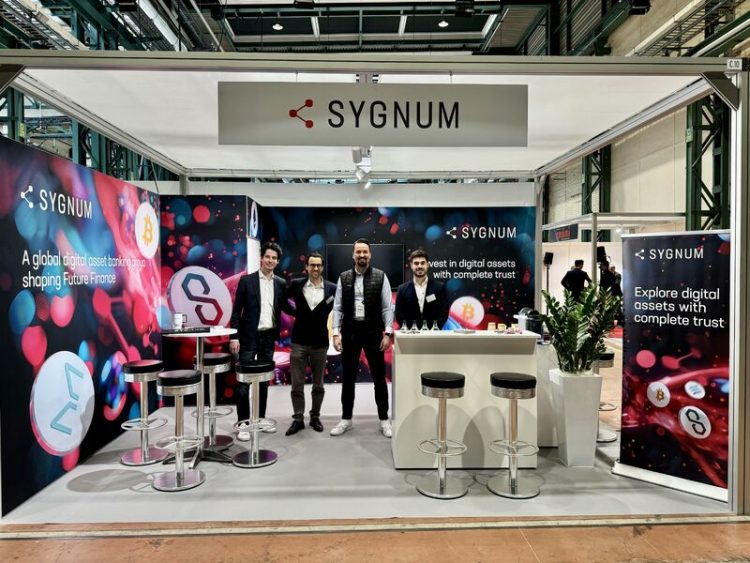
    In an exciting collaboration, Swiss crypto specialist Sygnum Bank and Zurich-based fintech GenTwo are streamlining the process for institutions looking to launch crypto investment strategies. Announced on Thursday, this new partnership significantly simplifies the pathway for financial institutions to introduce crypto products to the market, ensuring speed and minimizing friction.

    Innovative Offering for Institutions

    The joint offering beautifully intertwines GenTwo’s asset securitization platform, designed for Actively Managed Certificates (AMCs), with Sygnum’s robust crypto infrastructure. This powerful combination allows the swift creation of diverse products, including token baskets, staking portfolios, and crypto yield strategies—all without the constraints of traditional fund structures, onboarding delays, or the need for fiat transactions.

    Tailored Use Cases for Diverse Needs

    This initiative specifically targets institutional investors and intermediaries such as banks, asset managers, and family offices. Potential use cases are as creative as they are practical, including Bitcoin and Ether income portfolios, thematic investments in Web3, and daily net asset value (NAV) staking baskets. It also paves the way for banking institutions to dip their toes into crypto strategies without fully committing to large-scale fund structures.

    Unlocking Digital Asset Growth

    Philippe A. Naegeli, co-founder and CEO of GenTwo, expressed his enthusiasm, stating, “This is about unlocking the next chapter of digital asset growth. We’ve built the infrastructure needed for institutions to innovate with reduced operational friction, from front to back.” Meanwhile, Sygnum’s Chief Product Officer Dominic Lohberger emphasized that this collaboration merges Sygnum’s regulated digital asset offerings with GenTwo’s agile structuring platform. He also noted the significant reduction in counterparty risk through the innovative Sygnum Protect and the option for in-kind crypto subscriptions.

    With this partnership, the crypto landscape is not just evolving; it’s doing a little dance! Will we see financial institutions break out in dance over cryptocurrency, too?

    Questions & Answers

    What is the goal of the Sygnum and GenTwo partnership?
    The partnership aims to make it faster and easier for institutions to launch crypto investment products, thus unlocking the potential for digital asset growth.

    What types of products can institutions create through this new offering?
    Institutions can develop a range of products such as token baskets, staking portfolios, and crypto yield strategies without relying on traditional fund structures.

    Who is the target audience for this initiative?
    This initiative is specifically designed for institutional investors and intermediaries, including banks, asset managers, and family offices, looking to venture into the crypto space.

  • Levi Strauss Sells Dockers to Authentic Brands Group in a Deal Worth Up to $391 Million

    Levi Strauss Sells Dockers to Authentic Brands Group in a Deal Worth Up to $391 Million

    Levi Strauss & Co. has made headlines with its recent decision to sell its Dockers brand to Authentic Brands Group in a deal that could total up to $391 million. The initial segment of this transaction is valued at $311 million, with an additional $80 million hinging on future performance-based earnouts.

    This strategic move is part of Levi’s commitment to refocus its efforts on its core Levi’s® brand. The company is also looking to enhance its direct-to-consumer initiatives, expand internationally, and invest further in women’s and denim lifestyle categories. It’s a bold leap, shedding baggage to soar towards new horizons.

    The sale is anticipated to unfold in two stages: the U.S. and Canada transactions are expected to conclude by July 31, 2025, while the global deal will wrap up by January 31, 2026. As part of the transition, Levi’s has pledged its assistance to ensure a smooth handover, and plans to channel $100 million of the proceeds back to shareholders through stock buybacks. Talk about leaving the nest with a little extra cash!

    BofA Securities provided advisory services for Levi’s, while legal counsel was handled by Cleary Gottlieb Steen & Hamilton LLP.

    Questions & Answers

    What is the total value of the deal between Levi Strauss & Co. and Authentic Brands Group?
    The initial transaction is valued at $311 million, with potential additional earnouts bringing it up to $391 million.

    When are the expected closing dates for the sale?
    The U.S. and Canada deal is set to close by July 31, 2025, while the global transaction will be completed by January 31, 2026.

    How will Levi’s utilize the proceeds from the sale?
    Levi’s plans to return $100 million of the proceeds to shareholders through stock buybacks.

  • Eighty Percent of Consumers Embrace AI Search for Everyday Information Needs

    Eighty Percent of Consumers Embrace AI Search for Everyday Information Needs

    The landscape of online search is undergoing a seismic shift. According to a recent report from Bain & Company, strikingly, about 60% of searches now conclude without a single click. This statistic reflects a growing reliance on AI-generated results, with approximately 80% of consumers turning to these automated answers for at least 40% of their queries. As a consequence, organic web traffic has plummeted by an estimated 15% to 25%, throwing traditional digital marketing strategies into disarray.

    AI Takes Center Stage

    Generative AI is transforming how users interact with search results. Rather than sifting through numerous pages, many find their questions answered directly on search engines, reducing the incentive to click through to external sites. This trend persists even among those who remain cautious about AI’s capabilities.

    Embracing Change in Consumer Behavior

    The shift is notable: approximately 68% of users now rely on large language models (LLMs), such as AI chatbots, for tasks ranging from research to seeking shopping advice. About 48% consult these tools for news and weather updates, while 42% use them for purchase recommendations. Natasha Sommerfeld, a partner at Bain, emphasizes the necessity for brands to adapt: “Traditional SEO is no longer sufficient. Brands must evolve or risk losing visibility in their customer journey and control over their brand positioning in a world where clicks are disappearing.”

    Strategies for the New Era

    To navigate this new reality, marketers are urged to optimize their content for AI crawlability by focusing on semantic search and high-intent, long-tail keywords. Diversifying content formats by integrating video and interactive elements is also key to capturing attention in AI-dominated search landscapes. Furthermore, brands must redefine success metrics; instead of focusing solely on click-through rates, they should measure search impressions, AI reach, and overall influence, moving beyond the narrow lens of direct conversions.

    It seems in the era of AI, even clicks are taking a backseat—talk about a change in the digital fast lane!

    Questions & Answers

    How is AI impacting online searches?
    AI is reshaping the search landscape, with many queries ending without clicks as users find answers directly on search engines.

    What should brands focus on to adapt to these changes?
    Brands need to optimize their content for AI, embrace diverse content formats, and shift their success metrics beyond traditional click-through rates.

    What percentage of consumers rely on AI for their queries?
    Approximately 80% of consumers now utilize AI-generated results for at least 40% of their search queries.

  • Sygnum vs. Amina: The Thrilling Showdown in the Crypto Banking Landscape!

    Sygnum vs. Amina: The Thrilling Showdown in the Crypto Banking Landscape!

    Back in August 2019, Switzerland made history by granting the world’s first banking licenses to two crypto banks: Sygnum and Amina Bank, which was then known as Seba. With a stellar lineup of investors and advisors backing them from the start, these two players set out to revolutionize the banking landscape.

    Key Players and Their Backing

    Sygnum boasts a roster of influential figures, including former Swiss National Bank Chairman Philipp Hildebrand and ex-UBS CEO Peter Wuffli. Meanwhile, Amina, under the leadership of Guido Bühler, who served as CEO from 2018 to 2022, also received substantial support from seasoned banking veterans like Andreas Amschwand. Today, Julius Bär Group continues to hold a significant 30 percent stake in Amina, with former SNB General Counsel Hans Kuhn on its board since 2019.

    Current Standings

    Fast forward five years, and both Sygnum and Amina have made notable strides but are marching to the beat of their own drums. Sygnum currently employs over double the staff of Amina, reflecting a more extensive operational framework. Ownership dynamics also differ: Sygnum remains largely founder-driven, while Amina is heavily bolstered by institutional support, especially from Julius Baer and Guy Schwarzenbach of Black River Asset Management.

    Performance Metrics

    In the latest results, both banks have seen revenue growth. Amina’s income surged by an impressive 74 percent, while Sygnum’s rose by 37 percent. Interestingly, almost half of Sygnum’s revenue derives from commissions and services offered through its B2B banking platform, which caters to over 20 partner banks, including Swiss state bank Postfinance. In contrast, Amina’s trading income mainly stems from proprietary trading of popular digital assets.

    Cost Management and Financial Health

    While Amina touts progress in cost reduction since its strategic overhaul in 2022, both banks remain well-capitalized. Sygnum reports a CET1 ratio of 17.48 percent, while Amina’s stands at an impressive 34.04 percent, demonstrating robust financial health. However, Sygnum’s advanced technology-centric model sets it apart, achieving EBITDA-positive status and edging closer to breakeven on net income.

    Future Outlook

    Looking ahead, these two pioneering banks are clearly on diverging paths. Sygnum’s investment in proprietary technology has forged a stronghold in the B2B space that Amina may find challenging to penetrate in the near future. While Amina is making strides with private banking clients and crypto-backed loans, its reliance on trading income may pose risks. Management seems conscious of this, turning its gaze toward international expansion and stable income channels.

    As we peer into the future, the stories of Sygnum and Amina continue to unfold. With Sygnum cruising ahead, Amina has its work cut out, navigating a rockier road ahead filled with both challenges and opportunities.

    Questions & Answers

    What significant milestone did Sygnum and Amina achieve in August 2019?
    In August 2019, Sygnum and Amina became the world’s first banks to receive banking licenses for cryptocurrency operations.

    How does Sygnum’s revenue model compare to Amina’s?
    Sygnum’s revenue predominantly comes from commissions and services offered through its B2B banking platform, while Amina mainly generates income through trading digital assets like Bitcoin and Ethereum.

    What key strategy is Amina pursuing to expand its operations?
    Amina is focusing on private banking clients and plans to expand internationally, particularly by leveraging MiCA passporting access to the EEA from Austria.

  • Julius Baer Faces Major Setback in Ambitious Turnaround Efforts

    Julius Baer Faces Major Setback in Ambitious Turnaround Efforts

    Julius Baer, the distinguished Swiss private bank, is facing new challenges as it grapples with additional loan losses and the departure of its Chief Risk Officer.

    Just as it seemed the wealth manager was on a recovery path, Julius Baer encountered another setback. The firm had originally scheduled to report its business performance for the first four months this Thursday, but it opted for an earlier announcement that went out Tuesday evening instead.

    The bank recently took a significant hit from the fallout of René Benko’s Austrian property group, Signa, resulting in a staggering write-off of 586 million francs. This financial turbulence has compelled Julius Baer to announce it will exit private debt lending. However, in Tuesday’s disclosure, the bank noted it has made “significant progress,” with only 200 million francs left in such loans, representing a mere 0.4 percent of its total loan portfolio.

    Leadership Changes Ahead

    As a direct consequence of the recent turmoil, Chief Risk Officer Oliver Bartholet has been relieved of his duties. He will retire effective July 1, 2025, paving the way for Ivan Ivanic, who just joined the bank in February 2025 as Chief Credit Officer, to step into the role. Meanwhile, Christoph Hiestand, Group General Counsel, will temporarily oversee all legal and compliance functions as the bank searches for a new Chief Compliance Officer.

    Currency Challenges Loom

    Amidst these changes, Julius Baer did manage to attract net new money of 4.2 billion francs during the first four months of the year, achieving an annualized growth rate of 2.5 percent. This influx primarily came from clients in Asia, especially Hong Kong and Singapore, as well as Western Europe, including the UK and Germany.

    However, the strong Swiss franc has cast a shadow over the bank’s performance, causing assets under management (AuM) to dip to 467 billion francs—a decline of 6 percent. Julius Baer cited a negative currency effect against the dollar amounting to 28 million francs, underscoring the precarious balance of operating in a volatile foreign exchange market. Who knew currencies could be such fickle friends?

    Questions & Answers

    What led to Julius Baer’s recent financial struggles?
    The bank faced significant losses due to the collapse of René Benko’s Signa property group, which resulted in a 586 million-franc write-off.

    Who will replace Oliver Bartholet as Chief Risk Officer?
    Ivan Ivanic, who joined Julius Baer as Chief Credit Officer in February 2025, will take over as Chief Risk Officer starting July 1, 2025.

    How did the strong Swiss franc impact Julius Baer’s assets?
    The strength of the Swiss franc contributed to a 6 percent decline in assets under management, with a negative currency effect against the dollar of 28 million francs reported.

  • Sun Group Secures Government Approval to Launch Exciting New Airline Venture

    Sun Group Secures Government Approval to Launch Exciting New Airline Venture

    Sun Group, renowned for its breathtaking resorts and amusement parks, has just received the green light for a new airline—Sun PhuQuoc Airways. This dynamic new carrier sets its sights on offering travelers a fresh way to explore Vietnam and beyond, and it’s all set to take off this year.

    Scheduled to Soar

    Sun PhuQuoc Airways will operate on a passenger transport model, merging both scheduled and charter flights that connect vital tourism and financial centers across Vietnam and select international destinations. With an impressive startup capital of VND2.5 trillion (approximately US$96 million), the airline aims to establish a fleet of 31 aircraft by the year 2030.

    The inaugural flight is slated for the fourth quarter of 2025, launching from the popular southern destination of Phu Quoc Island. This new venture promises to make travel more accessible to revered local and international locales, creating even more opportunities for adventure seekers.

    A New Player in the Sky

    Sun Group isn’t a stranger to the aviation sector; it also operates Sun Air, which caters to a luxury clientele with private jet services. Currently, Vietnam boasts six established airlines, including the likes of Vietnam Airlines, Vietjet Air, Bamboo Airways, and a few others. However, it’s worth noting that Pacific Airlines has paused its booking services, directing travelers instead to Vietnam Airlines—a situation ripe for Sun PhuQuoc Airways to swoop in and meet the demand.

    As the skies get a new player, the question remains: will Sun PhuQuoc Airways bring a refreshing twist to the aviation scene in Vietnam? Only time will tell, but for travelers itching to explore new horizons, the future looks bright!

    Questions & Answers

    What kind of flights will Sun PhuQuoc Airways offer?
    It will provide a combination of scheduled and charter flights connecting major tourism and financial hubs both domestically and internationally.

    When is the airline’s first flight scheduled?
    The inaugural flight is set for the fourth quarter of 2025.

    How many aircraft does the airline plan to have by 2030?
    Sun PhuQuoc Airways intends to build a fleet of 31 aircraft by 2030.

  • Bergos Private Bank: Navigating Challenges with a Bold Strategy for Future Growth

    Bergos Private Bank: Navigating Challenges with a Bold Strategy for Future Growth

    Zurich-based private bank Bergos has reported robust results for 2024, showcasing resilience in profit generation amid strategic investments and a notable increase in client assets. As the bank celebrates four years of independence from its former parent, Berenberg, it reported an operating profit of 8.6 million francs, slightly down from the previous year’s 9.7 million francs, as detailed in its recently published annual report.

    Client Assets on the Rise

    Total client assets have risen from 7.5 billion to 7.8 billion francs, marking a positive note despite experiencing a slight net outflow of 354 million francs in new money. Interestingly, the assets under management, excluding custody accounts, increased by 7.5 percent, reaching 6.94 billion francs. This figure notably includes a substantial 405 million francs gained from newly acquired clients. However, the segment did see a decline of 296 million francs in net new money, predominantly due to a singular incident that prompted a significant assets outflow, yet had little impact on the bank’s revenue.

    Investments in Growth

    Operating income saw a decrease of about 13 percent to 8.6 million francs, a situation the bank attributes to deliberate investments aimed at enhancing capabilities. The net income after taxes landed at 6.8 million francs, down from 7.8 million the previous year. Following extensive investments in modern IT systems and the growth of its investment expertise, Bergos aims to bolster its team with further recruitment and development of existing talent.

    Diverse Offerings and Solid Foundations

    Bergos’s capital base remains robust, with a CET1 ratio of 20.3 percent and a leverage ratio of 7.3 percent, far exceeding the regulatory minimum. Its balance sheet stood steady at approximately 581 million francs. Excitingly, Bergos has ventured into the realm of digital finance, recently launching custody solutions for crypto assets in partnership with Sygnum.

    A Focus on Niche Investments

    The bank maintains a commitment to specialized areas, including art advisory, maritime finance, and other entrepreneurial private assets. This focus characterizes its distinctive approach to private banking.

    Entrepreneurial Ownership

    Bergos boasts a significant ownership stake held by Swiss entrepreneurial families. Adrian T. Keller (logistics, DKSH) and Michael Pieper (industrialist, Franke) each account for 24 percent ownership. An additional 10 percent stake is held by the families of Andreas Jacobs, Sylvie Mutschler-von-Specht, and Claus-G. Budelmann, while CEO Peter Raskin owns a further 5 percent.

    With its sights set on continued growth and innovation, Bergos chart a course that could surprise even its most ardent supporters. Who knows? They might soon be turning heads in the art world as well as the banking sector!

    Questions & Answers

    What was Bergos’s operating profit in 2024?
    Operating profit for 2024 was 8.6 million francs, down slightly from the previous year’s 9.7 million francs.

    How much did total client assets increase?
    Total client assets rose from 7.5 billion to 7.8 billion francs despite a slight net outflow of 354 million francs.

    What niche areas is Bergos focusing on for its investments?
    Bergos is concentrating on niche sectors such as art advisory, maritime finance, and various private assets that reflect an entrepreneurial spirit.

  • UBS Set to Launch Vibrant New Office in Abu Dhabi

    UBS Set to Launch Vibrant New Office in Abu Dhabi

    Swiss wealth management powerhouse UBS is gearing up to make a significant move by opening a new office in Abu Dhabi. This expansion, announced at the Qatar Economic Forum in Doha and reported by Bloomberg, underscores the growing allure of the Middle East for high-net-worth individuals. Martin Jimenez, UBS’s EMEA president, revealed that this new venture is fueled by an influx of clients relocating from higher-tax regions, particularly the UK, seeking more favorable financial landscapes.

    The Middle East: A New Haven for Wealth

    According to Jimenez, the Middle East has emerged as a hotspot for private wealth management, capturing the interest of individuals looking for more advantageous tax environments. “The Middle East has definitely been a winner for private individuals that have been moving away from higher-tax regimes,” he shared. “We’ve seen that migration of clients.”

    Expansion Plans in Action

    This new office will join UBS’s existing network in Dubai, Riyadh, Qatar, and Bahrain, marking a strategic push to deepen their footprint in the region. With the surge in interest from affluent clients, UBS aims to provide tailored financial solutions that cater to their evolving needs.

    This expansion also aligns with broader trends as clients look to diversify their investments in a world where economic landscapes are continually shifting. Who would have thought that a sunny economy could become the gravity center of wealth? Time will tell!

    Questions & Answers

    Why is UBS opening a new office in Abu Dhabi? The decision is largely driven by an increase in clients relocating from high-tax regions like the UK, seeking more favorable financial environments.

    What regions does UBS already operate in? UBS currently has established offices in Dubai, Riyadh, Qatar, and Bahrain.

    What does this expansion signify for the Middle East? It highlights the region’s growing importance as a destination for wealth management, reflecting a trend of affluent individuals seeking advantageous tax conditions.