Author: Mei Ling Tan

  • Steady consumer demand helps JD beat quarterly revenue estimates

    Steady consumer demand helps JD beat quarterly revenue estimates

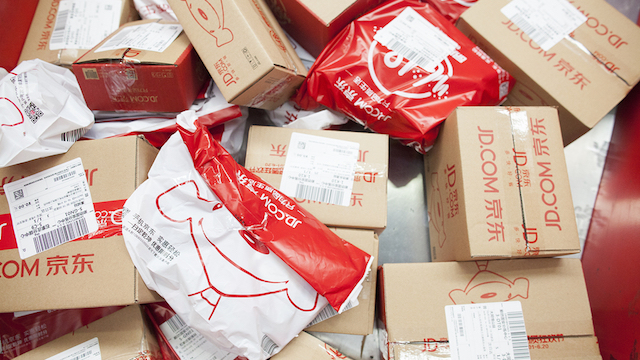
    Chinese e-commerce giant JD exceeded market expectations for its quarterly earnings this Tuesday, reflecting resilient demand despite deteriorating conditions domestically and abroad. This feat indicates steady consumption patterns even amidst the imposition of U.S. tariffs, lingering economic fragility, and a dampened consumer sentiment.

    Over the past few years, consumer demand in China has encountered numerous obstacles. The ongoing crisis in the property sector and high unemployment rates have hindered the country’s full recovery from the Covid-19 pandemic’s impact.

    Nevertheless, e-commerce companies like JD and Alibaba, which is set to report its quarterly results this Thursday, have adopted a proactive approach. They have implemented significant discounts and price reductions on products to attract customers, simultaneously relying on government subsidies to stimulate consumption.

    This strategy has proven beneficial for JD, a leading retailer of home appliances in China, even as consumer sentiment was dented by the trade tensions between the U.S. and China. Additionally, retail sales growth in China accelerated in January and February.

    For the quarter ending on March 31, JD reported a total revenue of 301.08 billion yuan (US$41.82 billion), marking an increase of 15.8% compared to the same period last year. This figure surpassed analysts’ estimate of 289.22 billion yuan.

    Shares of JD listed in the U.S. experienced an approximate 3% upswing in early trading.

    The forthcoming 618 shopping festival, due to take place on June 18, is expected to provide insights into the extent of the country’s consumer demand recovery. This online shopping event, introduced by JD, has been extending in duration over the years. This year, Taobao commenced the 618 pre-sale on Tuesday. Simultaneously, JD, whose official start date for 618 is May 31, launched an event known as the “Heartbeat Shopping Festival.”

    Jacob Cooke, CEO of e-commerce consultancy WPIC Marketing + Technologies, expressed optimism about sales growth during this year’s 618 festival. He cited burgeoning consumer confidence in China, robust retail growth in recent months, and high travel numbers during the May Day and Qingming Festival.

    On Tuesday, the State Administration for Market Regulation, the country’s top market regulator, announced that it has summoned various e-commerce platforms, including JD, Meituan, and Alibaba’s Ele.me. The regulator has urged these platforms to comply with laws and regulations and to maintain fair and orderly competition.

    Although Meituan and Ele.me dominate food delivery services in China, JD’s prominent entry into the sector in February has heightened competition in the industry.

    Questions & Answers

    **What is the significance of JD’s recent quarterly earnings?**
    JD’s recent earnings surpassed market expectations, indicating resilient consumer demand despite various economic challenges. This performance suggests that JD’s strategies to attract customers and stimulate consumption are effective.

    **What is the 618 shopping festival?**
    The 618 shopping festival is an online shopping event in China, initiated by JD. The festival, which takes place on June 18, has increasingly extended in duration over the years. It serves as a barometer to evaluate the recovery of consumer demand in the country.

    **What is the current state of competition in China’s food delivery market?**
    The food delivery market in China is primarily dominated by Meituan and Alibaba’s Ele.me. However, JD’s recent entry into this sector has intensified competition.


  • Aeon eyes eightfold expansion in Vietnam by 2030

    Aeon eyes eightfold expansion in Vietnam by 2030

    Aeon, a renowned Japanese retail conglomerate, has laid out ambitious plans to increase its presence in Vietnam’s retail sector. The group is charting an eightfold expansion of its network of general merchandise stores and large-format supermarkets across Vietnam over the next half a decade, according to a report by Nikkei Asia.

    Current Operations

    Aeon currently manages 12 general merchandise stores in Vietnam, including a trio of “super-supermarkets” – a blended retail model that integrates groceries, food courts, and sections for beauty and household goods. In addition to these, the company also oversees 36 small-format supermarkets, which include Citimart outlets operated by an Aeon subsidiary.

    Yasuki Furusawa, President of Aeon Retail, shared the strategic plans with Nikkei Asia. Furusawa revealed that the company aims to operate 100 general merchandise stores and super-supermarkets, alongside 200 smaller-scale grocery stores by 2030.

    Flagship Store Expansion

    Earlier this year, Aeon inaugurated its latest flagship store, Aeon Xuan Thuy, located in a vibrant district of Hanoi, well-positioned near offices, schools, and a newly installed subway station.

    The four-level building offers a diverse range of products to its customers. The first three floors house a wide array of goods, including food, cosmetics, furniture, and apparel. The third floor also features a spacious dining area that can accommodate up to 450 patrons. Additionally, the store boasts a sizeable prepared foods section, covering 1620 square meters, where customers can choose from a variety of offerings such as sushi, ramen, boxed meals, fried dishes, and baked goods.

    “Family outings to the store, where each member can select what they want, followed by a meal around the table, is a major form of entertainment in Vietnam,” Furusawa mentioned, underscoring the cultural context of their business model.

    Questions & Answers

    What is Aeon’s expansion plan in Vietnam?
    Aeon plans to increase its network of general merchandise stores and large-format supermarkets in Vietnam eightfold over the next five years.

    How many stores does Aeon currently operate in Vietnam?
    Currently, Aeon operates 12 general merchandise stores in Vietnam, including three “super-supermarkets” and 36 small-format supermarkets.

    What does Aeon’s flagship store in Hanoi offer?
    Aeon Xuan Thuy, the flagship store in Hanoi, offers a range of products including food, cosmetics, furniture, and apparel across its first three floors. The third floor also features a 450-seat dining area and a substantial prepared foods section.

  • Randy’s Donuts makes its Japanese debut in Tokyo

    Randy’s Donuts makes its Japanese debut in Tokyo

    Randy’s Donuts, an American doughnut franchise, has recently launched its first outlet in Japan. Nestled in Tokyo’s Log Road Daikanyama shopping center, this marks the brand’s latest international expansion.

    Founded in 1952, Randy’s Donuts has become a recognizable name in the doughnut industry. The brand runs 25 stores across the United States and has made its mark globally, with outlets in South Korea, the Philippines, Saudi Arabia, and Mexico. The Japanese master franchise is managed by Grit International, under the leadership of Tsuyoshi Haga, a former executive at Don Quijote.

    Distinct Packaging Sparks Interest

    Haga revealed that what initially piqued his interest in bringing Randy’s Donuts to Japan was the brand’s unique packaging. He applied the insights he gained throughout his tenure at Don Quijote to create a shopping experience that is as entertaining as it is satisfying.

    “I incorporated the knowledge I gained over the years at Don Quijote about creating a store that provides entertainment into Randy’s Donuts,” Haga explained.

    Doughnut Display and Service

    The store stands out with its large showcase that can display up to 1,000 doughnuts. It features a cashless self-service ordering system and a comfortable dine-in area. Customers can choose from over 40 doughnut varieties, with prices ranging from US$2.45 to $3.74 (JPY360 to 550). The store also offers a selection of beverages, including coffee, lemonade, smoothies, and tapioca drinks.

    Plans for Expansion

    Haga plans to use the Tokyo location as a stepping stone for further expansion across Japan. “We would like to establish a track record with this store and then increase the number of stores across Japan,” he concluded.

    Questions & Answers

    What is the unique feature of Randy’s Donuts’ new store in Tokyo?
    The Tokyo store stands out with a large display that can showcase up to 1,000 doughnuts and a cashless self-service ordering system.

    Who is leading the operations of Randy’s Donuts in Japan?
    The operations of Randy’s Donuts in Japan are led by Tsuyoshi Haga, a former executive at Don Quijote.

    What are the future plans of Randy’s Donuts in Japan?
    Tsuyoshi Haga plans to use the Tokyo location to establish a track record and use it as a foundation for further expansion across Japan.

  • Switzerland’s Wealth Management: Key Insights from U.S. Strategies Revealed

    Switzerland’s Wealth Management: Key Insights from U.S. Strategies Revealed

    A generational shift is on the horizon for Swiss wealth managers, with the U.S. offering valuable insights into how to navigate this evolving landscape. The independent wealth management industry in the U.S. has seen substantial growth over the past few decades, particularly the Registered Investment Advisors (RIA) sector, which has transformed from small boutique firms into scalable platforms. Despite structural differences between the U.S. and Switzerland, opportunities for growth abound in the Swiss market.

    Two Systems with a Shared Mission

    Swiss independent wealth managers (IWMs) often have their roots in private banking, whereas RIAs in the U.S. stem from traditional brokerage firms, or wirehouses. Yet, both aim for a common goal: providing clients with an independent, long-term investment strategy free from corporate biases.

    Both markets are relatively young, with their professionalization beginning around three decades ago. Today, they face similar challenges: sustainable growth, regulatory pressure, client retention through generations, and the pursuit of structured succession planning.

    The U.S. as a Role Model for Entrepreneurial Spirit

    A notable distinction lies in client acquisition strategies. “American advisors had to cultivate their client relationships from scratch, whereas Swiss advisors often began as assistants, gradually inheriting their clients,” explains Fernand Schoppig, CEO of FS Associates, an international consulting firm. This entrepreneurial foundation has significantly influenced the U.S. industry.

    Many Swiss advisors have moved from major banks to independence, which has led to a dependence on existing networks. As a result, American RIAs are typically more marketing-savvy, tech-focused, and inclined to approach innovative techniques—qualities that facilitate scalability. Additionally, they often specialize by targeting specific groups, including entrepreneurial families, healthcare professionals, athletes, or tech innovators.

    Rapid Growth

    Both the U.S. and Switzerland have witnessed swift sector growth, with the U.S. seeing the number of RIAs managing over $1 billion in assets more than doubling in the last seven years. “The rapid expansion of top RIAs is primarily driven by acquisitions funded by private equity. While this strategy is still rare in Switzerland, increasing consolidation suggests that private equity may soon become a player here too, potentially leading to a U.S.-style evolution,” notes Brad Bueermann, CEO of FP Transitions, a firm that aids wealth managers in business valuation and succession.

    Fernand Schoppig (left) and Brad Bueermann highlight the ongoing changes in wealth management.

    Spotlight on Succession Planning

    Succession planning remains a significant challenge in both markets. The U.S. has seen various models emerge, from management buyouts to sales to strategic investors or private equity firms. Switzerland, still at the beginning of this journey, is witnessing a gradual increase in transactions.

    <p“The main challenge remains striking a balance between maintaining client relationships and creating value for owners. This often leads to questions about sourcing capital for internal solutions or finding buyers who uphold the company’s ethos and client connections,” Schoppig adds.

    A Culture of Acquisitions Still Lacking

    Though the Swiss market is smaller and more established, it mirrors the U.S. demographic patterns from around a decade ago, including a significant number of IWM owners over 60. While there isn’t yet a strong culture of acquisitions in Switzerland, the impending wave of retirements could catalyze change,” Bueermann remarks.

    Additionally, the rise of platform providers that consolidate several wealth managers could lead to these entities becoming active acquirers in the future.

    Questions & Answers

    What can Swiss wealth managers learn from their U.S. counterparts? Swiss wealth managers can look to the U.S. for guidance on scaling operations, adopting entrepreneurial spirit, and improving client acquisition strategies.

    How are succession planning challenges similar in both markets? Both Swiss and U.S. wealth managers struggle with balancing continuity in client relationships while creating tangible value for the business owners during succession.

    Is there potential for private equity investment in Switzerland’s wealth management sector? Yes, increasing consolidation among Swiss wealth managers indicates that private equity could soon play a role similar to that seen in the U.S., heralding potential industry shifts.

  • Shopee parent Sea delivers double-digit growth in sales, profit

    Shopee parent Sea delivers double-digit growth in sales, profit

    Sea Limited, the parent company of Shopee, has announced a notable increase in its revenues and profits during the first quarter of the year, indicating a robust start to the financial year.

    Impressive Revenue and Profit Growth

    The company’s revenue for the quarter ending on March 31st skyrocketed by 29.6% to $4.8 billion. Concurrently, gross profits experienced a 43.9% boost, reaching $2.2 billion. This represents a significant turnaround for the company, which reported a net income of $410.8 million as opposed to a loss of $23 million during the same period last year.

    Record Performance by Shopee

    Shopee, Sea’s e-commerce subsidiary, recorded record numbers for both Gross Merchandise Value (GMV) and total volume of orders, which climbed by 21.5% and 20.5% respectively. The subsidiary’s revenue saw a 28.7% increase, amounting to $3.1 billion. This growth was driven by a 39.2% rise in core marketplace revenue and a 4% increase in revenue from value-added services.

    Strong Growth Across All Segments

    Sea also reported robust growth in its digital financial services (Monee) and digital entertainment (Garena) segments. Forrest Li, Chairman and CEO of Sea, expressed satisfaction with the company’s first-quarter performance. “We have delivered another great quarter of strong growth with improving profitability across all three businesses,” Li said. He added: “Our strong start to the year gives us more confidence of achieving our full-year guidance.”

    Questions & Answers

    What was Sea’s revenue for the first quarter?
    Sea reported a revenue of $4.8 billion for the first quarter, marking a 29.6% increase from the same period last year.

    How did Shopee, Sea’s e-commerce subsidiary, perform in the first quarter?
    Shopee registered record figures for both Gross Merchandise Value and total order volume, which rose by 21.5% and 20.5% respectively. The subsidiary’s revenue increased by 28.7%, reaching $3.1 billion.

    Did Sea’s other business segments also perform well?
    Yes, Sea reported strong growth in its digital financial services (Monee) and digital entertainment (Garena) segments in the first quarter.

  • Timely match: G-Shock and Crocs in limited-edition collab

    Timely match: G-Shock and Crocs in limited-edition collab

    G-Shock, the reputable watch brand from Casio, has teamed up with Crocs to introduce the Echo Wave Bundle, a unique footwear range.

    Exclusive Collaboration

    This exclusive partnership has resulted in a cream-hued footwear collection featuring a glow-in-the-dark finish. The innovative shoes are not your average pair, as they are designed with a flexible yet detachable watch module. Taking inspiration from G-Shock’s style, the shoes come with a modular watch case attached to a marbled ankle strap.

    Technical Features

    In addition to its stylish design, the incorporated timepiece offers G-Shock’s signature technical features. These include a 200m water resistance, double LED lights, shock resistance, a stopwatch, a timer, and world time functionality.

    Release Details

    The Crocs x G-Shock Echo Wave Bundle is set to launch on May 27. Available for purchase at a price of US$200, interested buyers can place their orders on Crocs’ official web platform or through selected retailers.

    Questions & Answers

    What is the unique feature of the Crocs x G-Shock Echo Wave Bundle?

    The footwear has a detachable watch module and a modular watch case attached to the ankle strap.

    What are some of the technical features of the timepiece on the Echo Wave Bundle?

    The timepiece offers a 200m water resistance, double LED lights, shock resistance, a stopwatch, a timer, and world time functionality.

    When and where can the Echo Wave Bundle be purchased?

    The product will be available from May 27 on Crocs’ website or at selected retailers.

  • Korean retailers struggle amid sluggish demand

    Korean retailers struggle amid sluggish demand

    The first quarter of 2025 presented significant challenges for the South Korean department store industry due to a notable decrease in domestic consumption. This tough economic climate had a substantial impact on sales and profits. Lotte Department Store was the only major player to announce a significant increase in profits, primarily attributed to its strong overseas operations and internal streamlining.

    Lotte Department Store reported a 44.3% year-on-year increase in its operating profit to 130 billion won in Q1 2025. This growth occurred despite a minor 1.1% drop in revenue, falling to 806.3 billion won. The company attributed this positive development to their aggressive cost-efficiency strategies, including shutting down underperforming stores and reinvesting in flagship locations. Additionally, their international business arm recorded a 6.2% revenue increase, marking its return to profitability.

    In contrast, Lotte’s rivals, Shinsegae and Hyundai Department Store, failed to meet their profit expectations. Shinsegae’s revenue fell by 0.8% to 659 billion won, while its operating profit decreased by 5.1% to 107.9 billion won. Hyundai also experienced a 0.8% decline in sales, falling to 589 billion won, and a 5.7% reduction in operating income to 97.2 billion won.

    This downward trend was linked to a poor performance across almost all product categories due to growing consumer pessimism and colder-than-average winter weather, which adversely affected fashion sales. This is a significant blow considering that fashion typically represents up to 50% of annual department store revenue.

    Challenging Market Conditions

    An industry official said, “Political instability due to emergency rule, increased trade uncertainty stemming from US tariff actions and unpredictable weather have all negatively affected our performance.” This statement reflects the combined impact of domestic and global challenges on the sector.

    On a brighter note, E-Mart, the market leader in the big-box retail sector, reported impressive first-quarter results. The company’s standalone revenue rose 10.1% year-on-year to 4.63 trillion won, while operating profit surged 43.1%, reaching 133.3 billion won. This was its best quarterly performance since 2018.

    Company executives credited this achievement to an increase in foot traffic at both its standard discount stores and warehouse-style Traders locations. This indicates a resurgence in consumer interest in brick-and-mortar shopping, despite the ongoing economic uncertainty.

    In contrast, Lotte Mart reported a modest 0.3% rise in revenue to 1.49 trillion won, while its operating profit fell sharply by 34.8% to 28.1 billion won. Its domestic operating profit, excluding overseas earnings, dropped by a staggering 73.6% from the previous year.

    The Power of Pricing Strategy

    Both E-Mart and Lotte Mart have focused on low-price strategies through centralized purchasing. However, E-Mart’s larger scale has given it a stronger position to pass savings onto consumers. Its aggressive promotions, including the “Price Shock Declaration” and “Great Eat Festa”, were widely credited as contributing to its superior performance.

    An industry official commented, “As integrated purchasing intensifies, the retailer with greater volume naturally holds an advantage in reducing procurement costs.” They predicted a potential promotional war in the second half of the year if Lotte Mart decides to roll out large-scale discounts to regain market share.

    Questions & Answers

    Why did Lotte Department Store outperform its competitors in Q1 2025?
    Answer: Lotte’s strong performance is attributed to its successful international business and aggressive cost-efficiency measures, which included closing underperforming stores and reinvesting in flagship locations.

    How did the weather impact the performance of department stores?
    Answer: An unusually cold winter affected the sales of fashion items, which typically make up to 50% of annual department store revenue.

    What factors contributed to E-Mart’s strong first-quarter performance?
    Answer: E-Mart’s success is credited to both an increase in foot traffic at its stores and aggressive promotions that passed on savings to consumers.

  • HSBC Executive Takes Exciting New Role on SIX Executive Board

    HSBC Executive Takes Exciting New Role on SIX Executive Board

    The Swiss financial market infrastructure operator, SIX, is moving swiftly to bolster its executive team after a series of notable departures. Recently, the company unveiled new leadership appointments, signaling a decisive strategy under the direction of CEO Bjørn Sibbern, who has been steering SIX since November 2024.

    Leadership Transition at SIX

    SIX announced that Tomas Kindler has been appointed as the permanent Head of Exchanges and a Member of the Executive Board, effective June 1. Kindler stepped confidently into this role after serving in an interim capacity since January 1, 2025, following Sibbern’s ascendancy to Group CEO. A familiar face at SIX since 2011, Kindler brings a wealth of experience, having previously managed operations and change management at the exchanges.

    A New Face from Spain

    In an interesting twist, Rafael Moral Santiago will also join the executive team as the new Head of Securities Services and Member of the Executive Board, effective June 1. He succeeds José Manuel Ortiz, who temporarily led the unit but will now return to his role overseeing Clearing and Repo Operations. Santiago’s appointment keeps the “Spanish connection” in play following Ortiz’s earlier leadership transition from Javier Hernani, the former CEO of the Spanish stock exchange BME, which SIX acquired.

    A Wealth of Experience

    Before joining SIX, Santiago served as the Global Head of Country Management Securities Services at HSBC in Hong Kong, where he managed the bank’s regional strategy and securities services across markets. His background also includes significant leadership roles at HSBC in both Hong Kong and London, complemented by a decade at Deutsche Bank.

    Legal Expertise Added

    Also noteworthy is the elevation of Fabienne-Anne Rehulka to a full member of the Executive Board as of April 1, 2025. Having served as SIX’s General Counsel since June 2024, Rehulka brings over 20 years of experience in legal and regulatory affairs, further solidifying the leadership team’s expertise.

    A Strong and Balanced Team

    Commenting on these appointments, CEO Bjørn Sibbern expressed confidence in the new lineup, stating, “With today’s appointments, we now have a strong and balanced executive board to drive SIX forward.” With these fresh faces, SIX is not only enhancing its leadership depth but also ensuring there are no significant vacancies at the top, poised to navigate the complexities of the financial landscape.

    As SIX charges ahead, one has to wonder if their new team will spark a renaissance in the Swiss market. With a mix of internal and external talents, the future looks intriguing!

    Questions & Answers

    Who has been appointed as the Head of Exchanges at SIX?
    Tomas Kindler will take on the role as Head of Exchanges and a member of the Executive Board, effective June 1.

    What previous roles did Santiago hold before joining SIX?
    Rafael Moral Santiago was the Global Head of Country Management Securities Services at HSBC in Hong Kong, in addition to various leadership positions at HSBC and Deutsche Bank.

    What experience does Fabienne-Anne Rehulka bring to the Executive Board?
    Rehulka brings over 20 years of legal and regulatory expertise to the Executive Board, having served as General Counsel of SIX since June 2024.

  • VinSpeed, led by billionaire Pham Nhat Vuong, unveils ambitious $61B high-speed rail initiative.

    VinSpeed, led by billionaire Pham Nhat Vuong, unveils ambitious $61B high-speed rail initiative.

    VinSpeed, a company established by Vietnam’s wealthiest individual, Pham Nhat Vuong, has unveiled an ambitious plan to construct a North–South high-speed railway, projected to cost a staggering VND1.56 quadrillion (US$61 billion). This monumental project aims to be completed by 2030, setting the stage for Vietnam’s modern railway industry while invigorating regional economies.

    As part of its investment strategy, VinSpeed, nestled within the ecosystem of Vingroup—Vietnam’s largest private corporation—has committed to covering 20% of the total investment, which equates to roughly $12.27 billion. To fund the remaining 80%, VinSpeed has proposed to secure zero-interest loans from the state budget, repayable over 35 years, not counting expenses related to land clearance such as compensation and resettlement.

    With a charter capital of VND6 trillion (US$231 million), VinSpeed is ambitious about hitting the ground running, vowing to commence construction by December 2025 and bring the full railway into operation by December 2030.

    The firm is also engaging with premier partners from China, Germany, and Japan for technology transfer, focusing on domestic production of locomotives, carriages, and signaling systems. Additionally, VinSpeed plans to rapidly train the workforce to enhance local technical capabilities, promoting Vietnam’s independence in railway development.

    To drive revenue and partially finance public investment, VinSpeed will collaborate with Vingroup and Vinhomes to create urban areas adjacent to key railway stations, utilizing the innovative Transit-Oriented Development approach.

    Duong Thu Van, a representative of VinSpeed, emphasized the company’s steadfast commitment to this groundbreaking initiative, placing a strong emphasis on innovation, decisive action, and collaborative efforts with domestic businesses to not only develop the railway system but also cultivate a sustainable high-speed rail industry in Vietnam.

    Who knew a high-speed journey could also pave the way for fresh urban landscapes?

    Questions & Answers

    What is the estimated cost of the North–South high-speed railway project?
    The project is estimated to cost VND1.56 quadrillion, which is approximately US$61 billion.

    What portion of the funding is VinSpeed responsible for?
    VinSpeed has committed to mobilizing 20% of the total investment, or about $12.27 billion.

    When is the construction of the railway expected to start?
    VinSpeed plans to begin construction by December 2025, with the goal of having the railway operational by December 2030.

  • Allianz Achieves Unprecedented Financial Success with Record-Breaking Results

    Allianz Achieves Unprecedented Financial Success with Record-Breaking Results

    Allianz has kicked off 2025 with an impressive bang, announcing record results for the first quarter. The insurance giant posted an operating profit of €4.2 billion, despite facing a one-off negative tax impact related to the expected sale of its holdings in India. This remarkable achievement marks a 6.3 percent increase compared to the €4.0 billion recorded in Q1 2024, as growth dollars flowed in from all segments.

    Strong Results Across All Segments

    The numbers tell a compelling story of resilience and expansive growth. In the Property and Casualty Insurance sector, Allianz achieved an operating profit of €2.17 billion, up by 5 percent. Notably, the company also improved its combined ratio to 91.8 percent, well below its target of 93 percent. Meanwhile, the Life and Health Insurance segment reported an operating profit of €1.43 billion, rising 8 percent, with the value of new business soaring by 13.6 percent to €1.44 billion. In Asset Management, Allianz saw an operating profit of €811 million, marking a solid 4.8 percent rise, coupled with net inflows of €28.7 billion and steady third-party assets under management at €1.91 trillion.

    Sharing the Wealth

    Looking ahead, Allianz is optimistic about the financial year 2025, maintaining its outlook with a target operating profit of €16 billion, give or take €1 billion. In a bid to reward shareholders, the company initiated a share buyback program, repurchasing its own shares worth €0.1 billion out of a total planned investment of €2 billion.

    With these promising figures and a confident stance for the future, Allianz seems poised to steer through challenges and emerge as a formidable player in the financial landscape. Who knew the world of insurance could appear so vibrant?

    Questions & Answers

    What was Allianz’s operating profit in the first quarter of 2025? Allianz reported an operating profit of €4.2 billion for the first quarter of 2025.

    How did Allianz’s operating profit in Q1 2025 compare to Q1 2024? The operating profit in Q1 2025 marked a 6.3 percent increase from €4.0 billion in Q1 2024.

    What are Allianz’s plans for shareholder returns in 2025? Allianz has initiated a share buyback program targeting up to €2 billion, with €0.1 billion already repurchased in the first quarter.

  • Dollar Stays Strong Against Dong as Markets React to Economic Trends

    Dollar Stays Strong Against Dong as Markets React to Economic Trends

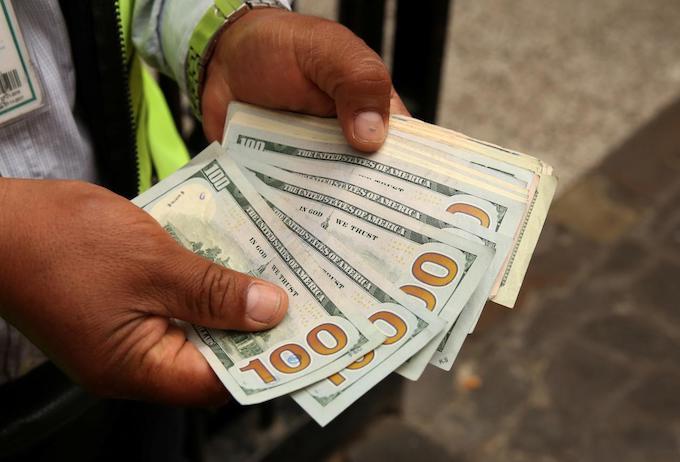
    The U.S. dollar held steady against the Vietnamese dong on Wednesday, even as it experienced a slight decline against several major world currencies. At Vietcombank, the dollar remained unchanged at VND26,140, while the black market valued it at VND26,500. The State Bank of Vietnam also kept its reference rate stable at VND24,973.

    Globally, the dollar found some stability following its most significant drop in over three weeks. This came in the wake of lower-than-anticipated U.S. consumer inflation data, which tilted the scales toward a potential easing by the Federal Reserve, especially as global trade tensions seem to be calming. Reports suggest, however, that this stability may be short-lived, as the U.S. dollar index, which evaluates the currency against six major peers, dipped 0.1% to 100.87 after a 0.8% decline the previous day.

    Earlier in the week, the index surged 1% and reached a one-month high, bolstered by optimism surrounding a de-escalation in U.S.-China trade tensions, which many believed could stave off a looming global recession. Nevertheless, analysts at TD Securities predict a 5% decline in the dollar during the second half of the year as investors consider diversifying away from U.S. assets amidst rising uncertainty and volatility surrounding U.S. policies.

    In offshore trading, the dollar appreciated by 0.24% to 7.2122 yuan, recovering slightly after falling to a six-month low of 7.1791 yuan on the prior day. However, it took a hit against the yen, declining 0.41% to 146.89, extending Tuesday’s drop of 0.66%. The dollar also slipped 0.1% to 0.8384 Swiss francs, while the euro and sterling remained largely unchanged at $1.1191 and $1.3307, respectively.

    This financial juggling act is quite a spectacle—it’s almost like watching a game of currency twister!

    Questions & Answers

    Why did the U.S. dollar remain stable against the Vietnamese dong?
    The U.S. dollar held steady as Vietcombank and the black market showed little fluctuation, with the dollar consistently valued around VND26,140 and VND26,500, respectively.

    What factors influenced the global dollar’s recent performance?
    A combination of lower-than-expected U.S. consumer inflation data and easing global trade tensions contributed to the dollar’s slight decline against major currencies.

    What do analysts predict for the dollar’s future?
    Analysts at TD Securities foresee a potential 5% drop in the dollar in the latter part of the year as global investors look to diversify their portfolios amid ongoing uncertainty and policy volatility in the U.S.

  • Gold Prices Dip as Global Rates Retreat Amid Market Shifts

    Gold Prices Dip as Global Rates Retreat Amid Market Shifts

    Gold prices in Vietnam experienced a dip on Wednesday morning, following a global trend of declining bullion rates. The price of gold bars from Saigon Jewelry Company fell by 0.41%, settling at VND120 million (approximately US$4,622.94) per tael. Meanwhile, gold rings saw a slight decrease of 0.43%, now priced at VND115 million per tael. To put it in perspective, a tael weighs 37.5 grams or 1.2 ounces.

    Global Trends Impacting Gold Prices

    Internationally, gold prices took a hit on Wednesday as easing tensions in U.S.-China trade relations diminished the demand for safe-haven investments. Market participants are eagerly awaiting new inflation data that could shape the Federal Reserve’s future policy decisions, according to Reuters.

    Market Analyst Insights

    Spot gold prices fell by 0.4%, bringing it to $3,234.32 an ounce, while U.S. gold futures decreased by 0.3%, landing at $3,237.00. Financial market analyst Kyle Rodda from Capital.com noted, “Positive developments in U.S. trade policy are diminishing gold’s appeal in the short term. If trade negotiations continue to progress well, gold could see further declines, with $3,200 serving as a critical support level.”

    Future Outlook

    In a related commentary on Tuesday, former President Trump reiterated his push for the Federal Reserve to lower interest rates, citing drops in prices for gas, groceries, and “practically everything else.” Gold, traditionally considered a hedge against inflation, often thrives in low-interest rate environments, making future developments in monetary policy even more pertinent.

    As the sun sets on gold prices, one has to wonder: Will the golden bling experience a shiny resurgence, or darken with market shifts?

    Questions & Answers

    What caused the decline in gold prices in Vietnam?
    The drop in Vietnamese gold prices was influenced by decreasing global bullion rates, linked to easing U.S.-China trade tensions.

    How much did gold prices fall?
    Gold bars fell 0.41% to VND120 million per tael, while gold rings decreased 0.43% to VND115 million per tael.

    What factors could affect future gold prices?
    Future gold prices could be impacted by ongoing trade negotiations and monetary policy decisions from the Federal Reserve.

  • VinFast Plans to Launch 100+ Electric Vehicle Service Centers Across the Philippines

    VinFast Plans to Launch 100+ Electric Vehicle Service Centers Across the Philippines

    VinFast, Vietnam’s rising star in electric vehicle (EV) manufacturing, is gearing up to revolutionize the automotive landscape in the Philippines. In an exciting announcement, the company revealed a partnership with four key Philippine firms to roll out over 100 authorized service centers throughout the country in 2025.

    Forging Strategic Partnerships

    The collaboration features prominent names like Goodyear Philippines, Tire King and Rubber Products, Power Tread Services, and Marcjan Cavite. These partners will manage VinFast service centers, ensuring that maintenance, repairs, and customer support for EVs meet global standards—something that has become a hallmark of the VinFast brand.

    Excitingly, VinFast and Goodyear plan to kick off their endeavor with the launch of 50 authorized service centers this year, while Marcjan Cavite will launch eight, and Tire King and Power Tread will each establish seven. These centers aren’t just ordinary workshops; they must adhere to stringent regulations regarding facilities, equipment, and technician qualifications. Genuine parts and exceptional service will be prioritized for VinFast vehicle owners.

    Supporting the Network Expansion

    To assist in this ambitious rollout, VinFast is committed to providing extensive support to its partners. This includes personnel training, technical consulting, and operational expertise, ensuring a smooth and rapid expansion of their service network.

    This latest initiative builds on previously signed memoranda of understanding with Philippine partners JIGA and Motech, firmly positioning VinFast to enhance after-sales services while expanding its footprint in the burgeoning EV market.

    Just shy of a year since VinFast made its debut in the Philippines, the company is already making waves with its innovative smart EV models, competitive sales strategies, and an expanding after-sales network.

    Charting a Path for Sustainable Future

    In its quest for a greener tomorrow, VinFast is dedicated to cultivating a comprehensive “For a Green Future” ecosystem in Southeast Asia. This ambitious vision focuses on developing robust charging infrastructure and service centers—an operational model that has already proven effective in Vietnam and is now being replicated in dynamic markets like the Philippines.

    For those wondering if the EV boom will take off as swiftly as a VinFast model off the assembly line, one might find it hard to resist a ride in one of their electric beauties!

    Questions & Answers

    What are the partnerships VinFast has formed in the Philippines?
    VinFast has partnered with Goodyear Philippines, Tire King and Rubber Products, Power Tread Services, and Marcjan Cavite to establish over 100 authorized service centers.

    When will the service centers be operational?
    The first wave of 50 service centers is expected to launch in 2025, with additional centers rolling out throughout the year.

    How does VinFast support its service partners?
    VinFast provides comprehensive support, including training for personnel, technical consulting, and operational expertise, to facilitate the rapid establishment of its service network.

  • Marou Honored with Dual Awards in France for Outstanding Achievement

    Marou Honored with Dual Awards in France for Outstanding Achievement

    The Prix Épicures de l’Épicerie Fine, a prestigious annual event spotlighting artisanal food, took place on April 28 at Pavillon Gabriel in Paris, hosted by Le Monde de l’Épicerie Fine. The 2025 edition attracted a vibrant gathering of over 140 producers and more than 800 attendees, including industry professionals, journalists, and culinary aficionados from across Europe.

    Marou’s Ca Phe Sua Chocolate Bar clinched the title of “Best Chocolate in the World 2025” in the Food category (Trophées Alimentaires). This delightful creation blends the rich flavors of Vietnamese coffee and condensed milk, incorporating organic Robusta coffee, fresh milk, and dark chocolate crafted from local cacao. Not only does this accolade celebrate the bar’s exceptional taste, but it also acknowledges Marou’s commitment to showcasing local ingredients while adhering to international quality standards.

    This isn’t Marou’s first time basking in the limelight. The brand has previously garnered gold, silver, and bronze medals from the London Academy of Chocolate and the International Chocolate Awards, all celebrating its remarkable flavors and quality. In 2016, the brand was lauded by culinary luminaries like Michelin three-star chef Michel Roux and patissier Pierre Hermé.

    But the awards didn’t stop with the chocolate bar. Marou also earned the “Coups de cœur du jury” (Jury’s Favorite Packaging) for its 55% Dark Chocolate Bar with Roasted Buckwheat. Could it be that packaging has taken the spotlight?

    The judges evaluated the packaging based on creativity, brand consistency, material quality, environmental responsibility, and functionality. Marou distinguished itself by utilizing recycled cacao husks, showcasing its commitment to sustainability and creatively illustrating the cacao journey—from bean to bar.

    Moreover, Marou’s packaging underscores the origins of its ingredients, honoring Vietnamese agricultural traditions, cacao heritage, and the vital roles played by local farmers and fermentation artisans. The brand has previously snagged four international packaging design awards, including three from the Pentawards and another from The Dieline Awards, notable for its striking designs inspired by Dong Ho folk paintings.

    The dual accolades at the 2025 Prix Épicures de l’Épicerie Fine bolster Marou’s reputation in the premium chocolate arena. The brand credits its achievements to three principles: direct sourcing, artisan craftsmanship, and intentional design. Collaborating closely with local farmers and fermentation specialists, Marou ensures high-quality cacao while championing sustainable agriculture, treating each bean as a reflection of its unique origin.

    The emphasis on design transcends mere functionality; Marou’s packaging narrates the rich tapestry of Vietnamese culture and cacao traditions through its visual identity and material choices.

    “These awards reflect our creativity, artistry, and dedication to Vietnamese culture in every product,” said a Marou representative. “With a sustainable vision and exceptional quality, we continue leading the way, sharing Vietnamese chocolate with the world and leaving a lasting imprint on the global stage.”

    Questions & Answers

    What is the significance of the Prix Épicures de l’Épicerie Fine?
    It’s a prestigious award recognizing the best in artisanal and premium food, bringing together producers, professionals, and culinary enthusiasts.

    What makes Marou’s Ca Phe Sua Chocolate Bar special?
    It combines the flavors of Vietnamese coffee with condensed milk, featuring organic ingredients and a commitment to local sourcing.

    How does Marou prioritize sustainability in its packaging?
    Marou uses recycled cacao husks for its packaging, promoting environmental responsibility while telling the story of cacao production and its local heritage.

  • Vanguard Identifies Significant Transformation in Switzerland’s Financial Landscape

    Vanguard Identifies Significant Transformation in Switzerland’s Financial Landscape

    The US-based asset manager Vanguard is increasingly making waves in the Swiss investment landscape, particularly as it prepares to mark an impressive milestone in 2025. The financial ecosystem is witnessing a significant shift, especially when it comes to investment strategies. Once-upon-a-time, the balanced 60/40 portfolio—where three-fifths of allocations sit in equities and two-fifths in bonds—was the undisputed king of asset allocation. Nowadays, however, that formula is seeing a dramatic makeover: welcome to the new age of 40/60.

    Staying Disciplined Amidst Market Turbulence

    In a world where market realities are anything but stable, maintaining discipline is key. Jonathan Decurtins, Senior Sales Executive for Switzerland and Liechtenstein at Vanguard, emphasizes this sentiment, stating, “As an investor, it’s wise not to be guided by emotions.” Indeed, in the financial realm, sometimes less truly does mean more.

    The Rising Importance of Fixed Income

    This disciplined approach has underpinned Vanguard’s strategy, demonstrated by its careful two-year research phase before launching three new Exchange Traded Funds (ETFs). “Market reactions have proven us right,” Decurtins notes, reflecting the firm’s foresight. With the demand for fixed income products on the rise, Vanguard finds itself in a strong position, standing tall as one of the largest active managers in this sector.

    A Celebratory Year

    Decurtins has also observed a remarkable uptick in the adoption of ETF savings plans throughout Switzerland over the past year. “ETFs have now firmly established themselves in the Swiss market. Interest from retail banks is clearly rising,” he explains. While Germany has long embraced ETFs for retirement savings, Switzerland’s traditional banking ethos has created a slower adoption curve. “Switzerland is a traditional banking market defined by high service quality. That, along with the third pillar of the pension system, slowed things down,” Decurtins elaborates. Nonetheless, Vanguard’s ongoing success is reason enough for jubilation this year as they celebrate their 50th anniversary. Who knew half a century could fly by so quickly?

    Questions & Answers

    What significant change has Vanguard acknowledged in investment strategies?
    The often-utilized 60/40 portfolio split is evolving to a more conservative 40/60 due to changing interest rates.

    How has Vanguard performed in Switzerland recently?
    Vanguard has reported strong growth, particularly in ETF savings plans, with rising interest from retail banks indicating robust market acceptance.

    What milestone is Vanguard celebrating this year?
    Vanguard is marking its 50th anniversary in 2025, a testament to its enduring presence and influence in the financial sector.