Author: Mei Ling Tan

  • Tim Hortons launches retail coffee range in South Korea

    Tim Hortons launches retail coffee range in South Korea

    Tim Hortons has launched its retail lineup in South Korea as part of its strategy to broaden the brand’s reach.

    The Canadian cafe brand’s retail coffee offerings include Original Blend whole bean coffee and fine grind coffee in five flavours: Original Blend, French Vanilla, Colombian, Maple, and Decaf.

    “Like all Tim Hortons coffees, our bagged coffee retail products start with 100 per cent premium Arabica beans that are roasted with care and blended to perfection,” said Mieka Burns, VP of consumer packaged goods at Tim Hortons.

    “Guests can already savour their favourite Tim Hortons beverages in restaurants and they can now complement that experience at home.”

    Tim Hortons’ whole bean and fine grind coffee are available at the Lotte Mart grocery store in Gangdong Millennial Jungheung S-Class Complex, and will soon be available in department stores and online.

    The Canadian coffee chain debuted in South Korea in 2023 and has quickly expanded to 16 locations.

  • Hong Kong Gifts and Premium Fair celebrates 40th edition

    Hong Kong Gifts and Premium Fair celebrates 40th edition

    The Hong Kong Trade Development Council is set to unveil the seven LifeStyle Trade Events, covering gifts, houseware, fashionprinting and packaging, and licensing.

    These events will take place from April 27 to 30 at the Hong Kong Convention and Exhibition Centre. With the latest products and trends on display under one roof, the events will feature a curated selection of lifestyle products and services from around the world, maximising and diversifying buyers’ sourcing in one go.

    Hong Kong Gifts & Premium Fair

    Of the seven events, the Hong Kong Gifts & Premium Fair is the longest-running and will celebrate its 40th edition this year. The highly acclaimed Hall of Fine Designs will return as a convergence of reputed brands. Key brands include Monnaie de Paris of France, the government-owned institution responsible for producing France’s coins, and Camel from Hong Kong, which creates vacuum flasks and has gained popularity among young creatives in recent years.

    The Hong Kong Exporters’ Association will assemble Hong Kong companies to form a pavilion, showcasing the design skills and branding excellence of Hong Kong’s product designers. Winning works from the Hong Kong Smart Design Awards will be on display to highlight the creativity and flair of Hong Kong brands to global industry players.

    Home InStyle

    Home InStyle will continue to foster connections and inspire the design and lifestyle community. The acclaimed Cultural and Creative Corner is set to be upgraded to a Cultural and Creative Avenue, engaging international design influencers and designer brands infused with unique design concepts and cultural heritage. Pantone, the trendsetter in colour, will again join us as our colour partner to showcase the 2025 Fall/Winter and 2026 Spring/Summer colour trends.

    The Industrial Designers Society of Hong Kong will once again present its renowned Remix project, aimed at fostering business collaboration between design professionals and premium brands. The Czech brands Artiseme and Cockerel and Pigmentarium will participate in the Cultural and Creative Avenue for the first time, showcasing distinctive Bohemian crystal, handmade glassware, room fragrances, and incense. Meanwhile, Aomori and Tottori Prefectures from Japan will highlight their regional culture and craft products, including Inshu Washi, ceramics, rattan works, and folk toys.

    In response to the rapid growth of the silver economy, Home InStyle will debut the Gerontech Living Pavilion, featuring a range of innovative products and design concepts from over 10 local companies. In addition, the pavilion will host seminar sessions, along with interactive elements and guided tours, offering visitors a unique and engaging experience.

    Seminars to discuss emerging trends

    During the fair period, a series of seminars and forums will be conducted, featuring industry representatives who will share valuable insights on key trends and future prospects within the industry, including creative thinking, the silver economy, and sustainability. These events are designed to enhance communication between exhibitors and buyers, while also equipping participants with the latest market information. By serving as a one-stop sourcing platform, the events will offer promising business opportunities and cater to the needs of buyers for a diverse selection of lifestyle products and services.

    Digital platform creates an efficient exhibition experience

    Under the Exhibition+ model, the fairs integrate offline and online elements. Buyers can continue searching for products and services on the hktdc.com Sourcing platform and network through the Click2Match smart business-matching platform. During the physical fair, buyers can use the Scan2Match function of the HKTDC Marketplace App to scan exhibitors’ exclusive QR codes, bookmark favourite suppliers, browse product information and continue discussions with exhibitors online during or after the show.

  • Determinant reopens flagship Lab Concept store in Hong Kong

    Determinant reopens flagship Lab Concept store in Hong Kong

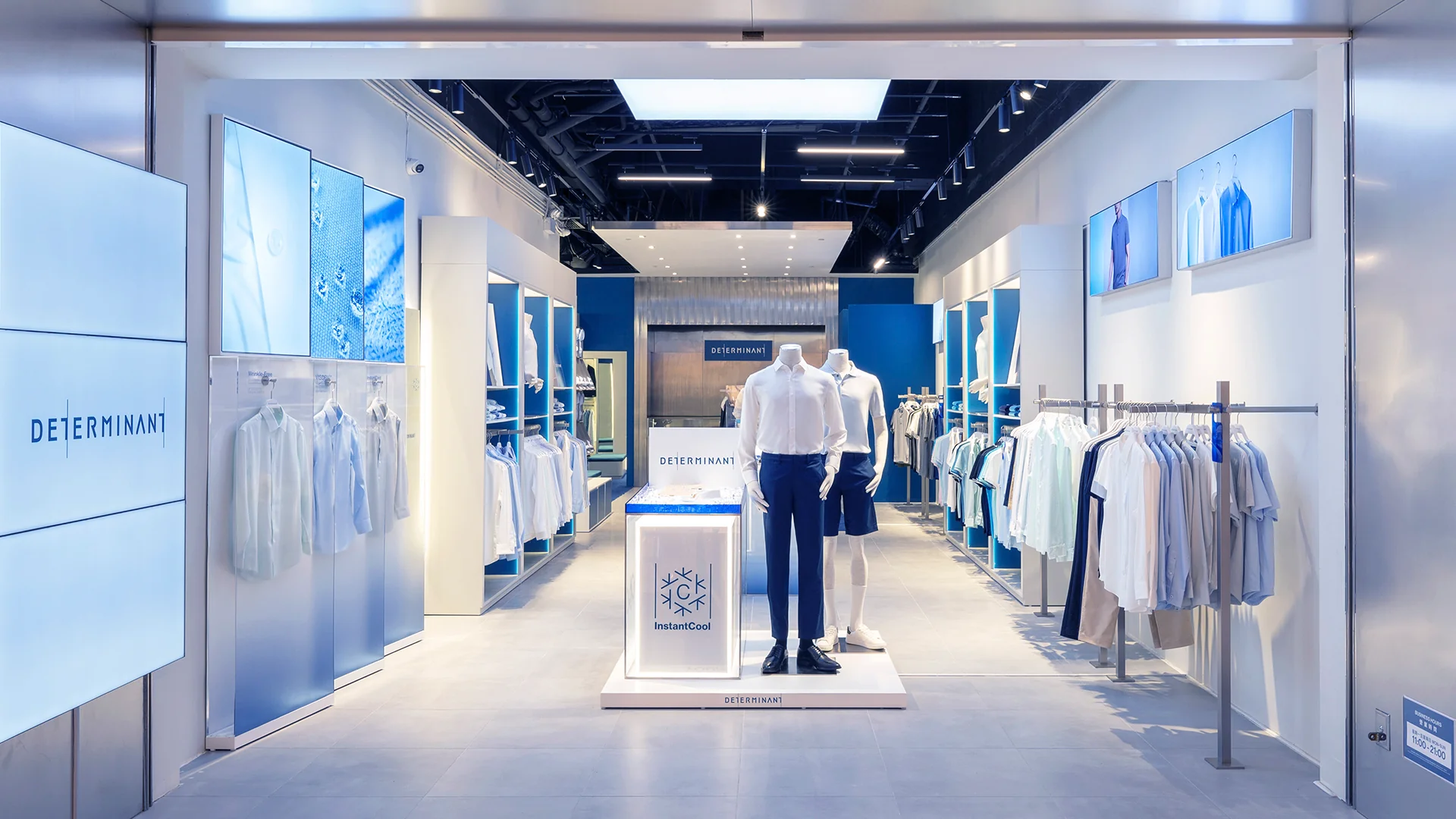
    Hong Kong-based menswear brand Determinant has unveiled its redesigned flagship at Lab Concept in Queensway Plaza, introducing an immersive retail experience centred on the art of shirt-making.

    The revamped store features curated zones and interactive elements that guide customers through Determinant’s signature design and manufacturing process.

    At the entrance, a magnifying glass window display spotlights five key elements of a shirt. A QR code allows customers to access a 3D virtualisation to explore the construction process in greater detail.

    Inside, the Premium Cotton Experience Zone invites visitors to touch and compare the fabrics used across the brand’s shirt range. A panel titled “Anatomy of the Perfect Fit” explains nine core components that contribute to each shirt’s comfort, fit and seamless construction.

    General manager Clement Chan said the relaunch is part of the brand’s broader expansion strategy across Hong Kong and international markets.

    “The name Determinant represents our determination to provide the highest quality products,” said Chan. “We aim to meet market needs with affordable, high-quality and ethical shirts.”

    The company plans to open a new store in Singapore later this year.

    Founded in 2020, Determinant is known for its minimalist, functional designs and proprietary technologies that produce breathable, wrinkle-free, anti-odour and antibacterial shirts.

  • Indonesian coffee chain Fore Coffee’s IPO oversubscribed by 200 times

    Indonesian coffee chain Fore Coffee’s IPO oversubscribed by 200 times

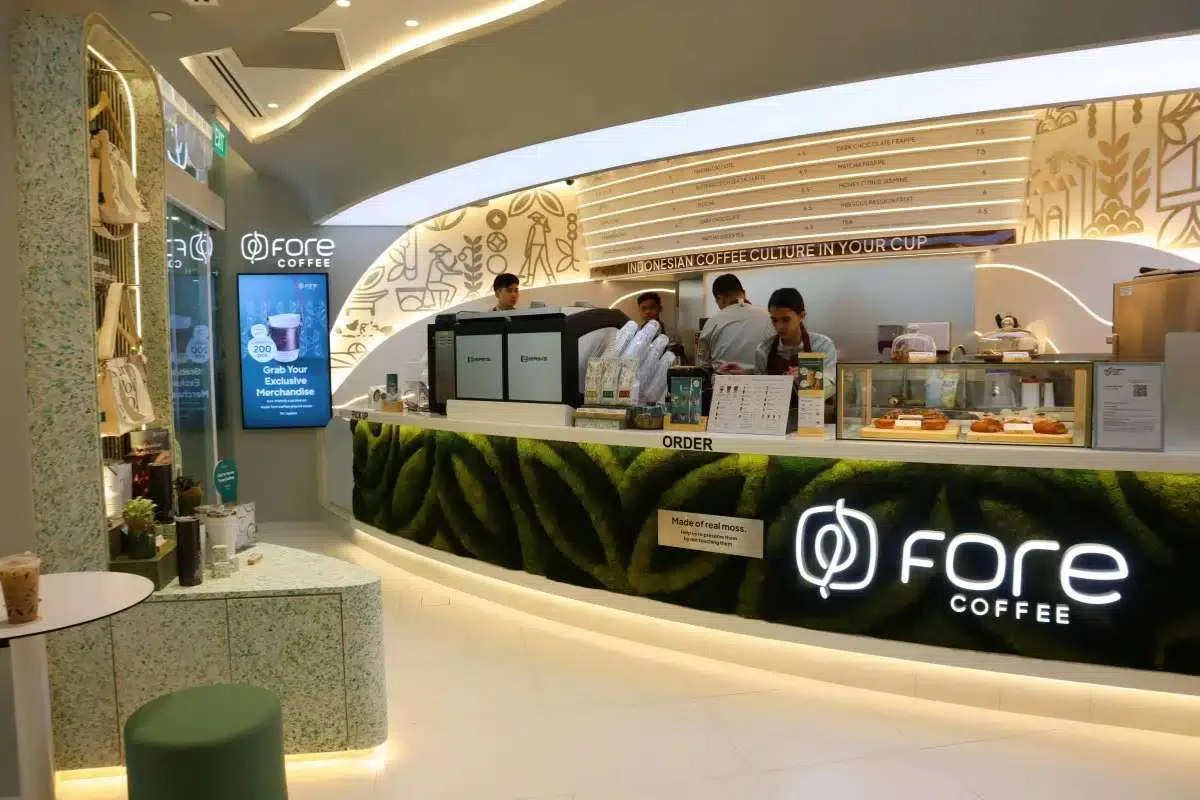
    Indonesian coffee chain Fore Coffee made its trading debut on the Indonesia Stock Exchange (IDX), following a heavily oversubscribed initial public offering that attracted more than 114,000 investors.

    The East Ventures-incubated company priced its IPO at US$0.012 (RP188) per share, issuing 1.88 billion new shares to raise approximately $22.3 million (RP353.44 billion) in fresh capital.

    Fore Coffee plans to allocate around 75 percent of the funds to its domestic expansion, with a target of 140 new outlets over the next two years.

    An estimated $3.8 million (RP60 billion) will be invested in launching a new doughnut concept, while the remaining $1.1 million (RP18 billion) will go towards working capital.

    Wilson Cuaca, president and chairman of Fore Coffee, and co-founder and managing partner at East Ventures, said the strong response to the IPO demonstrates the appeal of homegrown startups to public investors.

    “The counter-intuitive decision to proceed with the IPO during the lowest IDX Composite index since the pandemic paid off,” Cuaca said.

    Mandiri Sekuritas and Henan Putihrai Sekuritas acted as joint lead underwriters and intermediaries for the offering.

  • Celsius adds Sunset Vibe flavour to energy drink range

    Celsius adds Sunset Vibe flavour to energy drink range

    American energy drink brand Celsius has added a Sunset Vibe flavour, a blend of mango and passionfruit.

    The new tropical-inspired flavour joins the brand’s existing local range, which includes Sparkling Kiwi Strawberry, Sparkling Watermelon Lemonade, Sparkling Green Apple Cherry, and Cosmic Vibe.

    In addition, it contains no sugar and is described to offer a “taste of paradise.”

    Ben Andrews, director of partnerships at  Suntory Beverage & Food Oceania, highlighted the brand’s growth since its launch last year.

    “Our strong customer relationships, consumer centricity, and distribution efforts have ensured that Celsius reaches consumers quickly and efficiently,” said Andrews.

    “We are excited to continue this momentum by adding Sunset Vibe to the range, and to bring innovative energy solutions to even more consumers.”

    Celsius Sunset Vibe at an RRP of $4 per can is available in the convenience and petrol channels, with a broader rollout to Woolworths underway.

  • Pickle Juice debuts Extra Strength Shots in Coles

    Pickle Juice debuts Extra Strength Shots in Coles

    US beverage brand The Pickle Juice Company has launched its 75ml Extra Strength Shots in Coles supermarkets nationwide.

    The Texas-based company claims that its product uses a propriety formula that is scientifically proven to help alleviate muscle cramps by interrupting the nerve signals that trigger involuntary muscle contractions.

    Pickle Juice uses a blend of vinegar, grain ingredients, and a mix of vitamins and minerals.

    In addition, it contains no sugar, caffeine, or artificial additives and is rich in electrolytes.

    Blake Boulton, head of global sales at The Pickle Juice Company, said the rollout reflects the company’s strategy to improve accessibility globally.

    “Australia has always been a key market for us, and we’ve seen firsthand the impact Pickle Juice has had in the sports and wellness communities,” explained Boulton, head of global sales for The Pickle Juice Company.

    “By partnering with Coles, we’re making it easier for everyday Australians to access an effective solution for muscle cramps, superior hydration and enhanced recovery.”

    The Pickle Juice Company Extra Strength Shots is available for an RRP of $24 for a four-pack and $47.50 for a 12-pack in Coles stores across NSW, Victoria, Queensland, SA, WA and Tasmania.

  • API launches online B2B hub for pharmacies to source products

    API launches online B2B hub for pharmacies to source products

    Australian Pharmaceutical Industries (API) has launched an online B2B hub – MyAPI – for its wholesale pharmacy customers.

    API is a wholly-owned subsidiary of Wesfarmers Health and has more than 4000 wholesale pharmacy customers.

    According to the company, the platform offers “enhanced functionality and an elevated experience,” allowing pharmacies to research products, place orders, identify stock on hand, obtain pricing and deals, and manage their accounts.

    It also facilitates stock returns, backorder management, houses key documents and provides customer support and communications.

    “By investing in technology like MyAPI, we’re ensuring pharmacy owners have 24/7 access to critical products and essential information at their fingertips,” said Doug Swan, executive GM of wholesale and pharmacy services at Wesfarmers Health.

    “This means more convenience and flexibility, and empowers them to serve their communities with confidence knowing they have what patients need, when they need it.”

    In addition to the main features, the e-hub also supports compliance with Community Service Obligations for pharmaceutical wholesalers, including the timely delivery of Pharmaceutical Benefits Scheme items within 24 hours.

  • Lakanto launches no-sugar-added BBQ Sauce & Tomato Ketchup

    Lakanto launches no-sugar-added BBQ Sauce & Tomato Ketchup

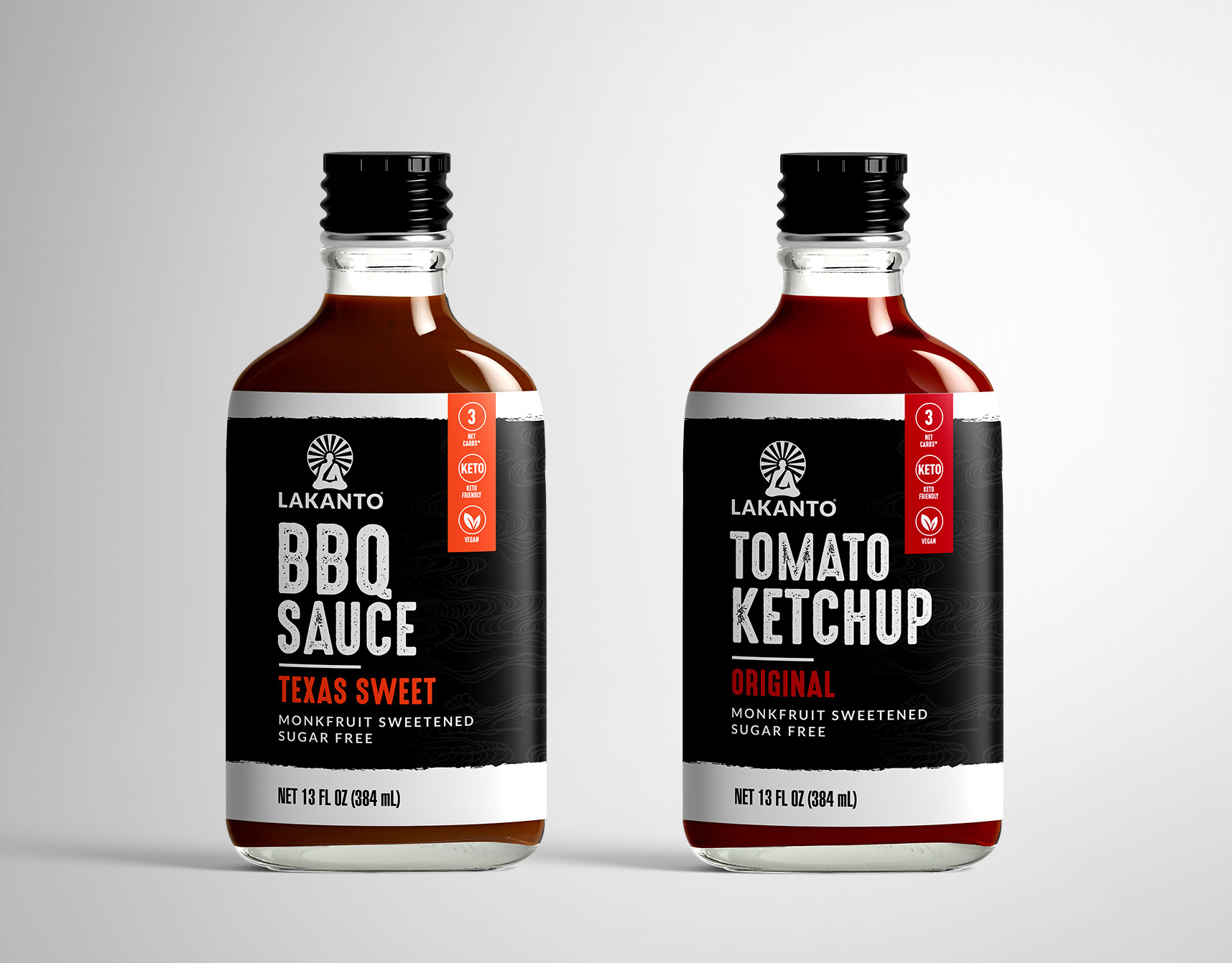
    Monkfruit sweetener brand Lakanto Australia has launched the No Sugar Added Tomato Ketchup and BBQ Sauce, offering a healthier alternative.

    According to the company, the sauces are naturally sweetened with Lakanto’s monkfruit sweetener, feature no artificial colours or tastes, and are low in carbs, making them suitable for individuals following keto, low-carb, or diabetic diets.

    “We’re excited and really proud to offer these delicious, healthier alternatives to classic condiments,” said Leon McIndoe, GM of Lakanto Australia.

    “With our BBQ Sauce and Ketchup, we’re continuing our mission to help people ‘Live a Responsibly Sweet Life’ – making it easier to enjoy flavourful meals without compromising on their health goals.”

    The Lakanto Sweet and Spicy BBQ Sauce and Lakanto Tomato Ketchup are available with an RRP of $12.95

    Last year, Lakanto re-launched its caramel and chocolate toppings derived from monkfruit, which naturally adds sweetness.

  • Costco and DoorDash to deliver groceries to the doors of Aucklanders

    Costco and DoorDash to deliver groceries to the doors of Aucklanders

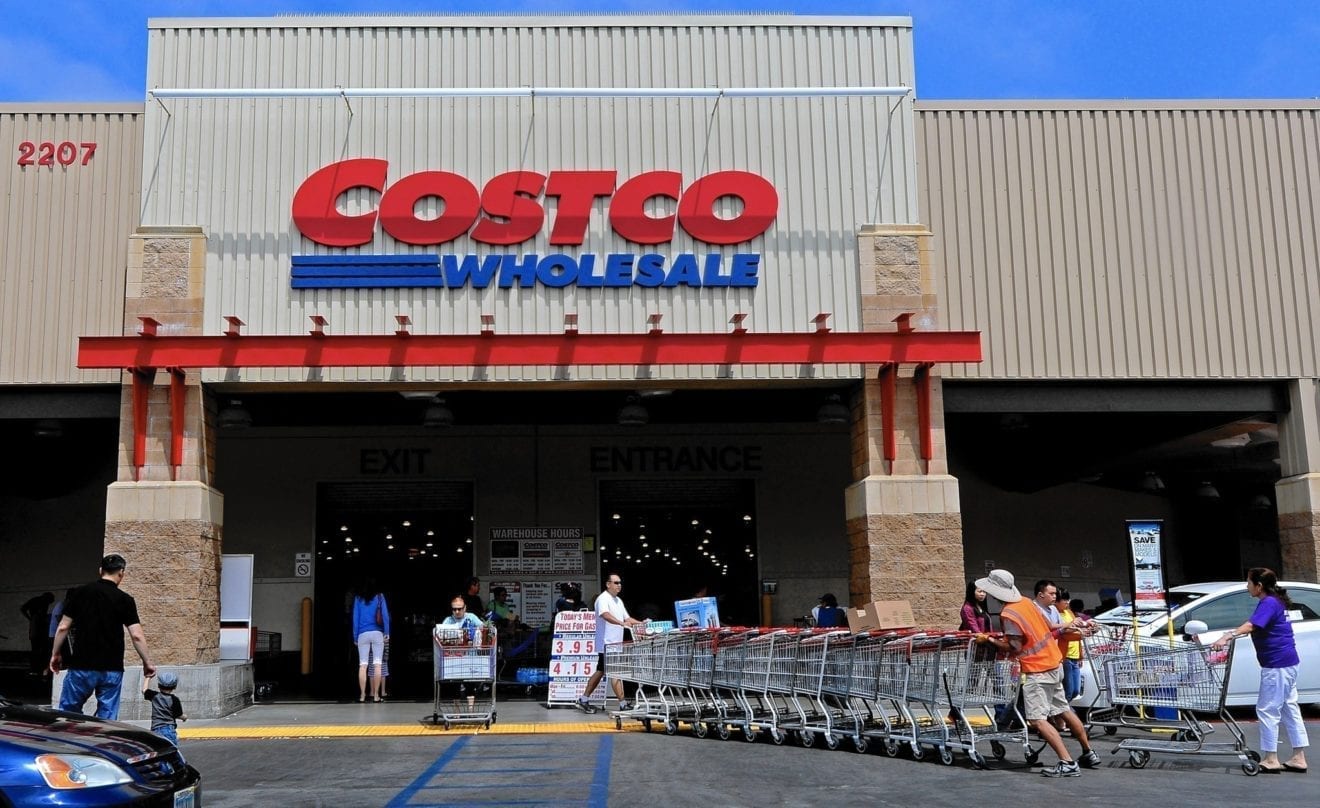
    Costco has teamed up with DoorDash to deliver its range of groceries and household essentials to homes in Auckland at bulk-saving rates.

    The partnership will enable Costco members and non-members to get everything from toilet paper to fresh fruits and vegetables or premium poultry and meat delivered to their homes.

    “We’re always looking for ways to make everyday shopping easier, and our partnership with Costco means Aucklanders can now get incredible value and quality delivered straight to their doorstep,” said DoorDash New Zealand GM Bradley Thomas.

    To launch the new partnership, New Zealand customers will receive NZ$20 off their first Costco order when they spend $150 or more.

  • Aldi ranked Australia’s top supermarket for fifth consecutive year

    Aldi ranked Australia’s top supermarket for fifth consecutive year

    For the fifth time in a row, Aldi has been named Supermarket of the Year 2024 in Roy Morgan’s Customer Satisfaction Awards.

    The supermarket has won this title eight times. The ratings are calculated from an annual survey of 60,000 Australians and cover 40 industry categories.

    “With the rising cost of living, we know many Aussie families are feeling the pinch,” said Simon Padovani-Ginies, group director of Aldi Australia. “That’s why we’re more focused than ever on keeping grocery prices low and making every dollar count. Our entire business model is based on saving people money while making sure only the best products make it onto our shelves.”

    “As well as delivering a dependably high level of customer satisfaction to millions of Australians Aldi is also recognised by Roy Morgan as one of Australia’s top five most trusted brands – a position Aldi has held consistently over the last five years despite the challenges faced by the sector in an era of high inflation and rising interest rates,” said Roy Morgan CEO Michele Levine.

    She said Aldi had a perfect record of winning all 12 monthly customer satisfaction awards during 2024 with an average customer satisfaction rating of “an exceptional” 88.8 percent.

  • How the Banking Industry Drives Switzerland’s Economic Power

    How the Banking Industry Drives Switzerland’s Economic Power

    The banking association Swiss Banking has presented a study that underscores the importance of the financial industry for the Swiss economy. To ensure this remains the case, prudent strategic decisions and smart, focused regulation are needed.

    The study, commissioned by Swiss Banking (Swiss Bankers Association, SBA) and conducted by the consulting firm Oliver Wyman, concludes that the banking industry plays a key role in supporting economic growth and strengthening Switzerland’s capacity for innovation.

    In 2024, the Swiss financial sector contributed CHF 74 billion to the national economy, which corresponds to 9 percent of GDP. Of this contribution, 57 percent came from banking services (5 percent of GDP), and 43 percent from insurance and other financial service providers.

    Around 160’000 highly qualified professionals work in the banking sector. For each job in the industry, there is an additional job in another sector that depends on it. Annual tax contributions amount to CHF 7 billion, making banks one of the most important sectors in the Swiss economy. Every eighth tax franc comes from the financial industry, emphasized Swiss Banking President Marcel Rohner during the presentation of the study on Friday in Zurich.

    The Swiss financial center is considered one of the most important worldwide and is a key pillar for prosperity, innovation, and international connectivity in Switzerland. This has led to more favorable financing conditions and a lower interest rate level in Switzerland than abroad for many years, Rohner added. This represents an important competitive advantage for companies and also has positive effects for consumers.

    Another factor is the success in international wealth management,» said association CEO Roman Studer. Some of these assets also contribute to financing volumes.

    The industry provides efficient access to capital for both private and corporate clients – nationally and internationally. Especially for small and medium-sized enterprises (SMEs), a stable supply of credit is essential. There is a close symbiosis between the banking sector and the broader economy.

    The financial sector is growing, and much has emerged in recent years, said Rohner. He cited examples such as the relatively young financial service providers Swissquote and Partners Group, which are successful global publicly listed companies, as well as fully licensed digital asset banks like Amina and Sygnum. In 2024, there were 484 fintech firms.

    As a result, the financial ecosystem is deepening, and fintechs and banks are increasingly benefiting from one another. New markets are emerging with digital assets, such as crypto ETPs, ESG investments, or impact investments.

    To ensure that Switzerland’s financial center remains successful in the future, prudent strategic decisions are needed. Economic openness, smart and focused regulation, and a solid reputation, especially about money laundering or terrorism financing, are key to the financial center’s competitiveness.

    Regulation must be internationally aligned. This also includes robust and broad-based liquidity safeguards as well as solid and competitive capital requirements. We must and want to learn the right lessons from the Credit Suisse case, emphasized Studer. This includes liquidity safeguards and resolution capabilities. That must also apply to UBS.

    The only remaining major Swiss bank plays a crucial role in the ecosystem, from which smaller banks also benefit. «UBS is important on the corporate client side, and we need a global bank that can offer products and services others cannot, Rohner said.

    The position of the Swiss banking sector should not be taken for granted and must be protected,» he added. «We want to take good care of our financial center and shape it with ambition, in line with our tradition of excellence, trust, integrity, and stability. That’s how we stay globally relevant and future-ready. That is our responsibility – and our opportunity.

    When it comes to regulation and capital requirements for UBS, a middle ground will be found – I’m confident there’s no insurmountable divide.

    The fact that the political process is dragging on has both advantages and disadvantages. The extended timeline creates uncertainty, but also ensures that questions are addressed holistically rather than in isolation.

  • Vietnam discovers 12 mines containing over 10 tons of gold

    Vietnam discovers 12 mines containing over 10 tons of gold

    A major gold discovery in central Vietnam has revealed 12 mines containing over 10 tons of gold and 16 tons of silver, according to the Mid-Central Geological Division.

    The discoveries were made following geological investigations across 32 areas with gold ore potential.

    Vietnamese authorities have identified around 500 gold-bearing locations nationwide. Of these, 30 sites have undergone detailed surveys, revealing an estimated total of 300 tons of gold reserves. Most of these deposits are concentrated in mountainous areas of northern Vietnam and several central provinces.

    Starting in 2025, the Department of Geology and Minerals has been launching a new project to evaluate mineral potential in central Vietnam, focusing on localities like Quang Nam, Quang Ngai, Binh Dinh and Phu Yen provinces.

    Another mineral survey project, initiated in 2017, led to the recent discovery of 40 gold mines with total estimated reserves of nearly 30 tons.

  • Huawei Unveils Comprehensive Suite of AI-Powered Solutions at MWC Barcelona 2025

    Huawei Unveils Comprehensive Suite of AI-Powered Solutions at MWC Barcelona 2025

    At the Huawei Product & Solution Launch during Mobile World Congress (MWC) Barcelona 2025, Huawei revealed its innovative roadmap, showcasing a comprehensive suite of AI-powered solutions designed to transform network infrastructure, accelerate digital information, and propel the industry into a more intelligent, connected, and sustainable digital future.

    AI-Centric Network Solution, Seizing New Opportunities in the AI Era

    Yang Chaobin, Huawei’s Director of the Board and CEO of the ICT Business Group, introduced the AI-Centric Network solution to address the growing demand for enhanced network bandwidth, lower latency, wider coverage, and improved operations and management.

    In his keynote, Yang Chaobin highlighted the solution’s four-layered approach, which includes all-domain connectivity, application-oriented O&M, enhanced AI-to-X services, and innovative business models. Through this strategy, Huawei aims to accelerate the transition towards an intelligent world while unlocking new revenue streams.

    AI-Centric 5.5G, Igniting the Mobile AI Era

    Building on an AI-powered network foundation, Cao Ming, Vice President of Huawei and President of Huawei Wireless Solution, noted that mobile AI aims to revolutionize the world by delivering intelligent, human-like experiences anytime, anywhere, and for everything. This shift towards ‘AI for All’ will drive three major transformations in the mobile industry. Firstly, it will transform the user experience from being downlink-focused to offering diverse capabilities. Secondly, it will evolve O&M from AN L3 to AN L4 intelligence. Thirdly, it will shift business models from traffic-based to multi-factor monetization.

    In the mobile AI era, connections will expand from human-to-human to human-to-AI and AI-to-AI, requiring diverse experiences and services. For multi-modal AI interactions, high uplink capability is essential. Cao Ming mentioned that, for real-time AI agent calling, ultra-low latency is critical. To enable ubiquitous intelligent connections, Cao Ming emphasized that seamless coverage is necessary, particularly for AI-powered devices in both dense cities and remote areas.

    To address these challenges, Cao Ming introduced three AI-Centric 5.5G solutions: GigaGear, GreenPulse, and GainLeap.

    Intelligent Core, Paving the Way to the Mobile AI Era

    Further expanding on the mobile AI concept, George Gao, President of Huawei Cloud Core Network Product Line, charted the evolution of core networks into AI-native systems.

    In his keynote, George Gao noted that AI core network transformation occurs in two phases: 5G-A Intelligent Core and Agentic Core. He added that 5G-A Intelligent Core can equip three intelligence entries with calling agents, personalized experience agents, and digital expert agents.

    Moreover, George Gao also launched Huawei’s Telco Intelligent Converged Cloud (TICC) infrastructure, which manages heterogeneous hardware and integrates FusionMind to provide high-quality training and inference services for agents.

    Towards AI ON for New Growth in the AI Era

    Huawei’s product and solution launch also showcased optical network advancements, with Bob Chen, President of Huawei Optical Business Product Line, unveiling the AI Optical Network (AI ON) concept.

    AI applications, from self-owned call assistants to third-party chatbots, thrive on a strong network foundation. According to Bob Chen, the equation is clear: (Data + Model + Computing) x Network = AI prosperity. However, AI development demands deterministic connections and on-tap computing power akin to utilities like electricity and water.

    The transition to AI ON networks requires awareness, always-on demand, assurance, autonomous O&M, and AI-native capabilities. Chen explained that traditional networks struggle with undifferentiated services and reactive repairs, but AI-driven networks offer:

    • Customized Connections: Instead of fixed speeds, users can get tailored services. For example, a gaming package can offer 500 Mbps speed, 10 ms latency, and 99.9999% reliability.
    • Deterministic Performance: AI ensures low latency, “0” packet loss, and hitless protection switching, eliminating uncertainties caused by congestion and failures.
    • Autonomous Operations: The application of AI enables real-time risk detection, automatic troubleshooting, and proactive network health checks.

    AI WAN: Leading IP Networks into the Intelligent Era

    Meanwhile, Leon Wang, President of Huawei Data Communication Product Line, presented the company’s new AI WAN solution, which is designed to empower IP networks in the Net5.5G era using AI. During his keynote, Leon Wang highlighted the solution’s three-layer architecture, comprising AI routers, AI new connections, and AI new brain, which enhances network performance and intelligence through millisecond-level flow sampling, high-accuracy flow awareness, and efficient security protection engines.

    Leon Wang explained that AI WAN’s predictive traffic management helped MTN South Africa reduce congestion at 10% of its 7,000 base stations, resulting in a 25% increase in data usage (DOU) in KwaZulu-Natal and traffic grew by 15.4%. In home services, Carrier CTM partnered with Huawei to optimize network services using an AI computing engine. This resulted in a dramatic reduction in game latency and hence a significant improvement on customer experience. For enterprise security, AI WAN’s intelligent flash defense detected attack flows, enabling carriers to offer high-value security services with a projected 35% revenue increase.

    AI-Ready Data Infrastructure Accelerates Telco-to-Techco Transformation

    In his keynote, Peter Zhou, President of Huawei Data Storage Product Line, highlighted the growing importance of data in the AI era, as AI agents are set to leverage massive amounts of data to transform consumer, home, and business experiences.

    By 2030, Peter Zhou predicts that each individual will generate TB-scale data, powering 10 billion AI agents, while each family will produce PB-scale data for 1.8 billion AI housekeepers, and enterprises will manage EB-scale data, driving 2.8 billion AI applications. To support this, Huawei introduced AI-Ready data storage, featuring a data lake, diverse data services, and a FlashEver business model. Their AI-driven storage innovations include OceanStor Dorado, which enables seamless AI and cloud-native applications; the OceanStor A Series storage, which reduces GPU wait time by 30% and cuts inference costs by 40%; and the OceanStor Pacific, which doubles storage capacity while cutting power consumption by 40%.

    Peter Zhou added that Huawei’s security and business continuity solutions can reduce TCO by 30%, recover 1 TB of data in 20 seconds, and offer flexible AI storage models like FlashEver, a pay-as-you-go model with 10-year investment protection.

    Huawei ICT Services and Software Enable Digital Intelligence Acceleration

    In his keynote, Bruce Xun, President of Huawei Global Technical Service, showcased a series of innovative digital intelligence solutions to address the key challenges in the industry’s digital transformation journey.

    Huawei established the equipment Center Office (CO) modernization solution, Intelligent Operations solution for MBB cross-domain service keepalive, Mobile Network NPS Improvement solution, Differentiated Service Experience Monetization and Assurance solution, and enhanced Mobile Money solution.

    He emphasized focusing on high-value business scenarios, such as streamlining network, data, and AI capabilities along the value stream, and quickly integrating Copilot, AI Agent, and DTN into the operation process for efficient human-machine collaboration and value realization, ultimately creating tangible business value and accelerating digital intelligence.

    Accelerate Intelligence with Cloud, Leap from Telco to Techco

    Bruno Zhang, Huawei Cloud CTO, discussed the comprehensive strategies required for telecom carriers to shift to technology companies, highlighting, “Carriers have clear expectations for the cloud.” In his keynote, Bruno Zhang outlined Huawei’s cloud offerings, including Huawei Cloud Stack and CloudDC to support this transformation.

    The Huawei Cloud Stack has reduced TCO by 50% over 3 years, offering 120+ cloud services for seamless migration, while CloudDC provides 30+ Tier 3+ data centers with a 10x efficiency boost and AI-powered fault recovery within 15 minutes. In terms of AI-powered databases, GaussDB outperformed competitors, doubling performance, ensuring zero data loss, and auto-fixing 90% of faults.

    Huawei’s ‘AI for Industries’ initiative leverages its Pangu Models and ModelArts to help enterprises create industry-specific AI models, with over 400 AI applications successfully deployed across 30+ industries. To help carriers leverage their device-cloud synergy with multi-architecture compute and multi-OS devices, Huawei created Cloud Device, a family of products including KooPhone, KooDrive, and Cloud STB. These products deliver 60 ms latency and zero buffering.

    Bruno Zhang highlighted that live streaming and AI have experienced remarkable growth, with streamers increasing by 10x and AI usage growing 20x over the past five years. While traditional networks face challenges, Huawei’s Cloud Media Edge enhances real-time streaming and drives ARPU growth. Finally, Bruno Zhang explained that carriers require ecosystem capability and operational expertise to expand their enterprise business, and Huawei Cloud offers two solutions to support this. KooGallery provides carriers with easy access to tens of thousands of enterprise applications via standard APIs, while Cloud on Cloud offers comprehensive cloud operation capabilities.

    AI Empowering Operators Accelerated Transition Towards Energy Prosumers

    Recognizing the significant role of technological innovation in the intelligent era, He Bo, President of Huawei Data Center Facility & Critical Power Product Line, highlighted the challenges of rising energy consumption, emissions, and infrastructure reliability. In his keynote, Bo noted that AI-driven energy solutions are transforming operators into Energy Prosumers 2.0.

    He Bo introduced the Single SitePower infrastructure and AI-driven DC infrastructure to address these concerns. These solutions integrate energy and information flows and enhance resilience, efficiency, and sustainability. He also highlighted Huawei’s Virtual Power Plants (VPP), AI-driven PV+ battery systems (which increase energy yield by 20% and reduce cabling by 80%), and the Arc-Fault Circuit Interrupter (AFCI), which can extinguish arcs in 2.5 seconds, improving safety.

    Meanwhile, Huawei’s modular designs and advanced cooling systems for data centers are addressing reliability, uncertainty, delivery, and high power demands. Huawei’s series of innovations aims to establish a greener energy foundation for the ICT industry, driving operators to thrive while accelerating carbon neutrality goals.

    Through these comprehensive product and solution offerings, Huawei is demonstrating its commitment to driving innovation and establishing an intelligent and sustainable digital ecosystem, ultimately advancing the telecommunications industry.

  • Toymaker LEGO opens $1.3B green factory in Vietnam

    Toymaker LEGO opens $1.3B green factory in Vietnam

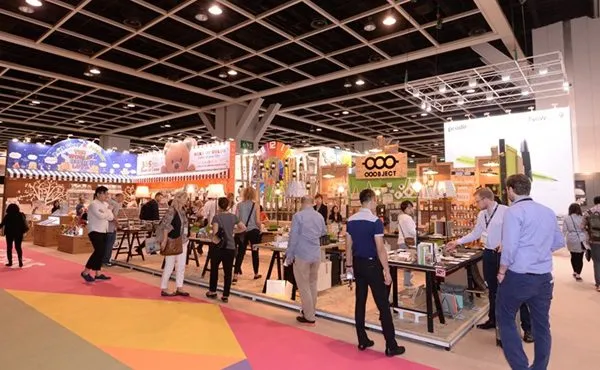
    Danish toymaker LEGO Group inaugurated its first factory in Vietnam, an over-US$1.3 billion green investment, at the Vietnam-Singapore Industrial Park III in the southern province of Binh Duong.

    The factory, inaugurated on Wednesday, is set to employ about 4,000 workers. It is expected to bolster LEGO’s supply chain in Asia, reflecting its global leadership in toy manufacturing.

    The facility, LEGO’s sixth globally and second in Asia, stems from active collaboration between the Vietnamese Government, ministries, agencies and Binh Duong authorities to attract hi-tech and green-focused foreign investment.

    Once fully operational, the factory will run entirely on renewable energy from an on-site solar system, serving as a model for green manufacturing and supporting Vietnam’s shift to a circular economy.

    Niels B. Christiansen, CEO of LEGO Group, called it a strategic move to expand the manufacturing capacity in the Asia-Pacific while reaffirming LEGO’s long-term commitment to sustainable development.

    Deputy Prime Minister Mai Van Chinh hailed LEGO’s investment as a boost to Binh Duong’s reputation as a hub for global manufacturers, citing its prime location, strong transport links, and pro-business climate.

    LEGO is also investing in Vietnam’s workforce, with over 100 foreign experts training local technical and management staff. The company plans to partner with educational groups to bring play-based learning to over 60,000 Vietnamese children this year.

    A distribution center in the nearby province of Dong Nai, its second logistics hub in Asia, is also slated for opening later this year.

  • Fuel prices plunge to 4-year low

    Fuel prices plunge to 4-year low

    Vietnam gasoline price plummeted to its lowest in four years Thursday afternoon.

    The popular fuel RON95 fell 8.2% to VND19,200 (US$0.74) per liter, the lowest rate since May 2021.

    Biofuel E5 RON92 declined by 7.3% to VND18,880.

    Diesel dropped 6.7% to VND17,240.

    Regulators said that the global oil market over the past seven days has been influenced by several factors, including a rise in the U.S.’ crude oil inventories and its announcement of a 10% tariff on all imports.

    These factors pushed fuel prices down, with RON95 decreasing by 11.2% to $75.3 per barrel. Diesel went down by roughly 9% to $79.5.