Author: Mei Ling Tan

  • Gojek Vietnam’s co-founder resigns

    Gojek Vietnam’s co-founder resigns

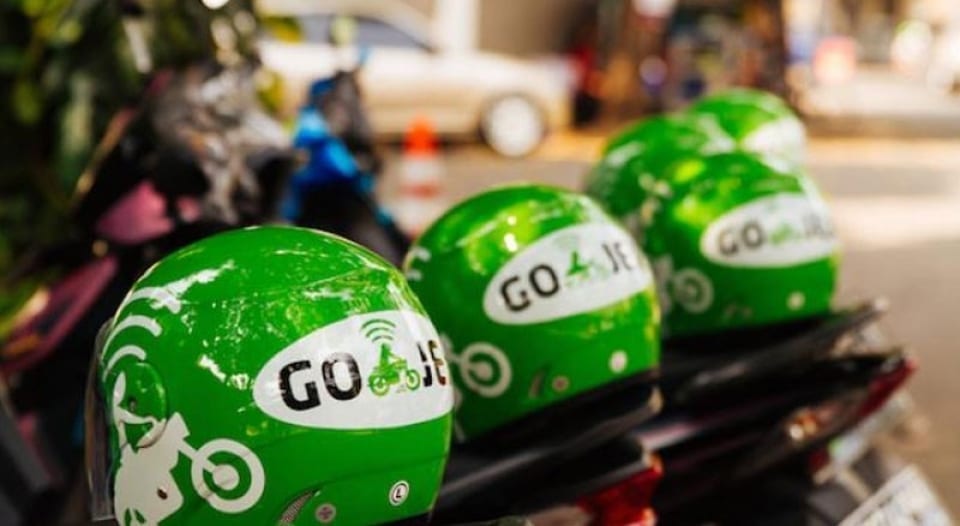
    Indonesian ride-hailing and delivery service company Gojek has named Sumit Rathor as the new GM of its Vietnam operations.

    Rathor has succeeded Tuan Duc Phung, former GM of Gojek Vietnam since 2020. According to a Gojek statement, Phung has decided to pursue other professional challenges outside the company.

    With over 20 years of experience in strategic planning, operations and finance, Rathor joined Gojek in 2019 as a regional manager for Indonesia, in charge of the Central and East Java areas.

    “Vietnam is an important market for Gojek, and we expect that our energy and acumen, along with our market experience, inherited from our previous triumphs, will enable us to maximize the market’s potential,” said Rathor.

    After entering Vietnam in 2018 under the name GoViet, Gojek Vietnam rebranded in 2020 to attract more customers and grow the business. The Indonesian company provides transportation, food delivery, and logistics services and has offices in Vietnam, Thailand, Singapore, and Indonesia.

    According to local sources, this is Gojek Vietnam’s third CEO change since its establishment.

    Last month, Grab Vietnam also appointed former MD at Grab Thailand, Alejandro Osorio, as MD at Grab Vietnam, supervising overall company operations and the development of the Vietnam business.

  • AirAsia lops 23% off fares

    AirAsia lops 23% off fares

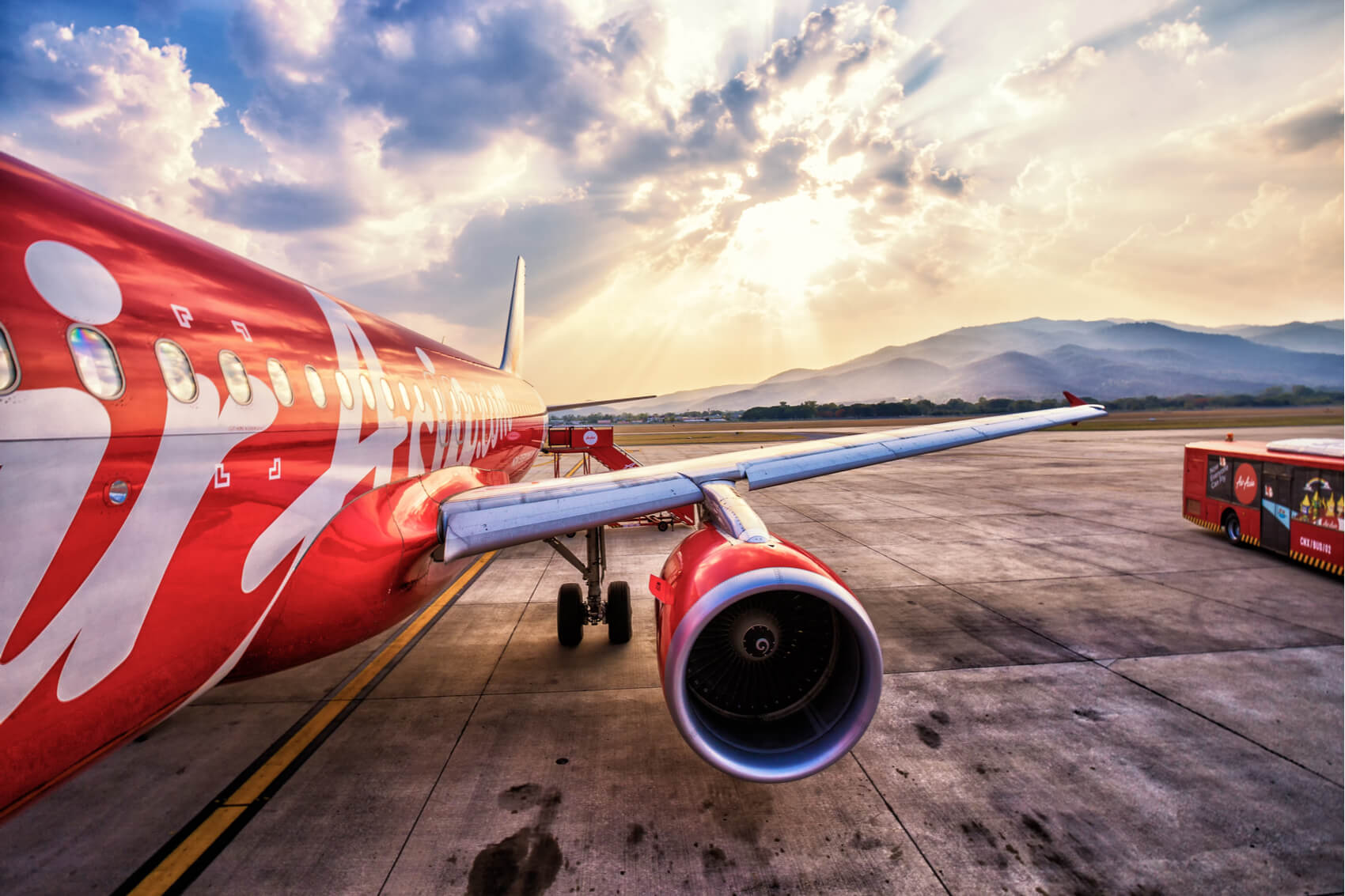
    AirAsia welcomed the new year with a 23% off sale for all flights on bookings made by 15 January 2023.

    While the booking period runs from 9 to 15 January, the travel dates are open from 1 February to 27 September 2023.

    The deal is valid on flights to all destinations in the group network (airline codes AK, FD, D7 and XJ). It excludes flights with the airline code QZ.airasia

    It includes trips to Kuala Lumpur, Langkawi, Kota Kinabalu, Singapore, Bangkok, Taipei, Tokyo, New Delhi, Gold Coast Auckland and more.

    To secure the discount, click on the ‘flights’ icon on the homepage of the AirAsia Super App or via the airline group’s booking website.

  • Tesla Uses Its Profits As A Weapon In An EV Price War

    Tesla Uses Its Profits As A Weapon In An EV Price War

    Tesla earns more money for every vehicle it sells than any of its global rivals. Now, Chief Executive Elon Musk is using that superior profitability as a weapon in the EV price war he started.

    Tesla, once one of the auto industry’s biggest money losers, has over the past year built a commanding lead over most major rivals in profit per vehicle, a Reuters analysis of industry data shows.

    Tesla earned $15,653 in gross profit per vehicle in the third quarter of 2022 – more than twice as much as Volkswagen AG, four times the comparable figure at Toyota Motor Corp and five times more than Ford Motor Co, according to a Reuters analysis.

    For most of this year, Tesla joined rivals in aggressively raising prices on its most popular vehicles, such as the Model Y SUV. Shortages of semiconductors and other materials kept auto industry production down, allowing companies across the industry to focus on higher-margin models and book strong profits, even as sales volumes fell.

    Tesla’s decision to reverse course and spend its production-cost advantage on price cuts now challenges the profit-over-volume strategies established automakers such as GM have pursued since the 2008 financial crisis, and doubled down on during the pandemic.

    To control production costs, Tesla has invested heavily in new manufacturing technology – such as the use of large castings to replace small metal parts. Tesla brought battery manufacturing and other parts of its supply chain in-house, and standardized vehicle designs to improve economies of scale.

    Using production-cost advantages to fund price cuts has a long history in the auto industry.

    Henry Ford slashed prices on his Model T in the early 20th Century as his innovative mass-production system revved up. During the 1980s and 1990s, Toyota used the cost lead provided by its lean production system to offer features at prices Detroit automakers struggled to match. Now, Toyota is rebooting its strategy under pressure from Tesla.

    Growth in electric vehicle demand outpaced the overall market in the United States and globally during 2022. That emboldened automakers to push EV prices higher. Ford hiked prices for its electric F-150 pickup by 40% during 2022.

    But analysts are warning the global EV market could soon have more production capacity than demand.

    By 2026, North American EV demand will hit a level of about 2.8 million vehicles a year, said industry forecaster Warren Browne. But North American EV factories will be capable of assembling more than 4.5 million vehicles, putting overall capacity utilization at just under 60%, he said.

    In China, the end of central government subsidies is accelerating a market share war among rivals in the world’s largest EV market.

    “Tesla has taken the nuclear option to bully the weaker, thin margin players off the table” in China, said Bill Russo of Automobility, an industry consultancy in Shanghai. “Big pie, fewer slices, more to eat for those that remain.”

    Startups such as China’s Xpeng Inc had benefited from Tesla’s price hikes. Now, Xpeng is cutting prices in China – but with less financial leeway than Tesla. Xpeng reported gross profit of $4,565 in the third quarter, and a net loss of $11,735 a vehicle, according to company data analyzed by Reuters.

    “We hope more people can access smart vehicles after we make our cars increasingly affordable,” Xpeng said in a statement.

    Vietnamese EV startup Vinfast said Thursday it will use price promotions to fight back against Tesla.

    Chinese EV market leader BYD Co Ltd announced price increases effective Jan. 1 after Beijing phased out EV subsidies. So far, BYD has not responded to Tesla’s latest price cuts in China. However, BYD’s gross margins of $5,456 per vehicle give it more headroom in a price war than VW, Toyota or GM.
  • Whatsapp has new feature to undo send messages

    Whatsapp has new feature to undo send messages

    For many phone owners, the person they message the most is themselves. No, it has nothing to do with egotistical behavior and has everything to do with using common sense. Sometimes when you need to jot down a note you’re caught without paper or a pen. While an app like Google Keep is ideal for these situations, some would rather send a message to themselves.
    But if WhatsApp is their preferred messaging app, this could not be done unless the user opened a group chat and included himself as one of the group members, and then sent a message to this group. Who wants to go through all that just to remind yourself that the dog walker is on vacation, or to save a story or video that you just viewed online? The Meta-owned app has fixed this by disseminating an update that allows WhatsApp subscribers to send messages to themselves.
    A WhatsApp user can now select themself to be the lone recipient of a message he or she is going to send via the app. After typing the message you want to send yourself, the app puts up a notification that points out that the message you send is protected by end-to-end encryption. Unless you have multiple personalities, this doesn’t matter. But it does mean that WhatsApp or any other person that isn’t you, can not read or listen to the message.
    Meta had this feature beta tested by iPhone users and is rolling it out now for all users. It has been made available on Android and does work on this writer’s Pixel 6 Pro running Android 13 QPR2 Beta 2.1.
    WhatsApp has added more than just the ability to message yourself. Following the update, you can undo the “Delete for me” feature to bring back a message that you’ve accidentally erased from your WhatsApp account. To see how this works, you can just send a test message to yourself (which you can do now) and long-press on the test message. Tap the trash can icon on the top of the screen and you will see a pop-up. Select Delete for me and a bar at the bottom of the screen will appear that says “Message deleted for me” with the word UNDO on the right side of the bar. Tap it to undo the deletion and the message will return.
    You also can now control who will be able to see when you’re online. From the WhatsApp app tap the three-dot menu icon on the top right of the screen and go to Settings > Privacy > Last seen and online. You can tap Nobody on the top quarter of the display so that no one can see when you were last on WhatsApp. Underneath you can choose who can see when you’re online. The options are Everybody and Same as last seen. Select the latter option and if you have Nobody picked for last seen, no one will be able to see if you’re online.
    When you are about to message one of your WhatsApp contacts, under that person’s name, it will show the last time he or she was seen on the app. So if you’re a private person you might want to follow the directions in the above paragraph so that no one knows when you were on WhatsApp last and whether you are on now. On the other hand, you might want your contacts to know when you are available to have a conversation on the platform.
    Another new feature will allow users to search for a past chat by the date it took place. This helps if you can’t find a specific chat but you know the date when it occurred.
  • Vietnam cryptocurrency miners install more rigs as Bitcoin climbs

    Vietnam cryptocurrency miners install more rigs as Bitcoin climbs

    Cryptocurrency prices have surged this month, prompting Vietnamese to install mining rigs although it’s not yet a lucrative trade.

    The price of Bitcoin increased from $18,000 to $21,000 on Jan. 14 and has moved sideways since then. The prices of many other cryptocurrencies, including ETC, Aleo, Kat, and ERG have also risen this month.

    Thien Binh, a seller of cryptocurrency mining rigs in Vietnam, said that people had bought many second-hand Asic rigs to mine Doge over the past week.

    On average, an old Asic Baikal G28 model costs VND13 million ($550.8), one-third the cost of a new machine. If the current Doge price of $0.08 remains unchanged for months, miners will break even after 9-10 months.

    A veteran miner said: “We are buying more rigs because mining is still easy now. We will eventually make profits if the Bitcoin price maintains its current level ($21,000).”

    Binh Minh, who owns many rigs in the southern province of Dong Nai, said some people have heavily invested in installing big networks of rigs to mine ETC and Bitcoin.

    Some miners are depositing their rigs at solar farms to cut down electricity costs and increase profits. Most miners use grid electricity.

    According to Hoang Quan, the administrator of a cryptocurrency mining community with nearly 70,000 members, mining is not lucrative at the moment, thanks to the current price of electricity and cryptocurrencies. But he said the recent increase in cryptocurrency prices is still good news ahead of the Tet holiday (Lunar New Year), which falls in late January.

    Some experienced miners said that although the Bitcoin price is rising, the cryptocurrency market is inherently unpredictable, and miners may face more difficulties in the coming time.

    Vietnam had the second highest rate of cryptocurrency use among 74 economies surveyed in 2021, according to market data provider Statista.

    However, cryptocurrency has not been recognized as legitimate currency in Vietnam. Its central bank has warned that owning, trading and using cryptocurrency is risky and comes with no legal protection.

  • Food delivery platforms see gross merchandise value rise 37.5%

    Food delivery platforms see gross merchandise value rise 37.5%

    The total gross merchandise value (GMV) of food delivery platforms in Vietnam hit $1.1 billion in 2022, up from $800 million in 2021, said Singapore-based venture outfit Momentum Works.

    Of the total GMV, Grab accounted for the biggest share with 45%, followed by ShopeeFood 41%, Baemin 12% and Gojek 2%, the firm said in its latest report “Food delivery platforms in Southeast Asia,” which was issued in January.

    Last year total GMV in Southeast Asia grew at a modest 5% to $16.3 billion, mainly driven by the relatively smaller markets of Malaysia, the Philippines and Vietnam, while larger markets – Indonesia, Thailand and Singapore – recorded declines, Momentum Works stated.

    The three largest markets all recorded a GMV decline in 2022, due to various factors. For example, thepost Covid reopening of the ecoomy reopening in Singapore shifted food services demand offline, while in Thailand the withdrawal of government subsidies after October 2022 as well the floods in the second half of the year played significant roles.

    Malaysia, the Philippines and Vietnam, the three smaller markets, have recorded significant growth, as players including Grab and ShopeeFood expanded their market penetration, according to the firm.

    Grab has taken market share leadership in Malaysia and Vietnam from Foodpanda and ShopeeFood respectively, and now contributes 54% of the region’s total platform GMV.

    ShopeeFood has reduced market-share-grabbing incentives, while Foodpanda/DeliveryHero is rumored to be in the process of exiting a few markets in the region, according to Momentum Works.

  • Tuna becomes billion-dollar export for first time

    Tuna becomes billion-dollar export for first time

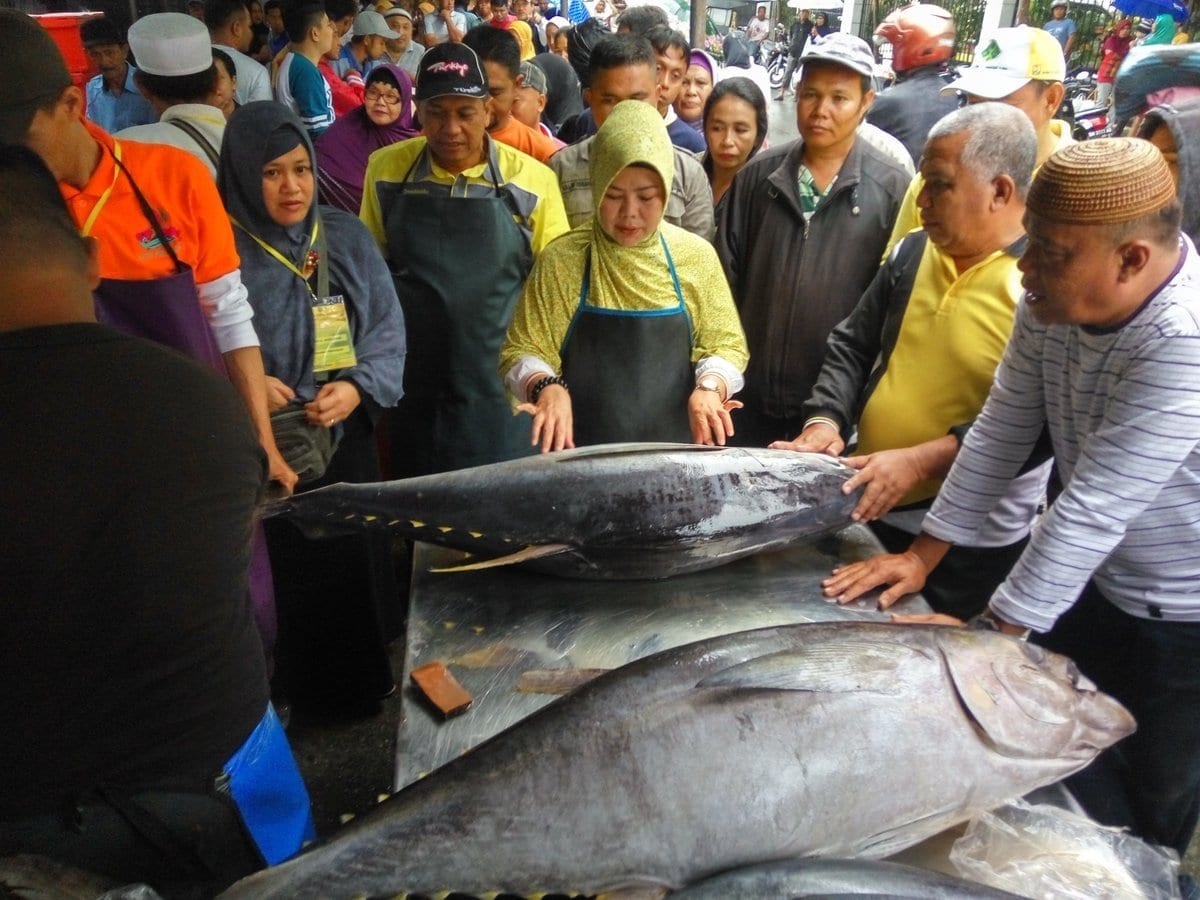
    Despite a sharp fall in exports before the end of 2022 due to global inflation, tuna still brought home US$1 billion in revenue last year, up 34% from 2021, becoming a billion-dollar commodity for the first time, data showed.

    Tuna products of Vietnam were shipped to 99 markets, of which the U.S., the EU, members of the Comprehensive and Progressive Agreement for Trans-Pacific Partnership (CPTPP), Israel, Thailand, Saudi Arabia, Russia, the Philippines, and Egypt were the largest importers, accounting for 92% of total exports, according to the Vietnam Association of Seafood Exporters and Producers (VASEP).

    Germany, Spain, and Belgium were the biggest EU buyers of Vietnamese tuna. Notably, shipments to Germany and Spain shot up 161% and 117% last December, respectively.

    Tuna exports to Japan, a CPTPP member, grew fast in the last quarter of 2022. The value surged 131% year on year in December alone, helping raise the export turnover to CPTPP markets to nearly $136 million, up 48%.

    Meanwhile, strong declines were recorded in shipments to many other markets, VASEP said, noting that after dropping in November, tuna exports to the U.S. fell by another 38% in December. However, last year’s exports to this market still rose 44% to approximate $487 million.

    VASEP forecast the export in the first quarter of 2023 will be unable to sustain its 2022 performance, but markets may recover in the latter half of this year. Free trade agreements are the driver for tuna exports in the year’s beginning.

  • Vietnam Airlines reports $430M loss on fuel price

    Vietnam Airlines reports $430M loss on fuel price

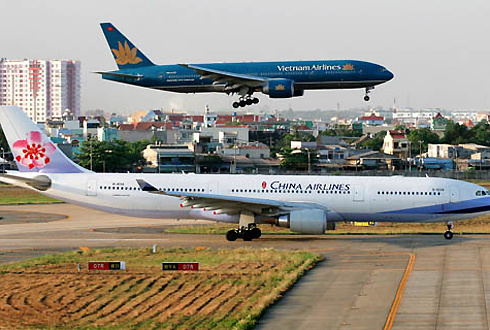
    Vietnam Airlines reported a loss of VND10.09 trillion ($430.3 million) last year and blamed it on rises in fuel prices and exchange rate volatility.

    Its revenues were worth around VND71 trillion, equivalent to 70% of revenues in 2019 before the Covid-19 pandemic hit but higher than the combined figures of 2020 and 2021.

    As of last year the carrier had accumulated losses of VND34.2 trillion.

    Yet it remains optimistic about 2023 since global markets have been recovering since late 2022 and said it would take measures to address the losses issues.

  • Indonesia surpasses Thailand as Vietnam’s largest car exporter

    Indonesia surpasses Thailand as Vietnam’s largest car exporter

    Indonesia surpassed Thailand as Vietnam’s largest car exporter in 2022, with 72,671 cars exported.

    According to statistics released by Vietnam Customs, Vietnam imported 173,467 cars in 2022, an 8.5% increase from 2021.

    Indonesia, Thailand and China were the biggest car exporters to Vietnam, but Indonesia surpassed Thailand to be the country that exported the most cars to Vietnam, with 72,671 cars exported in total, a 64.2% increase from 2021, and worth $10.5 billion.

    Thailand exported 72,032 cars worth $1.42 billion to Vietnam in 2022, a 10.9% decrease in number from 2021. The number of cars imported from Indonesia and Thailand amounted to 144,703 cars, accounting for 83% of all imported cars. China stood in third place, exporting 17,240 cars to Vietnam in 2022.

    For the first time in decades, the number of cars sold in Vietnam in 2022 reached 508,547 cars, according to statistics from the Vietnam Automobile Manufacturers’ Association and TC Motor.

  • Steelmaker Hoa Phat reports bigger losses in Q4

    Steelmaker Hoa Phat reports bigger losses in Q4

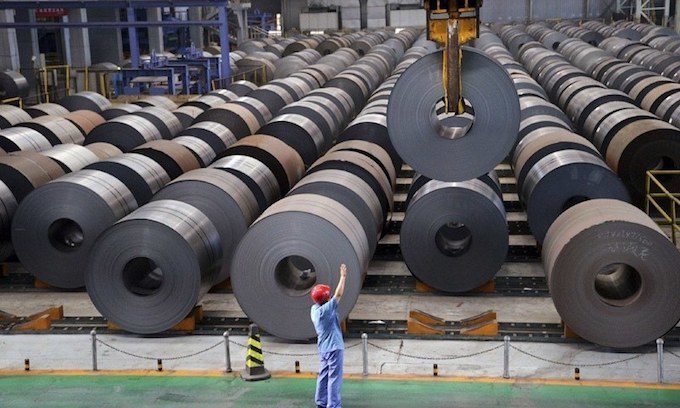
    Hoa Phat Group, Vietnam’s biggest construction steel firm, posted net losses of nearly VND2 trillion ($84.7 million) in Q4 last year, higher than the losses of roughly VND1.8 trillion in Q3.

    The company’s losses in Q3 was its first quarterly loss in 13 years.

    Hoa Phat made revenues of VND26 trillion in the fourth quarter, seeing a year-on-year fall of 42%, bringing the total revenues last year to VND142 trillion, down 5%, due to weaker demand for various steel products.

    Its after-tax profits were over VND8.4 trillion in 2022, down 76% against 2021.

    The firm supplied the local market with 7.2 million tons of steel products, including 4.3 million tons of construction steel, last year, posting a year-on-year drop of 7%, and holding a market share of nearly 35%.

  • UBS Set to Poach Staff for M&A

    UBS Set to Poach Staff for M&A

    During this week’s Davos conference CEO Ralph Hamers, said UBS was looking to hire. Now we know which kind of bankers it is going after.

    UBS is looking to bolster its M&A staff, citing people familiar with the plans.

    The move contrasts with recent decisions by banks, including Morgan Stanley and Goldman Sachs, to cut staff and reduce investment banking capabilities after last year’s dealmaking slump.

    UBS focuses on experienced managing directors at target boutique advisory businesses, which it aims to lure with attractive compensation.

    Since the financial crisis Boutique M&A advisory groups such as PJT Partners, Houlihan Lokey, Evercore, Lazard, Greenhill and Robey Warshaw — have been winning market share from traditional bulge bracket investment banks, it added.

  • FTX Debacle Promts Revolut to Delay its Cryptocurrency Launch

    FTX Debacle Promts Revolut to Delay its Cryptocurrency Launch

    Revolut is delaying its entry into cryptocurrencies, postponing the launch of its RevCoin in the wake of the collapse of the FTX exchange.

    Switzerland’s most popular neobank, Revolut, is holding back on its planned entry into minting its cryptocurrency.

    We are scoping the market conditions and assessing the best time to launch RevCoin in the coming months, a spokesman for the UK’s most valuable fintech told the news outlet. Revolut initially planned to launch RevCoin towards the end of last year, but management opted for a delay as FTX imploded in November.

    The project was confirmed in an interview CEO Nik Storonsky conducted with The Block in May of last year. RevCoin will run on Ethereum and work similarly to airline mileage incentive programs, with users earning rewards on how frequently they use the service.

    Storonsky is an ex-Credit Suisse derivatives trader who founded Revolut in 2014. He is worth $7.1 billion, according to Forbes.

    In Switzerland, the neobanks services are available via Credit Suisse.

  • TikTok starts labeling accounts that have anything to do with the government

    TikTok starts labeling accounts that have anything to do with the government

    As of today, TikTok content will have flags to signify if a video is coming from a state-controlled media. This feature was initially introduced last year, and was limited only to Russia, Ukraine, and Belarus. In the spirit of transparency, however, this feature will become available in more countries.

    The company’s goal, as described in its own statement, is to help users recognize accounts whose content might be influenced by a government entity. They hope to provide users context when consuming such content — especially news — as it may not always be clearly stated within the video itself. As many of us know, subjectivity and presentation play a huge role in the way in how people understand information.

    This decision is the product of long-term research that the company has conducted across numerous countries. The definition of “state-controlled media” that the TikTok specialists have agreed upon is “an entity where there is evidence of clear editorial control and decision-making bystate memberse”.

    However, this change also means that TikTok should be capable of defining “editorial independence” as well. When trying to prove that, the company’s Trust and Safety and Policy and Partnership teams are looking at things such as a publication’s mission statement, leadership behavior and what type of editorial decisions they typically make. As an example, when reviewing news outlets, they ask questions such as “Are they funded by a state entity?”. If the answer is “yes”, then objectivity may not be on the agenda.

    TikTok’s statement emphasizes that they’ve done their best to create an objective evaluation methodn. They hope that it can continuously help users make informed decisions when consuming news-related content on the platform. That being said, the team is aware that errors aren’t out of the question, so a new appeal process is also being introduced.

    While all of this is well and good, TikTok leadership understands that this doesn’t mean that the battle has been won. It’s great to see the team behind one of the most controversial social media platforms remain vigilant and attempt to provide something that can so easily become lost in fast-form media: context.

  • Spotify urges the EU to reign in Apple’s App Store monopoly

    Spotify urges the EU to reign in Apple’s App Store monopoly

    As many of you probably know, there’s always heated competition between tech companies. And sometimes, a company is bigger than another… in one way or another. Battles between competitors are not a rarity in the tech world. One such battle has been undertaken by Spotify, which is, let’s say, unhappy with Apple Music and has taken it to file an antitrust case against Cupertino. And now, 9to5Mac reports things are getting a little heated.

    Basically, Spotify is alleging Apple is competing with it via Apple Music in an unfair manner. Spotify is stating that Apple can offer subscriptions within Apple Music with no penalty, but Spotify needs to pay 30% to Apple for doing the same (or 15% from year two).

    Back in 2019, Spotify filed an antitrust complaint against Cupertino in Europe. Since then, the European Commission has reached a preliminary conclusion siding with Spotify but a final decision has not been reached yet.Now, Spotify has sent an open letter (backed by 7 other companies) to the Executive Vice President of the European Commission, Margrethe Vestager. The companies that backed the music-streaming platforms represent digital organizations for audio streaming, web software, communications, publishing, and marketplaces.

    Here’s the list of the companies that signed the open letter:

    • Basecamp
    • Deezer
    • Proton
    • Schibsted
    • Spotify
    • European Publishers Council
    • France Digitale
    • News Media Europ

    Read the full open letter here.

    In the letter, the companies request “swift and decisive action” to be taken from the European Commission against “anti-competitive and unfair practices by certain global digital gatekeepers” – namely Apple. The letter goes on to indicate that Apple has been imposing unfair restrictions on businesses. Additionally, the letter states those alleged anti-competitive practices are harming innovation, European consumers, and the development of apps and services.

    The letter also underlines that a decision has to be reached quickly, as “every day that passes is a loss for innovation and for the welfare of European consumers.”

    In the fall of last year, Europe’s Digital Markets Act (DMA) entered into force, after being adopted in the summer. The DMA is addressing App Store monopoly, third-party app payments, and cross-OS support for iMessage. Spotify’s letter signifies that enforcement of the new legislation is needed against Apple and underlines that any attempts to circumvent the new legislation by “misleading and vague grounds of privacy and security” should be resisted.
    All in all, the letter urges the European Commission to make a decision on the case against Apple. It will be interesting to see whether or not the EC accelerates its decision making and what results from this battle.
  • Netflix and Disney+ ad-supported tiers are not that attractive

    Netflix and Disney+ ad-supported tiers are not that attractive

    While Apple may probably be venturing into figuring out an ad-supported tier for Apple TV+, Netflix and Disney+ are seeing some unsatisfying results in acquiring subscribers for their ad-supported plans. Variety reports that a recent survey is indicating not many people are willing to go for an ad-supported tier on Netflix or Disney+.

    The survey also indicates that Netflix’s “Basic With Ads” tier is not reaching its goals. The cheaper plan with ads was launched back in November. The survey indicates that 5% of current Netflix subs were thinking of downgrading to the ad-supported plan in December, and only 6.5% of non-members indicated that they would join Netflix in the next month because of its ad-supported plan.

    On the other hand, Disney+’s ad-supported tier is not doing much better, according to the survey. Results show 19% of the non-subscribers were “very” or “somewhat” likely to pick a Disney+ ad-supported tier at some point (keep in mind, the question did not specify a time frame for subscribing).

    6% of current Disney+ subscribers said they planned to downgrade. Basically, a bit more people than Netflix, but still, pretty much a similar percentage.

    Overall, by surveying 2,089 people, 13% only wished to downgrade to an ad-supported tier for their subscription plans.
    Interestingly, when the survey divided people by earnings, those who earned $100,000+ a year were the most likely to downgrade (19%) versus those earning under $50,000 (11%).

    All in all, this trend shows that the interest in ad-supported subscription plans may not be as high as one would suppose. We will have to wait and see how these plans grow over time (and much more time is needed for some conclusive results, for sure), but for now, maybe Netflix or Disney+ will have some food for thought as to how to make these plans more attractive.