Author: Mei Ling Tan

  • Singapore Fintech Association Launches Networking Club

    Singapore Fintech Association Launches Networking Club

    The initiative aims to foster deeper social engagements among local fintech professionals and corporates and enhance the vibrancy of the industry ecosystem.

    Members of Singapore’s fintech community can look forward to more industry networking, upskilling opportunities, and lifestyle privileges with the launch of the SG Fintech Club by the Singapore Fintech Association and the Monetary Authority of Singapore (MAS).

    Among its programs are talent matchmaking sessions, industry expert mentorship programs, and masterclasses organized by SFA. The Institute of Banking and Finance (IBF) and J.P. Morgan have also been brought on board to curate skills and career development events, the announcement said.

    The rapid shift towards digital acceleration and increasing competition in the ecosystem has made it more urgent for fintech professionals to stay relevant, connected and competitive, Damien Pang, MAS deputy chief fintech officer, said in the announcement.

    He said he hopes the club will help build a tight-knit community of talents, facilitate more collaboration within the industry and bring more value to the fintech ecosystem.

    The lineup of events for the next month is already packed, and includes fireside chats with fintech founders, strategy sessions, and masterclasses. Find out more at https://club.singaporefintech.org.

  • UBS Issues First Green Bonds

    UBS Issues First Green Bonds

    UBS has issued its first green bonds which it will use to finance mortgages for low-energy buildings.

    Major Swiss bank UBS Tuesday issued its first «green bonds»

    They are in two tranches, one of 500 million euros ($595 million) with a five-year maturity and a seven-year one of 250 million francs ($272 million), the bank said in a press release.

    UBS said the bonds were issued under its Green Funding Framework which is based on international rules. The framework defines green investments in the form of mortgages on Swiss buildings which meet the Minergie standard for low-energy buildings. The bank intends to expand the pool of suitable assets continually.

    The bonds will help UBS kill several birds with one stone. It will be keeping its promise to achieve net-zero greenhouse gas emissions across its entire business by 2050 as well as helping its clients with sustainability.

    The «green bonds» will also bolster its balance sheet by helping refinance its mortgage book on a broader basis.

    Environmental Balance Sheet

    They will also help its environmental balance sheet. A recent study showed 35 percent, or $13.4 billion, of UBS’ loans book’s exposure to what the bank terms climate-sensitive industries was in real estate.

    Reducing high-carbon positions on the balance sheet is more important than simply cutting exposure to climate-sensitive sectors such as real estate. We don’t serve the community better by reducing real estate lending, rather, by making real estate lending greener.

  • Apple protects email users from having their personal data collected

    Apple protects email users from having their personal data collected

    When you open an emailed newsletter, there are images that are not included in the message but are stored on a separate server. When you open the email, this server gets a message to  open the image along with information such as your approximate location, the device you are using, and the time that you opened the email. Bloomberg says that the data is used by publishers and brands as a way to determine how well their marketing strategy is working.

    But in its new role as internet privacy cop, Apple has a feature called “Mail Privacy Protection” that will automatically download the data held on the separate server whether you opened the email or not. But Apple will not give away your personal data such as location and the name of the device you are wielding. Considering that roughly 50% of all email is opened on an Apple app (says analytical firm Litmus Software), Apple is once again using its power to keep user data from getting into the hands of advertisers.

    According to data from marketing firm Warc, from this past March 22nd, ad spending on iOS rose 10%. During the same time period, ad spending on Android rose 21%. But how much is Apple really getting hurt?

    Andy Yen, CEO of encrypted email provider Proton Technologies says about Apple that “They’re making a big focus on privacy, but Apple is interested in the advertising market and already makes a lot of money there.”

    The thing to remember is that Apple can afford to accept fewer ads than Google and Facebook because of how each of the tech firms make the bulk of their profits. Apple sells devices while companies like Google and Facebook sell ads. Not only do ad sales provide those companies with big bottom lines to appease stockholders, they also help subsidize the price of the Google and Facebook devices you buy allowing them to be more affordable.

  • Woolworths unveils final step in NSW DC restructure

    Woolworths unveils final step in NSW DC restructure

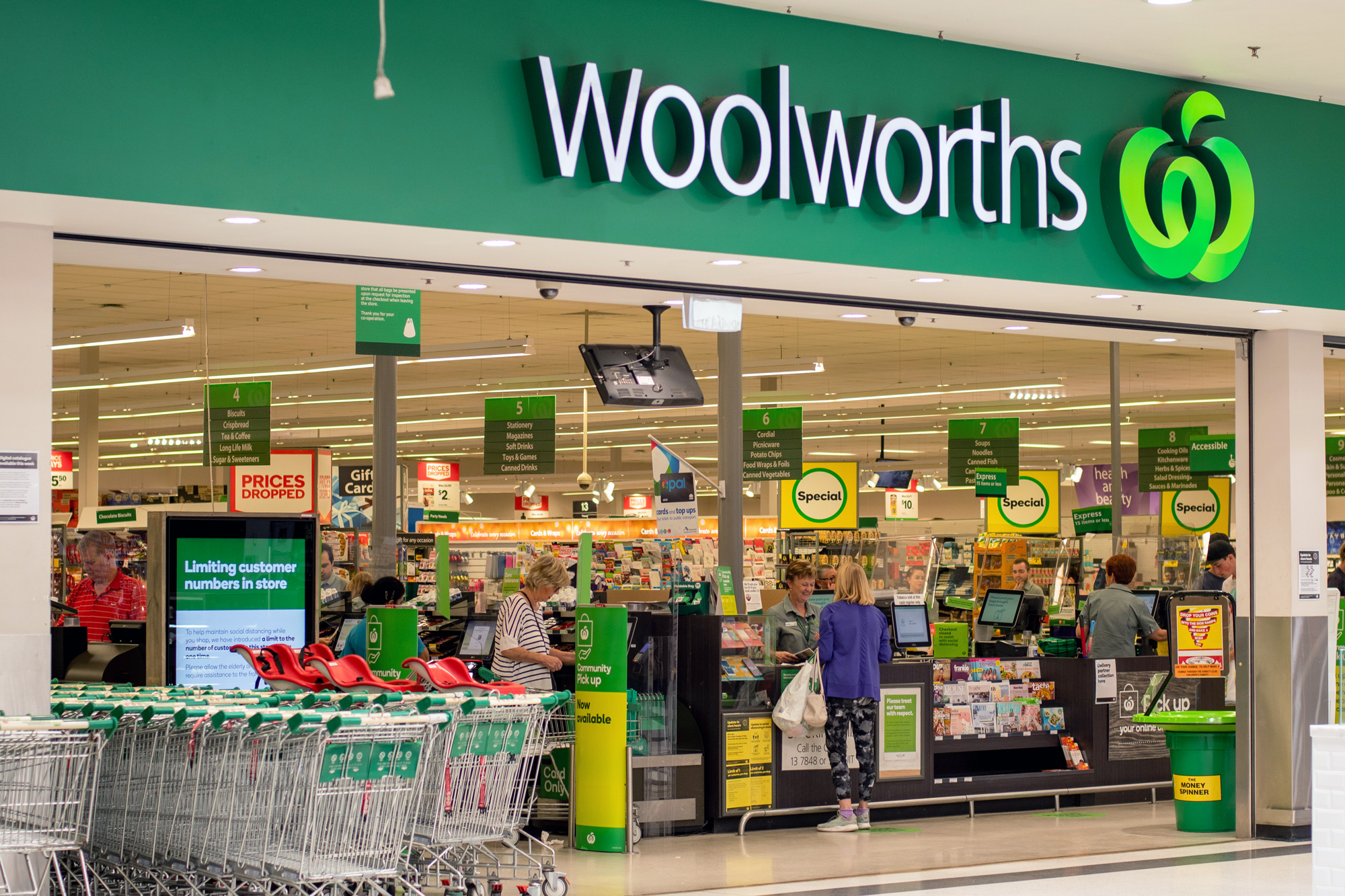
    Woolworths is restructuring its NSW distribution centre operations, announcing two new facilities, closing one and repurposing another.

    The company’s supply chain division Primary Connect will invest $400 million in building a 76,000sqm fresh-food DC in Western Sydney’s Wetherill Park, pictured above, which will serve more than 280 Woolworths stores across the state from 2023. It will have capacity to distribute more than 3700 fresh produce and chilled lines.

    The new multistorey complex will replace the temperature-controlled facility at the Minchinbury Distribution Centre, which will close by 2024, with 330 staff being offered roles in other parts of the business.

    A second new DC will be built at Kemps Creek, a 35,000sqm facility managing liquor stocks  in partnership with Endeavour Group to service more than 400 Dan Murphy’s and BWS outlets across the state from next year.

    The existing Erskine Park Liquor DC will be converted into an ambient grocery facility once the Kemps Creek facility is operational.

    Construction of both new DCs is contingent on NSW Department of Planning approval.

    Woolworths Group CEO Brad Banducci said the facilities announced today mark the final step in what has been a major transformation of Primary Connect’s NSW supply chain network, following the Moorebank supply chain hub announced last year of which construction commenced last month.

    “The development of the Wetherill Park facility will help us deliver high-quality fruit, vegetables and chilled goods to our customers fresher, faster, and more efficiently than ever before.

    “Wetherill Park is strategically located in close proximity to a large number of our stores, suppliers and transport providers, making it an ideal base for our fresh food distribution in NSW,” said Banducci.

    “The co-location of fresh and chilled operations across a multi-storey site will also help remove more than 11,000 truck movements off Sydney roads each year – delivering environmental, traffic and road safety benefits to the community.”

    Primary Connect says the existing fresh network in NSW is nearing capacity, with products currently supplied from three sites, including two third-party facilities. Without the new DCs announced today, the company has limited capacity to handle range expansion or volume growth over the medium to long term.

  • DB Schenker, Volocopter develop heavy lift cargo drone

    DB Schenker, Volocopter develop heavy lift cargo drone

    DB Schenker and urban mobility air firm, Volocopter, have teamed up to develop solutions for the fast and emission-free transport of goods using heavylift drones.

    Volocopter exhibited its test VoloDrone aircraft, along with a sample transport container from DB Schenker, at Germany’s National Aviation Conference last week.

    In a statement, DB Schenker said the heavylift drone, which can take off and land vertically, is autonomously and electrically operated and can transport up to 200 kilograms (kg) of cargo with a range of up to 40 kilometers.

    The VoloDrone weighs 600 kg, it is 9.15 meters in diameter, 2.15 meters tall.

    Jochen Thewes, CEO of DB Schenker said the possibilities of utilizing the drone in logistics is “limitless.”

    “When the infrastructure for conventional means of transport is overburdened or non-existent, cargo drones offer an opportunity to rethink logistics routes. The possible applications in logistics are limitless. Through our partnership with Volocopter, this vision is gradually becoming reality. Drone transport is becoming increasingly tangible,” he said.

    DB Schenker noted that the first flight took place in 2019. Since then, regular flight tests have been conducted in southern Germany.

    Florian Reuter, chief executive of Volocopter, said: “Our VoloDrone will be put to use, where classical ground transportation meets its limits in logistics, construction, or agriculture.”

    The logistics company said the future logistical applications for the heavy-lift drone include places that are difficult or slower to reach by other means, such as islands, land-to-ship deliveries, transport to mountainous regions, or places isolated from road networks following natural disasters.

    Intra-city deliveries are also possible targets for such drone operations.

  • FruChocs range expanded with White Choc Raspberry

    FruChocs range expanded with White Choc Raspberry

    Confectionery company Robert Menz has added a new variety to its FruChocs range, the White Choc Raspberry.

    Rolling out in supermarkets this month, the new chocolate combines “sumptuous tangy real apricot centres mixed with a sweet, natural raspberry flavor in luscious white chocolate coating”.

    The chocolatier will launch the 135g White Choc Raspberry FruChoc in Coles South Australia and The FruChocs Shop on June 22.

    Robert Menz CEO Phil Sims said that raspberries with white chocolate is a classic combination for a reason, and the company loved the opportunity to give this a FruChocs twist.

    “As we approach the 10th annual FruChocs Appreciation Day, we wanted to make sure it was one to remember,” said Sims.

    Menz White Choc Rasberry FruChocs is available at RRP $4.20 in Coles South Australia, Drakes, Foodland, IGA, On The Run, X-Convenience, Liberty Tip Top, BP AM-PM, and Cheap As Chips.

  • Brownes Dairy appoints new CEO

    Brownes Dairy appoints new CEO

    Australian dairy company Brownes Dairy has appointed Natalie Sarich-Dayton as its new CEO.

    Sarich-Dayton succeeds Tony Girgis who served as CEO of Brownes Dairy for seven years.

    “I have greatly enjoyed working alongside Natalie, and believe she is an inspired choice as the company’s new CEO who will continue to bring success to WA’s favorite dairy,” said Girgis.

    Prior to the appointment, she worked at the company as director of sales and marketing.

    According to the company, Sarich-Dayton was a driving force behind Brownes Dairy’s return of ‘Milkos’ home delivery service, which became a lifeline to the WA community during the Covid-19 lockdowns.

    Sarich-Dayton has more than 20 years of experience in working in the FMCG sector at major businesses in Australia and overseas, including Coca-Cola Amatil, HJ Heinz, Danone, and Unilever.

    She is Brownes Dairy’s first female CEO in its 135-year history.

  • Digital mutant orchids go on sale at cryptocurrency marketplace

    Digital mutant orchids go on sale at cryptocurrency marketplace

    Vietnam’s so-called mutant orchids are being turned into unique digital assets and being sold for up to thousands of dollars online.

    On the digital goods marketplace OpenSea.io, hundreds of items are displayed when a user types the keyword “Orchidaceae.”

    These items are non-fungible tokens (NFTs) which are units of data stored on a digital ledger called a blockchain that certifies a digital asset to be unique.

    In other words, NFTs transform digital works of art and other collectibles into one-of-a-kind, verifiable assets that are easy to trade on the blockchain, and a person can now buy a digital orchid plant using cryptocurrency like Ethereum.

    “The Hong My Nhan has glossy wings, harmonious pink color. Usually, the sepals are a bit darker than the wings,” says the description of a piece of the orchid that costs $428.

    These products are not real orchids. Instead, the buyer will own a digital version of the plant which is guaranteed to be sold in a limited number.

    “Although the buyer won’t own the physical plant, he or she can still show off the orchid without having to take care of it,” said digital currency expert Phan Duc Nhat.

    A Phu Tho orchid with an asking price of around $100 will have a maximum of 2,000 NFTs, while the more luxurious Co Do orchid with the asking price of $12,500 will only have 100 NFTs.

    But so far the highest bid for such an NFT is only 0.2 Etherum, or more than $400.

    The rush for the so-called mutant orchids has flooded social media in Vietnam in recent months, with investors spending hundreds of million dong (VND100 million = $4,340) to own a physical plant, hoping to sell it for a profit later.

  • Fintech startup Mfast raises $1.5 mln

    Fintech startup Mfast raises $1.5 mln

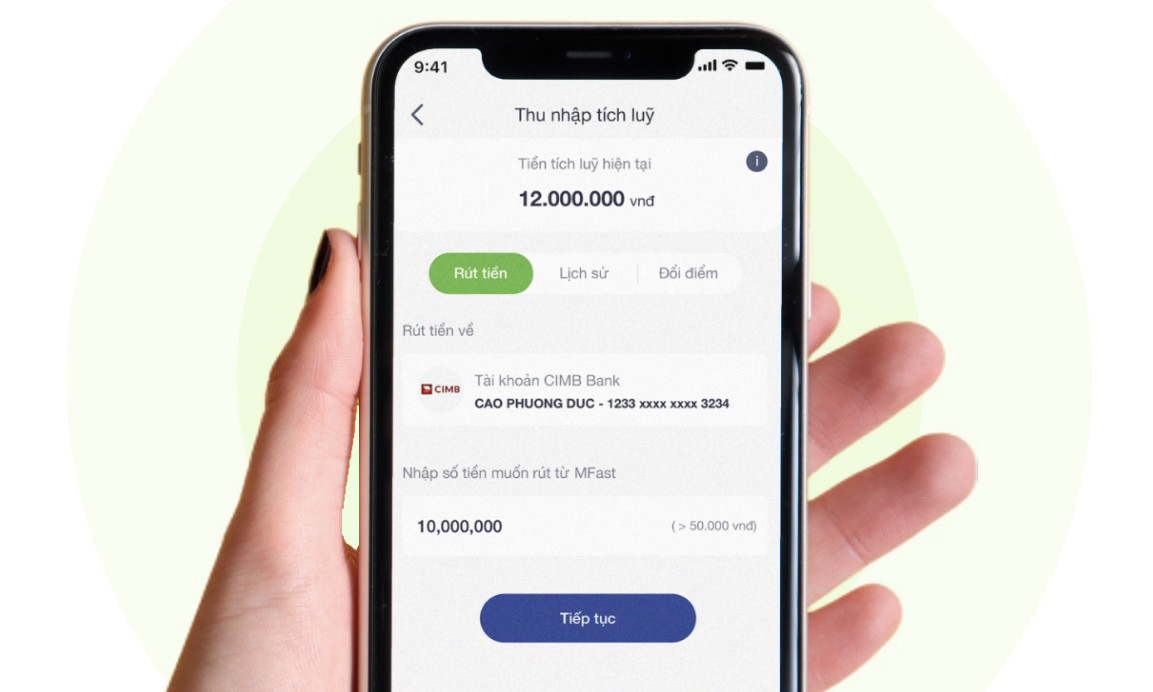
    Fintech startup Mfast has raised $1.5 million in its Pre-Series A funding from a group of investors led by Do Ventures.

    Mfast is a fintech platform that enables Vietnamese to access, use and introduce financial and insurance service packages as well as other product segments.

    After three years of operations in Vietnam, it has served nearly 600,000 users, with 75-80 percent of its end-users coming from remote provinces and rural areas.

    The amount disbursed to its financial partners has climbed to more than VND5 trillion ($217 million).

    Mfast’s mobile app claims to connect the underserved populations with financial and insurance institutions to give them access to basic financial services.

    Amy Do, investment manager of JAFCO Asia, a co-investor in the round, said that the fund had made the decision because of the great potential of the consumer credit and insurance market in Vietnam, as shown in the solid traction of the company despite the ongoing pandemic.

    Do Ventures is a $50 million early-stage venture capital fund that serves as a strategic partner for startups.

  • Struggling Vietnam Airlines to receive $174 mln loan

    Struggling Vietnam Airlines to receive $174 mln loan

    An interest-free loan of VND4 trillion ($173.9 million) will be soon disbursed to national flag carrier Vietnam Airlines, which is on the brink of bankruptcy over Covid-19 impacts.

    The legal procedures for an aid package designated for the local aviation sector have been completed, and the VND4 trillion loan, part of the package, is “scheduled to be disbursed to Vietnam Airlines late June or early July,” Dang Anh Tuan, head of the carrier’s Communications Department, told VnExpress Monday.

    Earlier, late last year, the National Assembly had approved an aid package of VND12 trillion for the troubled carrier.

    At a press briefing held Monday by the State Bank of Vietnam, the country’s central bank, Nguyen Tuan Anh, head of the central bank’s Credit Department, said three local banks, SeABank, MSB and SHB, have pledged to offer Vietnam Airlines loans totaling VND4 trillion sourced from the central bank’s refinancing operations.

    Vietnam Airlines’ overdue debts have surged to VND6.24 trillion. According to a report recently drafted by the Ministry of Planning and Investment, the carrier, which racked up losses of nearly VND5 trillion in the first quarter of 2021, is likely to make losses of VND10 trillion in the first half of this year.

    As of March 31, Vietnam Airlines posted negative undistributed after-tax profits of more than VND14,218 billion, compared with its registered capital of VND14.19 trillion. If this problem is not solved, Vietnam Airlines shares coded HVN on the local stock market will be delisted.

    On April 15, the Ho Chi Minh Stock Exchange put HVN shares on the warning list because the carrier was posting big losses.

    At its extraordinary general meeting in late 2020, Vietnam Airlines said it would use VND8 trillion from its share issuance to pay all overdue debts, compensate for shortages of capital for production and business, and repay short-term and long-term loans from banks.

  • DHL adds Sustainable Marine Fuel option for full-container load shipment

    DHL adds Sustainable Marine Fuel option for full-container load shipment

    DHL Global Forwarding is introducing another Sustainable Marine Fuel (SMF) service for ocean freight as part of its sustainability strategy.

    In a statement, the air and ocean freight arm of Deutsche Post DHL Group, said they are now extending the carbon reduction option to Full-Container Load (FCL) shipments following the success of the launch of a similar service for Less-than-Container Load (LCL) shipments.

    It said offering the option of using SMF is another step towards cleaner and greener ocean freight, in line with Deutsche Post DHL Group’s Mission 2050 of net-zero emissions logistics.

    “As one of the leading ocean freight forwarders globally, we take a serious commitment in our fight against climate change. With the strong demand for ocean freight in the Asia Pacific, we are in a prime position to offer our customers a new and easier way to reduce their carbon footprint, by choosing sustainable biofuels and decarbonizing their entire ocean freight trade lanes,” said Kelvin Leung, CEO DHL Global Forwarding Asia Pacific.

    He added that the launch of this new service “reinforces” DHL’s push toward a more sustainable supply chain.

    The SMF service is now available for all ocean freight shipments. DHL said the carbon reduction is achieved by DHL Global Forwarding purchasing SMF through partners and matching it with the amount consumed in the FCL shipment.

    It added that through the “book & claim” mechanism, there is no requirement for physical traceability of the fuel through a supply chain, as the environmental attributes of the SMF are separated from and can be purchased independently of physical fuel.

    “With the goal of ‘burn less, burn clean,’ the logistics provider aims to optimize carbon consumption across its network, fleet, and real estate. As part of this, DHL has a GoGreen carrier rating program that allows the freight forwarder to give preference to carriers with strong environmental performance,” DHL said in its statement.

    It said offering a sustainable alternative fuel for ocean freight is also another step within the Group’s sustainability efforts. By 2030, DHL said it wants to invest EUR 7 billion in climate-neutral logistics solutions and cover at least 30% of its fuel requirements with sustainable fuels.

    DHL noted that its customers can easily choose the use of sustainable biofuels via the myDHLi Quote + Book function, which also includes a carbon calculator.

  • Apple Maps doesn’t collect data that can identify you on the iPhone like Google Maps does

    Apple Maps doesn’t collect data that can identify you on the iPhone like Google Maps does

    Unlike Google Maps, which is available on most of Apple’s devices, Apple Maps is only available to those using iOS, iPadOS, watchOS and macOS devices. In other words, Apple gets paid by device sales to help cover the costs of developing Apple Maps.

    Google, on the other hand, gets paid for Google Maps the same way it gets paid for anything it does-by selling advertising. If you look at the Privacy Labels on the App Store versions of Apple Maps and Google Maps, you can see that Apple Maps collects data from users, like Health & Fitness, Search History, Diagnostics, Location and User Data. But none of the data collected by Apple Maps is linked to a user’s identity.

    Google Maps’ Privacy Label for its iOS app shows that the app collects financial and contact information, User Content, Browsing History, Usage Data, Other data, Location, Contacts, Search History, Identifiers, and Diagnostics. This data can be collected by Google and linked to your identity. You could block this with the use of incognito mode which will prevent Google from collecting your data, but also limits some of the app’s functionality.

    To enable incognito mode on the Google Maps app, tap the profile icon in the upper right of the screen and tap  “Turn on incognito mode.” With this enabled, browser or search history is not saved, Location History is not updated, and Maps cannot be personalized.

    “Google Maps is designed to protect your information. We provide controls to easily manage your settings and use industry-leading technologies like differential privacy to keep your data safe. We continue to make Google Maps the best and most accurate way to navigate and explore the world—providing rich local business information, best in class search and navigation, and helpful features like the COVID layer and live business information.”

    Apple Maps has come a long way since its launch in 2012 when countries and streets were mislabeled and some users in Australia looking for directions to Mildura, Victoria was sent on a 24-hour trek across the outback to an area filled with poisonous snakes, no food, water or cell service. But Apple Maps is much improved and that improvement will continue with iOS 15.

    If you’re an iPhone user with a long memory, the time has come to give Apple Maps another shot. One of the features that we’ve found useful is the one that alerts us when a red light camera is in our path ready to look for drivers who commit a moving violation. And another feature will tell us whether to turn at the next light or to continue driving forward until we reach the light after the next one.

    And if you wear an Apple Watch, the integration between Apple Watch and the timepiece is outstanding. When you need to make a turn, you will feel haptic feedback on your Apple Watch that feels just like an automobile’s turn indicator against your wrist. This prevents you from missing a turn.

    Talking about the next build of iOS, Apple says that it is “committed to building the world’s best map and iOS 15 takes Maps even further with brand new ways to navigate and explore. Users will experience significantly enhanced details in cities for neighborhoods, commercial districts, elevation, and buildings, new road colors and labels, custom-designed landmarks, and a new night-time mode with a moonlit glow.”

    Google Maps has always been the first choice for mobile device users looking to navigate from point “A” to point “B,” but it appears as though Apple is ready to provide a strong challenge to Google.

  • Spotify acquires another company to further improve podcasts discovery

    Spotify acquires another company to further improve podcasts discovery

    Spotify bought a few small companies in the last couple of months to further improve the podcast experience. Over the weekend, the music streaming company announced another acquisition that’s meant to contribute to building the best podcast discovery experience: Podz.

    Podz is a small company that owns a technology that Spotify thinks it can successfully complement its own to accelerate the efforts to drive discovery and deliver listeners the right content when they need it.

    Podz technology, just like Spotify’s, is powered by machine learning and generates high-quality clips that offer users the chance to preview important moments from podcast episodes. To sum it up, thanks to the new acquisition, Spotify should be able to make it easier for its listeners to find the content they want to listen to, and for creators to be discovered and build a fan base.

    According to Spotify, Podz technology will be integrated into the music streaming service beginning this year, so users should start seeing the first improvements before the end of 2021.

  • The rise of location-based advertising in a digitalized world

    The rise of location-based advertising in a digitalized world

    With the rise of IoT and connected devices as companies innovate to drive profitable growth, location data is becoming an increasingly important asset across myriad industries such as retail and logistics, where consumers are reached out to based on location data to create enhanced customer experiences.

    Compounded by the pandemic, there has been a widespread interest in harnessing location data as countries fight to contain the spread of the virus through contact tracing. In many countries worldwide, telecom operators have been sharing aggregated location data with the health authorities to help them access the effectiveness of prevailing measures. Countries such as China and South Korea are even using mobile data locations to track the location of quarantined individuals.

    Dubbed the backbone of connectivity across industries during this pandemic, the telecommunications industry has been witnessing heightened traffic and has amassed vast location data that can add real value internally and externally in a digitalized world.

    Globally, the location-based services market in APAC will experience the highest growth in the coming years. Of which, location-based advertising (LBA) accounts for a large part of this market across all regions.

    According to the Location Based Marketing Association (LBMA), the public’s perception of location data now goes beyond selling to include raising public health awareness as governments rely on location data during this pandemic. In Asia-Pacific (APAC) for instance, 79% of surveyed companies viewed location-based services ad targeting data as valuable. Of the location-based technologies, APAC utilized Bluetooth technology the most, followed by beacon technologies, Wi-Fi and GPS.

    As e-commerce is beginning to replace more brick-and-mortar, and as we’re recording an increase in smartphone penetration along with a more robust app landscape as businesses embrace digital transformation, the location-based market will continue to note an upward trend.

    The popularity of social media by consumers has also contributed to LBS across all industries in recent years. In the retail industry, for instance, geofencing has been a popular marketing strategy to drive customer loyalty through mobile apps. Businesses can present ads, promotions and coupons based on where their consumers are geographically located.

    With the rapid digitalization across business verticals, progressive businesses are recognizing the increased value of combining both location and timing to support more advanced marketing strategies and new market opportunities, utilizing real-time location-based marketing to effectively reach out to consumers. According to Research and Market, the global LBA market is expected to reach US$163.5 billion by 2026, representing a CAGR of 18% between 2020 and 2026.

    Location-based marketing outperforms traditional marketing methods. In a saturated or highly competitive market, for instance, operators can leverage real-time messaging to upsell or cross-sell products or services, sending promotional messages to subscribers when they are near or enter a specific store. Using geo-targeting, well-timed advertising campaigns not only facilitates enhanced service delivery but also yields higher conversions, greater success and ultimately, maximum return on investments. This is also one way to drive consumers away from competition to gain a larger market share.

    With plans to scale as digital services become more intertwined in our lives than ever before, Uberall recently announced an acquisition of a location marketing company in the US to further scale its businesses.

    Driven by the same agenda, Telenor Pakistan announced a partnership with Starcom earlier this month to monetize postpaid and prepaid customers’ data using location-based marketing. Currently, Pakistan does not have a data protection law.

    Location-based advertising is effective throughout a consumer’s journey, from purchase, to engagement and retention. Needless to say, location is just one factor, albeit an important one. Augmenting location with human-centric data, such as consumption patterns, comes into play in advanced analytics to tailor personalized services experiences.


  • DBS Launches Digital Bond Marketplace

    DBS Launches Digital Bond Marketplace

    The bank is launching a marketplace that for issuers to directly issue their own bonds connect with investors.

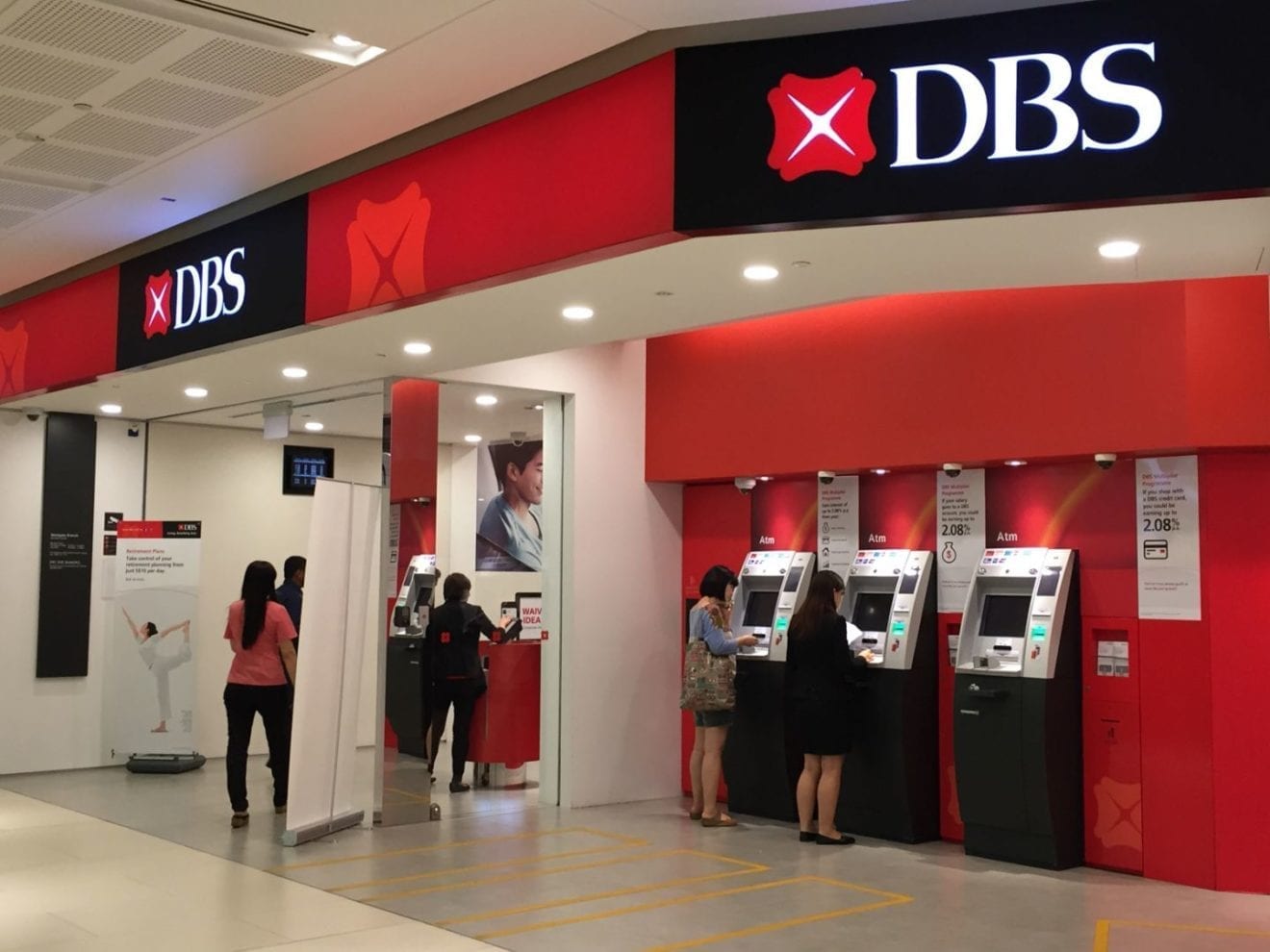
    DBS is launching the Fixed Income Exchange (FIX) to digitalize and make the bond issuance process more efficient, the bank announced on Tuesday in a statement.

    FIX allows issuers to directly issue bonds to the marketplace, and fully digitalizes and automates issuance-related documentation. It also supports issuers in generating digital bond-ready transactions, which can be listed and traded on the DBS Digital Exchange (DDEx).

    Keppel Corporation is the first corporate issuer on the platform, with a $1 billion Euro-Commercial Paper Programme.

    With FIX, DBS said it hopes to make capital markets access more time and cost-efficient, while also developing the breadth and depth of Asian bond markets at a faster pace.

    The time is ripe for traditional ways of bond origination to make way for a more digital approach, to do what has been aspired for so long – by taking the first step towards the creation of an independent platform that allows bond issuers efficient and effective direct access to the market place and bond investors, Clifford Lee, global head of fixed income at DBS, said in the announcement.

    Just last week, domestic rival UOB piloted the digital issuance of its latest bond offering on exchange-operated digital asset issuance platform Marketnode, a joint venture between Singapore Exchange and Temasek.