Author: Mei Ling Tan

  • Tencent costs surge as competition Bytes

    Tencent costs surge as competition Bytes

    Soaring costs saw Tencent Holdings report a net income of US$13 billion for last year, after a slow fourth quarter, which concerned analysts given the subsequent impact of the coronavirus crisis since January.

    Costs rose 20 percent last year as the social media and digital company spent money buying new content and securing new users to its WeChat and other platforms to protect itself from fast-growing rival ByteDance, parent of TikTok.

    Group revenue topped US$53.3 billion for the year but its cost of sales reached $29.7 billion.

    Tencent said its online gaming revenue grew by 25 percent, the fastest rate since the first quarter of 2018 and sales of smartphone games soared 37 percent.

    The company said more gamers signed up to its services in January as the coronavirus crisis forced people to stay home, with schools, universities and workplaces closed for an extended period.

    Net fourth-quarter income was $3.1 billion.

  • Malaysian retail expected to contract

    Malaysian retail expected to contract

    Retail Group Malaysia (RGM) predicts Malaysian retail sales will contract by 3.9 percent year-on-year in the first quarter of this year.

    The estimate is based on footfall having halved during the coronavirus outbreak, contradicting RGM’s expectation earlier this year that Malaysian retail sales could rise by 0.4 percent.

    “In the event, the global coronavirus outbreak and domestic political turmoil take more than the next few months to resolve, it will further affect the retail consumption pattern in Malaysia drastically,” said Tan Hai Hsin, MD at RGM.

    He said it was unable to estimate the likely retail industry growth figure for this year while preparing the report because of the unpredictable changes of the coronavirus outbreak and the new ruling government policies.

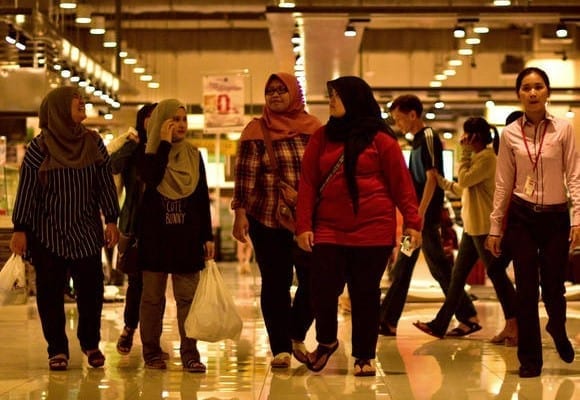
    Although shopping traffic has dropped significantly in the country, some shopping malls have remained open to the public to provide essential goods and services.

    Aeon Mall’s tenants, including pharmacies, banks and POS Malaysia, will continue to operate, however, food & beverage tenants will only provide takeaway and delivery services. Aeon Retail’s outlets will also provide dedicated check-out lanes for senior citizens, the disabled and pregnant women to ensure that they can shop for their daily needs in “a safe and worry-free environment”, the company said in a statement.

    Meanwhile, 1 Utama Shopping Centre said on its social media that its essential service tenants such as supermarkets, pharmacies or convenience stores will remain open, and reassured consumers that there is no need to start panic shopping.

    In the final quarter of last year, Malaysia’s retail sales increased 3.8 percent year on year with the best growth in the pharmacy and personal care categories. The worst-performing sector was supermarkets and hypermarkets which witnessed a 2.8-per-cent full-year decline.

  • Esprit warns of big loss as Europe shuts down

    Esprit warns of big loss as Europe shuts down

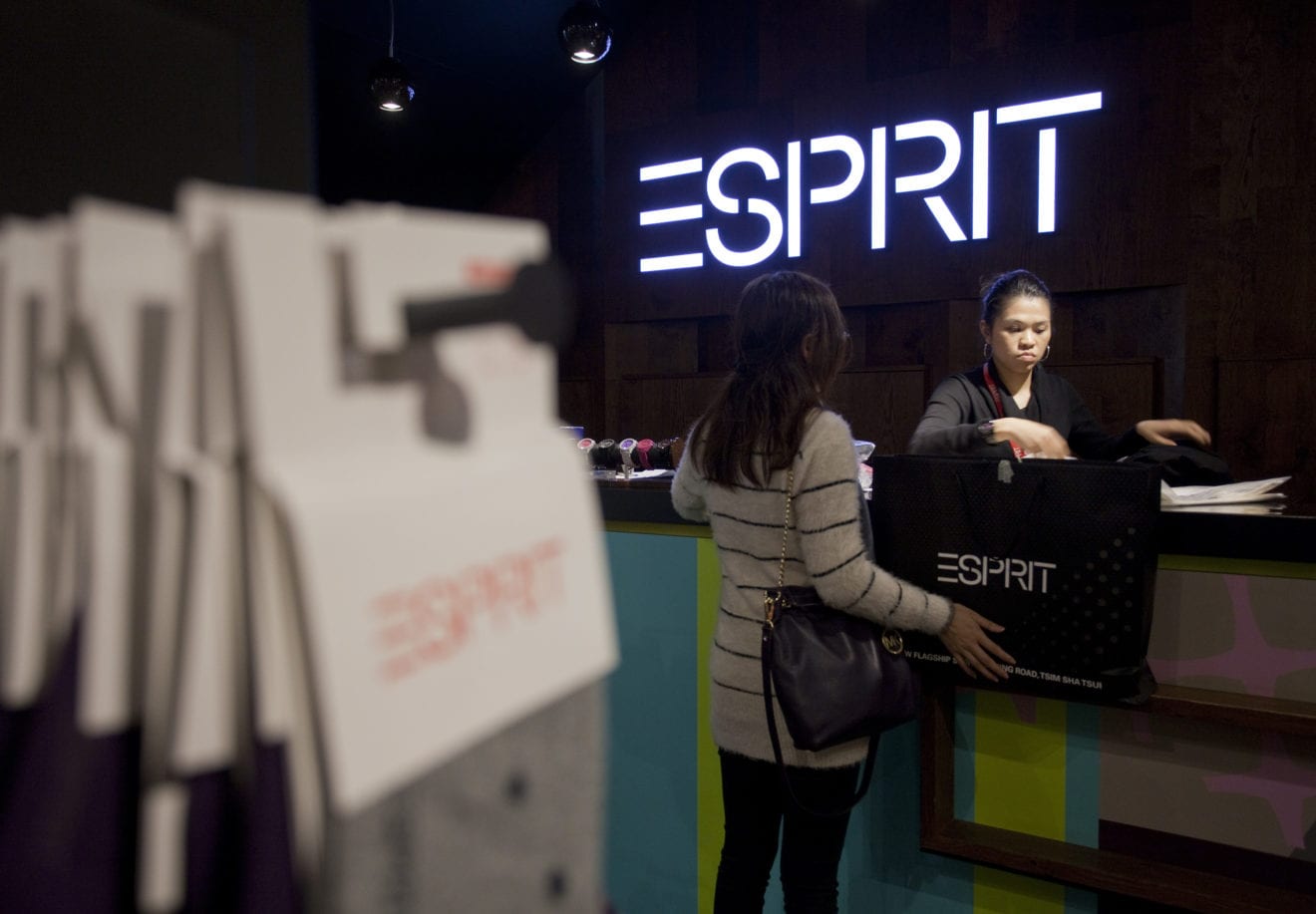
    Fast-fashion retailer Esprit says foot traffic into its stores worldwide have evaporated in the wake of the coronavirus pandemic and warned shareholders to expect a “considerable loss”.

    Public health initiatives enacted in many countries across the world aimed at slowing the spread of the pandemic have resulted in the closure of “a significant number of stores,” said Esprit company secretary Ophelia Lo.

    Public life has been locked down in France, Italy, Spain, Poland and Austria with other European countries most likely to follow, she said. All of those are important markets for Esprit which as part of a major restructuring plan is refocusing its business on Europe.

    “Obviously apparel retail sentiment is at its lowest level possible and store traffic in the group’s retail stores and its partners’ points of sale has subsided entirely,” said Lo.

    “In addition, the logistics of the supply chains of merchandise shipments are significantly affected.”

    Esprit expects the pandemic will “significantly adversely impact the sales of the group” in the second half of the current financial year, ending June 30.

    “As a result, management expects the group to incur a considerable loss in the second half,” said Lo.

    Right now, Esprit management cannot quantify the actual impact of the pandemic on the group’s business performance, given the inability to predict the speed and extent to which the pandemic will spread in markets in which the group and its suppliers operate in, and with no reliable estimation on when the pandemic may be over.

    “The company will continue to diligently assess the impact of the pandemic on the group’s business performance and will make appropriate announcements on updates as and when necessary,” she said.

    Meanwhile, the company will take “all practicable measures to cope with the challenges ahead,” including using working capital management and cost-control measures, and exploring financial support provided by local governments.

  • Google Translate gains a very convenient transcription feature

    Google Translate gains a very convenient transcription feature

    As handy as Google’s crazy popular translation tool has always been, there was something missing that could make all our lives even easier. We’re talking about a real-time transcription feature, which is now a thing on Android devices.

    This does a great deal more than simply turn speech into text on your mobile phone, also translating said text while a person is still speaking without requiring a lot of effort on your part. All you need is the latest version of the official Google Translate app from the search giant’s Play Store, with a dedicated “Transcribe” icon found on the home screen and the option to select your source and target languages located in the language dropdown at the top.

    For the time being, the groundbreaking AI-powered functionality is compatible with English, French, German, Hindi, Portuguese, Russian, Spanish, and Thai, supporting transcriptions in any combination of these languages while Google continues to work on expanding the list in the near future. The company also plans to enrich the Google Translate experience for iPhones and iPads at some point, although no iOS release schedule has been put together just yet.

    In the meantime, Android users should definitely take this feature for a spin once they receive the newest update for their Google Translate app. An internet connection is required for real-time transcriptions to work, allowing you to follow a lecture, for instance, without understanding the language that’s actually being spoken.

    Although you can’t upload an audio file and have Google Translate automatically and seamlessly transcribe it for you just yet, the extremely cool new feature does support pre-recorded audio, which you can play on your computer, as well as live audio sources.

    You can also easily pause and restart your transcriptions by tapping on the mic icon, as well as check out the original transcript before it’s translated, change the text size, and choose the newly released dark theme in the settings menu. In a nutshell, Google appears to have thought of pretty much everything right off the bat here.

  • McDonald’s UK to scrap plastic Happy Meal toys

    McDonald’s UK to scrap plastic Happy Meal toys

    McDonald’s UK is ditching its plastic Happy Meal toys in favor of more sustainably produced alternatives in its stores.

    In a move to reduce the firm’s plastic waste by more than 3000 tons, from May onwards the firm will phase out the playthings it provides with its children’s meals and instead offer books, stuffed items or paper-based toys.

    Simultaneously, the restaurant chain will be collecting plastic toys back in its UK and Ireland restaurants to be recycled into play equipment for its children’s charities.

    McDonald’s UK has already been providing books as an option with its Happy Meals for several years under its Happy Reader program.

    “We care passionately about the environment and are committed to reducing plastic across our business,” said McDonald’s UK marketing chief Gareth Helm.

    “Families have high expectations of us and we’re working as hard as we can to give them the confidence that their Happy Meal is as sustainable as possible.”

  • HSBC Confirms Permanent CEO

    HSBC Confirms Permanent CEO

    HSBC finally settles on a permanent group chief executive seven months after the exit of predecessor John Flint.

    Former interim chief executive Noel Quinn will take the top job permanently, effective immediately, adding much-needed stability at the helm and settling months of uncertainty, according to the bank.

    Quinn took over the interim role following the short-lived two-year stint of Flint in August 2019. Since then, the bank has repeatedly said that succession remained underway, most notably during the last annual results when Quinn presented the group strategy but remained as interim head. Multiple names had emerged as potential successors to Flint including UniCredit chief executive Jean Pierre Mustier, who reportedly withdrew interest last month.

    The bank’s decision to name Quinn at the new CEO will bode well for stability especially given the recent shuffles made at the top. They include newly appointed regional chief executives for the U.S. (Michael Roberts), China (Mark Wang Yunfeng) alongside the Middle East, North Africa, Turkey, Latin America, Canada and most of Europe (Stephen Moss).

    As the new permanent chief executive, Quinn will reportedly earn a base salary of over $1.5 million per annum.

    Noel has proven to be the outstanding candidate to take on a role permanently that he has performed impressively on an interim basis since August 2019, said HSBC chairman Mark Tucker in a statement.

  • Giant Japanese sports store Alpen to open next month

    Giant Japanese sports store Alpen to open next month

    Japanese sports and outdoor goods retailer Alpen Co is set to launch Kanagawa’s first experience-based store late next month.

    The Alpen Outdoors LaLaport Yokohama store will handle more than 40,000 predominantly outdoor-related products under 200 brands. Alpen’s new location will be offering products in two formats, “Alpen Outdoors”, which will cover the entire light outdoor product range for activities such as camping and hiking; and “Alpen Mountains”, which focuses more on mountaineering. The store offers a tent trial experience with a realistic camp atmosphere.

    Popular outdoor brands Coleman and Snow Peak have shops-in-shops at the store with dedicated support staff.

    Alpen currently operates 11 stores nationwide, including a flagship in Kashiwa, which opened in April last year and is one of the largest in the world.

  • TransferWise Partners Alipay in China

    TransferWise Partners Alipay in China

    The London-headquartered online money transfer service is teaming up with Chinese payments and lifestyle services platform Alipay to expand remittance options for its users.

    TransferWise is making more inroads into Asia with a tie-up with mobile payments giant Alipay, which will enable instant transfers to China for 17 currencies, the firm announced in a statement on Tuesday.

    With Alipay serving more than 1.2 billion people worldwide together with its local e-wallet partners, TransferWise, which has 7 million customers worldwide, called the partnership a «major expansion.»

    Co-founder and CEO Kristo Käärmann said money transfers to China has been one of the most requested features among TransferWise users since its expansion in Asia.

    China is projected to be one of the top remittance recipient countries in the world, with £54 billion ($65.4 billion) expected to be sent back home by Chinese expats and migrants living abroad, TransferWise said in the announcement, citing a 2019 report.

    In 2019, TransferWise rolled out a debit Mastercard in Singapore, which also included a TransferWise Borderless multicurrency account. It also began processing international payments into digital wallets in Indonesia and the Philippines last year.

    Founded in 2011, TransferWise is valued at $3.5 billion, following its last funding round of $292 million in May 2019. It has raised a total of $772.7 million in funding in 10 rounds to date. According to the firm, it processes $6 billion in transfers monthly.


  • Apple fined €1.2 billion for price fixing in Europe

    Apple fined €1.2 billion for price fixing in Europe

    US tech firm Apple has been found guilty of anti-competitive behavior by a French antitrust body and fined €1.1 billion (US$1.32 billion).

    The firm was found to have fixed costs for its French wholesalers to force them to set retail prices aligned with Apple’s own, both in-store and online.

    The fine is the largest ever imposed by the French antitrust body and addresses Apple’s actions to prevent the wholesalers from freely setting their own business policies. The two wholesalers were also hit with large fines.

    “Apple and its two wholesalers agreed not to compete with each other and to prevent distributors from competing with each other,” read a statement from the French regulator, “thereby sterilizing the wholesale market for Apple products”.

    Apple will appeal the ruling, claiming the ruling “relates to practices from over a decade ago and discards 30 years of legal precedent that all companies in France rely on with an order that will cause chaos for companies across all industries”.

  • Versace launches on Lotte Premium Mall

    Versace launches on Lotte Premium Mall

    Italian luxury fashion brand Versace opened a store on e-commerce site Lotte Premium Mall in South Korea on Monday.

    Lotte Department Store says the store is a collaboration with the official importer Versace Korea and the online mall.

    Forty lines of Versace products, including ready-to-wear and accessories including wallets, belts, clutches and jewelry is showcased on the fashion mall site.

    Local media reports suggest online customers will be able to exchange purchases in Versace’s brick-and-mortar boutiques, including at Avenuel Main, Avenuel World Tower and Suwon.

    Myeong-gu Kim, head of the online division of Lotte Department Store said that in the future, Lotte Premium Mall plans to strengthen collaboration with international luxury brands to make their online entry into South Korea.

    Versace is a luxury brand created in 1978 by Gianni Versace and his sister Donatella Versace.

  • Laura Ashley’s UK business collapses

    Laura Ashley’s UK business collapses

    Laura Ashley’s UK business has been placed into administration after realizing that even if it could secure funds from a third-party investor it would be too late to save the business.

    the Malaysian-controlled retailer of clothing and homewares was in negotiations with Hillco Capital in a bid to secure a £15 million emergency loan.

    In a statement reported by Retail Gazette, Laura Ashley said its “revised cash flow forecasts and increased uncertainty” mean it would not be able to secure those funds in sufficient time. The coronavirus, it said, “had an immediate and significant impact on trading, and ongoing developments indicate that this will be a sustained national situation”.

    Laura Ashley’s UK business employs 2700 staff across the UK where it operates 150 stores. The immediate consequences for Asian stores is not yet clear.

    Amy Higginbotham, a retail analyst at GlobalData, said while the company was blaming poor recent trading in part on the coronavirus outbreak, the retailer has been struggling for a while.

    “The brand has long been tired and has struggled to regain relevance in both its fashion and home divisions. Financially weak retailers, of which there are many, are likely to follow Laura Ashley into administration given the current crisis. Those retailing non-essential purchases that can easily be deferred will be particularly badly hit,” she said.

    All that aside, Laura Ashley’s UK business has reported a 24-per-cent increase in sales in the seven weeks to March 13.

  • South Korea’s Crispy Chicken n’ Tomato expands in Japan

    South Korea’s Crispy Chicken n’ Tomato expands in Japan

    South Korean chicken chain Crispy Chicken n’ Tomato has expanded its retail network into Tokyo, opening 10 stores in the city this month.

    Besides selling at stores, Crispy Chicken n’ Tomato has also partnered with UberEats to offer “sharing brand service” which allows one store on UberEats to bear two brands at the same time.

    The company introduces this type of business as unlike franchises, owners do not need to change interiors, uniforms, equipment or their existing menu.

    Crispy Chicken n’ Tomato’s operator, E-mate Co, said food-delivery sales are increasing significantly in a local restaurant market that has traditionally suffered slow sales growth for various reasons.

    “We are looking for restaurant partners and agencies that want to secure new profits”, said a spokesperson.

  • Nissan Stops Production At UK Factory Over Coronavirus Impact

    Nissan Stops Production At UK Factory Over Coronavirus Impact

    Nissan has stopped output at Britain’s biggest car factory due to the impact from coronavirus as it assesses supply-chain disruption and the drop in demand, the most significant closure to affect the country’s autos sector so far from the outbreak.

    Vauxhall’s Ellesmere Port car factory in northern England is also due to close on Tuesday until March 27 as party of parent company Peugeot’s plans to shut sites across the continent to handle the crisis.

    Nissan CEO Makoto Uchida says he’s happy to be fired by shareholders if there’s no sign of a turnaround at the Japanese automaker. Julian Satterthwaite reports

    Nissan’s Sunderland factory in north-eastern England made nearly 350,000 out of Britain’s 1.3 million cars last year, producing the firm’s Qashqai, Juke and LEAF models.

    “Further measures are currently under study as we assess supply-chain disruption and the sudden drop in market demand caused by the COVID-19 emergency,” the Japanese automaker said in a statement.

    Local lawmaker Sharon Hodgson, from the opposition Labour Party, called on the government to do more to support people.

    She wrote on Twitter: “40,000 people in and around my constituency rely on the plant for their livelihoods and I will do everything I can to secure them.”

  • Hong Kong malls join Deliveroo programme to rescue plunging F&B sales

    Hong Kong malls join Deliveroo programme to rescue plunging F&B sales

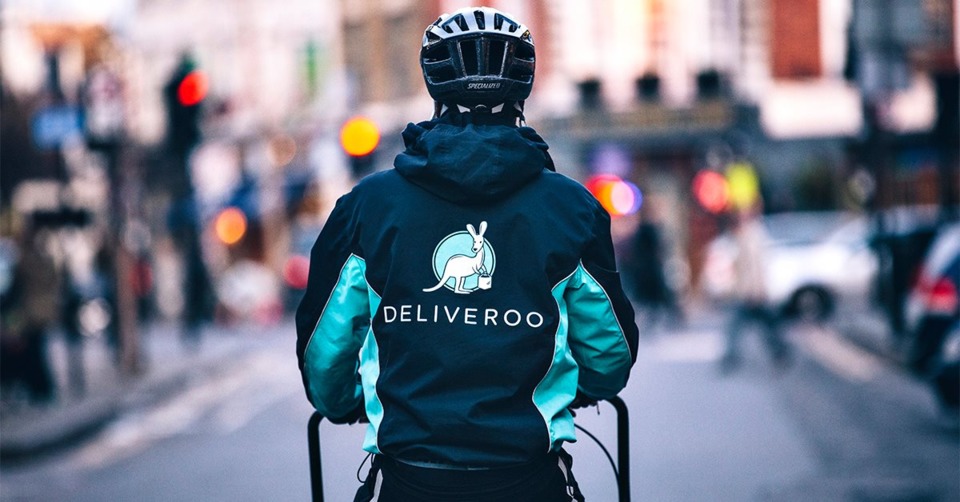
    Twenty Hong Kong shopping malls have joined a program launched by Deliveroo to help food & beverage tenants survive the coronavirus by expanding their delivery business.

    Deliveroo expects the mall partnership program to generate at least HK$20 million (US$2.6 million) in incremental online sales for the restaurants, “a critical avenue of additional income” for retail food & beverage tenants hit by decimated footfalls as consumers avoid crowded places such as malls.

    Deliveroo estimates about 300 restaurants will benefit from the program which has benefited from a $1.5 million investment by the company and partner malls.

    The program will include a fast-tracked onboarding for mall tenants and cross-marketing opportunities for malls to work with Deliveroo.

    The 20 shopping malls which have already signed on to partner with Deliveroo, include K11 Musea and K11 Art Mall from New World Development; Lee Gardens, Lee Theatre and Hysan Place From Hysan Development; East Point City, New Town Plaza, Popwalk, APM, World Trade Centre, Tai Po Mega Mall, Yuen Long Plaza and New Jade Shopping Plaza from Sun Hung Kai Properties; Tseung Kwan O Plaza and Nan Fung Place from Nan Fung Group; MegaBox from Kerry Properties; and Amoy Plaza, Kornhill Plaza, Fashion Walk and Grand Plaza from Hang Lung Properties.

    Discussions are ongoing with other malls across Hong Kong to join the program.

    Deliveroo says research of its 6500 restaurant partners has shown that online delivery channels which used to comprise 15 to 25 percent of turnover before the advent of the coronavirus crisis, now accounts for 50 percent total sales and for some, even more.

    Besides the fast-track onboarding, Deliveroo has developed a voucher program enabling malls and tenants to create coupon offers at a reduced rate, encouraging higher spend from existing customers and drawing in new customers to place food-delivery orders with restaurants located inside partner malls.

    Deliveroo and participating malls will develop locally relevant offers to drive demand and turnover for restaurant tenants’ delivery and pick-up services. User codes are being created for tenants of offices or apartments located above the malls and district-specific push notifications will be sent via social media and digital channels.

    Deliveroo says it has already signed on about 150 new restaurant partners due to the incentives provided by the mall partners, representing more than 25 per cent of all new sign-ons since the onset of the coronavirus crisis.

    In the case of one New Territories partner mall, restaurant tenants have seen sales increase by 1500 over the last fortnight.

    “The 30 restaurant outlets in the property are projected to earn at least HK$15,000 to $20,000 more in sales than they achieved in February delivery sales,” Deliveroo said in a statement.

    Brian Lo, GM of Deliveroo Hong Kong, said he is encouraged to see the positive momentum in engagement in the programme from leading developers and mall operators in Hong Kong.
  • Dire retail sales in Mainland China a harbinger for rest of the world

    Dire retail sales in Mainland China a harbinger for rest of the world

    Retail sales in Mainland China slumped by 20.5 percent in the first two months of this year according to government figures – providing a glimpse of what lies ahead for retailers in other countries where the coronavirus is now having an impact on community behavior.

    For most of January and February hundreds of millions of Chinese were subject to lockdown in their homes, and retail stores and shopping malls were closed. Most consumers moved online to purchase goods with e-commerce giants like JD and Alibaba developing safe delivery protocols to ensure distancing between delivery riders and customers.

    Combining the first two months of retail sales figures provide an accurate comparison with previous years as it eliminates any impact from the changing timing of Lunar New Year, traditionally a busy season for retailers.

    By comparison, retail sales in Mainland China grew by 8 percent in December.

    Analysts had expected sales to fall by 5 percent in January and February, a dramatic understatement of the eventual figures.

    On a more positive note, many major retail chains have reopened stores across Mainland China this month as the spread of the virus has abated. March data will be eagerly awaited to see if there is any indication of consumers spending on luxury goods and other unnecessary purchases as they celebrate the gradual return to normal life and indulge to reward themselves for enduring the lockdowns.