Category: Automotive

Retail News Asia is committed to providing both local and global retailers with the latest Auto and Car news throughout the Asian market. This on a daily base.

  • Maruti Suzuki Vitara Brezza To Be Manufactured At Toyota’s Plant

    Maruti Suzuki Vitara Brezza To Be Manufactured At Toyota’s Plant

    It was in 2017 that Toyota and Suzuki showed interest in working together in several markets including India and two years down the line the alliance is about to bear fruit. Both companies have spelt out the areas of collaboration and it is known that Maruti Suzuki will share the Ciaz, Ertiga, Baleno and Vitara Brezza with Toyota for India and other developing markets. Maruti Suzuki has also shared that it will make use of the unutilised production capacity of Toyota’s Bengaluru plant to assemble the Vitara Brezza.

    Speaking with carandbike, R.C. Bhargava- Chairman, Maruti Suzuki India said, “Toyota has some spare capacity in their Bangalore plant. We will use that capacity to manufacture the Brezza. That saves us the investment which otherwise would have been required. We will utilise that capacity, so it’s a win-win for both of us. We get cars without making any investment and they get something to use their capacity. So we are all looking always to maximise the efficiency of the total system.”

    Toyota Kirloskar Motor’s total annual production capacity is 310,000 units. The first plant which started production in 1997 has a production capacity of 100,000 units and operates at full capacity to assemble the Innova Crysta and Fortuner. The second plant which started production in 2010 is used to manufacture Toyota’s sedan and the Etios Liva hatchback and has a production capacity of 210,000 units. Maruti Suzuki is likely to manufacture the VItara Brezza in this plant as more than half of its capacity is left unexploited.

    Maruti Suzuki has confirmed that it will phase out current diesel engines from its line-up by April 1, 2020. The company has also reaffirmed that the Vitara Brezza will soon be offered with the petrol engine and chances are that the company may introduce the in-house developed 1.5-litre DDiS 225 diesel engine if it sees substantial demand for diesel variants in the segment. Since Toyota badged Maruti Suzuki vehicles are expected only by late 2019 or early 2020, there is a possibility that Maruti will manufacture the Vitara Brezza with new engines at Toyota’s second plant in Bengaluru.

  • Honda BR-V Facelift Unveiled In Indonesia

    Honda BR-V Facelift Unveiled In Indonesia

    Honda has revealed the updated BR-V at the 2019 Indonesia International Motor Show. The BR-V has not been doing great in terms of sales in India. The company has been selling close to 500 cars on an average and a facelift might just help in lifting those sales figures. However, we don’t yet know if this facelift will make to India yet as there’s no confirmation from the company. The BR-V does look prettier than before and the revised front grille and even the new bumper add to the design of the car. It looks bolder and the chrome that’s spread around the fog lamps, and even the slat on the front grille, adds to the premiumness of the BR-V.

    There’s a trapezoidal air dam and a silver scuff plate too. From what we can see, the facelift of the BR-V gets projector headlamps with L-shaped daytime running lights. The company has also tweaked the rear bumper slightly, so the BR-V still has the muscles and the character lines make sure that the car still oozes that SUV-ness. The BR-V facelift also gets 16-inch dual tone alloy wheels.

    There aren’t many changes made to the cabin of the BR-V as it retains the all-black dashboard and the touchscreen infotainment system. While the car launched the Indonesia is a 1.5-litre petrol, the one available in India is a 1.5-litre diesel as also a 1.5-litre petrol. With the new regulations coming into the country, carmakers are making sure that the line-up it brings to the market will be sustainable as also will boost its sales in the market. We wait to see what the company retains for the Indian market

  • Toyota Glanza Spotted For The First Time

    Toyota Glanza Spotted For The First Time

    Toyota is all set to bring in the Glanza hatchback to India. Essentially a Toyota-badged version of the Maruti Suzuki Baleno, the new Toyota Glanza is the first model to come out as part of the Toyota – Suzuki alliance which was announced in 2017. While a teaser has already been released, the Glanza has not been seen in the flesh in its entirety, well until now.

    The Glanza hatchback was spotted in a car park and yes, this is the first time you get to see what it really looks like, up front and the rear. Up front, you see it get a a new grille and slightly tweaked face, in order to differentiate it from the Baleno. So, we can see the two chrome slates which gets the Toyota badge right in the centre of the car. Much of the rest of the details on the car remain the same as on the Baleno. So the chrome strip, the headlamps, the fog lamps and even the lower air dam, remains identical to the Baleno.

    The similarity continues at the rear as there are no changes apart from the variant and brand badging. The Toyota Glanza will compete with the likes of the Maruti Suzuki Baleno, Hyundai i20, Honda Jazz. Considering that Maruti Suzuki has had great success with the Baleno and manages to sell close to 18,000 units a month on an average, it will be interesting to see how Toyota manages to boost its sales figures with this car.

    While the cabin of the car too is likely to remain unchanged, there will be a few tweaks made to make it feel more like a Toyota. As far as engine options go, the Toyota Glanza is expected to be launched in two petrol options, which will include Maruti Suzuki’s 1.2-litre, four-cylinder K12 petrol engine which powers the Baleno. The other one could be Toyota’s 1.2-litre four-cylinder petrol engine that is tuned to make 79 bhp and 104 Nm torque.

    The Toyota and Suzuki partnership extends not only to sharing vehicles but also technological development, vehicles production and market development. An MoU signed in November 2017 further expanded the partnership to consider a cooperative structure for introducing battery-powered electric vehicles.

  • Daimler Will Pull Smart Mini-Cars Out Of United States, Canada

    Daimler Will Pull Smart Mini-Cars Out Of United States, Canada

    The tiny, two-person Smart cars once pitched as the next big thing in urban mobility will be discontinued in the United States and Canada at the end of the current model year, German automaker Daimler AG said on Monday. Smart cars, with their unique styling and ability to fit in half a parking space, found an audience in densely populated U.S. and Canadian cities. But that audience was small and rapidly declining. Smart reported just 90 cars sold in the United States during March, down 18 percent from the year before.

    U.S. sales of a wide range of small cars have collapsed over the past several years as relatively cheap gasoline and a strong economy have encouraged consumers to buy larger trucks and sport utility vehicles.

    The Smart brand’s electric cars offered just 58 miles (93 km) of driving range. Competing models such as the “mid-range” Tesla Model 3, with an estimated range of 264 miles, offered more range and more room for passengers and cargo. The range figures are from the U.S. Environmental Protection Agency.

    Daimler’s Mercedes-Benz brand, in a statement, cited “a number of factors” for the decision to end Smart’s run in the United States and Canada, “including a declining micro-car market in the U.S. and Canada, combined with high homologation costs for a low volume model.” Homologation refers to the changes required to bring the European-designed Smart in line with U.S. regulations. Daimler ended sales of gasoline-fueled Smart cars in 2017.

    Mercedes plans to bring new, larger electric vehicles to the United States, starting with the launch of the EQC sport utility next year. Those vehicles will help Mercedes meet zero emission vehicle quotas in California and other states. Mercedes dealers will still offer parts and repairs for Smart cars, the company said.

  • Trump Again Goes After India

    Trump Again Goes After India

    President Donald Trump has criticised India’s “big tariffs” on American paper products and the iconic Harley-Davidson bikes, saying the US has been losing billions of dollars to countries like India, China and Japan. Addressing a Republican political rally in Wisconsin state’s Green Bay city on Sunday, Trump alleged that every country has been ripping off America for years.

    The President has repeatedly claimed that India is a “tariff king” and imposes “tremendously high” tariffs on American products. “For so many decades we’ve been losing tens of billions of dollars to China and Japan, and India, and name any country and we lost, but we’re not losing anymore,” he said to his cheering supporters. He said that the US was being charged high tariffs on foreign paper products.

    “We charge other countries zero tariffs on foreign paper products, but when Wisconsin paper companies export it abroad… China charged us big tariffs, India charged us big tariffs, Vietnam charge us massive tariffs,” Trump said. He claimed that people of the US demanded a government that puts America first. “And we’re doing that with China, we’re doing that with India, we’re doing that with Japan, we’re doing it with a great new trade deal, that hopefully will get approved in the house,” the President said.

    Early this year at a White House event to announce his support for reciprocal tax, Trump had said that he was satisfied with the Indian decision to reduce the import tariff on high-end Harley-Davidson motorcycles from 100 per cent to 50 per cent. The President said that he called up Prime Minister Narendra Modi on the issue of tariffs on Harley-Davidson motorcycles. “Look at Harley-Davidson. I met with them three years ago, they would tell me tough to do business in certain kind. I asked ‘How you’re doing in India?’ and they said, ‘Oh, we don’t do any business’. They weren’t even complaining because so many years.

    “So India charged a 100 per cent tariff on Harley-Davidson, but when they send their motorcycles and they may come to us, we charge them nothing,” Trump said. “So I called up Prime Minister Modi, I said unfair, he cut it 50 per cent… But that’s not good enough because look, it’s 50 per cent to nothing. And what we’re doing is changing all of that stuff, changing all of that rapidly,” he added.

    India is pressing for exemption from the high duty imposed by the US on certain steel and aluminium products, resumption of export benefits to certain domestic products under the Generalised System of Preferences (GSP) programme, greater market access for its products from agriculture, automobile, automobile components and engineering sectors.

    On the other hand, the US is demanding greater market access through a cut in import duties for its agriculture goods, dairy products, medical devices, IT and communication items. India has stated that it would be difficult for them to cut duties on IT products.

    India’s exports to the US in 2017-18 stood at USD 47.9 billion, while imports were USD 26.7 billion. The trade balance is in favour of India.

  • France and Germany To Support Battery Cell Consortium

    France and Germany To Support Battery Cell Consortium

    France and Germany have asked the European Commission to approve state subsidies for a cross-border battery cell consortium including carmaker PSA with its German subsidiary Opel and French battery maker Saft, a German official said on Monday. The two countries have earmarked 1.7 billion euros ($1.9 billion) to support company alliances to help reduce European carmakers’ dependence on Asian suppliers and protect jobs at risk from the shift away from combustion engines.

    The economy ministries of both countries sent a letter of intent to the European Union’s executive body asking it to give a provisional go-ahead, a German economy ministry spokeswoman said, without giving a sum for the planned state funding.

    “We’re now waiting for Brussels to give us the green light,” the spokeswoman said.

    German Economy Minister Peter Altmaier will meet French counterpart Bruno Le Maire in Paris on Thursday to discuss the matter, aiming to make progress with forging further battery alliances. The FAZ report said that the PSA/Saft alliance was planning to convert an Opel factory in the western city of Kaiserslautern close to the French border into a battery cell production site.

    Among the more than 30 companies that applied for state funding at the German Economy Ministry are carmakers Volkswagen and BMW, as well as German battery maker Varta and Swedish battery manufacturing startup Northvolt. Saft, a 100-year old French company owned by energy company Total, produces a range of batteries for industrial applications.

    It has joined forces with German industrial group Siemens, electronic components specialist Manz, Belgian chemicals group Solvay and Belgian material group Umicore to develop a new generation of batteries for electric vehicles.

  • Maruti Suzuki Ertiga Launched With The New 1.5-Litre Diesel

    Maruti Suzuki Ertiga Launched With The New 1.5-Litre Diesel

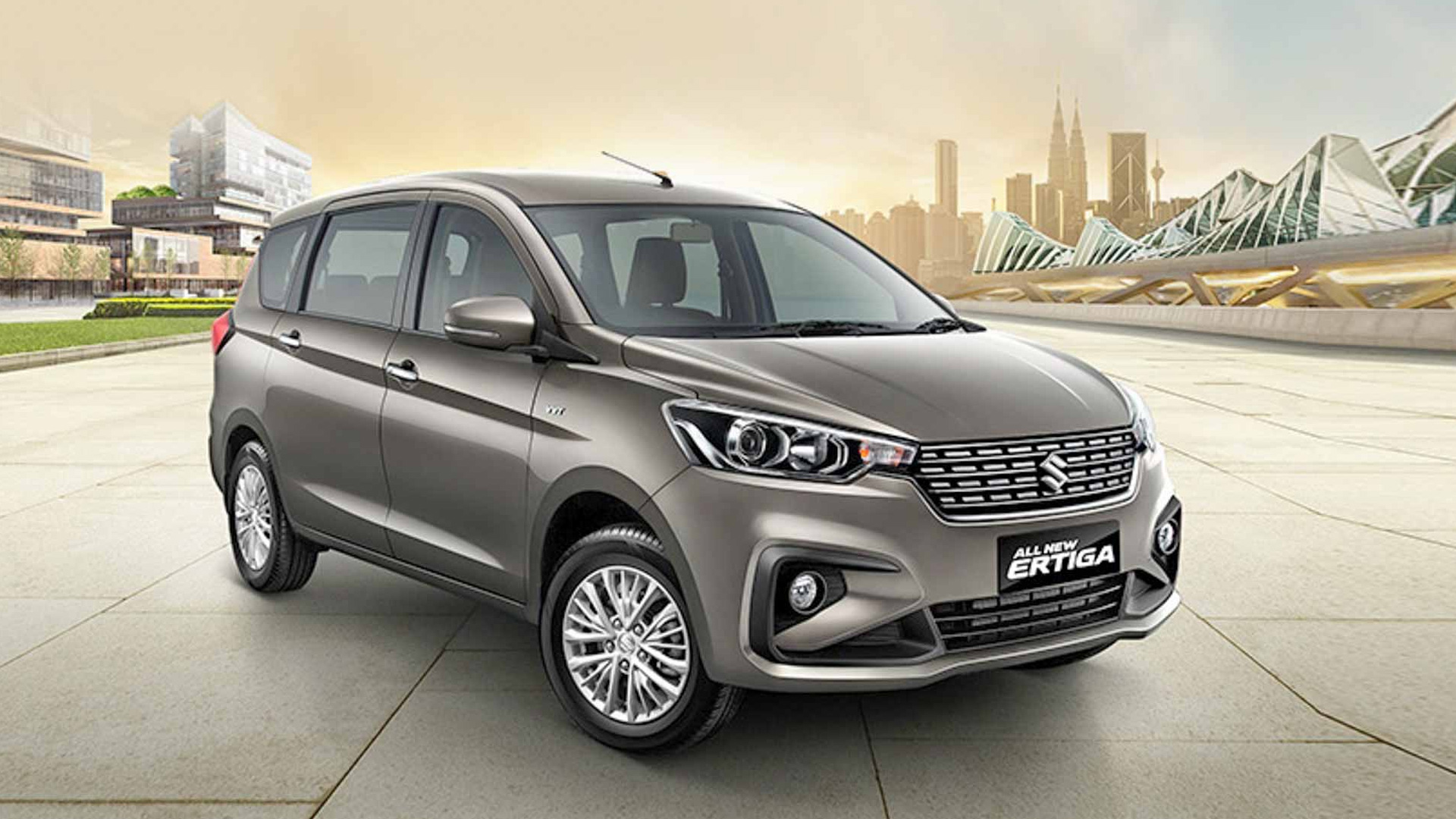
    Just days after announcing phasing out of diesel engines within a year, Maruti Suzuki has launched the 2019 Ertiga with its in-house developed 1.5-litre, DDiS 225 diesel engine. Maruti is offering the Ertiga 1.5 in three variants- VDI, ZDI and ZDI+ with prices starting at ₹ 9.86 lakh for the base trim and going up to ₹ 11.20 lakh for the top-end variant, all prices ex-showroom, Delhi. The DDiS 225 which will eventually replace the Fiat-sourced 1.3-litre DDiS 200 made its debut in the Maruti Suzuki Ciaz. At present, the 1.3-litre DDiS 200 engine will be offered alongside the new engine.

    It’s a 1498 cc, four-cylinder, turbocharged engine which churns out 94 bhp at 4000 rpm and 225 Nm of peak torque at 1500 – 2500 rpm. In fact, the DDiS 225 nomenclature alludes to the maximum torque the new engine puts out. Maruti has used Dual-Mass flywheel as a linkage between the engine and the transmission which helps to channelize the torque evenly, in-turn adding to the refinement. This engine in the Ertiga is mated only to a six-speed manual gearbox as standard and an automatic transmission is not on option as of now.

    The Maruti Suzuki Ertiga is India’s best-selling MPV and commands a market share of 39 per cent in its segment.

    The second-generation Maruti Suzuki Ertiga was launched last year in November and has been India’s best-selling MPV since then. It commands a market share of 39 per cent in the segment and Maruti Suzuki has sold over 40,000 units since its launch which is a year-on-year growth of a whopping 150 per cent in the November-April period.

    Maruti Suzuki in its last quarter financial result announcement had said that it will phase-out all its diesel models by April 2020 when the BS6 norms will kick-in, pertaining to the high transition cost. However, the company’s Chairman R C Bhargava did mention that the 1.5-litre engine may have future in bigger models if the market demand is there. After the Ertiga, we also expect the DDiS 225 engine to make its way in the S-Cross which is Maruti’s only model above four metres, yet to get the new 1.5-litre DDiS 225 diesel engine.

  • Pininfarina Battista Launched In The Middle East

    Pininfarina Battista Launched In The Middle East

    Automobili Pininfarina has announced the introduction of its fully-electric hypercar, Pininfarina Battista, in the Middle East market. Expected to be priced around $2 million ( ₹ 13.95 crore approx.), the Italian marque’s zero-emission electric hypercar was launched in Dubai, at specialist luxury car retailer Adamas Motors showroom. The new Battista electric hypercar is slated to enter production in the second half of 2020 at Pininfarina’s Cambiano facility in Italy. Initially, the carmaker will be producing a maximum of 150 units, out of which only 50 are anticipated to be available to cover the Middle East and Asia markets, so the company expects the demands to be exceptionally high.

    Talking about the Luca Borgogno, Design Director, Automobili Pininfarina, said, “We are proud to be in Dubai for the Battista’s Middle East debut. Just a few weeks after it was launched at the Geneva International Motor Show, where it received an amazing reception, we have arrived in one of the world’s most discerning countries for supercars and luxury cars. The Battista’s classic hypercar proportions combined with cutting-edge technology that delivers 1,900 hp and zero emissions will be a new experience for its owners in the UAE, and we believe will make them fall in love with ultra-high-performance electric vehicles.”

    In addition to Adamas Motors as the brand’s retail partner for the UAE, Pininfarina will soon announce a second retail partner for the Middle East, which will cover the important Saudi Arabia market. Meanwhile, potential customers are invited to apply to own a Battista using an online service within the company’s website.

    The Pininfarina Battista will be the first of the Italian marque’s pure-electric luxury cars, and it comes with a 120-kWh battery providing power to four electric motors – one for each wheel – offering a combined output close 1,900 horses while developing 2,300 Nm of peak torque. Pininfarina claims that the Battista electric hypercar is faster than a current Formula 1 race car. While 0-100 kmph is achieved in under two seconds, 0-300 kmph takes less than 12 seconds and it can reach a top speed of 350 kmph. As for the range, the company claims that the Battista has a potential zero-emissions range of up to 450 kilometres.

    The Battista comes with the classic Pininfarina design, using the same principle of form and function coming together, as seen in classic Pininfarina cars reaching back to the Cisitalia 202 of 1947 and through more than 100 Ferraris. The car also comes with a futuristic-looking cabin with a completely driver-oriented dashboard with two displays positioned behind the steering wheel offering a host of information. The hypercar features dual tone black and brown interior using high-quality leather. Plans are in place for the opportunity to fully personalise each car at Pininfarina SpA’s Cambiano headquarters.

  • Next Generation Mercedes-Benz S-Class Interior Leaked

    Next Generation Mercedes-Benz S-Class Interior Leaked

    Mercedes-Benz is readying the next generation of its flagship S-Class sedan and while we’ve seen test mules in the past, a leaked image of the interior have now made its online. The next generation Mercedes-Benz S-Class due to make its debut sometime in 2020 and going by the leaked image, the car appears future ready. Confirmed by earlier spy shots, the W223 S-Class replaced the dual infotainment screen with single unit for the instrument console and a massive vertically-stacked display for all other controls. The Tesla like touchscreen system replaces a tonne of switches on dashboard that gets a clutter-free appearance with sleek looking air-con vents and a new steering wheel. The leaked image also reveals the dual-tone treatment to the cabin in pristine while and black shades.

    The new generation Mercedes-Benz S-Class will be based on the automaker’s MRA platform and will come with a range of six and eight cylinder petrol and diesel engines. There will also be an electrified version called – the EQ S – and will be based on the company’s new Modular Electric Architecture (MEA). The new electrified version is expected to sport a range of 500 km on a single charge, as the automaker’s new top-of-the-line electric saloon. Not to forget, there will be the Affalterbach versions too with the AMG-tuned S-Class drawing power from the 4.0-litre V8 bi-turbo motor that is likely to go hybrid.

    In addition, the new Mercedes-Benz S-Class is expected to be offered in only the long-wheelbase guise globally. That said, do expect the Pullman and Maybach versions to follow suit packing in tech and comfort over the current W222 S-Class. It needs to be seen if Mercedes will continue with the Coupe and Convertible versions on the next generation. With respect to new tech, expect improved autonomous driving capability possibly up to Level 3; a new and updated version of the Airmatic suspension and more segment-first creature comforts on the offering.

    In terms of design, the new S-Class is likely to get an evolutionary styling along lines of the new A-Class, CLS and the likes. The current version is one of the most gorgeous looking saloons out there, which really sets the benchmark for the new version. It is also likely to serve as the design inspiration for the next C-Class and E-Class models, when its time for their respective new life cycles.

    More details on the new S-Class will be available in the months to come. A global debut will happen next year while sales globally should commence by 2021 or 2022, depending on the market. The W222 S-Class is assembled in India, and given the sheer demand for the flagship Mercedes, expect the new model to be locally assembled as well.

  • Bugatti Divo Undergoes Comprehensive Testing in Dessert

    Bugatti Divo Undergoes Comprehensive Testing in Dessert

    After months of anticipations, the Bugatti Divo was unveiled last year at the Pebble Beach Concours. It is a rather beautiful car and only 40 units of it will be made. Bugatti wants to make sure that the Divo endures all weather conditions and is conducting a thorough test. In a Facebook post it shared pictures of the Divo undergoing summer testing in the scorching desert where the temperatures were beyond 40 degree Celsius and the Bugatti Divo was tested at 250 kmph.

    Now that may not be something that Divo owners are looking forward to, but it’s a customary thing for Bugatti and it wants to make sure that the Divo can sustain such high temperatures and the engine delivers the same performance. Under its fancy skin, the Divo is technically a Chiron. It is powered by the same 8.0-litre quad-turbo W16 engine which churns out a mental 1479 bhp which can propel it to triple digit speed in just 2.4 seconds.

    What adds to its mightiness is the advanced aerodynamics which complements the handling to tackle the manic speed it can take. It gets a massive 1.8-metre hydraulic wing, a sharp and wide chin spoiler up front and a huge diffuser. Altogether, the Bugatti Divo makes 456 kg of downforce at its top speed which is a good 90 kg more than the Chiron. However, the aerodynamics put a lot of downforce which at 380 kmph make it a bit slower when compared to the Chiron and even the Veyron.

    The Bugatti Divo is a product of the Nardo test track which makes it more track-focused. It’s quicker, lighter and even sharper at corners. It’s been named after the legendary French racing driver, Alberto Divo who was a two time winner of the Targa Florio race back in the 1920s.

  • Triumph Speed Twin Launched In India

    Triumph Speed Twin Launched In India

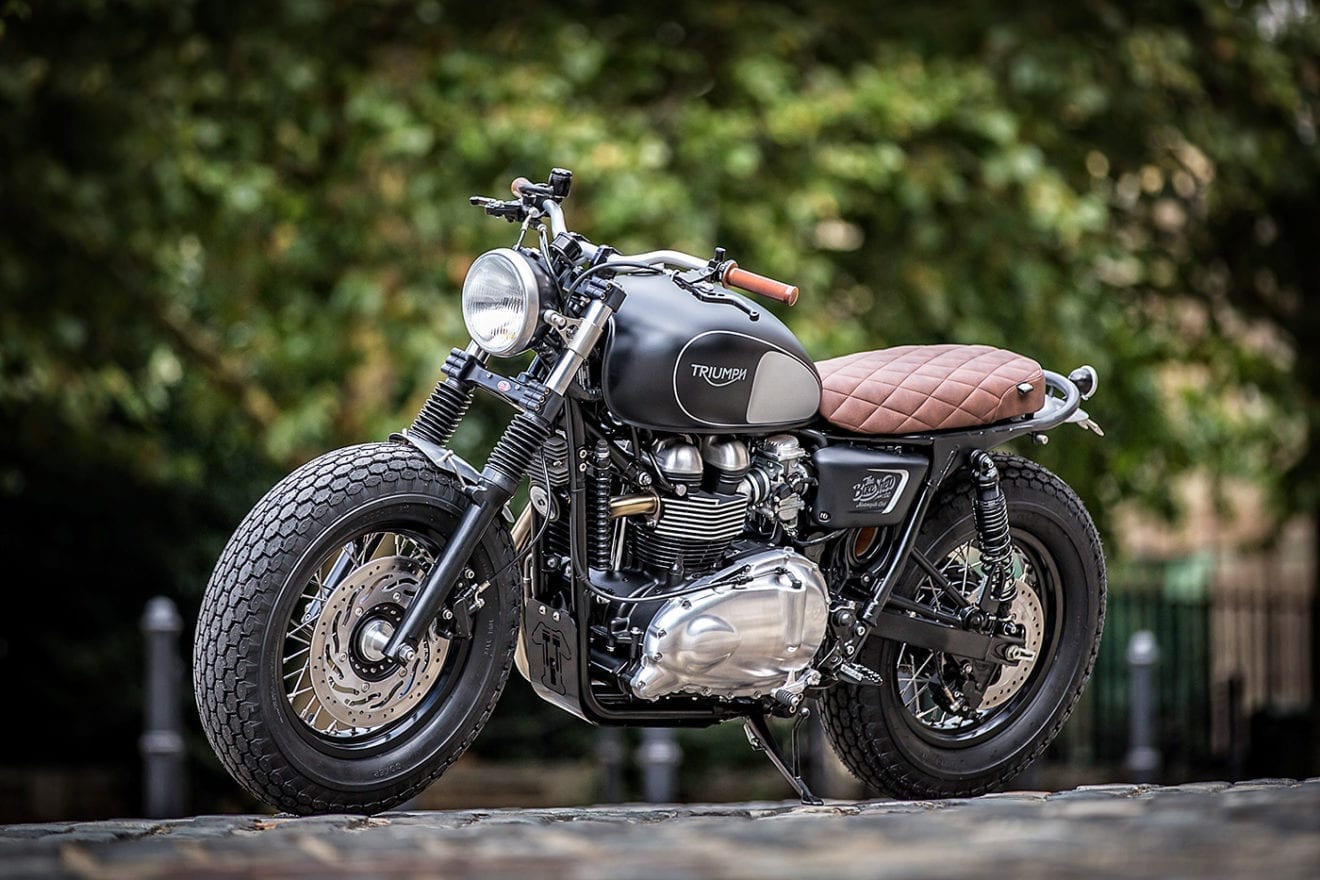
    Triumph Motorcycle India has launched the much-anticipated Speed Twin, priced at ₹ 9.46 lakh (ex-showroom, India). The 2019 Triumph Speed Twin is the newest addition to the British motorcycle marque’s much-loved Bonneville range, and the bike made its global debut last year, in December 2018. The new Triumph Speed Twin sits right between the Bonneville T 120 and the Thruxton R, as a contemporary modern classic offering both performance and handling, in addition to a more upright and easy-to-live-with ergonomics. This makes the motorcycle very appealing to someone looking for an accessible motorcycle like the Street Twin but with Thruxton R-level performance.

    The new Triumph Speed Twin is powered by the Thruxton R-sourced 1200 cc ‘high power’ parallel-twin engine, which comes with some revisions like – a low inertia crank, a high compression head, magnesium cam cover, and a revised clutch assembly. These updates have made the engine 2.5 kg lighter than the Thruxton R motor. In terms of power output, the engine is now tuned to churn out 96 bhp at 6,750 rpm and develop a peak torque of 112 Nm at 4,950 rpm, while being mated to a 6-speed gearbox.

    The Triumph Speed Twin remains true to its Bonneville legacy with is modern classic design and styling. The bike has this overall dark undertone thanks to blacked out engine, front forks, headlamp, wheels, exhaust among others, while the contrast is added by the fuel tank which comes in three colour options – Red, Black and Grey. The bike also comes with bar-end mirrors, a flat single piece seat, and twin-pod instrument console with two small digital LCD screens offering a host of information, including selected riding mode, clock, trip meters and odometer. Furthermore, the Speed Twin comes with LED daytime running lamp along with LED rear lamp and LED indicators and there is also a USB charging socket.

    The new Speed Twin comes with ride-by-wire system, torque assist clutch, USB power socket, three riding modes – Road, Rain and Sport, and traction control can be switched off completely, for riders looking to get even more adventurous with the Speed Twin’s performance. Suspension duties are handled by a pair of 41 mm KYB cartridge forks at the front, and the twin pre-load adjustable KYB shocks at the rear. Braking is handled by dual 305 mm discs gripped by Brembo four-piston four-pad axial calipers up front, and a single 220 mm disc on the rear wheel with a two-piston caliper from Nissin. The bike also comes with 17-inch, seven-spoke cast Aluminium wheels, shod with Pirelli Rosso Corsa III tyres.

  • Aston Martin Shows Off DBS Superleggera Volante

    Aston Martin Shows Off DBS Superleggera Volante

    Aston Martin has opened the roof on the new DBS Superleggera Volante. This is the second Aston Martin to carry the Volante name following the introduction of the company’s Second Century Plan. The DBS Superleggera Volante has been designed in-house under the guidance of Executive Vice President & Chief Creative Officer Marek Reichman. Aston Martin’s primary mission has also been to retain the coupe’s powerful dynamics, aggressive poise and astonishing performance.

    Powered by Aston Martin’s own 5.2-litre twin-turbo V12, producing 715 bhp and 900 Nm of torque, the top speed of the DBS Superleggera Volante stands at 340 kmph. 0-100 kmph is done in just 3.6 seconds and it’s not just the power and torque that makes the difference but also the car’s aerodynamic credentials which help in commanding and exploiting the surface airflow to maximum effect. Up front, the car’s splitter and airdam work in unison, accelerating airflow underneath the front of the car to deliver true downforce and assist cooling by feeding air to the front brakes. The new deeper side strake draws more air from the front wheel arch to reduce lift and aid high-speed stability.

    Executive Vice President & Chief Creative Officer Marek Reichman said: “DBS Superleggera produces a spectacular and relentless level of performance and so for the Volante, we focussed on bringing that extra level of sensory overload that only an open-top Super GT can deliver inside the cabin. With the unique dynamics, beautiful yet brutish design and the unmistakable harmonics of Aston Martin’s 5.2-litre V12 engine, we believe we have delivered a unique and unforgettable driving experience that is synonymous with the traditions of the Volante name.”

    Behind the front wheels, the ‘curlicue’ allows air to escape and flow smoothly along the car’s flanks, while the double diffuser at the rear allows air to exit cleanly and neutralise lift as efficiently as possible. A revised iteration – to accommodate the Volante’s clothed roofline – of the revolutionary Aeroblade ll system continues to deliver additional downforce at the car’s rear. At VMAX, the DBS Superleggera Volante produces 177kg of downforce, just 3kg less than the coupe, an impressive feat when considering the car’s fundamental aerodynamic changes.

    The 900Nm of torque is fed via a carbon-fibre prop shaft to a new ZF 8-speed automatic transmission mounted at the back of the car. Specially developed adaptive software gauges the conditions the car is operating in, along with the driver’s demands, to ensure the car is in exactly the right gear at the right time.

    Aston Martin’s engineers have worked hard to ensure the best possible roof and rear package is achieved, while still delivering conflicting targets of styling and durability. The roof operation takes 14 seconds to open and 16 seconds to close and can be operated from inside or, for added convenience, from the remote key within a two-metre radius of the car.

  • Harley-Davidson 2019 First Quarter Sales Down

    Harley-Davidson 2019 First Quarter Sales Down

    Harley-Davidson has released its first-quarter results of 2019, and worldwide sales of motorcycles seem to have taken a hit, with the Bar & Shield brand reporting a 3.8 per cent decrease in global sales. While Harley says international sales were down 3.3 per cent, domestic US sales were down 4.2 per cent. According to Harley, these decreases were driven by “continued weak industry sales that were down 4.7 per cent.” Net income in the first quarter declined by 26.8 per cent as a result of declining worldwide sales. The company’s first quarter net income was reported as $ 127.9 million, down from $ 174.8 million in the same period of 2018, while the consolidated revenue was $ 1.38 billion in the first quarter of this year, compared to $ 1.54 billion in the first quarter of 2018.

    Struggling with falling sales and demand for motorcycles, Harley-Davidson has launched a campaign to build the next generation of riders with its “More Roads to Harley-Davidson” accelerated growth plan. The company’s strategic objectives through 2027 are to build as many as 2 million new riders in the US alone, grow international business to 50 per cent of annual volume, launch 100 new high impact motorcycles, and do so profitably and sustainably.

    “We are acting with agility and discipline to take full advantage of rapidly evolving global markets,” said Matt Levatich, president and chief executive officer, Harley-Davidson, Inc. “Harley-Davidson’s U.S. market share growth and retail sales performance in the first quarter are further evidence of the effects we are having as we continue to implement and dial-in our More Roads efforts.

    “We are driven by our un-paralleled rider focus and deep analytics that are guiding our efforts today and into the future. We, along with our dealers, are determined to lead and stimulate global industry growth.”

    Harley-Davidson said it has made some progress on the More Roads plan and appointed its first-ever brand president, to fully engage the power of the brand as a catalyst to achieve its strategy and long-term objectives. Harley has also expanded its electric portfolio with the acquisition of StaCyc, a maker of electric two-wheelers for children. There are also continued preparations to launch the LiveWire, Harley-Davidson’s first electric motorcycle later this year.

    For the second quarter of 2019, Harley-Davidson expects to ship approximately 65,000 to 70,500 motorcycles, with overall motorcycle shipments in 2019 estimated to be in the region of 2,17,000 to 2,22,000 motorcycles

  • Ford Invests $500 Million In Rivian, a Battery Supplier

    Ford Invests $500 Million In Rivian, a Battery Supplier

    Rivian announced an equity investment of $500 million from Ford Motor Company. In addition to the investment, the companies have agreed to work together to develop an all-new, next-generation battery electric vehicle for Ford’s growing EV portfolio using Rivian’s skateboard platform. Rivian already has developed two clean-sheet vehicles with adventurers at the core of every design and engineering decision. The company’s launch products – the five-passenger R1T pickup and seven-passenger R1S SUV – will deliver up to 644 kilometres of range and provide an unmatched combination of performance, off-road capability and utility, starting in late 2020.

    RJ Scaringe, Rivian founder and CEO said, “Ford has a long-standing commitment to sustainability, with Bill Ford being one of the industry’s earliest advocates, and we are excited to use our technology to get more electric vehicles on the road.”

    Ford intends to develop a new vehicle using Rivian’s flexible skateboard platform. This is in addition to Ford’s existing plans to develop a portfolio of battery electric vehicles. As part of its previously announced $11 billion EV investment, Ford already has confirmed two key fully electric vehicles: a Mustang-inspired crossover coming in 2020 and a zero-emissions version of the best-selling F-150 pickup.

    Rivian remains an independent company. The investment is subject to customary regulatory approval. Following Ford’s investment, Joe Hinrichs, Ford’s president of Automotive, will join Rivian’s seven-member board.

    Bill Ford, Ford’s executive chairman said, “We are excited to invest in and partner with Rivian. I have gotten to know and respect RJ, and we share a common goal to create a sustainable future for our industry through innovation.”

  • Tesla Reports $702 Million Loss In The Last Quarter

    Tesla Reports $702 Million Loss In The Last Quarter

    Tesla said on Wednesday it would return to profit in the third quarter of 2019 after racking up two consecutive losses in the first half of the year, as it struggled to deliver cars to customers and launched a cheaper version of its Model 3 sedan. The company, which Wall Street suspects may soon have to raise more cash, said it ended the quarter with just $2.2 billion in cash, after paying off a $920 million convertible bond obligation in March.

    Tesla affirmed its outlook of delivering 360,000 to 400,000 vehicles in 2019 and said it may produce as many as 500,000 vehicles in the year if its Gigafactory in Shanghai reaches volume production in the fourth quarter. Tesla reported net loss attributable to common shareholders of $702.1 million, or $4.10 per share, in the first quarter ended March 31, compared with $709.6 million, or $4.19 per share, a year earlier.

    “As the impact of higher deliveries and cost reduction take full effect, we expect to return to profitability in Q3 and significantly reduce our loss in Q2,” Chief Executive Officer Elon Musk said in a letter to investors.

    The Silicon Valley company has weathered a challenging few months, marked by a sharp drop in the number of vehicles delivered to global customers during the quarter and a public spat between Musk and financial regulators.