Category: Automotive

Retail News Asia is committed to providing both local and global retailers with the latest Auto and Car news throughout the Asian market. This on a daily base.

  • Thai auto sales pose dilemma for Vietnam

    Thai auto sales pose dilemma for Vietnam

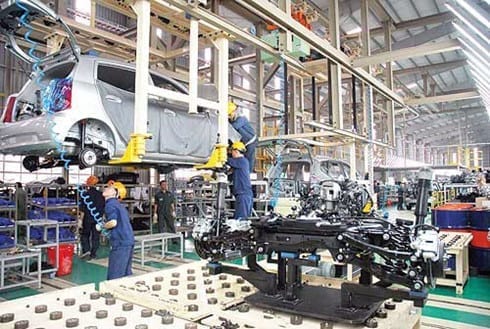
    Statistics from the General Department of Vietnam Customs show that the foreign sector controls roughly 80% of the local car and automobile (excluding motorbike) retail market with a sales volume eclipsing all of Southeast Asia.
    thai auto sales pose dilemma for vietnam hinh 0

    Auto distributors and original equipment manufacturers (OEMs) based out of Thailand hold the largest share of the retail market followed by the Republic of Korea (RoK) and China in descending order of magnitude.

    Compared to Vietnam, Thailand’s success at attracting top brands the likes of Ford, Toyota, Honda and Nissan, is in large part attributable to the countries more favourable tax structure.

    Taxes and fees account for up to 50% of the final sales price of a vehicle manufactured in Vietnam, a figure that is more than 20% higher than the comparable taxes and fees charged in Thailand.

    Prior to the emergence of the ASEAN Economic community (AEC) the Vietnam government was able to regulate the local auto industry via the imposition of import tariffs and local taxes as appropriate.

    However, with the arrival of the AEC at the beginning of 2016 and the elimination of import tariffs pursuant to the ASEAN Trade in Goods Agreement, Thai auto sales in Vietnam have shot up rapidly.

    Under the agreement, the import tax on automobiles from Thailand and other ASEAN members – Myanmar, the Philippines, Malaysia, Singapore, Laos, Indonesia, Cambodia, Brunei and Vietnam – have dropped by 40-50% in 2016.

    They will continue to fall by another 30% in 2017 and be eliminated entirely by the end of 2018.

    Meanwhile, the Vietnam government has not concurrently reduced the taxes and fees on local manufacturing of autos and this explains, in large part, why vehicles produced in Thailand are less expensive.

    Notably, Thailand also has more than 2,000 OEMs, which has aided the country’s rise to become the biggest hub for auto and part exports not only to Vietnam but the entire Southeast Asian region.

    Without a doubt, say many leading experts, after 2018, the complete roll back of the import duty will put ownership of an automobile within reach of the majority of Vietnamese citizens.

    This, they say, could lead to explosive sales growth and a myriad of adverse consequences for the nation.

    It’s problematic because its puts excessive pressure on the public transport infrastructure, overburdens traffic systems and potentially threatens traffic congestion that would choke off commerce.

    Not to mention the threat to public health brought about by pollution and auto accidents, they say, noting the elevated need for the government to advocate strongly for effective policies that reduce auto use throughout the nation.
     

  • Audi says August sales up 2.9 percent on Chinese demand for compact cars

    Audi says August sales up 2.9 percent on Chinese demand for compact cars

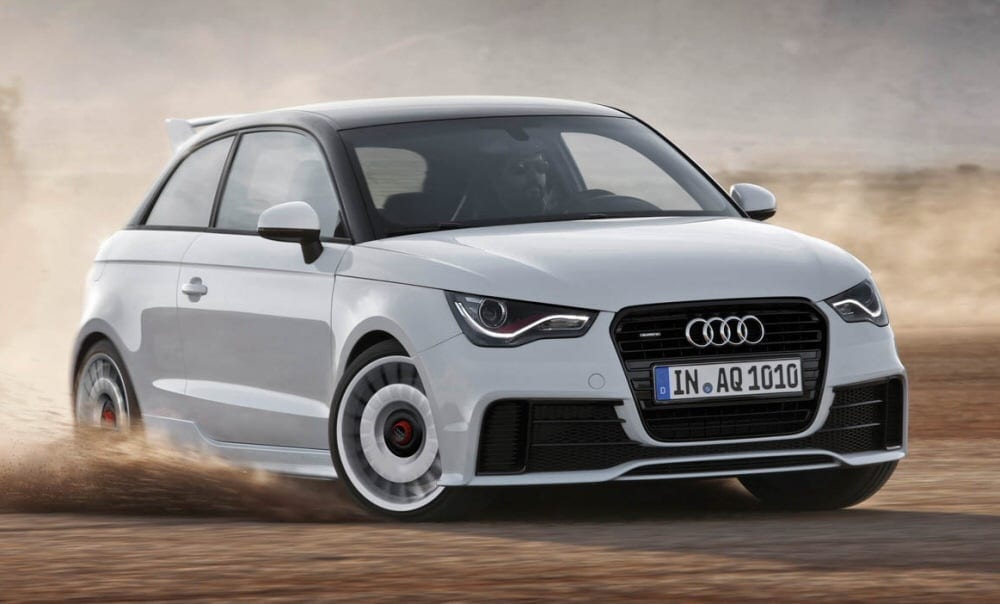
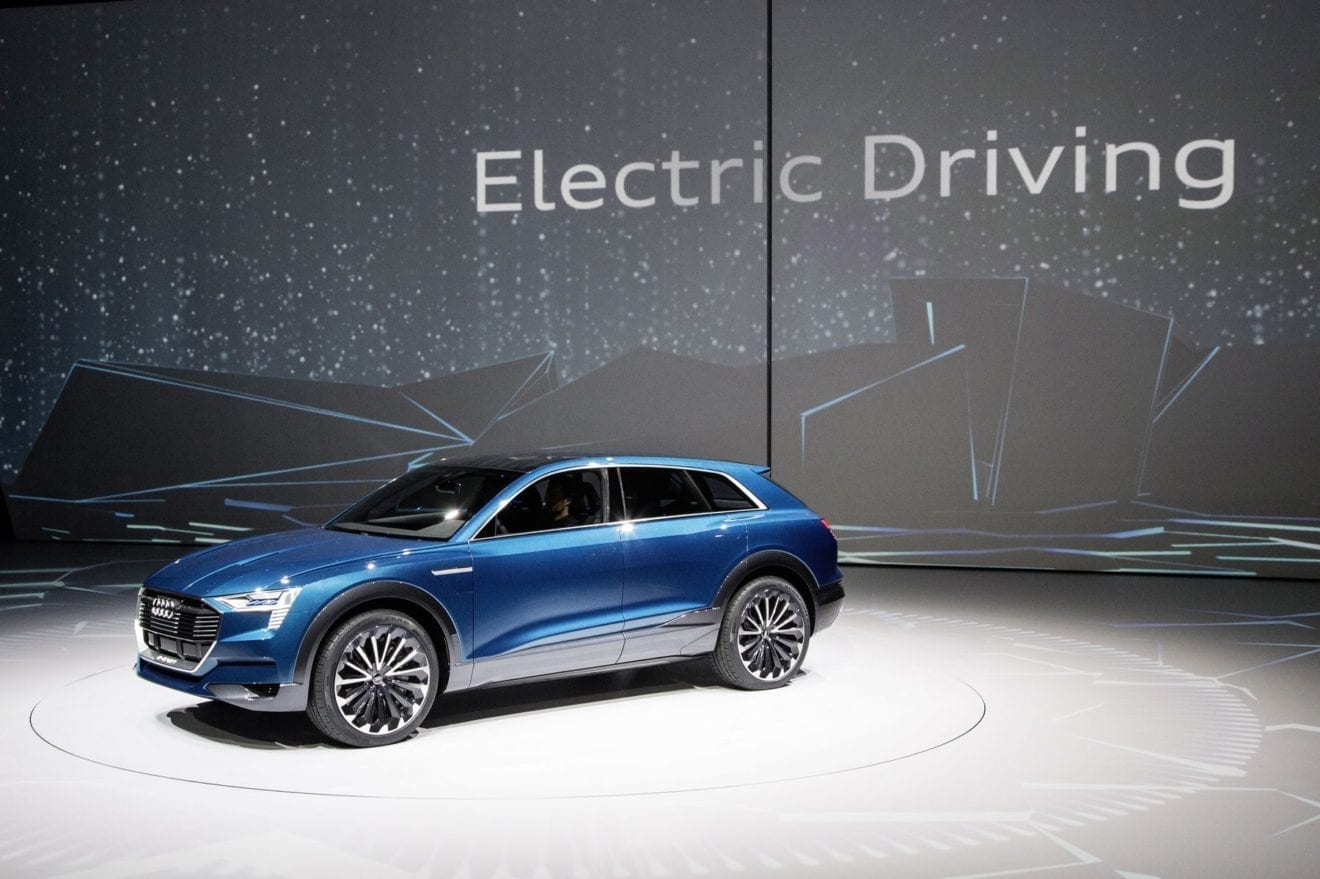
    Audi increased global sales 2.9 percent in August on strong demand in its key Chinese market for luxury compact cars including the A3 and Q3 models.

    The Volkswagen-owned division on Tuesday said deliveries rose to 132,350 autos last month from 128,647 a year earlier, with eight-month sales up 4.9 percent at 1.23 million.

    Sales in China were up 8.8 percent at 49,154 cars, expanding year-to-date registrations in Audi’s largest market 6.8 percent to 361,315.

    German luxury rival BMW earlier on Tuesday reported a 5 percent increase in brand sales to 142,554 cars, with eight-month sales up 5.5 percent at 1.28 million.

  • VW’s Audi steps up collaboration with Chinese tech groups

    VW’s Audi steps up collaboration with Chinese tech groups

    Volkswagen’s luxury car unit Audi has agreed to deepen collaboration with Chinese internet technology groups to offer more digital services in the world’s largest car market.

    Audi and FAW-Volkswagen, VW’s joint venture with FAW Car Co Ltd (000800.SZ), have signed letters of intent with Alibaba (BABA.N), Baidu (BIDU.O) and Tencent (0700.HK), Audi said on Sunday. Financial terms were not disclosed.

    Parent Volkswagen has been hobbled by a scandal over the rigging of emissions tests, distracting it in a race with global carmakers to develop computer-aided services for drivers.

    VW’s CEO told a newspaper on Sunday that it has to remain in control of its relationship with car users, which is why it stopped talks with U.S. ride-hailing service Uber and technology giants Google (GOOGL.O) and Apple (AAPL.O).

    Under the agreement with online search company Baidu, Audi aims to improve the use of smartphone apps in its cars.

    Its projects with social network and online gaming group Tencent include helping drivers to make better use of the WeChat communication app.

    The alliance with Alibaba aims to develop more real-time traffic news services and 3D maps.

    VW in May took a $300 million stake in smaller ride-sharing company Gett.

  • Honda recalls 668,000 more cars in Japan over Takata air bags

    Honda recalls 668,000 more cars in Japan over Takata air bags

    Honda Motor Co on Thursday said it was recalling about 668,000 vehicles in Japan to replace air bag inflators supplied by Takata, as part of an expanded nationwide recall announced earlier this year.

    Japan’s second-largest automaker said it had recalled models including its Fit subcompact hatchback model, and the Civic and Accord sedan models over passenger-side air bags. Vehicles produced between 2009 and 2011 were affected, it added.

    The latest announcement takes Honda’s global tally of recalled air bags to about 51 million, around half of the roughly 100 million slated for recall worldwide over inflators which are at risk of exploding with excessive force.

    Defective air bags have been linked to at least 14 deaths and 150 injuries worldwide, and are at the center of the auto industry’s biggest ever product recall.

    Thursday’s recall comes after Japan’s transport ministry in May ordered automakers to recall an additional 7 million vehicles in Japan equipped with Takata air bag inflators which do not contain a drying agent, in phases by 2019, following an expanded recall by U.S. transport authorities.

    Without a drying agent, the ammonium nitrate-based propellant used in Takata inflators has a tendency to explode violently following prolonged exposure to hot, humid conditions, spraying metal shrapnel into vehicle compartments.

    Honda, once Takata’s largest customer, has said that it would stop using Takata-made inflators in its new models, and has stopped procuring replacement inflators from the company.

    Battered by the recalls, Takata is looking for a financial backer to help overhaul its business and carry ballooning costs as its stock price has crumbled almost 90 percent since early 2014 and it faces potentially billions of dollars of liabilities.

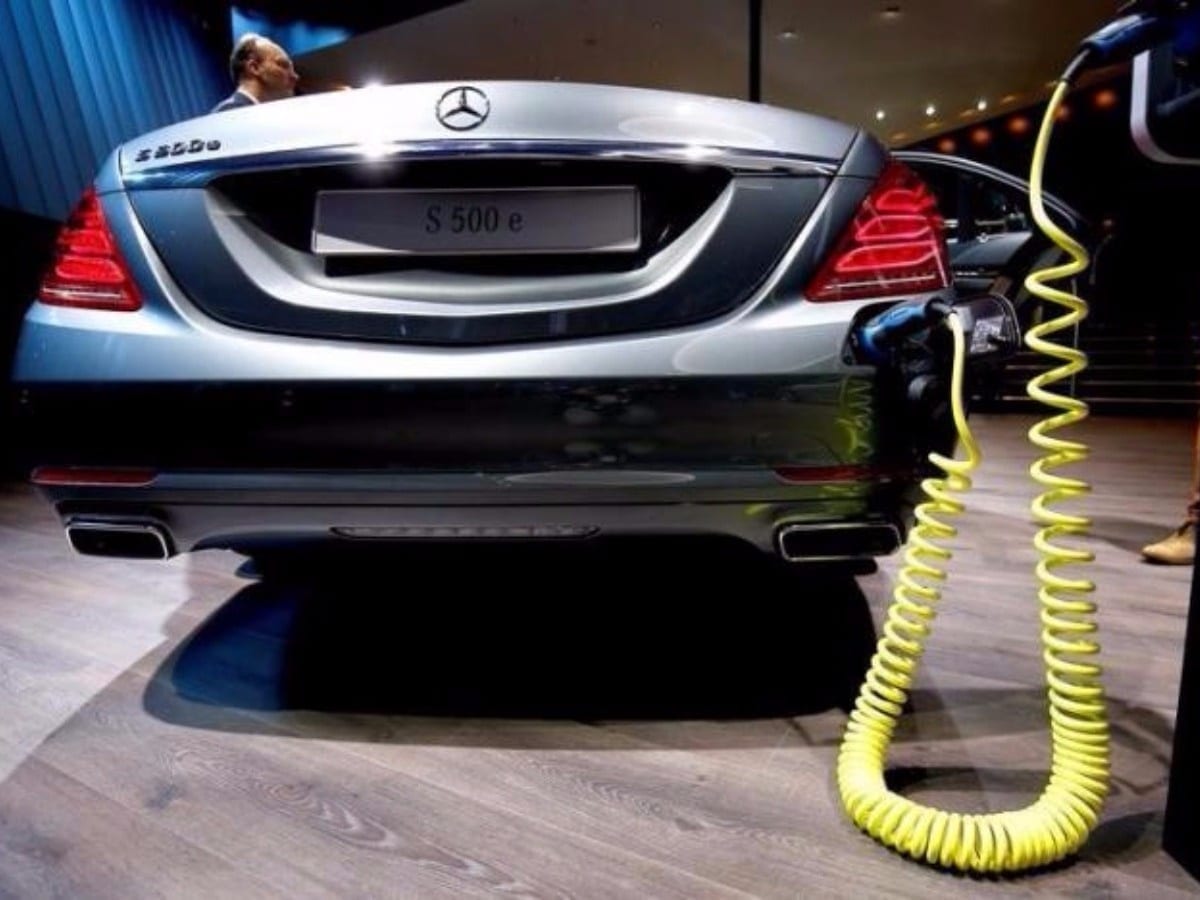
  • Daimler plans at least six electric car models

    Daimler plans at least six electric car models

    German carmaker Daimler plans to roll out at least six, and possibly as many as nine, electric car models as part of its push to compete with Tesla and Volkswagen’s Audi, a person familiar with Daimler’s plans told Reuters.

    The maker of Mercedes-Benz cars remains on track to unveil a new electric car at the Paris motor show next month. In July, the German carmaker said it had accelerated development of premium electric cars, a segment currently dominated by United States-based rival Tesla.

    German trade magazine Automobilwoche earlier cited company sources as saying Daimler would bring to market more than six electric car models between 2018 and 2024.

    German firms are investing heavily in electric cars, a segment once neglected by the industry as customers shunned their limited operating range and high cost.

    But a growing political backlash against diesel fumes and recent advances in battery technology to increase the reach of an electric car by up to 50 percent have spurred major investments by Volkswagen, Daimler and suppliers such as Bosch and Continental.

    Reuters’ source said Mercedes would also make an SUV model with a plug-in hybrid engine powered by fuel cells, which would have a range of up to 50 km (30 miles) on battery power and would then run on electricity generated by hydrogen.

  • Tesla’s Musk says new Autopilot likely would have prevented death

    Tesla’s Musk says new Autopilot likely would have prevented death

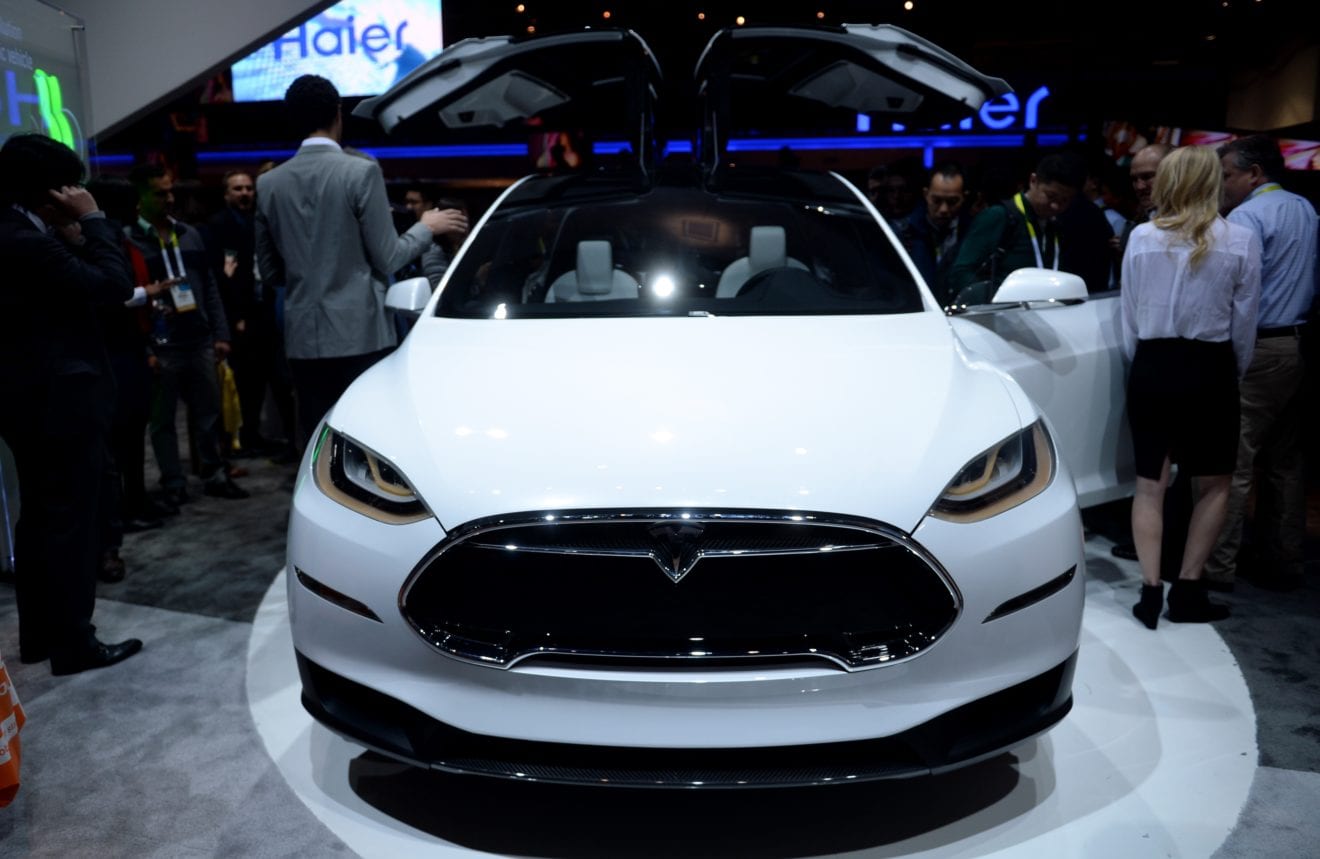
    Tesla Motors Co Chief Executive Elon Musk said on Sunday the automaker was updating its semi-autonomous driving system Autopilot with new limits on hands-off driving and other improvements that likely would have prevented a fatality in May.

    Musk said the update, which will be available within a week or two through an “over-the-air” software update, would rely foremost on radar to give Tesla’s electric luxury cars a better sense of what is around them and when to brake.

    New restrictions of Autopilot 8.0 are a nod to widespread concerns that the system lulled users into a false sense of security through its “hands-off” driving capability. The updated system now will temporarily prevent drivers from using the system if they do not respond to audible warnings to take back control of the car.

    “We’re making much more effective use of radar,” Musk told journalists on a phone call. “It will be a dramatic improvement in the safety of the system done entirely through software.”

    Tesla’s Autopilot, introduced in October, has been the focus of intense scrutiny since it was revealed in July that a Tesla Model S driver, Joshua Brown, was killed while using the technology in a May 7 collision with a truck in Florida.

    The National Highway Traffic Safety Administration (NHTSA) has been investigating Tesla’s Autopilot system since June because of the fatal accident. The agency had been briefed on the changes by Tesla and would review them, spokesman Bryan Thomas said. He declined to offer an update on the Tesla investigation.

    Musk said it was “very likely” the improved Autopilot would have prevented the death of Brown, whose car sped into the trailer of a truck crossing a highway, but he cautioned that the update “doesn’t mean perfect safety.”

    “PROBABILITY OF SAFETY”

    “Perfect safety is really an impossible goal,” Musk said. “It’s about improving the probability of safety. There won’t ever be zero fatalities, there won’t ever be zero injuries.”

    One of the main challenges of using cameras and radars for a braking system is how to prevent so-called false positives, in which a car might think an overhead highway sign, for example, was an obstacle to be avoided.

    Using radar and fleet learning, rather than relying primarily on cameras, would solve that problem, Musk said.

    “Anything metallic or dense, the radar system we’re confident will be able to detect that and initiate a braking event,” he said.

    Silicon Valley-based Tesla is known for its innovation in luxury electric vehicles but some critics, including rival carmakers, have said it was hasty in rolling out Autopilot. Tesla stood by Autopilot after the fatality.

    The revised system will sound warnings if drivers take their hands off the wheel for more than a minute at speeds above 45 miles per hour (72 kph) when there is no vehicle ahead, Musk said.

    The warning will sound after the driver’s hands are off the wheel for more than three minutes when the Tesla is following another car at speeds above 45 mph. The dashboard also will flash a pulsing light.

    If the driver ignores three audible warnings in an hour, the system will temporarily shut off until it is parked, Musk said.

    Advanced Autopilot users, rather than new users, were most likely to ignore warnings to put their hands back on the wheel, Musk said.

    Besides the fallout from the fatality, Musk has had to prepare for the Model 3 mass-market vehicle due late next year and completion of its Nevada battery factory, while trying to sell skeptical investors on the merits of a proposed acquisition of SolarCity.

    On Sept. 1, SpaceX, where Musk serves as CEO, sustained what he later called “the most difficult and complex failure” in the commercial space company’s history when a Falcon 9 rocket exploded on its launch pad in Cape Canaveral, Florida.

    “One of the worst weeks ever, really,” he told reporters.

    Musk said he had wanted to improve Autopilot’s capabilities last year but was told it was impossible to do so without incurring more “false positives,” such as a car braking suddenly for a harmless tin can.

    In July tweeted publicly that he was encouraged by talks with supplier Bosch about improvements to radar.

    “I wish we could have done it earlier,” he said on Sunday. “The perfect is the enemy of the good.”

  • Volkswagen sets up shop in Malaysia to handle direct sales here

    Volkswagen sets up shop in Malaysia to handle direct sales here

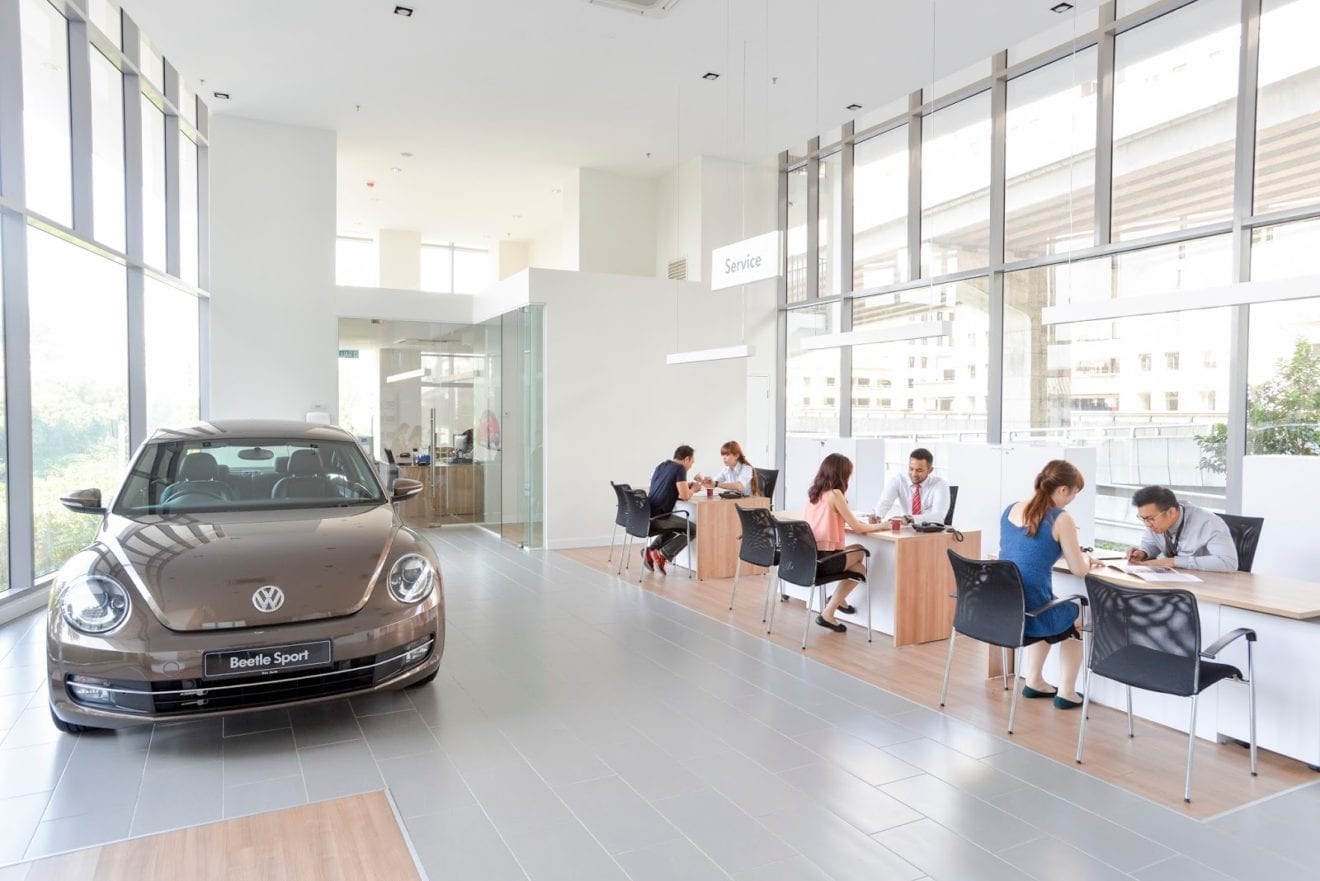
    Volkswagen Passenger Cars Malaysia (VPCM) Sdn Bhd will be the official distributor of Volkswagen cars in the domestic market.

    VPCM is managed by European automotive retail specialist, Porsche Holding Salzburg, the car distributor said in a statement.

    The announcement comes after a series of consolidation exercises within Volkswagen Malaysia over the past six months.

    Alin Tapalaga, one of two managing directors to lead VCPM, said the company would be increasing the Completely Knocked-Down model line-up, and continue to import Completely Built-Up models into the country.

    Moving forward, Volkswagen Group Malaysia will concentrate its business interest in Malaysia on the Audi brand, as well as its vehicle assembly operation in Pekan, Pahang.

    Meanwhile, VPCM is introducing a five-year manufacturer warranty for all Volkswagen cars purchased from today, while launching the new Jetta and all-new Passat within the next few months.

    The Volkswagen franchise in Malaysia was previously handled by DRB-Hicom Bhd.

  • India becomes Honda’s biggest 2 wheeler market

    India becomes Honda’s biggest 2 wheeler market

    Riding on a sustained double-digit growth in scooter volumes, Japanese auto major Honda has seen India emerge as its biggest two-wheeler market this financial year.

    Honda Motorcycle and Scooter India (HMSI) recently overtook the company’s volumes from the Indonesian market.
    Into the sixth year of the split with its Indian partner Hero, HMSI has sold 1.23 million units during the April-June quarter, 16 per cent more than the 1.06 million units sold in Indonesia.
    The corresponding volumes for India and Indonesia last year was 1.01 million and 1.03 million units, respectively. With this increased volume, India now brings 29 per cent of Honda’s global two wheeler sales compared to 25 per cent a year ago.
    In Indonesia, for instance, it commands 80 per cent share; the share in Vietnam is 70 per cent of the market.

    “Considering the low two-wheeler penetration in India, we believe that it will continue to lead the global two-wheeler market, as new demand will continue to come from rural and semi-urban areas in the future. The road infrastructure is increasing rapidly while public transport is not able to meet daily commuting needs of millions,” said Y S Guleria, senior vice-president, sales and marketing, HMSI.

    Honda is the second-biggest two-wheeler player in the Indian market.

    It is also present in the passenger vehicle market, where it is the sixth-largest player and has a five per cent share.

    In the two wheeler market, however, Honda enjoys a 28-per cent market share though Hero MotoCorp is the leader with a 37-per cent share. In the scooter segment, Honda sits on a strong 59-per cent share. It is this segment that is driving the company’s India volumes.

    Scooters account for two-thirds of HMSI’s India sales, up significantly from 54 per cent a year ago. The scooter market has grown 24 per cent this year so far on a rising base, helped by double digit growth for last two consecutive years. Motorcycles, as a segment, did not do well for last two years due to weakness in rural markets on sub normal monsoon. That is set to change this year.

    Improved sentiments in rural markets due to good rainfall and higher wages of the government employees will be positive growth triggers for the industry. Guleria said the Indian market has been showing constant growth in recent years while other big markets such as Indonesia and Brazil have been showing downtrend due to their economic slowdown.
    HMSI saw a capacity addition in June this year with the opening of its dedicated scooter plant in Gujarat that added 1.2 million unit annual production capacity. HSMI aims to end this year with total sales of 5.4 million units, up 26 per cent from last year’s 4.28 million units. Honda globally is expected to sell 18 million units this year.
  • In China’s electric car boom, global automakers select different gear

    In China’s electric car boom, global automakers select different gear

    By 2020, Beijing says automakers must meet tough new green standards to cut epic pollution in China’s cities. As domestic firms bet heavily on electric cars to meet that goal, foreign peers are set to stay in a different, petrol-driven gear.

    In the latest sign of caution from global automakers in China, Germany’s Audi last week unveiled a new factory for high-efficiency transmissions in Tianjin, to be used in petrol-powered cars. While Chinese firms go electric in the world’s biggest auto market, Audi is intent on petrol engines that can run farther, cleaner, in tandem with hybrid technology.

    As China’s electrified vehicle production booms, some international industry officials warn in private that the ambitious electric goals of domestic firms could prove too costly, too risky, too far from what consumers actually want – and not a good fit with their operations elsewhere. Still, China doled out $4.5 billion last year alone in green car subsidies.

    “In 2020, most cars we will sell will be combustion engines, so to fulfill (fuel consumption targets) you have to improve the consumption of each and every car of the Audi model range,” Audi China chief Joachim Wedler said at the opening of the new plant. Wedler didn’t comment on Chinese peers’ electric car plans.

    Automakers globally have struggled to agree on what a greener future will hold for the industry. In China, Beijing and state-linked automakers have thrown their weight behind electric vehicles – despite the fact that the electricity they need may be generated from burning coal.

    Under Beijing’s 2020 requirements, on average cars must consume less than 5 liters of petrol per 100 kilometers – nearly 30 percent below current standard levels.

    Beijing has rolled out a raft of incentives to push domestic automakers – foreign brands generally aren’t eligible – to build more electric and plug-in hybrid vehicles, spurring a quadrupling in sales of these so-called “new energy vehicles” (NEVs) in 2015. Even with that surge, just 1.4 percent of cars sold in the first seven months of 2016 were NEVs, as concerns linger over driving range and home charging.

    HYBRID COMPROMISE

    A powertrain manager at a major foreign automaker’s China joint venture said domestic companies’ smaller scale made them nimbler. Many are also state-linked, therefore obliged to support government policy, the manager said, declining to be named as he was not authorized to speak to the media.

    For example, Geely – controlled by Li Shufu, a member of the government’s political consultative body – wants 90 percent of all sales to be NEVs by 2020. Meanwhile, state-backed GAC Motor plans to be able to produce up to 400,000 green energy cars annually by the end of this year.

    Foreign automakers, who must form joint ventures with local partners to produce cars in China, have to consider a different dynamic – how manufacturing strategies on the mainland correlate with their traditional businesses and customers elsewhere.

    The powertrain manager said his company, like Audi, is focusing on a more gradual strategy, developing more efficient engines as well as plug-in petrol-electric hybrids: an interim solution that will please a government intent on cutting harmful emissions.

    Of course, foreign automakers aren’t avoiding NEVs entirely.

    General Motors’ China venture last year pledged to spend $4 billion on electrification, developing 10 new energy models by 2020.

    In Tianjin, Audi China chief Wedler said the German firm and partner China FAW Group plan to launch their first locally produced plug-in hybrid vehicle this year, with a new imported car based on the same principle on the way next year.

    But Wedler acknowledged that as China’s massive auto market evolves, automakers alone won’t determine future directions.

    “The whole picture is driven by legislation,” Wedler said.

  • Australia sues Volkswagen over alleged emissions fraud

    Australia sues Volkswagen over alleged emissions fraud

    The Australian consumer watchdog on Thursday said it had sued the Australian arm of world No. 2 carmaker Volkswagen AG (VOWG_p.DE) for intentionally selling more than 57,000 vehicles with software which lied about levels of toxic emissions.

    “These allegations involve extraordinary conduct of a serious and deliberate nature by a global corporation,” Australian Competition and Consumer Commission Chairman Rod Sims said in a statement.

    The Federal Court action adds to what is already proving to be costly legal fallout for the German company as it faces class action lawsuits in Australia and around the world over emissions fraud, as well as penalties from antitrust authorities.

    Already in Australia, law firm Maurice Blackburn is seeking more than A$100 million ($75 million) from the company, including the full replacement cost of some 90,0000 vehicles, while the auto giant has agreed to pay its 650 U.S. dealers $1.2 billion in compensation.

    In Australia, the ACCC said it wanted the company to make public declarations of misconduct, pay unspecified financial penalties and issue corrective advertising in relation to its actions over five years.

    “Volkswagen engaged in multiple breaches of the Australian consumer law by concealing software in their vehicles to cheat emissions testing and misleading consumers about the vehicles’ compliance,” Sims said.

    “Consumers rightly expect that their vehicle’s emissions would operate as advertised during their day-to-day use and we allege that this was not the case.”

    Volkswagen Group Australia said in a statement that it doubted the ACCC’s action would benefit consumers since it planned to give them software which corrected the emissions data as soon as it was approved by the government – likely by year-end.

    The Volkswagen unit, which is defending the private class action, said it was reviewing the ACCC’s claims.

  • Audi recalls A8 models in South Korea due to stalling problem

    Audi recalls A8 models in South Korea due to stalling problem

    Audi is recalling 1,534 A8 cars in South Korea due to a stalling problem, the transport ministry said on Wednesday, adding it was the first country where the German carmaker was recalling the model for such a defect.

    The Volkswagen (VOWG_p.DE) division will expand the recall to the United States and other countries, South Korea said, in what would be a further blow to the German company reeling from its emissions-test cheating scandal.

    An Audi Volkswagen Korea spokeswoman confirmed it was the first recall for such a defect but said she was not aware of any plans to expand the recall to other countries.

    South Korea, a major market for the A8, has sought to punish Volkswagen aggressively following the scandal, suspending sales of some Volkswagen, Audi and Bentley cars for allegedly forging documents on emissions or noise-level tests.

    The ministry said it had found a design problem in a coolant control valve, which was causing the affected models to stall. This is a “serious defect which hampers safe driving,” the ministry said in a statement.

    An Audi spokesman in Germany said a magnetic valve near the car’s gearbox needed to be replaced and that there had been no other recalls in other countries so far.

    The model in question is the A8 4.2 FSI Quattro produced between July 2010 and April 2012.

  • Ford to recall 91,000 cars worldwide to fix fuel-pump issue

    Ford to recall 91,000 cars worldwide to fix fuel-pump issue

    Ford Motors said on Wednesday it was recalling about 91,000 vehicles worldwide to replace faulty fuel-pump parts that could potentially cause a car to stall without warning.

    Ford said it would replace fuel-pump control modules in about 88,151 vehicles, including certain of its 2013-15 model year Ford Taurus sedans, Ford Flex crossover utility vehicles, Lincoln MKS sedans, Lincoln MKT SUVs and Ford Police Interceptor sedans. (ford.to/2bOOxjg)

    The company also said it would recall about 2,472 Ford Transit vans to replace fuel-injection pumps in certain models manufactured in the year 2015-16.

    The carmaker said it was additionally recalling 23,150 Ford Escape SUVs of 2017 model year to update power-window software.

    Ford said is was not aware of any accidents or injuries associated with the issues.

  • Mitsubishi Motors overstated fuel economy on eight more models

    Mitsubishi Motors overstated fuel economy on eight more models

    Mitsubishi Motors Corp overstated the fuel economy on eight of its vehicle models, in addition to four others the embattled Japanese automaker admitted to earlier this year, the Nikkei newspaper reported on Tuesday.

    Japan’s transport ministry, which had been investigating the fuel economy on Mitsubishi models including the Pajero SUV, would report its findings as early as Tuesday, the Nikkei said, citing an unnamed source.

    The Nikkei said the company would likely withdraw the affected vehicles from the market to revise its catalogs, a process which could take about two to three weeks. Compensation to customers was a possibility, it added.

    Both Mitsubishi and the transport ministry declined to comment on the report. Shares in the automaker slipped 0.8 percent in early trade.

    Japan’s sixth-largest automaker has been struggling to recover after admitting in April that it had falsified the fuel economy on two of its minivehicle models, along with two similar models produced for Nissan Motor Co (7201.T).

    The scandal led to a suspension of sales for nearly three months, and prompted a slump in Mitsubishi’s market value. The company sought financial assistance from Nissan, which agreed to buy a controlling one-third stake for $2.2 billion.

    An internal investigation has uncovered poor communication, slack governance and pressure on resource-starved engineers at the root of Mitsubishi’s problems.

    Mitsubishi said last month that the resulting slump in domestic sales led to a 75 percent plunge in first-quarter operating profit, while the company said it booked an extraordinary loss of 125.9 billion yen ($1.24 billion) in the first quarter as a result of the cheating.

  • Toyota to introduce new safety features in future vehicles

    Toyota to introduce new safety features in future vehicles

    Japanese auto major Toyota plans to introduce its new global architecture and latest safety technologies in future vehicles as it seeks to play a major role in bringing down fatalities in road accidents.

    The company, which has introduced its Toyota New Global Architecture (TNGA) in its 4th generation hybrid car Prius, plans to introduce it in its future models as well.

    Besides, it is also looking to introduce pre-collision system (PCS) in vehicles from next year in Japan, Europe and the US.

    “We have introduced the TNGA in the market with our 4th generation Prius. We will introduce it in vehicles following the Prius and eventually introduce it to all our products when there is a model change,” Toyota Motor Corporation Assistant Chief Safety Technology Officer Seigo Kuzumaki said here.

    Stating that TNGA has resulted in new collision safety body structure, he said in oblique frontal crash test, the new Prius has about 55 per cent decline in cabin deformation percentage compared to the previous 3rd generation.

    The test was conducted at a speed of 90 kmph as compared to 64 kmph done in the previous generation, he added.

    According to Toyota, TNGA incorporates wide reaching structural innovations that promises substantially improved basic performance and product appeal.

    Commenting on the PCS, Kuzumaki said: “The plan is to introduce this technology to our vehicles in Japan, Europe and the US in 2017. Later on, it will be rolled out country wise depending on suitability.”

    The PCS is a feature that helps prevent collisions using a camera and millimetre wave radar and engaging brake assistance system after warning when a driver fails to use brake.

    Although the company hasn’t specified a timeline for these technologies to be brought to India, it assumes significance as Indian roads account for registering the highest number of road fatalities in the world.

    Deaths due to road accidents in the country increased by around 5 per cent to 1,46,000 in 2015 from the previous year.

    As per WHO, fatalities due to road accidents globally were at 1.42 million people and is projected to increase to 1.85 million by 2030.

  • Volkswagen decides not to sue South Korea over sales ban

    Volkswagen decides not to sue South Korea over sales ban

    Volkswagen decided against suing South Korea which last month suspended sales of most of its models and slapped a fine of 17.8 billion won ($15.93 million) on the German carmaker.

    Instead, Volkswagen will try to achieve certification for the affected models and resume sales quickly rather than taking on a lengthy legal process, a spokesman for Volkswagen’s South Korean unit said.

    Last month, the government revoked certification for 80 model variants of VW, Audi and Bentley vehicles on grounds that the German automaker fabricated certificates of vehicle emissions and noise-levels.

    At that time, Volkswagen described the ruling as “most severe” and said it would consider a legal challenge.

    Volkswagen’s sales slumped 40 percent to 12,888 vehicles from January to July in South Korea, after jumping 17 percent last year, in the wake of its emissions-test cheating scandal.

    Nissan Motor’s (7201.T) South Korean unit has filed a lawsuit over claims by the environment ministry that it had cheated on emissions with its Qashqai diesel sport utility vehicle.