Category: Automotive

Retail News Asia is committed to providing both local and global retailers with the latest Auto and Car news throughout the Asian market. This on a daily base.

  • Royal Enfield sets up shop in Bangkok, Thailand

    Royal Enfield sets up shop in Bangkok, Thailand

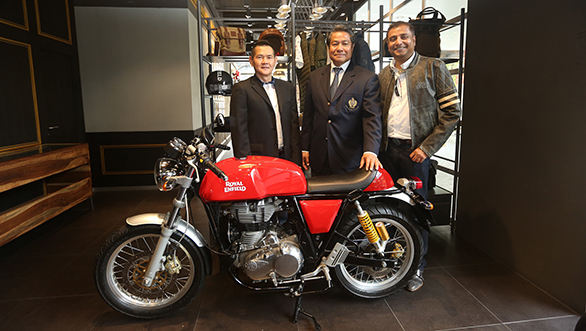
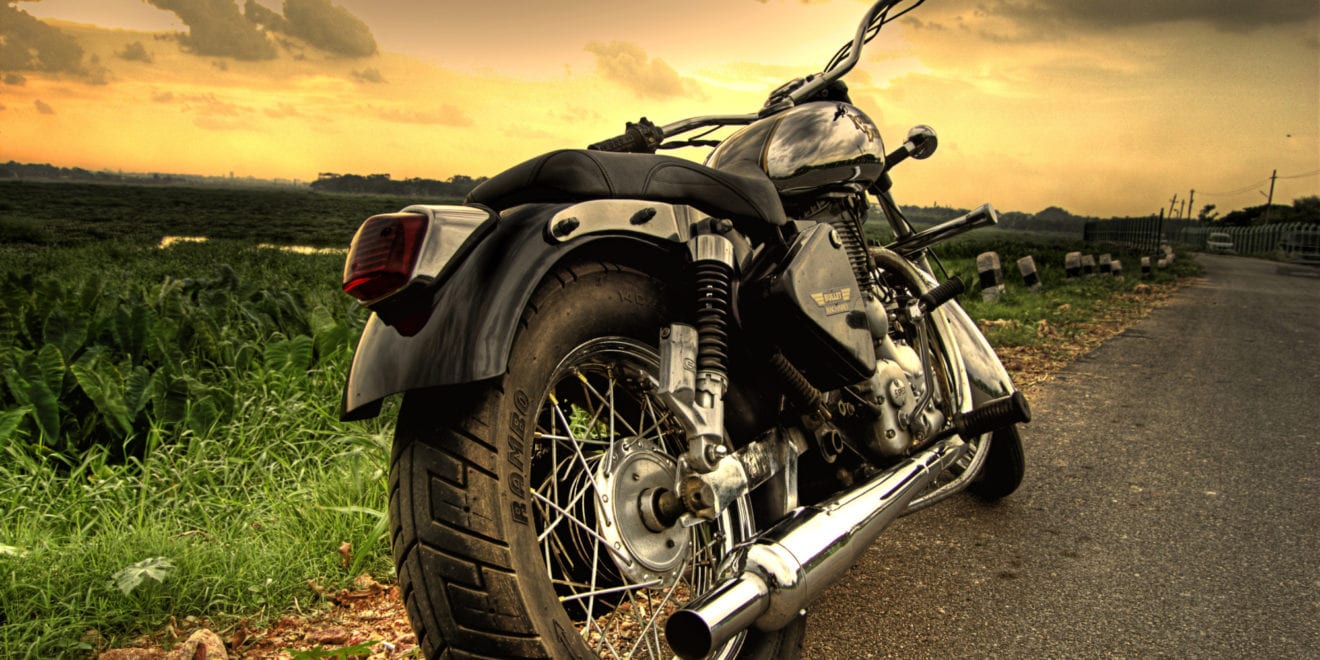
    Royal Enfield has just opened up its first exclusive showroom in Thailand, which is located in Thonglor, Bangkok. The Royal Enfield’s retail store there has been set up by General Auto Supply Co Ltd. The showroom will sell the Royal Enfield Bullet priced at THB 1,79,800 (approximately Rs 3.45 lakh), the Royal Enfield Classic 500 which will cost THB 1,89,800 (approximately Rs 3.64 lakh) and the Royal Enfield Classic Chrome for THB 1,98,800 (approximately Rs 3.81 lakh). The Royal Enfield Continental GT café racer, which displaces 535cc, will be sold in Thailand for THB 2,19,800 (approximately Rs 4.22 lakh). All-prices are ex-showroom.
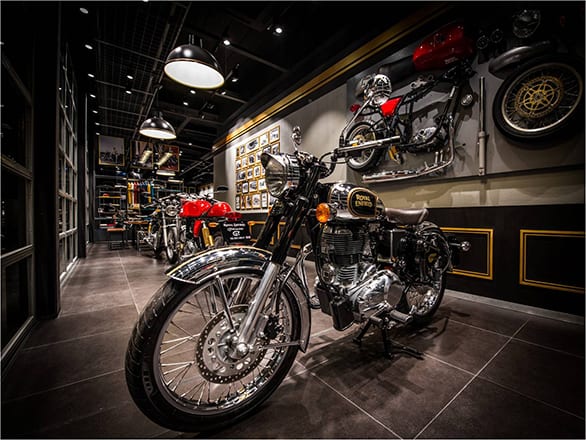
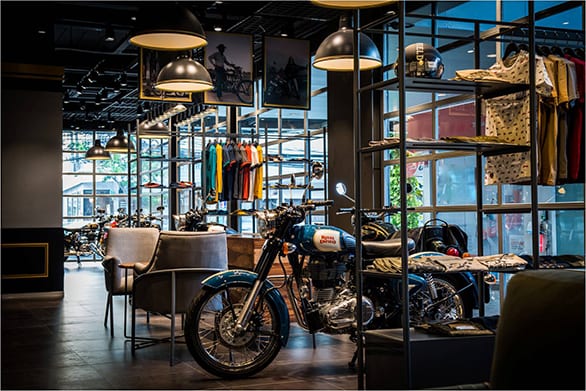
    An inside view of the new Royal Enfield store in Bangkok

    A Royal Enfield proudly stands at the new the company's new exclusive store in Bangkok launched today

    Natavude Charoensukhawatana, Executive Director, General Auto Supplies Co Ltd-Palakorn Suwanarath, Privy Councillor, Thailand-Arun Gopal, Royal Enfield, international Business head

    From left to right: Natavude Charoensukhawatana, executive director, General Auto Supplies Co Ltd, Palakorn Suwanarath, privy councillor, Thailand, Arun Gopal, Royal Enfield, international business head

    “Royal Enfield is today one of the most profitable automotive brands in the world and we believe that our future growth will come from our international markets such as Thailand where motorcycles are a popular medium of commuting. Our phenomenal success in India gives us the confidence to thrive in similar markets like Thailand and Indonesia, which will play an instrumental role in fuelling our growth in Asia. We see a huge potential for our evocative, all purpose, and middle-weight (250-750cc) motorcycles that will allow customers an optimum choice for upgrade,” said Arun Gopal, the international business head of Royal Enfield.

    Royal Enfield opens Thailand’s first exclusive store in Bangkok

    Royal Enfield, the fastest growing motorcycle brand in the world, today launched its retail operations in Thailand, with the price announcement of its complete range of motorcycles, apparel and accessories at the launch of its first exclusive store in Thonglor, Bangkok. Royal Enfield’s first retail store in Thailand has been set up by the prestigious General Auto Supply Co. Ltd.

    In Bangkok, Royal Enfield’s iconic motorcycle– the Bullet, world’s oldest motorcycle in continuous production since 1932, is available at a price of THB 179800 for 500cc. Royal Enfield’s retro street model, known for its post war, timeless styling – the Classic 500 is available for THB 189800 and Classic Chrome for THB 198800. The Royal Enfield Continental GT 535cc café racer is now available at a price of THB 219800.

    “Royal Enfield is today one of the most profitable automotive brands in the world and we believe that our future growth will come from our international markets such as Thailand where motorcycles are a popular medium of commuting. Our phenomenal success in India gives us the confidence to thrive in similar markets like Thailand and Indonesia, which will play an instrumental role in fuelling our growth in Asia. We see a huge potential for our evocative, all purpose, and middle-weight (250-750cc) motorcycles that will allow customers an optimum choice for upgrade”, said Mr. Arun Gopal, International Business Head, Royal Enfield.

    “Also, Thailand is home to one of the most enthusiastic and seasoned riding communities in the world, with thousands of riding clubs and a prevalent culture of leisure riding. With Royal Enfield coming into the market riding enthusiasts will have an option to ride a unique product that is known for its leisure riding experiences”, he added.

    With a view to become the leader in global mid-sized motorcycle segment, Royal Enfield has been expanding its global retail footprint across UK, Europe, Latin America, Middle-East and now in South East Asia, with its most recent launch in Indonesia. Royal Enfield announced its entry into Thailand, the fifth largest two wheeler market in the world in Dec 2015, at the Thailand International Motor Expo. With its aspirational yet accessible range of motorcycles suitable for riding within the city, as well as long-distance rides during weekend, the 115 years old iconic motorcycle brand intends to revolutionize and reinvigorate the mid-size motorcycle segment in Thailand.

    “As part of our international strategy, we are focused on building the brand and creating demand in nodal cities across the world such as London, Bogota, Medellin, Dubai, Madrid, Paris, Jakarta and now Bangkok. We are working to create a robust eco-system comprising of highly differentiated retail experience and aftermarket capabilities, rides and community events and other adjacencies that bring to life the heritage and world of Royal Enfield. We believe that once we are successful in Bangkok, our brand and products will resonate very well in other key Thailand cities as well”, Arun added.

    Delivering the brand philosophy of “Pure Motorcycling” in every aspect of ownership experience, Royal Enfield’s exclusive store will be the first ever in the country. The 1190’ square feet store creates an ambience of motorcycle enthusiast’s living room by featuring an interesting visual merchandising format, comfortable sitting spots in several corners, and innovative product displays, which include a wall display of a stripped down Continental GT showcasing the bike’s internals and frame. The store will house not only Royal Enfield’s motorcycle range, but also its complete range of apparels and accessories, including purpose-built protective riding gear and lifestyle gear. The space of store has been designed not just as a point of purchase but also a meeting point for enthusiasts to have conversations around motorcycling.

    The 3685’ square feet retail outlet located at 842 SoiSukhumvit 55 (Thonglor), Sukhumvit Road, KlongtanNua, Wattana, Bangkok, is a full-service dealership by General Auto Supply Co. Ltd, is equipped to provide service and aftermarket capabilities. Royal Enfield will work closely with General Auto Supply to bring a differentiated experience for motorcycle enthusiast in the region.

    Royal Enfield designs classic styled motorcycles that are simple, evocative, tactile and fun to ride, providing riders with a “Pure Motorcycling” experience. Blending traditional craftsmanship with modern technology, as a means to achieve the perfect balance between the man, machine and the terrain, Royal Enfield motorcycles creates a unique experience for riders that is more approachable and unintimidating.

    In Calendar Year 2015 the company sold over 450,000 motorcycles across the globe to support its global growth strategy and also announced its plan to produce upto 900,000 motorcycles by end of 2018, from two of its existing manufacturing facilities and a third upcoming facility, in Tamil Nadu, India. With a view to become the leader in the global mid-sized motorcycle industry, Royal Enfield is also building two new technology centres – one in India and one in UK, to enhance capability and execute long term product strategy. Royal Enfield recently announced its entry into Brazil along with the launch of its first subsidiary outside India in North America.
  • Tata Motors & Jaguar Land Rover: China Drag Diminished?

    Tata Motors & Jaguar Land Rover: China Drag Diminished?

    Tata stock, down 25% so far this year, is off by 54% over 12 months, prompting Goldman Sachs to close its sell rating on Tata Motors equity Monday. Citi Analysts Manish A. Somaiya and Esha Ranganath note that for the Jaguar Land Rover unit, while China revenue accounted for a third of fiscal 2015 earnings, China is only about 19% of fiscal year to-date retail volume compared to 27% in the prior year. They write:

    “Management cited the 10% year-over year decrease in China retail volumes for the fiscal third quarter (including joint ventures vs. -32% in the fiscal second quarter and -33% in the fiscal first quarter) as an indication that declines in the region have stabilized while still citing the region as a main factor in lower year-over-year earnings before interest, taxes, depreciation and amortization (EBITDA) (we assume this is a function of JV transition and higher China margins) …”

    The Citi analysts raised their issuer weighting on Jaguar Land Rover (TTMTIN) to Marketweight from Underweight, and raised their senior notes ratings to Neutral from Sell. With their sell rating last fall, they cited weak China revenue. The fresh decision reflects the following:

    1. “Management actions including capex reduction bolstering liquidity,
    2. Volume growth in other regions offsetting a softer China and,
    3. Possible stabilization of decline in China.

    While we still anticipate a negative free cash flow year and slightly higher gross leverage of 0.9x at fiscal 2016 year-end (vs. 0.8x currently), we like the company’s strong balance sheet and could see investor focus on higher quality defensive names providing a positive technical. Additionally, we continue to monitor potential execution risk from focus on multiple product launches …

    Guidance included FY2016 capex reduction to £3.3 billion ($4.7 billion) from £3.5 billion previously and indications of negative free cash flow (FCF) in the near to medium term (albeit offset by a strong balance sheet and cash balance). On the call, management reaffirmed EBITDA margins at the lower end of 14-16% range as a result of model mix, launch costs, and mixed economic conditions incl. China. At the same time, management aims to fund capex from operating cash flows as evidenced this quarter and anticipates continued working capital benefit during fiscal fourth quarter given seasonal benefits during the second half of the fiscal year. At a high level, we estimate FY2016 EBITDA of £2.9 billion, implying a 14% margin in-line with low end of guidance. Our FCF use estimate of ~£1.0 billion for the year results in gross leverage increasing slightly to 0.9x at year end.”

  • Toyota ready to invest Rp5.4 trillion in Indonesia

    Toyota ready to invest Rp5.4 trillion in Indonesia

    The Toyota Motor Corporation (TMC) group is ready to invest Rp5.4 trillion in Indonesia this year, according to Industry Minister Saleh Husin.

    Husin received the pledge during a meeting with TMC Executive Vice President Seiichi Sudo in Nagoya, Japan, on Thursday.

    “Toyota is serious about doing business in Indonesia. This year, it will invest Rp5.4 trillion, following the Rp5 trillion worth of investment that the company made in 2015,” he noted in a press statement received here, Friday.

    This reflects that global investors still trust Indonesias investment climate and see prospects in the nations automotive industry, he noted.

    The minister has lauded Toyota for its trust and continued investment in Indonesia, after selecting the nation as one of its investment destinations and a Toyota car production base so far.

    He called on Toyota and its partners in Japan to increase investment in the automotive sector, particularly for the manufacturing of materials and spare parts.

    The minister also invited the company to conduct research and development activities in Indonesia to strengthen the structure of Japans existing automotive industry in Indonesia.

    Husin also urged Toyota to increase the production of cars in Indonesia, which has a population of over 250 million, including 74 million belonging to the middle class.

    The Toyota brand dominates around 31-32 percent of Indonesias domestic market.

    Within five years, from 2015 to 2019, Toyota has planned to invest a total of Rp20 trillion.

    Until 2014, Toyota had invested Rp40 trillion in Indonesia.

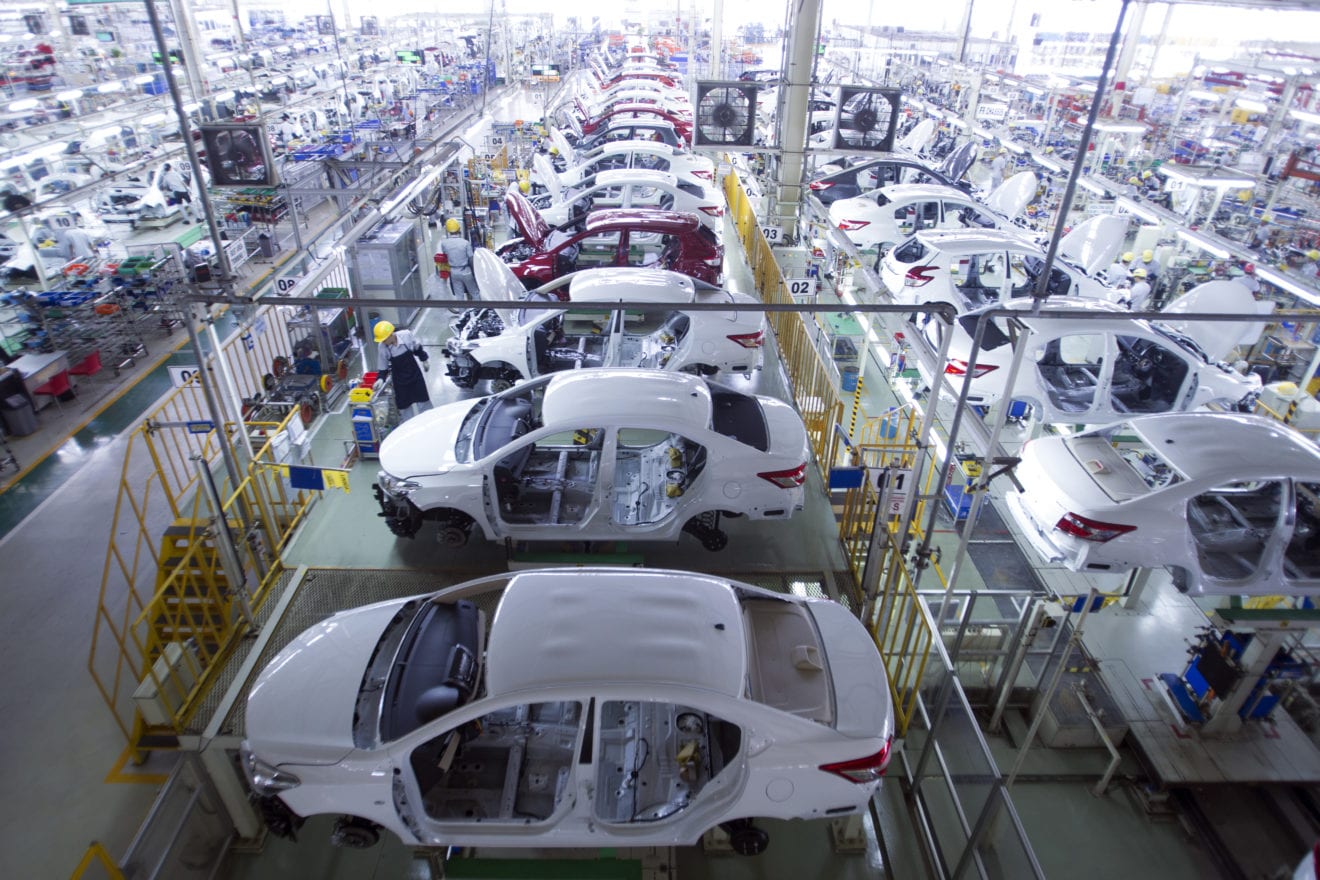
    Currently, the Japanese company is constructing an engine plant in Karawang, West Java.

  • Tesla Motors Wants Local Production in China

    Tesla Motors Wants Local Production in China

    It’s no secret that electric-car maker Tesla Motors is ramping up its efforts in China. Despite some initial challenges in the country when the company launched in the market in 2014, it still believes China could be one of its largest vehicle markets “within a few years,” according to its most recent 10-Q filing. And an update from Musk this week on Tesla’s plans in China, as well as a look at sales in Hong Kong, suggests it is as eager as ever to serve these important Asian markets.

    Tesla China

    Aiming to secure a factory location this year Tesla “aims to lock down manufacturing plans finding a local partner and a location for the plant — for the local market by the middle of this year,” wrote Engadget’s Richard Lai on Monday.

    The company plans to launch a factory in China “as soon as a year after” the Model 3 launch, which is set for late 2017, Musk said on Twitter last October. Securing a local partner and a location for its plant by the middle of this year would give Tesla plenty of time to meet this time frame.

    Musk hopes China will nix its “prohibitively high” auto import duties for the Model 3, making “a special category for EVs,” he explained last year on Twitter. Musk explained that these are natural moves for the company in order for it to “improve in-market affordability.”

    A China factory will be built to serve local Chinese demand and the company will continue to make cars and batteries in California and Nevada.

    Rising investments and rising demand
    Following its poor start in China in 2014, there was quite a bit of uncertainty about Tesla’s potential in the country last year. But a look at Tesla’s commentary on the market throughout 2015 suggests it experienced considerable growth in the market in terms of sales, demand, and investments.

    On a quarter-to-quarter basis, orders in Q2 “doubled” and orders in Q3 “increased substantially,” the company noted in its second- and third-quarter shareholder letters. Going forward, Tesla said in its third-quarter shareholder letter that it expected “order growth in China to remain strong.”

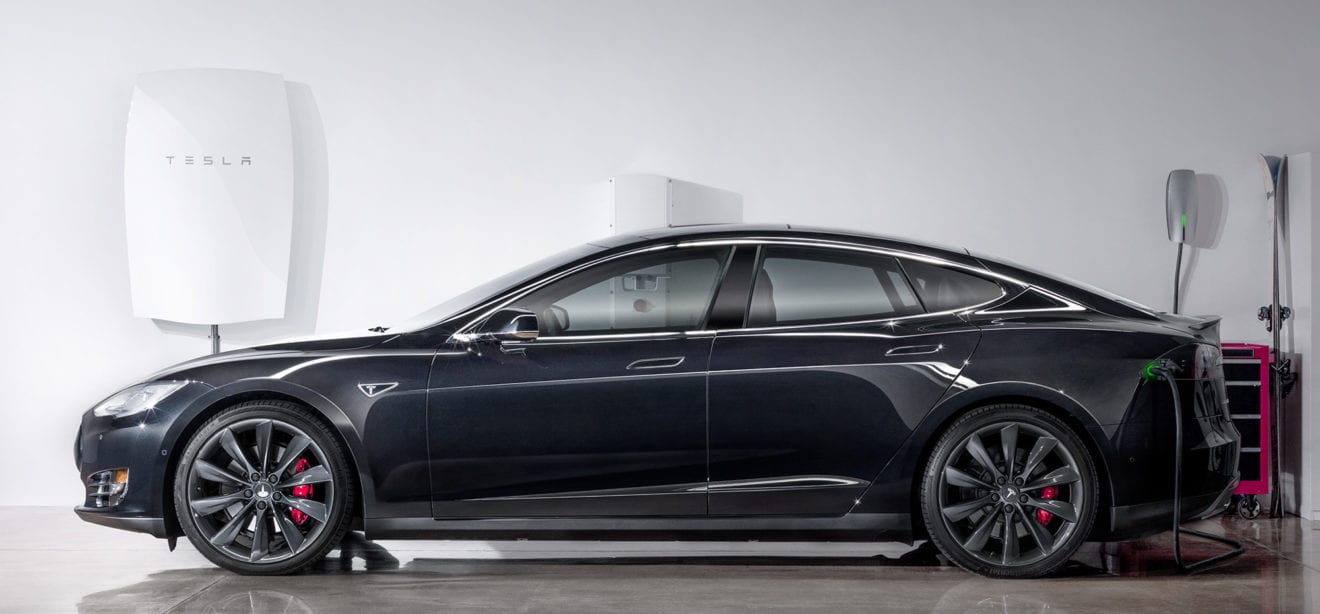
    Along with this rising demand, there are now over 340 Superchargers and 1,600 Destination Chargers in the country.

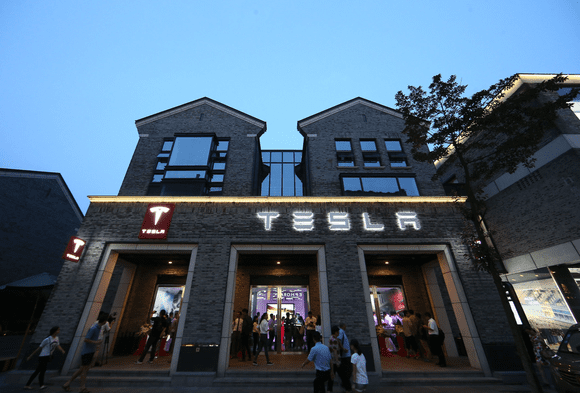
    One area of investment for the company in China has been with its retail stores. In August 2015, Tesla had just one retail store located in a high foot traffic area in the market and said it planned to have five by the end of the year. With 15 stores in the country now, the company appears to be exceeding its plans for a retail expansion there.

    Hong Kong First Tesla

    Tesla’s investments in Hong Kong, where it currently has three retail stores, are also surprising. Lai provides a glimpse of the company’s robust charging network in the market, along with a rare breakdown of sales for the region:

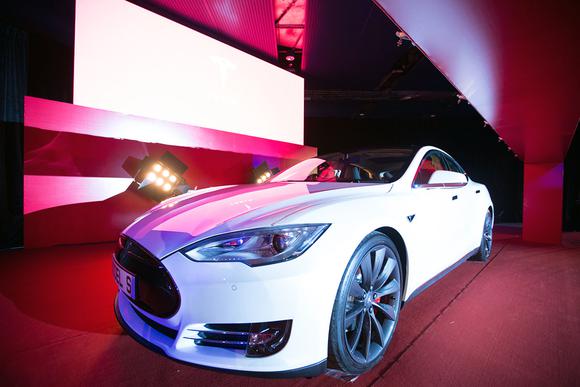
    Hong Kong in particular has 42 Superchargers, making it the city with the highest density of Tesla’s rapid charging stations; this is on top of the 75 destination chargers there. It’s no wonder that last year the company managed to sell 2,221 Model S in Hong Kong alone, which made up over 80 percent of the local electric vehicles that year. To put things into perspective, that’s also 4.39 percent of Tesla’s total global shipment in the same period.

    This is considerable progress considering the company didn’t launch in Hong Kong until the second half of 2014.

    China and Hong Kong both look poised to represent key catalysts for Tesla in 2016.

    The next billion-dollar iSecret
    The world’s biggest tech company forgot to show you something at its recent event, but a few Wall Street analysts and the Fool didn’t miss a beat: There’s a small company that’s powering their brand-new gadgets and the coming revolution in technology. And we think its stock price has nearly unlimited room to run for early in-the-know investors! To be one of them, just click here.

    Daniel Sparks owns shares of Tesla Motors. The Motley Fool owns shares of and recommends Tesla Motors. Try any of our Foolish newsletter services free for 30 days. We Fools may not all hold the same opinions, but we all believe that considering a diverse range of insights makes us better investors. The Motley Fool has a disclosure policy.

  • Motor vehicles help December retail sales rise 2.9%

    Motor vehicles help December retail sales rise 2.9%

    Motor vehicles lifted Singapore’s retail sales to a 2.9 per cent year-on-year growth in December 2015 from what would otherwise have been a 3.6 per cent decline, according to the Department of Statistics.

    On a seasonally adjusted basis, retail sales in December declined by 2.1 per cent against November including motor vehicles. Excluding vehicles, retail sales would have declined by 2.8 per cent month on month.

    Total retail sales in December were estimated at S$4.1 billion, compared to S$4 billion a year earlier.

    The sale of food and beverages (F&B) declined by 5.7 per cent year on year, to S$665 million. On a seasonally adjusted basis, the F&B decline was 1.8 per cent versus November.

    Motor-vehicle sales jumped 62.5 per cent year on year, the single largest growth among the retail sectors. Against November, motor-vehicle sales grew by 1.6 per cent.

    Telecommunications apparatus and computers had the sharpest year-on-year fall, with retail sales dropping 26.4 per cent. Month-on-month sales fell 8.9 per cent for the sector.

  • Fall in JLR sales in China dents Tata Motors’ Profits

    Fall in JLR sales in China dents Tata Motors’ Profits

    Tata Motors – the owner of Jaguar Land Rover – said today that net profit for the last quarter fell by 2%, hit by lower JLR sales in China. This was better than many analysts had expected.

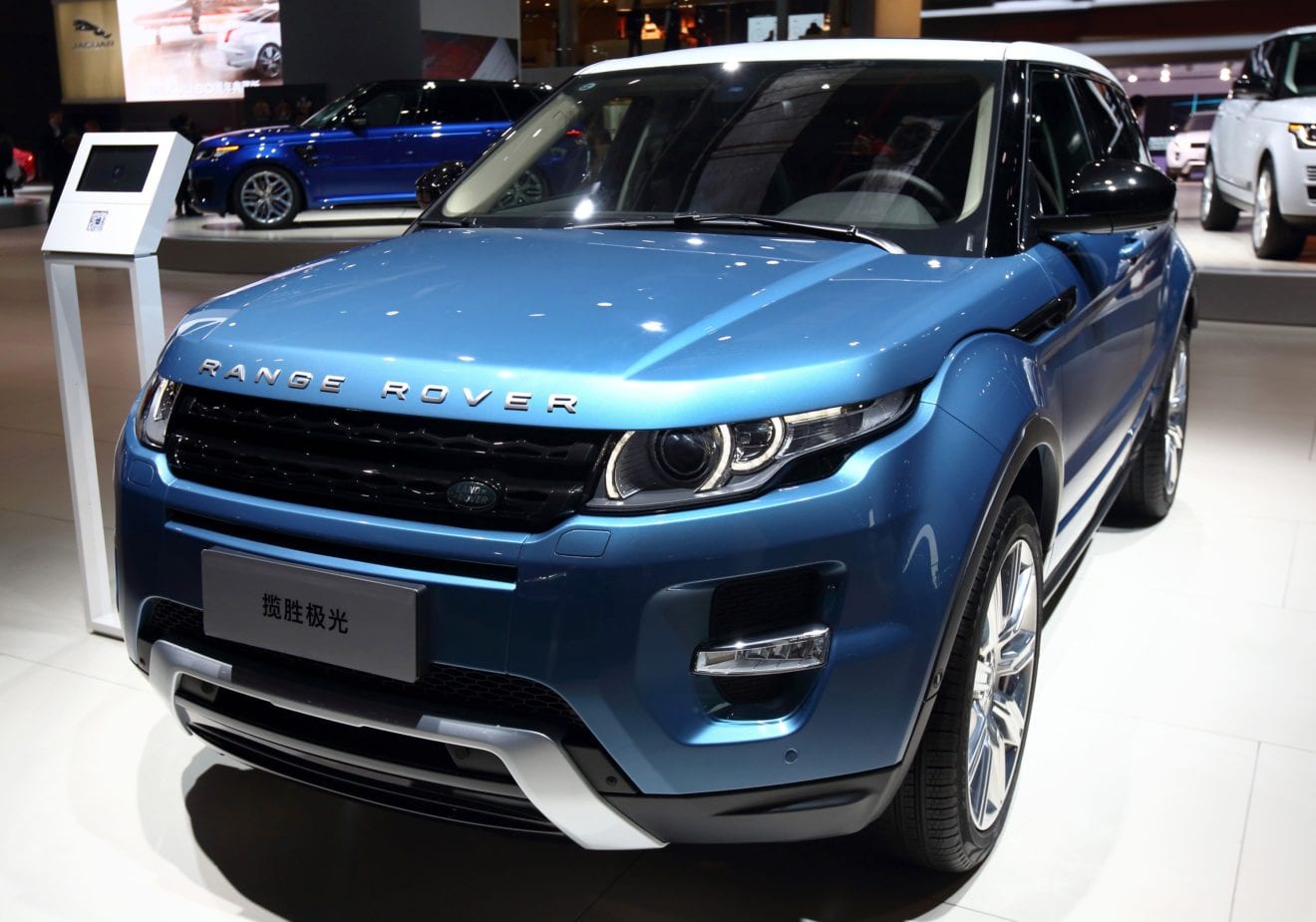
    JLR’s retail sales in China fell by 10% percent in China in the period. Local production of Range Rover Evoque and Discovery Sport SUVs in China and the ending of an annual tax rebate there also lowered margins, JLR said.

    But strong JLR sales in Europe and North America offset the slowdown in China. The firm posted a near 50% increase in US and European sales, with sales up by 47% in the UK. Other overseas markets were up 6% overall. In volume terms it was the firm’s best ever quarter.

    Total revenues were £5.8 billion, 2% down on the same period of in 2014. JLR reported Earnings Before Interest, Taxes, Depreciation and Amortisation (EBITDA) of £834 million, representing an EBITDA margin of 14.4% for the quarter (up from 12.2% in the previous quarter, which pleased analysts), although this was still down from a near 20% in earlier quarters.

    Profit Before Tax came in at most £500m, including a £30 million favourable exceptional item relating to the initial insurance payments for thousands of cars damaged in the 2015 Tianjin Port explosion.

    This compares to a profit before tax figure of £685 million for the same period of 2014. Yet the £500m figure was still a good result as it was up significantly from the (exceptional) pre-tax loss that the firm reported in the previous quarter.

    The challenges that JLR faced in China in 2015 have been the subject of recent Birmingham Post blogs, see here for example.

    Despite opening a new plant operating in China in late 2014, the firm saw a sharp decline in sales there in 2015 as the economy cooled and the impact of the stock market crash was felt on premium car sales. China accounted for about a quarter of JLR’s retail sales in 2014 and a much higher proportion of its profits given the high prices the firm had been able to command there.

    Despite the Chinese slowdown, JLR still has impressive growth potential according to many analysts. Its new products – including the Discovery Sport, XE and XF, are expected to drive strong growth and profits. And the Chinese premium market is already showing signs of picking up.

    New models will help. For example, Jaguar will launch its F-Pace ‘crossover’ (or SUV) model shortly, which could really boost Jaguar sales in the US and China. The SUV/crossover market is set to expand rapidly in coming years around the world. Even in China, while car sales rose slowly at the back end of 2015, SUV sales jumped. The F-Pace may be just the first of a range of Jaguar crossovers.

    JLR wants to release some 50 new or updated products over the next five years and recently signed a deal to build a new plant in Slovakia. JLR does not publicly discuss long-term sales goals, but it’s thought to want to achieve at least 1m in sales by 2020 — which would be about half the current annual volumes of BMW. JLR is on course to top 500,000 sales this fiscal year.

    What’s important here is that the firm now has strengths across different markets and with its impressive product line up, can – probably for the first time in its history – ride out shocks in different parts of the world. There’s no room for complacency, of course; indeed the Chinese slowdown in part stimulated the launch last year of an ambition cost reduction programme at the firm, as part of a programme called ‘Leap 4.5.’

    Overall, after a difficult period in mid-2015 owing to the sharp slowdown in the Chinese premium auto market, Jaguar Land Rover (JLR) has returned to form on latest figures.

  • Ford pursues Philippines expansion after record January sales

    Ford pursues Philippines expansion after record January sales

    Automotive firm Ford Philippines is gearing for faster expansion this year to sustain its growth, which has gone to a record level during the month of January.

    A statement showed that the company was able to extend its positive performance up to month of January, recording an all-time high monthly performance after it sold 2,459 car units, a jump of 50 percent compared to the same period last year.

    As a result, Ford Philippines plans to continue the expansion of its nationwide dealer network to support its ongoing growth and fast-growing customer base.

    “Ford plans to continue enhancing its customer and ownership experience across the country this year. This includes the official inauguration of Ford Marilao in Bulacan later this month as it further expands its authorized dealer network to even more key locations across the Philippines,” the company said.

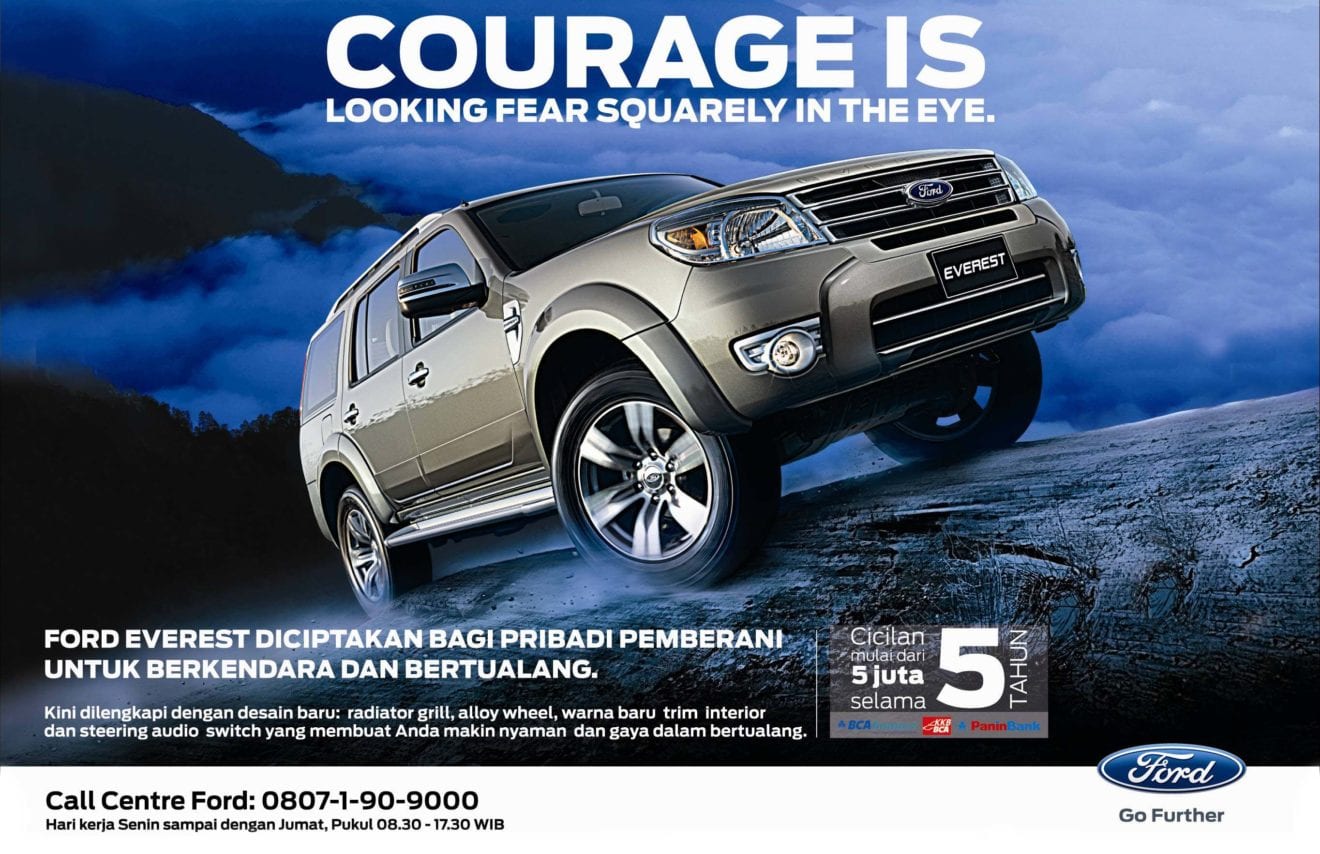
    Ford’s January performance in the Philippines was led by the all-new Everest, which delivered retail sales of 1,144 units, the second highest total ever for the nameplate.

    “It’s a fantastic start to 2016, and we’re extremely proud of how the Ford brand continues to connect with our fast-growing base of Filipino customers,” said Lance Mosley, managing director of Ford Philippines.

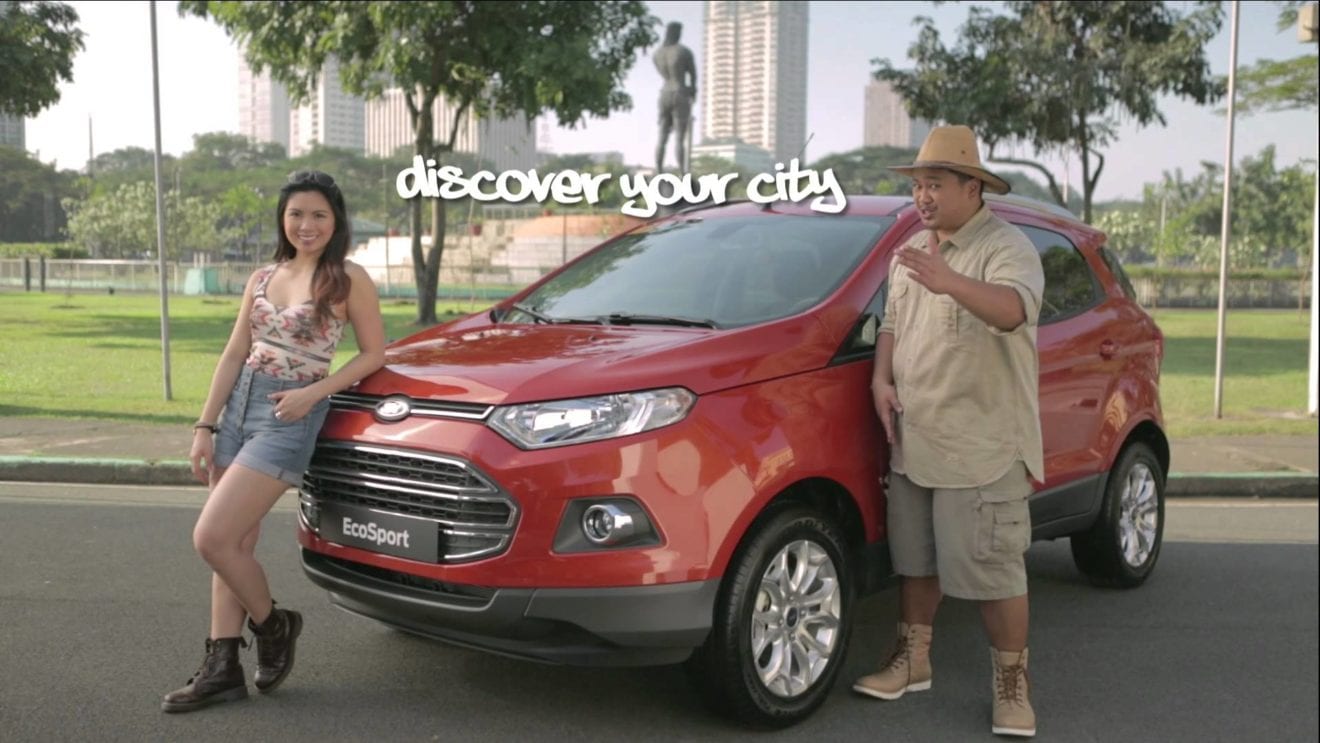
    The EcoSport compact SUV continued as one of Ford’s top-selling models in the Philippines with January sales of 551 units.  Built on Ford’s global B-segment platform, the EcoSport continues to delight customers with its combination of small-car practicality and agility of an SUV.

    Strong demand for the class-defining Ranger pickup, the second best-selling pickup truck in the Philippines last year, also helped the company achieve additional retail sales of 543 units.

    Ford Philippines’ lineup of North American SUVs available in the Philippines also contributed to the strong start to the year, including the premium Explorer which delivered sales of 95 units, while the sporty Ford Fiesta delivered sales of 71 units,

    The iconic Mustang, equipped with either a V8 5.0L or EcoBoost 2.3L variants engine, delivered January sales of 10 units.

    Ford Philippines is the local subsidiary of Ford Motor Company, a global automotive and mobility firm based in Dearborn, Michigan.

    With about 199,000 employees and 67 plants worldwide, the company’s core business includes designing, manufacturing, marketing, financing and servicing a full line of Ford cars, trucks, SUVs and electrified vehicles, as well as Lincoln luxury vehicles.

  • Retail LPG price drops 2 baht/kg to 20.29 baht/kg

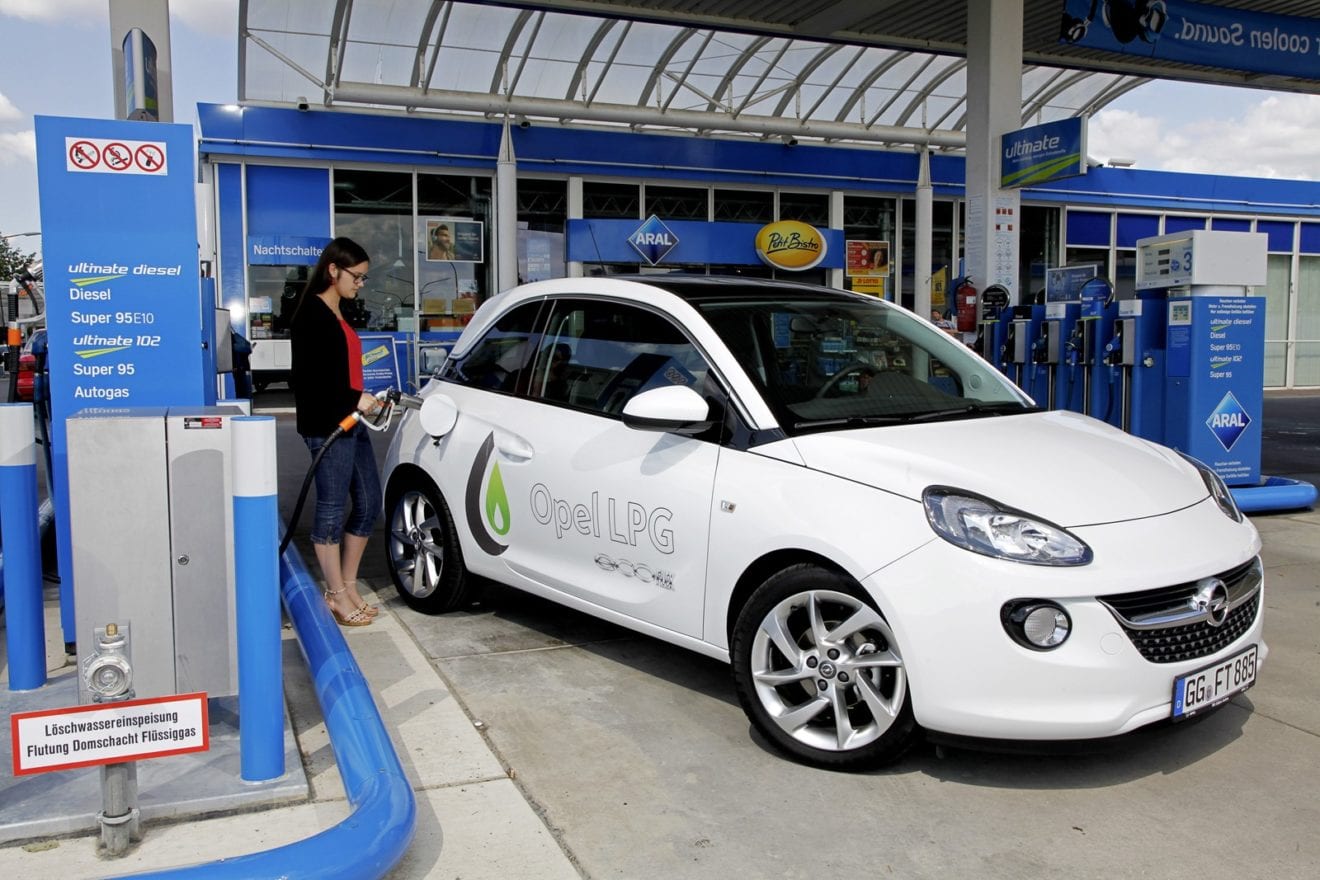
    Retail LPG price drops 2 baht/kg to 20.29 baht/kg

    The board also decided to scrap the compensation for transportation costs for LPG to be delivered by PTT Plc to regional depots across the country. This measure will reduce the LPG prices in the countryside to different levels depending on the distance between the depots and PTT Plc main LPG terminal.

    However, Mr Thavarath Sutabutr, director of the Energy Policy and Planning Office, said that during the first three months the depot-gate prices of LPG in the countryside will be controlled at levels not exceeding the transportation costs.

    He pointed out that the LPG price in Lampang which is the farthest from PTT terminal will not be reduced as the compensation remains at 2 baht/kg.

    The new LPG retail price for Bangkok and the eastern region effective as of Thursday is 20.29 baht/kg.


  • Harley-Davidson Hong Kong opens new flagship

    Harley-Davidson Hong Kong opens new flagship

    Harley-Davidson Hong Kong has unveiled a new showroom in Chai Wan as part of its expansion plan in the city.

    The new showroom, covering about 9000 sqft (840 sqm), showcases the latest Harley-Davidson motorcycles, clothing and related services and products. Harley-Davidson Hong Kong is intended as a lifestyle concept store that “fully presents the value of the brand” to its customers, according to its principal, David Neilsen.

    Harley-Davidson Hong Kong Chai Wan 5

    Harley-Davidson Hong Kong Chai Wan 1

    The company describes the new outlet as “unlike any motorcycle dealership yet built in Hong Kong in quality and design”.

    Harley-Davidson Hong Kong Chai Wan

    “Hong Kong is one of the most vibrant cities in the world,” said Neilsen. “It was an exciting opportunity for us to bring Harley-Davidson’s authentic full service to the community. We believe that there is great potential, especially in the affluent youth market, for this legendary brand here in Hong Kong.

    Harley-Davidson Hong Kong Chai Wan 6

    “We are already looking for the right moment to introduce Harley-Davidson’s new Black Label line which the company has developed to suit the taste of the young generation. We believe that the new line is a great fit for the Hong Kong market and in line with the company’s global expansion plan,” Neilsen concluded.

    Harley-Davidson Hong Kong Chai Wan 3

    Harley-Davidson Hong Kong Chai Wan 4

    InvestHK advised and assisted Harley-Davidson Hong Kong with its expansion in the territory.

    Harley-Davidson Hong Kong Chai Wan 2

  • TSS Revs up the Bangkok Auto Salon

    TSS Revs up the Bangkok Auto Salon

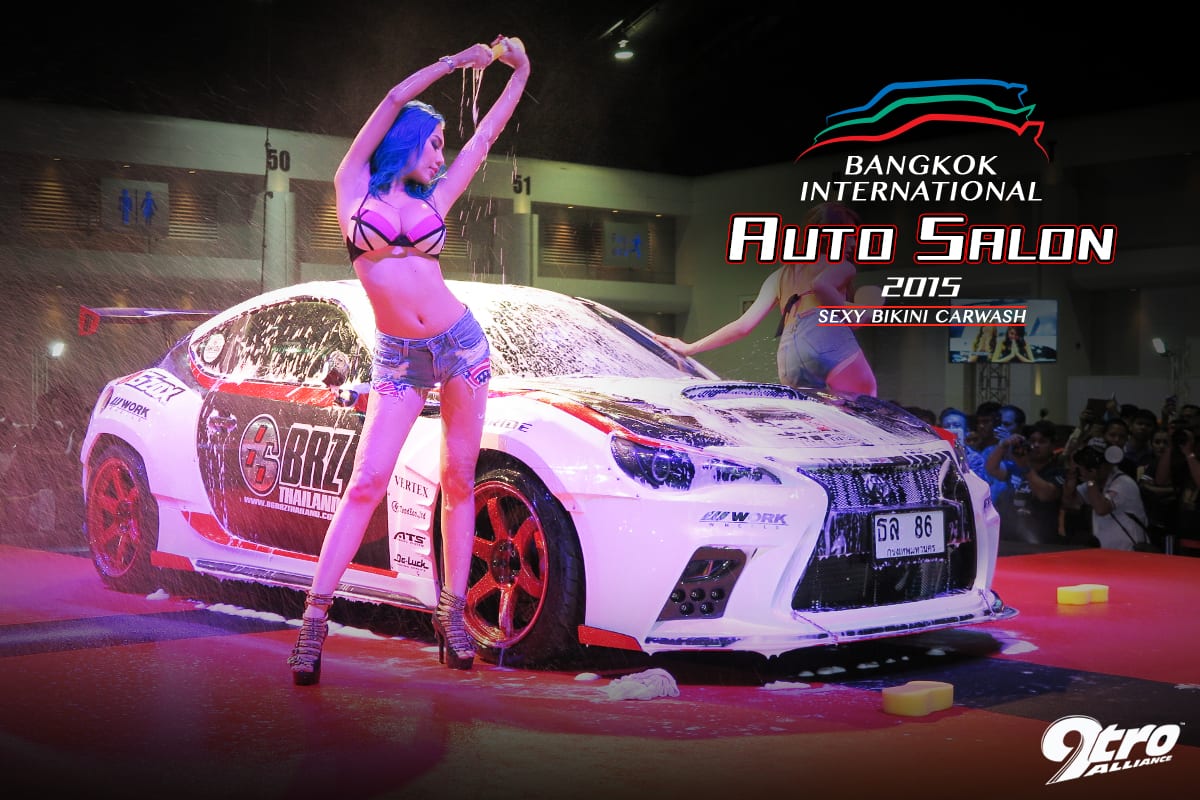
    Thailand Super Series (TSS) is thinking big these days so it was no surprise that its booth at the 3rd Bangkok International Auto Salon last week was packed out with ambition, menace and muscle. The biggest motorsport series in Thailand was right under the spotlights.

    Leading out the display was the monstrous Camaro GT3 of Vattana Motorsport, the big machine raced by Czech former F1 driver Tomáš Enge to double victory last December in Bangsaen. Next up was the unique ‘Australian V8 Supercar’ Holden that is raced by Craig Corliss. The New Zealander bagged a sensational win in the car (which was shipped to Australia at the end of last year for a total rebuild) at the season opener and he has his eye on the title.

    Then there was the Porsche 997 GT3 Cup of Sarun Sereethoranakul, the drift star turned circuit racer is the joint Super Car championship leader after the first round thanks to two consistent drives and he’s another aiming for the title. Not to be missed was the high-tech Audi R8 LMS Cup of Henk Kiks, the B-Quik Racing machine dazzling onlookers in its customary yellow and black colours, while the booth was wrapped up by the first car to be built for the series’ new ‘Racing Academy’ that aims to teach drivers the art of racing.

    ‘TCR Thailand’ promises to be one of the most exciting new categories to be introduced to Thai motorsport in recent years and the build up to the launch of the series in 2016 is well underway. In Buriram Khun David Sonenscher, CEO of Motorsport Asia, the promoter of TCR Asia Series, explained the exiting new concept in full detail during a well-attended Q&A session.

    Super Car Class 2-GTM regular Khun Paul Kanjanapas has officially launched his team for the 2015 championship with a new title sponsor and a new supporting crew during a prestigious mall ceremony and he has ambitions to keep improving as he undertakes a full season of top level racing.
    Finally, in amongst the many motorsport industry companies supporting the new breed of state-of-the-art racecars in TSS is MCS. Khun Jerome van Gool, President of Worldwide Operations, was in Buriram at the season opener to keep an eye on the Ferrari and Porsche entries from Singha Motorsport Team Thailand and A Motorsport, respectively.

    TSS in the spotlights at the Auto Salon

    TSS had an imposing presence at the 3rd Bangkok International Auto Salon, ASEAN’s biggest tuning and modified car show, which ran from Wednesday to Sunday last week at Muang Thong Thani’s Impact Exhibition Center.

    The strategically located official TSS booth packed a real punch with four stunning ‘Super Car’ machines on display, each one residing at the top the horsepower stakes – as well as at the business end of the racing grids. The TSS display was certainly one of the most popular with visitors to the show over the five days.

    VIP guest during the show’s official opening ceremony was TSS Vice President Khun Preeda Tantemsapya and he reckoned it was a natural ‘fit’ for the series to be seen at this glamorous event. “The reason for being here is that the Auto Salon is mainly about modification and all the cars in TSS are modified to a certain extent as far as the regulations allow them to,” he said.

    “We bring the cars to show so people who are interested in high performance cars and parts see that we exist in Thailand we have top racecars from all over the world in TSS,” Khun Preeda explained. “As we can see we have an Australian V8 Super Car on show all the way to Porsche and Camaro GT3 cars. We hope our display will encourage people to learn more about what we are and become interested in TSS.”

    Khun Preeda also reckoned that is was important for TSS to support this budding show, which is just three editions old but already growing rapidly in stature, not just here in Thailand, but right across the whole of South East Asia.

    Leading out the power packed display was the monstrous Chevrolet Camaro GT3, which is entered in Super Car Class 1-GT3 by Reiter Vattana Motorsport. Former F1 driver Khun Tomáš Enge raced to a superb double victory in the big black Reiter Engineering-built machine in Bangsaen last December and he was straight back onto the front running pace during the season opener in May. The Czech will be targeting more victories in the Camaro when TSS returns to Buriram for Round 3 & 4 at the end of this month.

    Next up was the unique ‘Australian V8 Supercar’ Holden Commodore VE that is raced by Craig Khun Corliss. The New Zealander bagged a sensational Super Car Class 2-GTM win in the big lurid-green car (which was in fact shipped to Australia after Bangsaen for a total rebuild in time for 2015) at the season opener and he’s another driver that has his eye on the title.

    Then there was the striking #55 Porsche 997 GT3 Cup of Khun Sarun Sereethoranakul. The ‘drifting’ star turned circuit racer is already the joint Super Car Class 2-GTM championship leader after the first rounds of the year thanks to two very consistent drives onto the podium and he’s another driver aiming for the title.
 
Then there was the high-tech #26 Audi R8 LMS Cup of Henk Kiks, the B-Quik Racing machine dazzling visitors to the booth in its customary standout yellow and black colours. The Dutchman had a tough start to the season in May but he’s ready to bounce back when racing resumes at the end of the month.

    The booth, laid out in the form of a ‘racing grid’, was completed by a Honda Jazz, the car that will form the backbone of the new TSS Racing Academy (TRA). That was one of a batch of eight examples that have already arrived at the school and which will initially operate from the Pathum Thani Speedway. More ‘learner’ racecars are following. The show was an ideal way to raise the Academy’s profile and plenty of interest followed the Jazz’s public debut.

    Khun Preeda reckoned the Auto Salon was the perfect event to use to bring the TRA to public attention for the first time. “We want people to learn about the TSS Racing Academy which we will launch [this coming weekend] with a soft opening,” he said. “So by having the car on our booth now we have a very good sense that the Academy exists although we won’t fully promote it yet but will wait until we have had a run in, got the concept full honed and then in a few months time we will officially launch it. By carefully honing it we should be able to create a good and solid foundation.”

    The presence of TSS racecars at the show didn’t stop with the official booth either; in fact there were machines from right across the series’ multiple categories on display throughout the Auto Salon. On the official Toyota booth, for example, was the Super Car Class 2-GTM ‘86’ of Khun Nattavude Charoensukhawatana. This car has a superb pedigree, winning the 2013 Drivers’ title while finishing runner up last year.
 
Next door on the Mazda booth the Innovation Motorsports-run cars from Super Production took pride of place. The new Mazda2 turbodiesel hatchback, which debuted at the season opener back in May, sat alongside the brand-new sedan version, which will be seen in TSS for the first time when the racing action resumes at the end of this month. Joining them was the sleek Mazda RX-8 that Khun Michael Freeman ran in Super Car Class 2-GTM at Bangsaen last December.

    Appearing in the big racing car display in the Challenger Hall was the Porsche 997 GT3 Cup of TSS President, Khun Sontaya Kunplome. He’s had a cracking start to the season and two strong results in Buriram in May have put him in command in the points’ standings in Super Car Class 3-GTC.

    H.Drive Racing hosted the new Porsche 991 GT3 Cup that Khun Pitsanu Sirimongkolkasem is using for his graduation year in Super Car. It’s the first of the new ‘991 generation’ to arrive on the racetrack in Thailand and is quite unmistakable as it’s wrapped in a striking gold livery. Alongside the #90 Porsche on the H.Drive stand was the Honda Civic FD that the same driver used to win Super 2000’s ultra-competitive Class B title last year; it was shown in the colours it ran in at Bangsaen last December where Khun Pitsanu wrapped up that title.

    The official Singha booth showcased a real line up of winners from Super Car and Super 2000. Leading the charge were the two Ferrari 458 Challenge machines of reigning Super Car Class 2-GTM champion Khun Voravud Bhirombhakdi and Singha Motorsport Team Thailand’s newest signing, hotshot youngster Khun Kantasak Kusiri.

    The two Prancing Horse machines were complimented by a trio of the team’s Honda Civic FDs, including the examples of Khun Kittipol Pramoj Na Ayudhya and Khun Thamrong Mahadumrongkul, two fast-emerging front-runners in the highly competitive world of Super 2000.

    Finally, the Ginetta G55 of Khun Naputt Assakul made a piece of history at the season opener when it gave the tiny British marque its first ever win in Thailand, the victory coming in Super Car Class 3-GTC. That noteworthy achievement was celebrated at the show as the black and gold car, with its long sweeping bonnet and its compact low-slung glasshouse, was on display in front of visitors.

  • General Motors China Sales Up 7.3 Percent In January 2016

    General Motors China Sales Up 7.3 Percent In January 2016

    General Motors and its joint venture partners in China reported 421,023 new retail vehicle sales during January 2016, a 7.3 percent increase on a year-over-year basis.

    “This year, GM and our joint ventures will continue to offer an unmatched choice of products across market segments along with new services to meet the needs of China’s car buyers,” said GM Executive Vice President and GM China President Matt Tsien. “Our new models, such as the Cadillac CT6 and Chevrolet Malibu XL, will be strong additions to our portfolio.”

    Increasing demand for SUVs and luxury vehicles continued to support GM’s robust sales last month. The Buick Envision and Baojun 560 led the growth in sales of GM’s SUVs in January, with demand growing 188 percent-year-over-year.

    Chevrolet

    Chevrolet sales in January declined 27 percent year-over-year to 56,133 units.

    The automaker attributes the drop to the end of the fuel economy subsidy for the Sail. Chevrolet sales are expected to improve with the arrival of several new models in 2016, including the Malibu XL on February 27.

    Buick

    Buick sales in January grew 39 percent year-over-year to 138,907 units.

    Sales of the brand exceeded 130,000 units for the first time, led by the Excelle GT and Envision SUV. Sales of the Envision more than doubled on a year-over-year basis.

    Cadillac

    Cadillac sales luxury cars increased 16 percent from a year earlier to 8,337 units, making January the sixth consecutive month of double-digit sales growth.

    Sales of the ATS-L advanced 14 percent. The Cadillac CT6 full-size prestige sedan is the full-size top-of-the-range prestige sedan was launched on January 27th and is offered at Cadillac dealerships across China. It is first model manufactured at SAIC-GM’s new Cadillac plant in Shanghai.

    Baojun

    Sales of Baojun vehicles jumped 101 percent from a year earlier to 78,367 units.

    The Baojun 730 MPV and Baojun 560 SUV led their respective segments, while the 2016 Baojun 630 family sedan with enhanced styling and upgraded performance was launched at the end of last month at a lower price.

    Wuling

    Wuling sales in the Chinese domestic market decreased 17 percent from a year earlier in January to 139,227 units. The brand was impacted by continued contraction of the mini-commercial vehicle market.

  • Ministry of Industry Reluctant to Monitor Ford

    Ministry of Industry Reluctant to Monitor Ford

    I Gusti Putu Surya Wirawan, Director General of Metal, Machinery and Means of Transportation Industry (under Ministry of Industry) said that the Ministry is reluctant to monitor PT Ford Motor Indonesia after its exit from Indonesia. “Ford is not an industry. We are not obliged to monitor them,” said Putu at Bunga Rampai Restaurant, Tuesday, February 2, 2016.

    According to Putu, the Ministry of Trade is the one responsible for monitoring Ford’s operation as it was only operated in selling. When asked about a consumer’s lawsuit against Ford, Putu said that the Ministry has yet to receive the letter.

    “Consumers may file lawsuit to (Ministry) of Trade. It’s in the Consumer Protection Law,” said Putu.

    Putu said that Ford is allowed to sell their products in Indonesia even without industry. According to her, Ferrari and Lamborgini has been operating that way in Indonesia.

    Putu underlined that Ford is entitled to exit Indonesian market. “Ford is free to sell their products. There is no pressure. If the operation is not profitable, it (Ford) will no longer operate here.”

    The decision of Ford Motor Indonesia (FMI) to leave Indonesia dissapoints consumers. One of them is David Tobing. He has officially filed a lawsuit against Ford Motor Indonesia (FMI) to the South Jakarta District Court. Ford is deemed to have violated Article 7 paragraph b of the Consumer Protection Law which states that businesses must provide true, clear and honest information regarding the state of their products as well as to provide explanation on its usage, repair and maintenance.

  • Indonesia tipped as potential largest carmaker in Southeast Asia

    Indonesia tipped as potential largest carmaker in Southeast Asia

    Indonesia has the potential to become the biggest carmaker in Southeast Asia within the next five years, the country’s automotive industry association Gaikindo said on Wednesday (Feb 3).

    Indonesia can compete, and overtake Thailand’s automotive industry if the government gives the right incentives to boost production, said Gaikindo’s co-chairman Jongkie Sugiarto.

    “Indonesia has a good potential in ASEAN. In the coming years, Indonesia is going to be the leader in the automotive industry,” said Mr Jongkie. “It’s really a pity that (companies like) Ford are (pulling) out of Indonesia.”

    Ford is the second American carmaker to exit the Indonesian market in the past year, after General Motors stopped its manufacturing operations in 2015. Ford had been struggling to maintain profitability.

    However, Mr Jongkie is convinced Ford’s pullout will not affect Indonesia’s automotive industry. Currently, about 1 million cars are for domestic production, but only 0.2 million units are produced for exports.

    With Indonesia’s automotive industry having the annual production capacity to build 1.9 million cars, this leaves 0.7 million units in excess capacity. Gaikindo believes the country needs to expand its production base to make the most of this.

    “We have to add the production base of MPVs, plus sedans, plus pick-ups, plus SUVs,” said Mr Jongkie.

    “How? It’s easy. We have to lower the luxury tax of small sedans, small SUVs, pick-ups from 30 per cent today to 10 per cent. There will be a demand. So, when these models are growing, then the principals will come and say why don’t we produce the cars in the country?”

    Gaikindo submitted its proposals to President Joko Widodo in October 2015, and the government is considering changing the tariff regime in the automotive industry.

    Analysts believe the government is serious in attracting more foreign manufacturers as it tries to move away from a commodity-based economy.

    “Our government’s commitment to increase manufacturing is very strong,” said Myrdal Gunarto, an economist at Maybank Indonesia. “The government has released some stimulus packages that aim to attract foreign investors to come here through deregulations, and to make it easier for foreign companies to invest in Indonesia.”

    Gaikindo predicts car sales this year will increase by 5 per cent, in line with the government’s target to achieve 5.5 per cent economic growth in 2016.

  • Fitch Thailands Liberalisation of NGV Price Positive for Industry

    Fitch Thailands Liberalisation of NGV Price Positive for Industry

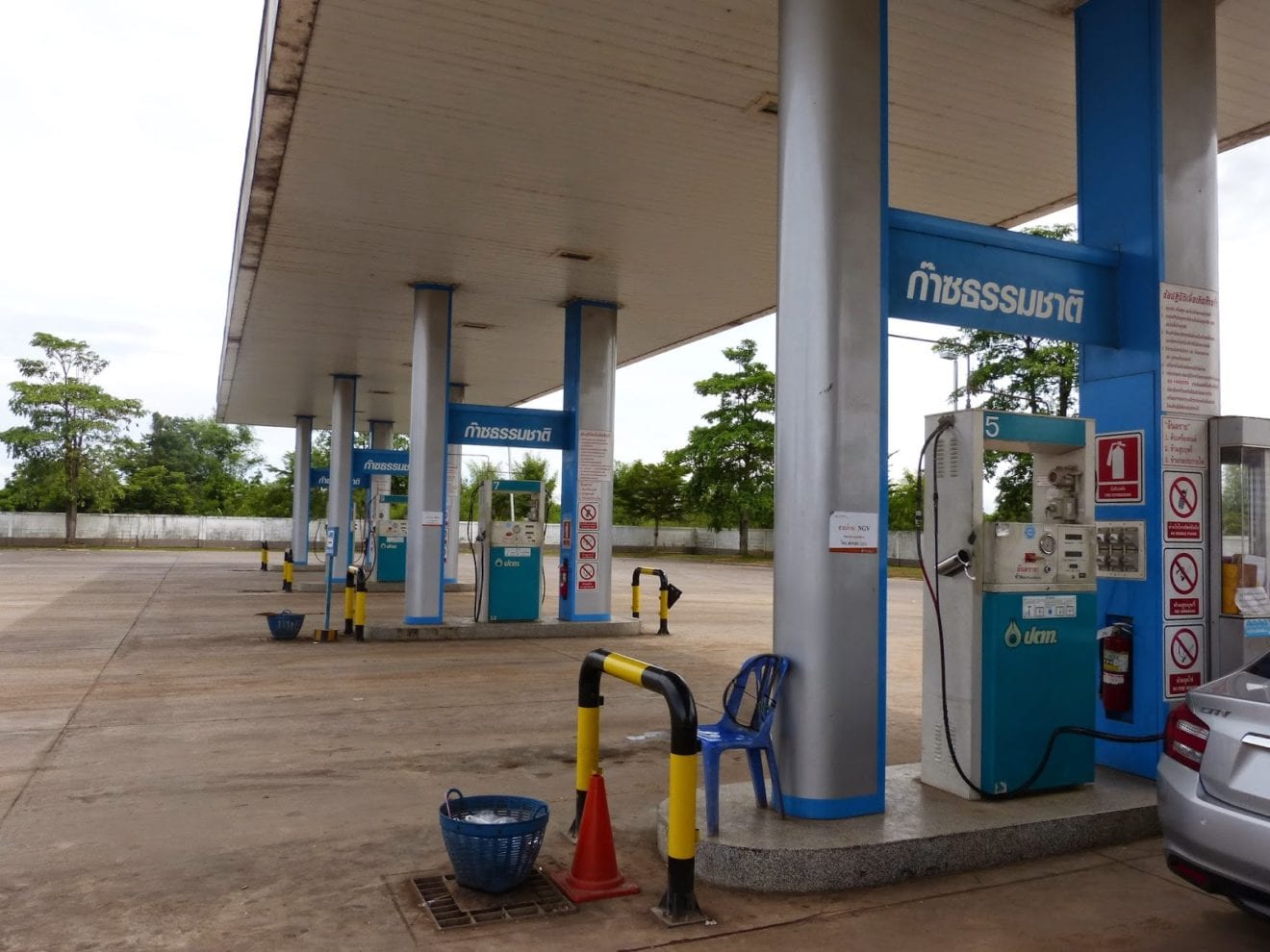
    Thailand’s plan to remove the cap on the retail price of natural gas for vehicles (NGV) is positive for Thailand’s oil and gas sector. Prices of all types of fuel in Thailand will reflect actual costs once the latest NGV reforms are effective, after liquefied petroleum gas (LPG) price reforms were implemented in February 2015 and an NGV price hike was imposed in 4Q14.

    The further reduction of losses from NGV sales, as a consequence of the latest reforms, is positive for PTT Public Company Limited’s (PTT, BBB+/AAA(tha)/Stable) cash generation. PTT’s profits have been significantly reduced by the weaknesses in its core upstream division amid low oil prices.

    Thailand’s Energy Policy Administrative Committee has said that the NGV retail prices will be liberalised in 2016. The NGV price will be set based on the natural gas cost in Thailand (pool gas price). Prices will be updated on a monthly basis. However, the NGV retail price will be capped at THB13.5 per kilogram (kg) from 21 January to 15 July 2016, after which the cap will be lifted. The NGV price for public vehicles, which account for only around 25% of total NGV volume consumed in Thailand, will continue to remain unchanged at THB10 per kg. However, the government is in the process of reviewing the law to let the country’s Oil Fund subsidise this cap on the NGV price for public vehicles.

    PTT incurred heavy losses in its NGV business in 2011-2014. The company reported negative EBITDA of THB20.0bn in 2014 (compared with total consolidated EBITDA of THB251.0bn for the year) and THB8.3bn in 9M15. The smaller EBITDA loss in 9M15 was due mainly to the increase in the NGV retail price in 4Q14. We expect the losses to narrow substantially in 2016.

    Demand for NGV in Thailand has been historically distorted by the regulated pricing – particularly during periods of high oil prices, due to its low fixed retail price, resulting in large losses for operators like PTT. Demand for NGV increased substantially during 2011-2013, but growth moderated to 3% in 2014 when the NGV retail price was increased. The increase in NGV retail price plus the lower refined oil prices have sapped demand for NGV in 2015. NGV consumption for 9M15 decreased by about 2% yoy, while consumption of gasoline and diesel increased by 13% yoy and 3% yoy, respectively. A similar trend was observed for LPG after prices were reformed in the beginning of 2015. LPG consumption for 9M15 dropped by 12% yoy.


  • Deadly virus could force Tata to rebrand new car

    Deadly virus could force Tata to rebrand new car

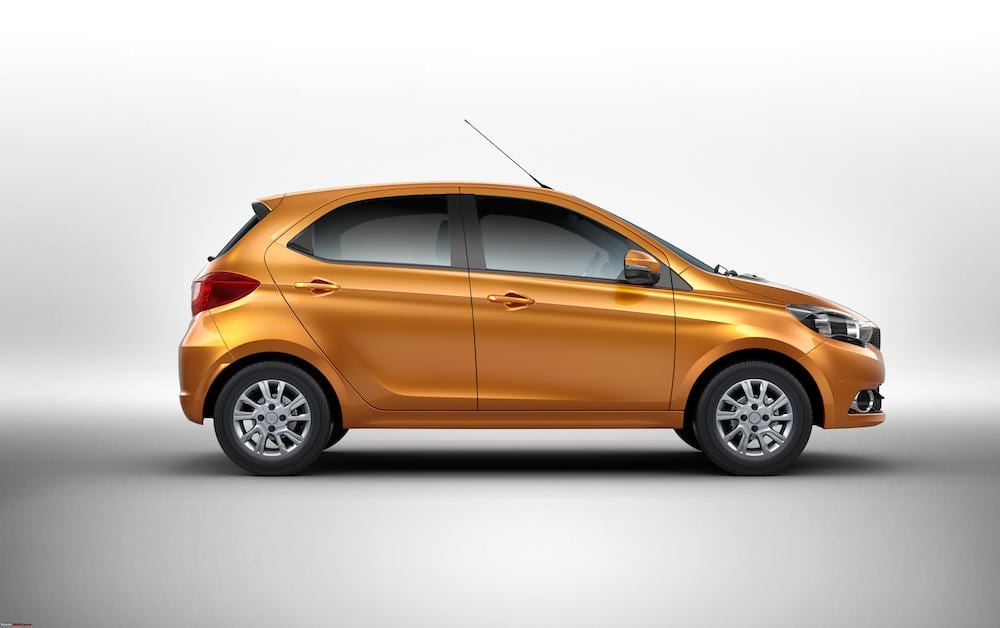
    It’s a bad time to be called Zica – even if it’s a car we are talking about and not the deadly virus that’s gone global. Zica is a new hatchback from Indian carmaker Tata’s stable, while the mosquito-borne virus that has gone global is called Zika. But who cares about spelling when they both sound the same?

    Such is the panic over the similarity that Tata is reviewing the name –  even though its origins are innocuous enough. Zica is short for “zippy car.” But no amount of shouting that from the rooftops can help now, it seems.

    “The decision to name our car happened many months back when we could not have foreseen any of the recent events. In view of the recent developments, we are now evaluating the situation,” Minari Shah, Tata’s head of corporate communications was quoted.

    Rebranding is often undertaken by corporates for better impact. For instance, Hutbitat, a big data real estate search engine for Australian properties, rebranded to Homekoala after realising that people had trouble understanding the original name and remembering it thereafter.

    Sometimes when a business expands into new markets or domains, a company’s original name may begin to feel ill-suited.

    Startups like Near and Inshorts were called AdNear and News in Shorts before they shed the first words in their names. Few may remember that real estate portal CommonFloor, which was recently acquired by online classifieds site Quikr, was once called Apna Ilaka (“Our Neighborhood” in Hindi). Rebranding obviously worked well in these cases and the new names stuck.

    But the Tata Zica seems to have been caught off guard by the virus.