Category: Automotive

Retail News Asia is committed to providing both local and global retailers with the latest Auto and Car news throughout the Asian market. This on a daily base.

  • Ferrari And Qualcomm Team Up For Tech Projects For Road, Racing Cars

    Ferrari And Qualcomm Team Up For Tech Projects For Road, Racing Cars

    Ferrari said on Tuesday it would partner with Qualcomm Technologies to use the San-Diego based group’s premium product, the Snapdragon chipsets, to accelerate the sports carmaker digital transformation. The deal will involve both its road cars and its Formula One racing team and the first common projects, including the so-called digital cockpit, have been already identified, the Italian group said in a statement.

    Ferrari’s new CEO Benedetto Vigna – a technology industry veteran – said in November Ferrari would seek technology partnerships as it moves ahead with transition toward cleaner mobility and in order to pivot technologies that require high investments.

    The Snapdragon logo will make its debut on Ferrari’s F1-75 racing model, which will debut on Feb 17

    “Innovation requires market leaders working together. Thanks to this agreement … we expand our knowledge in digital technologies and web 3.0, areas with great potential for automotive and motorsport,” Vigna said in the statement.

    The Snapdragon logo will make its debut on the F1-75 racing model, the Ferrari single-seater which will be unveiled at the company’s headquarters in Maranello on Feb. 17.


  • Volkswagen’s Skoda Auto Reports 12.6% Drop In 2021 Global Deliveries To 878,200 Cars

    Volkswagen’s Skoda Auto Reports 12.6% Drop In 2021 Global Deliveries To 878,200 Cars

    Volkswagen’s Skoda Auto said on Tuesday its global deliveries dropped 12.6% year-on-year in 2021 to 878,200 cars as the industry suffered from a semiconductor shortage and the impact of the COVID-19 pandemic.

    Among its regional markets, the Czech carm

  • BMW To Create Up To 6,000 New Jobs Next Year

    BMW To Create Up To 6,000 New Jobs Next Year

    Germany’s BMW plans to create up to 6,000 new jobs next year to prepare for growing demand for its electric vehicles, the carmaker’s chief executive told daily Muenchner Merkur.

    BMW is on a very good path through the transformation and has its plants prepared for e-mobility, Oliver Zipse was quoted as saying in an interview published on Wednesday. “That is why we will increase our workforce by up to five percent next year.”

  • Tesla Raises Full Self Driving Software Price To $12,000 In U.S., Musk Says

    Tesla Raises Full Self Driving Software Price To $12,000 In U.S., Musk Says

    Tesla Inc Chief Executive Officer Elon Musk tweeted on Friday that the electric carmaker will raise the U.S. price of its advanced driver assistant software dubbed “Full Self Driving” to $12,000 on Jan. 17.

    The 20% price rise comes less than two years since Tesla raised Full Self-Driving (FSD) prices to $10,000 from $8,000 in 2020.

    “Tesla FSD price rising to $12k on Jan 17. Just in the US.” Musk tweeted.

    Musk also added that the monthly subscription price will rise when FSD goes to wide release.

    “FSD price will rise as we get closer to FSD production code release,” he tweeted.

    Tesla has been expanding the release of a test version of its upgraded FSD software, a system of driving-assistance features – like automatically changing lanes and making turns, but the features do not make the vehicles autonomous.

  • China Expects To Meet Charging Demand Of 20 Million-Plus EVs By End Of 2025

    China Expects To Meet Charging Demand Of 20 Million-Plus EVs By End Of 2025

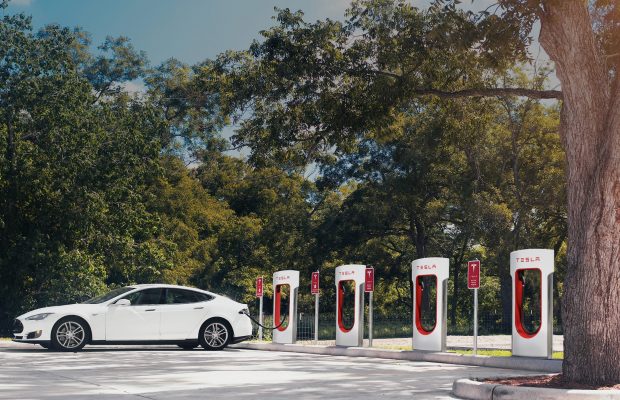
    China expects to meet charging demand for more than 20 million electric vehicles by the end of 2025, the National Development and Reform Commission said in a document on Friday.

  • Volta Trucks Unveils Two Smaller Truck Models For Urban Markets

    Volta Trucks Unveils Two Smaller Truck Models For Urban Markets

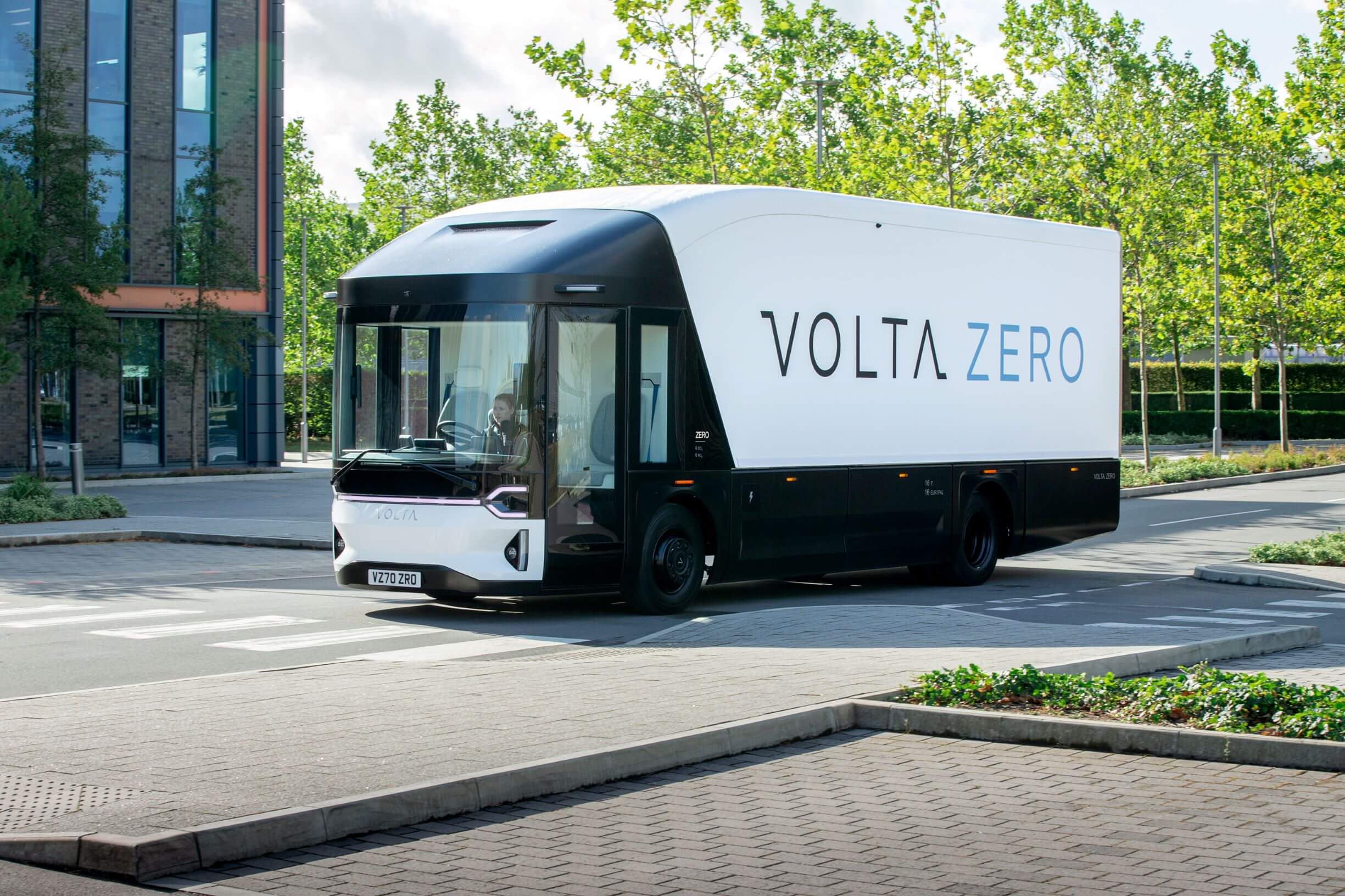
    Commercial electric vehicle (EV) startup Volta Trucks on Tuesday unveiled two smaller zero-emission truck models that will start production in 2025, opening more options for urban deliveries and in EU markets with restrictions for Sunday operations. Stockholm-based Volta Trucks, which also operates in the UK, said it would launch a fleet of test vehicles of its 7.5 tonne and 12 tonne trucks for customers in 2024. The new models will join the startup’s Volta Zero, a 16-tonne fully-electric truck, which is due to start series production later this year, and an 18 tonne model that should go into production in 2023.

    In February, Volta Trucks said it had raised 230 million euros ($247 million) to fund the launch of series production of the Volta Zero in late 2022.

    Some European Union countries have bans on trucks over 7.5 tonnes operating on Sundays or holidays, and cities such as Amsterdam do not allow trucks over that weight to protect old streets and bridges.

    Volta Trucks said it had raised 230 million euros ($247 million) to fund the launch of series production of the Volta Zero in late 2022.

    While some European cities also plan restrictions on diesel commercial vehicles – Paris will ban them in 2024 – and a number of manufacturers are testing prototypes, there are virtually no electric trucks in these weight segments available today. Volta Trucks’ 7.5 tonne and 12 tonne models will be among the first to market.

    “Our customers tell us that they really appreciate the safety and zero-emission attributes of the 16-tonne Volta Zero, but also need smaller 7.5- and 12-tonne vehicles in their operations,” Volta Trucks’ Chief Executive Essa Al-Saleh said in a statement.

    The startup currently has orders for around 6,000 electric trucks, including 1,500 ordered by Deutsche Bahn’s logistics unit Schenker.

    Volta Trucks plans to make 5,000 trucks in 2023 and its annual production should rise to 27,000 by 2025.

  • Japanese brands top auto imports in Vietnam

    Japanese brands top auto imports in Vietnam

    Japanese brands, including Toyota and Mitsubishi, were the biggest sellers among imported cars in Q1. Toyota sold 11,661 completely built units, while Mitsubishi imported 7,797.

    They were followed by Honda, Mazda and Suzuki. Last year, Toyota, Mitsubishi and Suzuki sold the most imported cars, with Toyota alone selling more than half of all imported cars.

    Fifteen out of 17 models Toyota sells are imported from Indonesia, Thailand and Japan. The sedan Vios and SUV Innova are assembled locally, while the SUV Fortuner is both assembled and imported.

    Mitsubishi also imports most of its models, with the popular MPV Xpander, imported from Indonesia, accounting for 53 percent of its total imports sold last year.

    The remaining models, like the pickup truck Triton and sedan Attrage, are imported from Thailand.

    Suzuki and Isuzu also import from Thailand and Indonesia.

    Nearly 7,000 Mazda cars, distributed by Truong Hai Auto Corporation, were imported from Thailand last year. This accounted for 26 percent of total Mazda sales in Vietnam.

    Honda has its two main models City and CR-V assembled locally and imports the rest.

    Ford has recently started assembling its pickup truck Ranger model in Vietnam while the other models SUV Everest and SUV Explorer are imported from Thailand and the U.S. respectively.

    Some luxury brands like Volkswagen, Audi and BWM only import completely built units.

    Kia, Hyundai and VinFast only assemble.

  • Tesla, VW, SAIC Look To Recommence Shanghai Operations

    Tesla, VW, SAIC Look To Recommence Shanghai Operations

    Tesla VW and SAIC are among several companies that are looking to get production back up and running at their Shanghai facilities after almost three weeks of COVID-19 related shutdowns. The news comes following Beijing having drawn up a “whitelist” of companies prioritised to re-open or keep operations going in Shanghai. The list included a number of companies ranging from carmakers to semiconductor manufacturers and medical firms.

    As per Reuters, Tesla had already recalled workers to its Shanghai factory where they would be required to live on-site. The company had planned to commence production today though it has now been deferred to tomorrow citing logistical issues from a supplier. SAIC Motor meanwhile reported that it was commencing stress testing from Monday with an eye on recommencing production while VW said it was evaluating the feasibility of resuming production at its SAIC joint venture.

    However, with COVID-related closures in other cities in the country, it remains to be seen how manufacturers work around supply chain disruptions.

    Shanghai meanwhile aims to stop the spread of COVID-19 outside of quarantined areas by Wednesday with reports saying that the city had stepped up testing measures and transfer positive cases and their close contacts to isolation.

    Companies are being required to ensure ‘closed loops’ for workers being called into work while also maintaining medical supplies. Under ‘closed loops’ employers have been asked to minimise employee exposure to others while transiting to work or arranging for employees to live on their factory premises.

  • Ferrari 296 Convertible To Debut On April 19

    Ferrari 296 Convertible To Debut On April 19

    Ferrari has teased the debut of the 296 convertible on its social media channels for April 19. The teaser image reveals little about the new convertible aside from previewing part of the rear profile of the upcoming model along with the lines on the rear fender. A closer look reveals the silhouette to be of the rear buttress of the upcoming Ferrari which shares similarities with the 296 GTB coupe.

    As per reports, the new 296 convertibles will feature a folding hard-top roof. Compared to the coupe expect the rear decklid to be revised to accommodate the remainder of the cosmetics likely to remain unchanged over the 296 GTB coupe. The interior too is expected to remain identical to the Coupe’s as seen on other Ferraris. The carmaker is also yet to confirm the name for the 296 convertible with the carmaker having used the Spider, GTS, and Aperta suffixes to describe its current and past range of convertibles.

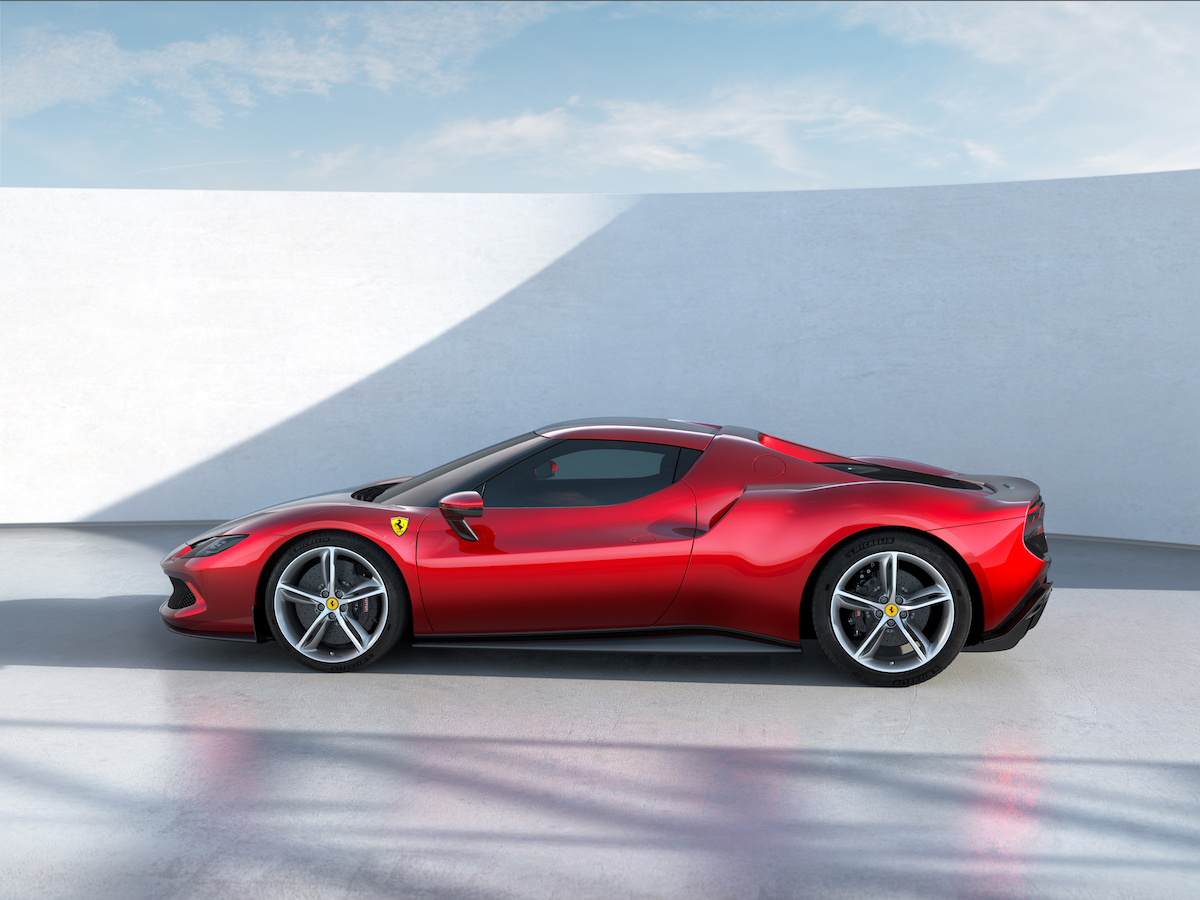
    The convertible is expected to share most of its styling with the 296 GTB Coupe (pictured) with changes expected to be focused on the rear deck.

    With the lack of a fixed roof, expect Ferrari to make tweaks to the chassis of the 296 convertible to improve body rigidity with the 3.0-litre twin-turbo V6 also likely to get a revised tune to account for the additional weight of the folding roof and any structural strengthening measures. Like the GTB, the drop-top 296 will remain a hybrid with an electric motor paired with the petrol engine developing a combined 818 bhp and 740 Nm.

    Ferrari is also readying its new generation GT3 race car based on the 296 though this model is only set to debut next year.

  • Auto sales recommence growth

    Auto sales recommence growth

    Vietnam’s auto sales in March returned to growth with a 17 percent increase year-on-year to 36,962 units after two consecutive months of decline, according to Vietnam Automobile Manufacturers Association (VAMA).

    The figure was highest this year and brought sales in the first quarter to 90,506 units, up 27 percent year-on-year, said VAMA, which does not incorporate data of VinFast and TC Motor (assembler of Hyundai cars).

    Most top-selling brands posted a double-digit increase in sales compared to March last year.

    Truong Hai Auto Corporation (Thaco) led with 13,295 units sold, up nearly 33 percent year-on-year.

    Toyota sold 7,977 units, up 22 percent.

    Mitsubishi and Honda followed with 3,675 units and 3,604 units respectively.

    Visuco (Suzuki) saw sales declining by 0.8 percent, while Ford’s sales plunged 45 percent.

    With data from all brands included, the hatchback VinFast Fadil was the top-selling model in Vietnam last month at 2,567 units. It was followed by the SUV Toyota Corolla Cross and the sedan Toyota Vios.


  • BMW’s CEO Expects Chip Shortage To Last Into 2023

    BMW’s CEO Expects Chip Shortage To Last Into 2023

    A shortage of semiconductors is likely to remain a problem for the auto industry into 2023, German carmaker BMW’s Chief Executive Oliver Zipse said in an interview with newspaper Neue Zuercher Zeitung (NZZ) published on Monday.

    “We are still in the height of the chip shortage,” Zipse was quoted as saying. “I expect us to start seeing improvements at the latest next year, but we will still have to deal with a fundamental shortage in 2023.”

    BMW said during its annual press briefing in mid-March that it expected the chip shortage to last throughout 2022.

    Zipse’s comments echoed similar statements by Volkswagen’s CFO Arno Antlitz on Saturday who said he expected that supply of chips would not be able to meet demand until 2024.

  • Ford dealer reports 36-fold profit increase

    Ford dealer reports 36-fold profit increase

    City Auto Corp, Vietnam’s largest Ford dealer, reported profits of VND51.8 billion (US$2.27 million) last year, a 36-fold rise from 2020.

    But it sold only 4,580 vehicles, 29 percent fewer than in 2020, and the increased profitability was due to the average price of each rising by 13 percent to VND915 million.

    The company attributed the decline in number of cars sold to last year’s Covid-19 outbreak and social distancing, but said business bounced back in the last quarter of 2021 thanks to post-pandemic economic recovery and the registration fee cut.

    It hopes to sell 8,820 units this year and double profits to VND104 billion, its highest ever.

    Opening new Ford dealerships and also distributing other car brands are part of its strategies to achieve the goals, it said.

    It did not exclude the possibility of acquiring other dealerships and selling electric vehicles.

  • Mercedes dealer to operate luxury car rental service

    Haxaco, a major Mercedes-Benz dealer, will focus on developing luxury car rental service this year besides its core business of car retail.

    In a recent annual meeting, its chairman Do Tien Dung said the firm has almost gained monopoly status in luxury car rental across Ho Chi Minh City and Hanoi, as competitors had been driven out of business due to the pandemic.

    Haxaco posted VND205 billion ($9 million) in profits in 2021, and it targets raising that by 3.4 percent this year.

    Besides being the dealer of Mercedes in Vietnam, it has also distributed MG, a UK car brand, since 2020.

    Dung said the MG reselling segment saw some achievements but has yet to meet the expectations of the company and its shareholders.

    Haxaco eyes becoming an exclusive distributor of a new car brand in Vietnam, but its chairman also noted that such ambitions need time and planning.

    It also plans to issue shares worth VND595 billion this year to raise funds for opening new Mercedes-Benz showrooms.

    Such investment is vital to maintain competitiveness against larger contenders, Dung added.

  • Vietnam’s VinFast seeks US government loans for expansion

    Vietnam’s VinFast seeks US government loans for expansion

    The chairman of Vietnam’s Vingroup conglomerate said on Saturday that the company’s auto unit, VinFast, would seek financing from the U.S. government to support its expansion with a planned plant in North Carolina.

    “It is also one of our financing options, but we need to prove to them that we are qualified,” Vingroup Chairman Pham Nhat Vuong told a group including reporters.

    VinFast said this week that its Singapore-based holding company had filed for an initial public offering (IPO) with U.S. securities regulators, as the company readies a $4-billion investment to build a factory in the United States.

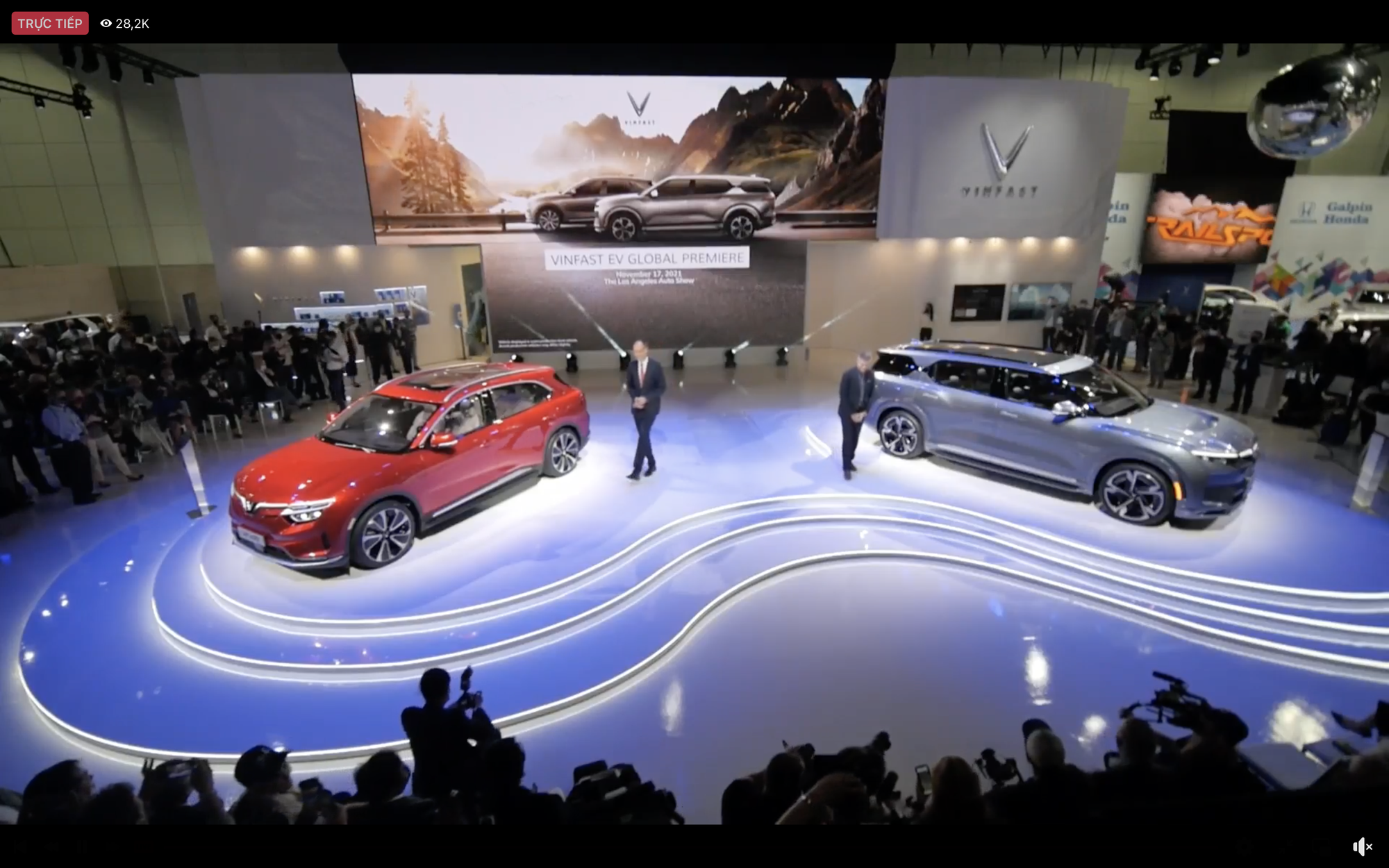
    VinFast, which began operations in 2019, is betting big on the U.S. market, where it hopes to compete with legacy automakers and startups with two all-electric SUVs and a battery leasing model that will reduce the purchase price.

    Vuong said VinFast was committed to an IPO that would help establish the electric vehicle maker as a global brand, but added: “if the conditions are not right we can wait.”

    “We ourselves are determined to push and committed to this IPO, but the highest target for the IPO is not financing but to set up VinFast in the global market,” he told the group.

    Lending from the U.S. government’s Advanced Technology Vehicles Manufacturing (AVTM) loan program was another option VinFast was exploring, Vuong said, in response to a question.

    The $25-billion fund was established by Congress in 2007 when Detroit-based automakers were tipping into crisis. It is administered by the Department of Energy still has a lending capacity of almost $18 billion, according to its website.

    VinFast has promised to create 7,500 jobs at its planned plant in North Carolina, where it will build the battery-powered VF8 and VF9 SUVs. The company has said it plans to begin construction of the plant as soon as permits are granted with a goal of starting production by 2024.

    It plans to begin exporting the two electric vehicles to the United States later this year from its existing plant in Vietnam.

  • Musk Promises ‘Dedicated Robotaxi’ With Futuristic Look From Tesla

    Musk Promises ‘Dedicated Robotaxi’ With Futuristic Look From Tesla

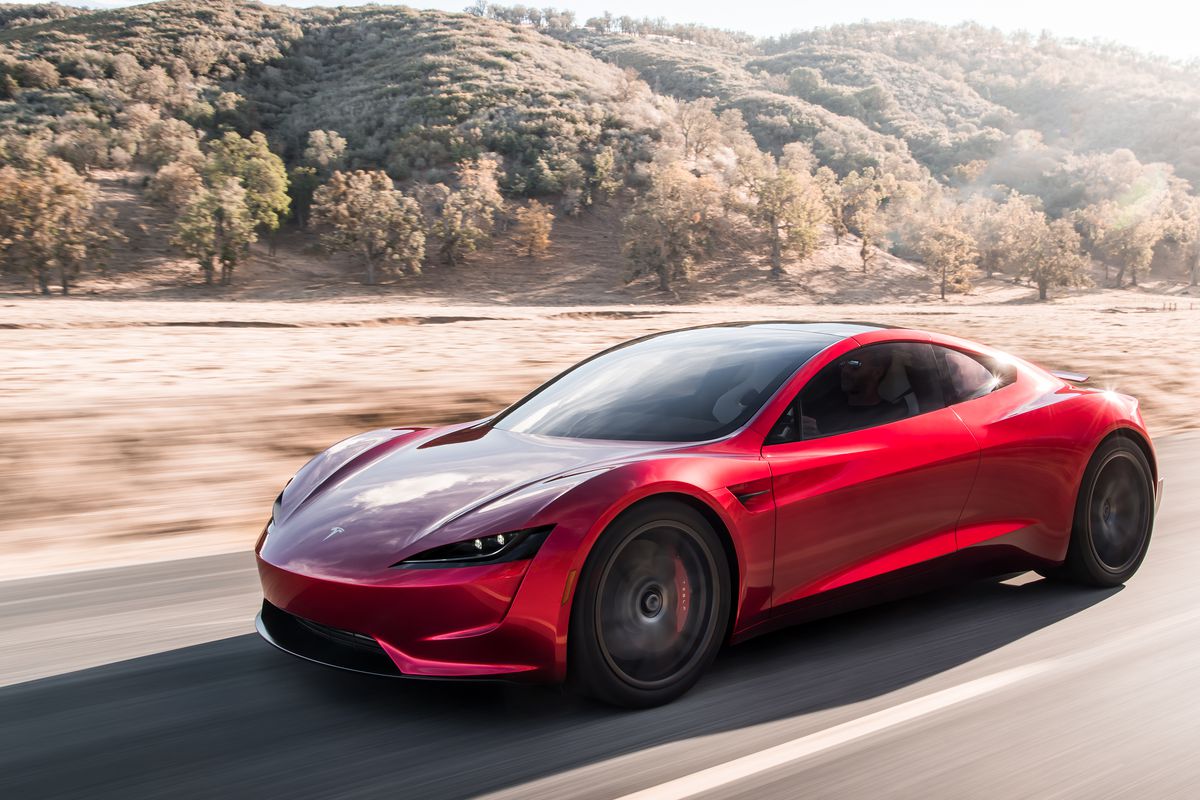
    Electric carmaker Tesla will make a “dedicated” self-driving taxi that will “look futuristic,” Chief Executive Elon Musk said on Thursday, without giving a timeframe.

    The 50-year-old billionaire, wearing a black cowboy hat and sunglasses, made the comments at the opening of Tesla’s $1.1 billion factory in Texas, which is home to its new headquarters.

    “Massive scale. Full self-driving. There’s going to be a dedicated robotaxi,” Musk told a large crowd at the factory.

    Musk has several times missed his targets of full autonomy. In 2019, he said robotaxis with no human drivers would be available in some U.S. markets in 2020.

    In January he said he would be “shocked” if Tesla did not achieve full self-driving that is safer than that of humans this year.

    Tesla will expand its “Full Self-Driving” beta software to all North American FSD subscribers this year, he said on Thursday.

    Tesla now sells the advanced driver assistance systems for $12,000, with a promise of more features. It says the software does not make its vehicles autonomous, and requires driver supervision.

    The beta version, launched in late 2020, aims to enable cars to navigate city streets better. By January, it had been installed in nearly 60,000 vehicles in the United States.

    Musk said Tesla had started deliveries of Texas-made Model Y electric sport utility vehicles, with a goal of producing half a million a year at the Texas factory, which he said would be the biggest car factory in the United States.

    He gave no details of such Model Ys, but they are likely to be lower-priced versions to better take on cheaper competitors.

    Tesla will start production next year of its Cybertruck as well as a humanoid robot, Optimus, Musk said.

    The firm’s new giga factories in Texas and Berlin, which will make vehicles and its own battery cells, face challenges of ramping up production with new processes

    Musk said Tesla was simplifying car making by making a car using three major parts.

    Despite record deliveries in the first quarter, a recent COVID-19 spike in China has forced Tesla to suspend production at its Shanghai factory for several days.

    Thursday’s event comes after Musk surprised the market this week by revealing he had bought a stake of 9% in Twitter and will join the board of the social media network.