Category: E-Tailing

Retail News Asia is committed to providing both local and global retailers with the latest E-Commerce & Etail news throughout the Asian market. This on a daily base.

  • Shop at Lazada, pay at 7-Eleven

    Shop at Lazada, pay at 7-Eleven

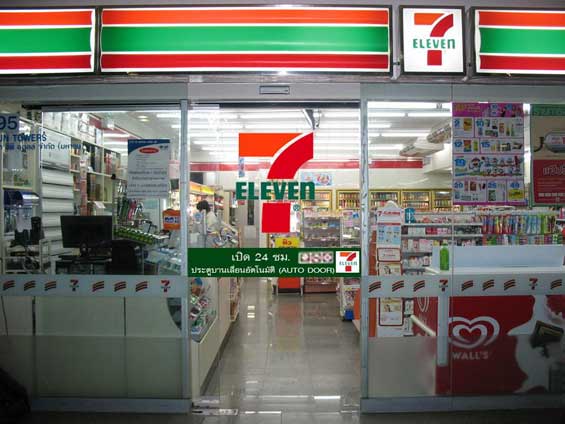
    Convenience store chain 7-Eleven Malaysia is now offering Lazada Malaysia offline payment services at its stores nationwide via its partnership with MOLPay.

    As the leading convenience store in the country, 7-Eleven is continuously making its way up by enhancing customers’ shopping experience and has added Lazada offline payment to its services.

    “It is clear that our main intention is to always remain number one and in order to do so, we are trying our best to give the best experience in true convenience to our customers,” said 7-Eleven Malaysia chief executive officer Gary Brown at the official launch of Lazada Offline Payment at Berjaya Times Square Hotel.

    With the new service, 7-Eleven Malaysia now allows customers to confirm orders from Lazada and proceed to checkout with 7-Eleven as the preferred payment option.

    Transactions can be completed by presenting a printed slip or SMS code of the online purchases to the cashier at any 7-Eleven stores nationwide.

    “The partnership is a strategic fit, benefiting both 7-Eleven and MOLPay’s individual strength.

    “This is also an alternative payment option for our online shoppers, enabling them to shop for over 12 million items that are available on our website and paying over the counter at any 7-Eleven stores nationwide,” said Lazada Malaysia chief executive officer Hans Peter Ressel.

    The aim of the new experience is to fulfil customer’s expectation and provide them with the best convenience possible.

    “As Malaysia still has a considerable number of people who do not have digital banking or have limited access to digital banking, this provides the flexibility in ensuring all households and businesses have access to Malaysia’s digital economy regardless of their income level,” said MOLPay chief executive officer Eng Sheng Guan.

    As the first free-standing convenience store chain in the country to provide such payment services, it aims to reach customers in the non-urban areas such as the east coast and Sabah and Sarawak.

    The newly introduced experience will also ease the process of online purchases as payment can be made offline, 24 hours and seven days a week.

  • Shilla duty free opens mobile app, online mall for Japanese clients

    Shilla duty free opens mobile app, online mall for Japanese clients

    Shilla Duty Free has launched a mobile app and an Internet website mall targeting Japanese clients to offset the decline in Chinese tourists triggered by the missile defense system row between Seoul and Beijing.

    It is Shilla Duty Free’s second mobile shopping mall for foreigners after one opened for Chinese customers in 2014.
    Chinese travel agencies have in recent months suspended sales of tour packages to South Korea as part of the Beijing government’s retaliation against Seoul’s decision to station the US Terminal High Altitude Area Defense system on its soil. China believes the missile system undermines its security interest. South Korea has maintained that THAAD’s sole aim is to counter North Korea’s evolving nuclear and missile threats.

    Shilla’s mobile app store and Internet shopping mall allow Japanese customers to use Naver Corp.’s flagship LINE messenger to carry out transactions.
    LINE has become a major mobile messenger platform with more than 200 million users around the world. It has a strong presence in Japan.

    The duty-free shop will also invite 1,000 Japanese clients to a fan meeting of popular K-pop boy group SHINee, the shop’s commercial model, in Seoul on May 13. The number of Japanese tourists rose 25 percent last year from the previous year, according to the Korea Tourism Organization. The figure also surged 13 percent and 28 percent in January and February of this year from the same period in 2016.

  • Duolingo Launches in Thailand With a Free English Language Course for Thai Speakers

    Duolingo Launches in Thailand With a Free English Language Course for Thai Speakers

    Duolingo, the most popular language-learning platform and most downloadededucation app in the world, announced today its launch in Thailand with a free English language course for Thaispeakers. Using Duolingo, Thai speakers can learn to read, write and speak English through fun, game-like lessons. Duolingo is available now as a free app on the App Store and Google Play, and on the web at Duolingo.com.

    With more than 170 million users worldwide, Duolingo stands out for its free learning content, game-like approach to teaching, and bite-sized lessons that can be done in five to ten minutes per day. This appeals to anyone in Thailand who lacks time and resources to sign up for expensive language classes.

    “Of the 1.2 billion people worldwide who are learning a foreign language, 800 million are learning English in order to improve their job prospects and gain access to better life opportunities,” said Luis von Ahn, CEO and co-founder of Duolingo. “We started Duolingo to make language education free and accessible to everyone, and are excited to now offer the first free online English language course for Thai speakers. We hope the course will help open up new educational and job opportunities for Thais, while providing a fun learning experience.”

    The Duolingo English course for Thai speakers is the first free language-learning program of its kind in Thailand. Like most of Duolingo’s courses, this one was created by a team of bilingual volunteers. The team behind this course includes Songphon Klabwong, chief technology officer of a Bangkok-based software company, who was previously a lecturer of Computer Science at Rajamangala University of Technology.

    “During the time I was teaching, I noticed that the language barrier among my students was one of the biggest challenges to their learning experience and encouraged my students to start learning English,” said Klabwong. “When I found out that Duolingo was developing an English course for Thai speakers, I was inspired by the company’s mission and decided to contribute to the course. I am hopeful that it will encourage more Thais to develop their English skills.”

    For Thais who already read, write and speak English, Duolingo currently offers 22 language courses, with plans to add Japanese, Korean and even Klingon, the extra-terrestrial lingo from Star Trek, this year, too.

    Based in Pittsburgh, Pennsylvania in the United States, Duolingo has raised USD $83.3 million in venture capital from investors including Google Capital, Union Square Ventures, New Enterprise Associates, Kleiner Perkins, Hollywood actor Ashton Kutcher and internationally renowned author Tim Ferriss. While all learning content on Duolingo is free, the company monetizes through optional in-app purchases, ads at the end of lessons and a relatively low-cost English language certification test that is widely accepted at universities and organizations around the world.

    Duolingo is available on Android, iOS, Windows devices and the Web with seamless switching between platforms.

  • Gogoboi teams up with foreign brands to sell luxury on WeChat

    Gogoboi teams up with foreign brands to sell luxury on WeChat

    There is no need to elaborate on the importance of Chinese fashion bloggers in educating affluent consumers on the latest fashion trends and luxury items. For international luxury brands that hope to gain a share in China’s competitive retail scene, the real challenge for them is how they can best use these bloggers’ online fame to boost their sales prospects.

    A recent collaboration between Thomas Ye Shi, aka Gogoboi, and a number of Western luxury e-commerce sites and department stores may offer a clue. Last week, Gogoboi announced the official launch of his WeChat boutique, called “Bu Da Jing Xuan (不大精选)”, on his WeChat account. This is not the first time that he has turned the app into a mobile store. Gogoboi sold lifestyle products, such as Gucci fragrances and Keecie bags, to his followers in the past.

    The new boutique that will sell a curated selection of luxury goods, however, creates a new business model that is different from Gogoboi’s previous partnerships with a variety of monobrands. The blogger said in a statement that all of the products on his Bu Da Jing Xuan WeChat store would come from international luxury e-commerce retailers including Yoox, Net-A-Porter, Farfetch, Revolve, Mytheresa.com, and SSENSE, as well as department stores such as Harrods and Luisa Via Roma.

    As China’s top fashion blogger on Weibo according to an Exane BNP Paribas ranking, Gogoboi built up his fame with his harsh and acerbic comments on Chinese celebrities’ fashion tastes and luxury apparel. His sharp personality, which is deemed as candid and humorous by many Chinese online users, has helped him quickly gain a significant following on both Weibo and WeChat. This has led many prestigious luxury brands, such as Louis Vuitton and Fendi, to come to him to form partnerships in recent years, which in turn, boosted his popularity further among the luxury and fashion circles.

    Gogoboi has more than 7 million followers on Weibo and the viewership of his posts on WeChat can exceed 100,000 on average. The blogging style of Gogoboi has changed significantly as he has become more famous and developed closer relationships with brands. He is now much less harsh than he was before.

    On WeChat, his posts embrace a wide range of topics to cater to different interests and tastes of readers, which include fashion trends, popular luxury items, mix-and-match tips as well as celebrity gossip. As an opinion leader in this field, luxury items that get mentioned and recommended by Gogoboi have great potential to become the most coveted products among Chinese affluent consumers.

    As a result, the new WeChat boutique that supports a “see now, buy now” model is a smart way for international luxury e-commerce retailers to connect with wealthy consumers directly. As readers go through Gogoboi’s articles on WeChat, they can directly place an order for the items they like. The mobile store also promises customer service from 8 am to midnight everyday. To celebrate the launch, consumers currently can get a 15 percent discount on Yoox products.

    The transparency and authenticity supported by Gogoboi’s new business can also pose a challenge to the daigou market in China, which is good news for luxury brands that have been plagued by this issue for years. As shown in the image above, Gogoboi will list the official sources of each product along with the shipping and customs information on the app. In contrast, Chinese daigou dealers tend to be vague and opaque about this information.

    In addition, the pricing of Gogoboi’s products (excluding shipping and customs costs) is sometimes even lower than the prices on the original websites. For example, Jimmy Choo’s Petite Locket Shoulder Bag (image above) costs 8,729 RMB (approximately US$1,268) on Gogoboi’s WeChat store, while it is sold for $US1,350 on Farfetch.

    With all of the benefits and potential of this WeChat store, Gogoboi’s new business does not come without challenges. It remains to be seen how the sales will perform in the next couple of months and whether it can offer affluent Chinese consumers with a smooth cross-border shopping experience. Gogoboi’s position is also not irreplaceable—it’s very possible that blogger competition like Mr. Bags and Shi Liu Po Report could put a greater emphasis on e-commerce in the future.
  • Storefront launches largest international pop-up retail space marketplace

    Storefront launches largest international pop-up retail space marketplace

    Storefront is the world’s largest marketplace for brands  to  connect with retail spaces and is being called “the Airbnb of Pop-Up Space”. Over 8,000 brands, including L’Oréal, Maje, Chloé, OnTheList, Miss Runner, Butterboom, Thierry Mugler and Giorgio Armani, have opened temporary retail stores using the Storefront platform, which offers expanded access to space in leading retail cities around the world, including New York City, Paris, London, Los Angeles, Amsterdam, Hong Kong and most recently, Milan. The platform powers over 20,000 listings worldwide and 2,000 in Hong Kong, which represent more than 60 million square feet of retail space in 6 countries.

    “We are delighted to have expanded Storefront to Asia. Hong Kong is an incredibly dynamic market with abundant opportunities for brands to gain exposure,” explains Benoît Clément-Bollée, co-founder and CEO of Storefront Asia.

    The company specializes in matching a network of over 100,000 brands including retailers, e-commerce players, entrepreneurs and artists with commercial spaces across 3 continents, enabling them to launch short-term pop-up stores, showrooms, private sales, products launches and other events. These spaces can be rented for as little as one day up to several months, offering the most prominent possibility for filling vacant spaces with brands that range from local startups to international luxury brands.

    Storefront endeavors to democratize access to the commercial real estate market by making short-term commercial space rental as easy as booking a hotel room and revolutionizing traditional rental methods in the process. 94% of retail happens offline, and the company aims  at making this part of retail accessible to any business.

    Physical retail is changing with global e-commerce companies opening physical stores. Storefront helps companies, like Etsy, to find spaces for them to develop and fine tune their

    Online to Offline (O2O) strategies thanks to pop-up stores.

    “Expanding to Asia is a top priority for many of our U.S. brands,” says CEO Mohamed Haouache, co-founder and CEO. “The ability to use a single service to find premium retail spaces for pop-up stores in cities around the world is something many brands have requested. The Hong Kong expansion opens doors for international brands in Asia and will further democratize the concept of the pop-up store.”

  • JD.com swings to profit first, revenues surge 41%

    JD.com swings to profit first, revenues surge 41%

    E-commerce giant JD.com said on Monday first-quarter revenues lifted 41% for fiscal 2017, as the second-biggest online retailer in China recorded its first profit as a publicly listed company.

    JD.com reported net income of 239 million yuan ($35 million) for the three months ended March — its first time in the black since listing in 2014. Sales rose 41 percent to 76.2 billion yuan, also topping the 73.6 billion yuan projected.

    JD, which bought Walmart’s Yihaodian local shopping platform in 2016, saw a rapid expansion into household supplies and food, as well as fashion and homewares during the last quarter, which increased users.

    JD also dipped into data, cloud and artificial intelligence services – moves that saw it swing to a profit from a loss in the previous quarter.

    “Margins benefited from our rapidly growing scale across all of our product categories,” JD’s chief financial officer, Sidney Huang, said in a statement.

    In November, JD.com said that it would seek to split off JD Finance, its financial unit, making it a fully Chinese-owned entity. The move allows JD to apply for licenses that Chinese laws forbid foreign-listed firms from holding, including mutual funds and securities. Under the restructuring, CEO Richard Liu will be one of the buyers and JD.com will receive 40% of any pre-tax profit.

    In the financial statement, JD forecast second-quarter revenues to lie between 86.6-89.1 million yuan excluding JD Finance, representing a growth rate of 33-37%, in line with analyst predictions of 36%.

    However, Huang cautioned future investments, such as the construction of warehouses, would “significantly increase” capital expenditure resulting in falling free cash flow.

    “Our quarterly earnings will likely be lower in one or more of the next few quarters,” he said. “The Chinese e-commerce market remains highly competitive and we remain committed to returning a meaningful portion of our incremental gains from scaled economies onto our customers.”

  • Indonesia’s Uber rival Go-Jek raises $1.2 billion led by Tencent at a $3 billion valuation

    Indonesia’s Uber rival Go-Jek raises $1.2 billion led by Tencent at a $3 billion valuation

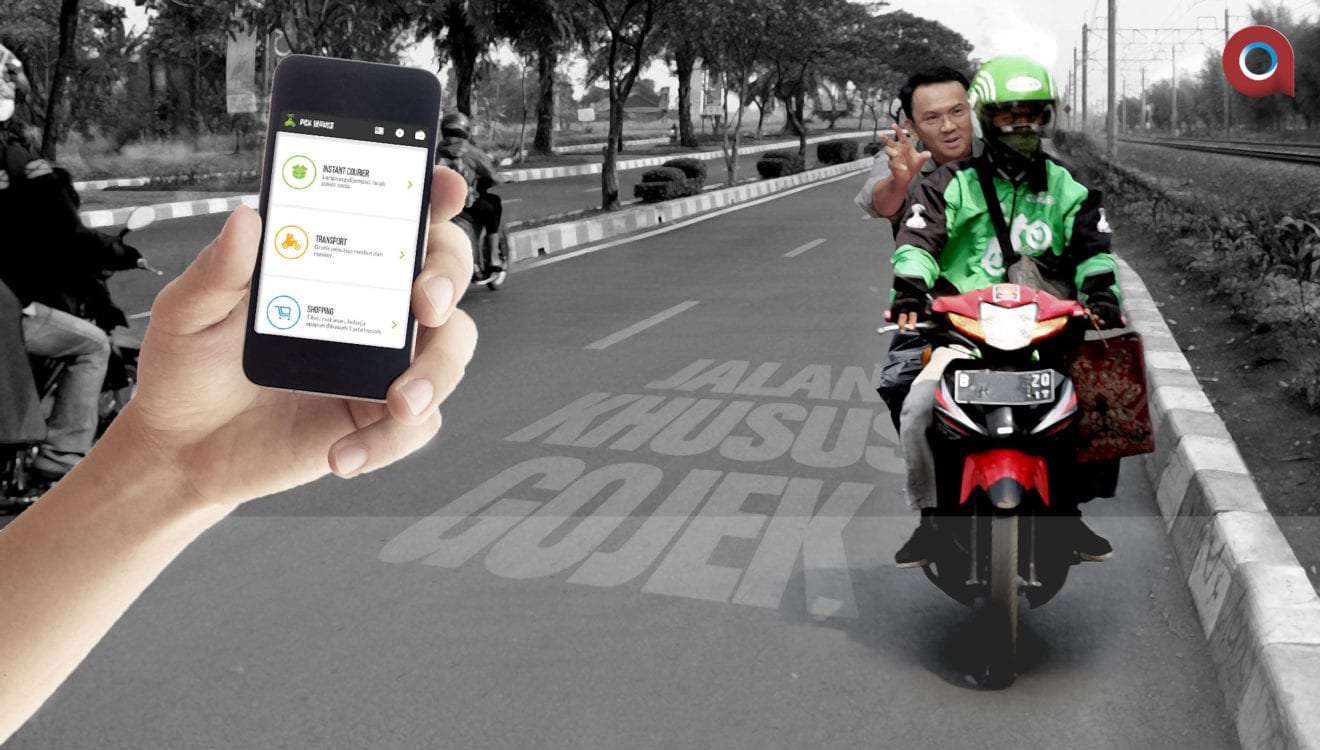
    Go-Jek, the motorbike on-demand startup that is battling Uber and Grab in Indonesia, has closed a new round of $1.2 billion led by Chinese internet giant Tencent, two sources close the company told. The deal, which we understand was signed last week, values the company at $3 billion post money. It is expected to be officially announced “soon.”

    Go-Jek raised $550 million as recently as August 2016, when it commanded a valuation of $1.3 billion so this new deal has pushed that figure up considerably over a short period of time. The Information previously reported that Tencent was considering an investment in Go-Jek. Other investors in the round are not clear at this stage, but we believe them to be from the existing pool of backers.

    One source told that Alibaba and its financial services spin-out Ant Financial held talks with the startup, but were ultimately unsuccessful. Ant Financial has since partnered with media firm Emtek to enter Indonesia. Alibaba and Tencent are fierce rivals that are not known for co-investing in deals, although both hold equity in Didi Chuxing after investing separately in Didi Kuaidi and Didi Dache which ultimately merged to create Didi (and is buying Uber’s China business).

    Go-Jek claims to have over 200,000 drivers across some 25 cities in Indonesia. It started out as a pure bike taxi player — because two wheels are an efficient way to navigate the congested streets of Asian mega-cities like Jakarta — but it has since expanded into four wheels with its GoCar private car service and a partnership with taxi firm Blue Bird. In contrast, Uber and Grab have both introduced motorbike taxi services in Indonesia to crank up the competition.

    Focused on the Indonesian market only, Go-Jek is involved in a dog fight with Uber and Singapore-headquartered Grab. Uber has, of course, raised more than $8 billion from investors — at a valuation that has surpassed $60 billion — while Grab is reportedly working on a new $1.5 billion funding round. Its most recent raise was $750 million at a $3 billion valuation in September 2016, but you can expect that figure to increase in the near future. Our sources told us that Go-Jek’s new fundraising is principally focused on increasing its war chest in order to continue to battle Uber and Grab on driver and passenger subsidies, develop its mobile payment business — Go-Pay — and expand its services business, which allows customers to get services such as shopping, massages and more on demand.

    Last year, Go-Jek hinted that it would expand its business overseas, but to date it has remained in Indonesia. One source told us that Go-Jek has considered partnerships or investments to expand to markets where other bike on-demand services exist, such as India or Sri Lanka, but it is staying focused on the battle in Indonesia. Aside from being Southeast Asia’s largest economy and population — Indonesia is home to over 250 million people — the country is tipped to be Southeast Asia’s largest internet economy by some margin.

    The region’s ride-sharing market itself is predicted to grow from $2.5 billion in 2015 to $13 billion by 2025, according to a report co-authored by Google. Indonesia’s share of that segment is forecast to jump from an estimated $0.8 billion to $5.6 billion over that same period.

    Grab is making a big push to win the opportunty. The company recently pledged to invest $700 million into its Indonesia operations, which includes building out its team, localizing its tech and making investments. Grab recently snapped up Kudo Payments in an undisclosed deal which sources told us is in the region of $80 million to $100 million. The acquisition is designed to boost Grab’s own payment platform, GrabPay, which is following GoPay’s footsteps and taking Grab into services beyond just car rides.

    The new Go-Jek deal also marks Tencent’s first investment in Indonesia, and the latest in a flurry of startup deals from the company, which is best known for operating China’s top messaging platform, WeChat. Tencent bought five percent of Tesla in March for just over $2 billion, and it has since done deals with Chinese streaming service Kuaishou and cross-border payment provide Airwallex.

  • Garena rebrands as Sea, plans to conquer Indonesian e-commerce

    Garena rebrands as Sea, plans to conquer Indonesian e-commerce

    Garena, widely considered to be Southeast Asia’s most valuable startup, has rebranded itself as Sea Ltd. as the first step in an expansion plan to compete with China’s Alibaba and gain some ground in the untapped, but lucrative, Indonesian market.

    The company’s new name is a popular acronym for Southeast Asia, but is also meant to represent Garena’s regional aspirations. Under the new name will be their existing businesses: online games brand Garena, e-commerce platform Shopee and AirPay, a digital payments service.

    News of the company’s name change follows the announcement of the company’s latest funding round, which helped them secure US$50 million from a handful of investors that include some of the region’s wealthiest dynasties, such as GDP Venture – led by Martin Hartono, son of Indonesia’s richest man – and JG Summit Holdings Inc. – founded by Philippine billionaire John Gokongwei.

    Other investors in the round include Farallon Capital Management, Hillhouse Capital, Cathay Financial Holding Co. and an investment arm of Taiwanese food conglomerate Uni-President Enterprises Corp.

    There are reports the company is preparing to list in the United States, a move that could value them at around US$1 billion. Word is that the company has engaged Goldman Sachs Group to help them oversee their IPO.

    The company got a huge boost when Chinese digital conglomerate, Tencent Holdings Ltd., began investing in the company in 2013. Tencent remains one of their biggest backers and its support has not only been financial. The Chinese techno-giant has given Garena a vision of how to expand out from gaming into other industries that could help it woo investors and get new users onboard with their diversity of services.

    Garena was founded by China-born entrepreneur Forrest Li in 2009. It has since grown to be one of the most significant e-commerce and gaming players in the region. It is estimated Southeast Asia’s gaming market will be worth US$4.7 billion in the next two years. Sea seems to be taking a similar strategy as Tencent, who started with a messaging software and quickly expanded into gaming, e-commerce and (now) artificial intelligence.

    Sea is paying particular attention to the increasingly competitive e-commerce market, where Alibaba and its competitor JD.com are duking it out for dominance. Huge consolidation and acquisitions are beginning to take place, with the latest being JD.com’s investment in Tokopedia, an Indonesian e-commerce platform. Rumors of Amazon’s arrival in the region are still swirling around, so you can be sure the market is only going to keep heating up.

    The big trophy everyone seems to be angling for is Indonesia’s largely untapped market. Though it’s not quite yet at the maturity levels of the Singaporean or Malaysian markets, Indonesia has an Internet-savvy population and a reputation for adopting innovative tech early on and quickly.

    Currently, the e-commerce market is expected to hit US$130 billion in value, only a third behind China and India’s markets – for comparison, Indonesia is home to around 250 million people, compared to China and India’s one billion each.

    The plan for Sea’s expansion into Indonesia includes using the new funds to build up Shopee’s infrastructure in Indonesia. According to the company, Shopee’s annual market value has more than doubled in the last nine months to reach US$3 billion. Other strategies include some significant Indonesia-related hires, such as former Singaporean foreign minister George Yeo, former Indonesian trade minister, Mari Pangestu and the director of an Indonesian coal producer, Pandu Sjahrir.

  • Plug and Play Accelerator Program has officially started in Indonesia

    Plug and Play Accelerator Program has officially started in Indonesia

    In collaboration with Gan Kapital, a strategic investment advisory in Indonesia, Plug and Play is finally going to announce the 11 selected startups for its first batch of accelerator program in Indonesia. The announcement will be held at a coworking space where these startups will reside and learn during the 3-month program in Kuningan, South Jakarta. Based in Silicon Valley, Plug and Play Indonesia is part of the largest startup accelerator program in the world.

    Plug and Play Indonesia accepted more than 400 startups applied between the month of February and March. These applications came from Jakarta, Bandung, Yogyakarta, Bali, Malaysia, Singapore, Hong Kong, India, Brazil, and even Germany. Indeed, Plug and Play Indonesia accelerator program also welcomes foreign startups trying to enter Indonesia’s market. Plug and Play Indonesia proudly introduces the startups selected to be part of its first batch of accelerator program, that is Dana Didik, KYCK, Otospector, Bustiket, Karta Indonesia Global, Sayurbox, Brankas, Astrnt, Bandboo, Wonderlabs, dan Toucan.

    “Selecting these startups wasn’t an easy task because we met with so many high quality startups. We are positive that our months of rigorous selection process has led us the 11 best startups,” said Nayoko Wicaksono as the Accelerator Director of Plug and Play Indonesia. After carefully reviewing the online application and documents, 50 startups were invited for an initial pitch session on March 29 and 30.

    During this initial pitch, startups were asked to explain business model, traction, financial plan, as well as the team profile. The next step was another round of pitching in front of a panel judges from Plug and Play Indonesia, Play and Play Asia Pacific, Plug and Play Silicon Valley, as well as representatives from corporate members, such as Astra International and Bank Negara Indonesia. “Our Corporate Partners also have the right to vote for the startups who will be joining our accelerator program. This is one of the way to ensure that our startups will get the benefit of working with corporates,” said Wesley Harjono, President Director of Plug and Play Indonesia who was also a part of the final judging panel.

    Collaboration with corporate and seed funding are just some of the benefits received by the 11 selected startups. During the 3-month accelerator program, these startups will also be mentored closely by pool of experts united in Plug and Play Indonesia ecosystem. These startups will also have access to workshops of different topics that will be delivered by more than 60 experts from different areas. Among Plug and

    Play Indonesia pool of esteemed mentors are Kevin Darmawan from Coffee Venture, Sebastian Sieber from Lazada, Sukan Makmuri from KUDO, Anton Soeharyo from Touchten, Natali Ardianto from Tiket.com, Nikita Semenov from Zen Room, Norman Sasono from Bizzy, Mark. F Winkel from Prisma Public Relations, Rama Mamuaya from Daily Social, Wempy Dyocta Koto from Wardour and Oxford, and many more. The list doesn’t stop there, the selected startups will also have free access to a coworking space strategically located in elite are of Kuningan, South Jakarta. “With this holistic support from Plug and Play Indonesia, our startups can focus on developing their product to the market,” said Nayoko

    Wicaksono, Accelerator Director at Plug and Play Indonesia. At the end of the 3-month accelerator program, Plug and Play Indonesia will be holding a Demo Day. This Demo Day is meant to bridge Plug and Play startups with local and international customers and investors.

    The Demo Day is currently scheduled to be in August 2017.

  • Vietnamese developers reveal latest ride-hailing app

    Vietnamese developers reveal latest ride-hailing app

    The new app will work along the same lines as Uber and Grab, but with better understanding of local travel habits, developers said. A locally developed ride-hailing app was unveiled on Friday in Vietnam, giving travelers yet another option in the rapidly expanding market.

    APPP, developed by Vietnam’s University of Transport Technology with funding from German-based investment company Sapa Thale, will work similarly to Uber and Grab but with a better understanding of local travel habits, its developers said.

    Uber and Grab are both popular services in Vietnam and considered major rivals to traditional taxi companies, which have reported losses due to the competition.

    While the other apps estimate the fare of each trip in advance, APPP allows the customer to negotiate the fare with eight drivers before booking, the developers said at the launch.

    The investor expects a door-opening fare of between VND8,000-8,500 ($0.35-0.38) and for fees to range from VND6,000-6,300 per kilometer.

    Sapa Thale said it has submitted an application to license the service with the transport ministry. No timeframe for a commercial launch has been revealed.

  • Topshop launches e-commerce platform for Australia

    Topshop launches e-commerce platform for Australia

    British fashion retailer Topshop has officially launched an Australian-dedicated online store, meaning local shoppers can bypass the generic Topshop international site.

    The new Topshop Australia platform allows Australians to browse and shop prices in Australian dollars and pass for free shipping when the total purchase is over AU$75.

    When shopping via the international store, prices are in British pounds and pricey international postage costs are incurred.

    Another feature for Australians is Topshop’s click-and-collect services, next-business-day express shipping and easy postal returns.

    The move sees Topshop’s retail reach extend beyond major capital cities and into remote areas where customers don’t have access to one of the fast-fashion retailer’s physical stores.

    Topshop has also tapped payment service Afterpay for its online store, allowing shoppers to buy now and pay later for purchases. Topshop Australia has offered Afterpay for several months in store.

    Topshop opened its first Australia store in 2011 in Melbourne. Topman went on to open a flagship store in Sydney’s Pitt Street Mall. Today it boasts 57 points of sale across Australia in cities Brisbane, Perth, Adelaide, Sydney and Melbourne, among others.

    It also has concession corners in department store Myer.

    Topshop is part of Sir Philip Green and his Arcadia Group, which also owns Burtons, Dorothy Perkins and Miss Selfredges.

  • LVMH to launch its eCommerce site

    LVMH to launch its eCommerce site

    Luxury goods group LVMH will reportedly launch its own multi-brand e-commerce site in March and offer all 70 of its brands on one site, according to the Financial Times. The site will be part of Le Bon Marché, the Parisian department store acquired by LVMH in 1984, and also sell other brands from outside the conglomerate.

    This is not LVMH’s first foray into multi-brand fashion online retail. In 2000, the company — which counts Louis Vuitton, Fendi, Céline and other brands in its portfolio — launched eLuxury as a platform for luxury designer apparel, accessories, beauty and children’s collections. However, in 2009, LVMH announced that it would shutter the retailer as its brands began to launch standalone e-commerce operations. (eLuxury was, in turn, relaunched as editorial platform Nowness).

    The new e-commerce site will mark LVMH’s most significant digital investment since hiring Ian Rogers as chief digital officer in 2015, which signaled to many in the industry that the conglomerate was finally ready to integrate digital into its business. “The luxury business is in a great position relative to where the world is going,” said Rogers, describing the luxury business as a “mass [market] of niches.”

    LVMH’s re-entry into the online market now is very late to the game. However, it is indicative of a higher priority afforded to digital operations and e-commerce channels since Rogers joined the company.

    It is unclear if the new online iteration of Le Bon Marché will operate on a wholesale or marketplace model, although wholesale is the likely avenue. The wholesale model requires inventory risk and having high working capital, but the company will still capture the full retail margins. The drop-ship marketplace model, in which the platform usually takes a commission on sales in order to generate revenue, makes ensuring a consistent shipping experience difficult. Working predominately with its own brands would ease some of those challenges, however.

    In fiscal 2016, LVMH saw revenue increase 5 percent to €37.6 billion ($40.2 billion) and profits increase 6 percent to €7 billion ($7.1 billion). Its selective retailing category, which includes Sephora, duty free retailer DFS and Le Bon Marche — all multi-brand retailers — saw the highest growth at 7 percent.

    While e-commerce still only makes up a small percentage of overall luxury goods sales, online sales grew four times faster than offline sales between 2009 and 2014. However, McKinsey & Company predicts it will triple to €70 billion by 2025 — representing 18 percent of total luxury sales — and then plateau. Overall, growth in luxury goods has slowed down since 2015 as Chinese demand lessened. The market is expected to grow only 0.5 to 1 percent in 2017, versus the 8 percent compound annual growth rate between 2010 and 2015.

    But a slowdown in overall growth hasn’t stopped several major industry players from getting into the multi-brand e-commerce game over the past two years, including Galeries Lafayette and Condé Nast (with its relaunch of Style.com). As competition heats up, established players have turned to consolidation — see Yoox’s merger with Net-a-Porter and Neiman Marcus Group’s acquisition of MyTheresa.com — in order to scale further.

  • Lazada opens Coca-Cola, Nestle, Redmart shop-in-shops

    Lazada opens Coca-Cola, Nestle, Redmart shop-in-shops

    Lazada Singapore has unveiled three new shops on its online marketplace, in a bid to bolster its e-tail offering and win consumers during its ‘birthday sale’.

    Lazada has launched ‘shop-in-shops’ for international heavyweights Coca-Cola, Nestle and Redmart, each of which allows the brands to keep their identity across online and offline channels, while giving shoppers a way to connect with them.

    Earlier this year, Lazada acquired RedMart, marking their move into the grocery category, specifically fresh and frozen products. The new addition will also see Singapore shoppers gain access grocery products from RedMart directly via Lazada Singapore, the first step towards a larger partnership between the two companies.

    “We are excited about working together with Lazada Singapore, especially at a time that marks their third year serving shoppers in the country. RedMart will be offering exclusive promotions on everything from Extra Virgin Olive Oil to Sauvignon Blanc, as special deals just for shoppers celebrating Lazada’s birthday,” said Penny Cox, VP Commercial and Marketing at RedMart.

    Both Coca Cola and Nestle will also stock a select range of food and beverages via Lazada Singapore.

    In the lead up to its third birthday and sale, the marketplace has also launched official shop-in-shops for bookstore MPH, SK Jewellery, Chow Tai Fook, South Korean and Mamonde, as well as fashion labels Esprit, Doc Martens and Bonia.

    “Setting up shop-in-shops in time for our birthday sale has really been part of a larger step towards bridging shoppers in Singapore with the brands they know and love. This, combined with a consistent free delivery and 14 days free returns policy, give shoppers best of everything — ease along with great deals and the widest range of products to choose from, be it electronics or groceries,” said Alexis Lanternier, CEO, Lazada Singapore.

    The Lazada birthday sale kicks of March 21 to 23 and will see discounts of up to 90% across its entire platform.

    Launched in 2012, as a part of Lazada Group, Lazada Singapore currently hosts over 300 official brand stores. Lazada also has an e-commerce presence in Thailand, Indonesia, Malaysia and Vietnam.

  • Memebox will no longer sell Korean beauty products to the US

    Memebox will no longer sell Korean beauty products to the US

    Online Korean beauty shop Memebox was known for selling popular K-beauty products to the United States. However, the retailer revealed it will change its model from selling beauty products to focusing on educating consumers about Korean products through information, reviews and tutorials.

    Though it will continue selling K-beauty products to Korea and China, the site will send its US customers to Amazon to shop. According to Memebox founder Dino Ha, the restructuring will turn Memebox into an educational site and search function rather than online shop. “What we learned is that what we really need is the education and the content piece to let the users know what K-beauty really means,” he said. Memebox’s new model will also integrate YouTube tutorials and Instagram posts featuring K-beauty products into its search function, and allow users to search for products based on ingredient or skin type.

    With the new model, Memebox will earn money through affiliate links rather than direct sales. It currently has an affiliate agreement with Amazon, and Ha says the brand is in talks to create a similar deal with Sephora.

    Ha also says Memebox has seen longer engagement from visitors since introducing YouTube videos to the site. Though the site currently has no official agreement with YouTube or Instagram personalities, Ha says he has received requests from influencers to make their content more visible on Memebox. Eventually, the site may add a live chat feature with influencers.

    Memebox still maintains its four private beauty labels, and will soon introduce a fifth, but the site will send US shoppers to Amazon to purchase the products.

    Currently, Memebox has 1.5 million customers, and wishes to increase its customer base to 10 million by the end of the year. Ha says the site might see its profits dip with the new model, but hopes to see more engaged users and fruitful partnerships. “Whoever can do the best job sending these products to users is where we’ll partner as much as we can.”

  • Mobile app marketer MobAir to open Shanghai office

    Mobile app marketer MobAir to open Shanghai office

    MobAir is taking eMarketer’s prediction that total mobile ad spend in China will climb 58% in 2017 seriously.

    The mobile growth platform for brands, which counts AliExpress, Trivago, and Baidu as clients, is investing in Shanghai with a new office.

    The office will allow the startup to offer personalized services to local partners and broaden its footprint.

    Through MobAir, China-based CMOs will be able to take advantage of the company’s portfolio of user acquisition mobile services.

    “China’s app economy is accelerating in growth, putting it within striking distance of Japan and the United States,” Barak Aviad, CEO of MobAir said in an announcement.

    “Gaming apps are the biggest market winners regarding revenue. Therefore, our company, equipped with years of experience in utility and gaming verticals, sees enormous potential in the Chinese mobile market in terms of app advertising growth,” he added.

    MobAir has worked with leading brands in social casino and gaming to roll out successful campaigns on mobile.

    Launched in 2015 and a Global Digital Marketing Group company, it offers a performance-based mobile app marketing platform for large-scale user acquisition.

    Its native advertising solutions target premium customers and drive loyalty.

    MobAir is no stranger to China. The company has worked Chinese advertisers and publishers since its launch. According to the announcement, the company is looking expand its list of clients with China’s gaming giants.

    With the new Shanghai office, the company now operates six offices across Asia, Europe, and the Middle East.