Category: E-Tailing

Retail News Asia is committed to providing both local and global retailers with the latest E-Commerce & Etail news throughout the Asian market. This on a daily base.

  • Uber’s ride hailing service is finally legal in Vietnam

    Uber’s ride hailing service is finally legal in Vietnam

    The ride-hailing firm has now secured approval from local authorities after two previous rejections. The Vietnamese government has finally approved Uber’s application to trial its ride hailing services, a minister said, after having rejected requests from the company twice since 2015.

    Deputy Transport Minister Nguyen Hong Truong said on Monday that Uber Vietnam has fulfilled all necessary conditions to pilot its online ride-hailing application. However, the company will still need approval from local authorities before it starts operating, Truong added.

    The main obstacle facing Uber’s quest to legally offer its services in Vietnam was mainly its failure to register Uber Vietnam as a ride service provider since its arrival in June 2014 as the company expanded into Southeast Asia.

    Previously, Uber Vietnam was only registered to offer “consulting and management” and “market research and public opinion polling”. Now, it’s also registered to offer “information technology services and other computer related services.”

    The Transport Ministry previously said that Uber Vietnam’s authorization given by its parent company – the Netherlands-based Uber International Holding BV – which provides the smartphone application for Uber services, was insufficient.

    Market regulators said the parent company should be held responsible for the application rather than its Vietnamese business unit.

    Local regulators outlawed Uber’s smartphone app-based services in November 2015 after they flagged the company for tax avoidance.

    In an attempt to regulate ride-sharing services, Vietnamese regulators have allowed companies to run pilot programs through IT applications under 3-year contracts. Vietnam’s transport authorities earlier approved a pilot scheme for Grab Vietnam, Uber’s main rival, that also entered Vietnam in 2014.

    The Malaysia-based Grab was previously the only foreign-run transport service allowed to operate in five cities across Vietnam using registered private vehicles between 2016 and 2018.

  • Game marketplace “itemku” has raised USD 1.2 Million

    Game marketplace “itemku” has raised USD 1.2 Million

    Five Jack (fivejack.com), a company that operates an e-commerce game platform called itemku (itemku.com) for gamers in Indonesia, recently raised an additional investment of USD 1.2 million.

    On April 10th 2017, Five Jack announced to have raised investments from 500 Startups and Korean venture capitals, an addition to investments made by BonAngels in 2014 and 500 Startups in 2015. This adds to an accumulated total investment of nearly USD 1.7 million.

    Denis Kim, CEO of Five Jack, commented that itemku’s rapid growth averaging 30% a month is what attracts new and existing investors to back the company. “Our team has extensive experience in the local game market in Indonesia and Southeast Asia, an industry that has high growth potential in the near future.”

    With a population of 250 million, Indonesia is an emerging market where the e-commerce-based tech industry has been growing rapidly in the past few years.

    Five Jack was founded in South Korea and Indonesia in 2013 and currently operates game e-commerce platform, itemku, in Indonesia.

    In March, Five Jack launched a trial version of gokil (gokil.me), a service developed to identify the potential development of game community in Indonesia. The service is building on the existing customer base of hardcore gamers that itemku has secured.

    In the second half of 2017, Five Jack plans to expand its presence in Southeast Asia while keep growing their business in Indonesia.

    “Indonesia, where Five Jack is currently focusing its business efforts on, is a market with great potential. Success in Indonesia directly depends on the company’s ability to localize its business and tailor their service to adapt to the local market. I expect Five Jack to grow and become one of the top game communities, not only in Indonesia, but also in Southeast Asia in general,” said Kim-Jong-kap, Chief Executive Director of K-ICT Born2Global Centre, a startup incubator in South Korea.

    More information about Five Jack, including recruitment information, can be found on the company’s website (fivejack.com).

  • Alibaba Group’s UC News crosses 100 mn active users in India, Indonesia

    Alibaba Group’s UC News crosses 100 mn active users in India, Indonesia

    Alibaba Mobile Business Group-owned company UCWeb’s news app UC News has garnered more than 100 million monthly active users (MAUs) in India and Indonesia. With 100 million daily article views, UC News has rapidly grown in the India and Indonesia markets since its launch in June 2016.

    UCWeb is increasing its focus on digital content aggregation and distribution in India, the world’s second-largest internet market.

    Talking about the latest milestone, Alibaba Mobile Business Group, president of overseas business, Jack Huang said, “We are experiencing a fast rise in the average time spent on UC News. As of this quarter, an average user spends over 23 minutes on UC News. Users are embracing diverse digital content and their appetite for such content is being met by UC News. Going forward, we are also targeting more diversified and localised content on our platform by end of 2017 to make the local content ecosystem stronger. With over 100 million MAUs, UCWeb envisions itself as powerful as Google and Facebook, and aims to bring the global mobile internet to an era of ‘GUF’ (Google, UCWeb and Facebook).”

    Leading the user-generated content ecosystem in India, UC News recently announced We-Media Reward Plan 2.0 for self-publishers, bloggers and independent writers with an initial investment of Rs 50 million. UCWeb is investing Rs 2 billion for driving content distribution in India over the next two years.

    With the changing mobile internet landscape, UCWeb has adopted a strategy of becoming a content distribution platform from being a browsing tool by engaging and aggregating diverse form of content on its platforms—UC Browser and UC News.

    According to web analytics firm StatCounter, UC Browser now holds the highest browser market share in India. UC Browser is now the most popular browser in India in terms of internet usage across all platforms, with a market share of 43.31%, followed by Chrome’s 36.07% and Opera’s 8.34% share. UC Browser is also the dominant browser for mobile internet in India with over 100 million MOUs (as of September 2016).

    According to StatCounter, internet usage in India by desktop and tablet fell from 33.2% in January 2016 to 21% this year. Mobile internet usage jumped from 66.8% to 79% over the same time period.

  • Say goodbye to Whatsapp India’s payment service

    Say goodbye to Whatsapp India’s payment service

    Instant messaging app WhatsApp India, owned by Facebook, has advertised for someone to head its digital transactions.

    It is the first time it has looked at moving into digital payment services globally, Reuters reports. India is WhatsApp’s biggest market with 200 million users.

    Earlier, news website The Ken reported that WhatsApp was working to launch person-to-person payments in India in the next six months.

    A job advertisement on WhatsApp‘s website says it is looking for a candidate with a technical and financial background who understands India‘s Unified Payments Interface (UPI) and the BHIM payments app that enables money transfers and merchant payments using mobile numbers.

    “India is an important country for WhatsApp, and we’re understanding how we can contribute more to the vision of Digital India,” says a WhatsApp spokesman, referring to a flagship government program that aims to boost the use of internet-based services in the nation.

    “We’re exploring how we might work with companies that share this vision, and continuing to listen closely to feedback from our users,” the spokesman says.

    Digital transactions in India have surged after Prime Minister Narendra Modi’s shock ban of certain high-value banknotes in November that accounted for more than 80 per cent of the country’s currency in circulation at the time.

    In February, WhatsApp‘s co-founder Brian Acton told local media the app was in early stages of investigating digital payments in India, and that he had spoken to the government about the matter.

    Meanwhile, Swedish communications app Truecaller, which has a large user base in India, has launched a mobile payment service on India’s UPI payment platform.

  • Grab Indonesia buys e-commerce startup Kudo

    Grab Indonesia buys e-commerce startup Kudo

    Ride-hailing firm Grab Indonesia has acquired e-commerce startup Kudo for an undisclosed amount, striking its first deal since pledging to invest US$700 million in its largest market.

    Kudo helps consumers without bank accounts to shop online by connecting them with online merchants and other service providers across 500 cities and towns.

    Based in Singapore, Grab says it plans to accelerate the expansion of Kudo’s network while bringing more riders and drivers on to its own platform. The two companies also plan to explore new financial products such as consumer loans and insurance.

    Former payment-processing company Euronet Worldwide executive Jason Thompson has been hired by Grab to head GrabPay. This digital wallet for riders was introduced last year.

    Grab’s Indonesian investment promise entails building its digital payments network over the next four years in a bid to win over the 260 million people in its largest market. The company’s car- and motorcycle-hailing businesses grew more than 600 per cent in Indonesia last year.

    Valued at more than US$3 billion, Grab intends to set aside as much as US$100 million to bankroll early-stage domestic startups in mobile and financial services. It has started establishing research centres in Bangalore, Ho Chi Minh City and Jakarta to complement engineering offices in Beijing, Seattle and Singapore.

  • Asos posts half year profit increase

    Asos posts half year profit increase

    Online fashion retailer, Asos, has posted a 14 per cent increase in profits for the six months to the end of February to £27.3 million.

    The company saw a 31 per cent increase in sales to £889.2 million. UK retail sales rose by 18 per cent and international sales went up by 42 per cent.

    Sofie Willmott, senior retail analyst at GlobalData, said Asos’ broad product range sold on local language and currency platforms, along with its aggressive delivery proposition and responsive pricing, allows it to steal market share from well-established international and local players.

    “Asos’ mobile-first approach has paid off with mobile devices now accounting for 58 per cent of orders and 70 per cent of traffic,” she said.

    Willmott said competitors targeting the 16-34 age group should take note that a spotlight on mobile functionality to create a smooth, and enjoyable, shopping journey will drive visitor-purchaser conversion.

    “In a period of weak volume growth, retailers must use mobile channels to capitalise on frequent engagement and implement fast and simple checkouts to capture impulse spend.”

    According to Willmott, Asos has continued to strengthen its product offer by introducing new brands, including competitors Miss Selfridge and Burton, while also broadening its own label offer into niche product areas such as plus size for men which was recently introduced and activewear due to launch in 2017 – allowing Asos to target a larger customer base.

    “Meanwhile, the number of UK Asos premier customers lifted 41 per cent on last year, leading to an eight per cent rise in order frequency in the UK.”

    GlobalData research shows Asos is market leading in driving spend through its delivery subscription scheme, with 60 per cent of consumers shopping at Asos more often since signing up.

    Despite a 14.3 per cent rise in operating profit to £27.1 million, operating margins fell to 2.9 per cent from 3.6 per cent last year, signalling the impact of the highly promotional sector.

    “Since Asos is committed to keeping prices stable despite higher inflation in 2017, we forecast margins to weaken further in H2.”

  • Zalora transforms e-commerce with regional e-fulfillment hub

    Zalora transforms e-commerce with regional e-fulfillment hub

    ZALORA, Asia’s Online Fashion Destination, is pleased to announce the inauguration of its new Regional e-Fulfillment Hub located in Selangor, Malaysia. Covering a total area of 470,000 square feet – approximately the size of nine FIFA football fields – and split across five levels, the e-Fulfillment Hub plays a crucial role in fulfilling thousands of orders per day and facilitating the movement of fashion goods 24/7 across eight markets: Singapore, Malaysia, Brunei, Hong Kong, Macau, Taiwan, Indonesia and Philippines.

    ZALORA gives consumers access to thousands of local and international brands. To ensure the highest level of delivery experience for consumers across all markets, ZALORA invested heavily in building its e-commerce infrastructure from warehousing facilities to last mile delivery fleets. ZALORA is revolutionising the e-shopping experience across Asia Pacific. The Regional e-Fulfillment Hub will be a key driver for ZALORA’s growth as the regional online fashion player in the years ahead.

    Best-in-class facilities and innovative technology

    ZALORA invested resources and time to develop in-house logistics and operations systems:

    One example is Mobile Picking, a customised solution that transmits picking information of customer orders through mobile devices, allowing greater scalability and on-time fulfilment. Since its introduction, picking productivity increased significantly and accuracy is now at 100 percent, due to the real-time item verification.

    To process all orders in real-time, an in-house Order Management System (OMS) was developed for the ZALORA Operations team to track movements of inventory into and out of its warehouses, process orders, manage customer returns and refunds and manage ZALORA’s own delivery fleets.

    By leveraging innovative and cutting edge technologies, ZALORA’s average lead-time from item ordered to delivered is now as low as two days for customers in the region.

    Driving e-commerce growth in the region

    The ZALORA Regional e-Fulfillment Hub holds a single pool of stock for all markets giving the 5-year-old fashion e-tailer the advantage of depth and width. In other words, ZALORA is able to offer a wider selection of goods with higher quantities available for the customers to order. The fulfilment centre can process up to 100,000 items per day and has the storage capacity to hold more than four million items at any time.

    Additionally, ZALORA is one of the few companies in Malaysia to hold the AEO status (Authorised Economic Operator). The AEO status gives ZALORA’s Regional e-Fulfillment Hub a form of “express lane” at customs, making 24/7 cross-border movements seamless and helping ZALORA provide an even faster delivery for its customers. ZALORA is the first and only fashion e-commerce retailer in Malaysia to obtain this status.

    Commitment to provide customers with best possible online shopping experience

    The Regional e-Fulfillment Hub in Malaysia serves as the sole fulfilment centre for Singapore, Malaysia, Brunei, Hong Kong, Macau and Taiwan and at the same time provides stock support for the Philippines and Indonesia markets. The facility’s strategic location and logistics capabilities make it possible for international brands to expand their reach into the Philippines and Indonesia and at the same time, customers are able to access a wide selection of brands and products including Mango, Ray-Ban, Steve Madden, Adidas, Topshop and more.

    ZALORA orders can be easily tracked either through automatic email notifications or by visiting ZALORA’s app or website in the ‘Order Tracking’ section. Thanks to the integration of courier partners into ZALORA’s platforms, the app now allows customers to track their deliveries with real-time updates.

    At the Regional e-Fulfillment Hub, returns are delivered daily where dedicated operators process and clear requests to ensure customers get refunded as soon as possible.

    Partnership with YCH Group

    To tackle an increasingly complex operating environment, ZALORA is collaborating with YCH Group, the region’s leading supply chain specialist. The two partners are working closely together on multiple fronts from infrastructure design, storage, order fulfilment solutions, and procurement. As a long-term strategic partner, YCH is supporting ZALORA’s growth, not only through investment in the e-fulfillment infrastructure, but also by giving the flexibility of future expansion – the warehouse can in fact double its operations area in as fast as six months.

    Parker Gundersen, ZALORA Group CEO commented: “ZALORA has experienced solid growth since it was established in 2012 and as Asia’s online fashion retailer, we’re committed to continuously drive e-commerce progress in the region. Offering the best range of products, coupled with a seamless online shopping experience, we are proud to deliver the first and largest Regional e-Fulfillment Hub. We’re thankful for the support of YCH and other logistics partners in the region, without them we wouldn’t have been able to build the infrastructure we, and our customers, need.”

    “Southeast Asia is poised to become one of the world’s fastest growing regions for e-commerce. We’re proud to partner with the e-commerce fashion market leader ZALORA in its regional growth”, said Margaret Toh, Executive Director of YCH Group. “Driven by innovation and the evolution of the business landscape, working jointly with ZALORA, YCH has transformed efficiency in infrastructure design and configuration, supported by automation to position the Regional e-Fulfillment Hub as a Centre of Excellence for regional e-Commerce fulfilment. Empowered by the synergies brought about by this partnership, our innovative solutions will equip ZALORA with game changing capabilities to remain competitive among its expanding consumer markets.”

  • Card payment compulsory soon for e-commerce businesses in Vietnam

    Card payment compulsory soon for e-commerce businesses in Vietnam

    E-commerce businesses may have to accept card payments as a way to offering more options of payment when shopping online, an official from the Ministry of Industry and Trade said.

    Võ Văn Quyền, director of the ministry’s Domestic Market Department, was quoted as saying that the department was studying amendments to e-commerce business which might include regulations about compulsory payment methods.

    Accordingly, accepting card payment might be compulsory for e-commerce firms.

    Việt Nam Banking Card Association’s statistics showed that e-commerce payments had seen breakthrough developments in 2012-16 period.

    Payment values by domestic-payment cards jumped 597 per cent and by international cards by 319 per cent in the five-year period.

    As of the end of 2016, payments by the former were worth totally VNĐ3.44 quadrillion (US$150.9 billion) so far and the latter by VNĐ13.4 quadrillion.

    The values are expected to increase rapidly if accepting card payment is made compulsory for e-commerce transactions.

    The ministry’s Department of E-Commerce and Information Technology in March said that e-commerce was growing rapidly in Việt Nam where 90 per cent of population had smart phones which were used at an average 24.7 hours online per week. On average, each Vietnamese used $160 for shopping online per year.

    However, according to the Payment Department under the State Bank of Vietnam, the payment infrastructure in the country remained under-developed and the ratio of online payment in e-commerce remained modest.

    The banking sector would improve the legal framework for e-payment while developing the infrastructure for card payment. In addition, security for online payments must be improved.

    Race for cashless payment, fintech

    Developing cashless payment methods inVietnam had significant room. The Government ofVietnam in a cashless payment project from 2016 to 2020 set a goal that only 10 per cent of transactions in the economy were made in cash.

    A recent survey by Visa Vietnam showed that Vietnamese were now on a trend of using less cash in payment with the ratio of cash payment dropping from 46 per cent in 2015 to 38 per cent last year together with improved trust in electronic payment.

    The survey found that there were 67.4 million banking accounts inVietnam as of 2016, significant increase compared to 16.8 million in 2014 but card payment accounted for just 3 per cent of personal consumption spending in six major cities. Only 50 per cent of e-commerce payment were conducted by card.

    Statistics of the Vietnam Banking Card Association showed that transactions at ATMs were mainly cash withdrawals (86.8 per cent of revenues conducted by domestic payment cards), reflecting the popularity of cash.

    The booming of e-commerce would drive cashless payments inVietnam.

    E-commerce was forecast to grow at 20 per cent per year to reach a revenue of $10 billion by 2020. The Department of e-Commerce and Information Technology said that the e-commerce revenue could be higher as currently the growth rate had reached 25 per cent.

    The association said that digital banking was also gaining popularity together with the application of tokenisation in improving security.

    There were 92.08 million domestic payment cards and 12 million international payment cards in 2016, the association’s statistics showed.

    Vietnam is also seeing a wave of fintech start-ups to promote cashless payment.

  • Courts online offer doubles

    Courts online offer doubles

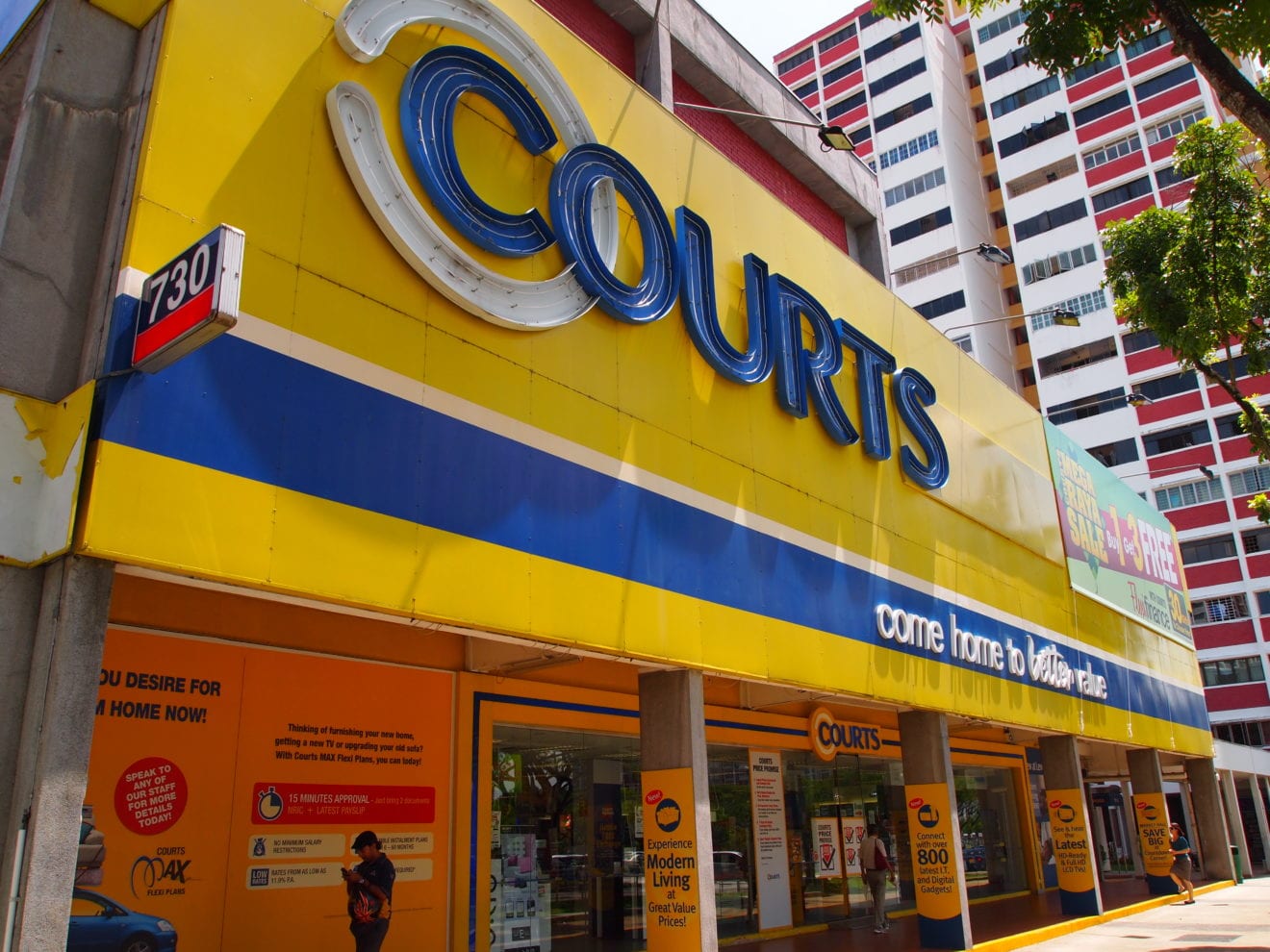
    The range of goods sold by Courts online has doubled as part of a revamp of its e-commerce business.

    The Singapore-based listed retail company also operates in Malaysia and Indonesia.

    Specialising in furniture and consumer electronics, Courts originally launched in 2012 with 7000 products. Now, through a partnership with e-commerce agency SmartOSC, the site now offers 14,000 products.

    Research firm Statista estimates Singapore’s e-commerce market will reach US$6.42 billion by 2020. Courts has seen growth throughout Southeast Asia, most notably in Indonesia and Malaysia.

    In April last year the business revamped its traditional stores to engage with customers more effectively, and opened two offline “test beds”, in Causeway Point and Sri Damansara in Malaysia. As a result, the brand is moving toward an integrated shopping experience involving both in-store and online.

    Court’s Group CIO Stan Kim says the strategy is really about creating an omni-channel experience for customers.
    He says Courts is looking to establish a new industry standard for a mobile-first and user-centric experience. The brand plans to also enhance its click-and-collect offering, which now contributes about  half of its online sales.

  • Free KKday Vacation for Thais Who Love to Travel in Asia

    Free KKday Vacation for Thais Who Love to Travel in Asia

    KKday, a leading E-commerce travel platform in Asia offering localized travel across the globe launched in Thailand in March 2017, and is now offering Thais a chance to WIN a FREE all-expenses dream holiday for two to Japan, Hong Kong, Korea, Singapore or Taiwan with a video competition from now until May 31st, 2017.

    The KKvacay contest invites Thais to create a fun and engaging one-minute video of their own travel trip in any destination. To be automatically entered, each film needs to then be uploaded to the competition entrant’s Facebook Page wall by the end of May and tagged @KKdayThailand with the hashtags #KKvacay and #KKdayth added too.The full entry rules for the KKvacay video competition can be found at the KKday Thailand Facebook Page.

    The winning KKvacay video will be announced on the KKday Thailand Facebook Page in June 2017.

    Ming Chen, CEO of KKday is encouraging Thai vacation videographers to be as creative as possible as there could be some fierce competition. “We know that Thais love to travel within Asia and each of the KKvacay prize destinations is incredibly dynamic; promising an exhilarating, action-packed trip with lots to see and do and fascinatingly diverse cultures. We are expecting to see some really creative videos that explore these different holiday hotpots through the script and the filming style, as well as with the use of props, costumes and setting. Thais are renowned for their inventive style and sense of fun so it will be interesting to see videos portraying their chosen destination and with a free holiday for two up for grabs I imagine there will be some great entries.”

    Part of winning the holiday prize is for the recipient and travel partner to create a short video highlighting their vacation experience along with five KKday activities they enjoyed during their trip. This video diary will be shared by KKday and partners on social media.

    Easy to navigate and book online, KKday appeals especially to those travelers who enjoy immersive vacation experiences and exploring destinations through localized, customized travel rather than simply following the standard tourist trek or trying to seek out ever-more remote locations.

    The Taiwanese- headquartered company, which was established in 2014, brings over 6,000 experiences, in 25 different categories, in 174 cities and 54 countries worldwide. The KKvacay video competition celebrates KKday’s debut in Thailand and with e-commerce popular in the country Thais could prove to be a big market, adding to KKday’s existing 7 million plus visitor views each month, a fanbase of more than 600,000 on Facebook and over 300,000 members.

  • Kudo to Grab in battle for Indonesian market

    Kudo to Grab in battle for Indonesian market

    South-east Asia’s largest ride-hailing company Grab has bought Indonesian online payment start-up, Kudo, as the company kicks off a battle with rivals Uber and Go-Jek for market share with the first investment of a US$700 million (S$978 million) pledge in its largest market over the next four years.

    Grab did not disclose the value of the deal announced yesterday, but Reuters put the figure at over US$100 million.

    In a statement, Grab said the acquisition “solidifies (its) leadership in digital payments” with Kudo’s team and platform being integrated with its online mobile payment service, GrabPay.

    Founded in 2014, Kudo allows less tech-savvy consumers and those without bank accounts to shop online and pay for bills such as utilities and phone credits through its network of “agents”, who help to make those payments to merchants and suppliers on their behalf.

    It currently has 400,000 “agents” in 500 towns and cities across Indonesia.

    Combining Kudo’s presence in smaller cities and rural areas through these agents, GrabPay’s customer base will provide “millions of people across Indonesia with increased access to convenient cashless payments and new income opportunities, while also unlocking compelling new ways to boost online spending”, Grab’s president Ming Maa said.

    Grab said it plans to support and accelerate the expansion of Kudo’s network of agents while leveraging on its reach to bring in more riders, drivers and GrabPay users onto the Grab platform.

    Kudo also plans to explore opportunities to grow its financial services offering, including insurance and consumer loans. Its chief executive, Mr Albert Lucius, a former analyst at Goldman Sachs and product engineer at Apple, said in the same statement that the acquisition “creates immediate synergies with our existing business”.

    “We are excited to work together to bring the ease and convenience of cashless payments to more Indonesians than ever before,” he added.

    SPH Media Fund, the corporate venture capital arm of Singapore Press Holdings, was among the investors who sold their stake in Kudo. SPH Media Fund first invested in the Indonesia-based e-commerce platform in April 2015 and participated in another funding round in December 2015.

    Singapore-based Grab offers car and motorcycle ride-hailing services in South-east Asian countries such as Singapore, Indonesia, the Philippines, Malaysia, Thailand and Vietnam. Go-Jek is a market leader in motorbike taxi services in Indonesia. Uber remains a small player, introducing motorcycle-taxi services only in April last year.

    Transport analysts in Jakarta told The Straits Times the acquisition illustrates how ride-hailing providers were extending their businesses beyond transportation.

    The rivalry has been particularly intense between Go-Jek and Grab.

    Since its launch in 2015, Go-Jek has been setting itself apart from its two other rivals by diversifying into various services, allowing its customers to buy food and groceries, hire beauticians and masseusses, and book cleaners.

    Mr Yoga Adiwinarto, a director at the Institute of Transportation and Development Policy, said: “Grab doesn’t want to lose out. But since building an e-payment system takes time, the easiest way is to buy a company that has already established itself in this area.”

    “After this, I’m sure there will be huge innovations and Grab will expand into service sectors such as mini-markets and the selling of train tickets and flights too,” he added.

    Dr Ellen Tangkudung, lecturer at the University of Indonesia, noted that customers would only stand to gain from the competition.

  • Online Shopping Concierge & Delivery Service honestbee Celebrates Thai New Year with Freebies

    Online Shopping Concierge & Delivery Service honestbee Celebrates Thai New Year with Freebies

    Honestbee, Asia’s leading and trusted online concierge and delivery service, is following its Bangkok launch in March 2017 with 3 free water-festival weekly giveaways with all shopping orders from now until April 17th, 2017. A bonus gift of a traditional Songkran Aloha shirt is also delivered on the next order for those shop-happy customers who have already collected the trio of Songkran freebies. 

    With no minimum spend, honestbee customers will receive a free pair of goggles on all shops until April 1st, 2017, with a free water gun included in the delivery between April 2nd – 8th, 2017. In the final week, from April 9th – 17th, the last day of the Thai New Year celebrations in Bangkok, honestbee customers will find a waterproof phone pouch in with their delivered groceries.

    As a Happy New Year wish, honestbee is also gifting every customer with a one-time B200 discount on orders over B890 to be used at any time from now until April 17th, 2017.

    honestbee customers who are Songkran-ready, with their goggles, water gun and mobile-phone case can happily venture out and join in some water-splashing festival fun. At the same time, they can rest assured that with personal shoppers –  so-called honeybees-  will be picking out the freshest quality produce and delivering straight to their doorstep at their convenience with a same-day service available; fast, reliable and more importantly during Songkran, dry!

    The ethos behind honestbee is to be lifestyle-friendly according to the Singapore company’s Co-Founder and CEO Joel Sng. “We want to celebrate the real community spirit of Songkran and how life is really about spending time doing what we enjoy with those we care about, from friends and family to neighbors. honestbee enables busy people in the city to outsource the time and effort of shopping whilst still getting that personalized service that fits in with them. This also benefits our shoppers with sustainable employment on a full-time or part-time basis, offering a main or supplementary income. This is truly the spirit of New Year!”

    Along with the Songkran freebies and discount special, new customers can take advantage of FREE DELIVERY on first-time orders over THB 590 to celebrate the honestbee Bangkok launch.

    honestbee offers its personalized shopping concierge service from Bangkok’s 26 Villa Market supermarket outlets as well as bistro and cooking studio The Gastro Just For You hamper gifts and the Villa Market Holiday Store all of which are owned by Villa Market. Other brand specialty partners comprise K-Market; Wishbeer; Ja Guem Song; Happy Flavour; Pierre Hermé; Perfect Earth Organics; Ahmad Tea London; Pipper Standard; Simply W, La Paloma and Meyer.

  • Amazon shutting down unprofitable Quidsi unit

    Amazon shutting down unprofitable Quidsi unit

    Amazon on Wednesday confirmed that it is shutting down its Quidsi unit, which runs websites Diapers.com and Soap.com, due to a persistent lack of profitability there.

    Quidsi was an Amazon rival in the US before the online retail made a $545 million deal in late 2010 to buy the startup.

    “We have worked extremely hard for the past seven years to get Quidsi to be profitable, and unfortunately we have not been able to do so,” an Amazon spokesperson said in an email reply to an AFP inquiry.

    “Quidsi has great brand expertise and they will continue to offer selection on Amazon.com; the software development team will focus on building technology for AmazonFresh.”AmazonFresh lets people shop online for grocery store goods, including pet, baby and beauty supplies.

    Quidsi co-founder Marc Lore went on to create another online commerce company, Jet.com, which was bought last year by Walmart for about $3 billion in a move aimed at competing with Amazon.

  • Courts Singapore Looks to Tackle Southeast Asia’s Growing E-commerce Market

    Courts Singapore Looks to Tackle Southeast Asia’s Growing E-commerce Market

    Courts has recently unveiled its plans to capitalize on the growth of e-commerce in Southeast Asia by rebuilding its online business, originally launched in 2012 with an offering of 7,000 products that has increased to 14,000 today, through a partnership with premier e-commerce agency SmartOSC.

    Under these new plans, Courts will further penetrate into Singapore’s growing e-commerce market, which is estimated to reach US$6.42 billion by 2020, according to research firm Statista.

    Known as a Singapore based retailer specialising in furniture and consumer electronics, from its initial establishment, Courts has seen growth throughout Southeast Asia, most notably in Malaysia and Indonesia.  In April 2016, the business revamped its traditional brick and mortar stores to engage with customers more effectively – the two offline “testbeds” opened in Causeway Point, Singapore and Sri Damansara, Malaysia. As a result of that,  in parallel with an expected boost in productivity from traditional retail stores, the brand now looks at radically reshaping its e-commerce business, moving towards an integrated shopping experience both in-store and online.

    Stan Kim, Court’s Group CIO, explained that their strategy is really about creating an omni-channel experience for customers. The limitations of the current e-commerce framework, including extending functionalities, handling the increasing amount of visitors, as well as personalising the shopping experience, do not fit into the overall commerce strategy.

    “We were looking for partners who not only have technical expertise but more importantly understands how e-commerce and brick-and-mortar stores work together to create a seamless experience for modern shoppers. SmartOSC is a perfect match given their experience in building connected commerce solutions for top retailers, and their capability has been recognized by Magento as the platform’s enterprise solutions partner,” explained Stan Kim.

    Built upon the Magento Enterprise 2.0, combined with innovative technologies for omni-channel, marketing automation, and content management, Courts is looking to establish a new industry-standard for mobile first and user-centric experience. A real-time single view of inventory and customer profiles is activated through integrations with ERP and retail management systems. The brand will also enhance the click and collect offering, which is currently contributing about  50% of Courts’ online sales.

    The platform has also been architected to accompany and facilitate future expansion plans, ready for easier roll-out to other regional markets. Although Southeast Asia’s e-commerce is still in its infancy (relative to European and North American markets), it is expected to grow 32% year on year. The region is currently estimated to be worth $5.5 billion and expected to reach $88 billion by 2025, according to a report by Google and Singaporean sovereign wealth fund Temasek.

    When asked for a statement on the partnership, Stan Kim commented “We’ve been working closely with SmartOSC to ensure an integrated and smooth transition to the new platform. We’re very excited with the current progress – SmartOSC’s depth of knowledge in e-commerce, resource scalability and innovative development has helped us realize our omni-channel potential. We cannot wait to launch this to the public.”

  • Amazon Ready to Launch in the Philippines

    Amazon Ready to Launch in the Philippines

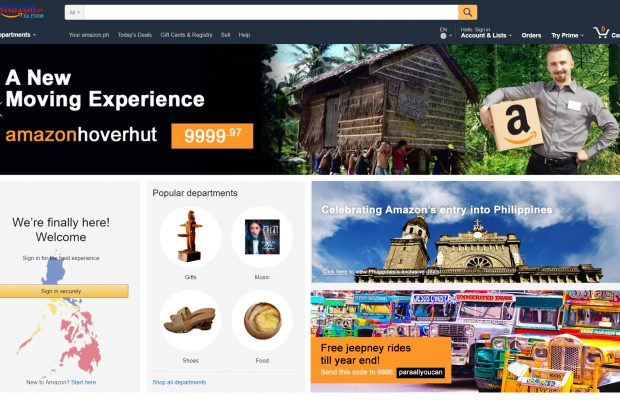
    Amazon with exclusive affiliate partner iPrice Philippines premieres the first screenshots of the all new and exciting online shopping platform: Amazon.ph. Slated to be launched late 2017, millions of local and international products will be made available to Filipinos with same-day delivery service throughout the nation.  Maintaining the ethos of Amazon, the new e-commerce platform in the Philippines will be guided by four principles: customer obsession rather than competitor focus, passion for invention, commitment to operational excellence, and long-term thinking.

    Partnering Amazon in this new endeavor is iPrice, a meta-search website in seven major countries in Southeast Asia as Amazon’s prime affiliate partner. With similar values and vision for ecommerce in Southeast Asia, iPrice’s partnership with Amazon will empower the Seattle based company with the needed marketing channels to aggressively market its products and services to the competitive ecommerce sector.

    Further details of Amazon’s affiliate partnership with iPrice will be revealed at the annual AWS Summit on 20th of April 2017 at the Marriott Hotel Grand Ballroom in Manila. Here is an exclusive screenshot of Amazon.ph.

    The Baguio Barrel Man

    Often seen as the souvenir of choice of most travelers, the Barrel Man offers more than just it’s barrel. Handcrafted from tropical wood unique only to the Philippines, the Barrel Man is a figure that is built of quality material and has the magical powers suited to relieve men of their physiological and psychological barriers.

    Amazon.ph and the Baguio Barrel Man was reviewed by test audiences prior to launch. It assisted in saving a marriage, and restoring one’s manhood.