Category: E-Tailing

Retail News Asia is committed to providing both local and global retailers with the latest E-Commerce & Etail news throughout the Asian market. This on a daily base.

  • China’s online retail market is expected to reach RMB 1.3 trillion in 2021

    China’s online retail market is expected to reach RMB 1.3 trillion in 2021

    Despite rapid growth in recent years, the Haitao market is expected to peak within China’s overall online retail market. New research from Mintel reveals that in China the total combined online cross-border e-commerce market, including Business-to-Business and Business-to-Consumer e-commerce, grew by a factor of 10, from RMB 53 billion in 2011 to an estimated RMB 626 billion in 2016, representing a CAGR (compound annual growth rate) of 64%. From 2016 to 2021, growth is expected to slow to a still-strong CAGR of 15%, to reach a total value of RMB 1.3 trillion (RMB 1281 billion).

    Today, the majority of Chinese consumers shop for foreign imported products from domestic shopping websites (73%), compared with only one quarter (27%) who shop from overseas retail websites. Indeed, more than double the proportion of consumers buy from physical stores within China (56%), rather than from overseas shopping websites.

    There is a clear association among Chinese consumers for some products to be more desirable from certain countries. Mintel research reveals that 31% of consumers buy imported food from Taiwan; 36% buy alcoholic drinks from France (principally wine); and 45% buy beauty and personal care products from South Korea.

    SEE ALSO: China retail sales grow slower 9.5% in first two months

    According to Mintel, the only territory seeing an increase in purchasing among urban Chinese consumers over the past two years was France. Of those who have bought imported products online, 16% bought imported products from France in 2016 up from 15% in 2015. Of those who have bought imported products this year, 20% have bought beauty and personal care products from France, while 36% have bought alcoholic drinks, including wine.

    Matthew Crabbe, Director of Research, Asia-Pacific at Mintel, said:

    “While the Haitao market has seen rapid growth over recent years, and should maintain strong growth for the foreseeable future, it is likely to peak soon as a proportion of online retail in China. This does not stop the Haitao route to Chinese consumers from offering significant potential market opportunities to foreign brands, but it does mean that Haitao is likely to be more relevant to brands looking at initial market entry. Retailers and brands should therefore play to their different country specialities when attempting to differentiate from their competitors.”

    When choosing where to buy imported products online, Chinese consumers who have bought imported products online rank proof of quality of products as important (68%), followed by ability to use third-party payment systems (44%). They also want detailed product information (36%) and Chinese-language customer service (25%).

    Additionally, four in 10 (39%) purchasers said they would like to see a better choice of payment options on overseas online shopping websites. Currently, 35% are less confident about the returns policies of overseas websites than they are of domestic online shopping websites.

    Crabbe added, “As well as providing a better and more entertaining experience for Chinese online shoppers of imported foreign products, brands and retailers can improve by providing better practical solutions. Offering better delivery, refund and returns options is a key area where overseas online retail websites can improve, as compared to domestic websites. This does create logistical issues, however, but having links through domestic online retail portals can help combat this.”

    Mintel research reveals that 62% of surveyed consumers who have purchased overseas products agree that online shopping for imported products lacks the excitement of shopping when travelling overseas, with 20% strongly agreeing with this. Additionally, 34% of consumers agree that they are excited when shopping from websites that run interesting advertising campaigns.

    “When selling foreign products online to Chinese consumers, brands and retailers really need to create a sense of excitement and entertainment about the whole process if they are to stand out in an increasingly competitive market. Simply offering a new product is no longer enough.” Crabbe concluded.
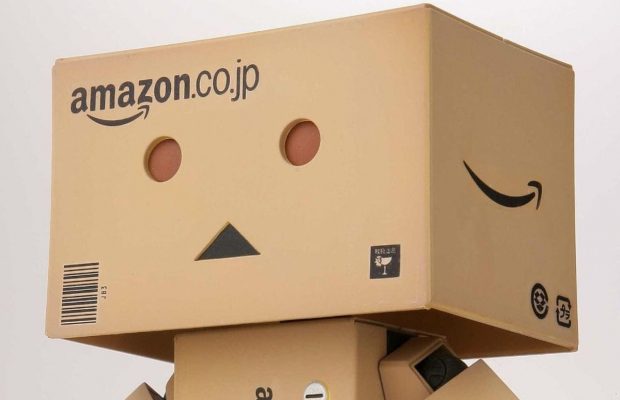

  • Amazon Japan is second biggest foreign market after Germany

    Amazon Japan is second biggest foreign market after Germany

    Online retail giant Amazon has revealed Germany was its biggest market outside the U.S. in 2016. However, Japan, coming in second for total country sales, experienced the most percentage growth last year, up double-digits on the back of heavy investment in distribution and the increase of China-focused tactics.

    On a US dollar basis, Amazon Japan sales leapt 30% in 2016 to US$10.7 billion (¥1.16 trillion). Amazon Germany gained just under 20% and the UK by 5.6%. US sales rose 28%. As a result Japan has moved ahead of the UK to become the U.S. giant’s second biggest overseas market.

    It’s also the first time a foreign firm has surpassed ¥1 trillion in Japan, making Amazon the most successful international retailer to operate in the archipelago nation.

    While Yahoo and Rakuten serve as rival platforms in the local market, Amazon Japan’s strong investment in its own distribution centre network is paying off. Amazon Japan has 12 centres and four Prime Now centres, making it easy for the e-tailer to sell directly via its marketplace vendors.

    Amazon Japan has also managed to poach talent from other consumer goods businesses, since its debut in 2000.

    On a consumer level globally, the Amazon brand sits favourably. Some 67% of Amazon’s sales came from direct sourcing last year and 17% from third party vendors on Amazon Marketplace, according to a recent survey.

    And Amazon is winning across lifestyle and fashion categories.

    “The biggest-selling categories have been books, health and beauty, baby products and kitchen appliances,” Jasper Cheung, president of Amazon Japan, told Bloomberg.

    Cheung was speaking to media as Amazon revealed this week its website in Japan will start accepting UnionPay cards, in an effort to sell more merchandise to Chinese shoppers across Asia. In 2016, Amazon Japan launched a Simplified Chinese-language version of its website, as the volume of mainland Chinese shoppers continues to rise in Japan, up 500%, according to Cheung.

    Meanwhile, e-commerce demand from China to Japan alone is projected to almost triple to 2.34 trillion yen ($22.5 billion) in 2019, according to Japan’s Ministry of Economy, Trade and Industry.

  • Digital Free Trade Zone For Malaysian E-commerce Growth

    Digital Free Trade Zone For Malaysian E-commerce Growth

    The announcement of the much-anticipated Digital Free Trade Zone (DFTZ) by Prime Minister Datuk Seri Najib Tun Razak today comes amidst a time where businesses in Malaysia are encouraged to capitalise on this initiative to boost the Digital Economy in the country. First-ever and a pilot programme, we foresee the DFTZ to benefit local SMEs and entrepreneurs, and pave the way to a more global market for them.

    With the implementation of a DFTZ in Malaysia, the comprehensive approach, covering fulfilment, global supply chain, payment gateways, training and employment prospects, will set a conducive platform to cement Malaysia as a digital hub in the Southeast Asia region, as well as to encourage traditional brick-and-mortar businesses especially local SMEs to transition onto the e-commerce sphere, and trade across ASEAN countries and soon, the world.

    Furthermore, the Government’s introduction of a Digital Free Trade Zone exemplifies an intention to impart knowledge and equip entrepreneurs with the knowledge and know-hows of e-commerce complementing the vast facilities that the trade zone will stand to offer. Resonating this intention, 11street’s owned training programme which is recognised by the Malaysian Digital Economy Corporation (MDEC) aims to help e-entrepreneurs understand the basic rudiments of online business, sharing with them the effective strategies that will propel their businesses to a different height and be competitive in the global market.

    In conclusion, the Digital Free Trade Zone is shaping up to be a boon to local SMEs. The trade zone will serve as gateway to the ASEAN market and allow local products to tap into a wider market. We at 11street will continue to support to initiatives to evolve e-commerce in Malaysia, so as to open up opportunities for a better e-commerce climate for both e-commerce platforms and also entrepreneurs.

  • India’s Flipkart closes $1 billion funding round

    India’s Flipkart closes $1 billion funding round

    Indian e-commerce giant Flipkart has closed a US$1 billion funding round, with plans to raise an equal amount over the next few months.

    Investors who have contributed to this round include eBay, Microsoft and Tencent Holdings, Bloomberg reports.
    The funding comes at a valuation of $10 billion, up from $5.39 billion when its minority investor and the mutual fund managed by Morgan Stanley slashed Flipkart valuation by 3 per cent last month. Its peak valuation was $15.5 billion in 2015.

    Launched in 2007, Flipkart was one of the first Indian tech companies to enter the global Unicorn startups club. It had an invincible run until Amazon entered India in 2012.

    In 2014, Flipkart raised $1 billion, a record amount for an Indian company, from investors including Accel Partners, Russia-based DST Global and Tiger Global, whose former MD Kalyan Krishnamurthy has joined Flipkart as CEO.

  • Tencent Holdings revenues soar 48 per cent

    Tencent Holdings revenues soar 48 per cent

    Revenues for Chinese internet value-added services provider Tencent Holdings grew by 48 per cent last year.

    Total revenues reached RMB151.94 billion (US$21.9 billion), its audited consolidated results show.

    Tencent’s operating profit was RMB56.117 billion, up 38 per cent over 2015, while its operating margin decreased from 39 to 37 per cent.

    Profit for the year was RMB41.447 billion, an increase of 42 per cent, while net margin eased to 27 per cent from 28 per cent the previous year.

    Its unaudited results for the fourth quarter show total revenues grew 44 per cent to RMB43.864 billion. Operating profit was RMB13.9 billion, up 28 per cent, while the operating margin fell from 36 to 32 per cent.

    “During the year, Tencent achieved significant progress in a number of strategic initiatives to further strengthen our leadership, enrich our ecosystem and enhance our competitiveness,” says chairman/CEO Ma Huateng.

    “We substantially increased the market share and daily transactions of our mobile payment services, and achieved rapid growth in commercial payment transactions.”

    Technology investment

    Looking ahead, he says the company will further implement its “Connection” strategy and also invest heavily in cutting-edge technologies such as security, cloud, big data and AI “so as to position us for the next wave of growth”.

    Tencent surpassed 600 million mobile payment monthly active user accounts and average daily payment transactions in December.

    “Our payment-related services provide a fast and seamless experience for a widening range of offline scenarios such as taxi booking, convenience stores, restaurants and supermarkets,” says Huateng.

    “We drove merchant adoption by working with acquiring agencies and simplifying on-boarding procedures.”

    He says the group’s fast-growing commercial payment transaction volume is diversifying from large online merchants to a broad range of offline merchants.

    “Our robust payment infrastructure, which made continuous improvements in payment security, service reliability and transaction speed, enabled us to process peak volume of 760,000 red packets a second during the Lunar New Year.”

  • GoToMalls.com expands to Indonesia

    GoToMalls.com expands to Indonesia

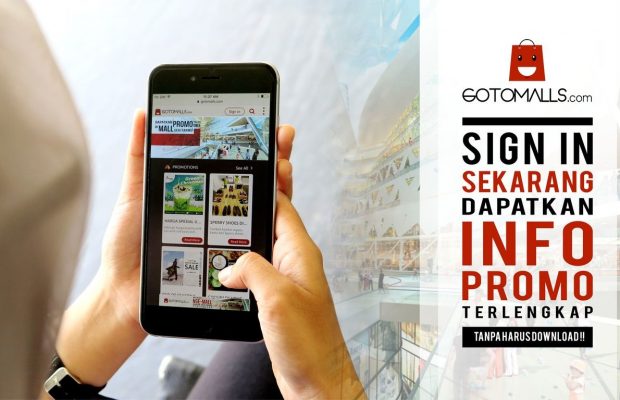
    Singapore-based company DominoPos has launched its proximity marketing and digital media platform GoToMalls.com in Indonesia.

    Offering a geo-located, profile-based smart directory of malls and stores in Indonesia, the website aims to revive offline transactions, “bringing the community’s spirit back to the malls through digital media support”.

    CEO Bruno Zysman says the platform helps offline retail brands publish their own call-to-action campaigns, and promote products or services on a digital platform to their target audience. It lists up to 375 malls and shopping complexes, along with 19,000 stores.

    To ease its entry into the Indonesian market, the site has partnered with telecommunications company PT Indosat, also known as Indosat Ooredoo, and ride-hailing app Grab.

    GoToMalls launched in Singapore in February and plans to expand further internationally.

  • Lazada launching website to sell Taobao products to Singapore shoppers

    Lazada launching website to sell Taobao products to Singapore shoppers

    Alibaba’s bringing its teeming Taobao internet marketplace to Singapore.

    Alibaba Group Holding and Lazada Group are teaming up to sell select Taobao products direct to shoppers in the affluent island-state, striking their first partnership since the Chinese company took control of Southeast Asia’s largest e-commerce operator a year ago.

    Lazada is launching a dedicated website that links directly to Alibaba’s largest shopping platform, said Alexis Lanternier, chief executive officer of Lazada Singapore. To start with, the new site will add 400,000 Taobao products that aren’t available now to an existing lineup of about 5 million products, he said.

    In linking Taobao with Lazada, the two are trying to ease a process that’s gained momentum in recent years. Bargain hunters in Singapore already buy directly from Alibaba’s Chinese marketplace, an eBay-like online bazaar where small merchants and individuals hawk items from electronics to bed-sheets. Its items often go for a fraction of retail prices in Singapore, the world’s most expensive city according to the Economist Intelligence Unit.

    Many people however buy through agents who help with English translations, payments and deliveries – for a fee. That’s led to problems with returns, Lanternier said. Scams may be another issue: Taobao re-joined the Notorious Markets list last year, a name-and-shame pool of global markets the US Trade Representative considers rife with counterfeits.

    Taobao can be difficult to police because it’s an open marketplace, but Lazada will take swift action to protect consumers if it’s notified of fakes, Lanternier said.

    “We want to solve those difficulties, enabling an effortless way for them to shop,” Lanternier said, sharing the new initiative for the first time. “Now it’s all translated into English and you don’t have to worry about shipping options, payment method, returning. You are going to be able to track your order end-to-end.”

    The move is another small step abroad for Alibaba, which has ambitions to expand beyond a slowing Chinese home market. The company and Lazada are now preparing to deepen their operations in the fast-growing region, anticipating Amazon.com’s entry this year.

  • Tencent brand is still China’s most valuable

    Tencent brand is still China’s most valuable

    Chinese technology giant Tencent remains China’s most valuable brand, growing its worth 29 per cent to US$106 billion, according to the BrandZ top 100 most valuable Chinese brands report.

    It shows that technology brands continued to lead the way, with the Tencent brand strengthening its hold on the top spot thanks to the popularity of its social-media platform WeChat. Tencent was also one of three technology brands in the top 20 “risers” listing.

    With Tencent on the top 100 list are NetEase (31) and Sina (61). Making its debut in the 40th spot is e-commerce brand VIP.com.

    Web portal Sina’s initiatives in live video and self-broadcasting through its Weibo platform helped build its following among young people and attract advertising revenue, driving a 43 per cent rise in brand value to $900 million.

    NetEase, which makes online and mobile games and offers an e-mail service, grew 36 per cent to $2.6 billion.

    Sectors still dependent on the traditional economy, such as banks, insurance, and oil and gas, have declined 6 per cent in value. The exceptions are alcohol, and food and dairy.

    Several brands of baijiu, China’s traditional rice wine, have expanded distribution and adjusted pricing and marketing to reach a broader audience. This allowed them to make up for a decline in sales after government measures to limit extravagance at official events reduced demand for alcohol, especially premium brands. Moutai increased 41 per cent in value, entering the top 10 for the first time in ninth position.

    Some entrepreneurial Chinese brands are looking for overseas success before returning attention to their home market, such as digital brands Anker, DJI, Elex and Ninebot.

    Millennials are playing an increasing role in commercial and brand success in China, says the report. They tend to favour brands that are famous or trendy, and the research reveals the brand most successful at increasing millennial loyalty is mobile phone Oppo, up 157 per cent since 2014.

    “Chinese brands are taking the leap and going global on the back of three key factors: the country’s rising international stature, pressure to find alternative sources of growth as the domestic market slows, and increasing overseas consumer receptivity to Chinese brands,” says BrandZ global head Doreen Wang.

  • Alipay HK Strikes Deal with Standard Chartered to Expand into Hong Kong

    Alipay HK Strikes Deal with Standard Chartered to Expand into Hong Kong

    Alipay, China’s biggest payments service, has struck a partnership with Standard Chartered as the company looks to expand its footprint and deepen its mobile-payment push into Hong Kong.

    The company controlled by billionaire and Alibaba co-founder Jack Ma gained a license for e-payments from the Hong Kong Monetary Authority last year, and already began to roll out accounts denominated in the local currency back in October.

    Alipay HK is partnering with Standard Chartered in order to make it easier for Hong Kong residents to top up their account in HK dollars through online and mobile banking. Specifically, the unit of Chinese e-commerce giant Alibaba will work with Standard Chartered to facilitate Alipay payments via the bank’s merchant network in Hong Kong, while the bank will provide its users with digital ways to fund their accounts.

    The size of its newest partner in Hong Kong could bring Alipay to a considerable number of stores. The deal with Alipay will also allow Standard Chartered to target Chinese tourists particularly with Alipay users cannot link the HKD account to their existing yuan- denominated one, nor can they transfer money into the new account.

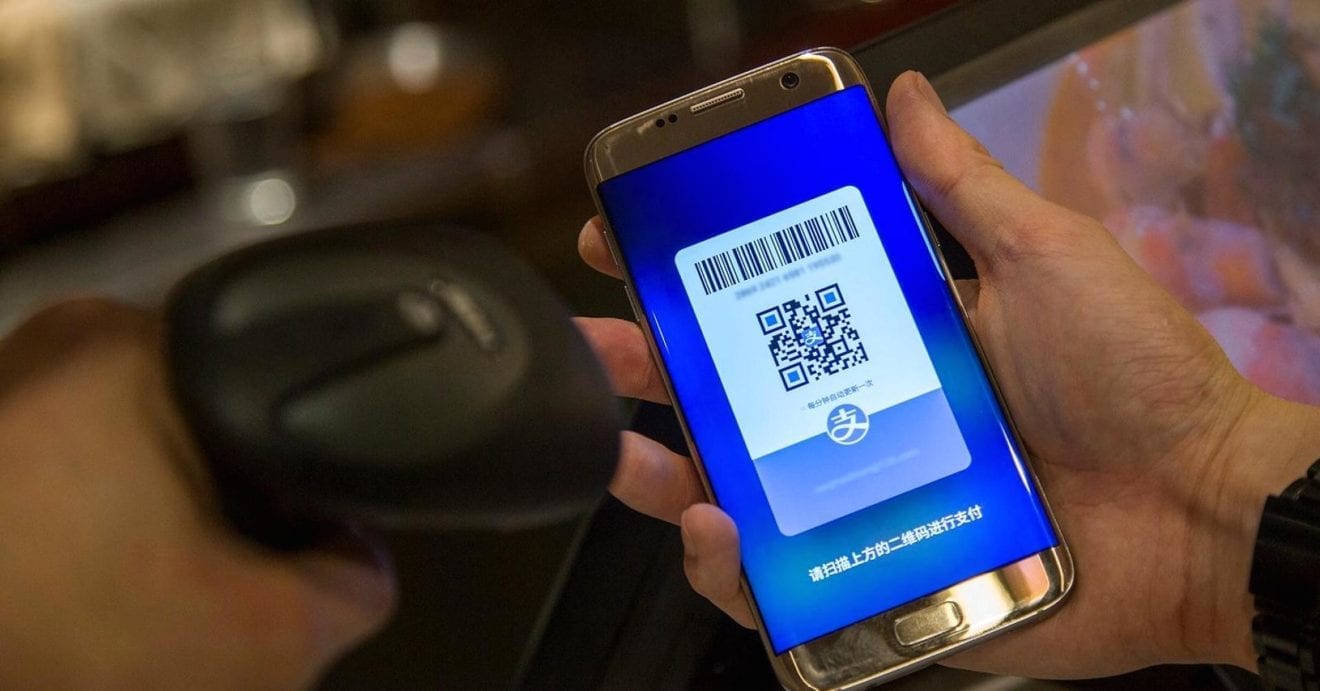
    Alipay, which is operated by Alibaba’s financial services arm Ant Financial, is a separate app on devices that allows customers to pay for their purchases in-store through opening the Alipay app, then scan a QR code provided by the retailer.

    Alipay holds nearly 70 percent of China’s third-party mobile payment market share and processed more than 380 million daily transactions as of June 2016.

    Vicky Kong, head of retail banking at Standard Chartered Hong Kong, said: “We believe the partnership with Alipay, the world’s largest online and offline payment platform with over 450 million active users, will enhance customer engagement with our existing clients on one hand, and help reaching out to new clients, especially the active online users on the other.”

  • E-commerce firms struggle to gain profits

    E-commerce firms struggle to gain profits

    Large international e-commerce firms such as Amazon and Alibaba only began making profits after 10 first years of operation. The big losses of Vietnam’s e-commerce firms were foreseeable.

    Before it was taken over by Alibaba in 2016, Lazada Group reported loss of $334 million in 2015, twice as much as the loss the year before. VNG’s latest financial report showed the company has incurred a VND100 billion loss since it began injecting money into Tiki.vn in 2016.

    Analysts pointed out that orders from clients must be dealt with through tens of different stages before goods can reach clients, and each stage can gobble up one part of investors’ earnings.

    Investors, for example, have to spend big money on storehouses. It is estimated that Lazada and Tiki have to spend no less than VND1 billion just to run one storehouse in HCMC. As such, with three operational storehouses, they have to spend no less than VND48 billion a year.

    With tens of thousands of orders each day, e-commerce firms will need high numbers of deliverymen, thus bearing high financial cost. Both Lazada and Tiki have to employ deliverymen and outsource the service.

    Lazada Vietnam has 200 workers in Lazada Express, but it still has to join forces with Giaohangnhanh, VNPost and Viettel Post to fulfill orders.

    Besides, the expenses on marketing are also enormous which eat up investors’ profits. Lazada Vietnam had to spend big money on ads in the first years of operation to lure more customers. Some sources said the firm once spent up to $2 million a month on ad campaigns.

    Chotot.vn also reportedly spent billions of dong on the ad clips with the play of comic actors. Meanwhile, Shopee.vn offers free delivery to clients nationwide applied to orders with bills of VND150,000 and higher. With more than 10,000 orders a day, Shopee.vn had to pay nearly VND1 billion on the program.

    E-commerce firms not only have to pay high for input costs and marketing campaigns, but also have to cut selling prices to compete with others. A branding expert who asked to be anonymous said some firms accept to sell goods at a loss of 10-20 percent in order to lure customers. In peak promotion season, the figure could be up to 50 percent.

    The highest risk for e-commerce firms is that they may lose orders because of the COD (cash on delivery) payment method. Customers can cancel orders at the last minute, though firms have to pay expenses to deal with the orders.

  • Retail IoT connections to more than treble by 2021

    Retail IoT connections to more than treble by 2021

    Retail IoT connections will rise 350 per cent by 2021 according to new data from Juniper Research.

    The UK-based company predicts retailers will connect 12.5 billion business assets to IoT platforms by then, ranging from products to digital signs and Bluetooth beacons.

    That compares with an estimated 2.7 billion connections in 2016.

    Juniper also predicts that RFID (radio-frequency identification), will re-emerge as the industry’s ‘killer app’ becoming the key factor in the IoT retail ecosystem.

    “RFID tags, used to identify and locate retail assets in real-time, are now at a low enough price point for mass deployment and integrate well with new IoT systems and analytics,” Junpier said in its research paper IoT in Retail: Strategies for Customer Experience, Engagement & Optimisation 2017-2021.

    “New services, such as dynamic pricing or enabling promotional offers via in-store digital signs are also poised for growth.”

    The company says ‘next-gen’ processes, such as personalised retail, could be achieved by integrating enterprise software and emerging technologies, with data from connected IoT assets. Juniper forecast that software spend for enterprise resource planning systems to integrate this data would reach US$11.3 billion annually in 2021, from $1.5 billion in 2017.

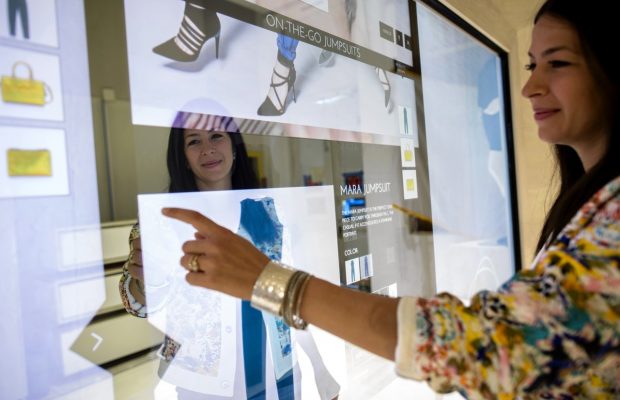
    “Innovative retailers such as Rebecca Minkoff have combined RFID with smart mirrors,” said research author Steffen Sorrell. “Integrating these systems allows real-time information to improve the store experience and bridge physical and virtual worlds – in this case, the concept drove a 200 per cent increase in sales.”

    Aiming for the Endgame

    Juniper predicts that each retailer’s approach to the IoT should differ depending on their main channel focus. It argues that physical retail spaces still have many benefits, not least in terms of being able to avoid the sterility of online shopping.

    “Therefore, Juniper predicts that online retailers’ focus would be on technologies such as machine learning to provide digital assistance, or digital performance management. In this latter instance, measurements such as user experience, IT performance and business outcome are analysed holistically to determine necessary improvements.”

  • Go-Jek secures title sponsorship right for Indonesia’s top soccer league

    Go-Jek secures title sponsorship right for Indonesia’s top soccer league

    Local online transport and services app Go-Jek announced on Tuesday its partnership with PT Liga Indonesia Baru to become the title sponsor for the country’s top professional soccer league for the 2017 tournament season.

    The company expects the partnership will help popularize its distinctive service solutions to cater activities related to the soccer league, such as providing transport to and from games using its Go-Ride and Go-Car and purchase of game tickets through Go-Tix.

    “We are excited to become part of Liga 1’s management, as we feel that soccer has become a widely loved sport that is able to unite all layers of Indonesian society,” Go-Jek CEO Nadiem Makarim said in a statement.

    “We also see the economic enthusiasm by the people surrounding the tournaments themselves, which is in line with our mission to empower Indonesia’s micro-entrepreneurs and small businesspeople.”

    Liga 1, previously known as the Indonesia Super League, will kick off this year’s season on April 15, with 18 participating teams, including Arema FC, Bali United, Barito Putera, Madura United, Mitra Kukar, Persib Bandung and Persija Jakarta.

  • Lotte Department Stores take in online retailers

    Lotte Department Stores take in online retailers

    Online retailers in Korea are set to open 13 outlets at Lotte Department Store branches in the next three months.

    “Online brands are continuously expanding into offline stores to raise their brand value and to receive real-time feedback from consumers,” says Lotte Department Store.

    Statistics Korea says online sales of apparel and fashion-related items have grown each year by double digits from 6.2 trillion won (US$5.48 billion) to 10.2 trillion won between 2013 and last year.

    As these brands gain traction against traditional fashion houses, they start opening brick-and-mortar outlets as well, first as showrooms then as stores, says the Korea Herald. This helps them to tap into consumers who prefer to see products before they buy.

    A report from Open Survey last year shows that 53 per cent of consumers want to buy their clothes at offline stores.
    Lotte Department Store’s first offline store was for Style Nanda in 2012. Now about 100 online brands have offline outlets at Lotte’s department stores. Opening soon at Lotte are such brands as Imvely, Migun Style and Sappun.

    Some Korean brands, such as Liphop and Style Nanda, have even expanded to offline stores overseas in countries like China and Singapore.

  • Subscribe to Food launches in Singapore

    Subscribe to Food launches in Singapore

    Just launched in Singapore, Subscribe to Food is an e-commerce subscription service that offers food and wine products for consumers.

    Upon launch, the service acquired e-commerce start-ups The Frank Food Company and WineMasons.

    Philip Raff, who is also executive director of Velocity Property Group, out of Australia, led the investment group and acquisition of the two companies.

    “We believe that through e-commerce, modern logistics via our partner Yojee, and a commitment to a subscription model, even city folks can access premium, fresh, small-batch food and wine,” says Raff. “It’s all about cutting out the middleman and paying a decent price that takes into account the effort and expertise that goes into food production.”

    Subscribe to Food first acquired The Frank Food Company, which focusses on supporting regional farmers practising sustainability, fair-trade and organics, mainly in Indonesia. Its co-founders, brothers Liam and Duncan McCance, took up roles as CEO and food/content director respectively.

    WineMasons was set up by Matt Allanson and Josh Sims and has focussed on Australian small-batch wine producers, with a Singapore subscription commerce offering.

    After Subscribe to Food moves its newly acquired businesses to a shared e-commerce and logistics platform, it plans to launch a third brand focussed on premium beef from farmers in Tasmania.

  • Saigon cab firm takes on Uber with unexpected weapon: grapefruit

    Saigon cab firm takes on Uber with unexpected weapon: grapefruit

    With Uber and other app-based car-hailing services becoming increasingly popular in Vietnam, one local taxi firm has decided to improvise in order to give its drivers a competitive edge.

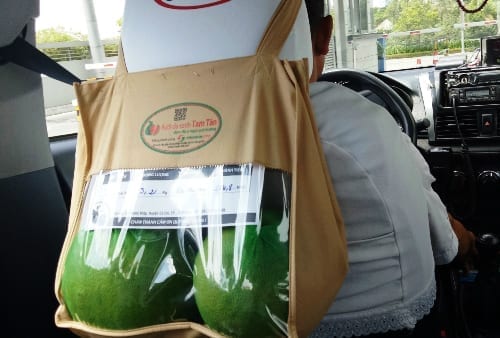
    Vinasun, the country’s second biggest taxi firm, has found a way to boost its drivers’ incomes by turning 800 cabs in Ho Chi Minh City into mobile grapefruit stalls.

    A kilogram of pomelo, a green-skin grapefruit, sells for VND64,000 ($2.81)

    “Drivers receive a bonus for selling large quantities of fruit,” a driver said.

    The taxi operator typically keeps 80 percent of the revenue from its grapefruit business and awards the remaining 20 percent to the drivers, said executive officer Ta Long Hy.

    Vinasun drivers are making on average between $2 and $4 a day from selling grapefruit, he estimated, adding that the best sellers can add up to $17 to their daily incomes.

    Since ride-hailing companies like Uber and Grab appeared on the scene, traditional taxi drivers have seen their incomes rapidly plunging.

    Traditional taxi companies have been lobbying the government for a lower VAT levy to allow them to compete with cab-hailing apps. The government has, however, turned down the request saying there’s no grounding to claim traditional taxi companies have to pay higher taxes and fees than their ride-hailing competitors.

    Uber and Grab cut into at least 10 percent taxi operators’ revenue last year in Ho Chi Minh City, the local association of taxi companies estimated.

    The number of private minicabs, mostly offering transportation services via car-hailing apps, has reached 20,000 in Ho Chi Minh City, twice as many as the number of traditional taxis.

    Last year Vinasun, which has around 6,000 cabs and operates chiefly in Ho Chi Minh City, launched a counteroffensive against the ride-hailing menace: its own app.

    Passengers using Vinasun’s ride-hailing app can easily recognize their minicabs with a ‘Vcar’ logo, Vinasun’s luxury version. They will be offered the option to fix the price at the beginning of a journey rather than rely on the taxi meter, according to Vinasun.

    Vinasun Group, which has been listed on the Ho Chi Minh City Stock Exchange since 2008, made VND4.3 trillion in revenue ($189 million) last year, down 6 percent from 2015.