Retail News Asia is committed to providing both local and global retailers with the latest E-Commerce & Etail news throughout the Asian market. This on a daily base.
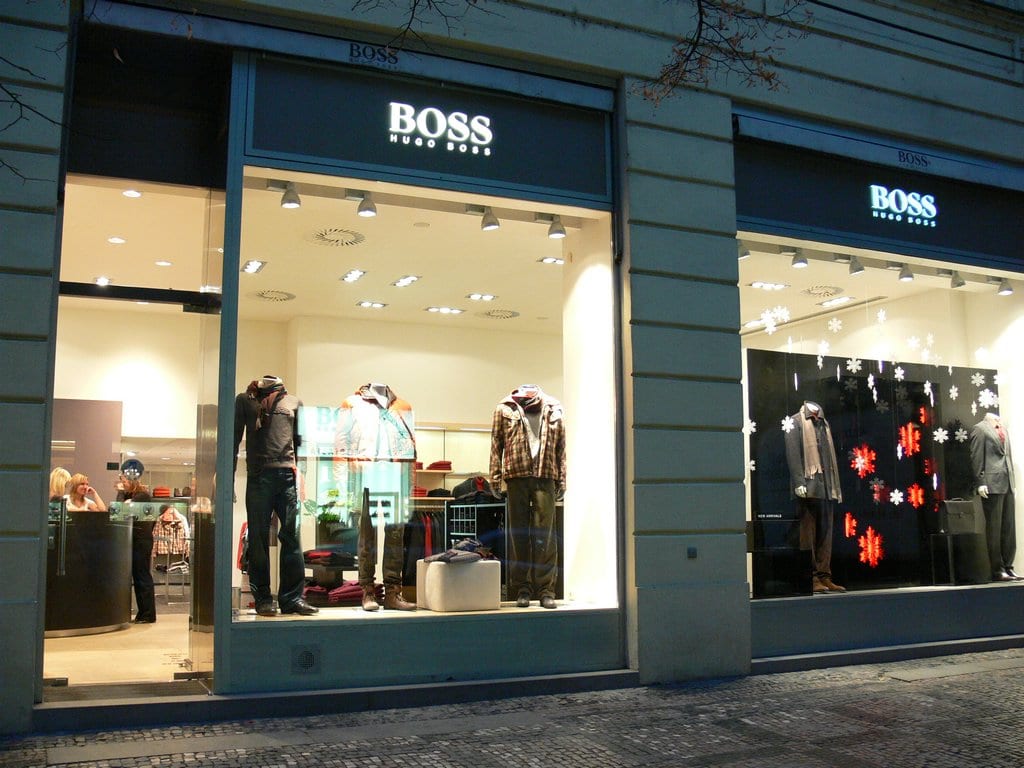
German fashion house Hugo Boss says that improving its online business will be a priority this year as it shores up its recovery in China after slashing prices there.
Since taking over as Hugo Boss chief last May, former finance chief Mark Langer has been cutting costs by renegotiating rents, shutting stores, trimming brands and shifting marketing spending back to menswear. This reverses the course of previous CEO Claus-Dietrich Lahrs, who invested heavily in promoting its womenswear. He quit in February last year after sales slumped in China and the US.
Hugo Boss says it saved more than €100 million (US$106.8 million) in costs and investment last year and will continue to keep a strict control on expenses this year.
Langer has also slashed prices in China to bring them closer to European and US levels, helping sales there rise by almost 20 per cent on a like-for-like basis in the fourth quarter.
Hugo Boss says it expects currency-adjusted sales to be stable this year after a 4 per cent fall to €2.69 billion last year, with online sales down 9 per cent to €76 million, less than 3 per cent of the total.
“Online and retail stores must be more closely linked together,” says Hugo Boss sales chief Bernd Hake.
The company plans to roll out services like “click and collect” to stores across Europe by the end of this year.
E-commerce sales at Hugo Boss were disrupted by a move last year to fulfil orders in Europe itself, instead of via a partner, and the relaunch of its website.
It also plans more digital marketing, forecasting it will spend 70 per cent of its budget online and only 30 per cent on print this year, compared to a 50-50 split two years ago.
Hugo Boss says digital communication has been an important driver of its recovery in China, with a jump in followers on social-media sites WeChat and Weibo last year.
Line Friends will become the first Asian character brand to open a large-scale official store in the US.
Its store in New York City’s Times Square, opening in July, also marks the one-year anniversary of Line listing on the New York Stock Exchange.
Line Friends has opened stores in 11 other countries and regions including China, Hong Kong, Japan and Taiwan, and had a pop-up store in New York City in 2014.
In New York, the store will have about 430 sqm of retail space on Broadway, and will attract attention with LED billboards.
There are 73 official and pop-up Line Friends stores around the world, and the brand also collaborates regularly with different brands, such as pen company Lamy and Italian stationery group Moleskine.
Line Friends grew from sticker characters for the messenger app Line, which has 220 million users globally.
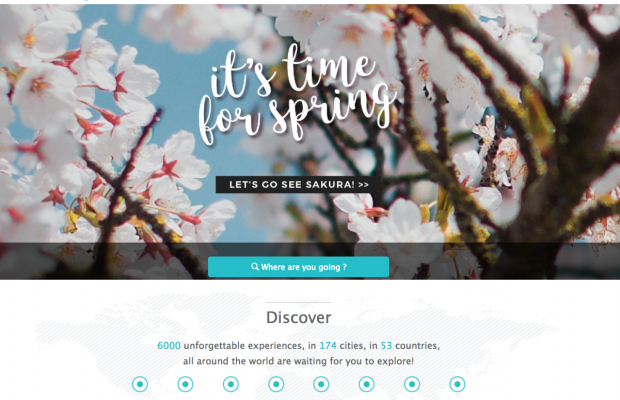
KKday, a leading E-commerce travel platform in Asia offering localized travel across the globe officially launched in Thailand today, bringing unique and authentic tour experiences abroad to Thai tourists looking to travel independently and explore other cities around the world through organized excursions.
Established in 2014, KKday is a Taiwan-headquartered company offering over 6,000 experiences, in 25 different categories, in 174 cities and 54 countries worldwide.
After recently launching in Singapore, the Thai branch of KKday will appeal to the growing number of FITs (Free Independent Travelers) in Thailand in search of fun activities and memorable sightseeing trips on holiday. Whilst FITs book their own flight and accommodation, they look to online travel experts with local knowledge to book unforgettable travel experiences that give them genuine insights into a destination; discovering local culture and heritage, hidden gems and off-the-beaten-track adventures and sampling incredible food and activities along the way.
Ming Chen, CEO of KKday, who was at the launch in Bangkok, believes city break tours will appeal to the Thai market. “Thais are renowned for their warm welcome to tourists visiting their country and this openness extends to a genuine interest in other cultures and a love of travel. Asia is home to some spectacular cities and I envisage that KKday members in Thailand will want to soak up the atmosphere and truly experience city breaks in Taiwan, Korea and Japan which are all popular vacation destinations for Thais; exciting cities like Taipei, Seoul and Tokyo. I am pleased to be launching KKday in Thailand and with the huge growth of E-commerce within the country, an online travel experience platform fits perfectly with what the market wants and how consumers behave here.”
Hassle-free and competitively priced, KKday is easy to browse, read reviews and book online; the ideal travel companion for the digital Y Generation of under 35s who are primarily booking with KKday. In 2017, the travel trend for Gen Y tourists is all about experiential vacations and immersive getaways rather than finding some far-flung undiscovered destination or simply ‘being’ a tourist abroad.
Today’s travelers want get a more organically native feel for a place that is less ‘touristy’ and is far more interactive and experienced-based. KKday taps into this quest for localized, customized travel.
The launch of KKday in Thailand is aimed at expanding the platform which already has a presence in Taiwan, Hong Kong, Malaysia, Korea and Singapore. A branch in Thailand will build on KKday’s already 7 million plus page views per month, Facebook fan base of over 600,000 and membership that exceeds 300,000. Promotions are also on the horizon with relationships being established with some big-name brands in Thailand too.
Expansion is part of the future strategy of KKday with two rounds of funding in 2015 and 2016 totaling $11.5 million led by Singapore-based venture capitalists, Monk’s Hill Ventures and AppWorks, the largest start-up accelerator in Asia.
In Thailand, KKday has partnered with DTAC Rewards, Eatigo, Tourkrub, Show DC (Lotte) and Nokscoot.
Celebrating its debut in Thailand with an exciting campaign, #KKvacay rewards one lucky winner and a friend will win a holiday in either Japan, Hong Kong, Korea, Singapore or Taiwan!
GRAB on March 13 launched GrabShare in Indonesia, making it the fourth Asean country to offer the service after Singapore, Malaysia, and the Philippines. It was launched in the three countries in December 2016.
GrabShare will pair two different passenger orders with similar routes in a single trip. This feature allows for a maximum two stops and each passenger may only bring one person with them. There will then be four people in one car and drivers will wait up to three minutes for each passenger at pick-up points.
“We seek the chance to optimise the use of cars to address Indonesia’s heavy traffic congestion. After it was launched in Singapore, Malaysia, and the Philippines, GrabShare has been effective in attracting more new riders to the Grab platform. We tailored GrabShare to suit drivers and passengers’ needs and made it a seamless and responsive experiences,” says Grab Indonesia managing director Ridzki Kramadibrata.
Conceptualised, designed and engineered across Grab’s three research and development centres in Singapore, Seattle and Beijing, GrabShare’s matching algorithm ensures that passengers get to their destinations in the shortest possible time.
The algorithm calculates and determines a match by factoring in the closest available drivers, travel time, overlap of trip routes, detour distance and current traffic conditions before intuitively sequencing pick-ups and drop-offs.
“Commuters in Jakarta indicated that they are open to carpooling as it offers a more pocket-friendly fare and enables them to socialise with new friends. Drivers had the same feedback and wanted the option of taking short breaks between trips,” adds Ridzki.
This launch in Indonesia will impact Grab users and drivers. For drivers, GrabShare has the potential to double their income since they will earn the fare for two trips at one go as well as saving on costs and time.
For passengers, GrabShare will be priced up to 50% cheaper than GrabCar Economy fares and users can bring a friend on the rides at no additional cost, as long as both share the same pick-up and drop-off locations. Grab also provides insurance for drivers and users.
Local market strategy
Every city’s traffic conditions and transportation patterns are different. Grab came up with a strategy where all their features have to provide specific solutions for particular cities.
“At Grab, we embrace and implement a hyperlocal approach to every single aspect of our business. We value the genuine meaning behind local Indonesian words therefore the name of our service, GrabShare, comes from careful consideration as the word ‘share’ holds a deep cultural meaning for Indonesians.
“Indonesians are known to be very sociable and friendly with smiley greetings and mutual assistance as part of their core values and identity, as well as common etiquette. Through this campaign, we want to rejuvenate this cultural value and evoke the simple joy of sharing stories as well as rides with others,” explains Grab Indonesia marketing director Mediko Azwar.
GrabShare is currently available in Jakarta, Bogor, Depok, Tangerang and Bekasi.
hai retail giant Central Group aims to raise the share of its e-commerce sales to 15 per cent over five years, up from the present 1 per cent.
Presenting the company’s annual business plan, CEO Tos Chirathivat says the group will aggressively pursue expansion in the digital realm this year.
About 10 per cent of the 45.53 billion baht (US$1.3 billion) capital investment allocation this year will be devoted to online business. The funds will mainly go toward developing a logistics network and an omni-channel platform, with capital spending on that front to double from next year.
Central Group’s retail portal, Central Online, will be overhauled this year. The conglomerate acquired the Thai business of fashion e-tailer Zalora last year, and will adapt its know-how for Central Online’s makeover.
The group is also eyeing markets outside of Thailand, including an online re-entry into China, from where it retreated two years ago. Central Group president Yol Phokasub says it aims to collaborate with a partner this time.
Vietnam is another promising market. The group has two department stores there and is also a stakeholder in electronics retailer Nguyen Kim.
Meanwhile, Central says its group sales last year increased 17 per cent to 332.7 billion baht. The refurbishment of key assets such as Bangkok’s Central Plaza Pinklao helped boost sales, along with Zalora and the acquisition of Vietnamese supermarket chain Big C.
Central aims to reap sales of 382.2 billion baht this year, with a heavy reliance on overseas business, which accounts for 30 per cent of sales, as well as developed online business.
Sales of South Korea’s online shopping malls rose dramatically in recent months helped by the growing number of Chinese customers.
Data released this week shows the Korean online industry growth is happening amid China’s retaliation against South Korea over Seoul’s plans to deploy an advanced US missile defense system on its soil.
WeMakePrice, a major online shopping mall, said its sales on Alibaba Group’s Tmall rose 100 per cent in January compared with the same period last year. The comparable figure was 50 per cent for February.
“We don’t expect any drastic decline in the sales in Tmall, one of the biggest online shopping sites in China, unless Chinese consumers stage a boycott of South Korean products,” a WeMakePrice official said.
GMarket, another online shopping mall, said its sales to Chinese consumers surged 18 per cent in 2016 from a year earlier, and the trend is similar for the first two months of this year.
A possible decline in the number of Chinese tourists visiting South Korea, however, may adversely affect the South Korea online industry as many Chinese tourists place orders at South Korean duty-free shops online before picking up goods in person while touring South Korea, industry sources said.
China has been retaliating against Seoul’s decision reached in July to have the Terminal High Altitude Area Defense (THAAD) system deployed on South Korean soil later this year. South Korea says the missile system will not target China but only counter threats from North Korea.
In the latest retaliation, Chinese travel agencies suspended sales of tour packages to South Korea last week.
While its direct-selling model echoes brands like Avon and Tupperware, Indonesia’s MindStores gives the approach a modern twist—with augmented reality.
Recognized as the first partnership store network to use augmented and virtual reality, MindStores equips its store owners with their own unique partner cards which customers use to access the stores virtually. The whole process is relatively simple, and takes place in-person only.
A store owner, who can be located anywhere—from their living room to a public coffee shop—shows a customer their partner card. Using a dedicated app on their own smartphone, that customer scans the card to see a 3D retail store appear on their screen. From there, the customer enters that partner’s virtual store and can browse and purchase merchandise to have shipped to them. The store owner then gets a cut of the sale.
Slingshot, the Indonesian technology and media company that operates MindStores, announced this week that the store network has opened more than 7,000 stores in Indonesia since its launch last June. They estimate that they will have more than 150,000 active stores by the second quarter of 2017, with the potential to open more than 4 million new stores in the country over the next two years.
As part of the pilot program, MindStores partnered with Alfamart, a large Indonesian convenience store chain, to have their wares sold through branded Alfamind virtual stores by individual store owners. However, augmented reality gives MindStores the potential to expand their retail partnerships to other companies, with many stores appearing side by side on each scanned store owner card.
“The future will be an augmented reality city that is working flawlessly with people, with stores, with consumers,” said Daniel Surya, CEO of Slingshot and its parent company, WIR Group, in an interview with NextReality. “Now is just the first phase. We’re looking at a data-driven city using augmented reality.”
Surya noted that MindStores already has an agreement with one of the largest insurance companies in Indonesia, Astra Life, in collaboration with UK-based Aviva, as their next retail partner. Eventually, MindStores will also give its store owners the ability to sell their own merchandise and crafts—not just partner brands—like on Etsy.
The company expects to expand to China and India by the end of the year, Latin America and Africa next year and, eventually, the United States. Each expansion will require recruiting partners that resonate with consumers in those markets.
Working in emerging markets presents challenges in rendering AR and VR animations, since most consumers are equipped with lower-end phones running on processors two or three generations old.
The stores are designed to render smoothly through its Android or iOS app. To ensure consistent operation, the company built the stores on their own engine, which is compatible with more modest hardware. For instance, minimum requirements to run on Android include OS version 4.2 Jelly Bean, quad-core 1.8 GHz CPU, and 2 GB RAM.
“We need to be able to present this technology on the simplest, most modest phone available on the market,” said Surya. The app is also optimized to compensate for available connectivity in the emerging markets. According to a spokesperson, the app is designed to allow for offline browsing, though an internet connection is required to place an order.
Nonetheless, they are also testing the experience with smart glasses, namely Vuzix and HoloLens, and their research and development team maintains relationships with the leading hardware makers so that they are familiar with the next wave of devices.
Empowering Women Through Community-Based Selling
Along with the eye-catching AR and VR aspects, community-based selling has been a significant component of the company’s success.
The direct selling model appeals to mothers of single-income families as supplemental income, according to Surya. Since brand loyalty is low in Indonesia, the ability to offer goods at a discount to friends and neighbors gives store owners and their partner retailers an advantage.
Through Mindstores we’ve used innovative technology to create something as equally innovative as it is meaningful, through its proven ability to make a positive impact to empower women worldwide. Slingshot will continue enhancing the Mindstores experience, for the benefit and futures of an often-overlooked population: women in less developed regions of the world.
Compared to the cost of opening a brick-and-mortar store or securing a franchise license, the start-up cost for MindStores is relatively modest. Store owners invest a minimum fee (the equivalent of about $100) to serve as capital to purchase inventory credit from Alfamart, the partner retailer.
Their customers order products through the store and pay the customer in cash. The retailer applies the purchase towards the inventory credit and ships to the customer. Customers pay the store owners directly in cash. Store owners can purchase additional credits once the initial investment is exhausted.
The store owners receive about 15% of each sale for most of Alfamart’s product categories, such as fashion and household goods, which have 30-40% margins. MindStores takes a 2% cut, with the remainder of the proceeds going to Alfamart. Slingshot reports that participants average $900–$1,200 per month in sales.
Next Stop: SXSW
Slingshot is one of five Indonesian companies appointed by BEKRAF (Indonesian Government Agency for Creative Economy) to attend the South by Southwest (SXSW) Conference and Festival, taking place March 10–19 in Austin, Texas. The companies will exhibit in the Indonesian section named Archipelageek.
“It is a tremendous honor to represent our Country at such a prestigious event,” said Surya. “We’re proud to showcase the creative and innovative technological achievements from Indonesia, which we believe are highly relevant in today’s worldwide marketplace.”
In addition to its MindStores business unit, Slingshot also operates AR&Co., which specializes in augmented reality content development, and DÄV, an AR media placement company. Founded seven years ago as the AR Group, Slingshot has offices in New York, Los Angeles, Silicon Valley, Jakarta, Singapore, Barcelona, and Malta.
Slingshot has completed more than 500 projects in 20 countries, working with brands such as Disney, Cartoon Network, Samsung, LG, Intel, Lenovo, and Sony, to name a few.
Among their notable campaigns include AR-enabled ads for the successful Nigerian presidential campaign of Muhammadu Buhari, holographic Star Trek collectible pins, and the first AR children’s books in Spain.
“We’ve always been excited about the possibilities of augmented reality and the power it has as an engaging and immersive platform,” said Surya.
E-commerce heavyweight Lazada, smartphone brand Starmobile alongside 24 e-commerce merchants in Southeast Asia were honoured at the inaugural iPrice E-Commerce Merchant Awards (iEMA) 2016 at the eTail Asia Conference in Marina Bay Sands, Singapore. Voted and nominated by tens of thousands of consumers across Southeast Asia, the awards were organized by iPrice Group in partnership with eTail Asia, Trusted Company and UseInsider, with the aim to celebrate and honor the efforts of Southeast Asia’s top e-commerce merchants in the booming industry.
With the assistance of Trusted Company, each vote was validated and allowed to be casted only once. The voting and nomination period began on 15th November 2016 and ended on 31st January 2017. All merchants in Southeast Asia were automatically enlisted and qualified for the voting session.
Winners of the inaugural iEMA included Lazada, winning the Popularity Award for the Philippines and Starmobile won the Quality Award for the Philippines.
“Thank you for your support and trust in making Lazada a customer-first company and one of SEA’s most loved e-commerce brands,” said Sydney Dondon, senior associate of affiliate marketing of Lazada Philippines.
The Lazada Group was established in 2012 and operates Lazada, one of the largest e-commerce platforms in Southeast Asia.
When asked about their future plans, Sydney explained that shopping experience and empowering stakeholders were key. “We continuously improve the shopping experience by understanding what our customer needs, at every step of the shopping journey. It’s really down to empowering our stakeholder. We’re adding features on the website and app so that our customers can make more informed purchases. We are beefing up our logistics capabilities to fulfil orders faster wherever they may be. We are also developing tools to make selling more efficient for our merchants,” said Sydney.
Starmobile, a smartphone brand from the Philippines won the Quality Award for the Philippines. From its humble beginnings in 2011, it was no surprise that Starmobile took home the award for Quality considering them being known for being one of the most innovative smartphone brands locally and their strong fan base on social media.
Finalists for the Quality Award were Benloi, an online sporting equipment company and Anson’s, an appliance and electronics store in the Philippines.
The Absolute Winner of iEMA 2016 Awards
Bukalapak, a C2C e-commerce platform was declared the overall winner of iEMA 2016, garnering the highest number of overall votes in Southeast Asia. The startup began their operations in their garage with the passion to create a marketplace that is reliable and trusted by consumers today. When asked what made them successful Evi Andarini, PR Manager of Bukalapak mentioned that they constantly find ways to be creative and innovative in meeting their customers’ needs.
In addition to this, the iPrice Special Award for notable achievements in e-commerce was won by BloomThis, a Malaysian startup who utilized their website and social media pages to provide an unparalleled premium flower gifting service.
The full list of winners:
The Absolute Winner of iEMA 2016:
Bukalapak
iPrice Special Award
BloomThis (Winner)
Althea (1st Runner Up)
BMS Organics (2nd Runner Up)
Quality Award – Country Winners
Malaysia : Livlola
Indonesia : Mazaya
Philippines : Starmobile
Singapore : Tech2Cool
Thailand : Advice
Vietnam : Alovendor
Popularity Award – Country Winners
Malaysia : Lazada
Indonesia : Bukalapak
Philippines : Lazada
Singapore : Tech2Cool
Thailand : Advice
Vietnam : Alovendor
The Absolute Winner and iPrice Special Award of iEMA 2016 were presented a special trophy while other winners and finalists received a certificate and an e-badge for their e-commerce platforms. In addition to this, products from all winners and finalists of all categories will be given a special highlight on all iPrice websites across Southeast Asia.
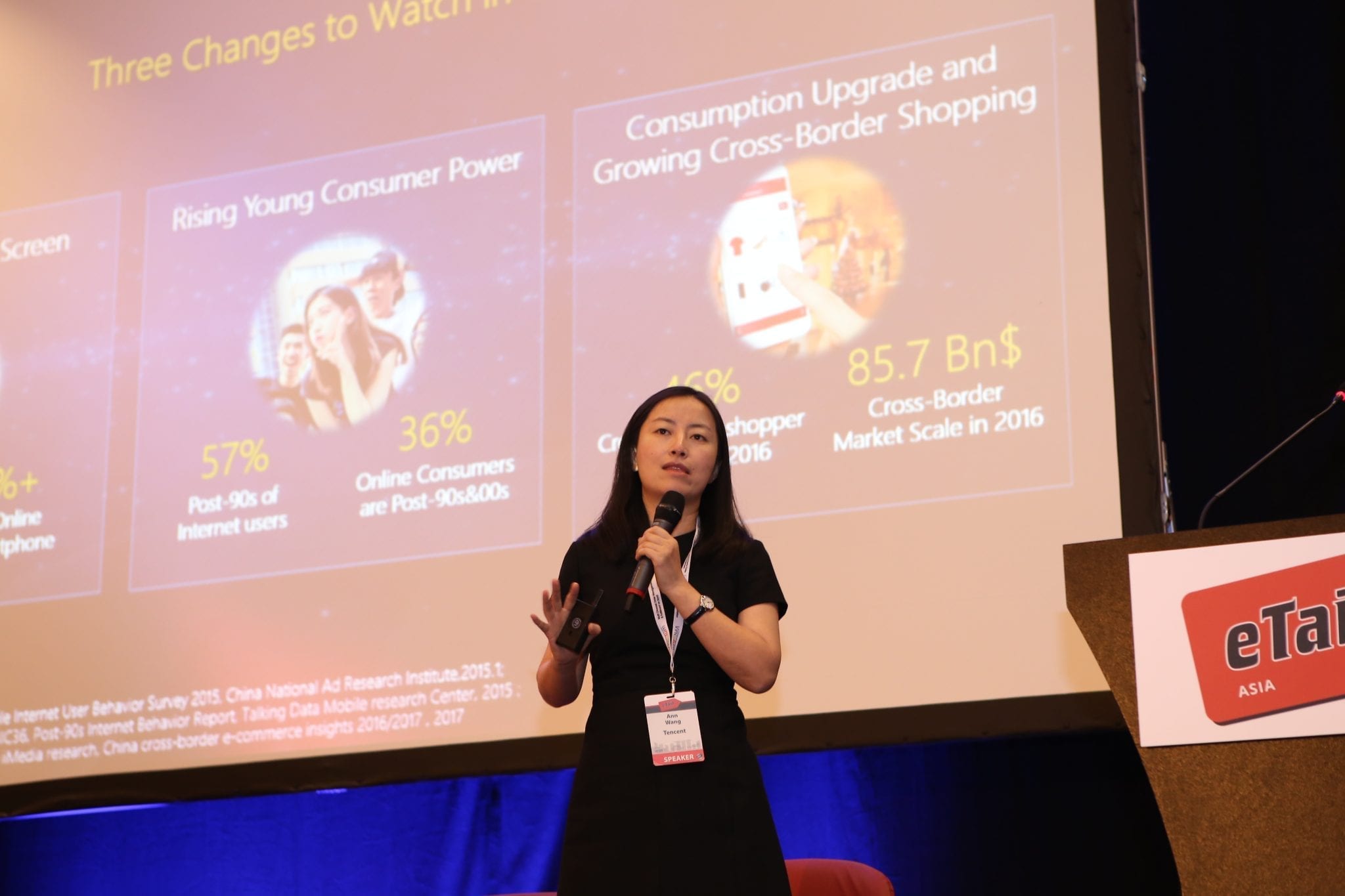
Speaking today at eTail Asia 2017, a leading platform to help online retailers in Asia build a successful ecommerce business, Ann Wang, General Manager of Performance Advertising Solution, Online Media Group, Tencent, shared insights into China’s unique Internet market environment and consumer behaviors. Wang revealed the Tencent platform’s strength and offered three pieces of advice to help ecommerce companies win in China as the country shifts toward a consumption upgrade.
In China, 90% of Internet users access the Internet via smartphone, and more than 75% shop online via smartphone. The ongoing consumption upgrade is further stimulating the development of China’s ecommerce market, particularly overseas online shopping. According to statistics, the total volume of cross-border online shopping in China reached US$85.7 billion in 2016, while the number of cross-border online shoppers grew 46% in the same year. The growth of ecommerce in the post-1990s and early 2000s is the main force behind the huge rise in overseas online shopping.
According to Mary Meeker’s Internet Trends 2016, Chinese mobile users spend more than 55% of their online time on Tencent platforms, including QQ, Qzone, WeChat, v.qq.com and Tencent News. With its focus on social interactions and content, Tencent has built a self-sustained ecosystem, powerful data capabilities and holistic scenarios for quality communications among its users.
According to Wang, Tencent provides more open, connected data, which links ad exposure to brand attitudes, consumer behavior and sales. Tencent’s algorithms also help marketers engage consumers across scenarios, and elevate pertinence by dynamic and contextual messages, allowing them to reach the broadest coverage of Chinese netizens.
In her speech, Wang offered three valuable tips for marketers, which she believes can help global brands build a successful business in the increasingly dynamic China market:
Build a mobile-first ecosystem: Use all the tools available, including online ecommerce platform solutions, payment services and customer management to set up a mobile-oriented business ecosystem.
Go with an integrated marketing approach. Wang suggests marketers partner with a fully integrated platform to get the best of both brand advertising and performance advertising. One good example is Tencent’s co-creation of blockbuster IP with a popular cosmetics brand. The brand’s target audience loves to watch super-realism dramas and movies, worships movie stars, and are willing to consume and spend. Partnering with Penguin Pictures’ self-produced series “Revive,” the cosmetics brand made the leading actress its endorser and incorporated the brand appeal where appropriate. At the same time, it encouraged fans to try out its product used by celebs in the series. What’s more, it hosted offline celebrity meet-up sessions, thus winning the hearts of many fans. After only seven episodes, its Tmall store’s daily sales volume increased 400%.
Use the power of online marketing to boost traffic in offline stores. When a luxury automotive brand opened new stores in Hangzhou, it launched geo-targeted ads through WeChat Moment. Both the number of customer information acquisitions and store visits increased significantly as a result of the campaign.
eTail Asia is the region’s premier event for senior eCommerce and Multichannel Directors of leading retailers. Each year, Asia’s biggest names attend to network and get a 360° perspective on the most pressing challenges and opportunities in digital retail. Also speaking at the event this year were representatives from Google, L’Oreal, Adidas, and Philips, to name just a few.
Thailand’s transport authorities are going after drivers who work for ride-hailing services like Uber and GrabCar, even saying they will ask the military government to ban them if needed.
When U.S.-based Uber launched in Thailand in 2014, the Department of Land Transport said the company’s drivers were not properly registered or insured, and its payment system did not meet regulations. However, authorities did little to stop the service since it was so popular with tourists and locals.
But the government is clamping down on the service now, with 23 Uber drivers fined in Bangkok this week alone. Grab drivers have also been fined, though not as many, with drivers caught working for one of apps now having their licenses suspended for up to six months and fined 2,000 baht ($57).
Authorities are targeting Uber and GrabCar specifically because they are the only two services in Thailand where private car owners can use their own cars to pick up passengers. Uber has a site set up so drivers can sign up and start earning money through the app.
The Department of Land Transport’s Deputy Director-General Nanthapong Cherdchu said the agency would ask the military government to use an emergency measure to shut down the apps if drivers don’t comply. Many taxi drivers in the country — angry over losing business to the two apps — have even launched their own investigations in an effort to turn Uber and Grab drivers over to the authorities. Uber, however, is hoping they can work with the government and convince them that these ride-hailing services are beneficial to the country.
“Uber remains committed to creating reliable transportation for everyone,” Uber spokeswoman Amy Kunrojpanya said.
Southeast Asia-focused eCommerce startup Lazada, which Alibaba purchased a controlling stake in last year, may soon face some stiff competition from eCommerce giant Amazon.
For now, eMarketer pointed out, Lazada Group dominates the eCommerce activity and web traffic in the markets it serves, which includes mainly in Indonesia, Malaysia, the Philippines, Singapore, Thailand and Vietnam.
Last December, Lazada’S online properties attracted the largest number of page views among B2C retail sites in Thailand, Indonesia, Singapore, Malaysia and Vietnam, data from SimilarWeb confirmed.
However, eCommerce estimates point to an expected growth by double digits for online B2C spending in Southeast Asia through 2020, which is sure to attract more competitors for Lazada.
Amazon is reportedly considering a launch in Southwest Asia sometime this year, eMarketer stated, starting with Singapore.
Chinese companies are also setting their sights on Southeast Asia as a new market for growth, especially considering the region is home to nearly 620 million people.
According to a report last year, companies like Alibaba, Tencent, Didi Chuxing and JD.com, are expanding in Southeast Asia, moving beyond the slowing economy in China.
WSJ noted Alibaba and Tencent have led deals with a value of $1 billion combined to expand their businesses in Southeast Asia, which is the third-largest region for technology mergers and acquisitions by Chinese technology companies in 2016. The deal values combined were $1.9 billion compared to $193 million in the year earlier, WSJ reported, citing data from Dealogic. What’s more, industry watchers said in the report they think that investments on the part of Chinese tech companies will accelerate next year.
“What we have learned in China, we can apply the fastest in Southeast Asia,” Poshu Yeung, Tencent’s vice president of its international business, said in the report. “Everything in Southeast Asia, particularly in Indonesia, you will experience a pretty good growth rate.”
EMarketer is projecting that the number of smartphone users will surpass 257 million by 2020, presenting a big opportunity for companies. What’s more, the incomes in the region are growing at the same time smartphone ownership is, noted the report.
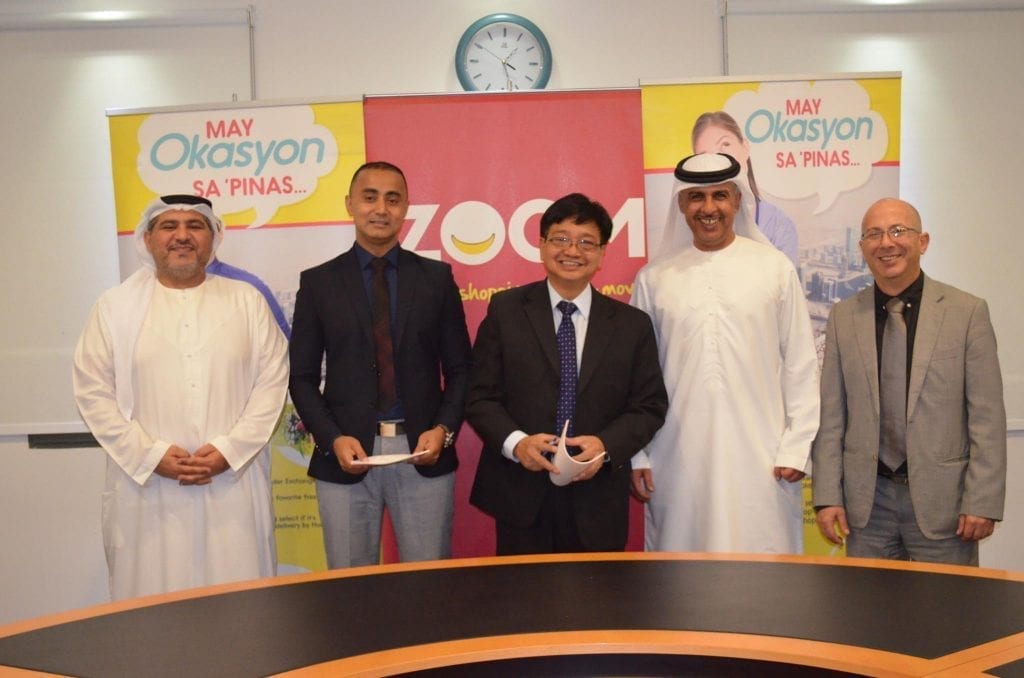
Filipino expatriates in the UAE can now order some of their favourite local brands while abroad and send them as gifts to their loved ones back home.
A new pay-here-deliver-at-home service called 247 RegaloPlus has just been launched to cater to the growing Filipino community in the UAE.
Backed by Enoc, Al Bader Exchange and Mohur Inc., the service enables overseas Filipino workers (OFWs) in the country to send toys, fresh flowers, appliances, furniture, medicines and grocery goods, including Jollibee and Goldilocks products to the Philippines.
All they need to do is visit any of the dozens of Zoom stores – which are owned and operated by Enoc – around the country and place an order. The chosen goods/items will then be delivered to the Philippines.
“We call [it] the gift of love,” said Ramuel Garcia, Mohur’s Middle East agent. “Perhaps 247 RegaloPlus is the world’s first of its kind and we are happy that the management of Enoc/Zoom had chosen [it] as its platform for Filipinos working in the UAE.”
According to Garcia, 247 RegaloPlus was conceptualized by Mohur CEO Eduardo Burgos Jr. and Mohur Vice President for Research and Systems Development Nigel Canonizado after visiting UAE last year.
Mohur has consolidated popular Philippine products of Jollibee, Goldilocks, Holland Tulips, Red Ribbon and Savers Appliances among others into 247 RegaloPlus as their platform ‘to bridge the distance’ between OFWs in Middle East and their family members or friends in the Philippines, Garcia said.
Mohur is currently in talks with other popular brands in the Philippines, including Mercury Drugstore, Toys R Us, Robinsons Supermarket, Puregold, Waltermart, Max’s, McDonald’s, Chowking, Greenwich, Shakey’s and Pizza Hut among others to be part of the 247 RegaloPlus’ centralised ordering and payment platform.
Powered by Mohur, 247 RegaloPlus will be in more than 200 Zoom stores and 17 branches of Al Bader Exchange across the UAE, which is home to almost 1 million Filipino migrant workers.
It has been more than decade since Amazon entered China but, despite being in the country for such a long time, Amazon has struggled to make its mark in one of the largest online retail markets in the world. According to e-marketer, China is expected to overtake United States as the world’s largest retail market, and the gap is expected to grow even wider in the next few years.
But Amazon has not even made a dent in the Chinese market, which is completely dominated by the homegrown Amazon clone, Alibaba.
To be fair to the Chinese e-commerce giant, Alibaba services the same online retail market, but follows a completely different model for its e-tail operations. Alibaba is more of a technology platform that facilitates transactions between buyers and sellers, and assumes the role of a supervisor when it comes logistics.
Amazon is more of a hands-on retail player with strong buying and selling activities of its own. The result: Alibaba’s operating margin keeps crossing 30% every now and then, while Amazon hardly ever gets close to 5%.
As you can see from the chart above, despite having the best e-commerce technology in the world, Amazon only has a 0.8% share of the Chinese market to show for it. Tmall, Alibaba’s B2C portal, controls more than half the market. Along with its competitor, JD.com, they control nearly 80% of the market, leaving very little for any other player.
One big advantage of e-tail is that once you get the lead, it’s very hard to topple you from that place. And it becomes even harder if you are the kind of company that keeps pushing the boundaries. Alibaba may have copied a lot of Amazon’s moves, but it changed the model to fit its needs, and its platform has evolved nicely over the years.
In the United States, despite big box retailers pouring billions of dollars every year into e-commerce initiatives, nobody is able to come close to Amazon. And one of the reasons for that is the huge lead that the e-commerce giant has over every other retailer. Since Amazon has the bulk of online shoppers, it’s natural that sellers gravitate to them, making Amazon even stronger in the process.
The more the GMV (Gross Merchandise Volume) moves, the higher Amazon’s margins go. Amazon then reinvests even more into its business, transferring some of the benefits to its customers, who are more than happy to keep ordering. It’s a self-feeding cycle that keeps Amazon at the top of the e-tail industry in United States.
Now, replace Amazon with Alibaba and the United States with China in this scenario, and add an extremely favorable government to the mix, and it’s easy to see why Alibaba sits at the top of the e-commerce pile in the People’s Republic – and why Amazon has to be satisfied with a sliver of market share.
In the world of online retail, those who play catch-up will always play catch-up, or so it would seem.
Minister of Communications and Informatics Rudiantara says financial technology, or fintech will be used as an effort to expand access of financial services to public, or financial inclusion. This relates to the use of mobile technology amid Indonesia society.
Rudiantara revealed in Indonesia there are 170 million people own mobile phones and 130 million people access the internet. Of the figure, as many as 100 million people access the internet via mobile phones. However, a number of people in Indonesia who have a bank account, based on data from Bank Indonesia, only reach 90 million.
“This means there are 80 million people have cell phones but are not given access of application related to finance and banking. Incredible,” said Rudiantara as quoted from the official page of Communications Ministry, Saturday (3/4/2017).
Based on the fact, Rudiantara said, the banking sector in Indonesia now needs to formulate new technology-based business model.
He said this in ‘Cooperation of National Movement of 1000 Digital Startups’ event initiated by PT Bank Bukopin Tbk (BBKP) at the Ministry of Communications, Jakarta, last week.
“For Indonesian banking it is only a matter of time to think of new business model, especially for consumer banking. Bank management must think to integrate itself to the new banking technology wave, that is, financial technology (fintech),” he explained.
The application of technology in the banking aspects is very diverse. Therefore, the Minister of Communication and Informatics expects the banking world to understand the characteristics of consumer.
“Fintech is diverse, but that much developing is virtual lending which relates to consumer banking. Why, people prefer to use fintech to borrow money rather than go to the bank? The reason is that in terms of time, because the process is fast,” Rudiantara explained.
He said that currently there are more or less 140 facilities of fintech services that have been registered. Indeed, the cost or interest is higher than that of traditional banking. But it is much better than moneylenders.
“This indicates that SMEs that borrow can count, although getting larger interests but there is assurance to be able to get a loan more quickly to develop business,” he explained.
He also expressed his appreciation for bank role, especially Bank Bukopin Tbk, which helped develop the startups and joint fintech.
“Because there remain few banks that want to get involved. This is a national program, not a program of Communications and Informatics Ministry. In 2020 we expect to reach 1000 qualified startups that go through a phase that has been determined,” he concluded.
Uber may have a reputation for steamrolling its competitors, but it can be conciliatory at times. In 2015, a year before its retreat from China via the sale of its Chinese business to rival Didi, the U.S. company agreed to a non-compete deal with Go-Jek, a fast-growing on-demand service from Indonesia that’s valued at over $1 billion, TechCrunch has learned.
In a bid to strengthen their collective battle against Grab, the Singapore-based firm represent in six countries, the two companies floated a collaboration that would ensure they didn’t compete directly in Indonesia, the largest economy in Southeast Asia, according to a person who was involved in discussions. In practical terms, it meant Uber would stick to offering private cars in the country, while Go-Jek would focus only on two-wheeled motorbikes on-demand.
The agreement fell apart when Uber CEO Travis Kalanick was made aware of the arrangement. Our source said the Uber chief didn’t want to miss out on potential marketshare and thus scrapped the deal. It wasn’t long before they did invade each other’s spaces: Uber introduced ‘Motor,’ its bike taxi service, in Indonesia in April 2016, while Go-Jek announced its GoCar service the following month.
Uber declined to comment. Go-Jek did not respond to multiple requests for comment.
Indonesia, and its capital city Jakarta, has become a hot battleground for Uber, Grab and Go-Jek. The country is the largest in Southeast Asia with a population of 250 million people, and it is currently estimated to account for one-third of the region’s ride-sharing market based on revenue, according to figures from a report co-authored by Google. The same study predicts that ride sharing across Southeast Asia will grow by more than five-fold to reach $13.1 billion by 2015, with Indonesia alone worth $5.6 billion.
Agreeing to an alliance might have made sense for a young Go-Jek, but times have changed. The company, which specializes in motorbike taxis on-demand, had a breakout 2016 in which it attracted investment dollars from major firms Warburg Pincus, DST and Sequoia Capital, all of which took part in its recent $500 million financing round. Now valued at $1.3 billion, the company’s stock has continued to soar as it fends off the challenge from Grab and Uber, two vastly larger companies that have raised billions of dollars more. Today, Go-Jek is arguably Indonesia top ride-sharing firm, and it is reported to be in talks with Chinese tech giant Tencent over a new investment that could bring in as much as $1 billion at a pre-money valuation of $2 billion.
Beyond imitating its business by expanding into motorbikes, Uber and Grab have also taken a leaf out of its monetization playbook. Grab has copied Go-Jek’s by introducing non-transportation services via motorbike and developing its own mobile payments service, which is designed to seed its platform beyond the initial early adopters that have registered and used it thus far.