Category: E-Tailing

Retail News Asia is committed to providing both local and global retailers with the latest E-Commerce & Etail news throughout the Asian market. This on a daily base.

  • Alibaba innovation will transform Shanghai Bailian

    Alibaba innovation will transform Shanghai Bailian

    Alibaba Group’s collaboration with Shanghai Bailian Group, one of China’s biggest general store and retail chains, is driven by Jack Ma’s push to use innovation to shake up outdated retail.

    “Alibaba wants to help update some of Bailian’s 4700 stores the nation over, coordinating everything from client relations to installment and coordinations in a way like its tie-ups with different players, for example, gadgets chain Suning Commerce Group,” says Oliver Johnson, director of corporate equities with Woori Bridgewater Brokerage.

    The online big-hitter that vanquished eBay and Amazon in China has set its sights on using its arsenal of information and innovation to change the $4 trillion universe of household physical retail. In its greatest old-economy bargain, Alibaba is driving an offer to purchase retail chain Intime Retail Group for as much as $2.6 billion.

    “Their billionaire fellow founder needs to assemble a system that will permit stores and brands to screen exchanges as they happen, freeing layers of merchants so that retail outlets can put orders online progressively,” says Johnson.

    Daniel Zhang, Alibaba’s CEO, described the association with Bailian as “a critical breakthrough in the advancement of Chinese retail”, where the qualification amongst physical and virtual business is getting to be distinctly out of date.

    Amazon.com is likewise quick to show how innovation can change the deeply rooted shopping background. It launched Amazon Go in December, permitting Seattle customers to get staple goods without being held up in checkout lines as their purchases are electronically charged when they exit the store.

    “Like Alibaba, the U.S. web based business titan has broad experience working with reams of important client and inventory network information and shopping designs,” observes Johnson.

    “With Bailian, Alibaba will tap a system of 4700 stores crosswise over 25 Chinese regions. Aside from Intime, the Hangzhou, China-based organisation has as of now put resources into retail administrators including Suning and Sanjiang Shopping Club to further its alleged new retail analysis,” added David Fraser, head of corporate trading at Woori Bridgewater Brokerage.

    Alibaba won’t take a stake in Bailian.  In any case, the match will coordinate their participation databases and use facial acknowledgment innovation to enhance customers’ encounters, Alibaba said. Alibaba’s online installments framework, Alipay, will be accessible at all Bailian stores. The web-based business mammoth’s conveyance member – Cainiao Smart Logistics Network – will work with Bailian to substance out conventions that make the framework more effective.

    Woori Bridgewater Brokerage is an advisory investment company.

  • Ayala buys stake in Zalora Philippines

    Ayala buys stake in Zalora Philippines

    Ayala Corporation has stepped into eCommerce by acquiring a 49 per cent stake in BF Jade E-Service Philippines, which owns and runs fashion platform Zalora Philippines.

    The conglomerate has announced it is buying 43.3 per cent of BF Jade, while in a separate disclosure Ayala Land says it will own 1.91 per cent. BPI Capital Corporation and Kickstart Ventures also acquired minority stakes in BF-Jade. BPI and Kickstart are wholly owned subsidiaries of BPI and Globe Telecom respectively.

    Ayala’s involvement is part of its strategy to invest in new disruptive businesses offering innovation to evolving markets, the conglomerate says.

    “This investment demonstrates how we at Ayala look at innovation and growth opportunities,” says chairman/CEO Jaime Augusto Zobel de Ayala.

    “We see the potential of eCommerce in the country, and believe the Ayala group can benefit and add tremendous value to Zalora. With resources in banking, real estate and telecommunications, the investment presents new opportunities for Ayala to generate synergies throughout the eCommerce value chain.”

    Zalora Philippines was co-founded in 2012 as part of the global network of the Zalora Group, which is 100 per cent owned by the Global Fashion Group.

  • Singapore online grocery market to triple by 2020

    Singapore online grocery market to triple by 2020

    The Singapore online grocery market is set to more than triple in size over the next three years, according to research house IGD.

    The global organisation expects sales will rise from the current S$130 million (US$91 million) to S$500 million (US$350 million) by 2020.

    At the end of 2016, IGD valued online grocery to have a 1.2 per cent share of the Singaporean grocery market. Reflecting rapidly changing shopper habits in the region and increased investment in the online channel from retailers and suppliers, IGD is further forecasting online to take a 4 per cent share of Singapore’s grocery market by 2020, with a compound annual growth rate of 39 per cent.

    Revealing the figures at this week’s IGD RedMart Trade Briefing, Nick Miles, IGD’s head of Asia-Pacific, said Singapore is hailing a new era of digital grocery retailing, driven by the entry of RedMart in 2011, Giant and Sheng Siong launching online grocery in 2013 and plenty of smaller start-up businesses also looking to grab a slice of the action.

    “Shopper habits are changing rapidly in Southeast Asia and in a compact city such as Singapore, with its relatively affluent population, big expat community and high penetration of internet and smartphone usage, there are huge opportunities for online grocery to meet these evolving needs. To make the most of this opportunity, retailers and suppliers must work together to ensure they really understand online shoppers and can tailor experiences and products to suit their personal preferences.”

    Miles says retailers are already clearly looking to improve the overall online experience, by getting the basics of search functions, favourites, images and information right for shoppers.

    “At the same time, they’ll be aiming to make delivery options as convenient as possible, whether that’s through shorter timespan delivery slots or greater choice of click and collect points throughout the region. Our UK data shows that 80 per cent of shoppers cite convenience as their number-one reason for shopping online, and we would anticipate Singaporean shoppers to have a very similar mindset when heading online for their groceries.

    “We also expect online grocery retailers in the region to encourage shopper loyalty through personalised offers and products, plus subscription models and delivery saver passes,” said Miles.

    “On top of that, shoppers in the region are increasingly connected via mobile, so ensuring a seamless shopping experience no matter what device they are using will be critical. Coupled with an increased focus on using innovations such as voice-activated technology, virtual reality and robotics, we predict huge opportunities for those retailers and suppliers who really invest in making the online grocery channel work for them in Singapore.”

  • Online fashion brand Zalora to exit Philippines; Indonesia next

    Online fashion brand Zalora to exit Philippines; Indonesia next

    Southeast Asian fashion ecommerce company, Zalora, has been in the process of shutting shop in a few Asian countries. The company had retreated from Thailand and Vietnam last year, and is pulling out from Philippines and Indonesia.

    Launched in 2012, the Rocket Internet backed online shopping company was functioning in Malaysia, Singapore, Brunei, Hong Kong, Taiwan, Philippines, Vietnam, Thailand, Indonesia, Australia, and New Zealand, managed by Global Fashion Group, which was developed by Rocket Internet to handle all its online fashion businesses across the world.

    In Philippines, 49% of Zalora’s parent company, BF Jade E-Services was bought by one of the oldest real-estate companies, Ayala Group, and the remaining stays with Rocket Internet. BF Jade E-Services owned and operated Zalora in Philippines and the deal is currently subjected to approval from the Philippine Competition Commission.

    e27 also states that the fashion ecommerce company is in talks with retail giant MAP Group for a similar acquisition or investment in Indonesia. MAP group operates more than 1,900 retail outlets in Indonesia and has been experimenting with e-commerce as it launched its MAP e-Mall last year. A merger or acquisition with Zalora could mean that it gets access to the online fashion giant’s ecommerce expertise, as per media speculations.

    Romain Voog, CEO, Global Fashion Group said in a statement, “We are proud of how Zalora Philippines contributed to the development of e-commerce and fashion in the Philippines. This partnership with Ayala will allow us to further strengthen the leadership position of Zalora Philippines, as we invest more into delivering the best online fashion shopping experience for Filipino consumers.”

    In April last year Zalora sold its Thailand and Vietnam businesses to fashion retailer Central Group which also had been wanting to foray into the online ecommerce business. As reported by Forbes, the move was made to streamline its services in light of slowing output and the high cost of customer acquisition in Southeast Asia.

    Jaime Augusto Zobel de Ayala, Chairman and CEO, Ayala Corporation also added, “We see the potential of e-commerce in the country and believe that the Ayala group can benefit and add tremendous value to Zalora. With resources in banking, real estate and telecommunications, the investment presents new opportunities for Ayala to generate synergies throughout the e-commerce value chain.”

  • Ho Chi Minh City seeks to tax sales on Facebook

    Ho Chi Minh City seeks to tax sales on Facebook

    The Ho Chi Minh City government should work with Facebook on how to collect tax from businesses running on the social media site, officials said.

    The city currently hosts a dynamic e-commerce scene with more than 80,000 websites, half of which have stable business, but tax collection from the segment is low, said Pham Thanh Kien, head of the city’s trade department.

    “In particular tax collection has not been done from sales via Facebook,” Kien said at a meeting with the city’s tax authority. “(We) propose the People’s Committee work with Facebook on a mechanism to control tax collection.”

    Ho Chi Minh City, where the most active e-commerce in Vietnam takes place, should find out measures to prevent losses in tax revenues, Deputy Finance Minister Vu Thi Mai told tax officials at the meeting on Sunday.

    Just a quarter of Vietnam’s non-state businesses have declared value-added tax, Mai was quoted by the Tuoi Tre (Youth) newspaper as saying at the meeting.

    A majority of online businesses using social networking sites such as Facebook do not issue invoices, which has prevented the authority from collecting tax.

    Vietnam’s e-commerce market, which has one of the world’s fastest growth rates, jumped 37 percent in 2015 to around $4 billion, based on government statistics.

    The growth rate is about 2.5 times faster than that in Japan, according to Tran Duc Tam, an industry expert.

    The government has projected revenue by Vietnam’s online retail to hit $10 billion by 2020, accounting for 5 percent of the country’s retail market. Last year retail sales rose 10.2 percent from 2015 to $118 billion, based on government data.

    The online tax tightening plan has received mixed responses.

    “Facebook is just a channel to advertise products and communicate with customers. With no electronic invoicing, how to tax them?” a reader’s comment.

    Others raised concerns that many online retailers use anonymous accounts for transactions, while some others could be one-time or small-time sellers with insignificant revenues, making it hard for tax authorities to regulate activities.

    Online marketplaces such as Facebook have made it easy for small businesses and start-ups to set up business due mainly to the convenience they provide and the opportunity to connect with customers, Tuan Anh Pham wrote in another comment. He suggested market regulators take a cautious approach when it comes to requiring online retailers to pay taxes.

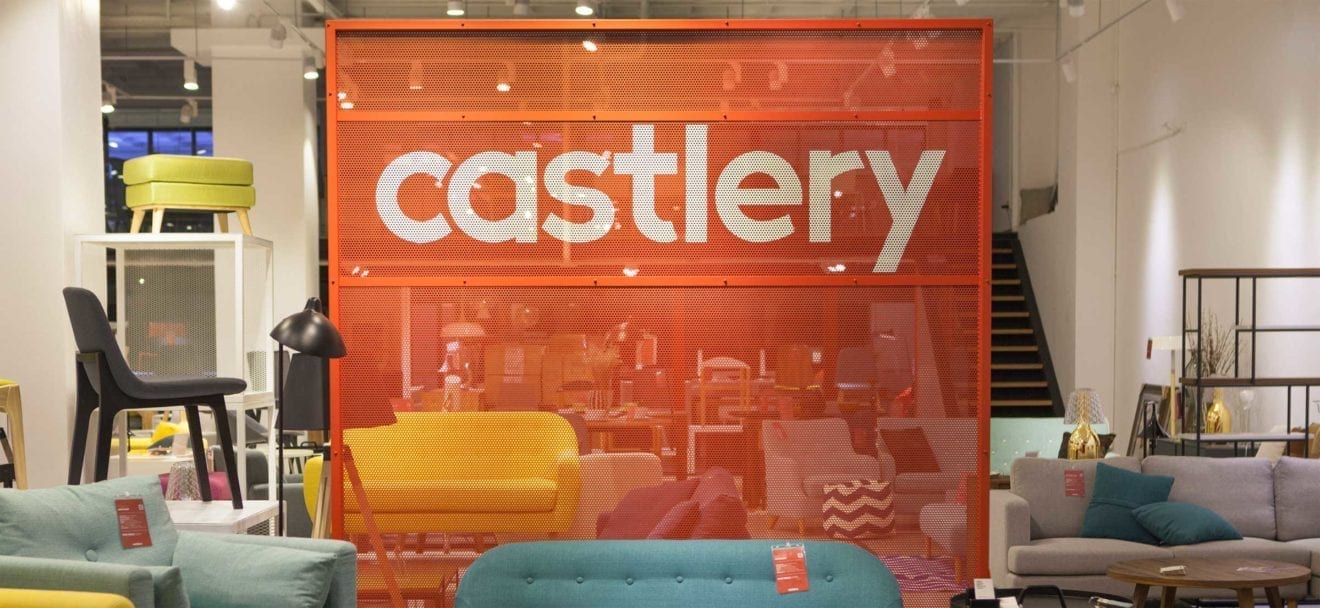
  • Online Furniture Retailer Castlery Builds Scalable E-commerce Fulfilment Platform

    Online Furniture Retailer Castlery Builds Scalable E-commerce Fulfilment Platform

    Manhattan Associates today announced that Castlery, the Singapore-based online furniture retailer, has selected Manhattan SCALE as a key component of a business transformation programme to build a world-class order fulfilment capability that will ensure a seamless service experience for customers and drive ongoing business growth.

    Launched in 2013 with a mission to make designer furniture accessible to everyone, Castlery has quickly established itself as a leading furniture and homewares designer in Southeast Asia. In order to meet its target of over 100 percent year-on-year growth, Castlery recognised it needed to invest in an order fulfilment technology that would scale in line with its business growth, ensure service level improvements for customers and drive future sales and margin expansion.

    Castlery selected Manhattan SCALE for its ability to handle the unique logistical challenges associated with furniture retailing and distribution and its proven track record supporting ecommerce and omni-channel operations around the world. With a pressing need to be set up before the peak sales season, Castlery needed the Manhattan fulfilment platform to be live and ready for one of its busiest times of the year. Working closely with the Manhattan team, Castlery successfully completed the solution deployment at its Mapletree Logistics Hub in Toh Guan, Singapore, in under three months, remarkably fast for a first implementation.

    Zhou Zhiwei, Chief Technology Officer at Castlery, commented: “As the leader in the Gartner Magic Quadrant for Warehouse Management Systems (WMS) and with many companies we admire already using SCALE, Manhattan ticked many boxes. Their experience with solving problems like ours, high calibre teams, and flexible solutions made picking Manhattan as our partner an easy decision.”

    Travers Tan, Chief Operating Officer at Castlery, added: “Since the solution has been deployed, process execution has improved across our entire distribution operation. We’ve hit 99.99 percent inventory accuracy and seen a 23 percent month-on-month increase in order transactions. We now have a complete view of inventory across the distribution network whilst our order-to-delivery cycle times are compressed significantly. Also, the solution is fully integrated with our ERP system, giving us a “live” picture of available inventory for sale and enabling accurate lead-times to be reflected on our website. Because the system can support multiple DCs, it is perfectly suited to our future plans for expansion into overseas markets. The Manhattan solution’s capabilities support our vision to become the leading furniture e-retailer globally.”

    Richard Wright, Managing Director, Southeast Asia, at Manhattan Associates, commented, “Manhattan provides the expertise and technology to help clients deliver on their brand promise. We’re delighted to see Manhattan SCALE already driving order volume growth for Castlery and are confident that Castlery will continue reaping the rewards from our constantly evolving solutions for many years to come.”


  • Online retail uploads into rapidly expanding Vietnamese market

    Online retail uploads into rapidly expanding Vietnamese market

    E-commerce is forecast to hit $10 billion by 2020, accounting for 5 percent of the country’s retail market. Vietnam’s e-commerce market climbed to about $4 billion in 2016 as one of the fastest-growing markets worldwide.

    Revenue from online retail in Vietnam is forecast to hit $10 billion by 2020, accounting for 5 percent of the country’s retail market.

    “The growth rate of Vietnam’s e-commerce market is estimated at about 35 percent, which is 2.5 times higher than Japan,” said industry expert Duc Tam at the recently-held Vietnam Online Business Forum 2017.

    Online sales in Vietnam have expanded rapidly in recent years, currently accounting for 3.39 percent of the country’s retail market. The total retail market grew 10.2 percent last year to $118 billion, mainly fuelled by a growing middle-class with expanding disposable incomes and an increasing number of internet users.

    The World Bank forecasts that Vietnam’s $200 billion economy is likely to grow to a trillion dollars by 2035. More than half of its population, compared with only 11 percent today, is expected to join the ranks of the global middle class with consumption of $15 a day or more.

    According to one estimate, about 30 percent of the population will be buying goods and services over the internet in 2020, with each shopper spending an average of $350 per year.

    Just three years ago Vietnam was ranked the smallest e-commerce market in Southeast Asia in terms of sales. Now its online retail is gaining momentum with more than half of the country’s 92 million people increasingly turning to online shopping.

    According to Internet World Stats, Vietnam is currently ranked 18th in the world in terms of the number of internet users, with mobile subscription rates as high as 4 out of 10 people.

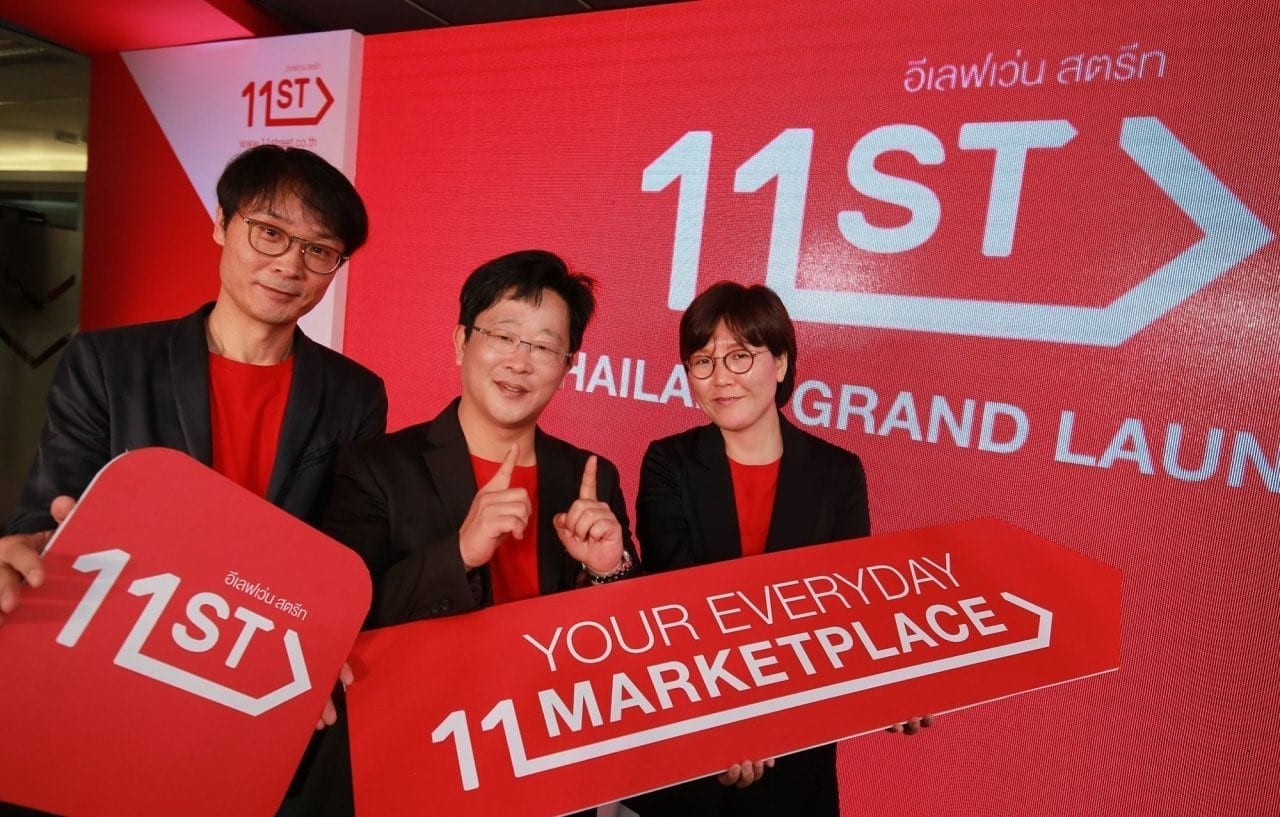
  • 11street Thailand launched by SK Planet

    11street Thailand launched by SK Planet

    Korean-headquartered online marketplace 11street has launched in Thailand.

    Parent company SK Planet says 11street Thailand is the first Korean-owned eCommerce marketplace to open in the Southeast Asian nation.

    An opening ceremony was held at Bangkok’s CentralWorld shopping centre this week, and prominent advertising livery has appeared on BTS stations to promote the brand.

    Korean actor Song Joong-ki and Thai actress Mew Nittha, who feature in marketing for the business, attended the launch event.

    Thailand is the fourth overseas market for SK Planet, a division of SK Telecom. It follows Turkey, Indonesia and Malaysia.

    11Street Thailand will offer “millions of trendy high-quality products at competitive prices,” the company said.

    “11Street will be a leading eCommerce firm that promotes the Korean wave in retail industry,” 11Street Thailand CEO Jeon Hong-cheol said. “We expect our entrance to Thailand will stimulate Korean manufacturers and ICT firms to make their presence felt in Southeast Asian markets.”

  • PGEON delivers eCommerce orders to convenience stores

    PGEON delivers eCommerce orders to convenience stores

    Malaysian eCommerce customers have a new last-mile delivery service, PGEON, which lets them pick up their parcels at any MyNews.com convenience store.

    PGEON is a partnership between eCommerce delivery service EasyParcel and MyNews.com owner Bison Consolidated, which started out as a print media retailer. There are 320 MyNews.com outlets throughout Malaysia.

    Pgeon delivery. 1

    EasyParcel co-founder/CEO Clarence Leong says the need to deliver items quickly – ”on time” or “same-day delivery” – was the main reason for EasyParcel to initiate the partnership with MyNews.com.

    “We want to enable the mailing of their parcels with minimum stress or worries, allowing more flexibility for consumers to manage their deliveries,” says Leong. “More often than not, consumers are not home to receive deliveries.”

    PGEON is also a win-win for both courier companies and postal service users. Couriers do not need to go to individual doors to collect or deliver parcels, instead visiting only the designated MyNews.com outlet. This also ensures customer privacy.

    Pgeon delivery

    EasyParcel was launched by Exabytes in 2014 as Malaysia’s first integrated logistics service platform connecting logistics and shipping suppliers such as Airpax, DHL, Nationwide, Poslaju and Skynet to businesses and consumers.

    “Logistics plays a huge part in eCommerce,” says Leong. “It can be the defining factor for success for eCommerce companies.”

    Bison executive director/CEO Dang Tai Luk says the company is looking at opening 70 outlets in Malaysia by the end of this financial year. “A parcels pick-up and drop-off service will be a great addition to our outlets, as the eCommerce industry is growing in Malaysia.”

  • Funding Societies launches mobile lending app

    Funding Societies launches mobile lending app

    Funding Societies has launched FS Bolt – a mobile application designed to provide flexible working capital loans for Singapore SMEs.

    Complementing the government’s financing programs for SMEs, FS Bolt offers loans with quantum up to S$20,000 ($14,000) for companies incorporated in Singapore.

    Available on both iOS and Android devices, the application process takes two minutes to complete, claims the company.

    An automated credit assessment process enables decision time of two hours and disbursement within 24 hours – making FS Bolt a quick source of working capital loans in Singapore.

    FS Bolt also provides loan tenor flexibility – It charges no fees for early repayment, atypical of financial products in the market. With this feature, borrowers only pay interest while using the funds and are encouraged to repay their loan as soon as their finances permit.

    Addressing the underbanked SME concerns

    SMEs face many hurdles when seeking financing as they often lack credit history, collateral, and sophisticated financial documents required by most loan products. FS Bolt alleviates such issues by offering a credit product specifically targeted to answer SME needs. FS Bolt also incorporates automation and highly intelligent systems to include non-traditional datasets into the firm’s credit assessment processes.

    “Funding Societies’ vision is to help small businesses. Over the last year and a half, borrowers have indicated that they often need funds to tide over short periods of finance-related issues,” said Funding Societies co-founder Kelvin Teo. “The FS Bolt app was created to address these concerns. SME owners get peace of mind from the quick credit decision and they can opt to repay early without charges if they don’t need it anymore.”

    Funding Societies currently also provides bigger, longer-term SME loans and invoice financing services with quantum up to S$1 million. As the firm’s most recent innovation, FS Bolt expands the firm’s offerings and shows Funding Societies’ continued commitment to serve the Singapore SME sector by improving credit availability.

    At the Singapore Budget 2016, the government introduced “SME Working Capital Loans” to support SMEs with financing. The “SME Working Capital Loans” is a loan scheme provided under SPRING, an agency under the Singapore Ministry of Trade and Industry.

  • Competition squeezes out Ookbee Mall

    Competition squeezes out Ookbee Mall

    Ookbee Mall Thailand will close its eCommerce business Ookbeemall.com next month, citing heavy competition.

    Launched in November 2015 with an initial investment of 150 million baht (US$4.2 million), Ookbee Mall is a JV between Japanese eCommerce investor Transcosmos and Thai e-book store Ookbee.

    Founder Natavudh Pungcharoenpong says the mall was launched as an experiment to see if the low customer-acquisition cost of digital business could convert to physical business. “It turns out it cannot.”

    He says eCommerce needs to be on a large scale, and global players use subsidised promotion strategies to acquire customers, which Ookbee cannot afford to do. “Our capital can be better used in other areas, mostly digital products.”

    Pungcharoenpong says the closing of the eCommerce business will not hurt Ookbee’s digital business (e-book store). “Many people in Bangkok panicked and called us to cancel their digital subscription, as they confuse eCommerce with our core business. Our core business is e-books, and will remain intact.”

    Ookbee Mall was established as a one-stop portal for books and magazines, beauty and cosmetics, and products sourced directly from Japan. Last month, Ookbee partnered with Chinese internet giant Tencent to build a user-generated digital content company, Ookbee U.

  • The Trade Desk launches in Indonesia to capitalise on digital ad potential

    The Trade Desk launches in Indonesia to capitalise on digital ad potential

    The Trade Desk has launched into Indonesia, a market it believes has huge potential for growth in programmatic ad trading. The company has launched alongside partnerships secured with Unruly, Grapeshot, Spotify, Tapad and Mobilewalla.

    Matt Harty, SVP of Asia and Australia at The Trade Desk, told The Drum that with Zenith numbers claiming that Indonesia will be in the top 10 ad markets in the world within the next three years, it was important to establish local operations.

    “It’s compelling stuff, there’s a huge growth in middle class and it’s a boat I can’t see us wanting to miss. Boston Consulting figures suggest there will be 141 million Indonesian middle class by 2020, adding 8 or 9 million consumers buy big ticket items each year. I don’t think other markets will see a demand for 9 million new bikes each year, as first time buyers. It couldn’t be more exciting as a market,” he said.

    The office, which will be located in Jakarta’s central business district, will be the sixth for the ad tech company in Asia Pacific region. The office will launch with two members of staff, with the Singapore office still acting as its regional headquarters.

    The timing of the launch has been set to ensure that brands and agency planners have strategies in place ahead of Ramadan, which takes place in late May this year. Harty said that after taking a year to work out the Indonesian market last year, ahead of launch, a key learning was how important it was to plan ahead of the religious holiday.

    “Last year was the first year of real scale doing business in Indonesia, but from Singapore. We were taken by surprise about key things around Indonesian planning, so now we have boots on the street and are very well prepared and we time to be in place for Ramadan,” he added.

    The office marks one of the first new Asian markets for the company since it publicly floated on the stock markets last year. The company hit the headlines after its IPO was widely considered to have been a success.

  • Thai start-up sector tipped to double in value as support grows

    Thai start-up sector tipped to double in value as support grows

    The size of the Thai start-up sector is expected to double this year, with especially high growth potential seen in the areas of fintech (financial technology) and tech for the healthcare, logistics and retail industries.

    Meanwhile, US tech giant Cisco is investing more than US$100 million (Bt3.5 billion) to support start-ups in Asia-Pacific.

    The Thailand Tech Start-up Association (TTSA) has predicted that the overall value of the start-up market in the Kingdom will double to more than Bt20 billion, with over 600 start-ups by the year’s end.

    The main factors driving this growth are people’s increasing access to information technology, government support for innovation and start-ups, and a rise in venture capital and private-sector support.

    Oranuch Lerdsuwankij, chief executive officer of start-up website Techsauce, said the sector would expand strongly this year due to collaboration and support from the private sector and government bodies such as the Bank of Thailand (BOT).

    The central bank has issued a consultation paper on “FinTech Regulatory Sandbox Guidelines”, with the purpose of the regulatory sandbox being to allow business operators to test their financial products or services in a live but limited environment, without being fully subject to all the requirements that are normally applicable.

    Through the sandbox, the BOT aims to facilitate new financial innovation while still ensuring consumer protection and financial-system stability.

    The central bank’s regulatory sandbox can offer its fintech products or services to consumers within the limited scope as approved by the BOT under somewhat lenient rules, as specified by the bank on a case-by-case basis.

    Start-up contests and events will also play an important role in driving the growth of start-ups as a whole, Oranuch said.

    Moreover, the banking industry this year will provide much more direct investment or create limited partnerships in fintech start-ups, she said, adding that the arrival of Alibaba in Thailand is another important factor that will benefit small local fintech developers.

    Corporate businesses such as banks and other financial institutions will increasingly develop accelerate programmes to support start-ups, and work with fintech start-ups to seek ways to provide better financial services to support their customers’ lifestyles and behaviour, the CEO said.

    The TTSA will also ask the government to support start-ups in terms of a capital-gains tax exemption to drive the growing sector as a whole.

    Vatsun Thirapatarapong, managing director of Cisco Systems (Thailand), said Cisco was investing over $100 million in Asia-Pacific start-ups with good potential via a venture-capital operation named Monk’s Hill Ventures (MHV).

    Besides investing in countries such as China, Singapore and Malaysia, MHV has invested in two Thai start-ups, one in the field of logistics and the other in gaming.

    The company will utilise a start-up’s solution and product, as well as bundled start-up services, application and platform, with Cisco’s own products to expand the business both locally and on the international market, the MD explained, adding that Cisco had started to invest in Thai start-up businesses a couple of years ago.

    Acting as an enabler

    “We want to see start-ups that utilise information technology to support disruptive business, such as in the logistics area by developing an application to support logistics optimisation. We are an enabler to support start-ups in terms of training and consulting, and as a marketing arm,” Vatsun said.

    Wiwat Wongwarawipat, president of InStep group – a product development services firm – said there was high growth opportunity for start-ups in Thailand catering to the financial, healthcare and retail industries, since user behaviour was rapidly changing in terms of people accessing new technology to support and improve their quality of life.

    Wiwat has personally invested in four Thai start-ups in the fintech and health tech areas.

    Moreover, his company is planning to set up a venture-capital operation to support local start-ups in in high-potential areas, including fintech, health tech and innovative tech for the logistics and retail industries.

  • InMobi sees gold in Indonesian ad market

    InMobi sees gold in Indonesian ad market

    InMobi, an India-based mobile advertising platform provider, will invest up to US$50 million within the next five years to expand its business in Indonesia.

    InMobi founder and chief executive officer Naveen Tewari said in Jakarta on Monday that the company would focus its investment on developing a mobile video advertisement and customer-relationship management platforms.

    “We are going to expand our business, also use the money for team resources, product customization, and partnerships,” Naveen told a media briefing.  “We are also going to bring our team from India, as well as hire local [human] resources in Indonesia,” he added.

    The mobile advertisement market in Indonesia is quite promising because of the shift in advertisement placement from conventional media such as television to mobile devices and the increasing number of smartphone users, according to InMobi.

    The company’s survey showed that in 2016, video-based advertisement on mobile devices in Indonesia rose by 380 percent.  InMobi is a mobile advertising platform, which was established in Indonesia in 2008, marking its first office outside India.

    “By 2016, our platform has reached 90 percent of smartphone users, or approximately 69 million users in Indonesia. We offer an ads platform that can reach a larger scale than television advertising,” Naveen added.

  • Transport Ministry rejects Uber Vietnam proposal

    Transport Ministry rejects Uber Vietnam proposal

    The Transport Ministry has declined to approve a Uber Vietnam request to pilot an IT upgrade for its services, citing, among other things, a lack of authorisation and validation from its parent firm. In an indication of regulatory obstacles that stand in the way of companies using ridesharing apps that people can use to hire transportation in major cities around the world, the ministry said Uber Vietnam had not met several conditions for regularising its operations in the country.

    A similar application by Uber’s rival, GrabCar, has been approved.

    An official document sent to the company by the ministry said the authorisation given to Uber Vietnam by Holland-based Uber International Holding BV (Uber BV), which provides the smartphone application for Uber services, was insufficient.

    It said Uber Vietnam was presenting itself as the developer and applicant of the test launch with Uber BV having no legally binding responsibility in project implementation.

    Furthermore, the registered fields of operation in Uber Vietnam’s initial business certification are “managerial activities” and “market research”, that has no relation to any action authorised by Uber BV.

    If Uber Vietnam is developer of the IT component and wants to apply it, it has to add this activity to its list of registered operations, according to the Ministry.

    Also, as the party directly responsible for signing and implementing the project, Uber Vietnam should work with other commercial transportation units and provide these and their direct clients (drivers) with the necessary contracts.

    The ministry also said that under the nation’s e-commerce laws, the Uber mobile application has the same function as an electronic exchange. Therefore, the company needs to register its services with the Ministry of Industry and Trade.

    Regarding Uber Vietnam’s use of electronic contracts and data instead of traditional paper contracts, the ministry demanded more details and analysis on the content and process before approving the project.

    In particular, the pilot project must clarify Uber’s rights and responsibilities as a supplier of technological applications and transportation services. This includes the authorisation given by Uber BV to Uber Vietnam, as also the resolution of any legal issues that arise during the latter’s operations.

    The ministry’s communiqué said it could not approve Uber Vietnam’s request before the company satisfies all the conditions mentioned therein. It said this was required so that the company would not continue working with vehicle owners and other transportation units in contravention of regulations.

    The project under which Uber has sought approval is officially titled “Application of information technology in supporting the management and connection of commercial passenger transportation by contract.”

    The project’s stated aim is to enhance State management of information technology-based passenger transportation, and create preconditions for future science and technology application projects in the transportation sector.

    Uber entered Vietnam in June 2014 as a foreign company operating in the country without resident offices. The company has undergone previous scrutiny by the Government on matters of tax avoidance and its legality in the country.