Category: E-Tailing

Retail News Asia is committed to providing both local and global retailers with the latest E-Commerce & Etail news throughout the Asian market. This on a daily base.

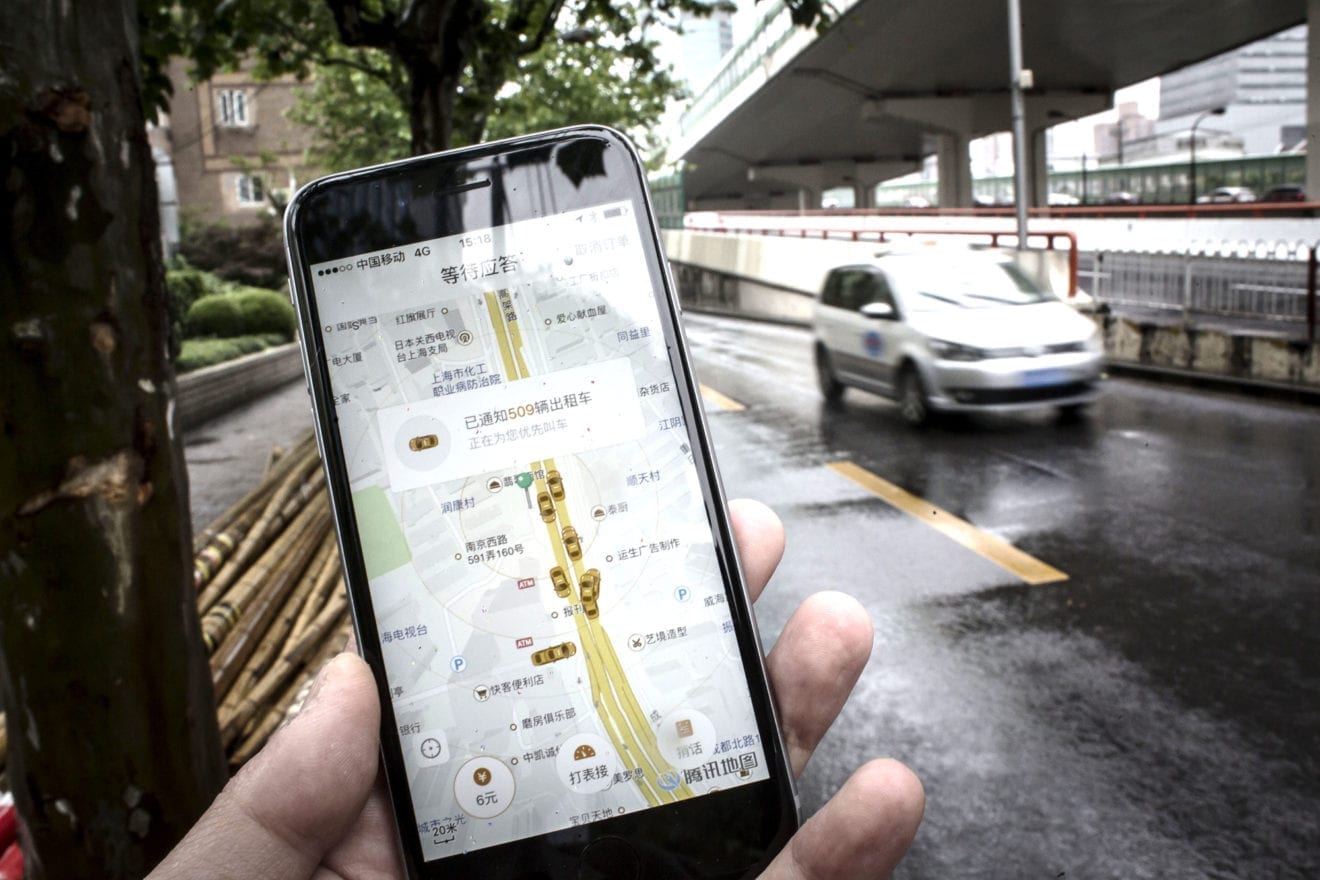
  • Hanoi plans to impose taxi badges on Uber and Grab cars

    Hanoi plans to impose taxi badges on Uber and Grab cars

    The competition between traditional taxis and app-based taxis like Uber and Grab has continued unabated.

    Conventional taxi companies have said they had to meet numerous requirements and pay various taxes and fees which Uber and Grab taxis aren’t required to and that this was unfair.

    In Document 399, the Hanoi’s Department of Transportation said they had gathered opinions from the public and related agencies about the regulations over the operation of vehicles in the city.

    They proposed that all cars for hire with less than nine seats, including Uber and Grab taxi, must have the required badges and follow all regulations that are currently applied to taxis.

    The department said they hoped to get more views before stopping to receive opinions from February 20 to report to the city people’s committee.

    The Ministry of Transport has declined to approve a proposal from Uber Vietnam Company to pilot an IT upgrade for its services because of a lack of authorisation and validation from its parent firm.

    The ministry said it had inspected and dealt with various cars using the Uber app.

    According to the ministry, Uber is registered as the developer so it is not authorised to work as a taxi company.

    The ministry has asked Uber Vietnam to stop working with car owners and the ‘illegal’ operation in Vietnam until it completes all required procedures.

  • iFashion Group acquires lifestyle marketplace Megafash

    iFashion Group acquires lifestyle marketplace Megafash

    Singapore-based lifestyle venture platform, iFashion Group, announced today it has acquired Singaporean independent designer brands marketplace Megafash for S$3.5 million (US$2.23 million), in a cash and shares deal.

    iFashion group also appointed Jeremy Khoo, the CEO and founder of Dressabelle – an O2O fashion marketplace that it acquired last year for S$7.5 million (US$5.5 million) – as its new CEO.

    This new development will strengthen iFashion Group’s position as a major lifestyle portal in Southeast Asia. Megafash has both a strong online and offline presence, with its 7 stores occupying over 15,000 sq ft. It works with over 2,000 indie brands globally to sell over 300,000 unique products on its marketplace. In 2016, Megafash’s annualised revenue was reported to be S$8 million (US$5.7 million).

    “It’s an exciting time for us at Megafash. The brand has grown significantly, from 3 stores in 2015 to 7 stores currently. In times of economic downtown, we are pleased to say that our revenue grew five times from 2015. Megafash continues to grow as Singapore’s leading lifestyle marketplace. In fact, in December we received as many as 2,000 orders a day,” said Megafash’s CEO and Co-Founder, Jiawen Ngeow, in an official press release.

    The acquisition of Megafash will also accelerate iFashion Group’s plans to go public. A press release said that the company is mulling an IPO at the end of April or May.

    Last year. besides Dressabelle, iFashion Group made two other acquisitions: online retail real estate booking platform INVADE, and Malaysian fashion brand NOSE.

  • Samsung Pay Service Comes To Thailand

    Samsung Pay Service Comes To Thailand

    Similar to Android Pay from Google and Apple Pay from Apple, Samsung Pay works like other mobile payment platform by using NFC. Samsung Pay, which was made to build brand loyalty from consumers allows users to pay for things online with their smartphone or smartwatch.

    Samsung has fully unveiled the Samsung Pay in the Thailand. The company aims to entice at least one million users within this year. The mobile payment platform was already made available in Malaysia, Singapore and China a while ago. Samsung apparently already boasts a network of 100 retail partners found in Thailand following a soft launch just in November of 2016. Thailand has been working to adopt a more cashless society much like other Western countries.

    “Samsung is the first phone maker jumping into the mobile payment fray in Thailand,” said the Thai corporate Vice President for IT and Electronics of Samsung Electronics, Wichai Pornpratang. The company is expecting to bring in one million customers using Samsung’s Pay service by the end of the year.

    Consumers can use the Samsung Pay by just tapping their compatible Samsung smartphone on near field communication (NFC) or magnetic security transmission (MST). Doing this will allow them to proceed to making payments in stores.

    Samsung Pay is considered as one of the best mobile payment solutions but it can only be supported on the Galaxy S7 family, Galaxy S6 family, Galaxy Note 5, Galaxy A5 and Galaxy A7. Samsung Pay Mini, however, was reportedly just launched and what’s nice about the service is that it is not limited to just Galaxy smartphones. With an Android smartphone that has a 1280 x720 pixel resolution or higher than Android 5.0 Lollipop, the Mini version will function well. An offline payment option feature, however, that can be found on the Samsung Pay is nonexistent on the Samsung Pay Mini.

  • SmartBuyGlasses opens Kennedy Town store

    SmartBuyGlasses opens Kennedy Town store

    Online eyewear retailer SmartBuyGlasses has opened a physical store at Kennedy Town.

    Located beside the suburb’s MTR station, the store displays and sells well-known designer brands of eyewear.

    The store, the first in Hong Kong, marks a step from online to offline which the company’s co-founder David Menning describes as “an exciting new chapter for the team” after operating 10 years as a pureplay online retailer.

    SmartBuy Glasses HK 2

    “Our distribution centre has been based in Hong Kong since we started out in 2006. Quite often we get members of the public turning up at the office itself looking to buy products directly from us, so it was clear there was an opportunity here to do something bigger that would serve the Hong Kong public directly.”

    SmartBuy Glasses HK 4

    Menning says the new store reflects the brand identity and entrepreneurial spirit of the SmartBuyGlasses team. “Using their access to the world’s most famous eyewear brands, SmartBuyGlasses has created a unique space where customers can try and buy top sellers and all time classics at the best prices anywhere in the city.”

    SmartBuy Glasses HK 1

    He says the decision to branch out into brick-and-mortar stores reflects the wider industry omnichannel trend, which involves brands and businesses linking their online and offline strategies in order to provide a truly comprehensive customer experience across all touch points.

    SmartBuy Glasses HK 3

    “For us, omnichannel is a key area to focus on in order to provide a truly localised experience for our customers around the world.  We felt that 2017 is the right time to make this leap, and we decided to begin this journey in Hong Kong because our roots run deep here and we wanted to give back to the community that has helped us build our business from a start up to a global leader in eyewear retail.”

    SmartBuyGlasses is an independent eyewear e-tailer, with websites in more than 30 countries. Through its Buy-One-Give-One program, the company donates a free pair of glasses for each pair purchased on its website to a community in need via a network of not-for-profit partners across the globe.

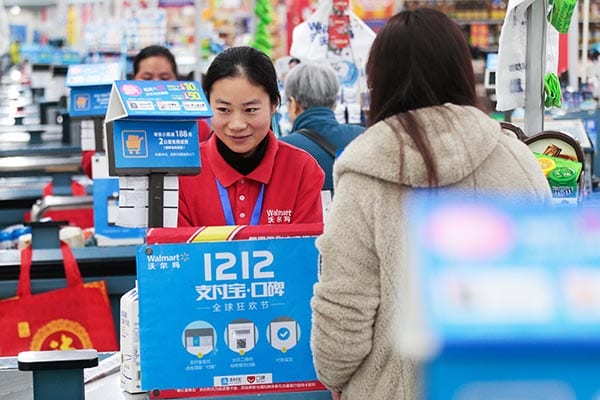
  • Wal-Mart Stores boosts JD.com stake

    Wal-Mart Stores boosts JD.com stake

    American retail giant Wal-Mart Stores has further increased its stake in China’s second-largest eCommerce firm JD.com.

    It now has a 12.1 per cent shareholding, up from 10.8 per cent, and comes about three months after the Arkansas-based retailer disclosed it had almost doubled its holding in JD.com from 5.9 per cent.

    Like Amazon, a large part of JD.com’s income comes from selling products it holds in its own inventory. Its logistics network has also helped it win more users through speedy shipping, says Deal Street Asia.

    With about 400 physical stores in China, Wal-Mart struck a swap deal with JD.com last June, selling its fully owned Chinese eCommerce player Yihaodian to JD.com in return for a 5 per cent stake in JD.com, worth around $1.5 billion. This gave Wal-Mart access to JD.com’s nationwide logistics and warehousing networks, as well as its 150 million users.

    Meanwhile, JD.com is better able to compete with Alibaba in the online grocery business, which is expected to grow to nearly $180 billion by 2020, according to data from food research body IGD.

    In October, Wal-Mart invested $50 million in Chinese online grocery and delivery firm New Dada. This will help it gain more foothold by offering shoppers faster delivery times. At the time, New Dada had more than 25 million registered customers. It delivers in more than 300 cities.

  • Finance Ministry tells online hotel booking services to pay tax

    Finance Ministry tells online hotel booking services to pay tax

    Agoda, Traveloka, Booking and Expedia have to pay VAT (value added tax) and CIT (corporate income tax), which is 5 percent of total revenue, for profits from doing business in Vietnam, according to the Ministry of Finance (MOF).

    MOF released the decision one month after Vntrip.vn, a Vietnamese owned firm, criticized Agoda for evading tax in Vietnam. It said the tax payment duty must be implemented by accommodation service providers on behalf of foreign contractors like the contractor withholding tax.

    If clients who book hotel rooms make payment directly to the accommodation service providers in Vietnam (hotels or guesthouses), and the service providers pay commissions to foreign contractors, the service providers will have to make tax declarations and pay tax.

    If clients pay money to foreign contractors, foreign contractors will transfer money to accommodation service providers, while retaining commissions. Taxation bodies will ask accommodation service providers to inform foreign contractors about tax duties and pay tax on behalf of foreign contractors.

    MOF said it released legal documents with an aim to stop the loss of revenue from tax collection as Vietnam could not collect tax from foreign companies which make profits from providing services to Vietnamese via the internet.

    Prior to that, in December 2016, Vntrip.vn held a meeting with the local press, saying Agoda evaded tax in Vietnam.

    The representative of Vntrip.vn affirmed that unhealthy competition was occurring in Vietnam as foreign service providers don’t have to pay tax, causing a loss of trillions of dong in revenue to the state budget.

    Vntrip.vn warned that Vietnam may lose VND10 trillion worth of tax by 2020, if it cannot find the way to collect tax from the company.

    Vntrip sent an official document to MOF denouncing Agoda and similar service providers for evading tax. The behavior by Vntrip then surprised the public, because Booking.com, who was the strategic partner of Vntrip, and Agoda were considered ‘brothers’ as they both belonged to the US-based Priceline.

    Another surprise was that before MOF released the decision officially asking Agoda to pay tax, the Vietnamese domain name of Agoda, the tourism website, unexpectedly stopped operation.

    Le Dac Lam, Vntrip’s CEO, applauded MOF’s decision.

    “Some people advised us to focus on doing business rather than spending time thinking about policies for foreign companies,” Lam said.

    Nguyen Duc Tai, president and CEO of The Gioi Di Dong, the largest domestic technology product distribution chain, said Vntrip should focus on its own business instead of suing other companies, because the move won’t bring benefits.

  • Global e-commerce: How to win with shoppers in China

    Global e-commerce: How to win with shoppers in China

    With a population of roughly 1.3 billion people, China offers unprecedented growth opportunities for retailers looking to conduct business internationally. China’s National Bureau of Statistics reported last month that online retail sales in China grew 26.2% in 2016 to $752 billion. That’s more than 40 percent of all online sales around the world.

    The e-commerce experience in China is on a scale like no other. From shopping on Alibaba’s Tmall.com storefronts to the immense participation in mobile commerce, consumers in China have high expectations from retailers when it comes to the online shopping experience.

    For retailers looking to break into this competitive international market, here are some tips to win with online shoppers in China and succeed in the world’s largest e-commerce market.

    Invest in the mobile shopping experience

    According to research firm TNS Global, a typical Chinese mobile user spends roughly 30 minutes a day shopping on his/her phone. China is also the world’s largest smartphone market, accounting for 30 percent of the global market. Retailers should make sure their mobile experience is top-notch and localized for shoppers in China.

    The mobile checkout experience, in particular, is important. How important is mobile? According to eMarketer, mobile sales are projected to reach nearly $1.5 trillion globally by the end of 2019. China is driving a huge part of that growth, with mobile sales accounting for nearly half of all of China’s e-commerce sales.

    Mobile payment apps, like WeChat Pay and Alibaba’s Alipay, are examples of the types of payment options consumers want. These two payment options use data and analytics to personalize the mobile shopping experience and are currently the two biggest players in the Chinese marketplace. According to the UPS Global Pulse of the Online Shopper study, 73 percent of online shoppers in China say the most important option when checking out online is having a variety of payment options in addition to a credit card.

    Understand duties, local taxes and the implications for consumers and your business

    According to the UPS study, consumers in China rank duties and taxes as their second most important international shopping issue. Miscalculating duties and taxes, or simply not making them available early enough in the checkout process, can be detrimental to a retailer’s success. For online shoppers, not having a clear understanding of the duties and taxes they are responsible for can be a reason for picking one retailer over another.

    In April 2016, as part of an effort to encourage Chinese citizens to purchase goods domestically rather than internationally, the Chinese government changed the tax rules, making purchasing luxury goods overseas more expensive for import. For retailers, changes to tax rules can cause major roadblocks in their e-commerce strategies. This makes is absolutely critical to show currency conversions and total shipping costs, including duties and taxes, during checkout to reduce cart abandonment.

    There are solutions available, like UPS i-parcel, which take the complexity out of cross-border e-commerce, making it easier and more flexible for retailers to localize the shopping experience. This technology provides all of the information that consumers need to make purchasing decisions up-front—including localized duties and taxes, shipping options, delivery times, and local currency and payment options.

    Win over loyalists by focusing on quality

    Online shoppers in China rank product safety and quality as the top reasons for buying goods from overseas sellers. In fact, 40 percent of Chinese luxury goods purchased in the first half of 2016 were made across borders, according to a report by ContactLab and Exane BNP Paribas Research.

    Retailers looking to win over shoppers in China should make product quality a top priority, especially with the rise of China’s more mature or “rational shopper” as dubbed by research firm Nielsen. These consumers, which make up 40 percent of urban online shoppers in China, keep quality top of mind and will search high and low while paying a premium for highly sought-after items.

    Quality in the online shopping experience extends beyond the products themselves. Chinese consumers expect retailers’ packaging, delivery and shipping options to reflect the quality of the item they are purchasing. For retailers looking to do business in China, it’s important to partner with a logistics provider that has the global shipping and logistics expertise to deliver on heightened consumer expectations.

    Don’t be left behind

    The biggest risk for retailers looking to grow through international e-commerce is not targeting shoppers in China.

    Success begins by partnering with an experienced logistics provider that understands the expectations and behaviors of Chinese consumers and can help deliver a shopping experience that converts these consumers to your customers.

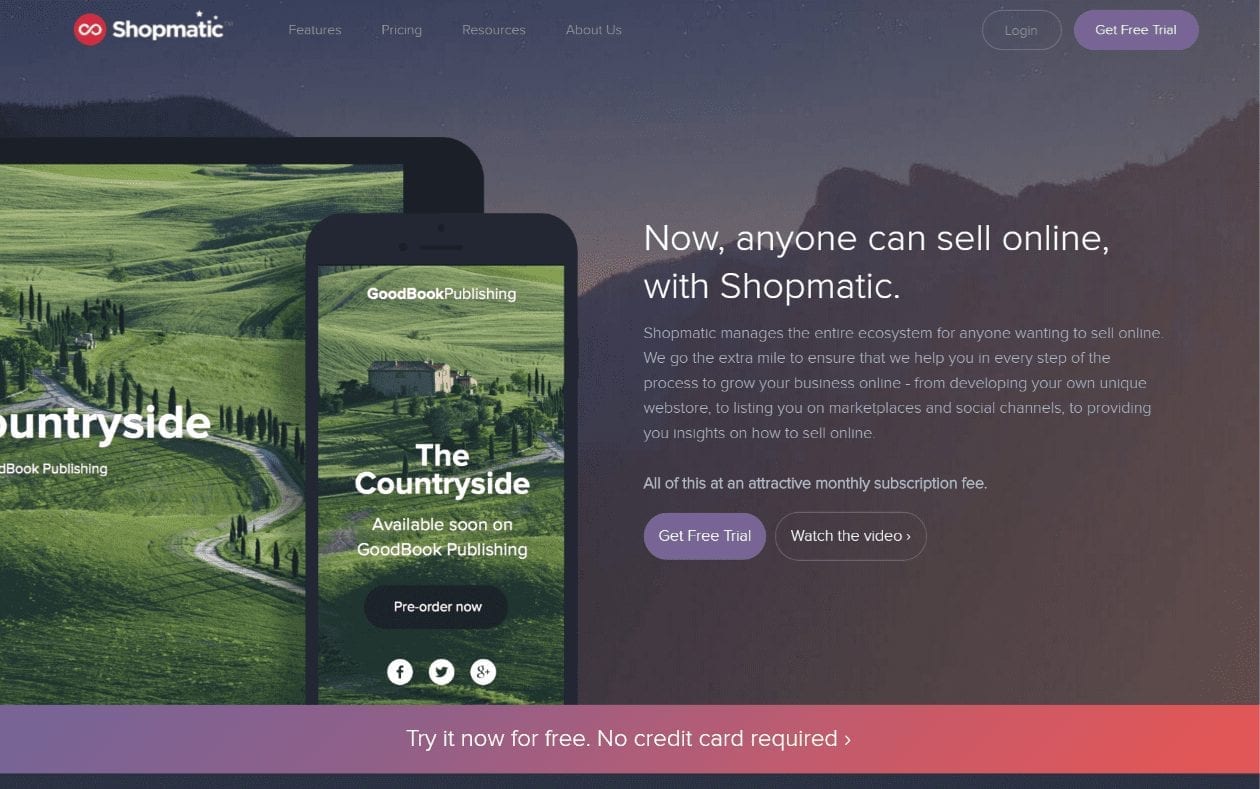
  • Singapore-based ecommerce enabler Shopmatic is striving to get Indians sell their wares online

    Singapore-based ecommerce enabler Shopmatic is striving to get Indians sell their wares online

    It took just one year for Anurag Avula to realise that India is an investment market. “That’s the top learning from India,“ confesses cofounder and CEO of Singapore-based ecommerce enabler Shopmatic, which forayed into the country in January 2016. However, investment for Avula doesn’t mean pumping in millions of dollars. “You need to invest in people, educate them and consult them,“ he says.

    For an ecommerce enabler like Shopmatic–which helps people set up online stores–investment in human resource appears to be its biggest weapon in cracking a market where people are still apprehensive transacting online in spite of a big digital push by the government. Out of an estimated 51 million small and medium enterprises in India, only 10 mil lion are technology ready, according to a recent Google-KPMG report.

    “The opportunity is massive,“ says Avula, adding that the fledgling startup is not confining itself to small enterprises. The target could be anybody. Take, for instance, an aunty that makes pickle, a mom that bakes cake, a student that gives guitar tuitions, a working professional who is also a photographer, or a retired uncle who can offer math tutions.

    “While everybody wants to take their business online, they need a lot of handholding to overcome latent barriers,“ he reckons, informing that the startup has tied up with Confederation of All India Traders, representing over 6 crore merchants.

    From providing free domain names to templates for building stores, to uploading pictures and text, enabling payment and shipping with domestic and international partners, and even helping list on Amazon and eBay, Shopmatic is pushing the envelope to accumulate as many users as possible. Last November, it launched a mobile app GO that enables sellers to build online sites using their mobile phones in just 2 minutes. “We are already clocking over 50,000 downloads, just weeks after launch,“ he claims. While for a first-time merchant who is tentative about the online world, GO is the best option as it helps recruit newbies into the digital world for free; for others Shopmatic offers a subscription model of $20 per month.

    But why would a seller listed on a marketplace or with a page on Facebook page want a bespoke online store? Shenaz Bapooji, chief marketing officer of Shopmatic, contends there are reasons aplenty.

    Some players are tired of parting with high commissions and playing second fiddle to `other brands’ on a marketplace.For them, Shopmatic offers best value.Others consider social media as a catalogue service but have trouble getting closure because the mediums are not ecommerce enabled. There is another category, points out Bapooji, who have built sites through other ecommerce platforms but are switching to Shopmatic as they need to hire experts to manage their sites. “Indians are eager to embrace digital but are waiting for someone to show the way,“ she adds.

    Industry analysts attest to massive business possibilities in making Indians come online. “What is positive about Shopmatic is that it is taking a `handholding’ approach,“ says marketing expert Jessie Paul. When we say `go online’ in India, most businesses would translate that to sell on Facebook, Flipkart and Amazon or more recently on Paytm. They are not likely to look at a specific tool to achieve this and are unlikely to consider a standalone online property, as that requires a lot of brand-building and trust.

    However, the Achilles heel for Shopmatic could be lack of awareness.Unlike more aggressive rivals such as GoDaddy, which has been aggressively advertising on TV, Shopmatic has been under the radar. Avula concedes awareness might be an issue but doesn’t believe in going all guns blazing.

    “It is tempting to put a big burst of money behind TV, but it’s not always possible,“ he says. Shopmatic is instead opting to be efficient about its presence online, by on-boarding `non-digital’ audiences through road shows and market storming activities that help spread awareness.

    “Other companies don’t enable the ecosystem for selling online like we do,“ he claims, adding that he believes in playing a smart and longterm game. “India is a priority market for us and will stay so,“ he signs off.

  • Clothing shoppers prefer stores

    Clothing shoppers prefer stores

    Shopping in-store is still the dominant means of buying apparel in Asia-Pacific, according to the latest study from research company YouGov.

    A poll of 9037 people across the region in December reveals that more than 79 per cent have shopped in a physical store in the past year. This is particularly prevalent for Hong Kong, Australia and Malaysia, where the figures were 88, 85 and 84 per cent respectively.

    Local markets and street vendors attracted 28 per cent of consumers in APAC. They were the most popular in Vietnam, the Philippines and Malaysia, where 41, 38 and 36 per cent of respondents respectively bought apparel.

    Websites turned out the second most popular way to buy apparel. Over the past year, 45 per cent of APAC respondents went online to shop for clothing and accessories, while in China the figure was 75 per cent.

    As yet, apps have not broken into the mainstream, being used for clothing purchases by only 15 per cent of those polled. Apps were most popular in Indonesia, China and Singapore (19, 18 and 18 per cent respectively).

    YouGov says young people are more than six times as likely to have shopped via an app than older generations, and more than twice as likely to have shopped using a website in the past year.

    Between the ages of 16 and 24, 51 per cent shopped using a website over the past year and 19 per cent used an app. By contrast, just 24 per cent of respondents 55 years and older shopped using a website and only 3 per cent via an app.

    Conversely, shopping in-store is most popular with older generations – 90 per cent of those 55 and older have shopped in store compared to 75 per cent of 16- to 24-year-olds. Yet local markets and street vendors seem to buck the trend, being more popular with young people (35 per cent in the 16 to 24 age bracket buy from markets compared with 23 per cent of over 55s.

    The most popular reason for shopping online is that it is quicker than going into a store, with more than half of online and app shoppers says prices are also an advantage.

    However, 78 per cent of buyers like to try out apparel before they buy it, 73 per cent want to check the quality first, and 56 per cent simply enjoy shopping around.  

  • Chinese businessman Jack Ma reveals what China really wants from Australia

    Chinese businessman Jack Ma reveals what China really wants from Australia

    Alibaba chairman Jack Ma was the guest of honour at an opening ceremony for a regional headquaters of the Chinese e-commere company, in Melbourne on Saturday. “We succeed by helping others, by being helped by others. We succeed because we empower the small business,” Jack Ma told the audience.

    “So our vision in the next 20 years, we want to create 100 million jobs for the world and we want to serve two billion population of the world and we want to make 10 million small businesses profitable on our platform,” he added. He stressed that Alibaba had a global vision for its business, saying “we believe globalisation is the future.” The newly opened office in Melbourne will serve as Alibaba’s Australian and New Zealand headquarters.

    China’s second richest man, Jack Ma, who is the founder of online retail giant Alibaba, said at the opening of the first Australian and New Zealand branch of his company in Melbourne that Australia had something “unique” that China was willing to spend big bucks on.

    “Australia is a gold mine. The next gold mine,” Mr Ma said in Melbourne on Saturday.

    “The clean water, the soil and the air, this is what you have, the most unique asset.”

    With China’s pollution problem, there’s no question as to why China would want to suck up some of Australia’s environment.

    China’s “airpocalypse” has seen the country’s pollution hit toxic levels and a blanket of smog the size of Victoria covered Beijing at the end of last year.

    People are seeing this as an opportunity in Australia to export our air to China.

    Currently New Zealand uses Alibaba, basically the Chinese version of Amazon, to sell fresh air to Chinese consumers.

    Oxygen Air bottles the air in aerosol cans and sells them for about $25.

    In Australia, up to $1 million worth of air has been bottled and Alibaba could be another opportunity for air farmers to expand their business.

    Air is being bottled in the Blue Mountains, Bondi Beach and the Yarra Valley.

    Green and Clean company director John Dickinson told the Herald Sun there was a high demand from people in China and India, who hoped the fresh air might clear their lungs.

    “A lot of people see the product as a supplement to clean their lungs out with fresh Australian air,” he said.

    There are also a number of other Australian products high in demand on the Alibaba site. One of them belongs to Gold Coast woman Brynly King, who expanded her business in her garage — turning it into a multi-million dollar company.

    Banaban Virgin Coconut Oil products are now on the shelves in some department stores in China and a number of other countries, all because she started selling on Alibaba.

    Alibaba has become the world’s largest retailer since 1999 and debuted on the New York Stock Exchange in 2014, becoming the biggest IPO in history.

    Mr Ma went from a struggling schoolteacher to a man who is worth $43.6 billion and he said all it took was hard work and created his company to give small businesses the opportunity to put their products in front of consumers.

    Whether you’re a mum and dad making soaps in the garage or a millennial with an invention, Mr Ma aims to give people a place where they can sell, and gives people a chance to buy.

    Ma has a long interest in Australia, it started when he was a 15-year-old living in China, and he would hang around western hotels so he could practise his English with tourists.

    He met an Australian family from Newcastle and from there realised what the country had to offer, particularly in a business sense.

    Many Australian small businesses have put their products on Alibaba to sell to China, and made a motza, like Ms King.

    Mr Ma said China has been long known for making products but he said the country needed high quality products and service and didn’t think China today could produce that.

    He said China will work with other nations, like Australia, to move from manufacturing to domestic consumption.

    There have been concerns that Alibaba could accelerate globalisation, the process of countries integrating into one because of an interchange of world views, culture and products.

    Mr Ma doesn’t buy into that.

    “Globalisation does not create problems, it shares culture and should always be inclusive. It is the future,” he said.

    Australia is the fourth highest seller on Alibaba and Mr Ma believes the Australian office will connect more people to consumers in China and boost our exports.

    Alibaba accounts for 60 per cent of China’s sales and Australian shoppers would have most likely heard of Aliexpress, which is one of Alibaba’s market places that is English and rivals eBay.

    It sells everything from fast fashion, phone accessories and camping gear.

    Mr Ma believes the Australian branch of Alibaba will boost trades in both Australia and China.

    The Australian and New Zealand branch of Alibaba will be headed by Maggie Zhou, who was the 48th person employed at the company which now gives jobs to millions.

    Ms Zhou said she would introduce new Australian brands to the Alibaba platform.

    “A physical Alibaba headquarters is a key step in ensuring Australian businesses have the support and information they need to succeed in China and the rest of the world,” she said.

    “Longer term, Alibaba Group’s vision for the ANZ region is to build the entire operating infrastructure needed to enable local businesses to expand globally.”

  • Subdued Amazon results clouds impressive growth

    Subdued Amazon results clouds impressive growth

    Amazon is usually a retailer that operates at full volume, the noise of its sales growth a clarion call in an often muted retail sector.

    However, this quarter that volume seems to have been turned down a couple of notches. While the latest Amazon results show impressive growth, and is a long way above the retail sector overall, by the high benchmark the company has set, the latest numbers have a certain softness. Revenue totalled US$43.7 billion, up 22 per cent year-on-year, below analysts’ expectations.

    Some of the loss in momentum comes down to a more unfavorable exchange rate. On a constant currency basis, Amazon’s overall growth is a more respectable 24 per cent; while its international growth leaps to 23 per cent from 18 per cent, once the impact of the strong dollar is factored out. Even so, these upticks still leave a gap in growth compared to what Amazon delivered over the first three quarters of the fiscal.

    Part of the softness comes down to shipping-related revenue, which grew by its slowest pace in over a year. This has placed a little downward pressure on the revenue line. More worryingly it means that shipping revenue from consumers is now strongly adrift from Amazon’s shipping costs. In the final quarter, the former grew by 29 per cent, while the latter surged by 35 per cent to just over $5.6 billion. This is one of the reasons the company missed its profit forecasts, and why operating profit came in at 2.9 per cent of sales versus 3.1 per cent over the same period last year.

    Arguably, low cost and fast delivery are a fundamental part of Amazon’s appeal to consumers. However, they are also its Achilles’ heel – and with Prime becoming more popular, and with a greater focus being put on speedier shipping times, we have concerns that Amazon could see further profit erosion as it enters its new fiscal year. This view is supported by Amazon’s own guidance for the next quarter, which suggests profit will come in well below last year.

    As niggling as these points are, they do not diminish Amazon’s success in other areas. Over the holiday quarter, the company saw demand for its devices, including the Echo product, boom. This helped Amazon to a very strong performance in electricals at a time when the overall market was struggling with a lack of newness and innovation. It also aids Amazon to extend its ecosystem to more households, something we believe will yield fruit over the coming years as it becomes a more integrated and critical part of people’s lives.

    The AWS (Amazon Web Services) division is also a success story. Here revenue grew by 47 per cent off the back of a very strong prior year comparative. This part of the business is helpful as its relatively strong profitability gives buoyancy to Amazon’s balance sheet.

    As much as this quarter has been more subdued, Amazon remains firmly on the front foot in terms of innovation. This alone will continue to make it a retail outperformer, at least in sales terms, over the next year and beyond.

  • AS Watson to inject $70m in Canadian AI startup

    AS Watson to inject $70m in Canadian AI startup

    Hong Kong-based retailer A.S. Watson Group said on Thursday it will spend $70 million over the next three years in big data technologies, including investment in a Canadian artificial intelligence venture company.

    A.S. Watson will consolidate its customer data holdings into a big data analysis system for retailers developed by Rubikloud to optimize sales promotion activities and business operations.

    Rubikloud has an app designed to analyze customer characteristics and their purchase history using AI. The information will then be used for individual marketing and prediction of future sales.

    When A.S. Watson introduced the app at European stores on a trial basis starting in 2015, sales from personalized promotion activities increased by more than 8% over 10 months, hence the latest tie-up decision.

    “We are investing in big data amid global economic uncertainties because we believe that technology is a critical enabler for successful retailing in today’s world,” said Malina Ngai, chief operating officer of A.S. Watson Group, in a statement. Ngai added that Rubikloud’s technology will enable the company to “focus our resources, from back-end support to the shop floor, on building a better customer experience.”

    Kerry Liu, CEO of Rubikloud, said the company aims to enhance A.S. Watson’s capabilities to personalize customer offers through advanced targeting by “applying machine learning and flexible big data architectures in practical applications.”

    A.S. Watson is a subsidiary of conglomerate CK Hutchison Holdings, led by Li Ka-shing, a Hong Kong-based billionaire.

    A.S. Watson has more than 13,000 retail stores, including the company’s drugstore chain, in 25 countries and regions such as Asia and Europe. Li’s venture fund Horizons Ventures has also invested in Rubikloud.

  • Direct access to China’s online market through Alibaba’s Mr. Fresh

    Direct access to China’s online market through Alibaba’s Mr. Fresh

    The online retail market in China is booming, as are sales of perishables. Ahead of the curve is Tmall (part of the Alibaba Group) which, through Tmall Fresh and Mr. Fresh, has created some of the first B2C platforms that caters for fresh produce online sales and delivery.

    Alibaba’s Tmall is the biggest domestic online B2C retailer. It is a platform for international and Chinese brands to sell goods directly to consumers in Mainland China, Hong Kong, Macau and Taiwan, and has a reach of millions of consumers. Tmall Fresh is the organisation’s new portal for perishable products.

    Usually, due to high subscription costs, only large brands have online ‘flagship stores’ on Tmall and Tmall Fresh. Tmall Fresh currently only hosts Chinese online stores. Most of the existing flagship stores are importers or large distributors, that have been selling products on Tmall in the past before switching to Tmall Fresh.

    Tmall Fresh and Mr. Fresh

    “Tmall Fresh has been launched to meet the growing demand for fresh produce. It is becoming the online sales channel for perishables in China. Products include seafood, meat, dairy and, increasingly, fresh fruits,” says He Chunlei, CEO of Tmall Fresh.

    To assist rookie foreign fresh produce exporters in overcoming difficulties that come with market entry, Mr. Fresh was introduced alongside Tmall Fresh.

    Mr. Fresh is an online flagship store for foreign products on Tmall Fresh, entirely run by the Tmall Fresh Team. It aims to support foreign brands entering China. Mr. Fresh takes care of customers, marketing, sales, logistics and customer services. As such, it provides foreign suppliers with a low-cost entry to the Chinese market, whilst also avoiding the investment costs it takes to open a store on Tmall.

    Supporting foreign exporters

    “For foreign fruit exporters, Tmall offers two solutions. Foreign exporters can either cooperate with Chinese flagship stores, and sell their products through these existing portals on Tmall Fresh. Or, the second option, is that foreign exporters can join Mr. Fresh. Through cooperation with Mr. Fresh, foreign fruits can easily be sold into the Chinese market. We introduced the concept to solve trade barriers that foreign companies are facing entering China as a new market. The idea is that, after having sold their products on Mr. Fresh for a couple of years, foreign exporters are well positioned to open a flagship store on Tmall Fresh,” according to He Chunlei.

    “Mr. Fresh is designed to meet both the needs of the supplier and the consumer. Fruit varieties that are currently sold are New Zealand kiwifruit, Thai durian, Chilean cherries and Vietnamese mangoes. Our mission is to help foreign companies enter the B2C market in China by providing them with a complete solution package. At the same time, we provide the consumer with product and company information. We use our sales data and marketing information to help our suppliers understand the needs and preferences of Chinese consumers. The market for online fresh produce sales is growing at 7% a year. So far, fruits make up a small share of total sales of perishables, but we see huge potential.”

    PMA Fresh Connections China

    From March 15 to 17, the PMA Produce Marketing Association (PMA) is organising Fresh Connections China, a yearly summit taking place in Shanghai. He Chunlei, CEO of Tmall Fresh, will be one of the speakers at the conference organised on the second day.

  • Foreign funds pour money into Vietnamese startups

    Foreign funds pour money into Vietnamese startups

    John Wu has been the ‘technology pillar’ of Alibaba for almost 10 years. The former technology director and a leading group of investors have poured nearly $3 million into Vntrip.vn – a Vietnamese startup operating in online hotel reservations.

    Le Dac Lam, the founder and CEO of the startup, has confirmed the news.

    “The investment came after the first round of capital call from foreign investment funds, and John Wu has agreed to stand side by side with us,” Lam said.

    Established in late 2014, Vntrip.vn has established an online hotel network throughout Vietnam with cooperation of Booking.com, the world’s hotel reservation network belonging to the US Priceline Group with capitalization value of $65 billion.

    Wu’s F&H fund says the business is valued at VND300 billion.

    Vietnamese restaurant chain calls for $6.9 million

    Wrap & Roll has successfully called for $6.9 million from Mekong Enterprise Fund III (MEF III) managed by Mekong Capital.

    MEF III which was launched last June, with total investment capital of $112 million, is a private fund focusing on retailers, restaurants, consumer goods and consumer services in Vietnam.

    Wrap & Roll was the first investment deal made by MEF III.

    Established in 2006, Wrap & Roll has 10 restaurants in Hanoi, HCM City and four franchise shops in Singapore.

    3 more startups receive $75,000 

    1337 Ventures, a Malaysian fund, has announced investment in three Vietnamese startups, following Alpha Startups, a startup incubation program launched recently in HCM City.

    Each of the three businesses would receive $25,000 in capital and services and have the right to join the 3-month startup acceleration program to be run by 1337 Ventures.

    The three businesses include Saloneses, an app that books beauty services on smartphones, Perkfec, which allows business owners to keep watch over staff performance to reward them reasonably, and Navi which books venues and accommodations within hours.

    Bitexco acquires Huong Giang Tourism

    Huong Giang’s H1 Report shows that Bitexco, a major real estate developer, now holds 70.48 percent of the tourism company.

    On March 30, 2016, the Thua Thien-Hue provincial People’s Committee released a document on divestment of all the state’s stakes (12,572,200 shares) in Huong Giang. Bitexco has become the new shareholder in the tourism company.

    Tuong An Vegetable Oil

    Nguyen Manh Cuong, an individual shareholder, has announced the completion of the sale of 1.9 million TAC shares of Tuong An Vegetable Oil Company, equal to 10.4 percent of charter capital.

  • Players continue to come and go in Vietnam’s ecommerce

    Players continue to come and go in Vietnam’s ecommerce

    In Vietnam today there are three popular e-commerce models: C2C (which connects customers to customers), B2C (business to customer) and Marketplace (which provides a platform to process transactions).

    In the pure C2C model, similar to classified advertisements which connects the buyers and the sellers only in terms of information, chotot.vn remains the most prominent.

    However, to Vietnam’s e-commerce, buyer’s trust and delivery have been the issues, and supplying information seems not enough. Many companies provide a platform with third-party services such as shipping or payment.

    Among this group, Sendo.vn, owned by tech giant FPT Group, is a prime example. Recently Zalo of VNG Corporation, a technology company, also ventured into this market. But the name that has received the most attention recently was Shopee, a company started by Singaporean tech company Garena.

    After nearly two years in Vietnam, this company has been downloaded two million times on mobile and processed 10,000 orders per day. Customer base and volume of orders have been growing 20 per cent per month.

    In the B2C group, after the departures of Lingo.vn, and Deca.vn earlier, and while Adayroi.vn of property giant VinGroup has not made any breakthrough and Lotte.vn remained an unknown, Tiki.vn has continued to be the leader.

    Founded in 2010 as an online bookstore, Tiki.vn has expanded into other fields such as cosmetics and electronics.

    According to Tran Ngoc Thai Son, chief executive officer of Tiki.vn, book sales accounted for 70 per cent of the company’s revenue in 2014, but that ratio is only 30 per cent today with the rest of revenue coming from other fields. Now, Tiki receives 15,000 to 20,000 orders per day.

    Even though Cdiscount.vn, the online shop of Big C supermarket which was acquired by Thailand’s retail giant Central Group, was closed and merged with Zalora, the e-commerce space remains attractive to other retail companies.

    Not long after Korea’s Lotte Group entered Vietnam’s e-commerce with the Lotte.vn website, Japan’s biggest retailer Aeon also arrived with aeoneshop.com at the beginning of the year.

    Finally, in the Marketplace group, Lazada.vn has seen no match with its 30 per cent market share (by revenue) in Vietnam’s online retail market.

    Fierce competition

    The race will intensify in the coming months, because up to now no company has made a profit in e-commerce in Vietnam, so they will compete fiercely for larger market share. The prizes await the final winners of this race.

    Alexandre Dardy, chief executive officer of Lazada Vietnam, said Lazada will focus on attracting more brands to do business on its website in 2017. Its goal is to attract 10,000 companies, triple the current number.

    As for Tiki.vn, the focus will be on sustainable growth. In 2017, Tiki.vn will continue to invest heavily in fulfillment, a service in which sellers just need to send their products to Tiki’s warehouses and let Tiki handle marketing and sales. Currently the company has two warehouses in Ho Chi Minh City and one in Hanoi, with total area of 10,000 square meters.

    Meanwhile, although arriving late, traditional retail companies are always considered strong contenders. While Lotte.vn focuses on cosmetics and fashion that are the strength of Korean brands, aeoneshop.com targets electronics and baby products carrying Japanese brands. Currently aeoneshop.com owns a chain of large modern retail stores from shopping centers to convenience stores.

    In addition directly owning four shopping centers in Ho Chi Minh City and Hanoi, Aeon bought 30 per cent stake in Fivimart and 49 per cent share of Citimart in 2015, and now indirectly owns 18 Fivimart stores in Hanoi and 66 mini-shops in Ho Chi Minh City.

    In essence, the race between purely e-commerce companies and traditional retail companies in Vietnam has not seen the clear winners, and purely e-commerce firms currently have an edge. However, with the determination of retail companies to expand online, the competition will be exciting to watch in 2017.