Category: E-Tailing

Retail News Asia is committed to providing both local and global retailers with the latest E-Commerce & Etail news throughout the Asian market. This on a daily base.

  • Grab rides up Indonesia with $700M investment

    Grab rides up Indonesia with $700M investment

    Grab has announced plans to invest US$700 million in Indonesia over the next four years, as part of efforts to increase its footprint in a market where it has seen growth.

    The Southeast Asian ride-sharing operator said Thursday the new investment would support the Indonesian government’s ambition of becoming the region’s largest digital economy by 2020. It would include plans to set up a research and development (R&D) facility in the capital city of Jakarta, focused on developing technology innovations for the local market.

     Latest news on Asia

    A US$100 million funding initiative also would be introduced to support startups and entrepreneurs keen on driving “financial inclusion” in smaller communities.

    Grab added that its investment followed “a strong year of growth” in the country, with its GrabCar and GrabBike businesses each clocking more than 600 percent growth in 2016. Its range of ride-sharing services were available in several Indonesian cities, including Bali, Bandung, Medan, and Surabaya.

    According to Grab, one in three of its customers in the country used more than one of its services. It said its drivers earned 40 to 70 percent more per hour than the average transport or delivery driver in Indonesia, where it helped generate more than US$260 million in income for its driver partners.

    Indonesia’s Minister of Communication and IT Rudiantara said: “We want all Indonesians to benefit from IT to improve their lives, develop new skills, and build the next wave of global leaders in technology. Grab’s investment to train and hire more ICT professionals and mentor young entrepreneurs will accelerate the growth of Indonesia’s digital economy. This kind of app has to be positioned as a tool to spur and empower people and the economy.”

    Coordinating Minister for Maritime Affairs Luhut Binsar Pandjaitan added that Indonesia’s growth would require the continued development of its infrastructure, including its public transport network. Stressing the role of technology, he said services that tapped data analytics would better enhance the efficiency and reliability of the national transportation infrastructure.

    According to Grab, the R&D facility in Jakarta would hire 150 engineers over the next two years and focus on developing localised services, including algorithms to support new road regulations as well as a bike-pooling service for nearly 1.4 million commuters in the city. Engineers also would be offered training in Grab’s other R&D centres in Singapore, Beijing, and Seattle.

    By pumping up to US$100 million into the investment fund, Grab said it hoped to nurture Indonesian startups and technopreneurs focused on mobile and financial services, with the aim to better serve smaller cities and communities that had yet to experience the digital economy.

    The ride-sharing operator also would be looking to launch mobile services to bolster access to mobile payments across Indonesia, expanding its own mobile payment services through GrabPay Credits.

    This would further build on its announcement last July to extend its partnership with Indonesian consumer services company, Lippo Group, and enable the payment of retail goods and services its mobile app. With more than 50 million customers between the two companies, the new e-payment platform would allow these consumers to tap their mobile phones or the Grab mobile app to pay for goods and services under Lippo’s retail network, which included department stores, hypermarts, cinemas, coffee shops, and e-commerce portals. Nobu Bank also was participating in this initiative.

    Grab currently operated a network of more than 630,000 drivers across the Southeast Asian region.

  • E-commerce in Japan: 20% of retail by 2022

    E-commerce in Japan: 20% of retail by 2022

    While the U.S. and China are already known as global e-commerce markets, it’s Japan that boasts the largest e-commerce potential, especially over the next three to five years, say two separate consultant groups.

    In 2015, Japan generated roughly $80 billion in e-commerce sales. This compares to some $350 billion of e-commerce sales in the U.S. and China’s whopping e-commerce sales result, which exceeded $650 billion in 2015.

    Yet, e-commerce will be Japan’s largest single retail channel by 2022, according to a recent report produced by JapanConsuming.

    Having overtaken convenience stores to become the second biggest already in 2015, the firm has forecast that Japan’s e-commerce share of retailing will reach 20% by 2022.

    “This is a forecast that few would challenge, although there are plenty of traditional retailers who are in deep denial,” said report authors, of the predictions.

    “The only point of contention is just how far ahead e-commerce will be by then. Given the sea-change in consumer preferences and shopping behaviour already visible, the coming change will be profound,” added the group.

    Japan’s demographic is ripe for e-tail. Approximately 93% of the total Japanese population (126 million) is urban, giving it the highest urban population of the top 10 e-commerce markets, according to e-commerce consultancy PFS. Much like JapanConsuming, PFS predicts Japan’s e-commerce sales to increase almost 40% by 2018, for a market total of over $122 billion.

    Japan also has the highest digital buyer percentage in the Asia-Pacific region, with 77 million digital buyers last year, said PFS, in its Global E-Commerce Report.

    As well as computers, mobile shopping is quickly growing, with half of all e-commerce transactions being conducted via mobile devices in 2015, a trend set to continue by 2022.
    In terms of payment, debit and credit cards are the most popular payment methods when shopping online, with over 66% of shoppers conducting transactions utilising this method.

    As for what online stores are attracting the Japanese e-shopper, marketplaces continue to dominate the e-commerce landscape. Japan’s three big sites, in order of market share, are Rakuten, Amazon Japan and Yahoo Japan Shopping. Collectively, these sites accounted for around 50% of total Japanese annual e-commerce revenue in 2015.

  • Vietnam imposes tax duty on foreign room-booking sites

    Vietnam imposes tax duty on foreign room-booking sites

    Firms such as Agoda and Expedia will have to pay a 10 percent duty. The Ministry of Finance has told foreign accommodation booking services to pay taxes if they wish to continue operating in Vietnam.

    A document recently released by the ministry asked booking sites like Agoda, Traveloka and Expedia to pay a combined 10 percent of their total revenue made in Vietnam.

    Vietnamese accommodation providers that have signed contracts with these foreign sites are obliged to fulfill these tax duties on behalf of them.

    The ministry said that the move aims to prevent tax losses from foreign-based companies that are gaining from online business transactions.

    Vietnamese accommodation booking site Vntrip had previously held a press conference and sent a document to the ministry accusing Singapore-based travel agency Agoda and some other sites of tax evasion.

    Vntrip said that the acts of these foreign companies had resulted in huge losses to the state revenue and created unwholesome competition.

    This is not the first time the Vietnamese government has imposed taxes on international businesses operating in the country. Last September, the popular ride-sharing service Uber was officially ordered to pay taxes after two years of providing transport services in Vietnam.

  • Third Party Logistics Market in China Growth at a CAGR of 10.16% by 2021

    Third Party Logistics Market in China Growth at a CAGR of 10.16% by 2021

    The third-party logistics market in China to grow at a CAGR of 10.16% during the period 2017-2021.

    Third Party Logistics Market in China 2017-2021, has been prepared based on an in-depth market analysis with inputs from industry experts. The report covers the market landscape and its growth prospects over the coming years. The report also includes a discussion of the key vendors operating in this market.

    One trend in the market is increase in overseas shopping. The preference for overseas shopping is increasing in China owing to the increased internet penetration. Consumers have access to various communication devices and payment methods and have become familiar with the mechanics and benefits of shopping online. In addition, the Internet has raised awareness of new online shopping destinations across the globe. Online shopping user base and the total amount of online shopping are showing strong growth momentum in China.

    The cross-border e-commerce transactions are expected to have more than 20% share in the total import and export trading volume of China by the end of 2016. E-commerce companies like Alibaba Group, JD.com, and NetEase have also entered the cross-border e-commerce business. To adapt to the changing demands, the logistics service providers need to be efficient in the supply chain process.

    According to the report, one driver in the market is growing demand from e-commerce sector. China is a leader in the global online retail market. In 2015, the share of online sales in the total retail sales in China was 11% while the online sales constituted only 8% of the total retail sales in the US. Online retail sales are growing at a YoY rate of 53%. Thus, in order to stay competitive in the e-commerce industry, the vendors need to find an effective approach to delivering their goods on time and meet the customer expectation of on-time delivery of goods. Thus, many e-commerce industries are demanding highly efficient logistics services like 3PL. 3PL also allows vendors to focus on other activities to promote their business while the logistics are handled by 3PL service providers.

  • BMW and Daimler may combine forces to compete with Uber

    BMW and Daimler may combine forces to compete with Uber

    Automakers have been dabbling in the ride-sharing industry, but Uber remains the titan to beat. In true “Power Rangers” fashion, two automakers are reportedly forming a Megazord of ride-sharing in order to bring the fight to Uber’s doorstep.

    BMW and Daimler may combine their ride-sharing efforts to better compete with Uber, citing sources speaking to Germany’s Manager Magazin. BMW operates DriveNow (called ReachNow in the US), and Daimler runs Car2Go, both of which have achieved some success in the US, but not enough to tackle Uber.

    In addition to that pairing, the companies are reportedly considering adding other mobility services into the fold. Back in July, Daimler merged its Mytaxi service with Hailo, another cab-hailing startup. Daimler also operates Moovel, which includes a booking and payment system for various mobility services. BMW also operates ParkNow and ChargeNow. It’s reasonable that many of these operations could be lumped together under the same name.

    Neither BMW nor Daimler immediately responded to a request for comment.

    Uber has been on a tear lately. It finally worked with cities to get ride-sharing pick-ups and drop-offs at certain airports. It’s also dabbling in autonomy, most recently rolling out some self-driving Volvos in San Francisco, but the legality of that arrangement is still up in the air. But it’s not all flowers and gentle breezes with the ride-sharing titan, which constantly finds itself the subject of some gnarly lawsuits.

  • Southeast Asian ride-hailing firm Grab hires former Indonesian police chief

    Southeast Asian ride-hailing firm Grab hires former Indonesian police chief

    Southeast Asian ride-hailing firm Grab said on Monday (Jan 30) it has appointed Indonesia’s former national police chief to oversee corporate governance and long-term plans for its biggest market.

    Grab said it plans to expand to more cities in Indonesia, grow its transport services and invest in a mobile payments platform.

    Badrodin Haiti, who was Indonesia’s chief of the National Police from April 2015 to July 2016, “brings extensive experience working with government stakeholders and ensuring aligned interests among different stakeholders,” the company said in a statement.

    Grab and its competitors, Uber of the United States and homegrown company Go-Jek, have faced regulatory obstacles in Indonesia.

    The government has ordered ride-hailing service providers to pass vehicle safety tests and get local partners, among other conditions.

    “As the technology and ride-hailing sectors evolve in Indonesia, Mr. Haiti will play a guiding role to ensure Grab contributes constructively to the implementation of new transport regulations and safety guidelines,” Grab said.

  • Foreign Taobao shop owners in China share experiences and secrets to their success

    Foreign Taobao shop owners in China share experiences and secrets to their success

    Taobao.com, founded by Alibaba in 2003, has become the single most popular e-retailer in China with 423 million active registered shoppers by the end of March 2016. The figure has also far surpassed American e-commerce giants Amazon and eBay. Taobao has not only transformed China’s retail marketplace by providing products and online convenience to rural customers, but it has also created millions of jobs and alternate sources of income for private entrepreneurs, many of whom have become millionaires thanks to the country’s booming e-commerce phenomenon. Foreigners living and working in China are now hoping to get in on the action by opening their own Taobao shops, but are the cultural challenges and business hurdles facing them worth the payout?

    To glean some insight into expatriate e-retailing, the Global Times recently reached out to two foreign Taobao shop owners about their experiences and successes (or lack thereof).

    Kaikai, the Chinese name of a 29-year-old American, became a Taobao shop owner in 2012. He said that his first visit to China was in 2007, when he studied Putonghua at Peking University and National Taiwan University.

    “I can say everything in Chinese, I can also read and type the words on computers and mobile phones,” he said. “However, I didn’t dedicate my Chinese studies to handwriting as there is not much practicality for it in this day and age.”

    His excellent command of Putonghua laid a solid foundation for his future Taobao career. In 2012, Kaikai began selling household kitchen appliances, electronic devices and travel accessories on Taobao.

    He said he was inspired by Chinese friends who kept asking him to buy iPhone 4S from the US for them.

    “At that time, I had a need to convert my salary (paid in dollars) into yuan, so it was a win-win for both sides,” he said.

    Realizing the viability of this new trade, Kaikai decided to quit his job and begin selling products on Taobao full time.

    In terms of procedure, he said foreigners without Chinese partners need only a passport and the completion of a simple Chinese-language test. Like many budding entrepreneurs, Kaikai didn’t have any help at the beginning of his business.

    “I first started the business by myself, living and operating out of a youth hostel in Shanghai. From product procurement overseas, to logistics, importing, sales and final fulfillment, I controlled every step of the process,” he said. “I didn’t have anyone to hold my hand, so I had to learn everything on the fly.”

    Authentic American

    Even though he is not a native Chinese speaker, Kaikai conducted all his customer service interactions himself. “I would often send messages using Taobao’s voice function, which made the sales experience with customers a lot more intimate and congenial, because Chinese are happy to know that it’s really a foreigner communicating with them,” he added.

    Kaikai admits that his identity as an American guy selling American products in China is his biggest competitive advantage on Taobao.

    “In most of my listings, I take all the product photos and videos myself to differentiate my store from other sellers,” he said. “It’s an effective strategy to give my customers peace-of-mind knowing that they are buying authentic American products from an authentic American.”

    Fortunately, Kaikai’s efforts eventually became profitable. According to him, his store’s sales volume has increased exponentially through a combination of positive feedback, solid reputation and product expansion.

    He also attributes persistence to his success. “I see many small stores come and go because they quickly give up. But if you’re willing to dedicate yourself by putting immense focus and effort into your business, then the possibilities are limitless,” he said.

    Profiting from pollution

    Thomas Talhelm is an assistant professor of behavioral science at the University of Chicago. During his stay in China in 2013, he noticed smog becoming a crucial environmental issue and thus founded the social enterprise Smart Air Filters to promote DIY air filters as cheaper alternatives to expensive air purifiers.

    These DIY purifiers primarily consist of a fan and a high-efficiency particulate air (HEPA) filter, which are the major components of any standard air filter. To ship them to and sell them in China, Talhelm and his team set up their own Taobao store in 2013.

    “We started simple, but since then we’ve expanded to other products that we’ve personally tested and published results for, such as carbon filters for formaldehyde, pollution masks and particle counters,” he said, adding that their customer base is comprised of both expats and locals concerned about China’s worsening air pollution.

    “Opening a Taobao store allowed us to get affordable clean air options to more people in China,” he said. “Taobao is clearly the major online commerce platform in China. The choice is a no-brainer. Now there are more options with Weidian and JD, but Taobao is still huge.”

    When asked about the logistics of opening a Taobao store, Talhelm said that he registered Smart Air Filters as a Chinese company under the name of his Chinese partner, so the registration process was quite simple.

    According to Talhelm, his shop currently has five full-time employees, three part-time employees and several volunteers, most of them foreigners from different cultural backgrounds. All have good command of Putonghua, so language and culture are not barriers for their business.

    “Knowing Chinese is essential, but it’s not enough,” Kaikai countered. “Knowing what to sell, how to buy, how to arrange logistics and how to cope with customer and product issues are equally vital.”

    Talhelm himself designed his Taobao home page and wrote all the Chinese descriptions of their products. He concedes that the business didn’t take off at first, selling less than 10 purifiers in the first week.

    But with China’s “airpocalypse” making domestic and international headlines in recent years, their most popular purifier has now sold over 2,000 units.

    “Over time our open data and tests have reached more and more people, so our sales volume has also gradually increased,” Talhelm said. “Smart Air’s core idea has always been that if people just see the data, most people wouldn’t spend so much money on the expensive purifiers.”

    Trial and error

    Despite such achievements, both foreign shop owners said that they have also encountered numerous challenges and obstacles along the way.

    Kaikai explained that at the beginning he was unsure how to export products from the US into China, which required plenty of logistical research and trial-and-error attempts. “We are now shipping about 12 metric tons of goods each month via air and sea,” he said.

    Kaikai pointed out that learning how to delegate tasks to increase scalability is essential. “Initially, I was a bit of a control freak, as I wanted to control all aspects of the business to ensure the best quality service,” he said.

    “However, I realized that I had to delegate tasks, such as customer service, which is why I now have about five employees just in customer service.”

    Talhelm believes that evaluating customer feedback is extremely helpful, especially negative comments.

    “First we try to figure out what the customer is talking about. Is it true? Where was the problem? If it’s a scientific or technical question, I send data (or even run a new test if it’s something we haven’t tested),” he said.

    He added that the most common negative comment about his product is noise, which is a fundamental problem with almost all air purifiers.

    “Any machine that is pushing out air will create noise, but people want less noise. There are quiet purifiers out there, but they don’t push out enough clean air. We’re working on radical new designs for quiet yet clean filters,” Talhelm said.

    “The reality of day-to-day operations are the less glorious part of my work,” Kaikai said. “Those who can’t handle this will give up and close shop, but if you persevere and are willing to go to battle every day, then you can be a winner.”

    In terms of what administrative or promotional support he expects from Taobao, Kaikai said that he doesn’t expect Jack Ma to just hand over to foreign shop owners a magical key to the castle.

    Thus, his only expectations are for Alibaba to continue maintaining a fair, reliable – and, most importantly, trustworthy – marketplace for both buyers and sellers.

    “There are hundreds of thousands of Taobao shops; my store is just a number in the system. That’s one of the reasons why I love e-commerce in China, though, because I don’t have to deal with guanxi (connections with influential people)” Kaikai said.

    “For the most part, e-commerce in China is very transparent and a level playing field for sellers,” he said. “My success is achieved strictly through hard work and merit, not through relationships with insiders (like bricks-and-mortar stores).”


  • Vietnam E-commerce well placed to meet growth targets

    Vietnam E-commerce well placed to meet growth targets

    Last year, e-commerce revenues increased to $5 billion, accounting for about three per cent of the total retail trade and services revenue.

    It has become an indispensable extension for businesses as a rapidly growing country with growing Internet connectivity deepens its global integration process.

    The development of multi-channel businesses that combines physical stores with an online presence has become an inevitable trend.

    Viet Nam has a gross domestic product (GDP) growth rate of more than six per cent per year. Internet connectivity is growing by 50 per cent plus every year. Online marketing revenues in the country increased from US$26 million to nearly $330 million in the 2010-2015 period.

    It is not surprising that with these advantages, the nation’s e-commerce market has witnessed the entrance of large players in the last few years.

    The Vingroup officially stepped into e-commerce in 2015 with its Adayroi trading floor. Earlier, several savvy entrepreneurs had launched online shopping websites that became popular, like sendo.vn, nguyenkim.com, tiki.vn, zalora.vn and lazada.vn.

    The South Korean Lotte Group also entered e-commerce market in Viet Nam last year with its lotte.vn website. It was followed soon by Japan’s largest retailer Aeon, which launched aeoneshop.com at the beginning of this month.

    Given their brand prominence and their large story systems, aeoneshop.com and lotte.vn are expected to offer stiff competition to sites like lazada.vn and tiki.vn that currently dominate the domestic market.

    Tran Trong Tuyen, general secretary of the Viet Nam E-commerce Association, told the Hai Quan (Customs) online newspaper recently that in the past, it was important for businesses to open their stores at a good location, but the situation has changed with 40 million Internet users having the option to buy things online.

    “If retail companies do not invest properly in e-commerce, they will gradually lose customers,” Tuyen said.

    The newspaper also quoted Trinh Van Hoa, director of the Nguyen Kim E-commerce Centre, as saying that the centre studied customer’s shopping habits and understood that they were looking for multi-business shopping facilities.

    Its focus on providing the most convenient shopping solutions for customers has seen the company grow rapidly in recent years, she said.

    The growth of the company, accordingly, also increased several times compared to the previous years, she said.

    Impressive figures

    E-commerce revenues in Viet Nam reached $4.07 billion in 2015, a 37 per cent year-on-year increase. It also accounted for about 2.8 per cent of total retail trade and services revenue.

    Last year, e-commerce revenues increased to $5 billion, accounting for about three per cent of the total retail trade and services revenue.

    The popularity of Online Friday, a mega sales event held every December, has soared, with last year’s sales of VND664 billion, triple that of the previous year.

    These figures show that the nation is well placed to meet its e-commerce targets. The 2016-2020 e-commerce master plan envisages $10 billion in business-to-consumner (B2C) turnover by 2020, accounting for five per cent the country’s total retail sales.

    Despite the rapid growth and enormous potential, the e-commerce market share of Vietnamese enterprises was still modest, Tuyen remarked.

    He said that even though famous names like Tiki and Sendo had millions of users and tens of thousands of orders per day, they were limited to the national scale, and although e-commerce revenue in 2015 was five times that of 2012, the Vietnamese market, had yet to match world leaders.

    In the US, e-commerce transactions accounted for five per cent of total retail sales, and it was 9-10 per cent in China, and about three per cent in Viet Nam.

    Shopping trends

    Market research firm Nielsen recently released the results of an online survey covering 63 countries

    It found more than six out of ten (64 per cent) Vietnamese consumers purchased fashion products online.

    More than half the Vietnamese respondents said they purchased books, music and stationery products (51 per cent) and 47 per cent said they bought travel products or services online.

    Four in 10 respondents (40 per cent) said they purchased personal-care and beauty products online.

    About one-fourth (26 per cent) said they placed online orders for babies and infants; an equal number ordered meal-kits or restaurant deliveries and one-fifth ordered packaged groceries online.

  • Four strategies of China’s top 10 e-commerce apps

    Four strategies of China’s top 10 e-commerce apps

    Pushing advertisement online and offline has been the typical strategy of China’s e-commerce giants to bring in customers, explaining why e-commerce sector is one of the toughest battlegrounds for freshly born startups since they have little money to spend on advertising. However, the trend is changing.

    As startups like Bolome, combining live streaming into cross-border e-commerce, and Yitiao, a WeChat public account-based e-commerce platform with high-quality content and storytelling around their handmade products, even the e-commerce behemoths are following the trend of live streaming and content marketing. Of course, Chinese e-commerce giants were not lazy on their investment and M&A to consolidate the market.

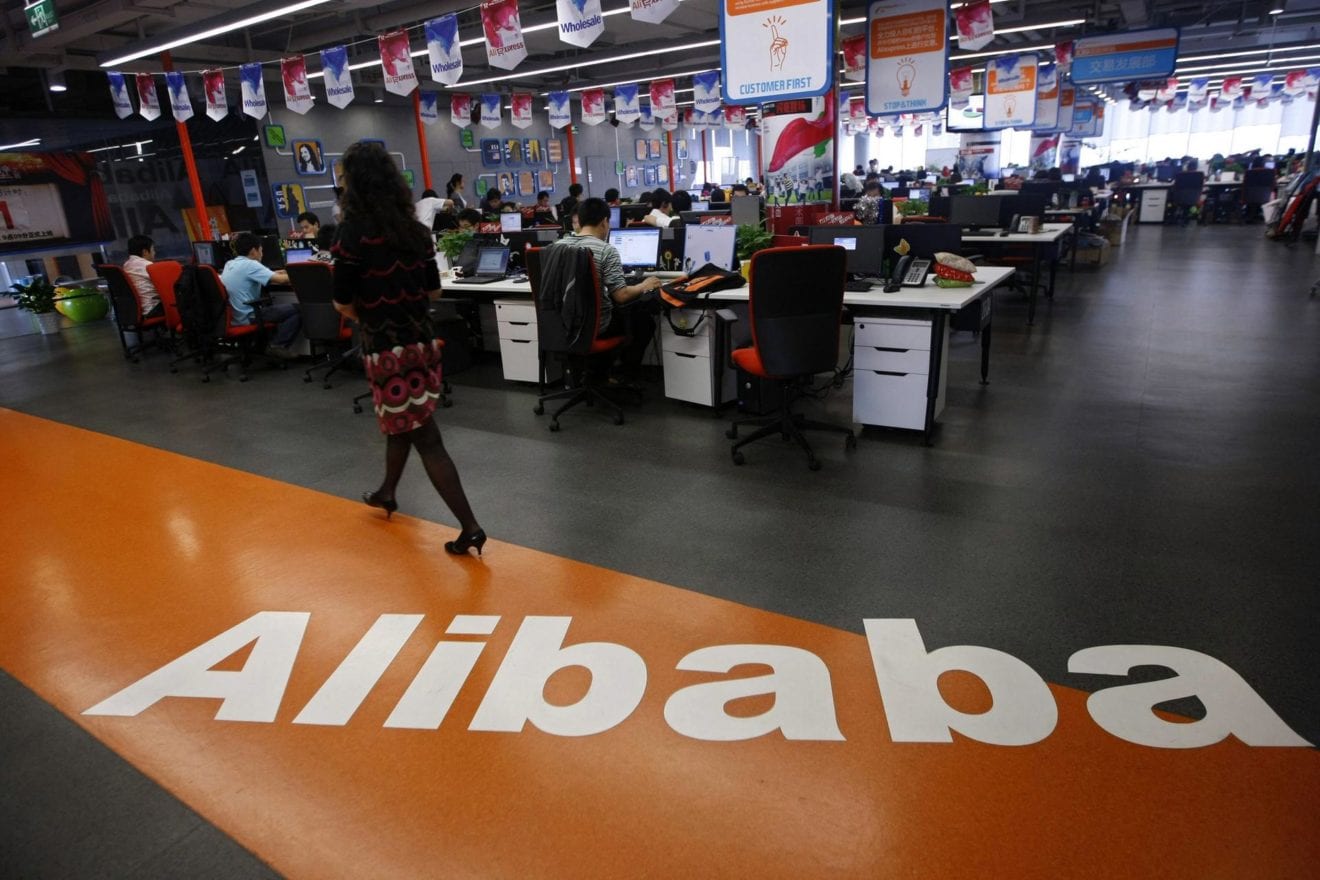
    Seeing the ranking, Alibaba stayed competitive in its forte, e-commerce sector. Alibaba’s C2C e-commerce platform Taobao ranked first, its B2C e-commerce platform Tmall ranked second, its second-hand retailer ranked seventh, and its electronics retailer Suning ranked the eighth. The report was jointly published by Cheetah Global Lab, Cheetah’s big data platform libra and 36kr.

    China’s e-commerce market will get even bigger, with a boost from the Chinese government. Online retail sales could reach 10 trillion yuan in 2020 as the country’s online population will pass 1 billion, growing by 7.8 percent a year from 2015, according to the 2016-2020 e-commerce development plan released by the Ministry of Commerce and other government departments. The e-commerce market will employ over 50 million people by the end of 2020, according to the plan.

    Screen Shot 2017-01-26 at 10.01.45 AM

     1. Live Streaming

    Taobao, JD and Mogujie added live streaming to their platform. Online celebrities live stream and recommend products on the video, and shoppers can click on the link while watching the video to buy the featured product.

    Online celebrities, mainly female broadcasters in their 20s and 30s, try on brand cosmetics and clothing at home. Online celebrities in overseas countries visit the local supermarket and explain each product while putting them in the cart and visit the local cosmetic shop to get further explanation of the cosmetic product from the clerk.

    2. Content is king

    Some e-commerce platforms added content-reading features to their apps, such as Taobao Headlines (淘宝头条) and JD Findings. Since Alibaba’s content cannot go on WeChat public accounts, Alibaba had no option but to come up with a content service on its e-commerce platform to encourage their customers to get to know more about their products.

    Vipshop is a Guangzhou-based online discount retailer for brands in China. After listing on New York Stock Exchange, the company reported its revenue up 38.4% YoY to 12 billion RMB (1.8 billion USD) in the third quarter of 2016.

    3. Consolidating the market using M&A and investment

    Some e-commerce companies showed consolidation. Hangzhou-based Mogujie now takes control of its previous rival Meilishuo (ranking 20th in the list) through a stock swap in January last year. Ranking 5th in the list, Mogujie was founded in 2011 by a former Alibaba engineer.

    Suning is an electronic product focused retailer in China. The company invested in Eight Days, an e-commerce startup targeting university students to get a grip of post-95 consumers in April 2016.

    4. Focusing on the second-hand market

    Xian Yu (meaning Idle Fish), a second-hand e-commerce has risen from no.10 to no.7. Alibaba spent 15 million USD to acquire Xianyu in March 2016. The customers can use their smartphones to run their stores, and add promotional voice recordings to sell their products, which makes the app more like a social app.

    Other e-commerce companies include Zhe800 and Juanpi. Pinduoduo is an e-commerce company invested by James Mi, the co-founder and managing director of Lightspeed China Partners.

  • Australian E-Commerce Looks to China for Global Growth

    Australian E-Commerce Looks to China for Global Growth

    Chemist Warehouse is geared up to target its online Chinese consumer market this weekend, by supporting the Melbourne Chinese New Year 2017 Festival with a Tai Chi Masterclass Series in Southbank, to celebrate the Year of the Rooster.

    In 2015, the pharmacy chain announced its plans to directly target the burgeoning demand for Australian complementary medicines in China, via its e-commerce website hosted on online retail giant Alibaba’s Tmall platform, projecting $88 million in sales in 2016 via the offering. in China.

    A part of Alibaba Group, Tmall Global is an e-commerce platform developed for international sellers to access Chinese consumers. China’s online shoppers interested in products from a specific country can go to an online country pavilion and access the country that way.

    The strong demand for high quality Australian products in China was one of the factors which drove Swisse and Blackmores to be one of the highest performing Australian brands during Alibaba’s 11.11 Singles Day last year, China’s largest e-commerce shopping event.

    The Pharmacy Guild of Australia, along with other Australian health and wellbeing suppliers, have been asked to attend China’s inaugural Health Product Expo in Qingdao in March this year, which is expected to attract over 60,000 visitors, 7,000 of which are industry buyers.

    Through online shopping, Australian products have found a lucrative channel into the economic powerhouse of China.

    Woolworths set up shop on Tmall Global a year ago, aiming to tap burgeoning Chinese consumer demand for Australian food and grocery products.

    Australia’s largest supermarket retailer engaged with Chinese e-commerce company eCargo Holdings, to build and manage a Woolworths store front the Tmall platform, selling rougly 80 products including Woolworths’ Select and Woolworths Gold milk powder, Swisse vitamins and Devondale milk powder.

    In April last year, one of our largest cosmetics online retailers Adore Beauty, backed by Woolworths (who have 25 percent stake in the company), announced its expansion into the Chinese market by selling its beauty products through Tmall.

    Adore Beauty’s Tmall offering features 50 products, including six popular Australian brands that are currently not available in China, namely Lanolips, Alpha-H, ELEVEN, asap, evo and Skinstitut.

    As off last year, cross border e-commerce in China now favours cosmetic imports, with the tax rate, if the purchase is above 100 yuan, now set at 32.9 percent, compared to 50 percent previously.

    Kate Morris, founder of Adore Beauty says the Chinese market is an exciting and huge prospect for the company, especially in light of China’s demand for our high quality Australian products.

    On a broader perspective, the company recently told us that 2017’s growth strategy is to expand its footprint globally, with China being an important part of that vision.

    Adore Beauty now offers thousands of products to more than 150 countries and territories via its Borderfree e-commerce platform.

    Which Australian products are most popular in China?

    According to Startrack, the most popular Australian product categories in the Chinese market are supplements, dairy, honey, food, skincare and cosmetics, maternity and baby products.

    Why sell to China?

    “China’s middle class is booming. And they want to buy Australian products. Aussie produce is considered clean, green, authentic – Australian retailers are already meeting this growing demand,” says Startrack. 

    According to the e-commerce and parcel delivery company, here are the six most important factors why China is such a great economic powerhouse for our e-commerce industry:

    • China’s middle class is booming
    • Chinese incomes are rising
    • Chinese consumers are shopping more than ever before
    • And most importantly, they want to buy Australian products

    Wine is another up and coming e-commerce market fro Australia to coin in on, in the Chinese market. According to a new report that came out yesterday from the Australian wine industry, our local wine exports are seeing major gains in the Asian market due to changes in our free trade agreement with China.

    If we go back three years, this time, Australia was losing major market share in the global wine industry, mainly to New Zealand and Chile. The reason being, these countries had a free trade agreement with China, but Australia did not.

    Things have changed, and with that has come rapid revolution of the Australian wine market. In 2016 the value of our wine market grew by 7 percent to $2.2 billion, driven by big increases in bottled wine. Exports to China grew by 19 percent to $ 875 million, which overtook the US as our most important wine export market.

    Online wine retailer Vinomofo looks set take advantage of this, with plans to launch into the Chinese market by 2018, which will follow its US launch planned for 2017.

    Following the success of their launch in New Zealand six month ago, the company launched in Singapore last month, which it says will help set it up for its big US expansion, and then China.

    “We’ll start in English, but we will then localise the content. We’ll have plenty of leanings from our Singapore launch, and learning how to operate in a different country. As a startup launching in a different country, we’re always aware that we have to assume that we’re pretty dumb and we have to learn hard about all these things,” Andre Eikmeier, Vinomofo’s co-founder and joint chief executive, told us at the Singapore launch.

  • Alibaba boosts Q4 revenue by 54%

    Alibaba boosts Q4 revenue by 54%

    Chinese e-commerce giant Alibaba Group reported a 54% increase in revenue for the quarter ended December 31.

    Revenue for the quarter reached 53.25 billion yuan ($7.66 billion). This was mainly attributed to the strong growth of its China e-commerce retail business and Alibaba Cloud division, as well as the consolidation of newly acquired businesses (mainly Youku Tudou and Lazada).

    “Our robust December quarter demonstrates the strength of the Chinese consumer and Alibaba’s ability to create value across our vast ecosystem,” said Daniel Zhang, Chief Executive Officer of Alibaba Group.

    The Alibaba chief said the 11.11 Shopping Festival showcased Alibaba’s expertise at integrating commerce, entertainment and social engagement.

    “We are driving the age of ‘New Retail,’ which leverages big data and innovation to provide a seamless online and offline experience for nearly half a billion mobile monthly active users. This retail transformation will make it even easier and more efficient for brands and retailers to engage with these consumers anywhere, anytime,” he said.

    For fiscal year 2017, Alibaba expects revenue to increase 53% year-over-year. “With three quarters of the year coming in ahead of expectations, we are adjusting up our 2017 fiscal year revenue guidance from 48% to 53% year-over-year growth,” said Maggie Wu, Chief Financial Officer of Alibaba Group.

    She disclosed that the company generated $4.9 billion in free cash flow on a non-GAAP basis during the quarter, which enabled it to continue investing in growth areas such as cloud computing (115% revenue increase year-over-year), digital media and entertainment (273% increase year-over-year), and other innovation initiatives (61% revenue increase year-over-year).

    Meanwhile, revenue from core commerce jumped 45% year-over-year to $6.71 billion.

    The Taobao marketplace added 43 million monthly active users (MAU) from September, with relevant content in the app reportedly continuing to drive mobile user growth. Small, on the hand, had another record breaking 11.11 sales with a record $17.4 billion in gross merchandise volume (GMV) settled through its own payment platform Alipay, 82% of which was generated from mobile.

    The company disclosed that its “New Retail” strategy will enable it to tap into the entire $4.8 trillion retail sector in China by eliminating the distinction between online and offline commerce. It also bared plans to partner with brick-and-mortar retailers in different verticals through equity investments and deeper operational integration.

  • Thai e-commerce sector expected to expand by 20 per cent this year

    Thai e-commerce sector expected to expand by 20 per cent this year

    The bullish forecast came as it was revealed the Southeast Asia e-commerce market in 2015 was worth US$900 million (Bt31.7 billion) and is forecast to grow up to 16 times that figure – about $11 billion – by 2025.

    Worawoot Ounjai, chief executive of Central Online, said that the e-commerce market in Thailand would grow more than 15 per cent this year because more consumers would shop online.

    He said only about 3 per cent of Thai consumers currently shopped online, so there was obviously massive growth potential for the market. While the e-commerce ecosystem, such as online payment transaction fees, Internet broadband and logistic, were changing dynamically, he said.

    He added that the use of e-wallets via mobiles and the convenience of online payments would drive more consumers to shop online.

    Only 1 per cent of Central Group’s retail revenue last year came from online.

    Worawoot said an e-commerce marketplace platform would with the next couple of months be provided for all shops in the Central Group and all shops that rent space at Central department store.

    Central will also invest over Bt1 billion in warehouses to support its online business and use of robot management, he said.

    “I think that online shopping will be a big change in behaviour for customers since the coming of the e-wallet via mobile phones, which will create convenience to customers,” he said.

    Thanawat Malabuppha is CEO of Priceza, a provider of shopping searches and price comparisons in six countries – Indonesia, Malaysia, Philippine, Singapore, Vietnam and Thailand.

    Thanawat said the e-commerce market in Southeast Asia was one of the fastest-growing and most promising, with it forecast to grow $11 billion in 2025.

    He said Thailand expected to post e-commerce growth of about 20 per cent this year – the driving factors increased Internet and mobile phone use, as well as improved logistics and e-payment systems. This would create heightened convenience and consumer confidence to shop online.

    He said the quality and reliability of online shopping services were another driving force impacting on the acceptance of e-commerce in the region.

    Thanawat added that Priceza provided a price comparison platform to enable shoppers to search for products from multiple categories offered by the many online shops, which promoted fair competition and empowered buyers with informed buying decisions from shop ratings and buyer reviews while giving them better shipping options.

    Priceza envisions being part of the efforts to make the retail ecosystem in the region as transparent as possible and deliver excellent market competition that benefits both buyers and sellers.

    Nuttawit Polwattanasuk, managing director of LnwShop, said the firm provided an e-commerce platform to support more than 460,000 online shops and had online transaction of over Bt1.8 billion last year. The online payment system will have an important role in driving e-commerce in Thailand in the next few years, Nuttawit said.

    The Electronic Transactions Development Agency has forecast that the total e-commerce market in Thailand this year will be worth Bt2.52 trillion.

    That comprises business-to-business transactions totalling Bt1.38 trillion (54.74 per cent), business-to-consumer transactions worth Bt729 billion (28.89 per cent) and business-to-government transactions valued at Bt413 billion (16.37 per cent).

    This would represent growth of 12.4 per cent from last year’s market value of around Bt2.24 trillion.

    The country has around 41 million Internet users, 41 million Facebook users, 33 million Line users, 7.8 million Instagram users and 5.3 million Twitter users, the agency reported.

  • eBay sales struggle to emulate Amazon’s growth

    eBay sales struggle to emulate Amazon’s growth

    At first glance, eBay’s final quarter numbers look relatively subdued – with growth across every line sequentially worse than the prior quarter.

    However, digging beneath the headlines reveals a slightly better picture, if only because the strength of the dollar has deflated sales. On a currency neutral basis, gross merchandise volume increased by 5 per cent, and net revenue jumped by 6 per cent. While these numbers are not ultimately reflected in the accounts, they show that eBay’s underlying performance is not quite as bad as it first seems.

    All that noted, when put into a wider context the gains remain fairly unspectacular. Indeed, eBay’s growth remains well below that of total eCommerce sales growth across the markets it serves. As well as losing market share, its performance is also anemic when contrasted to that of online peers such as Amazon – which had a stellar holiday season. This is especially so in the sale of physical products from the marketplace (which excludes the more buoyant StubHub part of the business) where revenue rose by just 1.1 per cent over the prior year.

    As much as eBay did enough to meet market expectations, the results are disappointing in that they show the various improvements the company is making are not, as of yet, generating significant traction with consumers. This includes the use of more structured data to make listings easier to find and view, and an increase in the number of full-priced products available from the site.

    As sensible as these steps are, they are really about correcting deficiencies rather than putting eBay on an innovative footing.

    eBay needs to go much further in revamping the whole online experience in order to allow it to compete more effectively with rivals. This includes trying to create some stickiness around the brand and proposition, in the way that Amazon has done by creating a whole ecosystem of products and services. Admittedly, this is a very tough ask, but it is the direction in which eBay needs to travel if it is to win back market share.

    In looking at ways to improve, eBay needs to focus its attention on younger shoppers, among whom brand perception and site usage have weakened. From Conlumino’s data, younger demographics – while active digital consumers – do not have the affinity with eBay that the generation before them did, or that older consumers do. In this regard, eBay has lost out to players like Etsy which these consumers believe to be more authentic, and more likely to offer innovative and interesting products.

    Looking ahead, there is no overly negative forecast for eBay: the company is addressing its issues and is making steady progress that will continue to aid results. However, it is one of the slower players in the fast-paced digital arena and to date there are very few visible signs it will move into the fast lane in its new fiscal year.

    -Neil Saunders

  • Alibaba posts strong third quarter results

    Alibaba posts strong third quarter results

    E-commerce giant, Alibaba, posted a 54 per cent rise in third quarter revenue ending December 31, 2016, raised its outlook and announced it would step up investments to expand its cloud and digital ventures.

    Alibaba reported a revenue of RMB53.2 million (US$7.67 million), an increase of 54 per cent year-over-year. Revenue from core commerce increased 45 per cent year-over-year to RMB 46.6 million (US$6.7 million). Revenue from cloud computing increased 115 per cent year-over-year to RMB1.7 million (US$254 million). Revenue from digital media and entertainment increased 273 per cent year-over-year to RMB4.1 million (US$585 million). Revenue from innovation initiatives and others increased 61 per cent year-over-year to RMB845 million (US$122 million).

    “Our robust December quarter demonstrates the strength of the Chinese consumer and Alibaba’s ability to create value across our vast ecosystem,” said Daniel Zhang, Alibaba Group CEO.

    “The 11.11 Shopping Festival featured Alibaba at its best, integrating commerce, entertainment and social engagement, all happening globally at record scale,” Zhang said. “We are driving the age of ‘New Retail,’ which leverages big data and innovation to provide a seamless online and offline experience for nearly half a billion mobile monthly active users. This retail transformation will make it even easier and more efficient for brands and retailers to engage with these consumers anywhere, anytime.”

    Maggie Wu, Alibaba Group CFO, said with the three quarters of the year coming in ahead of their expectations, they have adjusted their 2017 fiscal year revenue growth outlook from 48 per cent to 53 per cent year-over-year.

    “This quarter we generated US$4.9 billion in free cash flow on a non-GAAP basis1, enabling us to continue investing in growth areas globally, including cloud computing, digital media and entertainment and innovation initiatives, as well as core commerce,” Wu said.

    Håkon Helgesen, retail analyst at Conlumino, said while Alibaba’s revenue numbers are flattered by the integration of the Lazada business, this was, nonetheless, another robust quarter for the online giant, and one that exceeded initial forecasts.

    “All parts of the business pulled their weight, although the international division stormed ahead with stellar growth of 288 per cent over the prior year,” Helgesen said.

    The 11.11 Global Shopping Festival, which is a giant day-long online sale, made a healthy contribution to growth: this year $17.8 billion of merchandise was sold over 24 hours.

    “In our view, the event is a testament not only to Alibaba’s reach within China and, increasingly, the wider world – but also to its ability to create engaging experiences which excite and stimulate consumers,” Helgesen said. “In essence, the day was as much a social event – with online and virtual reality games – as it was an opportunity to sell product.”

    Helgesen said part of Alibaba’s efforts to create a more holistic shopping experience involve going beyond one-dimensional e-commerce by tying their platforms to physical retail.

    “We welcome this initiative and liken it to Amazon’s push into bricks and mortar,” he said. “However, like Amazon, Alibaba does not just want to play in the physical space – it wants to reinvent the shopping experience by using data and technology. So far, good progress has been made with an equity stake being taken in Sanjiang Shopping Club (a neighborhood grocery chain in China), and an offer to acquire a controlling stake in Intime Retail Group (which runs department stores and owns shopping centers in China).”

    Away from the domestic business, Alibaba’s international side continues to do well.

    “Here, Alibaba’s role as a facilitator for Western brands wanting to sell into China continues to be a major advantage and a significant source of growth,” he said. “In short, Alibaba provides a shortcut for retailers looking to expand and grow in China. The opportunities for Alibaba to expand its operations and platforms into foreign markets is also sizeable, although we maintain our view that over the next year the company will stick to countries where e-commerce is less developed. This will help it to maximize returns.”

    “In summary, we retain our opinion that Alibaba is a solid, and highly disruptive, retailer.”

  • Startup pushes mobile, social selling concept in Southeast Asia

    Startup pushes mobile, social selling concept in Southeast Asia

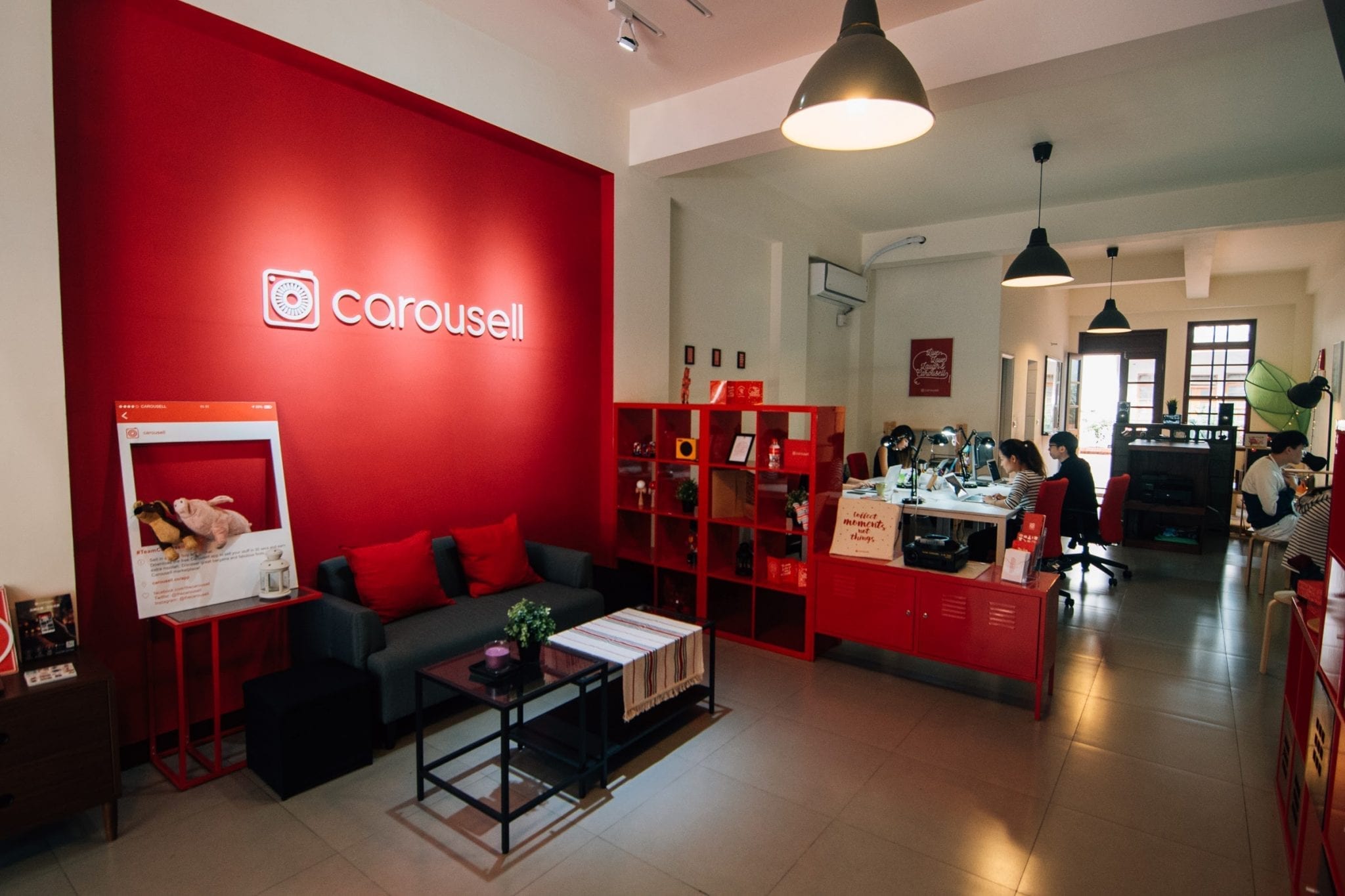
    Singapore-based mobile classifieds marketplace Carousell recently announced that it has acquired Duriana, a Malaysian-based mobile-first, fashion and lifestyle marketplace in Southeast Asia.

    It was the company’s third acquisition in less than six months, which is expected to boost its ambition to become a leading global mobile classifieds marketplace.

    Basically, Carousell offers a mobile marketplace for vendors to sell stuff – mostly used or ‘preloved’ items – using only an iPhone or an Android phone. It offers fast onboarding – its claim is 30 seconds to list an item for sale – and one can share the link on Facebook, Twitter, and Instagram.

    This aspect of social selling is bundled with a trusted user feedback that makes it easy for vendors to engage with customers. As simple as the concept sounds, it is fast catching on. ‘Snap to sell’ and ‘chat to buy’ resonates with a young and digital-savvy target market.

    Siu Rui Quek, CEO & Co-founder of Carousell, told in an email interview that the basis of the idea was that selling should be as simple as taking a photo, and buying as easy as chatting.

    “We felt that this was important, as we noticed more people like us using the smartphone as the main device to access the internet,” he said. “We aim to be more than just a transactional platform because we believe that buying and selling preloved goods is a more responsible way to consumption and that every interaction on our marketplace can help to inspire others to become more thoughtful consumers,” he said.

    The marketplace also has a feature called “Carousell Groups” which allows users of similar interests and hobbies to connect and make friends. “We have a vibrant community of Lego fans, Disney fans, sneakerheads, photography enthusiasts and many others,” he added.

    Launched in 2012 in Singapore, Carousell has since spread to 19 cities around the wold, including recent launches in Hong Kong, the Philippines, and Australia. It is backed by leading international Venture Capitalists Sequoia India, Rakuten Ventures, 500 Startups, Golden Gate Ventures, and QuestVC.

    Since its launch in Malaysia in 2014 and the Philippines in 2016, the classifieds marketplace has been growing rapidly in both countries. Carousell claims almost two million items sold in the fourth quarter of 2016, almost doubling within a quarter.

    Duriana, on the other hand, was founded in 2013 and has raised funding from investors like Alps Ventures and BEENOS.

    “It’s been an exciting three years with Duriana, and we’re proud to have brought the company to this stage,” said Saeed Gouda, Co-founder and CEO of Duriana. “We’re confident that Duriana users will enjoy buying, selling and connecting as part of the vibrant Carousell community.”

    The acquisition of Duriana is part of Carousell’s international expansion strategy, according to Quek.

    “Mobile classifieds operate best with a large community of buyers and sellers on one platform,” he said. “In Southeast Asia, where more people are experiencing the internet for the first time through their smartphones, we have the opportunity to reimagine the way they buy and sell online. There are over 600 million people, but almost 400 million are not connected to the internet yet. That’s a lot of potential. We’re reaching out to a generation of internet users who leapfrogged the desktop internet, creating an environment where we can take a mobile-first approach to solving unique local problems.”

    From startup to global player

    “If you’ve ever bought or sold something on a forum or classifieds website, you’ll remember how difficult and frustrating it could be to list an item or find something you wanted these sites on those forums. You often needed a pretty good idea of how the forums or online stores worked, as they were built for different purposes and not as a marketplace,” Rui explained.

    Thus, in March 2012, Quek and co-founders Marcus Tan and Lucas Ngoo participated in a Startup Startup Weekend Singapore and built the first Carousell prototype in 54 hours to solve this problem. They demonstrated the prototype and won the competition.

    “The basis of the idea was that selling should be as simple as taking a photo, and buying as easy as chatting. We felt that this was important, as we noticed more people like us using the smartphone as the main device to access the internet,” he said.

    The trio started working on Carousell full-time, and the first version was launched in the Singapore iTunes App Store in August 2012.

    Today, Carousell expects mobile commerce to be a significant contributor to the exponential growth in the region, as the web and mobile infrastructure improve, and as smartphones become more affordable and accessible.

    Retail e-commerce is poised to reach $4 trillion by 2020  globally, according to a report from eMarketer. APAC is expected to take a sizeable chunk of that pie in 2020 with US$2.7trillion, and Southeast Asia is poised to become one of the world’s fastest-growing regions for e-commerce revenues, exceeding $25 billion by 2020.

    “Across this region, governments are also making a greater push for companies and entrepreneurs to adopt new technology to keep up with consumer trends and demands. For example in Malaysia, the government has announced that 2017 will be the “Year of the Internet Economy”. The digital economy is already contributing 16% to the country’s GDP, and this figure will only go up,” he added.

    Global push

    By acquiring Duriana, which is a mobile-first, peer-to-peer, fashion and lifestyle marketplace in the region, the company expects to bring its users 600,000 users in Malaysia and the Philippines onto the Carousell platform.

    “We saw that Duriana users had similar demographics and interests in buying and selling fashion items, gadgets, and electronics as well as home furnishing,” Quek shared.

    With the speed with which it has expanded in the region in the last five years, the company also sees a global opportunity.

    “The problem we are solving is a global one, and we have a once in a lifetime opportunity to be the world’s largest classifieds marketplace because of the mobile phenomenon,” Quek said. “By 2020, more than six billion people around the world are expected to own mobile phones.”