Category: E-Tailing

Retail News Asia is committed to providing both local and global retailers with the latest E-Commerce & Etail news throughout the Asian market. This on a daily base.

  • Alibaba third quarter revenue surges 54% to $7.67bn

    Alibaba third quarter revenue surges 54% to $7.67bn

    Alibaba has reported that its third quarter revenue increased 54% to $7.76bn, compared to $5.3bn for the same period last year.

    The Chinese e-commerce giant credited the revenue growth to its commerce retail business in China followed up by Alibaba Cloud and also the integration of its newly acquired businesses, especially Youku Tudou and Lazada.

    Alibaba stated that the robust revenue growth in its Chinese commerce retail business was due to its persisting efforts to improve the social commerce platform by delivering better user experience driven by data technology.

    Alibaba Group CEO Daniel Zhang said: “Our robust December quarter demonstrates the strength of the Chinese consumer and Alibaba’s ability to create value across our vast ecosystem.

    “The 11.11 Shopping Festival featured Alibaba at its best, integrating commerce, entertainment and social engagement, all happening globally at record scale. We are driving the age of ‘New Retail,’ which leverages big data and innovation to provide a seamless online and offline experience for nearly half a billion mobile monthly active users.

    “This retail transformation will make it even easier and more efficient for brands and retailers to engage with these consumers anywhere, anytime.”

    The commerce retail business contributed revenue of RMB40.8bn ($5.9bn), an increase of 77% in comparison to what it earned in the same quarter in 2015.

    From outside China, the retail business for Alibaba brought the group revenue of RMB2.4bn ($353m), surging at 288% in comparison to what was registered in Q4 2015.

    The group’s cloud computing business brought revenue of RMB1.8bn ($254m), an increase by 115% compared to Q4 2015.

    On the digital media and entertainment front, Alibaba made revenue of RMB4bn ($585m), surging by 273% to its corresponding revenue in the same quarter of 2015.

    Following the results it has delivered for Q4 2016, Alibaba is expecting its revenue for fiscal year 2017 to increase 53% year-over-year.

  • UberEats Asia expands to Bangkok

    UberEats Asia expands to Bangkok

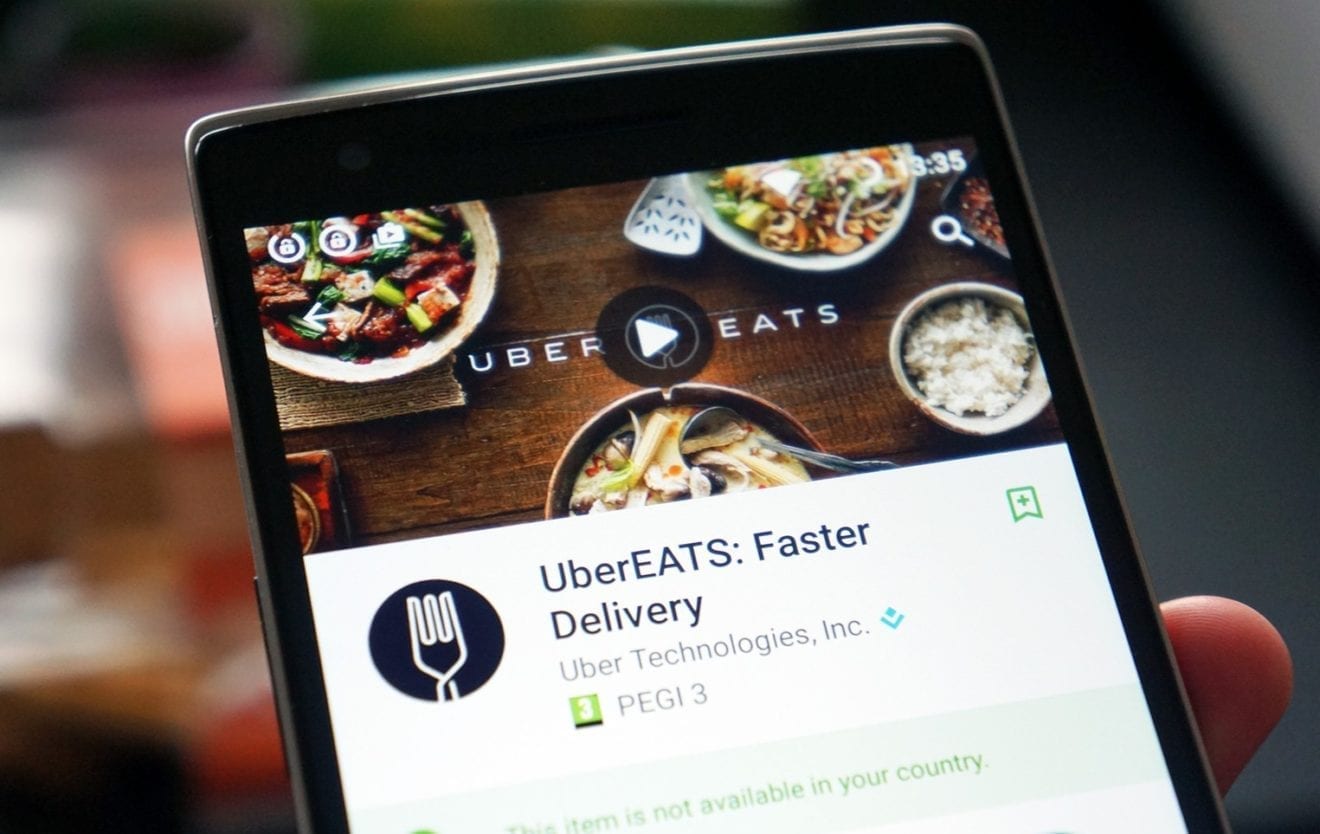
    UberEats Asia has introduced its stand-alone food-delivery app UberEats to Bangkok.

    It initially covers 100 restaurants and 24 cuisines, and users can track their orders from the moment they are placed until they arrive at their doors.

    “This app offers a window into what the future competition in the food-delivery industry could look like,” says UberEats Asia-Pacific GM Allen Penn. UberEats Asia is a business unit of US-based Uber Technologies.

    Already delivering food in Thailand are Berlin-based Foodpanda, Singapore-based GrabEat and Tokyo-based Line Man.

    After downloading the app, UberEats customers can order a meal and have it delivered in 30 to 45 minutes. The limited initial service areas include Asok, Chinatown, Ekamai, Nana, Pathumwan, Ploenchit, Phrom Phong, Sathorn, Silom and Thong Lor.

    The service will be available 10am to 10pm daily with no minimum price per order.

    “Bangkok has fantastic cuisine and the city has a large population with a strong base of smartphone users,” says Penn. “Most importantly, Thai people love to eat.”

    Bangkok is one of 57 cities in 20 countries where UberEats is available. It is the fifth city in Asia where Uber has launched its food delivery service, following Singapore, Tokyo, Hong Kong and Taipei.

    In other countries, UberEats restaurant partners have increased revenue by up to 50 per cent, says Penn.

  • BCBG Maxazria plans restructure

    BCBG Maxazria plans restructure

    Women’s fashion retailer BCBG Max Azria plans to close some of its stores to focus more on eCommerce, licensing and wholesaling.

    “BCBG has been negatively impacted by the growth in online sales and shifts in customer shopping patterns, and as a result has too large a physical retail footprint,” says PR company Sitrick & Co spokesman Seth Lubove.

    “To remain viable, the company must realign its business to effectively compete in today’s shopping environment.”

    BCBG hired AlixPartners consultancy, replacing Berkeley Research Group, to restructure its debt, reports Bloomberg.

    Many US retailers, especially department stores, struggled through the latest holiday season, including H&M and Target. Payless has announced it is restructuring to deal with its US$665 million debt, and department store Macy’s has cut more than 10,000 jobs as it closes branches and downsizes.

    BCBG has 570 global stores, with 175 in the US. It opened new stores in Munich and Paris last year, and plans to open a store in Quebec this year.

  • China’s m-payment market growing 142% annually

    China’s m-payment market growing 142% annually

    The total value of mobile payment transactions in China is expected to grow at an average annual growth rate of 142% over the next three years to reach 13,776.5 trillion yuan ($2,011.17 trillion) by 2020, according to Research and Markets.

    According to a new report by the research firm, mobile banking accounted for 83.1% of the value of mobile payment transactions in 2015, but this is expected to decline slightly to 80.4% in 2020.

    Among the banks, China Construction Bank had a 23.1% market share, followed by Industrial and Commercial Bank of China (20.0%) and Agricultural Bank of China (13.9%).

    Faced with fresh challenges from payment service providers, the banks are expected to strengthen competitiveness by introducing differentiated services and products, such as jointly-issued cards or support for large payments.

    Third-party mobile payment transaction values have been estimated at 21.96 trillion in 2015, with the market rapidly growing. Alibaba’s Alipay and Tencent’s Tenpay have captured 90% of the market.

    Market competition further intensified in 2016 as handset vendors and traditional enterprises stepped up their presence in the payment market.

    Research and Markets expects 2D QR code payment technology to continue to lead the market. More secure and advanced technologies such as near field communication (NFC), hosted card emulation (HCE), token authorization and biometric authentication will meanwhile mature more gradually.

  • Online Tết shopping a boon for busy pros

    Online Tết shopping a boon for busy pros

    Lan Anh, an accountant living in District 3, HCM City, is over-worked as the Lunar Year draws to a close.

    She has plenty of reports to finish and very little time to spare for shopping, even for the most traditional, must-have food items for Tết (Lunar New Year), the most important festival celebrated in the country.

    For professionals like her, online shopping is a boon. Ordering and paying have become easy and convenient, although problems of quality and authenticity have also surfaced.

    Many consumers have said that the hectic year-end schedule keeps them so busy that they can’t go shopping, but the development of e-commerce and e-payment is helping them avoid going to stores or supermarkets by themselves. Now, without leaving their office or home, they can place orders online and wait for goods to be delivered at home.

    “To prepare for the New Year, I have ordered some traditional dishes from the central region, like pickled scallion, salted figs and papaya shrimp sauce,” Lan Anh said.

    With Việt Nam boasting a large Internet community and a young, digital-savvy population, the domestic e-commerce market is buzzing with activity ahead of the upcoming festival.

    Xuân Hòa, a resident in HCM City’s Bình Thạnh District, said he had purchased some products via Facebook after seeing many sellers advertise their goods on the social network.

    “I bought green grapefruit and bánh chưng cake for the upcoming holiday. Thanks to Facebook, I can shop and complete my work at the same time as all the transactions are conducted online. I just wait for the bills and goods brought to my house,” Hòa said.

    As the nation pushes its way to modernisation and deeper international integration, online shopping is set to become a habit for many. This is facilitated by several factors including diversified services and products, fast transaction speeds, quick payment and attractive promotions.

    Many large e-supermarkets and social networking sites have announced that they have carefully prepared to ship a large quantity of goods to serve a huge, growing demand, apart from launching various promotions to attract more buyers.

    Hotdeal.vn, one of Việt Nam’s largest e-commerce sites, has launched special shopping programmes for the holiday, providing customers with a wide range of selection of tasty and delicious Tết dishes from common foods to specialities like natural dried dates, pasteurised pennywort powder and hand-made meat pies.

    At e-commerce site adayroi.vn, customers can choose diverse food products, from confectionery, snacks, dried food, beverage and soft drinks to vegetables, fruits as well as provisions like rice, sugar and groceries.

    A representative of an e-commerce business said that with much lower overheads than traditional shopping channels, online shopping centres are able to offer multiple promotions and discounts.

    Some popular sites like sendo.vn, lazada.vn, chodientu.vn, hotdeal.vn, tiki.vn and zalora.vn are offering discounts up to 50 per cent on all types of products, especially those related to fashion and beauty, like shoes, handbags, watches and eyeglasses.

    With foodstuff is most in demand for this holiday, these items are advertised widely on the Internet with many discount programmes. Although the percentage discounts are not high compared to other consumer goods, people can still buy some items like confectionary, soft drinks and noodles for discounts of up to 39 per cent.

    Meanwhile, big supermarket chains in the country, are only accepting delivery orders by phone, while a prominent wholesaler allows only registered business owners to make online purchases.

    Quality question

    While online buying has grown significantly, consumers aren’t completely convinced of the benefits because the platform presents a number of risks and problems for users. Many e-commerce businesses have exploited legal loopholes in e-commerce transactions to swindle customers.

    Thanh Hà, a resident of HCM City’s Tân Phú District, said a very attractive spicy dried chicken has appeared on the e-market this year. After researching social networks, she chose a seller who seemed trustworthy and ordered a small amount to taste the product first.

    After checking and liking the dish, she ordered a larger amount to present to her relatives as Tết gifts. However, the second order turned out to be of bad quality. Hà still had to pay for the goods as it was the very last days of the year and the return process required many complicated steps, she said.

    Several websites are selling what they claim Nike and Adidas brand sports shoes for around VNĐ350,000, much lower than the official prices listed on the brands’ original websites. A pair of Converse brand shoes are being advertised online for just VNĐ100,000- 200,000, while the price of a pair on the official website is between VNĐ1 and 2 million.

    Lawyer Nguyễn Văn Viễn, Chairman of the Intellectual Property Association of HCM City, said punishing violations relating to counterfeit goods would be easier if the affected brand belongs to Vietnamese firms as they can confirm whether the goods are authentic or not.

    It is difficult to get confirmation of pirated products from overseas brand owners, Viễn said, adding that the Government and relevant agencies have to tighten management of online goods. The unprofessional and disreputable behaviour of some e-commerce businesses have badly affected the reputation of authentic companies, he said.

    Nguyễn Thanh Hưng, chairman of Việt Nam E-commerce Association (VECOM), also said that as the country’s e-commerce sector developed rapidly, legal issues were posing a big challenge.

    He said Việt Nam still did not have specific guidelines on the operation of the e-commerce market, thus there is no basis to determine the operational model and management direction for this potential growing market.

  • Zalora Regional Headquarters Relocating to Tanjong Pagar

    Zalora Regional Headquarters Relocating to Tanjong Pagar

    Online fashion retailer ZALORA is relocating its corporate headquarters in Singapore. The company has signed a three-year lease occupying over 30,000 square feet across two floors in Keppel Towers, located in Tanjong Pagar in the heart of Singapore’s business district.

    Parker Gundersen, ZALORA CEO, commented, “We’re very excited to be relocating to Keppel Towers. It’s a beautiful space that offers a more efficient layout with spectacular views of the city and waterfront. The larger space supports our continued expansion needs and offers a more collaborative environment for the team. Tanjong Pagar is also a very vibrant part of Singapore with great restaurants and amenities. It’s a great next step for ZALORA.”

    Mr Tan Swee Yiow, President (Singapore), Keppel Land, said, “As a provider of premium office space, Keppel Land constantly seeks to partner exciting growth businesses that will drive the future economy. Zalora is one such company and we are very pleased to welcome them to Keppel Towers, and look forward to partnering them in their expansion in Singapore and the region.”

    ZALORA’s new office address is 10 Hoe Chiang Road #18-01 Keppel Towers Singapore 089315.

  • SelluSeller makes multiple-market selling easier

    SelluSeller makes multiple-market selling easier

    eCommerce and logistics company Anchanto has launched a software platform, SelluSeller, to help merchants, brands and distributors sell products on a multitude of marketplaces.

    Revealed at a company event in Singapore, SelluSeller enables users to manage their inventory and simultaneously upload listings to several eCommerce websites including Flipkart, Lazada and Matahari. This saves them having to repeat the process for each individual site.

    SelluSeller also allows merchants to sell crossborder and connect to logistics and warehousing services from Anchanto’s network in Southeast Asia.

    “We wanted to connect brands and sellers to marketplaces,” says Anchanto co-founder/CEO Vaibhav Dabhade. “You can outsource your logistics, including crossborder, and manage your brand’s online presence with one click.”

    Anchanto targets both small sellers with fewer than 1000 sales a month as well as large brands and distributors. For the small sellers it charges a flat fee of US$21 a month, while the larger merchants pay seven cents a order.

    However, sellers who opt to use third-party logistics providers that are already Anchanto clients and part of its warehouse management and fulfillment management network, can use SelluSeller without charge.

    Lazada test

    Anchanto expects to have more than 5000 merchants and brands on SelluSeller in the next four to five months. It has been working with Lazada to develop and test the software. Other partners include luxury-product distribution firm Bluebell Group, lifestyle and apparel distributor JayGee Group, and global market expansion company DKSH. Altogether, the product pilot includes 55 brands and distributors.

    SelluSeller is an evolution of the company’s channel-management services and expands Anchanto’s products, which until now focussed mostly on global fulfillment, crossborder shipping, and warehouse management for clients like Groupon and Levis. The company has also helped businesses from Europe get their products on marketplaces like Flipkart, Lazada and Qoo10.

    Meanwhile, Anchanto acknowledges that regional eCommerce is significantly outpacing domestic eCommerce, despite price variables in terms of shipping, customs and tariffs, plus delays because of “large amounts of red tape”, he told the 2017 Asia eCommerce Dialogue in Singapore.

    He says that for regional players, local partnerships are necessary in each country, as exemplified by multinational companies.

  • Business globalisation must be more inclusive, says Jack Ma

    Business globalisation must be more inclusive, says Jack Ma

    Alibaba founder Jack Ma says business globalisation is good – but not yet good enough.

    I believe globalisation needs to be improved,” Ma told an audience during the second day of the World Economic Forum annual meeting in Davos overnight. “Globalisation, I think, should be inclusive globalisation.”

    Probed by interviewer New York Times columnist Andrew Ross Sorkin, Ma said his goal is to shift the balance of power in globalisation away from big companies and toward empowering small businesses. He said globalisation was largely controlled by 60,000 large businesses over the past three decades.

    “What if, in the next 30 years, we can support 6 million businesses across the board?” he asked.

    Ma’s appeal for more-equitable opportunities for success follow a commitment he made in a discussion with US President-elect Donald Trump earlier this month to facilitate creation of one million small business jobs in the US over the next five years.

    The Alibaba founder touched on that talk with Trump during his interview with Sorkin, saying he found the President-elect “open-minded, and (he) listened to what I talked about.” The two discussed how to develop US small businesses, promote US agricultural products and more trade between the US and China.

    “He was very happy about the results we had,” Ma said.

    Asked by a member of the audience about some of Trump’s prior negative comments on China’s trade surplus with the US and whether it might lead to a damaging trade war, Ma urged people to “give President Donald Trump some time. He has an open mind.” More broadly, he said a trade war “would be a disaster for the two countries and the world.”

    “I would do anything to stop it,” Ma said.

    Sorkin asked how Amazon’s business model stacked up against Alibaba’s, specifically, whose model is right and whose is wrong.

    “I hope both are right,” Ma said. “The world can never have one model. If you only have one correct model, it’s boring.”

    He said the two companies’ differing business models derive from fundamentally different philosophies. Alibaba is about empowering sellers, services companies, logistics companies and others to build their businesses, rather than owning the entire sales chain and logistic network.

    “Amazon is more like an empire,”he said. “Everything, they want to control by themselves. We want to be an ecosystem… Our philosophy is to empower others to sell, to service, to make sure others are more powerful than us.”

    Ma said he’s looking forward to the day when 10 million small business sellers can compete with a giant like Microsoft and “we can make every company become Amazon.”

    Ma again touted his company’s efforts at weeding out fakes on its platforms using big data. He said Alibaba has made great strides at detecting and taking down counterfeit products and worked with law enforcement to make cases against hundreds of sellers of counterfeiters last year. He said Alibaba spends about RMB1 billion a year on anti-counterfeiting efforts.

    “People criticise us. We are happy about the progress we make,” Ma said.

    Discussing Alibaba’s foray into Hollywood, Ma said the decision to go into movies came a couple of years ago during a periodic strategic review. He said Alibaba decided to enter show business as part of its so-called “2-H Strategy” – standing for happiness and health. He said movies are fun and enjoyable and that, as with all of its businesses, it’s taking a long-term view toward its success. Asked what he hoped to achieve through investment in entertainment, he compared and contrasted Chinese and American movies.

    “In China movies, the heroes are always dead. In American movies, heroes never die. In my movies, I want to make the hero live,” Ma said, drawing laughter from the audience.

  • Taiwan’s VAT On Online Retailers Becomes Law

    Taiwan’s VAT On Online Retailers Becomes Law

    On December 28, Taiwan’s President Tsai Ing-wen signed into law the amendment to the Value-Added and Non-Value-Added Business Tax Act to impose tax on foreign online sellers’ supplies to Taiwanese consumers.

    The amendment is intended to raise additional revenues and level the playing field for Taiwanese bricks-and-mortar retail and service businesses.

    The Ministry of Finance is to draw up the required tax regulations and procedures. In addition, it is to establish a website for simplified business registration and for filing VAT returns and paying VAT.

    Foreign online suppliers selling cross-border goods and electronic services to end consumers will have to register for tax in Taiwan through a permanent establishment, or appoint a VAT or non-VAT tax representative. The permanent establishment or agent will be required to file the necessary bimonthly tax returns. Significant penalties will be imposed for non-compliance.

  • Burger King to launch mobile app this spring

    Burger King to launch mobile app this spring

    The parent company of Tim Hortons and Burger King plans to launch an app Canada-wide this spring that would allow customers to order and pay in advance on their smartphone without lining up to pay a cashier.

    The move by Restaurant Brands International follows a similar one by Starbucks and is the latest push towards more automation in the food service industry.

    In the fall of 2015, RBI acquired Brewster App and tasked the startup’s dozen staff to develop the app.

    “The first feature we’re going to be introducing is the ability for a customer to have Tim Hortons (and Burger King) in their pocket,” said Steve Greenwood, RBI’s head of digital.

    Since late December, the app has undergone testing in 25 Tim Hortons cafes in Ontario and 25 Burger King restaurants in Miami. The expansion would see the app rolled out to the roughly 4,000 Tim Hortons and Burger King locations across Canada.

    In October 2015, Starbucks Canada launched a similar app at 300 stores in the Toronto area. The service is now available at various locations in the country, excluding Quebec and New Brunswick, according to the company’s website. The technology is not yet available for users of its French-language app.

    Automated customer service is part of a general trend as people become increasingly accustomed to going online to access services, such as making reservations or pre-selecting movie theatre seats, said David Hardisty, an assistant professor at the Sauder School of Business at the University of British Columbia in Vancouver.

    Mobile order-and-pay applications make shopping faster and more convenient by allowing customers to bypass lines – and for those immersed in their own world, possibly avoid unwanted human interaction, Hardisty said.

    The push towards greater automation could result in cashiers being laid off or put into different roles, but Hardisty said he doesn’t expect such jobs to be eliminated outright.

    “Mostly everybody just uses ATMs and automated stuff all the time, but they still have tellers there,” he said. “Stuff comes up that’s just really hard for a completely automated system to handle.”

    In 2015, self-service kiosks started showing up at McDonald’s restaurants in Canada. Many grocery stores and other retailers also offer self-serve checkouts.

    For RBI, the app could pave the way for other developments, like self-service kiosks, Greenwood said.

    The company already operates self-service kiosks in Burger King restaurants in several international markets and they’re being tested in the U.S., Shannon Hall, an RBI spokeswoman, said in an email.

    Hall said individual franchisees make staffing decisions, but the goal of the app is to drive sales, which should result in more employment opportunities.

    Apps also provide companies with an opportunity to build data on consumer habits and offer promotions and loyalty point programs to customers, Hardisy said.

    “Once you, you’re drawn in for one thing, you also get involved in other things.”

  • Qoo10 bridges the gap between online and offline retail in Singapore

    Qoo10 bridges the gap between online and offline retail in Singapore


    Asia’s e-commerce platform, Qoo10, has launched a GPS-enabled mobile game called MameGo! in Singapore. The game, which was developed by Qoo10, is available on Qoo10’s online marketplace as well as its Qoo10 and Live10 mobile apps.

    Nearly similar to Pokemon Go!, the game issues three Mameballs to Qoo10 shoppers on a daily basis to unlock and catch Mamemons, which can be exchanged for discounts, super sale coupons or Qpoints. Mameballs can also be collected through electronic direct mailers (eDMs), mobile pushes and various loyalty programmes.

    According to Qoo10, brick-and-mortar retailers can use MameGo!’s GPS feature to attract shoppers to visit their physical stores. This method thus bridges the gap between brick-and-mortar outlets and e-commerce platforms.

    “The future of retail is no longer divided between online and offline, but one converged platform offering consumers an end-to-end shopping experience. As consumers’ shopping appetites continue to become more sophisticated and as they demand more personalised experiences, it will take a concerted effort to boost Singapore retail sector,” said Jacob Yu, Brand Manager and PR, SEA, Qoo10.

    To help retailers leverage the game to increase brand awareness, MameGo! offers exclusive branded Mamemon characters, also known as Brandmons. Currently, more than 100 retail brands are exploring the adoption of MameGo!, each with their own personalised Brandmons.

    “Singapore remains a key growth market for us, and initiatives such as Mame Go! are aligned with our mission to create a marketplace that benefits everyone – not just customers, but also the retail ecosystem as a whole,” concluded Yu.

  • Naver AI platform recommends travel options

    Naver AI platform recommends travel options

    South Korean internet giant Naver has launched Context Recognition AI (ConA), an artificial intelligence platform that automatically recommends travel destinations overseas.

    According to Naver, parent of messaging app Line, amongst other things, ConA uses ‘deep-learning technology’ and makes use of big data from online tour sites or restaurant information to come up with travel themes and ideas based on different travel purposes.

    For instance, if one were to search for tour packages in Singapore, the Naver AI technology would suggest themes like “travelling with family,” “best nightscapes,” or “exotic”.

    ConA has the ability to read data on the web to extract the most useful information, hence the name context recognition, said a company spokesperson.

    The new Naver AI platform is based on some 12.2 million travel-related posts from Naver’s massive online communities, and it even provides ratings based on traveler reviews, in addition to other essential travel information including the time and total distance of travel required for recommended routes.

    “ConA can analyse travel data written in other languages as well, including English and Chinese, and it has potential to be developed into a global service platform,” the Naver spokesperson said.

    “We’re also considering its implementation in Naver Place (a recommendation platform for domestic news and activities), so it can automatically recommend things like festivals, attractions, and cultural events (in Korea).”

  • Vietnam’s online market: Some shut down, others pocket big money

    Vietnam’s online market: Some shut down, others pocket big money

    The online retail market is considered very attractive with 9 out of 10 Vietnamese consumers having smartphones as shown by a Nielsen report.

    Meanwhile, Trang Bui from JLL Vietnam commented that the number of credit card holders is increasing, which is a factor that will change consumer behavior.

    However, despite the attractive factors, many online retailers still fail. In August, Lingo.vn suddenly shut down without any notice in advance.

    After receiving investment from Yellow Star Investment, Lingo once set the target of becoming the No 1 e-commerce website. However, within a short time, Lingo incurred a loss of VND150 billion. The ‘sad ending’ for Lingo also happened to Deca.vn, Beyeu.com, Lamdieu.com and Foreva.vn.

    Zalora and Lazada, which are listed as the most redoubtable rivals in the market, are experiencing tough days. In April 2016, Rocket Internet, the owner of Zalora Vietnam, sold Zalora to Central Group from Thailand. In a similar move, Alibaba from China has taken over Lazada in SE Asia after a $1 billion deal.

    One of the reasons for the failure of e-commerce websites was the boom of Facebook. Everyone can do business and sell goods via the social network without paying a fee.

    Facebook has become involved more deeply in e-commerce after launching an app allowing users to exchange and buy/sell goods with others in the community.

    The company doesn’t intend to collect fees from transactions, which gives it an outstanding competitive edge over its rivals.

    However, while many investors have to leave the market silently, others pocket money.

    A report from The Gioi Di Dong, a large high-tech product distributor, showed that iPhone 7 sales on its website have increased by three times, while online revenue in the first 11 months of 2016 reached VND2.944 trillion.

    Meanwhile, Vingroup’s adayroi, FPT’s Sendo and Tiki have been running a race to expand the market.

    In December 2014, Sendo received strategic investment from Japanese investors. It now has 80,000 shops which retail 3 million products in 14 different branches.

    Tiki has received huge investment of $18 million. The once ‘online bookstore’ has been enlargng rapidly, now distributing 100,000 product items in 10 categories of goods.

    The opportunities for online sellers remain very great. According to Tran Trong Tuyen, CEO of DKT, 75 percent of e-commerce market share is in Hanoi and HCMC, while the remaining 25 percent in the other 61 provinces and cities. If the 61 provinces and cities can develop like Hanoi and HCMC in 3-5  years, the e-commerce market scale would be 3-5 times larger.

  • India, Myanmar top Consumer Confidence rankings

    India, Myanmar top Consumer Confidence rankings

    India tops the Mastercard Index of Consumer Confidence rankings as the most optimistic market in Asia Pacific, with Myanmar, Vietnam, Philippines and Bangladesh rounding off the top five.

    Overall, consumer confidence in Asia Pacific continues to hold steady, showing stability (within plus or minus five points from the previous survey) in nine out of 17 markets. With an increase of 1.2 points in the overall score from the first half of 2016 to 60.9 points in the second half, Asia Pacific sits just above the 60 point optimistic mark.

    However, the overall stability masks some significant movements across five markets in the region compared to the previous six months. Hong Kong, Thailand and Bangladesh saw more than 10 point improvements, while Malaysia and Taiwan saw more than 10 point decreases.

    Bangladesh recorded the largest gain of 11.2 points to 82.8 points – a significant improvement in overall consumer confidence compared to the first half of 2016 where it saw a relatively smaller increase of 4.2 points. Bangladesh’s increase in score was backed by an improvement in all components, the largest coming from heightened expectations in stock market movements (+24.6 points). Both Thailand and Hong Kong also saw a large improvement of 10.1 points, putting Thailand in optimistic territory and Hong Kong in neutral territory.

    On the other hand, eight of the 17 markets saw a deterioration in confidence levels. The biggest decline in optimism levels was observed in Taiwan, followed by Malaysia, and Myanmar. According to the survey, prospects for the stock market was the key driver of the decline.

    Between November and December 2016, 8723 respondents, aged 18 to 64 in 17 Asia Pacific markets, were asked to give a six-month outlook on five economic factors including the economy, employment prospects, regular income prospects, the stock market and their quality of life. The Index is calculated on a scale of 0 to 100, with zero as the most pessimistic, 100 as the most optimistic and between 40 and 60 as neutral.

  • EazyDiner plans to dig into online restaurant booking in Indonesia, Thailand

    EazyDiner plans to dig into online restaurant booking in Indonesia, Thailand

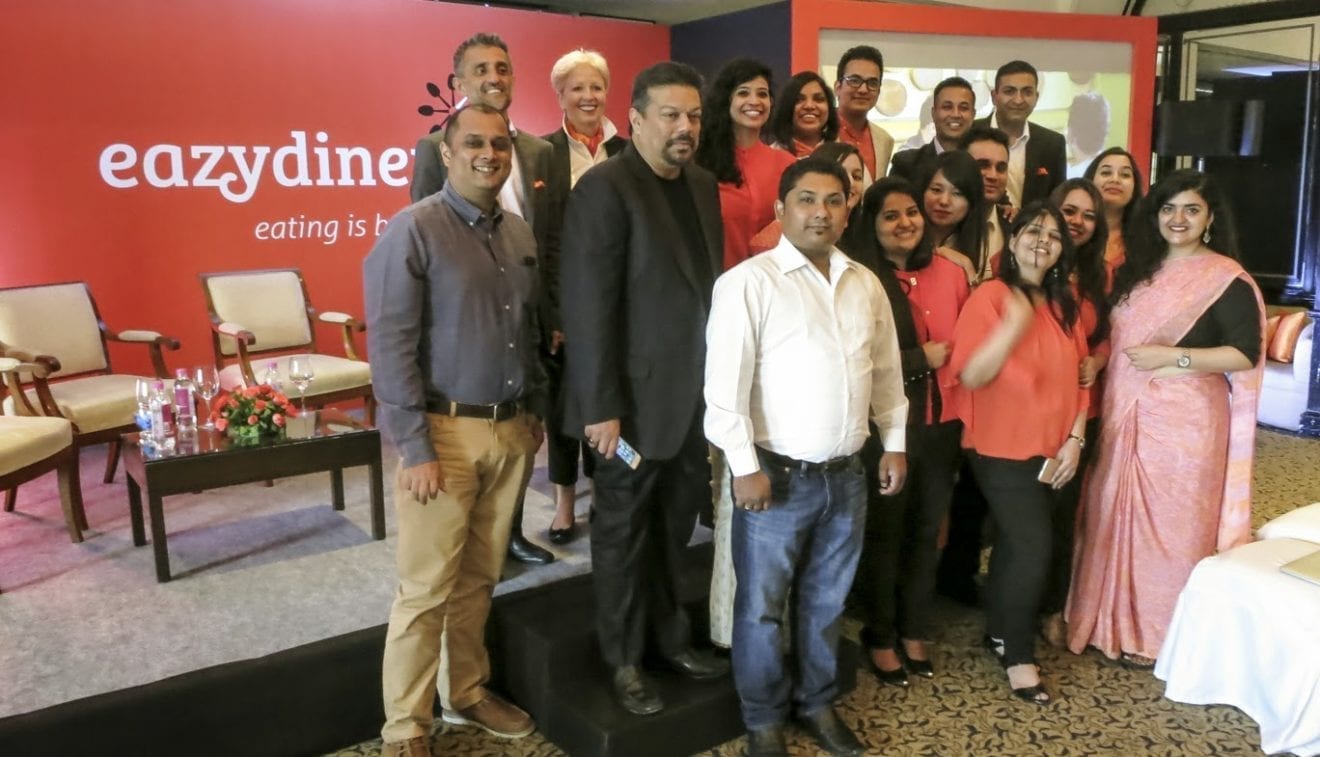
    EazyDiner, a restaurant booking and reviews platform, is in talks with potential investors to raise a fresh round of funding to expand its international footprint in the New Year.

    The two-year-old company, which was co-founded by media personality Vir Sanghvi and six professionals with a background in food, beverages and hospitality sectors, has targeted Indonesia and Thailand as its next two markets.

    While company officials declined to share details of the upcoming equity financing round, they confirmed plans of entering the South East and South Asian markets over the next 12 months.

    EazyDiner launched services in Dubai in December. The startup, which combines the services of Google-owned dining guide Zagat, NYSE-listed restaurant review firm Yelp and Priceline-owned restaurant booking service OpenTable, is also backed by two consumer-focused venture capital firms, DSG Consumer Partners and Saama Capital.

    The funding and expansion come when investor interest in India’s broader foodtech space has waned, with the startup ecosystem littered with the still-smoking embers of ventures that promised to deliver exceptional dining experiences to the notoriously fickle-minded and priceconscious Indian consumer.

    The combination of wafer-thin margins on offer, coupled with low entry barriers and lack of sustainable business models, saw investors curtail their appetite for the ventures.

    EazyDiner has charted a different path for itself. The platform, which also provides content and reviews, operates one of the country’s largest dining loyalty programmes as well. “We were never, and in fact, will never get into food delivery. The economics just don’t make sense, at least in a market like India…We believe it requires a very different skill-set,” pointed out Aman Kapur, one of the cofounders.

    EazyDiner has raised about $4 million in funding till date and counts Gurpreet Kohli, former managing director of Chrys Capital, as one of its early backers. The company operates in seven locations – the National Capital Region, Mumbai, Bengaluru, Kolkata, Pune, Chennai and Goa.

    “The focus is to go deeper into our existing markets and really establish our footprints in each of them rather than just go on an unrestrained growth across geographies,” pointed out Shruti Kaul, another cofounder.

    The platform lists about 2,000 restaurants, with more than 500 spread across NCR. EazyDiner has provided most establishments with its proprietary SaaS-based table reservation platform and has a guaranteed inventory with the rest, enabling them to provide bookings to consumers on an immediate basis.

    Gurgaon, where the company is headquartered and where it first launched operations, has played a critical role. The NCR’s startup hub, which rivals Bengaluru in its concentration of the country’s new economy ventures, has played a significant part in its growth.

    “Gurgaon, possibly, deserves its own mention alongside Mumbai and Delhi. It’s the third-largest contributor after the two metros,” said Kaul. According to her, Gurgaon contributes 15% of the company’s business across the country, outpacing Bengaluru. “For a small suburb, it’s huge. We have about 275 restaurants in Gurgaon on our platform, ranging from luxury establishments to budget restaurants,” Kapur said.

    According to both founders, emergence of the Haryana city as a startup destination has played a role in defining, as well as evolving, consumer behaviour, particularly when it comes to dining habits. “The ability to experiment there is phenomenal and probably much more than the other metros… We also see that people living to working in Gurgaon, while traveling, indulge in a lot more cross-dining than any other city in India,” Kaul said.

    Analyses drawn from consumer behaviour in one of its earliest markets has prompted the founders to look for similar characteristics in every new area it enters. “We’ve actually learned alongside the consumer and the company’s grown even as the consumer has evolved and experimented,” Kapur said.