Retail News Asia is committed to providing both local and global retailers with the latest E-Commerce & Etail news throughout the Asian market. This on a daily base.
Matahari Department Stores (MDS) has increased its ownership in Global eCommerce Indonesia (GEI), the parent company of Indonesian eCommerce startup MatahariMall.com.
MDS has paid Rp164.9 billion (US$12.2 million) for 7.3 billion shares, or 3.62 per cent of paid-up capital, in GEI. This gives it a 12 per cent share in total.
MDS last ramped up its stake in GEI in January last year to 10.33 per cent, but its ownership was diluted to 8.38 per cent over the 12 months because of investments by other shareholders. In October, Mitsui & Co announced plans to inject $100 million in GEI over the next 12 months, and MDS has decided to expand its control gradually.
“The company sees large potential in the eCommerce sector. With increased stakes in the platform, Matahari secures opportunities for huge returns in the future. We will also be able to synergise MatahariStore.com into MatahariMall’s platform, which will in turn widen reach across the country as well as boost Matahari’s net profit,” the company says in a statement.
MDS has 148 stores in 68 cities across Indonesia.
Proceeds from the new funding round will be used to improve market share, and to strengthen its position as Indonesia’s “leading eCommerce player”.
MatahariMall warehouses and ships products from about 5000 affiliated sellers, and also procures goods directly to sell independently.
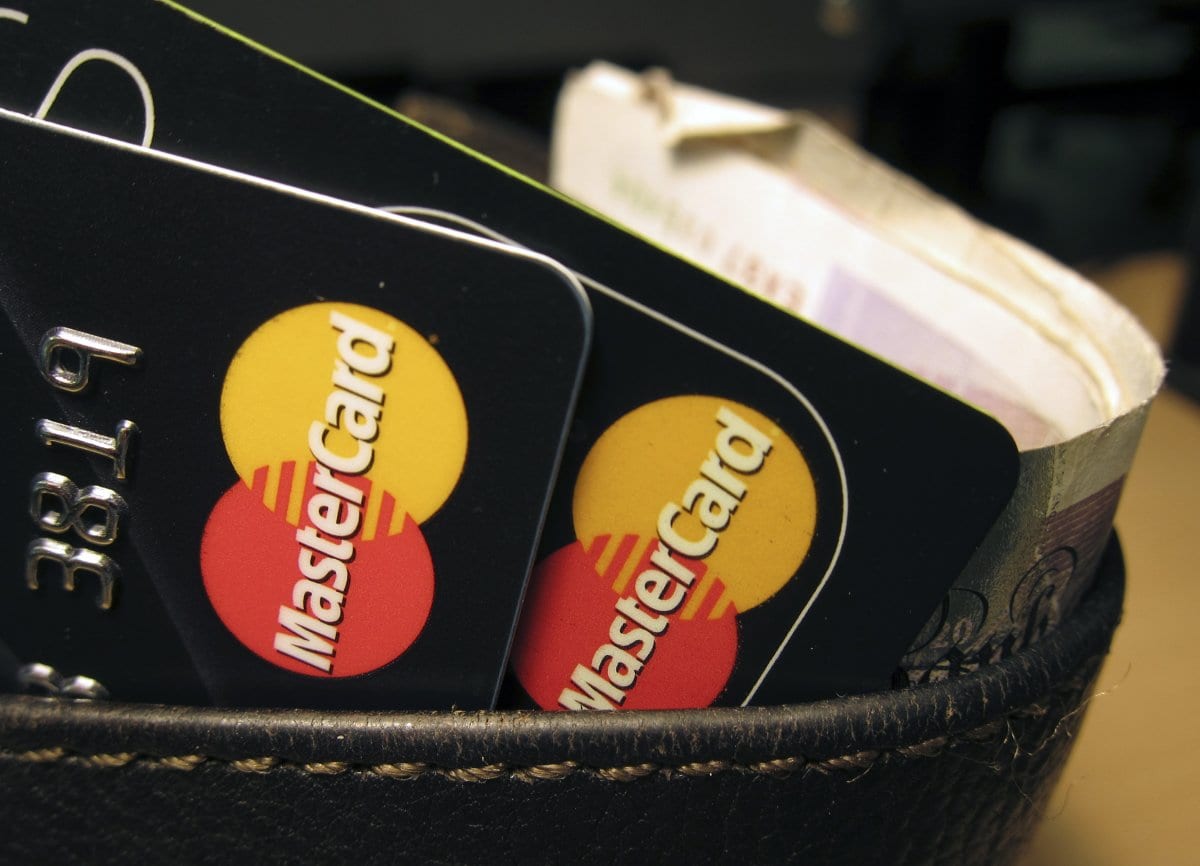
Moving from social media to commerce, the “selfie” is about to become verification for online transactions for Mastercard users.
An executive of the credit-card company says the “selfie verification” technology will be introduced in Singapore and other parts of Asia this year.
Known as Mastercard’s Identity Check, the system will let card holders use facial-recognition technology to match selfies against their photograph on file to ensure the veracity of online transactions.
“There could be an issue with twins, but I would need to have a bad twin,” says Mastercard executive VP for identity solutions Bob Reany. “They would have to break into my house, steal my phone and be at my location.”
With its prototype, Mastercard will convert head shots into encrypted code to be stored on a mobile device. The “selfie” would not need to be a perfect match, and banks would set the threshold for the accuracy of the matching.
“We’ll advise the bank and say ‘You don’t want to be too open and have only 20 per cent of the things match’. Then, everybody and their dog could use it,” says Reany.
The technology can either be as a standalone app or be integrated into an existing bank app. It can also work with other payment brands.
No specific date has been set for the launch in Singapore, where some banks provide not just tokenisation but also use two-factor authentication for transactions.
Already the technology has been rolled out in 12 markets in Europe.
More sophistication
Mastercard data shows that the rate of online payment fraud is more than three times higher than for physical transactions. Against this, banks are approving just 83 per cent of online transactions, compared to the 96 per cent for physical transactions.
Reany says cybercrime is also gaining in sophistication, with new forms of malware being evolved. He says the fraudsters are smart. “They are getting PhDs and are finding ways to commit fraud. What we have to do is ruin their business model.”
He says this runs along the enormous potential for growth in the online payment space, with the number of online and mobile transactions expected to double to 40 billion by 2020.
Tokenisation already cuts the risk of credit-card numbers being stolen from single individuals and the details being sold in larger batches on the dark web. With tokenisation, a card number is replaced by a unique set of numbers not tied to actual account details. Mastercard is now working to fill another gap by tokenising the card details merchants already have on file.
Reany says banks and payment companies need to combine various tools to create more secure authentication. This should so significantly raise the costs for criminals to exact fraud that the returns are no longer worth it. “If it’s not a scalable attack, we’re winning.”
The OpenDaylight Project, the open source platform for programmable, software-defined networks (SDN), said Chinese search engine Baidu has joined the project at the Silver level.
This follows a recent announcement by Baidu to open source one of its key machine learning tools, PaddlePaddle, and demonstrates the company’s continued commitment to open source.
Growing mobile markets in China over the past several years have connected more people to the internet and opened up tremendous opportunities and venues for new business platforms and channel strategies in the region.
Baidu is advancing artificial intelligence as the next stage of the internet and is using deep learning to enable new technologies for autonomous driving and e-health services.
The OpenDaylight platform will enable Baidu to optimize and automate their network.
Liu Ning, system department deputy director at Baidu said SDN platform will enable the company to be a more nimble organization and rapidly deliver new services that meet the changing needs and diverse interests of our users and customers.
Liu also joins the OpenDaylight advisory group to provide technical and strategic guidance to the OpenDaylight technical steering committee and OpenDaylight developer community based on the challenges of running a real-world network.
In addition to Baidu, Chinese two major internet players – Alibaba and Tecent- have also joined the OpenDaylight project.
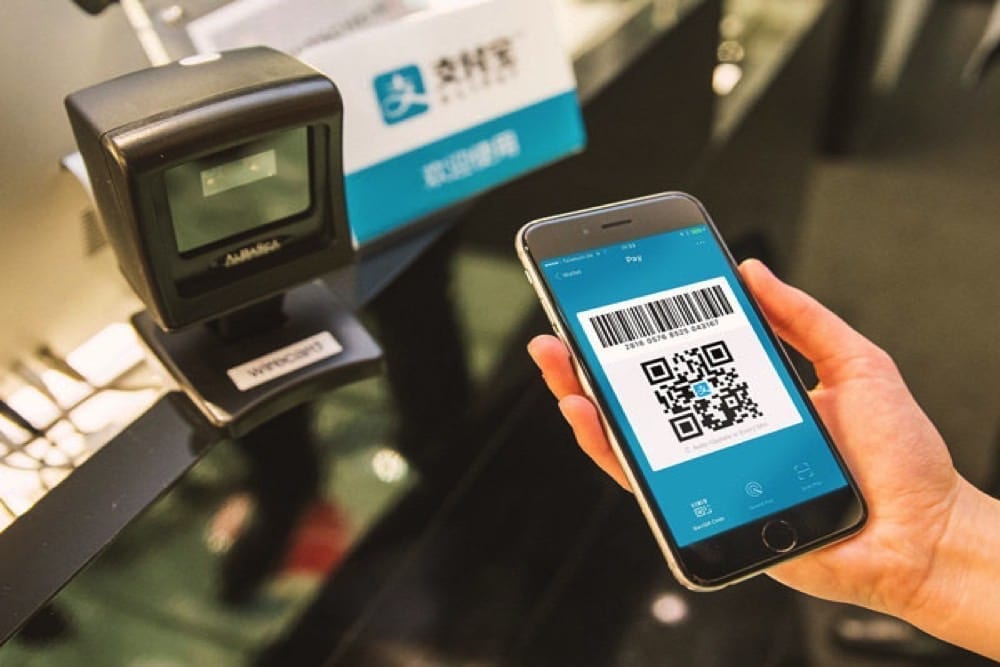
Finavia’s Helsinki Airport has become one of Europe’s first to use the Chinese-friendly AliPay mobile payment application in an effort to encourage more spending at the location.
The familiar payment method is expected to encourage more Chinese passengers to spend with increasing confidence at the location, following the adoption of the scheme by the airport’s first retailers last month.
Commenting on the development, Finavia stated: “Chinese passengers are the most rapidly growing customer group at Helsinki Airport and the group that use the most money. We work hard to offer them the best possible service experience.
SEVEN SERVICE PROVIDERS NOW OFFER ALIPAY AT HELSINKI
“Familiar and easy payment options increase the feeling of smooth and safe travel for Chinese passengers,” says Finavia’s Elena Stenholm, Director of Commercial Services at Helsinki Airport.
“As far as we know, the only other airports accepting AliPay are Münich and Frankfurt. Seven commercial service points have now adopted it at Helsinki Airport and many others are interested. China UnionPay is already available at most airport outlets, adds Stenholm.
Right now, AliPay can now be used to pay for goods and services at the airport’s Iittala, M-Box, Finspiration, Lindroos and Moomin shop outlets and Finavia says it hopes to have all of the airport’s commercial operators accepting AliPay.
FINAVIA SAYS ALIPAY HAS BEEN RECEIVED ‘VERY WELL’
“We work in close cooperation with our commercial partners to develop the customer experience. AliPay has been received very well, and we encourage businesses to enable it. If the biggest commercial operators at the airport come along, the amount of outlets accepting AliPay will increase tenfold at once, says Stenholm.
As reported before, AliPay is a part of world’s largest online trading company Alibaba. AliPay is China’s leading mobile payment giant which has approximately 400m users according to its own website.
This development at Helsinki follows the fast rise of Chinese passenger numbers in recent years, with numbers expected to continue increasing for both transfers and overnight stays in Finland.
In Finland, Lapland is a particular attraction for Chinese tourists. Alibaba’s travel service provider AliTrip has announced that it will bring 50,000 Chinese tourists to Rovaniemi during 2017.
A SUCCESSFUL STAFF EXCHANGE PROGRAMME
Finavia has responded by bringing Chinese-speaking service guides to Helsinki Airport and by adding signs in Chinese.
In autumn 2016, the staff exchange programme between Finavia and Beijing Airport helped increase knowledge of the Chinese service culture and the needs of Chinese travellers.
Helsinki Airport also has an account with Chinese social media channel Weibo and an account will also be opened with this company in 2017. Weibo has approximately 300m and WeChat more than 800m active monthly users.
Meanwhile, Helsinki Airport currently claims to be the leading hub for air traffic between Europe and Asia and claims to offer the fastest and shortest route between the continents.
Aeon Vietnam has launched an online store, AeonEshop.com, offering discounted Japanese goods and local brands.
The Japanese-headquartered retailer says its AeonEshop.com B2C platform in Vietnam will stock a majority of Japanese and imported products, along with Aeon’s own brand Topvalu which has been available at its physical stores nationwide.
Products span various categories, including fashion, cosmetics, furniture, electronics, household items, food and office stationery.
Similar to Aeon’s other eCommerce sites in the region, AeonEshop will provide discounts up to 50 per cent for specific product types.
Ho Chi Minh City is the first market for AeonEshop with other Vietnamese cities to follow in the near future. The company plans to develop an English-language version and mobile app by mid-2017.
Male hands using touch screen device for online shopping
Vietnam is the third market where Aeon has established online retail, after Japan and Malaysia.
At the end of 2016, Korean retail giant Lotte also launched its online store Lotte.vn, targeting a share of the US$4 billion local online retail market.
Fabrice Carrasco, MD of market research house Kantar World, predicts the figure will grow five-fold by 2020 thanks to the development of smartphone usage and consumer convenience.
Data from the Association of Vietnam Retailers (AVR) indicates that in 2015, retail e-commerce surpassed US$4.07 billion, with a growth rate of 20%.
Ho Thi Kim Thoa, Deputy Minister of Industry and Trade, told a forum on e-commerce and mobile phone technologies in Hanoi on December 8 that e-commerce was a vital development trend in the retail sector.
Thoa said last year, the growth rate of the retail sector was 9.5%. Traditional retail made up 80%, while modern retail including supermarkets, convenience stores and e-commerce accounted for only 20%. “Notably, in the modern retail channels, the portion of e-commerce was at a low level of around 2.8%,” she added.
The country had 217 e-commerce trading floors with total revenues of VND1.66 trillion in 2014, double the 2013 figure.
“Vietnamese businesses have seen positive changes in e-commerce by big firms. The number of small- and medium-size enterprises (SMEs) participating in e-commerce was modest even though 97% of the country’s 600,000 firms are SMEs,” she said.
The deputy minister noted that the Prime Minister had promulgated a decision on master planning of e-commerce in 2016-20.
She gave the recent Online Friday on December 2 as an optimistic example of e-commerce development. The number of enterprises joining in the event this year was 3,000, higher than last year.
She urged businesses to catch up with e-commerce trends and have plans to enhance e-commerce development.
Dinh Thi My Loan, AVR’s chairwoman, said there were many factors promoting e-commerce development, including the popularity of mobile devices.
Nguyen Thanh Hung, chairman of Vietnam E-commerce Association (VECOM), agreed that the development of mobile phones and applications had contributed to promoting purchasing activities.
Hung said the country’s e-commerce had been developing at a growth rate of 30% a year. “Businesses have quickly shifted from offline to online retail. Several are even totally doing business online,” he said.
However, Pham Thanh Cong from Nielsen said the sector should ha solutions to meet demand in rural areas as there are 1.3 million traditional shops, accounting for 85% of the retail sector’s revenue.
The Alibaba Group has complained about the United States Trade Representative’s (USTR) inclusion of the Taobao marketplace in its latest “notorious markets” list.
The Chinese e-commerce giant said the inclusion ignores the action Alibaba has taken against counterfeiters in recent years.
“In 2016 alone, we proactively removed more than double the number of infringing product listings than in 2015. It is, therefore, unreasonable for the USTR to have concluded that Alibaba is less effective in anti-counterfeiting than when it reviewed our efforts in 2015 and when it removed us from its list four years ago,” the company said in a statement.
The findings of USTR’s special review into notorious markets highlights specific physical and online markets around the world that are reported to be engaging in and facilitating substantial copyright piracy and trademark counterfeiting.
“Tens of millions of American jobs and several trillion dollars of our gross domestic product rely on American creative and innovative industries,” said Ambassador Michael Froman in a news release. “The marketplaces, tactics, and schemes that undermine and threaten America’s creative industries change quickly and require our constant attention.”
He added that the 2016 List underscores the need for accountable governments everywhere to take on these forms of piracy and counterfeiting at every stage of the global supply chain to prevent final products that put health and safety of end-consumers at risk.
The USTR report flagged down Taobao “due to the large volume of allegedly counterfeit and pirated goods available and the challenges right holders experience in removing and preventing illicit sales and offers of such goods.”
The body did acknowledge that Taobao’s parent company, the Alibaba Group “has taken steps to address right holders concerns on Taobao,” such as establishing internal offices focused on IPR and appointing experienced officers to guide these efforts, as well as developing technology to prevent counterfeit sellers from re-opening storefronts.
“While recent steps set positive expectations for the future, current levels of reported counterfeiting and piracy are unacceptably high,” the report stated.
Alibaba said the report is inconsistent with the effective collaborative approach the company has taken with brands in the fight against counterfeiting.
“We are very proud of our highly robust anti-counterfeiting programs and believe we have dedicated far more personnel, financial resources and advanced technologies toward protecting intellectual property than any other e-commerce company,” it said. “Despite this counterproductive action by the USTR, we remain fully committed to protecting the IP of rights holders, both through significant proactive measures and working with brand owners, to combat counterfeiting online and offline.”
Mobile wallet transactions in India are on pace to grow at a CAGR of a strong 160% through to 2022 to reach 260 billion, new research indicates.
A joint study conducted by The Associated Chambers of Commerce & Industry of India (ASSOCHAM) and business consulting firm RNCOS shows that these gains are being driven in large part by growing usage of smartphones.
Other factors behind the rapid growth include robust mobile internet penetration, growth of the e-commerce sector and increasing disposable incomes.
The study shows that following India’s 500 rupee and 1,000 rupee banknote demonetization, the average wallet spend for retail witnessed a huge jump in 2016 and is expected to increase from 500 to 700 rupees ($7.35 to $10.30) to between 2,000 and 10,000 ($29.40 to $147.10) in the near term.
The mobile wallet market in India has also benefited greatly from demonetization and its share in the total mobile payment volume transactions is likely to rise from 20% in FY16 to 57% by FY22.
“The government has hinted of not demonetizing all of the scrapped currency and aims to fill the gap by promoting digital/cashless payments. This is bound to further boost prospects for the m-wallet sector in India,” said ASSOCHAM’s D.S. Rawat at a press conference.
Taking over traditional payment modes, the m-wallet market in India is forecast to reach 1,512 billion rupees by FY22.
The study, however, said that it is a challenge for the sector to bring the number of shoppers preferring cash on delivery (COD) and other modes of payment to the m-wallet platform.It therefore recommends that companies operating in the mobile wallet sector should implement measures to provide effective, secure, private and reliable services such as 3D or OTP (one-time password) security options, data backup systems and others.
“A strong authentication mechanism must be put in place to bind the identity of the user to the authorization of the transaction thereby being extremely mindful of authentication and risk assessment,” the study suggested.
As the mobile payment space evolves, the stakeholders are also advised to create secure transactions that foster consumer trust.
After securing dominance in its home market, China’s Alibaba Group Holding is racing to conquer the still nascent e-commerce market in Southeast Asia. Although the size of the market in Southeast Asia pales in comparison with China’s, it is expected to grow 32 percent on average each year through 2025, according to one industry executive.
US-based Amazon.com Inc also has its sights set on the region, making a face-off with Alibaba all but certain. Alibaba got to the Southeast Asian market first, but its victory is far from assured. Experts said there is no silver bullet for success, especially in an evolving e-commerce market facing difficulties of its own.
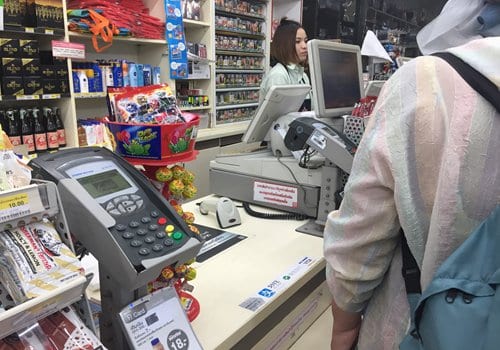
A 7-Eleven convenience store in Phuket, Thailand, that accepts Alipay.
Among the glossy, green trees in Phuket, the largest island in Thailand, the landscape is dotted by many 7-Eleven convenience stores that accept Alibaba Group Holding’s mobile payment application Alipay.
“Alipay is available in almost all 7-Eleven convenience stores here, and people are encouraged to use it with random discounts,” an employee at a 7-Eleven store on Thanon Patak Road in Phuket, who declined to be identified, told the Global Times on Saturday.
7-Eleven has added Alipay to its payment options at more than 9,000 outlets across Thailand since April.
Alibaba’s move to get Alipay into Thailand is widely perceived as a way to attract Thai smartphone users and technology-savvy consumers as it expands into Southeast Asia in 2016.
In April, the Chinese e-commerce giant acquired a controlling stake in Lazada, considered the Amazon of Southeast Asia, for $1 billion.
In November, Alibaba furthered its expansion by taking over the Singaporean online grocer RedMart via Lazada.
Alibaba’s CEO Zhang Yong said several times at press conferences in 2016 that the company’s next major goal is to help merchants on its platform enter the Southeast Asian e-commerce market.
However, expanding into Southeast Asia might be easier said than done. In the region, many people are familiar with the concept of e-commerce by name only and don’t have much of an inclination to try it.
A new frontier
A 20-something resident in Phuket surnamed Kung was surprised when she heard that Chinese shoppers spent 120.7 billion yuan ($17.4 billion) on online purchases via Alibaba’s bazaars on November 11 alone.
“My friends and I seldom shop online and do not really intend to do so because we can get whatever we need in the market or at nearby convenience stores,” Kung told the Global Times on Friday.
The woman’s biggest concern is quality. She dislikes that she can’t feel the texture of clothing sold online and worries about unwittingly buying knockoffs.
The poor reception for online shopping is reflected on the streets of Phuket, where few express deliverymen can been seen – unlike in China, where they are commonplace.
Lazada Thailand CEO Alessandro Piscini acknowledged on Thursday that Southeast Asia has a small e-commerce industry.
At a press conference with about 200 Chinese reporters in Phuket on Thursday, Piscini cited the region’s 3 percent online retail penetration rate (as of November 2015), which represented about $6 billion in sales. By comparison, China had an online retail penetration rate of 14 percent and online sales totaling $293 billion during the same period.
Still, Piscini was optimistic, saying that the small penetration rate shows that Southeast Asia has a large untapped market for e-commerce. He predicted that the region’s e-commerce market will grow by 32 percent annually to more than $200 billion by 2025, thanks to local government encouragement for the digital economy and urbanization, as well as the region’s rapidly growing middle class.
By 2020, Southeast Asia’s GDP is expected to grow by an average rate of 5.5 percent a year, Piscini said. Middle-class consumers around 35 years old will account for 60 percent of the region’s overall population, which will grow to 668 million from the current 644 million, according to latest estimates by the global statistical information provider Worldometers.
Looming rivalry
Amazon.com reportedly plans to launch in Southeast Asia in the first quarter of 2017, meaning that Alibaba and its US-based competitor will soon clash in the region.
Amazon’s entry into Southeast Asia will be done via Singapore, where “the level of customer spending and consumer culture is more closely aligned with Western markets,” TechCrunch reported in November, citing unnamed sources.
The grocery store business is shaping up to be the first battleground in the region between Amazon and Alibaba, according to the report. The rivalry between the two tech mammoths in the Southeast Asian market seems unavoidable as both have stepped up their international expansion.
“The two account for a huge amount of their home e-commerce markets, with Alibaba holding about 80 percent of online sales in China and Amazon controlling about 60 percent of the US market, so competing for new territory is a logical move,” Lu Zhenwang, founder of Shanghai Wanqing Commerce Consulting, told the Global Times on Sunday.
Alibaba should not be fazed by the potential threat of Amazon, experts said.
The Chinese company has an edge on the shopping side, but also got an early start with logistics and payments via acquisitions, experts noted.
In November, Alibaba’s financial arm Ant Financial signed an investment deal with Ascend Money, a leading online payment firm in Thailand, which also operates in Indonesia, the Philippines, Vietnam, Myanmar and Cambodia. It also snapped up a stake in Singapore’s Singpost, which is experienced at delivering parcels across Asia.
Dearth of development
Alibaba may have got to Southeast Asia ahead of Amazon, but being first doesn’t guarantee victory.
“Southeast Asia is a varied e-commerce market and full of challenges that need to be overcome,” said Liu Dingding, a Beijing-based independent analyst.
In addition to weak market reception, delivery is also perceived to be a tough issue.
Lazada Thailand CEO highlighted the complexity of delivery in Southeast Asia during Thursday press conference, citing the region’s underdeveloped infrastructure.
Liu agreed, noting that the underdeveloped infrastructure hindered the inter-city cargo or parcels delivery, which harmed users’ experiences.
According to Kung, residents in Phuket usually need to wait for one to two weeks to get their online purchases. In China, this usually takes about three days.
Against this backdrop, the e-commerce ecosystem in the region is still evolving, giving anyone a possibility to lead the market as long as it can find the right local partners, Liu said.
“Amazon, though a latecomer to Southeast Asia, still has the chance to win because it has more experience than Alibaba in expanding its business in the international marketplace,” Liu told the Global Times on Sunday.
Chinese top legislature is deliberating a draft law that will regulate and facilitate e-commerce in the country.
The draft law was tabled for review by legislators at the bimonthly session of the National People’s Congress (NPC) Standing Committee, which runs from Monday to Sunday. It is the first reading of the draft by the top legislature.
Explaining the draft to lawmakers on Monday morning, Lyu Zushan, deputy director with the NPC’s Financial and Economic Affairs Committee, said booming e-commerce in recent years had served to reveal loopholes in China’s legal system and commercial rules.
The draft law will facilitate e-commerce growth, help maintain market order and protect consumer rights.
The draft law said the nation should put online and offline commercial activities on an equal footing, and protect the safety of e-commerce transactions.
All e-commerce operators have an obligation to pay taxes and should acquire the necessary business certificates, under the draft.
Operators must also ensure personal information security for consumers. Those that fail will face fines up to 500,000 yuan ($72,000) and could have their business certificates revoked.
They must also work to protect intellectual property, the draft said.
The draft requires third-party e-commerce platforms to offer technical support for “law enforcement activities by relevant authorities.”
China is the world’s largest e-commerce market. According to Lyu, e-commerce trade amounted to over 20 trillion yuan ($2.87 trillion) in 2015, with online retail sales totaling 3.88 trillion yuan.
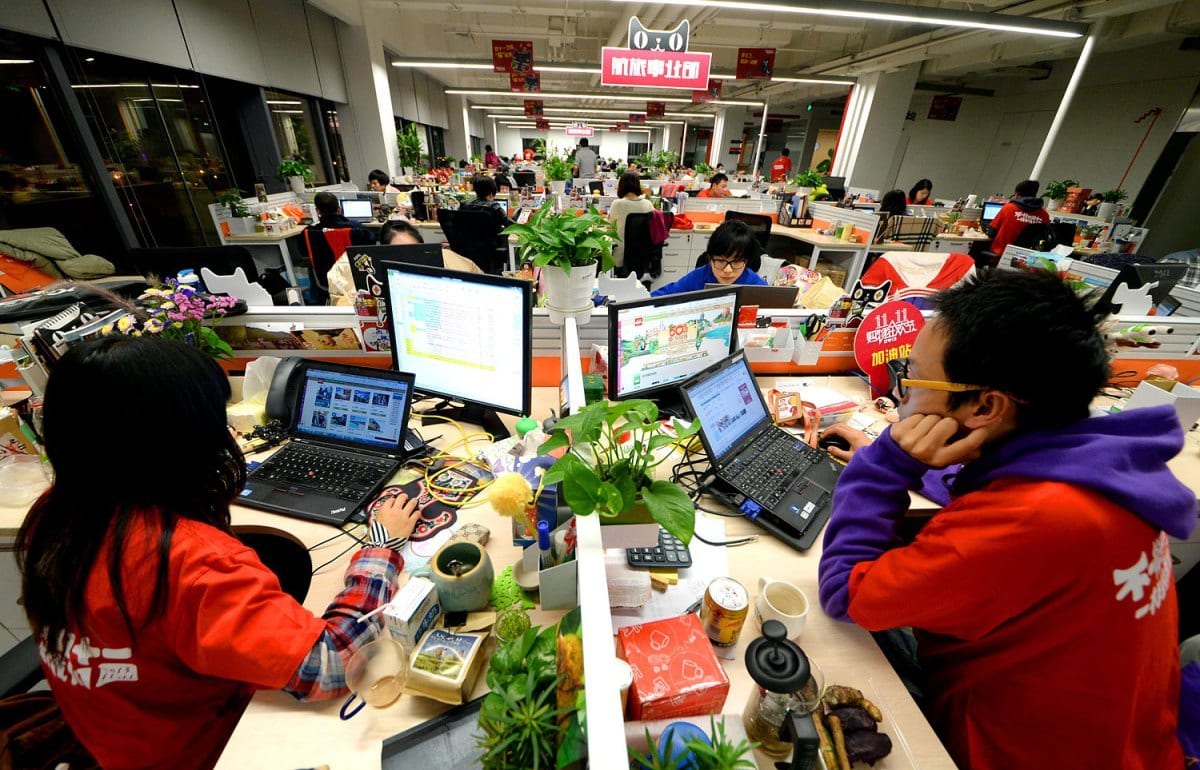
Last month, Chinese e-commerce giant Alibaba saw 120.7 billion yuan in gross merchandise volume during its 24 hour Singles’ Day event, an annual online shopping spree on November 11.
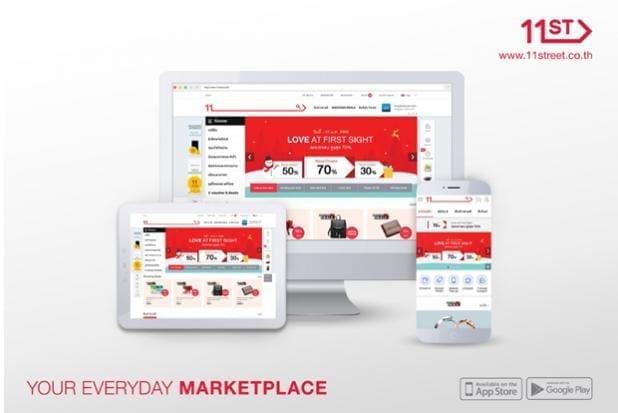
The South Korean e-commerce leader 11street has opened an online marketplace in Thailand during the festive season to capitalise on rapid growth in online shopping. The wholly owned subsidiary of the mobile operator SK Telecom aims to become Thailand’s biggest e-commerce player by 2020.
Hong Cheol-jeon, chief executive of 11street (Thailand), said he was excited about giving Thai shoppers the chance to experience the innovative platform from Korea. On its soft opening day last Weddnesday, 11street beat its target with more than 10 million baht in transactions.
More than 600,000 customers have experienced the platform so far. The 11street platform has attracted more than 6,000 local sellers and aims to have 20,000 by the end of 2017.
Earlier in August, the company opened its first “sellers’ campus” to train Thai entrepreneurs interested in conducting business online. The 11street platform is designed to work across different operating systems with a seamless experience from desktops to tablets and mobile devices. One feature is a Korea Street, offering products from Korea for sale in Thailand at competitive prices.
Mr Hong said that in the digital era where data and people are connected, security is one of the most important elements for the platform developer. “Our platform is equipped with latest technology for escrow to ensure the security of online transactions,” he said. Online sales account for lees than 2% of the total retail market in Thailand, meaning there is still huge potential room for growth.
“Compare that with South Korea where the e-commerce market is worth approximately US$47 billion, which is 18% of the $252-billion retail market,” he said.
Chinese-based online social media platform parent Tencent has opened a Singapore office to help drive Asian brands improve their reach to Chinese consumers.
Tencent, which owns the WeChat messaging and browsing platform, has created an International Business Group charged with raising awareness of the opportunities offered by WeChat, especially targeting people who live outside China.
While WeChat is as mainstream in the mainland as facebook is outside China, its takeup across the rest of Asia is limited. The new Tencent Singapore team believes there are huge opportunities marketing to Chinese when they are travelling outside their home country.
A growing number of luxury brands are establishing a presence on Wechat – Gucci even sells handbags worth several thousand US dollars on the platform, and BMW reaches out to prospective customers. Other consumer retailers like Hong Kong’s Sa Sa have developed extensive interactive eCommerce platforms which work across channel and drive customers in-store.
Benny Ho, senior director of business development at Tencent, told The Drum that inbound marketing is a big opportunity in Singapore, especially.
“These tourists are setting their own itinerary and they know precisely what store to buy from and in what colour before they arrive; they come to buy, not to shop. This means you need to build all the brand consideration and purchase intent way before they arrive and that is part of the core service we are trying to offer,” he said.
WeChat alone has just over 800 million monthly active users.
“That’s a huge number,” said Ho. “Every market we go to, we educate the market and tell them the numbers and it’s mind blowing. Our role is to make something that big [more] understandable.”
Using its strengths in marketplace, big data and logistics, Alibaba Group will help rural communities sell their products to cities dwellers so they can stock up on Spring Festival supplies and along the way help give rural economies a lift. At the same time, quality products from all over the world will be brought to Chinese consumers as they celebrate the most important festival on the Chinese calendar.
Highlights of this year’s upcomg Chinese New Year Shopping Festival include:
Promotion of two-way trade:
To promote trade between rural and urban regions, Tmall.com’s fresh food channel will introduce fresh fruit and meat produce from abroad, such as cherries from Australia, orange roughies from New Zealand and kurobuta pork from the US, to Chinese consumers. At the same time, poultry and meat from villages, including chicken from Qingyuan County of Guangdong Province, beef from the Horqin Grassland of Inner Mongolia, organic mutton from licorice-fed lambs in Gansu Province, yak meat from Aba of Sichuan-Tibet Plateau, and mutton from Yanchi County of Ningxia Hui Autonomous Region, will be brought to dining tables in the cities.
Live broadcasts about rural produce:
To give urban consumers peace of mind about rural produce, 12 “village celebrities” will conduct live broadcasts via Tmall and Taobao mobile apps and show urban consumers how some of the farm produce are harvested and processed before they end up as delicacies on the dining table.
Rural family reunion photo project:
For rural children whose parents have gone to cities to find work, Chinese New Year is often the only time when they get to see their parents when they return home. For communities where a family photo is often considered a luxury, Rural Taobao’s local services booking platform are mobilising its merchants to give away family portrait packages to 10,000 families across 20 counties as a first step that Alibaba says is to assist bring families closer together.
Rural employment platform:
A one-stop village employment platform will be launched by Rural Taobao in January to provide job information for workers returning to their home villages for the Chinese new year holidays. Through the project, it is hoped that some of them will be able to find work closer to home. As a part of the project, Rural Taobao representatives will assist job seekers in completing their résumés and entering their information on the platform.
New Year Eve’s banquet:
For the elderly and children who are left behind in villages, Rural Taobao is organising a Chinese new year’s eve banquet for 6,000 tables of guests so they can share in a moment of warmth and togetherness.
Sun Lijun, Vice President of Alibaba Group who oversees the company’s rural business division, said, “Alibaba strives to create closer connections between urban and rural areas in China, narrowing the wealth gap and improving the living standard of those who live in villages.”
Alibaba Group launched Rural Taobao in 2014, mainly as a platform to promote rural online trade. Alibaba Group Holding Limited is a Chinese e-commerce company that provides consumer-to-consumer, business-to-consumer and business-to-business sales services via web portals. It also provides electronic payment services, a shopping search engine and data-centric cloud computing services. The group began in 1999 when Jack Ma founded the website Alibaba.com, a business-to-business portal to connect Chinese manufacturers with overseas buyers.
In August this year, Thailand’s e-commerce enterprise Ascend Group has finished migrating its existing businesses as well as new ventures to the cloud, a move that is expected to support its ambitious regional expansion plans.
The Ascend Group owns and operates business-to-consumer (B2C) marketplaces WeMall and iTrueMart, and the consumer-to-consumer (C2C) platform WeLoveShopping. It also operates TrueMoney, a wallet solution for digital payments, among other allied businesses.
Chaiwat Ratanaprateepporn, Chief Technology Officer of Ascend Group, said the company is looking beyond the country’s borders to expand its e-commerce business in the ASEAN region.
“Most of the operations we have now in ASEAN are under the TrueMoney business. We have Myanmar and Thailand as headquarters, then we have businesses in Cambodia, Vietnam, Indonesia and the Philippines,” he said. Services currently consist of mobile wallet, remittance, top up services, bill payments and the e-commerce payment gateway.
With a combined population of approximately 600 million, the ASEAN region has a booming e-commerce landscape, which is only logical for the Thai group to target.
The Ascend Group’s cloud journey started in November 2014 when the company adopted a “cloud first” policy. This has allowed the company to reduce infrastructure build time, improve flexibility and accelerate speed-to-market.
Chaiwat said the cloud journey is among the preparations it is doing for the expansion move.
“Why we are moving to the cloud? Our TrueMoney business in Thailand has been around for more than 10 years, while our e-commerce business has been around for just over three years. But we want our start-up companies (though they are no longer startups) to have the same capabilities. They were born in the cloud and are using cloud technologies to move fast and offer customers better services,” he explained.
In the first quarter of 2015, iTrueMart, an e-commerce retail destination for home appliances and electronic products, hit critical mass.
“We looked for alternative solutions on how we can manage the traffic and cost and using the technology so we decided to move to Amazon Web Services (AWS). Later that year, we also moved some of the services of TrueMoney to AWS as well,” Chaiwat recounted.
In the second quarter this year, Ascend also moved the services of WeLoveShopping.com completely to AWS. Thus, its three flagship e-commerce websites are already 100 percent in the cloud. For TrueMoney, however, the company is opting for a hybrid cloud strategy because of the different banking regulations in each of the six ASEAN countries, which make it difficult to operate purely on the cloud.
Chaiwat, who oversees the digital transformation of the company’s IT infrastructure, shared that when the company launched the WeMall in Thailand, they did so without adding new technical staff to implement, operate and support in addition to iTrueMart.
“And that is because we leveraged the innovative tools and technology of AWS,” he said. “Ultimately all of this innovation will allow us to better serve our customers and create efficiency that will result in better value for people who shop on Ascend Group’s e-commerce properties.
The company’s goal is to become the leading e-commerce business in the ASEAN region and leverage the digital technology to expand business opportunities for merchants in Thailand and the region.
Next steps in the cloud
What is next for Ascend Group’s cloud journey?
Chaiwat disclosed that the company’s cloud strategy comprised of three steps. The first step or Version 1.0 is moving the services to the cloud, which they accomplished in the past two years. The second step or Version 2.0, which is being implemented now is using the technology the technology to do more optimizations for cost savings, more automation so they can gain better productivity in the workforce.
The next step or Version 3.0, which will be implemented starting next year, is really moving to more high-end technology as the data and analytics, machine learning and other capabilities that will help us serve the customers better.
“What we are aiming ahead are data and analytics. Right now, we are data-driven, meaning we use analytics to do reports on how the transactions are growing. But this is business intelligence, not yet analytics. We are aiming to move there using the capabilities of AWS,” he said.
For companies starting on their own cloud journey, Chaiwat said it is important to identify or define the benefits that they would want to derive from the cloud. It should help in creating guidelines and the roadmap.
He stressed, however, that going to the cloud is not all about the benefits. “The company has to transform the workforce, upskill them, and adopt a different mindset and way of working,” he said.
Nick Walton, Head of ASEAN at AWS, affirmed that e-commerce in Southeast Asia is booming, especially e-commerce on mobile devices.
“AWS has analytics for mobile, which I think will be relevant for Southeast Asia,” he said. “There are two types of e-commerce – the new e-commerce providers (online only) and the bricks and mortar retailers that are adding the e-commerce experience to the mix. We look at the ability to quickly scale up, get promotions to market quickly, make the needs very successful sales. The last thing you want is a very successful marketing campaign that is let down by the website not performing.”
The other place for e-commerce is analytics. “This is where we see a good application of the AI technologies like Amazon Polly, a service that turns text into lifelike speech,” Walton noted.
In a bid to knock online marketplace Flipkart from its leadership position in India, eCommerce giant Amazon has injected Rs2010 crore (US$296 million) into its Indian unit.
Regulatory filings show that the move takes Amazon’s total capital investment in India to more than Rs7000 crore in the past one year.
“We will invest what it takes to become the customers’ preferred choice in India, and are encouraged that we are India’s largest and fastest-growing eCommerce marketplace,” says an Amazon India spokeswoman.
A report in The Economic Times says Amazon is estimated to have spent more than Rs1000 crore last month to woo customers with special offers and discounts for the festive season, and is losing about Rs600 crore every month.
Amazon entered India three years ago, introducing some of its global programs this year including its Prime service, which offers quicker deliveries and early-access deals.
Last week, it announced Prime Video services for India offering Hollywood and other international movies and TV shows – plus launching nine original Indian shows, making it the largest Indian original line-up on an OTT (over-the-top) platform.
Earlier this month Amazon announced the launch in India of its global program for start-up products, Launchpad, and in October it launched Global Store, offering products from its US online store that are not available in India.
Meanwhile, Flipkart’s Sachin Bansal is seeking government help in the battle against Amazon.