Category: E-Tailing

Retail News Asia is committed to providing both local and global retailers with the latest E-Commerce & Etail news throughout the Asian market. This on a daily base.

  • Ratan Tata invests in retail tech startup SnapBizz

    Ratan Tata invests in retail tech startup SnapBizz

     Ratan Tata Now Invests In Retail Tech Startup SnapBizz. Tata Sons’ chairman emeritus Ratan Tata has invested an undisclosed amount of funding in retail technology startup SnapBizz Cloudtech Pvt Ltd.

    SnapBizz is now has presence in retail outlets in Mumbai, Pune, New Delhi, Bengaluru and Hyderabad through a technology solution addressing the key business challenges faced by them.

    Commenting on the funding, Prem Kumar, Chief Executive, Snapdeal said, “Tata, as one of the most respected names in corporate India, brings a rich legacy of doing business with a human touch”.

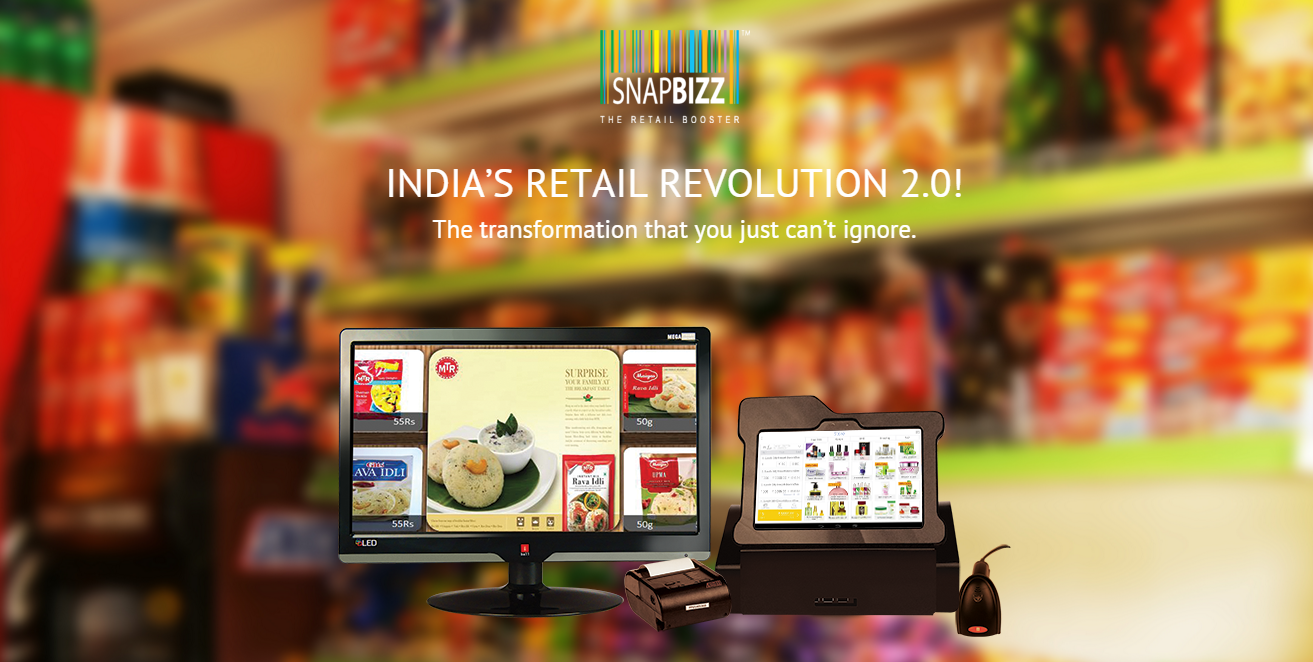
    The announcement comes less than a month after the Singapore- and India-based startup announced US$7.2 million in Series A led by Jungle Ventures, with participation from Taurus Value Creation, Konly Venture and Blume Ventures. “It comprises of tablet, barcode scanner, thermal printer and an intelligent external 22” consumer facing LED display for Hi-Definition consumer engagement.

    SnapBizz had previously secured US$1.7 million in seed funding from Qualcomm Ventures, Jungle Ventures, National Research Foundation of Singapore, Taurus and Blume.

    This is Mr Tata’s eighth investment in start-ups in 2016 so far.

    In a diverse market like India, where the traditional kirana stores make 98% of store universe and 85% of retail business, the Snapbizz solution is revolutionizing kirana stores across the country by connecting all the dots of the fragmented FMCG ecosystem (brands, retailers, consumers, wholesalers and distributors) and addresses pain points of all stakeholders. This year, Tata has also invested in tea etailer Tea Box, coupons site CashKaro, baby products e-commerce site FirstCry, startup analytics firm Tracxn, animal lovers’ portal DogSpot, Invictus Oncology and Moglix.

  • Apple Pay to go live in China on February 18

    Apple Pay to go live in China on February 18

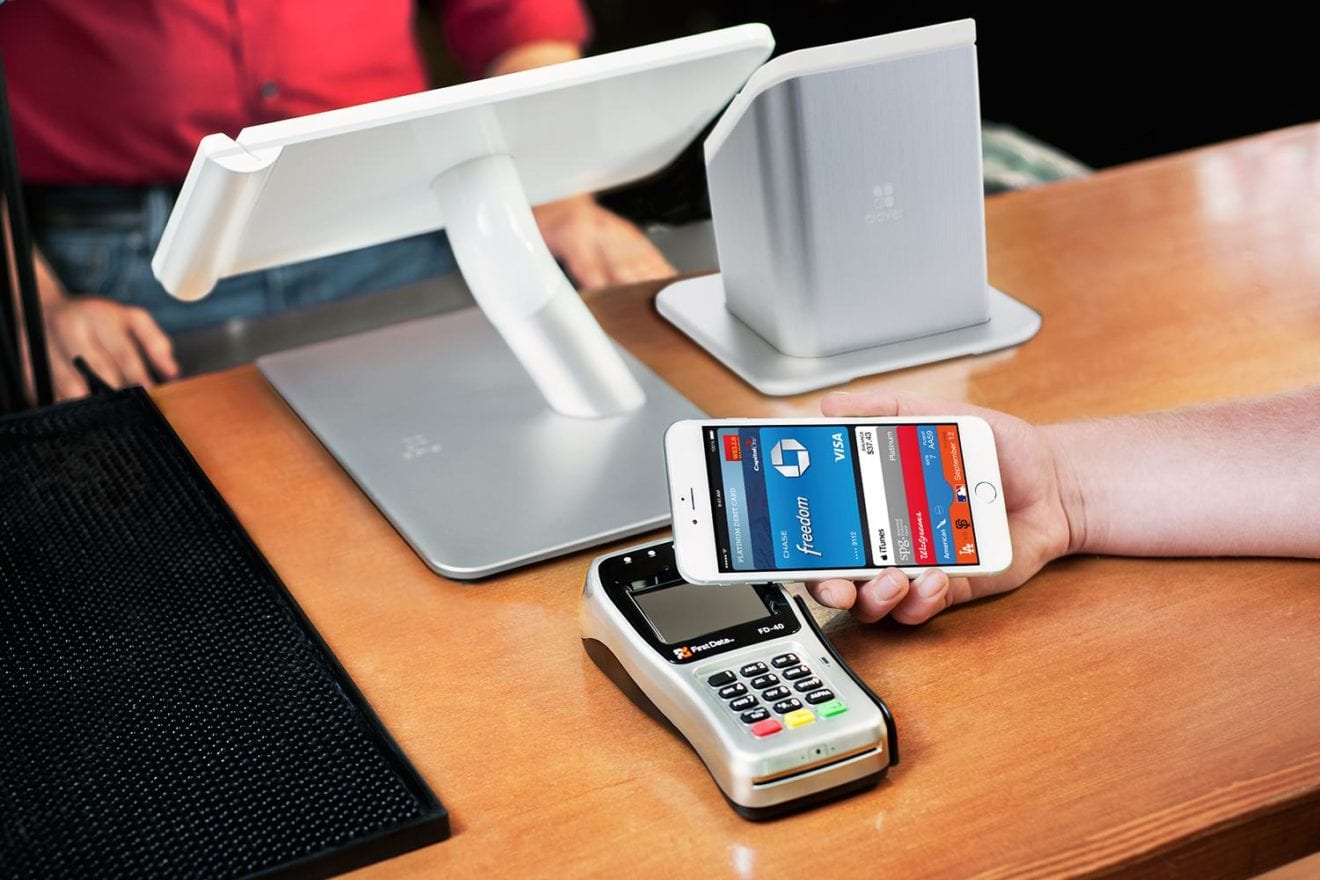
    Apple Inc’s Apple Pay mobile payment system will be available in China from February 18 for Industrial and Commercial Bank of China Ltd (ICBC) customers, bank representatives said in social media posts on Tuesday.

    The technology giant had previously said the system would launch in China in early 2016, making it Apple Pay’s fifth country as it accelerates development of a planned new revenue stream. ICBC is China’s biggest lender by assets.

    An Apple spokeswoman declined to comment on ICBC’s posts on the projected launch. The lender is set to be joined by a raft of peers: Apple’s China website lists 19 Chinese lenders as official Apple Pay partners, and state media reported two other lenders will also go live with the service from February 18.

    Greater China is Apple’s second-largest market by revenue, but the company faces an uphill battle to match that prowess quickly in mobile payments.

    Apple Pay’s beginnings have been less than auspicious in other markets, including scepticism from retailers in its home market. But in China, Apple Pay’s issue will be how to compete with dominant and entrenched players, serving shoppers well used to paying for goods and services with their handsets.

    China is the world’s biggest smartphone market. By the end of 2015, 358 million people, more than the population of the United States, had already taken to paying by mobile phone, according to the China Internet Network Information Center.

    Dominating those payments are China’s two biggest Internet companies: social networking and gaming firm Tencent Holdings Ltd and e-commerce company Alibaba Group Holding Ltd , through its Internet finance affiliate Ant Financial Services Group.

    Tencent operates WeChat Payment, while Ant Financial runs Alipay.

    Apple Pay has also struggled to gain traction with banks in some countries. In Australia, the four main banks are holding out against the new entrant. The company in Britain faced resistance from big banks over fees before relenting.

    Earlier on Tuesday, China’s state radio reported on its website that China Guangfa Bank Co Ltd and China Construction Bank Corp said on social media they would also launch Apple Pay on Feb. 18.

    A China Construction Bank spokesman declined to comment, while Guangfa could not be reached for comment.

  • HappyFresh Indonesia optimistic

    HappyFresh Indonesia optimistic

    Indonesia’s middle- and upper-class consumers are set to propel the trend of online grocery shopping, according to Jakarta-based grocery-shopping app HappyFresh.

    “The outlook has never been more promising,” says CEO Markus Bihler.

    “Opportunities abound in this region with its sophisticated, food-loving consumers, growing wealth and rapid urbanisation. The continued increase in mobile adoption and broadband penetration has helped boost our online grocery sales.”

    Adding to the mix is traffic congestion, particularly in Jakarta and Surabaya, which HappyFresh Indonesia says is a big factor in enticing people to shop for groceries online.

    Bihler says the market for online grocery shopping in Indonesia and other Asian countries could see double-digit growth in market turnover by 2020 to reach S$19 billion (US$13 billion) by 2020. He says it is being driven by the rise of a young, working-class population in urban areas.

    Working mothers outnumber all other HappyFresh customers, with dairy products such as milk and eggs among the top purchases. They are followed by young professionals and expatriates who mainly buy tomatoes, spaghetti and chicken breast.

    Securing $12 million in funding as a start-up last year, led by Singapore’s Vertex Venture and Sinar Mas Digital Venture, HappyFresh allows users in Malaysia and Thailand as well to shop for groceries through an app. In Indonesia, HappyFresh partners with Lotte Mart and Ranch Market.

    “As a differentiator, HappyFresh partners with supermarket retailers, particularly small and medium-sized enterprises that do not have the capacity or ability to invest in technology and reach out to new set of customers,” says Bihler.

  • e-money transactions reach Rp5.2 trillion

    e-money transactions reach Rp5.2 trillion

    Electronic money (e-money) transactions conducted in the country in 2015 reached Rp5.2 trillion in value, up from Rp4.3 trillion in 2014, Governor of Bank Indonesia(BI) Agus Martowardojo said.

    “In 2009, electronic money transactions were valued at about Rp520 billion only, and now they have reached Rp5.2 trillion,” the central bank governor said while opening the National Non-Cash Movement (GNNT) in Kupang, the provincial capital of East Nusa Tanggara (NTT) here on Saturday.

    Agus said the non-cash transaction system, either using prepaid cards, credit cards or electronic money, is very useful because it makes the financial system more efficient.

    With non-cash transactions, the state could reduce the use of banknotes and coins, making transactions more efficient and saving money on printing currency.

    “We are convinced that the non-cash system would be safer, more practical and more efficient,” Agus said.

    After all, the non-cash payment system can be used widely, such as while purchasing cellular phone minutes, shopping at malls or paying electricity and tap water bills.

    He said the e-commerce and non-cash transactions are predicted to continue to increase.

    “Non-cash payments could also be for online-transactions, resulting in efficient usage of time and economizing,” he added.

  • Cross-border deals, connected shoppers, and mobile payments

    Cross-border deals, connected shoppers, and mobile payments

    Black Friday, the day after the Thanksgiving holiday in the US (celebrated on the fourth Thursday in November), and Cyber Monday, the first Monday after Thanksgiving, mark the start of the year-end holiday shopping season.

    Figures from the United States National Retail Federation shows that over 151 million consumers made purchases online and in physical stores during the most recent Black Friday and Cyber Monday shopping seasons.

    The trend, however, is becoming global. In Asia, where connected shoppers are constantly searching for the best deals, often crossing physical and geographical boundaries, Black Friday and Cyber Monday have been integrated into the retail experience. This, despite the popularity of China’s own Single’s Day online shopping festival that is also being adopted by many retailers across the region.

    Warren Hayashi, President, Asia-Pacific, Adyen, said this is partly due to the growth of cross-border e-commerce, which is giving Asian consumers access to both US and European retailers, who market Black Friday and Cyber Monday promotions in the region and ship to Asia.

    The trend has also been driven by the growing reach of US e-commerce giants like Amazon, which has meant that e-commerce companies based in other markets, such as Lazada, Qoo10, Rakuten, Alibaba, and Zalora, are rolling out similar promotional periods.

    “An interesting effect of this trend is that rather than adversely affecting transactions during the non-promotion period, we are seeing that seasonal shopping promotions actually expand the size of the market. They provide consumers with even more opportunities to shop,” he explained.

    Ayden’s data shows that in Asia, sales volumes increased by 170 percent in a year-on-year comparison over the course of the Black Friday weekend. Meanwhile, shoppers in China spent twice the amount during Black Friday 2015 as compared to the same period in 2014. In Japan, the average transaction value increased by 50 percent.

    Interestingly, the payments industry for online and offline retail is also innovating to keep up with these developments in the retail scene. Ayden sees that companies are also going global with a payments first approach.

    “For example, we have Asian merchants expanding into Europe with their English-language website and local payment methods, such as iDEAL in the Netherlands (which accounts for over 60 percent of transaction volume in that market), SOFORT in Germany, and so on,” Hayashi shared.

    “Likewise, we have global customers selling in Asian markets from their global website, but offering targeted payment methods such as Alipay, which are dynamically offered at the checkout stage according to the shopper’s geographical location. This is a huge opportunity for retailers to expand globally,” he added.

    Interestingly, he said one of the most innovative payments technologies that is changing the user experience is the zero-click transaction – which takes place in the background, without any action required by the customer. An example is how Uber is accepting payments.

    “When passengers take an Uber, they do not need to take any specific action for the payment to be made, everything happens in the background. This kind of frictionless connectivity brings businesses closer to their customers and will spread rapidly,” he explained.

    In 2016, Hayashi sees the retail landscape in the region as going more on mobile, especially in the area of payments.

    Citing Ayden’s own data – tracked quarterly through the Mobile Payments Index – shows that Asia-based payment methods such as Alipay, UnionPay, and JCB have among the highest proportions of mobile payments globally.

    “With everything they do around payments, retailers should simply be asking themselves, how does this improve the customer experience? One key goal should be to provide a frictionless payment experience across channels,” he said.

    “For mobile, along with optimizing the size of the page, many merchants find that a “less is more” approach drives conversion increases, with page layout minimized to ensure the smoothest possible payment flow,” he continued. “It’s also important to remember that the checkout stage of the shopper should be the beginning of an on-going relationship with the consumer. Merchants that have created a frictionless checkout experience, regardless of the channel, see sustained increases in their repeat customers and purchases.”

  • Fashion and beauty ecommerce WearYouWant Attracts Middle East Oil Funder

    Fashion and beauty ecommerce WearYouWant Attracts Middle East Oil Funder

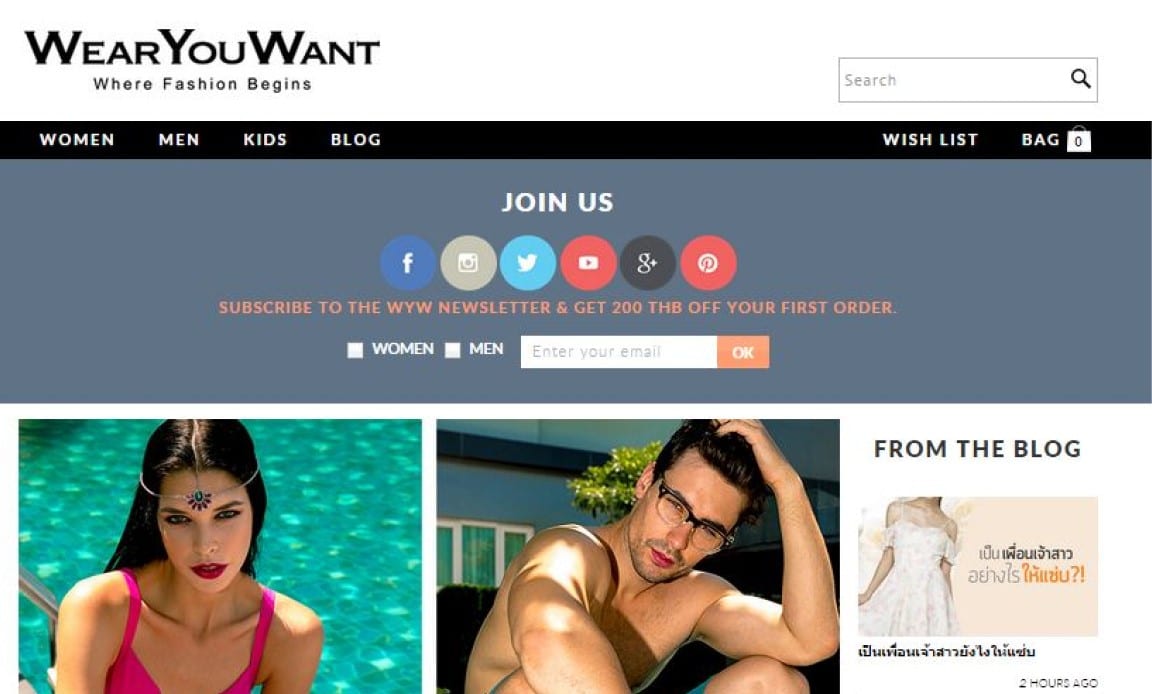
    WearYouWant, Thailand’s leading online fashion marketplace has secured its final round of Series B funding from what might be considered an unlikely source – business-savvy venture capitalists with a history of developing oil & gas in the Middle East. The investment is a real boost to Thailand’s growing reputation as an e-commerce hub and an impressive acknowledgement of WearYouWant as a leading online platform within that industry.

    Sebrina Holdings, based in Singapore, is a multi-asset class family office with a legacy that has mainly focused on oil & gas assets in Asia and the Middle East. The holding company also invests in. “extraordinary entrepreneurs and breakthrough ideas”. The WearYouWant investment concludes the fashion platform’s Series B funding round with an undisclosed sum. WearYouWant will utilize the cash injection to add onto ongoing Series B-funded initiatives.

    According to Julien Chalté, Co-Founder & Co-CEO of WearYouWant.com the holding company investment represents a positive step forward.

    Julien Chalte_WYW (1)

    “The funding from Sebrina Holdings is testament to the solid reputation of WearYouWant as an established e-commerce business with great potential and a welcome investment following the company’s success in 2015. As a result, we will continue our efforts in securing a greater foothold in vertical markets, strengthening our fashion community brand’s assets in the marketplace, with potential for expansion on a regional level, as well as developing our WearYouWant native app.”

    Director of Assets Group, Sebrina Holdings, Raouf Kizilbash sees real business potential in the WearYouWant investment based on the Thai e-commerce fashion marketplace company’s past success and future plans. “Joining WearYouWant is a good opportunity for us. WearYouWant has shown steep growth in 2015 and the projections for 2016 are promising. We are looking very much forward to working with WearYouWant in the coming years.”

    The Sebrina Holdings investment follows two previous series of funding . WYW secured Series A, amounting to USD 1.5 million in 2014 by Digital Media Partners, OPT SEA, IMJ Investment Partners and Julien Chalté, one of WearYouWant’s co-founders. The following year, they secured Series B investment  funding  for an undisclosed amount from leading Japanese digital fashion marketplace, Start Today, which operates Japan’s largest fashion e-commerce portal, Zozotown.

  • WeChat replaces waiters at Chinese restaurant

    WeChat replaces waiters at Chinese restaurant

    A Chinese restaurant in Beijing has replaced its front-of-house staff and diners use messaging app WeChat to order and pay.

    Diners at Renrenxiang Restaurant launch the app on their smartphone to browse the menu and place their order. They then pay for their meal using the messenger service, and are given an order number, reports Springwise.

    Their meal is prepared in the kitchen and their number called out over a loudspeaker when it is ready. The customer can then collect their food. After eating, they leave their crockery on a cleaning table.

    Customers do not even need to be in the restaurant to order. One frequent diner who works nearby says she orders while still in the office, then strolls to the restaurant. By the time she arrives, her meal is ready.

    Meanwhile, the noodle restaurant’s owner is looking at cutting his overheads even further, reports CNN.

    “There will be four ‘no’s in the restaurant – that is, no waitress, no cashier, no merchandiser and no chef,” says Renrenxiang founder Liu Zheng. “I did this because I’m following the technology development trend in China.

    “Thanks to the app, we can cut out unnecessary expenditure, simplify management and focus more on taste and quality.”

    The app also collects customer-related data – such as what dish is most popular, and what age groups visit more frequently. Renrenxiang uses the data to improve its marketing strategy. But despite its high-tech approach, the restaurant does not have its own website.

    Also, it is not the first restaurant to offer waiterless service. In 2007, a restaurant in Nuremberg, Germany, began to offer fully automated order and table services. There are also similar eateries in Japan and the US.

    Using robots to cook, serve and clean is also becoming more common in China.

  • $100m deal for RedMart?

    $100m deal for RedMart?

    A $100 million investment aimed at funding pan-Asian expansion is on the cards for Singapore’s online grocer RedMart.

    Discussions involving the Series C investment are said to be at an advanced stage, reportsTechCrunch, citing two sources. While closure is expected in this first quarter, the grocery company has not issued any public comment on the development.

    Launched in late 2011 by Vikram Lupani, Rajesh Lingappa and Roger Egan, the venture introduced online and on-demand shopping in Singapore. So far, the company has raised $55.1 million from 19 investors. These include, according to Crunchbase, gaming company Garena, SoftBank Ventures Korea, Visionnaire Ventures and Facebook co-founder Eduardo Saverin.

    In August, RedMart raised a $26.7 million bridging round from its investors.

    Potential targets for RedMart’s expansion include Hong Kong and Jakarta, reports DealStreetAsia. However, the firm wants to establish its market leadership in Singapore, where Egan estimates the grocery market to be worth $16 billion a year. The company’s strategy is to maintain its own logistics system and warehouses so as to have greater control of the customer service cycle and enable rapid expansion later into other verticals.

    RedMart’s Asian competitors, HonestBee and HappyFresh, have raised significant equity financing and have adopted a model relying on third-party logistics and delivery services while expanding across South-east Asia and establishing a presence in Hong Kong and Taiwan, says DealStreetAsia.

  • Orders soar for iTrueMart parent

    Orders soar for iTrueMart parent

    “Exceptional” growth has been reported by eCommerce provider Ascend Commerce in its latest fourth-quarter, as it seeks to draw on its winning strategy in Thailand to expand into new markets.

    Part of the Ascend Group, it comprises online stores iTrueMart and WeLoveShopping, which reported 65 per cent more orders for the final quarter of last year.

    While seeking to attract new customers through brand partnerships, Ascend Commerce reported an average of 14,000 orders a day, with a peak of 30,000 orders in a single day. There were also repeat sales among as much as 50 per cent of its customer base.

    “With our category-by-category approach proven in Thailand, we are now expanding throughout Southeast Asia,” says Ascend Group CEO Punnamas Vichitkulwongsa. “Based on the strength of the customer response so far, we are confident we will be able to provide access to the same shopping experience that people in urban areas enjoy to improve the standard of living for the millions who live in rural areas.”

    While iTrueMart is a business-to-consumer retailer, WeLoveShopping is an online marketplace for small business, entrepreneurs and consumers. Both businesses originally launched in Thailand.

    Ascend Commerce invested in its own fulfillment centres last year as a way to retain control over the whole process, from purchase to delivery. Punnamas cites this investment as key to giving customers an excellent experience, resulting in repeat purchases.

    At the same time, iTrueMart has been successful in terms of speedy delivery, with 98 per cent of orders being delivered the next day in Bangkok, or within two days for rural addresses.

    During the year, iTrueMart also launched in The Philippines.

    WeLoveShopping’s orders grew nearly 300 per cent in Q4, with the number of new sellers rising by 1300. The outlet also signed agreements with new brands, helping drive new business.

    “In the first days of 2015, we launched with just a few hundred orders per day and we have grown 700 per cent to achieve great results by the end of the year,” says Ascend Commerce GM Seubsakol Sakolsatayadorn.

    “We will continue with our strategy of winning on a category-by-category basis. We will introduce a new category only when we are sure of the strength of the product offering.”

  • Lotte launches smartphone app for Chinese tourists

    Lotte launches smartphone app for Chinese tourists

    Lotte Group has launched a smartphone app for Chinese tourists visiting Korea.

    The application is called ‘TianTianLeTian’, and provides visitors with information on shopping, tourism, and other services offered by Lotte companies.

    Department stores and large discount stores have already launched mobile solutions for Chinese tourists, but Lotte Group’s new software marks the first time an app was developed by an entire group.

    In addition to tourism information, TianTianLeTian also provides users with mobile coupons for Lotte Members, Lotte Duty Free Store, Lotte Department Store, and Lotte World.

    The app also provides suggestions for places to dine, popular tourist spots, the latest travel information and content from Hallyu stars. Maps are provided in Chinese, and translation services are also provided.

    In collaboration with Zai Seoul, a startup company specialising in travel information targeting Chinese tourists, the location and information of 1800 small shops are listed.

    Lotte will provide small businesses who subscribe to its service with big data related to keywords frequently used in searches by Chinese tourists, human traffic, and shopping habits, helping companies develop marketing strategies to attract Chinese tourists.

    Lotte’s decision to develop a new app was the result of a change in travel habits for Chinese tourists, and a move towards independent travel instead of group packages.

    According to data from the Korea Tourism Organization, the number of Chinese tourists visiting Korea individually nearly doubled in 2015 to 3.5 million compared to the 1.64 million visitors in 2013. The organisation expects 5.5 million individual Chinese tourists to visit this year.

    To target individual travelers who get most of their information through mobile devices while traveling, Lotte started development of the application in April 2015. The beta version was released on January 6, and the number of downloads has already reached 40,000.

  • MatahariMall.com Embraces Foreign E-Commerce Investment in Indonesia

    MatahariMall.com Embraces Foreign E-Commerce Investment in Indonesia

    When asked for his views on the issue, Hadi Wenas, the chief executive officer of MatahariMall.com, told reporters on Wednesday (10/02): “We are very optimistic. It will be business as usual for us, we are not afraid, not shocked or confused.”

    For foreigners, Indonesia is an attractive market for investment, particularly in the e-commerce sector, according to Indonesian E-commerce Association (idEA).

    The association estimated that the number of online shoppers in Indonesia could reach 10 million this year as the country’s middle class continues to grow. The e-commerce business is projected to rake in Rp 20 trillion ($1.49 billion) this year, double from last year’s estimated Rp 10 trillion.

    At the office launch of MatahariMall.com, Wenas noted that the same practice is common in Brazil, Russia, China and India, where local e-commerce firms are able to succeed in the market, supported by global investors, without the companies losing their identity.

    “With the support of Lippo Group, the biggest retail group in Indonesia, and the team we currently have, we are super solid now. Look at our campaign breakthrough. Foreigners won’t match our local taste in our ‘Lu mau apa?’ [(‘What do you want?’)] campaign,” Wenas said, referring to the company’s catch phrase.

    The Jakarta Globe and MatahariMall.com are both affiliated with the Lippo Group.

  • Tweetwars: the social challenge in Twitter ‘capital’, Indonesia

    Tweetwars: the social challenge in Twitter ‘capital’, Indonesia

    Indonesia has long been the Twitter capital of the world, but rival apps and rancorous political debate are driving users away, illustrating the challenges the microblogging service faces even in markets once considered strongholds.

    While Twitter doesn’t break down country figures, Global Web Index data shows Indonesia remains joint first with Mexico in active users among the 34 countries the UK-based metrics company monitors – and significantly ahead in terms of penetration, at 74 per cent of all Internet users.

    But that masks a deeper shift, analysts and users say, as changing tastes, culture and politics push Indonesians to rival services.

    The proportion of active Twitter users in Indonesia has dipped 10 percentage points in the past two years, to about one third of Internet users, the Global Web Index data show.

    “Unless Twitter makes changes or there’s some new exciting things on Twitter that can’t be found on other platforms then I don’t think people are coming back to Twitter,” said Enda Nasution, a blogger and entrepreneur who has nearly 200,000 followers on his Twitter account.

    A Twitter spokesman declined to comment on the data, saying he had not seen it, but said younger people in major markets like Indonesia and India were eager users. He said the company was expanding in Indonesia and working with airlines, banks and celebrities to add services and content.

    He noted Indonesia was one of the top markets for Facebook’s recent acquisition Periscope, which allows users to stream live video.

    Twitter on Wednesday reported its first quarter since going public with no growth in users, and announced changes to its global service.

    Among younger users – active Twitter users in the 16-24 year age range – Indonesia lags Spain, Mexico and the UK. JakPat, an Indonesian survey company, found last month that teenagers were less likely to use Twitter regularly than those aged 26 and above, and were switching to other apps such as Facebook and its photosharing sibling Instagram.

    But there’s also a push factor: Indonesians are leery of Twitter’s core appeal; its default public feed, where everything a user posts is visible to everyone on the network. What was once an attraction in Indonesia’s sociable culture became a liability in 2014’s fractious presidential election.

    FISTICUFFS

    As politicians saw the power of Twitter to mobilise support, the network was flooded by digital armies of volunteers and automated accounts, or bots, spawning what Shafiq Pontoh, chief strategic officer at Jakarta-based social media consultancy Provetic, described as a “tsunami” of “black campaigns, hoaxes, prejudice, racism, spam, harassment, anonymous accounts and political action to frame topics, issues (and) spin doctoring.” “Twitter,” he said, “became an uncomfortable place to be.”

    This antagonism hit rock bottom when two Twitter users took a dispute over government car-making policies offline and slugged it out near a sports stadium. Cellphone footage of their fist-fight was broadcast on TV. “After that it felt like that if you don’t want to get into trouble, people would retreat and find a more comfortable space online,” said Nasution, the entrepreneur.

    Those online spaces include Facebook’s WhatsApp and Messenger apps, South Korean Kakao’s Path, Japan’s Naver Corp’s LINE and BlackBerry’s Messenger.

    Mr Nasution said students he has spoken to use WhatsApp to communicate with their lecturer, and LINE to chat with each other. Or Facebook and Path, says student Jeremiah Mandey, who joined Twitter in 2010. “I used Twitter to interact with friends, but now I use it to get news,” he said.

    MISSING A CULTURAL BEAT

    Government departments, companies and even President Joko Widodo have embraced Twitter as a public announcement service. The Jakarta police traffic feed, alerting commuters to jams, accidents, potholes and protests, has over 5 million followers.

    This provides a service, but is too passive for younger people, says Aulia Masna, an editor. “People are on social media to have fun and be entertained,” he says. “Twitter in Indonesia is better known as the place for news, debate and politics. So it attracts the more serious, older crowd.”

    The company spokesman said Twitter opened a Jakarta office last year and added staff, in part to expand its user base beyond the capital. The recruits included a government relations expert. It was also working with local bank BNI to allow customers to transact via Twitter. “We see great potential in Indonesia, it’s one of the top markets,” he said, adding Mr Joko was due to visit Twitter’s headquarters in San Francisco next week.

    Simon Kemp, regional managing partner of social media marketing agency We Are Social, said Twitter should focus more on understanding how people in places like Indonesia use their service before tweaking things.

    “People are still looking at these things as a technology base,” he said, “while it’s the cultural driver that determines what you use and when you use it.”
  • Indonesia warns messaging apps to drop same-sex emoticons

    Indonesia warns messaging apps to drop same-sex emoticons

    Indonesia’s government has demanded that instant messaging apps remove stickers featuring same-sex couples, in the latest high-profile attempt to discourage visible homosexuality in the socially conservative country.

    The government move comes after a social media backlash against the popular smartphone messaging app Line for having stickers, which are an elaborate type of emoticon, with gay themes in its online store.

    Information and Communication Ministry spokesman Ismail Cawidu said Thursday that social media and messaging platforms should drop stickers expressing support for the LGBT community, a common abbreviation for lesbian, gay, bisexual and transgender.

    “Social media must respect the culture and local wisdom of the country where they have large numbers of users,” he said.

    Homosexuality is not illegal in Indonesia, but is a sensitive issue in the Muslim-majority nation of more than 250 million people. At the same time, most of Indonesian society, which follows a moderate form of Islam, is tolerant, with gay and transsexual entertainers often appearing on television shows.

    Line on Tuesday said it had removed all LGBT-related stickers from its local store after receiving complaints from Indonesian users. Twitter and Facebook had exploded with criticism of Line and its competitor WhatsApp for containing gay content.

    Ismail said the government would tell WhatsApp to do the same as Line.

    Last month, Research, Technology and Higher Education Minister Muhammad Nasir said openly gay students should be banned from the University of Indonesia’s campuses. His statements followed controversy over news a sexuality research center planned to offer counselling services for students.

    Nasir’s statement sparked public controversy in Indonesia for weeks, with objections from human rights groups but support from the Indonesian Ulema Council, an influential board of Muslims clerics.

    Gay rights advocate King Oey urged the government to respect international treaties signed by Indonesia protecting the rights of minorities and women.

    “Gays and lesbians are not illegal in Indonesia,” Oey said. “We urge people who are concerned with human rights to not sit by silently.”

    In 2014, lawmakers in Aceh, a conservative Indonesian province, passed a law that punishes gay sex by public caning and subjects non-Muslims to the region’s strict interpretation of Islamic sharia law.

  • Thai shopping An e-commerce boom in the making

    Thai shopping An e-commerce boom in the making

    Thailand could be in for an online shopping boom. The country’s telecommunications infrastructure, payment settlement systems and logistics have long been somewhat underdeveloped. For years, the situation has discouraged mall operators and shoppers from jumping into e-commerce.

    Toshiya Matsuo, chief executive of Ookbee Mall (Thailand), center, announces the launch of Ookbee Mall, an online shopping site, in Bangkok in October 2015.

    Now that market is finally starting to grow.  Tokyo-based transcosmos, an e-commerce solutions provider, in October collaborated with Ookbee, a Thai e-book store operator, to create the Ookbee Mall website. Toshiya Matsuo, chief executive of Ookbee Mall (Thailand), is excited about the company’s better-than-expected sales. “Japanese cosmetics and fruit that are difficult to get here are selling particularly well,” he said.

    Ookbee Mall sells some 90,000 items and hopes to have 1 million customers by 2018. Matsuo said the company aims to set itself apart with a unique lineup of Japanese items, thereby sidestepping fierce competition in the Thai e-commerce space.

    Slow to take off

    In 2009, Rakuten, Japan’s big e-tail platform, bought TARAD Dot com, one of Thailand’s oldest online marketplace operators. The acquisition encouraged Thai communications conglomerate True Corp. and other parties to also get into online retailing in Thailand.Lazada of Germany landed in the country in 2012, and China’s Alibaba Group Holding came in 2014.

    START TODAY, the Japan-based operator of apparel retail website Zozotown, is a new contestant for Thailand’s Web shoppers. It recently formed a capital tie-up with Thai online clothing specialist WearYouWant Holdings.

    The market, however, has been slow to take off. Blame that on Thailand’s creaky mobile infrastructure and lack of reliable settlement services.

    To get things moving, Lazada at the end of last year established its own distribution centers.

    Watch your e-wallets

    In January, Deutsche Post DHL Group created a division to deal with domestic deliveries of online purchases at its Thai unit. The carrier has also built a distribution center in Bangkok. It plans to double the number of its Thailand delivery depos to more than 40 by 2017. The network offers next-day deliveries in Bangkok and surrounding areas. Elsewhere, it shoots for completing deliveries within three days.

    Another spur to online shopping is faster wireless communications. Political turmoil had halted the bidding process for fourth-generation mobile spectrum, but at the end of last year several auctions were held. A Thai mobile operator began offering 4G service in January.

    As Thailand’s cyberspace catches up with the times, online retailers are pouring money into new services. With 4G, sellers will be able to pitch their products with high-resolution video. DHL cited 4G as a key factor behind its e-commerce business in Thailand.

    According to Euromonitor International, a British market researcher, Thailand’s online retail market is expected to reach $3.21 billion by 2020, a 123% increase over 2015.

    As the market grows, Thais will have to guard their e-wallets from a wealth of online options.

  • UK retailers fail to capitalise on burgeoning e-commerce in China

    UK retailers fail to capitalise on burgeoning e-commerce in China

    ‘Retailers are falling short in serving both Chinese shoppers and others overseas by not providing the seamless shopping experience they offer here in the UK’

    Although 71% of the UK’s largest online retailers are selling internationally, almost half (45%) are completely ignoring China’s burgeoning e-commerce market, new research has found.

    China’s total e-commerce market is expected to increase by 50% to $6.5 trillion by 2020, with online transactions accounting for nearly half of that growth.

    China’s Centre for International Economic Exchanges predicts the nation’s international online retail will account for 30% to 40% of total world trade by 2025.

    Meanwhile, recent research by Worldpay revealed that 44% of people in China shop on overseas websites.

    But while many UK retailers, such as Selfridges and John Lewis, have taken steps to make the shopping experience in-store more welcoming for high-spending visitors from China, relatively few retailers have made similar improvements online.

    Just 55% offer shipping to China – and among those that do, the shopping experience offered to shoppers varies wildly.

    New research by Global-e, which assessed more than 150 of the UK’s largest online retailers, found that just one in ten (10%) retailers that ship to China offer shoppers a Mandarin language option.

    Across all retailers, just under a fifth (17%) offer non-English language options, with retailers that offer international language options offering 5.7 languages on average.

    And while more than a third (36%) of retailers offer prices in other currencies, just 26% of UK retailers that ship to China present prices in Chinese Yuan, and only 22% accept Chinese local payment methods, such as AliPay, UnionPay and TenPay.

    Of retailers that do accept Chinese payment methods, 42% offer a single option, barring some prospective customers from making a purchase.

    Furthermore, almost all (98%) retailers that ship to China do not provide full duties calculations and prepayment, which means that shoppers may be stung by unexpected charges or taxes.

    Not only does this put the retailer’s reputation at risk, but these companies will also be unlikely to generate brand loyalty in China.

    “Shoppers expect more from the online retail experience but very few retailers can claim to offer ‘global shopping’,” said Nir Debbi, co-founder and CMO at Global-e. “Our research shows that retailers are falling short in serving both Chinese shoppers and others overseas by not providing the seamless shopping experience they offer here in the UK.

    “To boost conversions abroad and harness untapped opportunities, retailers need to remove the frictions in the customer experience by providing effective shipping and returns, localised pricing, local currencies, and payment methods with guaranteed landed cost.”