Category: E-Tailing

Retail News Asia is committed to providing both local and global retailers with the latest E-Commerce & Etail news throughout the Asian market. This on a daily base.

  • Shopee For Men launched in Thailand

    Shopee For Men launched in Thailand

    Shopee Thailand has launched a new in-app shop, Shopee For Men.

    The shop is a one-stop portal for male shoppers to access more than 20,000 products from more than 300 retailers, including top brands such as Asus, Bosch and Converse.

    Shopee will run Super Men’s Day on the 23rd of every month, featuring special deals and flash sales on popular men’s products.

    According to a Nielsen study, Thai men are shopping online more often than women and spending about 15 per cent more on average, per purchase. Shopee says that trend is mirrored on its platform, with categories such as motor, sports & outdoor and men’s apparel the most popular.

    Agatha Soh, head of marketing at Shopee Thailand said the Shopee For Men has teamed up with leading brands such as Unilever, Nivea for Men, Warrix, Gatsby, G-Shock, Electrolux, American Tourister, and Asus.

    “With a huge variety of products across various categories, Shopee For Men provides a comprehensive assortment designed to meet all male users’ needs.”

    Shopee For Men will also provide zero-interest instalments on selected electronics, sports and lifestyle items.

    “Through Shopee For Men, we aim to increase our community of male users and take another stride to become the number one online shopping destination in Thailand,” Soh said.

  • Myntra launches loyalty program, ‘Myntra Insider’

    Myntra launches loyalty program, ‘Myntra Insider’

    Myntra has announced the launch of its loyalty program, Myntra Insider. A first of its kind in the country, the program is a comprehensive package, designed to strengthen engagement with its users to drive stickiness on the platform.

    This open-to-all program allows Myntra to democratise fashion for every registered user through unique rewards and experiences.

    The Myntra Insider program hinges on three pillars – it rewards members for purchases as well as engagement such as browsing new categories, sharing feedback, wish listing etc. It offers a host of exciting perks across fashion and lifestyle, with offers from sellers on Myntra and lifestyle partners such as Zomato, TataSky, BigBasket, PhonePe, BookMyShow, EROS NOW, Zoom Car, Gaana to name a few.

    Myntra Insiders will be able to avail special privileges such as early access to sales, priority customer support, special birthday offers and more, depending on their Insider level.

    Based on their level of fandom, users are categorized to be either, Insider, Select, Elite or Icon, with each level offering greater benefits and privileges over the previous. The program will also offer unique experiences to its users such as a session by a stylist, modelling on Myntra content/platform and co-creating designs and styles for Myntra.

    Speaking about the program, Ananth Narayanan, CEO, Myntra-Jabong, said, “Myntra Insider is our endeavour to engage deeply with our users and celebrate our fans. We aim to encourage casually involved users to interact and indulge with Myntra and grow in their journeys to become our icons. The uniqueness of our program is two fold – our uniquely crafted experiences for our biggest fans and gamification of engagement through personalisation and inter-activity. We aspire to have 10 million Myntra Insiders signed up over the next 12 months. We want to make visiting Myntra a habit for our users and aim to get our fans to visit us over 100 days a year and make a purchase every month.”

  • DHL Enables Unbanked Consumers in SEA to buy online

    DHL Enables Unbanked Consumers in SEA to buy online

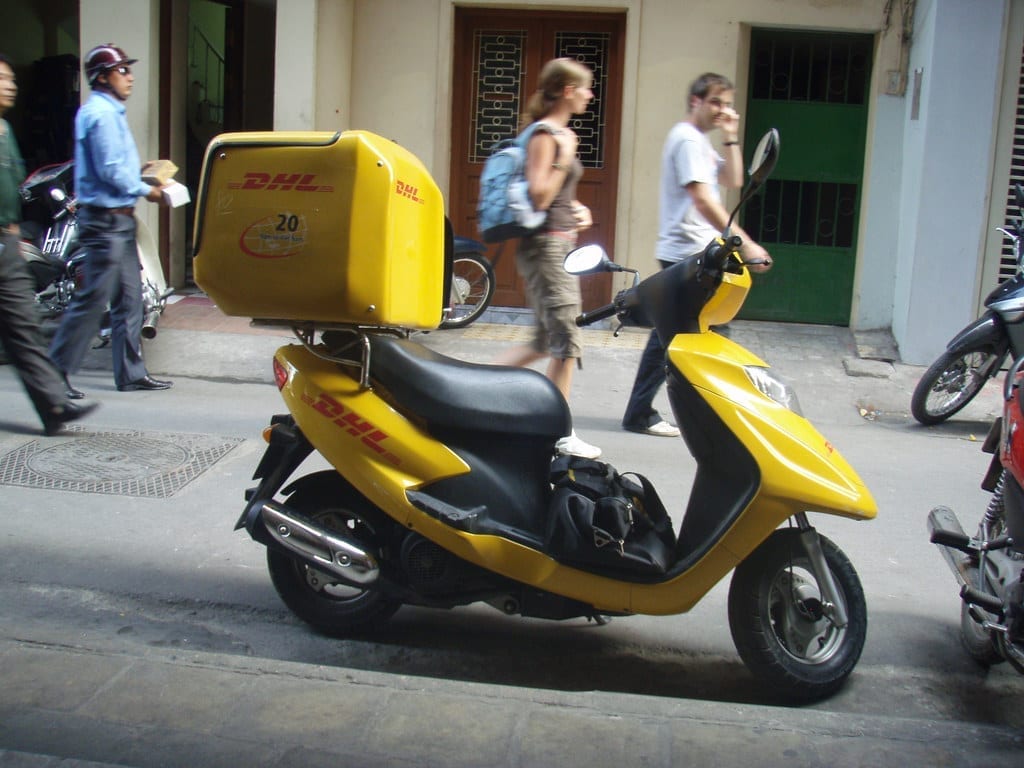
    DHL eCommerce, a division of Deutsche Post DHL Group, has launched its Cross Border Cash-on-Delivery (COD) service to allow consumers to pay for their international purchases in cash and only upon delivery.

    In Southeast Asia over 73% of the population are still unbanked and inaccessible to e-commerce retailers since they do not have access to credit cards or internet banking services.

    COD is available as a value-added service of the DHL Parcel International Direct product, specifically for sellers based in China and Australia delivering to consumers in Malaysia, Thailand and Vietnam. Collected cash will be remitted to a local bank account at destination (Malaysia, Thailand or Vietnam) or in the billing country (China or Australia) based on the local destination currency. Remittance will be made to sellers every fortnight and tracking visibility of the status of COD is available on the DHL portal.

    “Despite growing credit card adoption in Southeast Asia, the low level of credit card penetration has forced e-commerce retailers to offer alternative modes of payment methods such as cash on delivery, digital payments and in some cases paying in-store. This opens up a huge potential by reaching out to a new group of unbanked consumers and also meeting the needs of consumers who prefer to pay in cash.” said Charles Brewer, CEO, DHL eCommerce.

    “China and Australia are huge e-commerce export markets and our DHL Parcel International Direct product provides a direct entry into high demand markets with excellent transit times of 3-5 business days with economical shipping prices. With our fully-owned domestic delivery network in Malaysia, Thailand and Vietnam, we are able to deliver on-time with secure features like cash-on-delivery.” added Brewer.

    To enable sellers in China and Australia to tap on the cross-border e-commerce opportunity, DHL eCommerce enables economical international shipping with a range of e-commerce features. This includes parcel pick-up service; easy IT integration of the seller’s inventory into the DHL shipping process, end-to-end tracking, dynamic routing and distribution, returns management, etc.

  • Amazon, Samara Capital buy India’s retail chain More

    Amazon, Samara Capital buy India’s retail chain More

    Samara Capital, a private equity company, has teamed with Amazon to buy Indian grocery retailer More from Aditya Birla Retail.

    While the value of the deal has not been disclosed, it is reported a person close to the transaction putting it at around ₹4,200 crore (US$584 million).

    It is believed Amazon’s stake in the business will be capped at 49 per cent to comply with Indian foreign investment regulations. The balance will be held by Samara Capital, which is an Indian entity founded by former Citigroup executives.

    Amazon has already committed US$500 million to build its food retailing business in India, where it sees massive opportunity for growth.

    Analysts say that by investing in More, Amazon can build both online and offline food retailing operations simultaneously and find ways to marry the two. But it faces intense competition from Walmart which spent $16 billion acquiring Flipkart in a deal completed last month.

    More operates more than 500 supermarkets and 20 hypermarkets, ranking it fourth among Indian grocery retailers.

  • JD launches online shopping service in Indonesia

    JD launches online shopping service in Indonesia

    Chinese e-commerce giant JD has initiated a grocery delivery service at Commuter Line train stations in the Greater Jakarta area.

    The new online retail store, JDVirtual, allows customers to use QR codes to purchase groceries to be delivered to their homes. The store sells food, beverages, and other grocery products found in conventional retail outlets.

    The initiative serves to test a new business model while targeting the high number of Commuter Line users in Jakarta, which serves an average of 1 million people per day.

    Users of the JD.ID app can purchase products immediately by scanning JDVirtual codes. The whole transaction process is completed within the app.

    Zhang Li, JD.ID’s president director said: “The customers are our inspiration in doing business in Indonesia. We believe that with JDVirtual, a borderless shopping concept will provide a real solution for modern retail industry, while also helping to run our mandate to help bring Indonesia forward.”

  • Flipkart gets over Rs 3,462 crore infusion from Singapore entity

    Flipkart gets over Rs 3,462 crore infusion from Singapore entity

    Flipkart Internet, the online marketplace arm of the Walmart-backed company, has received over Rs 3,462 crore fund infusion from Flipkart Marketplace, Singapore, as per regulatory documents.

    According to a PTI report: The fund infusion — done in two tranches — will provide more ammunition to Flipkart, which is locked in an intense battle with US-based Amazon for leadership in the burgeoning Indian e-commerce market.

    “…in accordance with the Letter of Offer dated August 14, 2018 circulated by the company for the rights issue of shares, the board of directors of the company be and hereby allot 14,57,598 Class A equity shares…for an amount aggregating to Rs 30,07,02,46,740 for cash to Flipkart Marketplace Private Ltd, Singapore,” regulatory documents filed with Corporate Affairs Ministry said.

    The resolution was passed at the board meeting held on August 30, 2018. The board, during the same meeting, also passed another resolution (in accordance to a Letter of Offer dated July 18) for allotting 2,21,002 equity shares for Rs 455.92 crore for cash to Flipkart Marketplace, Singapore.

    The fresh capital also comes close on the heels of festive sale season that not only brings in discounts and deals for customers, but is also an annual showdown of sorts between the two largest players in the segment — Flipkart and Amazon India.

    Market watchers expect the competition between the two to be even fiercer this year as both companies have invested significantly through the year to ramp up product offerings as well as logistics infrastructure to ensure speedier delivery.

    While Flipkart now has the backing of US retail giant Walmart (via a Rs 16 billion deal signed earlier this year), Amazon India too has received millions of dollar in funding through the year from the US parent across operations like marketplace and payments business.

    About 20 million people are expected to shop on various e-commerce platforms during the festive sale next month, translating into sales of around Rs 3 billion for players like Amazon and Flipkart, according to a report by research firm RedSeer.

    In a statement Tuesday, Flipkart said it expects to see a surge of 8-10X in sale of perfumes on its platform during the sale season. This growth, it said, would be on the back of an overhaul undertaken by the company.

    “Project ‘Authenticated’ promises a revamp of Flipkart’s portfolio comprising over 2000 perfumes and a seal of authenticity on the listing image, a new feature that showcases brand-approved sellers,” it said.

    The company will also add more exclusive partnerships and expand its collection of globally recognised labels in coming months, it added. The size of the perfume industry as a whole is predicted to grow 50 percent to Rs 3,000 crore over the next five years, the statement said.

  • E-payment continues to go mainstream in globalizing Vietnam

    E-payment continues to go mainstream in globalizing Vietnam

    Electronic payments are becoming more and more common in Vietnam, according to Visa.

    Its data for the 12-month period until June 30 this year shows that the number of transactions on the Visa network increased by 45 percent from the previous year, the company said in a statement.

    E-payment is rising thanks to strong e-commerce spending. Between September 1 last year and August 30 this year, e-commerce spending rose 44 percent in terms of transactions, it said.

    The country is going through a period of “incredible economic change” and becoming more involved in the global economy, Sean Preston, Visa’s country manager for Vietnam and Laos said in the statement. “Electronic payments would play in a major part in this evolution.”

    E-payments in Vietnam grew 22 percent in 2017 from the previous year to $6.14 billion, as quoted data from Statista, a local market research firm, as saying. The figure is projected to double to $12.33 billion in 2022.

    According to economists, the potential for the e-payment sector is huge due to the expanding middle class and improved communications infrastructure.

    More than half of Vietnam’s population of nearly 92 million people are online.

  • Go-Jek Aims to Raise $2b for Southeast Asia Expansion

    Go-Jek Aims to Raise $2b for Southeast Asia Expansion

    Indonesian ride-hailing firm Go-Jek is seeking to raise about $2 billion from existing investors, including Tencent Holdings and JD.com, to fund its expansion plans in Southeast Asia, sources familiar with the matter said on Monday (17/09).

    Go-Jek’s fundraising comes as its main rival Singapore-based Grab is also building a war chest to transform itself into a consumer technology group and aggressively grow in Indonesia, Southeast Asia’s biggest economy.

    Both Go-Jek and Grab are raising billions of dollars and investing hundreds of millions of dollars in the race to gain dominance in Southeast Asia. More and more of the region’s 640 million consumers are going online, and starting to make use of smartphones to shop, commute and make payments.

    “Chinese investors have very, very deep pockets but the total amount depends on how demand shapes up,” said one source who was not authorised to speak to the media. Go-Jek’s other existing investors include private equity firms Warburg Pincus and KKR.

    Indonesia — home to 250 million-plus people — is shaping up as a battleground for global tech giants such as Alibaba , Tencent, JD.com, Google and Softbank Group in the fight for market share in ride-hailing, online payments and e-commerce.

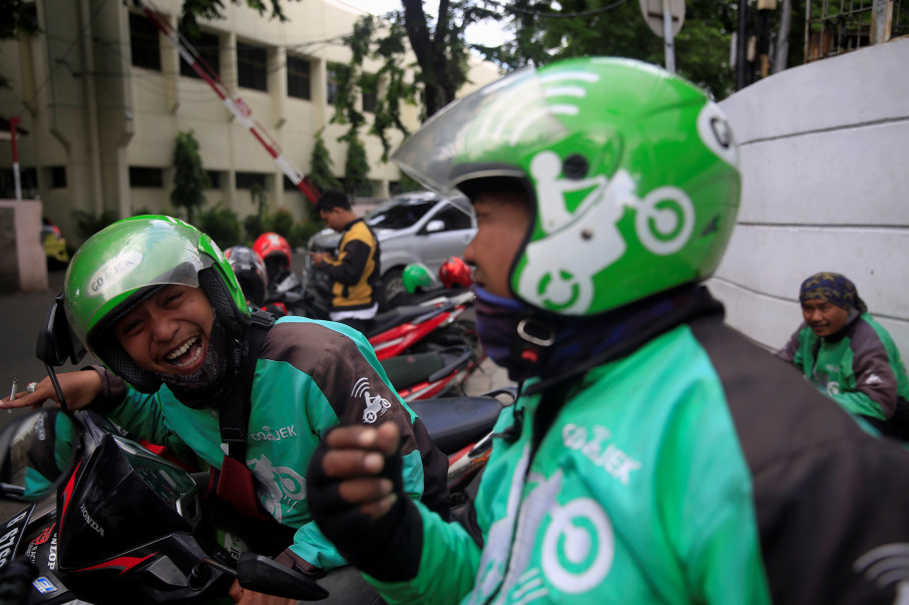
    Launched in 2011 in Jakarta, Go-Jek — a play on the local word for motorbike taxis — has evolved from a ride-hailing service to a one-stop app through which its customers can make online payments and order everything from food, groceries to massages.

    Go-Jek said in May it would invest $500 million to enter Vietnam, Singapore, Thailand and the Philippines, after Uber struck a deal to sell its Southeast Asian operations to Grab.

    Go-Jek was last estimated to have a valuation of about $5 billion when Google, Singapore state investor Temasek Holdings and others came in as investors in its $1.5 billion funding earlier this year.

    The new funding is set to be completed later this year, the sources said.

    Go-Jek and JD.com declined to comment. There was no immediate response from Tencent.

    Go-Jek founder and CEO Nadiem Makarim said last month the company was seeing strong funding interest from its backers as it targets an aggressive expansion.

    Go-Jek is a dominant force in Indonesia, where it processes more than 100 million transactions for its 20-25 million monthly users.

    Ride hailing services in Southeast Asia are expected to surge to $20.1 billion in gross merchandise value by 2025 from $5.1 billion in 2017, according to a Google-Temasek report.

    Bloomberg reported news of Go-Jek’s fundraising late on Sunday.

  • E-commerce set to take 10 per cent of Thai retail sales

    E-commerce set to take 10 per cent of Thai retail sales

    Analysts are predicting e-commerce will account for 10 per cent of Thai retail sales within five years, according to a report.

    The observations have been sparked by the imminent entry of JD Central – a partnership between Chinese online services giant JD and local firm Central Group.

    Head of customer strategy for JD Central Jirasak Chirathivat said that the Thai retail business will be stimulated by higher competition, big data, AI and voice commands. “Price is not the only factor for consumers; experience and express delivery are also key motivations,” he said.

    “We are in the process of investing in a second logistics centre that serves countrywide delivery. We aim to achieve the standards seen in China, where JD.com delivers before 11am in the morning when users place their orders before 11pm the night before.”

    JD Central plans to offer 1 million products online, working with Tencent Thailand and Pomelo, each of which list JD as a shareholder.

    Pomelo’s CEO David Jou said e-commerce in Thailand still has room to grow, as it represents only 3–5 per cent of the total retail market compared with 30–35 per cent in China and 15 per cent in India.

  • Go-Jek launches services in Hanoi amid $500 million overseas expansion drive

    Go-Jek launches services in Hanoi amid $500 million overseas expansion drive

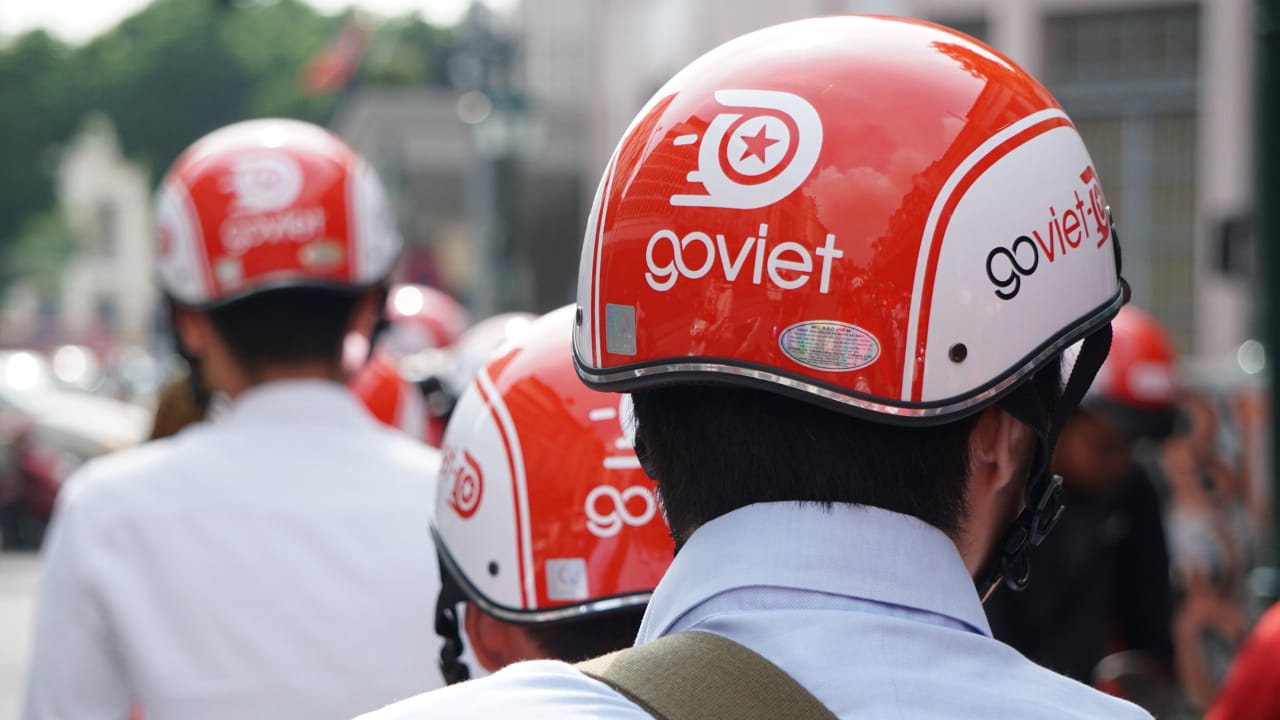
    Indonesian ride-hailing firm Go-Jek on Wednesday launched its services in Vietnam’s capital of Hanoi under the brand Go-Viet.

    The move is part of Go-Jek’s $500-million international expansion.

    The app-based on-demand service Go-Viet, driven by a Vietnamese founding team, with Go-Jek providing technology, expertise and investment, offers services ranging from transport and logistics to food-delivery and mobile payments.

    Go-Viet grabbed a 35 percent share of the market for motorbike ride-hailing services in the economic hub of Ho Chi Minh City just six weeks after launching there on August 1, Go-Jek founder and chief executive Nadiem Makarim said.

    “We are proud to have seen positive development in Ho Chi Minh City market, and this paves the way for us to expand our services to Hanoi,” Go-Viet co-founder and managing director Nguyen Vu Duc said at Wednesday’s launch.

    The launch followed an announcement by the company in May that it would invest $500 million to enter the Philippines, Singapore, Thailand and Vietnam, following Uber’s deal to sell its Southeast Asian operations to bigger regional player Grab.

    On Tuesday, Grab announced a partnership with Vietnam’s MOCA Technology and Service company (Moca) for a mobile payment service, as the ride-hailing firm pushes to cement its position.

    The launch was attended by Indonesian President Joko Widodo, who is in Hanoi for an official state visit and a meeting of the World Economic Forum.

    More Indonesian businesses are seeking to expand their operations in Vietnam, Widodo told reporters on Tuesday, after a meeting in Hanoi with his counterpart Tran Dai Quang.

    “We expect bilateral trade to reach $10 billion a year by 2020…and I hope president Tran Dai Quang would work to remove trade barriers for Indonesian products, including automobiles,” he said.

    Trade between the countries rose to $6.5 billion last year from $5.6 billion in 2016, says Vietnam, which exports rice, crude oil, cement and farm produce to Indonesia, and imports fertilizer, oil products, machinery and fabric from it.

  • Burberry is launching ‘See Now, Buy Now’

    Burberry is launching ‘See Now, Buy Now’

    British luxury fashion house Burberry is releasing a see-now, buy-now collection exclusively on Instagram and WeChat.

    Limited-edition pieces from the collection, the first released under the Burberry label by designer Riccardo Tisci, will be made available through 24-hour product releases on the two platforms. The inclusion of WeChat on the see-now, buy-now program illustrates the importance of the Chinese market for the brand.

    A physical sale for the collection will be held in the Regent Street, London flagship store at 5.30 pm on September 17, immediately after Tisci’s runway presentation at London Fashion Week. The store will be visually transformed under a Tisci-designed concept for the 24-hour sale.

  • China’s cross-border e-commerce turnover

    China’s cross-border e-commerce turnover

    China’s cross-border e-commerce is forecast to see turnover top 9 trillion yuan (1.3 trillion U.S. dollars) in 2018, according to a report released by the China E-Commerce Association.

    The report, released on Sunday at the ongoing 20th China International Fair for Investment and Trade (CIFIT), held in Xiamen, east China’s Fujian Province, said that the top 10 import sources of China’s cross-border e-commerce trade in 2017 were Japan, the United States, the Republic of Korea, Australia, Germany, New Zealand, the Netherlands, France, Britain, and China’s Hong Kong Special Administrative Region.

    Cross-border e-commerce is most active in south China’s Guangdong Province, followed by Beijing, east China’s Zhejiang and Shandong provinces and central China’s Henan Province for exports via e-commerce.

    Tong Xiaomin, chief engineer at the Information Center of the Ministry of Industry and Information Technology, said that the Chinese government supports cross-border e-commerce with policies and infrastructure building.

    Globally, however, trade protectionism in forms of tariff barriers and anti-monopoly investigations has posed negative influence on the development of cross-border e-commerce, Tong said.

    He suggested that Chinese e-commerce firms and importers should heed turbulence in the international trade environment and improve their global competitiveness. Meanwhile, the e-commerce platforms should explore new market and adopt new technologies and applications to ensure the high-quality development.

  • Uber Eats aims to boost presence with CJ deal

    Uber Eats aims to boost presence with CJ deal

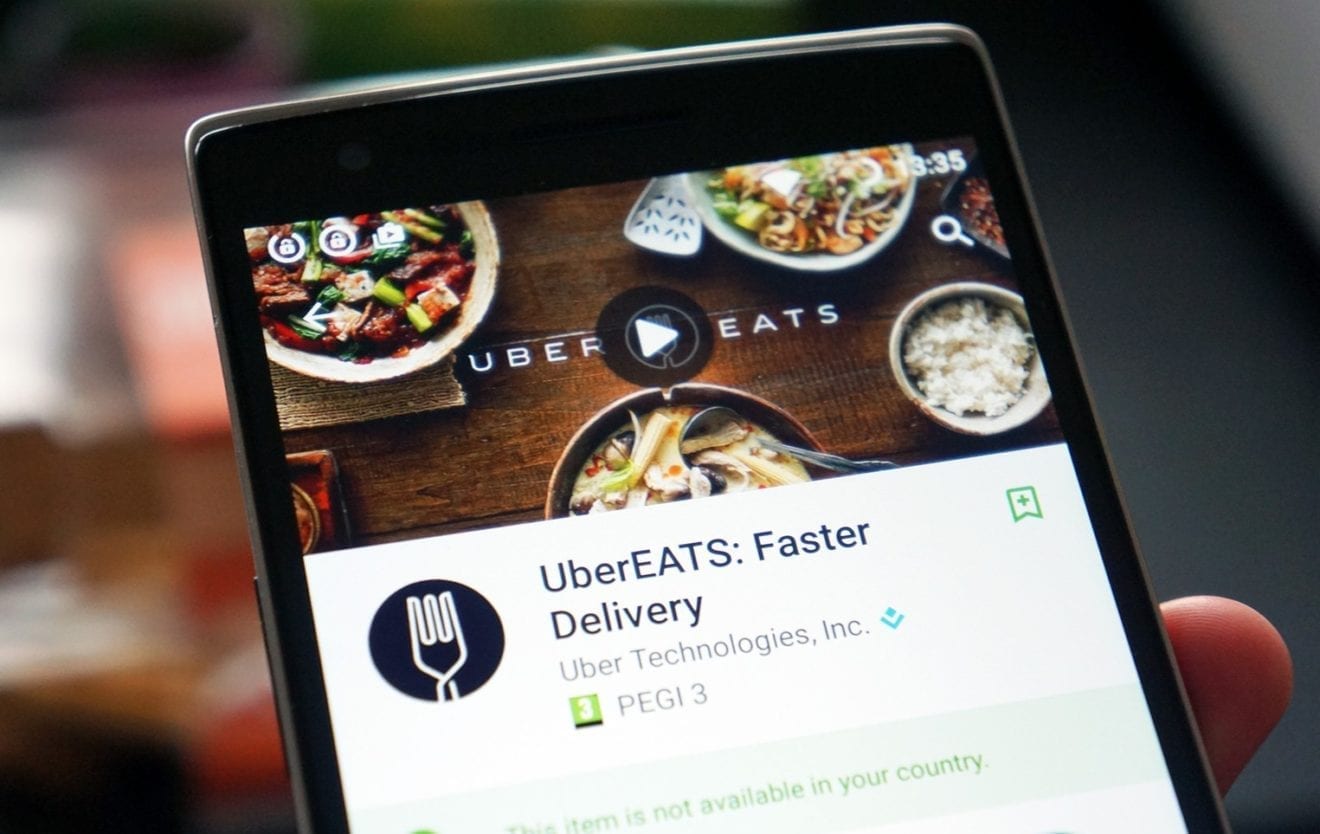
    U.S. food delivery app Uber Eats said Wednesday that it has signed a partnership with Korean food service company CJ Foodville in the latest move to boost its presence in the country’s growing food delivery market.

    Uber Eats said major CJ Foodville brands, such as VIPS, Cheiljemyunso, The Place and Juice Solution, would be easily accessible through its app in Seoul, a heavily populated city with a population of some 10 million.

    Eight out of 10 Koreans use smartphones, and they increasingly order popular food items through mobile apps.

    “We are excited about our partnership with CJ Foodville, the national representative food service brand, bringing its diverse selection to our customers,” Jean-Marc Serayssol, head of Asia sales at Uber Eats, said of the deal signed last Tuesday. “With this partnership, Uber Eats customers can now order CJ Foodville brands at the simple tap of a button, and Uber Eats will continue to expand to provide our services anytime, anywhere.”

    The food franchise unit of Korean food and entertainment conglomerate CJ Group has about 1,500 franchises across Korea and nearly 400 franchise stores in seven countries, including the United States, China and Vietnam. CJ Foodville is planning to reinforce the collaboration with Uber Eats overseas.

    Uber Eats, a food delivery service app run by ride-sharing pioneer Uber Technologies, began its business in Korea in August last year and currently has more than 1,500 local restaurant partners in Seoul.

    Uber Eats did not disclose its share in Korea’s estimated 12 trillion won ($10.7 billion) food delivery app market dominated by homegrown apps, such as YoGiYo and Baedal Minjok.

    Uber Eats is part of Uber’s attempt to expand its presence in Korea, where the company’s flagship ride-sharing service, Uber X, was banned in 2015 because it conflicted with the local transportation law.

  • Purchases made online with phones hit record in July

    Purchases made online with phones hit record in July

    Purchases made using the internet and mobile devices in Korea reached an all-time high in July, government data showed Wednesday, demonstrating the popularity of smartphones, fast delivery and convenient payment options offered to local shoppers.

    The total value of transactions made with computers, smartphones and tablets reached a record 9.45 trillion won ($8.45 billion) in July, up 22.7 percent, or 1.75 trillion won, from a year earlier, according to the data from Statistics Korea.

    The sharp rise was attributed to increased demand for electronics, leisure goods, daily necessities and food amid sweltering weather and the vacation season, the agency said.

    The total value of mobile transactions soared 33.5 percent to a record 5.92 trillion won, accounting for a record 62.6 percent of all online purchases in July.

    Mobile purchases in Korea have been on the rise for years as devices expand their presence in the world’s most wired country and rapidly replace computers as the means of conducting online transactions.

  • Amazon joins Apple in trillionaire’s club

    Amazon joins Apple in trillionaire’s club

    Amazon briefly became the second US company to join the trillionaires club overnight.

    Like Apple just one month ago, Amazon’s market capitalisation has exceeded US$1 trillion.

    Neil Saunders, MD of GlobalData Retail, described the achieved as “extraordinary” after just 24 years in business.

    “That Amazon has achieved this demonstrates its dramatic advancement in both the retail and technology sectors, as well as the influence it now wields over large parts of the consumer landscape. Amazon is a very customer-centric retailer that has earned and deserves its success.”

    The e-commerce behemoth posted losses for many years when it launched in the relative infancy of the online shopping industry. But in recent times its growth has been stellar, based on creating a subscription platform (Amazon Prime), developing smart devices like the Alexa and acquiring and opening retail businesses to expand its reach offline, including upmarket grocer Whole Foods and its cashierless Amazon Go format currently in trial phase.

    Saunders said the valuation reflects the forward potential of the company. “Despite its size and scale, there is still something young about Amazon. It might be mature in a sector like books and media, but in categories like grocery and home furnishings, Amazon is really only just getting started. The same applies to geographic expansion – there are many global pockets of demand that Amazon has yet to fully tap into.”

    Saunders has no doubt Amazon will make the most of all of those opportunities.

    “We also believe it will move more heavily into new areas like pharmacy and healthcare. Its future success will be predicated on the same basis as its past victories: finding innovative ways of delivering on customer’s needs and identifying unique ways of solving their problems.”

    Apple was not the world’s first trillionaires club member: Chinese government-controlled company PetroChina briefly reached a stock market value of about $1.1 trillion in 2007, however it is now worth only about $200 million.