Category: E-Tailing

Retail News Asia is committed to providing both local and global retailers with the latest E-Commerce & Etail news throughout the Asian market. This on a daily base.

  • Japan’s Aeon to invest in grocery delivery Boxed

    Japan’s Aeon to invest in grocery delivery Boxed

    Japanese retail group Aeon has lead a US$111 million funding round in US bulk grocery delivery business Boxed.

    Besides the cash injection, Aeon and Boxed will share knowledge and experiences on issues such as logistics, robotics and AI data, helping to accelerate Aeon’s digital transformation.

    “Our industry is constantly evolving. Our latest fundraising efforts will allow us to capitalise on those changes,” said Boxed CEO and co-founder Chieh Huang in a statement.

    “We’ll also continue to expand our national footprint by focusing on reaching our core consumer in various key markets, to increase national brand awareness of Boxed,”

    Other participants in the latest Boxed funding round were Alpha Square Group, CDIB Capital, Gabriel Naouri and existing shareholders in Boxed.

  • Grofers eyes over Rs 2,500 cr revenue in FY19

    Grofers eyes over Rs 2,500 cr revenue in FY19

    Online grocery firm Grofers expects its revenue to cross Rs 2,500 crore this fiscal on the back of strong addition of new customers along with increasing cart sizes of existing users.

    According to a report, The SoftBank-backed company, which competes with the likes of Alibaba-funded BigBasket as well as e-commerce majors like Flipkart and Amazon, currently has a monthly revenue run rate of about Rs 150 crore (translating into Rs 1,800 crore for the year).

    “We had launched a loyalty programme — Smart Bachat Club (SBC) — earlier this year and that has given a strong fillip to out business. It’s a subscription offering, where the customer is paying in advance for special pricing on items and we have seen huge uptake for it, we have crossed half a million subscribers already. By December, we expect to reach one million,” Albinder Dhindsa, Co-founder and CEO, Grofers said.

    He added that the frequency of shopping for SBC members is 2.5 times that of non-members, while their carts are 30 percent larger.

    “SBC is playing an important role in our business and we will continue to focus on growing the membership as it also gives us predictability of demand… Overall, we expect to close the fiscal with a monthly revenue run of Rs 215 crore (which translates to Rs 2,580 crore on annual basis),” he further said.

    Asked about competition, especially with Walmart-backed Flipkart and Amazon expanding their presence aggressively in the segment, Dhindsa said the company isn’t worried.

    “Giants have been there but we have been growing despite of that. We have been focussed on our performance, the categories we play in and in offering value to users. And so far, it has worked well for us,” he said.

    He added that the company is focussing on enhancing its coverage of the cities it operates in rather than adding more names to the list.

    In March this year, Grofers had announced raising Rs 400 crore (around US $62 million) in funding led by SoftBank, Tiger Global and Apoletto Asia. It has raised funding of US $226.5 million till now. Its average daily order volumes were over 35,000 per day in June this year.

    Grocery segment accounts for a significant portion of the unorganised retail segment in the country. With people becoming comfortable buying even milk and bread online, the online grocery segment is projected to witness a strong growth over the next few years in India.

    As per estimates, e-tail is just 0.5 per cent of the total grocery market in India, which is pegged at US $400 billion, or 70 percent of all retail.

    Earlier this month, Flipkart had said it plans to expand its online grocery service ‘Supermart’ to 5-6 major Indian cities by the end of the year. In May, Amazon India had re-branded its groceries service to ‘Amazon Now’ and has been aggressively ramping up selection and focussing on speedier delivery to consolidate its position in the segment.

    Also, in February this year, Bigbasket has raised US $300 million led by Chinese e-tailer giant Alibaba and others. It had said it plans to use the money to build farmer networks, expand deeper into existing cities, and to hire new hands.

  • Alibaba Group revenue jumps high

    Alibaba Group revenue jumps high

    Alibaba Group revenue soared 61 per cent in the second quarter as the behemoth achieved a record 576 million active annual consumers in its marketplace – 24 million more than three months earlier.

    Total revenue was RMB80.92 billion (US$12.229 billion), with revenue from core commerce increasing by the same rate to RMB69.188 billion (US$10.456 billion).

    Cloud-computing turnover rose 93 per cent, entertainment and media by 46 per cent and revenue from innovation initiatives and other activities by 64 per cent.

    The number of mobile monthly active users on China retail marketplaces reached 634 million in June 2018, up 17 million on three months earlier.

    Adjusted earnings before interest tax and amortisation for Alibaba’s core commerce operations was RMB32.797 billion (US$4.956 billion), an increase of 22 per cent year on year, representing a margin of 47 per cent. Net income attributable to shareholders was RMB8.685 billion (US$1.313 billion), down on the same period last year due to a one-off accounting adjustment relating to Ant Financial. Without that, profit would have risen about 33 per cent.

    “Alibaba had another excellent quarter, with significant user expansion and even more robust engagement across our growing ecosystem,” said CEO Daniel Zhang. “Our China retail marketplace business continues to gain share, with New Retail initiatives driving further revenue growth and enabling our retail partners to seamlessly serve customers.

    “We are executing our plan of providing more value and choice to users along the consumption continuum, with digital entertainment and local service offerings that tap into big addressable markets beyond core commerce,” he said.

    “We will continue to invest in strategic business opportunities and innovation to sustain our competitive advantage and for long-term growth.”

    CFO Maggie Wu said the company was pleased with the strength and rapid growth of its business at such significant scale.

    “The exceptional growth across our major segments of core commerce, cloud computing and digital media and entertainment validates our strategy of investing in customer experience, product, technology and infrastructure for the future. We remain confident

    in our ability to continue to gain market leadership by delivering unique value propositions to our business customers, partners and consumers,” said Wu.

    Taobao growth

    Alibaba Group says growing use of its Taobao app helped grow the number of active monthly users on the Taobao platform rise by 17 million during the quarter, taking the total to 634 million.

    “Ongoing improvements in search and personalised recommendations on the Taobao App supported the acceleration of Taobao paid gross merchandise volume (GMV) growth during the quarter,” the company said. “During the quarter, around 80 per cent of the increase in annual active consumers were from lower tier cities as the platform broadened its offerings and services into those regions.

    Tmall gains wallet share

    Tmall, meanwhile, continued to gain wallet share and expand Alibaba Group’s B2C market leadership, the company said.

    Excluding unpaid orders, physical goods GMV grew 34 per cent year on year during the quarter. “The robust growth was driven by continued increases in conversion rates and average consumer spending with strong performance from FMCG, consumer electronics, apparel and home goods categories.

    “Tmall gained further mindshare among domestic and international brands as the leading brand-building and distribution platform that is capturing increasing consumer exposure and spending by users in China. During the quarter, international brands such as MCM, Moschino and Giuseppe Zanotti launched flagship stores on Tmall and joined the Luxury Pavilion, its customised and premium shopping experience for consumers.”


  • Yohji Yamamoto official web store launched

    Yohji Yamamoto official web store launched

    Fashion designer Yohji Yamamoto has launched a global e-commerce website.

    The English-language site will trade using US dollars and present a variety of brands (each featured with their own page and lookbook) represented by the label, including online-only brand S’yte as well as other exclusive, web-only pieces.

    The S’yte and Ground Y brands are making their international debut on the platform. Global purchases can be delivered by EMS, reaching around 130 countries.

    The site will shortly be followed by an app to access the online platform, as well as a Chinese language version.

  • iPrice to get investment from Naver Korea

    iPrice to get investment from Naver Korea

    South Korean internet service company Naver has invested in Malaysian retail aggregator iPrice.

    The firm intends to invest an undisclosed amount to fund iPrice’s expansion into the Indonesian market and to improve its platform towards a better user experience. It currently operates in seven Asian countries, serving to compare prices between similar products on different e-commerce platforms. It aims to become the primary gateway to online shopping in Southeast Asia.

    The firm recently acquired capital investments from Line Ventures, a Japanese subsidiary also owned by Naver.

    iPrice Group co-founder and CEO David Chmelar said: “Naver not only operates the leading search engine in Korea but has also been able to build an impressive shopping and price comparison engine in the country. Given the wealth of experience and strategic value that Naver brings to the table, we couldn’t pass the opportunity to welcome them as our latest investor.”

    Peter Na of Naver added: “The tremendous traction which iPrice has continued to display throughout its latest fundraising is a testament to the impressive execution of the team and the explosive growth of Southeast Asia’s e-commerce market.”

  • Flipkart unveils Indian version of eBay for refurbished goods

    Flipkart unveils Indian version of eBay for refurbished goods

    Retail giant Walmart-owned leading e-tailer Flipkart on Wednesday unveiled a dedicated portal ‘2GUD’ for refurbished goods, including mobile phones, laptops and tablets, a week after shutting its eBay India operations.

    “The independent platform ‘2GUD’ aims to bring affordability, accessibility and availability to the refurbished market, while also addressing the problem of trust and convenience,” the company said.

    The platform offers refurbished mobile phones, tablets, laptops and other electronic accessories along with a 3-12 month warranty.”

    Through 2GUD, we aim to remove the trust deficit that exists in the refurbished goods market,” the city-based company’s Chief Executive Kalyan Krishnamurthy told reporters here.

    The platform has been launched on mobile browsers initially through the site 2gud.com, and it will soon be accessible through desktop browsers and a mobile application.

    The company’s executives, however, declined to give the investment being made in its new arm.

    “Every product that is sold on the platform goes through about 47 rounds of checks and is sold in five grades based on their physical condition — ‘Like New’, ‘Superb’, ‘Very Good’, ‘Good’ and ‘Okay’,” the company’s Vice President heading 2GUD operations Anil Goteti said.

    The prices of products on the platform will vary based on their condition.

    With the refurbished goods market remaining “highly fragmented and unorganised”, 2GUD will remove the buyer-seller interaction by performing the necessary quality checks itself, Goteti said.

    The platform also allows customers to return their products, he added.

    The company estimates the refurbished goods market in India to be worth US $20 billion in the coming five to six years.

    The launch of the independent platform for old goods, which was developed over the last 10 months, comes a week after Flipkart shut down the eBay India operations on August 14.

    Several of eBay India’s staff are now working with Flipkart’s new arm for refurbished goods, the company’s executives said, though they declined to share the specifics.

    The Bengaluru-based Flipkart in 2017 acquired eBay India’s operations in a US $1.4 billion fund-raising deal from several investors, including eBay, which invested US $500 million and received US $200 million worth stocks in Flipkart.

    With Walmart acquiring a majority stake (77 percent) in Flipkart in a US $16 billion (Rs 1,07,662 crore) deal in May this year, California-based eBay had announced that it would sell its stake in Flipkart back to the company for about US $1.1 billion and relaunch its India business soon.

  • Ikea Malaysia online platform launched

    Ikea Malaysia online platform launched

    Ikea Malaysia has launched an online store.

    The e-commerce site promises to offer the largest online selection of home furnishings in the country. It marks a strong entry into the Malaysian e-commerce market by the Swedish company’s Southeast Asian subsidiary.

    The site’s delivery service will be available nationwide by package or truck, offering more than 9000 products to online buyers throughout Malaysia purchasing with major debit and credit cards accepted.

    Ikea Malaysia recently extended its return policy from 100 to 365 days to provide their customers more time to exchange or return their products after purchase.

  • Alibaba cloud eyes retail sector with 9 new product launch

    Alibaba cloud eyes retail sector with 9 new product launch

    The Retail industry in China has experienced some significant changes over the past few years.

    New Retail is trending as players in the industry are striving to bring customers an unique omnichannel experience. Shoppers can now buy anything, anywhere, anytime.

    The online-offline shopping experience has been strongly supported by digitalization. Alibaba, China’s e-commerce powerhouse, has been offering a wide range of services to support retailers. However, the latter were only available in China.

    Earlier this week, Alibaba has launched its suite of cloud-computing solutions globally. Among them are a smart access gateway that enables retailers to connect their data from different shops to a single cloud platform, data lake analytics, or a serverless, high-performance query service that analyses historical inventory and sales data. To prevent retailers from data loss, Alibaba Cloud also launched its Anti-Bot Service, a software solution that protects users from online scalpers and crawlers.

    Alibaba’s cloud-computing unit’s chief solution architect, Derek Wang said “This new suite of offerings includes products that are highly efficient, cost effective. Some of them are the first of their kind in the industry.”

    He said that all products have specific features meeting some identified need within the flourishing retail market in the Asia Pacific region, allowing retailers for a more effective deployment of their resources and deeper consumer insights.

    If the New Retail concept has been around in China for a while, Alibaba’s move aims at expanding it across Asia, specifically Southeast-Asia.

    Ng Yu Xuan, a Frost and Sullivan industry analyst, said Asia-Pacific’s cloud computing market is highly price-sensitive, giving Alibaba Cloud an opportunity to expand its footprint in the region through its aggressive pricing strategies.

    However, as AI and machine learning isn’t quite widespread in the developing countries, Ng said that should it want to succeed, Alibaba will have to build an extensive partner ecosystem outside China.

    As more ASEAN businesses are adopting a multi-cloud strategy to avoid supplier lock-in and reap the benefits of the latest innovations in the industry, Alibaba started an ASEAN partner alliance program. The program will allow the e-commerce giant to fuel growth in his Asian ecosystem as it aims to recruit 150 solution partners and train 600 sales and technology personnel in the following 12 months.

  • Indonesian Retailers Need Better Digital Integration

    Indonesian Retailers Need Better Digital Integration

    Integrating with digital platforms will enable Indonesian brick-and-mortar retailers to better engage with customers, who are increasingly shifting their spending from goods to experiences.

    “In Indonesia right now, our retailers underperform… because our customers are already shifting,” Roy Nicholas Mandey, chairman of the Indonesian Retail Association (Aprindo), said in a keynote speech last week during a conference titled “Consumer in Focus.”

    “They are already shifting from a shopper lifestyle to a leisure lifestyle,” he said. In the pre-2014 “shopper lifestyle,” customers took time to explore retail selections at shops and made more frequent purchases, Roy said.

    The “leisure lifestyle” after 2014 has seen customers spend less time at shops, directly buying the products they are looking for and leaving, he said. That has diminished opportunities for retailers to entice customer to make additional purchases.

    Central bank data shows that retail sales only grew at 4.9 percent in the second quarter of this year compared with the same period last year, while annual sales growth used to be in double digits prior to 2014.

    Capillary Technologies, a Singapore-based customer relationship management and e-commerce omnichannel service provider, has pointed out that the integration of brick-and-mortar shops and digital platforms may be the key to surviving the challenges in the current retail environment.

    “Consumers do not perceive brands independently of the platform or medium in which they appear, necessitating a cohesive ecosystem where brand and consumer can smoothly interact,” Abhijeet Vijayvergiya, president and managing director of global accounts and Asia Pacific at Capillary Technologies, said in a press release last week.

    “Additionally, multiple touch-points are needed to connect everything to a single system, such that a unified perception of the brand is conveyed to the consumer. Surrounded by disruptive technology, brands must possess adaptability to turn this obstacle to their advantage, as well as engage in introspection and consumer-readiness for the sake of surviving the industry’s current environment.”

    During last week’s conference, jointly hosted by Capillary Technologies and its business partner GenieTech, the company discussed four areas for retailers or brands to become more consumer friendly. These include understanding customers in the digital age, being seamless, technology-powered one-on-one engagement and powering commerce with artificial intelligence.

    Capillary Technologies is currently working with several Indonesian companies, such as hardware chain store Mitra10, gas retailer Badak, smartphone retailer Erajaya Group, restaurant chain Mujigae and bakery Mount Scopus Group Indonesia to improve their customer relationship management.

    “We want to become the first big IT product company from Asia that is expanding globally,” Vijayvergiya said during a post-conference interview.

    “So, whether it is working in Indonesia, working in China, working in Thailand, working in Malaysia – so we want to really localize. So, our approach is that, while we build global products, but we localize in the markets we go to solve local problems.”


  • Memebox and Sephora partner on ecommerce

    Memebox and Sephora partner on ecommerce

    Memebox signed a partnership deal with global beauty giant Sephora to expand its global presence in the ecommerce scene and develop a joint brand due for release this autumn, according to Formation Group on Monday.

    The achievement comes only six years after the local beauty company launched as a small start-up in Korea. It now has offices in five regions around the world including Pangyo, Gyeonggi and San Francisco.

    Formation Group is a venture capital firm and a stakeholder in Memebox.

    One goal of the partnership with Sephora, a global beauty retailer owned by LVMH Group with operations in 33 countries, is to expand Memebox’s global ecommerce site that recently re-opened after being closed down last year.

    Memebox launched in the United States in 2014 as an online store offering K-beauty products. Last year, it halted the global ecommerce website with an aim of developing an online community where consumers can exchange know-how and reviews on beauty products.

    The website has more than five million users per month uploading videos and tips.

    However, the ecommerce site was re-launched in June. “We decided the timing had come to develop a competitive edge with our own ecommerce platform, now that the awareness and credibility regarding Korean beauty brands has greatly improved in the United States,” said Memebox CEO Ha Hyung-seok.

    The launch also gave U.S. consumers access to Memebox’s in-house brands: Pony Effect, I Dew Care and Nooni.

    One of Memebox’s strengths is the accumulated data from its community which has more than 30,000 product reviews from people of different ethnicities and cultural backgrounds. In a beauty market where trends change fast, an up-to-date database of consumers is a big asset not only in terms of marketing, but also for fast product development.

    Another apparent result of the collaboration between Memebox and Sephora is scheduled to come this autumn: a color cosmetics brand for which details have not yet been revealed.

  • JD quarterly report leaves some concern

    JD quarterly report leaves some concern

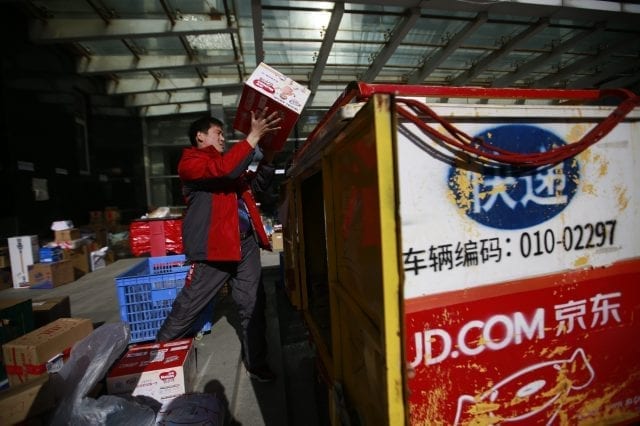
    Chinese e-commerce company JD boosted second-quarter revenue by 31.2 per cent, but losses ballooned nine-fold.

    JD quarterly sales reached RMB122.3 billion (US$218.5 billion) for the three months to June 30, with net service revenues of RMB11.8 billion (US$1.8 billion), up 51 per cent year on year.

    On a rolling 12 month basis, annual active customer accounts increased by 21.5 per cent to 313.8 million in the year to June 30.

    The operating margin of JD Mall was just 1.1 per cent, although that was an improvement on the 0.8 per cent of the same period a year earlier.

    JD chairman and CEO Richard Liu said the e-commerce business was continuing to win over new personal customers. “We are also seeing more corporate clients, both Chinese and international, leveraging JD’s superior technology and retail infrastructure to help take their businesses to the next level. We will continue to prioritise technology innovation to empower our partners with enhanced capabilities and improved efficiency, helping us to realise our ‘Retail as a Service’ strategy, and driving our next phase of growth.”

    The net loss from continuing operations attributable to shareholders was RMB2.213 billion (US$334.4 million), compared to RMB287 million for the same period last year.

    Despite continuing losses in what is  along-game business, JD is attracting investment. In June, Google invested $500 million as part of a new strategic partnership.

    “We are pleased to see continued healthy performance in the second quarter, with solid revenue growth and improved margins in our core JD Mall business,” said Sidney Huang, CFO, in a statement “Our new business initiatives continue to gain impressive traction across the industry. We will maintain a balanced, long-term approach to investing in the technologies that will define the future of retail.”

    During the second quarter, JD expanded its leadership position in fulfillment capabilities among China’s e-commerce companies. As of June 30, JD operated 521 warehouses covering an aggregate gross floor area of 11.6 million sqm in China.

    The company had more than 170,000 merchants on its online marketplace, and 173,904 full-time employees at the end of the quarter.

  • Vietnam e-commerce site Sendo secures $51 million for expansion plans

    Vietnam e-commerce site Sendo secures $51 million for expansion plans

    Vietnam’s growing potential has helped nation’s leading C2C platform attract more venture capital funds.

    In the Series B funding round, the SBI Group and Daiwa PI Partners from Japan, Softbank Ventures Korea and the U.S.-based SKS Ventures were the new investors.

    Series B in venture capital financing refers to funding sourced to take a firm to the next level, past its development stage.

    All existing investors – FPT Group, eContext Asia, BEENEXT, and BEENOS – also participated in the Series B funding.

    Nguyen Dac Viet Dung, executive chairman and co-founder of Sendo, said: “The funding will help the company expand the C2C (customer to customer) platform Sendo, launch the B2C (Business to Customer) marketplace SenMall, and make SenPay the leading fintech platform in Vietnam.

    In a fast-growing e-commerce market, Sendo has differentiated itself by focusing on not only Hanoi and Ho Chi Minh City but also the hitherto untapped Tier 2 cities’ population, where 70 million Vietnamese people live.

    Sendo, which was established in 2012, currently has more than 300,000 sellers serving around 10 million customers nationwide.

    A report last April cited Bain, a U.S.-based global management consulting firm as saying online businesses were booming in Southeast Asia.

    Bain estimated that the region had 200 million digital consumers, or people who bought goods or services online, out of an adult population of 405 million. Vietnam, with a population of 93.7 million, accounted for 35 million of these consumers.

  • Louboutin’s first online pop-up store on Toplife

    Louboutin’s first online pop-up store on Toplife

    Christian Louboutin’s signature red-soles have tiptoed their way onto Toplife.

    Joining numerous international leading luxurious brands such as Fendi, Saint Laurent, Alexander McQueen or Oscar de La Renta, Christian Louboutin has partnered up with JD’s luxury e-flagship platform Toplife earlier this July to make its debuts on the Chinese e-commerce platform scene. Its online pop-up store features the full offering from the brand’s most recent collection.

    JD President of International Fashion and Head of Toplife, Xia Ding, said “No matter where you are, Christian Louboutin’s signature creations are ubiquitous with style, poise and individuality,”. In this effort to bring a seamless omnichannel experience, clients can enjoy JD’s signature white glove service, JD Luxury Express. Rounding out the online luxury experience with an offline, personal touch, customers can have their goods hand-delivered to their homes by professionally-dressed couriers driving electric cars.

    Leveraging its RaaS capabilities, JD has supported many brands in their debuts on the Chinese e-commerce scene. The company is expecting to welcome more international luxury brands on its luxury e-flagship platform Toplife.

    Christian Louboutin’s signature red-soles have tiptoed their way onto Toplife.

    Joining numerous international leading luxurious brands such as Fendi, Saint Laurent, Alexander McQueen or Oscar de La Renta, Christian Louboutin has partnered up with JD’s luxury e-flagship platform Toplife earlier this July to make its debuts on the Chinese e-commerce platform scene. Its online pop-up store features the full offering from the brand’s most recent collection.

    SEE ALSO: JD.com debuts Toplife, its ecommerce ecosystem for luxury brands

    JD President of International Fashion and Head of Toplife, Xia Ding, said “No matter where you are, Christian Louboutin’s signature creations are ubiquitous with style, poise and individuality,”. In this effort to bring a seamless omnichannel experience, clients can enjoy JD’s signature white glove service, JD Luxury Express. Rounding out the online luxury experience with an offline, personal touch, customers can have their goods hand-delivered to their homes by professionally-dressed couriers driving electric cars.

    SEE ALSO: Red soles are Christian Louboutin’s trademark

    Leveraging its RaaS capabilities, JD has supported many brands in their debuts on the Chinese e-commerce scene. The company is expecting to welcome more international luxury brands on its luxury e-flagship platform Toplife.

  • Ezbuy Pakistan enjoys blooming sales

    Ezbuy Pakistan enjoys blooming sales

    Singapore online retailer Ezbuy has expanded, opening Ezbuy Pakistan.

    And already local media are tipping the site to be twice the size of Pakistan’s existing online retailer Daraz.pk, offering 3 million products, ranging from apparel through to electronics.

    Ezbuy Pakistan will offer products from local and overseas suppliers, with overseas orders shipped direct in much the same way Alibaba’s Aliexpress serves regional customers.

    “Our main agenda is to provide great value quality products to Pakistanis at their doorstep,” said co-founder and chief strategy officer at ezbuy.com, Vincent Xue Bin.

    “We would have three platforms; first, ezbuy cross-border and local products; second, Haute Shop fashion products, and a third, B2B serves businesses,” he said in a local media interview.

    “China is manufacturing good quality products at great value rates compared to other countries including Pakistan and we can deliver it to the Pakistani people, schools, universities, hospitals with minimum delivery charges. Our trust with the Pakistani buyers is our main asset.”

    Ezbuy Pakistan is a joint venture between the Singapore operator and a group of Pakistani investors, led by Kamran Shaukat, who says the response to the site since it went live on August 1 has been “overwhelming”.

    Another advantage Shaukat points out for Pakistani suppliers selling on the site is that the platform opens doors to customers abroad. Ezbuy currently operates in Singapore, Malaysia, Thailand, Indonesia, and Taiwan, but products are shipped worldwide.

  • Negative impact from regulation on Tencent Holdings growth

    Negative impact from regulation on Tencent Holdings growth

    Tencent Holdings has recorded its first quarterly fall in profits in 13 years, hampered by government delays in approving new online games.

    Second-quarter profit fell 2 per cent to RMB 17.9 billion (US$2.6 billion) on sales totalling RMB 73.7 billion ($10.65 billion).

    The company’s mobile games business revenue fell 19 per cent quarter-on-quarter to RMB 17.6 billion due to delays in the launch of new games and failure to gain approval for charging fees on popular tactical tournament games.

    “This is the worst result in recent memory from Tencent, with the first quarter-on-quarter fall in profits in 13 years and major disappointment on mobile gaming revenue and margins,” said Douglas Morton, the head of research in Asia at Northern Trust Capital Markets in an investor note.

    “The miss, however, was driven purely by regulatory delays to game approvals, meaning the long-term story for Tencent may well remain intact.”

    Another analyst, He Saiyu, from Huatai Financial Holdings, wrote that gaming revenue growth should remain positive later in the year due to increased monetisation of existing games.

    “Mini programs should help to boost Tencent’s cloud, advertising and online payments business grow.”

    He said user traffic and engagement levels across all its major platforms, including WeChat and QQ are all growing at a healthy pace.