Category: Electronics

Retail News Asia is committed to providing both local and global retailers with the latest Electronics news throughout the Asian market. This on a daily base.

  • New Shazam Wear OS update gives the app independence from your phone

    New Shazam Wear OS update gives the app independence from your phone

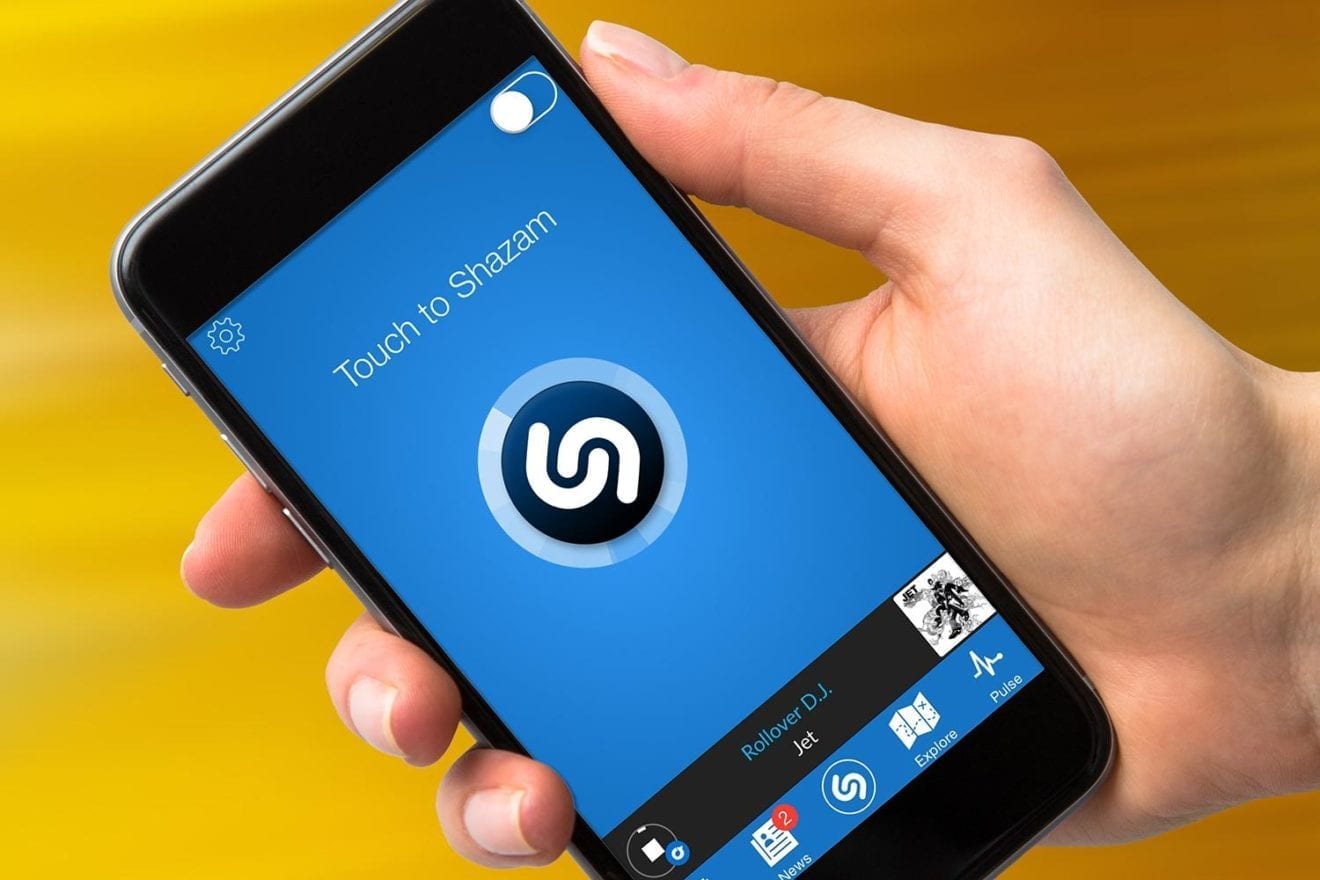
    Music lovers who are also the owners of a Wear OS watch will be pleased to know that there is a new version of Shazam for you. Shazam for Wear OS just got a major upgrade that will pretty much make the app independent of your phone and work completely on its own on your smartwatch. This means you can now identify songs directly from your wrist without needing to have your phone nearby.

    With this update (version 14.18) of Shazam, you won’t need to fumble around to connect with your phone app. In fact, you won’t even need the Shazam app installed on your Android phone anymore. Even offline, your smartwatch Shazam will now record a snippet, and then once you’re back online, it’ll work its magic and tell you the song’s name. This will make it so much easier to identify songs on the go.

    Furthermore, if you happen to have more than one device, songs you Shazam on your smartwatch will now instantly sync to your other devices. This functionality does require you to be logged into the app in order to work, though.

    This new feature will make it even more convenient for users to quickly identify songs on the go without having to rely on their phone. It also adds a seamless experience for those who use multiple devices within the Shazam ecosystem.

    This new version of Shazam for Wear OS is widely available now via the Google Play Store. Apple acquired Shazam back in 2017, so it is good to see the app continue to be supported on Android and Wear OS devices. This update shows that Shazam is committed to providing a user-friendly experience across various platforms, as users can now easily access the app’s features on their smartwatches, regardless of the operating system they use.
  • Intel will bring a performance-improving feature to its chips one year ahead of TSMC

    Intel will bring a performance-improving feature to its chips one year ahead of TSMC

    In October 2021, Intel CEO Pat Gelsinger said that Intel would reclaim process leadership from TSMC and Samsung Foundry by 2025. Intel is looking to challenge TSMC and Samsung Foundry in the contract foundry segment of the industry. A contract foundry takes the chip designs from fabless chip designers (fabless means that they do not own a fabrication facility, like Apple for example) and manufacturers the chip. TSMC is the global leader followed by Samsung Foundry.

    Currently, both TSMC and Samsung Foundry are shipping 3nm chips and in the second half of next year, both could be mass-producing 2nm chips. Later this year, according to The Motley Fool, Intel will be using its 20A process (equivalent to 2nm for TSMC and Samsung Foundry) which will be used to build Intel’s Arrow Lake PC chips. So at that point, Intel will have process leadership and that will only continue next year when Intel debuts its 18A process node, equivalent to 1.8nm when you compare it to TSMC and Samsung Foundry. The latter two will be debuting their 2nm node in the second half of next year.

    Everyone is expected to catch up with each other in 2027 when Intel’s 14A (1.4nm) joins 1.4nm output from TSMC and Samsung Foundry. The bottom line is that the size of the transistors used with these chips gets smaller as the process node shrinks. That means more transistors can fit inside a component. The more transistors inside a chip, typically the more powerful and/or energy efficient a chip is.

    But starting with its 20A production later this year, Intel will have a bit of a head start on TSMC and Samsung Foundry with a key feature that the American chipmaker calls PowerVia (also known as known as backside power delivery). TSMC is expected to use this technology with its N2P node which it will use starting in 2026. Samsung Foundry is supposedly going to use backside power delivery on a particular node launching next year, although Samsung Foundry has not confirmed this.

    So what is PowerVia? Most of the small wires that deliver power to a chip are found on top of all of the layers that make up a silicon component. As these chips become more powerful and complex, the wires on top that connect to power sources are competing with the wires that connect components. This results in wasted power and low efficiency.

    PowerVia moves the wires bringing power to the chips to the backside of the chip. As a result, clock speeds can increase by 6% resulting in greater performance. Add to that the increase in performance delivered by using a more advanced process node, and the result is a more powerful chip used to run a more powerful device.

    Intel CEO Gelsinger said, “I’ve bet the whole company on 18A.” Intel expects that the performance and efficiency of its 18A node will top TSMC’s best. Intel also inked a deal with Arm allowing Arm’s chip-designing customers to have low-power SoCs built using Intel’s 18A process node. Last month, Intel agreed to build a custom chip for Microsoft using its 18A process. Four unnamed large companies (it’s not clear whether Microsoft is one of the four) have signed on to have Intel produce their chips using the 18A process.

    Recently, Intel became the first company to take delivery of its $400 million High-NA Extreme Ultraviolet Lithography machine from Dutch manufacturer ASML. With billions of transistors stuffed inside application processors, the High-NA EUV can etch extremely thin circuitry patterns on silicon wafers.

    The older EUV machines have an aperture of .33 (equivalent to a resolution of 13nm), and the High-NA machines have an aperture of .55 (equivalent to a resolution of 8nm). With a higher resolution pattern transferred to a wafer, the foundry could avoid having to run a wafer through the EUV machine twice to add additional features saving both time and money. While TSMC and Samsung Foundry have both ordered one of the High-NA machines from ASML, Intel will probably get to use the time-saving lithography machine first.

  • Chip Apple developed for the Apple Car reportedly carried a whopping 536 billion transistors

    Chip Apple developed for the Apple Car reportedly carried a whopping 536 billion transistors

    Last month, Apple put an end to the development of the Apple Car after spending ten years and ten billion dollars to create an autonomous vehicle. One of the components that Apple built for the car was a new chip that supposedly had the same performance capabilities as four M2 Ultra chips! Considering that each M2 Ultra chip is equipped with 134 billion transistors, a 24-core CPU, a 76-core GPU, and a 32-core Neural Engine, stitching together four of these components creates an extremely powerful chip.
    Imagine a chip carrying 536 billion transistors with a 96-core CPU and a 304-core GPU. While there is no definitive proof that the chip Apple was planning to use to power the Apple Car was perfectly equivalent to four M2 Ultra chips, consider that the number of transistors inside a chip determines how powerful and/or energy efficient that chip is. Using the “UltraFusion” technology that helped Apple combine two M1 Max chips to become the M1 Ultra, and combine two M2 Max chips to become the M2 Ultra, Apple might have been hoping to create an incredibly powerful silicon component from four M2 Ultra chips.
    Let’s do a simple comparison. The A17 Pro application processor (AP) that powers the iPhone 15 Pro and iPhone 15 Pro Max contains 19 billion transistors, only 3.5% of the number of transistors that might have been placed inside the chip Apple would have used to “drive” the Apple Car. Wccftech says that the new chip that Apple was developing for the Apple Car was “nearly done” before Apple put the kibosh on the project. Could that chip have been the M3 Ultra?
    When Apple introduces the M3 Ultra, it will be interesting to see whether any of that chip’s specs match the rumored powerhouse chip that would have been used on the Apple Car. One thing that we can be sure of, this chip would have been built by TSMC, the world’s largest foundry.
  • Apple further loosens grip on iPhone apps in the EU by allowing direct downloads

    Apple further loosens grip on iPhone apps in the EU by allowing direct downloads

    Just recently, Apple rolled out iOS 17.4, introducing big changes to the App Store landscape in the European Union. Why? To comply with the newly adopted Digital Markets Act (DMA). These changes include support for alternative app marketplaces, new business terms, in-app purchase options, and more.

    Now, in response to developers’ feedback, Apple has announced a few additional tweaks. Notably, the Cupertino tech giant will introduce a new Web Distribution feature this spring, allowing developers to offer their apps for direct download from their websites.

    For developers in the EU who have agreed to the Alternative Terms Addendum for Apps, the new options include the ability for app marketplaces to exclusively offer apps from the marketplace developer. This change allows a company to run an app marketplace and provide only its own apps for download.

    Additionally, when guiding users to complete transactions on external web pages, developers can now choose how to design promotions, discounts, and deals, with Apple’s design templates becoming optional.

    As mentioned earlier, Apple is introducing a Web Distribution feature, set to launch later this spring. This feature will allow developers to distribute their iOS apps directly from their websites. iPhone users in the EU will have the freedom to download apps without relying on the App Store or any alternative marketplace.

    However, apps distributed through the web must adhere to Apple’s notarization guidelines, restricting installations to registered website domains in App Store Connect.

    For EU iPhone users, this could mean a broader array of apps to choose from, potentially leading to increased competition and, thus, lower prices. Nonetheless, users may need to pay more attention when downloading apps from sources outside the App Store, and managing these apps and updates might be less convenient.

    The recent changes in digital practices, including those made by Apple, are a response to the EU’s Digital Markets Act. This law targets big tech companies like Apple, Google, Microsoft, Meta, TikTok, and Amazon, instructing them to follow new rules to encourage competition and offer users more options. Apple, adapting to comply with these regulations, is even working on a tool to make it easier for iPhone users to switch to Android.

  • Apple doubles down on China R&D amid iPhone sales slowdown

    Apple doubles down on China R&D amid iPhone sales slowdown

    As iPhone sales face a slowdown in the largest smartphone market globally, aka China, Apple is expanding its applied research operations in the country. With stiff competition from Huawei and other prominent domestic smartphone makers, Apple is doubling down on its research operations to stay ahead in the game.

    In a statement provided to the South China Morning Post, Apple revealed its intentions to bolster its research center in Shanghai, with a focus on supporting all its product lines.

    Additionally, the tech giant plans to open a new lab in Shenzhen by the latter half of 2024. This new facility will be dedicated to testing and research, focusing on key products such as the iPhone, iPad, and Vision Pro headset.

    The company underscored that the upcoming facility in Shenzhen will enhance its collaboration with local suppliers and provide support for local employees. Apple’s vice president and managing director of Greater China, Isabel Ge Mahe, expressed pride in fostering stronger connections in China and expanding the company’s footprint there. She remarked:

    We have already invested 1 billion yuan (US$139.2 million) into the existing applied research lab in China.

    These recent moves come on the heels of a commitment by Apple to ramp up capital spending in Greater China, the company’s third-largest market globally, following the Americas and Europe.

    This strategic shift follows a decline of 24 percent in iPhone sales in mainland China during the first six weeks of 2024. Apple faced formidable competition from a resurgent Huawei at the high end of the market, coupled with pricing pressures in the mid-range from Chinese smartphone heavyweights such as Oppo, Vivo, and Xiaomi.

    Recently, the Cupertino tech giant took action in response to sluggish sales and intensified competition from Huawei by offering discounts on the iPhone 15 line in China.

  • New Apple Watch ads replay real-life situations where the timepiece saved the user’s life

    New Apple Watch ads replay real-life situations where the timepiece saved the user’s life

    While the Apple Watch was not originally created to save lives, over the years some of the health-related features on the device have sent out timely warnings allowing users to get to the doctor or the hospital before it was too late. In other situations, the Apple Watch on a person’s wrist notified emergency services or first responders, and a timely rescue was made. If you recall, when Apple was planning to launch the Apple Watch in April 2015, the tech giant was looking at the device as a piece of luxury jewelry.

    Apple was able to get its timepiece on the cover of regional editions of Vogue months before the product was released. In early 2017, Apple started shutting luxury-themed Apple Watch pop-up stores in Europe as it moved away from promoting the Apple Watch as a luxury timepiece as reports started to come in about users having their lives saved thanks to the watch.

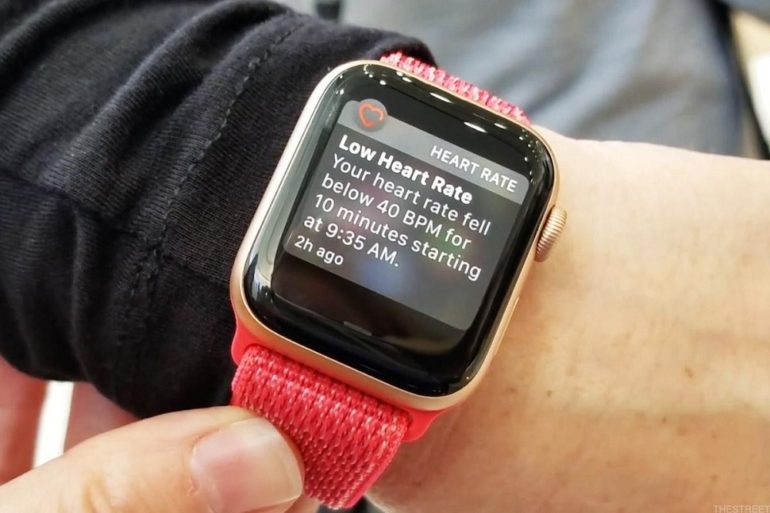
    Apple has released a couple of new television commercials for the Apple Watch, both of which are based on real-life events and focus on a specific health-related feature. The first ad, created by Apple Australia, is called “Lexie’s Heart.” A young woman Lexie Northcott started to get low heart rate notifications on her Apple Watch and after a trip to the hospital, she was diagnosed with a congenital heart block. Doctors operated and gave her a pacemaker and, as Lexie’s mom says later in the ad, “If it wasn’t for that watch, she might not be here right now.” This 30-second ad is focused on “Heart Rate Notifications.”

    The second ad, also 30 seconds in length, also from Apple Australia, and also based on a true story, is called “Bruce and the Roo.” A gentleman named Bruce Mildenhall had been knocked unconscious by…wait for it…a kangaroo while he was biking. Bruce hit the ground hard, activating the Fall Detection feature on his Apple Watch. The device called emergency services and even messaged his wife to alert her.

    When Bruce came to, he heard the sound of someone hitting the back glass of the ambulance he was placed in. He then heard his wife asking, “Have you got Bruce Mildenhall in there? Is he alive?” The first responders told her, “Yes, he’s OK.” As the ad for the Apple Watch’s Automatic Fall Detection comes to an end, Bruce says, “I still wear my watch and I’m still looking for that kangaroo with tire marks.”

    Suppose Apple does run these ads outside of Australia and adds them to its advertising rotation in the U.S.. In that case, you might see one or both appear during this weekend’s big NBA and NHL games, college basketball telecasts, and between innings or during a pitching change on MLB spring training broadcasts.

  • Apple has started designing 2nm chips for future iPhone models

    Apple has started designing 2nm chips for future iPhone models

    An Apple employee on Linked In  is supposedly the source of a new report that claims Apple has started designing chips that will be built using TSMC’s next-gen 2nm process node. Leaked slides published on the Korean website gamma0burst and posted via a tweet on “X” by leaker Revegnus the heavily redacted Apple slide refers to older 5nm chips such as the A15 Bionic, 3nm chips such as the A17 Pro, and a future 2nm chipset.

    As the process node used to build a chip “shrinks” in size, the features of the chip get smaller including the transistors allowing more of them to fit inside a chip. That is important because the higher a chip’s transistor count, the more powerful and/or energy-efficient that chip is. The iPhone 15 Pro and iPhone 15 Pro Max are currently the only smartphones powered by a 3nm chip.

    Later this year, Apple is expected to use 3nm application processors (AP) for all four iPhone 16 models. The iPhone 16 and iPhone 16 Plus could be powered by the 3nm A18 Bionic AP while the iPhone 16 Pro and iPhone 16 Pro Max will sport the more capable A18 Pro AP. Both components will be built using TSMC’s second-generation N3E 3nm node.

    SMC is supposedly planning to start production of 2nm chips during the second half of 2025 with the foundry churning out 1.4nm chips in 2027. Apple is expected to be the first company to obtain 2nm chips. The latter should deliver 10% to 15% performance upgrades at the same power or use 25% to 30% less power running at the same speed when compared to 3nm chips.

    Apple is TSMC’s top customer which is why it is usually able to be the first to receive chips made by TSMC using its latest process node. Apple will need to make some design changes in order to take advantage of TSMC’s 2nm node which will feature Gate-all-around (GAA) transistors instead of the currently used FinFET transistors.

    Using horizontal nanosheets placed vertically, GAA transistors allow the gate to surround the channel on all four sides reducing current leak and increasing the drive current. This results in stronger electrical signals between the transistors improving the performance of the chip. Back in December, TSMC showed off a prototype 2nm chip to both Apple and Nvidia.

  • Microsoft Copilot app can now be your next default assistant app on Android

    Microsoft Copilot app can now be your next default assistant app on Android

    Android users currently have a slew of options for choosing an assistant app on their devices. Where previously Google Assistant and Bixby were the ones that reigned, the rise of AI-powered chatbots saw these evolve as more than just text fields you can use on a browser. Currently, depending on the apps you have installed, you have fresh new options, and Microsoft’s Copilot is shaping up as one of them.

    As reported by Android expert Mishaal Rahman on X (Twitter), the newest beta version of the Microsoft Copilot app (v. 27.9.420225014) now gives you the ability to set it as your default assistant app. This makes the chatbot accessible from anywhere on your device with a simple swipe or button press.

    While this is a nice addition for Android users, don’t expect a seamless experience yet. Currently, activating Copilot mainly opens the app, meaning that it won’t immediately start listening like some other assistants, nor will it offer to analyze what is on your screen.

    However, this doesn’t mean that feature won’t be as helpful as Google Assistant or Bixby currently are, or perhaps even what Gemini could be. It’s still in beta, and Microsoft is likely to continue working on the app in order to make Copilot a truly integrated Android assistant. Microsoft has yet to officially announce this, but our guess is that by the time it moves on to the stable version of the app, more capabilities will be in tow.

  • Ahead of launch, the OnePlus Watch 2 spotted with a powerful battery

    Ahead of launch, the OnePlus Watch 2 spotted with a powerful battery

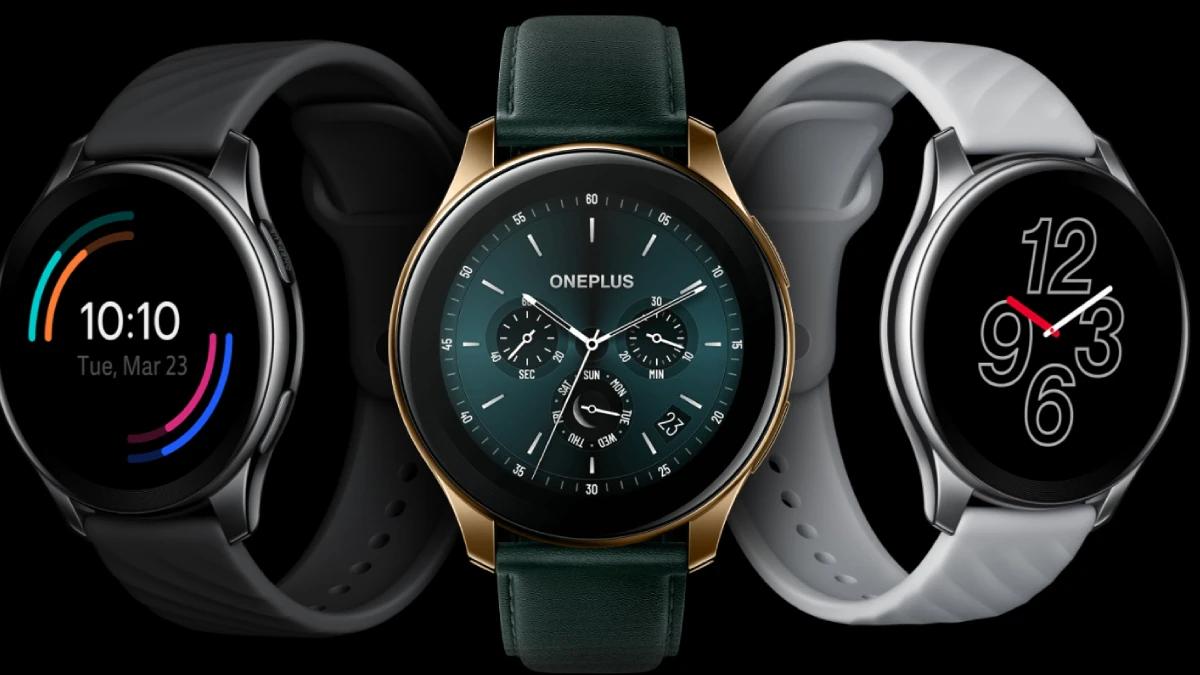
    The upcoming OnePlus Watch 2, set to be officially unveiled on February 26 at the Mobile World Congress (MWC) 2024 event, already has its specs and design detailed. Despite this, some questions remain unanswered, but recent developments have shed light on at least one of these mysteries.

    According to reports from MySmartPrice, the OnePlus Watch 2 has been spotted at the FCC, revealing a substantial 500 mAh battery. This is a notable increase compared to the original OnePlus Watch, which featured a 402 mAh battery and already provided a solid 10 days of usage on a single charge.

    In comparison to its competitors, the OnePlus Watch 2’s 500 mAh battery surpasses that of the latest Samsung Galaxy Watch 6 in its larger size, which has a 425 mAh battery. However, the Galaxy Watch 5 Pro remains ahead with its 590 mAh battery.

    The OnePlus Watch 2 is expected to offer impressive battery life for a smartwatch, aided by its 500 mAh battery. Additionally, the FCC has revealed that it will support 10W charging, matching the charging speed of its Galaxy competitor by Samsung.

    Unsurprisingly, the OnePlus Watch 2 will feature Bluetooth and dual-band Wi-Fi, as confirmed by the FCC certification. The smartwatch will debut with Bluetooth support in the frequency range of 2402 MHz to 2480 MHz and support Wi-Fi on both 2.4 GHz and 5 GHz bands.

    The OnePlus Watch 2 will be available in “Black Steel” and “Radiant Steel” color options. It is anticipated to feature a 1.43-inch AMOLED display, slightly larger than the 1.39-inch screen of its predecessor. The smartwatch will be powered by the Qualcomm Snapdragon W5 Gen 1 chipset, the same chipset used in the Pixel Watch 2.

    Stay tuned for more details and the official announcement as the launch date of the OnePlus Watch 2 approaches.

  • Apple suppliers need 103,000 workers in Vietnam this year

    Apple suppliers need 103,000 workers in Vietnam this year

    U.S. tech giant Apple’s contract manufacturers in Vietnam plan to hire over 103,000 workers this year, mostly for their factories in northern Bac Giang Province.

    Foxconn, Apple’s biggest supplier, needs 15,000 workers for its plants in the Dinh Tram and Quang Chau industrial parks (IPs) in the first half of the year, and 12,000 in the second.

    New Wing Interconnect Technology, a Foxconn subsidiary based in the Van Trung IP, will hire 27,000 workers this year, including 6,000 in the next two months.

    Fukang Technology, another Foxconn unit with a plant in the Quang Chau IP, needs 13,600 more workers this year.

    Another Apple supplier, Luxshare-ICT, plans to hire 47,300 workers at its plants in Quang Chau and Van Trung IPs.

    It will hire 200-300 people a month in February and March before increasing it to 7,000-9,000 after June or July when it expects to receive more orders.

    All these factories require workers aged 18 to 40 who have graduated high school and are in good health.

    Foxconn is even willing to take in applicants who have only completed the sixth grade.

    All the companies will pay a basic salary of VND5 million (US$203.8), social insurance contributions and other benefits, according to Nguyen Van Hue, director of the Bac Giang Province Job Center.

    They usually attract and retain workers mainly through other benefits such as housing rent and meal allowances and overtime work, which take workers’ incomes to VND8-9 million a month, he said.

    Factories simultaneously hiring en masse makes it difficult to find enough people quickly, he said.

    In contrast to the mass layoffs early last year, factories are trying to maintain their workforces this year since they have massive orders.

    “Many companies’ human resources personnel have even traveled to small villages in the northern mountains and central region to hire people, and ask existing employees to introduce relatives and friends.”

    Bac Giang has over 7,600 businesses that employ around 306,000 workers.

    Its real estate market has been thriving for the last five or six years and several industrial zones have been built or expanded.

    Business upscaling and a surge in new orders has led to soaring demand for labor here.

    Foxconn has been present in Vietnam since 2007 when it established plants in Bac Ninh and Bac Giang provinces before expanding to several other northern provinces.

    It is a critical cog in Apple’s supply chain.

  • Google confirms Samsung’s Galaxy A35 key specs and design

    Google confirms Samsung’s Galaxy A35 key specs and design

    Samsung is gearing up to launch at least two mid-range handsets, the Galaxy A35 and A55. Information about both devices leaked in the least few months, but nothing official has been confirmed to this date.

    Despite the fact that all the sources that leaked information about both Galaxy A35 and A55 are reliable, it’s always nice to have something confirmed before these devices become official.

    This time around it’s Google, not Samsung, that’s revealing some of the Galaxy A35’s key specs. Thanks to a Google Play Console listing, we now know for certain that the Galaxy A35 will be powered by Samsung’s Exynos 1380 processor, the same packed inside the newly released Galaxy Tab Active5 rugged tablet.

    The listing also confirms that the upcoming phone will pack 6GB RAM and a display with a 2340 x 1080 pixels resolution (450 DPI). Unsurprisingly, the Galaxy A35 will run on Android 14, although the One UI version isn’t mentioned in the listing.

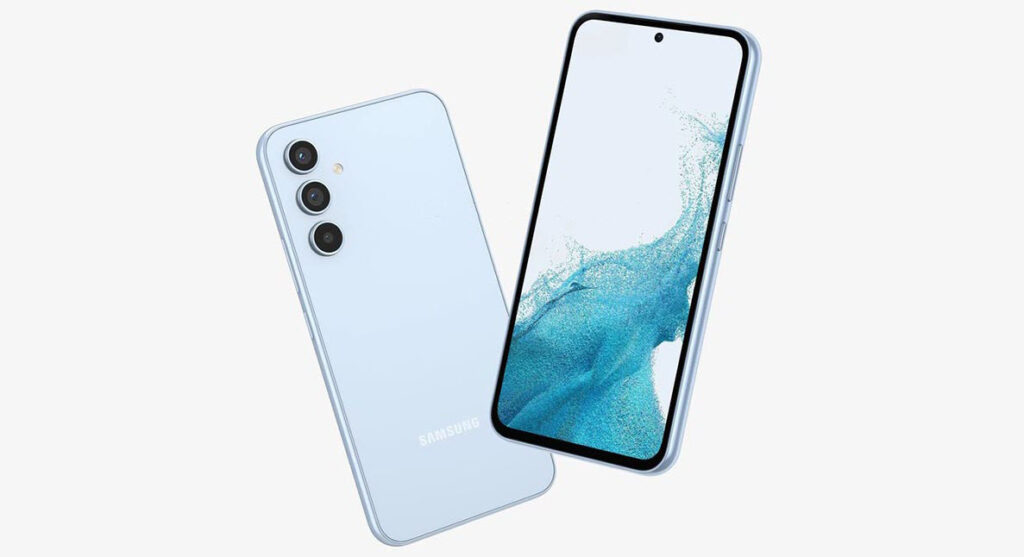
    A picture of the phone is attached to the Google Play Console listing, once again confirming the new design change that Samsung calls “Key Island.” The Galaxy A35 features a flat design, an Infinity-O display and rounded camera cutouts.

    The unannounced Galaxy A35 has already popped up on the NBTC and Indian BIS certification websites, which suggests that Samsung is about to make this official. The Galaxy A55 is likely to be announced around the same time, although this is just a guess.

  • Software update is coming to fix annoying bug on Apple Watch Series 9 and Ultra 2

    Software update is coming to fix annoying bug on Apple Watch Series 9 and Ultra 2

    Apple has sent out an internal memo to these authorized repair shops to let them know that the company is aware of an issue with the Apple Watch models released last year.

    The memo, which MacRumors obtained, says “Some customers may report their Apple Watch Series 9 or Apple Watch Ultra 2 is experiencing false touches on their display.” Apple adds that some customers might say that their Apple Watch model is experiencing “ghost touches.” Owners of impacted Apple Watch models say that the screen will “jump erratically” or take other actions even if the user has not interacted with the device. The problem could cause users to be unable to enter their passcode or have an accidental phone call made

    The tweet from @StellaFudge notes that Apple has told technicians working at authorized service centers and, we assume, at Apple Stores as well, not to replace any Apple Watch Series 9 or Apple Ultra 2 units exhibiting this problem. Instead, Apple is telling technicians to inform customers that Apple will soon be issuing a software update that will resolve the problem.

    With that in mind, Apple is telling Apple Watch owners to make sure that they keep their devices updated and running the latest version of watchOS, especially since the touch issue is expected to be fixed via a software update. Apple didn’t give a timeframe as to when we can expect the update to arrive. However, the company is recommending that those experiencing this problem on their Apple Watch Series 9 or Apple Watch Ultra 2 force restart their timepieces to see if that helps solve the problem before any update is sent.

    To force restart either Apple Watch model, hold down the Digital Crown and the side button at the same time for at least 10 seconds, until the Apple logo appears. If this doesn’t rid your Apple Watch of the “ghost touch” issue, you will have to be patient and wait for Apple to push out a software update aimed at exterminating this bug.

  • Apple takes a long time to remove fake app posing as a popular password manager

    Apple takes a long time to remove fake app posing as a popular password manager

    Imposter app LassPass posing as the popular password manager LastPass has been removed from the App Store one day after the creators of the original app issued a warning against it.

    Apple prides itself on keeping the App Store safe by performing numerous safety checks before approving an app. It does seem to have a higher bar for security than its immediate competitor. That doesn’t mean it’s doing a perfect job of keeping the App Store safe, as the latest incident shows.

    What makes the oversight feel particularly worrisome, though, is that LastPass is a service people use to store logins and passwords for various platforms. A fake copycat app designed to trick people into revealing their master password could give the bad actors behind it access to every or most apps a person uses.

    The app in question, LassPass, had a name resembling the original app and copied LastPass’s branding and interface.

    There were some telltale signs that it was a fake that many users quickly noticed, such as misspellings and a different publisher. It also had only one rating, whereas the legitimate app has more than 52 thousand. All of the reviews for it also noted that it was a deceptive app.

    LastPass created a blog post on February 7 to warn its users against the app, which was removed from the App Store on February 8. According to the analytics platform Appfigures, the app has been on the platform since January 21. TechCrunch reports.

    It’s not known how many people fell for the app, but it can be assumed that it failed to attract many downloads, as it never made it to any of Apple’s Top Charts.

    If you have LassPass on your iPhone, not only should you delete it, but also change your LastPass password.

  • This Google patent may extend the battery life of your next smartwatch

    This Google patent may extend the battery life of your next smartwatch

    The tech world is never sleeping. Google’s latest patent has to do with a new antenna design for wearable devices like smartwatches.

    The just-filled patent for the new design makes the antenna more compact and optimized for communications.

    According to Google, the refreshed antenna design uses a microwave dielectric substrate with a high relative permittivity. That makes this particular antenna design special – it can store electrical energy (meaning better battery life) and transmit (send and receive) signals a lot better.

    Google also says that the antenna design is extremely compact – with dimensions of less or equal to 8 mm in width and length. Impressive!

    The search engine giant said some of the possible applications of this new design could be in the likes of a smart ring

    Antennas are important in many ways in wearable tech. They are crucial for gathering data from tracking sensors (like blood pressure trackers or GPS functionality on fitness watches), and then transmitting them to the part of the device that does analysis or storage.

  • Apple chip builder TSMC not yet ready to move to next-gen lithography system

    Apple chip builder TSMC not yet ready to move to next-gen lithography system

    Back in December, Dutch tech giant ASML shipped its first High-NA Extreme Ultraviolet (EUV) lithography machine (EXE:5000) to Intel. The $400 million machine will take us to the next tier of chip production with a process node of 2nm and less. The original EUV machines, also made by ASML, were necessary to get chip foundries to manufacture components under 10nm. A lower process node means smaller transistors, meaning more can fit inside a chip. The higher a chip’s transistor count, the more powerful and/or energy efficient it is.

    The reason that the EUV machine is so important is that it prints circuitry patterns on silicon wafers that are thinner than human hair. This is required when you are building a chip with billions of transistors inside. The 7nm A13 Bionic SoC, used to power 2019’s iPhone 11 series, contained 8.5 billion transistors. The 3nm A17 Pro used to run the iPhone 15 Pro and iPhone 15 Pro Max sports 19 billion transistors.

    The 8 nm resolution of the EXE:5000 means that chipmakers can pack more transistors into a single chip. Smaller transistors are more energy efficient – that means the chips will be able to do more with less.-ASML

    The new High-NA EUV machine has a 0.55 numerical aperture (NA) lens giving it a resolution of 8nm compared to the current machines’ resolution of 13nm (.33 NA). This means that the new machines can print transistors 1.7 times smaller resulting in transistor densities 2.9 times larger with a single exposure. The result? More powerful or energy-efficient chips. The new machines can also print 185 wafers per hour, rising to 220 by 2025. That compares to the 160 wafers per hour that can be printed with the current EUV machines.

    The current Low-NA EUV machines can produce the same resolution but only after two exposures are made using double patterning. However, there are risks with double patterning including longer production times, and increased risk that a defect will occur. It can also lead to performance variability among manufactured chips.

    ASML is quick to tell you what can go wrong with double patterning since it would prefer foundries spend the bigger bucks on the newer machines. But TSMC’s N3B process node, which supposedly relies on double patterning, was used to manufacture the A17 Pro application processor used on all of those iPhone 15 Pro and iPhone 15 Pro Max units made by Apple, and the M3 chip used to power high-end Macs. ASML says that its clients are just now doing their research into the High-NA EUV.

    Financial institution China Renaissance (via

    Eventually, TSMC, Samsung Foundry, and others will have to join Intel and start making the investments needed to move to the High-NA EUV. That time might end up being soon with TSMC and Samsung looking to start 2nm production in 2025 moving to 1.4nm production in 2027.