Retail News CRM

Category: Electronics

Retail News Asia is committed to providing both local and global retailers with the latest Electronics news throughout the Asian market. This on a daily base.

  • Laptop prices drop further

    Laptop prices drop further

    Electronics retailers have cut laptop prices by millions of dong (VND 1 million = $42.62) this year, but have been unable to spur sales as consumers remain wary of spending.

    The price of a MacBook Air M1 was cut by VND3 million since early January to VND17.9 million (US$758.5) in April. It is down by VND11 million since its launch in January 2021.

    The prices of newer Apple laptops like the MacBook Air M2 have also fallen quickly, coming down within seven months of launch from VND32.9 million to VND26.4 million now.

    The manager of an Apple distributor said prices had to be slashed to cut inventories and ensure cash flows.

    The inventory in the market is equivalent to 8-12 months of sales, according to the manager.

    Laptops sales were high in the first four months of 2022, with MacBook Air M1 accounting for more than 50% of revenues.

    But this year, consumers have tightened their purse strings, causing the market to plunge, the manager said.

    Laptops running on Windows have also seen prices decline.

    Electronics retail chain The Gioi Di Dong has cut the prices of Chuwi LarkBook X N5100 to VND5.7 million from VND12.8 million and MSI Gaming GE66 Raider 11UH i7 to VND38 million from VND78 million.

    Retailers said profits from laptops were down 40-50% year-on-year in the first four months.

    According to Nguyen Lac Huy, the manager of a CellphoneS store, retailers have had to slash laptop prices due to high interest rates, abundant supply, low cash flows, and weak demand.

    The leading PC distribution company manager said most people bought laptops and desktops in 2021-22 when they needed them to work or study online during Covid.

    Now, especially with the economic downturn, they are no longer buying new devices, he said.

    According to research firms Gartner and IDC, global computer shipments fell by 30% in the first quarter to usual levels as life returned to normal after the pandemic.

    According to Bao Viet Securities Company, the laptop segment’s profit in the first quarter of 2023 it decreased by 39.1% year-on-year.

    It forecast sales to drop further in the second quarter, rise sharply in the third and decrease slightly in the fourth.
  • iPhone imports cost Vietnam $1.6B

    iPhone imports cost Vietnam $1.6B

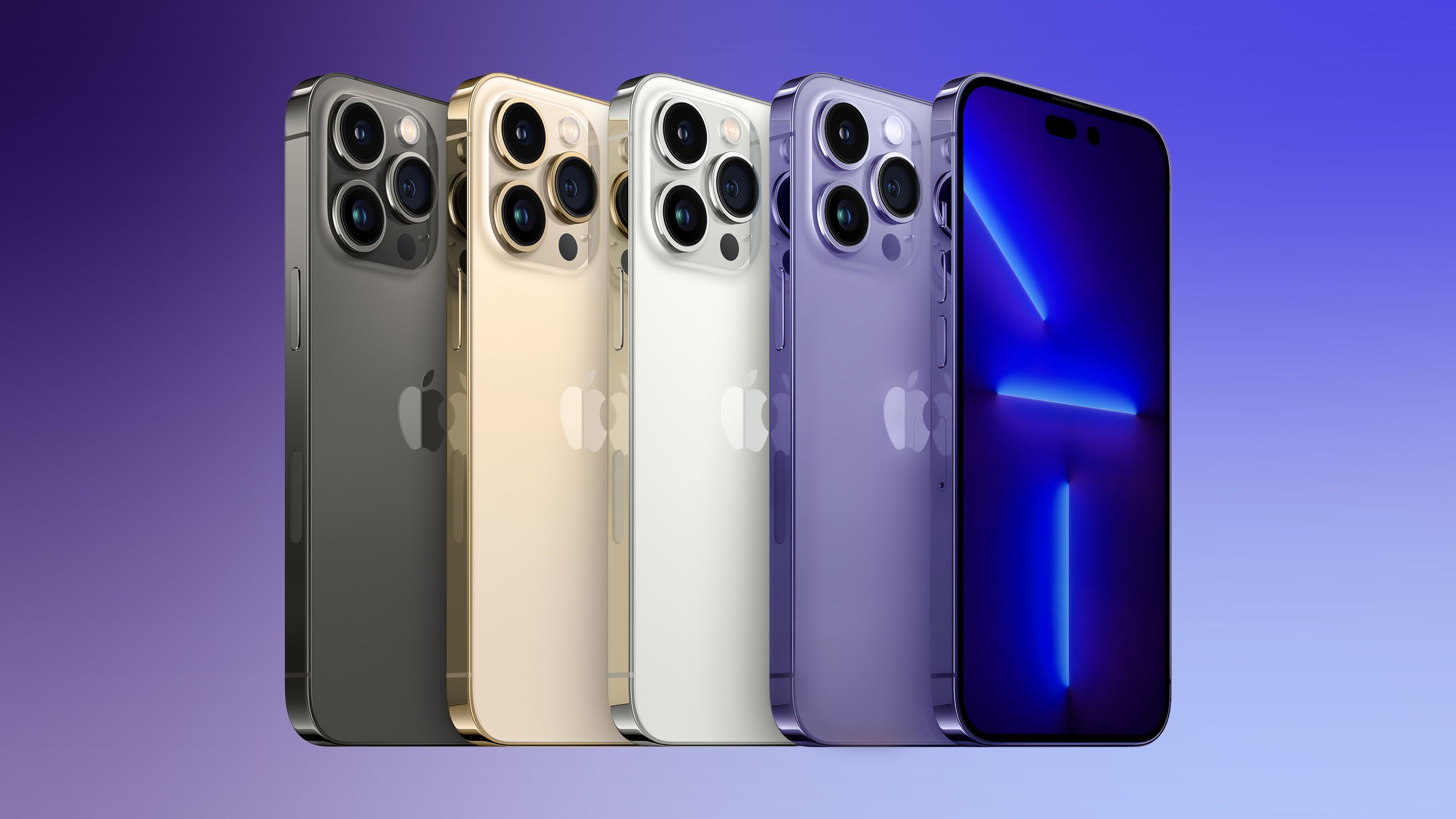
    iPhone imports cost Vietnam US$1.61 billion last year, equivalent to 46% of all phone imports.

    According to the Ministry of Industry and Trade, total imports were up 10.5% to $3.5 billion, with Samsung, Oppo, and Xiaomi accounting for most of the rest.

    Samsung imports cost $940 million, and that of Oppo, $442 million.

    Almost $18 worth of components were also imported, and South Korea and China accounted for 93% of phone and part imports.

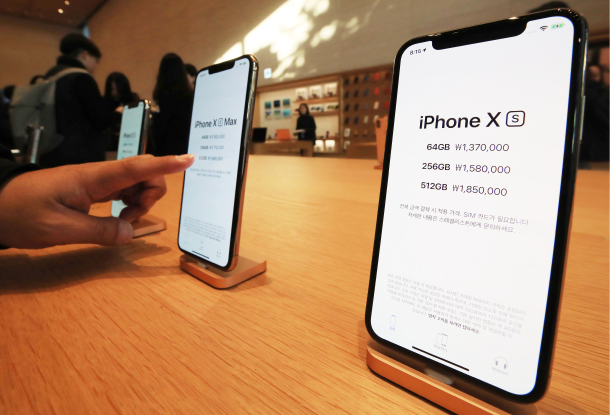
    Many Apple distributors said the more expensive an iPhone model, the higher the demand.

    According to the ministry, some 210.5 million phones worth VND663.7 trillion were manufactured in Vietnam last year, down 9.1% in volume but up 15.1% in value.

    Exports fetched the country $33.32 billion, with Samsung alone accounting for $31.42 billion.

  • Apple opens second MixC store in Shenzhen, China

    Apple opens second MixC store in Shenzhen, China

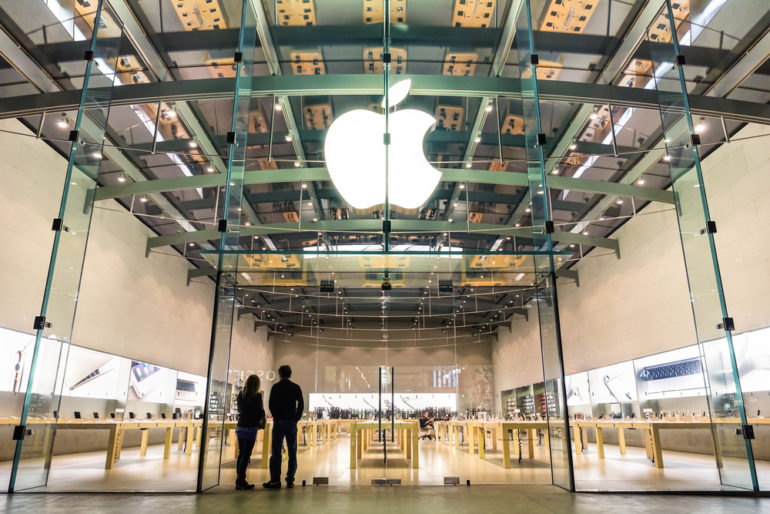
    Apple will open its second MixC store in Shenzhen, China, as part of its strategy to strengthen its local footprint.

    Apple said the new store has a Padang Light stone floor and a timber veneer-clad wall sourced responsibly and locally in China, maximizing visibility within the store.

    The store will feature the latest Apple products and accessories and an Apple Pickup station that combines the online and in-person purchasing experiences for Chinese customers. Apple said the dedicated area allows customers to order online and conveniently pick up their devices in-store.

    “At Apple, we’re constantly innovating to deliver the best possible experience for our customers, and our incredible team members in Shenzhen can’t wait to welcome them when doors open,” said Deirdre O’Brien, Apple’s senior VP of Retail.

    The addition of Apple MixC Shenzhen marks the 55th Apple Store location in the area and the fourth in China’s Guangdong province. Apple has welcomed 22 million visitors to Shenzhen since Apple Holiday Plaza Shenzhen, the city’s first Apple Store, opened its doors in 2012.

    The new store employs approximately 150 trained retail team members who speak ten languages, including Chinese, Cantonese, English, Japanese, Korean, French, Spanish, Russian, Arabic, and sign language.

    After Europe and the United States, China is Apple’s third most important market. According to Bloomberg, Apple gained its most quarterly market share in China earlier this year, outpacing Covid outages and a global economic downturn.

    Apple disclosed plans to open its first company-run retail presence in Mumbai, India’s financial powerhouse, at the beginning of this month.

  • Apple will reportedly allow Apple Watch to pair with multiple devices

    Apple will reportedly allow Apple Watch to pair with multiple devices

    When you buy a new Apple Watch, it must be paired with an iPhone. While one iPhone can be paired with multiple Apple timepieces, one Apple Watch cannot be paired with multiple Apple devices. But a Twitter tipster who made a great call last year says that the rumor mill is actively cranking out fresh speculation for mass consumption. This rumor says that Apple is developing software updates allowing an Apple Watch to pair with multiple Apple devices, including an iPhone, an iPad, and a Mac.
    Currently, an Apple Watch cannot pair with an iPad, but with the timepiece paired with an iPhone, a user can use his Apple Watch to help him view Apple Fitness+ workouts on an iPad that uses the same Apple ID. And those with an Apple Watch can unlock their Mac computers, view passwords, authenticate apps, and verify the user’s identity to complete an online Apple Pay transaction.
    “Apple Watch will sync across multiple iOS/iPadOS/Mac devices, and will no longer be tied to one single iPhone.” The tipster says that while he doesn’t know how Apple will implement this, he does know that in a future update, Apple will allow the Apple Watch to sync with more than one Apple device. Also unknown is which Apple Watch models will have this new feature and when it will be introduced.
    For example, the tipster says he is unsure whether Apple will include this new capability with watchOS 10, iOS 17, iPadOS 17, and macOS 14, all due out later this year, or if it will be delayed until then the 2024 updates.  The tipster, @analyst941, made a great call on the Dynamic Island before the feature was announced last year giving him some legitimacy.

    Recently, @analyst941 posted not to give up on seeing solid-state buttons replace the mechanical buttons on the two upcoming premium iPhone 15 models, contradicting more well-known analysts such as Haitong Tech’s Jeff Pu, and TFI International’s Ming-Chi Kuo. Pu and Kuo both say that Apple will stick with the physical buttons on the iPhone 15 Pro and iPhone 15 Ultra. But @analyst941 wrote that the two models “will still have capacitive touch buttons, {and that] contrary to rumors, the development team is working too closely with new hardware to turn back now.”

    The tipster also recently tweeted a list of new features he expects to see on iOS 17. Apple will discuss iOS 17 on June 5th, when the keynote will be held for the WWDC 2023 Developer’s Conference. The new iPhone, Apple Watch, and iPad operating systems will be released in September.


  • TSMC’s current 3nm chip production not enough to satisfy Apple’s needs

    TSMC’s current 3nm chip production not enough to satisfy Apple’s needs

    The world’s leading foundry, TSMC, is having problems meeting the demand for 3nm chips from Apple. The latter is TSMC’s largest customer, accounting for 25% of its revenue. Apple reportedly locked up all of TSMC’s 3nm production for this year and plans on debuting the 3nm A17 Bionic chipsets with the iPhone 15 Pro and iPhone 15 Ultra.
    The smaller the process node, the smaller the chip’s feature set, including transistors. Smaller transistors mean that more can fit inside a chip, which is important because the higher its transistor count, the more powerful and energy-efficient it is. For example, the Apple iPhone 11 line was released in 2019 and was powered by the 7nm A13 Bionic which contained 8.5 billion transistors in each chip. Last year’s iPhone 14 Pro models were powered by the 4nm A16 Bionic SoC with a transistor count of 16 billion.
    The aforementioned A17 Bionic that will power Apple’s premium iPhone 15 models this year will be made on the 3nm node and could include more than 20 billion transistors. The iPhone 15 Pro and iPhone 15 Ultra could be the only two phones from a major brand to use a 3nm chip under the hood this year. One reason is cost. With the price for each silicon wafer used for 3nm chip production tagged at approximately $20,000, moving to 3nm this year is an expensive proposition, especially with yields still improving.
    As TSMC and Samsung jockey for 3nm leadership, TSMC CEO C.C. Wei recently spoke to analysts during a conference call and said, “Our 3-nm technology is the first in the semiconductor industry to high-volume production with good yield. As our customers’ demand for N3 (TSMC’s 3nm production) exceeds our ability to supply, we expect N3 to be fully utilized in 2023, supported by both HPC (High-Performance Computing) and smartphone applications.”
    The executive added, “Sizable N3 revenue contribution is expected to start in the third quarter, and N3 will contribute a mid-single–digit percentage of our total wafer revenue in 2023.” The sizable N3 revenue contribution Wei sees in Q3 has to do with the release of the 2023 premium iPhone models.
    While TSMC and Samsung are the top two chip foundries in the world, Intel has joined the fight and promises to regain process node leadership in 2025. Right now, that crown belongs to TSMC. Mehdi Hosseini, senior equity research analyst with Susquehanna International Group says, “TSMC, in our view, remains the preferred foundry choice for leading-edge nodes as Samsung Foundry has yet to demonstrate a stable leading-edge process technology, all while IFS is years away from offering a competitive solution.”
    Besides the A17 Bionic, TSMC will also produce Apple’s M3 chip using the 3nm node. Brett Simpson, senior analyst at Arete Research, said in a report provided to EE Times, “We think TSMC will move to normal wafer-based pricing on N3 with Apple during the first half of 2024, at around $16-17K average selling prices. At present, we believe N3 yields at TSMC for A17 and M3 processors are at around 55% [a healthy level at this stage in N3 development], and TSMC looks on schedule to boost yields by around 5+ points each quarter.”
    As is the case in the chip industry, there is no time to rest because you always have to look ahead. With 3nm heading for the iPhone this year, 2nm production will start in 2025. TSMC CEO Weil says, “At N2, we are observing a high level of customer interest and engagement. Our 2-nm technology will be the most advanced semiconductor technology in the industry in both density and energy efficiency when it is introduced and will further extend our technology leadership well into the future.”
    Even with Apple’s 3nm business, 2023 is not shaping up as a good year for TSMC and revenue might fall this year for the first time in a decade. Year-over-year sales could decline by a mid-single–digit percentage point. Even with business slowing, the foundry expects capital expenditures to remain in the range of $32 billion to $36 billion.
    The Apple A17 Bionic has a die size in the range of 100-110 mm square allowing it to produce 620 chips per wafer. With a die size of 135-150 mm square, TSMC’s yield for the Apple M3 is 450 chips per wafer.


  • Taiwan’s Apple supplier Quanta plans Vietnam factory

    Taiwan’s Apple supplier Quanta plans Vietnam factory

    Apple supplier Quanta Computer plans to set up a factory in northern Vietnam, the Vietnamese government said.

    The company, a MacBook contract manufacturer, on Friday signed an agreement with the authorities of Nam Dinh Province, 90 km (56 miles) south of Hanoi, to construct the facility at an industrial park there, the government said in a statement late on Friday.

    The facility, which would be Quanta’s 9th factory globally, would initially cover an area of 22.5 hectares, the statement said, without giving its capacity nor a time frame for the construction.

    Local media said on Saturday Quanta would invest $120 million in the factory.

  • iPhone 14 prices to decline further

    iPhone 14 prices to decline further

    A guest holds the new iPhone 14 at an Apple event at their headquarters in Cupertino, California, U.S. September 7, 2022. Photo by Reuters

    The prices of iPhone 14 in Vietnam, which are already among the lowest in the world, will continue decreasing in the coming time, market observers said.

    “In April, Apple authorized resellers will have to import a new batch of iPhones according to their commitments to Apple. To lower inventory, slashing prices is the best way,” said a reseller.

    Officially launched in the country on Oct. 14, 2022, the iPhone 14 Pro Max version originally sold for VND34 million ($1,440).

    Only half a year later, the price dropped by more than VND7 million, the fastest rate of price decline since iPhone smartphones were first officially sold in Vietnam in 2014.

    Prices of some other iPhone 14 versions also decreased sharply.

    “The iPhone price war is always going on, but never as fierce as now. This is the first time the price of Apple’s latest phone model has dropped so steeply after only half a year,” said Phung Phuong, a manager of smartphone retail chain Di Dong Viet.

    According to a large electronics retailer, there are two reasons for the current price race.

    Firstly, Apple has not yet fixed a price range in Vietnam, so local dealers set their own selling prices according to actual needs and market situations.

    Large stores often sell Apple smartphones at prices VND1-2 million higher than smaller ones, but still attract customers due to their wide coverage, good reputation, and better after-sales services.

    Meanwhile, smaller stores must accept low profits, slashing prices to compete with bigger ones.

    Secondly, at the beginning of 2023, demand for smartphones started diving, but Apple authorized resellers still imported a large number of products to receive sales incentives from Apple.

    Inventory is now too high, forcing resellers to lower prices to make cash flows run smoothly.

    “Big retailers are slashing selling prices, so small and medium ones have to follow suit to keep their market shares,” said Nguyen Lac Huy, a manager at smartphone retail chain CellphoneS.

    The iPhone 14 was rolled out in Vietnam in October last year. While the Pro and Pro Max versions sold out within a few months, sales of the iPhone 14 and Plus versions have been sluggish.

    Retailers said the combined sales of the two models account for less than 5% of the total.

  • Samsung says Vietnam is ‘global manufacturing hub’

    Samsung says Vietnam is ‘global manufacturing hub’

    Samsung considers Vietnam a global manufacturing hub and wants to make it a center of research and innovation, the South Korean giant’s CFO, Park Hark Kyu, has said.

    In a meeting with Prime Minister Pham Minh Chinh Thursday, he said he highly regarded Vietnam’s investment and business environment. Samsung wants to make Vietnam the “center of centers” for research and development.

    Last year the company set up an R&D center in Hanoi and provided training to ensure there would be more Vietnamese in its leadership ranks.

    Over 2,000 engineers work at the center.

    The number of level 1 and 2 Vietnamese suppliers in Samsung’s global supply chain has increased tenfold since 2014, from 25 to 257.

    Park also spoke to Chinh about the use of “made in Vietnam” products, and the global minimum tax.

    Chinh hailed Samsung’s business activities in Vietnam as helping shift the country’s economic structure, promoting exports and creating millions of jobs.

    Last year Samsung’s profits in Vietnam topped US$4.6 billion. It has invested $18 billion in the country so far, and is planning to increase it to $20 billion.

  • Kobo launches improved Elipsa 2E e-ink tablet with magnetic stylus

    Kobo launches improved Elipsa 2E e-ink tablet with magnetic stylus

    Kobo’s new Elipsa 2E easily goes into the large tablets category considering that it has a massive 10.3-inch display. It also features an upgraded magnetic stylus that can be easily attached to the side of the tablet.

    The Elipsa 2E offers an upgraded digital reading and writing experience made from eco-conscious materials. The 10.3-inch glare-free e-ink touchscreen and ComfortLight PRO reduces blue light and eyestrain features that many other eReaders provide to different degrees.

    The tablet has around 32GB of storage and it’s supposed to offer weeks of battery life on a single charge, but that will highly depend on how you use it. It’s fully compatible with audiobooks, so you can switch between reading ebooks to listening to Kobo audiobooks with Bluetooth wireless technology.

    As per Kobo’s statement, the tablet’s exterior is 85% made of recycled plastic, while 10% is made of ocean-bound plastic. The Elipsa 2E can be protected with the eco-friendly SleepCover, which is also made with 97% recycled plastic, including 10% ocean-bound plastic. This is only available in Black and promises to save battery life by putting the tablet to sleep when you close it.

    As mentioned earlier, the Elipsa 2E has an upgraded Kobo Stylus 2 that has been redesigned for better ergonomics. It’s also rechargeable and allows users to write directly on the tablet. You can make highlights, use the eraser on the back, write in the margins, and highlight standout passages with the dedicated button.

    Regarding the price, Kobo Elipsa 2E is now available for pre-order for $400. The tablet can be picked up in stores and online as of April 19 in Canada, the US, the UK, the Netherlands, Belgium, France, Italy, Spain, Portugal, Sweden, Switzerland, Australia, New Zealand, Poland, the Czech Republic, Romania, Singapore, Malaysia, Taiwan, Hong Kong, Japan, and Turkey. The retail package includes the Kobo Stylus 2.

  • iOS 17 could end software support for the iPhone X and other Apple devices

    iOS 17 could end software support for the iPhone X and other Apple devices

    Apple’s iPhones have a general reputation for being considerably more future-proof than the average smartphone, to the extent such a concept is possible in the mobile tech world. This sentiment is partly based on the fact that the Cupertino company commits to ensuring the long-term software support of all of its devices.

    But all good things must come to an end… even software support for smartphones as iconic as the iPhone X. According to a new leak, iOS 17 will be dropping the support for a number of iPhones, including the iPhone X, and the iPhone 8 and iPhone 8 Plus. All three of the aforementioned devices were launched in late 2017.

    Similarly, several iPads are also on the chopping block with iPadOS 17 – namely, the original 12.9” iPad Pro (1st generation), the 9.7” iPad Pro (1st generation) and the fifth-generation vanilla iPad. All devices listed by MacRumors were released between 2015 and 2017.

    For reference, iOS 17 and iPadOS 17 are expected to debut at WWDC 2023, alongside the Apple AR/VR headset. The conference will take place between June 5 to June 9. Beyond the recent leak, we know relatively little about the new iterations of Apple’s operating systems.

    Most reports indicate that iOS 17 will be a somewhat incremental update, focusing more on Apple’s commitment to complying with European legislation. The Cupertino company will likely roll out support for third-party App Stores for the first time.

    On the other hand, we know absolutely nothing about iPadOS 17. In all likelihood, Apple will continue implementing sophisticated multitasking features to facilitate a better 2-in-1 fantasy on its high-end ‘Pro’ iPads.

  • Apple expected to deliver big update for Apple Watch with watchOS 10

    Apple expected to deliver big update for Apple Watch with watchOS 10

    On June 5th Apple will kick off its annual WWDC Developers Conference at Apple Park. And besides unveiling the “Reality Pro” mixed reality headset, the company will also preview iOS 17 and other operating systems, including watchOS 10. According to Bloomberg’s Mark Gurman, writing in the latest edition of his weekly Power On newsletter, the update will deliver some big UI changes to Apple’s timepiece.
    The hardware itself isn’t supposed to see any big changes in light of last year’s introduction of the Apple Watch Ultra. The next big hardware update, according to Gurman, will take place next year and he expects the Apple Watch Series 10 models to feature larger displays. In February, we passed along some rumors about the 2024 Apple Watch models.
    The 2024 Apple Watch timepieces should follow the same 10th-year celebratory naming strategy as the iPhone did in 2017 when Apple called the device the iPhone X. Expected to be officially known as the Apple Watch X, the 2024 models are rumored to be equipped with a 1.89-inch and a 2.04-inch screen. The current Series 8 units carry a 1.7-inch display (41mm) and a 1.9-inch screen (45mm). Next year, we should also see the second-gen Apple Watch Ultra sporting a larger 2.1-inch micro-LED screen. The first-gen Apple Watch Ultra carries a 1.92-inch OLED display.
    Gurman writes that watchOS 10 “should be a fairly extensive upgrade – with notable changes to the user interface – unlike iOS 17.” While we should get an idea of what changes Apple has in store for the watchOS interface this year during WWDC, the actual release of watchOS 10 won’t take place until September and, as usual, will be coordinated with the release of the latest Apple Watch models.
    The Apple Watch has turned out to be an incredible success story for Apple which initially didn’t know how to market the device. At first, Apple looked to distribute the watch via fine jewelry stores and even had a fashion model pose with the device on the cover of Vogue China. But soon the Apple Watch became known as a device that people could wear to monitor certain health metrics and has even been known to save several lives. Today, the Apple Watch is the most popular wrist-worn timepiece in the world.


  • Samsung will patch the last dangerous Exynos modem vulnerability in April

    Samsung will patch the last dangerous Exynos modem vulnerability in April

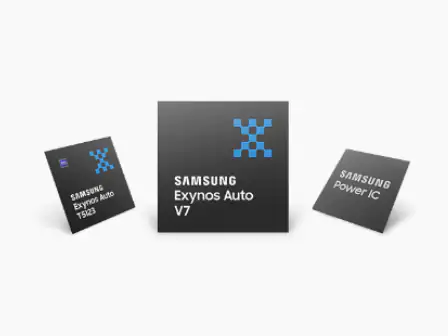
    Earlier this month we told you about a zero-day vulnerability which means that a flaw was previously unknown to the software vendor and has been unpatched. The vulnerability affected the Exynos Modem 5123, Exynos Modem 5300, Exynos 980, Exynos 1080, and Exynos Auto T5123. Armed with nothing but the targeted device’s phone number, attackers can access the device.

    We know that Pixel 6 and Pixel 7 models were affected, but the flaw has been patched on these phones with the March security update which has now been released for the Pixel 6, Pixel 6 Pro, Pixel 6a, Pixel 7 and the Pixel 7 Pro. Other phones affected include Exynos-powered phones in the Samsung Galaxy S22 line. These models were sold in the U.K. and Europe. Other Samsung phones with the flaw include models in the mid-range Galaxy A and Galaxy M lines:

    • Galaxy A71
    • Galaxy A53
    • Galaxy A33
    • Galaxy A21s
    • Galaxy A13
    • Galaxy A12
    • Galaxy A04 series
    • Galaxy M33
    • Galaxy M13
    • Galaxy M12
    • Galaxy Watch 5 series
    • Galaxy Watch 4 series
    Also affected are a few Vivo models such as the S16, S15, S6, X70, X60, and X30 series.

    A Samsung community manager posted on the Samsung U.S. community site and said that five out of the six vulnerabilities found in the aforementioned Exynos modems were patched in March and the remaining flaw will be patched next month. Interestingly, Samsung initially came to the conclusion that the flaws were not severe.

    The community manager wrote last week, “Hello, We understand the concern of vulnerabilities. Samsung takes the safety of our customers very seriously. After determining 6 vulnerabilities may potentially impact select Galaxy devices, of which none were ‘severe’, Samsung released security patches for 5 of these in March. Another security patch will be released in April to address the remaining vulnerability. As always, we recommend that all users keep their devices updated with the latest software to ensure the highest level of protection possible.”
    Until the last vulnerability is patched in April, the Samsung and possibly the Vivo handsets listed above are at risk of being compromised at the baseband level. Thus, Google’s Project Zero research team recommends that users of phones still vulnerable should disable Wi-Fi calling and Voice-over-LTE (VoLTE).
  • Smartphone sales tumble in Vietnam

    Smartphone sales tumble in Vietnam

    Smartphone sales in Vietnam have plunged in the first two months of 2023 as tightened spending amid rising inflation prompts the sector’s first decline in years of recent growth.

    According to an industry report, less than 2.5 million smartphones were sold in Vietnam this January and February, down 30% year-on-year.

    “This year consumers have tightened their spending, even during the Tet holiday, which has been peak shopping season for years,” said Nguyen Lac Huy, a media representative at CellphoneS, referring to the Lunar New Year holiday which fell at the end of January this year.

    Industry insiders estimate that sales since the beginning of this year have dropped to levels not seen in at least two or three years. In recent years, growth over the same period has often been within the 5-15% range.

    This decline is in line with global trends.

    Smartphone sales worldwide in the last quarter of 2022 plunged 18.3% year-on-year, according to the International Data Corporation (IDC).

    It was the steepest decline in a quarter since 2013, IDC reported. Total smartphone sales in 2022 dropped by 11.3% from 2021.

    In Vietnam, the biggest drops were recorded in the middle and affordable segments. Last year, sales of smartphones under VND5 million dropped 60% from 2021.

    “Economic difficulties have had a large impact on the low-income population, including workers,” said Hong Quan, an industry observer.

    Tightened credit policies have also prompted some retail chains to cancel their zero-interest installment payment campaigns.

    The high-end segment is also struggling. The iPhone 14 Pro Max, one of the most expensive smartphones on the market, has seen prices plunge by 25% to VND27.4 million over the last five months.

    Phan Thi Kim Quyen, a media representative of retail chain Minh Tuan Mobile, said that this year Apple lowered its latest smartphone price earlier than in previous years (in which the drop has come as late as June).

    Other retail chain representatives have said they are now lowering prices because they misinterpreted market demand trends and imported more than they should have. iPhone prices in Vietnam are now among the lowest in the world.

    FPT Shop anticipates that there will be no growth in smartphone and computer sales this year, while other chains expect a recovery in demand by early next year, or the end of this year at the earliest.

    CellphoneS is cutting business hours and staff sizes at low-revenue shops. It is also seeking rent discounts from property owners.

  • Apple could start shipping a version of the AirPods Pro 2 with new technology next quarter

    Apple could start shipping a version of the AirPods Pro 2 with new technology next quarter

    It seems that the iOS 16.4 release candidate for developers references new AirPods with the model number A3048 and a new AirPods case with the model number A2968. According to a tweet from TF International’s world-renowned Apple analyst Ming-Chi Kuo, those model numbers refer to a new version of the AirPods Pro 2 with USB-C charging replacing the Lightning port. Kuo says that the new version of the AirPods Pro 2 is expected to start shipping in the second or third quarter of this year.
    Kuo did mention that Apple has no plans to offer USB-C versions of the AirPods 2 and AirPods 3. He also didn’t mention any other changes expected with the new USB-C variant of Apple’s premium true wireless stereo earbuds other than the charging port on the charging case.
    Just last week Kuo said that the iPhone 15 line will ship with a USB-C port requiring a cable sporting a USB-C plug instead of the proprietary Lightning plug. But there is a caveat: Apple will use the faster USB 3.2 ports for the iPhone 15 Pro and iPhone 15 Ultra and the slower USB 2.0 ports for the iPhone 15 and iPhone 15 Plus. We could see a repeat of what Apple did with the USB-C ports on the entry-level iPad and the iPad Pro. The top data transfer speed on the basic tablet is 480Mbps and a much faster 40Gbps on the premium tablet.
    In addition, Apple will reportedly include a Lightning-like authenticator chip inside the USB-C port and the cables in order to limit the accessories that can be used on the phones. In other words, only USB-C cables and accessories that have been certified by Apple for its MFi (Made For iPhone) program will get the fastest charging and data transfer speeds available. This way Apple still collects some revenue from iPhone buyers who want to purchase new USB-C cables and accessories for their iPhone 15 series handsets.
    Apple has been forced to make the change from its proprietary Lightning system to USB-C because of a common charger directive that was passed in the EU. The goal is to reduce electronic waste as the rule makes a USB-C charging port mandatory for a large number of electronic devices. Rather than make iPhone models with USB-C ports for one region and units with the Lightning port in other markets, it appears-at least according to Kuo-that Apple is making the change starting this year.
  • Samsung steals Xiaomi’s crown in India’s premium smartphone market

    Samsung steals Xiaomi’s crown in India’s premium smartphone market

    Xiaomi Corp is reviewing its India strategy after misjudging consumer tastes for mobile phones. This costly mistake allowed Samsung Electronics to lead the Chinese company to the top spot in the world’s second-largest market for these devices.

    While Xiaomi continued to focus on selling mobile phones below Rs 10,000 ($120), Indian consumers were willing to pay more for better-looking models with richer features. Samsung of South Korea launched products that met those aspirations and offered innovative financing schemes that made them affordable for most.

    These measures have helped Samsung take the lead of the Indian mobile phone market from Xiaomi. Data from Hong Kong-based Counterpoint Research shows that Samsung had a market share of 20% in the last quarter of 2022, compared to 18% for the Chinese company.

    “The Indian market is witnessing a ‘premiumization’ trend. (But) Xiaomi is underprepared for this shift with a portfolio full of cheap phones,” said Tarun Pathak, research director at Counterpoint.

    The loosening of Xiaomi’s grip on India’s 626 million smartphone users – the largest after China – shows how companies that fail to respond to changing consumer preferences are penalized in a fast-growing economy with rising disposable incomes.

    Best known in India is Tata Motors’ Rs 100,000 ($1,200) Nano, which was heralded as the world’s cheapest car, shunned by consumers who associated its low price tag with inferior quality.

    Indians’ demand for more expensive mobile phones to consume videos and other content is also beneficial for social media app providers like Meta, and iPhone maker Apple Inc, which so far has a small market share in the country as it focuses exclusively on high-end phones, with prices ranging from $605 to a whopping $2,304, according to its website.

    According to Counterpoint, the market share of the phones under $120 in India has fallen to 26% by 2022, from 41% two years ago. And premium phones – above 30,000 ($360) – saw their share double to 11% over the same period.

    Xiaomi and Samsung both view India as a major growth market, with smartphones being their top-selling electronic device. The Chinese company posted a total revenue of $4.8 billion in India in 2021-22, while Samsung posted $10.3 billion in revenue, of which $6.7 billion came from smartphones.

    However, Xiaomi is already struggling in India with the departure of at least five top executives and increased government scrutiny over frosty relations with neighboring China. The company has had $674 million frozen by the country’s Financial Crime Bureau over alleged illegal remittances to foreign entities, which Xiaomi denies.

    A Reuters review of the product listings on Xiaomi’s website revealed the mismatch between consumer needs and the products the company offers. Xiaomi had six smartphones priced over $360, compared to Samsung’s 16. Under $120, Samsung had seven models, while Xiaomi had 39 – most of which turned out to be out of stock.

    And premium phones accounted for just 0%-1% of total shipments of Xiaomi’s Indian phones over the past two years, while the share of Samsung’s more expensive phones more than doubled to 13%, according to data from Counterpoint.

    But Xiaomi, which has admitted to introducing “too many” models in the past, is revamping its product line to focus on premium smartphones.

    In January, the company launched the Redmi Note 12 with a top price of over Rs 30,000, and recently launched the Xiaomi 13 Pro at Rs 79,999 ($970) – its most expensive phone in India. The strategic shift seems to have paid off immediately, as the Redmi Note 12 posted sales of $61 million within two weeks of its launch.

    “We have established a streamlined and cleaner portfolio with a focused approach to build expertise in the top segment, and the launch of our latest flagship, the Xiaomi 13 Pro, is a step in that direction,” said Indian President Muralikrishnan B.