Retail News CRM

Category: Electronics

Retail News Asia is committed to providing both local and global retailers with the latest Electronics news throughout the Asian market. This on a daily base.

  • Apple’s India supplier Jabil making AirPods parts for export

    Apple’s India supplier Jabil making AirPods parts for export

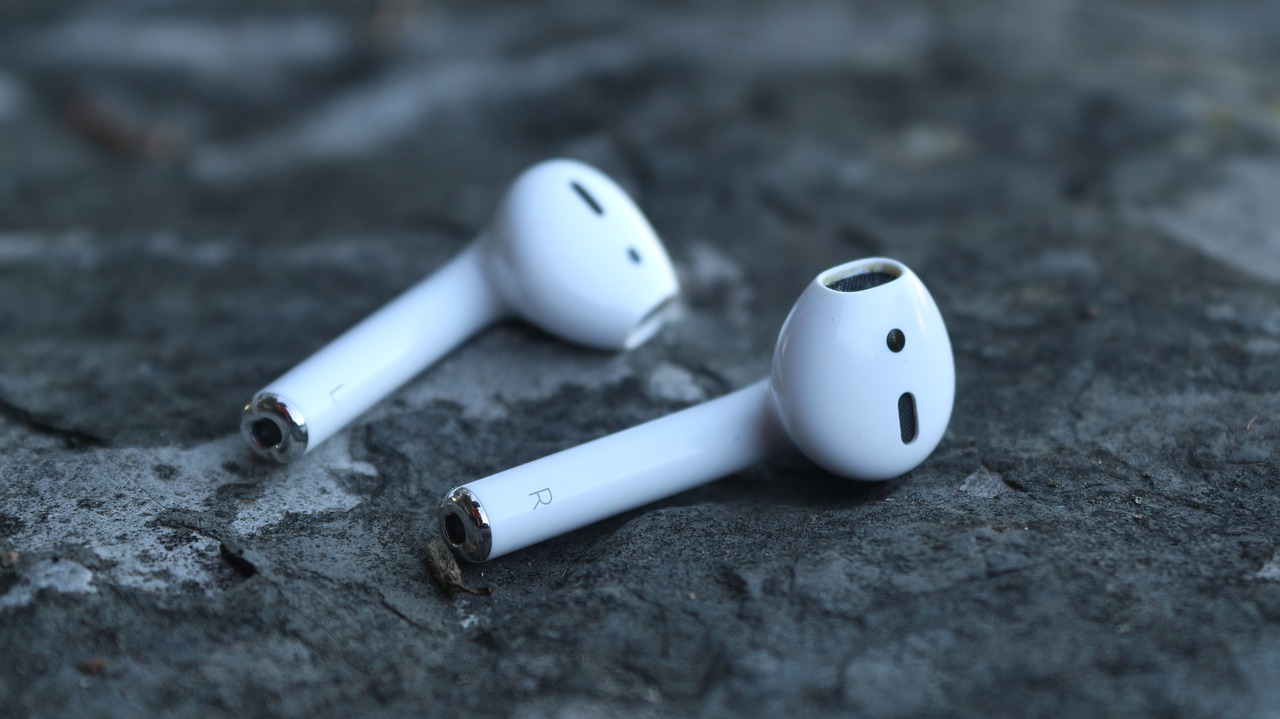
    Apple-supplier Jabil Inc’s India unit has begun making components for AirPods in the country and is shipping plastic bodies or enclosures for AirPods to China and Vietnam, Bloomberg News reported on Sunday, citing people familiar with the matter.

    Apple Inc and Jabil did not immediately respond to a request for comment.

    The move marks another step in Apple’s plans to shift its manufacturing away from China amid rising trade and geopolitical tensions between Beijing and Washington.

    The iPhone maker wants India to account for up to 25% of its production, from about 5%-7% now.

    Apple has bet big on India since it began iPhone assembly in the country in 2017, in line with the Indian government’s push for local manufacturing.

  • Global smartphone shipment slowdown could hurt Vietnam

    Global smartphone shipment slowdown could hurt Vietnam

    Manufacturing hubs like Vietnam and South Korea could be hurt this year as global smartphone shipments suffered its worst quarterly drop on record, signaling a cool down in consumer demand.

    Shipments declined 18.3% year-on-year in the December quarter to a little over 300 million units, U.S.-based International Data Corporation said Thursday.

    Xiaomi’s shipment volume declined steepest at 26.3%, followed by vivo (down 18.9%) and OPPO (down 15.9%).

    For the year, global shipments fell 11.3% and marked the lowest total for a decade, the researchers said.

    “We have never seen shipments in the holiday quarter come in lower,” Nabila Popal, research director at IDC.

    Along with inflation and economic uncertainties, Covid lockdowns in China were another factor that hurt the industry, including Apple Inc.’s iPhone sales, she said. “Heavy sales and promotions during the quarter helped deplete existing inventory rather than drive shipment growth.”

    Smartphones are among the largest exports for Korea and a key source of income for Vietnam as Samsung Electronics operates factories in both countries.

    Samsung last quarter reported its biggest profit fall in over a decade, primarily led by a drop in demand for semiconductors. The company’s exposure to smartphone sales is amplified by its role as the leading provider of memory and displays for the industry.

  • Fitbit drops support for two music streaming services on Sense and Versa smartwatches

    Fitbit drops support for two music streaming services on Sense and Versa smartwatches

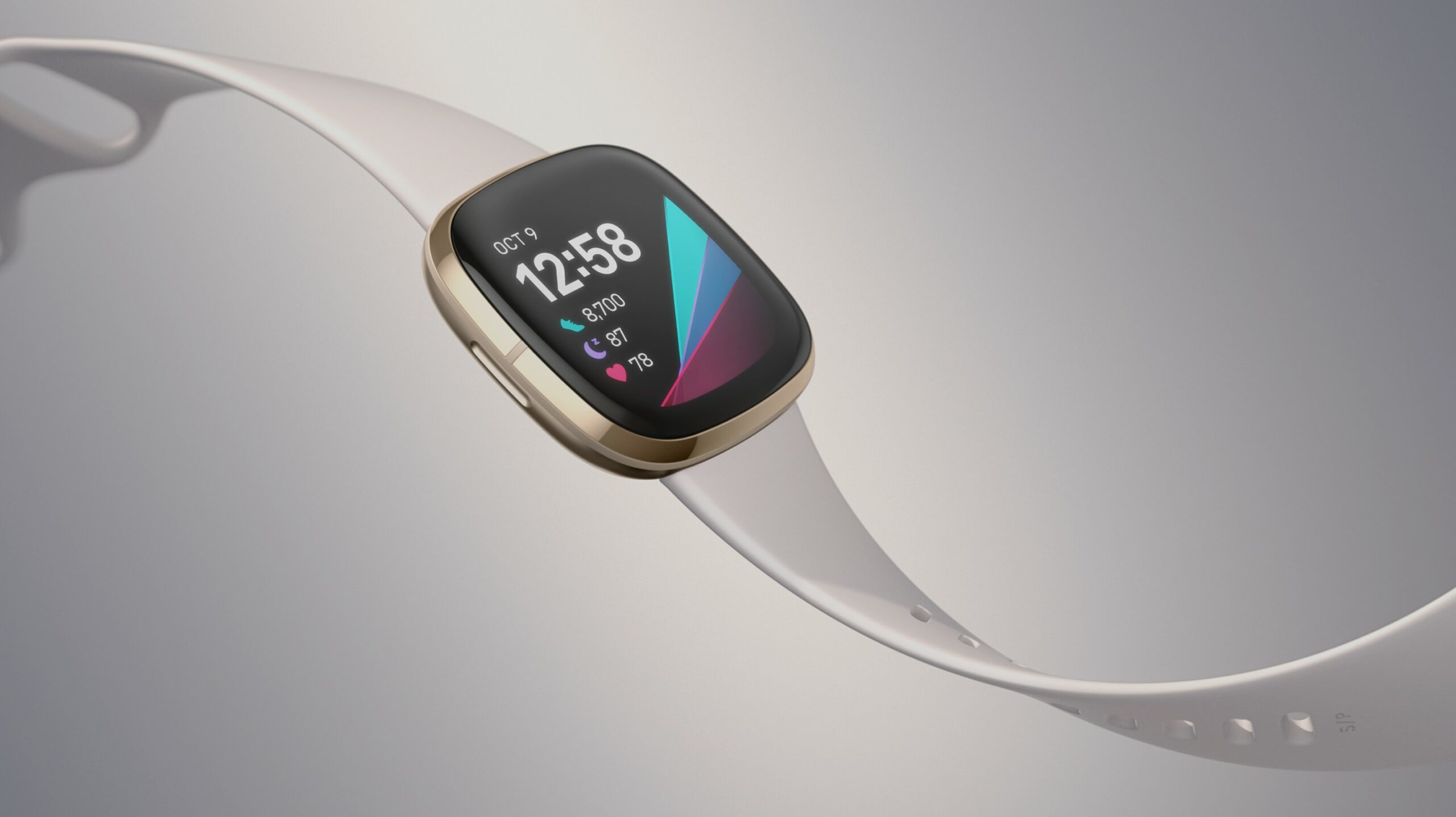
    Google-owned Fitbit is informing many of its customers that it will soon stop supporting two music streaming services quite popular in the United States: Deezer and Pandora. In an email sent to many Fitbit smartwatch users, the company states that it will ax support for the two apps, which will no longer be available for download.

    The email confirms that come March 31, these two music streaming services will no longer function on specific smartwatches like Fitbit Sense, Fitbit Versa 2 and Fitbit Versa 3. According to the email, customers “will no longer be able to download Pandora stations or add Deezer playlists to your device, nor will you be able to play anything that you have previously downloaded.”

    This is the second time Fitbit has taken away an important functionality from its customers in less than a year. Last year, Fitbit removed the ability to sync and transfer music via PC and Mac. The company removed the option to transfer playlists to Fitbit watches through a computer back in October but allowed users to continue to play personal music stored on the watch and transfer music to it with the Deezer and Pandora apps.

    Well, Fitbit took away that option as well, or at least is about to since the deadline is March 31, 2023. It’s surprising that the company is removing important features that will most likely lead to fewer sales, without adding new ones to replace them. It’s like Fitbit wants to make its smartwatches completely unappealing to those who love using this type of products.

    It remains to be seen how Fitbit’s actions will impact the sale of its smartwatches, but there’s bound to be some retribution from customers, especially from those who remained loyal even after Google bought the company Google.

  • Apple’s latest HomePod is smarter

    Apple’s latest HomePod is smarter

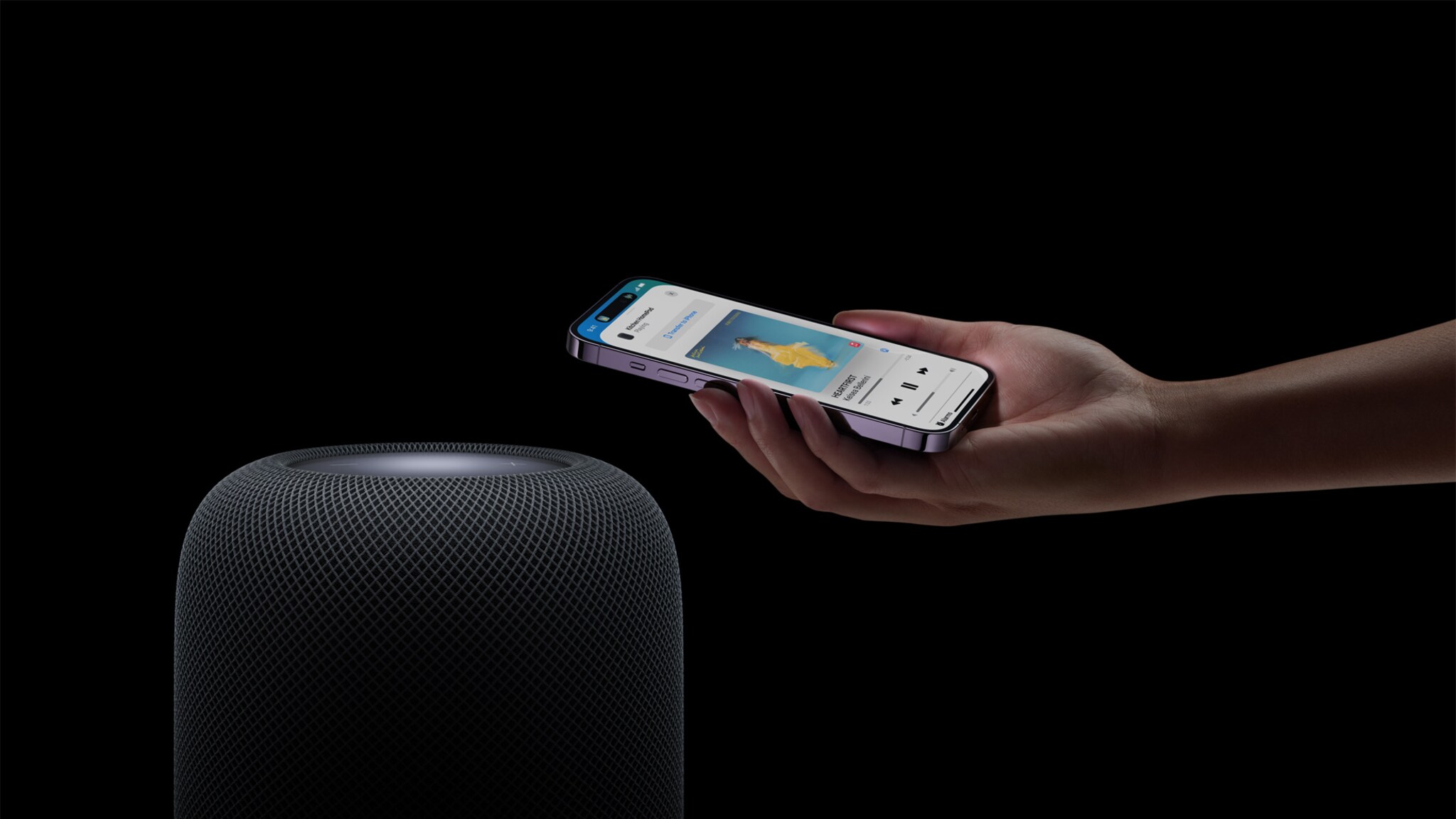
    Today, Apple announced its latest, second generation HomePod. The futuristic-looking smart speaker not only makes major advancements in acoustics, but is also packed with innovations, ranging from advanced Siri capabilities and computational audio to smart home management and automation.

    Pre-order now in either White or Midnight, available for just $299! Enabled to work with spatial-audio, capable of executing advanced voice-activated tasks and comes Matter-enabled for your Smart Home setup.
    Having Siri on board of the HomePod allows for hands-free control over as many features as you can probably imagine, ranging from smart home control to media playback and navigation. But the HomePod is also smart enough to listen even when you are not around, and send you a notification if it hears something odd, like a smoke alarm for example.

    As a smart speaker, the HomePod sounds like being capable of delivering exceptional audio quality. Its equipped with custom parts, like a high-excursion woofer and an array of beamforming tweeters, which allow it to achieve impressive acoustics.

    The smart speaker is equipped with Apple’s S7 processing chip, which in turn is based on the A13 Bionic chip that was on the iPhone 11 from 2019. This allows the HomePod to run advanced software, enabling it push the limits of advanced audio computation.
    Among the unique features, which is available on the second generation HomePod, is support for Spatial Audio. Did you know that Apple Music had over a hundred million tracks, that come with Spatial Audio? You can listen to those on the new HomePod, and not just your AirPods 3, but while also having Voice Control through Siri to access search, filters and lyrics on Apple Music.

    This also means that connecting multiple HomePods together makes more sense than ever, as it can also offer a stereo experience. Same goes for connecting it to your Smart TV, to give it a bit of extra oomph to its soundscape.

    You can connect a previous generation HomePod or a HomePod mini to the latest HomePod too. Linking is easy as ever, too, as they can all become linked with a quick voice command or by bringing the speakers close together physically.
    The Apple HomePod is capable of sensing the room and adjusting its sound accordingly, as to utilize sound reflections to improve sound and remove distortions. All of this happens automatically and it real time, with a precision capable of truly immersing listeners in an impressive, rich soundscape.
    Now, both smart speaker linking and room-awareness aren’t groundbreaking features. Not only do competitors have them, but so does the HomePod Gen 1. The primary difference with the latest Apple HomePod is that it does it faster and with a more impressive sound quality, while offering new smart features.
    Apple’s latest smart speaker will be available in White or a gray-ish Midnight variant, which is made with 100% recycled mesh fabric. Both speakers’ fabric is slightly transparent, while the touch panel on top is completely backlit, from edge to edge.

    The latest HomePod is already available for order in the AppleStore app for $299, but the smart speaker and home hub will become officially available as soon as February 3. If you are in the market for a new smart speaker that seamlessly fits with Apple’s ecosystem, you might’ve just found what you were looking for. Oh, and the HomePod is Matter-enabled, so it can play nice with all sorts of other Smart Home gadgets too.

  • Apple fined $17.4 million by Russian agency because the App Store is a monopoly

    Apple fined $17.4 million by Russian agency because the App Store is a monopoly

    The App Store continues to land Apple in hot water, this time in Russia. The country’s Federal Antimonopoly Service (FAS) fined Apple the equivalent of $17.4 million because Russian developers were forced to use Apple’s in-app payment platform. Apple forces developers to use its payment platform and takes a 15% to 30% cut of in-app subscriptions and payments. Any attempt to bypass the platform results in Apple kicking the offending app out of the App Store as it did with Epic Games and its hit title Fortnite.

    Apple’s actions were previously found to violate Russian competition rules and the tech giant is being told that it must pay the new fine within two months. You might recall that back in April 2021 the company was hit with a $12 million fine from the same agency after losing a lawsuit filed by Russian cybersecurity firm Kaspersky. In 2018, the developer was planning to update its Safe Kids parental control app but Apple blocked the update as it released its own Screen Time feature in iOS 12.

    At the time, the FAS released a statement that said, “Apple was found to have abused its dominant position in the distribution of mobile applications on the iOS operating system through a series of actions that led to a competitive advantage for its own products, and at the same time worsened the distribution conditions for competing products.” Apple claimed that it removed a number of parental tracking apps from the App Store because they were invasive and “put users’ privacy and security at risk.”
    At the time, the FAS also ordered Apple to remove from its terms and conditions any terms that allow Apple to “reject third-party applications from the App Store for any reason, even if they meet all requirements.” The agency also demanded that Apple no longer give its in-house apps precedence over third-party apps. While Apple was allowed to appeal the $12 million fine, it isn’t clear whether the Russian regulators are allowing Apple to contest the latest action. While under appeal, the FAS orders that Apple must obey are temporarily suspended.

    The App Store monopoly could be coming to an end thanks to the European Union’s Digital Markets Act (DMA). Apple reportedly is working to allow iPhone users, in Europe at first, to sideload apps. This merely means allowing users to download apps from third-party iOS app storefronts. Apple claims that for security reasons it prevents iPhone owners from sideloading apps.

    Apple isn’t totally wrong about this since its walled garden does give it control over the apps installed on an iPhone. On the other hand, people don’t like to be told what to eat or drink or put into their bodies and many feel that they should be allowed to make their own decision whether or not to risk having their iPhone attacked by a malware-infected app that contains a banking trojan (which will steal the log-in info to their banking apps).
    It should be pointed out that Google allows Android users to sideload apps and this writer has done so without issue in the past. Look at the comments section for red flags before installing apps from developers you’ve never heard of before.
    Whew! Did we take a detour! Anyway, should Apple allow sideloading on the iPhone, the company would no longer be accused of being a monopoly. Right now though, there is only one official way to install an app on an iPhone and that is through iOS. And this means that developers have to pay the Apple tax on in-app purchases. And regardless of the fines imposed on Apple, it still remains more profitable for it to demand that developers pay the 15% to 30% tax.
  • Apple South Korea’s sales up 3.3 percent to $5.9 billion

    Apple South Korea’s sales up 3.3 percent to $5.9 billion

    Data showed Monday that Apple Korea’s sales rose slightly to 7.3 trillion won ($5.9 billion) last year.

    The Korean unit of U.S. tech giant Apple Inc. logged 7.3 trillion won in sales from Oct. 1, 2021, to Sept. 30, 2022, up from 7.1 trillion won the previous one-year period, according to its audit report filing.

    Net income for the cited period stood at 112.9 billion won, down slightly from a net profit of 124.3 billion won the previous year.

    The company’s operating profit dropped 23 percent on-year to 86.1 billion won from 111.5 billion won over the cited period, with an operating profit margin of 1.2 percent.

    A total 124.3 billion won in dividends was given to its U.S. headquarters and other overseas units, according to the filings.

    Apple Korea paid 50.3 billion won in corporate taxes for the fiscal year ending Sept. 30 last year.

  • Samsung introduces the Galaxy S23 Ultra’s 200MP camera sensor

    Samsung introduces the Galaxy S23 Ultra’s 200MP camera sensor

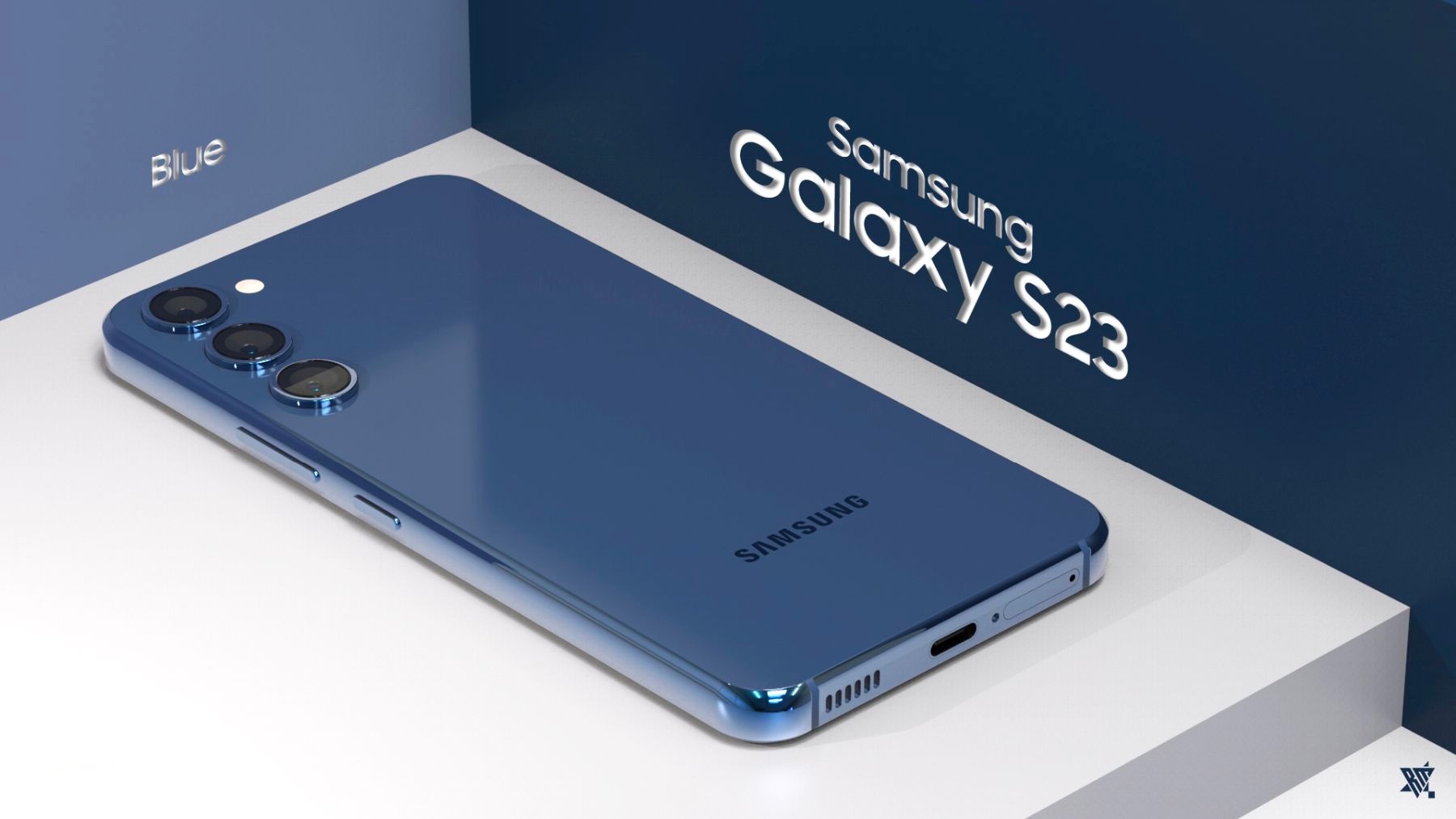
    On Tuesday Samsung introduced its third 200MP camera sensor, the ISOCELL HP2. The sensor features 200 million 0.6-micrometer (μm) pixels using a 1/1.3-inch optical format. This is a sensor size that is deployed in 108MP main smartphone cameras allowing users of high-end smartphones to have a high-resolution camera without having to deal with large camera bumps. The HP2 has already entered mass production
    The sensor uses advanced pixel-binning technology called Tetra2pixel. This allows the sensor to change pixel sizes depending on the environment’s light. Under low-light conditions, the sensor captures 50MP images at 1.2μm (4:1 pixel binning) or 12.5MP images at 2.4μm (16:1 pixel binning).
    For video, Samsung adds, “For fuller 8K video, approximately at 33MP, the HP2 switches to 1.2μm 50MP mode to minimize cropping and capture more of the scene. Filming 8K at 30 frames-per-second (fps), a wide field of view along with bigger pixel size can produce sharp cinematic videos.”
    Samsung’s new Dual Vertical Transfer Gate (D-VTG) technology will enhance color reproduction and reduce overexposure. As a result, you’ll see fewer washed-out photographs snapped under bright lighting conditions.
    Focusing in low-light environments will be vastly improved thanks to the HP2’s Super QPD feature which uses all of the sensor’s 200 million pixels as focusing agents. The result is faster and more accurate auto-focusing even in an environment without much light. Samsung explains, “The ample amount of focusing agents are grouped by four adjacent pixels to recognize horizontal and vertical pattern changes.”
  • Global tech investors continue to bet on Vietnam

    Global tech investors continue to bet on Vietnam

    Vietnam’s growing capacity to make complex tech products is attracting more foreign investors who are setting up factories.

    Apple supplier BOE Technology Group plans to invest US$400 million to build two factories in Vietnam, Reuters reported recently.

    The report said it is in talks to lease land in the north to put up factories to add to its relatively small plant in the south that supplies mostly television screens to South Korea’s Samsung and LG Electronics.

    BOE is the latest tech company to eye Vietnam as its next manufacturing hub, where already smartphones, laptops and cameras are made by or for multinationals such as Samsung and Apple.

    In the north, where Apple suppliers such as Luxshare and Foxconn already have a presence, BOE will lease 100 hectares to build a $150-million plant for making remote control systems on 20 ha and others for manufacturing displays.

    BOE will invest $250 million in a plant on 50 ha while suppliers will use the remaining 30 ha.

    Everything will be in place by 2025.

    The company plans to make the more sophisticated organic light-emitting diode, or OLED, screens there rather than liquid-crystal displays.

    A recent survey by German logistics firm Container xChange found that 67.3% of respondents believe Vietnam and India will rise as container shipping hubs in 2023.

    They expect the two countries to change the global shipping industry as companies look to expand their network of manufacturing locations, the survey, which polled 2,600 industry professionals in 20 countries, said.

    Their expectations seem to be influenced by the fact that many tech giants established or expanded their presence in Vietnam last year.

    In December Apple was reported to soon begin MacBook production in Vietnam for the first time, while Samsung, which has been making half of its smartphones in Vietnam, opened its biggest research and development center in Southeast Asia in Hanoi.

    American aviation firm Boeing held its first Aerospace Industry Forum in Vietnam in August, seeking local suppliers for its global supply chain.

    U.S. company Synopsys, one of the world’s biggest chip design software makers, is set to invest in and shift its engineer training to Vietnam, while last year South Korea’s Amkor Technology signed a deal to set up a $1.6-billion semiconductor materials manufacturing factory in the northern province of Bac Ninh.

    “Vietnamese workers have been improving in their tech manufacturing capability, and foreign companies such as Samsung have been increasingly recruiting locals from the top local universities,” Do Thi Thuy Huong, a member of the Vietnam Electronics Industries Association’s executive board, said.

    In the last five years Vietnam has expanded its presence in supply chains and is now capable of making complex products, which is why more foreign firms are choosing it as their next manufacturing hub, she told VnExpress International.

    The Politburo, the Communist Party’s highest body, issued a decree in 2019 that sought to improve the quality of foreign projects in the country.

    FDI plays a major role in the Vietnamese economy, accounting for a large share of all investment. FDI disbursement last year rose 13.5% to $22.4 billion.

    In September last year Prime Minister Pham Minh Chinh told a group foreign business executives that Vietnam would create a safe and transparent investment environment and urged them to keep faith and do long-term business in the country.

    The government has always had consistent policies to ensure economic stability, control inflation and maintain reasonable foreign exchange and interest rates, he added.

  • Samsung’s quarterly profit sinks to 8-year low on demand slump

    Samsung’s quarterly profit sinks to 8-year low on demand slump

    Samsung Electronics Co Ltd flagged on Friday its quarterly profit tumbled by two-thirds to an eight-year low as a weakening global economy hammered memory chip prices and curbed demand for electronic devices.

    The dismal profit estimate by the world’s largest memory chip, smartphone and TV maker – a bellwether for global consumer demand – sets a weak tone for other technology firms’ quarterly results.

    Samsung’s profits are expected to shrink again in the current quarter, analysts said, after the South Korean company announced its October-December operating profit likely fell 69% to 4.3 trillion won ($3.37 billion) from 13.87 trillion won a year earlier.

    It was Samsung’s smallest quarterly profit since the third quarter of 2014 and fell short of a 5.9 trillion won Refinitiv SmartEstimate, which is weighted toward forecasts from analysts who are more consistently accurate.

    “All of Samsung’s businesses had a hard time, but chips and mobile especially,” said Lee Min-hee, analyst at BNK Investment & Securities.

    Quarterly revenue likely fell 9% from the same period a year earlier to 70 trillion won, Samsung said in a short preliminary earnings statement. Asia’s fourth-biggest listed company by market value will release detailed earnings on Jan. 31.

    Rising global interest rates and cost of living have dampened demand for smartphones and other devices that Samsung makes and also for the semiconductors it supplies to rivals such as Apple Inc.

    “For the memory business, the decline in fourth-quarter demand was greater than expected as customers adjusted inventories in their effort to further tighten finances…,” Samsung said in the statement.

    Its mobile business’ profit declined in the fourth quarter as smartphone sales and revenue decreased due to weak demand resulting from prolonged macroeconomic issues, Samsung added.

    “Memory chip prices fell in the mid-20% during the quarter, and high-end phones such as foldable didn’t sell as well,” said BNK Investment’s Lee, adding its display business was hurt due to client Apple’s production delays at the world’s biggest iPhone factory in China during the quarter.

    Three analysts said they expected Samsung’s profits to dive again in the current quarter, with a likely operating loss for the chips business as a glut drives a further drop in memory chip prices.

    Samsung shares rose 1% in Friday morning trade, versus a 0.9% rise of the wider market. Shares of rival memory chip maker SK Hynix rose 1.6%.

    “The reason shares are rising despite the poor earnings result is.. investors are hoping Samsung will need to reduce production, like Micron or SK Hynix said they would, which would help the memory industry overall,” said Eo Kyu-jin, an analyst at DB Financial Investment.

    Samsung had said in October that it did not expect much change to its 2023 investments. Analysts said that Samsung has a history of not announcing memory chip production cuts, but could organically adjust investment by delaying bringing in equipment or through other ways.

  • Apple files patent application for a third-generation Apple Pencil

    Apple files patent application for a third-generation Apple Pencil

    The late Steve Jobs introduced the touchscreen Apple iPhone in January 2007 by famously saying, “Who wants a stylus? You have to get them and put them away and you lose them. Yuck! Nobody wants a stylus.” But in 2015, the Apple Pencil was unveiled for the iPad Pro. Of course, the Apple Pencil is much more advanced than the simple stylus that Jobs was familiar with back in the day. Three years later, Apple’s second-generation Pencil was announced.

    And now Apple appears ready to take its digital writing instrument to another level. According to Patently Apple, the company recently filed patent application number US 20220413636 A1 with the US Patent & Trademark Office for an optical sensor that would be used with the next-generation Apple Pencil. The sensor would allow the pencil to copy the texture and the color found on the surface of an item. It also would be able to wirelessly send this data to a laptop so it could be used with a drawing program.

    According to the patent application, the pencil would contain a light sensor and a light emitter which would help the device “sample” the color and texture of a surface. Yanko Design created some renders showing what the Apple Pencil would look like with the optical sensors included in the design of the new digital stylus.
    Apple has applied for or received a patent for other ideas and innovations related to the Apple Pencil. In 2021, it received a patent for an Apple Pencil with interchangeable nibs (the writing tip on the end of the accessory). The nib can be changed to replace one that is worn down, or could be changed to change the capabilities of the nib based on “a color, a shape, a thickness, a size, a brightness, or an opacity.” While you can currently replace a worn-out tip, it doesn’t add any new features to the accessory.
    Nearly three years ago, Apple filed a patent application for an Apple Pencil with a biometric security feature, a method to use the number of times the pencil is tapped on the screen as  an input that could be used to initiate a copy function, a paste function, an undo function, and/or a redo function.” Other possible additions to the Apple Pencil that we’ve seen mentioned in a patent application include “a speaker, a rotary input device, a microphone, an on/off button, a mute button, a biometric sensor, a camera, a force and/or touch-sensitive trackpad, and so on.”
    If we do see a new Apple Pencil, it might not be until the 2024 iPad Pro is introduced, which could be the first iPad to sport an OLED display. When you think about it, that might be the perfect time to offer a new digital stylus with the ability to sample colors and textures lifted by the pencil, and include features such as a microphone and a camera.
    Just because you see something in a patent application or even a patent, it doesn’t mean you should expect it to be used in a consumer device right away. In fact, of the large number of patents that Apple receives every year,  many are never used. So we can’t say for certain that the technology covered in a patent application or a patent will be used by the company. However, it does make sense that Apple would want to keep improving the capabilities of the Apple Pencil.
    In 2021, a tipster shared a video of what he claimed was the third-gen Apple Pencil and it showed a glossy body with a magnetic flat edge for charging. A new Apple Pencil would be expected to offer longer battery life and improvements in latency and precision.
  • Qualcomm uses innovation to break through limits

    Qualcomm uses innovation to break through limits

    Researching and developing technologies, doing things no one has thought of is the focus of Qualcomm’s innovation strategy, according to Dr. Tran My An, Vice President of Engineering.

  • Apple stock plunges the most since the financial crisis on iPhone production woes

    Apple stock plunges the most since the financial crisis on iPhone production woes

    While production lead times of the iPhone 14 Pro models have started to normalize after the pandemic lockdown scare that prevented Foxconn from assembling enough units to meet demand not long ago, the iPhone 14 series production schedule and sales as a whole are not where investors would want them to be.

    As a result, Apple’s stock took another nosedive and is now down 12.4% just in the month of December alone. Not only that, but juggernauts like Apple and Tesla are now sharing the unenviable position of experiencing some of their worst stock plunges ever. For Tesla, that’s the biggest drop on record, while for Apple’s stock this year will mark the biggest plunge since the 2008 financial crisis and the subsequent freefall in stock indexes.

    Apple is on the verge of closing below $130 a share, erasing all gains accumulated since mid-2021, while for the whole 2022 its stock has dropped a whopping 27%. The Federal Reserve’s interest rate rise push has something to do with it, of course, as it sent investors scouring for safe havens and out of riskier bets like tech stocks, resulting in a nearly 34% drop of the Nasdaq this year.

    Still, last quarter Apple grabbed the jaw-dropping 42% of the global phone revenue and while the last quarter of the year may be negatively affected by the COVID surge in China after the country’s reopening, its revenue may very well hit record again, riding on the higher average selling price of its iPhone 14 series which is heavily skewed in favor of the more expensive iPhone 14 Pro and iPhone 14 Pro Max models.
  • Samsung opens its largest regional R&D center in Vietnam

    Samsung opens its largest regional R&D center in Vietnam

    The US$220-million Samsung R&D Center in Hanoi, the Korean conglomerate’s biggest research facility in Southeast Asia, was inaugurated Friday.

    The company said at the opening ceremony, with the new facility, Vietnam has now gone beyond its role as a global production hub for Samsung and become a strategic base for major research and development.

    Construction of the 16-story facility began in March 2020.

    Prime Minister Pham Minh Chinh said at the event that Samsung’s opening of the R&D Center in Vietnam is a testament to its orientation and commitment to long-term operation in Vietnam.sam

    “Samsung is the largest foreign investor in Vietnam with total registered investment of nearly $20 billion.”

    He added that its effective operation has made important contributions to Vietnam in terms of exports, jobs and taxes.

    Tae-Moon Roh, Samsung Electronics president, hoped the center would nurture the best Vietnamese talent.

    Samsung established its first smartphone factory in Vietnam in 2008 and has invested $18.2 billion so far. The figure could rise to $20 billion by the end of this year.

    Around half of all Samsung smartphones are made in Vietnam.

  • France fines Microsoft $64M over advertising cookies

    France fines Microsoft $64M over advertising cookies

    France’s privacy watchdog said Thursday it has fined US tech giant Microsoft 60 million euros ($64 million) for foisting advertising cookies on users.

    In the largest fine imposed in 2022, the National Commission for Technology and Freedoms (CNIL) said Microsoft’s search engine Bing had not set up a system allowing users to refuse cookies as simply as accepting them.

    The French regulator said that after investigations it found that “when users visited this site, cookies were deposited on their terminal without their consent, while these cookies were used, among others, for advertising purposes.”

    It also “observed that there was no button allowing to refuse the deposit of cookies as easily as accepting it.”

    The CNIL said the fine was justified in part because of the profits the company made from advertising profits indirectly generated from the data collected via cookies — tiny data files that track online browsing.

    Bing offered a button for the user to immediately accept all cookies, but two clicks were need to refuse them, it said.

    The company has been given three months to rectify the issue, with a potential further penalty of 60,000 euros per day overdue.

    The fine was issued to Microsoft Ireland, where the company has its European base.

    In a statement Microsoft said that it had “introduced key changes to our cookie practices even before this investigation started.”

    “We continue to respectfully be concerned with the CNIL’s position on advertising fraud,” it said, adding that it believes the French watchdog’s “position will harm French individuals and businesses.”

    Cookie control

    Cookies are installed on a user’s computer when they visit a website, allowing web browsers to save information about their session.

    They are hugely valuable for tech platforms as ways to personalise advertising — the primary source of revenue for the likes of Facebook and Google.

    But privacy advocates have long pushed back.

    Since the European Union passed a 2018 law on personal data, internet companies have faced stricter rules that oblige them to seek consent from users before installing cookies.

    Last year, the CNIL said it would carry out a year of checks against sites not following the rules on using web cookies.

    Google and Facebook were sanctioned by the French regulator with fines of 150 million and 60 million euros respectively for similar breaches around their use of cookies.

    The two firms also face scrutiny over their practice of sending the personal data of EU residents to servers in the United States.

    And tech giants continue to face a slew of cases across Europe.

    Earlier this month, Europe’s data watchdog imposed binding decisions concerning the treatment of personal data by Meta, the owner of Facebook, Instagram and WhatsApp.

    The European Data Protection Supervisor said in a statement that the rulings concerned Meta’s use of data for targeted advertising, but did not give details of its ruling or recommended fines.

    The latest case follows complaints by privacy campaigning group Noyb that Meta’s three apps fail to meet Europe’s strict rules on data protection.

  • Microsoft Surface tablet that iPad aspires to be when it grows up is a whopping $412 off

    Microsoft Surface tablet that iPad aspires to be when it grows up is a whopping $412 off

    We have almost made it to the end of the year and surely deserve to treat ourselves to a little something with a lot of power. The Microsoft Surface Pro 8 is one device that fits this description and the best part is that it’s currently on sale.
    The Surface Pro 8 is a versatile portable device that easily morphs from a tablet to a laptop. It is very lightweight, ultraportable, and sturdy, and sports a 13-inch screen with a fluid refresh rate of 120Hz. The screen has a tall aspect ratio so there is more vertical room for viewing articles and working on text documents. There is also a kickstand for multiangle viewing.

    The Intel 11th Gen Intel Core i5-1135G7 processor powers the variant that Amazon has discounted. It provides ample performance for everyday tasks, including moderately heavy workloads, so it’s easy to recommend to students and professionals.

    There are two USB-C ports with support for USB4 and Thunderbolt 4, ensuring fast data transfer rates.
    Microsoft promises a battery life of 16 hours, and while it may not last this long for everyone, it will easily get you through a whole workday. The tablet’s cameras and microphone are also impressive and the device also has the Windows Hello facial recognition system.

    What makes the Surface Pro 8 special is that it comes from a company that has a long history of making productivity-centric devices. Microsoft has successfully taken the best bits from laptop and tablet form factors for the ultimate portable experience, giving the Surface Pro 8 an edge over other top 2022 tablets.

    The Core i5 model with 8GB of RAM and 256GB of storage has been marked down by 34 percent, meaning you can currently get it for $787.99 instead of $1,199.99.
    That’s a seriously chunky discount for a modern-looking standalone productivity machine with a beautiful screen and promising battery life. This deal has been going on for a while and other variants have already sold out, so get this model while you can.