Category: Electronics

Retail News Asia is committed to providing both local and global retailers with the latest Electronics news throughout the Asian market. This on a daily base.

  • Apple looking to further diversify chip suppliers, reportedly finding new partner for the iPhone 14 Pro

    Apple looking to further diversify chip suppliers, reportedly finding new partner for the iPhone 14 Pro

    Apple is gearing up for the launch of the iPhone 14 series (which is inching ever so closely as we approach the fall), and it now seems Cupertino is set on not allowing any supply chain shortages to create issues. Reputable industry insider Ming-Chi Kuo now reports that Apple is looking to further expand its suppliers for the iPhone 14 series and has now added a new partner.

    According to Kuo, SG Micro (headquartered in China) has now passed quality certification for chips for the higher-end iPhone 14 models (meaning the iPhone 14 Pro and Pro Max). The company is likely to take orders for PMICs (power management integrated circuitry – basically a chip to manage power) in the second half of this year for the upcoming iPhones.

    This is the first time that said company would supply components for higher-end iPhones. According to the industry insider, this partnership will continue in the future, so that Apple can avoid future supply chain risks.
    Recently, Kuo said that some iPhone 14 display panel suppliers, as well as memory suppliers, have had supply issues; however, he doesn’t believe this will make a big impact on mass production. It seems that, at least according to Kuo, Apple is on track with the iPhone 14 production.
    As a quick recap, this year we expect there to be a more significant gap between the non-Pro iPhone models and the Pro versions. The iPhone 14 Pro and the iPhone 14 Pro Max are expected to be the only models to come with Apple’s latest processor (the A16), while the non-Pro variants are said to come with this year’s iPhone 13 chip.

    On top of that, the Pro iPhone 14 models will come with a new design for the Face ID sensors and the selfie camera, getting rid of the notch which will remain for the non-Pro iPhone 14 and iPhone 14 Max. We also expect the Pros to come equipped with an always-on display.

    The four phones are to be unveiled sometime in the fall, probably September.

  • Taiwan Weighs Foxconn Fine For China Chip Investment

    Taiwan Weighs Foxconn Fine For China Chip Investment

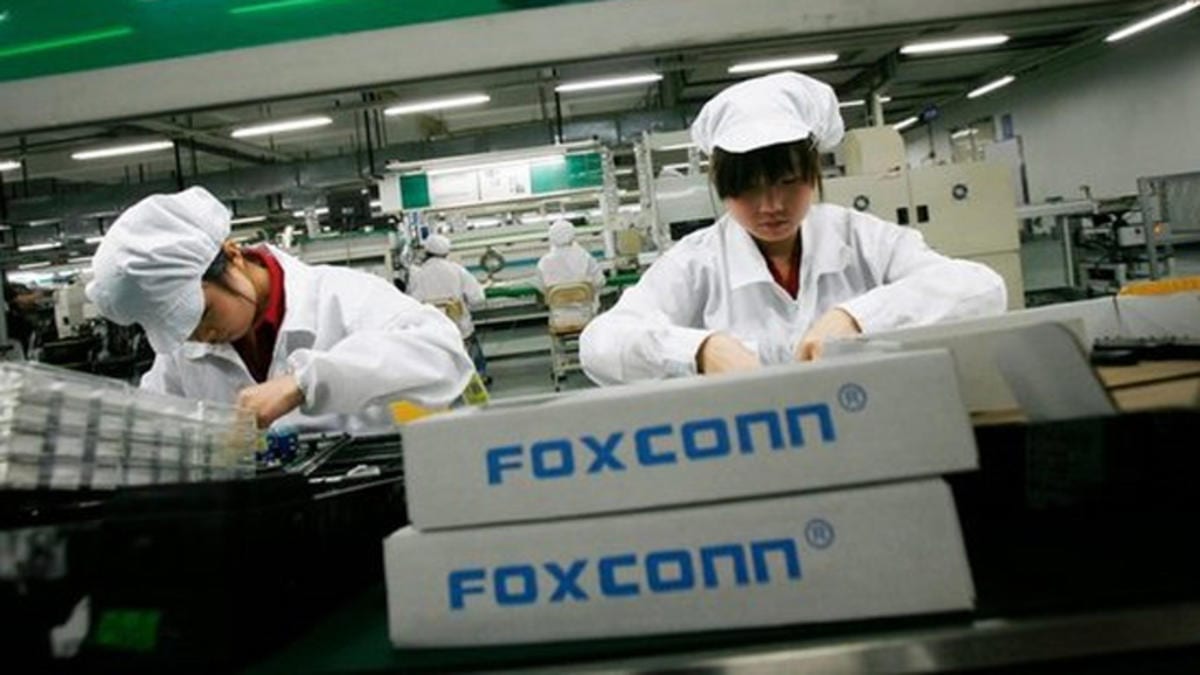
    Taiwan’s government is considering fining tech giant Foxconn up to T$25 million ($835,600) over its investment in a Chinese chip conglomerate without first getting regulatory approval, two sources briefed on the matter said on Friday.

    Foxconn, the world’s largest contract electronics maker, said this week it has become a shareholder in embattled Chinese chip conglomerate Tsinghua Unigroup via a 5.38 billion yuan ($797 million) investment by a subsidiary.

    The investment comes as Taiwan turns a wary eye on China’s ambition to boost its semiconductor industry and has proposed new laws to prevent what it says is China stealing its chip technology.

    Foxconn did not seek prior approval from the Taiwan government before the investment was made and authorities believe it has violated a law governing the island’s relations with China, a person familiar with the matter told Reuters.

    Regulators are weighing whether to hand Foxconn the “maximum” fine possible, which is $T25 million, due to the large size of the Chinese investment, the person added,

    Foxconn referred to an earlier filing on the stock exchange, saying it will deliver the documents to the Economy Ministry’s Investment Commission in the near future.

    A second source said Foxconn could be given a fine of between T$50,000 and T$20 million for investing without approval, adding that regulators will scrutinise the investment and deliver a decision after they receive the company’s application.

    “There’s a chance that an approval will be given. If not, Hon Hai will have to withdraw the investment,” the person said, referring to Foxconn’s formal name, Hon Hai Precision Industry Co Ltd.

    Taiwanese law states the government can prohibit investment in China “based on the consideration of national security and industry development.” Those violating the law could be fined repeatedly until corrections are made.

    Foxconn, best known for assembling Apple Inc’s iPhone, is keen to make auto chips in particular as it expands into the electric vehicle market. The company has been seeking to acquire chip plants globally as a worldwide chip shortage rattles producers of goods from cars to electronics.

    Taipei prohibits companies from building their most advanced foundries in China to ensure they do not offshore their best technology.

    Originating as a branch of China’s prestigious Tsinghua University, Tsinghua Unigroup emerged in the previous decade as a would-be domestic champion for China’s laggard chip industry.

    But the company fell into debt under former chairman Zhao Weiguo, prompting it to default on a number of bond payments in late 2020 end eventually face bankruptcy.

    The conglomerate has yet to produce any global leaders in the semiconductor sector.

  • iPhone 13 Pro Max is Apple’s most popular phone in Vietnam

    iPhone 13 Pro Max is Apple’s most popular phone in Vietnam

    The high-end iPhone 13 Pro Max was Apple’s top-selling smartphone in Vietnam in the first half of the year, according to data from retailers.

    At FPT Shop, the 128-GB version has been topping sales for months, beating out the iPhone 11 and cheaper Android devices like the Samsung Galaxy A12 and A22.

    CellphoneS and Minh Tuan Mobile reported similar results.

    At The Gioi Di Dong, no Apple device made it to the top 10 list in terms of number of units sold, but iPhone 13 Pro Max (128 GB and 256 GB version) topped in revenues due to their high price tags.

    “Despite having the highest price, the 13 Pro Max beat other Apple smartphones in sales,” Nguyen Lac Huy, media representative of Cellphone S, said. “It was followed by the iPhone 11 after its price drop in late June.”

    The iPhone 13 Pro Max was launched last September, and pre-orders for it accounted for 70 percent of all Apple sales then. It also dominated the high-end smartphone segment (prices of VND20 million ($857) and higher).

    Its closest competitor was the iPhone 11, which had a price tag of VND10.5 million.

    Retailers expect sales of the 13 Pro Max to keep rising thanks to the price adjustment at the end of June, which brought it down to VND27 million.

    “Buying the most high-end model is common among Vietnamese,” Nguyen Huu Phuc, head of sales at Minh Tuan Mobile, said.

    “Meanwhile, retailers also offered various promotions on the device, and so the iPhone 13 Pro Max always accounted for a large proportion of sales.”

    Huy of CellphoneS said the iPhone 13 Pro Max “will definitely retain its best-selling position” until new products are launched.

  • Vietnam benefits from manufacturing exodus from China

    Vietnam benefits from manufacturing exodus from China

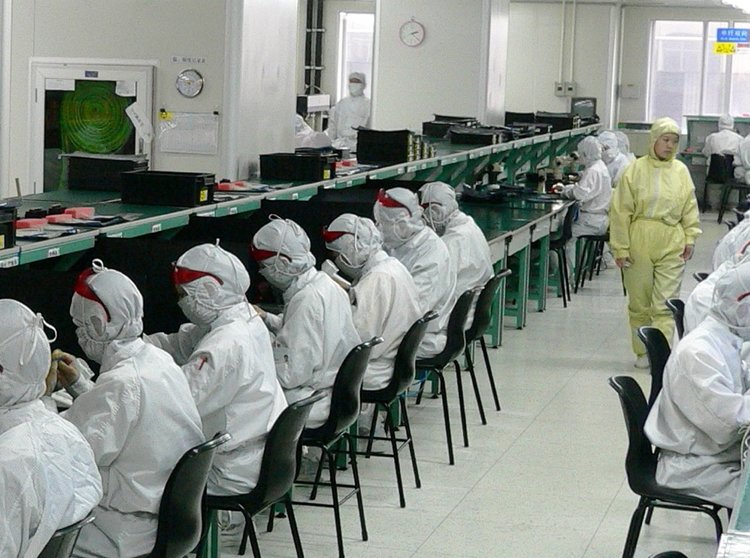
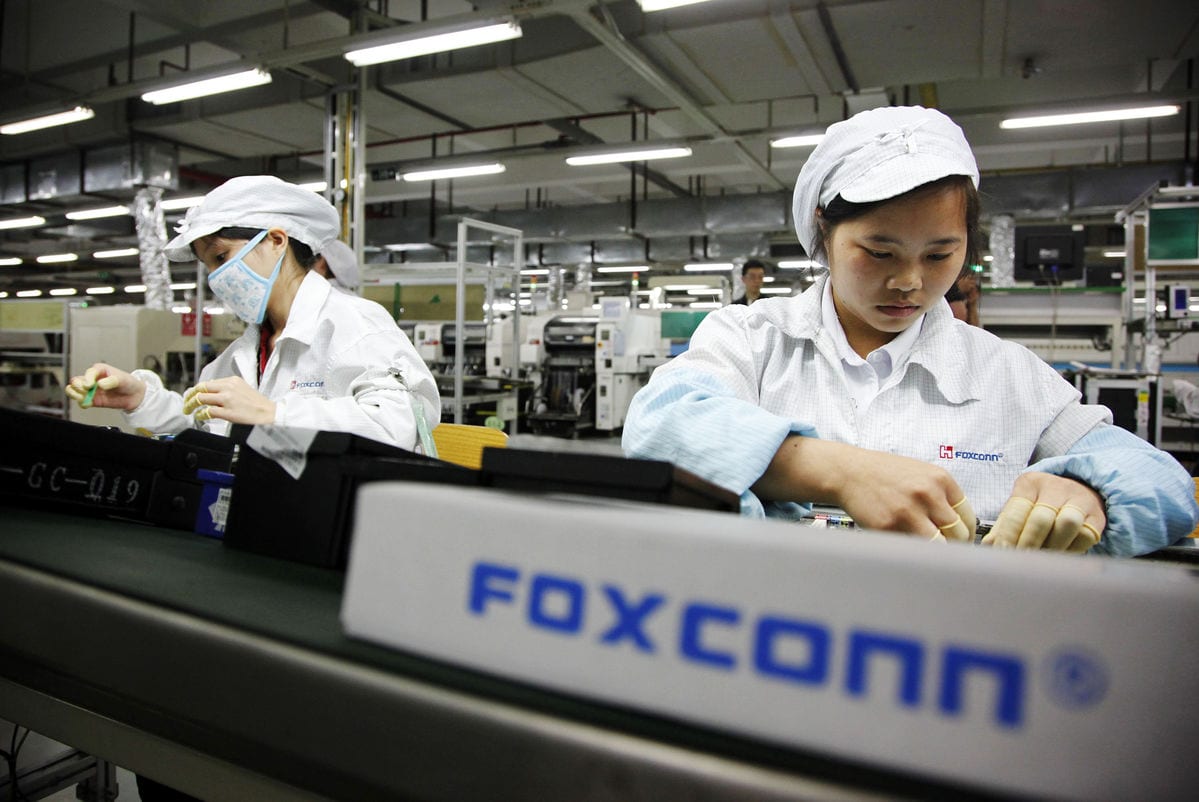
    Apple, Samsung and Xiaomi have moved their assembly lines out of China to Vietnam, as they seek to reduce dependence on the country.

    The country offers manufacturers access to the 10-member Association of Southeast Asian Nations (ASEAN) free trade bloc and preferential trade pacts with countries throughout Asia and the EU as well as the U.S., according to Nikkei Asia.

    Apple Inc. has 11 factories run by its Taiwanese partners in Vietnam.

    Four of them, Foxconn, Luxshare, Pegatron, and Wistron, are expanding.

    Apple would consider using more Vietnamese suppliers, CEO Tim Cook said during a meeting with visiting PM Pham Minh Chinh on May 17. A few weeks later Apple moved its iPad production out of China and to Vietnam, marking the first time the iconic tablet was assembled in Vietnam.

    Its AirPods Pro 2 wireless earbuds may also be produced in Vietnam by mid-2022, analyst Ming-Chi Kuo told Apple Insider.

    Apple is not the only smart device manufacturer expanding operations in Vietnam following China’s Covid-19 lockdowns.

    South Korea’s Samsung has just completed construction of a US$220-million research and development center in Hanoi, its largest in Southeast Asia.

    Its flagship phones Galaxy Z Fold and Z Flip are produced in the country.

    Last year Samsung reported $74.2 billion sales for its Vietnam branch, up 14 percent from 2020. They included exports of $65.5 billion, up 16 percent.

    China’s Xiaomi also moved part of its production to Vietnam, with the first batch of its ‘made-in-Vietnam’ devices debuting Tuesday.

    They are made by DBG Technology, a subsidiary of Hong Kong’s DBG Electronics Investment Limited, at a newly built $80-million factory in the northern Thai Nguyen Province.

    Delivery and logistics costs, driven up by the pandemic, were hindering Xiaomi’s Southeast Asia production, a spokesperson said.

    Comparatively cheap labor is one of Vietnam’s most prominent advantages, pointing out that Chinese workers earn CNY7,000 ($1,044) a month, twice as much as Vietnamese.

    But Vietnam’s land cost advantage is diminishing, while factories are relying on parts and raw materials from China.

    Industrial land rent in HCMC surged to a record high of $198 per square meter followed by Hanoi at $140 and Da Nang City at $80, according to a report by real estate consultancy Cushman Wakefield.

    Average land rentals in southern industrial parks in the first quarter was $120 per square meter, a 9 percent increase from a year earlier, commercial real estate services company Jones Lang Lasalle reported in May.

    Earlier this year Vietnam’s production was by supply chain delays due to China’s pandemic lockdowns.

    Yang Zhongwei, production manager at a Chinese router parts maker’s subsidiary in Vietnam, told Nikkei that clients had threatened to cancel orders as shipments from China were delayed.

    Vietnam’s weak industrial base and higher costs are other hurdles, and so while his company is considering switching to local suppliers it has yet to manage to do so, he said.

    Carbon taps for printers cost 21 yuan per roll in Vietnam, three times the price on Alibaba’s Taobao in China, he pointed out.

  • Xiaomi production in Vietnam triggers debate in China

    Xiaomi production in Vietnam triggers debate in China

    Chinese media reports that Xiaomi has started producing smartphones in Vietnam have set off debates including expressions of disappointment and excitement in China.

    Xiaomi’s devices are made in Vietnam by DBG Technology, a subsidiary of Hong Kong’s DBG Electronics Investment Limited, at an $80-million factory in the northern province of Thai Nguyen, Chinese media company Sina reported Tuesday.

    Soon after, “Xiaomi makes smartphones in Vietnam” became a top search phrase in China with around one million searches, and the topic has also triggered much debate in the country.

    “We have lost the assembly lines of Apple, Samsung and now Xiaomi. Even a domestic brand is now looking forward to moving abroad. Such a shame,” commented Wu Gusu.

    “When a factory is built, it employs locals, improves infrastructure and raises living standards. Vietnam and India are taking our opportunities and it is a matter of time before they can master the latest technologies,” Xu Shilin wrote.

    Vietnam is one of the largest beneficiaries of factories leaving China as it facilitates manufacturers access to the 10-member Association of Southeast Asian Nations (ASEAN) trade bloc and preferential trade pacts with countries throughout Asia and the EU as well as the U.S., Nikkei Asia reported last week.

    But it also warned that the country’s rapid growth had reached a bottleneck with diminishing land and labor cost advantages.

    So far, Vietnamese factories are still mainly engaged in low-end assembly and more than half of orders to the country come from China, it added.

    Without disclosing specifics, Xiaomi said its Vietnam factory only produces certain models, but analysts have named some budget smartphones including the Redmi 10A and Redmi Note 11.

    In the future, the Thai Nguyen plant may also manufacture Xiaomi’s headphones and smartwatches, they added.

    Meanwhile, some Chinese citizens have also remarked that expanding to Vietnam is a good sign.

    “It is absurd that many are criticizing Xiaomi. […] Our brand is growing to the global scale, and building a factory in Vietnam is Xiaomi’s stepping stone to compete with Apple and Samsung,” commented Xishan Xuncha.

    “Xiaomi has flooded [Vietnam’s] market with its products for the past two years. I saw many Vietnamese using its devices, so I support the company’s move to open a new factory there”, said Wang San, adding that the Chinese brand can take advantage of Vietnam’s cheap labor.

    On Monday afternoon, a Xiaomi representative confirmed the move with news site Red Star Capital Bureau, saying that it aims to “produce devices for Vietnam and some Southeast Asian countries.

    “Not all of our factories have moved there,” the representative said.

    The Covid pandemic has affected Xiaomi’s logistics and supply to the region, so expanding production to Vietnam will reduce costs and improve supply proficiency, the rep added.

    Xiaomi is the second largest smartphone producer in Vietnam, according to a first quarter report by analyst Canalys. Counterpoint Research said it accounted for 20.6 percent of smartphone sales in Vietnam in the first three months.

  • Apple suffers a new blow from the EU with the adoption of the Digital Markets Act

    Apple suffers a new blow from the EU with the adoption of the Digital Markets Act

    The EU parliament has successfully approved a major piece of antitrust legislation targeting tech companies – the Digital Markets Act (DMA). The lengthy bill has a number of implications, but there are three in particular that spell trouble for Apple.

    Firstly, the Act is bound to introduce some disturbance in Apple’s famous (or infamous, depending on who you ask) ecosystem. Apple users worldwide have long faced the struggle of sending a text message only to be faced with a green speech bubble.

    Cross OS support for iMessage, one of the most established perks when it comes to using Apple products, has long been a much-requested feature. The DMA might just address that by forcing Apple to implement some form of message interoperability.

    Secondly, the DMA will push Apple to closely incorporate third-party payments methods in iOS apps. Developers should in theory be allowed to choose freely which platform best suits their needs and use it accordingly.

    Thirdly, and perhaps most interestingly, the DMA could result in the App Store losing its monopoly over the choice of users when it comes to downloading apps on their Apple devices. The DMA might well force Apple to tolerate competing app providers to operate side by side with its precious App Store.

    All in all, the EU might turn out to be the biggest hurdle in Apple’s way of preserving the integrity of its business model. After already settling the issue surrounding the USB-C standard (and, by extension, threatening Apple’s proprietary Lighting port standard), the EU has now set its sights on the software aspect of Apple’s ecosystem.

    Even if this results in some pain in Apple’s backside, consumers are bound to rejoice in someone finally challenging some of the American tech giant’s controversial practices. After all, Apple should not be allowed to get away with everything just because it is the biggest tech company in the world. On the contrary – with great power, comes great… legislation

  • Apple receives patent for technology that helps iPhone users type in the rain

    Apple receives patent for technology that helps iPhone users type in the rain

    Apple has just been awarded a new patent from the U.S. Patent and Trademark Office called “Modifying functionality of an electronic device during a moisture exposure event” that could make it easier to use an iPhone in the rain. Sure, your phone is probably built to withstand some moisture, but that doesn’t make it easy to type on a wet display or with wet fingers.

    Apple plans to have the iPhone screen adjust to the moisture whether it is light rain, a steady drenching, or if the handset is being used underwater. False taps on the screen generated by the liquid will be detected by the technology listed in the patent and eliminated. On-screen controls could change accordingly with buttons growing larger while also moving farther apart from other buttons to improve the accuracy of pressing the right button when the screen is wet.

    At the same time, the capacitive iPhone display would automatically change to a pressure-sensitive screen similar to Apple’s no longer used Force Touch and 3D Touch technologies. To prevent rain drops or liquid from accidentally setting off touch inputs, Apple would require these finger presses to have more force than a dynamic threshold that would change depending on the kind of moisture event (light rain, heavy rain, for example) that is making the touch screen hard to accurately type on.

    An image in the patent documentation shows an iPhone camera app offering settings for “dry,” “wet,” and “underwater” modes. Depending on the mode, changes are made to the camera UI. For example, in wet mode, some features are removed from the UI while in underwater mode, some controls are replaced with extra-large buttons. They are easier to activate underwater but have restricted functionality.
    The phone’s display will show the current depth of the device in order for the user to keep it within the limits of the handset’s water resistance. Apple will have to take care with the size expansion and the location changes of camera UI buttons to make sure that users do not get confused.
    Apple receives so many patents over the course of a year and not every one results in new technology that is implemented right away. It is not clear whether Apple will be interested in implementing this patent right away.
  • Samsung starts building 3nm smartphone chips in Korea

    Samsung starts building 3nm smartphone chips in Korea

    We’re slowly moving toward the size limitations of our Universe but before we reach that Planck volume, there’s still some wiggle room. This means smaller, faster, and more efficient chips in our smartphones of tomorrow.

    Let’s leave quantum physics behind, and go straight to the news (feel free to discuss Planck constants in the comment section below). After TSMC published its roadmap, shedding light on when we can expect 3nm and 2nm chips, now Samsung has announced the production start of its 3nm semiconductor chips in Hwaseong factory in South Korea.

    Samsung is moving to a new architecture, swapping FinFET (fin field-effect transistor) for GAA (Gate All Around). And if you’re worried that more physics is coming your way, just breathe. GAA offers several advantages over FinFET – the main one being higher power efficiency.

    Another new technology involved in Samsung’s 3nm manufacturing node is the nanosheet transistor manufacturing. It replaces the nanowire technology, again boosting efficiency and also performance in this case. Using nanosheets gives the ability to very easily adjust this efficiency and performance parameters by simply altering the size of the nanosheet.

    Samsung is quoting some impressive numbers, comparing the new 3nm node with the old 5nm manufacturing process. The new chips should come with 23% improved performance, a 45% reduction in power usage, and an area reduction of 16%, and this is just the first generation of 3nm silicon.

    The second generation will bring a hefty 50% increase in power efficiency, 30% better performance, and 35% less area. Here’s a little inspirational quote from Dr. Siyoung Choi, President and Head of Foundry Business at Samsung Electronics:

    “Samsung has grown rapidly as we continue to demonstrate leadership in applying next-generation technologies to manufacturing, such as foundry industry’s first High-K Metal Gate, FinFET, as well as EUV. We seek to continue this leadership with the world’s first 3nm process with the MBCFETTM. We will continue active innovation in competitive technology development and build processes that help expedite achieving maturity of technology.”

    The Korean company is also working to allow clients to design their chips faster and easier. Samsung’s SAFE ((Samsung Advanced Foundry Ecosystem) will be taking care of partners who want to design their 3nm chips using the new technology.
    The first 3nm smartphone processor leaving the factory will most likely be the next generation Exynos 2300 (S5E9935 codename Quadra). The jump to GAA and 3nm could rehabilitate the Exynos processors, which are not very popular among smartphone enthusiasts, and are lagging behind their Qualcomm counterparts. Samsung teamed up with AMD to try and turn things around (the Exynos 2200 is armed with the new Xclipse GPU based on AMD RDNA 2 architecture) but this partnership has yielded mixed results so far.
    With TSMC hiking the prices of its manufacturing processes, it’s also very interesting to see how would Samsung play its cards on that front. If the new 3nm node turns out to be cheaper at Samsung’s factories, it can swing the pendulum once again. On the other hand, don’t expect the next Galaxy S23 with Exynos onboard to be cheaper than the Qualcomm variant, as it won’t make any marketing sense.
  • Samsung rumored to begin mass production of 3nm chips next week

    Samsung rumored to begin mass production of 3nm chips next week

    Right now there are only two independent foundries that are able to manufacture cutting-edge chips. The companies are TSMC and Samsung Foundry. Independent foundries take chip designs created by other firms and build the actual chips off of that design. Both TSMC and Samsung are working on building chips using their 3nm process nodes. The smaller the process node used, the larger the number of transistors found inside a chip.
    This is important because the more transistors employed in a chip, the more powerful and energy-efficient that chip can be. Every two years or so, the process node gets smaller and more transistors fit inside an integrated circuit. This is the famous “Moore’s Law” that you’ve heard about, named after Intel and Fairchild semiconductor co-founder Gordon Moore. Remember, this is not an actual law and as smaller and smaller components are being built, this “observation” no longer can be fully counted on to double the transistor count every other year.
    Still, over time, you can see how “Moore’s Law” has forecast the incredible increase in processing capabilities over the years. Let’s take the iPhone X, which was released in November 2017 powered by the Apple A10 Bionic chipset. The latter carried 4.3 billion transistors in each chip. Now let’s move ahead to the 2021 iPhone 13 series which sports the A15 Bionic chipset. The A15 Bionic contains 15 billion transistors, up 27.1% from the 11.8 billion transistors employed by the A14 Bionic chip.
    So now Samsung and TSMC are battling for supremacy in the business of building chips for third-parties. TSMC is number one in most metrics and its customer list includes top tech firms such as Apple (its number one customer), MediaTek, Nvidia, Qualcomm, and others. But it appears, according to ExtremeTech, that Samsung will soon beat out TSMC by starting mass production of chips made using its 3nm process node next week with TSMC starting 3nm mass production later this year.
    Additionally, Samsung is going to use a new transistor structure on its 3nm chips called GAA or gate-all-around. With this structure, the flow of current is controlled by gates that contact the transistor on all four sides. TSMC will continue to use the FinFET structure which has been in place since the 22nm process node debuted. TSMC will finally scrap FinFET for GAA when it starts shipping 2nm chips in 2026.
    Samsung’s GAA design is called Multi-Bridge Channel Field Effect Transistor (MBCFET) also known as nanowires. This is one of only two different gate-all-around designs currently available with the second one known as GAAFET or nanowire.
    The report cites a major Korean news agency that says Samsung is expected to make a major announcement about its 3nm chip production shortly. It also notes that the move to gate-all-around from FinFet will reduce the area of a chip by 45% to help deliver a performance bump of 30% while reducing energy consumption by 50%. However, there is a big problem. Samsung was reportedly getting yields of only 10% to 20% at 3nm meaning that the vast majority of its 3nm chip dies cut from a wafer could not pass quality control.
    Back in February, a report indicated that Samsung’s yield on 4nm production was only 35% resulting in Samsung losing some business from chip designer Qualcomm. The latter supposedly moved some of those orders to TSMC. However, if Samsung Foundry is about to announce the start of high volume manufacturing (HVM) at the 3nm process node, one could come to the conclusion that Samsung Foundry has improved its 3nm yield.
    Speaking of 3nm, TSMC’s major customers such as AMD, Apple, Broadcom, Intel, MediaTek, Nvidia, and Qualcomm, have started to queue up for 3nm capacity. And next on the horizon, of course, is the 2nm process node that both TSMC and Samsung are working on. Another name is expected to join TSMC and Samsung on the list of  cutting-edge foundries. Intel Chief Executive Pat Gelsinger has announced that the American company will regain process leadership from Samsung and TSMC by 2025.


  • Amazon has a plan to make Alexa mimic anyone’s voice

    Amazon has a plan to make Alexa mimic anyone’s voice

    Amazon is planning to come up with a way that will help Alexa voice assistant users to speak to their family members, even after they’ve died.

    As per TechCrunch, the online retailer announced its plan about developing a system to let Alexa mimic any voice after hearing less than a minute of audio during its annual re:Mars conference today in Las Vegas.

    “This required inventions where we had to learn to produce a high-quality voice with less than a minute of recording versus hours of recording in the studio.The way we made it happen is by framing the problem as a voice conversion task and not a speech generation path. We are unquestionably living in the golden era of AI, where our dreams and science fictions are becoming a reality,” Amazon’s Senior Vice President and Head Scientist for Alexa, Rohit Prasad said.

    After learning about this development, several netizens expressed their views. Many said the technology can be used for scams or to create false narratives about people.

    “I m so heartbroken, last month I deleted a bunch of voicemails from my phone because it was getting full, and a couple days later my dad died. His girlfriend had videos of him singing and playing guitar, so I have that. But now I’m afraid to delete voicemails ever,” a Twitterati wrote.

    “Funny thing is, they love introducing all this ‘new tech’ all cute and sweet and really they using it IN THE BACKGROUND for other devious bull shit,” another one wrote.

    “This (or similar) tech is already used in (mostly) corporate fraud. In ex someone calls the secretary sounding like its the boss who is calling, asking for an urgent bank transfer from the accountant….. I mean, for this product there must be a serious licence. Sad lobbypower,” a netizen commented.

    In a demonstration video, a child said, “Alexa, can Grandma finish reading me the Wizard of Oz? However, Amazon did not say when the feature will roll out to the public.

  • Samsung Australia fined $14 million over false water-resistance claims

    Samsung Australia fined $14 million over false water-resistance claims

    Samsung Australia admitted to misleading buyers of some of its ‘Galaxy’ phones about the water-resistance level, the Australian Competition & Consumer Commission (ACCC) said. The regulator had first sued the company in July 2019.

    Samsung Australia said in a statement that this was not an issue in its newer, current models.

    The regulator said between March 2016 and October 2018, the company ran in-store and social media advertisements that claimed the phones could be used in pools or sea water.

    The ACCC, however, received hundreds of complaints from users saying the smartphones did not function properly or even stopped working entirely after being exposed to water.

    The claims “promoted an important selling point for these Galaxy phones. Many consumers who purchased a Galaxy phone may have been exposed to the misleading ads before they made their decision to purchase a new phone,” said ACCC Chair Gina Cass-Gottlieb.

    Samsung and the ACCC agreed that changes the company had made to newer models of the smartphones launched in Australia from March 2018 did not face such risks from water exposure, the company said.

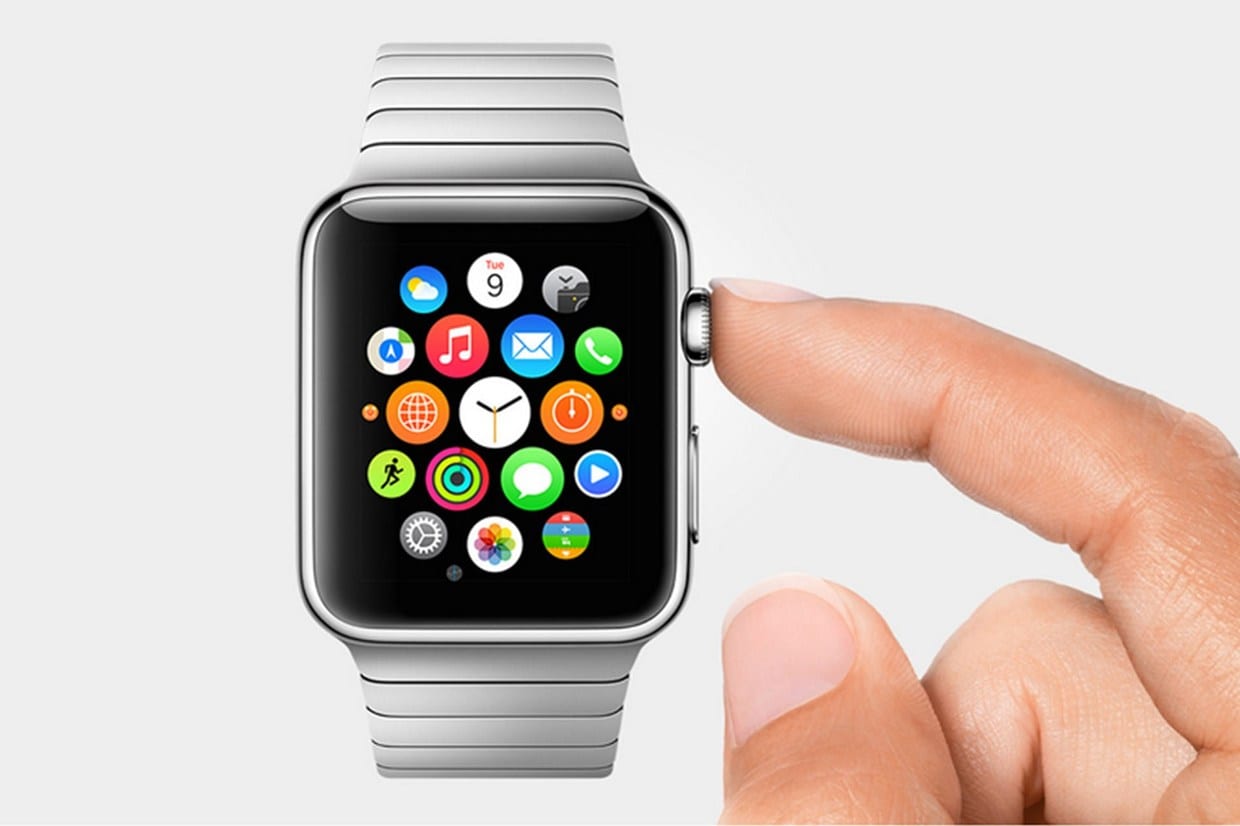
  • Apple Watch will soon help patients with Parkinson’s

    Apple Watch will soon help patients with Parkinson’s

    The Apple Watch might be one of the most popular wearables out there, and there’s no denying that it actually makes people’s lives better. You can say whatever you want about Apple and its gadgets but all the success stories surrounding the Apple Watch deserve some attention.

    Now there’s another potential use case for the wearable, as the FDA has granted approval for the Apple Watch to be used to monitor Parkinson’s patients. The approval has been granted to Rune Labs – a San Francisco-based health startup – to run a special software on the watch to track symptoms of Parkinson’s.

    The software in question can discern and track common symptoms of the disease such as tremors, involuntary or slow movement, rigidity and poor balance, etc. Apple added hard-fall detection software to its Watch Series 4 back in 2018, and subsequently released the software as a part of its open-source ResearchKit.

    This allowed developers to use the Movement Disorder API to create watchOS apps and solutions to track various diseases that manifest themselves with symptoms that involve movement abnormalities.

    Using wearables to track such disorders isn’t new but Rune Lab’s solution is the first designed for commercial applications. The idea is to track the patient’s condition over a certain period and give physicians and medical specialists access to this data.

    Of course, the app has its limitations but it is designed to serve as a supplement to the regular full-blown in-person medical exam. This isn’t the first Apple Watch feature to be cleared by the FDA – earlier this month the administration approved the watchOS’s AFib History feature, allowing people 22 and older to use the watch to monitor their heart condition.

  • Apple suppliers competing for workers in Vietnam

    Apple suppliers competing for workers in Vietnam

    Apple’s major Chinese suppliers are competing for Vietnamese workers as they seek to expand operations outside their country.

    Young Liu, chairman of Foxconn’s flagship unit Hon Hai Precision Industry Co., told reporters in Taipei Saturday that his firm’s Chinese competitors have set up operations near its facilities in Vietnam just to poach workers.

    “The move should not be condoned,” he said without naming any companies.

    In recent years Foxconn’s competitors like Luxshare, GoerTek and BYD have flocked to Vietnam to avoid U.S. tariffs.

    Foxconn employs around 60,000 workers in Vietnam, which is its largest manufacturing base outside China.

    Liu said Foxconn would “significantly” increase the numbers of employees in Vietnam over the next one to two years.

    Earlier reports said Apple would mass produce its iPads for the first time in Vietnam as part of efforts to diversify its supply chain and reduce dependence on China.

  • Sony says smartphone cameras will soon produce better images than DSLR cameras

    Sony says smartphone cameras will soon produce better images than DSLR cameras

    When it comes time for you to capture an important event by snapping a photograph of it or recording it on video, do you tend to use the camera array on your smartphone or do you turn to a dedicated SLR camera to handle these tasks? Smartphone photography has come such a long way that these days most consumers are willing to trust their handsets to deliver outstanding family photos.
    One executive who has a great vantage point showing him the future of smartphone photography is the President and CEO of Sony Semiconductor Solutions (SSS), Terushi Shimizu. The executive runs the team that is the leading supplier of image sensors for smartphones and as a result, Shimizu has a unique look at what is happening in the industry. Shimizu says that “still images (from smartphones) will exceed the image quality of single-lens reflex (SLR) cameras within the next few years.”

    An SLR camera uses a combination of mirrors and prisms so that the image seen through the viewfinder is the same image that will be captured by the photographer. DSLR cameras are Digital Single Lens Reflex cameras that use image sensors rather than film. Sony’s Shimizu made his comment during an industry conference and a slide from that event shows that Sony expects that the quality of smartphone camera images will start to exceed those of interchangeable lens cameras (ILC) in the calendar year 2024.

    That is the same as saying that images from smartphone cameras will start to surpass those achieved by DSLR and mirrorless cameras in as soon as two years. One of the reasons for the improvement will be an increase in the size of image sensors to over one inch in size allowing them to capture more data.. Sony also has created a new structure that saturates each pixel with twice as much light to create more dynamic range while reducing noise on pictures snapped in low-light.
  • Data shows an iOS 15 adoption rate close to 90%

    Data shows an iOS 15 adoption rate close to 90%

    With Apple’s Worldwide Developers Conference (WWDC) set to kick off on Monday, we will soon get a look at what to expect from the newest builds of Apple’s operating systems such as iOS, iPadOS, watchOS, and the others. Speaking of iOS, 250 days after the release of iOS 15, we have the latest look at the operating system’s adoption rate from business analytical company Mixpanel.

    The data shows that close to 90% of those with an iPhone that supports iOS 15 have indeed installed the software on their handset. Over the last ten weeks, iOS 15 adoption has risen 10%. Keep in mind that Mixpanel gets the data it uses by keeping track of the number of visits made to apps and websites that use its analytical software development kit (SDK); thus the figures discussed are not official numbers computed or released by Apple.

    The latest official iOS 15 adoption numbers were released by Apple in January of this year and it showed that 72% of iPhone models launched over the previous four years were running iOS 15. At that time, 26% were running iOS 14 and 2% had an earlier OS build installed.
    When iOS 15 was first released on September 24th of last year, there were quite a few bugs including one that falsely told users that their storage was almost full. Some had issues with audio when iOS 15 was first launched. The bugs kept some iPhone users from updating their handsets to iOS 15. Eventually, many of these iPhone users did make the switch.
    Some of the new features found on iOS 15 include Focus which is designed to allow iOS users to focus on work and the task at hand without getting distracted by the phone. Live Text allows phone numbers printed on a business card or scribbled on a note to be recognized and a call to that number can be made. Similarly, Maps will be able to show you directions to an address found on a business card, written on a post-it note, or seen on a street sign.
    According to Bloomberg’s Mark Gurman, iOS 16 will feature new widgets that might allow users to customize them. There also will be new ways for users to interact with the operating system, possibly a refresh to the look of Apple’s own iOS apps,” and a new updated notifications system.
    WWDC starts Monday, June 6th, at 10 am PT (1 pm ET) and you can stream it on YouTube, view it via the Apple Developer app in the App Store, or watch it from the Apple.com website on your browser.