Category: Electronics

Retail News Asia is committed to providing both local and global retailers with the latest Electronics news throughout the Asian market. This on a daily base.

  • Singapore’s Sheng Siong plans 25 more stores during next five years

    Singapore’s Sheng Siong plans 25 more stores during next five years

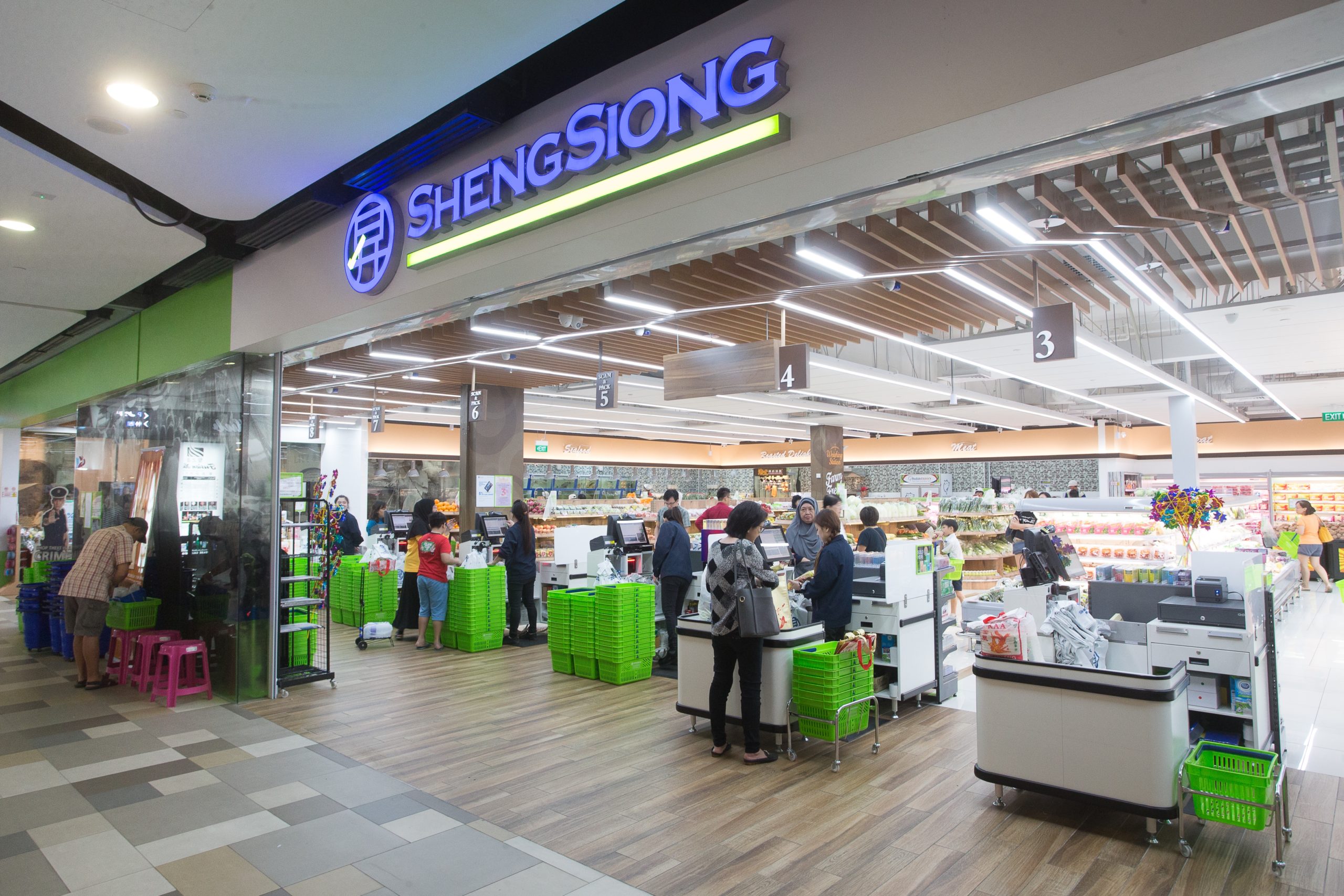
    Singapore’s supermarket chain Sheng Siong aims to open three to five new outlets every year in the country in the near term, the company said in a bourse filing today (Apr 20). The near term plan will be within the next three to five years, and this adds up to 25 stores by the fifth year, as part of the supermarket chain’s plans to expand its footprint in the country.

    Sheng Siong said it will continue to look out for retail spaces in new and existing public housing estates, particularly in areas where it does not have a presence.

    A check online shows the chain having 65 outlets across Singapore, with 14 outlets in the Northeast, 17 outlets in the West, 12 outlets in the North, 11 outlets in Central, and 11 outlets in the East.

    With a projected 25 more outlets, this will bring Sheng Siong’s total number of outlets to 90.

    According to competitor NTUC Fairprice’s website, the chain has 230 outlets in Singapore. Fairprice claims that it’s the country’s largest retailer. It counts brands like FairPrice supermarkets, FairPrice Finest, and Cheers as its outlets. There are 100 FairPrice supermarkets islandwide.

    Sheng Siong will also continue to build on its e-commerce capability to extend its reach to customers in areas where it does not have a physical presence.

    There are also plans to expand into China although it didn’t lay out the specifics. The company is currently operating four supermarkets in Kunming, China, which continue to be profitable.

    The supermarket chain’s latest financial results showed a 6.4 percent increase in revenue for the second half of the financial year 2021, at S$688.1 million. That’s thanks to the opening of three new stores in Singapore in the same period.

    Net profit for the full year eased 4.2 percent to S$132.8 million, due to a high base in the previous year.

    Sheng Siong expects pandemic-induced demand to taper as consumers loosen their purse strings on discretionary items like social activities and travel.

    “We should build a ‘war-chest’ ready on hand and preferred to conserve cash rather than gear up when the need arises,” it said.

    The company made news last year when it rewarded staff with up to 16 months of bonus after the “tremendous” performance in 2020.

    Internal memos seen by news agencies showed that some of the amount, as well as monthly bonus were distributed in 2020.

    The good performance reflected how well supermarkets perform
  • TSMC founder Chang says that the U.S. has the world’s best chip designers

    TSMC founder Chang says that the U.S. has the world’s best chip designers

    The two most advanced chip foundries in the world at the moment are Taiwan’s TSMC and South Korea’s Samsung. With both providing phone manufacturers with chips produced using their 3nm process node next year, TSMC recently said that it will start shipping 2nm chips to customers in 2026.
    In theory, the lower this process node number goes, the smaller the transistors used in these chips become. That allows chip designers and manufacturers to put more transistors in these integrated circuits allowing them to be faster and/or more power-efficient.
    The U.S., concerned about geopolitical events putting a crimp in the supply chain for chips (especially the possibility of China making a move on Taiwan) would love to become self-sufficient in the design and production of chips. Design is actually not an issue as U.S. firms like Apple, Qualcomm, Intel, and others have no problem designing chips (more on this later). But building a foundry takes oodles of money and time. It also requires proximity to a reliable supply chain.
    TSMC is working with the U.S. to build a fab (a plant that manufacturers chips) in Arizona. The facility should start producing chips by 2024 although production will reportedly be limited at first to 5nm chips which will have been replaced by the 3nm process node by the time the fab starts running in the states.
    But TSMC founder Morris Chang considers the U.S. attempt to be relevant in chip manufacturing to be “a wasteful, expensive exercise in futility.” According to The Register, Morris spoke as a guest of the Brookings Institution think tank and stated that the U.S. does not have the talent pool necessary to create a thriving business in the states manufacturing chips.
    Chang cited Taiwan’s large population that helped TSMC become the world’s top independent foundry. While the U.S. moved away from producing manufacturing professionals, Taiwan was loaded with talent. As we mentioned earlier in this story, where the U.S. does have the talent is in chip design, something that Morris isn’t shy about saying.
    The 90-year-old Chang has high praise for the chip design talent in the U.S. calling it “the best in the world.” He adds that “Taiwan has very little design talent, and TSMC has absolutely none.” As an independent foundry, TSMC wouldn’t be expected to produce its own designs since its job is to produce chips designed by other companies like Apple, Qualcomm, MediaTek, and more.

    Talking about the costs of running a fab in the U.S., Chang says that the small plant in Oregon that TSMC has run for 25 years is making money but not enough to justify expanding the facility. “We were extremely naive,” said Chang, “in expecting comparable costs, but manufacturing chips in the US is 50 percent more expensive than in Taiwan.”

    U.S. experts happen to agree with Chang’s take on the situation with one think tank expecting several thousand unfilled positions in any new U.S. based fabs. With Chang’s comments in mind, why would TSMC lay out $12 billion to build the Arizona factory? “We did it at the urging of the US government, and TSMC felt we should do it,” Chang said.

    Morris also pointed out that while chip production state-side will certainly see an increase, “there will be a high per-unit cost increase, and it will be hard for the US to compete internationally.” Chang also worries about a possible war between China and Taiwan. If there is a war, U.S. chip production might prove to be profitable with TSMC possibly not able to continue normal production.

    He adds that if there is a war between China and Taiwan, “the U.S. will have a lot more than chip manufacturing to worry about.” Back in December, we passed along a stat that said 90% of the world’s most advanced chips are shipped from Taiwan. Worried about how vulnerable that makes the country, and in turn big chip consuming nations like the U.S., foundries need to work in advance on contingency plans in case Taiwan-based fabs are damaged or destroyed in a war.
  • Samsung adds new models to its Digital Car Key support list, but not all work with UWB

    Samsung adds new models to its Digital Car Key support list, but not all work with UWB

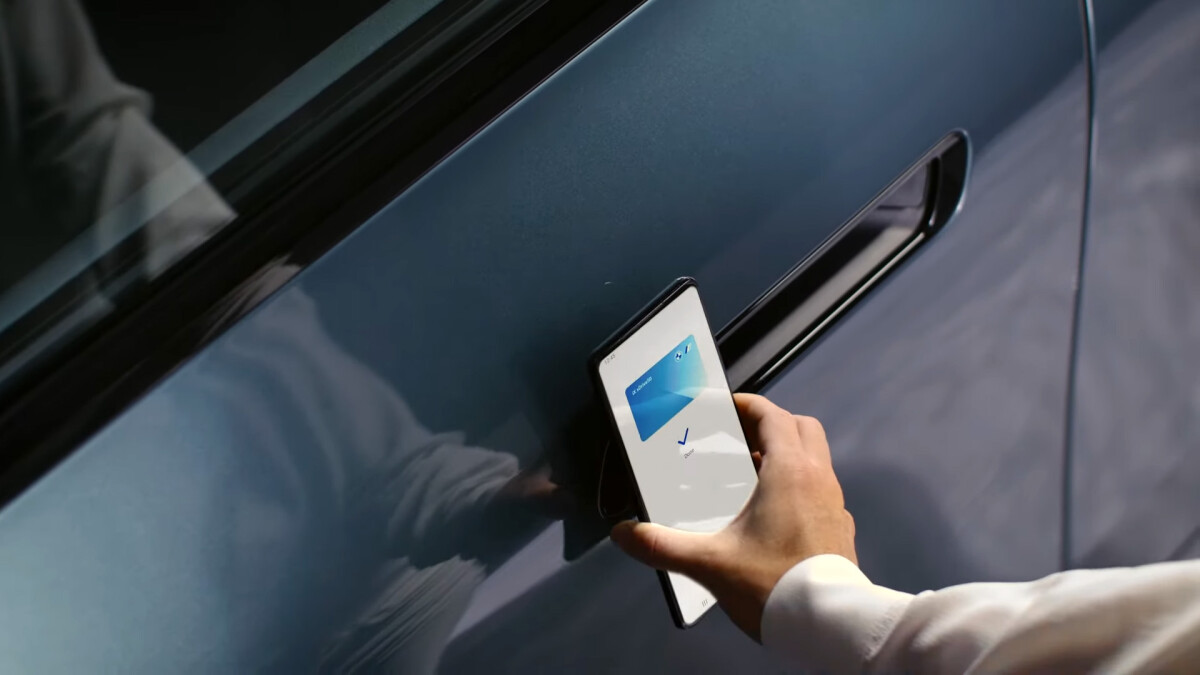
    A few weeks after Apple, the Samsung Digital Car Key initiative announced support for a number of new BMW, Kia, and Genesis models, reports TizenHelp. These include the Genesis GV60, Genesis G90, BMW 1-8 Series, BMW Z4, BMW X5-X7, BMW iX3, BMW iX, BMW i4, and the Kia Niro.

    While the luxury Genesis models will support both NFC and UWB connectivity, the rest only offer NFC support meaning that you will have to hold your Galaxy closer to the car in order to unlock it.
    The feature is available on its home turf for now, but hopefully, Samsung will roll it out for the new car models globally soon, or you can use the digital car key support built into Android 12.
    For now, Samsung’s Digital Car Key option is available only on the Galaxy S22 and S21 series, the oldie Note 20 Ultra, and on Samsung’s foldable phones like the Z Fold 3 and the Z Flip 3. Besides Samsung, Google’s Pixel 6 series are also supporting digital car keys and Google even baked BMW support in Android 12 on a system level.
  • Not being able to track you on iPhone could cost Facebook $12.8 billion in 2022

    Not being able to track you on iPhone could cost Facebook $12.8 billion in 2022

    As many of you probably know, Facebook was a loud critic of Apple’s App Tracking Transparency feature upon its announcement and release, and that has, surprise, surprise, a reason. In 2021, Facebook lost some money due to those privacy features, and the social media giant might lose an estimated $12.8 billion just because of ATT.

    App Tracking Transparency was launched back with iOS 14 in April of 2021, and it is a very useful privacy-related feature for iPhones. What it does is prevent third-party tracking to occur (of course, if you choose not to be tracked, which is what the majority of iPhone users chose anyway). This way, an app such as Facebook cannot track your activity online so that it can serve you with relevant ads.

    And Facebook has seen the impact of this. Almost 12 months after Apple’s launch of ATT, a new analyst now predicts the second year will cause major disruption to advertisers. Companies that rely on advertising, including Facebook, YouTube, and others, are estimated to collectively lose around $16 billion because of the feature.

    Towards the end of last year, Facebook’s Mark Zuckerberg reported the company would potentially see a $10 billion revenue hit for 2022. Well, it seems this number may be a bit higher, at least according to an analysis by research firm Lotame.

    According to the research, Apple’s App Tracking Transparency will continue to have an impact this year, but it should be lessening. Alongside the introduction of ATT, Apple also deprecated its old technology called IDFA (Identifier for Advertisers), which made it possible for third-party apps to track you across websites using an identifier and then serve you ads that you are more likely to buy something from.

    Despite that, Apple doesn’t wish death upon all advertisers, so the company introduced new frameworks to help advertisers, but this time, no personal tracking is used and the data is aggregated. This way, less relevant ads could be served to users.

    The report continues on to say that the collective impact for companies would be nearly $16 billion, and the company that’s going to lose the most is Facebook with an around 81% share of those $16 billion. Other companies expected to lose revenue are Snap, which could lose around $545 million, then Twitter with around $323 million. YouTube is also on the list of impacted companies, and there, the estimated revenue loss is around $2.2 billion.

    Pretty large sums, we might add. Interestingly enough, these sums represent in fact how much those companies and apps were actually relying on tracking you on the internet…

    The report also indicates that both Snap and Twitter have been quickly adapting to the situation, including using the new measurement systems provided by Apple, and these two companies don’t seem too troubled with it.

    Facebook has also stated that it will work to decrease its reliance on Apple. Earlier, the social media giant stated that it will look into other ways that advertisers can profit.

    But Apple’s App Tracking Transparency impact, at least according to the analysts, is going to decrease by the second half of 2022, and “other shocks” are expected to affect the advertising industry, but the report doesn’t delve into details on that.

    Facebook seems to have suffered the most from Apple’s ATT. You may remember earlier when Meta’s stock price drastically fell after Zuckerberg’s report on the revenue of the company and ATT. For those of you who are curious, currently, Meta’s share price sits at $214.99 (at the time of writing), dropping down from around $323 in February 2022 (before the report came out).

  • Samsung to introduce recycled parts for smartphone repairs

    Samsung to introduce recycled parts for smartphone repairs

    Samsung is reportedly planning to start a new program that could significantly reduce repair costs for your Galaxy phones.

    Samsung is considering introducing certified recycled parts for mobile repairs. These are parts made of recycled materials such as discarded plastics, metals, and more. The initiative could launch in the next few months, specifically by the first half of this year.

    The report suggests that by using recycled spare parts, Samsung could pass on a smaller repair bill to users. The publication notes that things like display replacement could cost half of what it does today.

    As far as the quality of the recycled repair parts is concerned, Samsung is aiming for a level that can match that of new products. There’s no word on which smartphone parts will be available under the program and how much they would cost exactly.

    Samsung has been promoting sustainable manufacturing for a while now. The Galaxy S22 series is one of the latest examples of its efforts. The phones use a new material made up of discarded fishing nets.

    Over the years, Samsung has also significantly reduced the amount of plastic and paper in its packaging. Recycled repair parts seem to be a logical extension of Samsung’s sustainability efforts.

  • Percentage of teens looking to buy an iPhone is close to a record high

    Percentage of teens looking to buy an iPhone is close to a record high

    Investment house Piper Sandler released the results of its 43rd semi-annual Taking Stock With Teens survey. The latest results show that the number of American teenagers planning to purchase their first iPhone is close to a record high. Piper Sandler analyst Harsh Kumar says that 87% of the teens responding to the firm’s latest survey plan on purchasing an iPhone. Coincidentally, the survey showed that 87% of the teens responding already own an iPhone.

    We said that the 87% of teens who said that their next phone will be an iPhone was close to a record high. That’s because, during the Spring 2021 survey, 90% of teens were saying that their next phone would be running iOS while 88% of teens said that they already owned an iPhone in that survey. Kumar said that the results were encouraging for Apple.

    And in a boost for Apple’s large Services unit, teens’ favorite money transfer app is now Apple Pay which toppled previous leader Venmo in the latest survey. The analyst sees the results forecasting growth in the Services unit which took in $68 billion during fiscal 2021. Apple’s Services unit includes the App Store, Apple Pay, Apple Care+, Apple Music, Apple Arcade, Apple Card, Apple TV+, Apple News+, Apple Fitness+, iCloud, iTunes Store, and more.

    With over 1 billion active iPhones, Apple has a large number of possible buyers ready, willing, and able to spend on Services including recurring subscriptions. It’s that word “recurring” that brings a smile to the face of Apple CEO Tim Cook.

    As for the specifics of the survey, 7,100 teens responded to survey with an average age of 16.2 years. 44 different states were represented and they live in households with an average income of $69,298. 39% of the teens are employed part-time. Either they live in a household that is well off, or they are able to afford to buy the iPhone using their own paycheck.

    Piper Sandler’s Kumar rates Apple overweight and has a $200 target on the stock. For those not familiar with Wall Street talk, an overweight rating has nothing to do with Eddy Cue’s eating habits. It simply means that in calculating your portfolio, Apple shares should comprise a larger percentage of your portfolio compared to the rest of your holdings.

    The latest survey of teens has pretty similar results to the previous Taking Stock With Teens

  • BlackBerry seeks to settle suit accusing it of fraudulently pumping up BlackBerry 10 demand

    BlackBerry seeks to settle suit accusing it of fraudulently pumping up BlackBerry 10 demand

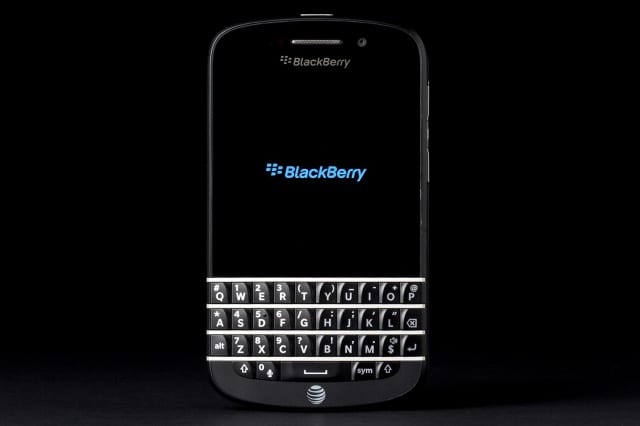
    BlackBerry is no longer in the business of designing and building smartphones and developing apps for them. The company is seeking to settle a lawsuit that claimed BlackBerry committed fraud by pumping up the profitability of its defunct BlackBerry 10 line of phones. Today, a federal judge in Manhattan federal court, at BlackBerry’s request, adjourned a trial so that a preliminary settlement could be negotiated for the class action suit.

    Jury selection was to start tomorrow. Any settlement between BlackBerry and the class will need approval from U.S. District Judge Colleen McMahon. BlackBerry 10 was based on a whole new operating system called QNX which was developed by a company called QNX Software Systems which BlackBerry bought in 2010.

    BlackBerry considered this a chance to reboot its smartphone line. It brought in a new CEO (Thorsten Heins) and changed the name of the parent company from Research in Motion to BlackBerry. The firm released several BlackBerry 10 models including the Z10, a 4.2-inch touchscreen phone without a physical QWERTY. Perhaps the most interesting BlackBerry 10 model was the Passport which was the size of a, well, passport.

    The Passport was equipped with a 4.5-inch display, a wider than normal QWERTY keyboard with a square 1440 x 1440 resolution. It had a physical QWERTY that also made use of the touchscreen for secondary keys, punctuation, and numbers. This phone might have worked had BlackBerry moved to Android earlier instead of stubbornly holding on to its own operating system.

    In fact, BlackBerry 10 was a decent OS but did not have a fully stocked app storefront which led BlackBerry to finally give up and use Android on the BlackBerry Priv, a phone with a vertically sliding physical QWERTY keyboard.

    The lawsuit accuses BlackBerry of misleading stockholders by failing to reveal the true sales prospects for the BlackBerry 10 line which members of the class claim led to an overinflated BlackBerry stock price. Other defendants in the class action include former Chief Executive Officer Thorsten Heins, former Chief Financial Officer Brian Bidulka, and former Chief Legal Officer Steve Zipperstein.

    BlackBerry eventually licensed its name and software to Chinese manufacturer TCL who almost made a go of it by releasing the BlackBerry KeyOne, Key2, and Key2 LE. But TCL stopped making BlackBerry phones in August 2020 when its license with BlackBerry expired. That same month, a company called OnwardMobility announced that it had signed a licensing partnership with BlackBerry for the first 5G ‘Berry.

    The new phone was supposed to be introduced in 2021, but no device was ever introduced. Behind the scenes, it was obvious that BlackBerry CEO John Chen, who had been receiving compliments for turning the company into a successful cybersecurity software provider, had no desire to return to the smartphone business. BlackBerry sold off its remaining smartphone assets (including patents) for $600 million.

    Less than three weeks after announcing the sell-off of its remaining smartphone assets, OnwardMobility confirmed the rumors that had been spreading: it would not release a new 5G BlackBerry and such a device would probably never be produced.

    The decision by the judge to adjourn the trial to allow BlackBerry to negotiate a settlement is not unusual. Reuters cited a study by Cornerstone Research which states that from 1997 to 2021 less than 1% of federal securities class actions cases ended up going to trial. Instead, the vast majority of such actions ended up settled or dismissed.

    BlackBerry currently is valued at close to $4 billion, a far cry from the close to $80 billion that the company was worth in 2008 when it still was one of the top smartphone manufacturers in the world. BlackBerry management’s failure to take the iPhone seriously as a threat and its stubborn refusal to make Android phones until it was too late are major reasons behind the decline and fall of the company in the smartphone space.

  • Shein overtakes Intidex, H&M with $100 billion valuation

    Shein overtakes Intidex, H&M with $100 billion valuation

    A Chinese fast-fashion company without a global network of physical stores of its own is seeking a valuation that could be more than the combined worth of high-street staples Hennes & Mauritz AB and Inditex SA’s Zara.

    Shein, an online-only retailer of inexpensive clothes, beauty and lifestyle products that pumps out over 6,000 new items daily, is in talks with potential investors including General Atlantic for a funding round that could value the company at about $100 billion, Bloomberg News reported Sunday.

    Should Shein succeed with the round, it would make the decade-old brand about twice as valuable as Tokyo-based Fast Retailing Co. — the owner of Uniqlo — which last year had more than 2,300 outlets in 25 countries and regions. It would also make Shein the world’s most valuable startup after ByteDance Ltd. and SpaceX, according to data provider CB Insights.

    While funding rounds indicate the value of a business broadly, initial public offerings offer a sharper peek into whether a wider base of investors shares the same enthusiasm, especially after the books are thrown open to the public for scrutiny. Most manage to get the valuation they seek, if not better, but some fail. Shein hasn’t unveiled any plans for an IPO.

    Since its launch in 2012, Shein has developed an extensive network of low-cost suppliers in southern China. During the pandemic, it worked with celebrities like Lil Nas X and Katy Perry to boost its profile among Gen Z shoppers outside China.

    Early in the pandemic, Shein benefited from changes in consumer behavior, as shoppers made even more of their purchases on phones or computers. Sales more than tripled in 2020 to $10 billion, making Shein the biggest web-only fashion brand in the world.

    The new investment round would reflect the impact of a surge in sales for Shein. At the time of a funding round in August 2020, Shein had a valuation of $15 billion, according to PitchBook.

    Shein’s potentially astonishing valuation also masks some of the adverse impacts the fast-fashion industry has on the environment. Though the closely held company hasn’t commented on its carbon footprint, the sector is often blamed for its heavy reliance on petrochemicals derived from oil. Fashion accounts for up to 10% of global carbon dioxide output, according to the United Nations Environment Programme. It also accounts for a fifth of the 300 million tons of plastic produced globally each year — a product that is the backbone of polyester, which has overtaken cotton as the primary material in textile production.

    In its 2021 “Sustainability and Social Impact Report,” Shein said fashion has an undeniable impact on the planet’s health and said it’s striving for zero waste and would announce its goal by the end of this year. In December, it announced a $10 million fund to support global non-profit organizations focused on empowering entrepreneurs, supporting underserved communities, ensuring animal health and welfare, and promoting recycling.

    The Chinese brand is also facing headwinds in the U.S., with lawmakers in Washington considering legislation that could hinder its sales in the world’s No. 1 economy. The House of Representatives in February approved the America Competes Act, which includes language that would prevent Chinese companies from using a current exemption that allows tariff-free imports of packages worth less than $800.

    The Senate passed a bill without that change, though, and lawmakers have yet to reveal the terms of the final version.

    In a sign that Shein expects to enjoy continued growth in the U.S., the company recently announced plans to open a distribution center in Indiana that will employ 850 workers. Last month, Shein also agreed to a new program with Indiana University to offer fellowships to students in the university’s business school.

  • iPhone 14 Pro Max detailed schematics and camera specs leaked

    iPhone 14 Pro Max detailed schematics and camera specs leaked

    Leaker ShrimpApplePro, who tweets from the account @VNchocoTaco and was the first to leak iPhone 14 Pro and Pro Max’s new front design, is now back with iPhone 14 Pro Max’s detailed schematics.

    The iPhone 14 Pro Max is expected to have pill and hole cutouts instead of a notch and per today’s leak, the pill will have a width of 7.15mm and the pinhole will have a diameter of 5.59mm. Accompanying images suggest there will also be a gap between the pill and hole cutouts. For comparison’s sake, the notch on the iPhone 13 Pro Max has a width of 26.83mm.

    In addition to that, the iPhone 14 Pro Max will allegedly flaunt smaller 1.95mm bezels, compared to 13 Pro Max’s 2.42mm bezels, which would further increase the screen to body ratio.

    The phone itself is expected to have a height of 160.71mm, width of 78.53mm (with the side button), and depth of 12.16mm (including the camera bump). That increase in depth can be attributed to the camera bump, which has seemingly increased in thickness from 3.60mm to 4.18mm.

    The bump has seemingly been made thicker because of the new 48MP primary sensor that will replace the 12MP camera. Analyst Ming-Chi Kuo had earlier said that the camera would be 25 to 35 percent bigger than the 12MP camera and the height of its 7P lens could increase by 5 to 10 percent.

    According to a new leak from a Weibo account called Fishing 8, which doesn’t have an established track record, it will be a 1/1.3 inches sensor with smaller 1.22µm pixels. The iPhone 13 Pro Max comes with a smaller 1/1.65-inches main sensor with larger 1.9µm pixels. Apple will likely employ a technology called pixel binning to combine data from multiple pixels when needed, such as during the nighttime.

    Back to the leaked schematics, Apple last year shrunk the size of the notch by combining the flood illuminator and dot protector into a single unit and moving the earpiece speaker to the top bezel. This year, the company may reduce the height of the earpiece speaker from 1.52mm to 0.57mm.

    The iPhone 14 Pro Max is expected to retain the 6.7-inches screen size of its predecessor and the iPhone 14 Pro will have a 6.1-inches screen. Both models will likely be powered by a new 4nm A16 Pro chip, which would presumably make them a lot faster than the best phones of today. The regular models aren’t expected to change too much. One thing worth mentioning though is that the iPhone 13 mini will be replaced by the 6.7-inches iPhone 14 Max.

    The iPhone 14 series will apparently be revealed in September.

  • Apple releases minor updates that could fix major iPhone and Apple Watch issues

    Apple releases minor updates that could fix major iPhone and Apple Watch issues

    Two weeks after updating iOS to 15.4, iPadOS to 15.4, watchOS to 8.5, and tvOS to 15.4, Apple dropped a minor update meant to exterminate bugs on the iPhone, iPad, the Apple Watch, and Apple TV. Right off the bat, we can think of some bugs that might be exterminated by these updates including one for the Apple Watch that broke fast charging on the Series 7 timepiece once watchOS 8.5 was installed.

    Apple iPhone users complained about the battery on their phones draining rapidly after iOS 15.4 was downloaded and installed. Naturally, we would expect Apple to fix this issue with a software update as fast as possible. Apple made some huge improvements to the battery life on the iPhone 13 Pro and iPhone 13 Pro Max, but the batteries went from hero to zero after iOS 15.4 was installed on these models. So once you have iOS 15.4.1 driving your iPhone, you might want to check to see if your battery life has returned to normal.

    Another problem that iOS 15.4.1 might repair is one that affects the quality of webcam images from Apple’s Studio Display. As many have noticed, the Studio Display runs a full version of iOS 15.4 which means that problems with Apple’s expensive display can be fixed with a software update. That certainly beats lugging the product on the subway and taking it back to the store to fix the hardware.

    With the updates, the build number for iOS and iPadOS moves from 19E241 to 19E258. The build for watchOS goes from 19T242 to 19T252, and with tvOS, the OS build goes to 19L452 from 19L440.

    To update your iPhone or iPad go to Settings > General >Software Update. To update the Apple Watch, open the Watch app and go to Settings > General > Software Update. Most updates will automatically be taken care of overnight which is when typical Apple Watch users have their timepieces on the charger.

    To install tvOS on Apple TV, follow these directions:

    • Click on the Settings app from your Apple TV Home screen.
    • Click on System.
    • Click on Software Update.
    • Click on Update Software.
    • Click on Download and Install.
    • Click on Update Now.
    • Wait for your Apple TV to finish the update.

    Hopefully, the major issues affecting the iPhone and the Apple Watch are now a thing of the past. Let us know by dropping your comments in the box below.

  • New Apple patents hint at a better pressure sensor technology

    New Apple patents hint at a better pressure sensor technology

    Force Touch, also called 3D Touch, was a technology that Apple used for some years but then suddenly replaced with Haptic Touch. With 3D Touch, iPhone users had the ability to access more menus by simply applying different pressures to their iPhone display.

    Although it’s a tiny possibility, it appears that Apple might again introduce a newer and improved version of its previous 3D Touch technology. The US Patent & Trademark Office published a few new patents from Apple for various future Apple devices, and all of them are for new force-pressure sensors.

    One of these patents is for force-pressure sensors built into the Apple Watch and small form factor devices such as the AirPods. According to the patent,  Apple’s new pressure-sensitive surface would utilize microelectromechanical fluid pressure sensors. These sensors would be smaller, have better force sensitivity, and be more durable than conventional pressure sensors.

    To get a better idea of how the new pressure sensor technology could be implemented into the Apple Watch, Apple has shown in its patent a picture of an Apple Watch with a pressure-sensitive side instead of a physical button.

    Another Apple patent shows how Apple’s new pressure sensor technology could be utilized in Apple Watch bands, creating so-called smart bands. Thanks to the new technology, these smart bands would be able to detect blood pressure, heart rate, and pulse wave velocity.

    Apple’s patents show that Apple’s new sensor tech could be utilized in the iPhone. The image below, for example, shows how Apple could put multiple small pressure sensor modules in the iPhone instead of a single component.

    Now, it should be noted that companies often patent technologies that they never implement into real consumer products. But if Apple decides to use this new pressure sensor technology, it could mean that we may just receive 3D Touch 2.0 in some future iPhone generation.

  • Apple reportedly considering a monthly subscription program for iPhone and other hardware

    Apple reportedly considering a monthly subscription program for iPhone and other hardware

    Apple is working on a hardware subscription service that would let you use its products in exchange for a monthly fee. It would be different than the iPhone Upgrade program that lets you pay for the iPhone in 24 monthly installments. Under that program, the device is yours once you have paid for it in full.

    The new rumored Apple subscription service will not work like that. It will be similar to paying a monthly subscription fee for paid apps. So, while this would let you use products like the iPhone during the subscription period, the monthly fees wouldn’t be the same as splitting the cost of an iPhone over a 12 months period, for instance, and thus, the phone will technically never be yours. It would be more like a leasing service.

    At the risk of reading too much into this, it could be that the monthly fees will be a lot lower when compared to the installments charged by carriers and Apple at the moment for ownership programs. The report adds that users would be able to swap out phones when a new one comes out.

    This would generate recurring sales for the company and will help further reduce the influence of carriers since Apple will apparently operate this program itself, via the App Store or iCloud.

    At the same time, it would also make Apple products more accessible to consumers who cannot afford to pay for the devices upfront.

    Apple could bundle it with the Apple One services subscription program and AppleCare extended warranty and technical support plans and promote it as a one-stop subscription service.

    Apple’s hardware subscription program has been subject to delays, and we can expect the company to formally announce it by the end of this year or in 2023.

  • TSMC continues to dominate the global foundry business with Samsung a distant second

    TSMC continues to dominate the global foundry business with Samsung a distant second

    TSMC’s market share during the fourth quarter of last year was 52.1% based on its revenue of $15.7 billion during the three-month period. That was down from the 53.1% share of gross that the foundry had during the previous quarter, but was still well ahead of the next name on the list.

    Behind TSMC was its biggest rival in the industry (at least for now), Samsung Foundry. The latter had 18.3% of industry revenue at the end of the last quarter of 2021. Even with strong 15.3% growth in its top-line on a quarter-over-quarter basis, Samsung’s gross for the period from October through December was only 35% of TSMC’s.

    And things are about to get worse for Samsung. Low yields on the production of some Application Processors (AP) by Samsung, about half the yield rate achieved by TSMC, has led Qualcomm to move over production of some of its most powerful Snapdragon chipsets to TSMC from Samsung. Additionally, Samsung is investigating the disappearance of funds that the foundry unit had supposedly set aside to improve chip production yields.

    Trend Force notes that while Samsung Foundry is showing strong revenue growth, the bottom line has not been able to stay in gear as “the slower ramp-up of advanced process capacity continues to erode overall profitability.”

    TSMC’s results for the quarter were bolstered by strong growth in revenue connected to the production of 5nm chipsets for the iPhone 13 series. The only TSMC process node that showed a drop in the top line for the fourth quarter was the 7nm/6nm unit which was impacted by a weak smartphone market in China. Samsung’s strong 15.3% hike in sequential revenue came about from the completion of its 5nm/4nm advanced process node capacity.

    After the well-known pair of TSMC and Samsung, Taiwan’s United Microelectronics Corporation (UMC) was next as its Q4 revenue comprised 7% of the industry’s revenue for the three months. For the quarter, it garnered $2.12 billion in gross, up 5.8% from its third-quarter revenue. In fourth place, GlobalFoundries kept the 6.1% share of global foundry revenue that it earned during Q3. At number five was China’s largest foundry, SMIC, with a market share of 5.2% and Q4 revenue of $1.58 billion.

    What holds back SMIC is its inability to compete at the current cutting-edge process nodes of 5nm/4nm with both TSMC and Samsung knocking at the door of 3nm. Like the U.S., China is desperately looking to become self-sufficient in semiconductors, and its failure to do so worries experts who fear that China could use TSMC’s success as a reason to take over Taiwan and capture control of the world’s largest contract foundry.

    The industry is far from balanced in terms of revenue with the top five foundries controlling 90% of global foundry market share. That is understandable though when you consider that TSMC and Samsung are the leaders in advanced process nodes.

    The remaining foundries making up 6-10 on the list and their Q4 market shares include HuaHong Group (2.9%), PSMC (2%), VIS (1.5%), Tower (1.4%), and Nexchip (1.2%). The latter might have reported the lowest market share of global foundry revenue for Q4, but it did show the largest growth rate in revenue quarter-over-quarter at 44.2%.

    For the fourth quarter, global foundry revenue came in at $29.55 billion, up 8.3% from the third quarter.

    One of the reasons for TSMC’s success is its long working relationship with Apple. For every $100 in revenue collected by the foundry, $26 comes from Apple. Just last week Apple announced that by combining a pair of its M1 Max SoCs, it created the M1 Ultra which contains a whopping 114 billion transistors inside.

  • Apple India partner plans 75 new stores

    Apple India partner plans 75 new stores

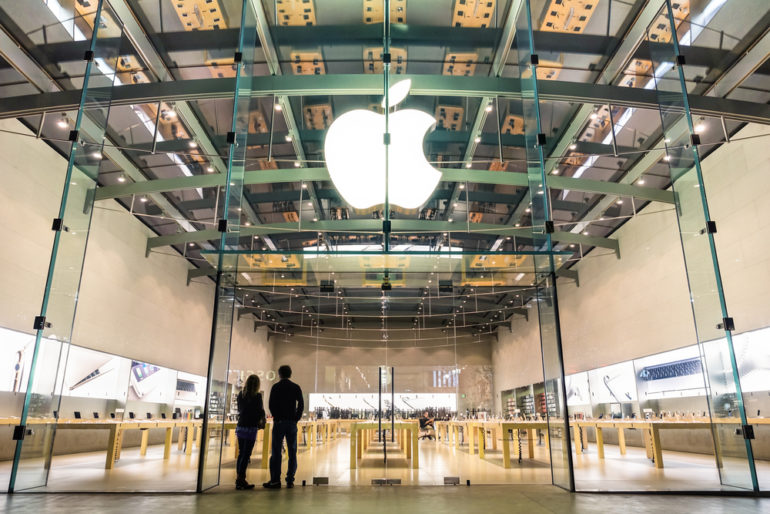
    Apple premium reseller Unicorn Infosolutions is planning to set up 75 stores in the next three years, a senior company official said on Friday.

    Unicorn Infosolutions director Baljinder Paul Singh said the company is planning to open stores in north and west India, and if iPhone maker Apple recommends then stores will be opened in the southern and eastern region of the country as well.

    “Apple is growing. There is a great aspiration to buy Apple products in the country. We planned flagships two years back. It is just one after the other three flagships have been opened in the last one year. Today we are at 33 stores, then there is a horizon of bold ambition to get to 75 stores in the next 3 years,” Singh said.

    He was speaking at an event to launch the Apple Premium Reseller flagship store for Apple products at CyberHub in Gurugram.

    “This is our first flagship store in the city. Our customers will get to experience a wide range of Apple’s latest products and services and receive technical support from experts,” Singh said.

  • Samsung Internet browser adds new privacy and safety features, User Experience improvements

    Samsung Internet browser adds new privacy and safety features, User Experience improvements

    Samsung’s internet browser app is about to get another big update that focuses mainly on security and User Experience improvements. Released as Samsung Internet Beta 17, the most recent app build brings new features that further enhance privacy and safety.

    The highlight of Samsung Internet Beta 17 is Smart Anti Tracking, a privacy and security feature that allows smartphones to automatically remove tracking cookies. Everything is possible thanks to the on-device machine learning, which identifies trackers used by a website and removes them.

    The Smart Anti Tracking feature will be turned on by default in regions like Europe, South Korea and the United States, which means users these parts of the world won’t have to worry about enabling it. The rest of the world can look for the new feature in the setting menu and choose to Always enable it or just when Secret mode is active.

    Furthermore, Samsung Internet Beta 17 make HTTPS scheme the default way to browse websites. Unlike the previous HTTP scheme, HTTPS provides a much safer way to transfer data between the browser and a server.

    Another interest new feature is the addition of a new panel to the Quick Access Page called “privacy board.” This is where you can get an overview of your security and privacy settings for easy access, and it also provide the ability to see Privacy reports.

    More importantly, Samsung Internet Beta 17 introduces “Live Text,” a new feature that allows users to copy, translate or web search on text within an image on the internet. To do that, you just have to long press on an image in the web page and a new Live Text UI should pop up to let you choose what you want to do.

    Along with these new features that focus on privacy and safety for the most part, Samsung has included a bunch of UX enhancements. Here are the most important ones:

    • Bottom URL bar: When tapping the URL bar using the ‘bottom layout’, the URL bar will be shown directly above the keyboard when editing. All the basic functions and interactions are the same as the top layout.
    • Shortcut to move to Customize menu: Move to Customize menu when long pressing on any button of Tools menu to make it easier to edit items
    • Drag and Drop in Bookmark: Provides Drag and drop to move bookmark item in the Bookmark bar
    • Video subtitle position enhancement: Subtitle position enhancement of Subtitle extension for Fullscreen video.

    Samsung Internet Beta 17 is available as a separate download via the Galaxy Store. If you don’t feel like testing a non-final version of the software would be a good idea, you can definitely wait for the stable version to come out in the just a few weeks (hopefully).