Category: Electronics

Retail News Asia is committed to providing both local and global retailers with the latest Electronics news throughout the Asian market. This on a daily base.

  • Microsoft plans to add mouse and trackpad support to Office app on iPads

    Microsoft plans to add mouse and trackpad support to Office app on iPads

    Microsoft has decided to unify its Office apps on Android and iOS last year, so they’re now functioning under a single, smaller app. A couple of months ago, Apple revealed something that took many by surprise: cursor support for iPadOS.

    Now Microsoft wants to add a similar feature to its Office app for iPad. According to TechCrunch, Microsoft is already working to bring cursor support to Office for iPad, which the media outlet claims it’s “expected to ship in Office for iPad this fall.”

    However, a new report coming from The Verge mentions that Microsoft might add cursor support by the fall, which means it should arrive earlier than the original report claims. Unfortunately, beyond the new timeframe, Microsoft did not share other details about cursor support for Office on iPad.

    Since Microsoft will keep individual Office app like Word, Excel, and PowerPoint, in addition to the unified app, there’s a high chance that cursor support will come to each of these apps as well once the main Office app gets it.

  • France says that Apple won’t allow the iPhone to work with its “StopCovid” app

    France says that Apple won’t allow the iPhone to work with its “StopCovid” app

    European countries have been upset at Apple for making it harder for them to get their own contact tracing platforms up and running on the iPhone. These countries want to use Bluetooth to keep track of the phones that pass by the vicinity of other devices. This way, smartphone users will know if they have been in close contact with someone who tested positive for COVID-19.
    The problem with using Bluetooth is that it would require Apple to change the settings on the iPhone. Currently, Apple blocks apps from using Bluetooth if the latter is running in the background and data from that particular app is going to be removed from the device. Since the Europeans want the data collected by contact tracing through Bluetooth to be sent to a centralized server, that would violate Apple’s rules. France, for example, wants Bluetooth to keep running in the background even though the data collected would be sent to a centralized server. For that to take place, Apple would have to change some iPhone settings which it is loathe to do. Allowing Bluetooth to run in the background for contact tracing will drain the battery on a user’s iPhone.
    France’s minister for digital technology, Cedric O, said during a television appearance, “Apple could have helped us make the application work even better on the iPhone. They have not wished to do so. I regret this, given that we are in a period where everyone is mobilized to fight against the epidemic, and given that a large company that is doing so well economically is not helping out a government in this crisis. We will remember that when time comes.” While O could not venture a guess about what could be behind Apple’s decision not to make the necessary changes, the minister added, “We consider that oversight of the healthcare system, fighting the coronavirus, is a matter for governments and not necessarily for big American companies.”
    The minister also stated that France’s “StopCovid” contact tracing app will be ready to go on June 2nd regardless of what Apple does. Testing will begin next Monday, May 11th. That happens to be the date when the country will officially start to reopen from its lockdown. In the country, Android is the leading mobile operating system with a 78.8% share. Apple’s iOS is next with 21.1%. Since Android phones don’t have the same restrictions, France feels confident to go ahead with its plans anyway.
    Still, Germany gave in to Apple and decided not to use a method of centralized storage called Pan-European Privacy-Preserving Proximity Tracing (PEPP-PT) for its COVID-19 contact tracing. Britain started testing its contact tracing app today and it has decided to go the centralized route like France is.
    Last month more than 300 professors from around the world signed an open letter that said while Bluetooth based contact tracing is strongly preferred, the centralized approach could lead to unprecedented government surveillance. In the letter, the professors wrote, “Some of the Bluetooth-based proposals respect the individual’s right to privacy, whilst others would enable (via mission creep)  a form of government or private sector surveillance that would catastrophically hamper trust in and acceptance of such an application by society at large. It is crucial that citizens trust the applications in order to produce sufficient uptake to make a difference in tackling the crisis. It is vital that, in coming out of the current crisis, we do not create a tool that enables large scale data collection on the population, either now or at a later time. Thus, solutions that allow reconstructing invasive information about the population should be rejected without further discussion. Such information can include the “social graph” of who someone has physically met over a period of time.”
  • First European Apple Store to reopen on Tuesday

    First European Apple Store to reopen on Tuesday

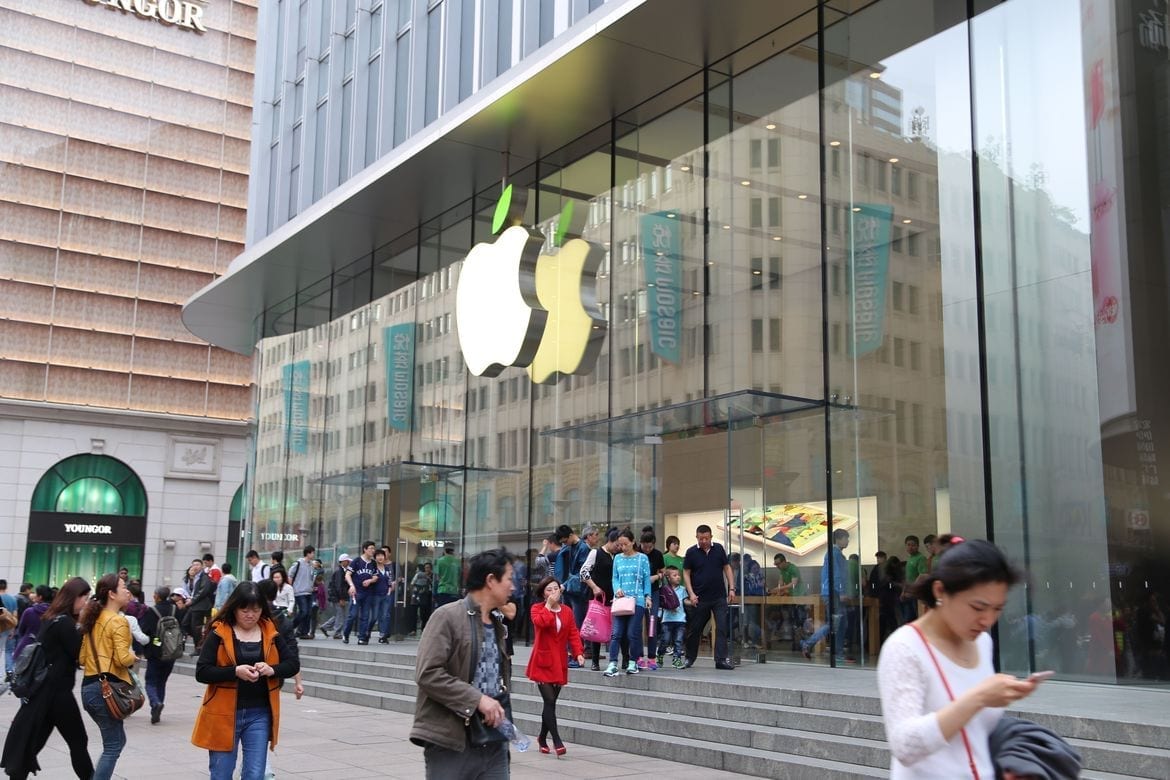
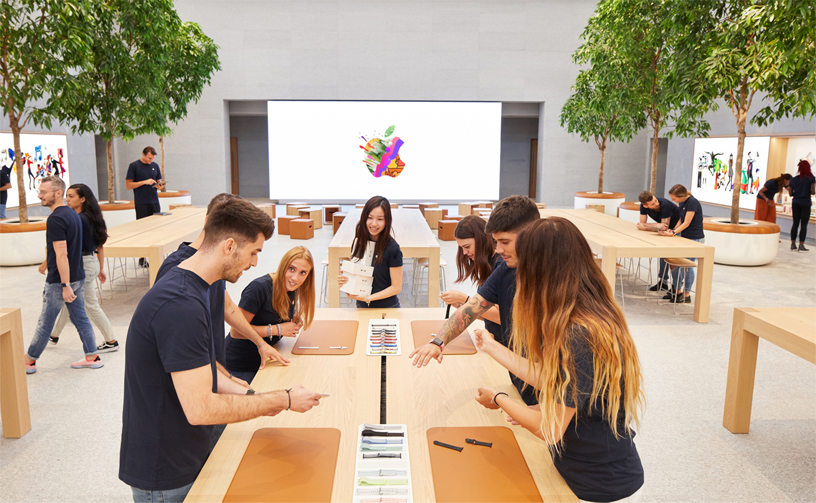
    Apple’s sole retail location in Vienna, Austria will resume operations on May 5. The company’s CEO Tim Cook had earlier indicated that the store would reopen by mid-May. Since infection rates have decreased, the country has started relaxing lockdown measures already. Per the German outlet Heute, the re-opening will be cautious, with many measures in place to ensure the wellbeing of consumers and employees.

    An Apple spokesperson has confirmed the news. The Apple Store in Austria will be the first one in Europe to resume activities after a weeks-long lockdown.

    The store will be operational for limited hours, from 11 am to 6 pm. It will remain closed on Sundays.

    Social distancing will also be practiced, which means that only a limited number of visitors will be allowed in at any given time. Others will have to queue up outside.

    The report also alleges that customers will be required to wear a mask and their fever will be checked at the entrance. Devices on display as well as the premises itself will be disinfected regularly.

    For now, the emphasis is on the provision of service and support for hardware owners experiencing problems. Consumers looking to make a purchase are advised to shop online.

    Outside of China, the Vienna Apple Store would be the first one to reopen after the company’s only store in South Korea.

    Cook has also said that a few stores in the US could reopen in the first half of May.

  • Datalogic Magellan 1500i delivers high-performance scanning for retailers

    Datalogic Magellan 1500i delivers high-performance scanning for retailers

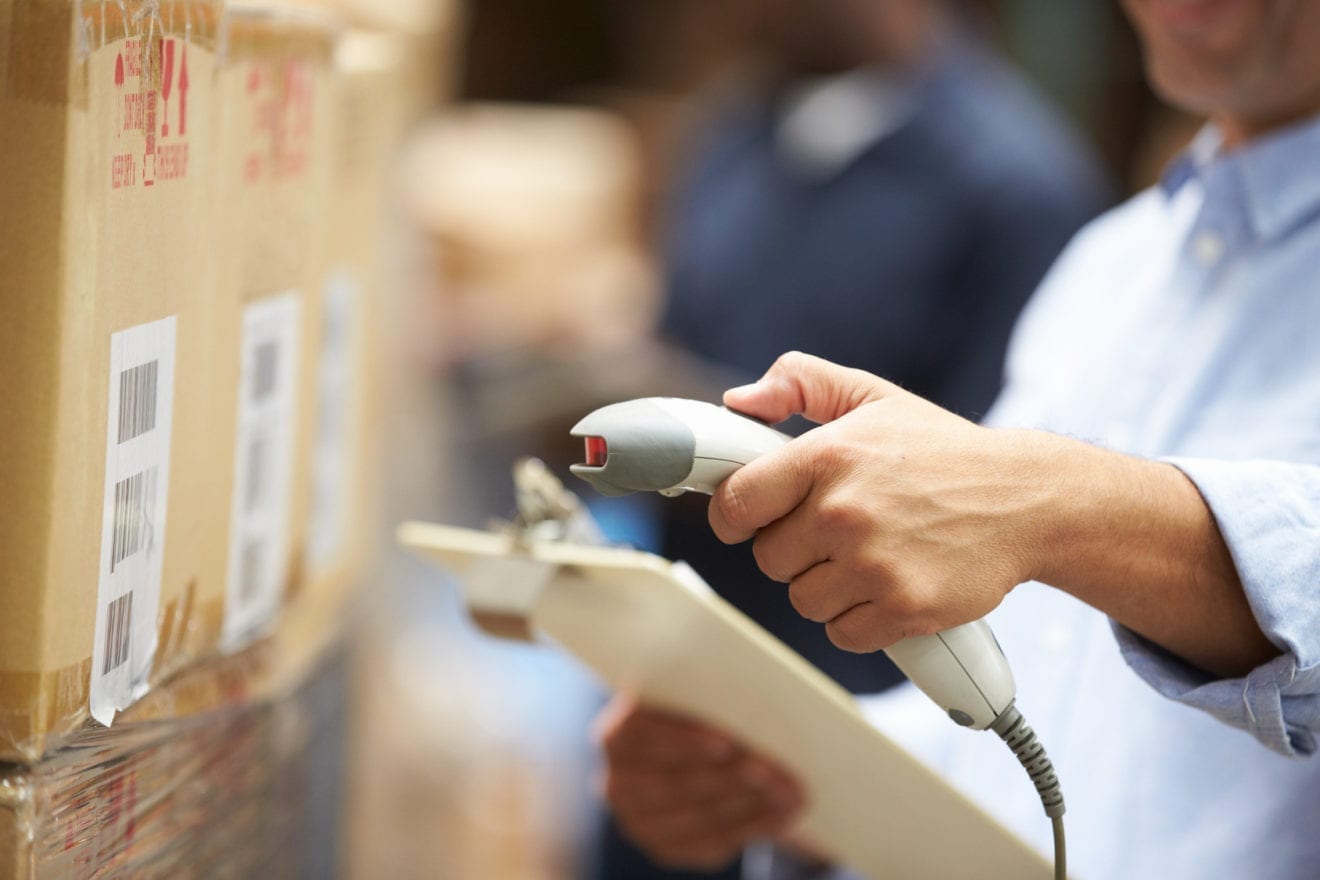
    Datalogic’s Magellan 1500i merges imaging excellence with innovative design in a high-performance presentation scanner ideal for retailers.

    Uniquely user-friendly and powerful, the Magellan 1500i is suitable for all types of retail store, including pharmacies, customer-service counters, kiosks, pop-up stores – and even self-checkouts.

    A compact footprint and discrete cable routing ensure the scanner takes up as little space on counters as possible, maximizing the area left for serving customers.

    Yet, despite it compact size, the Magellan 1500i has a large reading area and a fast sweep. It can read at distances of up to 25 cm and with 1D-sweep speeds of up to 1.5 m/s. This makes scanning 1D, 2D and Digimarc barcodes from printed labels, packaging or mobile phones easy and intuitive.

    Datalogic technology built-in includes soft-red adaptive illumination, minimizing light when it is not needed and adjusting the depth of field to suit the operating environment. And the scanner comes with multiple mounting options, including magnetic, allowing it to be used by both cashier and customer.

    Powerful decoding algorithms provide unmatched performance on a variety of 1D and 2D labels, including hard-to-read, truncated and damaged codes.

    The Magellan 1500i can be used in hands-free stand mode or hand-held mode. When the scanner is placed on a counter, items can be swept past or presented to the scanner. But if an item to be scanned is too large to lift, the Magellan 1500i can also be used as a hand-held scanner.

    When picked up from the counter, Datalogic’s Motionix motion-sensing technology detects the movement and activates an LED aimer. Users simply place the aimer on the target bar code, depress the trigger and Datalogic’s patented ‘Green Spot’ technology provides good-read confirmation. When the scanner is returned to the counter, the scanner automatically returns to stand mode.

    Remote management is supported for OPOS, JavaPOS, Toshiba Remote Management with IBM Systems Director® and Wavelink® Avalanche®. Additional capabilities are available with the value-added features included in every Magellan scanner.

  • Chinese phone manufacturer caught using a backdoor but it’s not Huawei or ZTE

    Chinese phone manufacturer caught using a backdoor but it’s not Huawei or ZTE

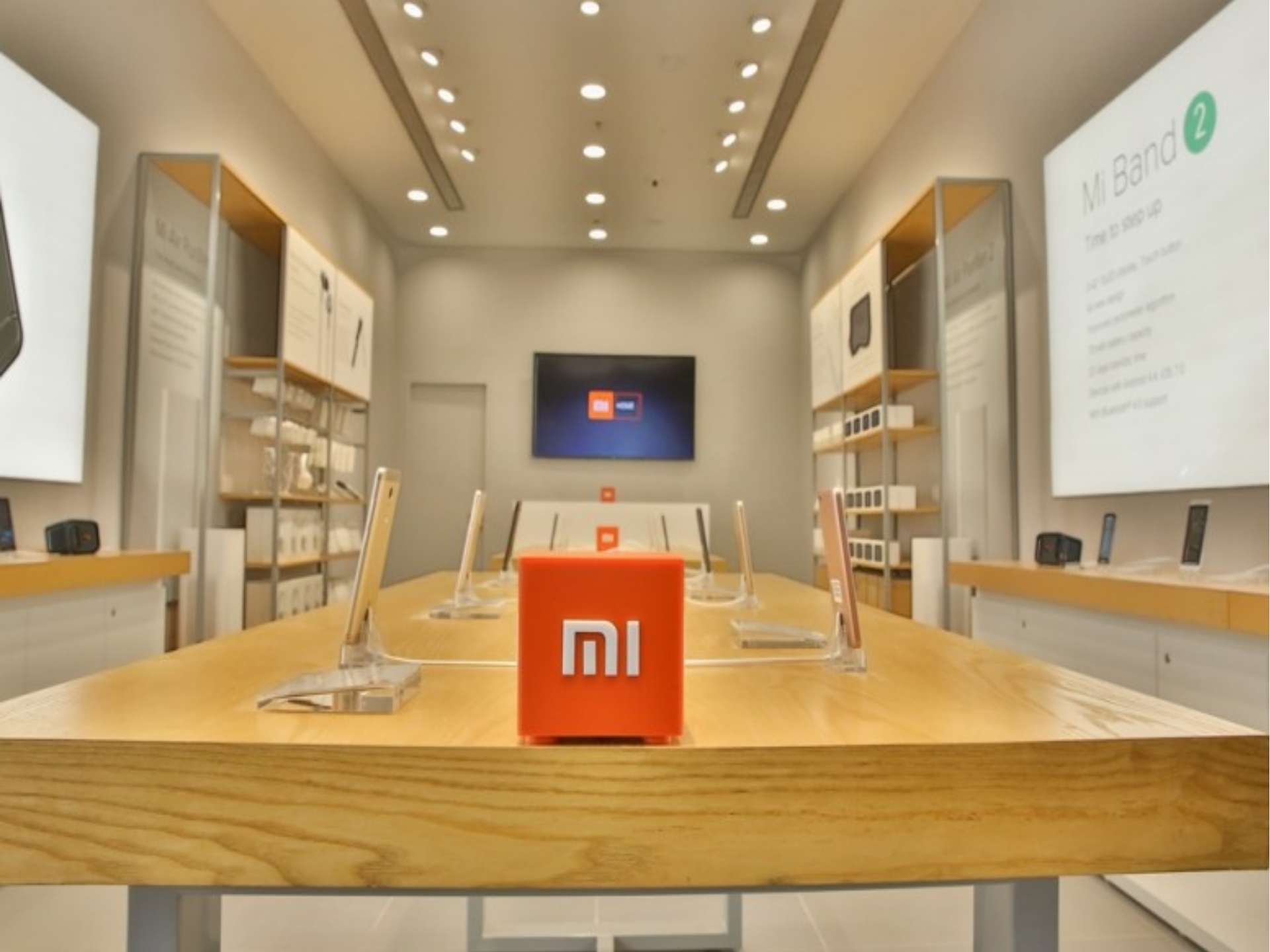
    Last year, Xiaomi was the fourth-largest smartphone manufacturer in the world after shipping approximately 125.5 million units. The company has done an amazing job in India, the world’s second-largest smartphone market. That’s because Xiaomi produces handsets priced appropriately for the developing country; using a value for money retail strategy, Xiaomi has done very well in India.
    For years now, we have been waiting for Xiaomi to invade America, but year after year such a move has never come. And outside of OnePlus, Chinese phone manufacturers aren’t exactly being greeted in the U.S. with open arms. Even ZTE, which was the fourth-largest smartphone shipper in the states in 2018, dropped out of the top five after being banned from accessing its U.S. supply chain. And no Chinese smartphone manufacturer wants to get the same treatment that the U.S. has given Huawei.
    While Xiaomi has always tried to give the impression that it was “China’s Apple” and above the fray, the company has now found itself accused of using a backdoor to send user information to a server. A cybersecurity expert named Gabi Cirlig discovered some strange behavior on his Xiaomi Redmi Note 8. He found that Xiaomi’s default browser was recording all of the websites he visited. Even searches made with the privacy-first search engine DuckDuck Go and websites he visited while in the incognito mode were being tracked by the browser. Even worse, all of this data was being sent to servers in Singapore and Russia that used web domains registered in Beijing. These servers are being used by Xiaomi according to Cirlig.
    Other researchers discovered that Xiaomi’s browsers on the Google Play Store, the Mi Browser Pro, and the Mint Browser, were guilty of the same behaviors. Together, both browsers have been installed over 15 million times. And Cirlig found the same browser code on other Xiaomi handsets including the Xiaomi Mi 10, Xiaomi Redmi K20, and Xiaomi Mi MIX 3; that leads him to believe that these phones have the same privacy issues as his Redmi Note 8.
    Xiaomi has responded by saying that the data it was sending to the servers was encrypted. But Cirlig said that he was able to crack the code in seconds. The cybersecurity expert also said, “My main concern for privacy is that the data sent to their servers can be very easily correlated with a specific user.” That’s because the data being sent to the servers included metadata associated with a specific device including its unique ID number and the Android version that it runs. Cirlig says that this data can “easily be correlated with an actual human behind the screen.”
    The manufacturer contradicted itself saying that the research claims weren’t true and that the company “strictly follows and is fully compliant with local laws and regulations on user data privacy matters.” But a spokesman for Xiaomi admitted that it was collecting data that was anonymized to prevent it from being tied to specific individuals. When Forbes showed Xiaomi a video that confirmed the behavior of the browser claimed by Cirlig, the company responded by saying, “This video shows the collection of anonymous browsing data, which is one of the most common solutions adopted by internet companies to improve the overall browser product experience through analyzing non-personally identifiable information.”
    Yesterday Xiaomi published a blog post in which it said that it collects the data to check the compatibility between the operating system and apps. Xiaomi claims that the information is harvested by permission and consent from its users and is anonymous and encrypted. “The collection of aggregated usage statistics data is used for internal analysis, and we do not link any personally identifiable information to any of this data.”
    Today, the company wrote that it will send out an update to its browsers that will prevent a user’s internet travels from being sent through Xiaomi’s servers. There also will be an option in incognito mode to toggle on or toggle off data collection. Xiaomi said, “We believe this functionality, in combination with our approach of maintaining aggregated data in a non-identifiable form, goes beyond any legal requirements and demonstrates our company’s commitment to user privacy.”

  • Apple & Samsung face tough times as global smartphone shipments set to drop 15%

    Apple & Samsung face tough times as global smartphone shipments set to drop 15%

    The smartphone market has been struggling for the past couple of months due to the COVID-19 pandemic and, although the situation is expected to improve in the second half of the year, a huge decline is still predicted. The latest report by DigiTimes Research claims smartphone shipments are now expected to decrease by a whopping 15% this year to 1.15 billion units. That is slightly more pessimistic than earlier forecasts and can be attributed to the worsening situation. Smartphone brands with large presences in the United States and Europe, which have implemented strict lockdown measures and are likely to experience an economic recession, are expected to feel the biggest impact this year.

    Those competing in the premium segment will face extra pressure too. After all, customers are starting to live on tighter budgets, and smartphones aren’t typically high on the list of priorities, especially not high-end ones. DigiTimes believes Apple has already lowered orders for the iPhone 11, which is the best-selling iPhone device globally, for the second and third quarters. The newly released iPhone SE should help soften the near-term impact, but Apple itself is still expecting a noticeable decline.

    So much so that it has reportedly decided to cut its internal iPhone shipment target for the entire year. There has yet to be an official comment on the matter, but the first indications of this should arrive later this week. Apple is scheduled to announce its results for the January-March quarter on Thursday, April 30. These should be accompanied by an official revenue guidance for the current quarter, which will provide a clearer indication of how Apple is battling shrinking global demand.

    The final quarter of the year should be more positive for the Tim Cook-led company, but it will be far from plain sailing. Apple is reportedly facing severe iPhone 12 delays and recent reports suggest the company has cut its orders for the second half of 2020 by 20%. Samsung is another company that has reportedly lowered its internal smartphone shipment forecasts for the year. The poor reception of the Galaxy S20 series is one of the main reasons for this outcome.

    The COVID-19 pandemic combined with significantly higher prices has led to significantly lower demand than predicted. The Galaxy S20 Ultra is understood to be performing slightly better than expected, but the smaller and cheaper Galaxy S20 & S20+ have missed sales targets.

    If the situation fails to improve, the Galaxy S20 series could become the worst-selling Galaxy S lineup in years or perhaps ever. That would massively impact revenue, profit, and valuable market share on a global scale. To make matters worse, the next-gen Galaxy Note 20 series will apparently resemble the Galaxy S20 lineup very closely. If true, Samsung may struggle to sell those flagships too.

    More worrying for Samsung is the fact that it is also losing market share in the crucial Indian market. The company was number one only a few years ago but dropped down into third place during the first quarter. That was before COVID-19 had heavily impacted the market, which means the second quarter could be particularly bad for the company.

  • Google launches app for the Pixel Buds

    Google launches app for the Pixel Buds

    Google announced that the long-awaited Google Pixel Buds are now available today from the Google Play Store. Unlike the first-generation version of the accessory, which was wireless but featured a cable connecting the left and right earbuds, the second-generation version has individual left and right earbuds. That makes the new Pixel Buds more in line with the Apple AirPods and the Samsung Galaxy Buds.

    One feature, Adaptive Sound, adjusts the volume of the Pixel Buds to compensate for new and louder sounds in the background and returns the volume to normal once that sound has ended. UX engineer Frank Li says that “It works kind of like auto-brightness on your phone screen: It momentarily adjusts to the world around you to make the experience of using your device a little simpler.” Basheer Tome, Senior Hardware Interface Designer says that “Adaptive Sound is perfect for those moments like when you’re steaming milk for a latte, or when you’re washing your hands or the dishes. Those noises can eclipse your audio experience for a bit, until the laundry or your dishes are done.”

    To improve the user experience, sensors inside Pixel Buds can detect when your jaw is moving which means that you are on a phone call (or chewing bubble gum). This helps the device know when you’re talking, and when combined with beamforming mics, it allows those using the Pixel Buds to hear the person on the other end of a phone call even when it is windy and noisy outside. And with so many people working from home, this is an important feature to have these days.

    Google Assistant can be activated on the new Pixel Buds by saying the “Hey Google” or “OK Google” hot word. The Assistant will control music streaming on the Pixel Buds and can also read your notifications. If you need to reply to a text, Google Assistant will do it for you; all you need to do is ask. And if you’re in a situation where a translator would be of some assistance, conversation mode provides translations in real-time. This is a big help when you’re on vacation or a business trip overseas.

    If you’re concerned about losing one or more of your Pixel Buds, Google has a way to find them as long as they are nearby and still paired to your phone. On the Pixel Buds app, you can elect to have the Pixel Buds ring. You can choose to ring one earbud at a time to help you find the missing one. The noise must be pretty loud because Google warns that if you have one or both Pixel Buds in your ear and choose to have the ring, it could lead to hearing damage. The ringing won’t stop until you touch the missing earbud.
    The Pixel Buds are now available today from the Google Store in Clearly White for $179 and will run for five hours on a single charge; with the carrying case, you can use them for up to 24 hours without running out of battery life. With an IPX4 rating, the accessory is protected from sweat and splashes.

    Google today launched a dedicated app in the Google Play Store for the Pixel Buds. The app allows users to toggle on or off certain settings including in-ear detection. The latter, when toggled on, will automatically play audio when the Pixel Buds are in the ear and pause it when the Pixel Buds are out of the ear. Other settings that can be customized in the app include controls for Google Assistant, Touch controls, and Adaptive Sound. The app also lists the battery level on each of the earbuds and the carrying case.

    The app can be installed on any device that is running Android 6.0 or higher and can be found in the Google Play Store.

  • Qualcomm reveals faster, more efficient Quick Charge 3+ technology for the masses

    Qualcomm reveals faster, more efficient Quick Charge 3+ technology for the masses

    Qualcomm has just announced a new version of its quick charging technology for smartphones. It’s called Qualcomm Quick Charge 3+ because it’s better than Quick Charge 3 technology but less advanced than Quick Charge 4+.

    While there haven’t any breakthroughs in the smartphone battery field, quick charging seems to thrive. As one would expect from such a technology, Quick Charge 3+ will be faster and more efficient than Quick Charge 3.0.

    According to Qualcomm, Quick Charge 3+ can bring a smartphone’s battery from 0% to 50% in just 15 minutes, 35% faster compared to the previous generation. More importantly, the new technology is backward compatible with older Quick Charge devices, while newer devices can work with Quick Charge 3+ accessories.

    Basically, Qualcomm is bringing the speed and efficiency of Quick Charge 4+ to cheaper smartphones. Some of you might already know that with Quick Charge 4+ technology, a compatible device can get up to 50% charge in 15 minutes, just like the new Quick Charge 3+.

    The catch is Quick Charge 3+ will be available on Qualcomm Snapdragon 765 and 765G chipsets, followed by other Snapdragon SoCs later this year. These processors are part of Qualcomm’s new mid-range tier, whereas Quick Charge 4+ is meant for flagships equipped high-end chipsets like the Snapdragon 845.

    For early adopters, the world’s first smartphone with both Quick Charge 4+ and Quick Charge 3+ charging technology is Xiaomi’s Mi 10 Lite Zoom.

  • Apple releases a new TV ad for its latest iPhone

    Apple releases a new TV ad for its latest iPhone

    Apple U.K. has just shared the company’s new 30-second ad for the second-generation Apple iPhone SE which officially launches today, right in the middle of a global pandemic. The iPhone SE (2020) borrows the look and the design of the iPhone 8 including the 4.7-inch LCD display with a 750 x 1334 resolution. That works out to an old school 16:9 aspect ratio and there is no notch, no TrueDepth camera, and no Face ID. In fact, the iPhone SE (2020) is equipped with the Touch ID fingerprint scanner.

    To power its new budget-priced phone, Apple is using the A13 Bionic chipset. Built using TSMC’s 7nm process node, the chip carries 8.5 billion transistors and is the same powerful component used to drive the entire iPhone 11 family. Apple also saw fit to give the phone’s memory a 50% bump from 2GB of RAM to 3GB, and also improved the single 12MP camera on the back with a new Image Signal Processor (ISP). Apple claims that the new ISP, together with the A13 Bionic, makes the rear camera the best single snapper setup on a smartphone. That’s a clear shot at the Google Pixel 3a series.

    Available in White, Black, and (PRODUCT)RED, the iPhone SE (2020) is offered with 64GB, 128GB and 256GB of memory for $399 (24 monthly payments of $16.62), $449 (24 monthly payments of $18.70) and $549 (24 monthly payments of $22.87) respectively. As we mentioned, the device is available starting today.

    The new 30-second ad, which you undoubtedly will see on television this weekend in the U.S. and U.K., is called “The Opening” and shows a man who has just received his iPhone SE and is ready to unbox it. On his knees in front of a table, he makes some room by pushing everything off the table. He dramatically opens the box and with sweaty hands (you can see him wipe them on his pants) he peels off the plastic protective film. You might remember that there was a time when enthusiasts could not get enough of the sound of the plastic film being peeled off a brand new phone. And as the film is removed, you can see that another change Apple made to the iPhone SE (2020) was to move the iconic Apple logo to the middle of the rear panel matching its location on the iPhone 11 series. And the ad concludes with Apple’s new tag line, “Lots to love. Less to spend.”

    So now we await the unveiling of the 2020 iPhone 12 series which will be the company’s first to offer support for 5G connectivity. Most analysts are now going along with TF International’s Ming-Chi Kuo, who seems to have a direct link to the mind of Apple CEO Tim Cook. Kuo expects four new iPhone models to be delivered this fall including the 5.4-inch iPhone 12, the 6.1-inch iPhone 12 Plus, the 6.1-inch iPhone 12 Pro, and the 6.7-inch iPhone 12 Pro Max. All four models will be powered by the more powerful and energy-efficient 5nm A14 Bionic chipset and all four will also support both sub-6GHz and mmWave 5G networks.

    The new iPhone 12 handsets will borrow a design from the iPhone 5s as the rounded top is flattened out and a stainless steel strip surrounds the casing. The standard models will feature a dual-camera setup on the back (12MP Wide, 12MP Ultra-Wide) and we should see a quad-camera setup on the “Pro” models (12MP Wide, 12MP Ultra-Wide, 12MP Telephoto and a LiDar Time of Flight depth sensor). The iPhone 12 Pro Max could feature sensor-shift image stabilization instead of optical image stabilization (OIS) for “shake-free” videos. The new technology stabilizes the camera’s sensor while OIS stabilizes the camera’s lens.

    Depending on the analyst, Apple will either have the iPhone 12 series ready on time, or they will delayed by four to eight weeks because of the pandemic.

  • Razer to Support Fintech Community

    Razer to Support Fintech Community

    Razer Fintech, the financial technology arm of Singapore gaming and technology brand Razer, is partnering with the Singapore Fintech Association (SFA) to address business continuity concerns, high business costs, funding and employment issues arising from the Covid-19 pandemic.

    The partnership will leverage Razer’s $50 million Covid-19 fund to support business partners and help them tide over the negative impact brought about by the virus outbreak.

    Four pillars of support are being provided: cash flow and marketing support programs; partnerships or investment for best-in-class companies; support for certification, screening and reference checks; and joint networking events, according to an announcement on Thursday.

    Assistance in the form of bridge financing, equity or equity-linked instruments ranging from $100,000 to $1.5 million is also available.

    We look forward to working closely with SFA to achieve the objectives we have in mind, which is to ensure sustainability and growth for the fintech community here in Singapore, said Razer chief strategy officer and Razer Fintech CEO Li Meng Lee said about the partnership.

    Razer Fintech is one of the largest offline-to-online digital payment networks in Southeast Asia and has processed billions of dollars in total payment value since its establishment in 2018. Razer is part of a consortium that is vying for one of five licenses in Singapore’s digital banking regime.

  • Sales of Galaxy S20 underwhelm amid pandemic

    Sales of Galaxy S20 underwhelm amid pandemic

    Sales of Samsung Electronics’ latest flagship series Galaxy S20 are hovering below those of its predecessor as the global new coronavirus pandemic has led to a slump in demand for consumer products, industry sources say.

    South Korean sales of the Galaxy S20 series, which comes in three models — the S20, S20 Plus and S20 Ultra — are estimated to have accounted for only 60 percent of the sales of the Galaxy S10 series so far, according to sources from local mobile carriers.

    The South Korean tech giant, which has not been providing official numbers, estimated the sales were roughly 80 percent of the Galaxy S10 5G series.

    The decrease apparently came as consumer sentiment was seriously impacted by the Covid-19 pandemic, which led to economic jitters around the globe.

    Reflecting the weaker-than-expected performance, Samsung is estimated to have posted an operating profit of around 2.5 trillion won (US$2 billion) or below for the first quarter from the IT & mobile communications division, which oversees the smartphone business.

    The company will report its finalized earnings later this month.

    Samsung’s operating profit from the sector reached 2.9 trillion won in the third quarter of 2019, which slipped to 2.5 trillion won a quarter later

    Industry tracker Strategy Analytics earlier said global shipments of smartphones are estimated to reach 1 billion units, revising down its previous estimate of 1.3 billion units.

  • Expansion during pandemic: Apple’s services arrive in many new markets and regions

    Expansion during pandemic: Apple’s services arrive in many new markets and regions

    Apple will be expanding Apple Music, the App Store, and other services to a whole trove of new markets in Africa, the Middle East, Oceania, and several nations across the Balkan peninsula in what could be perceived as the largest geographical expansion in nearly a decade. Back in 2012, more than a billion and a half people in India, Russia, and other countries gained access to Apple’s services.

    Cupertino is bringing the App Store to 20 new countries, 8 in Africa (Cameroon, Ivory Coast, Democratic Republic of Congo, Gabon, Libya, Morocco, Rwanda and Zambia) and a dozen others across the globe, bringing the grand total of supported countries to 179, but wait until you learn of the gains Apple Music is making. The music streaming answer to Spotify is now available in 52 new countries and regions across the world, bringing the toal tally to 167 countries. As a comparison, Spotify only operates in 79 countries. Arriving on most developing markets also commands a pretty important change for Apple Music’s terms and conditions: while the service costs $9.99 a month and offers a three-month free trial in the US and most developed markets, Apple Music will go for $4.99 a month and offer a six-month free trial in most of the new markets.

    The bid here is pretty clear – as global smartphone sales go down and consumers are less likely to upgrade their devices every second year, Apple has put the larger focus onto its services division, which is expected to become the next big revenue gainer for the world’s largest tech company. For the last fiscal year, the services division as accounted for 17.8% of its $260.1 billion in revenue.

    With a userbase of 1.5 billion active devices across the world, Apple surely has lots of potential for increasing the subscriber numbers of its Apple TV+, Apple News+, and Apple Music services. Indeed, Apple strives to have a grand total of 600 million subscribers by the end of 2020. Yet, the largest money pig for Apple is the App Store, as it grants Apple between 15 and 30% of all app sales and in-app purchases.

    How would this expansion of services affect a world economy vastly crippled by the COVID-19 pandemic and a userbase isolating itself at home? Logic suggests that Apple should see a steady increase of subscribers across the board, but the jury is still out on the data itself. Moreover, earlier reports suggested that Apple TV+ might not be a smash-hit-video-streaming service just yet, as it reportedly suffered heavy new subscriber losses from sworn rivals Netflix, HBO Now, and Disney+.

  • Samsung to double down on cheaper 5G phones to tackle sales slump

    Samsung to double down on cheaper 5G phones to tackle sales slump

    Smartphone shipments are expected to fall by over 10% this year because of the ongoing COVID-19 pandemic. The situation is affecting all brands yet it seems Samsung is in an even tougher position following the poor reception of the Galaxy S20 series.

    Samsung has been betting heavily on 5G-ready smartphones ever since it announced the premium Galaxy S10 5G in early 2019. That phone was eventually followed by the Galaxy Note 10+ 5G and the Galaxy A90 5G, two very expensive offerings.

    This year the strategy is all about taking the technology mainstream. The South Korean giant has already introduced the Galaxy A51 5G and Galaxy A71 5G, priced at $499 and $599 respectively, but is now expected to double down on next-gen network support.

    The exact plans remain unclear at this stage but Samsung is reportedly working on an updated Galaxy A series that incorporates even more 5G-ready smartphones. Crucially, these will be even cheaper in the hope of attracting consumers on tighter budgets.

    The global financial crisis is going to make selling smartphones this year harder than ever – global sales tumbled a humongous 38% annually in February – and Samsung along with other top manufacturers aren’t under any illusions that the worst is behind them.

    But Samsung does believe that, if something is going to convince people to upgrade in 2020, it will be 5G. After all, next-gen networks grant access to unprecedented upload and download speeds that make cloud gaming and video streaming, among other things, easier and more seamless than ever.

  • Apple could use powerful 5nm A14X Bionic chipset for 5G iPad Pro in 2020-2021

    Apple could use powerful 5nm A14X Bionic chipset for 5G iPad Pro in 2020-2021

    When Apple introduced the new 2020 iPad Pro tablets last month, we were surprised to find that instead of an A13X Bionic chipset, both the 11-inch and 12.9-inch models were equipped with the A12Z Bionic SoC. Apple quickly stated that the new slates deliver the “highest performance ever in an iPad.” And that may be true, but a tweet disseminated the other day by TechInsights states that the GPU architecture used on the A12Z Bionic is the same as the one used on the A12X Bionic found inside the 2018 iPad Pro units.

    The A12X Bionic and A12Z Bionic are both built with the same 7nm process node by TSMC and have the same octa-core configuration (four high-performance CPU cores and four energy efficient-cores) and memory. The only difference is that seven of the eight GPU cores on the A12X Bionic were activated while all eight are activated on the A12Z Bionic. Both chips have a maximum CPU clock speed of 2.49GHz.

    >Perhaps we will see an A13 Bionic chipset on a new iPad mini that might surface later this year. TF International’s Ming-Chi-Kuo says that in 2020, Apple will unveil a 7.9-inch iPad mini tablet sporting a mini-LED display. The latter will be used as Apple slowly transitions to micro-LED screens; mini-LED screens are similar to AMOLED displays in that they offer a wide color gamut and do not require the use of a backlight. This means that like OLED panels, the color black is created by turning off pixels in the appropriate area. Dark Mode reverses the look of the UI from black text on a white background to white text on a black background; this prevents the blinding white background from hurting and irritating eyes in a dark room or at night. Those using Dark Mode will see a slight improvement in the battery life of their tablet since pixels turned off do not draw on the device’s battery.

    If Apple decides to introduce a new iPad mini this fall, it would probably be equipped with the same A13 Bionic that currently powers the iPhone 11 family. After all, Apple equipped last year’s iPad mini with the A12 Bionic.

    There is speculation that Apple decided not to create an A13X Bionic for the new iPad Pro units because outside of adding the LiDar depth sensor and the improved camera setup on the back, nothing on the updated units require additional heavy lifting by the processor. It also gives Apple the chance to design its first chipsets for the iPad that will be produced using TSMC’s 5nm process node (the A14X Bionic).

    The 2020 iPhone 12 series will be powered by the 5nm A14 Bionic. With an 84% increase in transistor density, the A14 Bionic could contain as many as 15 billion transistors each compared to the 8.5 billion shoehorned into the A13 Bionic and the 10 billion transistors found in the A12X Bionic. While this much power would seem to be overkill for a new iPad mini, it would be perfect for the next variant of the iPad Pro. And the latter could be coming later this year if Apple decides to ship a 5G version of its top-of-the-line tablet. The A14X Bionic could make its debut on 5G versions of the 11-inch  and 12.9-inch iPad Pro tablets.

    While tablet sales have been struggling for years, the iPad had a couple of good quarters during the second half of fiscal 2019. And thanks to the coronavirus outbreak, game-playing teens, those taking classes or working from home, and people who enjoy viewing streamed content are now in the market to buy their first tablet or to upgrade an older model.

  • Apple starts registering COVID-19 testing locations

    Apple starts registering COVID-19 testing locations

    Testing for COVID-19 is still a tough endeavor, as finding testing facilities can be difficult. You have to do extensive research or rely on dubious third-party apps to guide you to the nearest testing center. Apple will make things easier, however, with a new Apple Maps feature. The company has launched a dedicated web page that allows hospitals, labs, and healthcare centers to register as COVID-19 testing locations.

    The process is pretty simple. A hospital that performs COVID-19 testing has to download and fill a template form, then email it to Apple. The latter will review the application and reach out to verify the details if necessary. The idea is for confirmed locations to be displayed on Apple Maps to help people find a nearby COVID-19 testing center.

    Apart from contact information about testing facilities, Apple Maps will list other useful details like working hours, referral or appointment requirements, the specific kind of COVID-19 testing being performed, as well as the type of the facility – building, drive-through, lab, etc.

    It will probably take some time before you start seeing those locations on your phone, however. Healthcare organizations have to apply and get verified, which takes time. Nevertheless, offering such integration within Apple Maps will give people a secure and easy way to find the nearest testing site if they feel their condition requires a test.

    Last month, Apple released a free COVID-19 app that includes a self-testing tool from the CDC that tells you whether you need to see a doctor or get tested. When testing locations start to show on Apple Maps, it will be even easier for people to react if they feel sick or uneasy about the current COVID-19 situation.