Category: Electronics

Retail News Asia is committed to providing both local and global retailers with the latest Electronics news throughout the Asian market. This on a daily base.

  • Samsung Display workers asked to be quarantined in Vietnam

    Samsung Display workers asked to be quarantined in Vietnam

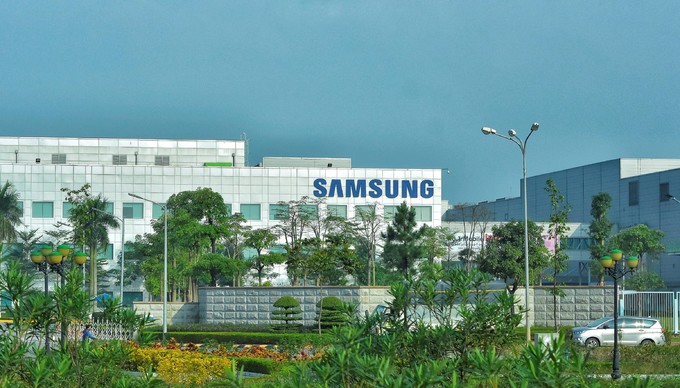
    Based on a statement released by the anti-COVID-19 task force of Vietnam’s Bac Giang province, a worker at the Samsung Display factory’s EQC-SI unit, age 25, had tested COVID-19 positive on Sunday.

    This led to the quarantine of all 44 people in that unit, while the factory, located in the province of Bac Ninh, and buses used for transporting workers have been additionally sprayed with disinfectants. Samsung has confirmed the case, while noting that Samsung Display’s production lines in the country have not been affected.

    Samsung is Vietnam’s largest foreign investor, and the world’s largest OLED screen manufacturer, holding over 90% of the entire market.

    Worldwide, most smartphone companies have been experiencing various setbacks due to the coronavirus pandemic. Phone sales hit a 10-year low in sales, as people are increasingly reluctant to update their older smartphones or purchase expensive new flagships due to the financial uncertainty the virus brings.

    We recently reported that an Apple supply partner in Taiwan prepared for decreased production in the upcoming months, while COVID-19 is also expected to delay the manufacturing processes of many other companies’ upcoming flagship and 5G smartphones.

    Several tech companies took measures towards supporting their customers and various affected groups around the world during the coronavirus pandemic. Apple is letting Apple Card users skip monthly payments without occurring interest, and is donating millions of dollars towards the fight against COVID-19. Samsung began offering door-to-door servicing of their Galaxy products in some regions, encouraging customers to remain safely at home. In addition, Google recently made its Premium Google Meet service free until the end of this year, in an effort to help businesses and schools remain connected.
  • iPhone maker Foxconn reports that March revenue is 60% up

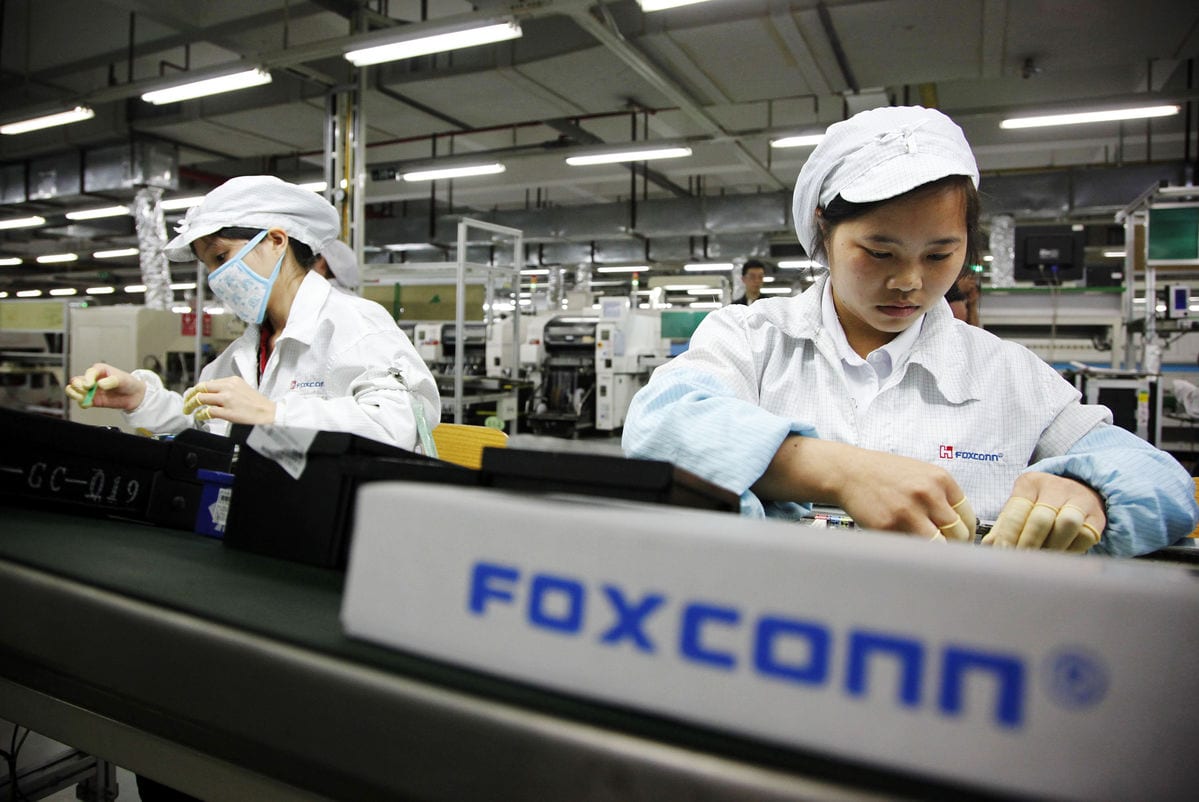
    iPhone maker Foxconn reports that March revenue is 60% up

    The notorious electronics manufacturer has reported a rise in revenue for March 2020, equating to 59.9%. After having to stop most of its production during the initial breakout of coronavirus in China, Foxconn has been steadily going back to its normal working capacity in recent weeks. Initially suffering losses in revenue, particularly in the first three months of 2020, it appears that the company is recovering. Some of its products though is still being affected by travel restrictions, causing delays in product testing and other assistance from its clients.

    Half of the world’s iPhones are made at Foxconn, with other popular products such as iPad, iPod, and game consoles Nintendo 3DS, PlayStation and Xbox also being partly or fully manufactured at their facilities.

    2020 has expectedly been a difficult year for businesses, with almost all smartphone companies suffering losses in revenue. Apple, however, has reportedly enjoyed a $56 billion revenue in the first quarter of 2020, 8% higher than last year, with its upcoming 5G iPhones expected to prove even more profitable for the Cupertino company. All of this, of course, equates to more business for its partner, Foxconn.

    Foxconn has been the subject of many controversies over the years, most notably allegations over appalling working conditions. In 2012, during its production of Wii U consoles, the company was found in violation of Nintendo’s Corporate Social Responsibility Procurement Guidelines, confessing to the employment of children under the age of 16 in one of its factories.

    Despite the waves of negative attention, Foxconn remains the world’s largest provider of electronics manufacturing services.

  • Samsung Internet Browser beta shows privacy and interface improvements

    Samsung Internet Browser beta shows privacy and interface improvements

    Samsung devices come with the South Korean giant’s own app ecosystem, including an email client and an internet browser app. And although most Android users usually stick with Google’s offerings, namely Gmail and Google Chrome, Samsung’s own internet browser is becoming a respectable alternative to the latter.

    In its new beta version, the Samsung Internet app brings a number of security and privacy-related updates, including support for DuckDuckGo, which is a search engine that’s primarily focused on user privacy, its tagline being “The Search Engine That Doesn’t Track You.”

    Another great addition is support for third party content (advertising) blockers. SamMobile also reports that a new feature called “Block unwanted pages” will combat shady websites that would normally be a hassle to get out of, requiring several back button taps.

    The Samsung Internet Beta app also introduces some convenient customizations, such as the ability to add shortcuts to actions like Share or activating Secret Mode (an alternative to Incognito in Chrome) to the menu bar.

    Its other notable features include support for progressive web apps, allowing for certain websites to be installed as apps. Samsung’s Video Assistant also made a return recently, letting users switch between viewing modes while watching videos. 360° video support and an Amazon Shopping assistant, allowing for comparing products and finding deals, are also available.

    The browser itself is based on the open-source Chromium project, much like Chrome and Microsoft’s new Edge browser, so web pages should load and behave as they do in those alternatives, with no issues.

    It’s not certain if all of the features seen in the beta will make it to the main Samsung Internet Browser app, and when, though generally a jump from beta shouldn’t take too long.

  • Leak reveals that iOS 14 will include Android features that iPhone users have long wanted

    Leak reveals that iOS 14 will include Android features that iPhone users have long wanted

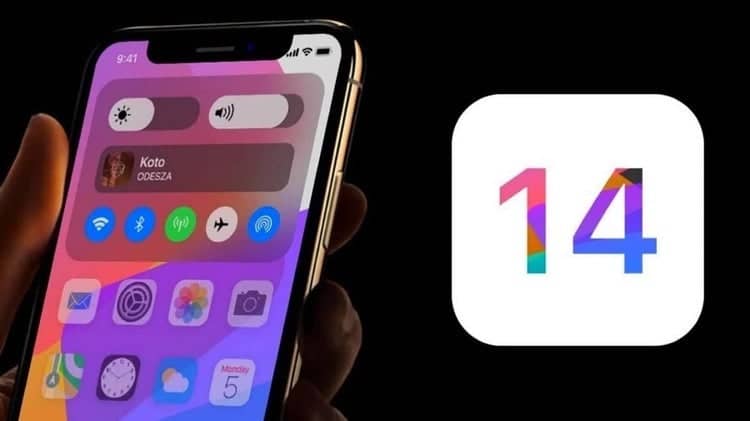
    In the long-running smartphone OS war known as iOS vs. Android, one of the biggest complaints about Apple’s mobile OS is that it is not as customizable as Android. But Twitter tipster @DongleBookPro has shared some screenshots allegedly showing some changes to iOS 14. These changes could be included in the next version of the software that could drop this coming September. Google gave its Pixel phones a huge advantage over iOS in this department by adding its Styles & wallpapers feature last year. This allows Pixel users to change the shape and color of the icons on their phone.

    Will iOS 14 brings more customization to iPhone users? It appears from the screenshots that iPhone users will be able to browse through default wallpaper separated into collections with choices like “Classic Stripes,” “Earth & Moon,” and “Flowers.” Another screenshot shows a “Home Screen Appearance” feature similar to the one found on the Apple Watch. Users will be able to create smart dynamic wallpaper for the home screen. But even more exciting for iPhone users is the possibility that Android-style widgets could be coming to the iPhone.

    Another feature on iOS 14 that is being called “Avocado” internally and is related to the SpringBoard app that controls the Home screen on iOS. If Apple decides to implement this on iOS 14, iPhone and iPad users will be able to select widgets from selected apps and add them to the Home screen, moving them around at will. And this would also suggest that at last iOS users will be able to move around app icons at will rather in a left to the right format. Otherwise, you would see app icons on the Home screen placed around widgets, some of which might take up a more significant portion of the screen than others.

    It’s not like Apple hasn’t listened to its customers-eventually. Remember, iOS 13 finally got rid of that clunky volume heads-up display (HUD) that covered much of the center of the screen. The point being, of course, that while iOS users might have been hoping for more app icon customization and Android-style widgets for some time, eventually the complaints do make it through to the ears of the appropriate people in Cupertino.

    Keep in mind though, that there is always the possibility that Apple will decide not to keep any of the aforementioned features in the final version of iOS 14. If that is the case, it simply could mean that Apple plans on offering all of this customization in a future version of the operating system. Speaking of iOS 14, we probably will see Apple introduce it online during its annual WWDC Developers Conference. Held every June in San Jose, Apple had no choice but to move the conference online after the coronavirus outbreak.

    With a redesign for the iPhone and the addition of 5G connectivity, this might be a good time for Apple to add some long-desired customization features to iOS. Still, some iOS users might not be terribly happy to see blank icon slots on their iPhone screens. On Android, this is quite common because when an app is uninstalled, it doesn’t call for a seismic shift with all of the remaining app icons. When an app is uninstalled on the iPhone, the remaining icons all move in order to prevent that one blank spot from appearing on the display. If Apple does add “Avocado” to iOS 14, blank spots just might be the price that users have to pay to get that customizable app icon grid that they have been jealously watching Android users mess around with with going back so many years.

  • Samsung beats first-quarter estimates, despite virus-driven retail slump

    Samsung beats first-quarter estimates, despite virus-driven retail slump

    Samsung Electronics has delivered better-than-expected first-quarter earnings as robust demand for chips apparently offset a slump in smartphone and home appliance sales amid the novel coronavirus pandemic.

    But analysts warned that the company may feel the pinch of the COVID-19 outbreak during the current quarter.

    The South Korean tech giant put its March-quarter operating profit at 6.4 trillion won (US$5.2 billion), up 2.73 percent from 6.23 trillion won a year ago.

    It beat the market consensus of 6.19 trillion won in operating profit in the survey conducted by Yonhap Infomax, the financial arm of Yonhap News Agency, on 20 Korean brokerage houses.

    Samsung recorded an 11.6-per-cent operating margin in the first quarter, the lowest since the third quarter of 2016.

    Samsung, the world’s leading memory chip and smartphone vendor, did not break down performances of its respective business divisions, saying it will announce the detailed earnings later this month.

    Analysts in Seoul said Samsung’s semiconductor business may have helped the company stay afloat amid the novel coronavirus crisis on the back of increased demand for server chips for data centers and a steady rise in memory-chip prices.

    “Increased non-face-to-face activities prompted by the COVID-19 outbreak has led to a surge in data traffic and server expansion,” Kim Dong-won, an analyst at KB Securities, said.

    “It pushed up the average selling prices of memory chips.”

    However, smartphone and home-appliance sales may have slumped in the face of weak demand amid the COVID-19 outbreak around the globe, the analysts said.

    Samsung had to temporarily shut down about one-fourth of its global manufacturing bases, including those in India, Brazil and Russia, amid the spread of COVID-19. Last month, it even shifted some of its premium smartphone production from South Korea to Vietnam.

    Samsung also had to close its home-appliance stores in North America and other countries and asked consumers to buy products online.

    Analysts said Samsung is expected to have shipped only 60 million smartphones in the first quarter, down from 72 million units a year ago, despite the launch of its new flagship smartphone line, the Galaxy S20, last month, as COVID-19 limited marketing activities.

    Postponement of major sporting events, such as the Tokyo Summer Olympics and the UEFA Euro Championship, also dealt a hard blow to Samsung’s TV sales, they added.

    Analysts predicted Samsung’s mobile and consumer-electronics units to have posted an operating profit of 2.4 trillion won and 400 billion won, respectively, in the first quarter.

    In particular, Samsung’s display business may have suffered an operating loss in the January-March period due to the double whammy of projected slumps in mobile and TV sales, according to analysts.

    Analysts expected Samsung’s mobile and TV businesses to take a heavier toll in the second quarter as the pandemic is likely to further dampen demand for mobile handsets and home appliances in advanced markets like North America and Europe.

    “Samsung’s smartphone business suffered relatively little impact from COVID-19 in the first quarter as it does not rely much on the Chinese market,” Yoo Jong-woo, an analyst at Korea Investment & Securities, said.

    “The company started to see its smartphone shipments taking COVID-19 impact from mid-March as it spread across the US and Europe.”

  • Samsung responds to critics over Exynos 990-Snapdragon 865 performance gap

    Samsung responds to critics over Exynos 990-Snapdragon 865 performance gap

    Just a day or so ago, we told you that some members of Samsung’s chip unit were feeling “humiliated.” That’s because Samsung decided to power its three new flagship models with the Qualcomm Snapdragon 865 Mobile Platform everywhere except Europe. On that continent, the Galaxy S20, Galaxy S20+, and Galaxy S20 Ultra 5G are equipped with the Exynos 990 SoC produced by Samsung. This is the opposite of Sammy’s traditional processor pairings; historically, Galaxy S phones sold in the U.S. and China would be equipped with a Snapdragon chipset while the rest of the world would find an Exynos SoC under the hood.

    The lone exception to this setup (prior to this year) took place in 2015 when the Samsung Galaxy S6 was powered by the Exynos 7420 worldwide. Fears that the Snapdragon 810 was prone to overheating lead Samsung to make this move. So imagine that you work on the Exynos 990 in South Korea for Samsung and you discover that in that market, the only versions of the Galaxy S20 models available are those powered by the Snapdragon 865 Mobile Platform. That might humiliate you.

    Samsung said on Friday that “the Galaxy S20 is a smartphone that’s been reimagined to change the way you experience the world and depending on the region, the Galaxy S20 will either ship with the Exynos 990 or the Snapdragon 865. Both the Exynos and Snapdragon processors go through the same strict and rigorous, real-life testing scenarios in order to deliver consistent and optimal performance over the entire lifecycle of the smartphone.”

    Some Samsung fans in Europe are upset because they feel like they are paying more for what they consider an inferior product. That’s because they don’t consider the Exynos 990 to be a match for the Snapdragon 865. There are some who note that the Exynos 990 has a habit of throttling the GPU, negatively impacting the frame rate when playing a game; that can result in choppy looking animation.

    In addition, the Snapdragon 865 Mobile Platform uses ARM Holdings’ Cortex-A77 CPU cores providing it with a 20% performance advantage over the Exynos 990 chipset which uses the older Cortex-A76 CPU cores. And the GPU paired with Qualcomm’s SoC, the Adreno 650, outperforms the ARM Mali G77 GPU used with the Exynos 990.

    Last month, we told you that a petition was started on the Change.org website asking Samsung to stop selling flagship phones powered by its own Exynos chips. The petition has a goal of 35,000 signatures and as of this morning, it has attracted 34,222 leaving it just 778 short of the target.

    The actual petition reads, “Outside of the US, Samsung sells phones that use their own-branded Exynos SoC chips, instead of using Qualcomm’s Snapdragon. Samsung also use (sic) their own-brand camera sensors, whereas in the US, they use parts from specialists Sony. Based on experience, and studies from numerous sources online, we believe Samsung’s parts to be inferior to their US counterparts. Phones with Exynos SoC chips are shown to perform slower, have less battery life, use inferior camera sensors and processing, overheat and throttle faster, amongst other issues.”

    It goes on to say, “At the very least, we would appreciate if Samsung were transparent about their inconsistencies. Alternatively, for Samsung to ensure we weren’t paying the exact same price or even higher than our US friends. We have had to accept this over many years over different iterations of the flagship phones. Every year we have hoped for Samsung to either give us the same device or make their own parts perform on par with the competition. They have failed to deliver on these requests over and over again and the performance gap only seems to widen over time. In the age of transparency, it is time for a change and for us consumers to have the right to choose what we spend our hard-earned money on.

    Samsung, please hear us! We love your devices and want to be treated fairly so that we can continue to enjoy them.” Even if the manufacturer takes the time to read the petition, there is no guarantee that it will follow through on the request with future flagship models.

  • Apple accidentally confirms the AirTags name for its tracking accessory

    Apple accidentally confirms the AirTags name for its tracking accessory

    Yesterday we told you that there was speculation about when Apple might finally unveil its Apple AirTags item tracker. The latest rumor has the AirTags being announced during the online version of WWDC. As you might know, the COVID-19 outbreak has forced Apple to move its annual developer’s conference to the internet although it has yet to release a date for it to be streamed. Since this is a whole new product category for the company, Apple would prefer to have it introduced and demonstrated by a company executive online instead of merely issuing a press release.

    Throughout last summer, there was a strong sense that Apple would announce the tags at its annual September iPhone event, and when it wasn’t, many figured that the project had been 86’d. But leaked images soon made it apparent that the AirTags project was still alive. AirTags are said to be circular tags with a removable battery that can be attached to items such as a keychain, a pet collar, bicycle, luggage, and more. Heck, it can even be used to track an untrustworthy spouse.

    The AirTags will work in conjunction with the Find My app and will rely on the U1 ultra-wideband, or UWB chip that was quietly included with the 2019 iPhone models. The chip sends out short-distance radio waves using Time of Flight; these radio waves bounce off the subject and return to the phone to help deliver a more precise location where a missing item might be found. The chip might also be used with the CarKey feature expected to arrive in iOS 14; CarKey will allow an iPhone user to open his/her car door and start the engine remotely with the phone. UWB can reportedly locate a tagged item within four inches of its actual location.

    A video that Apple left on the internet today for 15 minutes before removing (it received 1,500 views) revealed that the accessory will indeed be called AirTags. The video was created to show iPhone users how to wipe their handset (and we don’t mean wiping with an antibiotic cleaner). In the video, we can see a menu with a section called “Enable Offline Finding.” Under that listing, it reads, “Offline finding enables this device and AirTags to be found when not connected to Wi-Fi or cellular,” So this pretty much confirms the AirTags name. This also endorses the use of the USB U1 chip for the tracking system.

    A string of code discovered last year revealed some directions for finding a tagged item using AirTags. The code said, “Walk around several feet and move your iPhone up and down until a balloon comes into view.” Leaked images showed a 3D red balloon and a 2D orange balloon that will apparently surface when an AirTags user moves closer to a tagged item. If an item is missing, the tag it is connected to can be put in “Lost Mode.” With this setting enabled, an iPhone user who stumbles across the tag will be able to send an iMessage to the owner to work out a way to address the missing item back to its rightful owner.

    Earlier this year, reliable TF International analyst Ming-Chi Kuo called for the AirTags to be unveiled during the second or third quarter of this year.  At this point, it would appear that he is going to be correct. He also forecasts that 10 million AirTags will be produced before the end of this year.

  • Huawei CEO would like Google to submit its apps on Huawei’s AppGallery store

    Huawei CEO would like Google to submit its apps on Huawei’s AppGallery store

    Huawei just released its new flagship line, the P40 series, and with it promised some appealing camera-related features for smartphone photography. Unfortunately for Huawei though, last year, the US government added the China-based company to a trade blacklist, making the company unable to do business with American companies and therefore, there are no Google apps on its new flagship devices.

    However, Huawei’s CEO, Eric Xu, stated that the company hopes Google’s apps would be available in the AppGallery Store, Huawei’s version of the Google Play Store. He compared it with the case of Apple’s App Store, where Google submits its apps for Apple’s approval. If Google submits its apps on the AppGallery, this could make them available for download on Huawei smartphones.

    Although the lack of Google apps on Huawei smartphones might not be a problem for the company’s home market, given the fact that Google apps are prohibited in China, this seems like a big minus for international customers. Eric Xu said that the blacklist caused Huawei a $10 billion benefit shortfall for 2019, meaning the company’s revenue was $10 billion lower than its target.

    Last month, Google submitted a request for permission to work with Huawei, but it can take quite some time for such procedures to be completed, even if the US government was to approve Google’s request. For now, there is no prospect that Google’s apps will come pre-installed on Huawei smartphones in the near future.

  • Apple Store workers are being asked to work from home

    Apple Store workers are being asked to work from home

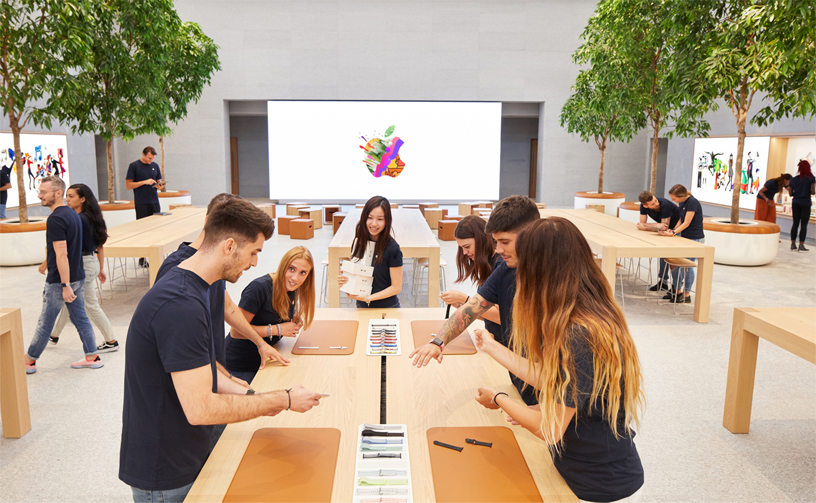
    Last month, a leaked internal memo revealed that Apple plans on reopening on a staggered basis, the 458 retail stores it owns outside of China. Apple hoped to start opening these locations during the first two weeks of this month, although whether this happens remains to be seen. In China, the company has reopened all 42 Apple Store locations as the country claims to be on the mend.

    While the Apple employees that man the 458 closed stores are stuck at home, Bloomberg reports that the company is asking some of them to work from home answering technical support questions as part of the AppleCare team. Those who want to participate must set up a workspace in a quiet room in their home with the ability to accommodate the 27-inch Mac that Apple will send to workers. These makeshift workspaces also must have a strong internet connection, and the employees need to go through a two-week virtual training course.

    The report notes that Apple Store employees were sent forms to fill out in order to apply for the technical support jobs. Those who aren’t interested in answering these calls from home are asked to explain why. Despite this, Apple claims that the program is not mandatory and that all of its retail employees are still getting paid their full paychecks and receiving their benefits whether they participate in the program or not.

    But those who cannot work from home have concerns. They worry that by not agreeing to answer AppleCare and technical support calls from their home, they will look bad in the eyes of their managers. To be sure, there are Apple Store employees happy to help out during the crisis although others don’t understand why they are being asked to do this work. This latter group notes that Apple already promised them their full pay and benefits just for staying home.

    While Apple had started the work from the home program a few weeks ago, over the last week it has reached out in earnest to Apple Store employees seeking to fill the gaps in the AppleCare system. On Friday, the tech giant’s retail chief, Deirdre O’Brien, said that the recruiting “has been going great.”

    Most of Apple’s engineers are working from home and Apple has been reimbursing these employees for desks and computer monitors needed to set up a home office. Apple is also sending tips to employees on how best to create an ergonomic environment. And it also is allowing, with permission from those in the higher ranks of the company, some engineers to take home unfinished hardware and software to work on. The COVID-19 pandemic is resulting in the delay of new products. Apple did launch its two new iPad Pro tablets a couple of weeks ago, although they reportedly were manufactured back in January. The budget-priced iPhone 9, originally rumored to be introduced on March 31st, is now expected to first see the light of day on April 15th with its release a week later. And today, contract manufacturer Foxconn said that it still hopes to have the upcoming 5G 2020 iPhone models ready in time for the holiday shopping season.< Apple originally closed its Apple Stores in China on February 3rd. As new domestic infections started to decline sharply in the country, Apple reopened these locations on March 13th. The very next day, all of the firm's brick and mortar stores outside of China were shuttered. At first, Apple said that those stores would be closed until March 27th, but that was later revised to "until further notice." And while the aforementioned leaked memo from O’Brien discusses reopening all closed stores this month, Apple might take a more conservative path and keep the stores closed for a few additional weeks.

  • Apple AR headset being tested with HTC Vive-like controller

    Apple AR headset being tested with HTC Vive-like controller

    Apple may be one of the most valuable companies in the world but it very rarely enters new product categories. Yet on the odd occasion that it chooses to do so, the company often shakes up the entire industry in the process. Examples of this include the iPhone, iPad, and Apple Watch which transformed the smartphone, tablet, and smartwatch segments respectively. Soon, the growing AR/VR industry could join the list.

    As reported several times in the past, Apple is developing a headset, possibly called Apple Glasses, that combines both AR and VR technologies for release in either 2021 or 2022. The controller in question, which is probably being used solely for internal testing purposes, resembles those shipped with HTC Vive Focus headsets. In fact, it seems to be a modified version of the HTC controller.

    This isn’t that surprising considering Bloomberg reported back in 2017 that Apple engineers were using HTC Vive headsets for internal testing, but the striking resemblance between the two controllers does suggest the two companies could be working closely together on AR & VR technology.

    Regardless of whether Apple and HTC are collaborating, though, it’s safe to say the final controller will probably boast a more polished design that is the better adapter to Apple’s headset software.

    In terms of functionality, the iOS 14 evidence uncovered by MacRumors strongly suggests Apple is using a dedicated augmented reality app codenamed “Gobi” and QR codes to test the extensive range of headset features.

    Apparently, each QR code triggers a different experience for the users. Some of these include experiences related to the Apple Watch, Mac Pro, Apple Store, Starbucks, and even a random movie poster.

    One of the more interesting experiences is QR code that triggers a “crosswalk bowling game.” This presumably allows Apple engineers to roll a virtual bowling ball across the crosswalk to knock down the virtual bowling pins on the other side.

    It likely acts as a pastime while waiting for the pedestrian light to change from stop to go. If ever released to public, users would probably be able to continue the game at different crosswalks and perhaps even play with friends.

    The version Apple is currently testing seems to be limited to one intersection near an Apple office known as “Mathilda 3” at 555 N Mathilda Ave in Sunnyvale, California. That could be where internal testing for the headset is taking place. As revealed in a patent application published today, everything mentioned above could be accompanied by virtual assistants that highlight useful information or offer tips to users during certain events or after a particular trigger.

    In the patent, which is titled “Contextual Computer-Generated Reality (CGR) Digital Assistants,” Apple gives a few examples based on what the user is seeing. One of these includes the possibility of a virtual dog being used to run over to a restaurant and fetch the relevant information for the user in question.

    Other ideas described include a pod of dolphins being used for AR navigation or a cat that guides users to an interesting place. A balloon could be used to show users where an AR-leveraging AirTag is too.

    The possibility of experiencing other virtual assistants through other senses, such as hearing, was also mentioned.

  • Huawei says China has recovered enough to buy new 5G flagship phones

    Huawei says China has recovered enough to buy new 5G flagship phones

    Huawei unveiled its new camera-based P40 series (P40, P40 Pro, and P40 Pro+) today and the phones will be available starting next month priced at the equivalent of $878 USD and up. Each of the three new models supports the next generation of wireless connectivity, 5G. Yu says that he thinks that this will be the first year that 5G will “take off” which is why all of the P40 handsets available have a 5G modem which is integrated into the Kirin 990 5G chipset that drives these phones.

    The new phones are still offered without Google Mobile Service (GMS) due to the manufacturers continued placement on the U.S. Commerce Department’s entity list. Due to the company’s perceived ties with the communist Chinese government, the U.S. considers Huawei to be a national security threat; last May the Trump administration placed the company on the list which bans it from accessing its U.S. supply chain. While Huawei has discovered some ways around the ban, it is not allowed to license the Google ecosystem including the latter’s version of Android and its core Android apps. That means that Huawei phones cannot run the Google Play Store, Google Search, Google Maps, Gmail, Drive, and others. Inside China, this means nothing since most Google apps are banned there anyway. But Huawei’s international sales have been hurt by the inability of Huawei’s phones to run these apps.

    With the P40 line, Huawei debuts its own ecosystem and Huawei Mobile Service. This includes the company’s AppGallery storefront and a brand new digital assistant called Celia. Google Assistant is not available on the open-source version of Android used by the manufacturer. Yu says that he hopes something can be worked out with the U.S. government that would allow his company to partner once again with Google. “We want to continue our partnership with Google,” he said, revealing that Huawei is in discussions with the company. “We hope this issue can be solved, but we’re not the government so we can’t make the decision. They’re a smart government, and I hope they can give a license.”

    The Huawei executive also commented about the second generation of the foldable Mate X that it released last month powered by a more powerful chipset with an integrated 5G modem. Yu said that the firm is not making any money on the device but demand is outstripping supply. Talking about the Mate Xs, Yu states that “With time and more production we can bring the cost down and make it more competitive.”

    Talking about today’s unveiling of the new P40 line, Ben Wood, chief of research at CCS Insight, said that although “arguably there could not be a worse time to launch a set of premium smartphones, Huawei may be in a better position than some rivals.” Wood notes that China appears to be on the mend and added that “given that Huawei has been shipping over 40 million units a quarter in China in recent times, this provides a strong foundation for the business.”

    Meanwhile, Huawei’s Yu wished the rest of the world a rapid recovery from the COVID-19 pandemic. He said, “I hope the U.K. and the world recovers soon from coronavirus. The experience from China was that the government very strictly limited the mobility of people, and quickly everything came under control. I think governments in the rest of the world are taking action like China and will quickly control it too.”

  • Apple iPhone production grinds to a halt in India

    Apple iPhone production grinds to a halt in India

    China is the world’s largest market for smartphones, although thanks to COVID-19, that market is shrinking. Can you guess which country represents the second-largest smartphone market? Hint: it is not the U.S. Actually, it is India; but as a developing country, Indian consumers don’t have much money to spend on top-shelf models. This explains why value for money manufacturers like Xiaomi are ripping it up in the country. It also explains why the mid-range Samsung Galaxy A series does so well in this market.

    Apple did a brisk business in India with its budget-priced iPhone SE. But an import tax (yes, a tariff) was adding $100 to the retail price of the iPhone in the country, so Apple decided to start producing the iPhone SE in India. By doing this, Apple was able to avoid the import tax in a country where every dollar counts. It also helped Apple qualify for Prime Minister Narendra Modi’s Make In India initiative designed to make India a manufacturing center and a magnet for investors.

    The iPhone SE, priced at the dollar equivalent of $250, started to get outsold by a 2-1 margin in India by the iPhone 6s. Apple stopped making the former in the country and started production of the latter; by last year, Apple was advertising “The Incredible iPhone 6s” (at the equivalent of $383 USD) even though it was then four years old. And last year, Apple added the iPhone XR to the phones it makes in India.

    Still, premium smartphones do sell in India and these sales are growing at an annual rate of 29%. A premium phone is considered to be one that sells for the equivalent of $500 or higher in the country and Apple had 75.6% of this market in India during the fourth quarter of 2019.

    What brings all of this up is the news today from the BBC that Prime Minister Modi has instituted a 21-day nationwide lockdown in India. This action is due to the continued spread of the coronavirus. The prime minister urged Indians not to panic and said, “There will be a total ban on venturing out of your homes.” And that means the production of the iPhone models made in India will come to a complete stop for three weeks.

    Bloomberg reports that both of Apple’s contract manufacturers producing the iPhone in India, Foxconn and Wistron, have followed the Prime Minister’s announcement by suspending production. In a text message it sent to Bloomberg News, Foxconn wrote that it is awaiting permission from the Indian government to resume running its assembly lines. Wistron is adhering to the Prime Minister’s lockdown, according to a company representative who wouldn’t reveal which products were affected by the shutdown.

    Besides the production of the iPhone in India, Apple has thousands of employees working out of an office in Hyderabad. These workers spend their time on Apple Maps. The office opened in 2016 and when it opened, the company said that it supported 640,000 developer jobs across the country.

    While several analysts figured that Apple would move some iPhone production out of China and into India to avoid the tariffs charged to U.S. companies and consumers on products imported from China, the fact is that the company’s production facilities in the country are too small and a supply chain would take years to build. Due to Apple’s size and the products it makes, suppliers need to deliver parts and components in the quantity and quality that Apple needs. Despite this, a supply chain source said that Apple is revving up its plans to move production outside of China with the company shifting some iPhone manufacturing to India. Assembly of AirPods and the HomePod are being moved to Vietnam, the country that many believe will eventually replace China as the center of Apple’s manufacturing universe.

  • Apple reverses bulk-order ban and updates on opening plans

    Apple reverses bulk-order ban and updates on opening plans

    US tech giant Apple has reversed restrictions on buying multiple iPhones from its online store imposed last week.

    The restrictions placed a ban on purchasing more than two devices of the same model in multiple international territories, including Mainland China, Hong Kong, Taiwan, and Singapore. That restriction has now been lifted on the purchase of iPhones, although some iPads and Macbooks are still subject to limits.

    A 9to5Mac report conjectured that the ban may have been lifted quickly due to a supply-chain problem caused by the coronavirus epidemic being resolved since, or otherwise that iPhone sales dropped more sharply than the company anticipated.

    International Apple store locations remain shuttered during the pandemic in all areas except China. Some stores may be reopened on a staggered basis next month, according to reporting by Bloomberg.

    “At this time, we anticipate some stores may be able to open in the first half of April depending on the conditions in their community,” said the firm’s senior VP of people and retail Deirdre O’Brien.

    “We will provide updates for each store as soon as specific dates are established.”

    Apple was one of the first retailers to shutter stores in the early days of the outbreak.

  • Apple’s App Store is coming to 20 new countries

    Apple’s App Store is coming to 20 new countries

    Apple announced that the App Store will be expanding to 20 new countries this year, making it available to 175 countries or regions in total. According to Apple’s Developer Agreement those countries are:

    Afghanistan, Gabon, Cote d’lvoire, Georgia, Maldives, Serbia, Bosnia and Herzegovina, Cameroon, Iraq, Kosovo, Libya, Montenegro, Morocco, Mozambique, Myanmar, Nauru, Rwanda, Tonga, Zambia and Vanuatu.

    In its announcement, Apple also informed developers on how to get their apps available in the new countries by completing steps with a recommended deadline of April 10, suggesting that the expansion may happen sometime around that date.

    The App Store – iOS users’ only Marketplace for apps and games – is now getting over half a billion visits per week. To date, developer earnings from sales and in-app purchases are over $155 billion. Between Christmas Eve and New Year’s Eve of 2019, App Store customers spent a record-breaking $1.42 billion.

    In contrast, even though Android has the vast majority of the mobile market, Google has paid only $80 billion to Android developers since the launch of its app marketplace, according to Google’s quarterly earnings reports. This reconfirms the fact that there is much more money to be made by developers on Apple’s ecosystem.

  • Samsung temporary closing its smartphone and home appliance factory in Brazil

    Samsung temporary closing its smartphone and home appliance factory in Brazil

    Another factory falls victim to a global pandemic. As the coronavirus begins spreading rapidly in Latin America, Samsung has decided to shut down its factory in Manaus, Brazil. The measure is temporary and comes after the Brazilian government called out for help in containing the spread of the virus.

    Manaus is situated in the northern part of the country, and the Samsung facility near the city is producing smartphones and home appliances for the local market. The factory will remain closed until Sunday, while the other facility in Campinas, Sao Paulo state, will remain operational, at least for the moment

    There are 1960 confirmed cases of COVID-19 infections in Brazil with 24 deaths. Europe is now at the peak of the pandemic with hundreds of people dying in Italy each day. Researchers think that in countries with warmer climates the virus will slow its spread, but that won’t halt the pandemic.

    The situation in India and Latin America shows some correlation to that prediction. However, governments use the welcomed delay to apply preventive measures. Samsung already closed its biggest smartphone factory in India and it will remain closed until May 25 in response to a request from the Indian government. COVID-19 cases in the country are still under 1000, but officials expect numbers to ramp up fast in the following weeks.