Category: Electronics

Retail News Asia is committed to providing both local and global retailers with the latest Electronics news throughout the Asian market. This on a daily base.

  • JD tops the China’s online appliances market

    JD tops the China’s online appliances market

    E-commerce giant JD has taken the lead in China’s online appliances market.

    The finding was part of a new report on the industry within China prepared by the China Electronic and Information Industry Development Research Institute, which showed JD’s market share stands at 22.39 percent in a sector that raked in RMB891 billion (US$128 billion) last year with a 41.17-per-cent penetration of online sales.

    The lead online product in the category by an overwhelming margin was the air conditioning unit, bringing in RMB 216 billion ($31 billion) in total sales and taking up nearly a quarter of all household appliances traded via the internet. Other popular goods include TVs, fridges, washing machines, kitchen appliances, and household appliances.

    While the recent coronavirus outbreak has had a markedly negative impact on online sales as well as offline trading, normal market conditions are expected to return once the crisis passes.

    “When the epidemic subsides, consumer demand will return,” said JD Retail CEO Lei Xu.

  • Apple promised first Apple India store next year

    Apple promised first Apple India store next year

    Apple CEO Tim Cook says the first Apple India store is on track to open next year.

    Cook made the announcement in response to a question at the firm’s annual shareholder meeting. The company’s plans for the region have been anticipated for some time, following the relaxation of government regulations affecting foreign retailers, easing the requirements of local sourcing and scrapping a law making it mandatory for brands to open physical stores before launching online.

    Apple has already taken steps to manufacture products in India, partnering with Taiwanese company Wistron to make the iPhone 6S and 7 models there.

    In May last year, the company said it was shortlisting sites for the first Apple India store in the commercial hub of Mumbai.

    “India is a very important market in the long term,” said Apple CEO Tim Cook in a statement earlier last year. “It’s a challenging market in the short term, but we’re learning a lot. We plan on going in there with sort of all of our might.”

    Rushabh Doshi, an analyst at global research firm Canalys said last year that having its own flagship stores might be just what Apple needs to reinforce its premium image.

    “A store just before the next launch will be the perfect timing for Apple to restart its Indian growth story.”

  • Apple Thailand store set to open

    Apple Thailand store set to open

    Photos have been leaked on Twitter, offering a preview of Apple Thailand’s second store

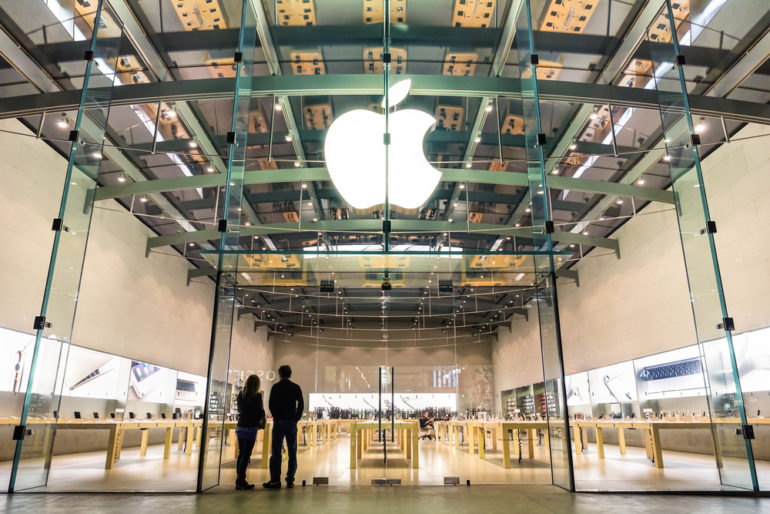
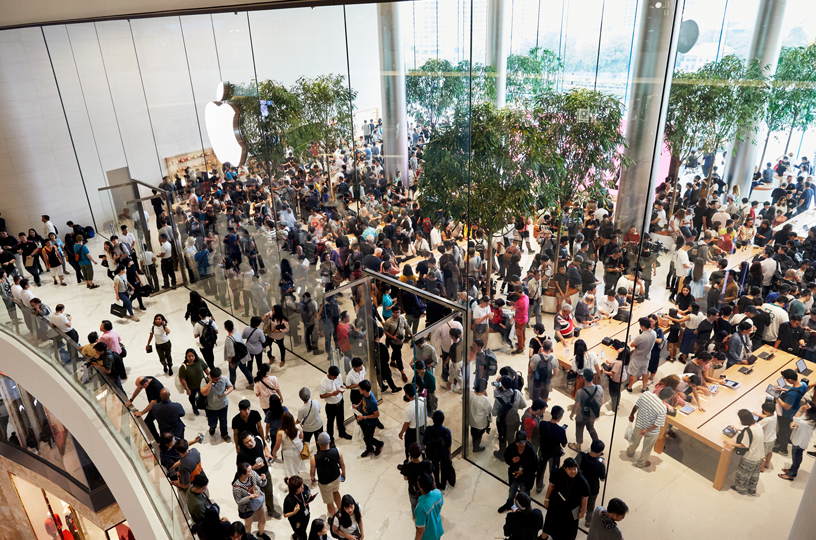
    Located in front of Central World, the construction space was recently revealed after being boarded up and closed off to the public for more than a year.  The store’s glass walls are temporarily covered.

    The architectural plans of the second store were also leaked, featuring the interior layout.

    On the ground floors, tables are set up in a circle while shelves are placed along the walls.

    A winding staircase is located at the center, leading to the second floor where a big screen is installed for the Forum area.

    Apple Thailand’s first store was opened last November at the IconSiam shopping center in Bangkok.

  • Coronavirus case confirmed in Samsung factory in South Korea

    Coronavirus case confirmed in Samsung factory in South Korea

    We have been hearing news about different factories’ production struggles over the coronavirus outbreak for almost two months now. Unfortunately, on Saturday, Samsung temporarily closed one factory in South Korea over a confirmed case of the coronavirus, reports Reuters. Until now, Samsung has remained fairly unaffected by the public health crisis.

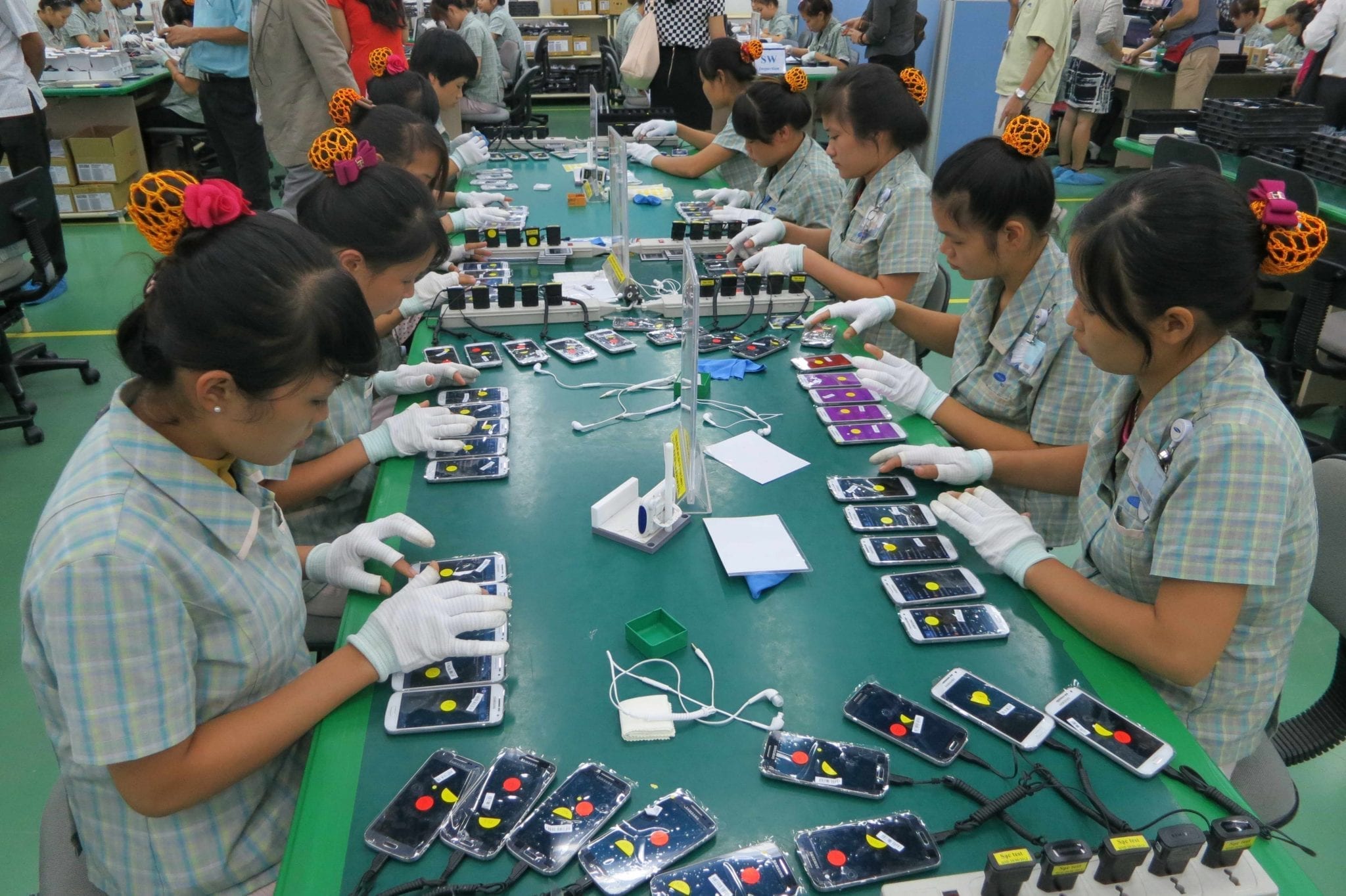
    The aforementioned factory complex is situated in the South Korean city of Gumi, close to the center of South Korea’s largest coronavirus outbreak (in the city of Daegu), where, reportedly, the cases of infected with the illness amount to around 433. However, the factory is responsible only for the production of a small portion of high-end phones, in particular the Galaxy Z Flip and the Galaxy Fold, primarily for the domestic market.

    The facility is to remain closed until Monday morning, while the floor where the infected employee worked will be shut down until February 25, Tuesday. Workers that came into contact with the employee in question are now in self-quarantine and will be tested for possible infection with the virus.

    Samsung states that production in other factories in South Korea will remain unaffected for now.

  • Samsung and BTS enter global marketing collaboration

    Samsung and BTS enter global marketing collaboration

    South Korean electronics giant Samsung and BTS the K-pop superband, have entered a global collaboration to market smartphones.

    Samsung will first work with BTS for the boy band’s global contemporary art initiative, “Connect, BTS,” before expanding their collaboration to other areas, according to the officials.

    Connect, BTS is a global initiative spearheaded in collaboration with curators from five major cities — London, Berlin, Buenos Aires, Seoul and New York — to connect people from across the world through art.

    The project was designed to dovetail with BTS’ philosophy that centers around diversity, love and ‘care for the periphery’.

    Samsung said it will support augmented reality (AR) docent service for the project, in which members of BTS appear and explain art pieces in a virtual system.

    The South Korean tech giant also installed a media facade with its Galaxy devices for the art project in Seoul and New York.

    Samsung and BTS did not disclose further details of the partnership, but industry insiders expect that the septet will participate in the company’s various promotion and marketing events regarding its new smartphones launched earlier this month.

    BTS member V was spotted at Samsung’s “Galaxy Unpacked 2020″ in San Francisco, where the company unveiled the new-generation 5G Galaxy S20 series and the Galaxy Z Flip smartphones.

    “We hope we can deliver a good experience to fans of BTS and Galaxy devices around the globe through collaboration with BTS,” a Samsung official said. “We are planning various activities other than ‘Connect BTS.’”

  • Google finally opens up about having its apps banned on new Huawei phones

    Google finally opens up about having its apps banned on new Huawei phones

    Huawei is unable to license Google Mobile Services because of its placement on the Commerce Department’s entity list. The Trump administration put Huawei on the list because it considers the Chinese manufacturer to be a threat to national security due to its allegedly close ties with the communist Chinese government. Once Huawei was placed on the list, the company was banned from accessing the U.S. supply chain it spent $11 billion on in 2018; because of the ban, Huawei is not allowed to enter into any licensing deal with Google.
    Google published a support article that laid out the facts: “On May 16, 2019, the US government placed Huawei on its Entity List. This government action prohibits all US companies, including Google, from collaborating with Huawei. This means that Google is prohibited from working with Huawei on new device models or providing Google’s apps including Gmail, Maps, YouTube, the Play Store and others for preload or download on these devices.”
    Google then mentions that it has been focused on protecting the security of Google users who sport older Huawei phones. The support page noted that “We have continued to work with Huawei, in compliance with government regulations, to provide security updates and updates to Google’s apps and services on existing devices, and we will continue to do so as long as it is permitted. To be clear: US law currently allows Google to only work with Huawei on-device models available to the public on or before May 16, 2019.
    Google also made it clear that Huawei phones launched before May 16th, 2019, but now getting released in other areas of the world, are considered new handsets and cannot be licensed to use Google Mobile Services. Explaining why its apps and services cannot be preloaded or sideloaded on new Huawei devices, Google pointed out that “To protect user data privacy, security, and safeguard the overall experience, the Google Play Store, Google Play Protect, and Google’s core apps (including Gmail, YouTube, Maps, and others) are only available on Play Protect certified devices. Play Protect certified devices go through a rigorous security review and compatibility testing process, performed by Google, to ensure user data and app information are kept safe. They also come from the factory with our Google Play Protect software, which provides protection against the device being compromised.”
    The problem is, the U.S. placement of Huawei on the entity list prevents the latter’s phones from going through Google’s security process; they also do not have Google’s malware scanning Play Protect feature. As a result, these handsets are considered uncertified and cannot use Google’s apps. Additionally, sideloaded Google apps won’t work on Huawei devices because Google doesn’t allow these apps to run on uncertified phones where security might be compromised. “Sideloading Google’s apps also carries a high risk of installing an app that has been altered or tampered with in ways that can compromise user security,” the company said. You can check to see if your Android phone is certified by opening the Google Play Store and heading to Menu > Settings. Simply look under Play Protect certification.
    Despite the ban, Huawei still managed to ship 240 million handsets last year. That wasn’t enough for it to top Samsung to take over the title of the world’s largest smartphone manufacturer, but it did manage to finish ahead of Apple in second place. That’s because patriotic Chinese consumers considered Huawei to be the victim of American bullying and turned out in large numbers to buy Huawei’s handsets. In China, most of Google’s apps are banned anyway which means that the company’s international models were the ones impacted by the ban.
  • Apple China reopens stores slowly

    Apple China reopens stores slowly

    Apple China has reopened 10 more stores in China, as the business begins to return to normal despite the ongoing coronavirus outbreak.

    The 10 reopened outlets, which are located in Shanghai, Chengdu, Dalian, Guangzhou and Qingdao Vientiane City, will operate with limited business hours, according to stores’ websites.

    It is not yet clear whether or not the 10 Apple China stores will apply the same measures to prevent coronavirus transmission as five stores in Beijing which reopened last week with protection, including temperature checks of customers upon entry

    Meanwhile, Apple warned of global iPhone supply shortages earlier this week, and said it would be unlikely to meet quarterly revenue targets while its Chinese factories remained shut.

    “Work is starting to resume around the country, but we are experiencing a slower return to normal conditions than we had anticipated,” the company said in a statement. “As a result, we do not expect to meet the revenue guidance we provided for the March quarter.”

    Although the iPhone manufacturing partners outside Hubei have resumed production, “they are ramping up more slowly than we had anticipated”.

    Meanwhile, archrival – Samsung – has launched its latest smartphone in Vietnam, saying its factories in the country are running at full capacity during the coronavirus epidemic.

    Nguyen Tri Thong, corporate marketing director at local smartphone unit Samsung Vina Electronics, told the Nikkei Asian Review that Samsung’s new products have been available for delivery as the company has a clear production schedule.

    “The outbreak of the coronavirus did create challenges to many businesses globally. However, we have been mobilizing our backup plans in order to maintain our position,” Thong said. “We don’t see any serious issues in our supply chain at the moment,” he said without giving further details.

  • Apple’s chip supplier sees strong demand for 5G phones

    Apple’s chip supplier sees strong demand for 5G phones

    Despite the current coronavirus pandemic, trade wars, and uncertain economic times ahead, the world’s largest independent foundry sees strong growth in the near future. Taiwan Semiconductor Manufacturing Company (TSMC) is sinking billions more into its chip manufacturing business. Last week, the firm’s board of directors announced that it was going to budget $6.74 billion to build more fabrication facilities and increase its production capacity.
    Last month, the company said that it planned on spending between $14 billion and $15 billion for capital expenditures this year up from the $10 billion-$11 billion it spent last year. The 2020 spending includes $2.5 billion for its 5nm process chips and $1.5 billion for its 7nm chips. Let’s back up a bit. What TSMC does is manufacture chips for companies that design their own components but don’t have the facilities to actually produce them. That includes some of your giant tech companies like Apple, Qualcomm, Huawei, and others. Last week, TSMC said that the coronavirus has not led to any reduction in orders from its customers.
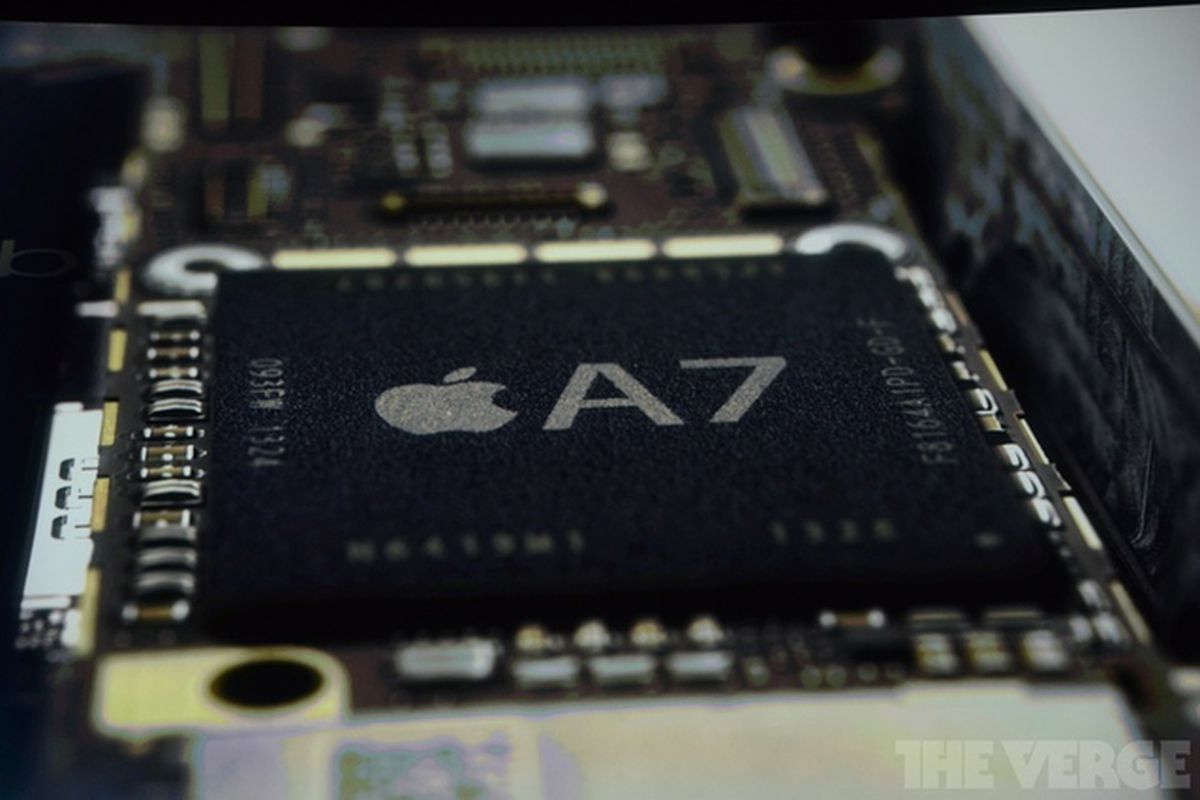
    The process node refers to the number of transistors that can fit into a dense area like the inside of an integrated circuit. The lower the number, the larger the number of transistors inside a chip. That is important because as more transistors are placed inside an IC, the more powerful and energy-efficient it is. For example, Apple’s current A13 Bionic SoC containing 8.5 billion transistors is manufactured using TSMC’s enhanced 7nm process.
    Starting in the middle of this year, the company will begin producing 5nm chips and the Apple A14 Bionic will reportedly be packed with 15 billion transistors making it more powerful and energy-efficient than the A13 Bionic. This means that Apple could have a huge performance lead over most Android phones when it releases the 2020 iPhone models later this year. That’s because the Qualcomm Snapdragon 865 Mobile Platform, the chip that will power most flagship Android phones in 2020, is manufactured by TSMC using its 7nm process node. The only Android phones that could match the 2020 iPhone’s performance this year could be the Huawei Mate 40 line. That’s because Huawei’s 5nm flagship chipset is due to roll off of TSMC’s assembly line later this year.
    Speaking of the A13 Bionic, Apple recently said to increase the production of the chip due to higher than expected demand for the iPhone 11 series. Additionally, the upcoming iPhone 9, due to be introduced next month, will employ the A13 Bionic chip. Reliable TF International analyst Ming-Chi Kuo believes that Apple could sell as many as 30 million iPhone 9 units this year and each one will be powered by the A13 Bionic chip. With a price rumored to start at $399 and up, the iPhone 9 will look just like the iPhone 8 but will sport the more powerful chip and include a 50% hike in memory from 2GB to 3GB of RAM.
    As for the A14 Bionic, TSMC sees strong demand for the new 5G iPhone models that will be powered by this SoC. The latest rumor has Apple releasing four iPhone models this year including the iPhone 12 (5.4-inch screen, dual cameras), iPhone 12 Plus (6.1-inch screen, dual cameras), iPhone 12 Pro (6.1-inch screen, triple cameras) and the iPhone 12 Pro Max (6.7-inch screen, triple cameras). All four will be equipped with the TSMC built Snapdragon X55 5G modem chip which supports both sub-6GHz and mmWave 5G spectrum. That means the new iPhones will be compatible with the 5G signals disseminated by all four major U.S. wireless carriers.
    Last year, the semiconductor industry had its worst year since the dot com collapse of 2001 with revenue declining 12% on an annual basis to $412 billion. But TSMC’s decision to throw billions into new production facilities indicates that at least one of the industry’s leading firms is confident that the business is turning around.
  • Indian Apple reseller Aptronix expands footprint

    Indian Apple reseller Aptronix expands footprint

    Indian Apple reseller Aptronix has launched six new stores in Tamil Nadu and Kerala.

    The firm has opened four locations in Chennai and one each in Coimbatore and Kochi.

    “With these six stores across Chennai,” said company founder Sutinder Singh, “Aptronix will be the largest partner of Apple in Chennai and India. As the largest premium reseller partner of Apple, we are committed to our growth plans and are steadily expanding our path across cities.”

    “We provide easy access for our customers by catering to their diverse Apple product requirements,” said Aptronix director Meghna Singh.

    “Our premium centres will strengthen and boost retail and service networks across the country.”

  • Lenovo Philippines opens second Legion concept store

    Lenovo Philippines opens second Legion concept store

    Tech brand Lenovo has opened its second Legion concept store in the Philippines at SM City Cebu.

    The company has launched the outlet near the mall’s cyberzone area to showcase its gaming devices and accessories. It will also serve as an event space for monthly gaming tournaments.

    Lenovo Philippines GM Michael Ngan says it wants to introduce the Legion brand to Filipinos living outside the national capital. He indicated that further branches are likely to open in the country.

    The Legion concept store is offering a range of promotions to mark its Cebu launch.

  • HTC experienced a terrible start to the year

    HTC experienced a terrible start to the year

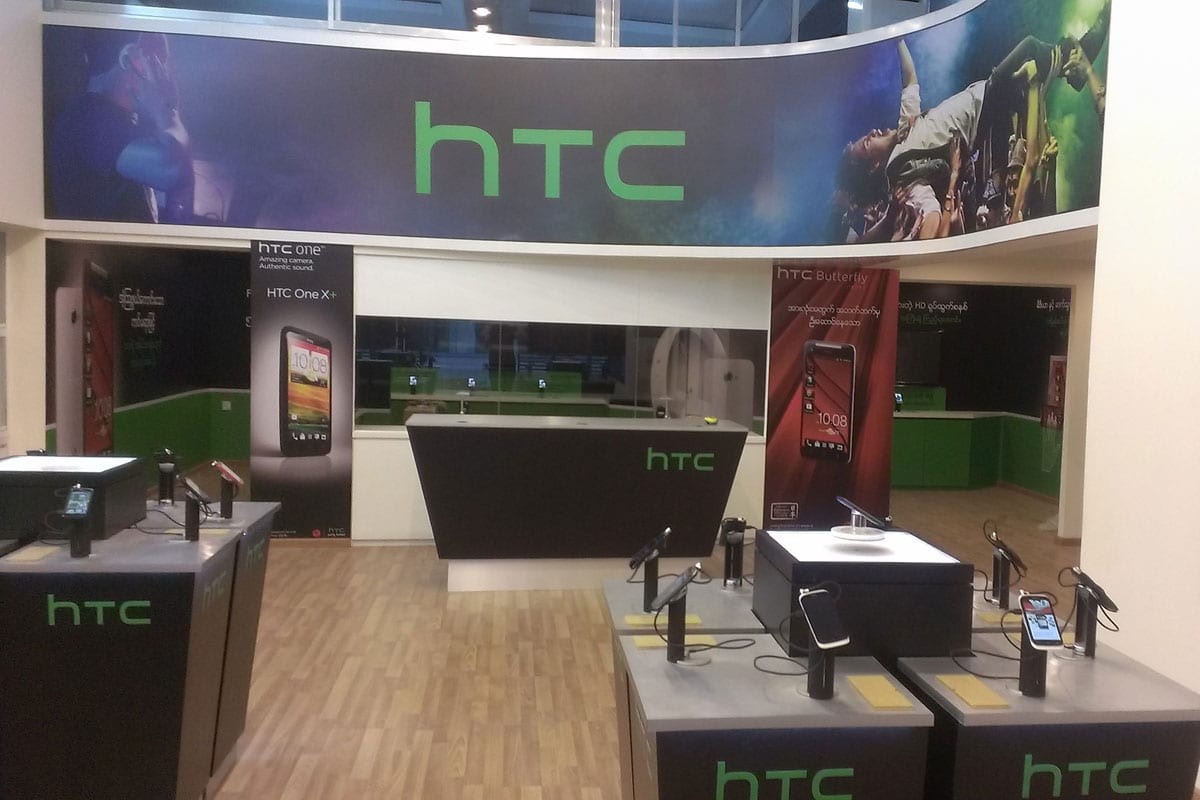
    Declining interest in the brand combined with a lack of new smartphones resulted in 2019 being HTC’s worst year on record. But if new revenue figures are anything to go by, 2020 could be even tougher for the Taiwan-based company.

    HTC’s shrinking smartphone business and newer VR headset division generated just $16 million between them in the month of January. The start of 2020 was, therefore, the company’s second-worst month on record behind only July 2019.

    The results equate to a 21.4% decline from December, which was large to be expected now that the holiday season is over, but more worryingly represents a 52.4% decline from January 2019 when it generated a more impressive $33 million.

    The company has been shrinking virtually non-stop since 2020 and, as you can see, shows no sign of slowing down anytime soon. Despite this, HTC is still feeling pretty positive about its future.

    Back in October the company gained a new CEO who teased an increased focus on VR and a return to the premium smartphone segment in the near future with a 5G-ready device. Whether this can actually turn things around, however, remains to be seen as the company has made similar promises in the past.

  • Vivo India opens Mumbai flagship

    Vivo India opens Mumbai flagship

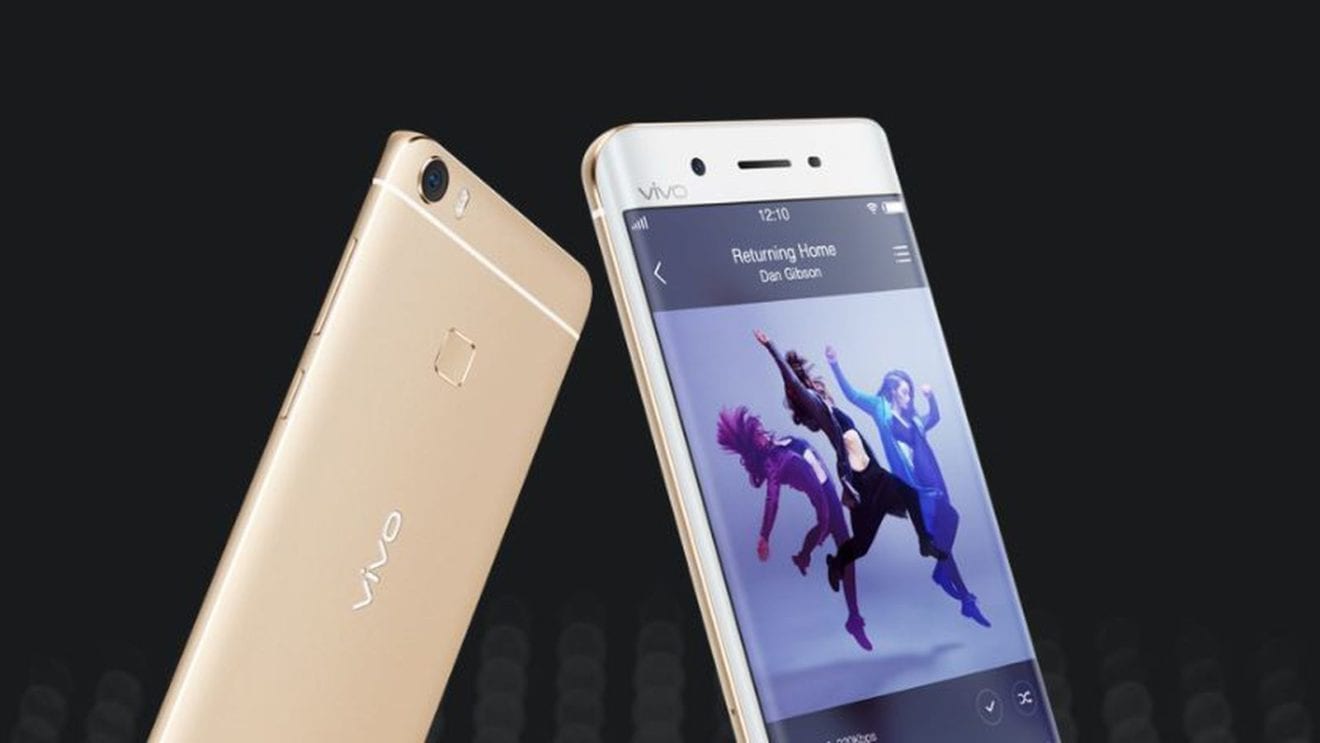
    Chinese smartphone brand Vivo has opened an experiential flagship store in Thane, Maharashtra as Vivo India eyes 250 new stores this year.

    The 1800sqft outlet is the second of 20 stores planned for the territory, according to the India News Service. Vivo India currently operates an experiential retail store in Bengaluru as well.

    “The offline channel has been an essential part of our go-to-market strategy and we would continue to invest in this channel,” said Vivo India director of brand strategy Nipun Marya.

    “We intend to launch more than 250 exclusive stores in 2020, taking the total number to 600.”

    Showcasing Vivo’s entire range of devices and accessories, the store will also feature an interactive touch-enabled LED screen allowing customers to explore products in more detail, as well as gaming, VR and customer interaction zones.

  • Apple takes a shot in the dark with its latest iPhone ad

    Apple takes a shot in the dark with its latest iPhone ad

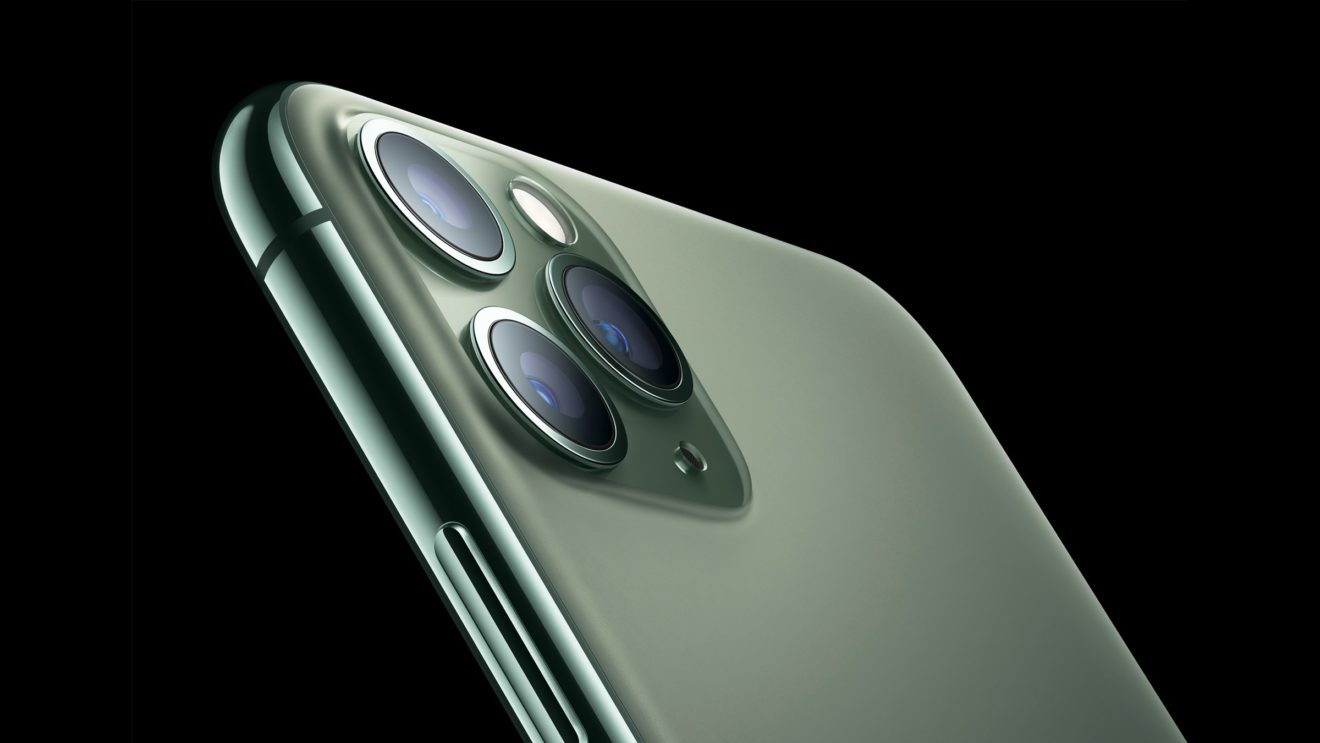
    Apple also developed Deep Fusion which is similar to the Pixel’s HDR+. When a photo is snapped on the iPhone, nine different exposures are created including four short exposures, four standard exposures, and one long exposure. Three standard shots are combined with one long-exposure to create a “synthetic long-exposure” which is then combined with the sharpest of the four short-exposure images.
    Once that occurs, it takes just one second for the neural engine on the A13 Bionic chipset to select the best pixels to use from four different processing steps. The result is a sharper photograph with less-noise. Deep Fusion is used with most telephoto shots and when using the primary wide camera in medium to low light environments. The iPhone 11 series represents Apple’s entry into computational photography which Google had a head start on with the Pixel line.
    Remember when iPhone users were called “wall huggers” by Samsung? A commercial produced for the Galaxy S5 back in 2014 took place at an airport where iPhone users were all sitting on “stained carpeting” charging the battery in their phones. The Galaxy S5 not only had a replaceable battery, but it also featured Ultra Power saving mode that turned off all non-essential features and turned the screen to grayscale. Those days are now long gone, especially with the new batteries that Apple included with the iPhone 11 models. Ironically, based on our tests, the Apple iPhone 11 Pro Max provides 56% longer battery life than the Galaxy Note 10+.
    And you might recall that a 2017 ad from Samsung for the Galaxy Note 8  chronicled how a lifelong iPhone user ended up switching to the Galaxy Note 8. It’s the old story: boy meets girl and starts a relationship with her. We assume that they were compatible in most areas although she always had a Samsung phone. In one scene from that ad, both of their phones end up falling off a dock and into the water. Her phone was fine because of the IP68 rating on the Galaxy S7; his iPhone ended up in a bowl of white rice because it didn’t have official water protection back then. But now, Apple has enhanced the water protection on the iPhone 11 models. The iPhone 11 can be submerged to a depth of 2 meters (6.5 feet) for as long as 30 minutes while the “Pro” models can be submerged to a depth of 4 meters (13.12 feet) for as long as 30 minutes. The Galaxy Note 10+ can be submerged to a depth of 5 feet for up to half an hour.
    The 2019 iPhone models are also protected from splashes caused by soda, beer, coffee, tea, and juice. Just rinse it off with tap water and dry. Keep in mind that Apple, like all other phone manufacturers, still will not cover water damage with the iPhone’s warranty. Apple does note that “Liquid damage is not covered under warranty, but you might have rights under consumer law.”
    You’ll probably see the new ad for Night Mode plastered all over your television set this coming week.
  • Samsung’s net profit dips in Q4 amid declining sales

    Samsung’s net profit dips in Q4 amid declining sales

    The world’s biggest smartphone maker, Samsung Electronics, reported a slump in fourth-quarter net profits, blaming weakening demand in key products and falling chip prices.

    Net profits in the October-to-December period were 5.23 trillion won ($4.4 billion), down 38 percent from a year ago, it said in a statement.

    “Fourth-quarter profit dropped from a year earlier due to the continued fall in memory chip prices and weakness in display panels,” Samsung said in a statement.

    The firm is the flagship subsidiary of the giant Samsung Group, by far the largest of the family-controlled conglomerates known as “chaebols” that dominate business in the world’s 12th-largest economy.

    But it suffered a series of difficulties in 2019, with the global memory chip market — which has driven profits in recent years — hit by rising supply and falling demand.

    The premium smartphone market has also grown fiercely competitive, with buyers waiting longer before upgrading to new models.

    Samsung said it expects “weak sales from seasonality in memory chips, OLED and consumer electronics” in the first quarter of 2020 as the firm navigates “continued uncertainties in the global business environment”.

    Operating profit dropped more than 30 percent year-on-year to 7.2 trillion won, while sales in the fourth quarter stood at 59.9 trillion won.

    For full-year 2019, the firm reported net profits of 21.7 trillion won, down 51 percent from a year ago.

    Samsung has been strained by a trade war between China and the US and caught in a diplomatic row between Seoul and Tokyo over wartime history, with Japan imposing tough restrictions on exports crucial to South Korean tech giants in July.

    In another shadow hanging over the firm, its vice chairman and de-facto leader Lee Jae-yong is on trial for the second time over a sprawling corruption scandal that led to the impeachment of South Korea’s former president Park Geun-hye.

    A guilty verdict and long prison sentence would deprive the firm of its top decision-maker.

    Lee was initially jailed for five years in 2017 on multiple charges including bribery, then released after several of his convictions were quashed, only for the Supreme Court in August to order a retrial.

    In the mobile business, strong demand for Samsung’s mid-range A-series handsets gave the firm a much-needed boost over the last few quarters, said Gerrit Schneemann, a senior analyst at IHS Markit.

    The premium devices, such as the latest Galaxy Note that was widely available in the fourth quarter, faced competition from Apple – which reported its best-ever quarter powered by the new iPhone 11 and iPhone 11 Pro models.

    “A strong quarter from Apple in key markets will have had an impact on Samsung,” Schneemann said.

    In 2020, Samsung is pinning its hopes on increasing availability of 5G telecom services driving sales of its handsets — it is a world leader in the technology — and said it will roll out an “enhanced” 5G lineup.

    Global demand for the superfast 5G handsets in 2019 was higher than expected, with nearly 19 million units shipped worldwide, according to the latest data from market researcher Strategy Analytics.

    Samsung held 36 percent of market share, it said, closely trailing Huawei, which was leading the tight race with 37 percent, although most of its shipments were in China, where US sanctions made relatively less impact.

    “Samsung’s 5G smartphone shipments are international and span a wide spread of countries, from South Korea to the UK to the United States,” said Ville-Petteri Ukonaho, Associate Director at Strategy Analytics.

    Samsung said earlier this month it had shipped more than 6.7 million Galaxy 5G smartphone devices globally last year, claiming it had more than half the world’s 5G smartphone market as of November.

    The firm is due to unveil new Galaxy devices next month in San Francisco that it said — without offering details – will “shape the next decade of mobile experiences”.

    Samsung shares were down 1.1 percent in early morning trade in Seoul.
  • Apple iPhone production is set to resume in China on February 10th

    Apple iPhone production is set to resume in China on February 10th

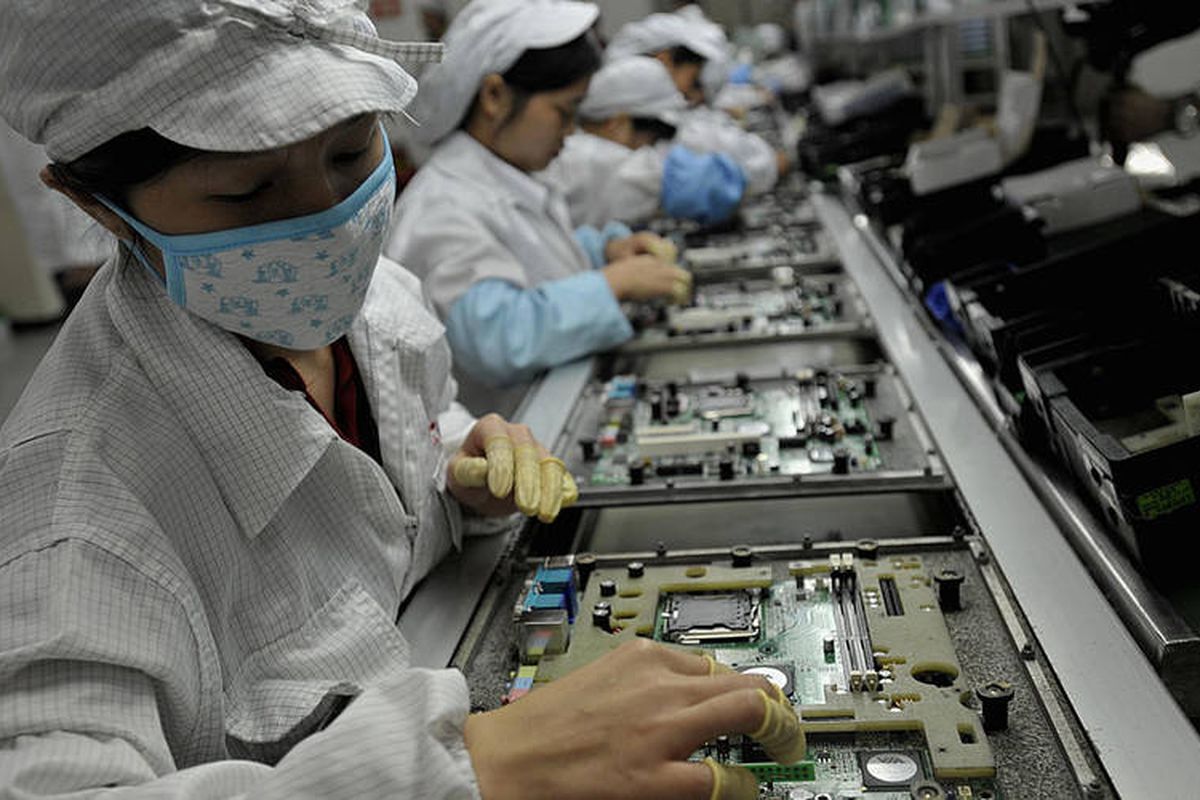
    With the coronavirus claiming the life of 490 people and infecting 24,324 at last count, a number of businesses in China have cut back their operations or have closed altogether. This hits Apple right in the solar plexus since the company depends on contract manufacturers located in China to produce many of its products including the iPhone. The virus also impacted some of Apple’s China-based supply chain.

    Bloomberg reports that the Chinese manufacturer that Apple relies on the most, Foxconn (aka Hon Hai Precision Industry Co.) will resume production on February 10th. Other companies like Quanta Computer Inc., Inventec Corp., and LG Display Co. will also go back to work next week. TF International analyst Ming-Chi Kuo recently cut his estimate of iPhone shipments for the current quarter by 10%. For the calendar first-quarter (Apple’s fiscal second-quarter), Kuo now sees the company delivering 36 million to 40 million iPhones. Apple no longer releases the number of phones it ships during its quarterly reports, but the analyst believes that the manufacturer delivered 38 million during last year’s calendar first-quarter. So for the three months from January through March, he sees iPhone shipments declining as much as 5.3% or rising by as much as that same percentage.

    The February 10th date when production is supposed to ramp up again at Foxconn isn’t exactly written in stone. Some workers are living in municipal lockdowns and transportation of people and materials has slowed down tremendously. The facility where Foxconn builds most of its iPhones is located in Zhengzhou and the factory used by assembler Pegatron to build the device is in Shanghai. Both are more than 311 miles away from Wuhan, the city in China considered to be ground zero for the coronavirus.

    Earlier this week, Apple said that it would shut its stores, corporate offices and consumer centers through February 9th due to an “abundance of caution and based on the latest advice from leading health experts.” Apple is still able to ship orders throughout the country, so those looking to pick up a new iPhone in China won’t be blocked because of the virus.

    Meanwhile, GF Securities analyst Jeff Pu says that companies in the supply chain are seriously concerned about a lack of employees. He notes that “The main variable is whether the government will push back the time for resuming production, though it is not very likely given the complexities of organizing transportation for the returning migrant workers.” Apple has more than 10,000 direct workers in China including those working in the Apple Stores. The firms that make up Apple’s contract manufacturers and supply chain in China have over 1 million people producing parts and assembling Apple’s products.

    While it was feared a week ago that the virus could delay the launch of the iPhone 9, Foxconn now says that it has a backup plan that will allow the next new iPhone model to be released on schedule. As we told you during the waning days of January, trial production of the phone has already started. The iPhone 9 will look like the iPhone 8 down to the 4.7-inch LCD display. But unlike the iPhone 8 which is powered by the 10nm A11 Bionic chipset, the iPhone 9 will be equipped with the same 7nm A13 Bionic SoC found in the 2019 iPhone models. The new device will also be the beneficiary of a 50% hike in memory from 2GB of RAM to 3GB. We could see the iPhone 11’s 12MP Wide camera on the back along with a 1,821mAh battery. The iPhone 9 is expected to start at $399 and could be unveiled next month.