Category: Electronics

Retail News Asia is committed to providing both local and global retailers with the latest Electronics news throughout the Asian market. This on a daily base.

  • Apple and Levi’s closing China store

    Apple and Levi’s closing China store

    Apple and Levi’s joined the growing list of international retailers shuttering stores in Mainland China as the infection rate and death toll from the coronavirus continued to grow over the weekend.

    Elsewhere, in South Korea, duty-free stores have closed and throughout Asia retailers have introduced policies for dealing with the virus aimed at protecting staff and customers.

    Apple says all of its 42 stores in Mainland China will remain closed until February 9, although customers will be able to continue to buy products on its online store.

    “Out of an abundance of caution and based on the latest advice from leading health experts, we’re closing all our corporate offices, stores and contact centers in Mainland China through February 9,” Apple said in a statement sent to CNN Business. “We will continue to closely monitor the situation and we look forward to reopening our stores as soon as possible.”

    Levi’s, meanwhile, has closed about half of its stores in the market, although China accounts for just 3 percent of its global revenue compared with 15 percent for Apple.

    Apple and Levi’s are not the only chains to have announced large-scale store closes on the mainland. Starbucks has closed more than 2000, KFC, Pizza Hut and Haidilao Hot Pot have closed stores in the worst-affected Hubei province and Ikea has closed all of its stores there.

    Shilla’s shutdown

    In Seoul, The Shilla Duty-Free closed its giant downtown store adjacent to its five-star hotel after it was confirmed a Chinese national infected with coronavirus visited the store twice in January.

    The company said it has already been rolling out disinfection operations to prevent possible contamination.

    Rival operator Lotte Duty-Free closed its Jeju Island store late Sunday after it was confirmed an infected person shopped there last month.

    “We just started banning new customers entering the shop and asking the customers to leave the outlet,” a company official told a local news outlet.

    “We will announce the date of the reopening after discussing the matter with health authorities and the Jeju provincial government officials.”

    E-Mart also closed one of its stores in Bucheon, near Seoul, after a similar confirmation of a visit by an infected patient.

    Hong Kong supermarkets see spike

    A spokesperson for Hong Kong-headquartered Dairy Farm International told Inside Retail Asia that, like other supermarket chains, its stores have experienced a spike in demand for fresh produce, along with household cleaning and hygiene products, as a result of the coronavirus.

    “In areas of high demand, we are working around the clock to restock as quickly as we can and will continue to do our best to serve the people of Hong Kong through our stores and online,” said the company, which operates the Wellcome grocery-store network.

    All of Dairy Farm’s stores in Hong Kong, including Ikeas, are operating as normal, however, the company has reinforced its sanitization and hygiene protocols.

    “In this challenging environment we remain focused on taking care of our customers and our team members, who we’ve offered flexible working arrangements to, where appropriate,” the spokesperson said.

  • European Union wants Apple’s Lightning port gone

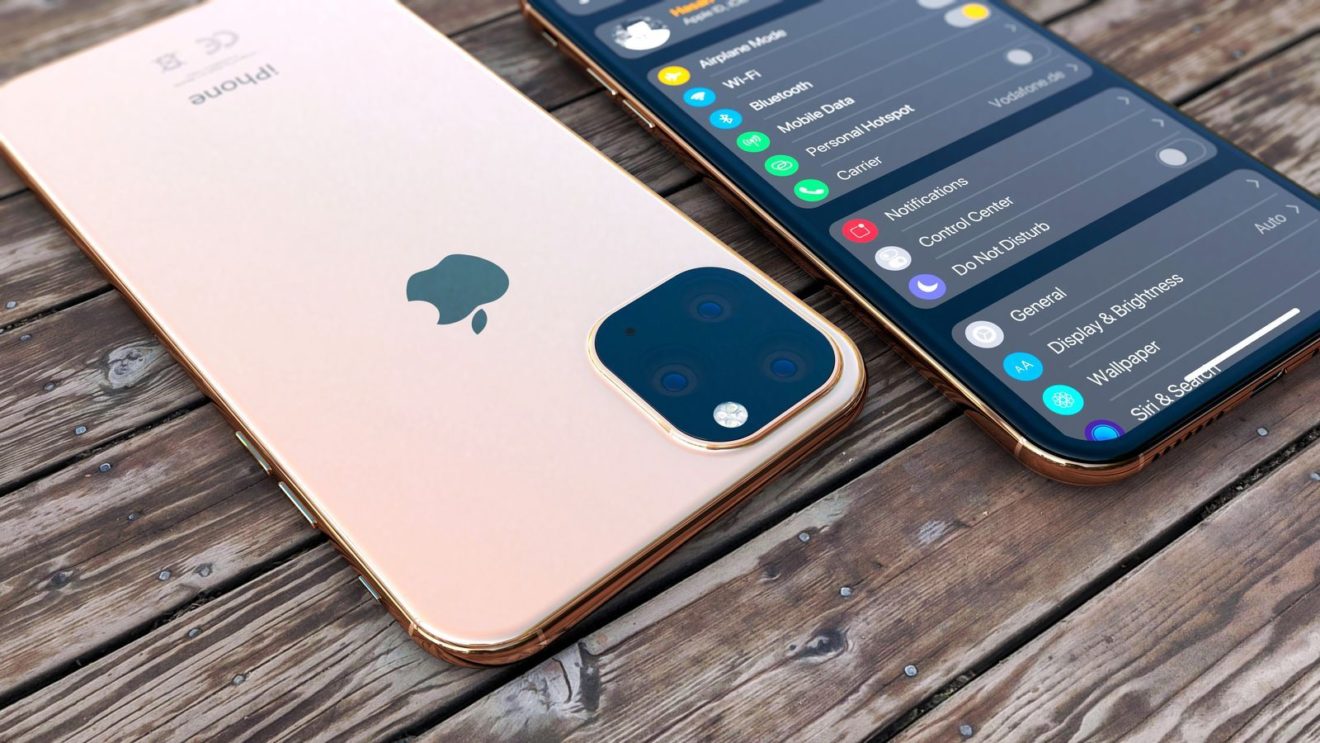
    European Union wants Apple’s Lightning port gone

    EU lawmakers might be in favor of diversity, but not when it comes to smartphone chargers. Today, these lawmakers called for the creation of one standard charger for all mobile devices. By an overwhelming vote of 582-40, members of the European Parliament passed a resolution that asks the European Commission (the body that drafts laws for the EU) to make sure that buyers of mobile devices no longer are under the obligation to purchase a new charger every time they buy a new device. The resolution calls for the EC to adopt new rules by this coming July.
    The idea is to reduce the amount of electronic waste that the EU is dealing with. During 2016, the last year that data was made available, such waste generated in the EU added up to 12.3 million tonnes or 36.6 pounds for each person living in the EU. The resolution noted that requiring a standard charger for mobile devices could reduce the amount of electronic waste and it also asked the Commission to pass a rulemaking sure that wireless chargers could be used to power up different mobile devices.

    The EC has actually been fighting for a standard mobile charger for over 10 years. in 2009, Apple, Samsung, Huawei, and Nokia signed a “voluntary memorandum of understanding” calling for these phone manufacturers to use standard chargers for phones that were coming to the marketplace in 2011. But it is obvious to the EC after nearly 10 years that the voluntary approach has not worked and that legislation is going to be needed in order to force the phone manufacturers to take action.

    The company that is on the line with this proposal is Apple. That is because most Android phones have a USB-C port which is the closest thing to a common charging platform that the mobile industry has today. However, Apple has its proprietary Lightning port which has been in use since 2012 when it replaced the 30-pin dock connector. Apple did switch to USB Type-C for the 2018 iPad Pro models and for the last couple of years there have been rumors about the same thing happening to the iPhone. Many iPhone users have been hoping that Apple switches to Type-C; that could make it easier for them to find accessories for their iPhones and at a lower price, too.
    While Apple might end up not having a choice in Europe, it is hard to see the company voluntarily switching to a standard system because of the profits involved. Having a proprietary charging system means that people will have to come to Apple for an original replacement. The company already took a little hit when it introduced the 2019 iPhones by including an 18W fast charger in the box with the iPhone 11 Pro and iPhone 11 Pro Max. While the iPhone 8 iPhone 8 Plus, iPhone XS, iPhone XS Max, and iPhone XR all support fast charging, owners of those models have to shell out $29 for an 18W charger.
    Last month, reliable TF International analyst Ming-Chi Kuo looked deeply into his crystal ball and said that the highest-end 2021 iPhone might not have a Lightning port or a USB-C port. Kuo is talking about the iPhone 13 Pro Max featuring a “completely wireless experience.” If indeed Apple is looking at offering a port-free phone, it could decide that it isn’t worth it to make a switch away from the Lightning port for a short period of time.
    However, there is still the EU to consider. Apple said last week that the mobile industry is already moving toward the use of Type-C as a standard, but also said that forcing a standard on the industry would hurt consumers in Europe. And Apple also points out that making a quick move to a standard charging platform would create plenty of electrical waste, exactly what the EU is trying to avoid in the first place.
  • Apple signs multiple year supply agreements with a major chipmaker

    Apple signs multiple year supply agreements with a major chipmaker

    A filing made by Broadcom with the SEC revealed that Apple has signed two multi-year deals with chipmaker Broadcom that are separate from current agreements with the latter that supply Apple with radio frequency components and modules. Altogether, Apple’s business could generate $15 billion in revenue for Broadcom. In December, Broadcom said that business from Apple represented 25% of its gross in 2018 and 20% last year. In 2019, Apple and Broadcom settled a patent suit which led the two firms to sign a 2019 “statement of work” (SOW) and the just-announced 2020 SOW.
    According to the SEC filing, the parts being purchased by Apple will be used in new products over a three and a half year period. While the SEC 8-K submission did not specify exactly which components Broadcom will supply to Apple, the chipmaker’s Bluetooth and Wi-Fi chips and its Avago branded RF front-end chip are all found inside Apple’s iPhone 11 series.
    With Apple looking to launch 5G enabled iPhone models later this year, it is quite possible that the deals with Broadcom may supply it with 5G components. One analyst, Patrick Moorhead from Moor Insights, says that it is also possible that the deals announced today are for parts related to 4G LTE connectivity. Broadcom is one of Apple’s largest American parts suppliers with J.P. Morgan computing in 2018 that each iPhone contained $10 worth of Broadcom components.
    Broadcom investors fell over each other throwing money at the stock today. During the regular trading session, the shares rose $6.77 or 2.16% to close at $319.65. In after-hours trading, after the news broke, Broadcom soared another $8.33 or 2.61% to
    You might recall that in November 2017, Broadcom offered to buy chipmaker Qualcomm; among other things, the firm designs the Snapdragon line of wireless chipsets and wireless modems. The merger proposal was rejected by Qualcomm and Broadcom then rose the price it was willing to pay for the San Diego based company. But Qualcomm said it still wouldn’t be interested unless the price was hiked to $160 billion.
    Eventually, President Donald Trump put the kibosh on the takeover talk by claiming that a Broadcom acquisition of Qualcomm would put national security at risk. Trump signed an executive order immediately blocking the merger from moving forward. This came about after a March 2018 letter from the U.S. Treasury’s Committee on Foreign Investment in the United States (CFIUS) was sent to two Broadcom lawyers. The letter pointed out that since Broadcom was headquartered in a foreign country, Qualcomm’s assets could be exploited by “third party foreign entities.”
    Looking to keep the deal alive, Broadcom moved up its previous plans to establish itself as a U.S. company registered in Delaware. But before this could ever happen, Trump put the blocked the deal. At the time, an official statement from the president read, “There is credible evidence that leads me to believe that Broadcom Limited, a limited company organized under the laws of Singapore (Broadcom)…through exercising control of Qualcomm Incorporated (Qualcomm), a Delaware corporation, might take action that threatens to impair the national security of the United States.”
    As with many things wireless these days, the scare over national security revolves around the next generation of wireless connectivity, 5G. Qualcomm’s 5G modem chips will be found in the vast majority of 5G handsets in the states and the Trump administration was concerned, like it is with Huawei, about a foreign country gaining access to private information from U.S. citizens and corporations.
    While the president prevented Broadcom from purchasing Qualcomm, it is interesting that nothing is done to prevent Apple from using the company’s components for its 5G phones.
  • Bose shutting stores across Australia, North America, Europe, Japan

    Bose shutting stores across Australia, North America, Europe, Japan

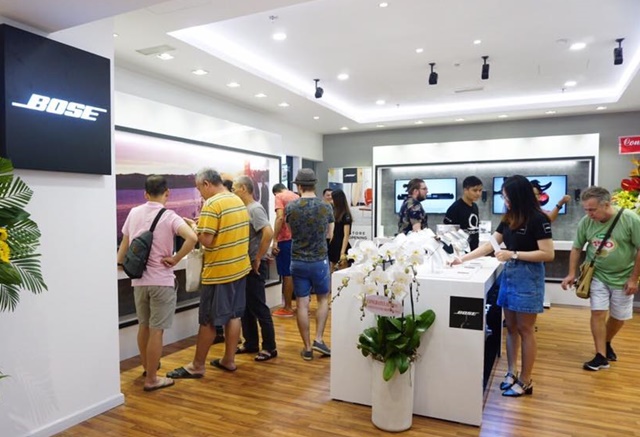
    Electronics retailer Bose is shutting down its 19 Australian retail stores over the next few months, with the intent to focus on its e-commerce offer in the region.

    Locations across North America, Europe, and Japan will also be affected, putting hundreds of people out of work across the store network.

    The business said in a statement that the approximately 130 stores located across Greater China, the United Arab Emirates, India, Southeast Asia, and South Korea will remain open.

    “Originally, our retail stores gave people a way to experience, test, and talk to us about multi-component, CD and DVD-based home entertainment systems,” Colette Burke, vice president of global sales for Bose said.

    “At the time it was a radical idea, but we focused on what our customers needed, and where they needed it – we’re doing the same thing now.  It’s still difficult because the decision impacts some of our amazing store teams who make us proud every day.”

    According to the brand, it will be offering assistance and severance packages to affected employees.

    Bose joins a list of retailers who have committed to closing stores over the next few months, with EB Gamesshutting 19 stores, Harris Scarfe closing 21, Bardot closing 58, and Curious Planet’s closure seeing 63 doors shut.

    In total, this brings the number of guaranteed store closures to 180 – not taking into account what Jeanswest’s voluntary administration will mean for its 146 stores across Australia.

    While consumer sentiment has been historically low recently, the added pressure on the economy and public sphere due to the unprecedented bushfires burning across the country has raised fears that the Christmas period may not have lived up to retailers’ expectations.

    Australian Retailers Association executive director Russell Zimmerman warned that the consensus for December and January trade is still out, to expect the fires to have an impact on trade figures.

  • LG TV lets you shop fashion you see in TV shows

    LG TV lets you shop fashion you see in TV shows

    Video commerce firm TheTake has partnered with smart TV manufacturer LG Electronics and a range of media companies to allow viewers to “shop shows” for fashion, accessories, homeware, tech devices and even menu and recipe items.

    Beginning this spring, owners of LG’s webOS Smart TVs will be able to purchase hundreds of different products identified and tagged by TheTake’s proprietary technology, which has scanned and identified hundreds of items per television episode and film.

    “Shoppable video has been talked about since the days of Rachel’s sweater on ‘Friends’,” said TheTake co-founder and CEO Tyler Cooper. “Previous solutions haven’t addressed the long-tail opportunity where each individual viewer wants to shop for something different. Shoppable video isn’t just about Rachel’s sweater, but also Chandler’s jacket, Joey’s sunglasses, Monica’s couch and so on. To address the full breadth of consumer interest, we leverage machine learning to make more than 500 products shoppable in a given episode of television. We’re excited to bring our AI-powered solution to viewers with LG and our various content partners.”

    With a record amount of TV content produced last year, TheTake’s machine-learning algorithms enable product identification and tagging at scale. TheTake’s technology can currently identify several hundred million products from thousands of retail partners when and where they appear in various TV episodes and movies.

    “The ability to seamlessly shop for the items we see in our favorite shows and movies is something we’ve long wanted to bring to LG smart TV users,” said LG Electronics US head of home entertainment brand marketing Michelle Fernandez. “Now, in partnership with TheTake, we’re introducing the feature on LG’s 2020 smart TVs for the easiest and most consumer-friendly experience for shopping the looks from TV and movies.”

    TheTake’s AI feature will be available on all 2020 LG OLED, LG NanoCell and UHD smart TV models installed with the webOS smart TV platform. TheTake has negotiated an agreement with a large US MVPD to roll out the technology across millions of set-top boxes later this year. And TheTake has also partnered with WarnerMedia, A+E Networks, Crown Media Family Networks, NBC Universal and others to roll out the technology over their various channels throughout the year.

  • New chipset announced today will make 5G easier for consumers to afford

    New chipset announced today will make 5G easier for consumers to afford

    Chip designer MediaTek impressed many when it introduced its new flagship Dimesnity 1000 SoC. The chipset includes an integrated 5G modem chip that supports both sub-6GHz and mmWave 5G, and LTE. Additionally, the Dimensity 1000 has four high-performance Cortex-A77 CPU cores running at a clock speed of 2.2GHz and four Cortex-A55 efficiency CPU cores running at 2GHz. ARM’s Mali-G77 MP9 graphics chip is included. The chip is manufactured by TSMC using its 7nm process.
    MediaTek unveiled the Dimesnsity 800, a chipset designed for lower priced 5G handsets. This will help bring the faster 5G data speeds to those who normally wouldn’t be able to afford a device that supports the next generation of wireless connectivity. While the company claims that the integrated 5G modem chip is more efficient when it comes to battery life, there is a catch. The modem on the Dimensity 800 does not support mmWave 5G signals, which deliver the faster 5G data speeds. This means that devices powered by the MediaTek Dimensity 800 SoC can connect in the states with T-Mobile’s nationwide 5G network and AT&T’s consumer 5G network. However, Verizon’s 5G mmWave network is out.
    The Dimensity 800 will feature four Cortex-A76 CPU cores running at a clock speed up to 2GHz and four Cortex-A55 CPU cores also running up to 2GHz. MediaTek says that with four performance cores, demanding gaming applications will launch faster. The chip supports displays carrying a resolution up to FHD+ (1080p) with a refresh rate of up to 90Hz. It will drive a quad-camera setup with a primary sensor up to 64MP and handle camera-based AI, facial detection, automatic noise reduction, and white balance.
    Qualcomm’s Snapdragon 765 Mobile Platform and its gaming enhanced Snapdragon 765G might have only half the number of performance cores as the Dimensity 800 sports, but it does support some higher-spec’d phones. Qualcomm’s chips handle both sub-6GHz and mmWave 5G signals. The Snapdragon 765/765G will be equipped with a pair of Cortex-A76 CPU cores, one running at 2.3GHz, the other at 2.2GHz. Six Cortex-A55 cores running up to 1.8GHz are also included. The component also supports QHD+ resolution displays (1440p), 192MP camera systems and video at 4K.
    MediaTek hopes to have its flagship Dimensity 800 inside devices launching in the first half of this year. TL Lee, the head of MediaTek’s wireless business unit, said, “MediaTek already launched its flagship 5G smartphone solution, the Dimensity 1000, and with the 800 series 5G chipset family, we are bringing 5G to the mid-tier and mass market. Everyone should have access to great technology. The Dimensity 800 Series will power the New Premium segment for 5G, bringing consumers flagship smartphone features and performance at mid-range price points.”
  • Qualcomm Launches Autonomous Driving Computer, Aiming To Hit Roads By 2023

    Qualcomm Launches Autonomous Driving Computer, Aiming To Hit Roads By 2023

    Qualcomm Inc on Monday announced a computing system for autonomous vehicles designed to handle everything from lane controls to full self-driving that it aims to have on the road by 2023. The system, dubbed Snapdragon Ride, is the company’s first foray into a full system to power self-driving cars. San Diego-based Qualcomm, known best as the world’s biggest mobile phone chip supplier, has been a major automotive supplier for more than a decade, but primarily for the modem chips that connect vehicles to the internet and chips for the infotainment systems that power screens inside vehicles.

    Qualcomm has spent years developing self-driving technology near its headquarters in virtual silence while rivals such as Intel Corp and Nvidia Corp jumped into the market, spending billions on acquisitions supplying major automakers for autonomous driving.

    Patrick Little, the senior vice president and general manager of Qualcomm’s automotive business, said the company is using the expertise it built in the mobile phone processor business developing powerful processors that consume little electricity and generate little heat.

    Qualcomm’s new computers can fit in one hand and do not need fans or liquid cooling systems to prevent them from overheating. Lower power consumption will become important in electric vehicles, in which computers will have to compete with the drive train for battery power.

    “Many of these cars have a supercomputer in the back. It looks like your kid’s gaming PC,” Little told Reuters in an interview. “Now imagine you’re putting that in the trunk of an electric vehicle. Now your range anxiety is just doubled.”

    Qualcomm has also broken the system into pieces of hardware and software that can be scaled up or down for various needs from automakers. A smaller version of the computer can be used for simpler tasks like lane-control, or the computers can be chained together for full self-driving. Little said Qualcomm has used test vehicles in San Diego to develop its own set of self-driving software algorithms if automakers want to use them, but that it will be up to each one.

    “If they came to us with their own software stack, or even somebody else’s software stack, we’re happy to say we’ll help you” adapt it to Qualcomm’s hardware, he said.

    Qualcomm and General Motors Co on Monday also said that the automaker has expanded its existing partnership with the chip suppler into “high performance compute platforms.” Qualcomm previously provided chips for the company’s dashboard electronics, location tracking and driver-assistance systems.

  • Samsung ships nearly 7 million Galaxy 5G devices in 2019

    Samsung ships nearly 7 million Galaxy 5G devices in 2019

    Even though 5G services are still in the early stages of development, consumers have already started to invest in 5G devices. Samsung is one of the biggest providers of 5G smartphones, at least according to the numbers revealed today by the South Korean company.

    During 2019, Samsung has shipped no less than 6.7 million Galaxy 5G devices, which accounts for nearly 54% of the global smartphone market. Currently, Samsung offers five 5G-enabled smartphones, including the Galaxy S10 5G, Note 10 5G, Note 10+ 5G, Galaxy A90 5G, and Galaxy Fold 5G.

    Also, Samsung will launch the Galaxy Tab S6 5G, the world’s first tablet to feature 5G support, in the first quarter of 2020. The slate should be initially released in South Korea, but customers in the United States will be able to buy it soon afterward.

    Samsung Electronics’ president TM Roh promised that 2020 will be the year of Galaxy 5G and that his company will slowly bring the technology to more device categories, so expect even more 5G Galaxy devices to arrive in the coming months.

    On a side note, Samsung confirmed that it is now providing network equipment for the 5G commercial service in South Korea and that it’s been selected to offer 5G network equipment for three major US carriers.

  • Three of the biggest smartphone manufacturers unite to bring an AirDrop alternative to Android

    Three of the biggest smartphone manufacturers unite to bring an AirDrop alternative to Android

    Something people unfamiliar with iPhones are often surprised to learn is that iOS doesn’t have a “share via Bluetooth” option. Instead, Apple users rely on the company’s proprietary AirDrop feature to send files between each other but if an Android device gets involved, the options are email or an app.

    AirDrop uses a combination of Bluetooth and Wi-Fi to establish a fast and secure connection directly between two Apple devices which makes it very convenient. So far, there’s no such feature that works universally on all Android phones although some manufacturers have their own solutions. Well, that might change soon.

    Oppo, Vivo and Xiaomi announced in a press release that they’re forming the “Peer-to-Peer Transmission Alliance” in order to “provide users with an unparalleled file transfer experience.” The new file transfer system doesn’t have a name yet, but it will also use Bluetooth for pairing and WiFi P2P (peer-to-peer) for the data transfer.

    Despite relying on WiFi, the system won’t disconnect users from their WiFi networks and can be used simultaneously without interfering with other activities. The new system promises an average transfer speed of 20MB/s with maximum speeds potentially much higher depending on the devices involved.

    The three manufacturers are selling hundreds of millions of devices each year which will make a compelling case for other brands to join the alliance. Oppo owns the Realme and OnePlus brands, so we’ll likely see the new system on their new devices as well, while Xiaomi will surely add it to its Redmi phones. If Huawei and Samsung are convinced to join (less likely due to their large market shares) the system will encompass a very large percentage of Android devices and the remaining manufacturers will be smart to follow.

    Hopefully, what we’re seeing today is the laying of the foundation for an Android-wide file transfer system suitable for the needs of consumers today and in the future. The first smartphones with the new system will be available in February this year, according to the press release, with more to follow as the companies bring new phones to the market.

  • Lenovo and JD plan to sell US$1.4 billion of B2B products over three years

    Lenovo and JD plan to sell US$1.4 billion of B2B products over three years

    Lenovo and JD have announced a plan to sell US$1.4 billion in enterprise products over the next three years.

    Lenovo will offer its full line of products for enterprise clients via JD’s enterprise-procurement platform. Lenovo and JD will also launch a business-to-manufacturer (B2M) platform to provide enterprise clients with customised products and services.

    “JD is one of Lenovo’s most important retail partners in China. We have maintained a deep strategic cooperation for years,” said Zheng Liu, GM of Lenovo Enterprise Products. “The launch of the B2M platform is an important milestone for the enterprise procurement industry, and it will further take the industry to a new level.”

    Apart from large companies, JD Business customisation will soon be available to small-to-medium sized companies through the B2M initiative.

    More than 2000 of Lenovo’s service stations and its smart-service system will provide customer service to enterprise clients nationwide.

    “The digital transformation has greatly impacted the enterprise procurement sector,” said Chunzheng Song, president of JD Business.

    “As China’s largest retailer, JD is committed to efforts to streamline the procurement process for enterprises of all sizes. The partnership of Lenovo and JD provides a pioneering solution, and we expect to leverage JD’s big data ability to continuously improve the customisation for the traditional enterprise procurement sector.”

    JD has more than 7 million enterprise clients on its platform. Its enterprise procurement business, JD Business, aims to help 100 suppliers surpass $143 million in sales next year and bring together 200 technical partners and 20,000 enterprise service partners on its platform.

  • The first Snapdragon 865 benchmarks are out, here’s how it compares to Apple’s A13

    The first Snapdragon 865 benchmarks are out, here’s how it compares to Apple’s A13

    Just two weeks ago, Qualcomm officially announced the Snapdragon 865 chipset, which is set to power most of next year’s premium Android handsets. While the 865 will bring widespread 5G support, improved battery efficiency, and more powerful AI processing, the first reported benchmarks give us a glimpse of how much of a raw speed boost the new Snapdragon will offer.

    The Qualcomm’s reference device for the Snapdragon 865 scores an impressive 3445 on the Geekbench 3 multi-core benchmark in performance mode, boasting neck-and-neck performance with the A13 Bionic-powered iPhone 11 Pro. On the other hand, the latest Snapdragon thus offers a significant boost over this year’s Snapdragon 855, which powers most current flagships and scores around 2500-3000.

    Of course, one other way the Snapdragon 865 offers a marked boost over this year’s chipsets is with its increased focus on AI, including support for a new neural core processor. In AImark, an artificial intelligence-based benchmark, the Qualcomm reference device scored a sky-high 108,650, completely blasting the iPhone 11 Pro’s 59,330 out of the water.

    What does this mean? Well, first things first- the Snapdragon 865 is not so game-changing that it somehow makes all current chips obsolete. With the exception of some niche tests, it performs roughly similar to its peers, like Apple’s A13 Bionic, Samsung’s Exynos 990, or Huawei’s Kirin 990. So in everyday usage, you might not notice that the Snapdragon is markedly faster than any other 2020 flagship.

    On the other hand, Apple’s house-made chipsets have historically always been at the top of the hill, and this is the first time a Snapdragon rival has come close to having it beat- let alone actually outperforming it in a major benchmark. That means iPhones and Androids are more neck-and-neck than ever before.

    But the Snapdragon 865 is next year’s chip, while the iPhone 11 is here already, you say? That’s true, but consider this- the Snapdragon 855 is already a year old, while the A13 was only announced three months ago. Apple’s A13 will power the latest iPhones for the majority of 2020, just as the Snapdragon 865 will do on the Android side of things.

    In any case, it’s important to appreciate that all flagships across manufacturers and operating systems are becoming more and more advanced- they’ll need all the extra oomph they can get to power 5G connectivity and all the extra consumption that’ll bring with it. In all honesty, we still can’t know for sure if the Snapdragon 865 is the be-all, end-all chipset of 2020, but we do know that it’ll give Apple a run for its money. The playing field is level now- let the games begin.

  • Samsung tipped to announce 144MP imaging sensor

    Samsung tipped to announce 144MP imaging sensor

    As we told you earlier today, the 108MP sensor rumored to be found on the Samsung Galaxy S11+ could employ a 9:1 pixel binning ratio as opposed to the usual 4:1 ratio. This would produce sharp 12MP images with a record pixel size of 2.4 microns. But if Samsung is going to keep using 12MP images, the pixel binning ratio could be rising to 12:1 before the end of next year. That’s because graphs tweeted by tipster Ice Universe suggest that the tipster believes Samsung will announce a 144MP image signal processor (ISP) built using the 14nm FinFET process.
    Interestingly, it was just last week when Samsung announced a new manufacturing system to produce imaging sensors using the 14nm FinFET process. The process number relates to the number of transistors inside a chip; the smaller the process figure, the larger the number of transistors packed inside an integrated circuit. Chips with more transistors offer improved performance and energy efficiency. The information that Ice Universe included with his tweets bare that out.
    First, we should point out that the planar method involves building individual components of a transistor and then putting them together. FinFET ICs use “fins” to control the voltage of a chip helping it to increase performance with lower energy consumption. One graph shows that a 12MP ISP made using the 14nm FinFET process uses 37% less energy in digital and 18% less in analog than a 12MP ISP made using the 28nm planar process. A second chart simulates the power consumption of a 144MP ISP in 10fps capture mode. The chip, manufactured using the 14nm FinFET process, consumes 42% less energy in digital and 21% less in analog when compared to a similar ISP built using the 28nm planar method.
    And with Qualcomm announcing that the Snapdragon 865 Mobile Platform will support sensors up to 200MP, the rumor about an upcoming 144MP sensor could very well be true. We shouldn’t expect to see a 144MP sensor in the Galaxy S11+, but perhaps the technology will be ready for the Galaxy Note 11+.
    The Samsung Galaxy S11 line could be unveiled on February 18th and we could see as many as five cameras on the back of the Galaxy S11+. That would include the aforementioned 108MP primary camera, an improved ultra-wide camera, two telephoto cameras (one using a periscope technology to produce 5x optical zoom) and a Time of Flight (ToF) sensor for improved bokeh blurs on portraits, enhanced AR capabilities and secure 3D mapping. The 108MP sensor will reportedly team up with the telephoto cameras to deliver 50x hybrid zoom and 100x digital zoom. This is a feature that might be called “Space Zoom” by Samsung. A 144MP sensor is sure to take the potential of “Space Zoom” even higher.
    Photography remains one of the most competitive battlegrounds in the smartphone industry. Apple took its game to a new level this year by adding the Deep Fusion computational photography feature, an ultra-wide camera, slow-motion selfies and Night Mode. But Samsung and Huawei are poised to set the tone for 2020 with the Galaxy S11 and P40 lines. And while photography has always been an evolving feature of the smartphone industry, this might be the most cutthroat we’ve seen it since Nokia, Apple, and Samsung battled over photographic supremacy (including low-light capabilities) six years ago. At that time, the Nokia Lumia 1020 featured the most ambitious smartphone camera ever used on a handset to that point. That camera weighed in at 41MP, offered OIS and an aperture of f/2.2. That compared to the 8MP rear camera used on the iPhone 5 and the 13MP camera employed by the Galaxy Note 3.
  • Apple Japan opens its first store in Kawasaki

    Apple Japan opens its first store in Kawasaki

    Apple Japan has opened its 10th store – in Kawasaki.

    The new single-story outlet in Lazona Kawasaki Plaza features the brand’s distinctive all-glass front as well as a large video wall, a forum, and avenue shelving.

    The venue will be used as a family learning hub via the store’s Today at Apple educational sessions, using products in store for educational purposes in AR, coding, photography and music-making, amongst others.

    The Kawasaki venue is differentiated from other more spectacular Apple Japan stores for being more community-focused.

  • Razer opens its first London flagship store

    Razer opens its first London flagship store

    Singapore and Hong Kong-backed gaming company Razer has opened a flagship store in London’s West End as it tries to boost its global reputation.

    Backed by Singapore fund Temasek with Hong Kong tycoon Li Ka-shing and founded by Singaporean entrepreneur Min-Liang Tan, Razer has expanded from its gaming-hardware roots into software and financial services.

    The new RazerStore in London is the first in Europe and the brand’s largest yet with a 3700sqft footprint. It follows stores in Las Vegas, and San Francisco in California, Causeway Bay and Tsim Sha Tsui in Hong Kong and another in Taipei. RazerStore London opened to long queues.

    Like Razer’s other stores, the British venue is almost all black with contrasting bright green throughout.

    “All in all, it’s a decent retail experience, quite dissimilar to the Apple retail stores, but in a familiar kind of way,” observed Adrian Ip of WCCF Tech in a commentary posted online.

    “Where Apple is all light colors and airy atmospheres, Razer knows its audience and is primarily targeting it at hardcore gamers so thumping music, black paint, and RGB everywhere is the order of the day.”

    Visitors can try out all the Razer goods including mice and keyboards designed for gamers, headsets and the brand’s Blade-series laptops. Accessories and a small range of apparel complement the offer.

    In the downstairs area of the store, guests can play the game Fortnite, using Razer equipment, and there is a streaming booth.

    Ip said he was told by staff that RazerStores offer the brand a physical presence in major cities to market their goods as well as get more people hands-on with their gaming equipment.

    “This makes them less reliant on reviewers, but these are no glory loss-leaders: the stores have quickly reached profitability after launch”.

    “Given London’s location as a major global city with a large and wealthy population, it seems likely that this shop should reach profitability relatively quickly too.”

  • What the new JD superstore says about the future of e-commerce

    What the new JD superstore says about the future of e-commerce

    On Singles Day this year, China’s largest online retailer JD.com launched a 50,000 sqm JD superstore in Chongqing, Mainland China.

    Nicknamed the E-Space store, the massive, 5G-equipped high-tech complex is designed to flex JD’s strengths in retail technology, logistics, and services.

    More than 30,000 customers crammed into the store, purchasing over 10 million RMB worth of products that day.

    A true omnichannel experience

    The E-Space store displays more than 1500 brands and 200,000 items across electronics, furniture, home appliances, and smaller categories such as health & wellness, beauty, books, and daily necessities.

    It is split into seven zones with 55 interactive experience zones, and smart robots designed to guide customers to the right area. This layout gives JD an opportunity to provide a unique offline retail experience that can’t be replicated online.

    For example, the store hosts Apple’s largest authorized offline experience store, a Microsoft smart home experience area, and GE’s first omnichannel home-appliances store in China. There’s a special floor designed for immersive virtual reality video games, and there are JD Home sections that display white goods appliances and furniture in different living scenarios.

    Such a store format is designed to give customers a better sense of what products would look like at home.

    To merge these experiences with its e-commerce business, JD has equipped each item’s price tag with a QR code that customers can scan to order online, through JD’s WeChat mini-program.

    These smart price tags are electronic, meaning that prices can be updated remotely to keep up with online price changes on JD’s e-commerce platform.

    Such an omnichannel model is important for large purchases such as washing machines and furniture, especially in lower-income cities such as Chongqing.

    Customers may be more hesitant to make these purchases as they might account for a large chunk of their monthly salaries. The customer journey is longer; shoppers might see a product in a store but wait several days or weeks to make a final decision.

    But with JD’s model, once that decision is made, the products can be delivered within 24 hours, complete with installment and repair services.

    In this sense, JD is providing multiple touchpoints between the merchant and the customer, as well as a full end-to-end service.

    This business model is designed to help JD differentiate from other retailers who may sell the same brand but lack the same capabilities in technology, logistics, and services.

    How the JD E-Space store fits into JD’s Boundaryless Retail Strategy

    Boundaryless retail is meant to be JD’s response to Alibaba’s New Retail strategy, leveraging technology, big data, and cloud computing to merge offline retail with online e-commerce, sharing data and traffic to provide an optimized omnichannel experience.

    The premise is that the typical marketplace e-commerce model where customers search for their products on a platform is seeing slowing growth.

    For future growth, players will have to look towards decentralized e-commerce, where new customers discover new products through online content partners and offline retail/experience centres. The E-Space store is just one example, but other examples include JD’s convenience store chain, its fresh fruit partner chain 7Fresh, and larger retailer partners such as Yonghui Superstores and Walmart.

    After hooking in new customers, JD can then upsell them using its online e-commerce capabilities. This is particularly important in China’s smaller cities where e-commerce is less prevalent and older users are less tech-savvy.