Category: Electronics

Retail News Asia is committed to providing both local and global retailers with the latest Electronics news throughout the Asian market. This on a daily base.

  • Fitbit debuts fitness and health Premium subscription service

    Fitbit debuts fitness and health Premium subscription service

    Alongside the Versa 2 smartwatch, Fitbit announced a subscription-based fitness and health service that it calls Fitbit Premium. The service uses unique data from each subscriber to deliver a personalized experience “with actionable guidance and coaching.”

    The premium service is meant to help users achieve their health and fitness goals and costs $9.99 per month. At launch, Fitbit Premium includes nine guided health and fitness programs, which will help subscribers get more sleep, wake up energized, increase their activity, manage nutrition and create lasting healthy habits.

    Among the programs that subscribers will be able to use, Fitbit mentions actionable coaching, daily tips and tricks, structured workout plans, relaxation tools, recipe suggestions, and educational content.

    But that’s not all, as Fitbit promises to launch additional activity, sleep, and nutrition programs by the end of the year. Also, to help those with a condition such as diabetes or weight loss, Fitbit says it will launch a personal, one-to-one coaching service in 2020, with a limited pilot targeted to roll out later this year.

    Fitbit Premium will start rolling out in September at $9.99 per month or $79.99 per year. However, promotional pricing and product bundle offers might be available before and after the premium services releases.

  • Motorola might drop Qualcomm’s chipsets for the Moto G8 Play

    Motorola might drop Qualcomm’s chipsets for the Moto G8 Play

    We don’t expect Motorola to announce a new lineup of mid-range smartphones until next year, but that doesn’t mean the US company is not already working on the Moto G8 series. Even though we’re still far from an official announcement, the first details about Motorola’s plans regarding some of its upcoming phones have already emerged.

    The folks over at XDA Developers report at least one of Motorola’s upcoming smartphones, the Moto G8 Play will no longer come equipped with a Qualcomm processor. Instead, Motorola plans to include either the MediaTek Helio P60 or the MediaTek Helio P70.

    On the bright side, the Moto G8 Play is rumored to pack a much larger 4,000 mAh battery, a 1,000 mAh increase over the current Moto G7 Play model. Also, the smartphone will include either 3 or 4GB RAM and 32 or 64GB of internal memory. Pretty much every part of the phone (memory, battery) seems to have been improved over the current model, although we’re not so sure about the processor.

    Furthermore, depending on the market, the Moto G8 Play will support NFC (Near Field Communication), dual SIM, both, or neither of those. For the time being, Motorola plans to launch the Moto G8 Play in Latin America, Asia Pacific countries, and Europe, so there’s no telling whether or not it will bring it to the US.

  • The success of the iPhone keeps Apple from moving production out of China

    The success of the iPhone keeps Apple from moving production out of China

    With U.S. President Donald Trump willing to tax U.S. companies and consumers into a recession, Google apparently is ready to move the production of its Pixel handsets and smart speakers out of China and into Vietnam and Thailand respectively. Apple has yet to announce a move away from China although reports earlier this year indicated that it was looking to shift 30% of its manufacturing out of the country. And yes, Vietnam is one of the regions that many believe will end up home to some of Apple’s manufacturing facilities-eventually. But this won’t happen overnight; finding a trusted supply chain and trained workers take time.

    Apple does have an incentive to move its production out of China; starting on December 15th, the iPhone will be included in a group of products from China that will be taxed at 15% when imported into the states. Originally, the tariff was supposed to start on September 1st, but President Trump didn’t want the Christmas holiday season marred by slower growth due to the tariffs. However, the Apple Watch and the AirPods face a 15% tax starting on September 1st.

    Apple could decide to eat all or some of the tax or pass all or some of it on to consumers in the form of higher prices. Considering that 13.8% fewer iPhones were sold to consumers globally during the second quarter (year-over-year), Apple might decide to absorb the additional costs for now.

    While Apple does produce a small number of iPhones in India, this was originally done to escape an Indian import tax that might have made it hard for consumers in the country to buy an iPhone; while it is the second-largest smartphone market in the world, India is a developing country after all. But what is frightening to consumers worried about higher iPhone prices is that the tech giant is becoming more reliant on its manufacturing facilities in China. According to Reuters, Apple has added far more factories inside the country than out of it. It’s main contract manufacturer Foxconn has expanded from 19 Chinese factories in 2015 to 29 this year. And Pegatron, another company paid by Apple to assemble its products, has gone from 8 plants in the country to 12 over the same time period.

    And supply chain data calculated by Reuters shows that Apple is pretty much still committed to China. 44.9% of Apple’s suppliers were in China back in 2015, a figure that has actually risen to 47.6% this year.

    “The vast majority of our products are kind of made everywhere. There is a significant level of content in the United States, and a lot from Japan to Korea to China and the European Union also contributes a fair amount. … I think that will carry the day in the future as well.”-Tim Cook, CEO, Apple

    If you’re wondering why Google can easily shift Pixel production from China to Vietnam and Apple can’t, it is a matter of scale. Even after doubling the number of Pixel handsets to be assembled this year, Google is building only 8 to 10 million phones in 2019 which is a drop in the bucket compared to the number of iPhones that Apple churns out in the course of a year. So Apple needs a larger supply chain with companies that it can trust to deliver in the quantity and quality it needs for the iPhone. But the company might have no choice but to keep iPhone production in China. According to Dave Evans, CEO of San Francisco supply chain firm Fictiv, there are only a few places outside of China that can produce 600,000 phones a day. In other words, the success of the iPhone is what is keeping Apple in China despite the tariffs.

  • Apple sold 13.8% fewer iPhones during the second quarter

    Apple sold 13.8% fewer iPhones during the second quarter

    The global smartphone market continued to languish during the second quarter according to the latest report from Gartner. 367.9 million units were sold to end-users during the three month period from April through June, down 1.7% from the 374.3 million units rung up during the same period last year. The analytical firm’s senior research director Anshul Gupta notes that high-end models have experienced a harsher slow down in demand than low and mid-range handsets. To generate upgrades, Gupta says that manufacturers are trying things like bezel-less displays, multi-camera setups in back and front and larger capacity batteries.

    Samsung remains King of the smartphone world after selling 75.11 million handsets during the quarter. The company’s market share rose year-over-year from 19.3% to 20.4%. Huawei’s sell-through of 58.06 million phones gave it a 15.8% slice of the global smartphone pie. The company had hoped to be on top of this list by the fourth quarter, but its placement on the U.S. Entity List makes that a long shot. Huawei is not allowed to access its U.S. supply chain, although U.S. suppliers have a second 90-day window to help the company service its existing customers and update certain smartphone models. Despite the ban, Huawei sold 16.5% more units during the period, compared to the same quarter last year.

    Gartner’s data shows Apple selling 38.52 million iPhones during the quarter, down 13.9% from the 44.72 million units it sold during last year’s second quarter. The company no longer reveals this data during its quarterly earnings report but does release a breakdown of revenue. For the calendar second quarter (Apple’s fiscal third-quarter), iPhone revenue declined 12% and represented less than 50% of the company’s total revenue for the first time since 2012. According to Gartner, the iPhone accounted for 10.5% of smartphone sales during the three-month period.

    If Apple continues to struggle with iPhone sales, it will soon be surpassed by Xiaomi. The latter sold 33.19 million phones globally from April through June, representing 9% of the market. Oppo finished fifth after selling 28.11 million phones in the quarter, giving it 7.6% of the smartphone market.

    “Strong demand for Samsung’s new Galaxy A series smartphones and the revamp of its entire entry-level and mid-range smartphone range helped this positive performance. Demand for Samsung’s flagship Galaxy S10 started to weaken during the quarter, however, indicating that achieving growth in 2019 as a whole will be a challenge…too few incremental benefits are preventing existing iPhone users from replacing their smartphones”-Anshul Gupta, senior research director, Gartner

    The struggling smartphone industry is a worldwide phenomenon. Gartner points out that of the top five smartphone markets in the world, only China and Brazil showed growth on an annual basis. China remains the top market in the world for connected handsets with sales of 101 million units during the quarter, a small gain of 0.5% Sales in the country benefitted from lower prices as vendors looked to get rid of their inventories of 4G LTE phones with more 5G models made available. The 10.8 million smartphones sold in Brazil from April through June was 1.8% more than the number rung up in the country during the same time period last year. In India, the world’s second largest smartphone market, 35.7 million phones were sold during the quarter. That was a 2.3% decline on an annual basis as fewer consumers in the country decided to upgrade from a feature phone to a smartphone.

    Gartner says that smartphone sales will remain weak for the rest of the year and that a total of 1.5 billion handsets will be sold to end-users during 2019.

  • Official roadmap shows when your Nokia phone will receive Android 10

    Official roadmap shows when your Nokia phone will receive Android 10

    Now that we know the name of the next version of Android, the next question you have is “when will my phone receive it?” If you own a Nokia phone (made by HMD Global under license from Nokia), we can give you that information right now, straight from the manufacturer’s mouth. Nokia has released a roadmap giving us a quarter-by-quarter look at its schedule for updating its Android phones. Keep in mind that there could be changes made along the way; in the past, we’ve seen manufacturers regret that they released any type of schedule for software updates. Disappointed Android users are an angry group, but HMD Global apparently feels confident enough to release the roadmap.

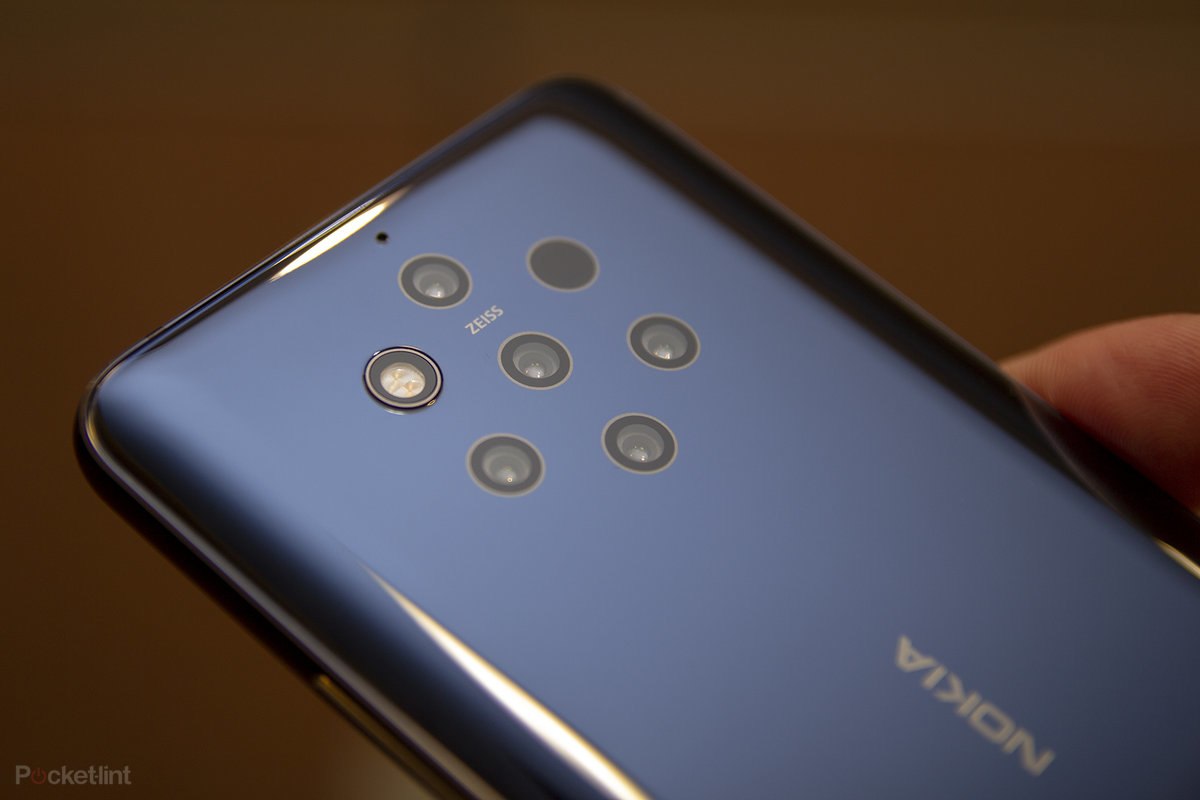
    During the middle of the fourth quarter of this year (approximately sometime in November), Nokia plans on disseminating Android 10 to the Nokia 7.1, Nokia 8.1 and the Nokia 9 PureView.  That will be followed with an update to the next group of phones early in January 2020. That batch includes the Nokia 6.1, Nokia 6.1 Plus and the Nokia 7 Plus. Early in the first quarter (which runs from January through March), Android 10 will be sent out to the Nokia 2.2, Nokia 3.1 Plus, Nokia 3.2 and the Nokia 4.2. A few weeks after those phones are updated, the latest Android build will be pushed out to the Nokia 1 Plus, Nokia 5.1 Plus and the Nokia 8 Sirocco. And four phones will be updated during the second quarter of 2020 (April through June. Those models are the Nokia 2.1, Nokia 3.1, Nokia 5.1, and the Nokia 1.

    HMD Global has been pretty good about updating its phones and even kept its promise to bring Android 9 Pie to the 2017 version of the Nokia 6 back in February. The latter is powered by a Snapdragon 430 chipset and has 3GB of memory.

    Android 10 features a new gesture system for navigating through the UI, system-wide dark mode, Focus Mode for Digital Wellbeing allowing users to mute notifications from distracting apps, Live Captions, improved notification settings and more.

  • Samsung unveils the new Galaxy A50s and A30s

    Samsung unveils the new Galaxy A50s and A30s

    Samsung continues to add tons of new smartphones to its Galaxy A series and the latest additions, Galaxy A30s and A50s, promise upgraded essential features, made even more powerful. Their main selling points are the triple-camera and big battery, but that doesn’t mean the rest of the features aren’t top-notch for a mid-tier phone.

    Unfortunately, there’s no information about price and availability yet, but Samsung announced they will come in four colors: Prism Crush Black, Prism Crush White, Prism Crush Green, and Prism Crush Violet.

    On paper, the Galaxy A30s seems to be the cheapest of the two, but probably not by much since the phones share many of the specs. For example, both phones boast massive 6.4-inch Super AMOLED Infinity-V displays, but the one on the Galaxy A30s has HD+ resolution, whereas the Galaxy A50s’ offers full HD+ resolution.

    Furthermore, Samsung Galaxy A30s packs an impressive triple camera (25MP+5MP+8MP), a secondary 16-megapixel selfie snapper, a 1.8GHz octa-core processor, either 3GB or 4GB RAM, 32GB/64GB/128GB expandable storage, and a huge 4,000 mAh battery.

    As mentioned earlier, the Samsung Galaxy A50s features similar specs, but it’s got a better triple camera (48MP+5MP+8MP), a larger 32-megapixel selfie shooter, a more powerful 2.3GHz octa-core processor, either 4GB or 6GB RAM, and 64GB/128GB expandable storage.

    Also, both Galaxy A series phones feature on-screen fingerprint, 15W fast charging support and USB Type-C port. However, it’s just the Galaxy A50s that comes with a dedicated Bixby button. Naturally, the Galaxy A30s and A50s will ship with Android 9.0 Pie right out of the box.

  • Apple report details iPhone Pro, AirPods 3, iPad upgrades, much more

    Apple report details iPhone Pro, AirPods 3, iPad upgrades, much more

    Apple is readying an onslaught of hardware products that’ll be announced over the next few months. The first of these will seemingly arrive in less than three weeks and today a new report by Bloomberg has detailed the company’s plans.

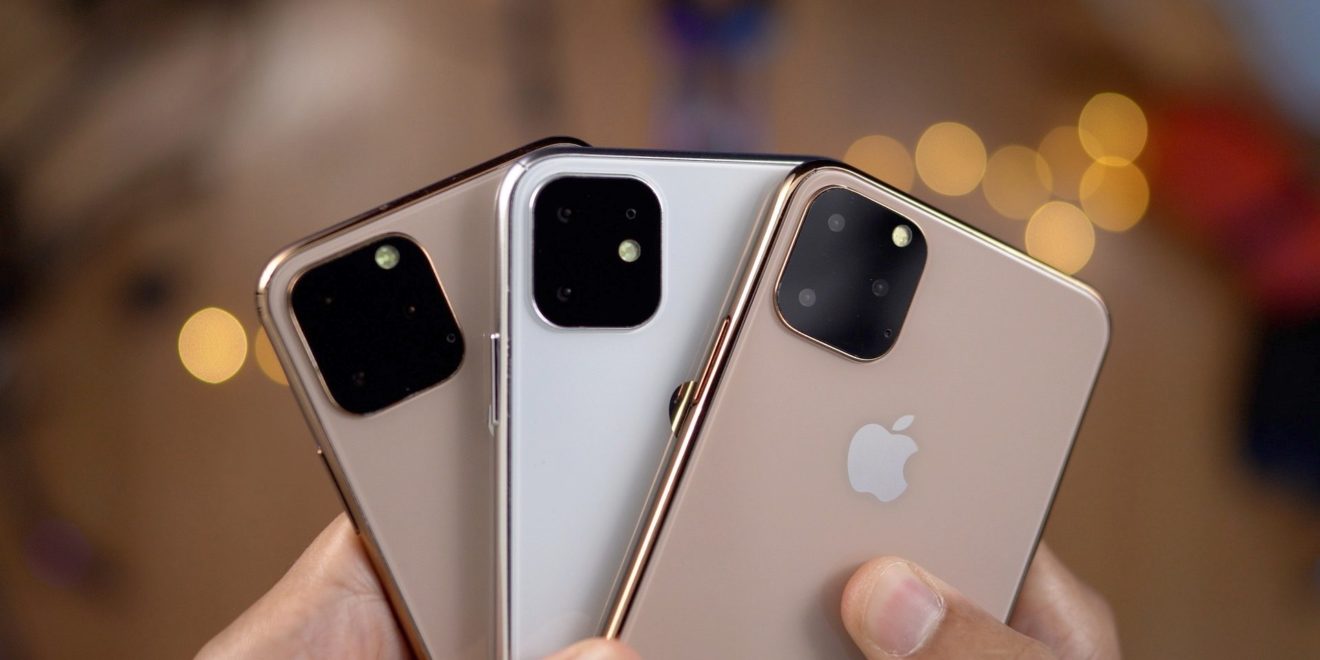
    According to people familiar with the situation, Apple is preparing to announce three new iPhone models at an event next month. The lineup will reportedly include two ‘Pro’ models that’ll succeed last year’s iPhone XS series and a cheaper iPhone XR replacement which could be branded as ‘iPhone 11’ or simply ‘iPhone.’

    This year’s premium models, as previous reports have indicated, will include a triple-camera system on the back that consists of a primary sensor, a telephoto camera, and an ultra-wide-angle alternative which grants access to a 120º field of view. The setup will capture three images simultaneously before stitching them together with the help of artificial intelligence to create a better photo that doesn’t cut out any important details.

    Apple’s next-gen photographic system will take higher resolution pictures that can rival “some traditional cameras.” Improvements in “very low-light environments” are to be expected too in addition to drastically upgraded video recording capabilities. According to sources, the Cupertino-based company has developed a feature that allows video to be retouched while being recorded. Users should also be able to apply effects, alter colors, reframe, and crop.

    The non-Pro iPhone 11 won’t be receiving a third wide-angle camera like its premium siblings but it should still inherit some important upgrades. Specifically, the smartphone’s expected to include a dual-camera system that’ll boast a 2x telephoto zoom camera and ultimately support an enhanced portrait mode.

    All 2019 iPhones are set to include Apple’s yet-to-be-announced A13 processor paired with a new co-processor chip known internally as “matrix” or “AMX.” This will handle certain math-heavy tasks and may result in an improved augmented reality experienced. Speaking of which, Apple is readying new 3D cameras for its 2020 iPhone series that’ll take this to the next level.

    Almost one year after Huawei first introduced the feature and around six months after Samsung announced its alternative, Apple has reportedly created its own reverse wireless charging system that’ll be present on this year’s ‘Pro’ models. The feature will let users power-up their AirPods by placing them on the iPhone’s rear. It should also work with the Apple Watch and other Qi-ready products.

    This year’s premium models will be identical from the front to the iPhone XS and XS Max that they replace but some important changes have apparently been made. According to today’s report, a new multi-angle Face ID system that works even when the devices are flat on a table will be present. Additionally, Apple has reportedly enhanced water resistance dramatically. So much so that users should be able to submerge the new iPhones for far longer than 30 minutes.

    Other changes will reportedly include a new “shatter-resistance” technology and a matte finish on the rear with some colors. Also worth pointing out is the presence of updated OLED displays which will ditch the 3D Touch system in favor of more advanced Haptic Touch.

    Corroborating previous information, Bloomberg believes Apple will announce a new 10.2-inch entry-level iPad that’ll replace the existing 9.7-inch model. Exact details are yet to be revealed but a reduction in the thickness of bezels is to be expected alongside significant internal upgrades and potentially a dual-camera system on the rear.

    In addition to this, the California-based company is reportedly preparing some upgrades to its iPad Pro series. The devices will look identical to the existing models from the front but should boast an iPhone Pro-like triple-camera system on the rear. Additionally, internal upgrades that’ll likely involve the addition of Apple’s A13X chip are to be expected.

    The Apple Watch has been upgraded on an annual basis for several years now and 2019 looks set to be no different. But after introducing some rather drastic changes twelve months ago, it seems the company is preparing only minimal changes for this year’s update.

    Bloomberg says Apple will be focusing primarily on the added features that watchOS 6 introduces and some new case finishes which should include ceramic and titanium model. Some internal upgrades are possible but concrete info is yet to emerge.

    While on the topic of wearables, it seems a pair of premium AirPods is currently in the works. The version will be more expensive than the current $159 pair but should include new features such as water resistance and noise cancellation. Apple was initially planning a launch alongside this year’s iPhones but the introduction has now been pushed back until next year.

    Completing Apple’s lineup of products is HomePod. The original continues to sell pretty poorly across the globe due to its high $300 price and it seems the company is planning to address this issue with a cheaper model that’ll have just two tweeters instead of the current model’s seven.
  • OnePlus TV confirmed to arrive in September

    After revealing the name of its upcoming TV, OnePlus announced today that the device will be launched on the market in September in just one country. If you’re looking to buy the OnePlus TV, you’ll be able to do that next month in India, as this is the first country getting it.

    In case you’re wondering why OnePlus decided to launch it India first, it appears that the Chinese company’s products have had great success in this country thanks to the many fans and supportive community.

    Over the past 6 years, we have achieved great success in India in large part because of our passionate and supportive community. Even after all these years, we’re excited to explore exciting new opportunities hand-in-hand with you. OnePlus TV is such an important product for all of us, and we can’t wait to see it in living rooms all over India.

    The good news is OnePlus announced it is working hard to launch the OnePlus TV in North America and Europe as soon as it establishes partnerships with most of the local and regional content providers because we all know “content is king.”

    Not many technical details about the OnePlus TV are known for the moment, but the company’s CEO Pete Lau said that “image and sound quality are fundamental features” the OnePlus must get right. He also said that OnePlus TV’s design and smart interconnectivity will probably make it even more exciting.

  • Apple’s healthcare unit needs to see a doctor

    Apple’s healthcare unit needs to see a doctor

    Earlier this year, Apple CEO Tim Cook said healthcare would be “Apple’s greatest contribution to mankind.” It appears that Apple is having problems with this unit after a number of members have left the team. Citing eight sources said to be familiar with the situation, CNBC says that there is tension in the company’s healthcare division and the group is essentially without direction after a series of changes at the top of the unit.

    The report says that while some employees have done well, others feel stifled and closed in, unable to get the team to work on their ideas. Part of the problem is getting the unit to agree on a direction to take. Half of the eight sources say that employees wanted Apple to take on some of the larger problems that the healthcare system faces today such as medical devices, telemedicine, health payments and the treatments of chronic disease. Apple, notes the report, has instead focused on creating features for its devices that focus on wellness and prevention for healthy people. The latter end of the healthcare industry is considered to be less risky and less regulated. Despite the issues inside the group, all eight sources agreed that healthcare remains a “strategic priority” for the company.

    Apple’s healthcare features are found mainly on the Apple Watch. The heart rate monitor has saved a number of lives, and the Series 4 model added an electrocardiogram (ECG) sensor that looks for abnormal heartbeats. The latter has also been a lifesaver and other watches, like the Samsung Galaxy Watch Active 2, also is equipped with an ECG feature. We do have to point out that it will remain disabled on the Galaxy Watch Active 2 until it receives FDA approval, expected sometime during the first half of next year. Apple’s Chief Operating Officer Jeff Williams is in charge of the healthcare team, and reportedly it was his idea to add sensors and algorithms to the Apple Watch once it became apparent that the device would not be a big seller as a fashion accessory.

    The company is reportedly working on a way for diabetics to measure their blood glucose levels using the Apple Watch, without having to draw blood. Currently, diabetics who depend on insulin prick themselves to draw a small drop of blood that is tested on a glucometer. This is a huge market because a new test strip is required for each test and insulin-dependent diabetics need to test themselves three or more times a day. If Apple can develop such a technology, it could take Apple’s healthcare initiative and the Apple Watch into uncharted territory. The Apple Watch happens to be the world’s top-selling smartwatch and anchors a wearables unit that saw revenue for the fiscal third quarter soar from $3.73 billion in 2018 to $5.53 billion this year. That was a 48.3% year-over-year gain.

    Earlier this year, Apple sent out a survey to check on the morale of employees in its healthcare unit. When the survey indicated that employees were not happy, Williams spoke with a number of employees to let them know that he was still committed to the business. But the executive also wears many hats at Apple and as COO he is responsible for overseeing Apple’s operations and its vast supply chain. Thus, the healthcare group might not have his full attention at times.

    Some of the sources say that Apple needs to be less secretive with its work in the $3.5 trillion healthcare industry. The company is traditionally tight-lipped about its projects, but that doesn’t fly in the world of medicine where clinical studies and published research play a big role.

  • Cross-brand file sharing feature announced by three phone manufacturers

    Cross-brand file sharing feature announced by three phone manufacturers

    As many Apple iPhone users know, AirDrop is a feature that allows them to share photos, videos and documents with nearby Apple devices without requiring an internet connection. This is achieved using Bluetooth and Wi-Fi connectivity. A WeChat post published today by Xiaomi reveals that three Chinese phone manufacturers are teaming up to provide their customers with wireless peer-to-peer file sharing across the different brands.

    This new feature will apparently use Bluetooth to pair the devices, creating a peer-to-peer Wi-Fi network just like AirDrop does, and transfer files at speeds up to 20Mbps. Xiaomi says that other smartphone manufacturers are welcome to join the trio. By the end of this month, a beta version of the new file-sharing protocol is expected to be rolled out. According to Counterpoint Research, Vivo, Oppo, and Xiaomi made up 49% of the domestic phone market during the first quarter. Adding some additional manufacturers, especially Huawei, would allow the vast majority of handsets in the country to share files without the use of internet connectivity. There is no indication whether Huawei or other Chinese companies are or aren’t interested in joining the original trio.

    Google itself has had a feature since 2011’s Ice Cream Sandwich called Android Beam that uses NFC to share “photos, videos, contact information, links to webpages, navigation directions, YouTube URLs, and more” by tapping two devices together. But Android Beam is being phased out in Android Q, replaced by a Google Play Services feature called Fast Share. This will be similar to Apple’s AirDrop thanks to the use of Bluetooth. Android Q users will be able to share files, images, URLs and small parts of text messages even without an internet connection.

    The Files by Google app, available in the Google Play Store, uses Bluetooth to allow Android devices with the app installed to share files at speeds as fast as 480Mbps. Encryption is employed to protect the privacy of those using the app.

  • Apple seems to have revealed the date of its iPhone 11 event

    Apple seems to have revealed the date of its iPhone 11 event

    Less than two weeks after the iPhone 11’s release date was seemingly revealed, an iOS 13 screenshot found within the latest beta version appears to confirm when Apple will be announcing its next-gen devices.

    The screenshot is named “HoldForRelease” and features the Calendar app with the date clearly set to Tuesday the 10th. The month isn’t displayed but the day lines up perfectly with September, which itself coincides with Apple’s usual announcement schedule. Lending further credence is the fact a similar screenshot was found in one of Apple’s iOS 12 beta releases last year which showed September 12th, the date that was subsequently confirmed for the iPhone XS and iPhone XR introductions.

    Considering the iPhone 11 series is now expected to debut on Tuesday, September 10, pre-orders for Apple’s upcoming trio of devices will likely commence on Friday, September 13. The actual launch, on the other hand, should happen on Friday, September 20. This coincides perfectly with the previously reported release date.

    On an unrelated note, an iPadOS 13 screenshot showing the same date was also spotted. Apple has been rumored to be planning the debut of a new 10.2-inch iPad alongside its next-generation iPhones and this image suggests this will indeed be the case.

    If Apple sticks to its typical iOS launch schedule, the upcoming iOS 13 and iPadOS 13 releases will be made available to download for devices such as the iPhone 8, iPhone XS, iPad Pro (2018), and iPad Air (2019) on Monday, September 16. However, today’s findings suggest this may not be the case.

    Another pair of iOS 13 and iPadOS 13 screenshots which are destined to be used on older devices show the Calendar display Monday the 23rd. This is one week later than expected and ultimate suggests Apple may be giving its developers an extra week to ensure everything’s in working order on previous-gen products. After all, unlike iOS 12 which was largely bug free, iOS 13 and iPadOS 13 beta releases have been plagued with issues since the beginning, many of which are still unresolved.

    The downside to this move is that iOS 13 and iPadOS 13 will be exclusive to the iPhone 11 series and 10.2-inch iPad (2019) for roughly three days because these are all set for release on Friday, September 20, as mentioned above.

    The upcoming iPhones have been consistently referred to as either the iPhone XI or iPhone 11 lineup over the course of the past year but a reliable tipster recently suggested Apple’s final names may be slightly different. Specifically, they mentioned the ‘Pro’ moniker but left quite a bit of room for speculation because they didn’t elaborate on the matter.

    The most logical strategy would be the creation of two very separate lineups. The successor to the iPhone XR could be marketed simply as the iPhone (2019) while the iPhone XS and XS Max replacements could be called the iPhone Pro (5.8-inch) and iPhone Pro (6.5-inch).

    An alternative strategy which was recently mentioned by a case maker would also make sense, although the names would ultimately be more clunky. In this case, the 2019 iPhone XR would be branded as the iPhone 11 and the iPhone XS’s successor would be called the iPhone 11 Pro. Meanwhile, the 6.5-inch model could land as the iPhone 11 Pro Max.The final possibility is perhaps the most straightforward one of all. It’d involve the iPhone XR, iPhone XS, and iPhone XS Max replacements being marketed as the iPhone 11R, iPhone 11, and iPhone 11 Pro respectively.

  • Sony to kill off Xperia Lounge app by the end of this month

    Sony to kill off Xperia Lounge app by the end of this month

    Sad news for Xperia fans, as Sony has just confirmed plans to shut down one of its older smartphone apps – Xperia Lounge. This isn’t the first nor the last app designed for Xperia phones that Sony kills off, but that’s no surprise since the Japanese company doesn’t seem to be able to make money out of its mobile business any longer.

    So, the best way to cut costs is to start killing apps that were designed for the Xperia ecosystem. The Xperia Lounge is just another app from a long list of apps that Sony has been discontinued in the last couple of years.

    The Xperia Lounge app was meant to provide loyal fans with various rewards for their Xperia smartphones, such as exclusive Xperia Themes and wallpapers, as well as competitions. Unfortunately, Xperia Lounge will be no more by the end of August 2019.

    If you open the app right now, there’s an important announcement that mentions Xperia Lounge will be “decommissioned” by the end of August 2019, so there’s no doubt that the information is accurate.

  • Apple issues statement regarding third-party battery replacements for iPhones

    Apple issues statement regarding third-party battery replacements for iPhones

    The folks over at iFixit discovered that Apple introduced a software lock in iOS, which will prevent iPhone users from checking the health of the battery if it was replaced by an unauthorized third-party.

    Instead of showing them the health of the iPhone battery, a message would pop up that would inform them that such information is not available: “Unable to verify this iPhone has a genuine Apple battery. Health information not available for this battery.”

    Moreover, the message would pop up even if the battery would be replaced with a genuine one from another iPhone, and the reason is that the chip used in newer iPhone batteries includes an authentication feature that stores the info for pairing the battery to the phone’s logic board.

    There were so many iPhone users who voiced their disappointment about Apple’s approach that the company felt the need to issue a statement on the matter to iMore, which you can read below:

    We take the safety of our customers very seriously and want to make sure any battery replacement is done properly. There are now over 1,800 Apple authorized service providers across the United States so our customers have even more convenient access to quality repairs.Last year we introduced a new feature to notify customers if we were unable to verify that a new, genuine battery was installed by a certified technician following Apple repair processes. This information is there to help protect our customers from damaged, poor quality, or used batteries which can lead to safety or performance issues. This notification does not impact the customer’s ability to use the phone after an unauthorized repair.

    Obviously, that doesn’t solve the “issue,” but at least it sheds some light on the reasoning behind Apple’s decision to include a locking software for third-party iPhone battery replacements. Many will not like it, while others will feel Apple’s explanation is enough to quench any fears they might have had.

  • OnePlus reveals the name of its upcoming Android TV

    OnePlus reveals the name of its upcoming Android TV

    OnePlus has been dropping hints that it is working on a smart TV since last year. We had nothing concrete on the TV, up until it was listed on Bluetooth SIG, revealing that it will come in a big variety of sizes (from 43 all the way up to 75 inches) and have an LED panel.

    Little else was known, beside this, but just recently, a community representative took to the OnePlus forums and actually confirmed what the TV will be called, sharing alongside a (supposedly) final logo for the device. And, you guessed it, it’s called the OnePlus TV… wait, what did you expect? It’s the most logical naming scheme, and the company thought as much:

    “Yes, we are going to call our very first smart TV product “OnePlus TV” – simple yet to-the-point – as we believe there’s no other name that can best represent our value, vision and pride than naming it with our own brand.”

    The forum thread also reveals the official logo for the OnePlus TV (pictured above), which consists of the OnePlus logo with the letters TV next to it. Again, what else did you expect?

    Out of all the Bluetooth SIG listed OnePlus TV sizes, only the 75-inch version is said to be US-bound. Smaller OnePlus TVs will be launched in other parts of the world, with the 43-inch version, which is the smallest of the bunch, being an India-exclusive.

    Additional 55-inch and 65-inch OnePlus TV models appear on Bluetooth SIG as well, though it’s unclear where they will be released. Although OnePlus filed 40 model numbers for certifications on Bluetooth SIG, not all of them are different OnePlus TVs. These model numbers are merely indicators about the size and region where they will be launched.

  • Samsung angers its customers by advertising the Galaxy Note 10 line in the wrong place

    Samsung angers its customers by advertising the Galaxy Note 10 line in the wrong place

    You just can’t escape the Samsung Galaxy Note 10 and Galaxy Note 10+ anywhere after Samsung introduced the new line this past week. And that happens to be true especially if you use an older Samsung Galaxy handset model with Bixby, Samsung Pay and the Samsung Push Service that disseminates updates and notifications meant for Samsung phones only. As spotted by a number of Twitter users including XDA’s Max Weinbach, those using the aforementioned features are being spammed by Samsung with ads for the new Galaxy Note 10 line.

    Bixby implores users curious about the new phones to inquire about them. “Curious about the Note 10? Ask Bixby!” shouts the virtual digital assistant. A screenshot of Samsung Pay shows the mobile payment system offering users a closeup of the Note 10 at AT&T, T-Mobile, and Verizon. Needless to say, the response from Samsung users is not positive especially since many of those spammed have already pre-ordered one of the new phones. And the manufacturer is making it harder to disable the spam it delivers via Bixby by forcing users to go into the Bixby settings to disable marketing notifications. To do this, open Bixby and tap on the menu icon on the top right. Tap on Settings and turn ‘Marketing Notifications’ to off.

    We also have to wonder what Samsung is saying to those who shelled out big bucks for the Galaxy Note 9. What is the message here? Is it that the phone you shelled out $1,000 for last year is no longer capable of doing great things? We get that Samsung is proud of the new Note 10 line, but spamming its own customers seems more than a bit unsavory.