Category: Electronics

Retail News Asia is committed to providing both local and global retailers with the latest Electronics news throughout the Asian market. This on a daily base.

  • Honor TVs launched by Huawei running it’s own OS

    Honor TVs launched by Huawei running it’s own OS

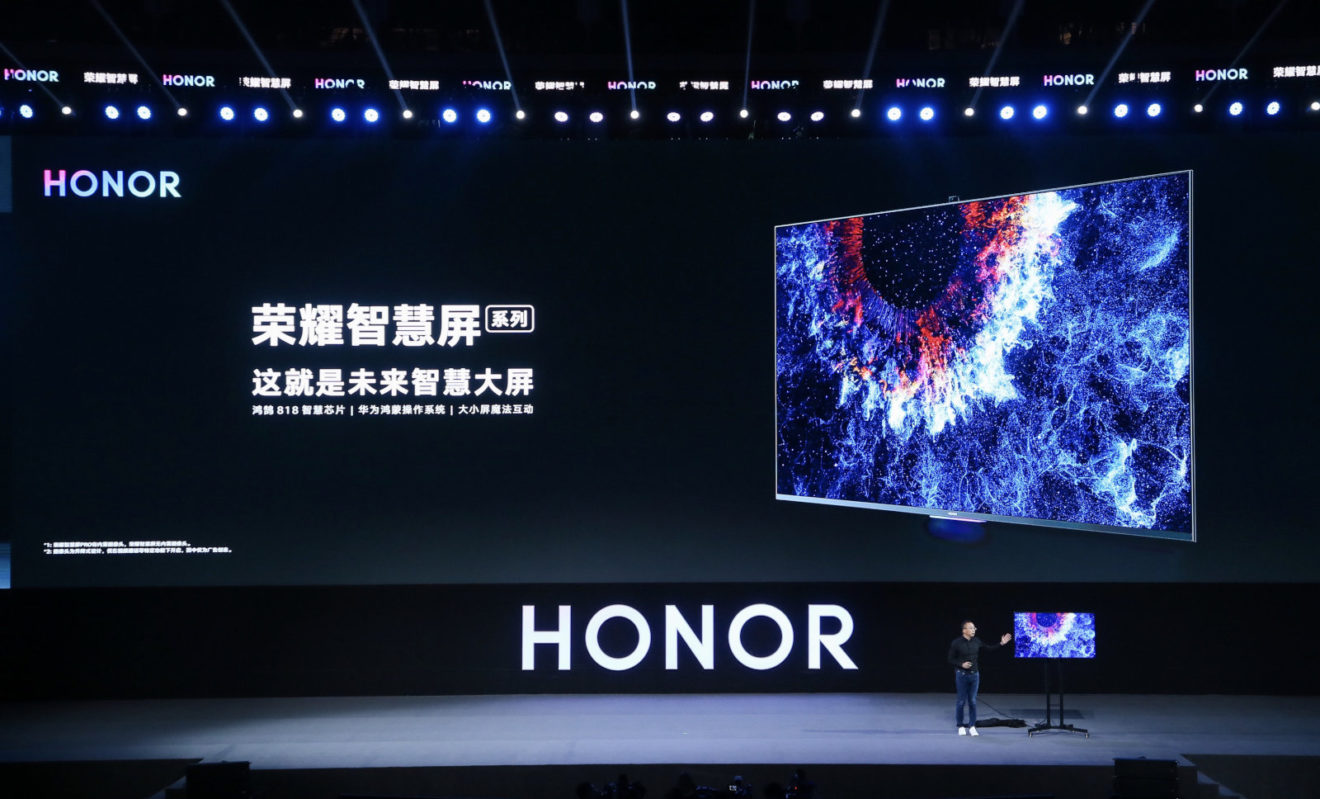
    Chinese smartphone brand Honor has launched a flat-screen television it claims “ushers in a new era for the future of TV”.

    Unveiled at the Huawei Developer Conference, the Honor TVs come equipped with three Huawei self-developed intelligent chipsets and is the first television set in the world to carry Huawei’s own operating system HarmonyOS.

    “Honor Vision is not just television as we know it,” said the company’s president George Zhao. “It defines the future of television with Honor’s ‘Sharp Tech’ innovations.”

    Zhao says the Honor TVs will play a more critical role in the future of smart family life. “It is not only a home entertainment centre, but also an information-sharing centre, a control-management centre and a multi-device interaction centre,” he said.

    Huawei launched Harmony to deliver what it describes as a “cohesive user experience across all devices and user scenarios”. Some industry analysts have already commented that the development of the OS mis linked to US tech giant Google discontinuing upgrades for Huawei devices running Android due to security concerns in the west.

    But Huawei says HarmonyOS will be optimised and gradually adopted across the brand’s smart watches, smart screens, in-vehicle systems and smart speakers. It will be released as an open-source platform worldwide to encourage adoption by other tech companies.

    Meanwhile, the new Honor TVs come with a ‘Family Note Function’, allowing users to transfer 600M images between their smartphone and display via Huawei Share software in just 20 seconds – that’s 100 times faster than transferring via Bluetooth.

    The Honor Vision sets will also act as an in-home control and management centre, using software called HiLink, an open ecosystem for the smart home. “The platform as well as the technology will be accessible to other smart home providers in the industry, allowing users to connect their preferred smart home products together,” the company said in a statement.

    The Honor Vision range of 55” 4K TVs includes 2GB+16GB standard versions and 2GB+32GB Pro versions, priced at RMB3799 (US$538) and RMB4799 (US$680) respectively.

  • JB Hi-Fi reports record profits, sales in FY19

    JB Hi-Fi reports record profits, sales in FY19

    JB Hi-Fi has seen record profit and sales for the 2019 financial year, leveraging strong communications, fitness and games hardware sales to deliver growth across all channels of the business.

    Net profit for the year grew 7.1 percent to $249.8 million, compared to the $233.2 million seen last year, while total group sales grew 3.5 percent to $7.1 billion – up from $6.9 billion in FY18.

    JB Hi-Fi Group chief executive Richard Murray said the group was pleased with the result, and that the success of the JB Hi-Fi brand during a difficult second half in Australia proves it has the right business model.

    “It was a solid result for JB Hi-Fi Australia, and a particularly pleasing finish for FY19 with strong sales in the key tax time promotional period,” Murray said.

    Comparable sales grew 2.8 percent, while total sales grew 4.1 percent to $4.73 billion – driven by communications, audio, fitness, games hardware and connected technology.

    However, the company’s media segment underperformed. Sales in the category fell 7.3 percent compared to FY18, with a double-digit decrease in movies and music sales offset by strong growth in the gaming software segment.

    Murray noted during an investor call that while store roll-outs had slowed, physical locations remain key to its growth, even as it expands the online channel, which grew 23 percent in FY19 and now makes up 5.5 percent of total sales.

    The New Zealand business also saw strong growth online, with 38.3 percent growth in online sales to NZ$13.3 million, or 5.6 percent of total sales. Comparable sales grew 8.2 percent, while total sales grew 2 percent to NZ$236.2 million.

    According to Murray, this result is evidence that JB Hi-Fi’s offer is resonating with New Zealand customers, and proves that hiring New Zealand managing director Cherie Kerrison to lead the international business was the right call.

    As for the recently acquired The Good Guys brand, total sales grew 2.2 percent to $2.15 billion, with comparable sales up 0.9 percent, while online sales grew 3.7 percent to $130.9 million.

    “In a competitive environment, we remained focused on sales and market share whilst stabilizing gross margins and continuing to evolve the business,” Murray said.

    JB Hi-Fi Group will continue to invest in The Good Guys brand while seeking to maintain and enhance it, said Murray.

    One such initiative will be to take learnings from JB Hi-Fi’s telecommunications category and use it to launch a similar offering in The Good Guys.

    Looking to the next 12 months, the retail group expects total sales for FY20 to reach $7.25 billion – with JB Hi-Fi Australia to contribute $4.84 billion, JB Hi-Fi New Zealand NZ$240 million, and The Good Guys $2.18 billion.

    Murray notes that while the business continues to see variability in the overall retail channel, JB Hi-Fi enters the new financial year confidence in its ability to execute and grow market share.

  • Apple’s mobile devices can help diagnose a serious health issue

    Apple’s mobile devices can help diagnose a serious health issue

    With Apple working hard to come up with more health-related features for its products, drugmaker Eli Lilly announced last week that certain Apple products can help spot people with dementia. Early results from a test showed that devices including the iPhone, iPad and Apple Watch, in combination with certain apps and the Beddit sleep monitoring device, can reveal whether a person has “mild Alzheimer’s disease dementia” and “mild cognitive impairment” (MCI). The study was conducted by Apple, Lilly and health care company Evidation Health on 113 people age 60 to 75 over a period of 12 weeks.

    Those participating in the study were asked to answer a pair of one-question surveys each day. They also were asked to perform certain tasks on an app such as tapping on a circle as fast as possible and dragging on screen an object with a certain shape to another object. Other tests were performed on the participant’s ability to type and read. The results of the study were presented at the Association for Computing Machinery’s KDD conference in Anchorage and found that those with symptoms of dementia tended to type at a slower rate of speed than others, and sent fewer text messages over a set period time.

    16TB of data were collected from the participants, and the study showed that Apple devices and certain apps can help monitor symptoms of those diagnosed with MCI or mild Alzheimer’s disease dementia; detect cognitive changes that could point to MCI; test the effectiveness of treatment and therapies; and speed up the development of therapies to produce more accurate diagnostic tools.

    Over the past few years, we’ve seen how data and insights derived from wearables and mobile consumer devices have enabled people living with health conditions, along with their clinicians, to better monitor their health. We know that insight from smart devices and digital applications can lead to improved health outcomes, but we don’t yet know how those resources can be used to identify and accelerate diagnoses. The results of the trial set the groundwork for future research that may be able to help identify people with neurodegenerative conditions earlier than ever before.”-Nikki Marinsek, Ph.D., first author and data scientist, Evidation Health

    “Lilly has been leading the fight against Alzheimer’s disease for more than 30 years, and we’re broadening the application of digital health to identify tools that may improve the lives of people with chronic conditions and diseases. While further research is needed, the study findings provide important insight into the potential benefits of wearable devices in identifying chronic health conditions such as MCI, Alzheimer’s disease, and dementia. These findings could inform subsequent research that may eventually lead to early screening or detection tools for neurodegenerative conditions.”-Divakar Ramakrishnan, Ph.D., chief digital officer, Eli Lilly ”

    Apple has already demonstrated that it can integrate life-saving health tools in the Apple Watch; the heart-rate monitor has already saved a number of lives and the breakout feature on the Apple Watch series 4 is the electrocardiogram (ECG) sensor. The latter detects abnormal heartbeats indicative of Atrial fibrillation, which can lead to blood clots, heart failure, strokes, and death. This life-saving feature has become so popular that Samsung is including it on the Galaxy Active Watch 2. However, as it did with Apple’s ECG sensor, the FDA needs to greenlight the one on Sammy’s phone. As a result, the ECG sensor will be disabled on the new Tizen-powered timepiece until sometime during the first half of next year.

    Apple released a very brief statement related to the release of the study. Myoung Cha, Apple’s Head of Health Strategic Partnerships, said, “We are excited to work alongside Lilly and Evidation in supporting the research community, as they seek to discover digital biomarkers of cognitive impairment.”

  • Apple is giving out a special iPhone that can lead to a $1 million reward

    Apple is giving out a special iPhone that can lead to a $1 million reward

    Apple is giving out special versions of the iPhone to security researchers who have the opportunity to collect as much as $1.5 million from Apple. Announced last week at the Black Rock cybersecurity conference in Las Vegas (where ironically Apple earlier this year put up a billboard reading “What happens on your iPhone stays on your iPhone”), the tech giant is giving these experts the task of hacking into the iPhone to find vulnerabilities and security flaws. Apple security chief Ivan Krstic says that these special iPhones come with “advanced debug capabilities.” Unlike the units sold to consumers, these will allow researchers to access parts of iOS that are off-limits to most users.

    The so-called iOS Security Research Device Program will get underway next year and while anyone can apply to receive one of the special iPhone units, Apple says that there will be a limited amount handed out. Most likely only qualified security researchers will be able to obtain one of these devices. Even though they will be much more open than a store-bought iPhone, the researchers won’t have the same access that Apple’s own internal security team has on their iPhones.

    Companies like Apple and Google pay these researchers to find flaws as an incentive. In addition, Apple would prefer that a security expert who finds a vulnerability tell the company about it instead of selling it or using it for their own evil intentions. Flaws found on iOS are said to bring researchers as much as $1 million from hackers willing to pay that much. Apple announced last week that a researcher can receive $1 million by finding a flaw allowing him or her to take over full control of an iPhone without the owner touching the handset. Other flaws can also handsomely reward a researcher as Apple is willing to pay up to $500,000 for the information. Google announced last month that it will pay up to $30,000 to a researcher finding flaws in its Chrome browser while paying $150,000 if it is told about a flaw that can compromise its Chrome OS.

    “We want to attract some of the exceptional researchers who have thus far been focusing their time on other platforms. Today many of them tell us they look at our platform and they want to do research but the bar is just too high. We have by far the highest maximum payouts in the industry, and we have the iOS security research device program for exceptional researchers that are new to our platform”-Ivan Krstic, head of security engineering and architecture, Apple

    Researchers who find a vulnerability in code found on beta software will receive a 50% bonus from Apple. That is to reward an expert who has identified a problem before the bug is passed along to the public, and brings the top possible award handed out by Apple to $1.5 million. As the company’s security chief points out, “The second-best reason to have a bug bounty is to find out about a vulnerability that’s already in the users’ hands and fix it quickly. The number one best reason is to find a vulnerability before it ever hits a customer’s hands.”

    Apple’s new program might have received more applause if it wasn’t for the limited number of special iPhones it is handing out. As iOS security researcher Will Strafach noted, “It’s a huge step, but I do think it would be great if there were a bit more wide availability of the devices.” Apple might be concerned that the wider availability of these units might lead to several ending up in the wrong hands, creating more problems for the company. Still, with all this money at stake, regular iPhone owners should benefit from the incentives that Apple is throwing at security experts.

  • Japan okays one shipment of material Samsung needs for its most advanced chips

    Japan okays one shipment of material Samsung needs for its most advanced chips

    The term Free trade has become an oxymoron. Just look at the mess that is taking place with the U.S. and China. As we’ve pointed out countless times, the tariffs that the U.S. is imposing on imports from China are import taxes that are paid by U.S. corporations. The latter can decide to eat some or all of the additional taxes lowering their profit margins or pass along the higher costs to U.S. consumers. China is retaliating by devaluing its currency, the Yuan. This makes Chinese goods cheaper to buy in the states but will force Apple to raise the price of the iPhone in China.

    This isn’t the only trade war going on. Japan and South Korea have been fighting since last October. That’s when a South Korean court ruled that South Koreans forced to work for Nippon Steel during World War II must be compensated for their labor. Calling the decision “unthinkable,” Japanese authorities said that the issue had already been decided when the two countries restored diplomatic ties in 1965.

    To retaliate against the court decision, Japan started restricting the export to South Korea of materials like fluorinated polyimide and resist, and high-purity hydrogen fluoride (HF). These are used in the production of chips used inside smartphones, and for smartphone displays, respectively. Beginning last month, companies looking to ship these materials to South Korean phone manufacturers like Samsung and LG need to apply for permission to do so. Receiving such approval could take as long as 90 days. That’s because Japan has removed South Korea from its “white list” of trade partners that have fast-track trade status. South Korea plans on discussing the removal of Japan from its “white list” but has tabled the matter for a future time. It does plan on tightening regulations on some of Japan’s exports into South Korea for materials used in other industries besides tech.

    For the first time since announcing the restrictions, Japan has approved a shipment of EUV photoresists to South Korea. Samsung uses this material to help it mask or map out designs on the silicon that ends up in chipsets. These show the placement of billions of transistors and EUV, or extreme ultraviolet lithography allows for more precise designs to be made. This leads to the design of more powerful chips that consume less energy. Japan controls as much as 90% of the global market for this material, so Samsung cannot simply move on to another country to source the EUV photoresist it needs.

    “Usually, we don’t announce each time we give export permission. However, the South Korean government has referred to our moves as an embargo on exports, which is unfair criticism.”-Hiroshige Seko, Japanese Industry Minister

    “Even if there are any gains, it will be short-lived. In the end, it is a game without winners, where everyone, including Japan itself, becomes a victim.”-Moon Jae-in, president, South Korea

    However, it doesn’t seem as though this approval changes anything between the two countries. A South Korean senior trade ministry official pointed out that Japan “approved only one out of a number of items,” and a presidential official said that  Japan’s actions “doesn’t mean that uncertainties have been completely removed for the other items.” While these materials can be used to produce smartphones, they also can be used to manufacture weapons.

    Apple iPhone models that sport an OLED display and those expected to be equipped with such a screen (iPhone 11, iPhone 11 Max) could be affected by this trade war. That’s because, as we’ve mentioned, high-purity hydrogen fluoride (HF) is used to produce smartphone displays. As one of the materials that Japan will no longer allow to be shipped to South Korea without permission, both Samsung and LG could face delays in obtaining it. And that could mean that Apple, which purchases its OLED panels for the iPhone from both South Korean firms, could find itself scrambling for this important part as production gears up for the 2019 iPhone models.

  • Mophie’s new wireless pads will charge three Apple devices at once

    Mophie’s new wireless pads will charge three Apple devices at once

    Remember AirPower? The multi-device wireless charging pad was canceled by Apple in March 562 days after it was unveiled on September 12th, 2017. During that same event, Apple introduced the iPhone 8, iPhone 8 Plus and the iPhone X. AirPower was supposed to allow an iPhone, an Apple Watch and the AirPods wireless charging case to power up at the same time. While we might not see Apple unveil a similar accessory for some time, the Apple Store will soon start selling a pair of wireless chargers made by mophie. These products will be exclusive to the Apple Store.

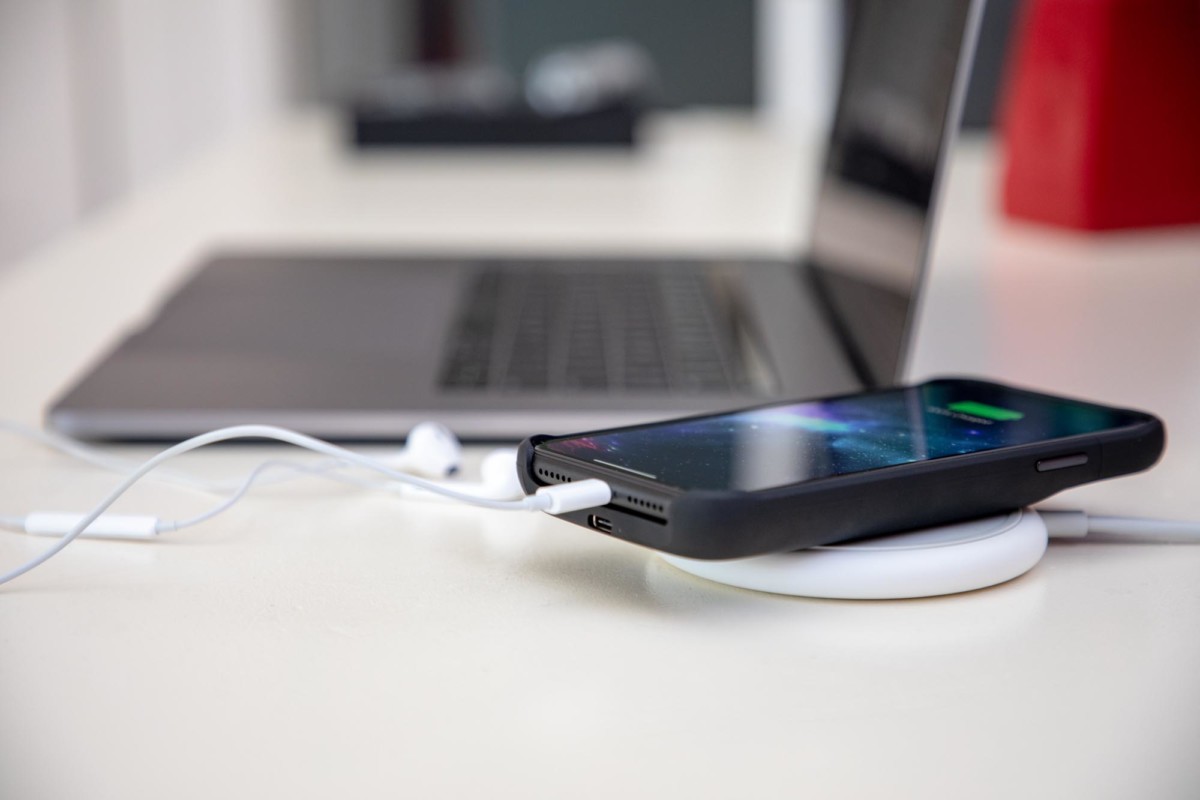
    Mophie’s wireless charging dual pad looks similar to the now-canceled AirPower, and while there are only two hot spots on the pad, an extra USB-A port on the accessory allows the user to charge an iPhone, an AirPods wireless charging case and an Apple Watch all together at the same time. The pad will charge at 7.5W and will be priced at $99.95.

    For $139.95, or $40 more, the Apple Store will sell the mophie 3-in-1 wireless charging pad. This has the two hot spots like the other model and an extra USB-A port for an Apple Watch. But it also includes an Apple Watch charging connector so that while you’re wirelessly charging the timepiece, it will be held at a perfect angle to use the smartwatch’s Nightstand mode. This pad also charges wirelessly at 7.5W.

    “The compact mophie Wireless Charging Pad conveniently recharges your compatible Apple iPhones and Wireless Charging Case for AirPods. Just place your iPhone or AirPods on the pad and a steady, efficient charge of up to 7.5W begins on contact. With the pad’s two fast charge spots and extra USB-A port, you can simultaneously charge your iPhone, AirPods, and connect your Apple Watch cable.”-Apple Store

    While listings for the mophie wireless charging dual pad and the 3-1 wireless charging pad appear on the Apple Store website, they are incomplete. Both are missing photos of the accessories and accompanying videos.

  • First smartphone equipped with a 108MP camera is “coming soon”

    First smartphone equipped with a 108MP camera is “coming soon”

    Xiaomi’s phones, like the majority of handsets designed and made in China, aren’t sold in the states. But it always is a good idea to follow what is going on with these manufacturers because many times they are ahead of the field when it comes to new features and specs. For example, back in June, we told you that hidden code found in the latest MIUI (Xiaomi’s Android UI) Camera app revealed that a Xiaomi phone would possibly be among the first to use Samsung’s 64MP ISOCELL sensor. Samsung announced the 64MP ISOCELL Bright GW1 sensor back in May.

    While Realme is reportedly about to launch a phone sporting a 64MP rear camera later this month, Xiaomi revealed today that it will release its first device with a 64MP camera in the fourth quarter. This will be found on a handset with the Redmi brand; this is Xiaomi’s budget line. The 64MP GW1 employs the pixel-merging Tetracell technology to deliver “bright” 16MP snapshots under low-light conditions. The sensor comes with the ISOCELL Plus technology which reduces noise by “minimizing optical loss and light reflection.” It also has a technology known as Dual Conversion Gain (DCG) that optimizes performance and reduces noise in bright light by allowing the use of lower ISO settings. It also hikes the ISO setting under low-light conditions but does so to optimize the signal-to-noise ratio on photos shot in less-than-optimal lighting conditions.

    Xiaomi also announced that Samsung has broken the 100MP mark with a new 108MP sensor that will debut on an upcoming Xiaomi phone. It has the highest resolution of any smartphone camera sensor and can produce photographs carrying a resolution of 12032 x 9024. With 2x digital zoom, the sensor will still capture 27MP images. The size of the sensor will be the largest available on the market and this means that its “ultra-high light input (will be used) to deliver stellar images in low-light environments.”

    Back in March, chipmaker Qualcomm hinted that 64MP and 100MP+ sensors were in the works. This brings back memories of the megapixel wars that led Nokia to include a 41MP camera on the back of the Lumia 1020 back in 2013. Up until recently, the main focus (no pun intended) has been on the use of multiple sensors to improve the photographic experience on phones. Also, the addition of ultra-wide lenses and time of flight (ToF) depth sensors has seemingly replaced the number of MP in importance as far as consumers are concerned. Google’s image processing prowess helped turn the Pixel into one of the top (if not the top) smartphone brands for those who want their phone to take outstanding pictures. Up until now, Google has fought back against the higher MP and multiple sensor trends by placing a single 12MP sensor on the Pixel line. However, it appears that the Pixel 4 will be equipped with multiple cameras on the back.

    While many Americans might not be familiar with the Xiaomi brand, the company did launch the first smartphone to feature a 48MP camera earlier this year. That was the Redmi 7. In the U.S., the OnePlus 7 Pro features a 48MP primary camera on the back. And next up will be 64MP, which might not be found on a U.S. phone until after the first quarter of 2020. As for the 108MP sensor, don’t expect to find it on a phone sold in the states until 2021-2022.

  • Samsung unveils the chip that will be installed in the Galaxy Note 10 series

    Samsung unveils the chip that will be installed in the Galaxy Note 10 series

    Just hours before Samsung is set to unveil the Galaxy Note 10 line in the U.S., the manufacturer officially introduced the chipset that will power the phones outside of the U.S. The Exynos 9825 SoC is manufactured at Samsung’s own fabrication facilities using the 7nm EUV process. Using this process, more transistors fit inside the new chip than the number employed in the 8nm Exynos 9820. This should lead to performance improvements of 20% to 30% while the Exynos 9825 consumes 30% to 50% less power. The EUV stands for extreme-ultraviolet lithography. This is a technology that uses ultraviolet beams to etch silicon in finer details allowing for more precise placement of circuitry inside the chip.
    Samsung says that the Exynos 9825, similar to the Exynos 9820 it replaces, is equipped with two Samsung custom CPUs, two Cortex-A75 CPUs for complex tasks and four Cortex-A55 CPUs for less taxing demands. The graphics process unit (GPU) on the chip is the ARM Mali-G76 MP12 (also the same as the one on the Exynos 9820). The A-75 cores and the GPU will run at faster clock speeds than the same components on the Exynos 9820; the faster clock speeds and the use of 7nm EUV helped the newer chip to run faster in tests against its predecessor. The chip will have an integrated Neural Processing Unit (NPU) to help run Artifical Intelligence features for a smartphone camera allowing for the recognition of objects to optimize photographs. It also is used to learn user patterns and help apps pre-load faster. The NPU can also support Augmented Reality capabilities on a handset.
    The Exynos 9825 also comes with Universal Flash Storage (UFS) 3.0, which has twice the bandwidth and uses less energy than UFS 2.1. It also can run at higher temperatures, which is important considering all of the demands that are thrown at a smartphone these days. UFS 3.0 has a sequential read speed of almost 2280 MB/sec compared to roughly 800MB/sec with UFS 2.1. As for the modem on the Exynos 9825, it is an integrated 4G LTE-Advanced Pro modem with 8x Carrier Aggregation. The latter combines carriers to form larger data channels in order to increase capacity on a network. It is one of the tools used by wireless providers to increase data speeds. And when paired with Samsung’s Exynos 5100 5G modem (which supports both mmW and sub-6GHz 5G airwaves), the Exynos 9825 will support the next generation in wireless connectivity.
    The Exynos 9825 supports LPDDR4X memory and 22MP cameras in back and front. It also will work with a dual-camera setup (16MP + 16MP). Video can be shot in 8k at 30fps and 4K UHD video shoots at 150fps. Using a technology known as physically unclonable function (PUF), the chip isolates and secures users’ personal data.
    Historically, Samsung usually employs the latest Snapdragon Mobile Platform to run the latest Galaxy Note model in the U.S. with the Exynos chipset used just about everywhere else. However, a recent rumor called for all Galaxy Note 10 units (as opposed to the Galaxy Note 10+) in the states to also feature the Exynos 9825 SoC except for Verizon branded models. That rumor turned out not to be true, and all Galaxy Note 10 variants in the U.S. should be equipped with the Snapdragon 855 (+) Mobile Platform. The latter is manufactured by TSMC using its 7nm process.
    The last time that a Samsung Galaxy Note phone was sold in the U.S. with an Exynos chip was back in 2015 with the Galaxy Note 5. This was the year that the Snapdragon 810 had problems with overheating and the Galaxy S6 and the Galaxy Note 5 were both powered with the Exynos 7420 SoC in the states.
  • Android Messages will reportedly become the default messaging app on Samsung phones

    Android Messages will reportedly become the default messaging app on Samsung phones

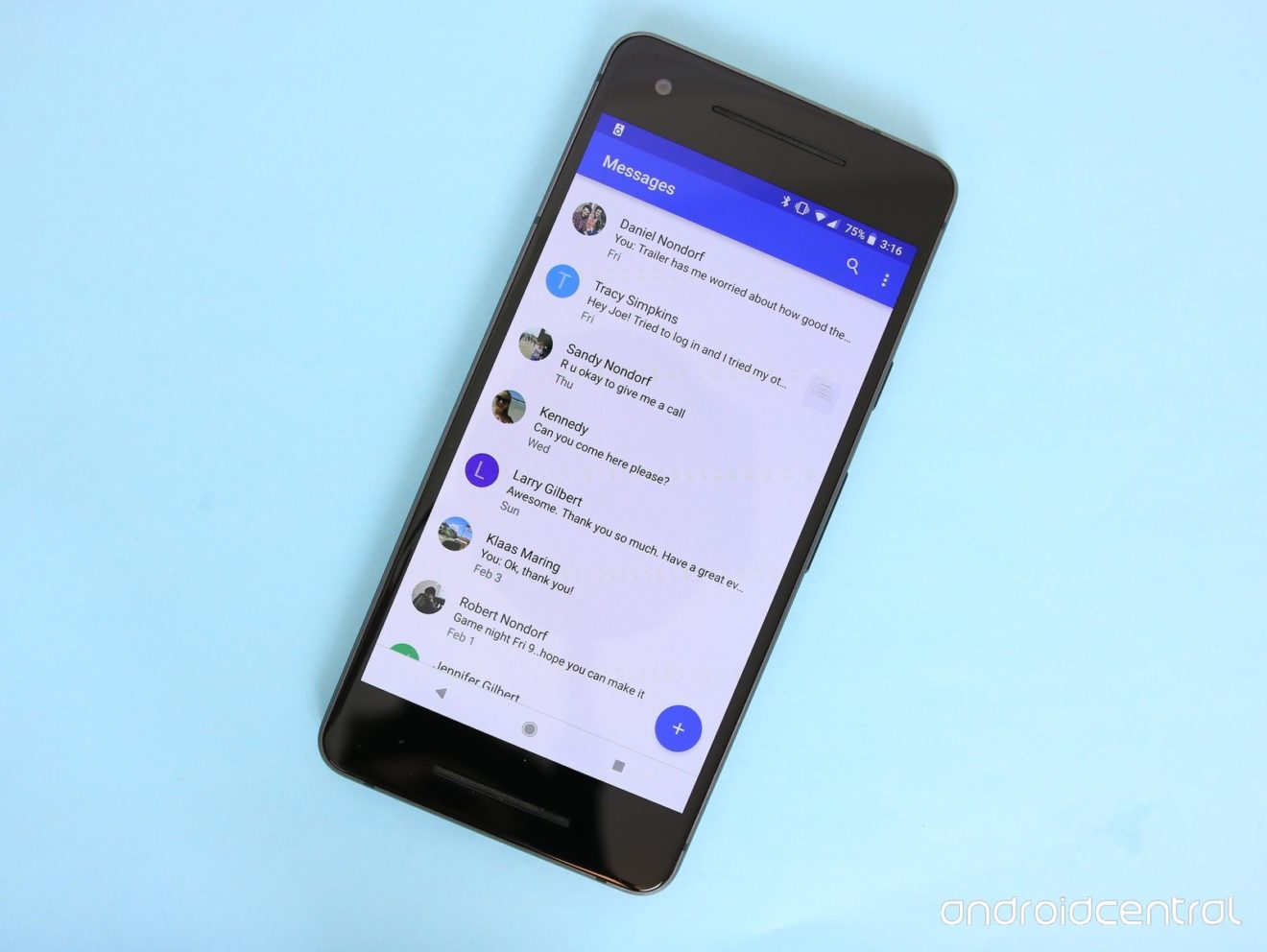
    A Reddit poster who claims to be a Samsung engineer says that the company is thinking about making Android Messages the default messaging app on its phones replacing Samsung’s own messaging app. The Redditor says that this is being done to “to reduce headaches down the road for US devices.” The headache involves creating a universal version of the Rich Communication Services (RCS) messaging platform called RCS Chat in the country. Recently, Google was able to bypass carriers in the U.K. and France in order to complete the rollout of RCS in those two countries. And while the search giant says that it will soon announce more markets where the SMS replacement will be disseminated, it isn’t clear whether the U.S. will be one of them.

    The U.S. has some complications including the fact that some carriers have their own RCS systems. This makes it a complicated task to build a universal platform in the states, according to the person claiming to be a Samsung engineer. With RCS, users will have a much larger character cap than the 160 now available with SMS apps. There also is support for group messages, “read-receipts” that let you know when the recipient has looked at the message you sent, and an alert that tells you when that person is writing a reply. While Google would like RCS to compete against Apple’s Messages app and its encrypted iMessages platform, RCS won’t totally encrypt messages.

    It seems that Google’s best bet to implement universal RCS in the states is to skirt around the carriers. Whether or not Google is considering this end-around is not clear. For those Android users in the states using their carrier’s messaging app or the one that is pre-loaded by their phone’s manufacturer, universal RCS would be a big step forward.

  • YouTube update lets users live stream directly from their Android phones

    YouTube update lets users live stream directly from their Android phones

    Google is bringing back the option to live stream gaming content directly from a smartphone, which was available since 2015 via the YouTube Gaming app. However, because the latter was killed off a few months ago, the option to live stream from a smartphone disappeared since it wasn’t included in the basic YouTube app.

    But that’s not an issue any longer, as Google has already implemented the ability to live stream a phone’s screen in YouTube 14.31.50 for Android, XDA Developers reports. The app’s support website has already been updated to reflect the new changes, so if you want to live stream directly from your phone, here is what you have to do:

    Select the capture button
    Select GO LIVE.
    At the top right of the screen, tap the phone icon to stream your phone’s screen.
    Create a title, then select a privacy setting and game title.
    Optional: select More options.

    • Add a description
    • Schedule for later
    • Tap Advanced settings for:
    • Enable or disable live chat
    • Enable or disable age restriction for your stream
    • Indicate whether your stream contains paid promotion and add a paid promotion disclosure
    • Enable or disable monetization

    Select Next to set your thumbnail and screen orientation.

    • The default thumbnail is based on the game title you chose. Customize the thumbnail by tapping the edit button on the top right of the thumbnail.
    • Select Landscape or Portrait orientation for your recording. Once you start recording, you won’t be able to change the orientation.

    Tap Next to finish setup.
    A toolbar will show up at the top of your screen, allowing you to control the stream.
    Hit GO LIVE button to start. A 3 second countdown animation will appear before your stream starts.
    “You are live” will stick for 3s before fading off screen.

    Although you’ll be able to live stream your mobile device screen directly from the YouTube app without any additional hardware, you need to be eligible for mobile live streaming (verified channel) and own a smartphone that runs Android version 6.0 or later.

  • Apple iPhone 11 suppliers are reporting low component orders

    Apple iPhone 11 suppliers are reporting low component orders

    Despite recently setting a revenue record for the April-June quarter, Apple’s iPhone business hasn’t been doing too well lately. The arrival of new iPhones in September will inevitably help improve the situation but suppliers are receiving low orders for the iPhone 11.

    Citing “industry sources,” today’s report says the order momentum for touch panels and other iPhone components has so far “been weak.” Apple is currently gearing up for mass production but the “low order visibility” ultimately suggests the company is forecasting combined iPhone 11 sales that could either be on par or below those of the iPhone XS and XR devices.

    Bloomberg recently reported a similar situation. According to Mark Gurman, Apple has ordered an initial batch of 75 million combined iPhone 11, iPhone 11 Max, and iPhone 11R units. The figure is roughly the same as a year earlier and suggests Apple is preparing for flat year-on-year sales. But if everything goes to plan, overall revenues should be up thanks to better performance by the Wearables, iPad, and Mac businesses.

    Apple often diversifies its supply chain as much as possible but this year it’s expected to take things to the next level in light of the current trade war between the US and China. Because of this, there’s no guarantee these reports about orders paint the entire picture. However, considering the iPhone 11 lineup isn’t expected to bring any groundbreaking changes, there’s also no reason to believe there will be a sudden boost in demand.

    For those of you that aren’t yet aware, all 2019 iPhone models will be virtually indistinguishable from their direct predecessors when it comes to the front panel. Reports suggest Apple has plans to retain the 5.8-inch and 6.5-inch OLED displays used on last year’s iPhone XS series and the 6.1-inch LCD found on the iPhone XR. As a direct result of this, Apple’s controversial notch will remain unchanged for another year.

    Despite the lack of physical changes upfront, reports suggest there will be some important upgrades. Specifically, the 7-megapixel selfie camera will be replaced by an all-new 12-megapixel sensor and Face ID will benefit from updated components that’ll allow it to work at shorter distances and wider angles. It is, however, still unclear if Apple’s new Face ID system will support horizontal or upside-down unlocking like the upcoming Pixel 4.

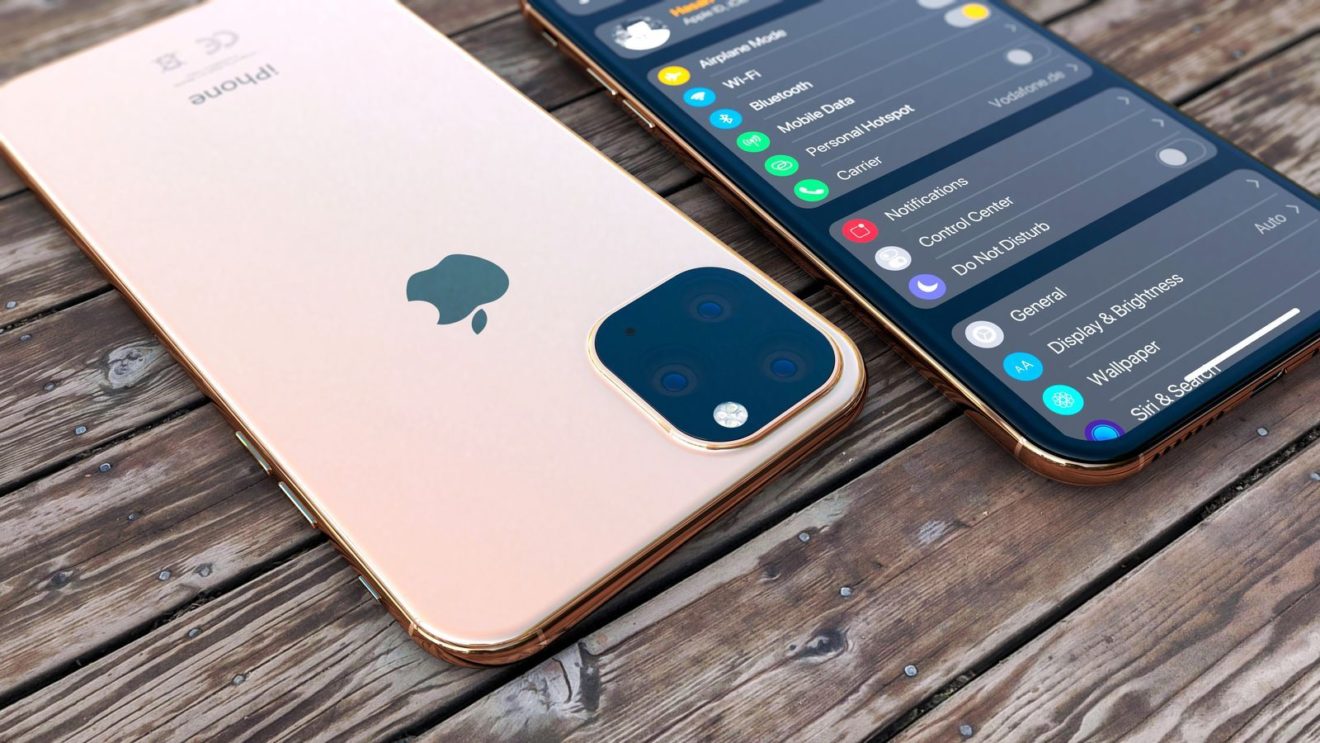
    Moving over to the rear, numerous leaks suggest Apple will be adopting a totally redesigned camera setup. Both the iPhone 11 duo and the iPhone 11R will feature square-shaped modules in the top-left corner which house the new cameras. All three smartphones will feature a main 12-megapixel sensor and a second one of the same resolution that boasts a 2x telephoto zoom lens. These shouldn’t differ too much from the iPhone XS cameras.

    To help make the iPhone 11 and iPhone 11 Max more competitive, Apple is also planning a third camera. This sensor should also offer a 12-megapixel resolution but it’ll reportedly arrive paired with a new super-wide-angle lens that’ll permit a new feature called Smart Frame. This captures the area around the framed area in pictures and videos, therefore giving users the ability to adjust framing or perform crop corrections after a photo has been taken. The extra information will be retained for a short period of time and eventually deleted automatically.

    The iPhone 11 series is expected to go official in early September alongside the Apple Watch Series 5 and 10.2-inch iPad. Pre-orders are expected to kick off Friday, September 13. As for the release date, Apple’s previous launch schedules suggest the new models will be available on Friday, September 20.

  • Sony lowers Xperia shipments after worst quarter ever

    Sony lowers Xperia shipments after worst quarter ever

    Sony sold a whopping 40 million smartphones in fiscal 2014 but recent struggles mean that just five years on the company is removing an entire zero from its latest shipment predictions.

    Despite initially forecasting sales of 5 million units for the 2019 financial year (April 1, 2019 – March 31, 2020), Sony has now revised its predictions down to 4 million units following an absolutely terrible quarter in which it sold just 900,000 smartphones. The figure represents a record-low for the company and also the first time it’s sold less than 1 million smartphones in a quarter. To add further perspective to the matter, just twelve months earlier Sony managed to sell a decent 2 million devices.

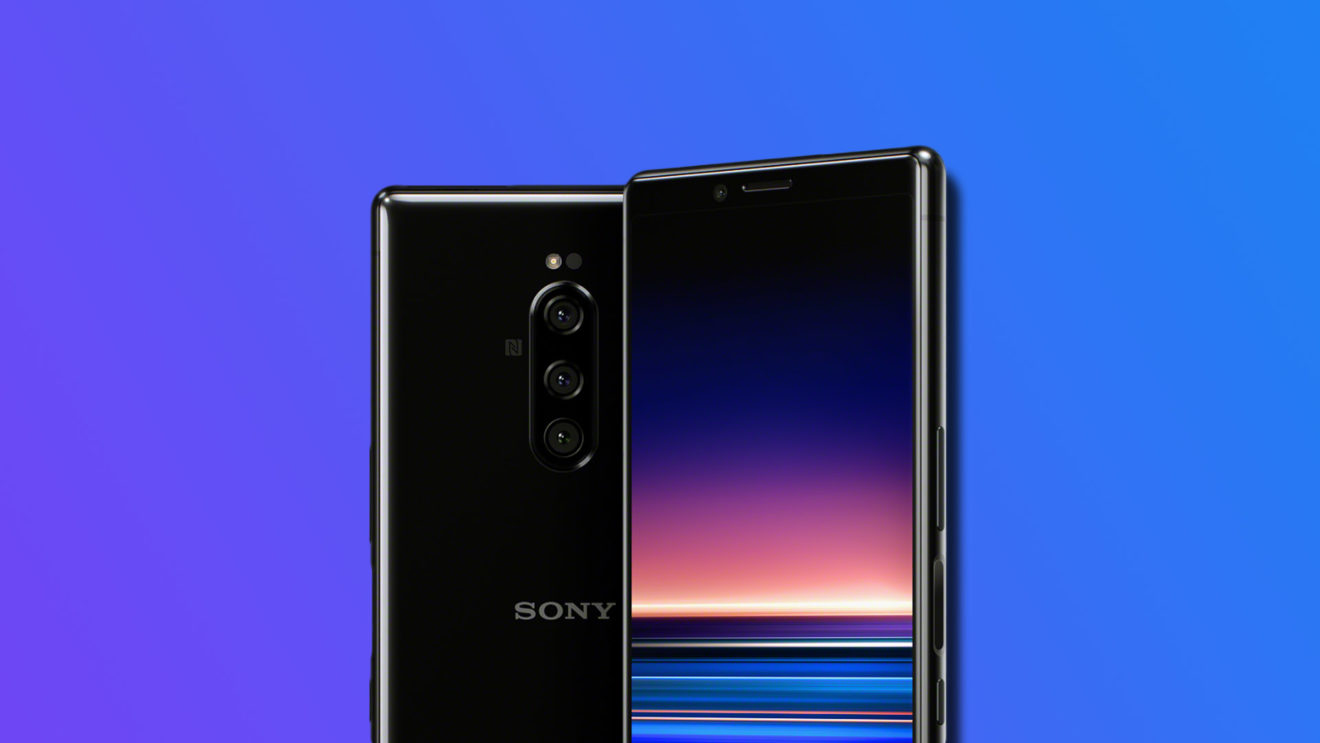
    Sony didn’t have any major launches for the first two months of the quarter and instead relied heavily on sales of the Xperia 10 and Xperia 10 Plus, but towards the beginning of June the Japanese brand did launch its latest flagship – the Xperia 1 – in most international markets. The smartphone was frequently listed as out of stock in many markets which ultimately suggested demand was high. However, the company’s latest shipment figures suggest that, in actual fact, supply was simply limited.

    While it’s unclear how much money Sony’s smartphone division lost last quarter because it no longer provides a separate financial report for the business, Sony has previously warned that profitability likely won’t arrive until the quarter ending March 2021. To achieve this, it’s hoping to continue reducing operating costs and boost sales once 5G smartphones start becoming more popular.

  • Apple iPhone revenue drops significant

    Apple iPhone revenue drops significant

    Apple this afternoon reported its fiscal third-quarter earnings covering the three month period from April through June. The company said that iPhone revenue hit $25.99 billion during the quarter, down from the $29.47 billion it recorded one year ago. That is a 12% decline on an annual basis and was lower than Wall Street expectations. For the nine months ended in June, Apple rang up $109 billion in handset revenue versus the $128.1 billion it took in over the same period in 2018.  It was the first time since 2012 that Apple’s iPhone sales failed to make up 50% or more of the firm’s revenues for a quarter. During the fiscal third quarter, sales of the iPhone contributed 48.3% to Apple’s total revenue of $53.8 billion.

    Sales of the Apple iPad continue to do better than the tablet market as a whole. During the company’s fiscal third quarter, revenue attributed to the device rose from $4.63 billion to $5.02 billion. Last quarter, the iPad recorded its strongest revenue growth in six years. The turnaround started with the release of two new iPad Pro models last year and a new iPad Air and new iPad mini this past March.

    Apple is expecting its Services unit to help make up for the sluggish performance of the iPhone. The tech giant is banking on a large number of active iPhone users to take this unit to $50 billion in revenue next year. For the latest quarter, the division grossed a record $11.5 billion compared to the $10.2 billion it generated last year. This unit, Apple’s second-largest and it’s most profitable, includes recurring subscription services such as Apple Music, Apple News+ and the upcoming Apple Arcade. It also includes AppleCare, ApplePay, the App Store, iCloud and more.

    Led by the AirPods wireless earbuds and the Apple Watch, the Wearables, Home and Accessories segment was extremely strong with sales of $5.53 billion during the three month period. During the same quarter last year, this unit took in $3.73 billion.

    Sales backed off in China as expected due to the strength of the dollar and the current trade war between the U.S. and China. And we can’t forget that some Chinese consumers are individually boycotting Apple to protest the placement of Huawei on the U.S. Commerce Department’s Entity List. The manufacturer’s inclusion on the list prevents Huawei from accessing its U.S. supply chain. For the quarter, Apple had sales of $9.16 billion in the country, down from last year’s $9.55 billion. Revenue also declined slightly in Europe to $11.93 billion while rising in the Americas ($25.06 billion), Japan ($4.08 billion) and the rest of the Asian Pacific Market ($3.59 billion).

    “This was our biggest June quarter ever — driven by all-time record revenue from Services, accelerating growth from Wearables, strong performance from iPad and Mac and significant improvement in iPhone trends. These results are promising across all our geographic segments, and we’re confident about what’s ahead. The balance of calendar 2019 will be an exciting period, with major launches on all of our platforms, new services, and several new products.”-Tim Cook, CEO, Apple

    “Our year-over-year business performance improved compared to the March quarter and drove strong operating cash flow of $11.6 billion. We returned over $21 billion to shareholders during the quarter, including $17 billion through open market repurchases of almost 88 million Apple shares, and $3.6 billion in dividends and equivalents.-Luca Maestri, CFO, Apple

    After the results were released, investors rushed to buy the stock. In after-hours NASDAQ trading, Apple is up $9.16 or 4.4% to $217.94. Once again, the company is closing in on a valuation of $1 trillion. Almost exactly one year ago, Apple became the first publicly traded U.S. company to reach such a lofty valuation.

    For its fiscal third quarter, Apple reported a net profit of $10.04 billion, down from $11.52 billion last year. Earnings per share on a diluted basis (all convertible shares accounted for) declined from 2018’s $2.34 to $2.18.

  • Huawei discount phone promotion leads to anger

    Huawei discount phone promotion leads to anger

    Huawei discount phone promotion has backfired causing shops to be shuttered and one indignant shopper arrested.

    The Chinese company promoted that its Huawei Y6 Pro 2019 model would be discounted from S$198 to $54 for consumers aged over 50 for three days beginning last Friday. But when hundreds of would-be buyers arrived at the company’s 27 stores across the island on Friday morning they were told stock had run out before opening hour, causing many to wonder if there was ever any stock in the first place, or the brand was adopting a bait-and-click tactic to get customers into stores. Instead of the $54 Y6, disappointed shoppers were offered another discount on a Huawei Mate 20, a promotion due to start on Saturday and since canceled.

    Police were called to some of the stores where angry customers were demanding Huawei stick to its promise. A woman, aged 53, was arrested for trespass after refusing to leave one store.

    A Huawei spokesperson said the ‘Sold Out’ signs were put up by store employees before opening time in response to seeing the long queues formed outside.

    “We are truly sorry to have disappointed those who have shown your support from early morning… Y6 Pro 2019 handsets have been sold out island-wide and have recorded an unprecedented surge of demand,” Huawei said.

    “The company would like to thank members of the public for their continued support and regrets the insufficient supply for the masses.”

    “How can it be that you are telling the public there is no stock before the store opens or the promotion starts?,” one customer asked. “Are you trying to fool people and make use of the nation’s 54th anniversary?”

    Huawei launched the promotion celebrate the generation of Singaporeans that made great contributions to the nation’s development, ahead of the country’s 54th National Day on August 9.

    The company did not reveal how many of the handsets were sold during the Huawei discount phone promotion or how many were available at each outlet.

  • Samsung may launch new Galaxy Buds color to match the Note 10

    Samsung may launch new Galaxy Buds color to match the Note 10

    We’re less than two weeks away from Samsung’s big Galaxy Note 10 reveal, but information about the phone continue to pour in. But the Galaxy Note 10 might not be the only new product Samsung plans to reveal next month. The South Korean company is expected to introduce a brand new tablet, the Galaxy Tab S6, and a new set of accessories to go with its new flagship smartphone.

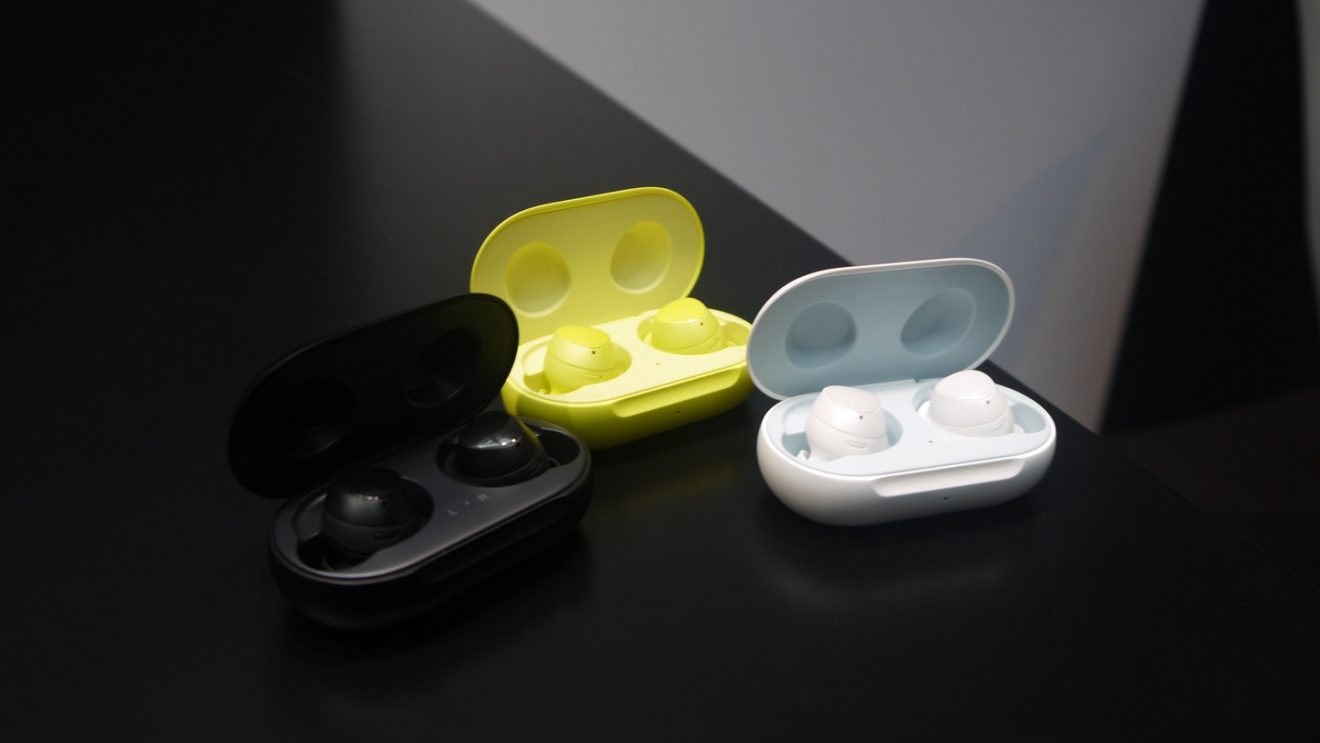
    A new pair of Galaxy Buds will be unveiled along with the Samsung Galaxy Note 10 on August 7. Unfortunately, these are not a new model, but a different color of the current model.

    The new Samsung Galaxy Buds earphones will match the Galaxy Note 10/10+ color, which is called “Aura Glow.” Both the buds and the carrying case will have the same white-silver color to match the Galaxy Note 10/10+.

    As far as price goes, these will cost the same as the original model that was launched back in April: €150/$150. It’s yet unclear whether or not they will be offered for free as an incentive for those who pre-order the Galaxy Note 10/10+, but we’ll most likely find out more about that on August 7.

    In the same piece of news, the same report claims Samsung plans to launch a few new in-ear headphones with AKG branding, created especially for the Galaxy Note 10/10+. The so-called Samsung ANC Wired Headphones will connect via USB Type-C port to the Note 10/10+ and will feature Active Noise Canceling technology for a low price. There will at least one other new pair AKG-branded headphones unveiled next month along with the Galaxy Note 10/10+, but that’s about all we know for now.